Shifting Power to People
This paper tells the story of Nesta's People Powered Results (PPR) team and what we have learned over the past decade of working in partnership with places across the UK to release the power of people to drive systemic change.
For 10 years, we have worked with determination and optimism alongside a growing movement of over 500 incredible partners, committed to making the case for People Powered change. Over this time we have witnessed a shift. We have moved from People Powered approaches existing largely on the margins and often dismissed as time consuming, costly and ineffectual, to being meaningfully enacted in communities, places, regions and nationally.
We've helped make change a reality in dozens of places and systems across the UK, utilising vast amounts of untapped knowledge, expertise and experience, and impacting the lives of more than 100,000 people.
There is still much to do to further scale and spread People Power and we are excited to share some of our insights as a lasting contribution to support this effort.
On the next few pages we share the 6 Principles for People Power and 4 Conditions to bring People Power to life as a starting point for you to think about how to bring about, or strengthen, a People Power Shift in your system. We have returned to these principles and conditions time and time again as the foundational blocks for imagining new visions for the future, generating solutions and bringing them to life.
Sitting alongside this paper is a Playbook for People Power which is for everyone interested in trying out and growing people-powered approaches, whether in a neighbourhood, an organisation or across local and national systems. The Playbook draws on the team's experience of making People Powered change happen, and includes some of the tools and frameworks we have found most useful.
We want to extend our deepest gratitude to those that have walked alongside us, trusted us and experimented with us over the past ten years and we look forward to seeing where People Power goes next...
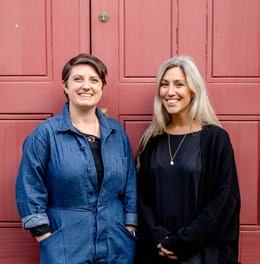
Catherine Russell and Kate Simpson,
Co-directors of People Powered Results
People Powered Results
Principles for People Power
PPR's work was driven by six principles for People Power. Over the past 10 years, these have underpinned our methods, how we supported and partnered with others and how we worked together as a team.
1. Prioritise people
It sounds simple, but it is all too easy to lose sight of both the people our systems are set up to serve, and those who make up our systems; practitioners, managers and leaders. Targets, bureaucracy and transactional processes can often take over. Relentlessly focusing on people and creating spaces for connection and collaboration across differences, driven by a shared purpose, helps to build empathy and new possibilities.
2. Everyday innovation
Keep it simple if you are serious about people power. Overly professionalised language and complex decision making processes isolate and diminish the potential of people to create impact. Aim to make complex issues understandable and accessible to as many people as possible. In Einstein's words, "If you can't explain it to a six-year-old, you don't understand it yourself."
3. Creativity can cut through complexity
Taking a creative and playful approach to really dig into complex challenges helps us go beyond what we we know, or think we know, about issues. Creativity serves as a powerful catalyst for change in helping us to connect with both our heads and our hearts – a critical ingredient for meaningful transformation. It also serves as a powerful equaliser for opening up conversations between people with diverse backgrounds and experiences.
4. Move slow first, to make rapid progress later
Spend time developing a deep and shared understanding of the challenge that you are facing, including listening to lesser heard perspectives. Intentionally holding off the natural desire to jump straight into solutions will help build a focus on root causes. This helps to set up change efforts for success and improve their chances of being hardwired into systems to create lasting and ongoing impact.
5. Nurture and amplify hope
In even the most challenging situations, there is hope to be found. Many of us have grown weary and fatigued, by ongoing restructures, budget cuts, global crises – the list goes on. Focusing on creating spaces for hope, joy and curiosity to grow can start a ripple effect of change, and help to bring new energy and optimism into how the future is faced. In Norman Vincent Peale's words, "Shoot for the moon. Even if you miss, you'll land among the stars."
6. Root everything in action and learning
Recognise that real progress and change happens outside of meeting rooms. Root all of your work in action and learning from the work going on out in communities, schools and hospitals. Don't listen for the sake of an insights report with powerful quotes, or strategise for a glossy document. Instead, lean into the messiness of testing out ideas in the real world and recognise that this is the real work.
The conditions to bring people power to life
If you are serious about making people powered change happen, there are four really important conditions to pay attention to. These are the building blocks for long term and impactful systemic change, driven by people power.
New modes of leadership
- Adopting collaborative approaches to leadership through sponsorship of efforts across systems and places, with commitment to use insights to inform longer-term strategic plans.
- Active permission from those in traditional and non-traditional positions of power to create the space and support for those closest to challenges to take the lead.
Bringing people together in new ways
- Complex challenges cannot be solved in isolation. Mobilising and supporting diverse groups that are representative of different parts of a system helps to uncover new opportunities for change.
- Focusing on a shared challenge and goal creates opportunities for new ideas and ways of working to be tested that overcome systemic barriers and boundaries.
Real world testing
- Creating the space and support for experimentation, where learning is celebrated, even (especially!) when it comes from failure.
- Building a rhythm and pace around testing and iterating helps to keep up energy and momentum across longer term change efforts.
Creating an environment for action and learning
- Finding ways to make data more accessible, more understandable, more timely and more actionable so that teams can understand in real time where they are starting from and if they are heading in the right direction. These new forms of data can then legitimise the impact of innovations within old systems.
- Coaching teams and individuals as they step into new ways of working, to help them to think about 'how' they are working together, as well as 'what' they're working on.
People Powered systemic change
The starting point for People Powered work might be to...
Drawing upon a variety of different frameworks and tools, such as the three horizons model, and the water of systems change, we started all of our programmes with the "So What?" in mind. Building in a focus on sustainability at the outset of programme design raises pertinent questions around what will be required to fully embed new ways of working, including structural changes, such as policy and how money flows, cultural shifts in power and relationships and individual mindset changes. Paying attention to systemic transformation across each of these levels helps to achieve lasting transformation within systems.
Curate insights
Support systems to understand the world through the perspectives of people closest to challenges, and curate insights that drive action.
Shape new visions
Help systems to reimagine the future, and design a path to get there through strategy development and implementation planning.
Make it real
Bring ideas to life by accelerating the pace and improving the experience of change in complex systems through people-centred and rapid testing approaches.
These methods help drive change simultaneously at multiple levels:
Structural changes
such as policy, decision making processes and the flow of money and resources
Cultural shifts
such as whose voices are heard, new relationships and connections
Individual changes
to mindsets, behaviours and attitudes. Providing the foundation to enable structural and cultural shifts
You can find out more about these methods in our Playbook for People Power
Inspired by FSG's Water of System Change
Change in a complex world: PPR's evolution
People Powered Results 2013
People Powered Results was set up to take a people powered approach to systemic change. Partnering with Re!Institute in Essex, we adapted their "100 day challenge" method to the UK's health and care system.
"When Halima suggested that our organizations work together to adapt our 100-Day Challenges to the health systems in the UK, I had no idea this would be the start of an intense journey of discovery and co-creation, or the remarkable impact we would achieve. The work we started together in Essex and the people we worked with there, are shining spots in my memory."
Nadim Matta, co-founder
of Re!Institute

People Powered Health 2011-2013
People Powered Health was a partnership programme focussed on innovative approaches to support people with long-term health conditions. With a focus on realising the assets that people and communities hold in relation to their own health and wellbeing, it formed the early foundations of People Powered Results.
"People Powered Health was a collective effort that built on incredible work already happening across the voluntary sector, NHS and local government. We used innovation, learning and coalition-building to further strengthen the case that people with long-term conditions should be supported to thrive."
Halima Khan, Independent adviser
& consultant (Previously Executive
Director of Nesta's Health Lab)

Gaining traction in health and care systems 2014-2018
We developed the approach for national and regional programmes, including NHS E's personalisation agenda and Elective Care transformation strategy. This influenced strategy such as the Long Term Plan, Greater Manchester Health and Social Care Partnership's Population Health Plan and saw 100 day challenges run at scale across the UK.
"With growing recognition of the complexity of many challenges that our public systems faced, and the limits to more linear approaches to change, People Powered Results provided credible ways to tackle this complexity head-on through connecting policy makers with frontline practitioners and communities and supporting them to take action and learn together....it was a powerful recipe that the world needs now more than ever."
Dan Farag, Director of Innovation & Practice
(Previously Dir, People Powered Results)

Branching out 2019
PPR grew as a multi-disciplinary team and began expanding into wider sectors including education, life chances, learning disabilities and autism and arts and health and new geographies through the devolved nations.
Pandemic response 2020-2021
When Covid-19 hit, we paused and refocused our efforts on understanding the role of People Power in the context of the crisis. We tested a set of methods: Curate Insights, Shape New Visions and Make It Real with communities, local and national government. This included understanding people's experiences from the frontline of the pandemic response, and exploring the role of community in supporting people's health and wellbeing.
Growing and spreading 2022-2023
During this time, PPR focused on growing and embedding the principles and conditions for People Power across the UK in partnership with NHS England, national charities, local authorities and regional bodies.
- Strategy development work with hospices to embed people powered approaches through End of Life
- Supporting community-led place-shaping efforts across Scotland in partnership with Hub North
- Building capacity for innovation in Local Authorities across the Cardiff Capital Region through Infuse
- Partnering with NHS E, Royal Voluntary Service, GoodSam & Innovation Unit to test and scale the NHS Volunteer Responders model
Legacy of people power 2023-onwards
After almost 100 programmes, partnerships with over 500 organisations and reaching over 100k people, PPR ended its activity in Summer 2023.
This document and the accompanying Playbook for People Power share our learning and insights from the last 10 years, with the hope that they will support the next phase of People Power, needed now more than ever.
"We're extremely proud of the team and the difference that our work has made in the world. Since 2019, we have focussed on developing our offer to meet emergent needs, building a tried and tested set of innovation methods that we have now applied in systems and places across the UK. We have seen some amazing results during that time and are pleased that the impact of the work has lasted well beyond our involvement."
Catherine Russell and Kate Simpson, Co-directors of People Powered Results
Impact and proudest moments

A systemic approach to measuring progress and impact
Encouraging teams and system leaders to develop new ways of measuring the impact of both new ideas and new ways of working, enables data to be captured that starts to build a new evidence base. This helps to legitimise the value of innovations in old systems, and demonstrate longer-term transformation. Here are some examples of the impact of PPR's work on people, organisations and places.
Diagram showing a nested hierarchy of impact areas.
- Place (outer layer)
- Organisations (middle layer)
- People (inner layer)
People: Outcomes that matter to local people and trust in local services
- 195 children using a new pupil wellbeing approach from nursery to P7 in Midlothian
- 49% of people tested were no longer pre-diabetic and 67% had reduced their blood sugar (HbA1c) levels in Tameside
- 6cm average waist measurement reduction in Tameside
- Over 130 young people with learning disabilities and autism supported into employment in Essex
Organisations: Developing new practices, increasing innovation capabilities and trust between and within organisations
"They were tiny things that we did but the impact has been really big. It shifted my thinking as class teacher. There were changes I would have made before from the perspective of class teacher only and missed the scope of expertise and knowledge from other specialists.”
Teacher, Primary School in Midlothian
Places: Achieving shared goals through collaborative cross-system approaches
- £15m lifetime savings for the Local Authority in Essex.
- 35% drop in delayed discharges, contributing to potential annual savings of over £900,000 in Stockton-on-Tees.
- 10-12% reduction in unplanned hospital admissions and a new Essex system-wide strategy, Live Well.
- 85% increase in attendance to Breathe Better community sessions (since their inception) in one neighbourhood in Manchester.
- 3 GP practices adopted the Safer Surgeries Toolkit in an area where numbers of asylum seekers are high (with more committing to doing the same) in central Manchester
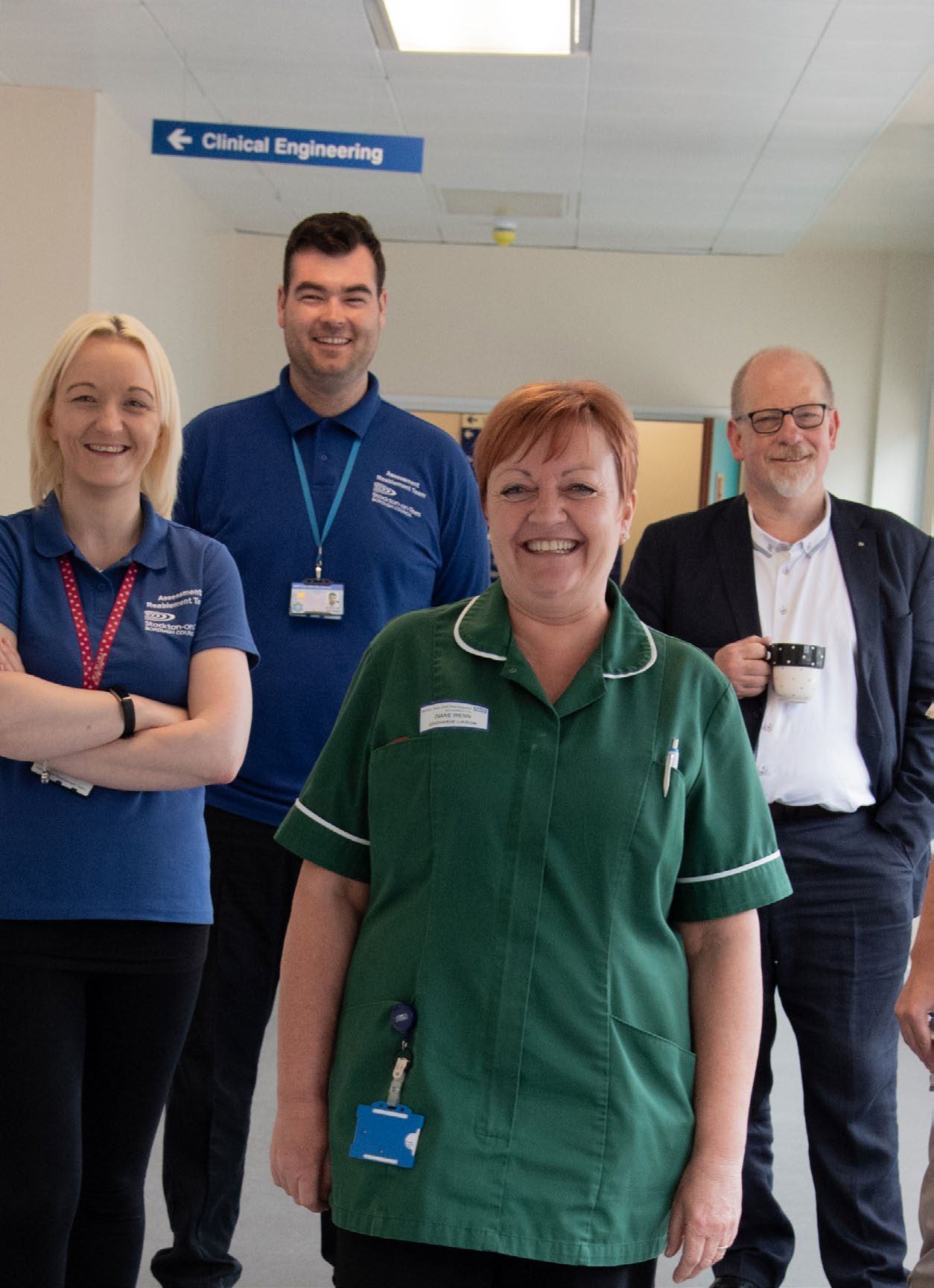
"One of the biggest changes has been how we work with the voluntary sector and the community, which are now at the forefront of our mind when we're setting up new things. Just sharing a kettle, sharing a kitchen space, has made all the difference. The legacy now is that this is how we work."
Senior Clinical Professional, University Hospital North Tees
Impact snapshot: Inequalities
Essex: Learning Disabilities and Autism 100 Day Challenge
This programme aimed to explore what it means for people with learning disabilities and autism to live meaningful lives. A focus emerged to increase the number of employment and volunteering options for people. The aim was to both test a set of ideas to get people into employment and meaningful lives, whilst also stimulating new ways of thinking and working that enabled people with learning disabilities and autism to be in the driving seat of system changes.
Snapshot of Impact for Essex: Learning Disabilities and Autism 100 Day Challenge
- People: Curate Insights icon
- Organisations: Gear icon
- 36 organisations involved
- Places: Location pin icon
People
300 people involved
Transformation at an individual and collective level:
"I'm not used to talking to strangers and that, at first it was a little bit scary but now I feel good being in a room full of people. I've got a lot more friends now and I like the confidence that it's given me."
Callum, Trainee Gardener at Barley Twist Garden Services, work-based training enterprise for adults with learning disabilities
Organisations
36 organisations involved
Reimagining and re-commissioning of Essex County Council's largest day centre provider Essex Cares Limited (ECL). This saw traditional day centre provision transformed from a building based offer, to an innovative inclusive employment and community inclusion service: L.I.V.E (Learning, Independence, Vocation and Employment).
"The LIVE contract and Inclusive Employment that was conceived in the 100 Day Challenge is steaming ahead in Essex. The lifetime savings are already up to £15m for Essex County Council... There are 129 life changing stories (so far!)”
Joe Coogan, Director of Operations at Essex Cares
Places
Essex
Established a blueprint for future commissioning intentions (Nick's rule): making sure that Local Authority decisions take into account empowerment, co-production and enablement. This was a catalyst for how Essex County Council works in partnership with citizens, bringing co-production to life at scale. Essex County Council is now working towards the ambition for Essex to be the most inclusive county and have the highest employment rates nationally.
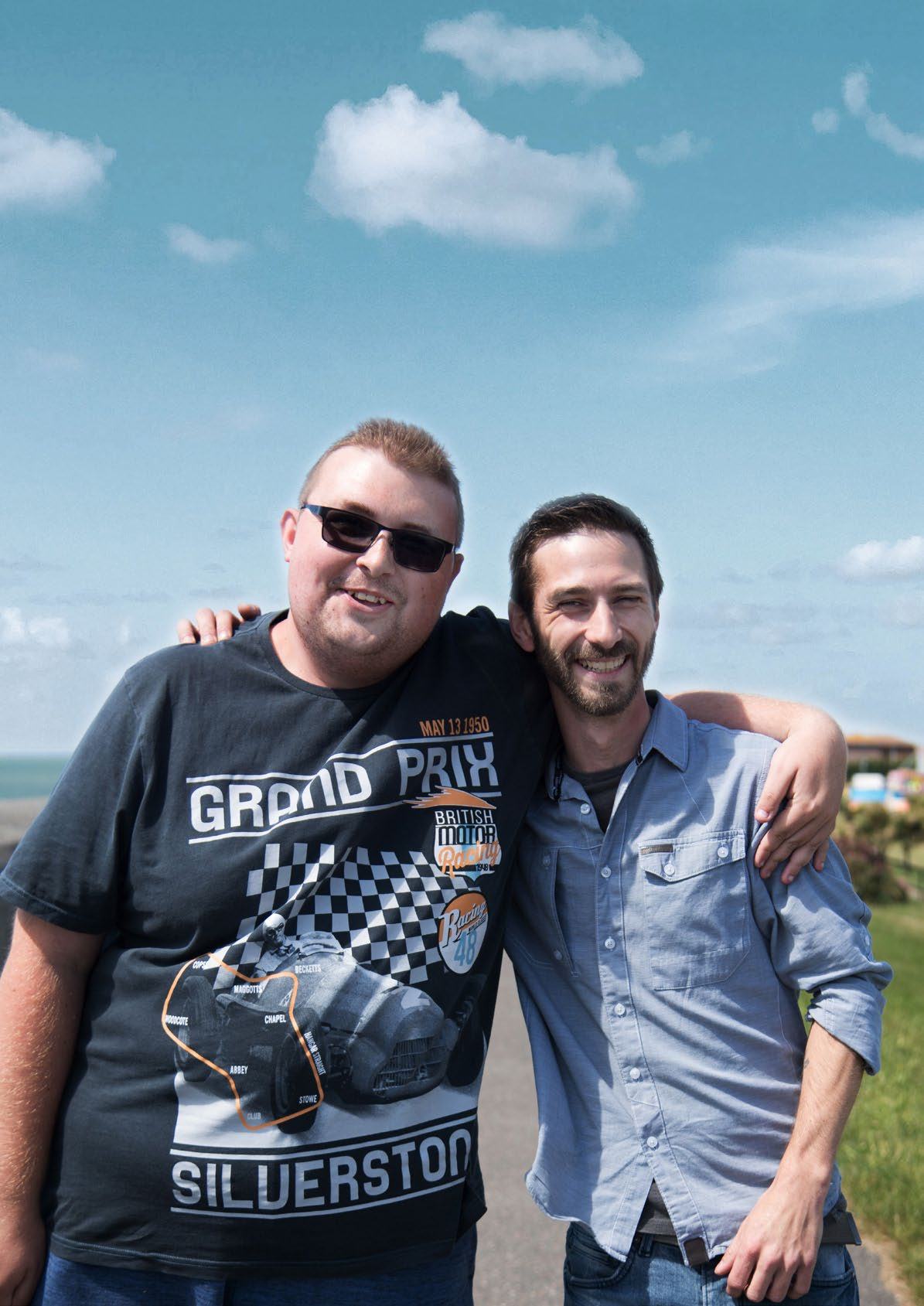
“I jumped in straight away, because I really want to make a difference and it's an actual legitimate chance for myself and Callum, being from Canvey [Island], to make Canvey a better place for us. Our team comes from all different backgrounds – everyone has got their inputs, their contacts, and it's really useful because some people can talk and make connections where I can't. We all come together really well.”
John, Community Care Assistant
Impact snapshot: Health
Through the People Powered Health agenda, we have been working to embed personalised care in policy, strategy and practice so that it becomes a reality for people's experiences across England (and beyond). We have worked closely with NHS England, and different parts of various local health & care systems, over the last 10 years using a range of methods. Impact includes:
At a local level
Supporting multiple systems through 100 day challenges to adopt and scale personalised care:
- Stockton: The Home Safe, Sooner initiative saw a 35% increase in delayed discharges; a 41% increase in A&E attendances, and 19% increase in zero-day admissions to A&E alongside projected savings of of £900,000, and was named best integration project at the North East, Cumbria and Yorkshire and Humber commissioning awards.
- Hertfordshire: focussed on aged 65+ with a diagnosis of depression or anxiety. The teams achieved 19% reduction in A&E attendances, 11% reduction in 0 day admissions and 18% reduction in 1+ day admissions
- Tameside: focused on those at risk of Diabetes. At the end of the challenge, 49% were no longer Pre-diabetic and 67% had reduced their blood sugar (Hba1c levels).
At a Regional level
Working through devolved health and care structures to support uptake of personalisation across Greater Manchester, including:
- Supporting Greater Manchester Health and Social Care Partnership (GM HSCP) to write their Population Health Plan with a people powered focus.
- Working with the Person and Community Centred Approaches team to test new way of supporting Boroughs to meet their mandated commitments around personalisation.
At a National level
Working with NHS England (NHS E) on developing the personalisation agenda (2016-2019) and Improving Elective Care (2017-2019).
- Influencing NHS E's Long Term Plan (2019), which committed to personalised care at scale across England
- 100 day challenges run in multiple systems and settings.
- Advising on development and implementation of Universal Personalised Care (following the Long Term Plan)
- Supporting NHS E to take a collaborative approach to co-developing national guidance, including peer support and strategic co-production
- Co-designed the Peer Leadership Development Programme to support people with lived experience to step into strategic co-production roles across the country (over 2,000 learners currently enrolled following a 2021 launch)
"A rapid access clinic for IBD patients has been set up in week three. We've been trying to do that for three years!”
Chief Operating Officer & Deputy Chief Executive, Stockport NHS Foundation Trust
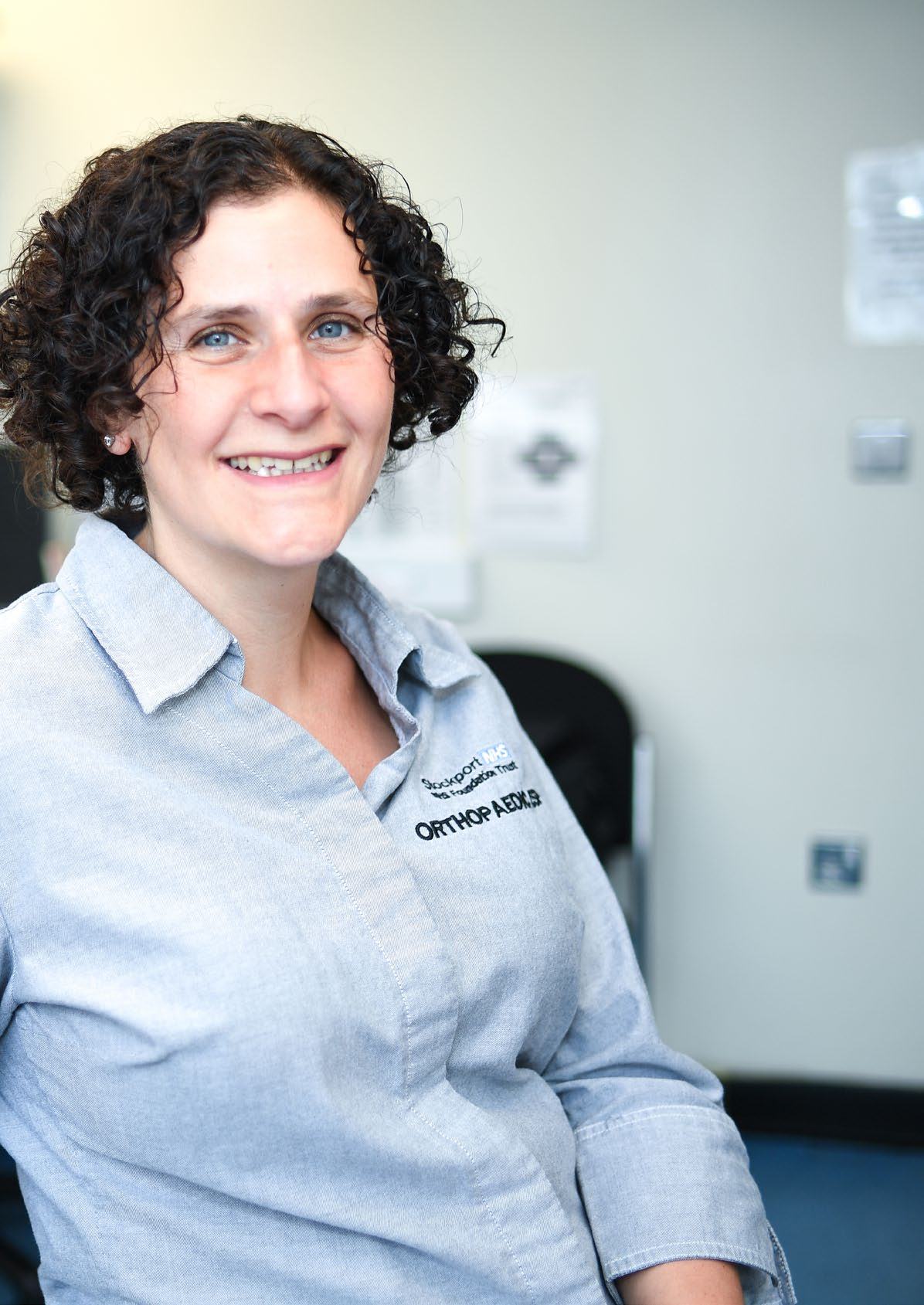
“Personally, being given permission to test things out in a safe environment meant I felt I could try risky things and no one was going to worry if they didn't work. And when they did work it was very satisfying, and to see results in a relatively short timeframe. I see the approach as totally transferable to anywhere within the NHS."
Team Leader for Orthopaedics Assessment Service, Stockport NHS Foundation Trust
Proudest moments
Listening to learn in Wales
Snapshot of Listening to Learn initiative in Wales
- Curate Insights (icon)
- Wales (icon)
- 25 organisations involved
In Wales, a community visioning programme began in the upheaval of Covid, as community groups stepped-up to show just what community-led action can do. With our partner, Wales Council for Voluntary Action, and a host of senior community developers we set out to listen to community groups to explore what helped and what hindered their work. In particular we were keen to learn more about the role of communities in how they could develop capacity to respond to challenges and opportunities to build a fairer, greener, healthier future.
We discovered developing trust was essential before people felt able to share their experiences. Our active community groups told us statutory services often approached them expecting the groups to support their assumptions about what would work in their communities. Even in the groups themselves, competing interests and priorities often held back open dialogue and stifled efforts to move forward.
But how could we move past this? We worked to build safe, creative spaces where people had the time and opportunity to voice their own dreams and priorities, and looked directly to the community for solutions. In one event we used a listening activity pioneered by one of our support groups for unpaid carers. People were supported to tell their story, setting out their inspiration for becoming active in their community. Team members were supported to listen from specific perspectives as a way of consciously acknowledging differences.
The activity generated incredibly rich feedback and unearthed unexpected reactions and observations. The whole event helped to establish common ground, without the need for people to persuade or be persuaded of any particular viewpoint. We used these techniques to work on our listening and feedback skills to deepen our understanding of each other and strengthen our attempts to work together.
“If we can empower communities to take more control of their lives things will change. Listening has made us realise the potential we all have"
Credu team member
Diagram showing a visual representation of a community vision, with signposts to different services and opportunities.
Key elements include:
* Day Centre
* Garden Opportunities
* Connect with Purpose
* Information
* Playing Field
* Community Centre
* Youth Club
* Community Library
* Bowls Tea Thursday Club
The diagram illustrates a path connecting these elements with people moving along it.
Creating space for change in Shetland
Snapshot of Creating Space for Change in Shetland
- Curate insights (icon)
- Shetland (icon)
- 14 organisations involved
In 2022, we worked with Shetland Islands Council to test a new approach to working with residents, building capacity and opportunities for the Council to have more collaborative and inclusive conversations in the future.
After co-designing a process with a range of people in the public sector and the community, we helped organise and run events where we spoke to people in different locations about what they liked about living in their area, and what they wanted to see change.
This included a local school, whose headteacher had been involved from the start, and was keen to support as many of their young people as possible to share their views.
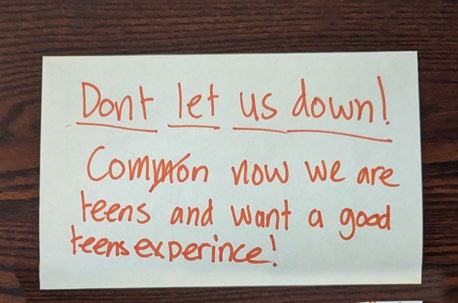
We spent an entire morning at the school. Although the assembly hall full of teenagers had been unsure what we were doing there to start with, many of them really warmed up to the conversations.
We could hear the excitement in the room as young people started sharing ideas for change.
The importance of good public transport came up again and again. People began to mobilise around the issue, with young people offering to crowdsource funds for a Sunday bus, and the offer of council staff attending a parents' meeting to understand how the issue was impacting families.
Even before the process had closed, we heard that these conversations were challenging assumptions and directly impacting on budgeting decisions. You can read more here about this work and access some of PPR's resources to support community engagement in Shetland's north mainland.
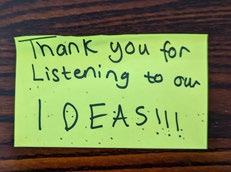
"I feel listened to... We learnt we can make a difference"
A young person who took part
A strategy owned by a whole city, Liverpool
Snapshot of Good Food for All initiative in Liverpool
- Shaping new visions (icon)
- Over 1,000 people reached
- Liverpool (icon)
- 92 organisations involved
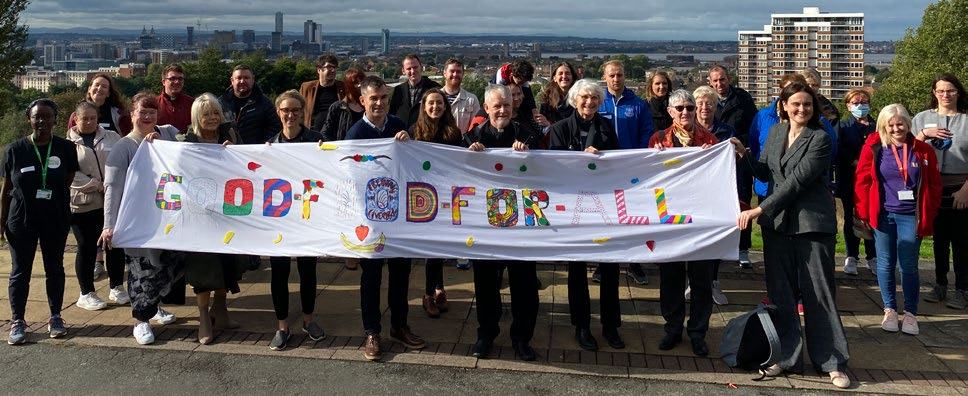
In 2021, we worked with Liverpool's Food Insecurity Taskforce - with representatives from the city council, Public Health, universities and the voluntary and community sector - to codesign and publish Livepools Good Food Plan, a strategic plan to address key issues related to food in Liverpool.
Early in the co-design process, the group were working on articulating their vision for the future. Views varied, some talked about nutritious food, some focused on accessibility while others talked about farming and sustainability. We focussed on facilitating a safe space, where diverse opinions could surface and be heard and where people had the opportunity to understand the world through the lens of others. This allowed the group space to listen and build consensus around a way forward that honours the understanding that 'good' food means different things to different people. So instead of trying to pin down a definition, they set their ambition as 'Good Food for All' and took the question of 'what does good food mean to you?' to the public.
This small yet powerful shift set the foundation for a vision and a plan of action that is owned by everyone in the city. In 2022, 92 organisations and 1000 people engaged with Liverpool's Good Food Plan in different ways and £368,000 has been distributed to the 'Good Food' network to support work towards this shared ambition. Read more in their latest impact report.
"We've created a 'moment in time'. There is fresh impetus. It feels like we're not stuck and that it's not incremental change."
Participant in the Liverpool Good Food Plan
'My son is back to his normal self', Midlothian
Snapshot of Midlothian initiative: "My son is back to his normal self"
- Make it real (icon)
- Midlothian (icon)
- 19 organisations involved
Children and teachers created shared visions for new classrooms before bringing these to life in ways that improved wellbeing and mental health.
In 2019 PPR worked with Midlothian Council, health, care and education partners to improve children and young people's wellbeing through a 100 Day Challenge.
This was in response to rising numbers of children and young people on long waiting lists for mental health support, particularly during transition points between primary, secondary and further education.
A teacher in one of the 100 Day Challenge teams noticed that children in her primary school class were struggling with the transition. So they decided to try a different approach: what if pupils were in charge of creating their 'dream classroom' together?
The children came up with a bold vision, involving a classroom quiet space, a giant teddy, and personalised Tool Boxes with lots of things to help each child cope during difficult times.
Soon after, parents and school staff noticed that the class was far more settled and 'back to their normal selves'. One year on, the school had rolled out this approach across every year group, from nursery to the last year of primary school, supporting 195 children to create 'pupil-powered classrooms'.
Where did this impact emerge from? Simply a teacher taking the opportunity to think differently and giving the children a chance to use their imaginations and take ownership over their environment.
"We are making the things from the [action plan] come true and we are fulfilling our wishes and it is making everyone a lot happier because we are seeing it come true. I used to see everyone just sulking but now people seem happy”
Primary school pupil
New forums, new opportunities, Essex
Snapshot of New Forums, New Opportunities initiative in Essex
- Make it real (icon)
- Essex (icon)
- 36 organisations involved
A new forum, primed for listening and experimentation, enabled ideas to quickly take shape and new ways of working to be hardwired into the system.
In 2019, we worked in partnership with Essex County Council to run a 100 Day Challenge to increase opportunities for people with a learning disability and / or autism to live meaningful lives. Participants were drawn from a wide-range of local organisations and the community itself, including people with lived experience, parents and carers.
At the 100 Day Launch, a young man with a learning disability was voted as team leader for one of the three challenge teams.
When it was his turn to share his team's ideas, he added in one of his own. He told the group that a meaningful life for him would include being able to play cricket in his local town. He would like to set this up but didn't know where to start.
People started putting their hands up almost immediately, with offers of help ranging from sourcing some kit, to connecting with the training lead at Essex County Cricket Club and hosting the cricket matches.
The idea grew as more people got involved. The creative and open forum provided a sense of pace and accountability that lasted throughout the 100 days, during which the cricket team was set up, training session run and matches played.
Louise, a young woman with a learning disability and autism, was also voted as her team's leader. Over the 100 days, she worked with her team to test her 'one stop shop' idea in her neighbourhood. At a single session 20 people got advice from professionals including social workers, voluntary sector care providers and employment advisers, leading to them being rolled out on a monthly basis.
Many ideas like these were brought to life throughout the course of the 100 days, but a larger, more systemic change was also underway. The conditions had been created for key stakeholders to try out a new approach to supporting people with a learning disability or autism to live a more meaningful life.
The result? The re-commissioning of the Council's largest day centre provider to an innovative and inclusive employment and community inclusion service. One year on, the Inclusive Employment service supported 129 young people into paid employment and led to £15m in lifetime savings for the Council.
What was the difference here? Our team leaders were given an opportunity tell us what they wanted, and there was the right mix of people in the room who were able to work alongside them to make it happen.
A simple approach on the surface, but how often do we create a genuinely level playing field (or should that be cricket pitch)?
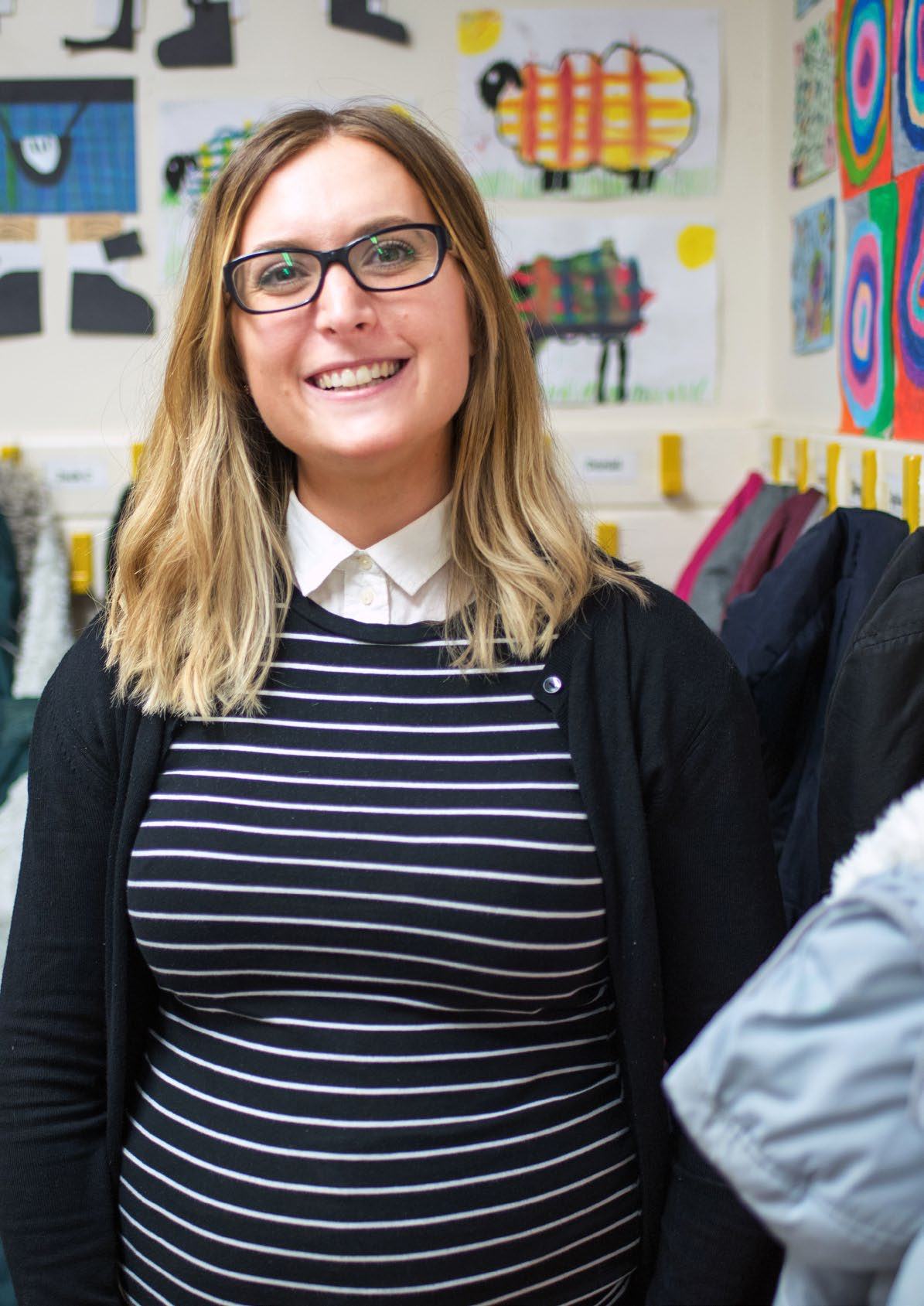
“I'm not used to talking to strangers and that, at first it was a little bit scary but now I feel good being in a room full of people. I've got a lot more friends now and I like the confidence that it's given me.”
Callum, Trainee Gardener at Barley Twist Garden Services, a work-based training enterprise for adults with learning disabilities
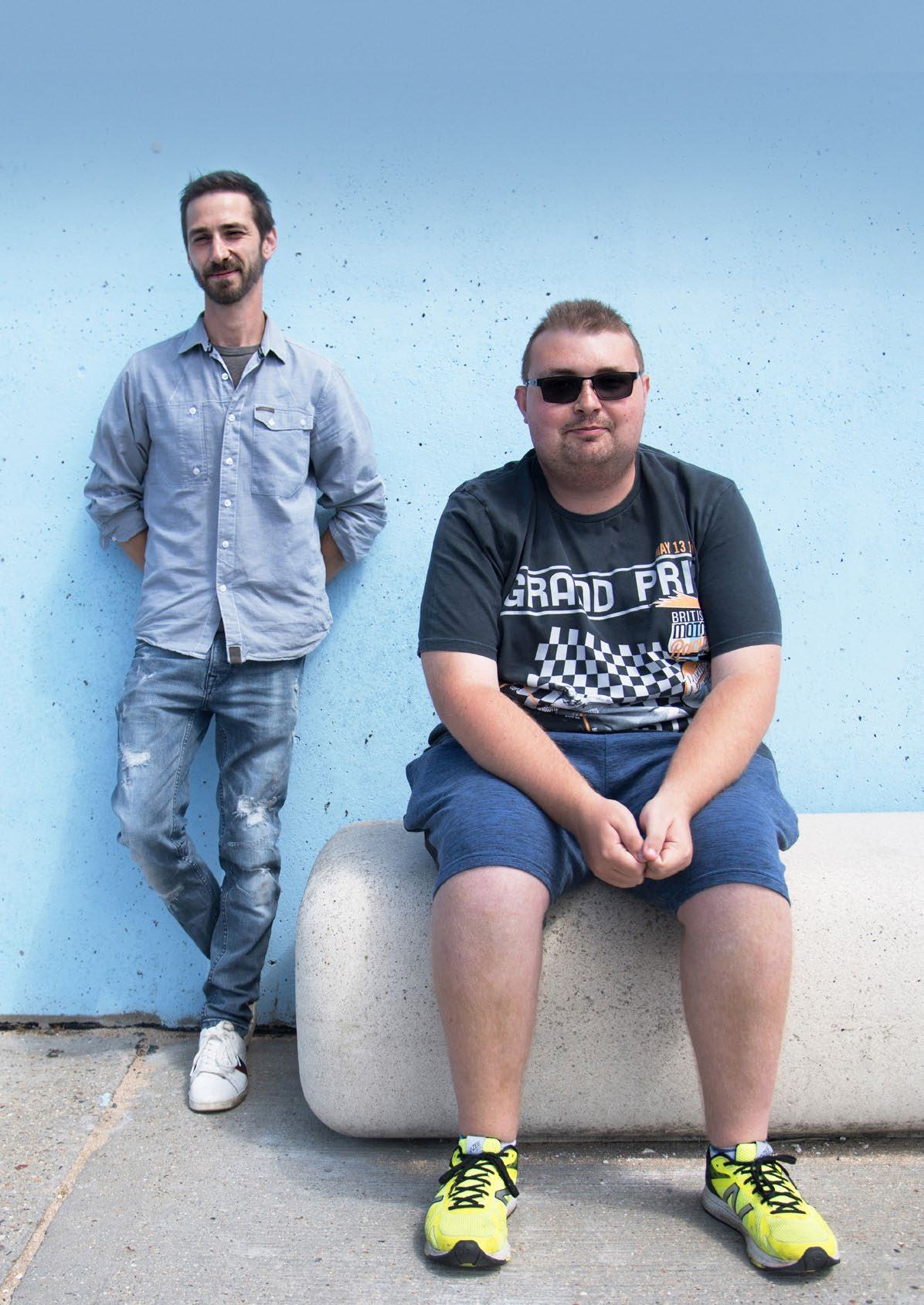
“I feel happy, I want to help others to achieve their dreams in life. I feel that I have found the correct job role for me, and my dream is to now to help others.”
Louise, 100 Day Challenge Team Leader
Three 100 day challenges in a row? If anywhere can, Manchester can!
Snapshot of Three 100 Day Challenges in Manchester
- Make it real (icon)
- Manchester (icon)
- 21 organisations involved
Increasing the impact and sustainability of new ideas by building capacity to approach change differently across Manchester
PPR worked in partnership with Manchester Local Care Organisation (MLCO) to run three consecutive 100 day challenges. MLCO had recently set up 12 integrated neighbourhood teams across the city of Manchester with the aim of designing, delivering and ultimately improving services with local people, for local people. PPR worked to build the skills and capabilities of those involved in the 100 day challenge to take on the methodology for themselves, when they might need it in the future.
The development of Manchester's 12 integrated neighbourhood teams worked (4 neighbourhoods at a time) towards building a culture of distributed leadership (across sectors, systems and structures). Stronger communication and more robust relationships were built between health and care workers, service providers and their communities.
We built capacity within and across Manchester's health and care system to lead a test and learn approach. The methodology has been utilised further throughout Covid-19 and continues to be referenced and used by practitioners today.
The issues covered were diverse and wide-ranging from lowering blood sugar levels (HbA1c) in Urdu speakers to decreasing childhood obesity in primary school children, from improving engagement with men in a particular block of flats to increasing the number of asylum seekers reporting to their GP.
"Already, you will have saved some lives, or done something that would have changed somebody's life course. There is nothing more important than that in what you're doing. This work has really squeezed the toothpaste out of the tube, there's no going back."
Michael McCourt - Executive Director MLCO
“...challenge participants told us how useful the experience had been in helping them to build relationships with peers and grow their networks within neighbourhoods. Through their challenge, the neighbourhood teams learned that leadership means understanding the value of each other's perspectives and feeling like your team members ‘have your back on a bad day’.”
Organisational Development Lead MLCO
Power Shift in Action: Peer Leadership Development Programme
Snapshot of Peer Leadership Development Programme
- Make it real (icon)
- England (icon)
- 15 organisations involved
A national effort to shift power out from the centre, into the hands of people and communities
We have a long history of working in personalisation, underpinned by the ambition of a more person and community-centred health and care system. 2019 saw NHS England (NHS E) launch Universal Personalised Care following the publication of the Long Term Plan. This contained a series of commitments and actions to realise the ambitions for personalised care to become a reality for everyone across the country.
One such commitment was to develop the Peer Leadership Development Programme (PLDP) to scale the number of peer leaders: people with lived experience actively working to support co-production efforts within systems. Since 2019 we have partnered with the personalisation team at NHS E to develop, test and grow the PLDP.
Underpinning the development of the programme was a desire to begin intentionally shifting the base of where power and control sat from within the inner workings of NHS England out into local health and care systems and communities more widely. To enact this, the course has been developed as free, open to anyone, and with the aim of building up the knowledge, skills and confidence of people wanting to effect change within their health and care systems. It actively recognises knowledge and lived experience as a form of power that helps equip people to demand better for themselves, their loved ones, and the wider community.
To date, the course has had almost 5,000 enrolments and a number of partnerships with local systems. Feedback from learners is excellent. Participants have reported an increase in their knowledge and understanding of personalised care, alongside their confidence to apply what they have learnt to support others.
"Knowing what we have each brought to the table and how we can collectively work together to bring about change for the benefit of others, is really powerful.”
Peer Leader
Diagram illustrating a multi-level structure with people participating at different levels, signifying collective effort and growth.
People are shown at the base of a structure, which resembles a bar chart or steps, with some reaching higher levels.
The magic happens at the intersection, HARP programme, Wales
Snapshot of HARP Programme in Wales
- Make it real (icon)
- Wales (icon)
- 95 organisations involved
Bringing the creative power of art into complex challenges within Health and Care systems in Wales
From 2019 to 2022 we were a partner on the HARP programme: Health Arts Research People. This programme focussed on Arts & Health in Wales, and was, in many ways, a practical expression of our principle "Creativity can cut through complexity".
There's a well established body of work in the Arts and Health sector in Wales, with examples of how arts interventions can be applied to help improve people's wellbeing and clinical outcomes. The HARP programme took this a step further to ask the question how might creativity and the arts play a role in addressing inequalities and supporting the health system with its biggest challenges?
The programme helped to curate partnerships between health and care institutions and artists to explore issues including reducing stigma for survivors of sexual violence (Messages of Hope) and telling the stories of black frontline healthcare workers through the pandemic (Doing the Write Thing).
What became clear here was that the arts were able to open up conversations and unpack issues in a way which shone fresh light, understanding and possibility on issues that were all too easily pushed to one side and neglected, particularly where trauma was involved. Whether that was conversations around systemic racism, or increasing referrals into support services for sexual violence survivors, the partnerships served to demonstrate the power of bringing together types of knowledge and experience that might otherwise be seen as incompatible.
Crucially, the programme also engaged academic partners, to explore how to start to put robust forms of academic rigour around these kinds of approaches as well, which has helped to create broader credibility and interest in the interventions.
Illustration of a stylized tree with a window in its trunk, depicting various scenes and emotions related to mental health and well-being.
Scenes include:
* A person crying in bed under a starry night sky, representing sadness or distress.
* One person comforting another with an ice pack and water, representing care or empathy.


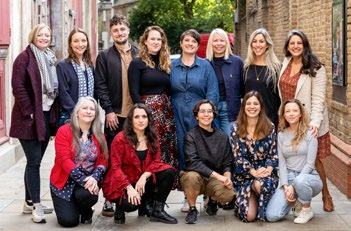
The people behind People Powered Results
The people behind the methods...
Catherine Russell
Co-Director
Kate Simpson
Co-Director
Lou Endersby
Senior Manager
Nadeen Haidar
Senior Manager
Izzy Romilly
Consultant
Rose Minshall
Senior Consultant
Robert Jamieson
Senior Consultant
Irene Knowles
Team Coordinator
Christine Owen
Senior Manager
Mathilde Gouin
Designer
Rosie Reynolds
Senior Consultant
Rachael Glover
Senior Consultant
Elena Sabatini
Senior Manager
Babs Lewis
Senior Manager
Halima Khan
Founder and Previously Executive Director, Nesta Health Lab
Nadim Matta
Co-founder - Re!Institute
Daniel Farag
Previous Director, People Powered Results
Boxed text with additional acknowledgements.
With additional acknowledgements and thanks to former PPR team members, partners and everyone we have had the opportunity to work with.
Thank you to everyone who has been part of this work, for joining us on our journey, we look forward to seeing where People Power takes you in the future!
Nesta would like to thank Mike Green for designing this publication, Beth Crockatt for the photography and all the people who shared their stories.
58 Victoria Embankment
London EC4Y 0DS
+44 (0)20 7438 2500
[email protected]
@nesta_uk
f nesta.uk
www.nesta.org.uk
ISBN 978-1-913095-89-5
Nesta is a registered charity in England and Wales with company number 7706036 and charity number 1144091. Registered as a charity in Scotland number SC042833. Registered office: 58 Victoria Embankment, London EC4Y 0DS.