Technical findings from the audits
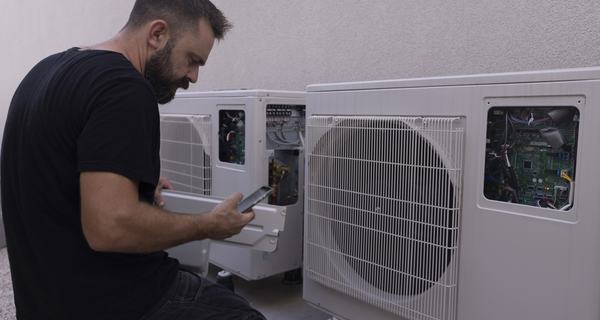
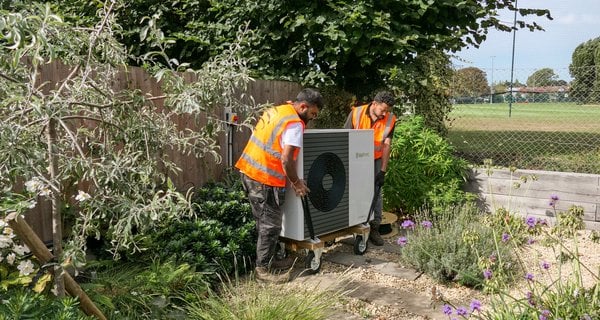
As part of this project, Nesta funded a number of technical heat pump audits and repairs in social housing properties in the Bristol area. The properties were a diverse mix of homes, consisting predominantly of 1- or 2-storey flats alongside terraced and semi-detached properties of varying ages. This sample spanned both new-build developments and retrofit installations where the technology replaced a legacy heating system. Heat pumps of varying brands had been installed by a mix of different contractors, with an average heat pump age of 7 years and the oldest being 17 years old.
The technical Nesta-funded audits were completed in 39 properties between June and November 2025. The audits assessed the physical state of the heat pump, commissioning settings, overall system design and recorded recommendations for future repair work that would improve the performance of the system. Following these initial audits, engineers returned to 30 of the same properties between January and June 2026 to conduct the repairs recommended during the audits.
The findings from these audits build upon a previous pool of 53 technical audits conducted by Bristol City Council in partnership with the Microgeneration Certification Scheme (MCS) and the University of Bristol, which included 28 social and private home retrofits in 2024 and 25 new-build social homes in 2025. While the methodologies differed slightly between auditing rounds, meaning not all metrics are directly comparable, key areas of alignment have been highlighted where relevant.
More details about the research, audit and repairs process can be found in the project methodology document. To support other social landlords, we have also made our auditing and repair frameworks available as open-access resources.
System performance
System efficiency is measured using the Seasonal Performance Factor (SPF) [3], a ratio for how much useful heat a system delivers for every unit of electricity it consumes. The MCS minimum design requirement is 2.8. This means that for every 1 kWh of electricity consumed, the system should be designed to deliver at least 2.8 kWh of useful heat to the home.
Of the 39 heat pumps audited, system efficiency data was only accessible in 15 cases, yielding an average of 2.79 and ranging from 1.9 to 3.3. This gap in data availability is largely due to the age of some of the systems, as newer heat pump models are more likely to record and make system efficiency data viewable via digital displays. The oldest install with efficiency data available was five years old, and we hypothesise that older installs were likely to have lower performance due to longer periods without maintenance and older heat pump models.
These findings mirror the results of previous rounds of audits:
- Out of the 28 retrofit audits done in 2024, only 16 had accessible performance data, averaging 2.6.
- Performance data was available for all 25 new-build properties audited in 2025. These systems achieved an average efficiency of 2.95. While this slightly outperforms the older cohorts, the figures are still low given that these units were installed in new builds with modern radiators and pipework.
Currently, an efficiency of at least 3.0 is required to achieve running cost price parity with a gas boiler [4]. Well-installed heat pumps can be highly efficient, with the best installations reaching efficiencies of 4.0 or higher [5], making them cheaper to run than fossil fuel systems. Even larger, less self-selecting samples are starting to show relatively high averages: Octopus Energy’s Cosy dashboard reports an average of 3.78 across its fleet of heat pumps [6], while Aira’s heat pump dashboard reports winter efficiencies of 3.79 [7].
Issues identified
High heat pump performance relies on an interconnected chain of good practices across the entire installation lifecycle: accurate heat loss calculations, robust system design, high-quality physical installation, correct operation, and precise commissioning. If one of these links is weak, it can affect the real-world efficiency of the system, sometimes significantly.
All 39 audits conducted in this project identified issues in at least one, and often several, of these areas. The 53 prior audits completed by Bristol City Council revealed the same. All of the 92 systems audited across the different phases had issues, which help to explain the poor efficiencies recorded across the board.
Heat loss calculations and system design
Accurate heat loss calculations and proper system design ensure the heat pump is the right size for the home and is paired with the correct size of radiators and pipework. Together, they allow the system to run at the lower, steady temperatures required to keep energy bills as low as possible.
In the vast majority of the 39 audits, the original heat loss calculations and system design documents were missing. Council staff indicated that these records were either never handed over by the contractors or were not completed in the first place. Because this information was not available to the auditors, they were unable to verify whether the heat pump systems were appropriately sized and designed for each property.
The audits found evidence that system designs failed to account for actual household occupancy and lifestyles, particularly hot water use. For example, in some cases, the Nesta-funded audits uncovered instances where large hot water cylinders had been installed in properties that used electric showers. This meant that far more water was being heated and maintained at temperature than the household needed, as the tank was being used solely to supply hot water to sink taps. Previous audits undertaken by Bristol City Council in 2024 revealed that many of the installs assumed three-person occupancy, despite many homes having over five residents, leading to hot water shortages.
Physical faults
Poor installation can lead to unnecessary heat loss, lower performance and premature equipment wear. Across the 39 properties audited in the Nesta round, basic installation oversights were found in 35 properties.
Inadequate external lagging was the single most common issue, identified in 20 of the 39 audits. External pipework had been left entirely uninsulated or protected by low-grade lagging that had severely degraded over time. Incorrectly lagged external pipework causes unnecessary heat loss, resulting in tenants' heat pumps having to use more electricity to supply enough heat to reach target temperatures. Other common issues included missing or poorly fitted internal pipework insulation, insufficient cylinder lagging and inadequate controls.
Engineers were asked whether there were any immediate safety concerns that needed addressing, such as live wires or trip hazards. There were two cases where engineers responded to this question with a recommendation to re-sheath external cables that had degraded. However, these were preventative maintenance measures rather than critical safety risks, as no live wires were exposed.
These physical faults closely mirror issues identified in the previous rounds of audits, which included widespread pipe lagging and water seal issues, unlevel heat pumps, unsupported/unsheathed electrical cables and a lack of condensate management.
Commissioning
Commissioning is the process where the installer sets up the system to ensure it runs safely and in line with manufacturer specifications, which directly dictates how efficiently the heat pump will perform. The audits revealed that the majority of systems were poorly commissioned.
Most notably, weather compensation, which optimises performance by automatically adjusting a heat pump's flow temperature based on the outdoor temperature, was found to be disabled in 36 of the 39 properties. This likely had a significant impact on the systems’ efficiencies, as correct configuration of weather compensation has consistently been identified as the factor most strongly associated with high efficiency. Fixed flow temperatures were used for all heat pumps not using weather compensation. This means that a constant water temperature was passed around radiator pipes, regardless of the temperature outside.
The previous round of audits in new builds confirms these findings. In those instances, commissioning flaws were the primary issue recorded by auditors, and fewer physical defects were present. Common issues included heating curves [8] that were set incorrectly, weather compensation not being enabled (often because the wrong room temperature mode had been selected), and poorly optimised hot water temperatures and timings.
The absence of weather compensation highlights a common tension between technical best practice and tenant satisfaction and education. Because weather compensation runs the system at lower flow temperatures, radiators feel warm, rather than hot to the touch. In many cases, residents who previously reported having “cold radiators” had their weather compensation disabled and replaced with a higher fixed flow temperature to resolve the complaint.
--------
[3] To keep this report accessible to all readers, we use ‘efficiency’ or 'seasonal performance' instead of SPF to describe the real-world system performance of the heat pump.
[4] As of July 2026, a heat pump using a flat rate tariff requires efficiency of 3.026 to achieve running cost price parity with a gas boiler that is 85% efficient, assuming a price ratio of 3.56 between gas and electricity.
[5] On Heatpumpmonitor.org, performance data is voluntarily submitted by pump owners and installers, meaning that it likely represents better-than-average heat pump systems.
[6] As of July 2026.
[7] As of July 2026.
[8] A heating curve determines how hot the water sent to the radiators needs to be based on the outdoor temperature. If a home is heating up too slowly or too fast, this curve can be adjusted to improve both the resident's comfort and the heat pump's efficiency.