Repairing the heat pumps
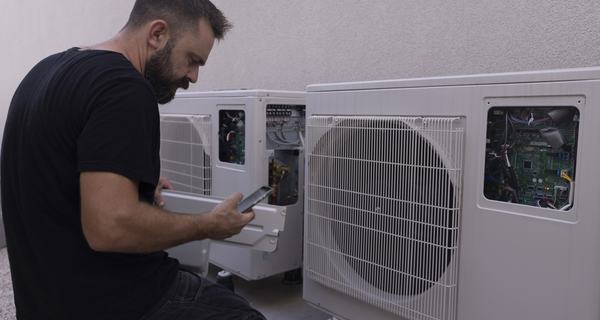
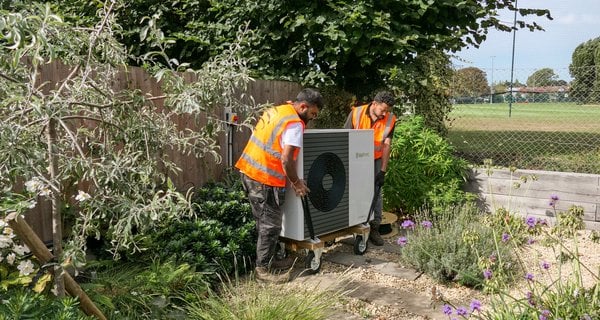
During the audits, engineers identified and completed a range of repairs aimed at improving the efficiency of the heat pumps and the thermal comfort of the residents. Our approach to these repairs was specifically designed to be deliverable at scale, focusing on testing low-cost fixes that could potentially be implemented across a wide range of installations. We expect that these repairs will improve heating efficiency, but due to the time limitations of this work, we were unable to verify this with post-repair data.
Engineers provided recommendations for return visits with a priority rating of high (repairs considered critical for the comfort of the tenant), medium (recommended to ensure efficient operation of the heat pump), and low (not critical to efficient operation but recommended). In total, we recorded 17 high priority repairs, 35 medium priority, and 10 low priority. There was some subjectivity with the ratings between engineers, as similar recommendations were occasionally observed across different priority levels.
Auditors were also encouraged to perform and log any commissioning changes or fixes they made on site that they considered to be an immediate necessity for the comfort of the residents. During these initial visits, engineers reduced the flow temperature in 17 homes by between 1-5℃ to improve system performance.
These recommendations were provided to returning engineers along with a set of standardised commissioning settings. Engineers were able to revisit and apply the recommendations to 30 homes, while also conducting further fixes that they deemed necessary at the time of the visit. There were only a small number of additional fixes carried out during visits that were not recommended during the original audit; these included basic actions such as bleeding radiators, cleaning evaporator fins, or replacing batteries in thermostats.
Excluding VAT, the average cost of each repair visit was ~£204 [9], with 94% of the total cost of repair being labour and the remaining 6% being parts and sundries.
Impact of repairs on tenants’ satisfaction and engagement
We conducted six telephone interviews with tenants across April and May 2026 following remediation work completed earlier in 2026. Only six telephone interviews were conducted due to many of the tenants being unavailable when called. While these follow-up interviews provided valuable qualitative insights, they must be treated as indicative due to the small sample size and seasonal timing. Even so, a few notable insights emerged from these conversations.
Potential benefits for bills and comfort
Some tenants reported observing reduced running costs through lower electricity charges. While we do expect the repairs to improve heating performance, we note that they were conducted late in the heating season as outside temperatures were rising. Thus, while we view these observations as a positive signal, we do not have sufficient evidence to validate the tenants' reported experiences. In addition, one tenant noted improved domestic hot water temperature as the engineer had lowered its temperature and they no longer needed to mix in cold water for comfortable use.
Mixed success of post-repair handover
Tenants were given a new handover to show them how to use their heat pump correctly when the repairs were completed. We heard that some tenants struggled to recall the content of their handover, with some feeling overwhelmed by the information given when they were shown the main control panel. Tenants most commonly remembered being shown how to use their thermostat and having a new schedule set, although one tenant declined to have a schedule as they preferred to manually turn their heating on and off.
Handover leaflets were misplaced
Tenants were provided with a leaflet during their handover to provide key information to refer back to. The leaflets included analogous examples and visualisations to increase the accessibility of the information provided by the engineers. The tenants we spoke to commonly remembered being given the leaflet, but most remarked that they had put it down, forgotten about it, and were now unable to find it. None of the tenants were able to recall any of the information included in the leaflet.
Concluding reflections on tenant repair experiences
Although we only spoke to a small number of tenants in our follow-up interviews, early feedback on the audits and repairs was largely positive. Some tenants reported improvements to their heating and bills, although the proximity of the interviews to repairs and increasing external temperatures means it is too soon to validate these outcomes. Tenants felt that the engineers had conducted themselves in a professional manner and some remarked that they appreciated having an expert visit. We also saw that conducting audits and repairs was a good opportunity to engage with tenants and reconduct handovers, although single points of contact or leaflets are not sufficient on their own. Despite leaflets being lost, we saw indications that repeated points of engagement and professionally conducted repairs increased tenant confidence in and knowledge of their heat pumps.
--------
[9] Day rates or repair costs for engineers could vary greatly depending on a number of factors, such as location and engineer availability.