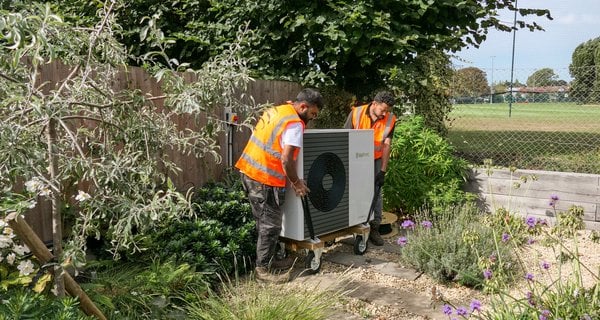
With 4.1 million dwellings representing 16% of all UK households, the social rented sector is uniquely positioned to significantly contribute to the decarbonisation of housing in the UK.
The most effective tool for achieving this is electrifying home heating by installing heat pumps. Heat pumps are a proven, reliable technology. When deployed well, they deliver steady, consistent warmth that leaves the majority of owners highly satisfied. High-quality installations , especially when paired with solar panels, batteries or time-of-use tariffs, provide an opportunity to tackle fuel poverty by reducing utility bills and improving thermal comfort.
While the technology is robust and successfully implemented in the majority of cases, real-world efficiency relies heavily on high-quality system design, installation, commissioning and operation. As with any other heating system, issues within any of these elements can lead to them underperforming, which can drive up running costs and exacerbate fuel poverty.
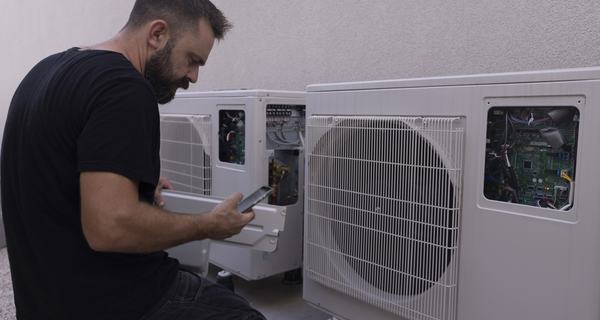
Nesta partnered with Bristol City Council (BCC) to investigate the quality of heat pump installations and the lived experiences of the social housing tenants living with them. This report shares the issues identified during the audits and the simple remediation work we carried out.
To support social landlords in delivering comfortable, high-performing heat pumps at scale, this report is accompanied by a downloadable Action Guide featuring practical recommendations.
An action guide for social landlords
Practical recommendations for social housing landlords across procurement, deployment and quality assurance of heat pumps
Summary findings
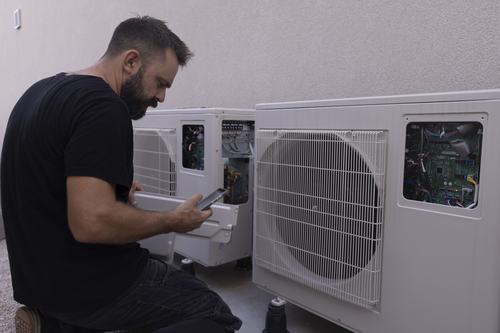
Our findings are synthesised from 39 technical heat pump audits, 30 follow-up repair visits and 37 tenant interviews conducted between 2025 and 2026. These insights are bolstered by 53 prior audits completed by Bristol City Council and the University of Bristol across 2024 and 2025.
While the transition to low-carbon heating represents a vital step towards the decarbonisation of social homes in the UK and an important tool in combating fuel poverty, this research reveals procurement, installation and quality assurance issues that prevent these systems from working at their best.
- All 92 technical audits conducted across the three phases of this work found at least one fault with the design, installation, or commissioning, with the majority of audits identifying multiple system faults. These faults ranged in impact, from inadequate pipe lagging to disabled weather compensation, and affected system efficiency, running costs and thermal comfort, rather than tenant safety.
- Although the availability of system efficiency data was patchy, system efficiencies were relatively poor, with an average seasonal performance of just under 2.8. This falls below the minimum design standard of 2.8 and the 3.0 [1] threshold needed for cost parity with traditional gas boilers.
- Tenant satisfaction was mixed. Most appreciated the comfort and steady warmth, but some faced slow heat-up times, cold rooms, inconsistent hot water, or reported high bills. Satisfaction was mostly dictated by expectations set by their previous systems. Tenants who had previously had electric storage heaters were more likely to be satisfied with their heat pump.
- Low knowledge of heat pumps, stemming from ineffective handovers, compounded these issues, with many of the tenants unsure of how heat pumps work and, as a result, using their heat pump inefficiently.
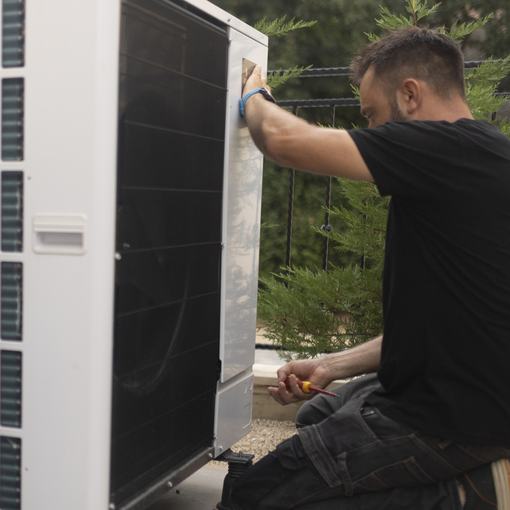
- Repairs of these systems revealed that many of the performance issues could be addressed through relatively quick, low-cost remediation such as replacing external lagging, lowering flow temperatures and enabling weather compensation. Repairs cost an average of £200 [2] per household, with the vast majority of the cost being labour.
The audits suggested that most common problems stem from installation and commissioning rather than heat pump technology itself. When designed, installed and optimised correctly, heat pumps can reach high enough efficiencies to undercut legacy heating systems on running costs, meaning they could be an important tool in addressing fuel poverty. Otherwise, these shortcomings have a significant impact on the social housing sector, as poor performance drives up electricity use, exposing residents to high electricity bills.
To bridge this gap, Bristol City Council is already pioneering solutions, such as improving procurement, updating quality assurance and handover procedures and staff training. These measures, along with further practical recommendations for social landlords, are detailed in the attached action guide.
The audits found similar issues in new builds meeting modern insulation standards as well as in older owner-occupied homes. Other trials, such as the Electrification of heat demonstration project, found a similar average seasonal performance of 2.81 across 742 homes, the vast majority of which were private owner-occupiers, indicating that issues with performance can also occur outside of social housing retrofit.
These challenges need to be addressed now to negate any detrimental impacts on the public’s perception of heat pumps. Ensuring heat pumps are a trusted technology for providing comfortable, affordable, low-carbon heating will be vital for achieving the scaled adoption required for the UK to meet its obligation to decarbonise.
--------
[1] As of July 2026, a heat pump using a flat-rate tariff requires an efficiency of 3.026 to achieve running cost price parity with a gas boiler that is 85% efficient, assuming a price ratio of 3.56 between gas and electricity.
[2] Day rates or repair costs for engineers could vary greatly depending on a number of factors, such as location and engineer availability.