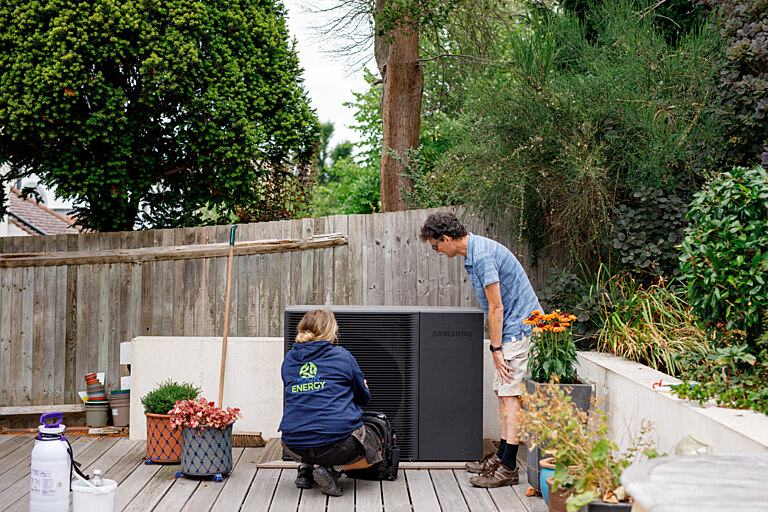
Social housing providers are installing more and more heat pumps, both to replace gas or oil boilers in existing homes and in new builds. Heat pumps are highly efficient and work well in the vast majority of homes, but, as with any other heating system, their efficiency relies on them being well designed for the specific home. This means sizing the heat pump and radiators to the home’s heat loss and setting the flow temperature (the temperature of the water sent to the radiators) low enough to minimise running costs.
Designs are usually produced by the installers and passed on to the social housing providers to check before installation begins. Many social housing teams do not have the heat pump expertise to check these designs, so problems are often found after installation, when they’re much more costly to fix.
This project came out of Nesta’s previous work with Bristol City Council auditing heat pumps in social housing. The audits found issues in the design, installation and set-up of the heat pumps installed, many of which could be fixed with simple, low-cost changes. You can read the audit findings in our report Optimising heat pump installations in social housing. Similar issues were found in new builds and owner-occupied homes, and the electrification of heat trial of 742 homes, mostly owner-occupied, found similar heat pump performance, showing there is a real opportunity to increase the performance of heat pumps.
We’ve built an early prototype and from early 2027 we plan to pilot it with more councils and housing providers.
We want households of all incomes and tenures to have a good experience of low-carbon heating. The aim of this project is to help social housing providers catch problems upstream, in the initial design phase, rather than after installation, when they are much more costly to fix. This means lower running costs for social housing residents, many of whom are on low incomes, and less maintenance burden for social housing providers. It also helps the delivery teams to feel more confident in the overall heat pump procurement process.
A poorly designed heat pump can mean higher energy bills for residents and higher maintenance costs for social housing providers. Nesta’s audits of heat pumps in Bristol found that:
- in most of the 39 homes Nesta audited, the original heat loss calculations and design documents had not been handed over or could not be found
- some designs did not match the household’s needs, for example large hot water cylinders installed in homes that used electric showers
- problems across design, installation and set-up meant systems ran at an average efficiency of just under 2.8, below the 3.0 needed (as of July 2026) to cost the same to run as a gas boiler
Fixing poor installations afterwards is not a long-term answer. Better quality assurance at the design stage can stop problems before they happen. This is particularly relevant as the number of heat pump installs in social housing accelerates. It matters greatly for social housing residents, many of whom are on lower incomes, and supports our goal that households of all incomes and tenures should have a good experience of low-carbon heating.
We’re building and testing a free tool for social housing providers. Teams will upload the design documents they receive from an installer. The tool will use generative AI, informed by Carno’s heat pump design expertise, to read the documents and return a clear report showing:
- what information is missing or looks wrong
- useful questions to ask the installer
- the next steps to take
The tool will give a second opinion, not a verdict. It will not approve or reject a design.
We expect the tool to evolve as we learn more. For example, we’re exploring:
- a chat so teams can ask follow-up questions about a design
- incorporating property data, such as energy performance certificates, to check a design makes sense for the home
- different ways of formatting the report
We’re developing the tool with the people who will use it. We’ve interviewed councils and housing providers, and tested an early prototype with the delivery team of Bristol City Council. From early 2027, we plan to pilot it more widely.
Interested in testing the tool? If you work for a social housing provider and check heat pump designs, sign up via this form.
 www.nesta.org.uk/project/heat-pump-design-checker/