About Digital Frontrunners
Digital Frontrunners is an experimental programme from Nesta that aims to find solutions to the challenges of digital transformation by facilitating collaboration between senior policymakers and other stakeholders from digitally advanced countries in northern Europe.
Launched in May 2018, the programme has created a collaborative network of key stakeholders from Belgium, Denmark, Estonia, Finland, the Netherlands and Sweden who share the goal of creating a more inclusive and adaptable labour market through skills policy.
Through interactive workshops, presentations and site visits, participants have learned about innovative methods for policymaking, explored the challenges of upskilling through multiple lenses, and worked together to define collective priorities for creating a workforce that is inclusive and fit for the future.
This report combines insights from this ongoing collaboration with research conducted by Nesta to provide guidance and inspiration for policymakers and other stakeholders who need to design effective skills policy for the digital age.
A blueprint for designing inclusive skills policy for the digital age
Four priorities for governments
Digital innovations create opportunities to empower citizens, improve society and grow economies.
But the fast pace of change is disrupting the labour market, causing continuous shifts in the demand for skills. Individuals risk falling behind if they do not have the right skills to adapt, and businesses will struggle to innovate and grow if they cannot find appropriately skilled workers. Governments must therefore focus on skills to foster inclusive and adaptable labour markets that enable everyone to reap the benefits of digitalisation.
Digital Frontrunners has identified four key challenges they should prioritise to foster a workforce that is fit for the future.
- Anticipate the skills that will be in demand
- Serve the diverse needs of workers across contexts
- Build a resilient labour market system that can adapt to changes in skills demand
- Discover and promote services that drive people's intrinsic motivation to learn
A pathway for inclusive policy design
By collaborating with six northern European countries that are leading the way for inclusive digital transformation, the Digital Frontrunners programme has highlighted innovative methods for policymaking that show promise for governments wishing to solve these challenges.
Reflecting on these methods and drawing from the design for policy approach that underpins Digital Frontrunners, we have devised a pathway to designing policies that serve the needs of diverse stakeholders and enable the labour market to respond to changes in the demand for skills.
1. Dialogue
Partner
Assemble partners with a stake in the labour market, such as employers, unions, training providers, government, citizens and NGOs. They need to participate to change the system in concert.
Collaborate to diagnose challenges
This group should collaboratively identify key issues that need to be addressed for everyone to access and take up opportunities to learn new skills. It will remain as an anchor throughout subsequent policy development.
Example: The Disruption Council, Denmark
2. Discover
Research
Gather information that enables a full understanding of the issues identified by the group of partners. Explore a broad set of sources from a wide range of disciplines, from government statistics to behavioural insights.
Innovate to understand
Innovate with research techniques to ensure this information satisfies the need for timely, relevant skills forecasting, and provides useful insights into the needs of key stakeholders.
Example: Digitaal. Talent@Gent, Belgium
3. Define
Set Collective Objectives
Evaluate the information gathered to build a clear understanding of the needs that skills policy must serve. Collectively define key goals with the group of partners.
Example: The Technology Pact, the Netherlands
4. Develop
Prototype
Develop solutions that have the potential to achieve the goals defined by the partners. Given the need for learner fit, it is wise to prototype multiple interventions that may be tested. Challenge prizes and other approaches can be used to stimulate the development of solutions by external parties.
Gather Feedback
Prototypes can be evaluated by the group of partners before delivery in the field. Take care to involve front-line workers and citizens who have direct experience of what can work.
Example: Jobtech, Sweden
5. Deliver
Experiment
Test approaches on a small scale, making sure to carefully evaluate their impact to identify what works.
Iterate
Different locations and communities may require different iterations of the same policy or intervention. Your policy team should be prepared to understand how to identify changes to be made, and to deliver them.
Example: Experimental Finland
Section 1: How to build an inclusive and adaptable labour market: lessons from Digital Frontrunners
The adoption of new technology can drive social and economic development
Imagine a world in which humans do not have to do dull, dirty or dangerous work; in which illnesses can be diagnosed quickly, and waiting times to see a doctor are minimal; where productivity continues to grow despite an aging workforce, and even small businesses can drive innovation and reach customers around the world.
Continuing technological advances have the potential to augment human capacities, accelerate time-consuming processes and expand the availability of products and services. In the labour market, digital transformation is expected to eliminate strenuous and repetitive work through automation, and create new job roles that allow workers to exercise more autonomy and creativity. New technologies can not only drive the economy, they can be used to improve workplace conditions and foster greater social integration.
Governments and businesses recognise that digitalisation and automation offer a bright future for the economy and society. However, their optimism must be tempered by an acknowledgement of the hurdles that slow down digital transformation, of the disruption that continuous innovation brings to the labour market, and of the negative effects on job quality that can result from the deployment of digital tools. For the advantages of digital transformation to be fully realised, these challenges must be overcome to create a labour market that is both adaptable and inclusive.
People need new skills to adapt to the changing demands of work
The effective application of digital tools in the workplace is dependent on the availability of workers who have the skills to use them. Given the fast pace of technological change, digital transformation results in continuous shifts in the demand for skills throughout labour markets.
Firms increasingly require ICT specialists such as data analysts, data scientists and software developers who can make use of new technologies to drive efficiencies and innovations. A lack of these workers is widely cited as a key barrier for deployment of valuable digital tools, and this skills gap can stifle economic growth and job creation.
In other occupations, people need to adapt to changes in the tools and environments of the workplace that are driven by digitalisation. The majority of jobs now require at least basic ICT competencies—but that is something which many in the workforce still lack. These core technical skills need to be supplemented by complementary skills such as critical thinking, communication and problem solving if digital technologies are to be used effectively. As new types of software and hardware are applied in different workplaces, workers will need the capacity and opportunity to learn quickly and effectively.
If workers across the labour market do not learn new skills, digital transformation carries the threat of increased inequality and social disruption. Even now, over half of people with no ICT skills are unemployed. Looking to the future, the displacement of workers by robots has been a compelling headline since researchers Osborne and Frey of Oxford University predicted in 2013 that 47% of US jobs are at high risk of automation. While others have argued that many jobs will be altered rather than destroyed, it is clear that workers who do not have the skills to adapt are at risk of unemployment.
Job losses across dozens of sectors and industries could have severely negative social consequences. People who find themselves unemployed experience strain on the household, poorer health and subjective well-being, and even an increased risk of mortality. New jobs found by displaced workers are often of lower quality and pay than their previous occupation, such as precarious and lower-skilled service work within what has been called the 'gig economy'. Unemployment and skills mismatch result in the degradation of competencies that were previously exercised at work, contributing to a drop in overall human capital that is detrimental to the wider economy.
Proactive training and support for workers can help them to adapt to changes in their jobs, smooth their transition into new roles, and ensure that the labour market is supplied with enough skilled people to drive innovation and growth. Yet participation in training is lowest among those whose occupations are most likely to transform as a result of digitalisation, with just 31% of people in jobs within the highest decile of automatability taking part in job-related training in the last 12 months. This results in part from employer objectives: firms tend to prioritise the training of workers in higher skilled roles which they see as more important to their future strategies.
Much of the responsibility for ensuring that all people have the skills and opportunities for society to benefit from digital transformation thus falls on governments. This should be a priority; according to Klaus Schwab of the World Economic Forum, 'reskilling and retraining the existing workforce are essential levers to fuel future economic growth, enhance societal resilience in the face of technological change and pave the way for future-ready education systems for the next generation of workers'. To deliver the advantages of digitalisation and automation, policymakers must foster an inclusive workforce that can adapt to changes in the labour market.
This is not a simple task, as the ongoing shifts in skills demand are difficult to predict. Furthermore, as Nesta found in its recent report, Delivering Digital Skills (2018), workers in the digital age need a wide range of support to learn skills and access new jobs. Policy for skills must therefore be responsive to continuous transformation and coordinate the activities of a number of different stakeholders, including employers, training providers and social partners.
Many countries are working to create an adaptive and inclusive labour market through skills policy. Some have already made strides towards solving these challenges. Nesta's Digital Frontrunners programme has brought six of them together to create a collaborative network for the development of skills policy in the age of digitalisation. This report presents our initial findings from this experimental initiative, and shares the innovative approaches that Belgium, Denmark, Estonia, Finland, the Netherlands and Sweden are using to address the challenges of digital transformation.
56% of adults have a low proficiency in skills for problem solving in technology-rich environments
40% of employers in Europe claim they struggle to find candidates for ICT roles
Learning from the Digital Frontrunners countries
Certain countries are well-placed to reap the benefits of digitalisation while minimising the turbulence of transition.
In 2017, the consultancy McKinsey undertook research which highlighted three key measures that contribute to this success. Firstly, high digital integration, with a large number of citizens and businesses using digital technologies day-to-day. Secondly, the existence of proactive public initiatives to promote the digital economy. Thirdly, a positive view of automation among citizens. The McKinsey report identified nine countries in northern Europe that score highly against these standards: Belgium, Denmark, Estonia, Finland, Ireland, Luxembourg, the Netherlands, Norway and Sweden. It labelled them 'digital frontrunners'.
Nesta's Digital Frontrunners programme focuses on six European countries leading the way towards inclusive digital transformation
Belgium, Denmark, Estonia, Finland, the Netherlands and Sweden are innovative, digitally advanced, and committed to maintaining their status as digital leaders. Their official declarations make this ambition clear.
“The government wants Denmark as a digital frontrunner, where all Danes get a share of the benefits of digitalisation. The new technologies can make us richer as a nation and has the potential to improve our environment, healthcare and lives in many ways. We have to utilize that opportunity, and bring Denmark into the future.”
Brian Mikkelsen, Minister of Industry, Business and Financial Affairs, Denmark
“In line with the coalition agreement, the government...wants the Netherlands to become the digital leader in Europe. We are fully committed to the opportunities offered by the new economy and information society."
Dutch Digitalisation Strategy, 2018
“The overall objective is for Sweden to become the world leader in harnessing the opportunities of digital transformation.”
For sustainable digital transformation in Sweden a Digital Strategy, 2017
“In Finland we want to be one of the best countries in the world to apply artificial intelligence. We also have the potential to reach that goal.”
Mika Lintilä, Minister of Economic Affairs, Finland
“In order to remain an innovative, effective and successful Northern country that leads by example, we need to continue executing our vision of becoming a safe e-state with automatic e-services available 24/7."
e-estonia.com
“The digital revolution is responsible for a whole raft of new opportunities and over the years to come will be one of the strongest drivers for growth, jobs and well-being. Our country needs to grasp these opportunities with both hands.”
Alexander De Croo, Deputy Prime Minister and Minister for the Digital Agenda, Belgium
These countries rank high on European and global indexes of technical and digital complementary skills, digital economy and society, and innovation (see Figure 1). Our research has also shown that public investment has contributed to the proliferation of initiatives designed to improve access to digital skills training for workers, as visualised in Figure 2. These indicators establish them as leaders in the race to create an inclusive and prosperous digital society.
The six Digital Frontrunners countries rank high on indexes for digital development
|
DESI Overall Index 2018 (Rank out of EU 28) |
Proficiency in Problem Solving in Technology Rich Environments Among Adults (Rank out of 28 OECD countries/regions) |
Digital Evolution Index 2017 (Rank out of 60) |
Global Innovation Index 2018 (Rank out of 126) |
| Belgium |
9 |
13 (Flanders) |
18 |
25 |
| Denmark |
1 |
6 |
4 |
8 |
| Estonia |
8 |
19 |
21 |
24 |
| Finland |
3 |
3 |
5 |
7 |
| Netherlands |
4 |
4 |
13 |
2 |
| Sweden |
2 |
2 |
2 |
3 |
Figure 1: How the countries participating in Digital Frontrunners rank on key indexes for the digital economy
Government investment has contributed to a proliferation of initiatives to raise the digital skills of adults
Figure 2: The number of government-supported initiatives to foster the digital skills of adults in work within countries participating in the Digital Frontrunners programme (see Appendix)
This diagram illustrates the number of government-supported initiatives to foster digital skills for adults in work across several European countries, with a gradient from 'Most initiatives' to 'Fewest initiatives'.
- Belgium: 22 initiatives
- Sweden: 17 initiatives
- Netherlands: 13 initiatives
- Finland: 13 initiatives
- Denmark: 9 initiatives
- Estonia: 8 initiatives
**The six Digital Frontrunners countries share similarities that demonstrate a commitment to inclusive digital transformation and enable international collaboration**
Dialogue is used to address changes in the labour market
In most of these countries, trade unions have a strong mandate to bargain for worker rights. This sets a precedent for involving key stakeholders in the creation of an inclusive digital economy. The 'Nordic model' of dialogue between unions and employers has proven adept at supporting workers and firms through changes in the labour market, and is highlighted by the OECD as 'well-equipped to facilitate a smooth transition for workers affected by the digital transformation.' In Denmark, recent tripartite negotiations have led to agreements to enhance training which enables workers to adapt to digitalisation, and it is the first country in which a collective agreement has been made between a union and an online employment platform. With similar frameworks for the cooperation of social partners, the countries in the Digital Frontrunners programme have the opportunity to learn from each other and validate new models for collaborative digital transformation.
"The consensus on the importance of skills to digital transformation lays the foundations for mutually beneficial knowledge sharing"
Workers are supported through transitions
As digital technologies reshape workplaces, many people will need support to enter new jobs and industries. Countries in this group have a strong history of devising policies and initiatives to achieve this objective. In Sweden, for example, Job Security Councils (JSCs) provide early advice to employers and trade union representatives when restructuring appears necessary. Counselling and guidance are provided to employees at risk of displacement, with the objective to maximise the benefits of job transition and prevent workers from becoming demoralised by changes in their circumstances. In Denmark, renowned for its policy of 'Flexicurity' to support labour mobility, JobRotation has been identified as an effective way to allow SMEs to upskill their staff while creating opportunities for workers to transition smoothly into a new industry. Finland spends 1% of its GDP on a variety of measures to help workers adapt to their roles or change jobs. Other countries can learn from these examples to identify approaches to smooth the transition of the workforce into a more digitally-advanced economy.
Skills are a core priority in their digital strategies
Each of these countries has published a strategy for digitalisation which lists 'digital skills' as a core priority. The Dutch government is committed to a creating a 'learning workforce', Estonia highlights the need for 'continuous improvement of ICT skills', the Digital Agenda for Belgium sets 'Digital Skills' as one of its five priority areas. Sweden recognises that digital skills encompass both technical competencies and 'the knowledge and abilities required to find, analyse, critically evaluate and create information in different media and contexts', while the Digital Finland Framework states that steps should be taken to foster 'future-oriented digital skills' in the workforce. In Denmark, the government has declared that 'the Danish people must become the most digitally prepared people within the EU... This should be accomplished through education and continuing training, so that everyone is ready for the labour market of the future'. This consensus on the importance of skills to digital transformation lays the foundations for mutually beneficial knowledge sharing.
They place inclusion at the heart of the development of their digital economies
Alongside commitments to improve the skills of their citizens, the digital strategies of these countries focus on the need to include everyone in the development of the digital economy. Some directly call for co-creation of government services with stakeholders and citizens. Estonia's Digital Agenda 2020, for example, states that 'conditions will be created for the co-design of services and for other joint activities'. For Denmark, digital transformation is a collaborative process that requires participation across society: 'together we must take stock of the possibilities, discuss implementation and continuously adjust efforts and processes where needed throughout the strategy period’. As noted above, the social frameworks of these countries provide a strong foundation for consensus building and iteration to underpin inclusion in the workforce. Similarly, inclusive welfare policies give them a head-start when it comes to addressing the structural barriers faced by workers in the age of digitalisation; subsidised childcare, for example, enhances the ability of women to participate in training and the labour market.
They have an appetite for collaboration
These countries recognise the value of working together. The declaration of the Nordic Council of Ministers for Digitalisation 2017-2020 states that 'The Nordic and Baltic countries already have close transnational digital collaboration in the public and private sector expressed through policy dialogue and common initiatives on digital innovation', and commits the participating countries to cross-border sharing of best practice and resources for digitalisation. The D9+ group, formed by the Swedish Minister for EU Affairs and Trade, Ann Linde, has twice brought together the digital leaders from the Nordic, Baltic and Benelux regions to chart the future of digital policy for the region. Nesta's Digital Frontrunners programme therefore builds on a pre-existing appetite for collaboration on digital policy among Belgium, Denmark, Estonia, Finland, the Netherlands and Sweden. This new network of policymakers and other stakeholders creates opportunities for these countries to share practical knowledge about what works to foster an inclusive and adaptable workforce.
Governments must address four core challenges to create an adaptable and inclusive labour market
Through our research and collaboration with senior stakeholders from the six Digital Frontrunners countries, we find four interlocking challenges that governments must prioritise to ensure that there are enough skilled workers to supply the changing labour market, and to enable all citizens to benefit from digital transformation. This section describes these challenges and demonstrates innovative approaches to policymaking that have been applied to address them.
"Many parts of the education and labour system need to adjust in concert to create a more adaptable workforce"
Four priorities for governments
-
Anticipate the skills that will be in demand
As technological changes sweep across sectors and workplaces, the demand for skills will change rapidly. To successfully upskill and reskill people to supply this demand, governments need to regularly identify the competencies that will be valuable in the labour market.
-
Serve the diverse needs of workers across contexts
To learn new skills, different people will have varying needs based on their contexts, educational backgrounds and work experience. Policymakers must understand what these are in order to design policies that give everyone the opportunity to learn relevant new skills.
-
Build a resilient labour market system that can adapt to changes in skills demand
Many parts of the education and labour system need to adjust in concert to create a more adaptable workforce. Governments must work across ministries and with a range of stakeholders to bring about systemic change that enables retraining and labour mobility
-
Discover and promote services that drive people's intrinsic motivation to learn
For upskilling and reskilling to be effective, people must commit to the time-consuming and often difficult process of learning. This requires strong intrinsic motivation, which is driven by factors that vary between individuals, and are difficult to define. Governments should therefore adopt an experimental, behaviour-led approach to identify services that increase this intrinsic motivation.
Challenge 1: Anticipate the skills that will be in demand
The deployment of new technologies in the workplace has varied effects on the demand for skills in the labour market.
Their application increases the demand for people with the skills to use them effectively, both as specialists and members of the general workforce; between 2005 and 2015, employment of ICT specialists in Europe increased by 35%, while 85% of jobs in the EU now require at least a basic level of digital skills.
Simultaneously, digital tools and robotics will automate many tasks, meaning that demand for the skills to perform them will drop. In many cases, this will result in a change to the structure of jobs that once encompassed these tasks. Workers in these roles will need to learn a new combination of competencies to adapt to their changing responsibilities. These are likely to include skills such as communication and problem solving. In other situations, entire jobs will be automated, meaning that workers will need to reskill for new roles. According to a World Economic Forum survey of global businesses, 54% of all employees will require extensive upskilling or reskilling by 2022.
Governments, firms and training providers need to predict which skills will be valuable in order to plan programmes and policies for an adaptable labour market. Workers, too, need to be able to identify which skills are relevant to their experience and which will open up opportunities for them in the future. The pace of change is fast: 43% of employees in the EU have experienced a change in technology at work in the past five years, while training provider General Assembly states that it needs to update its curriculums for digital specialist roles twice a year. This means that systems must be put in place for the rapid anticipation of skills demand.
Governments can play a key role by coordinating reviews of current skills, predicting future skills, and fostering the development of skills matching services for workers.
**54%**
of all employees will require extensive upskilling and reskilling by 2022
**85%**
of jobs in the EU now require at least a basic level of digital skills
Accelerating skills anticipation with machine learning
In this era of rapid technological change, established methods for skills anticipation such as employer surveys can be too slow. Governments and organisations have begun exploring new ways to predict the changing demand and supply of skills in a more timely manner.
One innovative approach makes use of job advertisement data and machine learning algorithms. Researchers at Nesta used 41 million job adverts to examine the digital skills required in different occupations, and compared the demand for these skills to each occupation's prospects for growth. They found that the digital skills most likely to be needed in growing job sectors are ones that are used in non-routine tasks, problem-solving and the creation of digital outputs. The research is significant for employers, workers and policymakers, because it suggests that investment in training should be led by a close examination of the value of specific digital skills. In addition, it should support the development of complementary skills such as creative thinking. Otherwise, stakeholders risk investing in certain digital skills that have limited applications and may become redundant in the not-too-distant future.
Applying machine learning to job adverts can provide a continuous and more granular analysis of the skills that are needed by employers. The method is still in development, and is limited by biases in the available data, but it demonstrates a promising new avenue for skills anticipation - as demonstrated by its application in Sweden and Finland.
A complex geometric diagram showing a network of interconnected lines and polygons, rendered in pink and blue.
Case Study: Jobtech, Sweden: Stimulating innovation in skills anticipation and job matching through open data

Launched: 2017
Location: The Swedish Public Employment Service is divided into 68 labour market regions in Sweden
Stakeholders involved: The Ministry of Employment, the Swedish Public Employment Service (Arbetsförmedlingen)
Funding source and amount: Jobtech receives most of its funding from the Swedish government through the Swedish Public Employment Service. The budget for Jobtech as an independent section of the PES was around 10 million SEK (€960,000) for 2018
Sweden has established expertise in skills assessment and forecasting, with two institutions responsible for regularly anticipating skills demand. Statistics Sweden (Statistiska Centralbyrån) looks to long- and medium-term demand, while Arbetsförmedlingen, the Swedish Public Employment Service (PES) predicts short-term needs by combining statistical data with information gathered through employer engagement.
Recently, the PES created an innovative initiative to enable public and private actors to make use of the data it collects in order to design services for employers and jobseekers. Jobtech, launched in 2017, is a platform that provides access to an array of datasets compiled by the PES. These include occupation forecasts, current and historical job adverts posted through the PES, and a dynamic competence map created by algorithmically analysing 6.3 million job adverts. The Jobtech team is developing new ways to collect and analyse labour market data by using artificial intelligence, and is honing its methods in collaboration with PES analysts.
Jobtech aims to stimulate the development of digital services that will enhance job matching in Sweden, and will enable workers to identify the skills that they need for the labour market. According to the Jobtech website, 'the more actors who contribute to the ecosystem, [from the] private as well as from the public sector, the better matching and more beneficial effects can be generated'.
The platform presents a showcase of applications that have been developed using the datasets Jobtech provides, and aims to become a one-stop-shop for digital tools that enable Swedish citizens to take more control over their skills development and career paths.
Case Study: Ratkaisu 100 & Headai, Finland: A challenge prize to put Finland's skills to more effective use
Launched: 2015
Location: Finland
Stakeholders involved: Sitra reports to the Finnish Parliament. The Ratkaisu 100 Jury was made up of representatives from the Ministry of Economic Affairs and Employment, Finnish Parliament, Finnish Education Evaluation Centre, Aalto University, Finnish Institute in Germany, Tieto Oyj and Gofore Oy (two IT services companies)
Funding source and amount: The challenge prize cost approximately €1 million to run, which covered all the phases including crowdsourcing, public voting, several workshops and an accelerator programme. The prize fund was a further €1 million
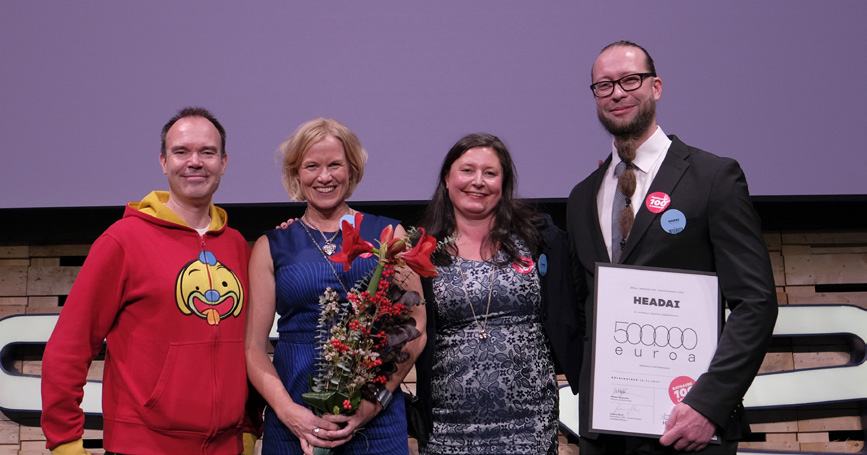
Ratkaisu 100, a two-year, multi-stage, challenge prize competition launched by Sitra (The Finnish Innovation Fund) was won in 2017 by two companies operating in the field of skills evaluation and prediction. One winner, Headai, uses artificial intelligence to map skills needs and provision.
Headai's 'micro-competencies' service analyses around 1,000 job advertisements daily to identify which skills employers are looking for. It also aims to map the skills that are available in the workforce by drawing from various sources of open data available online.
This time-saving and continuous approach to reporting on skills needs and provision has benefits for government, employers and workers. Government can use this data to identify skills gaps and opportunities for job creation, employers can spot when their expertise is lacking and see where workers with relevant skills are located, and workers can discover potential employers and determine which skills it would be valuable for them to learn. According to Harri Ketamo, founder of the organisation, “The impact of optimising labour and education is in the billions of euros. We cannot maximise our productivity if we do not begin managing expertise".
Headai was awarded €500,000 by Sitra in November 2017 to continue developing its solutions to map expertise in Finland. The judges of the seven person Ratkaisu 100 jury, comprising representatives from business, academia and government, praised the organisation's original use of open data and artificial intelligence.
The competition shows how the challenge prize method can be used to drive innovation in skills mapping, and highlights the value of open data and artificial intelligence for this purpose.
Challenge 2: Serve the diverse needs of workers across contexts
For digital transformation to be inclusive, everyone needs to be able to access upskilling and reskilling opportunities that are relevant to their present capabilities, and which enable them to adapt to new and changing work environments.
"Individuals will have widely varying needs, meaning that there can be no 'one-size-fits-all' approach"
Yet individuals will have widely varying needs, meaning that there can be no ‘one-size-fits-all' approach. The diversity of educational backgrounds, work experience and contexts of adults in the labour market presents a significant challenge to policymakers trying to devise skills policies that work for everyone.
Present uptake of training among people in work is uneven, and highlights pre-existing fault lines of inequality. Through analysis of its PIAAC survey, the OECD finds that 'low- and medium-skilled workers are the least likely to receive training, even though they may be facing the greatest risk of job loss'. The organisation also finds that women participate less in training than men, while they tend to do more work that is automatable. Company size and employment type also affect training participation: SME employees receive less training than workers in large firms, and are at a greater threat of job losses through firm closure. Self-employed workers or those on short term contracts are also less likely to participate in training.
Clearly, people in different groups experience specific challenges that prevent them from accessing upskilling and reskilling. To design policies and services that enable diverse people to access and participate in upskilling and reskilling, policymakers and practitioners need have a clear understanding of their needs.
Collaborative, user-centred policy design
Surveys, like PIAAC, can help to identify broad challenges faced by workers who need to upskill or reskill. Focus groups, ethnographic research and other qualitative methods are an effective way to obtain a deeper insight into the needs of citizens, as demonstrated by the Digitaal.Talent@Gent programme presented in this section. Policymakers can also draw on the knowledge of organisations and front-line staff who are in direct contact with groups that require training and have a strong understanding of the services and policies that are likely to work.
User-centred design methods draw on all these approaches, placing the 'end user' at the centre of policy and service design. A user-centred design approach begins by gathering information that enables the policy team to build a coherent picture of the needs of end users and other stakeholders. Multiple possible solutions are designed to serve these needs. Citizens and other stakeholders can then be invited to evaluate prototypes of these solutions, and make suggestions for how they might be improved.
This iterative process has been applied by many government teams to design digital services and policies. In the field of skills, it can enable policymakers and practitioners to create policies and programmes that are appropriate for people in diverse groups and contexts.
Case Study: Digitaal.Talent@Gent, Belgium: Using research and evaluation to build sustainable initiatives for digital skills
Launched: 2006
Location: The programme operates in the City of Ghent. Its expertise has been influential for other projects in Flanders and for national policy
Stakeholders involved: Digitaal.Talent@Gent is a collaboration between the City of Ghent, the social welfare services, several local organisations and Digipolis, the telematics provider for the cities of Antwerp and Ghent
Funding source and amount: The programme is funded by the local government (via Digipolis and City of Ghent). It has also received funding from the Flemish government (via Mediawijs), the Belgian government (via Digital Belgium) and the European Union (via All Digital)
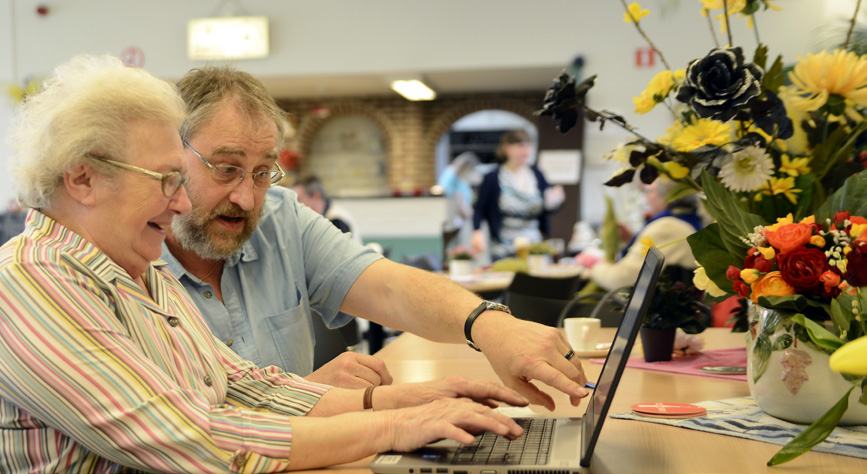
Digitaal.Talent@Gent exemplifies the outcomes for digital inclusion that can be achieved when policymakers develop services through an iterative, evidence-based and collaborative process. Since its launch in 2006, the programme has involved social partners and other stakeholders throughout the city and leveraged pre-existing networks to establish digital inclusion as a priority for public services and the labour market. It has so far succeeded in improving the skills and driving the digital inclusion of over 20,000 people per year.
Digitaal.Talent@Gent began by identifying the needs of the people of Ghent. For its first challenge to enable everyone in the city to access to digital tools and services — the core team conducted focus groups with citizens and social partners. This research was evaluated by a working group of local representatives from educational institutions, the social welfare authority, and organisations working with disadvantaged groups. Their deliberation led to the establishment of Digital Competence Centres and Digital Lending Services, through which citizens and local organisations can access digital tools and training.
Over a decade later, Digitaal.Talent@Gent has helped launch many more initiatives for digital skills and inclusion. Research, feedback and evaluation drive the continued development of its projects. Questions to volunteers in the Digital Competence Centres are logged, and regular evaluations of citizens' needs guides the improvement of digital inclusion initiatives and the digitalisation of public services in Ghent.
Like research, the strategy of engagement with key partners has remained effective as Digitaal.Talent@Gent has developed. As its scope has grown to encompass digital skills training, the programme has sought increased participation from employers to ensure that its activities support labour market demand. By working with a variety of stakeholders, the programme is able to create sustainable and inclusive initiatives that accelerate Ghent's digital transformation and promote lifelong learning.
Case Study: Innovation Lab, Estonia: Applying design methods to make policy more inclusive

Launched: June 2018
Location: Estonia
Stakeholders involved: Governed by the Strategy Director of the Government Office and six Secretary Generals representing six ministries: The Ministry of the Interior, the Ministry of Finance, the Ministry of Economic Affairs and Communications, the Ministry of Social Affairs, the Ministry of Justice, and the Ministry of Education and Research
Funding source and amount: The government has invested €500,000 for three years (includes team payroll costs and additional resources for outsourcing necessary expertise)
In June 2018, the Government Office in Estonia together with six ministries launched a public Innovation Lab. The need for the new approach to design human-centred public services was recognised by the government six months earlier as one of the recommendations of public sector innovation task force. Employing a team of three, the Innovation Lab aims to build the capacity of the Estonian government to make policy solutions that are more inclusive, human-centred and effective in a rapidly changing digital world.
At this early stage, the Lab is working to foster a more innovative mindset among public servants, to encourage the engagement of a wider set of stakeholders in policy design, and to introduce human-centred design approaches to civil servants. These methods involve citizen participation in the development of public services through research and prototyping, and present an effective way to discover how to best serve the needs of people from diverse groups.
The Innovation Lab has been set up as a three year experiment and its continuation will be evaluated prior to the end of the programme in 2021. Success will be determined based on the specific success criteria defined for each project supported by the Lab.
Challenge 3: Discover and promote services that drive people's intrinsic motivation to learn
As technological developments continue to alter workplaces and the labour market, workers and employers must adopt continuous learning as a core element of career and business strategies.
"The shift to a culture of lifelong learning cannot be forced"
To do so, they will need to change their routines and find time in busy schedules to accommodate training. They will also need to develop a mindset that supports commitment to the often difficult process of acquiring new skills and knowledge.
This shift to a culture of lifelong learning cannot be forced. Research into adult training participation shows that intrinsic motivation and a sense of self-efficacy and autonomy are important to drive sustained engagement with learning. As a result, policies that improve access to training and even provide incentives to learn will fall short unless individuals are confident in their own reasons and abilities to upskill or reskill. Governments must therefore uncover and promote interventions which foster intrinsic motivation to learn and consequently drive behaviour change and a learning mindset.
An experimental approach to driving motivation
The field of behavioural science has provided many insights into what motivates people to change their behaviour. It reveals that a person's decision to act is dependent on many factors, such as social influence, or the way a request is communicated. By exploring factors such as these and experimenting through RCTs, policymakers can begin to identify how to drive workers' intrinsic motivation to learn. As the example of the Dutch Behavioural Insights Network in this section shows, experimental approaches have already helped to increase the effectiveness of policies relating to employment and skills.
With its focus on robust evaluation and iteration, experimentation in policy contributes additional benefits by creating a ‘learning government' that is able to adapt policies in response to changes over time and differences in context. This is particularly relevant for skills policy in the digital age, which will need to be regularly revised in response to the transformation of the labour market.
An abstract geometric diagram with lines and an arc, primarily in pink and blue, illustrating conceptual connections.
Case Study: Behavioural Insights Network, the Netherlands: Building the capacity of government to discover how workers can be motivated to learn
Launched: 2014
Location: The programme operates at a national level
Stakeholders involved: All ministries and a number of executive agencies. Each ministry is responsible for their own activities under the programme.
Funding source and amount: BIN NL has a budget of €180,000-200,000. The majority of funding for trials and policy development is provided separately by the ministries.
The Dutch government actively promotes the application of innovative methods that enable policymakers to understand how to change the behaviour of citizens and businesses. In 2014, the cabinet agreed that the Netherlands should accelerate the adoption of an evidence based approach in which departments test the added value of behavioural insights through pilot schemes with a focus on concrete policy issues.
Alongside research and analysis based on psychology and social science, these approaches involve testing interventions through randomised control trials to identify effective ways to achieve policy goals.
As each ministry is individually responsible for implementing behavioral insights, a Behavioural Insights Network (BIN NL) comprising practitioners from each ministry was set up to share best practice across government. This group meets every month to discuss their experiences, successes and challenges. In addition, BIN NL produces events, training and documents, such as 'A Wealth of Behavioural Insights: 2017 edition', which encourage the application of behavioural insights in government.
In the field of skills and the labour market, the UWV (Employee Insurance Agency) has already made valuable discoveries concerning the motivation of people to take charge of their skills and career development. Based on behavioural science literature that highlighted the value of setting goals to drive motivation, a service was developed that allowed jobseekers 'to draw up a personal workplan and set concrete goals for their jobseeking behaviour'. A randomised control trial with 10,075 jobseekers found that those offered this service reported that they conducted 8% more jobseeking activities and were invited to job interviews 13% more often in the three months following the treatment than the rest of the group.
BIN NL is currently testing an intervention that encourages jobseekers with a low probability of returning to work to look for different kind of jobs. Similar interventions could be tested to identify effective approaches to stimulate workers' motivation to learn.
Case Study: Experimental Finland: Solving social challenges with a culture of experimentation
Launched: 2016
Location: The programme operates at a national level
Stakeholders involved: The programme is funded and coordinated by the Finnish Prime Minister's Office, and encourages the participation of individuals and organisations across Finland
Funding source and amount: The government has invested over €3 million in the programme
Prime Minister Juha Sipilä's strategic government programme, published in 2015, called for the introduction of 'a culture of experimentation' to anticipate and solve social challenges in the digital age. This stipulation resulted in the launch of Experimental Finland - a programme initiated by the Prime Minister's Office together with the think-tank Demos Helsinki and Aalto University.
Experimental Finland aims to support the culture and practice of experimentation across government and society. As part of this process, it has been necessary to identify legislative obstacles to experimentation and provide guidance and tools for devising and executing experiments. The programme provides training on behavioural approaches to civil servants, and has set out a framework that outlines the process of experimentation for public policy.
Experimental Finland and the Finnish government direct the development of experiments that often encourage many stakeholders to participate. These are divided into three levels: from top-down strategic experimental programmes to grass-roots, citizen-led initiatives.
At the strategic level, the government has set out five areas for experimentation. Significantly for an inclusive and adaptable labour market, one of the strategic aims to support employment in the regions by testing approaches to make business and employment services more user-focused. The second level of experimentation operates on a partnership basis between central government, the regions, businesses and NGOs, and consists of experiments that aim to promote the objectives of the government programme. At the grass-roots level, open calls through an online platform, Kokeilun Paikka (Place to Experiment), are used to encourage citizens and organisations to take part in experimentation.
An open call for experiments launched on the Kokeilun Paikka in September 2018 is specifically focused on building digital skills and lifelong learning capacities in the health and social services sector. The project is now accepting proposals for experiments costing no more than €10,000 from citizens, businesses and NGOs. Experimental Finland's open, experimental approach allows it to generate and test new solutions to identify policies that can be scaled up.
Challenge 4: Build a resilient labour market system that can adapt to changes in skills demand
Governments must act as stewards to bring about systemic change
Nesta's Delivering Digital Skills (2018) reported that to upskill or reskill, a worker needs access to relevant and high quality training, and is likely to require various forms of support, such as funding, time off work and career guidance.
The journey they must take to learn new skills and apply them in the labour market therefore crosses areas of responsibility for multiple stakeholders both within and outside of government. From curriculum design to recruitment practices, many parts of the education and labour system need to adjust in concert to create a more adaptable workforce. Employers, training providers, social partners and citizens themselves all have a role to play to ensure that upskilling and reskilling can take place efficiently to serve the demands of the labour market. Governments must act as stewards to bring about systemic change that enables and normalises lifelong learning as part of every person's career, and creates an adaptable labour market that is resilient in the face of ongoing transformation.
Partnerships can facilitate progress
The breadth of change required to accelerate and smooth digital transition through upskilling requires close collaboration between all the relevant stakeholders, such as government, employers, unions, education providers and NGOs. Some skills policies and programmes intended to achieve an inclusive digital transformation have already found success through the creation of multi-stakeholder partnerships.
Many benefits arise from collaboration with key stakeholders and citizens. By creating a platform to share diverse theoretical and practical knowledge, the challenges of digital transformation can be defined in detail. Divergent views and disagreements between partners allow potential problems for the implementation of digitalisation and skills strategies to be highlighted and addressed early on, resulting in solutions that are more likely to be widely accepted.
Partnerships can also provide access to valuable resources and expertise, as has been the case in the Swedish Public Employment Agency's collaboration with Google's Digitalakademin to deliver digital skills training to jobseekers, and the Make IT Work programme launched by leading ICT companies, the municipality of Amsterdam, the Hogeschool van Amsterdam and the Amsterdam Economic Board to train non-STEM graduates for digital specialist roles.
In addition to enabling challenges to be identified and solutions to be developed and implemented, partnerships can enhance the capacity of the labour market to adapt to continuous change by building trust between key stakeholders. They create a framework through which strategies and programmes for inclusive digitalisation can be collectively evaluated and adapted as changes occur, as demonstrated by the recent renewal of the Dutch Technology Pact highlighted in this section. As digital technologies continue to alter the labour market, collaboration between stakeholders should be at the core of skills strategies.
Launched: 2017
Location: Denmark
Stakeholders involved: Eight Danish Ministries (represented by the Prime Minister and the Ministers of Finance; Education; Industry, Business and Financial Affairs; Economic Affairs and the Interior; Higher Education and Science; Employment; Innovation) together with the Danish Confederation of Trade Unions (LO), employer organisations, experts and researchers in different related fields
Funding source: The Disruption Council was funded by the Danish government
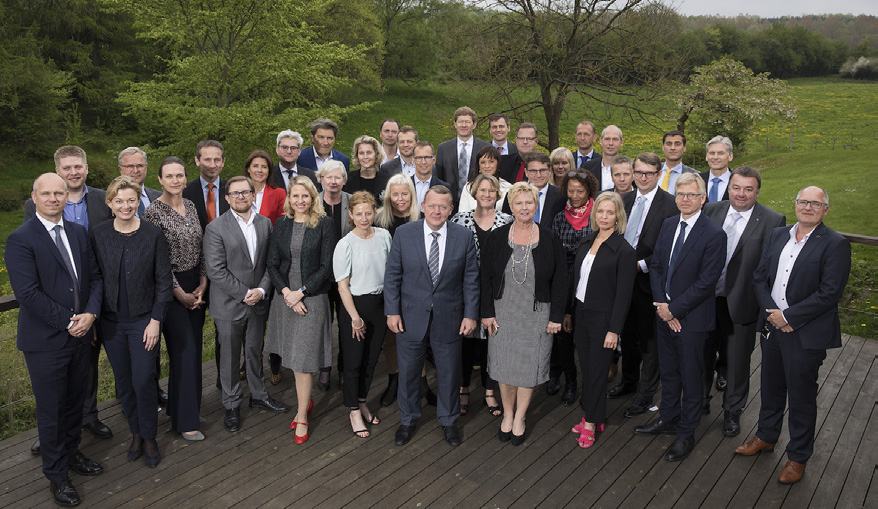
In Denmark, Prime Minister Lars Løkke Rasmussen placed multi-stakeholder cooperation at the centre of the country's strategy for inclusive digital transformation. The Danish Disruption Council was announced in 2016 as a collaboration between trade unions, employers, eight ministries and other key stakeholders to 'look at the challenges and possibilities [of digital transformation] together'.
Meeting eight times over 2017-2018, the Council has discussed a wide range of issues relating to digital transformation, including security, education and training, social welfare and international trade. Its recommendations have contributed to the Strategy for Denmark's Digital Growth, the development of the Danish Technology Pact, and Denmark's tripartite agreement on retraining.
Over the course of its meetings, members of the Disruption Council visited workplaces set to be transformed by digital technology, were introduced to new research on the impact of digitalisation, and strove to establish a shared and comprehensive understanding of the threats and opportunities of the future.
With such a diverse group of stakeholders, it has not been easy to reach consensus. Nonetheless, the Council has broken down barriers and succeeded in making recommendations and commitments which ensure that inclusion will be a priority in Denmark's digital transformation. The initiative sets a strong precedent for the value of partnering with multiple stakeholders in order to forge a path through the complex challenges of digitalisation.
Case Study: Technology Pact, the Netherlands: Creating a responsive skills system through a multi-stakeholder partnership
Launched: May 2013
Location: The Technology Pact is implemented at a national level and is supported by regional Pacts tailored to the needs of local labour markets
Stakeholders involved: The Technology Pact is a joint initiative of the central government, businesses, trade unions, the education sectors, industry sectors and the regions as equal partners. The Pact is coordinated on behalf of the central government by three ministries: The Ministry of Economic Affairs, the Ministry of Education, Culture and Science and the Ministry of Social Affairs and Employment. The governance is carried out by a National Steering Group (LRT) together with Liaisons (executive group)
Funding source and amount: The Pact's activities are funded by its 60 partners. Apart from some funds for administration, there is no specific budget for the Technology Pact
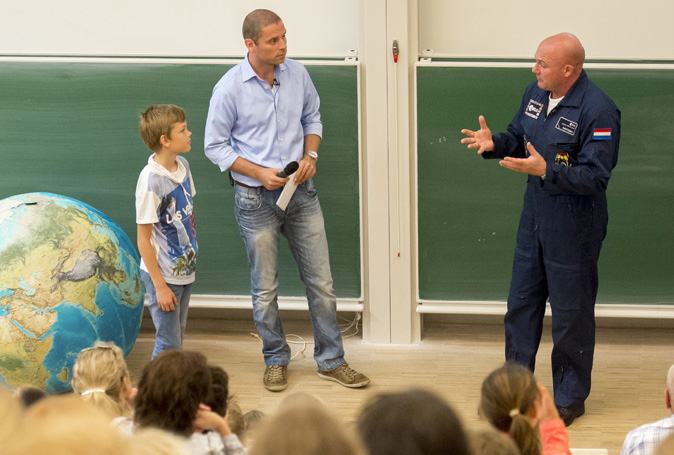
The Technology Pact 2020 is a combination of national, regional and local public-private partnerships that aim to ensure that the Netherlands has a workforce with the technical skills it needs to be fit for the future. It demonstrates that close collaboration between multiple stakeholders in the pursuit of a common goal can successfully direct change in the education and labour market systems.
The Technology Pact was signed in May 2013 by over 60 stakeholders from businesses, government, unions, universities and the regions. They agreed on 22 actions to encourage citizens to pursue careers in technology. The Pact created a framework that has enabled different stakeholders to collaboratively build or accelerate joined-up initiatives that contribute to a workforce fit for the future. It quickly demonstrated success. To take one measure, the percentage studying STEM subjects at university has increased from 26% in 2004/2005 to 35% in 2014/2015. The Pact's regional focus has been a key strength, enabling the workforce to adapt to local labour market needs.
In 2016, the Technology Pact's stakeholders revised its agenda to take the acceleration of technological development into account. Its renewed goals recognise the need for upskilling and reskilling to enable an inclusive digital transformation. The updated objectives include greater collaboration with the ICT sector and smart industry strategies, a focus on getting girls and women into STEM jobs, and more actions to ‘encourage inter and cross-sectoral mobility and Lifelong Learning'.
The Technology Pact has inspired similar initiatives in Flanders, Estonia and Denmark. Its success shows the value of involving multiple stakeholders in the design and implementation of a coherent strategy for inclusive digital transformation.
Section 2: How Digital Frontrunners supports the design of inclusive skills policy
As Section 1 shows, the pace and unpredictable path of digitalisation across all industries is creating new challenges for society and the labour market. Governments must enhance their capacity to create policies that enable the workforce to adapt to changes in skills demand, serve the diverse needs of different workers, and engage key stakeholders to create a culture of lifelong learning. In pursuit of these goals, some countries have been pioneering new methods for policymaking that apply user-centred design, behavioural insights, data science and partnership models.
Belgium, Denmark, Estonia, Finland, the Netherlands and Sweden are trialling new policy approaches to foster an inclusive labour market that is fit for digital transformation. Nesta recognised that this openness to innovative methods provides an opportunity for policymakers and other stakeholders from these countries to collaboratively explore, develop and trial new ways to devise policy for skills.
Digital Frontrunners aims to build the capacity of governments to make effective skills policy in the era of digitalisation
Nesta launched the Digital Frontrunners initiative in May 2018 as an experimental programme to facilitate the development and sharing of effective approaches for skills policy in the era of digitalisation.
To help governments enhance their capacity to design skills policy for a changing labour market, Digital Frontrunners aims to:
- Build the capabilities of policymakers to enable them to solve public problems more effectively
- Create opportunities for policymakers to learn about and test new methods and approaches that make policy more dynamic, inclusive and responsive
- Establish an international, active network of policymakers and other stakeholders to share and develop solutions that support future skills
The programme convenes international expertise to address shared challenges
Nesta's report Delivering Digital Skills (2018) demonstrated that the design of effective skills policy for the digital age cuts across the areas of responsibility of multiple stakeholders. For this reason, we invited senior representatives from a wide range of relevant ministries, trade bodies, expert groups, universities, training providers, private companies and non-governmental organisations to take part in Digital Frontrunners.
With the exception of some experts invited to speak, all participants come from the six Digital Frontrunners countries of Belgium, Denmark, Estonia, Finland, the Netherlands and Sweden. New participants have continued to join throughout the programme as they have been introduced by members of their networks.
Participants collaborate through interactive workshops
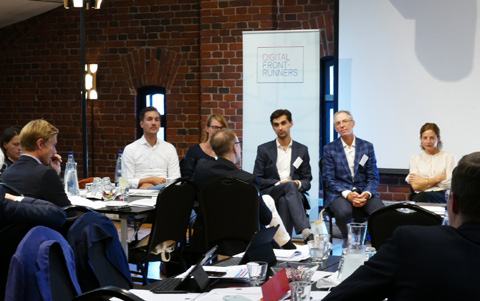
In 2018, the programme has focused on three face-to-face workshops which have involved interactive collaboration sessions, expert talks, and site visits. The first took place in Stockholm in May, where the Nesta team guided participants to identify challenges that are shared by all six countries.
The second workshop was hosted in The Hague at the end of June with the support of the Dutch Ministry of Economic Affairs and Climate Policy. Here, expert speakers and facilitators introduced participants to innovative initiatives for upskilling and new tools for policymaking.
The third workshop, in Helsinki in September, was programmed in partnership with The Prime Minister's Office in Finland. Through multiple interactive collaboration sessions, this event led to the co-creation of potential initiatives to address the four challenges for skills policy described in Section 1.
Digital Frontrunners builds the capabilities of policymakers to enable them to solve public problems more effectively
Policymaking in the digital age requires a new set of competencies and capabilities
Organisations such as Nesta, the OECD, and Deloitte have carried out research to define which capacities governments need to solve policy challenges in an increasingly complex world. They conclude that policymaking must become smarter by being more data-driven and evidence-based, more inclusive and user-centred, and more fit for the future in terms of its ability to foresee and respond to changes in economies and societies.
These new demands on policymaking require a set of skills, attitudes and behaviours that can be clustered under three categories (as shown in Figure 3): working together, accelerating learning, and leading change.
The Digital Frontrunners programme is built around this skills framework for 'successful public problem solving', using it as a way to establish priorities, shape the activities participants engage in, and create opportunities for them to develop skills for innovative policymaking.
Working Together
Engaging with citizens and stakeholders to create shared ownership of new solutions
- Citizen and stakeholder engagement: Actively involving citizens, stakeholders and unusual suspects
- Creative facilitation: Creatively processing different perspectives and deliberating multiple options
- Building bridges: Orchestrating interaction to find common ground and create shared ownership
- Brokering: Mediating contrasting interests and reducing friction between multiple stakeholders
Accelerating Learning
Exploring and iterating new ideas to inform and validate solutions
- Future acumen: Connecting long-term vision with short-term achievable tasks
- Prototyping and iterating: Testing ideas and systematically improving them
- Data literacy and evidence: Using different types of data effectively to accelerate sense-making
- Systems thinking: Combining macro and micro perspectives to grasp complexity
- Tech literacy: Understanding technological development and their potential
Leading Change
Mobilising resources and legitimacy to make change happen
- Political and bureaucratic awareness: Operating political dynamics and bureaucratic procedures to ensure strategic support
- Financing change: Understanding the many ways to liberate and use financial resources for innovation
- Intrapreneurship: Being insurgent and using business acumen to create opportunities
- Demonstrating value: Articulating the value of new approaches and solutions for decision-making purposes
- Storytelling and advocacy: Using narratives and media to articulate vision and information in compelling ways
The Digital Frontrunners process is grounded in an established design framework
The programme builds on an established ‘design for policy' approach. This framework enables participants to learn key competencies and put them into practice by collaboratively developing policy ideas and approaches.
The programme guides participants through six phases, represented by the 'triple diamond' pathway in Figure 4. The first phase is designed to establish common ground between participants through dialogue, building a shared understanding of the issues surrounding the digital transformation of the labour market. This 'opening up' is represented by the first half of the diamond. The second aims to help participants collaboratively diagnose their core policy challenges, narrowing their focus to converge on shared issues. This is represented by the second half of the first diamond.
The final four stages follow the 'double diamond' design process, benchmarked internationally by the UK's Design Council as an effective method to understand the needs of the beneficiaries (or 'users') of a policy, and to develop pilot or prototype solutions to serve them. The approach purposefully delays the development of solutions so that stakeholders design policies that are based on a robust and shared understanding of the problems they need to solve.
The process allows participants to open up to possibilities, identify shared challenges, and collaboratively develop solutions
We focused on dialogue at the Digital Frontrunners launch event in Stockholm in May 2018. Participants were encouraged to discuss the challenges their countries face, and the priorities they have. During the second workshop in The Hague in June 2018, we supported participants to collaboratively examine the issues of labour market adaptation through different lenses (and through the eyes of end beneficiaries) in order to diagnose core policy challenges.
The four challenges for an inclusive and adaptable labour market outlined in Section 1 emerged through this process of dialogue and diagnosis. During the third workshop in Helsinki we included presentations and interactive sessions for participants to discover more about these challenges, and define them in detail.
From November 2018 onwards, Digital Frontrunners will move onto the develop and deliver phases, working towards policy interventions and initiatives designed collaboratively by stakeholders across the participating countries.
A diagram illustrating the phases:
* Project Process: Dialogue, Diagnose, Discover, Define, Develop, Deliver
* These phases interact with: Challenge, Vision Definition, Solution
Digital Frontrunners enables policymakers to learn about and test new methods and approaches that make policy more dynamic, inclusive and responsive
Prioritising practical application is essential to build competencies for innovative policymaking
To create effective policy for skills in the digital age, policymakers must go beyond merely understanding the methods and competencies they can use. They need to apply them, embed them in their work practices, and spread them to their colleagues. This premise is illustrated by Nesta's innovation skills hierarchy in Figure 5.
Digital Frontrunners workshops are designed to give participants the opportunity to explore and apply innovative methods for designing skills policy. For example, we invited Eliza Easton from Nesta's Creative Economy and Data Analytics team to our third workshop in Helsinki to present the insights they had gathered from applying a machine learning approach to skills anticipation. Participants had the opportunity to question Eliza on the benefits and drawbacks of the method. Following this, Eliza led an interactive session that supported these policymakers and other stakeholders to work out how the method could be applied in their own countries.
Throughout the workshop in Helsinki, which included presentations on Sitra's Ratkaisu 100 challenge prize, the Dutch Behavioural Insights Network, and Denmark's Disruption Council, participants were also prompted to note down policymaking methods, such as multi-stakeholder partnerships, that they found useful or inspiring on 'approach cards'. These templates asked the participants to identify how they might use each approach and how easy it would be to implement. In a subsequent activity, participants formed small international teams and used these approach cards to build a 'toolkit' of evidence and methods that could be used to address one of the four central challenges highlighted in Section 1.
This chart shows the progression of innovation skills from Low to High impact:
- Spread
Being able to educate and mentor others to develop the skill
- Embed
Being able to effectively use the skill in everyday practice, so that it becomes a habit
- Apply
Being able to demonstrate that the skill can be effectively used to achieve specific outcomes
- Understand
Being able to articulate the potential and value of a skill or method
(This hierarchy progresses from 'Understand' (Low Potential to generate impact) up to 'Spread' (High Potential to generate impact)).
Digital Frontrunners establishes an international, active network of policymakers and other stakeholders to share and develop solutions that support future skills
Throughout the initiative, we have devised a range of activities through which participants can direct the programme development and structure
-
Regular conversations with participants to tailor the programme agenda
We ensure that the content, activities, and direction of the programme are driven by the participants' priorities. Regular contact gives us a unique perspective into their strengths and challenges, and has enabled us to make introductions for mutually beneficial relationships.
-
Workshops are used as research opportunities and feedback loops
For example, in our second meeting in The Hague we asked participants to reflect on their work with respect to Nesta's competency framework. We used this to better understand their work environment, and to identify how we could best support them.
-
Content and case studies are presented by participants
The programme for each workshop includes many opportunities for participants to share policy approaches and knowledge with each other. For example, we have 'learning from the Digital Frontrunners' sessions where we provide an open forum for participants to showcase their work and question each other.
The programme provides opportunities for knowledge sharing between expert stakeholders
In a recent survey, Denmark's Centre for Offentlig Innovation found that 73% of public sector innovations are inspired by or copied from other policies. The stakeholders engaged in Digital Frontrunners have frequently told us that they value learning from existing policies and initiatives that are focused on enhancing the skills of workers.
For this reason, the programme aims to create a collaborative environment in which the participants are encouraged to share their knowledge. The workshops include specific opportunities for them to present insights from their projects, and interactive sessions in which they can work with stakeholders from other countries. The candid exchanges and new connections that have resulted have been identified as a unique benefit of the programme.
“The Nesta Digital Frontrunners programme has these magical components: radically open-minded people that want to arrive to something new, [and] a set of world-class inspirers in the best cutting-edge practices around... Estonia has already gained from it by deciding to implement the unified learning journey, inspired by the Digital Frontrunners. And this has been only the start of it!"
Mihkel Kaevats, Former Advisor on the Future of Work, Ministry of Social Affairs, Estonia
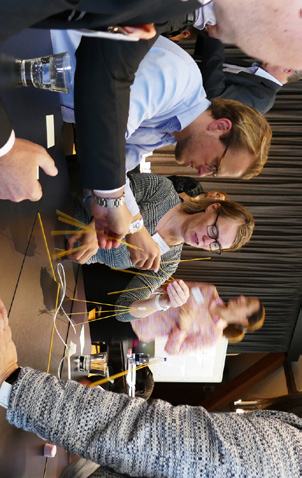
Digital Frontrunners builds a shared understanding and language for participants
Digital Frontrunners has enabled a set of international stakeholders to identify four shared challenges for skills policy in the era of digitalisation. Following the workshop in Helsinki these challenges are being translated into specific projects, such as research into motivation to learn, to be run in partnership with participants. The objective is to generate insights and create tools that can help all the Digital Frontrunners countries to design more effective skills policy.
“I appreciate the interactive workshops where we can focus on real cases and share with our European colleagues. Digital Frontrunners is a great community builder we get to know and like each other which means we can share more and get a lot out of it”
Jorg van Velzen, Senior Policy Advisor, Ministry of Economic Affairs and Climate Policy, the Netherlands
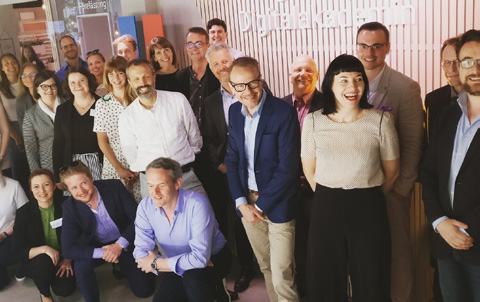
Summary: Three principles for a collaborative programme for policy development
Learning from Digital Frontrunners, we identify three key principles for shaping the creation of a collaborative programme for policy development
-
Involve stakeholders in the development of the programme
Invite a range of relevant stakeholders to participate, and implement activities that support them to collaboratively set priorities. This ensures that the programme is aligned to their needs and objectives.
-
Create opportunities for knowledge sharing and inquiry
Participants are experts and leaders in their fields, so the programme must facilitate their cooperation rather than direct it. Build a sense of trust and community that allows participants to share candid insights, inspire each other, and agree on appropriate actions.
-
Support participants to practice and apply new methods
Each element of the programme should be designed to support participants to discover, practice and apply innovative methods for policymaking. It is therefore essential that the content and activities are aligned with participants' priorities.
Running ahead: Next steps for Digital Frontrunners
During 2018, the Digital Frontrunners programme has convened an international network of senior stakeholders from governments and other organisations working to build a more inclusive and adaptable labour market for the digital economy.
Through three events and extensive research, the programme has identified four key challenges that these stakeholders face, and has brought to light innovative policies and initiatives that can help to solve them. The programme's curriculum structure of presentations, site visits and interactive workshops has enabled its participants to collectively evaluate the issues surrounding skills policies, and has contributed to a deeper understanding of the needs of workers and employers in the wider labour and education system.
As a community, participants have been able to discuss how they might apply innovative policy approaches to their own context, and worked together to determine the obstacles they may face when doing so. A Danish policymaker, for instance, can learn how to run a challenge prize from a Finnish counterpart. The participants in the Digital Frontrunners programme have repeatedly expressed that being able to share and explore such approaches is of great value.
As the programme progresses, we will help these stakeholders to work together more closely to develop and share new techniques for solving the four core challenges of skills policy in the digital age—challenges which we see as key priorities for governments working to build more inclusive and responsive labour markets.
Acknowledgements
We would like to acknowledge the valuable contributions made by the following people through their involvement in the Digital Frontrunners programme:
Anders Gawell, Head of Unit, Arbetsförmedlingen (Swedish Public Employment Services). Sweden
Anders Nyström, Deputy Director and Deputy Head of Division, Division for Digital Government, Department of Public Administration, Ministry of Finance, Sweden
Anki Elken, Public Affairs & Head of Sustainability, Randstad, the Netherlands
Anna Toni, Senior Specialist, Ministry of Economic Affairs and Employment, Finland
Ants Sild, Chairman of the Board, Baltic Computer Systems & BCS Koolitus, Estonia
Anu Passi-Rauste, Head of Business Development: Americas, Headai, Finland
Ariane Rober, Policy Advisor, Department of Work and Social Economy, Belgium (Flanders)
Baukje Vetter, Account Manager, AUAS, Make IT Work programme, the Netherlands
Beatrice Karol Burks, Studio Director, FutureGov, UK
Beatrice Boots, Director of the National STEM Platform (Platform Bèta Techniek), Platform Bèta Techniek, the Netherlands
Carl Callewaert, Expert Vocational Training & Workplace Learning, VDAB (Public employment service of Flanders), Belgium (Flanders)
Daniel Kotsjuba, Designer of Public Services, Innovation Lab, Government Office of the Republic of Estonia
Daniel Rahman, CEO and Founder, Integrify, Finland
David Simoes-Brown, Co-Founder & Strategy Director, 100% Open, UK
Dominiek Veen, Project Leader, PBT, Netherlands
Dr Carl Jeding, Former Analyst & Project Manager at National Digitalisation Council, Sweden, current Director Government & Industry Relations at Ericsson, Sweden
Dr. Kaisa Oksanen, Senior Specialist, Prime Minister's Office, Finland
Drs. Teja Ouwehand, Senior Policy Advisor, Ministry of Social Affairs and Employment, Netherlands
Eddie Pedersen, Senior Advisor, Department for Analysis and Development, Kompetens Norge (Skills Norway), Norway
Eline Vliegen, Project Officer, Amsterdam Economic Board, Netherlands
Eliza Easton, Principal Policy Researcher, Creative Economy and Data Analytics, Nesta, UK
Erik P.M. Vermeulen, Professor of Business and Financial Law, Tilburg University, Netherlands
Erik Sandström, Chief Digital Officer, Arbetsförmedlingen (Swedish Public Employment Service), Sweden
Ester Kotsjuba, Estonia
Geert Asselbergs, Project Manager, Platform Bèta Techniek, Netherlands
Gregory Golding, Head of Digital Matching, Jobtech, Arbetsförmedlingen (Swedish Public Employment Services), Sweden
Harri Ketamo, Founder & Chairman, Headai, Finland
Heidi Jern, Public Policy and Government Relations Manager for Finland and Estonia, Google
Iarla Flynn, Director of Public Policy and Government Affairs, Google
Ilse Mariën, Researcher iMinds - Digital Society SMIT, Vrije Universiteit Brussel, Belgium
Isabel Van Wiele, Strategic Policy Advisor, Sustainable Entrepreneurship, Department of Work and Social Economy, Flemish Government, Belgium (Flanders)
Ivo Poulissen, Public Policy Manager, Nederland ICT, Netherlands
Jaap Buis, Public Affairs Manager, Randstad, the Netherlands
Jenni Lahtinen, Project Coordinator, Prime Minister's Office, Finland
Jessica Hunt, Senior Advisor, The Behavioural Insights Team, UK
Johanna Kotipelto, Senior Specialist, Prime Minister's Office, Finland
Johannes Anttila, Researcher, Demos Helsinki, Finland
Jordy Huis, Senior Policy Advisor, Ministry of Social Affairs and Employment, the Netherlands
Jorg van Velzen, Senior Policy Advisor, Ministry of Economic Affairs and Climate Policy, the Netherlands
Julia Jousilahti Researcher and Project Manager, Demos Helsinki, Finland
Kalle Nieminen, Leading Specialist, Sitra, Finland
Kåre Riis Nielsen, Director, Disruption Taskforce, Ministry of Industry, Business and Financial Affairs, Denmark
Kari Nyyssölä, Head of Foresight Unit, Counsellor of Education, Finnish National Agency for Education (EDUFI), Finland
Karin Östberg, Project Manager, Swedish Agency for Economic and Regional Growth (Tillväxtverket), Sweden
Karin Alm Chearnley, Deputy Director, National Innovation Council, Prime Minister's Office, Sweden
Kim Geerts, Policy Advisor, Department of Work and Social Economy, Belgium (Flanders)
Kristel Rillo, Deputy Head of the E-Services Department, Ministry of Education and Research, Estonia
Leontine Schijf, Former Policy Advisor at Ministry of Economic Affairs and Climate Policy, the Netherlands, currently Innovation Advisor at the Embassy of the Netherlands in Paris. the Netherlands
Lynette Webb, Senior Manager, European Policy Strategy, Google
Maikki Sipinen, Specialist, Finland's Al Programme, Ministry of Economic Affairs and Employment, Finland
Marc Fieremans, Deputy Head of Mission, Embassy of Belgium in Finland, Belgium
Mariann Klingberg, Programme Manager, Google
Mark Ruijsendaal, Innovation Liaison, The Hague Security Delta Foundation, the Netherlands
Markus Kanerva, Senior Specialist, Prime Minister's Office, Finland
Matti Kajaste, Senior Ministerial Advisor, Ministry of Education and Culture, Finland
Mihkel Kaevats, Former Advisor on the Future of Work at Ministry of Social Affairs, Estonia; current Tallinn 2021+ Strategy Writer, Estonia
Niels Andersen, Special Advisor, Disruption Taskforce, Ministry of Industry, Business and Financial Affairs, Denmark
Niels Achterberg, Former Cluster Coordinator Labour Market, Ministry of Social Affairs and Employment; current Coordinator Dutch climate agreement, Ministry of Infrastructure, the Netherlands
Olli Koski, Director, Ministry of Economic Affairs and Employment, Finland
Pär Skoglund, Operations Coordinator - Digital Services, Arbetsförmedlingen (Swedish Public Employment Service), Sweden
Patrik Sandgren, Policy Analyst, The Swedish National Digitalisation Council, Sweden
Per Lagerström, Communications Director, Futurion, Sweden
Roeland Coomans, Policy and Public Affairs, Google
Sanna Vahtivuori-Hänninen, Advisor to the Permanent Secretary, Project Manager, Ministry of Education and Culture, Finland
Sara Van Damme, Coordinator e-inclusion program Digitaal.Talent@Gent, Digipolis, Belgium
Steen Jørgensen, Economist, LO, Denmark
Stina Vrang Elias, CEO, DEA, Denmark
Taina Kulmala, Ministerial Advisor, Head of Policy Analysis Unit, Prime Minister's Office, Finland
Thijs van Reekum, Policy Advisor, Ministry of Economic Affairs and Climate Policy, the Netherlands
Tiina Hanhike, Senior Specialist, Ministry of Economic Affairs and Employment, Finland
Tom Bouma, Policy Advisor, Ministry of Social Affairs and Employment, the Netherlands
Tom Leenders, Strategic Advisor & Registrar of the Information Chamber, Ministry of Education, Culture and Science, the Netherlands
Torbjörn Dalin, Head of Research and Development, Kommunal, Sweden
Ulf Savbäck, Head of Unit, Swedish Agency for Economic and Regional Growth (Tillväxtverket), Sweden
Viktor Bos Challenge Lead, Jobs of the Future, Amsterdam Economic Board, the Netherlands
Vincent Raphaël, Former programme manager, P@CT. Current Managing Director Fraud Film Festival at Fortress & Project leader Education and Quality at SCOL, the Netherlands
Virve Hokkanen, Project Manager, Prime Minister's Office, Finland
The Digital Frontrunners team is:
Benjamin Reid, Head of International Innovation - Development Programmes, Nesta, UK
Carmen Margarit-Stoica, Programme Coordinator, Nesta, UK
Elsie Till, Assistant Programme Manager, Nesta, UK
Jack Orlik, Senior Researcher, Nesta, UK
Juan Casasbuenas, Curriculum & Content Manager, Nesta, UK
Karoliina Helkkula, Programme & Research Support, Nesta, UK
Olivia Chapman, Policy and Programme Manager, Nesta, UK
References & further reading
World Economic Forum (2018) 'Towards a Reskilling Revolution: A Future of Jobs for All.' Available from: https://www.weforum.org/reports/towards-a-reskilling-revolution
Karjalainenen, J. (2018) 'Finland: Teaching old dogs new tricks'. Work in the digital age : Challenges of the fourth industrial revolution. London: Policy Network
Söderqvist, F. (2018) 'Sweden: Will history lead the way in the age of robots and platforms?' Work in the digital age : Challenges of the fourth industrial revolution. London: Policy Network
Keune, M. & Dekker, F. (2018) 'The Netherlands: The sectoral impact of digitalisation on employment and job quality' Work in the digital age : Challenges of the fourth industrial revolution. London: Policy Network
Söderqvist, F. (2018) Sweden: Will history lead the way in the age of robots and platforms?' Work in the digital age : Challenges of the fourth industrial revolution. London: Policy Network
The Tuborg Research Centre For Globalisation and Firms and McKinsey & Company (2017) 'A future that works: The impact of automation in Denmark'. Available from: https://www.mckinsey.com/featured-insights/europe/a-future-that-works-the-impact-of-automation-in-denmark
Dellot, B. & Wallace-Stephens, F. (2018) 'Good work in an age of radical technologies' London: RSA. Available from: https://www.thersa.org/discover/publications-and-articles/reports/work-in-an-age-of-radical-technologies
Hallsworth, M. et al. (2018) 'Behavioural Government', Behavioural Insights Team. Available from: https://www.behaviouralinsights.co.uk/publications/behavioural-government/
Ministry of Economic Affairs and Employment, Finland (2017) 'Press Release:Working group: Eight key actions for making Finland a top country in artificial intelligence' [online]. Available from: https://tem.fi/en/article/-/asset_publisher/tyoryhmalta-kahdeksan-avainta-nain-teemme-suomesta-tekoalyn-huippumaan (Accessed 22nd October 2018)
Government of Sweden (2016) 'Ann Linde takes initiative at EU level for a 'Digital 9' group' [online]. Available from: https://www.government.se/press-releases/2016/09/ann-linde-takes-initiative-at-eu-level-for-a-digital-9-group/
Department of Business, Enterprise and Innovation, Ireland (2018) 'Minister Breen chairs meeting of D9+ EU countries' [online]. Available from: https://dbei.gov.ie/en/News-And-Events/Department-News/2018/May/15052018.html
World Economic Forum (2017) 'The Global Human Capital Report 2017' [online] Available from: https://www.weforum.org/reports/the-global-human-capital-report-2017
OECD (2017) 'Going Digital: Making the Transformation Work for Growth and Well-Being'. OECD Publishing, Paris. Available from: https://www.oecd.org/mcm/documents/C-MIN-2017-4%20EN.pdf
Jamet, S. & V. Koen (2014), 'Making the Most of Skills in Denmark', OECD Economics Department Working Papers, No. 1119, OECD Publishing, Paris. Available from: https://www.oecd-ilibrary.org/economics/making-the-most-of-skills-in-denmark_5jz2qt4crff8-en
Pareliussen, J. et al. (2016), 'Employment and Skills in Finland', OECD Economics Department Working Papers, No. 1320, OECD Publishing, Paris. Available from: https://www.oecd-ilibrary.org/economics/employment-and-skills-in-finland_5jlv239kcq9r-en
Musset, P. (2015), 'Building Skills for All: A Review of Finland' OECD Publishing, Paris. Available from: http://www.oecd.org/finland/Building-Skills-For-All-A-Review-of-Finland.pdf
OECD (2018), 'OECD Economic Surveys: Netherlands 2018', OECD Publishing, Paris. Available from: https://www.oecd-ilibrary.org/economics/oecd-economic-surveys-netherlands-2018_eco_surveys-nld-2018-en
OECD (2015), 'Employment and Skills Strategies in Flanders, Belgium' OECD Reviews on Local Job Creation, OECD Publishing, Paris. Available from: http://www.oecd.org/belgium/employment-and-skills-strategies-in-flanders-belgium-9789264228740-en.htm
Digitalisation & innovation indexes
European Commission (2018) 'Digital Economy and Society Index'. Available from: https://ec.europa.eu/digital-single-market/en/news/digital-economy-and-society-index-2018-report
OECD (2016), 'Skills Matter: Further Results from the Survey of Adult Skills', OECD Skills Studies, OECD Publishing, Paris. Available from: http://www.oecd.org/skills/skills-matter-9789264258051-en.htm
Chakravorti, B. & Chaturvedi, R.S. (2017) 'Digital Planet 2017' The Fletcher School, Tufts University. Available from: https://sites.tufts.edu/digitalplanet/files/2017/05/Digital_Planet_2017_FINAL.pdf
Cornell University, INSEAD, & WIPO (2018) 'The Global Innovation Index 2018: Energizing the World with Innovation.' Ithaca, Fontainebleau, and Geneva. Available from: https://www.globalinnovationindex.org/gii-2018-report
Pulkkinen, R. & Nurminen, S. (2017) 'How can we predict what expertise will be needed in the future? Artificial intelligence knows' [online] Available from: https://www.sitra.fi/en/articles/can-predict-expertise-will-needed-future-artificial-intelligence-knows/ (Accessed 4th October 2018)
Picture credit: Rob Örthen/Sitra
Kamp, H.G.J. (2014), 'Cabinet response to advice reports from Rli, RMO and WRR on the use of behavioral science in policy' [online] Available from: https://www.tweedekamer.nl/kamerstukken/brieven_regering/detail?id=2014Z22268&did=2014D44927 (Accessed 8th October 2018)
Picture credit: BIN NL, Heriette Guest
Case studies
Jobtech
Arbetsförmedlingen / Swedish Public Employment Service
https://www.arbetsformedlingen.se/For-arbetssokande/Yrke-och-framtid/Yrkeskompassen.html (Accessed 26th September 2018)
Haaramo, E. (2017) 'Nordic CIO interview: Filippa Jennersjö, Sweden's Public Employment Agency' [online] Available from: https://www.computerweekly.com/news/450429378/Nordic-CIO-interview-Filippa-Jennersjoe-Swedens-Public-Employment-Agency (Accessed 27th September 2018)
Interview with Golding, G., Head of Digital Matching, Jobtech (Swedish Public Employment Service) (1st October 2018)
Skills Panorama (2017), 'Skills anticipation in Sweden. Analytical highlights series.' Available from: http://skillspanorama.cedefop.europa.eu/en/analytical_highlights/skills-anticipation-sweden (Accessed 26th September 2018)
Picture credit: NESA by Makers
Ratkaisu 100 and Headai
http://www.headai.com/ (Accessed 26th September 2018)
https://www.microcompetencies.com/home (Accessed 27th September 2018)
Correspondence with Ketamo, H., Founder & Chairman, HeadAl (10th September 2018)
Nieminen, K. (2018), 'Ratkaisu 100' [PowerPoint presentation], Digital Frontrunners workshop in Helsinki 20th September 2018
Nissinen, H. (2017), 'Which solution will win a million euros? The Ratkaisu 100 competition approaches its climax' [online] Available from: https://www.sitra.fi/en/news/solution-will-win-million-euros-ratkaisu-100-competition-approaches-climax/ (Accessed 4th October 2018)
Passi-Rauste, A. (2018), 'Create Artificial Labour' [PowerPoint presentation], Digital Frontrunners workshop in Helsinki 20th September 2018
Digitaal Talent@Gent
Digitaal.Talent@Gent https://stad.gent/ghent-international/city-policy/e-inclusion-program-digitaaltalentgent (Accessed 25th September 2018)
Digipolis, Digitaal.Talent@Gent https://all-digital.org/digipolis-ghent/ (Accessed 25th September 2018)
Interview with Mariën, I., Researcher, iMinds - Digital Society SMIT, Vrije Universiteit Brussel (25th September 2018)
Interview with Van Damme, S. Coordinator, Digitaal. Talent@Gent (Digipolis) (23rd September 2018)
Mariën, I. & Van Audenhove, L. (2012), 'Towards a multi-stakeholders approach for digital inclusion: A case study of Ghent's 'Digitaal. Talent' policy program'. Available from: http://docs.wixstatic.com/ugd/565d1c_146001c410f643b0a92a27f7df45fcdc.pdf
Picture credit: Digitaal.Talent@Gent, Belgium
Behavioural Insights Network, the Netherlands
Behavioural Insights Network Netherlands, (2017) 'A Wealth of Behavioural Insights: 2017 Edition'. Available at: https://www.government.nl/documents/reports/2018/04/01/a-wealth-of-behavioural-insights-2017-edition
Interview with Huis, J. & Ouwehand, T., Senior Policy Advisors, Members of the Dutch Behavioural Insights Network, (27th July 2018)
Interview with Dirkmaat, T., Director, Behavioural Insights Network, (28th August 2018)
Correspondence with Huis, J., Ouwehand, T., Bots, K. & Dirkmaat, T. (2nd October 2018)
Innovation Lab Estonia
Correspondence with Kotsjuba, D., Designer of Public Services, Innovation Lab (Government Office of the Republic of Estonia), (31st July 2018)
Mändmaa, M. (2017), 'Public Sector Innovation Task Force' [online] Available from: https://riigikantselei.ee/sites/default/files/content-editors/organisatsioon/failid/rakkeryhmad/20170331task_force_introduction_mandmaa.pdf (Accessed 28th September 2018)
Republic of Estonia Government Office 'Task force recommends including more companies in solving societal problems' (2017), [online] Available from: https://www.riigikantselei.ee/en/news/task-force-recommends-including-more-companies-solving-societal-problems (Accessed 28th September 2018)
Picture credit: Kaboompix.com
Experimental Finland
Annala, M., Kaskinen, T., Lee, S. et al. (2015), 'Design for Government -kokeiluilla ihmislähtöistä ohjausta' [online] Available from: https://vnk.fi/documents/10616/1456483/DfG-raportti.pdf/4072bebd-ff36-4876-89e2-09076d8142df (Accessed 24th September 2018)
Finnish Government 'Implementation of the Government Programme' (2018), [online] Available from: https://valtioneuvosto.fi/en/implementation-of-the-government-programme (Accessed 25th September 2018)
Government Publications
Government Publications (2017), 'Finland, a land of solutions Mid-term review' [online] Available from: https://vnk.fi/documents/10184/321857/Government+action+plan+28092017+en.pdf (Accessed 18th October 2018)
https://www.kokeilunpaikka.fi/fi/ (Accessed 25th September 2018)
https://kokeilevasuomi.fi/en/ (Accessed 25th September 2018)
Kokeilun Paikka / Place to Experiment (2018) 'New digital skills in the health and social services sector – solutions for the daily challenges posed by the digitalisation of work'. [online] Available from: https://www.kokeilunpaikka.fi/en/digisotetaidot/ (Accessed 4th October 2018)
Picture credit: Prime Minister's Office, Finland
The Disruption Council, Denmark
Copenhagen Business School. 'CBS professor will lead us safely through disruption' (2017), [online] Available from: https://www.cbs.dk/en/the-press/news/cbs-professor-will-lead-us-safely-through-disruption (Accessed 25th September 2018)
Danish Prime Minister Lars Løkke Rasmussen (2017) 'Keynote address at the OECD Ministerial Council Meeting' [online] Available from: http://www.oecd.org/mcm/latestnews/keynote-address-at-the-oecd-ministerial-council-meeting-by-danish-prime-minister-lars-lokke-rasmussen.htm (Accessed 28th September 2018)
Interview with Jørgensen, S., Economist, Political Economics Department / Economics and Analysis, The Disruption Council (LO) (11th September 2018)
Jørgensen, C. & Bühring, T. (2017), 'Denmark: Latest Working life developments – Q4 2016' [online]. Available from: https://www.eurofound.europa.eu/publications/article/2017/denmark-latest-working-life-developments-q4-2016 (Accessed 28th September 2018)
Lund Poulsen, T., (2017), 'Exclusive: Denmark's lifelong learning vision' [online] Available from: https://govinsider.asia/connected-gov/exclusive-denmarks-lifelong-learning-vision/ (Accessed 25th September 2018)
Ministry of Industry, Business and Financial Affairs, Denmark (2018), 'Press Release: New Strategy to make Denmark the New Digital Frontrunner' [online]. Available from: https://eng.em.dk/news/2018/januar/new-strategy-to-make-denmark-the-new-digital-frontrunner/ (Accessed 26th September 2018)
Ministry of Industry, Business and Financial Affairs, Denmark (2018) 'Press Release: The Danish government launches the Technology Pact' [online]. Available from: https://em.dk/nyhedsarkiv/2018/januar/teknologipagt-skal-loefte-danskernes-digitale-og-teknologiske-kompetencer/ (Accessed 29th September 2018)
Preisler, M., (2018), 'The Disruption Council explores the future', The Nordic Labour Journal [online]. Available from: http://www.nordiclabourjournal.org/i-fokus/in-focus-2018/the-future-of-work/article.2018-05-18.7988978137 (Accessed 25th September 2018)
Rasmussen, L., Samuelsen, A. & Poulsen Pape, S. (2016) 'For ett Friere, Rigere og mere Trygt Danmark' [online] Available from: http://stm.dk/publikationer/For_et%20friere,_rigere_og_mere_trygt_Danmark/Regeringsgrundlag2016.pdf (Accessed 28th September 2018)
Vrang Elias, S. (2018) 'The Danish Disruption Council' [PowerPoint presentation], Digital Frontrunners workshop in Helsinki (19th September 2018)
Picture credit: Official handout, Ministry of State, Denmark
The Technology Pact, the Netherlands
Invest In Holland (2015), 'Summary Dutch Technology Pact' [online]. Available from: https://investinholland.com/nfia_media/2015/05/Summary-Dutch-Technology-Pact-2020.pdf (Accessed 25th September 2018)
Correspondence with Van Velzen, J., Senior Policy Advisor, Ministry of Economic Affairs and Climate Policy (8th November 2017)
National Technology Pact (2016) 'Targets for 2016-2020' [online]. Available from: http://www.techniekpact.nl/cdi/files/e3bd421f98a0f362b6a13091de60d08978df34e9.pdf (Accessed 25th September 2018)
https://www.techniekpact.nl/ (Accessed 25th September 2018)
Picture credit: The National Platform Science & Technology (PBT)
Endnotes
- e.g. Annala, M. et al. (2014) 'Design for Government: Human-centric governance through experiments'. Available from: https://www.demoshelsinki.fi/en/julkaisut/design-for-government-humancentric-governance-through-experiments/
- Dellot, B. & Wallace-Stephens, F. (2017) 'The Age of Automation.' London: RSA. Available from: https://www.thersa.org/globalassets/pdfs/reports/rsa_the-age-of-automation-report.pdf
- OECD (2017), OECD Digital Economy Outlook 2017, OECD Publishing, Paris. Available from: http://www.oecd.org/internet/oecd-digital-economy-outlook-2017-9789264276284-en.htm
- World Economic Forum (2018) 'The Future of Jobs Report 2018'. Available from: http://www3.weforum.org/docs/WEF_Future_of_Jobs_2018.pdf
- OECD (2017) 'Sweden Policy Brief: Employment- Boosting Skills from the Bottom Up'. Available from: http://www.oecd.org/policy-briefs/sweden-employment-boosting-skills-from-the-bottom-up.pdf
- European Commission (2017) 'Factsheet: The Digital Skills Gap in Europe'. Available from: https://ec.europa.eu/digital-single-market/en/news/digital-skills-gap-europe
- OECD (2015), 'Adults, Computers and Problem Solving: What's the Problem?,' Paris: OECD Publishing. Available from: http://www.oecd.org/education/adults-computers-and-problem-solving-9789264236844-en.htm
- Frey, C.B. & Osborne, Μ.Α. (2013) 'The Future of Employment: How susceptible are jobs to computerisation?' Oxford: Oxford Martin School. Available from: https://www.oxfordmartin.ox.ac.uk/publications/view/2279
- Winick, E. (2018) Every study we could find on what automation will do to jobs, in one chart. 'MIT Technology Review' January 25th 2018. [online] Available from: https://www.technologyreview.com/s/610005/every-study-we-could-find-on-what-automation-will-do-to-jobs-in-one-chart/
- OECD (2016), 'Back to Work: Denmark: Improving the Re-employment Prospects of Displaced Workers', Back to Work, OECD Publishing, Paris. Available from: http://www.oecd.org/denmark/back-to-work-denmark-9789264267503-en.htm
- ter Weel et al. (2018), 'The rise and growth of the gig economy in the Netherlands'. Available from: http://www.seo.nl/uploads/media/2018-30_The_rise_and_growth_of_the_gig_economy_in_the_Netherlands_English_Summary.pdf
- OECD (2016), 'Back to Work: Finland: Improving the Re-employment Prospects of Displaced Workers', Back to Work, OECD Publishing, Paris. Available from: http://www.oecd.org/finland/back-to-work-finland-9789264264717-en.htm
- Nedelkoska, L. & Quintini, G (2018), 'Automation, skills use and training', OECD Social, Employment and Migration Working Papers, No. 202, OECD Publishing, Paris. Available from: https://www.oecd-ilibrary.org/employment/automation-skills-use-and-training_2e2f4eea-en; OECD (2015), 'Back to Work: Sweden: Improving the Re-employment Prospects of Displaced Workers', Back to Work, OECD Publishing, Paris. Available from: http://www.oecd.org/publications/back-to-work-sweden-9789264246812-en.htm
- ibid.
- World Economic Forum (2018), 'Future of Jobs Report 2018'. Available from: http://www3.weforum.org/docs/WEF_Future_of_Jobs_2018.pdf
- World Economic Forum (2018) 'Towards a Reskilling Revolution: A Future of Jobs for All.' Available from: https://www.weforum.org/reports/towards-a-reskilling-revolution
- Orlik, J. (2018) 'Delivering Digital Skills'. London: Nesta https://www.nesta.org.uk/report/delivering-digital-skills/
- OECD (2016) "Skills for a Digital World", Policy Brief on the Future of Work, OECD Publishing, Paris. Available from: http://www.oecd.org/els/emp/Skills-for-a-Digital-World.pdf
- European Commission (2017) 'Factsheet: The Digital Skills Gap in Europe'. Available from: https://ec.europa.eu/digital-single-market/en/news/digital-skills-gap-Europe
- McKinsey & Company (2017). 'Shaping the future of work in Europe's 9 digital front-runner countries'. Available from: https://www.mckinsey.com/featured-insights/europe/shaping-the-future-of-work-in-europes-nine-digital-front-runner-countries
- The term was previously used in Alm, E. et al. (2016) 'Digitizing Europe: Why Northern European Digital Frontrunners Must Drive Digitisation of the EU Economy' Boston Consulting Group
- Ministry of Industry, Business and Financial Affairs, Denmark (2018) 'Press Release: New Strategy to make Denmark the New Digital Frontrunner' [online]. Available from: https://eng.em.dk/news/2018/januar/new-strategy-to-make-denmark-the-new-digital-frontrunner/ [Accessed 26th September 2018]
- Ministry of Economic Affairs and Climate Policy, the Netherlands (2018) 'Dutch Digitalisation Strategy, 2018'. Available here: https://www.government.nl/documents/reports/2018/06/01/dutch-digitalisation-strategy
- Ministry of Enterprise and Innovation, Sweden (2017) 'Fact sheet: For sustainable digital transformation in Sweden - a Digital Strategy'. Available here: https://www.government.se/information-material/2017/06/fact-sheet-for-sustainable-digital-transformation-in-sweden--a-digital-strategy/
- Ministry of Economic Affairs and Employment, Finland (2017) 'Press Release:Working group: Eight key actions for making Finland a top country in artificial intelligence' [online]. Available from: https://tem.fi/en/article/-/asset_publisher/tyoryhmalta-kahdeksan-avainta-nain-teemme-suomesta-tekoalyn-huippumaan (Accessed 22nd October 2018)
- e-estonia.com [online] (Accessed on 22nd October 2018)
- http://digitalbelgium.be/en/digital-belgium/ (Accessed 22nd October 2018)
- Etui, Map of European Industrial Relations [online]. Available from: http://www.worker-participation.eu/National-Industrial-Relations/Map-of-European-Industrial-Relations (Accessed 22nd October 2018)
- OECD (2018), 'OECD Reviews of Digital Transformation: Going Digital in Sweden' OECD Publishing, Paris. Available from: http://www.oecd.org/sweden/oecd-reviews-of-digital-transformation-going-digital-in-sweden-9789264302259-en.htm
- Ilsøe, A. (2018) 'Denmark: Progressing the voluntarist approach'. Work in the digital age : Challenges of the fourth industrial revolution. London: Policy Network
- 'Historic agreement: Digital platform concludes collective agreement', LO, 10 April 2018 [online]. Available from: https://lo.dk/en/historic-agreement-digital-platform-concludes-collective-agreement/ (Accessed 22nd October 2018)
- OECD (2015), 'Back to Work: Sweden: Improving the Re-employment Prospects of Displaced Workers', Back to Work, OECD Publishing, Paris. Available from: http://www.oecd.org/publications/back-to-work-sweden-9789264246812-en.htm
- OECD (2016), 'Back to Work: Denmark: Improving the Re-employment Prospects of Displaced Workers', Back to Work, OECD Publishing, Paris. Available from: http://www.oecd.org/denmark/back-to-work-denmark-9789264267503-en.htm
- OECD (2016), 'Back to Work: Finland: Improving the Re-employment Prospects of Displaced Workers', Back to Work, OECD Publishing, Paris. Available from: http://www.oecd.org/finland/back-to-work-finland-9789264264717-en.htm
- Ministry of Economic Affairs and Climate Policy, the Netherlands (2018) 'Dutch Digitalisation Strategy, 2018'. Available here: https://www.government.nl/documents/reports/2018/06/01/dutch-digitalisation-strategy
- Ministry of Economic Affairs and Communications, Estonia (2013) 'Digital Agenda 2020 For Estonia'. Available here: https://www.mkm.ee/sites/default/files/digital_agenda_2020_estonia_engf.pdf
- Ministry of Enterprise and Innovation, Sweden (2017) 'Fact sheet: For sustainable digital transformation in Sweden a Digital Strategy'. Available here: https://www.government.se/information-material/2017/06/fact-sheet-for-sustainable-digital-transformation-in-sweden--a-digital-strategy/
- Ministry of Economic Affairs and Employment of Finland (2018), 'Digital Finland Framework'. Available from: https://www.businessfinland.fi/contentassets/47485067fefa4d838f7bc81d8ac90cd4/digital-finland-framework-report-feb-2018.pdf
- Ministry of Industry, Business and Financial Affairs, Denmark (2018) 'Strategy for Denmark's Digital Growth'. Available here: https://eng.em.dk/media/10555/digital-growth-strategy-report_uk_web-1.pdf
- Danish Ministry of Finance, Local Government Denmark and Danish Regions (2016) 'A Stronger and More Secure Digital Denmark'. Available here: https://digst.dk/media/16165/ds_singlepage_uk_web.pdf
- Massing, N. & Gauly, B. (2017) 'Training participation and gender: analyzing individual barriers across different welfare state regimes.' Adult education quarterly, 2017, Vol. 67(4)
- Nordic Council of Ministers for Digitalisation, 2017-2020 (MR-DIGITAL) (2017) 'The Nordic-Baltic region: a digital frontrunner'.. Available from: https://www.norden.org/en/declaration/nordic-baltic-region-digital-frontrunner (Accessed 22nd October 2018)
- European Union (2017) 'Europe's Digital Progress Report 2017.' Available from: https://ec.europa.eu/digital-single-market/en/news/europes-digital-progress-report-2017
- Cedefop (2018). 'Insights into skill shortages and skill mismatch: learning from Cedefop's European skills and jobs survey'. Luxembourg: Publications Office. Cedefop reference series; No 106. http://data.europa.eu/doi/10.2801/645011
- Bakhshi, H., Downing, J., Osborne, M. and Schneider, P. (2017). 'The Future of Skills: Employment in 2030.' London: Pearson and Nesta. Available from: https://www.nesta.org.uk/publications/future-skills-employment-2030
- World Economic Forum (2018) 'The Future of Jobs Report 2018'. Available from: http://www3.weforum.org/docs/WEF_Future_of_Jobs_2018.pdf
- Cedefop (2017) 'Briefing note - People, machines, robots and skills'. Available from: http://www.cedefop.europa.eu/files/9121_en.pdf
- Orlik, J. (2018) 'Delivering Digital Skills'. London: Nesta Available from: https://www.nesta.org.uk/report/delivering-digital-skills/
- Cedefop Skills Panorama (2017), 'Skills anticipation in Denmark'. Analytical highlights series. Available from https://skillspanorama.cedefop.europa.eu/en/analytical_highlights/skills-anticipation-denmark (Accessed 22nd October 2018)
- Djumalieva, J. & Sleeman, C. (2018) 'Which digital skills do you really need?'. London: Nesta Available from: https://www.nesta.org.uk/report/which-digital-skills-do-you-really-need/
- In the UK, for example, job advertisements tend to be biased towards high-skilled roles
- https://jobtechdev.se/about (Accessed 22nd October 2018)
- OECD (2016) 'Skills for a Digital World', Policy Brief on the Future of Work, OECD Publishing, Paris. Available here: http://www.oecd.org/els/emp/Skills-for-a-Digital-World.pdf
- Massing, N. & Gauly, B. (2017) 'Training Participation and Gender: Analyzing Individual Barriers Across Different Welfare State Regimes'
- Nedelkoska, L. & Quintini, G. (2018), 'Automation, skills use and training', OECD Social, Employment and Migration Working Papers, No. 202, OECD Publishing, Paris. Available from: https://www.oecd-ilibrary.org/employment/automation-skills-use-and-training_2e2f4eea-en
- OECD (2016), 'Back to Work: Denmark: Improving the Re-employment Prospects of Displaced Workers', Back to Work, OECD Publishing, Paris. Available from: http://www.oecd.org/denmark/back-to-work-denmark-9789264267503-en.htm
- OECD (2017), 'Getting Skills Right: Good Practice in Adapting to Changing Skill Needs: A Perspective on France, Italy, Spain, South Africa and the United Kingdom', Getting Skills Right, OECD Publishing, Paris. Available from: http://www.oecd.org/publications/getting-skills-right-good-practice-in-adapting-to-changing-skill-needs-9789264277892-en.htm
- Martin, J. (2018), 'Skills for the 21st century: Findings and policy lessons from the OECD survey of adult skills', OECD Education Working Papers, No. 166, OECD Publishing, Paris. Available from: https://read.oecd-ilibrary.org/education/skills-for-the-21st-century_96e69229-en#page1
- European Union (2017) 'Quality of Public Administration - A Toolbox for Practitioners 2017 Edition', Luxembourg: Publications Office of the European Union. Available from: https://ec.europa.eu/digital-single-market/en/news/quality-public-administration-toolbox-practitioners
- Baeck, P., Colligan, P. & Puttick, R. (2014) 'i-teams', London: Nesta. Available from: https://www.nesta.org.uk/report/i-teams-the-teams-and-funds-making-innovation-happen-in-governments-around-the-world/
- Sun Joo Yoo & Wenhao David Huang (2013) 'Engaging Online Adult Learners in Higher Education: Motivational Factors Impacted by Gender, Age, and Prior Experiences', The Journal of Continuing Higher Education, 61:3, 151-164
- Breckon, J. (2015) 'Better public services through experimental government'. London: Nesta. Available from: https://www.nesta.org.uk/report/better-public-services-through-experimental-government/
- Behavioural Insights Network Netherlands (2017) 'A Wealth of Behavioural Insights: 2017 Edition'. Available from: https://www.government.nl/documents/reports/2018/04/01/a-wealth-of-behavioural-insights-2017-edition
- ibid.
- Prime Minister's Office Finland (2017) 'Finland, a land of solutions: Mid-term review, Government Action Plan 2017-2019' Available from: https://vnk.fi/documents/10184/321857/Government+action+plan+28092017+en.pdf
- Orlik, J. (2018) 'Delivering Digital Skills'. London: Nesta. Available from https://www.nesta.org.uk/report/delivering-digital-skills/
- OECD (2017), 'Systems Approaches to Public Sector Challenges: Working with Change', OECD Publishing, Paris. Available from: http://www.oecd.org/publications/systems-approaches-to-public-sector-challenges-9789264279865-en.htm
- Kuosmanen, J & Annala, M. (2018) 'Public governance now: 5 point checklist for the 2018 civil servant' [online]. Available from: https://www.demoshelsinki.fi/en/2018/02/05/public-governance-now-5-point-checklist-2018-civil-servant/ (Accessed 22nd October 2018)
- Round, A. (2018) Building the workforce of the future: Learning from Grow with Google, IPPR. Available from: http://www.ippr.org/research/publications/building-the-workforce-of-the-future
- Helkkula, K (2018) 'Digital Frontrunners spotlight: the Netherlands' [online]. Available from: https://www.nesta.org.uk/blog/digital-frontrunners-spotlight-netherlands/
- Keynote address at the OECD Ministerial Council Meeting by Danish Prime Minister Lars Løkke Rasmussen. Available from: http://www.oecd.org/mcm/latestnews/keynote-address-at-the-oecd-ministerial-council-meeting-by-danish-prime-minister-lars-lokke-rasmussen.htm
- OECD (2017), 'Core skills for public sector innovation', in Skills for a High Performing Civil Service, OECD Publishing, Paris, Available from: https://www.oecd.org/media/oecdorg/satellitesites/opsi/contents/files/OECD_OPSI-core_skills_for_public_sector_innovation-201704.pdf; Apolitical (2018) 'How to succeed in government: 14 traits the modern civil servant needs,' [online] Available from: https://apolitical.co/solution_article/how-to-succeed-in-government-14-traits-the-modern-civil-servant-needs/
- Christiansen, J., Leurs, B., Duggan, K., 'What are the skills and attitudes for successful public problem solving?' [online]. Available from: https://www.nesta.org.uk/blog/what-are-skills-and-attitudes-successful-public-problem-solving/
- Bason, C (2014) Design for Policy, London, Routledge
- The Design Council, 'Using design to improve policy' [online]. Available from: https://www.designcouncil.org.uk/news-opinion/using-design-improve-policy (Accessed 22nd October 2018)
- The Design Council, 'The Design Process: What is the Double Diamond?' [online]. Available from: https://www.designcouncil.org.uk/news-opinion/design-process-what-double-diamond (Accessed 22nd October 2018)
- Leurs, B., & Roberts, R. (2018) Playbook for Innovation Learning: The Innovation Skills Hierarchy, p38, https://www.nesta.org.uk/toolkit/playbook-for-innovation-learning/, London: Nesta building on Krathwohl, D. R. (2002) A revision of Bloom's taxonomy: An overview. Theory into Practice, 41(4), pp212-218
- Center for Offentlig Innovation (2018) 'Innovations Barometer'. [online] Available from: https://innovationsbarometer.coi.dk/main-results-in-english/ (Accessed 22nd October 2018)
Appendix: List of initiatives that aim to improve the digital skills of workers
To provide a shared resource for Digital Frontrunners participants, we set out to collate a list of government-led and publicly funded initiatives that aim to improve the digital skills of workers. The following table presents the initiatives we have found.
The entries are drawn from desk research that took place from 15th-31st August 2018 and suggestions from Digital Frontrunners participants.
Our research scanned the websites of government ministries, government agencies, and international organisations in search of references to strategies, action plans, councils, practical initiatives and policies that focus on improving the digital skills of adults in work. While we made a firm effort to spot all relevant initiatives, the list is not exhaustive.
Initiatives that ended before 2017 were excluded. The inclusion criteria are as follows:
- Government plays a role at a national or regional level
- The initiative or policy includes a focus on adults in work
- The initiative or policy is based in one of: Belgium, Denmark, Estonia, Finland, the Netherlands or Sweden
- The objective of the initiative is to raise digital and/or digital complementary skills
| Country |
Initiative name |
URL |
Short summary |
| Belgium |
BeCentral |
https://www.becentral.org/ |
A training centre that aims to make advancements in technology accessible for everyone by hosting a community of startups and digital initiatives such as coding schools. |
| Belgium |
BeCode |
https://www.becode.org/partners/index.html |
A coding school that offers training in web and mobile development free of charge. |
| Belgium |
Belgian Alliance for Digital Skills and Jobs |
http://digitalbelgium.be/en/ |
A policy initiative to equip all Belgian citizens with digital skills by offering training and matching for digital jobs. |
| Belgium |
Belgium Digital Skills Fund |
https://www.kbs-frb.be/nl/Newsroom/Press-releases/2018/20180302NDDigitalSkills |
A government fund that provides financial support to projects that teach digital skills to socially vulnerable young people and young adults. |
| Belgium |
COFTEN |
http://www.coften.be/ |
A training and orientation centre for digital technologies with a goal to train low-skilled jobseekers as computer technicians. |
| Belgium |
Digitaal Talent@Gent |
https://stad.gent/ghent-international/city-policy/e-inclusion-program-digitaaltalentgent |
A digital inclusion programme that aims to unlock the digital potential of every citizen by setting up projects that focus on digital access, skills and inclusion together with local stakeholders. |
| Belgium |
Digital Agenda |
http://digitalbelgium.be/en/ |
A government action plan that outlines the digital long-term vision for the country and sets concrete ambitions to secure Belgium's digital future. |
| Belgium |
Digital Wallonia |
https://www.digitalwallonia.be/en |
A strategy that sets a framework for public and private initiatives to promote digital transformation in Wallonia. |
| Belgium |
Evoliris ASBL (The Professional Reference Center for ICT) |
http://www.evoliris.be/ |
A centre for the identification, monitoring, validation and training of ICT skills in order to meet the demands of the labour market and education system. |
| Belgium |
FabLab Mobile by the Centre d'Orientation et de Formation (COF) |
https://www.cof.be/fablab/ |
A workshop that aims to popularize digital fabrication and 3D by organising training activities that offer everyone access to digital-3D tools and knowledge. |
| Belgium |
Fyxxi: Future for our Youth with XXI Century Skills |
https://www.fyxxi.be/ |
A project with a goal to equip teachers with better digital skills and tools to be used and integrated in the educational settings. |
| Belgium |
Genre et TIC (Gender and ICT) |
http://www.interface3namur.be/sensibilisation/genre-et-tic |
A project to promote more diversity in the ICT sector by offering free courses for women. |
| Belgium |
ICT-praktijkdag |
https://www.ictdag.be/ |
A workshop that aims to boost the digital skills of educators by gathering together stakeholders working in the sector. |
| Belgium |
Idealic |
https://www.idealic.be/ |
A research project that aims to identify policies and initiatives that can support those at risk of digital exclusion. |
| Belgium |
Maks Digitaal - Capital Digital - BeCode Anderlecht |
https://maksvzw.org/en/ |
A training initiative that aims to boost digital skills and digital literacy for social inclusion through programming. |
| Belgium |
Media Coach |
https://en.mediawijs.be/mediawijsbe-launches-the-mediacoach-mooc |
A training programme for professionals working with children and young people who want to integrate media literacy and other digital media related competencies into their own practice. |
| Belgium |
Mediawijs |
https://mediawijs.be/ |
The Flemish Knowledge Centre for Digital Media and Media Literacy, Mediawijs helps to build the digital and media competencies of citizens of the Flemish community in Flanders and Brussels. |
| Belgium |
Molen Geek |
https://molengeek.com/ |
A coding school and a co-working space with the aim to provide digital and entrepreneurial skills to all citizens and to open up new opportunities for at-risk youth. |
| Belgium |
Sirius - Liege Coding school |
http://sirius.possibles.org/ |
A coding school that aims to build the number of digital specialists in the workforce. |
| Belgium |
Studio Digital by !DROPS |
http://idrops.org/en/project/studio-digital/ |
A programme to coach vulnerable groups such as refugees in digital skills and introduce them to further training. |
| Belgium |
Technobel |
https://www.technobel.be/ |
A competence centre that provides training specific to ICT professions. |
| Belgium |
The Cyber Way Finder |
https://www.cyberwayfinder.com/ |
A workforce development programme to foster diversity in the cybersecurity sector by supporting women to gain relevant experience and building up a network of companies that have a need for qualified professionals. |
| Denmark |
A solid ICT foundation – Strategy for ICT management in central government |
https://en.digst.dk/policy-and-strategy/strategy-for-ict-management/ |
A strategy to improve central government's management of existing ICT solutions and enhance the digital skills of government staff. |
| Denmark |
Danish Cyber and Information Security Strategy 2018-2021 |
https://en.digst.dk/policy-and-strategy/danish-cyber-and-information-security-strategy/ |
A strategy to enhance Denmark's digital security by strengthening national coordination on information security and enhancing the digital skills and knowledge of citizens, businesses and the authorities. |
| Denmark |
Digital Hub Denmark |
https://digitalhubdenmark.dk/ |
Digital Hub Denmark aims to strengthen Danish digital growth and fill the growing gap of the ICT specialists by improving access to talent, and facilitating collaboration on digital business models between larger companies, start-ups and universities. |
| Denmark |
Digital Strategy 2016-2020 |
https://en.digst.dk/policy-and-strategy/digital-strategy/ |
A strategy to support the digitisation of the public sector in Denmark. |
| Denmark |
SME: Digital |
https://investindk.com/insights/the-danish-government-presents-digital-growth-strategy |
An initiative to support Danish small and medium sized enterprises to make the most of the opportunities of digitalisation. |
| Denmark |
The Danish Centre for Applied Artificial Intelligence |
https://alexandra.dk/uk/cases/danish-centre-applied-artificial-intelligence |
The centre aims to offer Danish companies easy access to cutting-edge expertise in machine learning, artificial intelligence and big data by supporting networks and collaboration in the field and offering access to data platforms and human resources. |
| Denmark |
The Disruption Council |
https://lo.dk/en/the-disruption-council/ |
A multi-stakeholder partnership set up to collectively explore the challenges and opportunities of digitalisation in Denmark, with a focus on skills and the labour market. |
| Denmark |
The Strategy for Denmark's Digital Growth |
https://eng.em.dk/media/10554/digital-strategy-fact-sheet.pdf |
A strategy to support the digitalisation processes in Denmark, to create a more dynamic business environment for small and medium-sized enterprises andto ensure that citizens have the right tools to engage in the digital transformation. |
| Denmark |
The Technology Pact |
http://www.teknologipagten.dk/ |
A government initiative and a multi-stakeholder partnership set up to ensure that the workforce meets the growing demand for digital and technological skills. |
| Estonia |
CHOOSE IT- SW Developers bootcamp' |
www.vali-it.ee |
A training bootcamp to increase the the number of software developers in Estonia. |
| Estonia |
Digital Agenda 2020 |
https://www.mkm.ee/sites/default/files/digital_agenda_2020_estonia_engf.pdf |
A government agenda to create an environment that facilitates the use of technology for economic growth, continuous employment and an increase in digital skills. |
| Estonia |
Estonian Lifelong Learning Strategy 2020: Digital Focus |
https://www.hm.ee/en/activities/digital-focus |
A government strategy to improve the digital skills of the Estonian citizens by applying digital technology in education in a more efficient way and enhancing access to new digital infrastructure. |
| Estonia |
Knowledge-based Estonia 2014-2020 |
https://www.hm.ee/sites/default/files/estonian_rdi_strategy_2014-2020.pdf |
A government strategy for research, development and innovation that has an important section on digital skills. |
| Estonia |
OSKA prognosis system |
http://oska.kutsekoda.ee/en/ |
A programme that seeks to guarantee Estonian economic growth by analysing labour market demand and supply. |
| Estonia |
ProgeTiger Programme |
https://www.hitsa.ee/it-education/educational-programmes/progetiger |
The programme seeks to enhance students' and educators' technological literacy and digital competence through activities that integrate engineering sciences, design and technology, and ICT into teaching. |
| Estonia |
Robootika |
https://www.robootika.ee/ |
An initiative aiming to equip schools with modern technology for learning by providing training on robotics. |
| Estonia |
The National Digital Skills and Jobs Coalition |
http://www.vaatamaailma.ee/projects/estonian-digital-skills-and-jobs-coalition |
The coalition aims to develop the digital skills of Estonians by carrying out activities such as training with both citizens and companies. |
| Finland |
Artificial Intelligence Programme |
https://www.tekoalyaika.fi/en/ |
A government strategy to help Finland to become one of the world's leading countries in the application of artificial intelligence. |
| Finland |
DigiKyky (Digi Capability) |
http://portal.savonia.fi/amk/en/rdi/rdi-projects-and-entrepreneurship/digikyky-enhancing-companys-digital-capabilities-order |
A project consisting of various training programmes to support the digitisation of businesses and to enhance their capabilities, productivity and competitiveness. |
| Finland |
Digiaikakauden taidot ohjelma (The skills for the digital era programme) |
https://minedu.fi/artikkeli/-/asset_publisher/digiaikakauden-taidot-ohjelma-kaynnistyy-koulutuksiin-haettavissa-7-miljoonaa |
A new government action plan to strengthen the digital skills of adults by supporting and funding training. |
| Finland |
Elements of AI Course by Finnish Center for Artificial Intelligence (FCAI) |
http://www.elementsofai.com/ |
A free online course to improve the basic AI knowledge of Finnish citizens. |
| Finland |
eOppiva |
http://www.eoppiva.fi/ |
A project to improve the digital skills of state employees through online learning. |
| Finland |
Headai |
http://www.headai.com/ |
A company that is mapping skills needs and provision in Finland for the benefit of both the public and private sector. |
| Finland |
Integrify |
http://www.integrify.fi/ |
A programme that seeks to support the integration of immigrants into society by offering training in software development and coding. |
| Finland |
Kokeileva Suomi (Experimental Finland) |
https://kokeilevasuomi.fi/en/frontpage |
An initiative that seeks to build a culture of experimentation inside government and all levels of society; it supports experiments for digital skills. |
| Finland |
Osaamisen ennakointifoorumi (Skills Foresight Forum) |
https://www.oph.fi/tietopalvelut/ennakointi/osaamisen_ennakointifoorumi |
A forum of multiple stakeholders that is working to anticipate the necessary skills for the future. |
| Finland |
Software Robotics by the Finnish Government Shared Services Centre for Finance and HR (Palkeet) |
https://suomidigi.fi/pelikirja/digikarkihankkeet/talous-ja-henkilostohallinnon-palvelukeskuksen-ohjelmistorobotiikka/ |
A government project to improve the development of public services through the adoption of robotics and software, and to increase the skills needed to support their use. |
| Finland |
Talent Boost |
https://tem.fi/en/talent-boost-en |
A cross-sectoral programme to attract international talent and investments to Finland to facilitate growth. |
| Finland |
Digipolku töihin (Digipolku Work project) |
https://www.ok-sivis.fi/hankkeet/digipolku-toihin.html |
A project to develop the skills of people with low digital skills by increasing cooperation between work-based and vocational training. |
| Finland |
Työelämä 2020 (Working Life 2020) |
http://www.tyoelama2020.fi/ |
A government strategy to promote innovation and productivity, skills and competencies, health and wellbeing as well as trust and cooperation in workplaces. |
| The Netherlands |
De Creatieve Code (The Creative Code) |
http://www.decreatievecode.nl/ |
A project to equip students and teachers with digital skills, creativity, and problem-solving competencies by inspiring and educating |
| The Netherlands |
Digital Acceleration Netherlands (DAN) |
https://investinholland.com/cisco-launched-digital-acceleration-netherlands/ |
An investment programme that seeks to boost the digitisation of the Dutch economy and society and support the strategies of The Dutch Digital Agenda. |
| The Netherlands |
ECP – Platform for the information society |
https://ecp.nl/ |
An independent platform where government, industry and social organisations work together to ensure that as many people as possible have digital skills in the Netherlands. |
| The Netherlands |
Human Capital Agenda IT |
https://dutchdigitaldelta.nl/hca-ict |
A government action plan to ensure a continuous supply of trained ICT professionals in the labour market and better digital skills in education. |
| The Netherlands |
Katapult |
https://wijzijnkatapult.nl/default.aspx |
An initiative to improve regional co-operation between educational institutions and businesses, ensuring that the labour market is supplied with appropriately skilled people. |
| The Netherlands |
Make IT Work |
https://www.it-omscholing.nl/nl/ |
A project that seeks to address immediate skills gaps by retraining highly educated and motivated people for the ICT sector. |
| The Netherlands |
Roc Mondriaan |
https://www.rocmondriaan.nl/ |
An institution that was set up to diversify the cybersecurity sector by attracting new talent and focusing on underrepresented groups in the labour market. |
| The Netherlands |
STEM Teacher Academy |
https://www.techniekpact.nl/uitgelicht/stem-teacher-academy |
A government programme tasked to build long-term links between tech companies and education by supporting the STEM teachers in secondary education to gain digital skills. |
| The Netherlands |
Talent voor de Toekomst (Talent for the Future) |
https://www.amsterdameconomicboard.com/talent-voor-de-toekomst |
An initiative to create a more adaptable workforce by supporting new digital skills and job creation in Amsterdam. |
| The Netherlands |
TechConnect |
https://www.amsterdameconomicboard.com/projecten/techconnect |
A programme that aims to bridge the mismatch between supply and demand in the tech sector in the Amsterdam Metropolitan Area. |
| The Netherlands |
The Digital Agenda |
https://www.government.nl/documents/reports/2018/06/01/dutch-digitalisation-strategy |
A government strategy to digitise the Dutch economy through education, knowledge and innovation. |
| The Netherlands |
The Dutch National STEM Platform (PBT) |
https://www.pbt-netwerk.nl/ |
A multi-stakeholder initiative with the aim to secure continuity and sustainability in skills development and to make sure that the supply of technical professionals is in balance with the demand of the labour market. |
| The Netherlands |
The Dutch Technology Pact 2020 |
https://www.techniekpact.nl/ |
A multi-stakeholder partnership to create a sustainable workforce for the technology sector by training more technical talent and making employment in the tech sector more attractive. |
| Sweden |
A new competence centre for Artificial Intelligence |
https://computersweden.idg.se/2.2683/1.703991/regeringen-ai-fortbildning |
A new initiative to increase Sweden's competencies in AI by developing educational activities and research. |
| Sweden |
DigiCreate |
https://www.esf.se/sv/Resultat/Projektbanken-2014-2020/Alla-Projekt/DigiCreate/ |
A project with the aim to boost digital skills among companies and entrepreneurs in cultural and creative industries. |
| Sweden |
Digidelnätverket (Digidel network) |
http://digidel.se |
A network to promote digital participation and opportunities for people to enhance their digital skills in Sweden. |
| Sweden |
DigiFuture |
http://www.mitc.nu/sv/digifuture |
An initiative by MITC that seeks to increase digital competencies of the Swedish industrial companies with the help of coaches and experts in digitalisation. It's a continuation for the companies that participated in the Digilyftet project, but also for new companies. |
| Sweden |
Digilitt.kom |
https://www.esf.se/sv/Resultat/Projektbanken-2014-2020/Alla-Projekt/DigiLittkom/ |
A collaborative initiative by multiple municipalities with the aim to increase digital knowledge and use of digital tools among employees in healthcare. |
| Sweden |
Digilyft |
https://regionvasterbotten.se/it/digilyft-for-industriforetag/digilyft-vasterbotten/ |
This past initiative aimed to support industrial companies to benefit from digital technology by raising awareness about the potential of digitalisation to strengthen competitiveness, create business benefits and build networks. |
| Sweden |
Digital Kompetens i Norrbotten (Digital Competence in Norrbotten) |
https://www.esf.se/sv/Resultat/Projektbanken-2014-2020/Alla-Projekt/Digital-Kompetens-i-Norrbotten/ |
A project that seeks to increase the digital skills of healthcare workers and increase organisations' abilities to lead and implement digital change at work. |
| Sweden |
Digital Skills and Jobs Coalition |
https://ec.europa.eu/digital-single-market/en/news/sweden-launches-digital-skills-and-jobs-coalition-19th-coalition-europe |
An initiative that seeks to boost digitalisation in Sweden and ensure sufficient skills supply in the labour market. |
| Sweden |
Digital SME |
https://www.esf.se/sv/Resultat/Projektbanken-2014-2020/Alla-Projekt/Digital-SME/ |
A collaborative initiative to raise the digital competencies of SMEs in Sweden. |
| Sweden |
GoDig! |
https://www.esf.se/sv/Resultat/Projektbanken-2014-2020/Alla-Projekt/GoDig/ |
The project aims to secure digital development, continuous learning and future labour supply in the healthcare sector by developing the digital skills of the employees and creating learning organisation models in Swedish municipalities. |
| Sweden |
Jobtech by the Swedish Public Employment Service |
https://www.arbetsformedlingen.se/Globalmeny/Other-languages/About-us.html |
A platform with a goal to stimulate the development of digital services that enhance job matching in Sweden, and which enable workers to identify the skills that they need for the labour market. |
| Sweden |
Kickstart Digitalisering (KickStart Digitalization) |
https://www.kickstartdigi.se |
A national programme that seeks to engage SMEs into digitisation efforts and to kickstart their digital journey by a 2-day workshop. |
| Sweden |
Skills360 Hackathon |
http://www.skills360.se |
A collaborative initiative that aims to develop practical solutions for the development and use of digital skills by citizens. |
| Sweden |
The Digitalisation Strategy |
https://www.government.se/press-releases/2017/06/action-on-digital-transformation/ |
A government strategy to secure a sustainable digital transformation in Sweden. |
| Sweden |
Vinnova's short specialist courses for lifelong learning |
https://www.regeringen.se/pressmeddelanden/2018/02/korta-specialistkurser-for-livslangt-larande/ |
New pilot projects of higher education courses to improve Sweden's research and innovation capabilities through enhanced digital skills. |
| Sweden |
Vux 2.0 (Adult 2.0) |
https://www.esf.se/sv/Resultat/Projektbanken-2014-2020/Alla-Projekt/Vux-20/ |
The project seeks to make education more accessible to all regardless of gender or disability by introducing new digital tools and raising the digital skills of teachers in adult education in the city of Stockholm. |
| Sweden |
Westcomp 0.1 |
http://www.westum.se/westkomp/ |
A project with a goal to strengthen the digital skills of SMEs in the hospitality industry. |
About Digital Frontrunners and Nesta
DIGITALFRONTRUNNERS
Digital Frontrunners is a collaborative programme to help senior policymakers create a more inclusive digital economy. It is managed by Nesta, the innovation foundation, and supported by Google.
nesta
Nesta is a global innovation foundation. We back new ideas to tackle the big challenges of our time. We use our knowledge, networks, funding and skills—working in partnership with others, including governments, businesses and charities. To find out more visit www.nesta.org.uk.
If you'd like this publication in an alternative format such as Braille, large print or audio, please contact us at: [email protected].
Nesta is a registered charity in England and Wales 1144091 and Scotland SC0428333
58 Victoria Embankment, London, EC4Y 0DS
+44 (0)20 7438 2500
www.nesta.org.uk
[email protected]
@nesta_uk
www.facebook.com/nesta.uk
Nesta is a registered charity in England and Wales with company number 7706036 and charity number 1144091. Registered as a charity in Scotland number SC042833. Registered office: 58 Victoria Embankment, London, EC4Y 0DS
ISBN: 978-1-84875-163-7
November 2018
CC BY NC SA