Decoding the heat pump consumer: seven key insights from our research and campaigns
 www.nesta.org.uk/blog/decoding-the-heat-pump-consumer-7-key-insights-from-our-research-and-campaigns/
www.nesta.org.uk/blog/decoding-the-heat-pump-consumer-7-key-insights-from-our-research-and-campaigns/
www.nesta.org.uk/blog/decoding-the-heat-pump-consumer-7-key-insights-from-our-research-and-campaigns/
Monitoring comments under adverts for heat pumps on social media can be a depressing job. Because heat pumps are not yet a mainstream or properly understood technology, marketing them can be an eye opening exposure to misunderstood and often misconstrued responses from audiences.
But cutting through the noise to understand how heat pumps land with the audience is more nuanced than reading responses on Facebook. Over the years Nesta has launched and marketed a number of initiatives to help homeowners access information on heat pumps.
Alongside this we have learnt more about how the UK population sits on the heat pump spectrum through our segmentation work, identifying who the next heat pump adopters will be and the barriers and dilemmas faced by them and other potential adopters. In our latest qualitative research we interviewed members of each of the eight segments we created with Experian. Combined with our campaigns we have identified seven insights we want to share with others working in the sector.
When we kicked off our work with Experian to segment the UK population based on their place on the heat pump spectrum, we were under no illusions that there would be only one or two homogenous groups. In fact, we identified eight distinct segments, with hugely different barriers, motivations, ideologies, finances and priorities. These segments range from eco high earner gen xers to techie young families and rural retirees on stable incomes - and everyone in between. The insights we learnt here can help shape projects and communications across the sector.
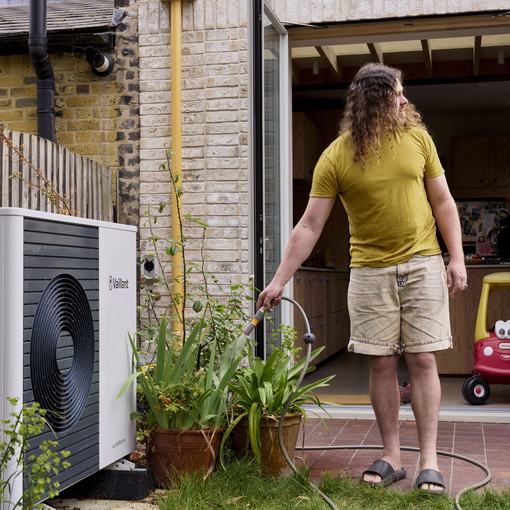
As many people claim not to have ever seen a heat pump in real life, or know someone with one, the tech can be viewed as new and risky. People may have read horror stories of terrible installations or been exposed to mis or disinformation that they took as fact. But we know from the behavioural science that went into the creation of Visit a Heat Pump, that seeing and hearing from people like them with a heat pump in a home like theirs is a hugely important piece of social proof to get people to consider a heat pump for their own home.
Our qualitative research also highlighted the value people place on the messenger. Using real people to front ads for campaigns, adding case studies to websites, creating moments for PR through lived experience from homeowners, adds credibility and reassurance that can’t be matched by science or sales. Building lived experience from people in relatable homes into marketing, along with trusted messengers and credible experts can be far more engaging than a glossy brochure.
In a recent campaign we ran for Visit a Heat Pump we had a number of target objectives and calls to action: too many it turned out. We had targets to hit for users searching on the website, messaging local hosts and booking visits, with copy tailored to each action. But this meant that the copy set too high a bar (visit a host in their home today) or was too general, and didn’t always meet the user at the right point in their journey. Switching focus to encourage people to message a heat pump host, and making that call to action clear in the copy, saw an immediate uptick in conversions.
Following on from getting the message right is making sure that the onward journey is as slick as possible. For many people clicking on an advert about heat pumps, this might be their first exposure to information about this technology. Considering the user journey with that in mind can help identify any frictions: barriers such as having to make decisions too early on or seeing jargon on a landing page can lead to users dropping off. In our 2026 campaign for Visit a Heat Pump we identified ways to optimise the user journey on the website, from increasing social proof, evidencing that other users are searching and messaging on the platform and making the description and call-to-action more emotionally urgent.
The beauty of running a longer-term campaign - as we did for Get a Heat Pump in 2024-25 - means you can really go out and test the platforms. We ran adverts on a number of channels over the 12 months including TikTok and Pinterest which we hadn’t used before. Broadening the channel mix in this way allowed us to test TikTok and Pinterest in terms of reach and conversion for our target audience. We now have insights we can take forward into future campaigns: we found that Pinterest was less effective for converting to clicks, whilst TikTok exceeded targets and provided a good route to our target audience.
As part of our Visit a Heat Pump marketing we delved into the world of AI-driven interest targeting and found it was most effective for driving actions. We put a list of interests into Meta to target - rather than only targeting users who identify with having those interests. The algorithm uses patterns to identify similar users and serve ads to them, too. The audience is based on the interests we selected, but Meta uses its dataset to find more people like them and it helped us increase our reach. Further to this, geographic targeting showed differences in impact - we targeted users across the UK with some campaigns, and also limited some ad campaigns to target locations. Ads targeting the entire UK were less expensive than in target locations: targeting the entire UK was almost 1/10th less costly per link click, 36% lower cost per search and 33% lower cost per message.
Building on the segmentation work through qualitative interviews gave us the opportunity to gather richer insights and delve deeper into the rationale behind decision-making and priorities for the home. Each segment definitely had its nuances, from budget-conscious millennial parents not believing they could fit a heat pump in their home, to rural retirees believing they wouldn’t work in older homes. However, there is a strong appeal across all segments to move towards home-grown energy. Being able to generate, store and use energy - and escape volatile international gas and oil markets - was a big pull. Messaging focused on the lower volatility and security of electricity is likely to be a useful motivator. However, it’s no surprise to report that the interviews highlighted how cost was the biggest barrier - including preparatory upgrades, the upfront cost and running costs. This is a tricky one to tackle but in our report we suggest focusing on available grants, easier ways to prep the home for a heat pump and detail on future bills.
As we move from an innovator purchasing a heat pump into the early adopter phase we can expect to see more insights emerging in terms of marketing to the right person, in the right place, at the right time. This, in turn, can help create more space to drown out the mis and disinformation currently out there in the wild. We’ll be taking a look at what a strategy for communicating with the public about clean heat could look like - reach out if you want to be part of that conversation.