Three steps to unlocking heat pumps as an option to replace broken boilers
 www.nesta.org.uk/blog/three-steps-to-unlocking-heat-pumps-as-an-option-to-replace-broken-boilers/
www.nesta.org.uk/blog/three-steps-to-unlocking-heat-pumps-as-an-option-to-replace-broken-boilers/
www.nesta.org.uk/blog/three-steps-to-unlocking-heat-pumps-as-an-option-to-replace-broken-boilers/
As hard as it may be when it's 25 degrees outside, imagine it’s winter, and your old gas boiler has finally broken down beyond repair. Your options are either a new gas boiler or an air source heat pump - both of which can provide you with heating and hot water within 24 to 48 hours. For a heat pump installation, this might sound too good to be true - and at the moment, it probably is for most people in the UK. So what’s currently limiting heat pumps being quickly installed to replace broken boilers?
In the UK, we install around 1.5 million boilers into existing homes a year. 30% of heating system replacements occur when an old system breaks down, according to a study by Ipsos Mori and the Energy Saving Trust, with another 28% replaced when they are on their last legs. Being able to offer a quick heat pump installation at this point would help increase our progress towards decarbonising domestic heating in the UK. However, efforts to increase the number of heat pumps that are replacing broken boilers are nascent, such as those involved in DESNZ’s Heat Pump Ready Programme or our speed testing.
Speed is undoubtedly important when replacing a broken boiler. The quickest turnaround that we’ve come across from initial contact with an installer to a completed heat pump install is four days, with many being under a week. We expect that it could be even quicker for air-to-air heat pumps.
But what else do we need to make installing heat pumps to replace broken boilers more commonplace?
Our previous research found that many people who install air source heat pumps in their homes face unexpected costs and delays.
Some installations require planning permission, and some may have to seek approval from distribution network operators (DNOs) - which can add a delay of up to 12 weeks (though can be less than 24 hours for some DNO approvals). While large delays won’t be the case for many homes, for those which do face these barriers this precludes them from a quick installation. It’s plausible that these barriers could be removed pre-emptively by homeowners - which we explored in our recent report on making homes heat pump ready.
Having your heating system break is stressful - and we know from behavioural science that stress can reduce our cognitive bandwidth, making complex decision-making more difficult. Stress can also make us more risk averse.
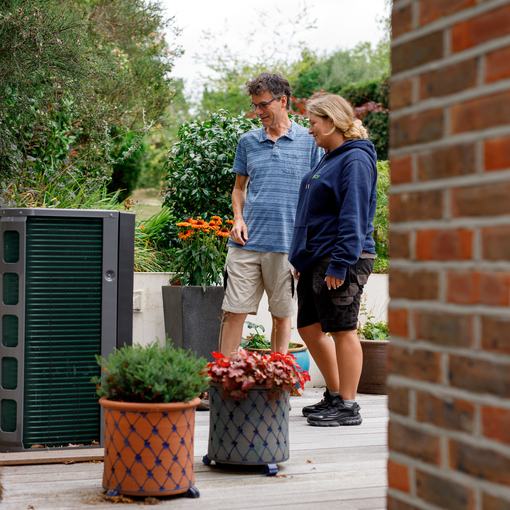
We also know from behavioural science that there can be an intent-action gap, where people can sometimes not behave the way they might intend to. Uncertainties might get in the way of householders making a final decision, such as concerns about aspects including sound levels or energy bills - which often can be addressed by visiting a heat pump nearby.
To make sure householders are ready to install a heat pump when their boiler breaks, we also need to ensure that all the final uncertainties are resolved. This would mean supporting householders to start to think about what they’ll do when their heating system needs replacing, and providing the information they need to make an informed decision, ahead of time.
Making plans ahead of time could reduce the stress of making a quick decision, but also could save money by allowing them to shop around. It also could help increase the number of people who choose a heat pump rather than a boiler. A recent Which? survey of 1,077 homeowners who had replaced or upgraded their heating system found that homeowners who had planned before their heating system broke were more likely to explore switching to a heat pump (5% vs 1%) than those who had not.
The final piece of the puzzle is heating engineers themselves. Being able to respond reactively to emergency situations requires having the capacity to do so. While this may make financial sense for boilers, heat pump installations tend to take longer than boiler installs, so more capacity needs to be held back for reactive work. Without much demand for reactive work, doing planned installations for heat pumps can be better financially for heating engineers.
If there was sufficient demand, it’s likely that heating engineers would offer to install heat pumps to replace broken boilers. This, however, requires that the administrative barriers are removed, and householders are ready, so heating engineers can install quickly.
Energy providers or engineers giving householders the information they need before their heating system breaks is critical - to avoid stressful decision-making at a time of emergency. It might also result in more people choosing heat pumps if they can access ways of resolving any final uncertainties. If these householders have the support from these stakeholders to create a pre-agreed plan for what happens when their boiler breaks, this could also help give confidence in the demand for heat pumps to heating engineers, meaning they could be more likely to offer reactive installations.
This would require both time and resources, and it is unlikely that there is sufficient incentive for heating engineers to do this themselves. There are a number of possible mechanisms worth exploring to do this: for example, heating engineers could encourage householders to think about their next heating system during annual servicing (including offering dual quotes as referenced in the UK Government’s Warm Homes Plan). Energy suppliers could play a role by helping their customers plan for their heating systems breaking.
Irrespective of the mechanism that helps people plan for a heat pump, this will only work if householders want heat pumps. To increase the proportion of people who say they want to get a heat pump when their boiler breaks, these interventions should happen in tandem with other measures to support heat pump adoption such as improving the electricity-price ratio and ensuring financing options are available to help people spread the costs.
A boiler breakdown is a crucial decision moment that can see a household locking in to gas or oil for another 15 years or being part of the change - and we have a huge opportunity to tap into this moment and drive adoption of low-carbon alternatives to fossil fuel boilers.