Introduction
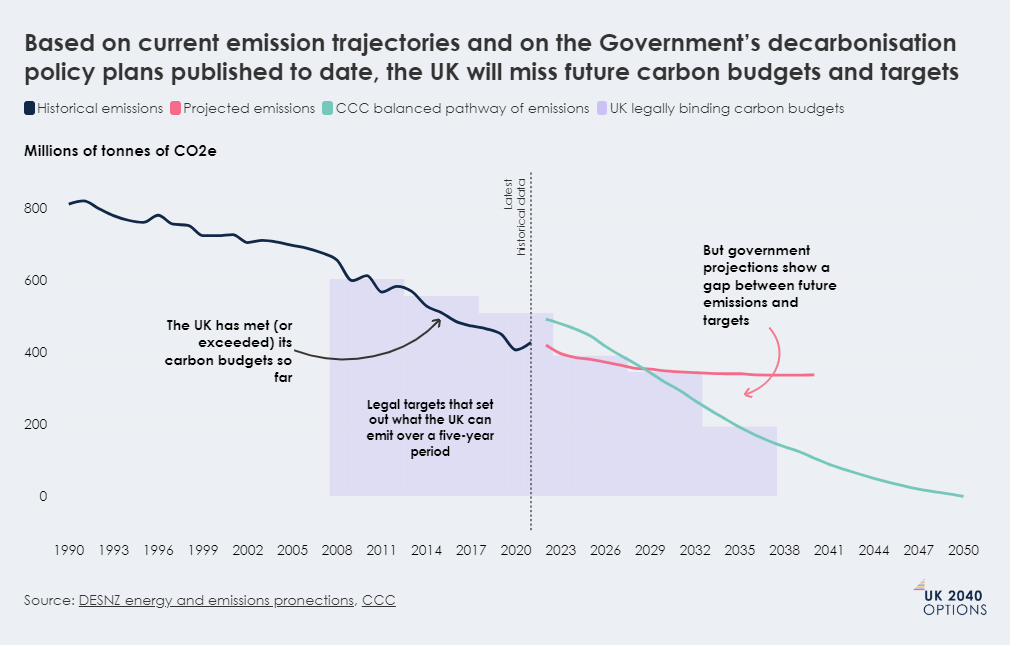
The UK was the first country to set ambitious net-zero targets and is the first major economy to halve its emissions, driven largely by power sector decarbonisation. But it is unlikely to meet any of its own future – and legally binding – carbon budgets and targets.
Reducing emissions matters: it is the only way to keep global temperatures within liveable limits and mitigate climate damages. Human-induced warming is already on track to blow past 1.5°C above pre-industrial levels and to surpass 2°C by 2040 with the potential to reach 4°C by the time a child born today reaches old age, in 2100.
To understand the UK's successes to date, and factors which will shape its trajectory to 2040, we explore the fundamental facts and trends the next UK Government will inherit when it comes to net zero.
Understanding that the UK's electricity grid needs to be substantially expanded to decarbonise sectors such as transport, heat and industry tees up choices for the next Government about planning, the role of the market and capital investment.
Digging into the shift in the energy sector's economics, from high operational costs to higher capital investment and lower running costs, leads to choices about industrial strategy and the role of the public and private sectors.
And understanding what the public thinks about climate change policies and how different parts of government do and do not work together enables a better assessment about where to invest time and resources in engagement and governance.
Such is the scale of change needed to transition to a net-zero economy and society, it can be easy to focus on single sectors, levers of change, constraints or opportunities. This set of nine facts is intended to paint a wider picture and to provide a jumping-off point for those seeking to navigate the policy space. For more detail you can explore the choices the next UK Government will need to grapple with and Nesta's work on home decarbonisation specifically.
The UK has cut its domestic emissions by 50% since 1990 but is now off-track to meet future targets
The Climate Change Act of 2008 committed the UK to an 80% reduction in carbon emissions (amended in 2019 to full net zero), making the UK the first country in the world to establish such a long-term and legally binding framework.
The UK was also the first major economy to halve its emissions in absolute terms between 1990 and 2022, outperforming every other G7 country in terms of per-capita reduction in greenhouse gas emissions. Most of this reduction has come from three key areas: the decarbonisation of the energy supply, falling industrial emissions combined with increased abatement and reduced emissions from waste management.
Renewable energy now consistently powers more than 40% of the country's electricity - up from just 7% in 2010. Carbon-capture technologies that remove polluting gases from industrial processing are increasingly common, and there is greater focus on the permanent storage of the captured gases. Waste-management emissions are down 63% since 1990, driven by increases in household recycling that reduce landfill, increases in methane capture from landfill and improved wastewater treatment.
But decarbonisation is set to become more challenging. The greatest gains to date have been in renewable electricity generation, but the focus in the energy sector will be on expanding generation to meet growing demand for electricity, rather than using renewables to abate an ever-smaller pool of fossil-based power.
The focus will need to shift to decarbonising sectors (and subsectors) where there has been less movement to date. In particular, this includes industry (cement production and manufacturing), agriculture and land use, buildings and heating, and surface transport. At the same time, the capacity of the national grid needs to grow in order to cope with increased demand and supply.
The Committee on Climate Change (CCC) – the statutory advisory body for climate change – has made it clear that, based on current emission trajectories and on the Government's decarbonisation policy plans published to date, the UK is now off-track to meet all future carbon budgets and targets.
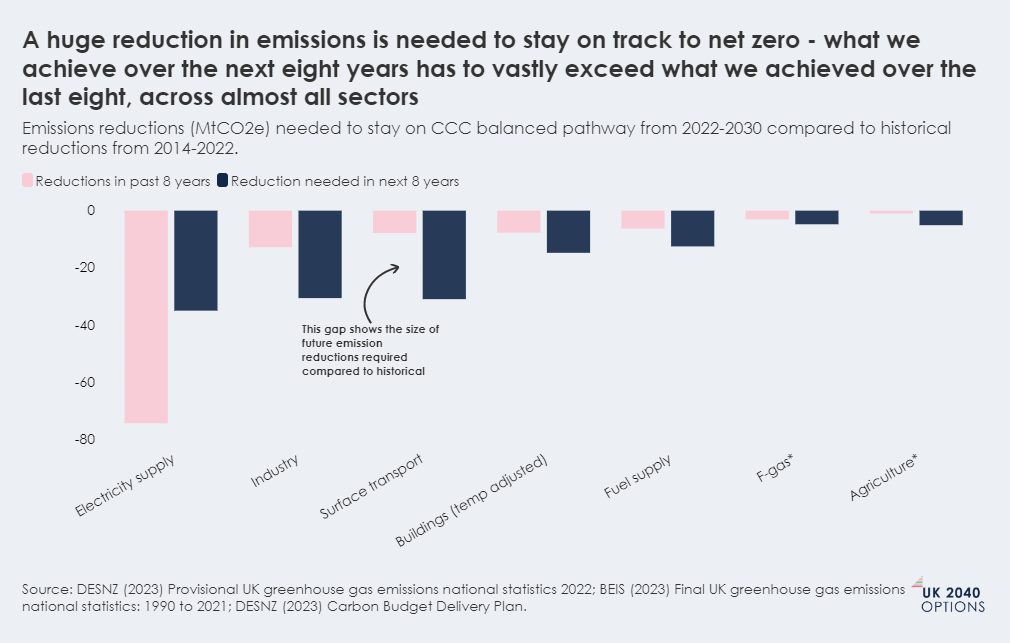
The decarbonisation of home heating provides a good illustration of the challenges the next Government will face when it comes to pace. Despite a stated Government commitment to install 600,000 heat pumps each year by 2028, the sheer number of individual homes with varied ownership and tenancy arrangements makes a mass transition challenging. This is before considering other barriers around planning rules, skills and workforce shortages, the financial costs of retrofits, the cost ratio of electricity and gas, and people's preferences (ambient heat from a heat pump is different to the burst of heat emitted when a radiator comes on).
The sheer pace of change needed to meet net-zero targets is new for the UK, but there is historic precedent for switchovers. It took only eight years to switch British homes from 'town gas' to natural gas between 1968 and 1976, and every household with a TV has switched from analogue to digital TV since the early 2000s. While it's a bigger proposition to install a new form of home heating than to install a set-top box for a TV, these examples show it is possible.
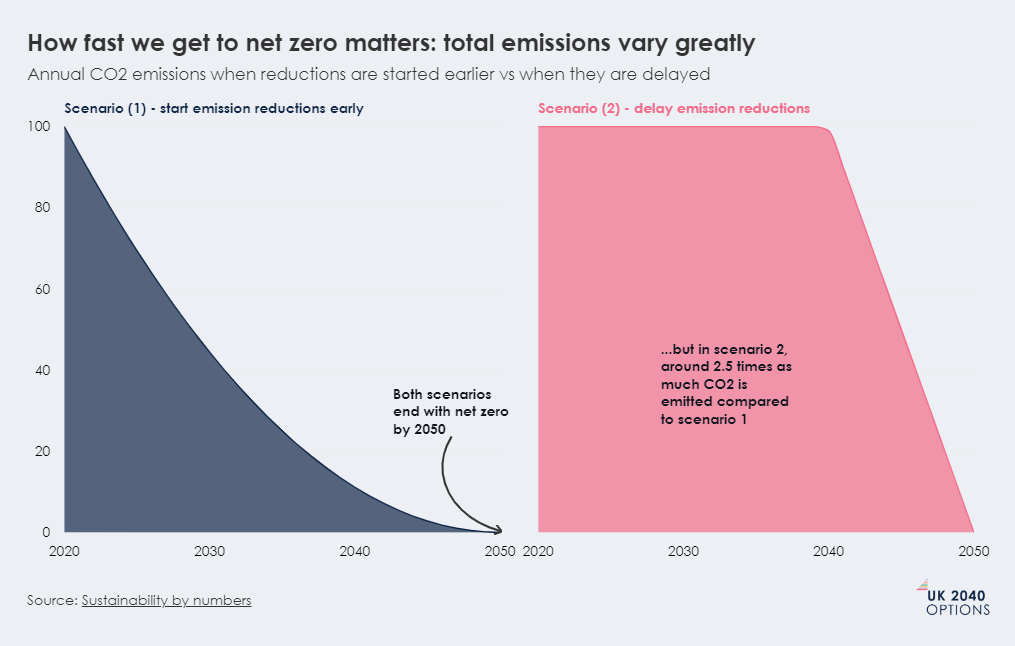
The pace of decarbonisation doesn't just matter for targets, but also for overall carbon emissions: it's not just where you end up, but how you get there. UK Governments have a choice about whether to lead the field, driving early and gradual reductions in CO2 emissions, or to slow down and delay action. In both scenarios, 2050 targets could be met, but the former results in much less carbon emitted overall. Less carbon contributes to slower global heating; more carbon means faster global heating and greater need for adaptation measures.
To summarise, the UK has achieved its carbon targets so far, but doesn't yet have adequate, detailed plans for the remainder of the transition, and there's expert consensus this will be much more challenging.
Consumption emissions matter, and are falling at a far slower rate than domestic emissions
The UK's progress on emissions reduction looks less positive when we account for our total carbon footprint, sometimes called consumption, which includes imported emissions from overseas. Consumption-based emissions are the additional emissions from the goods we consume that are produced overseas, whether it's the car you buy that's produced in the US, or the clothing imported from Bangladesh. These emissions are significant because it is conceivable that the UK could ‘outsource' its emissions while technically meeting its own territorial targets, defeating the point since this is a global challenge. If every tonne of CO2 causes >$1,000 of damages, emission reduction matters regardless of where it is produced.
Our consumption emissions are currently 37% higher than territorial emissions (which are the legal basis of our targets). While both measures have fallen since 1990, consumption emissions have fallen much more slowly. Since 1990, the first year for which data is available, territorial emissions fell by 51%, whereas consumption emissions only fell by 36%.
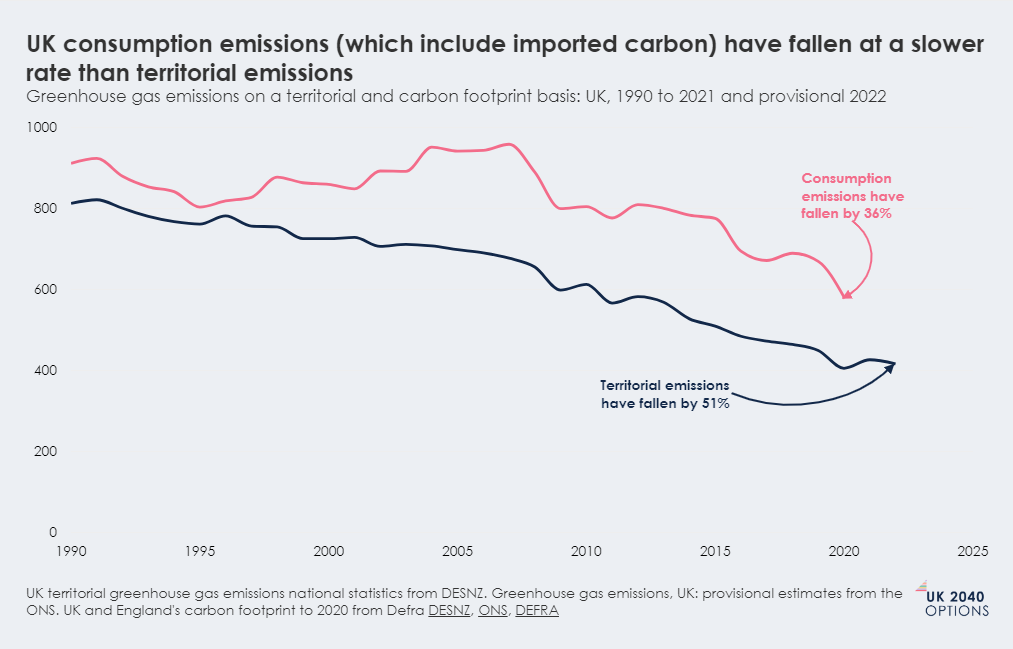
The UK has more influence over its territorial emissions, but if other countries meet their climate commitments, this will drive down UK consumption emissions too. If UK territorial emissions are reduced to net zero and UK trading partners reduce their emissions in line with the Paris Agreement, then the CCC estimates that UK consumption emissions would be around 90% below 1990 levels by 2050.
The UK has shown international leadership on climate action to date, being the first major economy to pass a net-zero emissions law, and pioneering a governance model where an independent climate change committee advises and holds the UK Government to account. This has now been replicated by 20 other countries around the world.
The capacity of the UK's electricity grid needs to be substantially expanded
The last UK Government committed to a fully decarbonised electricity system by 2035. To deliver this requires a seismic increase in the amount of electricity that flows around the UK, and therefore the energy infrastructure to carry and store it.
There are some choices and uncertainty about how and where to generate that decarbonised electricity, such as renewables, nuclear, hydrogen and carbon capture and storage (CCS), and their location. But, in all scenarios, we do have certainty about and can plan for upgrades that are needed to the underlying infrastructure – the electricity grid.
Both the Department for Energy Security and Net Zero (DESNZ) and CCC expect total electricity demand to increase by around 50% by 2035. This is due to a parallel Government aim to decarbonise sectors such as transport, heat and industry as they move from fossil fuels to electrical supply. As well as significant increases in low-carbon generation, there will be additional requirements for more grid capacity to transmit and store electricity.
To support this growth, the UK will need to upgrade the network at an unprecedented scale and pace. The CCC estimates this will require 134GW of grid capacity by 2035, more than double what we currently have. Building is also slow: at the current rates, we will not reach this goal until 2084. Building this will require planning, regulation, governance and, most importantly, high levels of capital investment.
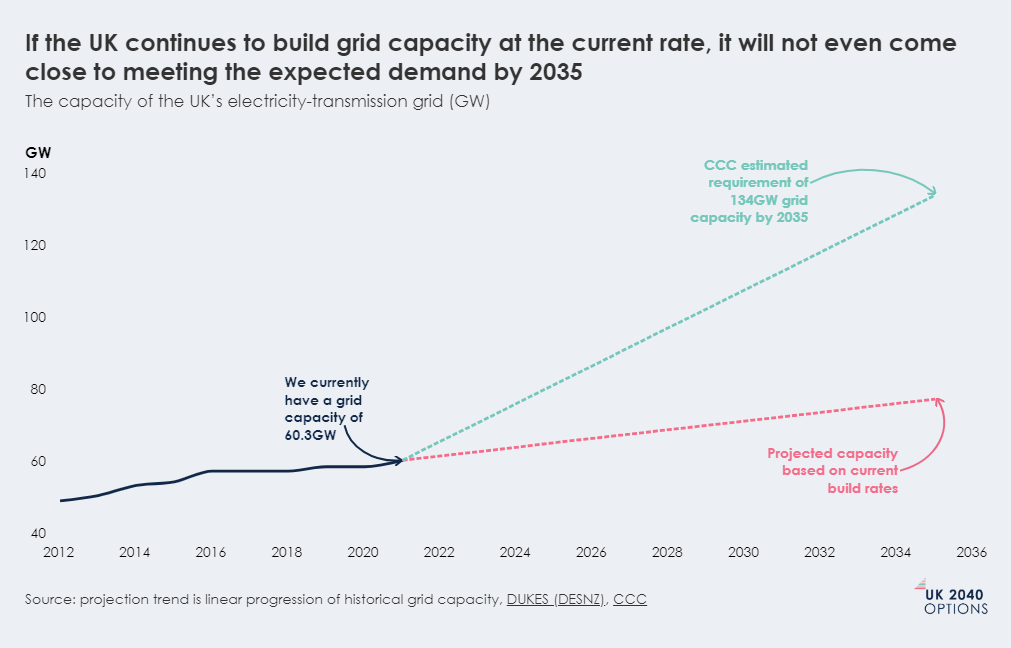
Building this much new capacity will be challenging and will require coordination and collaboration across nations and local areas. The impacts of the new infrastructure will be concentrated in a handful of regions, for instance transmission grids on the east coast of England delivering power from offshore wind. It may require direct Government intervention to remove planning barriers and provide the right incentives to build and finance the infrastructure, with the total investment needed estimated to be £300 billion to £430 billion.
It is important to reflect that this has been done before. In the 1950s, a post-war plan was enacted to construct an electricity 'supergrid', comprising 4,000 miles of transmission lines. The UK built this in just 12 years. This effort allowed enough headroom in the system to forget about grid capacity as a constraining issue. However, this allowed us to become complacent and the UK is now running out of capacity. New connections to the grid for renewable projects currently sit in a queue of up to 10 years in some areas. We must now tackle this issue front and centre if we're to meet the 2035 target.
A fundamental shift in the energy sector's economics is required
There is no cost-free option. Reaching net zero will involve significant and frontloaded capital investment under any scenario, requiring a fundamental shift in the energy sector's economics, from high operational costs to high capital investment and lower running cost. None of these costs are static: they change over time and are affected by the actions of government, business, groups and individuals alike. Reaching net zero globally is a necessary condition of stabilising global temperatures: failing to deliver has costs too, from climate damages to adaptation costs to other damages such as air pollution.
Building wind and solar farms, producing green hydrogen and getting low-carbon heating into homes and buildings all require large up-front investment. But this shift will significantly lower ongoing spending on our energy system. The more renewable energy the UK produces and uses, the less it needs to spend on importing oil, gas and petrol.
The CCC has estimated that a planned and orderly transition to net zero will cost less than 1% of GDP per year (around £26.9 billion) between 2020-2050, even before the benefits are counted. These costs are already at the lower end of the 1%-2% estimate outlined in the Climate Change Act due to faster and cheaper than expected advances in technology. For example, energy from solar photovoltaics (PV) has gone from being 710% more expensive than the cheapest fossil fuel-fired solution in 2010 to 29% cheaper than the cheapest fossil fuel-fired solution in 2022. Onshore wind has dropped from being 95% more expensive to 52% cheaper over the same timeframe.
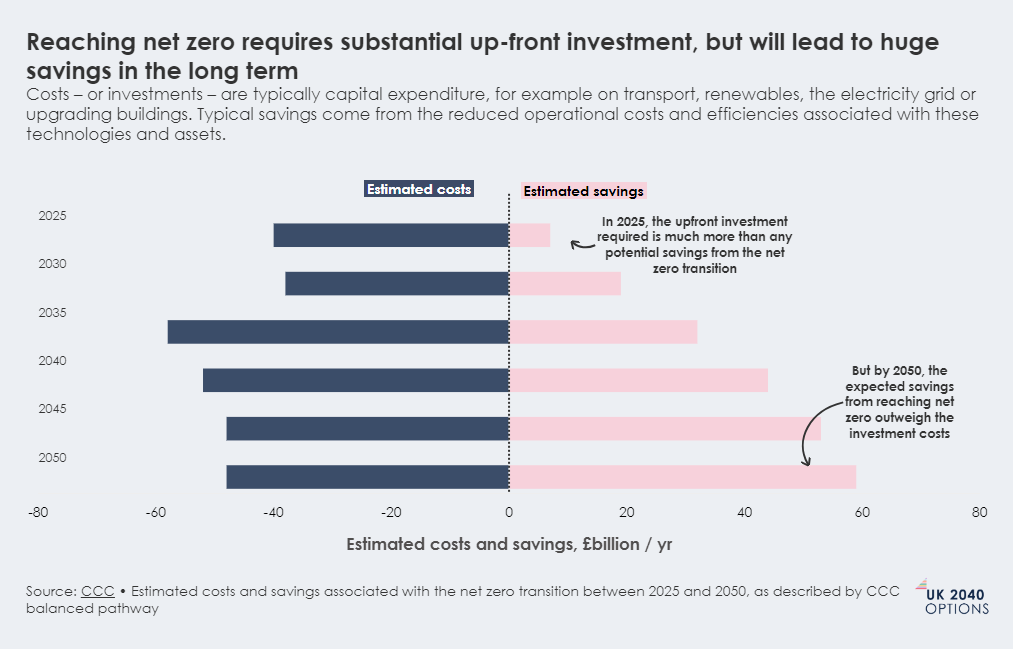
To put this 1% of GDP in context, it is less than half what the UK Government spends each year on transport (£43.6 billion) and half of what UK consumers spent on automotive fuel alone in 2023. And while frontloading this sort of spend could require up to £50 billion a year of investment by the late 2020s according to the CCC, the Office for Budget Responsibility (OBR) points out this equates to just over £10 billion per year with savings taken into account (£1.4 trillion in costs offset by £1.1 trillion in savings)
Where could this money come from? A proportion of it can be covered by directing existing investment and spending on things people need and want (whether infrastructure, new homes, new cars or new boilers) towards net zero, whether that spending is by Government, the private sector or consumers. For the rest, the Government has options.
- Clear the way for private investment through targets, mandates, standards and financial tools such as tax incentives, subsidies and grants.
- Borrow to increase Government investment, making use of the lower cost of capital to the state as the US Government has done with its 2022 Inflation Reduction Act (although high and volatile interest rates increase the cost of servicing debt).
- Distribute the costs across businesses and consumers.
It is worth noting that some existing sources of Government income associated with fossil fuels will fall in the transition to net zero. Fuel duty raised £24.3 billion in 2023, but this is estimated to more than halve by 2030 as the UK moves towards its 2035 ban on the sale of new petrol and diesel cars. The challenge for the UK Government will be to find new sources of revenue or adjust existing tax systems to account for the changes in the economy.
The other challenge is that while renewables have no fuel costs, they are intermittent and it is very expensive (not to mention polluting) to 'switch on' gas or coal facilities to top up and meet demand, or buy fossil-generated electricity on the spot market. To manage peak demand in a renewables-dominated power sector, the UK needs to be able to store energy and regulate supply to the grid, as well as even out demand (for example through shifts in behaviour or pre-set technologies which might run a washing machine at night). The Government's Review of Electricity Market Arrangements is exploring measures to mitigate the cost of bumpy renewable supply, from creating separate markets for renewable and fossil-fuel generated electricity, to reform of the capacity (energy storage) market.
The UK spent £75 billion on additional energy costs during the energy crisis. By 2040 these costs should have been mostly eliminated. As with previous technological revolutions, the transition to net zero entails a lot of spending and it will upend long-held assumptions about how certain markets work, as new technologies displace old.
Our energy security is extremely vulnerable to external shocks: the UK spent an additional £75 billion during the energy crisis
The UK spent around £105 billion buying gas on wholesale markets over 2.5 years of the energy crisis up to February 2024. Due to inflated prices, this cost consumers and Government more, and added around £75 billion of costs to the UK economy compared to before the crisis and pandemic. While the debate on net zero often focuses on the cost to transition, we should also understand the significant cost of maintaining the status quo.
Net imports meet around half of UK gas demand, so overseas gas producers have received around £50 billion from UK customers during the gas crisis to date.
The International Monetary Fund found that British households have been the worst hit in Western Europe because of our high dependence on gas. The next UK Government is inheriting a country which is a producer of both oil and gas, but also a net importer.
The energy crisis illustrates how vulnerable our energy security is to external shocks, given how our energy supply is dependent on imports. As North Sea gas production continues to decline, the only way to ensure energy security and thus limit gas imports in the long term is to reduce gas consumption.
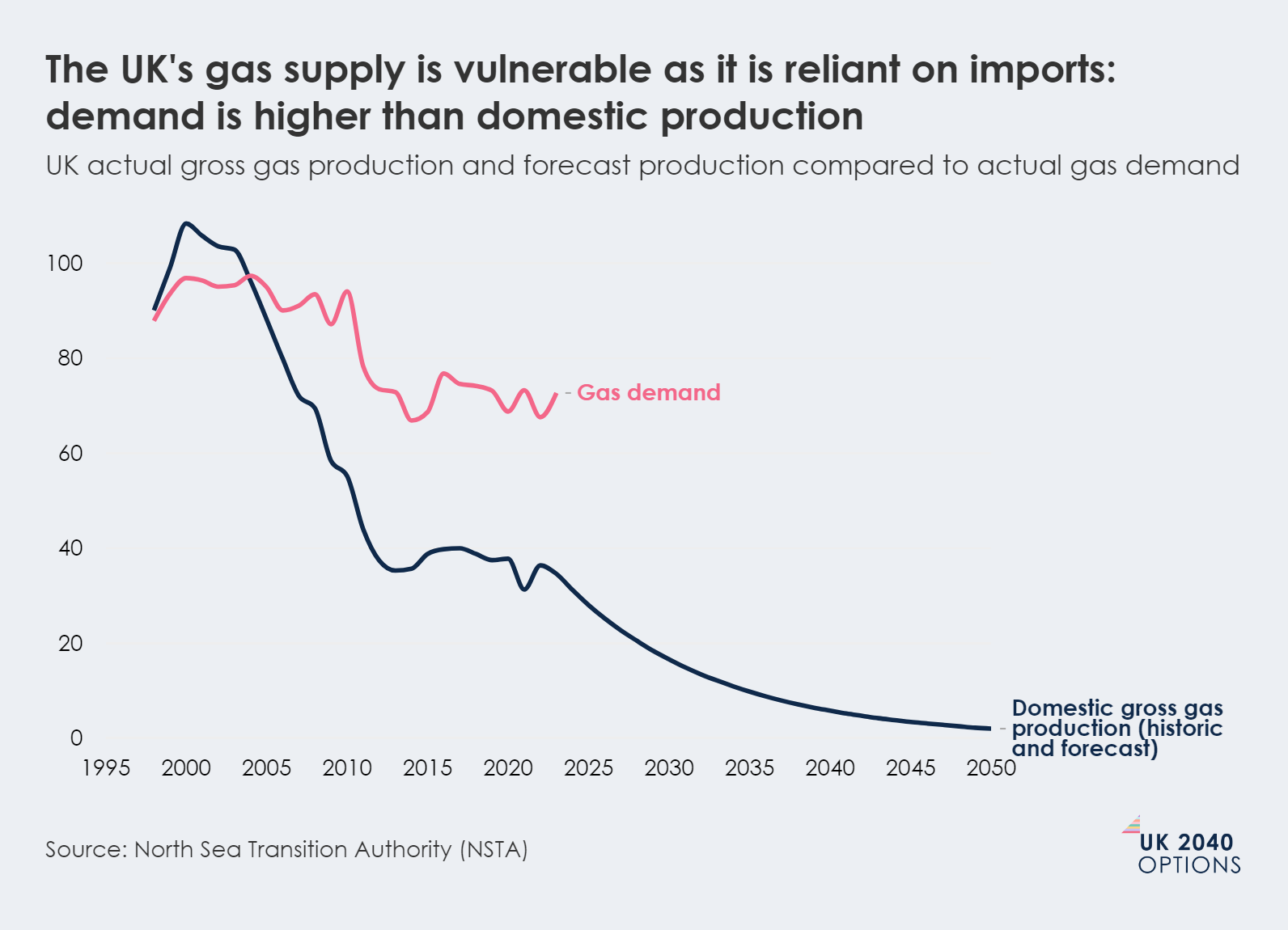
Looking at the UK's imports for gas over the past 2.5 years, roughly 57% came from Norway, 23% from the US and 11% from Qatar. It's difficult to know the exact value of imports due to commercially sensitive data, but these proportions give an indication of where this £50 billion has been spent. This would be equivalent to roughly £1,000 from every household going to Norway.
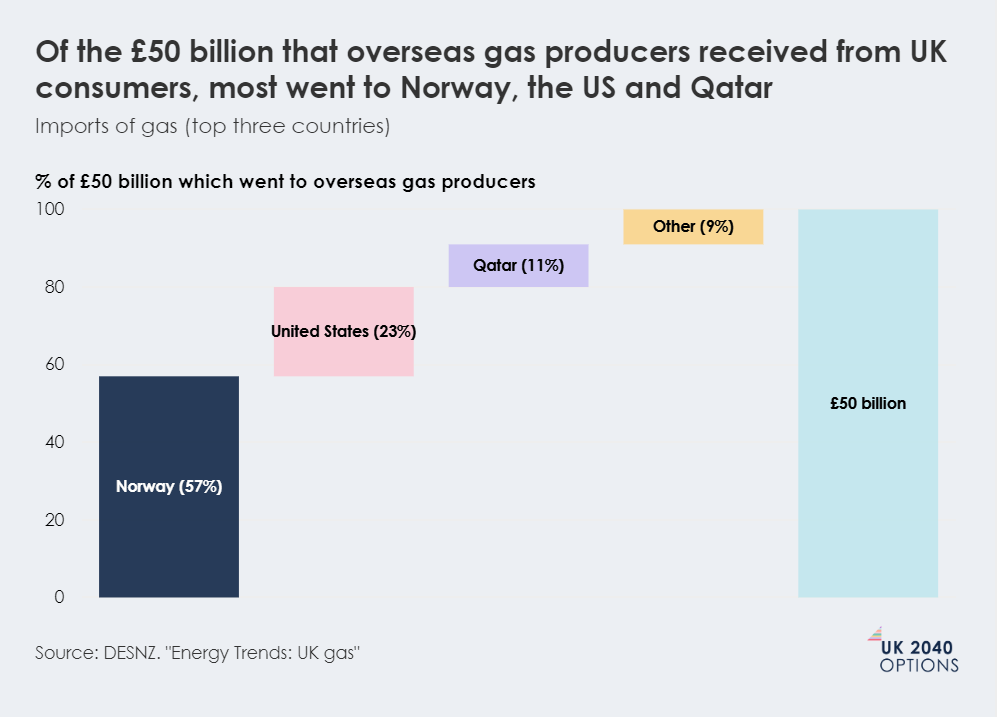
Reliance on fossil fuels means exposure to geopolitical shocks that impact the price of these internationally traded commodities. Accelerating progress to net zero and moving to domestic renewable energy sources, which do not require fuel imports, will strengthen energy security. But renewables alone are not the answer to the energy security challenge. The UK can expect to have to deal with prolonged periods without solar or wind energy, which will be problematic if they coincide with mid-winter peak heat demand. Long-duration storage solutions are required if the UK is to avoid relying on gas-fired power stations as a back up. The Government also has choices about the degree to which it invests in 'firm' power such as nuclear to further shore up domestic energy security.
There are necessary foundational steps on transport, buildings, industry, and agriculture and land use
Massive expansion of the electricity grid and capital investment are needed in all trajectories to net zero, but there is a series of other foundational steps the UK can take on transport, buildings, industry, agriculture and land use. These boil down to: electrify wherever possible in as fast and organised a fashion as possible on heat and transport; more than double the UK's renewables capacity by 2030 from 2020 levels, along with the aforementioned expansion of the grid; invest in CCS solutions to abate emissions from industry that cannot be decarbonised; and support land reform to produce less carbon and sequester more.
But there are also major uncertainties associated with the UK's pathway. Some of these are related to 'what': the relative importance of CCS, nuclear, hydrogen and biofuels; the degree of demand-side reduction and behavioural shifts needed; and the role of demand flexibility solutions such as electricity storage solutions. But some choices are related to ‘how' these things get delivered – the role of state intervention, governance, technological developments and the question of who pays and when. Below we'll explore some of the foundational actions in key sectors, and the greatest uncertainties. The implications of these choices to 2050 can be explored using the Mackay Carbon Calculator while the CCC's five pathways set out the spectrum of potential trajectories to net zero from the most conservative 'headwinds' to most ambitious 'tailwinds' scenarios.
Stop using fossil fuels to heat homes
Heating homes with gas and oil boilers produces around 18% of the UK's carbon emissions and there has been little progress in reducing this over the last decade. To meet its climate goals, the UK needs to transition its homes to low-carbon heating by 2050. Heat pumps are widely expected to be the most common technology for low-carbon heating, and the UK Government aims to have 600,000 heat pumps installed annually by 2028.
Speed up the electrification of transport
Despite progress, transport is still the highest emitting sector of the UK economy. While the market share of electric vehicles (EVs) continues to outstrip the CCC's ‘Balanced Pathway' projections, regional and on-street infrastructure isn't expanding fast enough to support the UK's (previously 2030) 2035 phase-out date for sales of petrol and diesel vehicles. Population growth and associated demand for personal vehicles will come up against grid capacity if there's not a parallel focus on increasing the quantity, quality and affordability of active travel options.
Speed up the development of the green hydrogen economy and CCS to decarbonise the manufacturing of cement, iron, steel and chemicals
The UK Government's Carbon Budget Delivery Plan (CPDP) aims to reduce industrial emissions by 69% by 2035, relative to 2022 levels. Increasing numbers of companies are disclosing their emissions targets, but even if these were all achieved, in total they would result in only a 32% reduction in emissions by 2030 compared to these plans, and only a 19% reduction by 2050.
The UK is making progress in its investment and support for the production of low-carbon hydrogen and CCS infrastructure and business models, but at present, no industries are using either. A lack of data collection and reporting about plans and progress means little clarity over where and how to act.
Introduce targets and support for those who own and manage land to reduce emissions from agriculture and land use
Net emissions from agriculture have remained static for a decade. But this is one of the few sectors where action brings net benefits to the UK, sinking carbon and increasing climate resilience. In practice, this means increasing the adoption of low-carbon agricultural practices, investment into research and development on crop yields and the adoption of precision farming technologies and dietary shifts to drive a reduction in livestock numbers – thus freeing up land. On land use, the immediate priority is peatland restoration and sequestration through planting forests, hedgerows and energy crops. Tools at the Government's disposal are regulation on emissions, bans on damaging practices such as peat extraction, support for green financing and targeted support for rapid change, particularly around skills and workforce.
There are bigger choices for the UK Government to make where there are more uncertainties over technological developments.
- In any scenario, CCS is needed for those emissions that can't be fully greened. But it's not clear how technically viable and secure long-term storage is, or how economically viable it is without significant subsidy.
- The future role of hydrogen in the UK's energy mix isn't a done deal yet. It's assumed green hydrogen will be needed to fuel industrial processes, but there's still debate about its role in heating and transport and therefore about which production technologies and infrastructure to invest in, what targets and regulatory framework to set and what supplies of feedstock are needed.
- The vast construction costs and lengthy timelines to get nuclear power online present the Government with another choice – whether and how much to invest in major nuclear capacity, including small modular reactors (SMRs) and more advanced nuclear technologies.
- The direction of biofuel development is also unclear, with question marks over its sustainability and impact on land use bound up with uncertainty over demand and competition from industry, energy production and aviation.
- Electrification across the board will overwhelm the (expanded) grid unless there's demand-side reduction. While electrification of heat and transport will reduce energy use in and of itself given the efficiencies of electric vehicles and heat pumps, demand will still outstrip capacity. Governments can choose whether and how to encourage consumers to shift their behaviour through regulations, incentives and public information, and can shape whether these changes are focused on adoption of technological solutions or shifts in behaviours such as consumption patterns.
- Part of managing grid capacity will also be about creating ways for capacity to be flexible, whether through smart grid solutions or energy storage technologies. These are nascent technologies, so it's not clear how big a role they could play in future energy scenarios, and the Government has a choice about whether and how much to shape the market accordingly.
The foundational priorities are clear, but the challenge is around pace and orchestration of delivery. On the uncertainties, the Government's action – even if that action is to wait will shape the answer.
There is strong and sustained public support for climate policies, but a mismatch between willingness to act and the perceived impact of behaviours
Net zero will not be possible without widespread social and behaviour change.
The CCC estimates that 62% of the necessary emissions reductions in the UK depend on behaviour. The UK's households will need to change their heating systems, use energy differently and adapt their food and transport choices. The UK will expand the electricity grid and build much more energy infrastructure, in some cases near to where people live. All of these changes have the potential to cost money or cause disruption to people's lives.
Ensuring we do this in a way that maintains public support will be one of the biggest political and public engagement challenges of a new Government.
Currently, public support in the UK is high for many climate change policies. Around 7 in 10 people in every generation say climate change, biodiversity loss and other environmental issues are big enough problems that they justify significant changes to people's lifestyles.
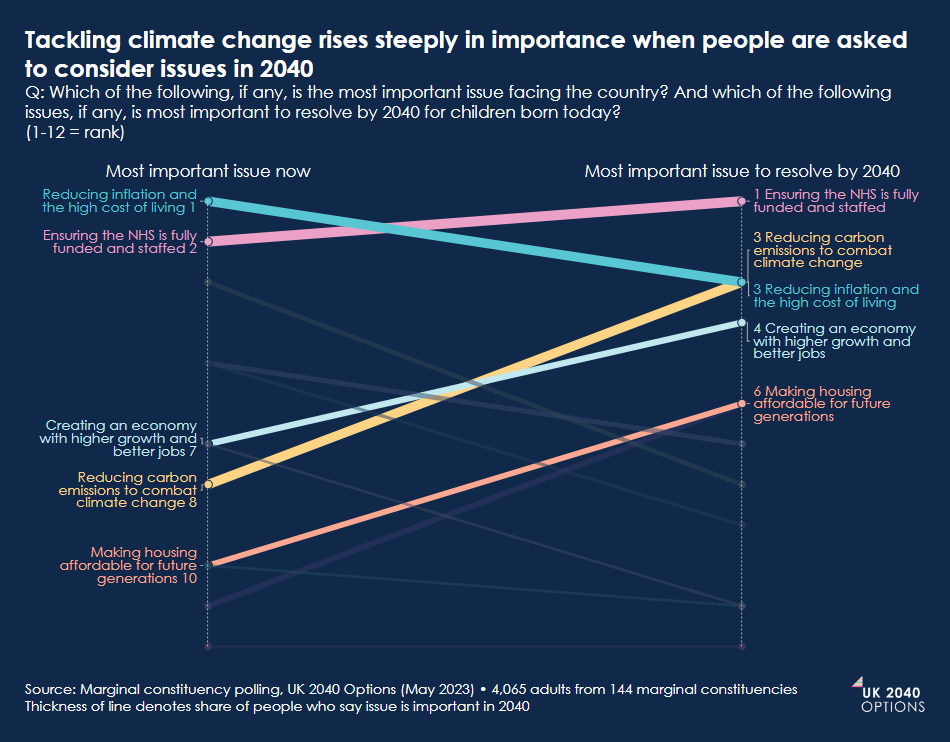
We conducted some polling with Opinium in May 2023 for the UK 2040 Options project. We found that tackling climate change rises steeply in importance (from 7% to 14%) when people are asked to consider priorities for 2040, compared to current importance. It will be critical to explain why action is needed now to achieve a relatively distant goal.
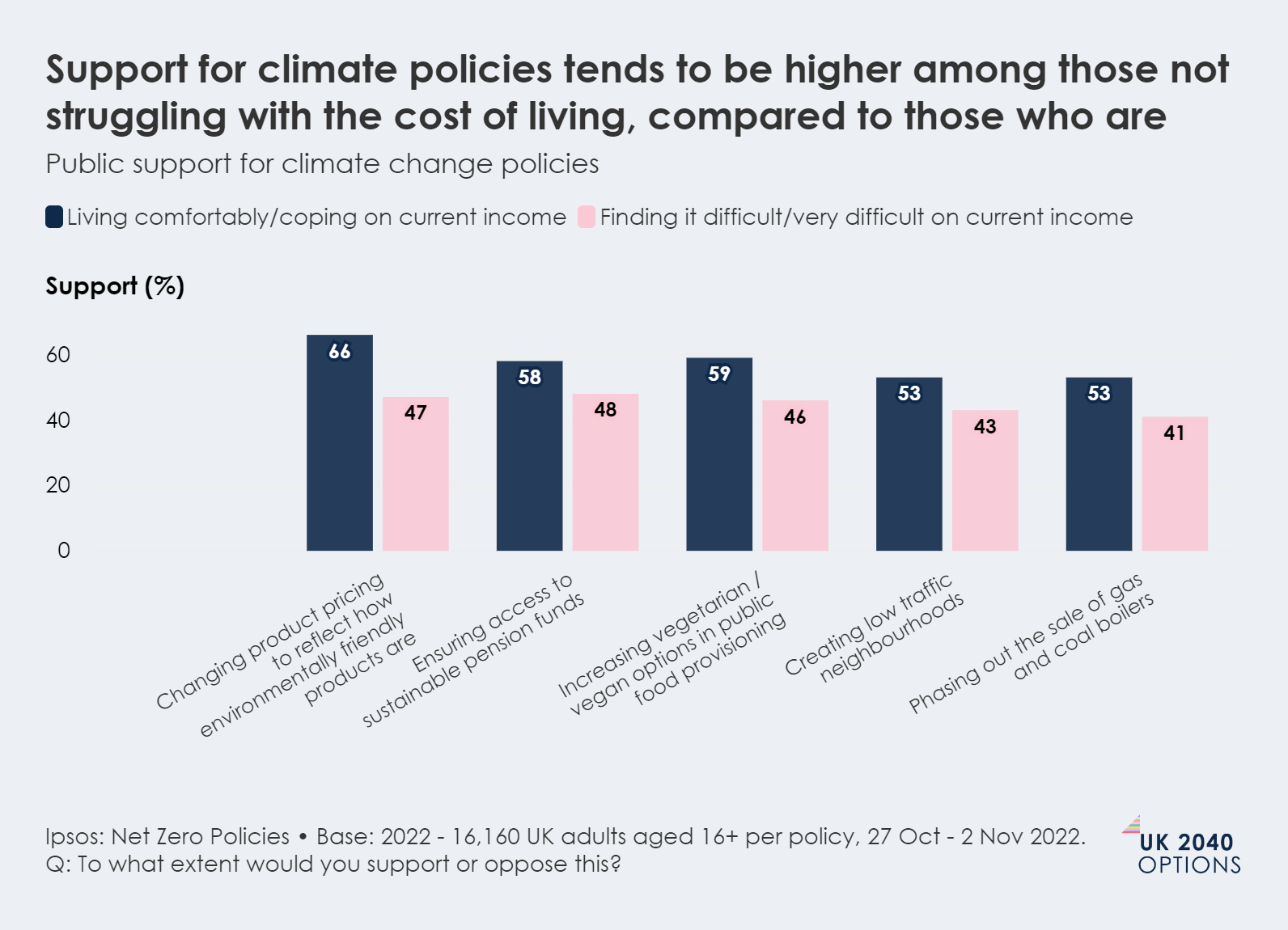
Public support does vary when you account for perceived household income, with higher support from those living comfortably rather than finding it difficult on their current incomes.
The public's support for climate policy is not an inert variable around which the Government must navigate, but it is likely to be altered by public perceptions of how seriously politicians are taking the issue of climate.
It will be important to design, implement and talk about decarbonisation policies in a way that doesn't polarise the debate. A breakdown in trust and public support could derail a future Government's ability to implement policies, particularly those that necessitate behaviour change and thus public buy-in.
We should also treat this current level of support with caution. The transition so far has only involved a limited change in behaviour, but this will increase. The current support for action is therefore only theoretical, and hasn't yet been properly tested.
In addition to maintaining public support, the way in which the Government communicates with the public is key to achieving net zero. Currently, people tend to have a poor understanding of actions they can take that are the most beneficial for environmental impact. This chart shows that mismatch.
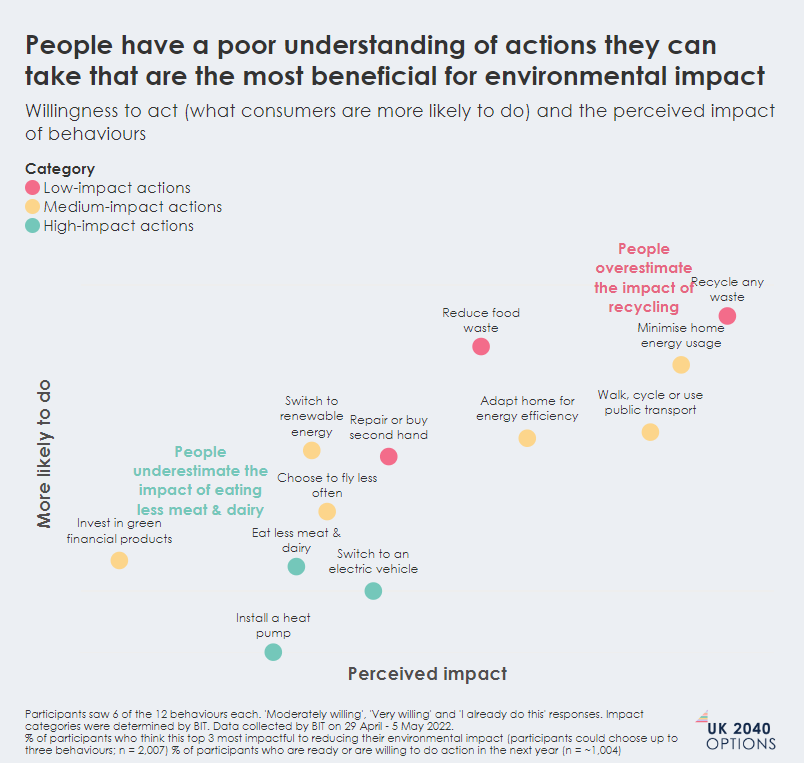
In order to effectively capitalise on behaviour change, the Government will need to ensure that the public are properly engaged, informed and there are no significant barriers in the way of action.
Climate heating is projected to surpass 1.5°, head for 2° and could even reach 4° requiring adaptation alongside mitigation
Getting emissions down matters because if global temperatures stay within 1.5°C above pre-industrial levels, scientists agree the world can keep the most extreme impacts of climate change on people, wildlife and ecosystems at bay. It was codified in the Paris Agreement of 2015 for this reason. But, estimates suggest human-induced warming is already nearly 1.3°C above 1850-1900 temperatures, projected to surpass 2°C by 2040 and has the potential to reach 4°C by 2100 when a child born today reaches old age.
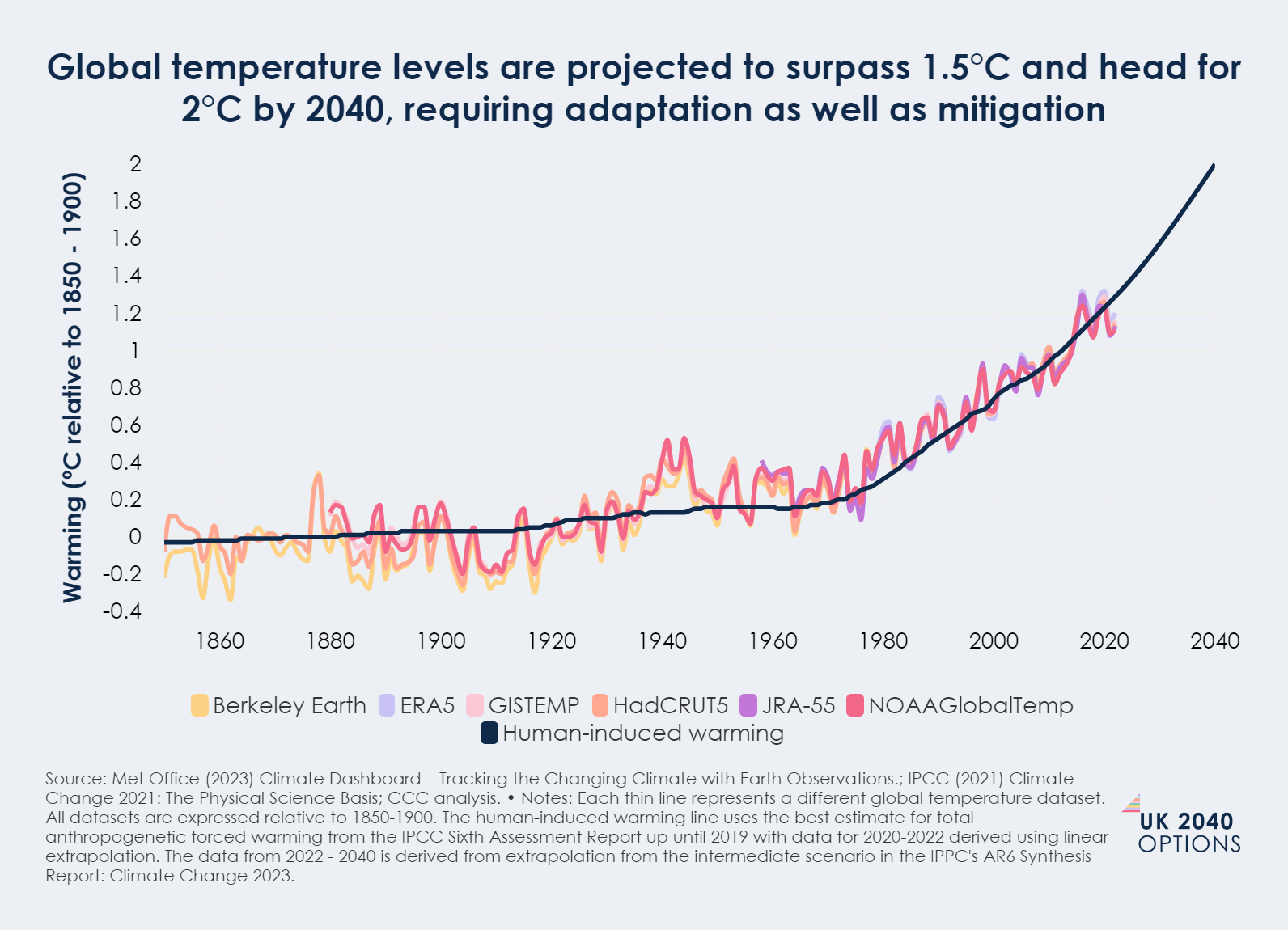
To illustrate the difference, at 1.5°C, roughly 70% of coral would die and extreme heatwaves could be expected around four times a decade. At 2°C, more than 99% of coral would die and irreversible ice sheet melting would raise sea levels by up to 30 feet. By a 2.7°C increase the tropics and sub-tropics would be "unlivable”, and 4°C of warming would outstrip the adaptive capacity of whole ecosystems and regions.
The UK is already experiencing the effects: 2022 was the first year in which 40°C was recorded, bringing heat-related deaths, wildfire incidents and infrastructure disruption. On the trajectory to 2040, the UK can expect more heatwaves, more flooding, more water scarcity and drought and more extreme weather events such as storms. Under these conditions the UK's housing stock and buildings are at increased risk of overheating and flooding, causing ill-health and displacement. Businesses will need access to insurance and capital to adapt and manage the effects of climate change, whether on their physical sites or on supply chains.
Transport and power network outages will disrupt supply chains and services, degradations in soil health and poorer agricultural productivity will affect food supplies and prices, and compromised terrestrial and freshwater habitats will result in biodiversity loss and poor yields from aquaculture. The impact on people is already unequal: in London alone, people from minoritised ethnic backgrounds are 50% more likely to be affected by overheating, flooding and air pollution.
To reduce the severity of climate impacts, mitigation measures are the priority, but to enable people to live equitably with those climate impacts, adaptations will be needed. There is a choice here about prioritisation and cost. Focusing on decarbonising homes only, without bundling in adaptation measures for cooling (such as fans, shutters and retrofitting to improve energy efficiency) is faster and less costly in the immediate. But, if overheating requires action at a large scale within the next 10 years, it'll be more effective and less costly to “go once” on home upgrades. Similarly, energy and transport infrastructure built now that does not account for future heat, storms and wind drought will be ineffective and costly further down the line. The next Government will need to make that trade off across mitigation and adaptation measures, recognising that adaptations made to working land and seas, in particular, can also support mitigation efforts through carbon sequestration.
Adaptation is difficult to prioritise and act on, though, because there is no agreed or well-defined vision for what a well-adapted UK looks like. There are no targets, goals or standards at a national, local or sectoral level. While the CCC has a statutory duty to evaluate adaptation progress through the National Adaptation Programme, and has shifted since 2023 to focus more on delivery than risk assessment, action is still largely voluntary and therefore patchy across sectors and institutions. The Adaptation Reporting Power (ARP) similarly enables Government to request reports on how infrastructure-critical organisations are adapting, but reports are not mandatory and require no details about financial investment.
There are increasing movements towards adaptation within the G7. France is leading on overheating with its national heatwave management plan, introduced after the number of deaths caused by heatwaves in 2022-2023, and Germany is the first to introduce into law an Act which requires measurable targets for adaptation.
As for UK progress on adaptation on the trajectory to 2040, where there are plans, they are mostly credible but lack implementation, and where there are partial or no plans, progress is absent. And regardless of the UK's own progress on adaptation, it will have to respond to the effects of climate change overseas, whether conflict and instability, migration, or supply chain disruption and price volatility.
The UK has the legal framework and governing institutions for net zero, but gaps when it comes to delivery
Given the scale of the transition to net zero, and the adaptation measures needed along the way, it matters how coordinated and effective the UK's institutions are, and how well the different parts of Government can work together.
The legal framework is there in the aforementioned Climate Change Act of 2008. The UK also has a strong set of central Government institutions focused on governance. The Climate Change Committee is the statutory body advising the UK's four Governments on how to meet carbon budgets and to report on that progress to parliament. DESNZ is responsible for keeping the UK on track (with major roles for the Department for Environment, Food and Rural Affairs and the Department for Levelling Up, Housing and Communities) while the Office for Budget Responsibility (OBR) makes sure the financials stack up.
The configuration of institutions responsible for delivering on net zero outside Government is complex too. Individual institutions have clear remits – Ofgem regulates energy and NESO will plan and operate gas and electricity networks – but there is no clear mechanism for these institutions to coordinate with the Government and with each other, to make decisions or resolve disputes.
These institutions are galvanising the pace of policy development on net zero, but it's not fast, coordinated or comprehensive enough to deliver on future targets.
Why does this degree of coordination and coherence matter? An orderly and planned transition is necessary because of the massive coordination challenge in delivering on net zero. The UK will need to turn off the gas grid at some point, coordinate switching of homes to electricity from fossil fuels, plan which bits of the electricity grid to expand and strengthen, and identify where and how it builds new renewable energy generation facilities. It is no mean feat to do all this while also managing a nationwide transition in the way we use land, especially for agriculture, and finishing the work already underway in the power, fuel supply, waste and industrial sectors.
The UK's policy plans have gaps, and they will bite at the next carbon budget. The UK Government published its Net Zero Strategy in 2021, which set out plans to 2050, but it was ruled inadequate and in breach of the Climate Change Act in a 2022 high court judgement. It was updated via the Carbon Budget Delivery Plan (CBDP) in 2023, which in turn has been ruled inadequate after the CCC highlighted that the UK's chances of meeting the sixth carbon budget in the mid 2030s had worsened for the first time.
Coordination between and across governments and citizens is messy at present. Commitments to a public engagement strategy in 2021's Net Zero Strategy haven't yet been implemented; divergent climate targets in the devolved nations complicate UK-wide delivery, and local government's edge in responding to local needs is complicated by funding and skills constraints, as well as reservation of powers: 67% of councils are currently unsure if they'll meet their net-zero targets.
Some of these gaps come down to choices the UK Government will have to make about the role of the state (whether national or local), citizens and the private sector. The UK has the global leadership role and institutional and advisory frameworks to remain at the forefront of climate leadership, but only if it delivers too.
Acknowledgements
We thank David Halpern for his contribution to this work and Lord Gus O'Donnell for sponsoring the UK 2040 Options project.
UK Options 2040 supports policymakers as they make choices about what to prioritise and how to deliver: setting out alternative policy options and pathways for the future, creating space for honest debate about the trade offs and testing and interrogating ideas that take us beyond immediate crises.
Nesta
THE BEHAVIOURAL INSIGHTS TEAM
58 Victoria Embankment
London EC4Y ODS
+44 (0)20 7438 2500
[email protected]
@nesta_uk
www.nesta.org.uk
Creative Commons License: Attribution-NonCommercial-ShareAlike (CC BY NC SA)
Nesta is a registered charity in England and Wales with company number 7706036 and charity number 1144091.
Registered as a charity in Scotland number SCO42833.
Registered office:
58 Victoria Embankment, London EC4Y ODS.