Who we are
Nesta is an innovation charity with a mission to help people and organisations bring great ideas to life.
We bring together individuals, know-how, money and other forms of support to drive forward innovations that will benefit us all. We work in many different sectors, from health and education to arts and finance. This booklet will give you a snapshot of the different projects we're running across our nine big themes and the impact we're making in each of these.
To find out more about all of our work go to:
nesta.org.uk
Innovation policy
Our research and events put us at the heart of the debate on innovation policy in the UK and internationally. Our aim is to place innovation at the centre of everyday life and work, to find and promote the best ways of putting it into practice and to use these to achieve social impact.
In 2014-15 we worked on a number of influential events and publications. Here are a few of the highlights:
Our flagship event for policymakers, Future Shock, looked at the trends that will shape life beyond the 2015 general election. Tyler Cowen, Paul Mason and Diane Coyle were among the speakers who addressed a full house, where demonstrations of robots and the latest technology also took place. The event sparked a fascinating discussion and trended on Twitter.
After completing a comprehensive mapping of the UK's creative and technology clusters, we made the case that the UK could create a million creative jobs. These figures are proving central to the Government's ongoing creative industries policy.
The Innovation Population is the first major survey of attitudes to innovation and innovation policy. We identified five distinct groups in the UK population with particular views about innovation, from Innovation Futurists (people who embrace new technology without question) to Innovation Sceptics (people who have a more questioning view of innovation). The survey informed the UK Government's Science and Innovation White Paper, and we also turned the research into an online quiz, which proved to be one of the most popular pieces of content we've ever published.
We worked with the Lisbon Council in Brussels to set up the European Digital Forum, a Brussels think tank focused on the digital economy. One of its publications, Reforming the European Commission, set out a blueprint for commission reform, including subjects such as the digital single market, that was subsequently adopted by President Juncker.
Right:
Our Future Shock event showcased the trends that will shape the future
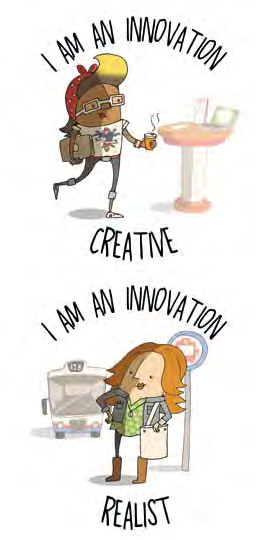
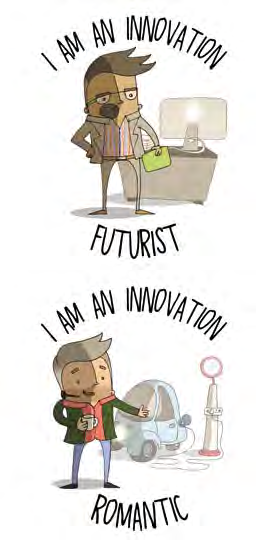
Our online quiz 'What kind of an innovator are you?' was taken over 20,000 times
Our Work Here is Done looked at the consequences of the rise of a robot economy, and helped open up a wider debate on the economic effects of automation. When Small is Beautiful examined six highly-innovative small countries and looked at lessons for the UK, and in particular for Scotland.
Left:
'What kind of innovator are you?' online quiz
Below:
Nesta's Humanising the Robot event
Other areas of policy work
We continued to explore the economics of innovation, updating our groundbreaking Innovation Index and publishing The Other Productivity Puzzle, which highlighted a hitherto unknown productivity problem in the UK economy, causing considerable media debate. The End of the Treasury and Rewiring the Brain looked at how changes at the centre of government can enable innovation in the economy as a whole.
Our work has also influenced policy outside the UK. We completed a major project for the Malaysian Government, developing a new system for businesses to measure their innovation investments. It is now being rolled out across the country. We also began projects with other ASEAN countries, and in South America on innovation policy design, and also received funding to help support social innovation in India.
Health and ageing
Long-term conditions now take up 70 per cent of the health service budget. To address this Nesta is supporting the health and care system to become more people powered. Our health and ageing work has developed at pace this year. A combination of new ideas trialled on the ground, direct financial support and coalition building at a national level has helped to provide new ways of supporting the health and care system.
In 2014-15 we supported a number of innovative projects, many of which are ongoing. We backed digital entrepreneurs to empower patients and carers through wearable technology and smartphones in the fields of Parkinson's disease, alcohol rehabilitation and HIV. We also tested a systems change programme that creates a more collaborative culture in health and care.
Long-term health conditions take up 70 per cent of the health service budget. Nesta is supporting 'people powered' solutions to help tackle this
We directly supported 19 health and ageing innovations through the Centre for Social Action Innovation Fund. This portfolio includes six national patient and carer charities, developing peer-support networks, including the Stroke Association, RNIB and Diabetes UK. These peer-support networks apply the power of social networks to health and care, connecting people with similar experiences so they can support one another. Alongside this we supported intensive volunteering models, such as a British Red Cross programme with volunteers working with older people at critical times such as bereavement.
My Support Broker (MSB) and North London Cares are two of the social startups we backed. MSB employs people with direct experience of long-term conditions as brokers to support others with their personal health and care budgets, while North London Cares links busy professionals with older people in their neighbourhood to create friendships in everyday life.
Below:
Elsie Hayes receives support as part of our People Powered Health programme
We supported 19 health and ageing innovations to develop and trial new ideas aimed at improving healthcare in the UK
Nesta has also tested a new ‘100-day systems change approach' in local health and care economies. This method uses coaching and real-time data to galvanise action and create a problem-solving culture. Frontline teams are supported to solve issues with the backing of local leadership, and progress within 100 days is measured. The prototype took place in Essex and focused on reducing unnecessary hospital admissions and improving discharge from hospital. Early results are promising, both in terms of impact and creating a culture of integration and collaboration across health, care and the voluntary sector.
This year also marked the formal launch of the Coalition for Collaborative Care. This national coalition is a group of organisations committed to shifting the health and care system to become more people-centred, and Nesta has been instrumental in establishing it. The Government is supporting key health and care initiatives – such as the Integrated Personal Commissioning programme – to incorporate ‘more than medicine' support between professionals and people using health services.
Right:
Christine Hardie takes part in our Mid-Essex 100-day Challenge
Opposite:
Logitude Prize: portrait of Alexander Fleming, by Nathan Wyburn using antibiotic capsules. The public chose antibiotic resistance as the focus of the prize
Photo:
Matt Alexander/PA Wire
Longitude Prize 2014
The Longitude Prize reached 84 per cent of UK adults
On the 300-year anniversary of the original Longitude Prize, Nesta reconvened the Longitude Committee, led by the Astronomer Royal Lord Martin Rees, to create a new prize for a new century.
In partnership with the BBC and Innovate UK, we launched a public vote to choose one of six major challenges facing humanity. The challenge that the public chose to be the focus of the £10 million prize was antibiotic resistance.
Longitude Prize 2014 captured the imagination of the British public thanks to a dedicated BBC Horizon programme and support from a range of incredible partners, including Amazon and the Science Museum. The launch reached 84 per cent of UK adults, 36 million Twitter accounts and gained media coverage around the world. It is the first prize of its kind to incorporate a public vote and, true to the spirit of the original, anyone can enter.
The UK is a world leader in the arts and media. But with funding being cut, we need to find new ways of supporting our creative industries so they remain competitive in the future. We have identified three ways to effectively grow creative products and services: research and development, hyperlocal media, and business mentoring. In 2014-15 we have been focussing on these.
Digital R&D Fund for the Arts
Our three Digital R&D funds across Scotland, Wales and England, totalling £8.2 million, have supported 70 innovative projects. Supported by the Digital R&D Fund for the Arts, Nesta, the Arts & Humanities Research Council and public funding by the National Lottery through Arts Council England, these projects bring together technology and the arts in exciting and groundbreaking collaborations with the aim of enhancing audience reach, innovating new artforms and creating new business models for arts and cultural organisations. Highlights from this year include the development of a new mobile offer for the Royal Opera House, and We Are Colony, a new film distribution platform.
The UK creative industries were worth £76.9 billion to the UK economy in 2013
The year ahead will see all the projects completed, so our focus will shift to explore possible next stages for the individual projects and to ensure that the successes and learning are shared for the benefit of all.
Destination Local
We have built on our partnership with Innovate UK to bring greater public investment into the area of hyperlocal media, specifically to explore the opportunities presented by the convergence of content and technology. This includes the launch of the Destination Local Demonstrators competition and aligned programme in which £2.3 million of public investment was awarded to three innovative collaborations: Community Channel South West, Leeds Media Mill and Near You Now. The projects will bring new concepts and forms of online news, information and content services to local communities.
Creative Business Mentor Network
The UK creative industries were worth a record £76.9 billion to the UK economy in 2013, after growing by almost 10 per cent year on year for the past three years. Our latest set of mentee companies from the creative sector is just about to embark on a year of dedicated support from our fantastic set of industry mentors. We regularly bring together past and present mentors and mentee companies to share advice, tips and to discuss some of the challenges they face in running a creative business.
Right:
Circus Starr project 'Show and Tell'.
Photo: Briscoe Photography
Our report The New Art of Finance argues that £70 million of additional finance could be generated for the arts by using innovative new funding methods
2015 will see us implementing new ways of sharing some of the best advice from our industry experts to benefit the wider creative sector.
We published The New Art of Finance, which explored how a portion of arts funding could be reinvented. The paper argued that £70 million of additional finance could be generated using new methods.
Our final report on NT Live revealed that broadcasting live theatre performances to regional cinemas did not cannibalise existing audiences to live shows, but instead engaged whole new audiences for the National Theatre. This successful model is now being rolled out by other performing arts venues such as the Royal Opera House.
Right:
Sonic Pi: Live & Coding Summer School at Cambridge Junction.
Photo: Clare Haigh
Opposite:
Robbie Synge in 'Douglas' for respond_
Photo: Yorkshire Dance, Sara Teresa
Our Digital R&D Funds across England, Scotland and Wales have supported 70 innovative projects bringing technology and the arts together in groundbreaking collaborations
Government innovation
We need new ideas if we want to preserve the quality and relevancy of our public services. As our population increases and budgets remain tight, our public services are reaching breaking point. Our work on government innovation looks at the different ways we can help deliver better public services for less.
During 2014-15 we published compelling new research on innovation in the public sector, created practical guides and toolkits, developed projects using open data for social good and explored new ways of supporting public parks at risk of funding cuts.
Our report Innovation in the public sector: how can public organisations better create, improve and adapt? brought together the results of many years of research at Nesta to give an overview of how public sector organisations can become more effective innovators. We also published a report Why motivation matters in public sector innovation, making the case for harnessing the motivation of public servants to innovate.
The Alliance for Useful Evidence now has over 2,000 members
We published a report - i-teams: The teams and funds making innovation happen in governments around the world - in partnership with Bloomberg Philanthropies which mapped innovation labs worldwide. It led to sessions at CityLab and the OECD conference on public sector innovation; the publication of Innovation teams and labs: a practice guide; and a new regular newsletter Lab Notes to bring together a network of labs, units and teams working to support public sector innovation.
The Alliance for Useful Evidence, a partnership between the Big Lottery Fund, ESRC and Nesta, continues to grow with members now numbering over 2,000. The Alliance team launched the Evidence Exchange project, which seeks to understand and promote how evidence is shared across the UK's jurisdictions. Their report, The NICE Way, argued that the NICE model holds many lessons for evidence use in social policy.
Below:
MindLab is one of the organisations featured in the i-teams report
Our DIY Toolkit to help government innovation practitioners scale ideas has been viewed 85,000 times in 201 countries
Building skills for innovation
As part of our efforts to build capacity for government innovation, our Innovation Skills team has produced a series of practical guides on challenge prizes, innovation teams and startup accelerator programmes.
We have also created a DIY Toolkit in partnership with the Rockefeller Foundation, to help practitioners generate and scale ideas in the field. This collection of 30 social innovation tools has been viewed over 85,000 times in 201 countries. In addition, we have run more than 25 capacity building events in over a dozen countries, through strategic engagements with the OECD, UNDP and various national governments.
Open data public services
We know that open data can bring more value to people and deliver better public services as a result. To test this idea, we created the Open Data Challenge Series, in partnership with the Open Data Institute, funded by the Department for Business, Innovation and Skills (BIS) and Innovate UK.
The series saw 62 teams develop products and services using open data for social good in sectors ranging from education and environment to housing and food.
As part of Rethinking Parks, successful projects will raise or save up to 100 per cent of the maintenance costs of parks their supporting
Four exciting products that use government-released open data in new ways emerged from this process as winners: Skillsroute helps parents and learners figure out the best educational choices to make for those aged 16 or over; Community Energy Manager helps bring people together around community energy projects; Movemaker makes it easy for social housing tenants to make use of their right to swap properties; and Foodtrade.menu helps small restaurants to meet regulations on allergen labelling.
Protecting our parks
We have also been exploring new ways of supporting our public parks. The financial pressure on local councils means that parks are facing unprecedented budget cuts, so new approaches are needed to prevent them being sold off or going into deep decline. Our project Rethinking Parks awarded grants totalling £995,000 to 11 teams to test and measure the impact of new business models designed to financially sustain parks. Approaches being tested include new forms of fundraising, new management models and framing parks as solutions to wider social problems. If successful, projects will raise or save up to 100 per cent of the current maintenance costs of parks being supported.
Left:
The Open Data Challenge finalist announcement
Right:
Park Hack, Mark Street Gardens
Photo: Gensler
A diagram titled "MARK STREET GARDENS" showing a layout plan with areas labelled "LANDMARKS" and "BENSE PLANTING", illustrating a park design.
Citizen engagement in public services
From school governors to special constables, there are lots of great examples of people helping people. But we think there could be more. We want to see citizen engagement in public services grow and have been supporting a number of innovative new ideas and projects aiming to achieve this.
During 2014-15, we have supported practical work to engage people with public services and explored, through our research, the best ways of achieving this, whether through volunteering or social innovation.
The Centre for Social Action Innovation Fund supports the growth of innovations that mobilise people's energy and talents to help each other
Centre for Social Action Innovation Fund
The Centre for Social Action Innovation Fund, funded in partnership with the Cabinet Office, is finding new ways for people to help people. We've now invested £10.9 million in 39 of the most promising innovations that mobilise the energy and talents of local people to help one another. Projects we have supported include Code Club, where volunteers run after school clubs to introduce nine to 11-year-olds to coding, and Volition, which is helping people return to work through using volunteering to build their skills. To date we have helped mobilise 37,000 people to assist 100,000 more people, and we're expecting this to triple in 2015.
Helping in Hospitals
There are lots of things busy nurses would like to do for their patients, but aren't able to due to a lack of time. Helping in Hospitals tasks volunteers with simple but impactful acts of human kindness in their local hospital – like holding someone's hand as they recover from surgery or bringing a newspaper to someone who can't go out. In 2014 we gave £500k of grants to six hospitals around the country to mobilise more volunteers in roles where their presence will improve patient satisfaction and clinical outcomes.
Right:
Cities of Service: Pride of Telford at the YMCA building, Telford.
Photo:
Telford & Wrekin Council
We helped to connect more than 500 people working in open public services
Cities of Service UK
Replicating a successful US model, we're backing seven towns and cities that plan to become known for their generosity. They have each started local campaigns asking volunteers to give their time to well-evidenced, impactful volunteering opportunities.
People Helping People: the future of public services
In September we launched our People Helping People: the future of public services report exploring the £34 billion contribution that volunteers in England make by giving their time to public services. The case studies in the report explored the best examples of open public services. We also held a major conference to launch the report and helped to connect more than 500 people who are operating in this area.
Making It Big
Our Making It Big report explored whether social enterprises could have the potential to scale-up to benefit more people. We charted the experiences of a number of social innovators' routes to scale and looked at the practical considerations they faced in doing this. Rather than promoting a ‘one size fits all' scaling strategy, we illustrated the importance of identifying the core of each social innovation, allowing for uniqueness and integrity to be reflected in their pathway to 'making it big'.
Right:
Cities of Service, Barnsley
Two book covers: "People Helping People: the future of public services" and "Making It Big".
Two photos illustrating the impact of Volition:
1. A woman holding a sign that reads "WORKING AT PROPERTEA HAS CHANGED MY LIFE - THANKS VOLITION".
2. A woman holding a sign that reads "I'M TRAINING VOLUNTEERS IN BARISTA SKILLS".
New models for inclusive economic growth
We have been playing an active role in shaping the economy of the future. In challenging economic times, it has never been more important that new and innovative ways of creating economic growth are explored and put into practice. We have been working to find ways of making this happen.
Our work in 2014-15 fell into two areas: helping to shape government policy in a way that recognises the roles innovation, data and alternative finance can play in growing the economy; and exploring innovative grassroots economic models, for instance those harnessing the power of volunteering and social action to make the most of resources.
A new economy of the future
Our reports on the collaborative economy were an important input into the Government's review of the sharing economy, and we have been working closely with the Government on future policy design.
We produced a series of reports on alternative finance, highlighting the growth and potential of emerging business models such as crowdfunding and peer-to-peer lending. These were widely read and covered in the media.
We also continued our successful research work on accelerators, concluding our EU-funded Accelerator Assembly project and beginning a new EU-funded project, the Startup Europe Partnership, with the role of bringing together startups and large businesses across Europe to encourage business growth.
Datavores, our research programme on how businesses are using data to improve their operations, led to two major new reports: one showed the detailed relationship between better use of data and business productivity, the other identified the skills businesses need to make effective use of data.
Below:
Findings from Understanding Alternative Finance report
| The alternative finance market by platform 2014 |
Amount |
Average growth rate 2012-2014 |
Indicator |
| P2P business lending |
£749m |
250% |
↑ |
| P2P consumer lending |
£547m |
108% |
↑ |
| Invoice trading |
£270m |
174% |
↑ |
| Equity crowdfunding |
£84m |
410% |
↑ |
| Community shares |
£34m |
95% |
↑ |
| Rewards crowdfunding |
£26m |
206% |
↑ |
| Pension-led funding |
£25m |
5% |
• |
| Debt-based securities |
£4.4m |
117% |
↑ |
| Donation crowdfunding |
£2.0m |
77% |
↓ |
Harnessing the success of grassroots models
In the last year we have also backed six organisations that are using the power of volunteering and social action to help unemployed people to improve their skills and get back to work. As part of the Centre for Social Action Innovation Fund we have awarded these organisations over £1.5 million to take their proven innovations to scale. By the end of March 2016 their projects will mobilise at least 6,000 volunteers, including coaches and mentors supporting unemployed people into the workplace, as well as unemployed people themselves, volunteering in order to gain skills and experience.
For example, Volition builds on the successful Manchester Cathedral Volunteer Programme, which provides a structured ten-week volunteering programme for local unemployed people, some of whom have been out of work for years. This highly successful scheme will be replicated around the country.
We backed six organisations that are using the power of volunteering and social action to help unemployed people get back to work. By the end of March 2016 their projects will mobilise at least 6,000 volunteers
Right:
Volition provides a volunteering programme for local unemployed people
Opportunities for young people
We want to equip the next generation with the knowledge, skills and personal attributes to shape the future. The world is changing, and we need to make sure our children have the tools they need to thrive in this new landscape. Our work is helping to achieve this.
We are focused on three key areas of activity to help improve what children learn, how they learn and the services that are available to them. These areas are: developing digital creativity; technology in education; and rethinking services for young people.
Above:
Fab Lab Devon
Photo: Nigel FitzHugh
Below:
'Is your child a digital maker?'
An online quiz we launched to help hone young people's digital making skills
Developing digital creativity
We are helping young people to learn how to make things using digital technologies and equipping them with the tools for creativity and innovation in a digital age. This is enabling the next generation to shape the digital landscape, and to not just be shaped by it.
In partnership with Nominet Trust and Autodesk, we are continuing to support our second cohort of Digital Maker awardees – offering young people engaging experiences of digital making, including the launch of the first UK Fab Lab. We grew the Makethingsdostuff.co.uk platform, reaching 14,000 unique users per month (January 2015), helping young people navigate digital making opportunities, and appeared at events around the country, such as Camp Bestival. We held an industry event at the Houses of Parliament, celebrating the successes of the Make Things Do Stuff movement. And we launched a report, Young Digital Makers, which looked at the landscape of digital making opportunities for young people, which was downloaded over 3,000 times in the following month. Finally, we contributed to national debates, such as the House of Lords Select Committee on Digital Skills, and published policy recommendations on the talent needs of future workers, such as those included in the Model Workers report.
A photo of creations from Fab Lab Devon.

Over 50 initiatives backed or receiving ongoing support, totalling £10 million
Technology in education
We want to understand how technology can help teachers and children improve learning. We do this by supporting a number of tech-based innovations that help improve educational attainment.
In partnership with the National Foundation for Educational Research, Ai-Media UK, The University of Melbourne and Third Space Learning, we have tested three promising learning technologies in schools: Flipped Learning, the Visible Classroom (real-time lesson transcription for teacher professional development) and Remote Tutoring (using mathematics graduates overseas).
Nesta's Impact Investment Fund invested in three exciting new ventures which are using technology to improve educational outcomes and accessibility for young people: Ai–Media, Cogbooks and GetMyFirstJob.
Our expertise on education technology meant that we helped influence national policy discussions through our contributions to the Government's Education Technology Action Group.
The Young Digital Makers report which mapped the landscape of digital making opportunities for young people in Britain, was downloaded over 3,000 times in the month following its launch
The cover of the "Young Digital Makers" report.
Code Club aims to reach 50 per cent of primary schools by July 2018
Rethinking services for young people
We have also been looking at how services for young people could be reimagined to better meet their needs. We have backed innovations in training, education and employment services, with a focus on co-produced or volunteer-led provision.
The Centre for Social Action Innovation Fund, in partnership with the Cabinet Office, continued to support six ‘people-powered' organisations (Action Tutoring, City Year UK, Code Club, Team Up, TLG, and The Access Project) developing the skills of young people at school - through mentoring, tutoring and peer-to-peer networks. Code Club, a network of volunteer-led after school coding clubs, was even funded to 'super-scale', with the aim of becoming a household name. Four employment services supporting young people (Steps Ahead, VIY, Task Squad, and Vi-Ability) also received support.
Left:
Young Digital Makers Report
Below:
Code Club
Photo: Courtesy of Chocolate Films Ltd
Impact investment
We are a significant catalyst in the field of impact investing. Through our research work, direct interventions and support we have helped to create what is fast becoming a vibrant impact investment sector in the UK, succeeding in achieving both financial returns and social impact.
We are growing a portfolio of eight innovative social ventures in ageing, education and communities through our own impact investment fund, Nesta Impact Investments. We have also supported 46 new social ventures through a partnership with Bethnal Green Ventures (BGV), and this is set to grow to 80 in the next two years.
Bethnal Green Ventures supports teams with groundbreaking ideas that use technology to solve social or environmental problems
Nesta Impact Investments
Established in November 2012, Nesta Impact Investments is a partnership between Nesta, Big Society Capital and Omidyar Network. The fund invests in ventures with inclusive and scalable innovations that are run by outstanding entrepreneurs working on the major issues of ageing, the education and employability of young people, and the sustainability of communities.
Nesta Impact Investments made three new investments worth £1.3 million in 2014-15, taking the total portfolio to eight organisations, in which we have invested £4.67 million. New investees include: Ai-Media UK, a social enterprise that provides live captioning in schools, colleges and workplaces to support those who are deaf or hard of hearing; Cogbooks, a provider of adaptive learning technology that delivers personalised educational content; and GetMyFirstJob, an online platform that matches young people with appropriate apprenticeship opportunities.
Above:
Bethnal Green Ventures
Photo: Paul Miller
21 startup social ventures were supported in the past year through our partnership with Bethnal Green Ventures
Bethnal Green Ventures
Bethnal Green Ventures runs acceleration programmes for early-stage social entrepreneurs and their organisations. Nesta has provided funding, alongside the Cabinet Office and Nominet Trust, to help create 80 new ventures over four years. We believe that creating this early support for ventures is vital if we want to help build a vibrant and innovative impact-focused entrepreneurial community. BGV has helped to create 21 exciting new ventures over the last year including TalkLife, Andiamo, HearToday, Club Soda and Birdsong.
One organisation we supported, Resonance, has built its impact investment funds from zero to in excess of £50 million
Support for impact investment funds and innovative social finance products
Our portfolio of funds and innovative social finance products has done well over the last year and we are continuing to support them. One organisation we invested in, Resonance, has performed particularly well. Under management, it has built its impact investment funds from zero to in excess of £50 million. It has also launched the UK's first social investment tax relief fund, something that we researched and lobbied for.
Right:
Ai-Media UK

Eight innovative social ventures supported by Nesta Impact Investments with £4.67 million
Future thinking
At Nesta we look at what the world could be like years, or even decades, from now to help us make better decisions today. Our work explores some of the most cutting-edge ideas in technology and society that we think will become part of our lives in only a few years' time.
Over the last year we have produced an exciting array of events and publications that explore different futures. Our flagship FutureFest event bought together thinkers, artists and performers to spark ideas about the future of democracy, money, and thrills. We made ten bold predictions about social and technological trends that would shape our world in the coming year, and we published a book and quiz about the robot revolution, and what that might mean for jobs over the next decade.
Right top:
10 Predictions for 2015
Right bottom:
Challenges of our Era
25,000 people read our predictions series
Annual predictions
Our annual predictions series picked ten exciting trends that we think could shape our lives this year. From the rise of the first UK online political party to a surge in young digital makers, our predictions show that digital technology continues to be an essential tool for creating rapid change at unprecedented scale.
Future challenges
Our Centre for Challenge Prizes brought together global thought leaders to tackle four big issues facing the world. The Challenges of our Era event included the Astronomer Royal Lord Rees, pop star and entrepreneur Will.i.am, and contributors from The Bill and Melinda Gates Foundation, the White House and the World Wide Web Foundation. Big topics included how we can protect our oceans and address the divide in global connectivity.
The cover of the "10 Predictions for 2015" report.
An event backdrop with "CHALLENGES OUR ERA" written prominently.
Above left:
Our work here is done
Above right:
Humanising the Robot Society
Below:
'Will a robot take my job?'
A Nesta online quiz
Robots
The robot revolution is already happening, and we've set out our future thinking on what that means for us humans with a new book, Our Work Here is Done.
The book shows how advances in robotics and artificial intelligence will lead to machines doing more and more human jobs. We explore what that could mean not just for our economy but also for society as a whole. The launch event brought together robots, engineers and technologists to demonstrate the latest developments in robotic potential.
The Long + Short
In September we launched a new online magazine, The Long + Short. It looks at innovation in a broad sense, including where new ideas are coming from and how they take hold and expand.
The cover of the book "Our Work Here is Done: Visions of a Robot Economy".
A photo of people interacting with robots, illustrating the 'Humanising the Robot Society' event.
A cartoon illustrating various robots in different human-like roles, referencing the online quiz 'Will a robot take my job?'.
Future Fest trended number 1 in the UK
FutureFest
At FutureFest 2015 we explored some of the possible worlds we could soon be a part of. Our regular festival of ideas focused on more than just technology – it also looked at new ideas around the future of democracy, music and food, and much more.
For this year's event we had an amazing line-up, including NSA whistleblower Edward Snowden, fashion designer and activist Vivienne Westwood and R&B funk soul legend George Clinton.
Edward Snowden joined us on a live video link from Moscow. In a powerful talk he outlined the extent of the surveillance programme being used to spy on us, and how he believes the next generation can help reclaim the internet. George Clinton explored the future of music and gave an insight into the thinking behind his spectacular spaceship from the 1970s. The ‘Sweet Shop of the Future' showed us what our great-grandchildren might be spending their bitcoins on in 2050, and we also unveiled ‘Neurosis', the world's first theme park ride for the mind.
Above:
We launched a digital magazine, The Long + Short, covering the latest developments in innovation
Visit: thelongandshort.org to enjoy the latest stories
Above right:
FutureFest
Screenshots from the digital magazine "The Long + Short" with article titles like "Freiburg: In search of the renewable city" and "Who is Stan Smith?".
A poster for "FUTUREFEST: SHAPING THINGS TO COME" with dates 14-15 MARCH 2015 at VINOPOLIS, LONDON, featuring a stylised illustration of an urban landscape with clocks and mechanical elements.
Highlights from FutureFest 2015
This page (top to bottom):
The Sweetshop of the Future
Neurosis: the world's first theme park ride for the mind
My Robot Companion

An image of the 'Neurosis' installation, which is described as the world's first theme park ride for the mind, featuring glowing spherical objects and light structures.
A close-up photo of a face, possibly related to 'My Robot Companion' or a FutureFest exhibit.
Opposite:
The future of surveillance with Edward Snowden
To find out more about our ongoing work go to:
nesta.org.uk
nesta.org.uk
Nesta
1 Plough Place, London EC4A 1DE
[email protected]
@nesta_uk
www.facebook.com/nesta.uk
May 2015
Nesta is a registered charity in England and Wales with company number 7706036 and charity number 1144091.
Registered as a charity in Scotland number SCO42833.
Registered office: 1 Plough Place, London, EC4A 1DE.