About System Shift
We help people create systems for the common good.
System Shift brings people together to generate insights, mobilise resources and deepen their shared purpose. We help people to translate shared challenges into new possibilities and practical action. We create large-scale, long-term collaborations in pursuit of deeper change on the issues that matter most to citizens and communities.
System Shift UK is led by Charlie Leadbeater and Celia Hannon. Charlie brings years of experience as a trustee to leading foundations, an advisor to senior leaders and politicians, an award-winning writer and a social entrepreneur. Celia brings expertise in foundation strategy, organisational development, horizon scanning and systems mapping. On our projects, we work with a global network of associates who bring first-hand experience working as practitioners, social entrepreneurs or innovating inside foundations, NGOs, cities and governments.
About Nesta
Nesta is a research and innovation foundation that designs, tests and scales solutions for the biggest challenges of our time.
Driven by a vision to improve the lives of millions of people, our focus up to 2030 is on three missions: breaking the link between family background and life chances, halving obesity and cutting household carbon emissions.
We work with partners to develop high-potential solutions and test them as they evolve, drawing on expertise in qualitative and quantitative research, data science, behavioural science and design.
Once confident in the effectiveness of a solution, we take it to scale. We create national policy proposals, develop consumer-facing products and services, build and spin out commercial ventures and harness the power of the arts.
We work with two specialised units: BIT applies a deep understanding of human behaviour to help clients achieve their goals. Challenge Works designs and runs challenge prizes to spark innovation in science, technology and society.
Acknowledgements
At System Shift, much of our first-hand knowledge about collaboration strategies has come from two live collaborations between foundations - The Social Leadership Project in the UK and the International System Shift Funder Collaborative across Europe, the UK and Australia. We have learned a great deal from working alongside our partners in these initiatives. In addition to learning through practice, we also carried out deep dives into other case studies of foundation collaboration and conducted a number of background interviews with foundation leaders. We are grateful to all of the people who have been generous with their insights and experiences.
We would like to thank Philippa Knott Kos for additional support on background case studies. As ever, our colleague Petra Perjesi's support in the insight-gathering phase and write-up period was invaluable.
Finally, we would also like to thank Laurie Smith, Louis Stupple-Harris and Toby Roper at Nesta for the invitation to synthesise this learning in an accessible guide. These frameworks build on much brilliant thinking and practice that has gone before. They are offered back to the field with the modest aim of supporting people who are committed to the messy, meaningful business of working towards change with others.
Celia Hannon and Charlie Leadbeater, London 2026
Introduction
Collaboration is set to become an increasingly important strategic choice for funders as they pursue ever more ambitious societal missions. Over the past two decades, collaboration among foundations has surged in scale and sophistication, with more resources being channeled through a greater number of collaborations.
There's considerable scope for collaboration to grow further – the resources committed to philanthropic collaboration are still relatively modest when compared to the scale of challenges they tackle, from climate change to fracturing social cohesion and growing inequality. Yet there is a stumbling block. Collaboration sounds great – but it is far from straightforward in practice.
Collaboration comes with real costs and difficulties: operational friction, time and money devoted to forming relationships and reaching agreements, the potential loss of control and independence. Embarking on the wrong kind of collaboration, with the wrong partners, can leave a foundation entangled in time-consuming, ineffective partnerships – talking shops – which drain away resources and constrain autonomy.
These costs need to be carefully weighed against the organisational and societal benefits.
This 'user's guide' to collaboration aims to deepen foundations' capacity to work with others in pursuit of wider, deeper, lasting social change. The premise is that by tailoring the design of a collaboration to the nature of the challenge, and through having a better sense of your distinctive identity as a collaborator, you will be in a position to develop stronger partnerships in future.
What do we mean by a 'foundation'?
- A charitable social purpose: For the purposes of this paper, a foundation is a social purpose-driven organisation (of any size) with charitable status. Commonly, foundations are also understood to make grants to other organisations or charities rather than delivering services directly. However, some foundations are 'operating foundations': i.e. they primarily use their own funds to run their programmes, rather than (or in addition to) making grants to other organisations. Increasingly, grantmaking is only one dimension of foundation activity.
- Independence: An additional characteristic of importance is that foundations generally have access to their own funding stream. Often this comes via an endowment – but funds might also be derived from a private individual, family or company. Foundations of the kind we reference in this paper are accountable to official bodies to ensure their funds are used for charitable purposes. As long as they operate within charity and tax law, foundation leaders are generally therefore only accountable to their boards of trustees or founders. This combination of access to resources, and limited constraints on their freedom to act, gives foundations the potential to play a unique role in social change.
What do we mean by 'funder collaboration'?
- A partnership alliance or joint undertaking which involves at least one party which describes itself as a foundation (as defined above). To create some boundaries, we are not focused on alliances between social change organisations which do not include any foundations – although many insights are equally applicable to these kinds of partnerships.
- The examples which informed this guide centre around collaborations which were set up for an external social purpose as opposed to partnerships created for operational reasons alone (e.g. to reduce back office costs).
- Even more specifically, we are interested in the kinds of collaborations created to achieve deeper, wider, lasting social change – often called systems change. By that we mean change that shifts the underlying conditions which influence social outcomes.
Geographical scope
- To produce this guide, we were informed by international examples and research, but inevitably our emphasis is on the context for UK foundations. Our research has centred on foundations in Australia, Europe and Canada and we recognise the context for philanthropy will look considerably different in other parts of the world.
1. Choose Your Strategy
Collaboration only makes sense if the task is large and complex enough to require it. Creating a collaboration to do something which could be achieved by a single organisation is at best, redundant and at worst, counter-productive. At the other end of the spectrum are challenges which are bewilderingly complex, involving many different players. Here collaboration is necessary but dauntingly difficult. Many efforts at tackling climate change fall into this category.
Tasks can be too simple for collaboration to make sense, and too complex for collaboration to be feasible. Between these two extremes there lies a space in which collaboration becomes both possible and effective. There are two different routes in.
Entry Points
The first entry point starts from the strategy of an individual organisation and seeks ways of crowding in others around their goals. This approach starts from inside of an organisation and works outwards.
The second entry point into the collaboration space is to start from a big shared challenge in the wider world, and organise a group of organisations to tackle it. The organisations work back inwards from their diagnosis of the challenge to understand what different parts they can play and how they might best deploy their assets.
Both entry points create effective approaches to collaboration: the first starts from an organisation's need to collaborate to achieve its goals; the second starts from the need – the field of actors arranges itself to tackle a big shared challenge. The diagram below sets out the productive space for collaboration:
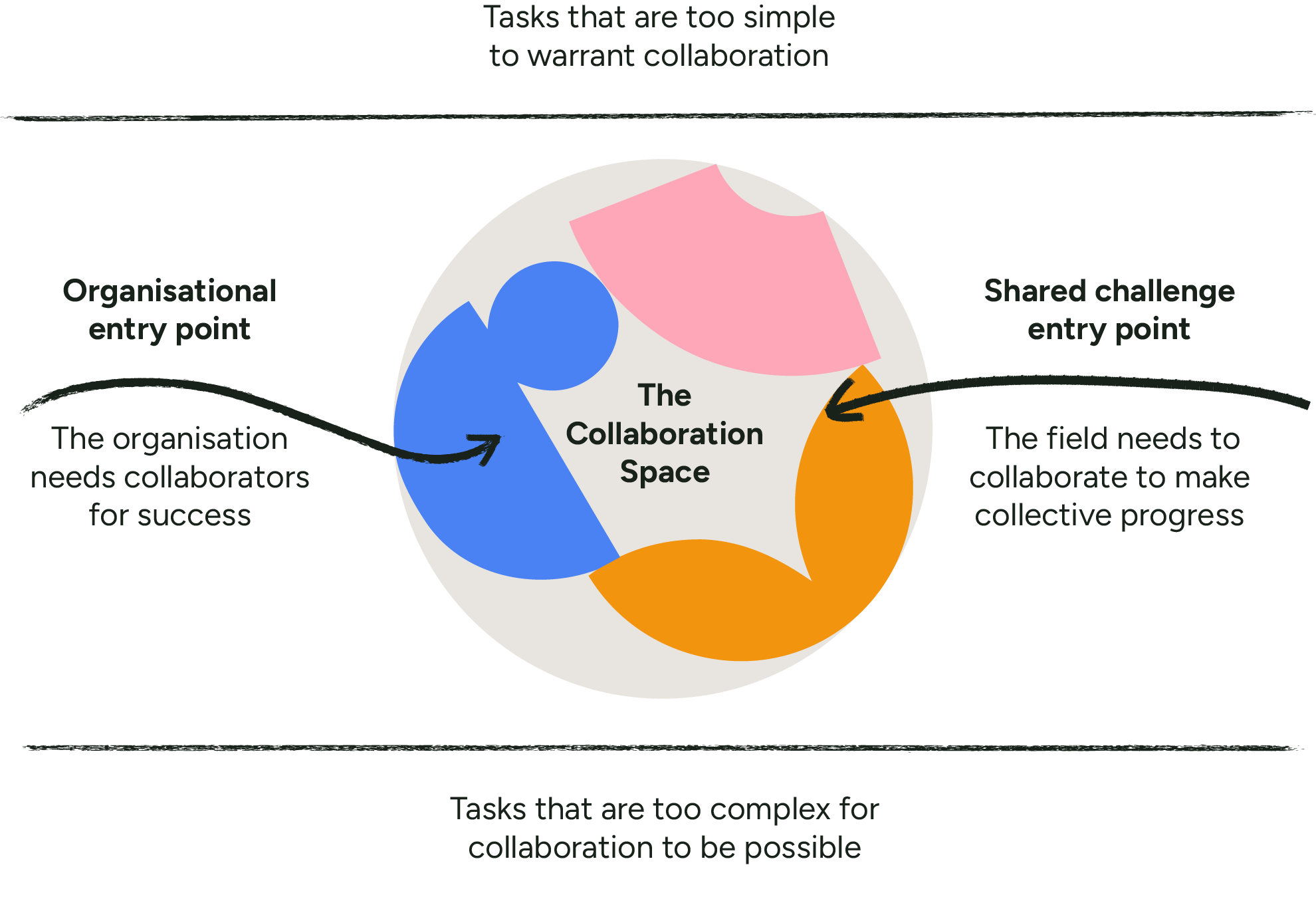
It is the space between – the middle of the collaboration space – these two routes converge. If an organisational strategy for collaboration manages to generate a great deal of collective engagement and commitment, it often becomes more of a field-centric strategy as more partners commit to a purpose which they own together. Equally, an approach which works backwards from a shared challenge can also translate back into well-defined organisational strategies.
2. Choose a Mode
Having concluded that it makes sense to move into the collaboration space, the next question to tackle is which style – or mode – of collaboration is best suited to a given challenge or opportunity.
In the real world, many collaborations are improvisational and adaptive. They develop and evolve as much as they are designed. However, there are two particularly clear distinctions which can be drawn.
Directive and Emergent
The first distinction is between more directive and more emergent ways of working together.
- Directive collaborations are suited to clearly defined challenges where an issue is well understood, the solutions are already available and their effectiveness might even be well documented. The collaboration around such an issue is therefore able to chart a relatively direct path from A to B.
- Emergent collaborations are better suited to more complex, social challenges (where the 'what' and the 'how' of the issue are both unclear). The path for these kinds of collaborations will be a process of learning and adaptation – a zig-zag or a meander on the visual below. The partners in a collaboration must work together to shape a clearer definition of the problem and the shared goal, before trying different approaches to achieve that goal.
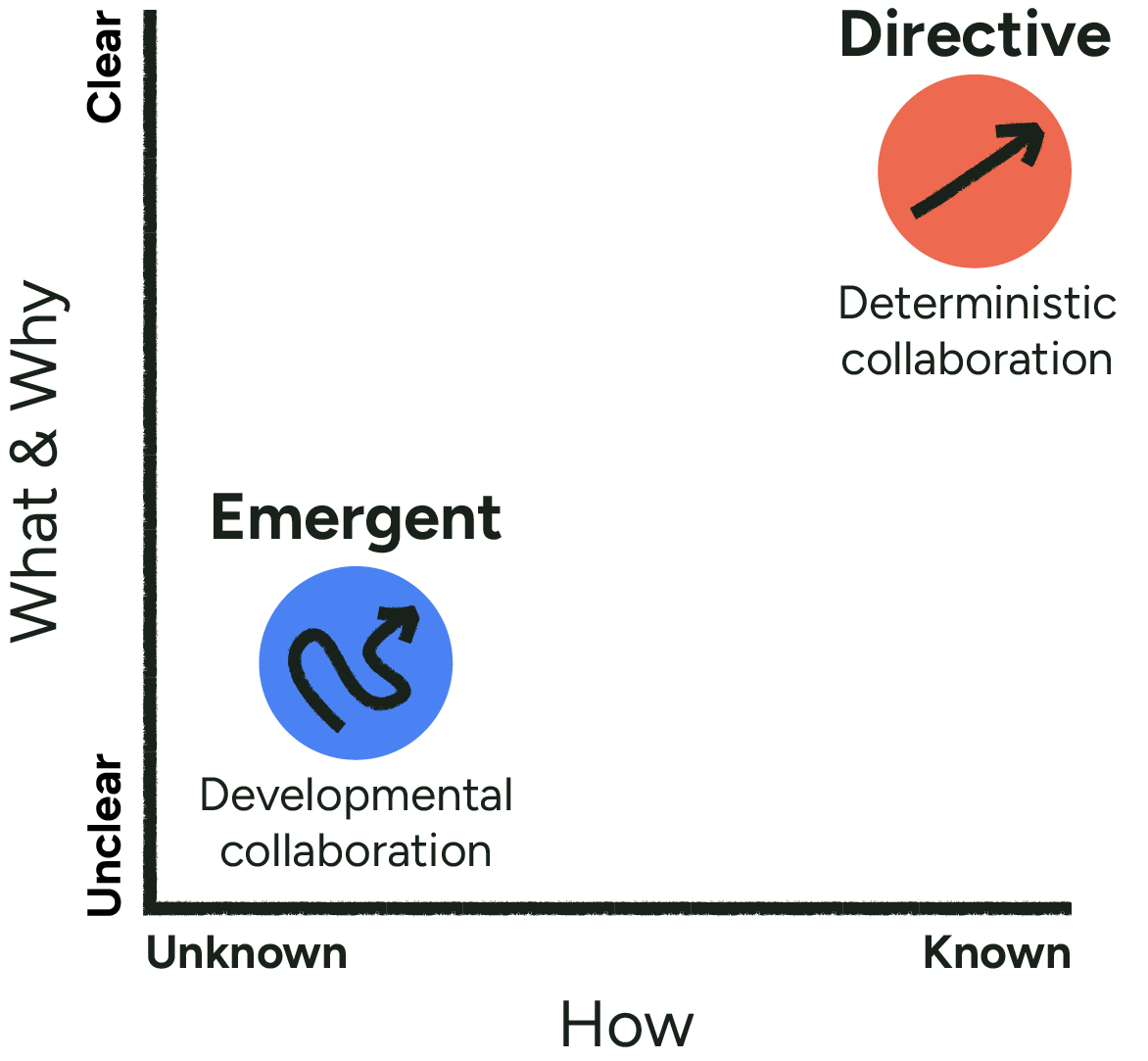
An example of a challenge requiring an emergent approach is the goal of supporting better mental health for young people. On 'complex' or 'adaptive' challenges of this kind, the definition of success – what counts as a defined good outcome – might even be open to debate (medical definitions of mental illness are widely seen as being too limited). On this challenge, there is also uncertainty about which combination of approaches might work best for young people and who should be involved in delivering those approaches.
An example of a defined or 'technical' challenge suited to the directive approach would be improving the quality of local playgrounds for children. In this scenario, you and your collaborators can already see your destination and the path to get there: the task is to mobilise others to help implement the solution. For example, the US playground charity Kaboom orchestrated funders to work with the federal government and local communities to create a movement of playground building in the most disadvantaged areas. Kaboom built effective collaboration around the 'what' – building more playgrounds in poor neighbourhoods alongside a clear account of the 'how' – namely the process for raising funding and building the facilities.
Thick and Thin
The second distinction relates to the way you choose to collaborate with your partners – in terms of the depth of the engagement. The more intensive or closely integrated a collaboration becomes (i.e. the 'thicker'), the more resource-intensive and demanding it tends to be for those participating. In some cases, a 'thinner' collaboration is a better way of getting a job done.
- Thin collaborations are appropriate in contexts where organisations might be more transactional in their approach, and/or be unused to forging deeper, longer partnerships. Thin collaborations tend to be time-bound and with minimal operational entanglement (an example might be two foundations that come together to resource a legal challenge or to jointly bail out a collapsing charity).
- Thick collaborations start from shared values, experience and a commitment to joint work. They tend to be longer-term. There are two aspects to this thickness. Organisations may be bound by their values, principles and purpose. They may also become organisationally entangled, working closely together. Thick collaborations often involve more operational commitment – such as pooled funding - to sustain collaboration over the longer term.
An initial 'thin' collaboration can build trust between partners, which leads to greater commitment and 'thicker' forms of more ambitious innovation. A 'thick' commitment to joint action can subsequently surface opportunities for quick, 'thinner' forms of collaboration around a timely opportunity.
In larger collaborations, involving many contributors, it's often common to have a thickly connected inner core, which looks after the kernel of the work, sets the direction and does most of the heavy lifting. Outside of this core, there is often a ring of more thinly connected collaborators who contribute only occasionally when they have the relevant expertise to address a specific issue.
The differences between thick and thin approaches are summarised in the table below.
|
Thin Collaborations |
Thick Collaborations |
| Partners are connected through: |
Agreement on a defined, well-bounded goal – can be short-term, but not always. |
A hypothesis or hypotheses to test and a deeper set of shared values (for example, around shifting power). |
| Duration of engagement: |
Partnership dissolves when the goal is achieved – collaboration is therefore often more short-term. |
Collaboration can be open-ended and tends to be longer-term. |
| Expressed through: |
Co-funding, aligned funding or joint advocacy around specific agendas of common interest. |
Deeper operational integration - via mechanisms such as pooled funds, shared functions or the creation of new intermediaries. |
| Approach to impact: |
Independent impact frameworks which remain attached to distinct organisational strategies. |
Learning goals are jointly owned and collaboratively refined, iterated over time in responses to learning. |
These two distinctive modes of collaboration – directive and emergent, thick and thin – are mapped onto the diagram below:
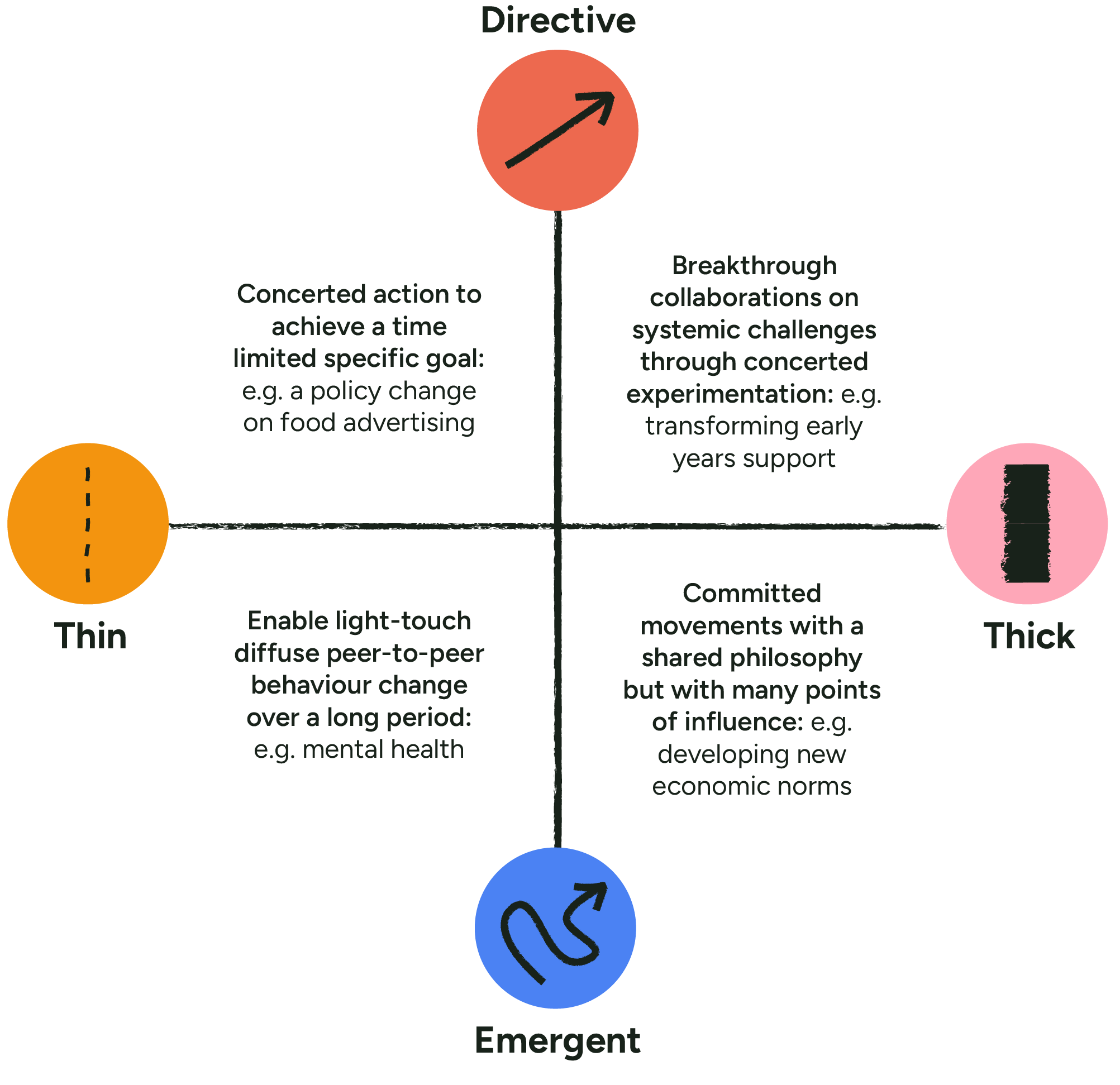
- In the top right-hand corner are more directive, long-term, concerted, 'thick' collaborations to tackle more complex challenges through experimentation.
- Sitting in the bottom right are committed movements which rely on strong shared values to engage with lots of dispersed, grassroots actors.
- In the bottom left-hand corner there are lighter-touch, more dispersed 'thin' forms of collaboration, perhaps best suited to the early stages of developing new solutions, by sharing knowledge, research and insights. These collaborations might look more like learning networks and alliances which help to map the landscape and identify promising practice. The role of foundations might be to seed a range of experiments and inquiries to help a field form over time.
- In the top left-hand corner are focused, directive but 'thin' forms of collaboration, for example a time-limited campaign to bring about legislative change.
3. Choose the Players
Who you are partnering with matters as much as what you are collaborating on. The smaller the number of collaborators, and the more alike they are, the easier it should be to organise collaboration. The more heterogeneous the cast list, the more difficult it will be to get collaboration going and to sustain it. However, these more complex, heterogenous forms of collaboration often open the door to much greater impact.
The smaller the number of collaborators, and the more alike they are, the easier it should be to organise collaboration. The more heterogenous the participants, the more complex and difficult it will be to get collaboration going and to sustain it. Broadly speaking, there are three configurations available to choose from, according to your scale of ambition and appetite for complexity:
Configuration 1
Funder-and-Funder
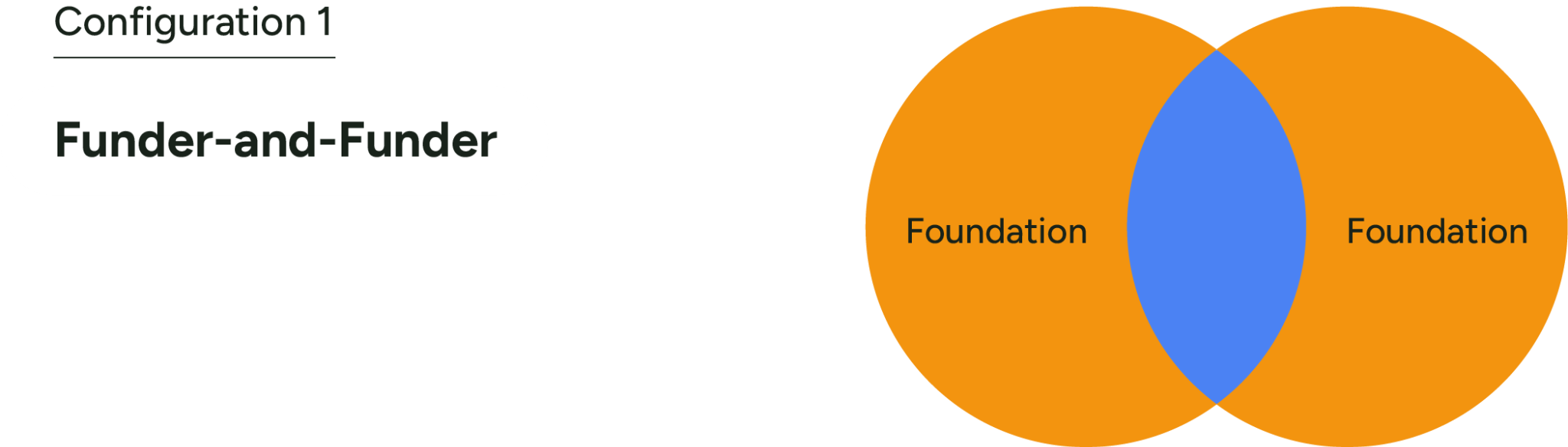
The most obvious, manageable combination is when foundations cooperate with one another: it is the configuration most commonly associated with the term 'funder collaborative'.
Funder-and-funder collaboration, for example, to create a pooled fund or to develop an aligned funding strategy, brings together a group of foundations or philanthropists to work in partnership. Often the organisations have similar accountability frameworks. They may be broadly similar in size.
These collaboratives make sense if you want to:
- Grow the pot of resources available;
- Make longer-term commitments together;
- Reduce duplication and create better alignment;
- Enable shared risk-taking and share learning across the wider group;
- Create a straightforward, streamlined method for grantees to seek funding.
However, funder-and-funder collaborations can remain inherently limited in terms of their potential for impact. This kind of collaboration is often a starting point from which wider and more generative collaborations involving other actors can be built.
Configuration 2
Funder-and-Field
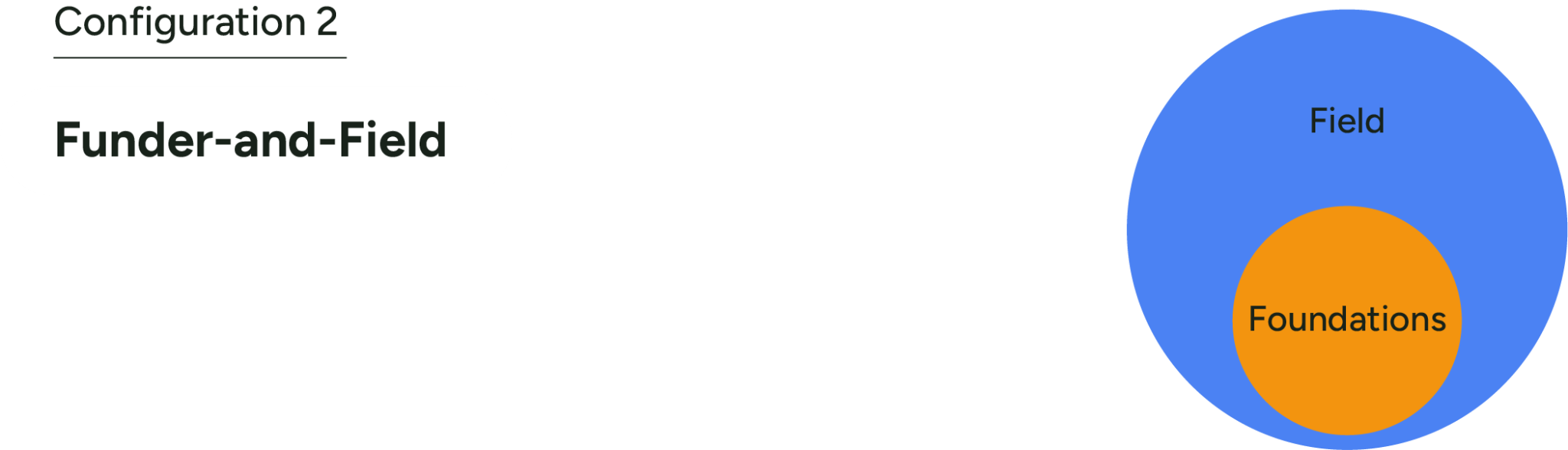
Through this form of collaboration, foundations can enter into more of a partnership with a 'field' of other change makers, such as service delivery organisations, activists and social finance providers. This configuration is a good choice when you need to work with non-financial levers for change and you are open to creating fundamentally different relationships with partners. There are two varieties according to the degree of involvement you want to have:
Stepping in. In these arrangements, foundations become active players in a collective of other – largely non-philanthropic – changemakers. They step into the full potential of their role by utilising all of their levers of change, for example advocacy and convening, and also often begin to work with other actors or grantees in a more egalitarian way.
Stepping back. There is also an argument that foundations can be more effective in these kinds of partnerships by stepping back. In this iteration (more field-and-funder than funder-and-field), foundations do not necessarily play a significant direct role in the life of a collaboration but are invited in at key points.
Both these iterations of 'funder-and-field' collaborations can involve complex power dynamics - but they reflect a growing acknowledgement that if foundations are to effect significant change on the long term, they need to enter into qualitatively different kinds of partnership with a much wider field of actors.
Configuration 3
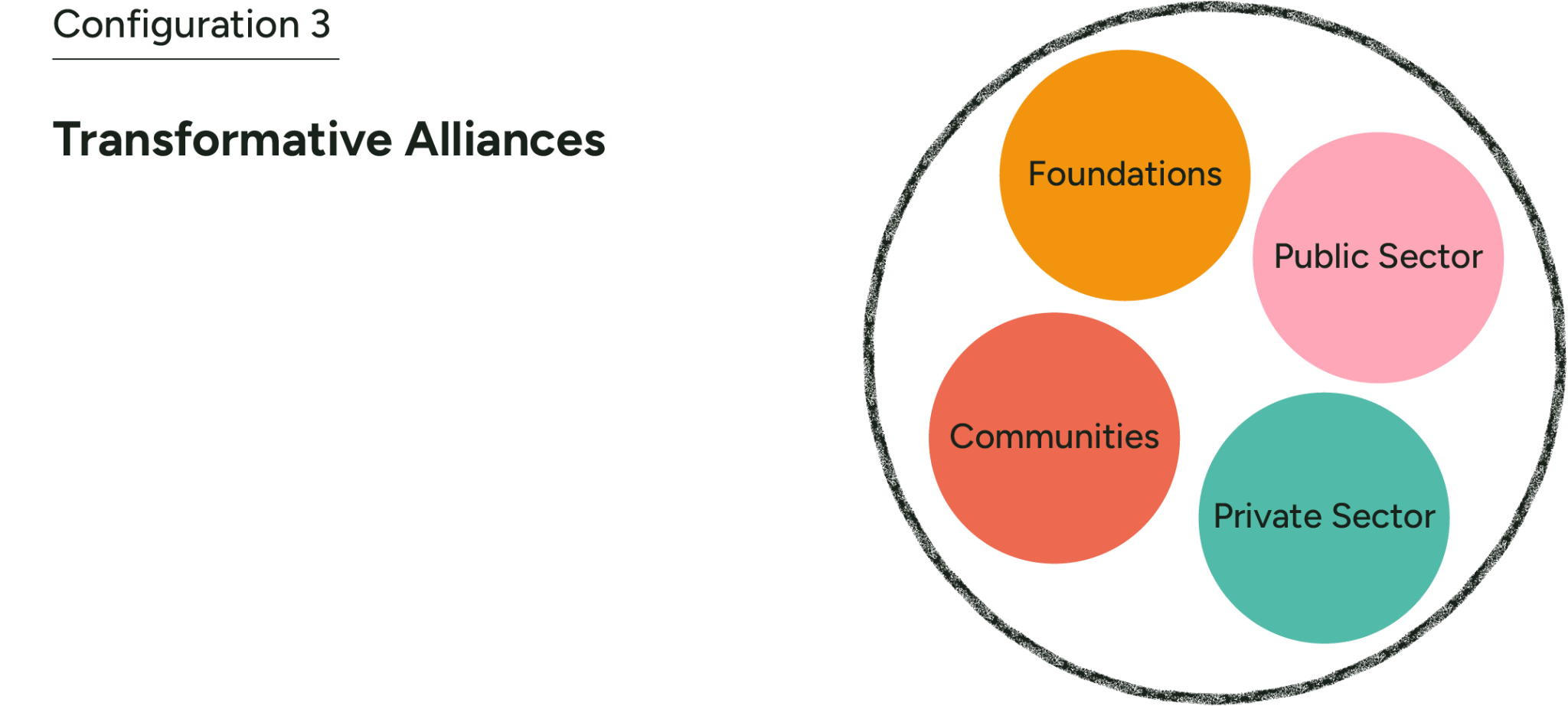
A more ambitious form of collaboration involves bringing together different categories of players, from philanthropy, the public sector, the private sector and communities. This configuration makes sense for highly complex, systemic challenges no player can address alone.
For most social challenges, the public sector is an essential partner in effecting transformational change – due to the scale of its budgets, reach and influence over service design, delivery and regulation. Inevitably, ambitious foundations need to develop a strategy for working with the public sector that is both productive and plays to their respective strengths (e.g. government's scale vs philanthropic agility). Foundations are also creating innovative partnerships with private sector actors because they open up the most direct path to making progress on a particular social challenge. One example is children's online safety, where influencing the policies and behaviour of a small number of large technology companies is vital.
When foundations succeed in developing powerful alliances stretching across communities, public, private and non-profit sectors, transformative change becomes more possible. Over the life course of a multi-sector partnership, this means foundations can flex into different roles which are missing from the landscape, for example as a 'first-mover' able to absorb risk; a convenor and broker; or an amplifier scaling innovations through partnerships with the public or private sectors.
4. Know Your Identity
If you are entering into a serious collaboration, you should be ready for the questions it will throw up about what your organisation stands for and the way it works. Those questions will come from partners who will be looking for reassurance about commitment, and from staff and trustees about their role in more collaborative undertakings.
Collaboration will not be a good fit with every culture. Amongst those foundations that do opt to collaborate, we can discern four distinctive kinds of 'personality', from the strongest to the weakest appetite for partnership working. In bigger organisations, you might find different personalities showing up across departments or even programmes – they might be consciously chosen, but it is more likely that they are implicit, part of a tacitly understood organisational culture:
1. Collaborators-By-Default
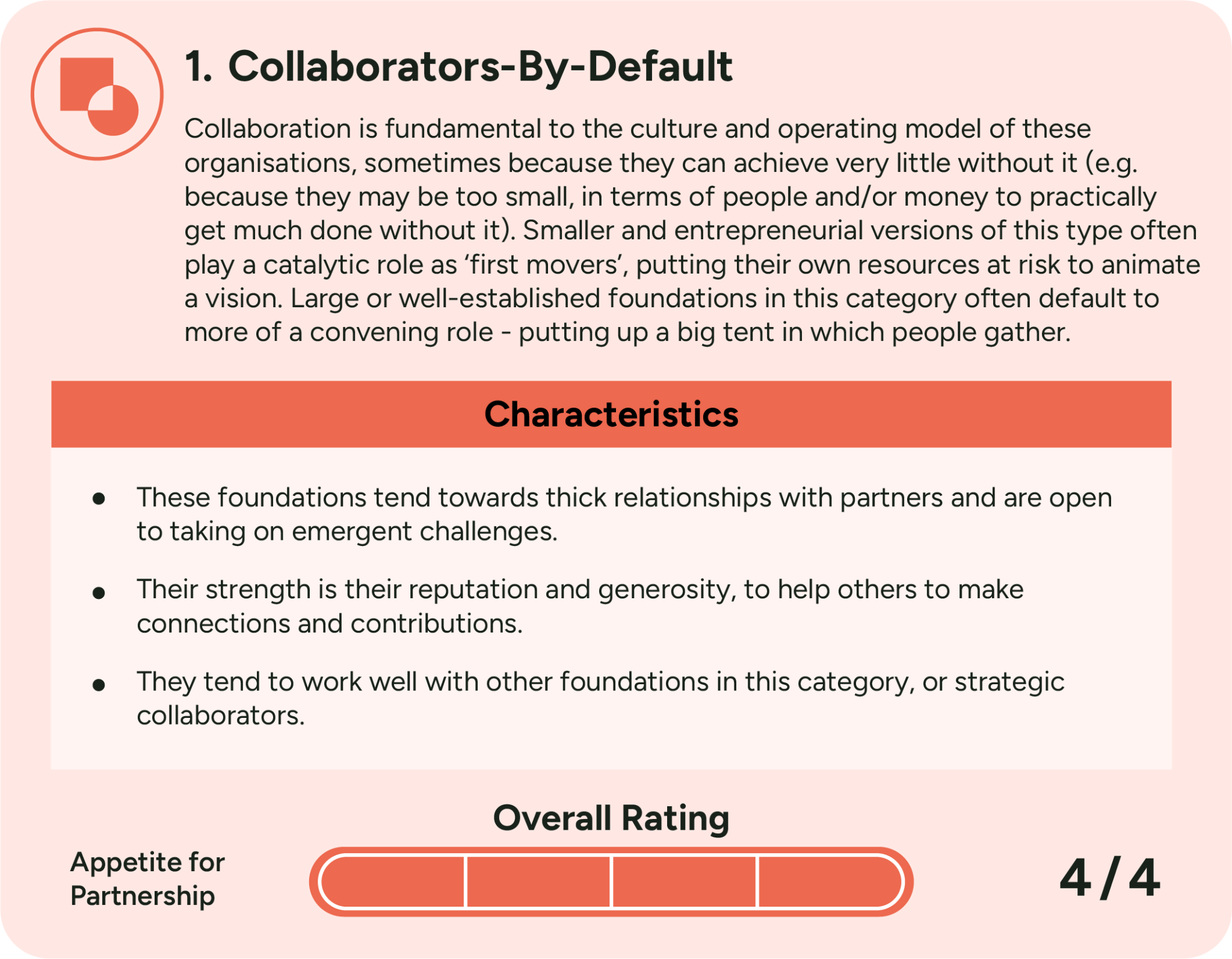
Collaboration is fundamental to the culture and operating model of these organisations, sometimes because they can achieve very little without it (e.g. because they may be too small, in terms of people and/or money to practically get much done without it). Smaller and entrepreneurial versions of this type often play a catalytic role as 'first movers', putting their own resources at risk to animate a vision. Large or well-established foundations in this category often default to more of a convening role - putting up a big tent in which people gather.
Characteristics
- These foundations tend towards thick relationships with partners and are open to taking on emergent challenges.
- Their strength is their reputation and generosity, to help others to make connections and contributions.
- They tend to work well with other foundations in this category, or strategic collaborators.
2. Strategic collaborators
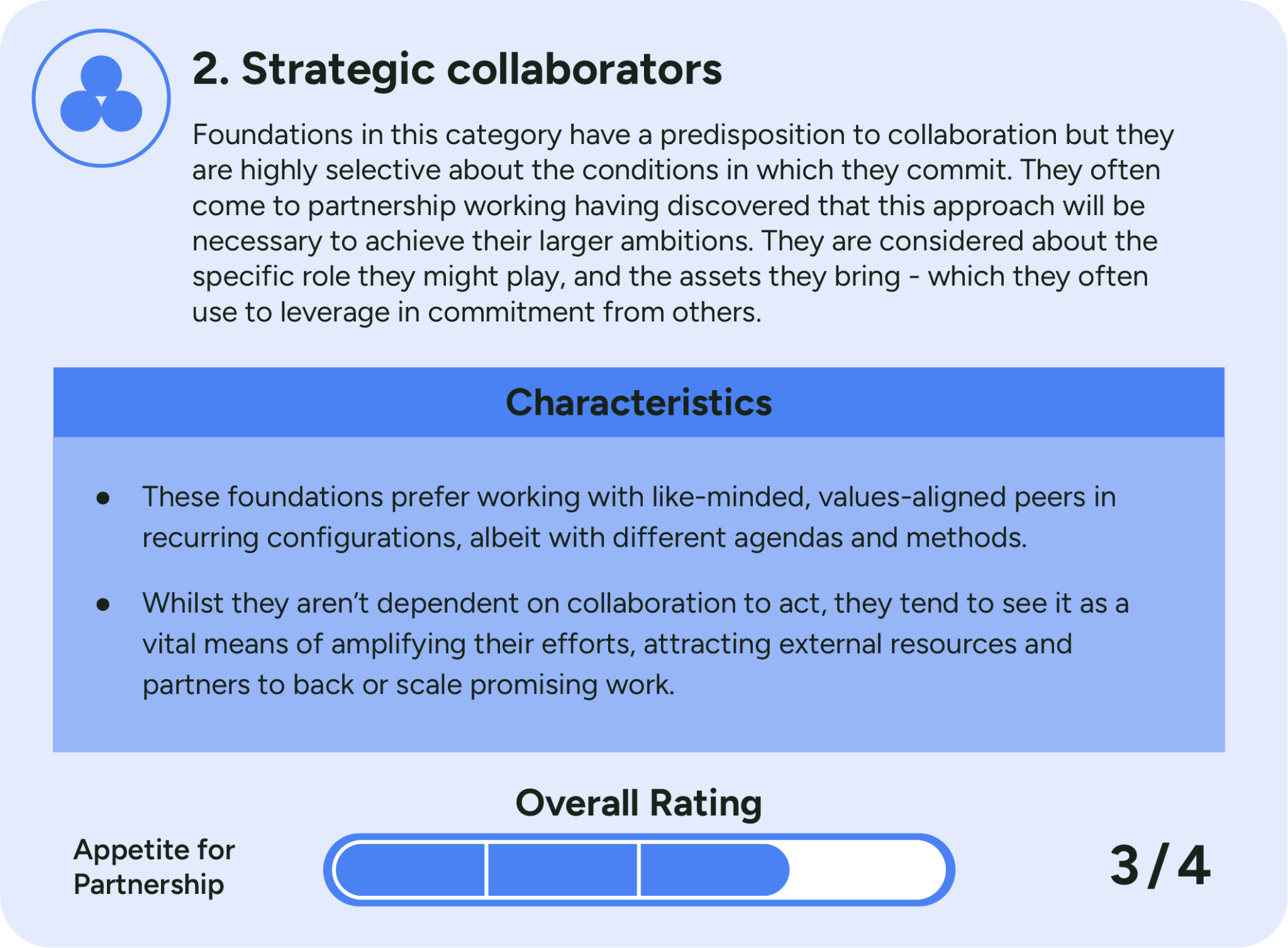
Foundations in this category have a predisposition to collaboration but they are highly selective about the conditions in which they commit. They often come to partnership working having discovered that this approach will be necessary to achieve their larger ambitions. They are considered about the specific role they might play, and the assets they bring - which they often use to leverage in commitment from others.
Characteristics
- These foundations prefer working with like-minded, values-aligned peers in recurring configurations, albeit with different agendas and methods.
- Whilst they aren't dependent on collaboration to act, they tend to see it as a vital means of amplifying their efforts, attracting external resources and partners to back or scale promising work.
3. Opportunistic collaborators
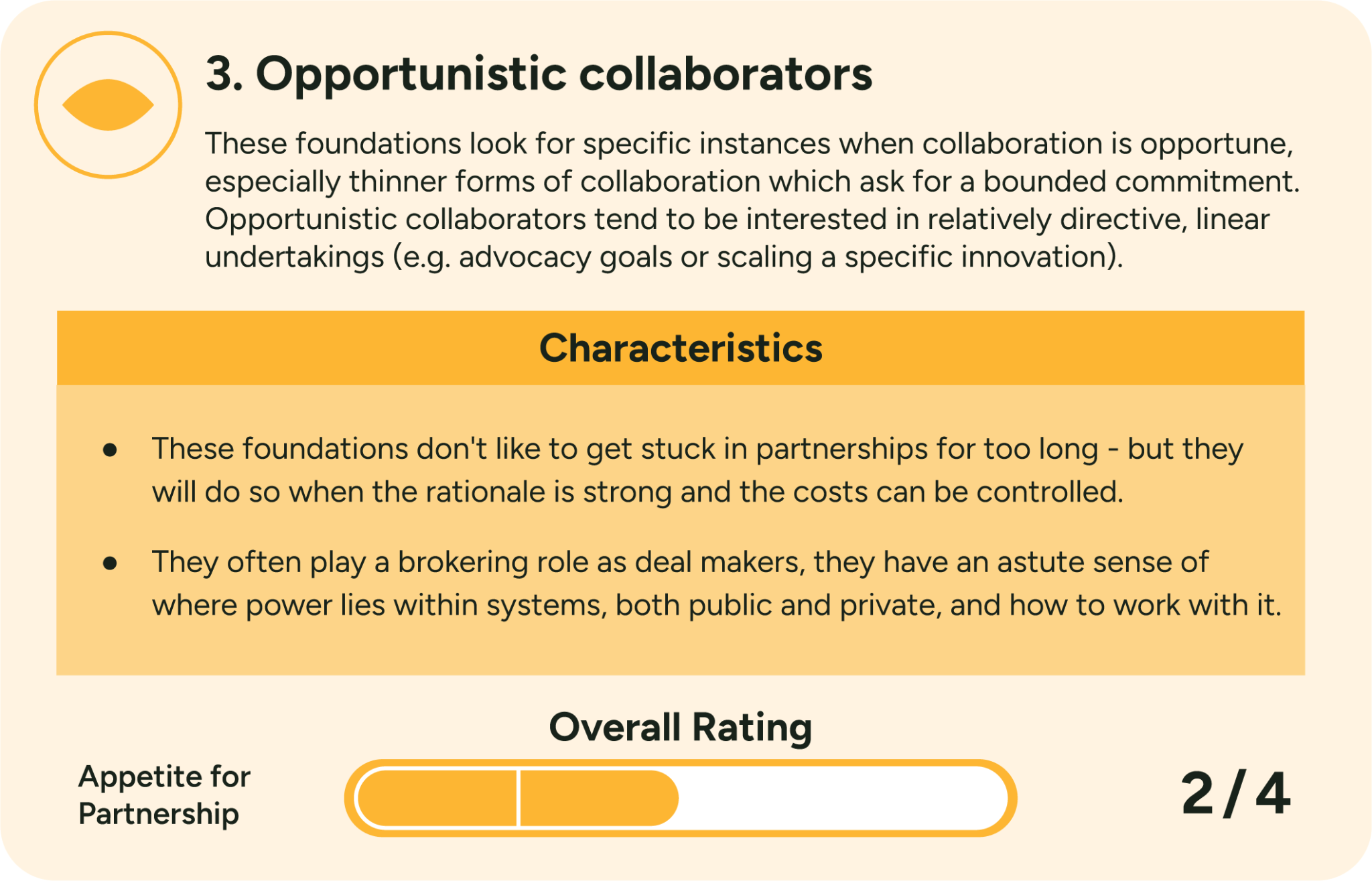
These foundations look for specific instances when collaboration is opportune, especially thinner forms of collaboration which ask for a bounded commitment. Opportunistic collaborators tend to be interested in relatively directive, linear undertakings (e.g. advocacy goals or scaling a specific innovation).
Characteristics
- These foundations don't like to get stuck in partnerships for too long - but they will do so when the rationale is strong and the costs can be controlled.
- They often play a brokering role as deal makers, they have an astute sense of where power lies within systems, both public and private, and how to work with it.
4. Non-collaborators
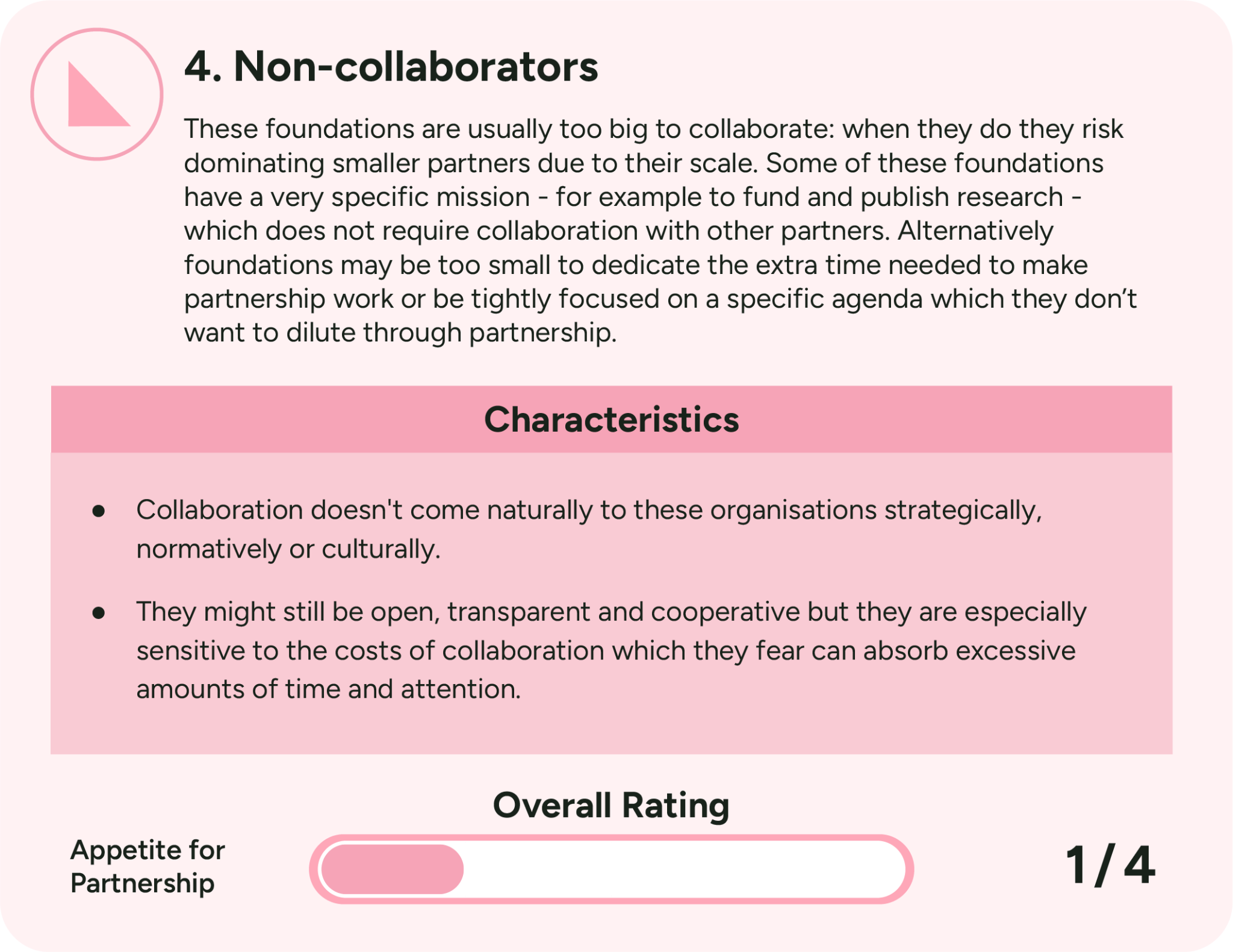
These foundations are usually too big to collaborate: when they do they risk dominating smaller partners due to their scale. Some of these foundations have a very specific mission - for example to fund and publish research which does not require collaboration with other partners. Alternatively foundations may be too small to dedicate the extra time needed to make partnership work or be tightly focused on a specific agenda which they don't want to dilute through partnership.
Characteristics
- Collaboration doesn't come naturally to these organisations strategically, normatively or culturally.
- They might still be open, transparent and cooperative but they are especially sensitive to the costs of collaboration which they fear can absorb excessive amounts of time and attention.
Ready or Not
Many foundations and social change organisations have a natural predisposition towards collaboration, but they can still easily underestimate the work needed to operationalise, embed and support collaboration over the long term.
To help you assess how prepared you are to embrace the challenges posed by collaboration, we've developed a primer on the key dimensions of 'collaboration readiness'. For foundations interested in shifting from one category to another in the list of roles above, perhaps even becoming a collaborator-by-default, it can help to self-diagnose areas of strength and weakness:
1. The mindsets and skills to partner:
Organisations that seek to be more than occasional opportunistic collaborators need intentionally to orientate themselves to a collaborative stance. Depending on the starting point, this might be a slow process and include training on 'soft skills' such as facilitation and managing conflict with partners, alongside technical skills around topics such as due diligence, pooled funding, etc. Leaders need to be able to articulate the big picture case for collaboration in a compelling way, because it may not always be evident at the operational level.
2. Flexible planning and budget cycles:
Commonly, the timetable of a collaboration does not align with an organisation's own cycles of planning, or it can extend well beyond it. In those circumstances, organisations need to have sufficient flex to be able to work outside of their typical budget-setting cycles.
3. Adaptive learning and impact frameworks:
Collaborations tend to require a more open-ended, flexible approach to learning in which value is gauged from multiple perspectives, prospectively as well as retrospectively. ‘Contribution' becomes the watchword, rather than attribution. How adaptable is your organisation's impact measurement approach; can it easily 'dock' into other systems?
4. Supportive governance:
Trustees need to be both receptive to more collaboration (and all that goes with it, including reduced ownership of initiatives or credit for progress) and accepting of the implications of collaborative strategies in terms of adapting their own governance structures. They need to be open to sharing power with other organisations over which they have little control.
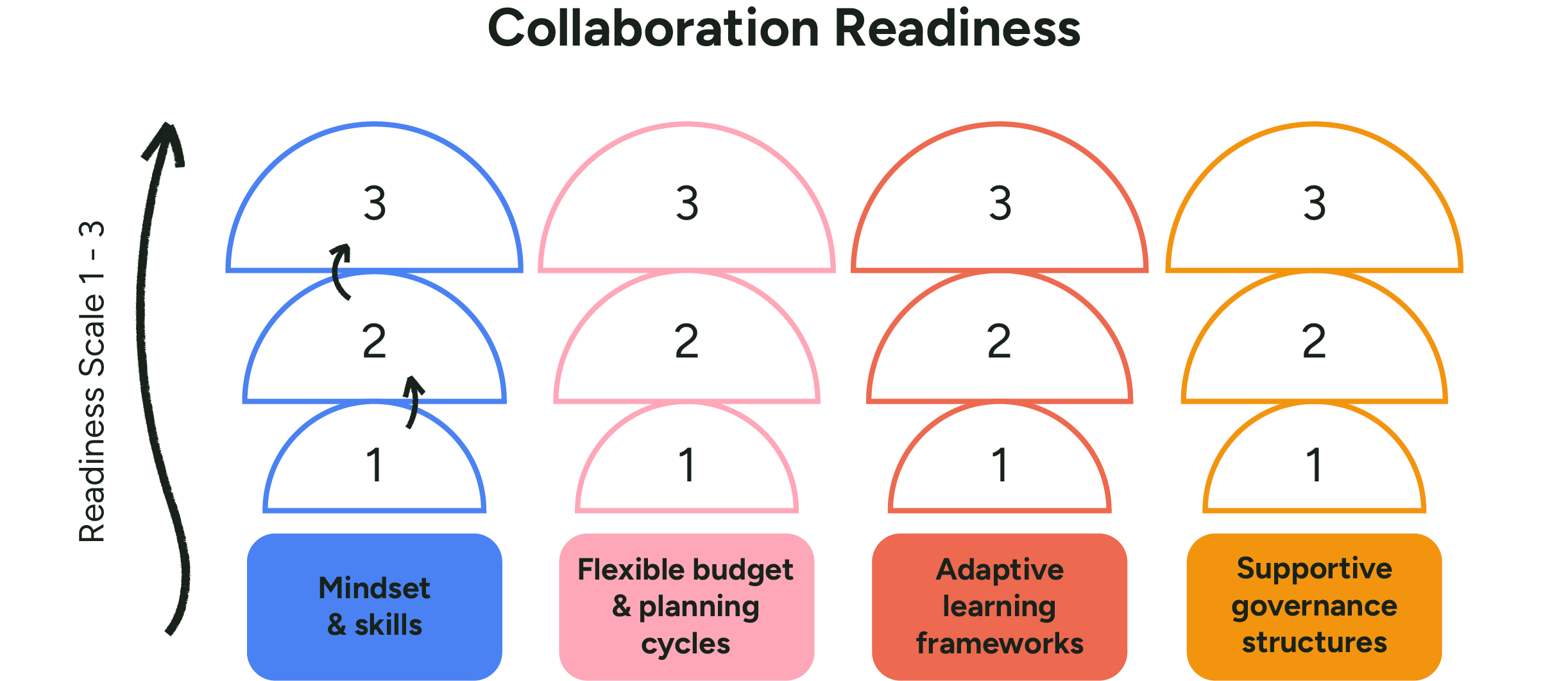
These four dimensions can be thought of as stepping stones which will position any organisation - foundation or not – to make the most of collaboration opportunities. A score of '1' suggests your organisation has limited capability or little experience in that domain, whereas a 3 would indicate high confidence and a strong track record.
The aim is to become realistic about where work needs to be done so that you can be a better partner to others.
5. Grow the Field
Would-be collaborators will find that they need to improvise new structures and systems to make up for a lack of ready-made hardware which they can pick up and adopt. Equally, questions of culture, norms and behaviours – the 'software' of collaboration – will be as important to the growth of the field as creating the right financial and legal blueprints.
Foundations themselves, and their membership bodies, have a role to play in investing in growing the ambition and practice of collaboration beyond their own strategic goals. We propose seven ways foundations can act individually and collectively to strengthen hardware and software:
1. Focal points for public sector collaboration.
Building on the template offered by the UK's Office for the Impact Economy, there is a case for expanding the number of entry points for philanthropists and foundations to develop collaborations with government – including regional or local offices to nurture place-based partnerships. International learning about trailblazing public- philanthropic collaboration (such as the Best Start Family Hubs Match Fund in the UK, or IDAC in Australia) would help to grow the sense of possibility on the part of both government and philanthropy.
2. Building the collaboration architecture.
The underpinning structures needed to support efficient activation of partnerships will not emerge without cultivation. Demonstrating a commitment to working through pre-existing models and purpose-built fiscal hosting services like Global Dialogue and Collaboration Circle would make it less likely that foundations are reinventing the wheel with every new collaboration. Blueprints of financial models and a diverse range of legal agreements could be made more widely available and adaptable for those taking the DIY route.
3. Data sharing and interoperability.
Grantmaking transparency initiatives such as 360Giving in the UK have drastically improved visibility of the flow of money towards different social challenges - but the sector's ability to aggregate actionable live insights between organisations remains limited by valid data protection concerns and a less valid lack of technical expertise. Greater efforts to tackle data interoperability and infrastructure, such as the Philanthropy Data Commons, which is funded by the MacArthur Foundation in the US, will be needed in order to enable systems to speak to each other. Over time, better use of data in tandem with AI at the sector level can help to surface opportunities for collaboration and de-duplication.
4. Up-skilling teams for partnership.
Training is a must-have for organisations looking to ramp up their participation in collaboratives. Whilst partnership training is valuable to those in programmatic roles, it is also essential for finance and legal departments to enable staff to look beyond a risk-management lens (which can lead to protectionist behaviours) to find ways of balancing the needs of an external collaboration alongside organisational risk. Leaders in these fields can play a dynamic, proactive role in designing collaborations if they are brought in at an early enough stage.
5. Board-level development.
Carefully constructed collaborations can fall apart upon first contact with organisational governance structures. Trustees need more dedicated support to help them grapple with the implications of shared-governance models for their own fiduciary responsibilities, alongside developing delegation policies that allow staff and collaborative entities the necessary autonomy. In addition to facilitated conversations to test their collective appetite for collaboration and surface concerns, individual chairs could benefit from being paired with peers on other boards who have embarked on similar journeys.
6. Facilitation as a field resource.
The difference between a successful collaboration and a painfully slow one often comes down to the quality of the facilitation or lack thereof. Skimping on this capacity is a false economy, particularly in the case of 'thicker' collaborations where values alignment early on is a critical predictor of long-term success. Whilst investing in a coordinating function at the level of individual partnerships is certainly important, facilitation should also be positioned as a shared resource with value to the field at large. Just as they now increasingly fund core costs for grantees, foundations could afford to be generous in resourcing the facilitation of other social change efforts as well as their own.
7. Shared learning functions.
If more intense forms of collaboration become common, that will increase the need to interrogate existing approaches to evaluation and learning. Classic, programmatic, linear, backward-looking approaches to learning rarely meet the needs of dynamic collaborators. There can be more value in investing in 'field level' learning rather than discrete evaluations owned by individual organisations. Learning strategies should encompass reflection about the process of collaboration alongside capturing the social change it enables.
6. Grow your practice
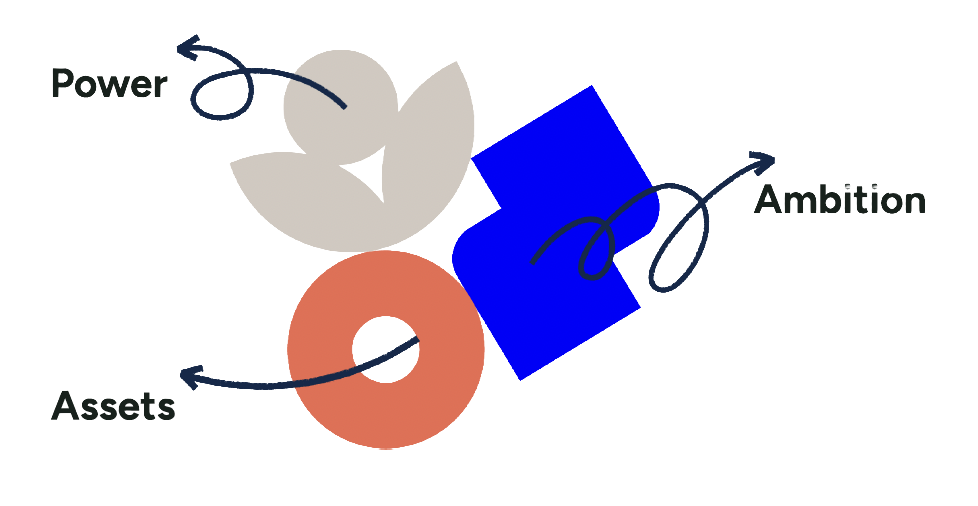
Foundations keen to go beyond today's practice should ask themselves how far they would be willing to go in stretching the potential for collaboration. First, in terms of assets – what will you be prepared to put at stake for collective change? Second, how much will you be willing to engage with power – confronting it, sharing it and generating it? Third, how ambitious might you be about the scale of the problems you take on?
Leveraging Assets
At the moment, the most obvious way for foundations to contribute to a collaboration is through their financial contributions – perhaps into a pooled fund. But there is a much wider asset base you could start to draw upon.
Some foundations provide their buildings as a space in which collaboration with the field can flourish. They can also leverage the talents and expertise of their staff – for example, seconding staff to newly created collaboratives or even seconding staff into government to work on shared strategic priorities. Foundations are tapping into other kinds of financial assets such as endowments. Will you be willing to leverage your own balance sheets to crowd in other kinds of social investment and finance, such as impact bonds or social investment?
Ambition
How far could your ambitions grow? Many of the most complex social or environmental issues demand vast resources and cut across international boundaries. As many states increasingly adopt insular or even isolationist foreign policies, foundations could start to step into the vacuum left behind. Tackling deep-rooted and systemic challenges means becoming skilled at working with a bigger range of private, public and community partners.
Ambitious collaborations are not simply measurable by the volume of funding or the breadth of international partners. You can be ambitious along other dimensions – for example, extremely long time horizons (generations rather than decades) or in terms of the depth of commitment to a particular geography or demographic group.
Power
A concerted investment in collaboration will challenge conventional models of leadership and governance in foundations. Foundations will find they have to be prepared to share power more, and put their individual organisational interests in the service of a wider collaborative goal. Will you be prepared to do this?
Questions of power are often treated as a zero-sum game: if one party has more, then the other parties have less. The paradox is that, by giving away the power to act unilaterally, you will likely find that more shared power is generated.