Acknowledgements
We extend our sincere gratitude to the sixteen homeowners who generously shared their time and experiences for this research. Their candid accounts form the foundation of this report.
We would also like to thank the following experts, installers and industry professionals who contributed their knowledge and insights: Michael Cosham, DG Climate Control; Andrew Fuller, RACHP School; Nathan Gambling, BetaTalk Podcast; Philip Gambling, Retired Air Conditioning Installer; Stewart Holman, Subcooled Air Conditioning Ltd; Nick Irlam, Irlam UK; Aron James, Atmosfair Air Conditioning; Stephan Lang, Daikin UK; Pat Laroche, Air Conditioning Engineer; Tony Lathey, Heat Pump Consultant Ltd, Panasonic Heating and Cooling UK; Edward Louie, Pacific Northwest National Laboratory; Ian Mather, Robert Heath Heating Limited; Hamid Salimi, Daikin UK; Paul Singh, ChillAir (UK) Training Academy; and Ashley Towndrow, SmartEnergyProjects.co.uk
Executive summary
What are air-to-air (A2A) heat pumps?
A2A heat pumps – often known as air conditioning (AC) – are electric systems capable of both heating and cooling. When heating, they extract heat from outdoor air and deliver it into the home; when cooling they do the opposite.
While both A2A and air-to-water (A2W) heat pumps capture heat using a refrigerant, they distribute it around a property differently. A2W systems transfer heat to water, which then circulates through radiators or underfloor piping. A2A systems bypass water entirely.
With A2A, the refrigerant is pumped directly into the home and heat is emitted into rooms through fan-assisted heat exchangers. These can be thought of as very powerful, compact radiators. These indoor units can be wall or ceiling mounted and are more sophisticated than a typical radiator. They feature internal sensors and controls that allow for precise, independent temperature control in each room.
As discussed below, A2A heat pumps can provide homeowners with an additional option for decarbonising home heating, alongside A2W systems. They are particularly advantageous in overcoming challenges with, or barriers to, A2W installations for certain property types, contexts and occupancy patterns across the UK.
Key findings
A2A heat pumps have wide applicability
A2A systems should be considered an equally viable decarbonisation option as A2W systems for almost all UK homes. Our findings suggest that households are satisfied with the comfort these systems provide. Furthermore, installation is typically faster and less disruptive than A2W, while costs are comparable or lower depending on the property type.
Advantageous properties
Although real-world data on system efficiency is lacking, A2A systems are likely to be comparable in efficiency to A2W systems. This assumes they are used in the same continuous heating pattern and combined with sufficiently sized internal heads to maximise emitter area.
A2A systems offer advantages over A2W systems in certain contexts. These include properties with overheating issues, flats, smaller homes and properties without existing wet heating systems. They are also well-suited to homes that would otherwise require major pipework upgrades. In these instances, A2A heat pumps can be cheaper, less disruptive and quicker to install.
They are particularly advantageous in open-plan properties. This layout allows heat to circulate more freely than in homes divided into many rooms. Consequently, fewer indoor units are required to meet the home's heat demand, which cuts installation costs and complexity.
Furthermore, A2A systems typically require less space for indoor components compared to A2W systems. This helps to overcome physical constraints that can make A2W systems impractical in some properties.
Heating pattern flexibility
A limitation of A2W systems is that when operating intermittently, the water in the radiators and pipes cools down. Reheating this thermal mass takes time, which delays heat delivery and reduces system responsiveness. This contrasts with A2A systems, which can provide high heat within minutes of being switched on.
Therefore, A2A systems offer greater flexibility in heating patterns. While it is acknowledged that both system types achieve optimal efficiency and comfort when run in a continuous, 'low and slow' heating pattern, the penalty for operating A2A systems intermittently appears to be less severe. However, this depends on system design and operation.
Consequently, A2A systems are likely better suited to homes that heat intermittently or which are zoned or partially heated (where heating is only turned on when desired and heat only certain rooms). This approach avoids the comfort and cost penalties associated with running A2W intermittently, though it introduces different challenges such as noise and air movement.
This flexibility makes A2A useful for homes that are often empty, households that mainly use a single room, or those looking to manage energy costs closely. A2A can support zoned and intermittent heating as each indoor unit can independently adjust its output and fan speed to match the heating requirements of each room.
A high fan speed on an A2A internal head is analogous to temporarily increasing the radiator size in an A2W system. It allows the unit to heat a room quickly while avoiding high refrigerant condensing temperatures – which are comparable to an A2W system's flow temperature. This theoretically allows an A2A system to provide rapid heating without the efficiency penalty often seen in A2W systems.
However, higher fan speeds come with increased noise and air movement. These trade-offs may be unacceptable to some households and must be communicated clearly before installation.
Furthermore, additional research is needed to determine the interplay between efficiency reductions from intermittent use versus the energy savings gained from not heating unoccupied spaces.
We note that some of the efficiency penalties associated with intermittent heat and A2W systems can be considered a control issue, rather than something intrinsic to the technology. There are A2W solutions that facilitate intermittent and partial heating, such as Adia Thermal; however, third party controls add an additional cost and complexity.
A stronger incentive for domestic heat decarbonisation
Although A2W heat pumps are a compelling solution for many homes, homeowners may not perceive them as offering sufficient benefits relative to the installation cost. This can make it difficult to persuade homeowners to replace their fossil fuel systems.
In contrast, A2A heat pumps can offer cooling, dehumidification and air filtration/purification alongside heating – creating a tangible upgrade over their previous system and solving comfort issues. This creates a more natural incentive for decarbonisation. Our research found that cooling was a key factor in many homeowners' decision to install an A2A system.
Installer interviews revealed that most clients install A2A primarily for cooling, with many unaware that the systems can also heat.
This presents a significant opportunity. As interest in active cooling grows, raising awareness of A2A's heating capabilities could encourage homeowners to use their systems year-round. Furthermore, it could drive the installation of systems explicitly designed for whole-home heating, or those that are easily expandable for future use.
Domestic A2A systems don't need complex commissioning
A2W installations require careful commissioning for optimal efficiency. This includes balancing radiators, selecting correct radiator sizes, setting weather compensation curves and configuring hot water temperatures. While competent heating engineers handle this well, some installers can make mistakes that dramatically reduce system efficiency. This risk is particularly relevant as the A2W installer workforce needs to grow rapidly to meet UK government targets, bringing in less experienced entrants.
With A2A systems this risk is minimised. A2A systems are 'load compensated' rather than 'weather compensated'. This means each internal head monitors its room temperature directly and adjusts heat output accordingly. This contrasts with the weather compensation that A2W systems use, which adjusts heat output based on outdoor temperature.
As A2A units adjust their output in real time based on room temperature, they can operate efficiently without complex manual configuration. Provided the system is sized correctly and sufficient indoor units are active, selecting the automatic fan speed allows the system to behave effectively like a well-commissioned A2W unit.
In contrast, A2W systems require an engineer to set, and potentially refine, weather compensation curves to determine how heat output varies with outdoor temperature. Consequently, commissioning errors can compound and significantly reduce efficiency. With A2A heat pumps, this specific risk is largely eliminated.
A2W heat pump commissioning will likely simplify over time as automatic weather compensation becomes standard. However, most current systems do not self-optimise, and while third-party solutions exist, they cannot compensate for a poor installation.
Current and upcoming challenges
Despite the clear opportunity to use A2A heat pumps as a key technology in decarbonising home heating in the UK, the technology may face a few challenges in certain contexts and at scale.
Challenging installation contexts
Flats without outdoor space
Although A2A systems are appealing for flats, currently most systems require outdoor space for the external unit. Therefore, systems are often only practical for flats with roof access, balconies or ground-floor outdoor space. External units cannot be mounted on walls at height or hung from windows. This means most A2A systems share a key limitation with A2W: they're difficult to install in flats without suitable outdoor space.
However, it is only relatively recently that consumer demand for A2A heating in UK flats has developed, as a consequence of government decarbonisation targets. Historically, the primary market for A2A systems has been for cooling, with manufacturers only having a small focus on the UK market due to the milder summers and prevalence of gas boilers for winter heating. We anticipate that manufacturers will continue to develop new A2A solutions that remove the need for external units, like exhaust air heat pumps do for A2W systems. In the future, we expect that the primary constraint for heat pump installations in flats will be internal space, rather than external mounting space.
We note that until A2A heat pumps that don't require an outdoor unit become mass market, other low-carbon heating solutions for flats will need to be considered. These include communal heating and heat networks. These will likely be preferable for high rise structures; however, these solutions come with their own issues, such as the requirement for a heat network licence.
Properties that require planning, and other, permissions
Properties that might be well suited to A2A systems may also face barriers with planning or other permissions. For example, current planning rules only allow for one external heat pump unit per building, or two if the building is detached. This means once one or two heat pumps are installed in a block of flats, further installations will require planning permission.
This also has an impact on other property types. Many consumer scale A2A installations are more suited to multiple external heat pump units, where a similarly powered A2W installation might only require one unit. This is because two or more outdoor A2A heat pump units can simplify routing, length and complexity of pipework needed as part of an installation. This means those wanting to install an A2A system may face additional planning constraints versus those installing A2W. This issue is not so pronounced for commercial systems which use a different pipe routing method - these won't be detailed in this report.
Finally, those living in flats may also face other permission challenges, such as freeholder or leaseholder consent. The Leasehold and Freehold Reform Act 2024 provides an opportunity to try and reduce heat pump installation challenges associated with freeholder consent.
Homeowners are keeping their gas boilers
A challenge for A2A as a decarbonisation policy is that many homeowners with A2A systems retain their fossil fuel boilers for hot water, partial space heating and to preserve perceived property resale value. Some intend to fully decarbonise only once their existing boiler fails, while others lack knowledge of suitable replacement options, funds or internal space for a hot water cylinder. Consequently, many homes with A2A systems continue to burn fossil fuels for hot water, which typically accounts for 20%-25% of a home's annual gas usage.
A home on mains gas typically uses around 75% of its annual consumption for space heating. Displacing this gas usage by installing an A2A system may allow homeowners who are unwilling or unlikely to fully remove gas in the near future to immediately reduce their direct carbon emissions by approximately 75%, with hot water provision decarbonised in the future.
This is compelling because replacing a broken boiler used only for hot water might feel as straightforward as replacing it with another gas boiler, increasing the likelihood homeowners will take the final step to full decarbonisation when ready. As most A2A systems naturally separate space heating and hot water provision, it enables replacing a gas boiler with an electrified alternative simpler and cheaper than for many hybrid A2W configurations.
As the technology progresses, more options for zero-carbon hot water solutions will become available. Consequently the transition to electrified hot water solutions will increase and the proportion of homes retaining gas boilers will decrease.
The added cost of hot water provision
Most current A2A systems don't provide hot water and adding hot water provision is an additional cost. After Boiler Upgrade Scheme (BUS) grants are accounted for, A2A systems with hot water provision are comparable in cost, or more expensive, than most A2W systems with hot water.
The UK government's planned £2,500 grant for A2A systems and heat batteries under the BUS will help mitigate cost disparities between A2A and A2W heat pumps in England and Wales. However, the grant should be widened in scope to include other domestic hot water supply options when used alongside an A2A system, such as hot water heat pump cylinders, tariff-tracking immersion heaters, and emerging technologies. This would allow homeowners to fully decarbonise their homes in a way that's both affordable and suited to their individual circumstances.
Workforce capacity
There is a shortage of qualified heating, ventilation and air conditioning (HVAC) installers in both the commercial and domestic sectors. The capacity of this sector will need to grow to accommodate increasing homeowner demand for A2A heat pumps.
However, there are several challenges with growing this workforce in a short period. While anyone can undertake a five-day Category 1 F-Gas course, and achieve the legal qualification to handle refrigerants, the F-Gas course does not ensure competency in A2A system design, installation and maintenance.
Building installation competency requires gaining hands-on experience, typically by working alongside a more experienced installer. This practical hands-on training can be enhanced with additional training courses, such as the Level 2 and 3 Diplomas in Refrigeration, Air Conditioning and Heat Pump Systems. These courses can be taken part time.
It can be challenging for new entrants to find an experienced engineer to shadow, and experienced plumbing and heating engineers looking to upskill in A2A heat pump installation may be reluctant to accept the financial penalty of working alongside an HVAC engineer for a lower wage. Undertaking a part-time learning course will only add to both the cost and loss of income.
It is therefore unlikely that the workforce can be easily and rapidly grown by simply expecting existing plumbing and heating engineers to transition, or those looking for a career change to move fields.
This makes the landscape for upskilling into A2A heat pump installations similarly difficult as moving into A2W system installations. However, the cost of training in A2A systems may feel more worthwhile to heating engineers as it can provide a new income stream from customers who are looking to use their units for cooling over the summer months. The system design is also often simpler and more forgiving than A2W systems, something which can be off-putting to some when considering whether to move into A2W heat pump installation. It could also provide a more gradual transition than moving into A2W heat pump installation, where newly trained A2A installers can build skills and confidence with simple single-unit or single-room installations before expanding into more complex jobs covering the whole house.
Future technologies, such as ‘all-in-one' A2A systems which don't require technical HVAC skills to install, may mitigate the requirement for upskilling and expand the workforce further. These systems require fewer specialist skills to install; however, maintenance, fault finding, and servicing will likely require additional training for an unskilled installer.
Grant-eligible installations
In November 2025 the UK government announced A2A heat pumps would be eligible for a £2,500 grant under the BUS, available in England and Wales. Although this will raise public awareness of using this technology as a low-carbon heating solution and provide the support for installing it, it's also likely to raise some new challenges.
Some existing HVAC engineers are concerned that this grant will lead to a reduction in the quality of A2A heat pump installations. Some believe it could attract certain engineers to the sector who might not have enough installation experience, or who might be more focused on taking advantage of the increased customer demand and funding available than doing a high-quality job.
To maintain the quality of installations, BUS-eligible installations will require Microgeneration Certification Scheme (MCS) certification. However this presents challenges of its own to HVAC engineers. MCS certification could increase both financial and administrative costs for installers as they'll be required to complete additional paperwork and more detailed heat loss calculations than are currently completed. There's a risk that this could increase both the engineer and homeowner cost of BUS-funded A2A installations.
The additional financial and administrative costs of MCS certification, may lead to some installers avoiding BUS-funded installations. Coupled with the already low-capacity workforce, this could lead to a shortage of engineers able to complete government grant-funded installations.
Uptake of BUS-funded A2A installations might also be reduced by system design limitations required by MCS. For example, although some homeowners choose to install an indoor unit in each room and use zoned heating, others may only install two indoor units for the whole home and keep internal doors open to create large open-plan spaces for continuous heating. The latter would likely be cheaper to install than the former, but would not pass MCS standards, which require that an indoor unit is placed in each room. This means those installing BUS-funded A2A systems may either be limited in their design options or be forced to install to a more expensive design specification.
Technological improvements for heating use
A2A heat pumps have traditionally been designed primarily for cooling. This means there is potential for improving efficiency, comfort and overall performance of the technology for heating.
For example, most indoor heads have the internal room temperature sensor situated inside of it. If these units are mounted high on the wall then there can be issues with rooms reaching the desired temperature during heating use. This is most likely to occur when units are used for intermittent heating or at low fan speeds with a high heat load. Operating in these ways causes less dense air to rise and stratify at the top of the room; as opposed to mixing with the cooler air at the floor level. The consequence is that the unit is surrounded by warm air, causing it to overestimate the average room temperature and shut off prematurely.
Issues like this can be both easy and difficult to resolve. Some units can operate with external thermostats to read the room temperature away from the unit. Other units don't suffer from these issues at all as their temperature sensors are shielded from warm incoming air.
This is something that A2A heat pump manufacturers will need to address as their units are increasingly used as a primary heat source.
Support for councils
Retrofit coordinators for councils and social housing require guidance that positions A2A and A2W systems as equally valid decarbonisation options, accompanied by clear decision criteria. To date, training has focused predominantly on A2W systems; it is therefore essential to upskill advice providers and coordinators on A2A technology to ensure optimal heating solutions are selected.
Training and resources should prompt coordinators to consider A2A in several specific scenarios:
- Physical constraints: Properties with space for an external unit but limited indoor capacity for pipe runs, or insufficient wall space for the larger radiators required by A2W.
1. Introduction to the study
Participants and data gathering
Our research focuses on 16 households and their experience with A2A heat pumps. These households were recruited through referrals from installers and online advertisements targeted at A2A heat pump owners. They are not representative of a statistically randomised sample. However, their varied experiences provide a wealth of qualitative data on the performance, installation, and user experience of A2A heat pumps in diverse UK homes.
The selected households represent a broad spectrum of properties, including flats, bungalows, and semi-detached, terraced and detached houses. The properties vary in age, size, construction type and existing heating systems. This diversity helps illustrate the wide applicability of A2A heat pumps across different housing archetypes. The case studies include properties where A2A systems are the sole heating source, as well as those where they are used alongside existing gas boilers. This allowed us to understand the challenges and opportunities associated with whole-house decarbonisation versus partial heating strategies.
We conducted in-depth interviews with each household, gathering information on their motivations for installing A2A heat pumps, their expectations, and their actual experiences. The interviews covered topics such as:
- comfort and heating performance
- noise and vibrations
- cooling performance
- usability
- installation process and costs
- maintenance and ongoing costs
- any issues or concerns encountered during ownership.
The interviews provided rich qualitative data, offering insights into the human element of adopting new heating technologies. We also collected quantitative data where available, such as energy consumption figures, installation costs, and property specifications, to complement the qualitative findings. This mixed-methods approach allowed for a comprehensive analysis of the real-world performance and user experience of A2A heat pumps.
In addition to homeowner interviews, we also engaged with a network of experts, installers, and industry professionals. These conversations provided valuable insights into the technical aspects of A2A heat pumps, current industry practices, challenges in scaling up installations, and future trends. Their perspectives helped contextualise the homeowner experiences and inform policy recommendations.
2. What are A2A heat pumps?
How do A2A heat pumps work?
An air-to-air (A2A) heat pump is an electrical system that operates similarly to a refrigerator or air conditioning unit. It transfers heat rather than generating it. In heating mode, the outdoor unit extracts heat from the ambient air, even at low temperatures, and transfers it to a refrigerant. This refrigerant then circulates to indoor units, where it releases the heat into the room through a fan-assisted heat exchanger. In cooling mode, the process is reversed: heat is absorbed from the indoor air and released outdoors. This allows A2A heat pumps to provide both heating and cooling from a single system.
What types of A2A systems are there?
A2A heat pumps come in various configurations, each with different indoor unit options. The most common types are:
- Single-split systems: These consist of one outdoor unit connected to one indoor unit, providing heating and cooling to a single room or zone.
- Multi-split systems: These use a single outdoor unit to connect to multiple indoor units (typically two to five), allowing for independent temperature control in different rooms or zones.
- VRV/VRF systems (Variable Refrigerant Volume/Flow): These are larger, more complex systems typically used in commercial buildings or larger homes, capable of connecting to many indoor units and offering advanced control options.
Indoor units come in various styles to suit different aesthetic and functional requirements:
- Wall-mounted units: These are the most common type, installed high on a wall. They are relatively compact and easy to install.
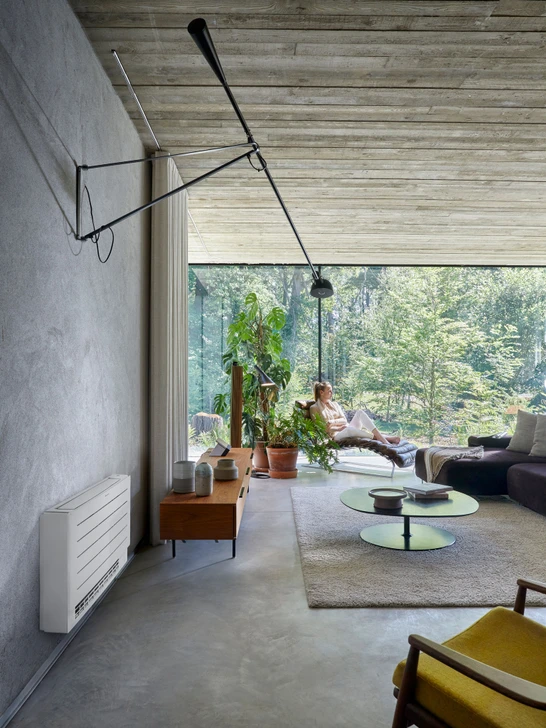
- Floor-standing units: These are installed at floor level, similar to a traditional radiator. They can be a good option where wall space is limited.
- Ceiling-mounted cassette units: These are recessed into the ceiling, offering a discreet appearance and good air distribution in larger rooms.
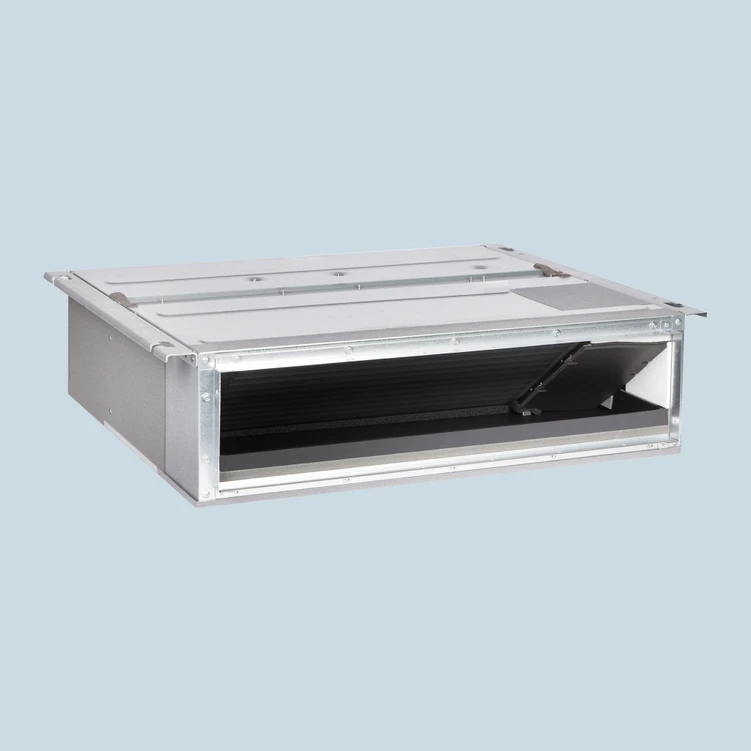
- Ducted units: These are hidden within a ceiling or wall cavity, with air distributed through vents. They offer the most discreet appearance but require more extensive installation.
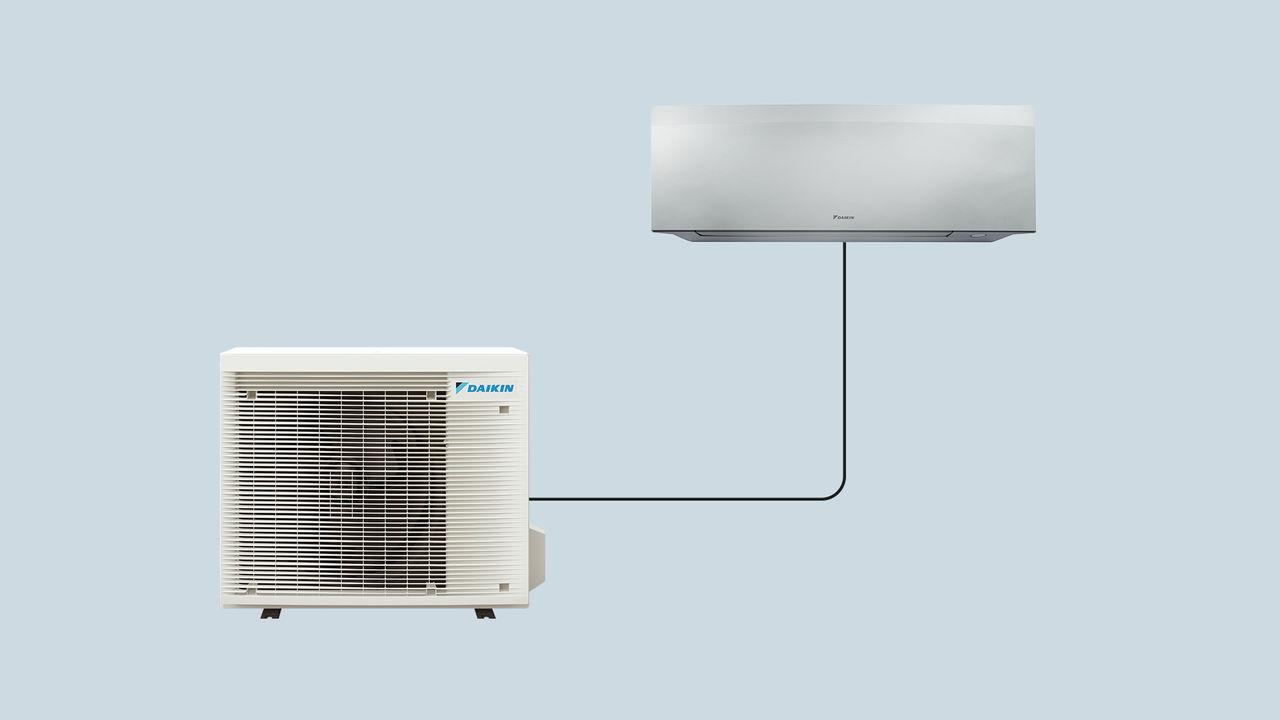
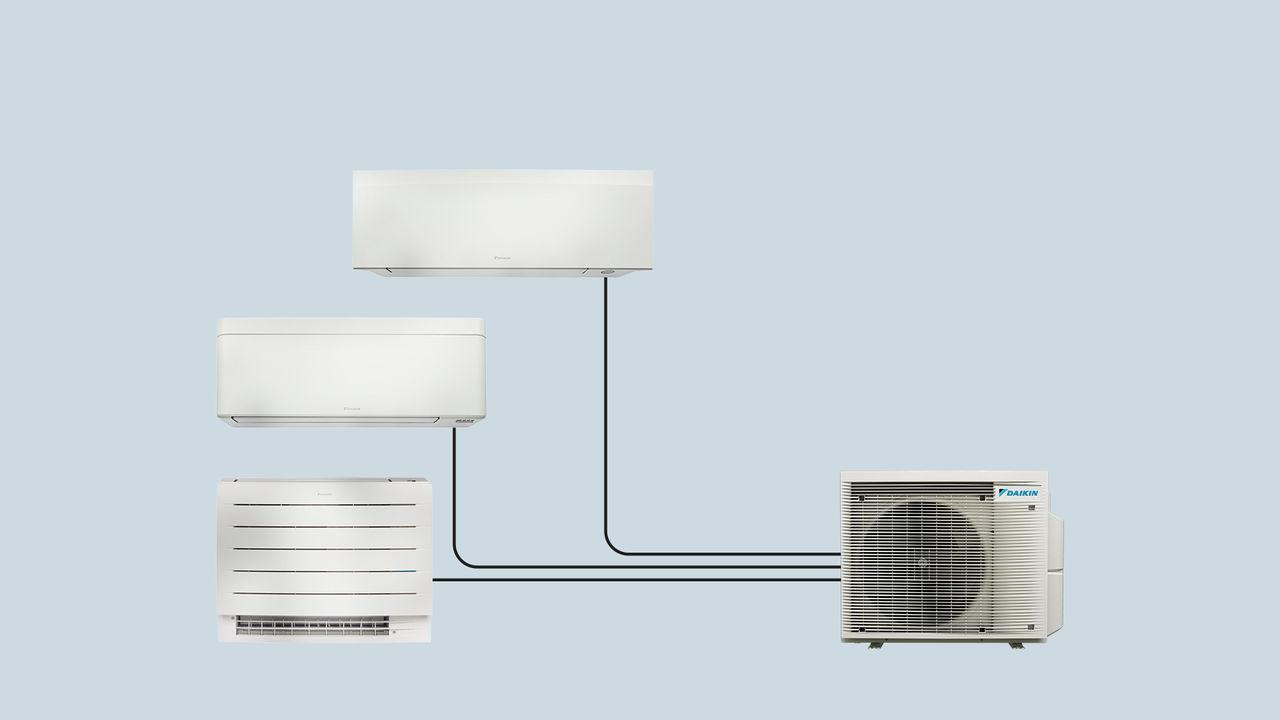
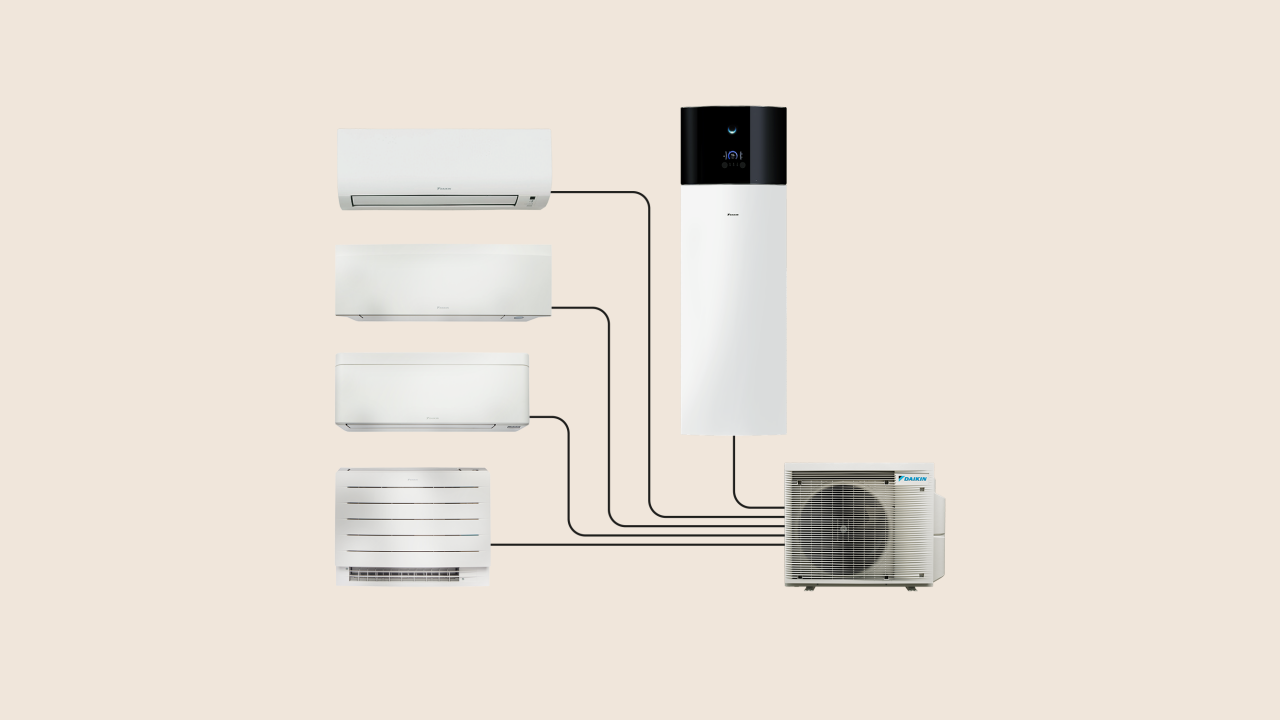
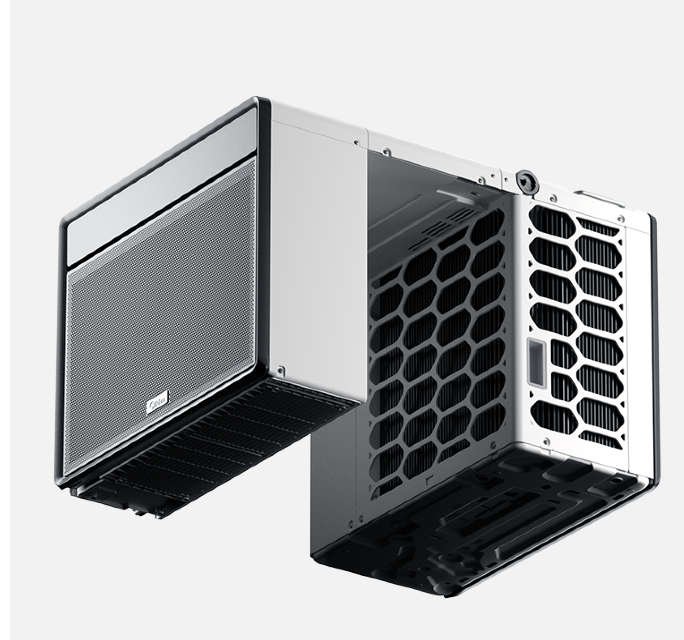
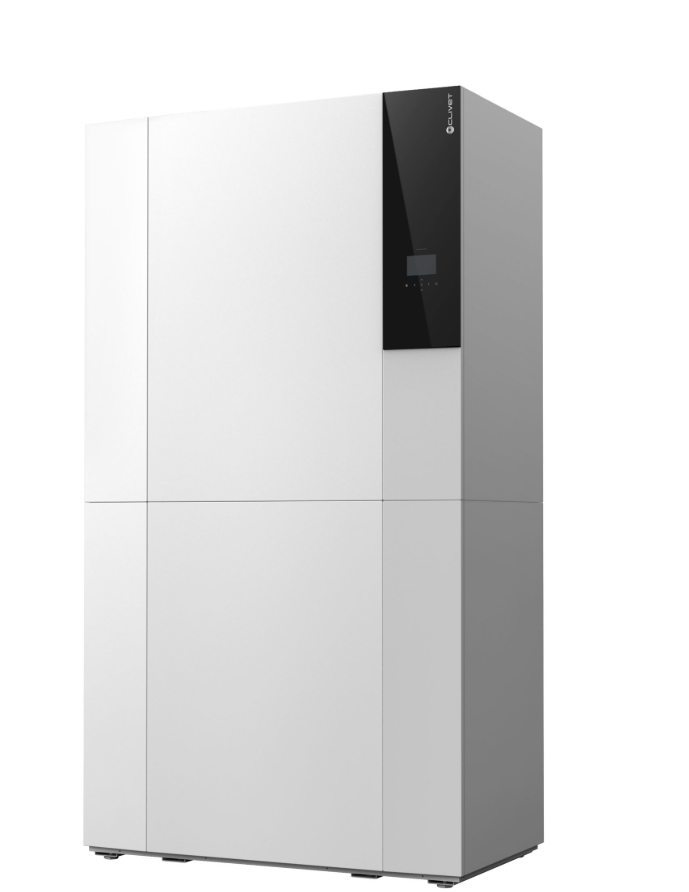
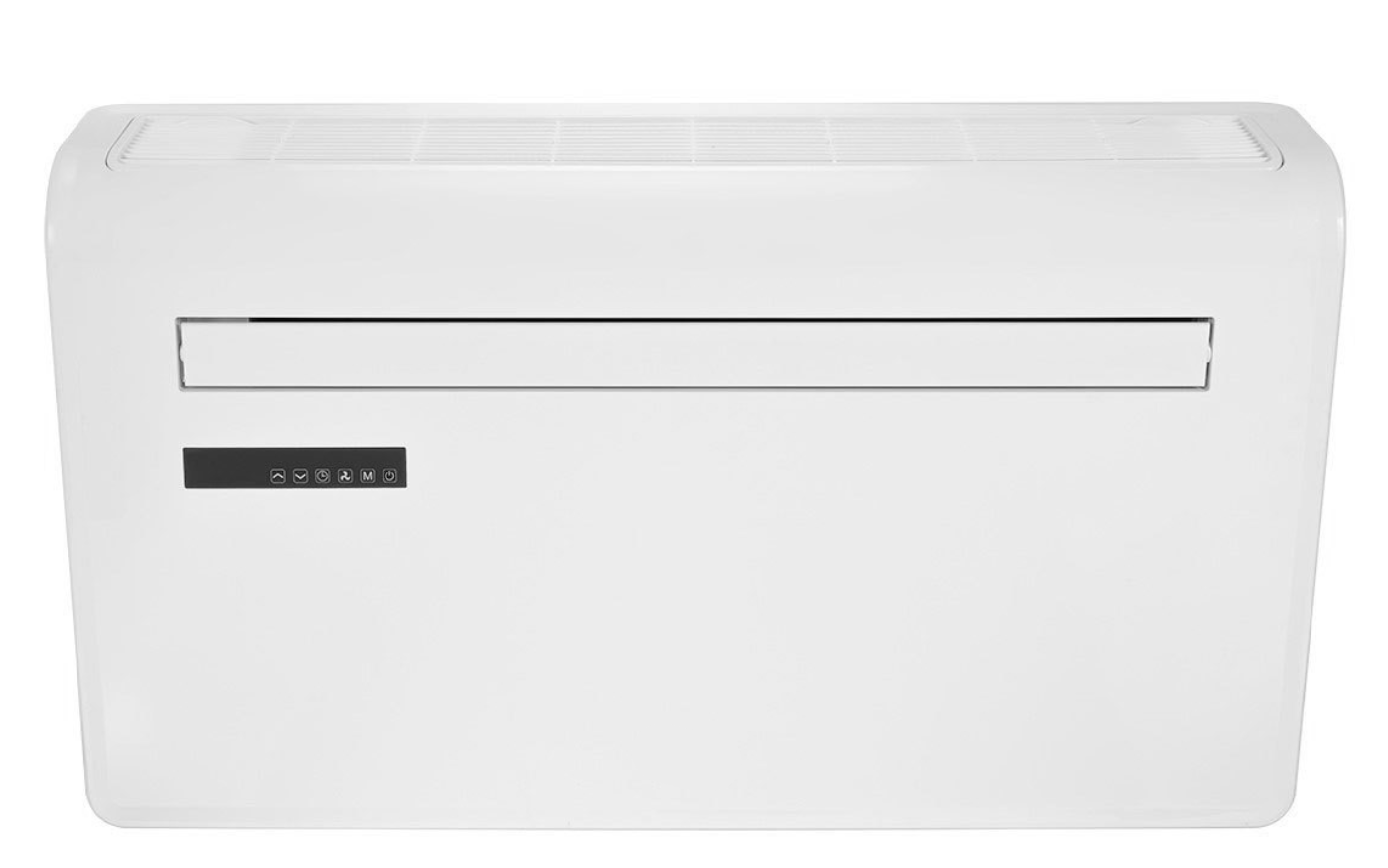
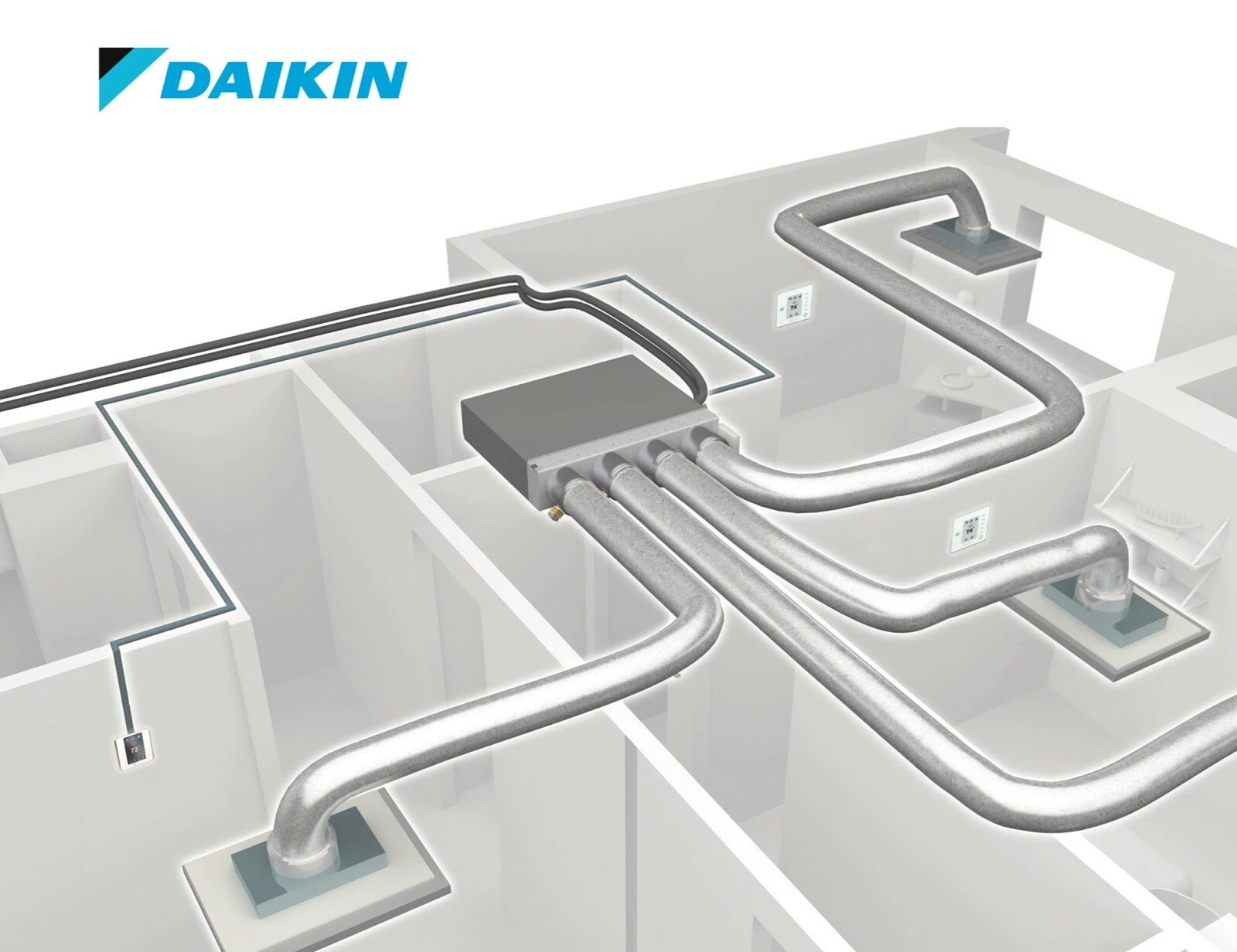

The choice of system and indoor unit type depends on various factors, including the size and layout of the property, aesthetic preferences, budget, and heating/cooling requirements for each zone.
Domestic hot water (DHW)
Most A2A heat pumps do not directly produce domestic hot water (DHW). For DHW, a separate system is typically required, such as an immersion heater, an instantaneous electric shower, or a heat pump hot water cylinder. Some hybrid systems exist that combine A2A for space heating/cooling with an integrated hot water cylinder. However, these are less common and may require more space.
Bathrooms and wet rooms
A2A indoor units are generally not suitable for bathrooms or wet rooms due to high humidity and potential for water exposure. In these areas, alternative heating solutions, such as electric towel rails or underfloor heating, are typically used. The heat from an A2A unit in an adjacent room can sometimes spill into a bathroom, providing some indirect heating.
What we expect to see in future
The A2A heat pump market is evolving rapidly, with manufacturers developing new technologies and solutions to address current limitations. We expect to see:
- Increased focus on heating performance: As A2A heat pumps gain traction as a primary heating solution, manufacturers will likely optimise units for lower ambient temperatures and improved heating efficiency.
- Integrated DHW solutions: More all-in-one systems that provide both space conditioning and hot water are likely to emerge, simplifying installations and reducing the need for separate DHW systems.
- More compact and discreet units: Indoor and outdoor units may become smaller and quieter, offering greater flexibility in placement and improved aesthetics.
- Advanced controls and smart home integration: Enhanced control systems, including AI-driven optimisation and seamless integration with smart home platforms, will likely become standard, improving user experience and energy efficiency.
- Wider range of refrigerant options: The industry may explore refrigerants with lower Global Warming Potential (GWP) to meet environmental regulations and reduce the climate impact of heat pumps.
- Solutions for flats without outdoor units: As consumer demand increases, manufacturers are likely to develop systems that eliminate the need for an external unit, making A2A heat pumps more viable for flats and apartments with limited outdoor space.
3. Property and occupancy suitability
Property types
A2A heat pumps are suitable for a wide range of property types, including:
- Flats: Especially those with open-plan layouts or limited space for traditional heating systems.
- Bungalows: Single-storey homes often benefit from the even heat distribution of A2A systems.
- Semi-detached, terraced and detached houses: A2A systems can provide effective heating and cooling, particularly in well-insulated properties.
- New builds: With good insulation and airtightness, new builds are ideal for A2A heat pumps.
- Retrofit properties: A2A can be a less disruptive retrofit option compared to A2W systems, as they do not require extensive pipework or radiator upgrades.
Highly-suitable homes
Certain types of homes are particularly well-suited for A2A heat pump installations:
- Open-plan properties: Homes with open layouts allow for efficient air circulation and often require fewer indoor units to cover a large area, reducing installation costs and complexity.
- Homes with overheating issues: A2A heat pumps offer active cooling, which can be a significant benefit in properties prone to overheating, such as those with large south-facing windows or poor ventilation.
- Properties without existing wet heating systems: For homes currently using direct electric heating, storage heaters, or solid fuel, A2A heat pumps offer a highly efficient and low-carbon alternative without the need to install new pipework or radiators.
- Smaller homes and flats: A2A systems typically require less internal space than A2W systems, making them an ideal choice for compact properties where space is at a premium.
- Well-insulated properties: While A2A heat pumps can work in less insulated homes, their efficiency and comfort are maximised in properties with good insulation and airtightness, reducing heat loss and energy consumption.
- Homes in conservation areas or with architectural restrictions: As A2A systems only require small refrigerant pipes (typically 6-12mm diameter) for connection between outdoor and indoor units, they can often be installed with minimal visual impact, making them suitable for properties where external alterations are restricted.
Many homeowners are also installing A2A systems in individual rooms to avoid overheating, typically for bedrooms and living rooms. This has the additional benefit of decarbonising heating in those specific rooms, allowing for a phased approach to decarbonisation or for targeting areas where heating is most critical.
A2A systems are particularly well-suited for properties where an A2W system would face challenges or significant costs. These include homes with:
- Inadequate radiators or pipework: A2W systems often require larger radiators or pipework upgrades to operate efficiently at lower flow temperatures. A2A bypasses this entirely.
- Limited space for a hot water cylinder: While most A2A systems require a separate DHW solution, options like instantaneous electric showers or heat pump hot water cylinders can be more compact than a traditional hot water cylinder with an A2W system.
- Difficulty in installing a heat pump hot water cylinder: This is particularly relevant in listed buildings or properties in conservation areas where planning restrictions may make the installation of external units or extensive internal alterations challenging.
Challenging properties for retrofit
While A2A heat pumps have broad applicability, certain property characteristics or situations can present challenges for retrofit installations:
- Lack of suitable outdoor space: As discussed, most current A2A systems require an outdoor unit, which can be problematic for flats without balconies, roof access, or ground-floor outdoor space. This is a significant barrier for dense urban housing.
- Noise concerns for outdoor units: Although modern outdoor units are much quieter than older air conditioning units, their placement needs careful consideration to minimise noise impact on neighbours, especially in terraced housing or densely populated areas.
- Visual impact: While small, outdoor units may be considered visually intrusive in certain properties, particularly in conservation areas or listed buildings. This can lead to planning permission issues or aesthetic objections.
- Limited internal wall or ceiling space: Ducted or ceiling-mounted units require sufficient space within the building fabric, which may be challenging in older properties with solid walls or limited ceiling voids. Wall-mounted units require unobstructed wall space.
- Properties with a high heat load and poor insulation: While A2A heat pumps are efficient, in very poorly insulated homes with high heat loss, they may struggle to maintain comfort or operate efficiently. Extensive insulation upgrades might be required first.
- Complex layouts with many small rooms: In properties with many small, separated rooms, a multi-split A2A system might require a larger number of indoor units, increasing installation complexity and cost compared to open-plan homes.
- Properties with specific aesthetic requirements: Some homeowners may find the appearance of indoor wall-mounted or floor-standing units undesirable, especially in period properties or those with high design standards.
- Challenges with electrical supply: Older properties may require electrical upgrades to accommodate the power requirements of A2A heat pumps, adding to the installation cost and disruption.
- Lack of existing ductwork for ducted systems: Installing a ducted A2A system in a retrofit scenario can be highly disruptive and costly if no existing ductwork can be repurposed.
Addressing these challenges often involves careful planning, bespoke design solutions, and sometimes additional costs. In some cases, an A2W system or alternative low-carbon heating solution might be more appropriate.
Occupancy patterns
Occupancy patterns can significantly influence the suitability and optimal operation of A2A heat pumps.
- Intermittent occupancy: For homes that are frequently empty or occupied intermittently, A2A heat pumps offer a distinct advantage. They can rapidly heat a space when needed, avoiding the thermal mass penalty of A2W systems that require time to heat up radiators and water. This flexibility can lead to energy savings by only heating occupied zones.
- Zoned heating: A2A multi-split systems allow for independent temperature control in different rooms or zones. This is ideal for households with varying heating preferences or for heating only specific areas of the home, such as bedrooms at night or living areas during the day.
- Continuous heating: While A2A systems excel at intermittent and zoned heating, they can also provide continuous, whole-house heating efficiently, particularly in well-insulated, open-plan properties. Operating them continuously at a lower output can maximise efficiency and maintain a consistent comfort level.
- Overnight heating: For households that prefer a warm home overnight, A2A systems can maintain comfortable temperatures. However, careful consideration of fan speed and noise levels in bedrooms is important.
- Home offices/specific activity areas: With precise zone control, A2A heat pumps are well-suited for providing targeted heating or cooling to home offices, workshops, or other specific activity areas, enhancing comfort and productivity without heating the entire house unnecessarily.
- Holiday homes or second residences: The rapid heating capabilities make A2A heat pumps an excellent choice for properties that are not continuously occupied, allowing occupants to quickly achieve comfort upon arrival.
The flexibility of A2A heat pumps to adapt to diverse occupancy patterns makes them a versatile solution, capable of meeting the varied needs of modern households while optimising energy consumption.
4. Comfort, user experience and performance
The majority of homeowners in our study reported high levels of satisfaction with the comfort provided by their A2A heat pumps. Key findings include:
- Rapid heating and cooling: Users consistently praised the quick response time of A2A systems, noting that rooms reached desired temperatures much faster compared to traditional heating systems. This was particularly valued for intermittent heating or when returning to a cold home.
- Even temperature distribution: In open-plan spaces or rooms with appropriately sized and positioned indoor units, users experienced even temperature distribution. However, some users in properties with complex layouts or closed-off rooms noted variations.
- Targeted comfort: The ability to independently control temperatures in different zones was highly valued, allowing households to tailor comfort levels to individual preferences and occupancy patterns.
- Improved air quality: Many users reported a perception of improved air quality, attributing it to the filtration capabilities of A2A units. Some units also offer dehumidification, which can enhance comfort in humid environments.
- Cooling as a significant benefit: For many, the primary motivation for installing A2A was cooling. The ability to cool homes during warmer months was seen as a significant comfort upgrade, and often, the heating benefits were discovered as a secondary, pleasant surprise.
While overall satisfaction was high, some nuances and challenges were noted:
- Air movement and draughts: At higher fan speeds, some users experienced noticeable air movement, which could be perceived as a draught, particularly by sensitive individuals. This was a trade-off for faster heating/cooling.
- Stratification issues: In rooms with high ceilings or where indoor units were mounted very high, some users reported issues with heat stratification, where warm air accumulated near the ceiling, leaving lower parts of the room cooler. This could be mitigated by lower fan speeds or repositioning of units.
- Learning curve for controls: Some users found the controls initially complex, with various modes (heating, cooling, fan, auto), fan speeds, and timer settings. However, most adapted quickly.
- Impact of insulation: The performance and comfort of A2A systems were noticeably better in well-insulated homes, where heat loss was minimised, and desired temperatures were maintained more easily.
- Seasonal adjustments: Users often needed to adjust settings seasonally, increasing fan speeds for rapid heating in winter and using lower speeds for background heating or cooling in summer.
Overall, A2A heat pumps offer a high level of comfort and performance, often exceeding expectations, especially regarding rapid heating and cooling and the added benefit of active cooling. Addressing issues like air movement and stratification through optimal system design and user education can further enhance the user experience.
Noise and vibrations
Noise levels from A2A heat pumps are a common concern for homeowners, particularly from outdoor units and indoor fan operation. Our findings indicate:
- Outdoor unit noise: Modern outdoor units are generally quiet, especially when operating at lower capacities. However, noise levels can increase significantly during peak demand or defrost cycles. Placement is crucial; units should be sited away from bedrooms and neighbouring properties where possible. Some users reported minor audible noise from outdoor units, but most considered it acceptable, especially compared to older air conditioning systems.
- Indoor unit noise: Indoor units generate noise primarily from the fan. At low fan speeds, they are typically very quiet and often unnoticed. As fan speed increases for faster heating or cooling, the noise becomes more prominent. Some users found higher fan speeds intrusive, especially in bedrooms at night. The perception of noise is subjective and can vary greatly among individuals.
- Vibrations: While less common, some installations experienced minor vibrations, particularly from outdoor units mounted on walls or from refrigerant pipes. Proper installation, including anti-vibration mounts and securing pipework, is essential to mitigate this. None of the homeowners reported significant vibration issues.
- Defrost cycles: During cold weather, outdoor units may enter a defrost cycle, which can produce noticeable hissing or buzzing sounds and sometimes steam. Users generally understood this was normal operation but noted the temporary increase in noise.
- Impact on sleep: For some, indoor unit noise, even at low settings, could impact sleep quality. This highlights the importance of choosing ultra-quiet units for bedrooms and positioning them carefully.
Effective mitigation strategies for noise include:
- Careful siting: Placing outdoor units away from noise-sensitive areas.
- Quality units: Investing in units with low noise ratings, particularly for indoor units in bedrooms.
- Installer expertise: Ensuring installers use proper techniques, including anti-vibration mounts and sound-dampening materials for outdoor units.
- User education: Informing homeowners about typical operating sounds and how to adjust settings to minimise noise (e.g., using 'quiet' or 'sleep' modes).
The cooling capability of A2A heat pumps was a primary driver for many homeowners, and satisfaction with this aspect was universally high. Key observations include:
- Effective heat removal: A2A systems effectively remove heat from indoor spaces, providing significant relief during warmer periods, which is increasingly important with rising UK summer temperatures.
- Rapid cooling: Similar to heating, the systems can cool rooms quickly, allowing users to rapidly achieve comfortable temperatures.
- Dehumidification: The cooling process naturally dehumidifies the air, which contributes to a feeling of greater comfort, even if the temperature reduction is modest. This was a valued feature in humid conditions.
- Preference over other methods: Users overwhelmingly preferred A2A cooling over traditional fans or portable air conditioning units due to its efficiency, quiet operation (at lower speeds), and whole-room effect.
- Reduced overheating: For properties prone to overheating, A2A cooling transformed the living environment, making previously uncomfortable rooms usable year-round.
No significant drawbacks or performance issues were reported regarding cooling, reinforcing its status as a major benefit of A2A heat pumps.
Usability
The usability of A2A heat pump systems is a crucial aspect of user satisfaction and effective operation. Our research revealed several themes related to controls, maintenance, and overall ease of use:
- Remote controls: Most systems come with handheld infrared remote controls. Users generally found these intuitive for basic functions like on/off, temperature adjustment, and mode selection. However, the array of settings (fan speed, vane direction, timers, special modes) could initially feel overwhelming.
- App-based controls: Many modern A2A systems offer smartphone app integration, providing more advanced control, scheduling capabilities, and remote access. Users who adopted these apps found them highly beneficial for convenience and optimisation, allowing them to pre-heat or pre-cool their homes.
- Scheduling: The ability to program heating and cooling schedules was a popular feature, enabling users to match system operation with their daily routines and reduce energy waste.
- Vane direction: The ability to adjust the direction of airflow vanes was appreciated, allowing users to direct air away from occupants to avoid draughts or to circulate it more effectively throughout a room.
- Filter cleaning: Regular filter cleaning is a user-level maintenance task. Most users found this straightforward, involving simply removing, cleaning, and reinserting the filters. Education on the frequency and method of cleaning was important.
- Professional servicing: Beyond filter cleaning, professional servicing is required periodically. Users generally understood this but sometimes underestimated the cost or overlooked the necessity.
- Error codes and troubleshooting: While not frequently reported, some users found interpreting error codes or troubleshooting minor issues challenging without consulting the manual or an installer.
- Integration with smart home systems: A few users expressed a desire for more seamless integration with broader smart home ecosystems for centralised control and automation.
- Quiet modes: Special 'quiet' or 'sleep' modes were valued, particularly for bedroom units, as they reduced fan noise during night-time operation.
- Learning curve: As with any new technology, there was a learning curve. Installers who provided thorough demonstrations and clear instructions significantly improved the initial user experience.
Overall, A2A heat pumps are generally user-friendly for basic operation, with advanced features accessible through apps. Ongoing education on optimal settings, maintenance, and troubleshooting can further enhance usability and ensure homeowners get the most from their systems.
5. Customer journey, installation process and costs
Learning about A2A
Many homeowners initially learned about A2A heat pumps through word-of-mouth, online searches for cooling solutions, or recommendations from friends and family. Few were aware of their heating capabilities at the outset. Information sources included manufacturer websites, installer websites, and general climate change or energy efficiency resources. The availability of clear, accessible information about the dual heating and cooling benefits was crucial in their decision-making process.
Primary motivations for installing A2A
The motivations for installing A2A heat pumps were varied but often centered around:
- Cooling: This was the single biggest driver, especially with increasing summer temperatures and a desire to avoid overheating.
- Heating efficiency and cost savings: For those replacing older, less efficient heating systems, the promise of lower running costs and reduced carbon emissions was a key factor.
- Replacing old systems: A natural replacement for ageing boilers or inefficient electric heating.
- Environmental concerns: A desire to reduce their carbon footprint and contribute to climate action.
- Comfort and control: The ability to zone heating and cooling, and achieve rapid temperature changes, was a significant draw.
- Retrofit ease: Compared to A2W, the perceived easier installation with minimal disruption was attractive for some.
Choosing an installer
The choice of installer was a critical step in the customer journey. Homeowners primarily looked for:
- Reputation and reviews: Online reviews, testimonials, and word-of-mouth recommendations played a significant role.
- Experience and specialisation: Installers with demonstrable experience in heat pump installations, particularly A2A systems, were preferred.
- Accreditation and certifications: While MCS certification is not currently mandatory for A2A, some homeowners looked for evidence of professional competence, such as F-Gas certification.
- Clear communication and transparency: Installers who provided detailed quotes, explained the system options clearly, and communicated effectively throughout the process were highly valued.
- Customer service: The quality of pre- and post-installation support was an important consideration.
- Cost-effectiveness: While not always the sole deciding factor, competitive pricing and value for money were important.
Challenges in choosing an installer included:
- Lack of awareness: Many homeowners found it difficult to find installers who were knowledgeable about A2A systems specifically for heating.
- Variable expertise: Some homeowners reported encountering installers with varying levels of expertise or those who primarily focused on cooling installations, leading to potential mis-sizing for heating.
- Getting multiple quotes: It could be challenging to get several comparative quotes, especially in areas with fewer specialist installers.
Installation process
The installation process for A2A heat pumps was generally described as quicker and less disruptive than anticipated, especially when compared to A2W systems. Key aspects included:
- Site survey: A crucial initial step where the installer assesses the property, determines system sizing, and plans indoor and outdoor unit placements and pipe runs. This directly impacts performance and aesthetics.
- Outdoor unit placement: This requires careful consideration of noise, aesthetics, sun exposure, and airflow clearances. Units are typically mounted on a wall bracket or a ground-level pad.
- Indoor unit installation: Units are mounted on internal walls or ceilings. The location influences air distribution and comfort.
- Refrigerant pipework: Small diameter copper pipes connect the indoor and outdoor units. These often run discreetly through walls, attics, or external trunking.
- Electrical connections: Dedicated electrical circuits are typically required for both indoor and outdoor units.
- Condensate drainage: Indoor units produce condensate during cooling mode, which needs to be drained, usually via a small pipe to an external drain or internal waste pipe.
- Commissioning: After installation, the system is commissioned, which involves checking for leaks, evacuating air from the refrigerant lines, charging with refrigerant, and testing all functions. For A2A, this process is generally simpler than for A2W.
- User handover: Installers provide instructions on how to operate the system, clean filters, and troubleshoot basic issues.
The overall duration of an A2A installation typically ranges from one to three days for a multi-split system, depending on the number of indoor units and complexity of the pipework.
Disruption
Compared to a new central heating system or an A2W heat pump installation, A2A installations were generally reported as less disruptive.
- Minimal internal disruption: No need for extensive pipework alterations, drilling through floors, or replacing radiators. The main internal work involves mounting indoor units and routing small refrigerant lines.
- External work: This primarily involves mounting the outdoor unit, running refrigerant lines and electrical cables, and installing condensate drains. This can be done with relatively little intrusion into the home.
- Noise and dust: While there is some drilling noise and dust during installation, it is typically confined to specific areas and for a shorter duration than other heating system replacements.
- No interruption to hot water: Since A2A systems typically do not provide hot water, the existing hot water system (e.g., gas boiler or immersion heater) remains operational throughout the installation, minimising inconvenience.
- Quick turnaround: The shorter installation time means less time with tradespeople in the home.
The level of disruption can vary based on the property type (e.g., solid walls requiring more chasing for pipes) and the number of indoor units, but it is generally considered a significant advantage of A2A systems.
Installation costs and duration
The cost of installing an A2A heat pump system can vary widely depending on several factors:
- System type: Single-split systems are the least expensive, while multi-split and VRV/VRF systems with multiple indoor units are more costly.
- Number of indoor units: Each additional indoor unit adds to the cost of equipment and labour.
- Unit capacity and features: Higher capacity units and those with advanced features (e.g., advanced filtration, quiet modes, smart controls) will be more expensive.
- Property complexity: Factors like solid walls, long pipe runs, difficult access for outdoor units, or the need for electrical upgrades can increase labour costs.
- Installer rates: These vary by region and installer.
- Brand: Premium brands typically have higher equipment costs.
In our study, installation costs for multi-split A2A systems providing whole-house heating ranged from £5,000 to £15,000, with an average around £8,000 to £10,000 for systems with three to five indoor units. Single-split systems could be as low as £2,000-£4,000. These figures are broadly comparable to, or often lower than, the cost of installing an A2W heat pump system, especially when considering the potential need for radiator and pipework upgrades with A2W.
The duration of installation typically ranges from:
- Single-split system: 1 day
- Multi-split system (2-3 indoor units): 1-2 days
- Multi-split system (4-5+ indoor units): 2-3+ days
These durations are for the physical installation, not including the time for site surveys, quoting, or scheduling. The relatively quick installation time is often cited as a major advantage by homeowners.
It's important to obtain detailed quotes from multiple MCS certified installers (once the BUS scheme for A2A is live) to understand the exact costs for a specific property and desired system configuration.
How are the systems sized?
Correct sizing of an A2A heat pump system is crucial for optimal performance, efficiency, and comfort. Undersized systems may struggle to heat or cool effectively, while oversized systems can cycle on and off frequently, leading to reduced efficiency and increased wear.
The sizing process involves:
- Heat loss calculations: Similar to A2W heat pumps, a detailed heat loss calculation for the property is performed. This assesses how much heat is lost through the walls, roof, floor, windows, and doors, taking into account insulation levels and airtightness. This determines the total heat load required.
- Room-by-room assessment: Each room or zone intended to be heated/cooled by an A2A unit requires its own heat loss calculation to determine the appropriate capacity of the indoor unit.
- Consideration of cooling load: While heat loss is primary for heating, the cooling load (amount of heat gained from sunlight, occupants, appliances) is also considered, particularly for properties prone to overheating.
- Unit capacity matching: The outdoor unit's capacity must be sufficient to meet the combined heating and cooling demands of all connected indoor units, even when some are operating simultaneously.
- Diversity factor: In multi-split systems, it's rare for all indoor units to operate at full capacity simultaneously. Installers apply a 'diversity factor' to ensure the outdoor unit can handle typical peak loads without being excessively oversized.
- Manufacturer guidelines: Installers follow manufacturer guidelines and software to select appropriate indoor and outdoor unit capacities.
- Installer experience: Experienced installers can accurately size systems, taking into account factors like property orientation, shading, and user preferences.
Challenges in sizing can arise from:
- Inaccurate heat loss calculations: If not performed correctly, this can lead to incorrect system sizing.
- Future changes: Home renovations or improvements (e.g., adding insulation) can alter the heat load, potentially affecting the system's optimal performance.
- Lack of detailed property data: For older properties, accurate data on construction and insulation may be limited, requiring more assumptions.
Maintenance and ongoing costs
Maintenance of A2A heat pump systems is generally straightforward and contributes to their longevity and efficiency.
- User-level maintenance:
- Filter cleaning: The most frequent task, typically recommended every two to four weeks (or as needed based on usage and environment). This involves removing, cleaning (washing or vacuuming), and reinserting the indoor unit filters. Clean filters ensure good airflow and maintain efficiency.
- Keeping outdoor unit clear: Ensuring the outdoor unit is free from debris, leaves, or snow that could obstruct airflow.
- Professional servicing:
- Annual or bi-annual service: Professional servicing by an F-Gas certified technician is recommended annually or every two years. This typically includes:
- Checking refrigerant levels and pressure.
- Cleaning coils (indoor and outdoor).
- Inspecting electrical connections.
- Checking condensate drainage.
- Testing overall system operation and controls.
- Identifying and addressing any potential issues before they become major problems.
Ongoing costs:
- Electricity consumption: This is the primary ongoing cost, driven by the system's efficiency (COP/EER), electricity tariffs, and how often and at what settings the system is used.
- Maintenance costs: Professional servicing typically costs between £80-£150 per visit, depending on location and system complexity.
- Filter replacement: While many filters are washable, some may need periodic replacement.
- Repairs: Like any appliance, A2A heat pumps may require repairs over their lifespan, though modern units are generally reliable. Extended warranties can mitigate this risk.
Compared to gas boilers, A2A heat pumps can offer lower running costs for heating due to their high efficiency (even with higher electricity prices than gas). The added benefit of cooling means that the overall value proposition from ongoing costs is often perceived as very positive by users.
6. Workforce and skills
Electrical works
Electrical work is a critical component of A2A heat pump installation and maintenance. The requirements and associated challenges include:
- Dedicated circuits: A2A heat pumps, particularly multi-split and larger single-split systems, often require dedicated electrical circuits with appropriate overcurrent protection. This ensures the system receives sufficient power without overloading existing circuits.
- Wiring for indoor and outdoor units: Both indoor and outdoor units need power connections, and communication wiring between them to coordinate operation. This often involves running cables through walls, attics, or external conduit.
- Consumer unit (fuse box) capacity: Older properties may have consumer units that are not rated for the additional load of a heat pump, requiring an upgrade to a modern consumer unit with sufficient capacity and RCD protection.
- Earthing and bonding: Ensuring proper earthing and supplementary bonding for all components, especially external units, is essential for safety.
- Qualified electricians: All electrical work must be carried out by a qualified and competent electrician, compliant with BS 7671 (IET Wiring Regulations) and local building regulations. Installers often have in-house electricians or work with trusted partners.
- Certification: Post-installation, an Electrical Installation Certificate or Minor Electrical Installation Works Certificate should be issued, depending on the scope of work.
- Integrating with smart controls: For systems with smart controls or app integration, additional wiring for network connectivity may be required.
- Challenges in retrofit: In older properties, routing new electrical cables discreetly can be challenging, potentially requiring more disruptive work (e.g., chasing walls). Existing electrical infrastructure might be inadequate.
- Impact on overall cost: Electrical upgrades can add a significant cost to the overall installation, especially if a consumer unit upgrade or extensive new cabling is required.
Proper electrical planning and execution are paramount for the safe, efficient, and reliable operation of an A2A heat pump system. This underscores the need for installers to either be competent electricians themselves or to collaborate closely with qualified electrical contractors.
Apprenticeship and young learner pathways
Apprenticeship and young learner pathways are vital for building a sustainable and skilled workforce in the HVAC sector, including A2A heat pump installation.
- Existing apprenticeship frameworks: Apprenticeships in refrigeration, air conditioning, and heat pump systems already exist. These typically combine on-the-job training with classroom-based learning, leading to recognised qualifications (e.g., Level 2 or 3 Diplomas).
- Curriculum updates: To adequately prepare for the growing demand for A2A heat pumps as a primary heating solution, apprenticeship curricula need to be updated to provide comprehensive training specifically on A2A system design for heating, optimal sizing, commissioning, and advanced controls.
- Practical experience: A significant challenge is ensuring apprentices gain sufficient hands-on experience with diverse A2A installations. This requires experienced installers to take on apprentices and provide mentorship.
- Industry collaboration: Collaboration between educational institutions, manufacturers, and industry associations is crucial to develop relevant training modules, provide access to modern equipment, and ensure apprenticeships meet industry needs.
- Attracting young talent: Marketing and outreach efforts are needed to attract young people to the HVAC sector, highlighting career opportunities in renewable heating technologies and the potential for a meaningful contribution to decarbonisation.
- Financial support: Government funding and incentives for employers taking on apprentices can help alleviate the financial burden and encourage more companies to participate.
- Bridging the skills gap: Apprenticeships are key to addressing the current skills shortage by providing a structured pathway for new entrants to gain the necessary theoretical knowledge and practical skills.
- Specialisation: As the market matures, there may be opportunities for apprenticeships to specialise further in specific heat pump technologies or applications (e.g., domestic A2A retrofits).
By strengthening and adapting apprenticeship programmes, the UK can cultivate a new generation of skilled HVAC professionals capable of meeting the increasing demand for A2A heat pump installations.
Non-apprenticeship pathways for career transitions
Recognising that not everyone will enter the HVAC sector through traditional apprenticeships, non-apprenticeship pathways are crucial for upskilling existing professionals or enabling career changers.
- Short courses and certifications: For experienced plumbers, heating engineers, or electricians, focused short courses and certifications can provide the necessary knowledge and skills for A2A heat pump installation. Examples include F-Gas certification (a legal requirement for handling refrigerants) and specific manufacturer training courses.
- Upskilling existing workforce: Offering modular training programmes that allow experienced tradespeople to build on their existing skills (e.g., pipework, electrical knowledge) to become proficient in A2A installations.
- Mentorship and shadowing: Facilitating opportunities for new entrants or upskilling professionals to shadow experienced A2A installers. This practical, on-the-job learning is invaluable for developing competency.
- Government funding and incentives: Providing grants or loans for individuals undertaking training or for companies offering mentorship opportunities can stimulate uptake.
- Online learning resources: Developing accessible online modules and resources can allow professionals to learn at their own pace and convenience, supplementing practical training.
- Recognised prior learning (RPL): Establishing mechanisms to recognise prior learning and experience can streamline the training process for experienced tradespeople, avoiding redundant training.
- Industry standards and competency frameworks: Clear industry standards and competency frameworks (e.g., MCS standards for A2A) help define the required skill sets and ensure training programmes meet these benchmarks.
- Focus on transferable skills: Highlighting how existing skills (e.g., problem-solving, customer service, safe working practices) are transferable to the HVAC sector can attract a broader range of career changers.
- Trade associations and networks: These can play a vital role in coordinating training, sharing best practices, and connecting individuals with learning opportunities and employment.
By offering diverse and flexible training pathways, the industry can more effectively address the current workforce capacity challenges and facilitate a rapid transition to a low-carbon heating infrastructure.
7. Technical limitations and knowledge gaps
Stack effect and temperature sensing issues
A significant technical limitation, particularly relevant for A2A heat pumps used for heating, relates to the placement of indoor units and their internal temperature sensors.
- High wall mounting: Many indoor units are mounted high on walls. When heating, warm air is less dense and naturally rises. This can lead to a 'stack effect' or thermal stratification, where a layer of warm air accumulates near the ceiling, while the lower parts of the room remain cooler.
- Sensor location: The temperature sensor for the indoor unit is typically located within the unit itself. If the unit is high on the wall, its sensor will read the warmer stratified air near the ceiling, causing the unit to believe the room has reached the desired temperature prematurely and shut off or reduce output. This leaves the occupied zone (lower part of the room) feeling cold.
- Intermittent heating: This issue is exacerbated during intermittent heating or when units run at low fan speeds, as there is less air mixing to break up the stratification.
- Impact on comfort and efficiency: This can lead to reduced occupant comfort (cold feet, warm head) and potentially lower system efficiency if the unit is cycling on and off unnecessarily.
Mitigation strategies and future developments:
- External thermostats: Some A2A systems allow for the use of external thermostats or sensors placed in the occupied zone (e.g., at waist height). This ensures the unit responds to the actual temperature experienced by occupants.
- Improved fan design: Units with advanced fan designs that more effectively mix room air can reduce stratification.
- Floor-standing units: These units are positioned at floor level, where they can sense the temperature of the colder air and direct warm air upwards, promoting better circulation.
- Installer education: Installers need to be aware of this phenomenon and advise homeowners on optimal unit placement and the benefits of external sensors for heating-focused installations.
- Manufacturer innovation: Manufacturers are addressing this by:
- Designing sensors to be less affected by immediate warm air discharge.
- Developing smarter algorithms that anticipate and compensate for stratification.
- Offering units specifically designed for heating (e.g., floor-standing or those with dual airflow directions).
Addressing stack effect and accurate temperature sensing is crucial for A2A heat pumps to achieve consistent comfort and perceived efficiency as primary heating solutions.
Modulation and sizing
Modulation refers to the ability of a heat pump to adjust its output to match the varying heat demand of a building. Modern A2A heat pumps use inverter technology, allowing them to modulate their compressor speed and fan output across a wide range.
- Benefits of modulation:
- Efficiency: By matching output to demand, the system avoids frequent on/off cycling, which is less efficient and puts more wear on components.
- Comfort: Provides more stable room temperatures without large swings.
- Longevity: Reduced cycling leads to less stress on components and a longer lifespan.
- Sizing challenges:
- Undersizing: An undersized system will struggle to meet the heat load on colder days, leading to discomfort and potentially relying on auxiliary heating.
- Oversizing: An oversized system will frequently operate at the lower end of its modulation range or cycle on/off. While inverter units handle this better than older, fixed-speed compressors, excessive oversizing can still lead to reduced efficiency, higher humidity removal (making a room feel too dry), and higher upfront cost.
- Minimum modulation: All inverter-driven units have a minimum output level. If the heat demand frequently falls below this minimum, the unit will still cycle.
Knowledge gaps and improvements:
- Accurate heat loss calculations: The foundation for correct sizing.
- Understanding building dynamics: How a building's thermal mass and airtightness influence demand variations.
- Installer training: Ensuring installers are proficient in modern sizing methodologies that account for modulation capabilities rather than simply selecting a unit that meets peak load.
- Data on real-world performance: More research is needed on how effectively A2A systems modulate in various UK housing types and occupancy patterns, and what the real-world efficiency penalties for cycling are.
Proper sizing, taking full advantage of modulation, is key to maximising the efficiency and comfort benefits of A2A heat pumps.
Grouping
"Grouping" in the context of A2A heat pumps refers to connecting multiple indoor units to a single outdoor unit (multi-split system) or coordinating the operation of multiple separate A2A systems in a larger property.
- Advantages of multi-split grouping:
- Space saving: A single outdoor unit reduces the external footprint compared to multiple single-split systems.
- Centralised control: Easier to manage from a single app or controller.
- Cost-efficiency: Can be more cost-effective than installing multiple single-split units.
- Challenges/knowledge gaps:
- Sizing: Correctly sizing the outdoor unit to meet the collective and diverse demands of all indoor units is critical.
- Performance limitations: If all indoor units are calling for maximum heating/cooling simultaneously, the outdoor unit may not be able to provide full capacity to every unit, leading to reduced performance in some zones.
- Refrigerant pipe runs: Long or complex pipe runs between outdoor and multiple indoor units can impact efficiency and require careful design and installation to minimise pressure drop and ensure proper oil return to the compressor.
- Commissioning complexity: Multi-split systems require more intricate commissioning to ensure all units are operating optimally and communicating correctly.
Understanding the nuances of grouping, particularly in larger or complex properties, is essential for installers to design systems that deliver consistent comfort and efficiency across all zones.
Long pipe runs
Refrigerant pipe runs connect the outdoor unit to the indoor units. The length of these runs can have technical implications for A2A heat pump performance:
- Pressure drop: Longer pipe runs increase the pressure drop of the refrigerant, which can reduce the system's capacity and efficiency.
- Oil return: Refrigerant systems use oil to lubricate the compressor. Ensuring adequate oil return to the compressor over long or vertical pipe runs is critical for compressor longevity. Manufacturers specify maximum allowable lengths and vertical separation limits.
- Refrigerant charge: Longer pipe runs require a larger refrigerant charge, which must be accurately calculated and added by the installer. An incorrect charge can severely impact performance and efficiency.
- Insulation: All refrigerant pipework must be properly insulated to prevent heat loss/gain and condensation, which is especially important for long runs.
- Cost implications: Longer pipe runs mean more material (copper pipe, insulation, trunking) and labour, increasing installation costs.
Addressing the challenge:
- Careful design: Installers must adhere to manufacturer specifications for maximum pipe lengths, vertical separation, and refrigerant charge adjustments.
- Pipe sizing: Using appropriately sized pipes can minimise pressure drop.
- P-traps/oil traps: For vertical runs, P-traps may be required to facilitate oil return.
- Knowledge and experience: Experienced installers understand these complexities and design systems accordingly.
Long pipe runs are a common challenge in larger or multi-level properties, and their effective management is vital for the reliable and efficient operation of A2A heat pumps.
Output and efficiency vs fan speed
The fan speed of an A2A indoor unit directly impacts its heating/cooling output, efficiency, and perceived noise levels.
- Output: Higher fan speeds lead to greater airflow over the heat exchanger, which increases the rate of heat transfer, allowing the unit to deliver more heating or cooling capacity more quickly.
- Efficiency: Generally, running the unit at lower, constant fan speeds tends to be more efficient. While higher fan speeds deliver more output, the increased electrical consumption of the fan and the potential for a larger temperature difference between the coil and the air (leading to less optimal heat transfer conditions) can sometimes reduce the overall system COP/EER.
- Comfort and noise: Lower fan speeds are quieter and create less noticeable air movement, enhancing comfort. Higher fan speeds are more effective for rapid temperature changes but come with increased noise and potential for draughts.
- Stratification: As discussed, lower fan speeds can exacerbate thermal stratification (warm air rising) when heating, especially with high-mounted units. Higher fan speeds promote better air mixing.
User and installer considerations:
- User choice: Modern units offer multiple fan speed settings (auto, low, medium, high, turbo, quiet/sleep). Users can select the balance of comfort, speed, and noise that suits their preference.
- Installer guidance: Installers should educate homeowners on the trade-offs between fan speed, comfort, efficiency, and noise, and how to use the 'auto' fan setting for optimal balancing.
- System design: Optimal sizing of indoor units ensures they can meet the room's load even at lower, quieter fan speeds.
Understanding this relationship allows users to operate their systems effectively, balancing rapid comfort with energy efficiency and noise.
Do ionisers prevent mould?
Some A2A heat pump indoor units come equipped with ionisers or air purification features, often marketed for improving indoor air quality and, in some cases, suggesting they can prevent mould.
- Ioniser function: Ionisers typically release negatively charged ions into the air. These ions attach to airborne particles (dust, pollen, pet dander, smoke), making them heavier and causing them to fall out of the air, or get trapped more easily in the unit's filters.
- Mould prevention claims: The claim that ionisers prevent mould is often based on their ability to reduce airborne spores and other microorganisms. By removing these from the air, the theory is that fewer spores are available to settle and grow into mould colonies, especially if combined with dehumidification.
- Scientific evidence: While ionisers can reduce airborne particles, direct, strong scientific evidence specifically linking their use in HVAC units to significant mould prevention in homes is often limited and debated. Mould growth is primarily driven by moisture (high humidity, condensation, leaks) and the presence of organic material.
- Dehumidification as primary mould control: A more direct and proven method for mould prevention by A2A heat pumps is their dehumidification capability during cooling. By reducing indoor humidity levels, they create an environment less conducive to mould growth. This is a much stronger factor than ionisation.
- Filter maintenance: Regular cleaning of the unit's filters is also crucial, as dirty filters can become a breeding ground for mould and bacteria if left unmaintained in a damp environment.
Conclusion: While ionisers may contribute to a cleaner air environment and potentially reduce airborne mould spores, they should not be considered a primary or standalone solution for preventing mould. Effective mould prevention relies much more heavily on managing indoor humidity, ensuring adequate ventilation, and addressing any sources of moisture ingress. The dehumidification aspect of A2A heat pumps is the more relevant feature for mould control.
8. When to use A2A instead of A2W
Contexts where A2A might be better suited than A2W
The choice between A2A (air-to-air) and A2W (air-to-water) heat pumps depends heavily on the specific characteristics of the property, occupant needs, and existing infrastructure. A2A systems are often better suited in the following contexts:
- No existing wet heating system / Direct electric replacement: For properties currently relying on direct electric heating, storage heaters, or no central heating, A2A heat pumps offer a straightforward and less disruptive upgrade. There's no need to install new radiators or extensive pipework.
- Open-plan properties: A2A excels in open-plan spaces where air can circulate freely. Fewer indoor units are needed to heat/cool a large area, making the installation simpler and often more cost-effective.
- Primary need for cooling: If active cooling is a significant driver (e.g., properties prone to overheating, new builds with large glass areas), A2A systems provide this integrated solution without the need for separate air conditioning units. A2W systems typically do not offer active cooling directly without additional, often complex, fan coil units.
- Limited internal space for radiators/pipework: A2A systems use small refrigerant lines and compact indoor units, requiring less internal space than the larger radiators and extensive pipework associated with efficient A2W systems.
- Properties with high thermal mass / intermittent occupancy: A2A systems can heat or cool rooms very quickly due to the direct transfer of heat to air. This makes them ideal for properties with high thermal mass that take a long time to heat with wet systems, or for intermittent occupancy where rapid comfort upon arrival is desired.
- Flats/apartments with limited common area for plant: While external space is a challenge, A2A's compact indoor units and less invasive pipework can be advantageous in flats where routing extensive wet heating systems is difficult. Future 'no outdoor unit' A2A systems would make this even more compelling.
- Desire for zoned control without complex hydraulics: Multi-split A2A systems inherently offer independent temperature control for each indoor unit, providing simple and effective zoned heating and cooling without the complex hydraulic balancing required for multi-zone A2W systems.
- Budget constraints (lower upfront cost): In many cases, especially for properties not requiring significant radiator upgrades, A2A heat pump installations can have a lower upfront cost than a comparable A2W system, making them a more accessible decarbonisation option.
- When retaining existing DHW system: If the homeowner is happy to retain their existing domestic hot water system (e.g., a modern electric immersion heater or gas boiler) and only wants to decarbonise space heating/cooling, A2A is a perfect fit as it doesn't typically integrate with DHW.
In essence, A2A heat pumps offer a flexible, efficient, and often less intrusive route to decarbonising space heating and providing cooling, particularly in properties where traditional wet heating systems are absent or problematic.
Heat pump comparison: A2W vs A2A
Here's a comparison of Air-to-Water (A2W) and Air-to-Air (A2A) heat pump systems across key attributes:
| Feature |
Air-to-Water (A2W) Heat Pump |
Air-to-Air (A2A) Heat Pump |
| Heating Medium |
Water (circulates through radiators or UFH) |
Air (blown directly into rooms via indoor units) |
| Cooling Capability |
Generally none, or via expensive fan coil units |
Standard, integrated feature |
| Domestic Hot Water (DHW) |
Directly integrates with hot water cylinder |
Typically separate system (e.g., immersion, HP cylinder) |
| Existing System Fit |
Replaces boiler, uses existing radiators/UFH |
Can work with or without existing wet system |
| Installation Disruption |
Can be significant (radiator/pipe upgrades, tank) |
Generally less (smaller pipes, no wet system changes) |
| Internal Space Required |
Plant room/cupboard for cylinder, larger radiators |
Compact indoor units, no plant room |
| Sizing for Heating |
Crucial: Must be correctly sized for low flow temps |
Important for comfort, modulates effectively |
| Responsiveness |
Slower (heats thermal mass of water/radiators) |
Rapid (direct air heating/cooling) |
| Zoned Control |
Can be complex (valves, multiple thermostats) |
Simple (individual indoor unit control) |
| Efficiency (COP) |
Very efficient when well-designed (low flow temps) |
Very efficient, comparable to A2W |
| Acoustics (Indoor) |
Silent (radiators) |
Fan noise (varies with speed, unit quality) |
| Acoustics (Outdoor) |
Quiet (modern units) |
Quiet (modern units, can be noisy at peak) |
| Aesthetics (Indoor) |
Traditional radiators/vents, hidden UFH |
Visible wall/ceiling/floor-mounted units |
| External Unit Requirement |
Yes (often larger than A2A) |
Yes (smaller than A2W) |
| Suitability for Flats |
Challenging (space, outdoor unit, DHW) |
Good for open-plan, external unit still a barrier |
| Retrofit Appeal |
Good with suitable radiators, disruptive if not |
High, especially for direct electric replacement |
Cost comparisons
A detailed cost comparison between A2A and A2W heat pumps can be complex due to the many variables involved (property type, system size, installer rates, specific features, government grants). However, some general trends can be observed:
- Upfront installation cost:
- A2A systems: Often have a lower upfront installation cost, particularly for properties replacing direct electric heating or those with open-plan layouts requiring fewer indoor units. A multi-split system for whole-house heating might range from £5,000 to £15,000.
- A2W systems: Can be more expensive, especially if significant upgrades to radiators or pipework are required to achieve optimal efficiency. Costs typically range from £10,000 to £20,000, sometimes more for larger or complex installations.
- DHW integration: If DHW is included, A2W costs will usually cover it. For A2A, adding a separate heat pump hot water cylinder or advanced immersion can add £2,000 to £4,000 to the total cost.
- Running costs:
- Both systems are significantly more efficient than traditional gas boilers or direct electric heating. Running costs depend on the system's Coefficient of Performance (COP), electricity prices, and usage patterns.
- In a well-designed and properly used system, both A2A and A2W can offer comparable running costs for space heating.
- A2A offers the added benefit of cooling, which, while consuming electricity, can offset the cost of separate air conditioning units or significantly improve comfort during warmer months.
- Maintenance costs:
- Similar for both systems, typically involving annual professional servicing (£80-£150) and user-level filter cleaning.
- Government grants:
- The UK's Boiler Upgrade Scheme (BUS) offers grants for heat pump installations. A2W systems are currently eligible for £7,500. A2A systems are planned to be eligible for £2,500 from November 2025. This difference in grant amount can significantly influence the net upfront cost. The lower grant for A2A acknowledges that their installation cost is often lower to begin with, especially without integrated hot water.
Conclusion:
While A2W systems with their higher BUS grant may seem more financially appealing on paper for some, A2A systems often present a lower gross upfront cost, especially when considering situations where radiator upgrades for A2W would be necessary. The combined value of efficient heating and integrated cooling makes A2A a compelling option, even with a smaller grant. Homeowners should obtain detailed quotes for both technologies tailored to their specific property to make an informed financial decision.
- Occupant needs: Homes that are heavily furnished or present hoarding challenges, where the disruption of installing a full wet heating system is impractical. Similarly, A2A offers a less intrusive option for vulnerable occupants unable to tolerate the duration of an A2W installation.
- Cost and fabric: A2A installations are often cheaper than A2W. This cost saving can keep projects within affordability thresholds, even when extensive fabric measures – such as roof works to address cold bridging – are required alongside the heating upgrade.
Councils and community groups are currently installing A2W heat pumps in intermittently occupied buildings – such as village halls, community centres, youth clubs and churches – for which they are often ill-suited. These spaces often require rapid responsiveness due to sporadic use. A2A systems are often superior in this context; they provide faster heat delivery, higher output with fewer indoor units and lower installation costs. Optimising large A2W systems for intermittent use poses significant technical challenges that incur high costs.
1. Introduction to the study
The purpose of this study was to provide an overview of how A2A heat pumps are installed and operated in the UK, to clarify the current state of the industry, and to identify opportunities for expansion and future development.
Participants and data gathering
Sixteen homeowners with A2A systems were formally interviewed, with their experiences of installation, comfort and usability recorded. Interviewees tended to skew towards early adopters, reflecting the relatively low uptake of A2A heat pumps for domestic heating compared to gas, direct electric and A2W systems. However, we don't see their experiences as deviating significantly from those installing these systems in future.
In addition to homeowners, eight A2A installer experts and eight non-installer experts were formally interviewed. Industry experts included training providers, scientific researchers and manufacturer representatives. Installers ranged from individuals with a few years' experience and no formal qualification beyond F-Gas certification, to those with Level 3 diplomas and company directors.
Most participants were recruited through social media and online communities.
Formal interviews were conducted via telephone and video call, typically lasting around an hour. Interviews took place between September and November 2025.
Additional informal research included reviewing forum discussions, manufacturer datasheets and scientific papers, as well as informal conversations and home visits.
2. What are A2A heat pumps?
AC and A2A heat pumps are two names for the same technology. A2A is the modern rebranding of AC that emphasises the unit's heating capability and creates a logical link to A2W heat pumps (A2W). On first hearing the term A2A heat pump, it is common for people to think that it is a new technology. This issue will likely diminish with time.
How do A2A heat pumps work?
A simple way to think of A2A systems is as radiators with fans, but with refrigerant flowing through them instead of water.
When operating in heating mode – in all heat pumps – a refrigerant is vapourised and then compressed to move heat from one place to another. In A2W heat pumps, this heat is transferred to water, which then is pumped through radiators. In A2A heat pumps, the refrigerant is pumped to indoor units, where a fan blows air across a heat exchanger to transfer heat from the refrigerant into the room.
In the consumer space, each internal A2A head has two pipes that connect to the external heat pump. One pipe is 'flow' with warm vapour refrigerant, one is 'return' with cool liquid refrigerant. The heat released by each internal unit is controlled by the fan speed, the compressor speed and the expansion valve. We won't go into full detail of how these interact.
What types of A2A systems are there?
Mini-split/single-split:
One internal unit and one external heat pump. These are the cheapest A2A systems. They are often installed 'back-to-back', which is when the external unit mirrors the internal unit on opposite sides of a wall.
Source: Daikin
Multi-split:
Multiple internal units connected to one external unit. This allows different rooms to be heated or cooled independently while using a single outdoor unit, making it suitable for whole-home installations.
Source: Daikin
Multi-split + hot water:
These systems combine A2A heating and cooling with domestic hot water provision. Some models are also compatible with hydronic (radiator) systems. Availability in the UK varies by manufacturer.
Source: Daikin
Window mounted:
Self-contained units that mount in a window opening. Currently uncommon in UK residential installation.
These require no specialist skills to install and are removable.
Source: Midea
Fully internal units – monoblock:
These are units which have all components of the heat pump inside the fabric of the building. They are similar to exhaust air heat pumps. But heat via sending warm air to rooms via ducts, rather than using radiators or internal heads.
For these units the heat pump exchanges with the outside air through holes drilled through the external wall.
In future, it is likely that these will be able to send refrigerant to internal heads.
Source: Clivet
Fully internal units – wall-mounted:
These are all-in-one heat pumps which look like radiators. These are not highly efficient, though efficiency will likely improve with time.
For these units the heat pump draws and expels air through holes drilled through the external wall.
Source: Electriq
Ducted:
Refrigerant is piped to an internal heat exchanger, which heats air that is then ducted to different rooms. This allows for one internal unit to heat multiple rooms.
Source: Daikin
Ducted systems vary in complexity. Simpler systems require the homeowner to manually adjust vents in each room to control airflow. More advanced systems have automated controls – using plenums (air distribution boxes) with actuators (motorised valves) – that can shut off or direct air to each room automatically.
While ducted systems provide excellent comfort, it is often challenging to find installers who will fit them for a reasonable price, as they are more common in commercial installs. However, a competent homeowner or builder could fit the ducts for a ducted heat pump install.
Internal unit types
High wall mounted:
Most common in residential homes. Positioned high on an internal wall; typically blow air downwards during heating.
These units pull 'warm' air from the top of the room, heat it up then blow down to mix with colder air below.
Better for homes with limited low down wall space and for cooling.
Low wall mounted:
Less common but may offer improved heating comfort. Some units blow warm air across the floor.
These heat cold air extracted from the bottom of the room, then blow it upwards or across the room.
Concealed units:
Recessed into the building fabric or built around with facings. Only grates and diffusers are visible. These offer the best aesthetics but can be more complex to install and may require additional consideration for maintenance access.
Images courtesy of Daikin
Domestic hot water (DHW)
Most A2A systems in the UK don't provide DHW, though this is an evolving field with a growing number of systems that can.
A2A systems with DHW provision
Some A2A systems can heat hot water cylinders directly. These work either by wrapping the cylinder with refrigerant pipe (transferring heat via conduction) or by using a plate heat exchanger.
Examples of these systems are: Daikin Multi+, Samsung ClimateHub split, Panasonic Aquarea EcoFleX, Hitachi Triple C, Midea CirQ HP, Clivet Fullness and the Haier Multi 3S. Most of these aren't yet available in the UK.
Some of the systems listed above are a hybrid of an A2A and A2W heat pump, so can work with A2A internal heads and hydronic system radiators.
Standalone DHW options
When an A2A system cannot supply DHW, there are several alternatives:
- Retain an existing boiler for hot water only
- Electric immersion cylinder – simple but less efficient
- Heat battery – stores heat in a phase change material, which transfers heat to water via a heat exchanger
- Heat pump hot water cylinder – more efficient than immersion heaters and heat batteries
Heat pump cylinders come in two types: integrated units (with the heat pump attached directly to the cylinder, best placed away from bedrooms due to noise) and split systems (similar to mini-split A2A units but dedicated to hot water – not yet common in the UK).
Bathrooms and wet rooms
Standard A2A internal heads are not suitable for installation in bathrooms or wet rooms. Most wall-mounted units lack the necessary Ingress Protection rating to operate safely in humid environments where they may be exposed to moisture or water spray.
Homeowners requiring bathroom heating will need alternative solutions. The most common approach is to install an electric heated towel rail. While practical, this introduces an efficiency penalty: towel rails typically operate at 100% efficiency (converting 1kW of electricity to 1kW of heat), compared to the 300%-400%+ efficiency achievable with the A2A or A2W system in the rest of the home. For a room used intermittently and with relatively low heat demand, this penalty may be acceptable, but it should be factored into whole-home running cost estimates.
Ducted A2A systems offer an alternative for those wishing to include bathrooms in their heat pump system. Warm air can be ducted into a bathroom provided there is suitable ventilation, such as a mechanical ventilation with heat recovery (MVHR) system. This approach maintains system efficiency but adds installation complexity and cost.
What we expect to see in future
We expect to see several developments in the A2A market over the coming years:
- Blurring of A2A and A2W: Manufacturers are increasingly combining features from both technologies, such as A2A systems that can also feed radiators or underfloor heating.
- All-in-one/fully internal systems: Currently, most heat pumps require an external heat pump to operate. However, fully internal heat pumps such as exhaust-air heat pumps are becoming more common. We anticipate more products like this will enter the market in the A2A space, one example is the Clivet Fullness.
As the UK market matures, we expect product offerings to better reflect the country's heating-dominant climate, rather than the cooling-focused systems common in markets of warmer regions. While the UK makes up a relatively small proportion of the global market, much of the technology that would be useful here would be transferable to other countries.
3. Property and occupancy suitability
Property types
Our research suggests A2A heat pumps can be used for heating across a wide range of UK housing stock. Homeowners across a diverse range of property types reported satisfaction with their A2A systems. Properties ranged from an 18th-century stone church with heavy thermal mass to a triple-glazed new-build townhouse and included:
- a detached brick house built in 1965 on an exposed coastal site in the Scottish Highlands, approximately 50m from the sea
- an Edwardian end-terrace (1908) with unusual cavity walls for the period
- a 1970s detached house of approximately 220m² with cavity wall insulation
- a 1990s dormer house with 14 rooms, 5 of which are bedrooms
- a fabric-first passive house retrofit achieving c.90% reduction in heat demand
- a long, linear property extended multiple times to approximately 300m², with staircases at each end.
Wall constructions included solid stone, single-skin brick with render, cavity brick (both filled and unfilled), and modern insulated cavities. Insulation standards varied from uninsulated cavities to a Scottish Highlands retrofit targeting EnerPHit passive house certification.
Highly-suitable homes
While generally suitable for most housing stock, specific features can make a property particularly well-suited for A2A technology.
Smaller homes and flats
When accounting for installation costs, A2A heat pumps are particularly effective in smaller properties. Often only one or two indoor units are required to meet the entire home's heat demand.
Smaller properties allow for innovative design and behavioural tactics to minimise installation costs. For example, in some homes interior doors can be left open to create an open-plan space for warm air to circulate; this can reduce the number of internal heads required to warm the whole house.
Our research found one property owner with a mid-terrace two-bedroom house (built c.1970, roughly 6m × 6m footprint per floor), who achieved whole-house heating with a three-head multi-split system installed for approximately £5,300 (2018 prices).
During the winter months, all of the home's heat load is delivered through a single downstairs 7.1kW rated wall-mounted unit. The owner found that interior doors could be left open to allow heat to distribute throughout, with only a small ‘cold junction' – a room built over the front porch, exposed on two sides and from below – requiring attention in severe cold when temperatures dropped below -2°C.
Several other homeowners also reported that a single downstairs unit could provide the majority of their heating. One passive house retrofit relies entirely on single-point heat delivery from a 2.7kW dining room unit, with heat circulating to the rest of the house via open doors – enabled by the very low heat loads characteristic of high-performance fabric. The A2A installation cost just £1,500.
It's also often difficult to find the space for the indoor components of an A2W system in smaller properties. This makes A2A heat pumps useful in these contexts, as they require fewer indoor components than A2W systems.
An example of overcoming space constraints with A2A was found in a new-build townhouse connected to district heating. At the time, space constraints ruled out an A2W heat pump: as there was not sufficient indoor space for a hot water cylinder and ancillaries – though new smaller cylinders are now available. An A2A heat pump provided a solution that allowed the homeowner to decarbonise their space heating immediately whilst providing more time to tackle the hot water supply in the future. The outdoor unit was mounted on the flat roof with pipes routed externally to avoid internal trunking and minimise visual impact. The system (a Daikin multi-split with four indoor units) cost approximately £7,800 to install and heats and cools the entire house.
Open-plan homes
As illustrated above, properties with lots of open-plan space are also particularly well-suited to A2A systems. Open layouts allow heat to circulate freely throughout connected areas, meaning fewer indoor units are required to achieve whole-home comfort. This translates to lower installation costs and reduced system complexity. A single strategically placed unit can often serve an entire open-plan ground floor, with heat naturally distributed to adjoining spaces when doors are left open. There are limitations to this, which some installers are able to advise on.
New builds
Many new builds are extremely well insulated. This means the heat required to maintain stable internal temperatures in cold weather is relatively low. However, these well-insulated homes often have high cooling requirements due to how well they retain heat during summer. A2A units can provide a home's cooling and heating requirements in one system.
Homes with loft space
Properties with accessible loft space offer significant installation advantages as they can provide greater opportunity to reduce the complexity and visibility of refrigerant piping.
Our interviews found that the small triangular side lofts of a 1990s dormer house layout proved ideal for running A2A system pipework discreetly. Most of the 13 indoor units were served by pipework running invisibly through these spaces.
Ducted systems can also become viable where sufficient loft space exists for the air handling unit. One homeowner installed a ducted unit in the loft serving four bedrooms via a plenum with individual supplies and returns to each room. Many homeowners interviewed regretted installing wall-mounted units, instead of ducted systems.
Flats
Flats can be well-suited to A2A heat pump installations. Currently, the flats that are best suited are those when appropriate mounting locations for outdoor units exist. These can include balconies with sufficient airflow, low-rise buildings with roof access, or properties with adequate ground-level space for mounting outdoor units.
For larger buildings, it has been suggested that A2A systems could be technically feasible in buildings up to eight storeys high (depending on room ceiling heights) by mounting outdoor units only at ground level and on the roof. It has been suggested that it would be possible to serve four floors up and four floors down using this approach with appropriately selected heat pumps.
However, electricity meter and consumer unit positions may introduce constraints to an install. If these are in locations which require long complex cable runs, installation costs may increase.
Additionally, some flats may have looped electricity supplies and require delooping, which refers to the separation of shared electricity service cables. This is often found in older properties where a single main cable supplies multiple homes. Because heat pumps can increase the electrical load, the Distribution Network Operator (DNO) might require the property to have a dedicated connection to prevent overloading the supply. While the DNO typically covers the cost of these works to support low-carbon technologies, the process can involve groundworks to access underground cables and can introduce delays.
Challenging properties for retrofit
Long properties
Long, narrow properties might require long and invasive pipe runs to reach indoor units in different parts of the building. For example, refrigerant will need to be piped from an external unit in the back garden to the rooms at the front of the house. In homes where pipework cannot be routed around the outside, such as terraced properties, this internal routing can reduce aesthetic satisfaction. It can also increase complexity and disruption from lifting floors and drilling through internal walls.
Additionally, long stretches of pipework can reduce efficiency, which needs to be considered if they are routed outside the property.
Long, narrow homes might be better served by two external heat pumps, one at the front of the building and one at the rear. This will require planning permission for homes that aren't detached, adding an additional challenge for these properties. Having two external units doesn't typically increase installation costs, though it can increase maintenance costs.
One homeowner interviewed had a long property that had been extended multiple times, resulting in a long narrow L-shaped plan (approximately 300m²). Their solution involved placing two 4.5kW single-split units at opposite ends of the house at a combined cost of £4,000. Each unit was placed near a staircase to encourage heat to rise and distribute. Internal heads could have been installed in each room; however, this would have incurred more cost and disruption. This property has not yet had a full winter of testing.
Rooms without an exterior wall
It is preferable to mount internal heads of A2A units on external walls as it negates the need for a pump to remove condensate when the A2A unit is used in cooling. These pumps cost around £170 to install, require maintenance and sometimes make a noise that people find annoying. Additionally, mounting on an exterior wall reduces the amount of internal pipework – which some homeowners dislike the look of - though these can be boxed in to hide them.
Our interviews highlighted one Scottish Highlands property, where large windows prevented the placement of internal heads on external walls. To overcome this, the units were installed on internal walls using short trunking runs (approx. 0.5m) to reach the exterior. Because these runs were short, the installers were able to maintain a downward gradient for condensate, avoiding the need for pumps.
For fully internal rooms, with no exterior wall, more complex pipe runs are often required. However, for some properties internal rooms can be adequately heated through heat transfer from other rooms, and additional units are not required. This varies with property type and heat loss.
Flats without outdoor space
While A2A heat pumps are particularly well suited to flats in principle, not all flats have suitable outdoor space. Many freeholders are averse to leaseholders mounting the outdoor unit in visible spaces. Often the only space available for units to be mounted is on balconies, which can pose challenges with both running pipework through the flat and providing electricity from a consumer unit.
Even where freeholder permission is granted, wall-mounted external units on upper floors present practical challenges. Installation and ongoing servicing require scaffolding or mobile elevated work platforms, making this approach impractical or prohibitively expensive for taller buildings unless permanent access infrastructure is in place. Installers interviewed were found to be unwilling to lean out of windows to fit or service external units – a practice often seen in countries with less stringent safety regulations.
Additional practical challenges might arise from condensate drainage and the routing of refrigerant pipework. Without accessible floor voids or loft space, services may need to be run inside visible trunking, which can be intrusive.
The difficulties of installing in flats may be ameliorated by advancements in heat pumps and the development of internal ‘all-in-one' A2A units such as the Clivet Fullness. These don't require external units, but require indoor space. More fully internal solutions are likely to be developed over time – though these may come with a performance penalty.
Occupancy patterns
Zoned and flexible heating
Multi-split A2A systems offer significant flexibility for homeowners who prefer zoned or intermittent heating, where each room can be heated individually or only when desired (rather than running the heating continuously to maintain a desired temperature). Unlike A2W systems – where continuous 'open loop' heating is standard – each A2A indoor unit acts as an independent zone. This allows users to heat individual rooms or specific combinations as needed. Additionally, A2A units
generally have higher peak outputs than traditional radiators, enabling the rapid warm-up times that many users are accustomed to from gas boilers.
However, this flexibility creates specific performance trade-offs. Firstly, running a single internal head can reduce overall system efficiency; hot refrigerant vapour is circulated through the pipe network to all units, including inactive ones, resulting in minor heat loss internally, but potentially significant external heat loss if pipes are poorly insulated. Secondly, while the system allows for the 'on/off' heating style of a gas boiler, this intermittent running is less efficient than the continuous 'low and slow' approach. Rapidly boosting temperature requires high compressor speeds (lowering the coefficient of performance (COP) and efficiency) and high fan speeds to achieve peak output.
It remains to be quantified whether the reduction in COP caused by intermittent running is fully offset by the absolute energy savings gained from leaving the house unheated for long periods. Furthermore, this operating style introduces a comfort penalty: the higher fan speeds required for rapid warming increase noise levels (as detailed in Section 4. Comfort, user experience and performance).
The ability to use intermittent and zoned heating allow for a wide range of heating patterns:
- Preheating during off-peak periods: Some homeowners that were interviewed choose to preheat living areas overnight during low electricity tariff periods – the opposite of a typical night setback. This can provide high comfort and can reduce costs compared to maintaining a steady temperature with a continuous heating pattern.
- Unused or rarely used rooms: Unoccupied rooms can remain unheated without affecting the rest of the property. For instance, one homeowner briefly heats an annex bedroom only for morning and evening routines, avoiding the need to heat it throughout the day.
-
Rapid response: A2A is well-suited for households empty during the day. One interviewee reported heating a 45m² open-plan area from cold to comfortable in just 15 minutes using high-power mode. This rapid response from cold is system dependent. Many A2A systems are designed for cooling loads, which can make them overpowered for heating. This is described in
-
Section 5. Customer journey, installation process, costs: How are the systems sized?
- Energy rationing: Households rationing energy can strictly target heating to specific rooms and times, reducing overall consumption. This isn't usually possible with an A2W system.
- Intermittent occupancy (holiday homes): Ideal for second homes where occupancy is limited and app functionality allows owners to pre-heat or pre-cool the property immediately before arrival.
- Home offices and workspaces: Those working from home can heat an office or workshop, maintaining comfort during long sedentary periods without the cost of heating the entire dwelling.
Continuous heating
Like A2W systems, A2A heat pumps work most effectively when operated using a continuous, 'low and slow' pattern. This means those who wish to maintain their whole home at a constant comfortable temperature can 'set and forget'. A2A, in auto-mode, will automatically optimise fan speeds and refrigerant flow temperatures to maintain a specified temperature. Continuous heating provides the most heat output for electricity used in both A2A and A2W. However, it may not be the method that results in the absolute minimal cost.
Most homeowners who were interviewed experimented with partial or intermittent heating but ended up settling on a continuous heating pattern, suggesting this may offer the best comfort and ease of use for those who aren't constrained by trying to achieve the absolute minimum operating costs.
Targeted installs and partial heating
Not all homeowners want all rooms heated. Many have unused rooms or spaces that are used much more than others. A2A systems can enable a cost-effective targeted heating replacement for these situations. An example of this is where a single-split unit could heat a living/sitting room, while another heats a master bedroom or feeds heat into a hallway to heat all adjacent rooms. Targeted installs can cost a fraction of a full A2W install and allow homeowners to reduce their fossil fuel usage by about 75% (roughly the proportion of gas that is used for space heating, excluding hot water and cooking).
This approach is also modular. Should occupancy patterns change, additional indoor and outdoor units can be added to extend coverage. While relatively simple, this potential for expansion is best considered during the initial planning stage.
One interviewee highlighted the benefits of this approach for their elderly parents. By installing A2A units in just three key rooms (kitchen/living area and two bedrooms) for a total cost of £4,700, their parents significantly lowered their bills and carbon emissions. Although leaving rooms unheated is not suitable for every household, this case demonstrates how A2A allows for bespoke system designs that align with specific budgets and heating needs.
Our research shows that A2A systems can generally provide excellent household comfort and heating performance.
Comfort reports from interviewed homeowners were overwhelmingly positive, with most describing A2A heating as equal to or better than their previous systems once they found the right operating strategy. One homeowner noted a different feel versus radiators initially, due to the forced warm air instead of radiant heat. However, once rooms were up to temperature, comfort was judged "as good as radiant heat".
'Low and slow' operation
A consistent finding across our research was that A2A systems deliver the best comfort when operated continuously at low output ('low and slow') like an A2W heat pump, rather than intermittently like a gas boiler.
Interviewed homeowners found that continuous running improved comfort, while bills did not dramatically increase. This increased comfort is likely to be because maintaining a constant temperature without setback helps heat 'soak' into furnishings and fabric, improving radiant comfort.
This suggests that the 'comfortable and cosy' feeling associated with A2W heat pumps is unrelated to the hydronic heating system itself. Instead, it is due to the stable continuous operation which ensures that all surfaces have a high radiant temperature.
Responsiveness and rapid warm-up
Although 'low and slow' operation delivers the best comfort, A2A systems are also very responsive, allowing them to be used for a variety of lifestyles and heating patterns (as noted in Section 3. Property and occupancy suitability).
In interviews, homeowners praised the responsiveness of their A2A units, noting how rapidly cold rooms could be warmed. Rooms typically became comfortable in 10-20 minutes, with supply heat arriving in 3–4 minutes. One homeowner noted that "rooms heat up very quickly – in the order of 10 minutes from cold for a bedroom."
This responsiveness stems from several factors. First, outdoor units are typically sized for cooling loads, which are often higher than heating loads, giving them much higher heating output than a comparable A2W heat pump sized for the home's heat loss. Second, internal wall units have adjustable output through variable fan speeds. A faster fan increases the effective heat transfer rate – enabling the internal head to act like a very large radiator – with some units delivering in excess of 7kW. Conversely, internal heads can reduce fan speed to deliver very little heat when required – though this minimum output is also determined by compressor modulation in the external heat pump. Typically, the range of heat that can be delivered by an internal head is higher than a typical radiator.
Evenness of heat and limitations
A2A heat pumps generally provide good evenness of heat in rooms, as reported by most homeowners that were interviewed.
However, in particularly large open-plan spaces it can be beneficial to install two smaller units, instead of one large unit. These are best positioned apart, at different ends of the room. This allows the heat load to be distributed across two units and heat spread across the room from two places. This can lower fan speeds and improve comfort. It might also increase the available heat exchanger area, potentially allowing for more efficient operation due to lower condensing temperatures. Some homeowners noted that if designing the system again they would take this approach to improve heat evenness.
Although the evenness of heat and power output is generally good, in some cases large open-plan spaces or high heat-loss areas may suffer from insufficient output. This can be due to a number of factors:
- The occupant may choose a lower fan speed that cannot deliver heat adequately in high load situations. This may be done to avoid the increased noise and airflow that occur at higher fan speeds.
- A large area might require more than one unit for the heat to be spread 'evenly' across it, without a temperature gradient.
- Warm air produced by the unit can migrate up open staircases, leaving the downstairs cold.
- The unit is not sufficiently sized for the space.
It is important to note that an indoor unit typically achieves its rated capacity (eg, 5kW) only at higher fan speeds. When operating in low or 'silent' modes, the actual heat output is often reduced, effectively becoming insufficient to warm the space it was designed for effectively. Furthermore, lower fan speeds reduce air circulation; this prevents the mixing of warm and cool air, causing heat to pool locally around the unit rather than distributing evenly.
Airflow and draught management
Airflow and draughts from A2A indoor units are unlikely to cause comfort issues, provided the units are positioned correctly, do not operate continuously at high fan speeds, and have their louvres adjusted appropriately.
These tactics were successfully implemented by several of the homeowners interviewed. One user kept fan speeds low (one or two, out of five) and angled the louvres downward to send warm air to floor level, minimising perceived draughts. Others simply adjusted the louvres to direct air away from seating positions. Some modern A2A units even feature sensors that track occupants and automatically direct airflow away from them.
Ultimately, uncomfortable draughts are best prevented by ensuring the indoor unit does not blow directly onto seating areas. This requires strategic planning during installation to account for the room's current and future layouts.
Defrost cycles
Defrost cycles for A2A systems are generally brief and largely non-disruptive. Modern units pause heating and close up rather than blowing cold air, with typical durations of 3-8 minutes. However, the placement of internal heads directly above seating made defrost cycles more noticeable and uncomfortable.
One homeowner exemplified this by noting that defrosts are "not disruptive: the unit does not blow cold air during defrost; it simply pauses heating and makes 'swishy and crackling' noises for a few minutes."
As many engineers usually install cooling-only systems, there may be additional considerations with defrost cycles that are prone to being overlooked. For example, one homeowner reported a slip hazard caused by defrost water refreezing on the ground outside, causing an external safety issue. Engineers accustomed to cooling-only systems may underestimate winter defrost cycle water volumes. It's important that units should be fitted with appropriate drainage to manage run-off effectively.
Improved comfort for health conditions
A2A systems can also provide improved comfort for those with different health conditions due to the ability to heat and cool targeted spaces in a responsive manner.
For example, those with health conditions that require warmer indoor temperatures can keep the whole house at a good baseline temperature and quickly increase the heat in rooms that they're occupying to meet their health needs.
On the other hand, some installers and homeowners that were interviewed noted that the cooling provided by A2A systems enabled greater comfort and wellbeing for women experiencing uncomfortable hot flushes during menopause.
Noise and vibrations
Indoor unit noise
Generally, indoor noise is not an issue when A2A units operate at low fan speeds. Homeowners interviewed described their units as “very quiet,” “essentially a whisper,” and “quieter than the kitchen fridge.” One interviewee even noted that their unit's lowest setting at approximately 19dB was quieter than the MVHR system on the same wall.
However, experiences vary, particularly regarding higher fan speeds. While some users found the noise “generally acceptable,” one homeowner reported significant issues, stating that the noise was only “acceptable” when the system was restricted to 'quiet' mode. Another noted that the sound was intrusive when watching films.
The link between noise and system design was highlighted by a homeowner who uses a minimal two head system to service a house with a 9kW heat loss. He explained:
"The domestic challenge... is fan noise. The units are impossibly quiet on their lowest settings, but when it's cold outside you cannot change the laws of physics. I find myself cranking it while we're out walking the dogs (ie, hi-power + 30°C + max fan)."
This illustrates a trade-off: in a minimalist setup in a high-heat-loss home, indoor units must work harder to heat the space during cold weather. Increasing the number of indoor units allows the thermal load to be spread across the system, enabling all units to operate at lower, quieter fan speeds.
It should be noted that noise can be managed through strategic placement and operation. Since transitional areas like hallways are not noise-critical, units in these locations can be run at higher fan speeds to handle a larger share of the heating load, thereby reducing the output – and noise – required in living spaces.
Outdoor unit noise
Outdoor noise is rarely an issue for A2A systems. Most homeowners described outdoor units as "very quiet," "effectively inaudible," or "inaudible indoors with windows closed." None of the homeowners in our research had any complaints from neighbours about the noise from the external units.
However some noted that smaller cheaper external units can be noisier and disruptive. One homeowner noted that if they were re-installing the system they would consider a more premium unit to reduce the external noises.
To manage external noise several manufacturers offer user-selectable modes (eg, 'quiet' or 'night' mode). These modes are rarely used by homeowners and can restrict the unit's maximum heat output. Manufacturers highlighted that despite having these modes, they cannot be used to demonstrate compliance with external noise regulations.
Vibrations
While vibration is rarely an issue for floor-mounted external units, wall-mounted units can transfer vibrations into the building structure. This can often be mitigated by fitting rubber anti-vibration feet during installation.
However, dampening is not always effective. While one homeowner reported that retrofitting rubber feet solved their issue, another case involving a timber-framed property found that manufacturer-specified rubber mounts failed to adequately isolate the vibration. Consequently, floor-mounting is the preferable option to minimise risk. One interviewee noted that switching their unit from a wall bracket to a floor mount immediately reduced the noise from the unit.
Siting is also critical. One installer advised against mounting external units near bedrooms, noting that human sensitivity to low-frequency vibration is heightened at night, which can disturb sleep.
Beyond heating, A2A systems provide effective active cooling. While used less frequently than heating, typically only during heatwaves or for six to eight days a year, homeowners consistently praised the function, describing it as “amazing" and "life-changing" for sleep comfort.
Effectiveness
Users reported rapid response times, with one noting a perceptible temperature drop within 10 minutes. However, it's worth noting that the systems in this study were specified by AC engineers with cooling performance in mind. It remains to be quantified how well a system sized strictly for UK heating loads would perform during extreme heat events.
Cooling strategies
Given the rapid cooling speed, homeowners rarely ran systems continuously. Instead, they adopted specific behavioral strategies:
- Pre-cooling: Many users pre-cooled bedrooms for an hour before sleep, then turned the units off or down to avoid overnight noise and draughts.
- 'Dry' mode: Several homeowners preferred the 'dry' (dehumidify) setting. This reduces humidity to improve comfort (lowering the 'heat index') without the intense chill of active air conditioning.
- Solar matching: Homeowners with solar PV arrays frequently timed their cooling to coincide with peak solar generation, effectively cooling their homes for free.
Electricity usage in cooling
While comprehensive data on A2A cooling consumption is limited, early indications suggest it is significantly lower than heating demand. This was corroborated by homeowner feedback and granular data from a specific system monitored via OpenEnergyMonitor.
The monitored property features large bifold doors and high solar gains – characteristics that typically drive up cooling loads. Despite this, the energy consumption data (2025) reveals a significant difference:
- Early Winter (1 November 2025 to 1 February 2026): 632kWh (three months)
- Late Winter (1 February 2025 to 1 March 2025): 215kWh (one month)
- Summer (1 June 2025 to 1 September 2025): 134kWh (three months)
When averaged, the monthly heating consumption (210kWh) is approximately 380% higher than the average monthly cooling consumption (45kWh). While further analysis across a larger sample size is required, this case suggests that even in homes with high solar gain, cooling will likely represent a minor fraction of total energy use compared to heating.
Dehumidification
A2A systems can function as effective dehumidifiers, a feature homeowners praised for improving indoor air quality in the muggy UK summers.
However, the method of dehumidification differs significantly from a standard portable dehumidifier. When water vapour condenses, it releases latent heat. A portable dehumidifier releases this heat back into the room, contributing to warmth. In contrast, an A2A unit in 'dry' mode extracts this heat and rejects it outdoors.
While this heat extraction is beneficial in summer (removing both moisture and heat), it is counter-productive in winter, as it actively removes useful thermal energy from the home. Therefore, for winter moisture control, it is more energy-efficient to run the A2A unit in 'heat' mode, lowering the relative humidity, and use controlled ventilation (such as opening a window) to remove moisture, rather than using the system's specific dehumidification setting.
Usability
Day-to-day operation of A2A systems is generally straightforward. Most homeowners described basic usage as easy, often adopting a 'set-and-forget' approach or making only minor temperature tweaks.
However, despite this simplicity, significant usability complaints arose regarding deeper control and configuration. The most frequent frustrations centered on cloud dependence, laggy apps, difficult WiFi setup, and opaque control logic.
Other issues highlighted were auto/eco modes, inaccurate onboard sensors with poor placement, limited native controls on basic models and tricky scheduling without add-ons.
Scheduling, apps and control
Homeowners reported that connecting units to apps was 'fiddly' or 'painful'. Part of the frustration was due to the need to sync each internal head of the heat pump to WiFi.
Scheduling and general app control also presented challenges. Some homeowners found remote programming awkward and app timers unreliable or limited in functionality.
Specific issues included:
- Cloud dependence: Most manufacturer apps are cloud-based with no local-only control option, meaning functionality depends on internet connectivity and the manufacturer's servers remaining operational.
- Physical remote sync issues: Physical infrared remotes are typically 'one-way,' meaning they cannot reflect changes made via the app. This desynchronisation leads to user confusion and annoyance.
- Limited scheduling options: Basic timers often lack the flexibility homeowners want, particularly for integrating with time-of-use electricity tariffs.
- Inconsistent features: Features available on the physical remote are often missing from the app, and vice versa.
- Logic flaws: 'Auto' modes frequently overshoot targets or switch inappropriately between heating and cooling. Furthermore, no apps offered 'smart pre-heat' logic (warming a room by a set time rather than starting at that time).
App experiences varied significantly by brand – some were described as reliable once set up, while others were described in far less favourable terms.
Documentation and user manuals
Poor documentation was a universal complaint. Manuals were described as poorly translated and unintuitive, introducing settings (like 'auto fan speed' or specific sensor modes) without explaining their function or benefit.
These issues were further compounded by the symbols used in remotes being only understandable when cross-referenced with the manual. An example of this is 'auto fan speed' which adjusts fan speed with heating/cooling load. Rarely are ECO/night modes explained fully nor how different occupancy sensors work. These issues extend to the service manuals which would often fail to fully detail settings.
This lack of clarity has real-world costs. Installers noted that a frequent cause of nuisance callbacks is symbol confusion: homeowners often mistake the 'snowflake' icon for 'winter/heating needed,' when it actually indicates 'cooling' mode. This results in users inadvertently blowing cold air into their homes during winter.
5. Customer journey, installation process and costs
Learning about A2A
Many homeowners learned about A2A heat pumps through blogs, vlogs and social media – with influencers like Tim & Kat's Greenwalk and The EV Puzzle being commonly referenced sources.
Those taking a self-design approach often found limited UK-specific guidance on A2A as a primary heating solution. Many researched manufacturer specification sheets and websites before contacting installers.
Primary motivations for installing A2A
The following are some core reasons homeowners gave for choosing to install A2A systems.
- They wanted cooling
- An A2W system was too difficult or expensive
- They had exhausted other options
- They wanted to move away from oil or gas
- They wanted to use excess solar generation
- They disliked radiators and valued aesthetics and space
Choosing an installer
Most homeowners found installers through online searches or word of mouth. It was common to obtain three to four quotes, with a few installers visiting for formal surveys. These site visits enabled installers to advise on unit placement and answer homeowner questions.
However, while our interviewees found choosing an installer relatively easy, the wider public faces specific barriers.
Firstly, many people are unaware that an A2A installer is also an air-conditioning installer. Googling 'air-conditioning installer' will bring up many results; however, homeowners seeking a heating installer are likely to search for ‘air-to-air heat pump' or similar. This has the potential to make finding an installer more difficult than it needs to be.
Additionally, some A2A installers work primarily in the commercial sector and don't advertise for domestic work on websites or in promotional materials, despite occasionally doing so. While motivated homeowners might inquire anyway, others may perceive these businesses as unsuitable for residential projects.
Most interviewed homeowners found choosing an installer relatively easy, but some had difficulty getting responses. Installers also often only worked with specific brands and wouldn't engage outside those, which some found frustrating.
While installers demonstrated excellent knowledge of cooling, their experience with heating-led design was sometimes lacking. Although most homeowners were satisfied, we observed cases of significant oversizing – such as fitting two external 7kW heat pumps when one would suffice – leading to excessive cycling and inflated installation and running costs.
Unlike A2W installations, which follow strict MCS standards and often use existing radiator locations, A2A retrofits require homeowners to make complex decisions from scratch. Variables include indoor unit placement, airflow patterns, trunking routes and brand selection.
Because the current A2A market is historically geared towards cooling (where comfort requirements differ from heating), homeowners are heavily reliant on their installer for guidance. This leads consumers to often making costly decisions with limited independent information.
Installation process
A2A heat pump installations are typically straightforward and cause minimal disruption.
The process for installing a single-split or multi-split usually involves:
Changes during installation
Some interviewees experienced specification changes during the installation phase. A common example was the substitution of 3kW or 4kW indoor units when the originally specified 2kW models were out of stock.
Although this may seem like a minor upgrade, it can negatively affect comfort. Larger units typically feature larger heat exchangers, which results in a higher minimum heat output. While a large heat exchanger can theoretically improve efficiency (provided the unit can modulate down sufficiently), these larger models can have higher minimum fan speeds. This can lead to increased noise levels and heat output. However, we currently lack sufficient data to quantify the specific comfort or performance impacts of these substitutions.
Disruption
For the most part, disruption during installation is limited to the noise and dust generated when drilling through external walls. Homeowners reported that the majority of the work takes place outside, in garages, or in lofts. Internal work is often swift; as one homeowner remarked: "Wall-mounted units are like hanging a picture once the core holes are made."
Factors that can increase disruption
| Factor |
Lower disruption |
Higher disruption |
Reason for higher disruption |
| Wall construction |
Timber frame, cavity walls |
Solid masonry, heritage stone, thick double walls, old chimney structures |
More noise and dust when drilling through harder, deeper materials |
| Unit placement |
Back-to-back (indoor unit directly behind outdoor unit) |
Outdoor unit far from indoor units |
Longer pipe runs and more drilling increases work, noise, dust and time |
| Work location |
Loft, garage or outside |
Work required in every room |
Multi-room access interrupts daily life more |
| Electrical requirements |
Simple fused spur |
Full consumer unit replacement, long cable runs under floors |
May require lifting floorboards and extensive electrical work |
| Routing |
External trunking, loft-based ducting |
Internal routing through living spaces |
Visible work in occupied rooms; potential redecoration needed |
Installation costs and duration
For a standard 3.5kW single-split 'back-to-back' system, costs range from around £1,400 to £2,600. This cost varies by model, installer and location.
A single-split install can cost proportionally more per head than a multi-split system. This is largely due to fixed labor costs; the mandatory downtime required for pressure testing often prevents an installer from fitting a second job into the same day.
For multi-split systems, costs generally range from £1,700 (budget) to £2,700 (premium) per room.
Installation costs and duration for different systems
| System type |
Typical duration |
Team size |
Cost |
| Mini/single split (1 head) |
Less than 1 day |
1-2 installers |
£1,400–£2,800 |
| Multi-split (2 head) |
Less than 1 day |
1-2 installers |
£2,800–£5,400 |
| Multi-split (3-4 heads) |
2.5-4 days |
2-3 installers |
£4,200–£8,500 |
| Complex whole-house systems |
5-7.5 days |
3-4 people |
£8,000 or more |
VAT exemption
A finding from interviews was that some installers remain unaware that A2A heat pumps are VAT exempt. Homeowners often had to explicitly point this out to secure the discount. In one instance, a quote of £22,000 was reduced to £17,000 only after the homeowner informed the installer of the 0% VAT policy on energy-saving materials.
Homeowners are strongly advised to verify their installer is applying this exemption before proceeding.
Additional works and costs
Hot water provision
Most A2A systems don't provide DHW. Therefore, homeowners must arrange a separate DHW solution. The options and their possible costs are outlined below.
| Hot water solution |
Cost (£) |
Notes |
| Retain existing boiler |
0 |
Most common approach. Boiler remains solely for DHW, until the homeowner upgrades in the future |
| Reconfigure boiler and system for DHW only |
200-500 |
Radiators removed and boiler only provides DHW |
| Retain existing immersion heater |
0 |
Fully electric; uses existing tank |
| New immersion heater/smart cylinder |
500-2,000 (unit) + 500-1,200 (install)* |
Fully electric. Cost varies significantly based on 'smart' cylinder features and installation complexity |
| DHW heat pump cylinder |
1,500-3,000 (unit) + 500-1,200 (install)* |
Highly efficient electric DHW |
*significant variation depending on system design and smart hot water cylinders
Removing radiators and wet system
For those who removed their radiators, the process was typically limited to visible components. Homeowners rarely lifted floorboards to remove pipework; instead, the standard practice involves draining the loop, removing radiators and capping pipes flush with the floor.
The most technical part of the removal requires the boiler to be disconnected from the radiator loop or entirely removed if it's not retained for hot water provision. Homeowners who had a professional, full system decommissioning (including boiler removal) were uncommon, though many interviewees undertook radiator removal as a DIY project. The owner of a large property reported paying £800 for removal and decommissioning of their hydronic heating system.
Redecoration costs tend not to be significant as most radiators are held on with brackets which are quickly removed, with holes filled and painted over.
Bathroom heating
Most standard A2A internal units aren't suitable for bathrooms or wetrooms, often because they don't have the necessary Ingress Protection rating to operate safely in humid environments. This means properties with an A2A system require an alternative solution for heating these spaces. The most common approach is to use an electric heated towel rail. Costs and disruption for installing these towel rails can vary quite a lot depending on contextual factors such as whether the room already has a suitable existing electricity supply. However, installations are quick and can typically be completed within a day.
How are the systems sized?
Installers typically size A2A units using manufacturer apps and industry 'rules of thumb' rather than detailed heat loss calculations. The standard baseline is 125W per square metre (125W/m²) of floor space, adjusted for factors such as window orientation, glazing area and ceiling height. Installers also apply their own experiential judgement based on the specific use of the room.
It's worth noting that the 125W/m² metric originates from cooling load calculations. For UK heating purposes, this figure is likely excessive and risks leading to significantly oversized units. There is also a fundamental geometric reason why a single W/m² figure cannot apply universally: heat loss occurs through a building's external surfaces, and surface area does not scale linearly with floor area. Larger buildings have proportionally less external surface per square metre of floor, meaning their heat loss per unit area is inherently lower. Insulation level, and air change rates of course play a part too.
However, installers argue that strict sizing is less critical for A2A systems than for A2W systems. As each indoor unit operates as an independent zone, it can modulate its output via fan speed to match the room's specific demand, making the technology forgiving of imprecise sizing. While this may be the case for internal heads, the external heat pumps should be sized for heating based on our current best knowledge drawn from A2W systems.
A key question for future research is whether the heat loss calculations for A2A systems are sufficiently accurate with a simplified 'whole-house' calculation (based on perimeter area and insulation) or if complex room-by-room calculations are still required for optimal performance.
Furthermore, unlike A2W systems (where radiators come in many sizes and shapes to match a specific load) A2A indoor units come in fixed capacity increments, typically ranging from 1.5kW to 7.1kW in roughly 0.75kW steps. Since even the smallest units have high peak outputs, precise load-matching is often impossible regardless of the calculation method. It is also likely inadvisable, as the higher required outputs for a precisely-matched unit would require higher fan speeds which can reduce comfort from stronger draughts and increased noise.
The table below summarises the distribution of heat loss intensity across 206 monitored properties on the Heatpumpmonitor dataset. The mean of 35W/m² is notably lower than the 125W/m² rule of thumb commonly used for A2A sizing, reinforcing that cooling-derived metrics may lead to oversized systems.
Distribution of heat loss intensity across properties on the Heatpumpmonitor dataset
| Statistic |
W/m² |
| Mean |
35 |
| Interquartile range |
26-42 |
| Range |
9-82 |
The consequence of sizing A2A primarily for heating, rather than cooling is currently unknown. Peak cooling loads are likely to exceed heating loads (on very hot days); however, there is currently very little data on the scale of the difference, especially in the domestic sector. This is a key challenge for manufacturers and installers who wish to sell A2A systems which are capable of both heating and cooling with high levels of efficiency and comfort.
Maintenance and ongoing costs
Both indoor and outdoor units require regular maintenance to maintain performance and air quality.
- Heating mode: Dust accumulates on the dry heat exchanger fins. This acts as an insulator, restricting airflow and reducing thermal efficiency.
- Cooling mode: The heat exchanger typically operates below the dew point, causing water to condense on the fins. Airborne dust adheres to this moisture; over time, this can accumulate on the coil and fan barrel, leading to mould growth and unpleasant odours.
For residential properties, an annual service is standard. Commercial installations generally require more frequent visits (two to three times per year) due to higher usage.
Service costs vary by location and provider, but typical rates are:
- Basic service (one indoor unit and one outdoor unit): £60–£175
- Additional indoor units: approximately £50 per unit
A basic service typically includes cleaning the heat exchangers and filters, plus a refrigerant leak check. Deep cleaning, which involves disassembling the indoor unit to remove impacted dirt or mould from the fan barrel, is more labour-intensive and will incur additional costs.
Electrical works
Small systems (<13 amps)
Single mini-split units with an output up to 4–5kW typically draw less than 13 amps. Depending on manufacturer instructions, these can often be integrated into existing circuitry (eg, via a fused spur). Roughly 70%-80% of residential installations fall into this category, likely because most current installs are for single-room cooling rather than whole-house heating.
Historical context: In the early days of domestic air conditioning, power was often delivered to the indoor unit via a standard three-pin plug. Modern systems typically reverse this, feeding power to the outdoor unit first. However, some manufacturer instructions still account for indoor-fed power via a plug.
Large systems and multi-splits (>13 amps)
Larger multi-split systems or high-capacity single units generally exceed the 13 amp threshold. These require a dedicated circuit run directly from the consumer unit to the outdoor heat pump, which must be installed by a qualified electrician.
Electrical works reported by homeowners
Note: This section uses simplified language.
Costs for A2A electrical work vary based on complexity. Some homes have insufficient space for additional circuits within the consumer unit (also known as the fuse board or distribution board).
If the unit is full, space must be created to accommodate the heat pump connection. This is typically achieved in one of three ways:
- Add a 'daughter board': A small, secondary consumer unit is installed next to the main board specifically for the heat pump.
- Homeowner-reported cost: around £750 (including heat pump wiring).
- Install 'compact' RCBOs: This involves replacing older, bulky separate safety switches (MCBs/RCDs) with modern, slimline RCBOs. These combine overcurrent and earth fault protection into a single device, freeing up physical rail space. This upgrade helps systems conform to Regulation 314.1 (iv) of the BS 7671 Wiring Regulations and reduces nuisance tripping.
- Full consumer unit replacement: Entire board is upgraded to a modern standard.
- Homeowner-reported cost: approximately £1,000 (including heat pump wiring).
Reported homeowner electrical works
| Scenario |
Solution |
Cost |
| Consumer unit full |
Swapped bulky protection devices to modern integrated RCBO units, freeing up spare space (ways) |
Less than £500 |
| No spare space (ways) in consumer unit |
Small additional consumer unit ('daughter board') installed in loft |
Around £750 |
| Full consumer unit replacement |
New consumer unit with capacity for future loads (EV, solar, battery) |
Approximately £1,000 (only £200 was attributable to heat pump circuits) |
| Long cable runs required |
40m run through loft and walls |
Higher labour costs |
Circuit protection and ‘blinding'
Many A2W heat pump manufacturers mandate the use of Type B RCDs. These provide high levels of protection against DC 'blinding' where a standard Type A device might fail to trip due to smooth DC current leakage or mixed-frequency residual currents common in inverters.
In the residential A2A sector, adoption of Type B protection remains uncertain, despite the technical similarities in inverter technology. BS 7671 Regulation 531.3.3 requires the RCD to be suitable for the nature of the residual current. While some manufacturers specify Type B for multi-splits, instructions for smaller single-splits are often non-existent.
Recent guidance for A2W heat pumps from the Heat Pump Association (March 2025) clarifies that if a manufacturer does not explicitly specify the RCD type or guarantee leakage characteristics, Type B must be used.
However, practical application lags behind this guidance due to cost, size and specific terminology confusion:
- For large multi-splits: The cost and size of Type B devices (historically double-width) acts as a deterrent, though competent electricians are more likely to comply on dedicated circuits.
- For smaller systems: Units are often connected via a fused spur, relying on the existing household RCD (often Type A or AC). Since standard Type A RCDs cannot reliably detect the mixed-frequency leakage from heat pump inverters, and may be 'blinded' by smooth DC >6mA, the introduction of the heat pump typically requires the upstream RCD to be upgraded. As noted in HPA Guidance (Q&A 11), unless the main RCD is upgraded to Type B, the safety protection of the entire circuit bank is theoretically compromised.
- Terminology confusion (Type B MCB vs. Type B RCD): A significant risk arises from overlapping terminology. Installers may believe they are installing Type B DC-leakage protection because they see a 'Type B' marking on an RCBO (eg, 'B32'). However, on an RCBO, the letter ‘B' typically refers to the MCB overcurrent tripping curve (identifying how quickly it disconnects under fault current, similar to Type C or D), not the RCD type. An RCBO marked 'B32' often only contains a standard Type A or AC RCD mechanism. True Type B RCD protection must be identified by the specific symbol (two rectangles) rather than the letter code on the breaker.
Electrical works recommendations
A frequent recommendation from interviewees was to avoid 'piecemeal' upgrades, which incur repeated labour and hardware costs. Instead, homeowners advised assessing the property's long-term energy roadmap – including potential EV chargers, solar PV and battery storage – before commissioning work.
It's significantly more cost-effective to replace a consumer unit once with a model capable of handling these future loads than to repeatedly modify or extend an existing unit.
One interviewee replaced their consumer unit specifically to support an A2A installation but ensured the new board had sufficient capacity for a future EV charger. Another homeowner explicitly specified a distribution board with 'spare ways' (empty slots) to accommodate unforeseen future additions without needing further replacement.
6. Workforce and skills
Demand for A2A heat pump installations will likely rise over the coming years, as cooling demand increases in the UK and people seek to upgrade their homes with efficient, low-carbon heating solutions. This will be compounded by the UK government's inclusion of A2A heat pumps in the BUS grant. The workforce will need to scale to meet any increased demand in this technology.
However, our conversations with installers and industry professionals indicate there is already a shortage of qualified HVAC installers in both the commercial and domestic sectors, indicating a need to grow the industry to meet the likely increase in demand.
One of the main ways of expanding the sector is through apprenticeships; though this is unlikely to allow the sector to grow at the speed at which demand and government decarbonisation targets require. That means the HVAC industry will likely have to draw from other trades and careers to meet demand.
We'll explore the pathways to entering the A2A sector in this section.
Apprenticeship and young learner pathways
The Apprenticeship Pathway (ST0322)
For a school leaver, the primary entry route into the sector is the ST0322 standard for refrigeration, air conditioning and heat pump engineering technician. This is a three-year day-release programme. Apprentices must complete:
- F-Gas certification (mandatory for handling refrigerants)
- Level 2 and Level 3 Diplomas/NVQs
- A development journal documenting workplace evidence
Upon completion, apprentices face an End Point Assessment (EPA) consisting of three job write-ups, technical questions, a professional interview and a 60-question test. The assessment takes 2.5-3 days, and the national first-time pass rate currently sits at a concerningly low 20%.
Challenges with apprenticeships
There are some challenges with apprenticeships in the refrigeration and F-Gas sector, many of which reflect the apprenticeship challenges faced by those in the A2W heat pump and plumbing and heating sectors.
The business risk of apprenticeships
One installer noted that the financial burden on small businesses is immense. While an apprentice might take home £20,000 a year, the total cost to the business – including college fees, insurance, tools and, crucially, the lost billable hours of the supervising engineer – can reach approximately £60,000 over the first two years.
It can also be difficult for businesses to ensure apprentices gain exposure to both fridge and air conditioning work to gather evidence and complete their development journals. This can require businesses to find jobs they wouldn't otherwise take.
Recruitment is further complicated by wage competition. A young individual can often earn a higher starting wage in a supermarket or bar job than the minimum apprentice rate. This creates a perverse incentive structure where learners must be willing to accept a 'pay cut' to enter the industry compared to unskilled work. Sometimes apprentices are unaware of this pay cut they have 'signed up to' which can be contentious.
Issues highlighted with current courses for young learners
Some installers have noted challenges such as inconsistent training quality and a shortage of qualified lecturers. This might be because colleges often lack the funding or willingness to pay salaries sufficient to hire experienced installers as lecturers. Some senior installers have been offered positions at colleges and would like to 'give back' to the industry; however, the salaries offered are c. £30,000 a year.
Some installers have also questioned the merit of beginning college courses with extensive health and safety, and environmental modules for practical courses in plumbing or HVAC. They suggested that the excessive focus on legal requirements over practical skills has a detrimental effect on apprentice morale and capabilities.
Logistical challenges to hiring young staff
There are also logistical challenges for companies hiring young staff. For example, insurance policies for commercial vehicles are often prohibitively expensive or simply unavailable for drivers under 21 or 25. This limits the utility of a younger apprentice, as they cannot drive a company van or operate independently, forcing them to remain a passenger to a senior engineer for years.
Sole traders and smaller businesses might also have to work through new administrative challenges they haven't previously had to do. For example, creating official business policies and procedures, or upgrading business health and safety certifications.
Alternative pathways for school leavers
To mitigate these risks, one installer advocated for a specific ‘soft launch' pathway:
- Year 1 (Age 16–17): Diploma in Plumbing Studies
- Year 2 (Age 17-18): City & Guilds Level 2 Diploma in Refrigeration, Air Conditioning and Heat Pump Systems
In this pathway learners would spend three days a week in college and two days on site, providing several advantages over apprenticeships:
- Dual qualification by age 18: Students gain both plumbing and refrigeration qualifications before working full-time, making them immediately useful on site.
- Soft transition: It avoids the 'shock' of 5:00 AM starts for 16-year-olds, which helps retention.
- Cost efficiency: Education is state-funded until 18, saving the employer training fees.
- Site readiness: By 18, trainees are qualified, can be insured and accepted on site more easily, and are ready for full-time work.
- Multi-skilled capability: This pathway produces engineers competent in both hydronic and refrigerant systems, which is increasingly necessary for modern heat pump installations.
The employer noted that this approach is more cost-effective than traditional apprenticeships, as there aren't apprenticeship costs, and the wage for the younger employee is lower.
Additionally, the installer noted that many young people today aren't as mature as previous generations at 16. He noted a gradual transition with three days in college and two days on site is more manageable for young starters.
Non-apprenticeship pathways for career transitions
Transitioning to HVAC from another trade or career
It is legally possible for anybody to take a five-day F-Gas Category 1 certification course and immediately install A2A heat pumps. However, the general consensus amongst installers and training experts is that this route is inadvisable for most. That includes those who currently work in gas plumbing and heating. They highlighted that F-Gas certification is a legal requirement for handling F-Gas, not a competency course in HVAC system design or repair and that those who follow this route often lack the skills to be professional air conditioning installers.
One installer who transitioned in HVAC from another career exemplifies this. He appreciated how easy it was to get qualified and enter the industry, but he later realised that he lacked knowledge in both maintenance and repairs of units. Subsequently, he studied his Level 2 and 3 diplomas to improve his knowledge.
Many recommend that those wanting to work in HVAC build practical competency and knowledge by working alongside more experienced installers. One company interviewed had success transitioning Level 3 heat pump qualified heating engineers to HVAC by having them first shadow experienced HVAC engineers for a week, then undertake Category 1 F-Gas training, followed by continuing as a mate to build competency.
This pathway might also be appropriate for those who are coming to HVAC from a totally different career. For example, one installer had a niche hobby of watching HVAC installations on YouTube and was able to transition into the industry after gaining his F-Gas certification and working as a mate.
Some have suggested a more robust pathway for transitioning to HVAC might involve:
- Completing the Category 1 F-Gas certification course and a refrigeration and air conditioning course.
- Working as a mate or improver alongside experienced engineers to gain practical experience.
- Part-time learning of the Level 2 Diploma in Refrigeration, Air Conditioning and Heat Pump Systems (6090-20, being updated to 6090-21).
Challenges with transitioning into HVAC
We note that there might be difficulties for people transitioning to HVAC from another sector. Firstly, finding an experienced engineer as a mentor is challenging. It requires a high level of confidence and motivation to cold call more experienced engineers asking to work as a mate. Additionally, experienced engineers might see taking on someone like this as slowing their work down and losing them money, or even as training up the competition.
Experienced plumbers and heating engineers are unlikely to take the financial penalty of working as a mate for a lower wage, when they can just install immediately with an F-Gas certificate. Additionally, the Level 2 Diploma in Refrigeration, Air Conditioning and Heat Pump Systems, takes 12 weeks to complete at private training centres. During this time the installer is not earning, so they suffer a financial penalty. Some training centres can offer distance learning for the theoretical parts of the course, which can help offset this difficulty.
There are also reports that the quality and depth of F-Gas certification and teaching in courses is inconsistent across training providers. Some training centre managers expressed a desire to make the F-Gas course more rigorous and competency-based. However, they face commercial pressure from the industry, which often demands the fastest, cheapest route to get staff 'legally' on site, rather than the most educational route. This tension between 'bums on seats' and 'producing skilled engineers' remains a critical issue.
Similarities with the A2W transition
This situation is reminiscent of the pathway that those transitioning from gas plumbing and heating into A2W heat pumps face. Many heating engineers take the Level 3 Award in the Installation and Maintenance of Heat Pump Systems but end the course without the confidence or practical experience to go forward and install heat pumps. Those that have the most success with installing heat pumps afterwards have often found a more experienced engineer to shadow or go to for advice.
Rigid standards and a need for dual-skill engineers
A significant criticism of the current apprenticeship landscape (such as Standard ST0322) is its rigidity. As the industry transitions toward A2W and A2A technologies, there is a growing need for 'dual-skilled' engineers capable of maintaining both the hydronic ('wet') components and the refrigerant circuits.
Installers have noted that deploying two separate engineers – a plumber and a refrigeration tech – to work on a single heat pump is not efficient. As the heat pump market expands, particularly with the emergence of A2A systems capable of providing hot water, this convergence of skills will become critical. Consequently, it's expected that increasing numbers of traditional heating engineers will seek F-Gas qualifications to bridge this gap. The F-Gas certificate is unlikely to provide them with the full knowledge necessary to service and maintain refrigerant based systems.
An example of this knowledge gap was highlighted by a homeowner recruited into the Electrification of Heat trial. A minor refrigerant leak occurred on her A2W split system. However, as the service engineers were heating, rather than refrigeration specialists, the issue was not remedied until after the trial had finished two years later.
7. Technical limitations and knowledge gaps
Although A2A heat pumps are a mature technology with decades of global deployment, specific knowledge gaps and operational nuances remain. This section outlines the current technical limitations and details best practice strategies for mitigation. Furthermore, it identifies the key questions surrounding the technology that remain unanswered by current data.
Stack effect and temperature sensing issues
During our conversations with homeowners, we noted that some units would sometimes fail to reach the target room temperature. This issue is not universal and it primarily occurs when the unit is used for intermittent heating (warming a room from cold) and is exacerbated by running the unit at lower fan speeds.
Our investigations, supported by insights from heating expert Edward Louie at the Pacific Northwest National Laboratory, identify the primary driver as the 'stack effect.' When units operate at high heat loads and low fan speeds, warm, less dense air stratifies and rises rather than mixing into the room.
Some units have the room temperature sensor in the intake airstream, directly above the heat exchanger. This positioning can cause the unit to read the room temperature from the warm recirculated air and shut off prematurely. This effect is exacerbated by some units using very simple internal logic to control when the unit switches on and off.
One unit that was found to suffer from this issue stopped the compressor, and therefore the heat input, if the intake temperature sensor was two degrees above the target temperature for two minutes. The unit would then have a compressor protect 'time out' and would stay off for two minutes.
Homeowners have attempted various mitigation strategies to reduce this effect with mixed results. Simply increasing the setpoint or adjusting the temperature offset in the service settings can lead to overheating as the room temperature stabilises after reheat. While increasing the fan speed can reduce stratification and aid air mixing, it can simultaneously increase the noise to an unacceptable level.
The most effective solution appears to be fitting third-party thermostats that override the internal sensor with an external reading. But this method is not foolproof, using an external thermostat on some systems can interfere with the heat pump's internal logic and reduce efficiency.
Manufacturer support for this issue is currently limited, this is because most units are designed with cooling in mind, rather than heating. We advise potential buyers to check whether units can operate with an external thermostat or have the room temperature sensors situated out of the intake air stream if they plan to use the units intermittently.
Modulation and sizing
In mild weather, certain high-end A2A systems can modulate their input power to extremely low levels – with some single splits observed using as little as 100W continuously (and larger multi-splits around 250W).
However, not all systems possess this capability. There are many units with poor modulation ranges. These units can short cycle (turn on and off repeatedly) when the heat demand is low. The consequence is a comfort penalty, as the system alternates between blowing warm air and unheated room-temperature air.
This occurs because many units keep the indoor fan running to accurately sense the room temperature, even when the heating element (compressor) has cycled off. If the unit is positioned poorly, this circulation of unheated air is perceived by the user as a cold draught.
This cycling is more perceptible in A2A systems than in a weather compensated A2W setup. A2W systems utilise a large volume of water as a thermal buffer, allowing radiators to continue releasing heat gently even when the heat pump cycles off. A2A systems lack this buffer, meaning the loss of heat output is immediate.
Currently, there is no comprehensive dataset documenting the true modulation ranges for A2A systems. While manufacturer datasheets list ‘minimum input power,' this metric is often misleading. It is frequently calculated as an average over a test cycle rather than the lowest continuous output the unit can sustain.
For example, a unit with a true minimum modulation of 300W might cycle on and off in equal two-minute intervals. Because it is off for half the time, the manufacturer may report the average consumption as 150W. This hides the fact that the unit cannot actually run steadily at 150W, masking potential short-cycling issues.
Grouping
When there are multiple external heat pumps, there is no established best practice for how best to group indoor heads onto external heat pumps. It remains unclear whether systems should be grouped based on usage patterns (eg, 'day rooms' vs. 'night rooms'), physical proximity (to minimise pipe runs), or peak thermal loads.
This uncertainty leads to efficiency penalties. For example, a homeowner may install a high-capacity outdoor unit sized to meet the peak cooling demand of multiple rooms. However, if they routinely heat only one of those rooms, the powerful outdoor unit may struggle to modulate down far enough to match that single, small load. This mismatch might cause short-cycling and reduce efficiency and comfort.
Long pipe runs
Long pipe runs will reduce efficiency. This effect is especially pronounced with multi-split systems with many internal heads. The technical reason for this is due to most systems having no control (via an expansion valve) on the vapour line. This means that when the compressor is running, hot vapour is pushed to all internal heads regardless of whether the user is calling for heat from them. This hot vapour can sit in external refrigerant lines and lose heat to the external environment.
Output and efficiency vs fan speed
Unlike A2W radiators which rely on passive convection, A2A units use fans to force air through a heat exchanger. This effectively makes the 'radiator size' variable: increasing fan speed increases the rate of heat transfer, simulating a larger emitter.
This variability has thermodynamic consequences. To deliver a specific heat output at a low fan speed (a 'small' radiator), the air must be heated to a higher temperature. When the heat output requirement is high, this could require the compressor to do more work to increase vapour pressure and raise the refrigerant's condensing temperature, which lowers the COP.
Conversely, high fan speeds allow the system to eject heat easily at lower condensing temperatures, improving COP. (Note: there is a saturation point; once condensing temperature approaches room temperature, further fan speed increases yield diminishing returns). Meaning that for a well-specified system this effect may only be prevalent on very cold days.
In practice, maximising this thermodynamic efficiency conflicts with acoustic comfort. Most interviewees prioritised silence, running units in 'quiet mode' or at very low speeds (setting one or two, out of five). Most homeowners had internal heads spread around the house, reducing the need for one head to run very hard. However, under high heat loads, this preference for quiet operation restricts the heat exchanger's capacity, forcing the compressor to work harder and hotter to compensate.
This suggests a design implication: in some cases installing more indoor units running at low fan speeds is preferable to fewer units running at high speeds. Distributing the load across multiple units maintains a large total 'effective radiator size,' allowing for low condensing temperatures and high efficiency without sacrificing acoustic comfort.
However, this creates an inherent paradox. One of the primary selling points of A2A technology is the high power output of individual units, which theoretically allows a home to be heated with very few emitters. Optimising for efficiency and silence therefore might, in specific cases, reduce this benefit.
Do ionisers prevent mould?
Future research should evaluate the effectiveness of proprietary ionisation systems (eg, Daikin 'Flash Streamer', Panasonic 'nanoe X', Mitsubishi Electric's 'Plasma Quad') in preventing mould in real-world settings.
While manufacturers provide laboratory data demonstrating the efficacy of these systems in neutralising airborne pathogens and spores within sealed test chambers, substantial unknowns remain regarding their effectiveness in real-world housing stock.
While ionisers can theoretically denature the protein shells of airborne spores as they pass through, it is unclear if the concentration of ions (hydroxyl radicals) dispersed into the room would be sufficient to neutralise spores in situ on cold surfaces (eg, thermal bridges, corners behind furniture) before they can germinate.
It would be beneficial to determine whether these units can transcend their primary function as heating devices and serve as a line of defence against mould growth in poorly-ventilated British homes.
8. When to use A2A instead of A2W
The choice between A2A and A2W heat pumps depends on property characteristics, occupancy patterns, existing infrastructure and homeowner priorities. While A2W systems are often the default recommendation for whole-house heating, A2A should be considered a viable alternative for much of the UK housing stock.
Furthermore, there are specific scenarios where A2A offers a distinct advantage, particularly where cooling is required, where installation disruption must be minimised, or where the property lacks an existing hydronic ('wet') heating system.
Contexts where A2A might be better suited than A2W
Properties without an existing hydronic heating system
Installing a full hydronic heating system in an existing property that doesn't already have one is expensive and disruptive. It often requires significant work across the entire home. The addition of radiators may also add new limitations to room layout options, which may be unappealing to some homeowners.
A2A heat pumps offer a solution to these challenges by bypassing the need for hydronic infrastructure entirely. Crucially, as they use heat-pump technology, they offer significantly lower running costs than other A2W alternatives for these homes. While electric radiators, storage heaters and infrared panels are limited to 100% efficiency (SCOP of 1), A2A systems should achieve efficiencies in excess of 300%, potentially exceeding 400%.
Properties that require cooling
A2A is currently the only heat pump solution capable of delivering both heating and effective, minimally-disruptive cooling in a single package. While A2W systems can provide cooling, this typically requires hydronic fan coils to be effective, adding additional costs and work. This makes A2A heat pumps the logical solution for homes with cooling and heating needs, eliminating the requirement to install separate A2A and A2W systems.
While there are theoretical efficiency increases resulting from having dual A2A and A2W systems operating in tandem, currently these systems lack the software capability to communicate with one another, and therefore optimise behaviour and output.
Properties with constraints
There are some factors that can make A2W difficult or more expensive to install in certain contexts. However, some of these constraints can be easily overcome by installing A2A instead.
For example, A2A systems are useful for smaller homes or flats where it may be difficult to find the space for a hot water cylinder, larger radiators or the additional internal components that are required for an A2W system. As most A2A systems only provide space heating, a hot water cylinder or suitable alternative will eventually need to be installed to replace the existing gas boiler and fully decarbonise the home's heating.
Despite this, installing an A2A heat pump allows homeowners who might not otherwise decarbonise their heating in the short term to largely do so, as space heating accounts for about 75% of domestic gas. It can also give homeowners more time to understand the choices for hot water provision, or consider how space can be found for a hot water cylinder or compact alternatives.
A2A heat pumps are also particularly advantageous for properties where legacy plumbing issues would require significant remediation. Common challenges can include inaccessible, uninsulated pipe runs or existing pipework with insufficient flow capacity for low-temperature heating. Rectifying these issues can add additional cost, disruption and complexity to an A2W heat pump installation.
Those with financial constraints can also more easily spread the cost of A2A installations over time. One interviewee added A2A piecemeal as funds became available. If taking this approach, it's recommended to plan the full system in advance.
Open-plan properties
In open-plan properties, A2A systems are often more cost-effective than A2W systems. This is because open-plan layouts allow for air to circulate freely within a property, so fewer indoor units can effectively heat the same amount of space as a closed-plan layout of the same size.
Low heat loads
For high-performance buildings (such as those built to Passivhaus standards), the total heat load is often too low to justify the capital expense of a full hydronic radiator system. In this situation a few internal A2A heads, considerately placed, can provide enough heat to warm the entire property.
Furthermore, the excellent modulation capabilities of high-end A2A units allow them to maintain low output levels. This can provide 'trickle' heating that avoids any risk of overheating the property.
Occupancy factors
A2W and A2A systems are most comfortable and efficient when operating in a continuous heating pattern. While A2W heat pumps can be operated intermittently, the response time to begin warming a room from being cold might be in the tens of minutes to an hour or more. By contrast, A2A systems can provide warm air within three to four minutes, and enable precise room-by-room control from each indoor head. This makes them well suited for those who want or need to use an intermittent or partial heating pattern. This can be useful for shift-workers or those who are particularly conscious about reducing heating costs.
As A2A is inherently zoned, homeowners can also only heat rooms when they're used. This can be useful for those who spend the majority of their day in a single room, such as a home office, or when one room in the house tends to be much colder than others. It can also enable vulnerable people to heat the room they're currently in to a higher temperature than the rest of the house, without exposing them to excessive costs.
Fuel poor households
While A2W heat pumps provide excellent efficiency and heat at low costs when installed, commissioned and operated correctly, human factors can limit the effectiveness of A2W heat pumps in fuel poor homes.
Fuel poor households are more likely to underheat homes, only heat rooms they use or only turn on the heating once they get uncomfortably cold. These strategies can, in cases, lead to inefficient or expensive A2W operation.
As A2A may allow homeowners to vary their heating patterns without such a significant efficiency or financial penalty, they may be a better option for fuel poor households.
The rapid warm up and almost instant heat provided by A2A internal heads makes it obvious to households when indoor units are on. This is important as some fuel poor households have struggled to understand the comparatively cool radiators resulting from lower flow temperature A2W systems. The warm air from the A2A internal head may act as a reassurance and provide more of a feeling of control over choices.
Heat pump comparison: A2W vs A2A
Installation comparison
| Factor |
A2W |
A2A |
| Installation time |
3-5 days typical; longer if radiator upgrades or pipework modifications required |
1-5 days depending on system size; typically faster |
| Survey costs |
£0-£450 usually deducted from the cost of installation if the customer accepts the quote |
Typically zero cost |
| Disruption level |
Typically higher:
- pipework, radiator changes, cylinder installation, potential floor lifting
|
Typically lower:
- drilling through walls for refrigerant lines; low chance of floor lifting
- work is predominantly external or in unoccupied spaces
|
May improve with 'zero disrupt' installation models.
Wet system modifications (removing radiators or upgrading the hot water system) can be done at a later date to spread and minimise disruption if needed.
| Factor |
A2W |
A2A |
| Heating pattern flexibility |
Best suited to continuous heating due to response time |
More suitable for intermittent use and room-by-room zoning due to rapid response
However, there are potentially performance penalties from these methods |
| Property type suitability |
Better with properties with existing wet systems, space for hot water cylinder, and adequate radiator sizing |
Any property, but particularly suited to those without wet systems, with limited space, or with complex existing pipework |
| Noise sensitivity |
Better for noise-sensitive people |
Better for those not sensitive to noise, due to fan noise from the internal unit |
| Cooling capability |
Not standard: cooling requires hydronic fan coils (described below) |
Yes |
| Hot water provision |
Integrated |
Separate solutions are often required, though this will change as more products that provide integrated hot water come to market |
Hydronic fan coils
A hydronic fan coil unit (FCU), mentioned in the table above, is a radiator alternative that uses a fan to force air through a heat exchanger instead of relying on the natural convection of rising heat. Hydronic fan coils require an electricity supply to operate the fan, and for effective cooling require the pipes that feed them to be insulated as they might be cooled below the dew point and have condensation form on them.
FCUs are essential for cooling because standard radiators cannot effectively circulate cold air. In appearance and operation, FCUs are nearly identical to the internal units of A2A systems, differing only by circulating water rather than refrigerant gas.
As blown air transfers energy more efficiently than natural convection, an FCU can be significantly smaller than a traditional radiator while delivering the same thermal output.
Cost comparisons
Cost comparison summary
| Factor |
A2W |
A2A |
| Costs |
From £7,500 (whole house) before grants
£7,500 grant available to homeowners in England, Wales and Scotland |
From £1,400 (single room)
£2,500 grant – available to homeowners in England and Wales from 2026 |
| Running costs |
Running costs will depend on how the system is used, but are likely to be comparable |
|
Cost comparison: Three-bed property (with upgraded/new hot water cylinder)
| Solution |
Components |
Pre-grant cost |
Grant |
Post-grant cost |
| A2A multi-split + DHW immersion |
Four head multi-split (£6,000-£9,500) + immersion heater cylinder (£1,500) |
£7,500-£11,000 |
£2,500 |
£6,000-£9,500 (see note below) |
| A2W heat pump – with existing wet system |
Full A2W system with new DHW cylinder |
£11,500-£15,000 |
£7,500 |
£4,000-£7,500 (see note below) |
A note on post grant costs
In the table above, costs associated with administering the government grant are already factored into A2W pricing, but not into A2A pricing. We expect the administration cost of a grant-funded A2A installation to be comparable to that of a grant-funded A2W installation, due to the similar requirements. This might minimise the effectiveness of the A2A government grant as the cost of installation may increase to accommodate extra administration costs.
Before grants, A2A with separate DHW may be the cheaper option. However, the larger BUS grant available for A2W in England and Wales (£7,500 vs £2,500), combined with the current lack of any A2A grant in Scotland, means A2W can work out cheaper post-grant for a typical three-bed property, assuming minimal radiator or hot water cylinder upgrades are needed.
A2A retains a cost advantage where significant pipework or radiator upgrades would otherwise be required, or where cooling is valued. It may also prove more economical in smaller properties and those where layout or occupancy patterns allow a reduced number of indoor units.
Future grants for DHW solutions, or for A2A systems with integrated hot water, would shift this cost balance further.