Earlier this year, the UK government published a long-awaited update to its nutrient profile model (NPM), the tool used to classify foods as ‘high in fat, salt and sugar (HFSS)’ or ‘non-HFSS’ for advertising and placement and promotion regulation, and may ultimately be used for the proposed healthy food standard. A consultation on its application to advertising and promotions regulations was launched in March.
A key change in the new NPM is that scoring is based on free sugars instead of total sugars. The revision incorporates current UK dietary guidance and reflects updates made since the NPM was originally developed in 2004/2005. This means some products previously considered ‘healthier’ could be rated as ‘less healthy’ with the new NPM. Free sugars include all added sugars, plus those naturally present in fruit and vegetable juices, smoothies, purées, and syrups. Unlike sugars in milk, whole fruits, vegetables, cereal grains, nuts, and seeds, free sugars are linked to excess energy intake, weight gain, and tooth decay.
This project aims to provide objective evidence to help the government and the food industry navigate the transition to the updated NPM. By testing different free sugar calculation methods, we hope to illustrate how accurately a product's healthiness can be assessed using standard available data. If methods using data that is already available are workable, then implementation can be quick. If additional data is required, that could slow down implementation. If implementation needs to be slow, it is important to decouple other policies in the 10 Year Plan from updating the NPM. Ultimately, our goal is to resolve ongoing debates surrounding the complexity of the new NPM. This will help to ensure the smooth and timely implementation of crucial policies designed to target the food environment and reduce obesity.
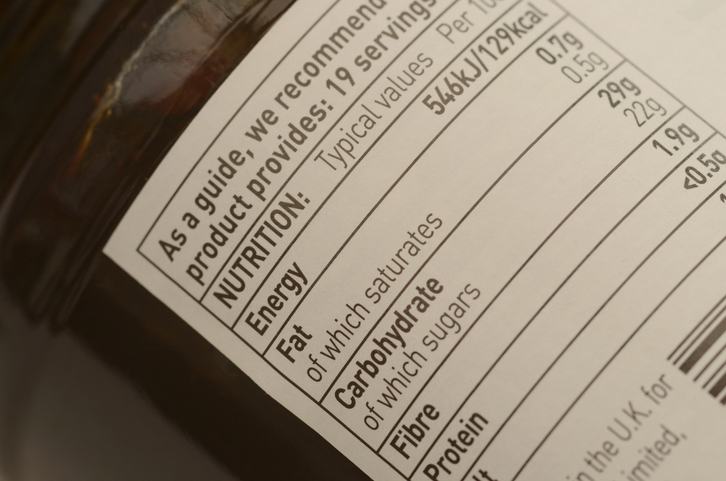
While updating the NPM is an important step for public health, the new model’s reliance on free sugars could potentially mean a significant implementation gap for industry, government and regulators. The current scoring system works well because most information required for calculating the current NPM is readily available on back-of-pack labels. The central challenge now is that, in contrast to total sugars (used in the current NPM), the declaration of free sugars content is not a legal requirement on packaging. Moreover, there is no agreed method for measuring free sugars in a lab - their presence varies depending on processing levels, which are frequently undisclosed, and there is no product-level reference table available for free sugars content.
Consequently, distinct views have emerged on how to move forward. Food industry representatives, such as the Institute of Grocery Distribution (IGD), have highlighted the practical challenges of these calculations, suggesting they may not be feasible with current data. In contrast, the government maintains that existing information can be used to estimate these values.
To avoid this disagreement stalling necessary action to reduce obesity, Nesta will endeavour to test these calculation methods objectively. This should highlight whether it’s likely that ingredient-level data on weight and processing is needed, or if a ‘good enough’ answer can be reached using immediately available information. Our ultimate goal is to ensure food environment policies remain viable and are as effective as possible.
Nesta will conduct an analysis to test the sensitivity of the 2018 NPM, focusing primarily on free sugars calculation. By analysing a large sample of retail product data, we will determine how different sets of assumptions can be used to resolve missing data challenges, mapping the practical landscape and assessing how calculation variations affect scoring.
The work is structured across three core components:
- Sensitivity testing: to evaluate how missing data on ingredient processing and quantity affects free sugars calculations, testing multiple sets of assumptions to map calculation alignment or discrepancy.
- Real-world product analysis: to apply these approaches to real-world products to observe how calculation (mis)alignments vary by food and drink categories.
- Data availability assessment: to determine the numbers of products within a standard retail portfolio where calculations are straightforward versus those hindered by data gaps, providing actionable insights on using standard back-of-pack data for the 2018 NPM calculation.
Throughout the project we will seek to work in close collaboration with key stakeholders to test data hypotheses and fill critical information gaps. This will ensure a transparent and neutral evidence-based foundation for the work and its findings.
 www.nesta.org.uk/project/assessing-the-viability-and-reliability-of-the-2018-nutrient-profile-model-free-sugar-calculations-using-retail-back-of-pack-labels/