
THE RT HON DAVID CAMERON MP
THE PRIME MINISTER
Britain's world leading tech sector gives us a competitive edge that is not just transforming our daily lives but also our economy - we are becoming a true Tech Nation. It's also helping us to transform the way Government works.
We've seen some real successes with Tech City UK, but this is not purely about specialist startups and digital businesses. Tech is truly transforming the way we do all kinds of business, right across the country.
Indeed, more than half of all digital jobs now aren't in high-tech hubs of London or Leeds – they are in businesses of every description, in every sector – in those that would not traditionally be considered digital businesses at all.
The digital economy is expanding at an extraordinary pace, creating jobs and fuelling growth in regions and cities up and down the country, adding some £87 billion to the economy and every year, providing security and opportunities for working people.
This Government has stood foursquare behind the country's digital transformation, backing new technologies, investing in infrastructure, supporting investment, removing barriers to innovation and helping upgrade the digital skills that a modern work force needs. And we will continue to back, with all levers at our disposal, the innovation, creativity and entrepreneurship that is redefining and strengthening the modern British economy.
FOREWORD

EILEEN BURBIDGE CHAIR, TECH CITY UK
AND PARTNER, PASSION CAPITAL
GERARD GRECH CEO, TECH CITY UK
Welcome to Tech Nation 2016, our second annual publication on the UK's digital economy.
Fuelled by a strong digital growth trajectory, the UK is an evolving Tech Nation. The 2016 report demonstrates the clear contribution that digital technology is making to employment in digital and traditional industries, and to the economy across the country.
The opportunities are enormous if we are to fulfil our potential as a nation driven by digital tech innovation. The journey starts with knowing what we have to offer and where we need to get to, working with a highly supportive Government to create the optimum set of conditions for continued growth.
The response from the digital community and their eagerness to share data in support of Tech Nation 2016 has been phenomenal. The entire team at Tech City UK would like to thank our research partner Nesta, and project partners GrowthIntel, Github, AngelList, Burning Glass, Crunchbase, dealroom.co, Frontier Economics, InvestNI, Leeds Data City, Meetup & Multiple and everyone who participated in this research project.
The picture painted by Tech Nation 2016 reflects the core values of the digital mindset – always changing, innovating and optimising. The result is an industry worth celebrating.

GEOFF MULGAN CEO, NESTA
Digital technologies are unlike any others – they change everything businesses do. That's why, as this research confirms, digital jobs and activity are becoming ever more important in traditionally non-digital areas of the economy – from retail to financial services and the public sector.
The team at Nesta led on the collection and analysis of the data and drafting of Tech Nation 2016, crunching the numbers behind the fantastic graphics in this report. It's a snapshot of a fast-expanding area of the economy, with over 80% of clusters seeing growth in turnover or jobs in the last year alone.
Perhaps the most striking message in Tech Nation 2016 is the extent to which digital skills now bring big rewards, with the average digital job offering salaries over £15,000 higher than non-digital jobs. Nesta has been campaigning for many years to promote digital making and coding skills, promoting computer science in the curriculum, and code clubs of all kinds. Here is powerful evidence that I hope will persuade parents and young people to take up digital skills – and not just help themselves to earn and achieve more, but also help the UK become even more of a technological powerhouse in the future.
ABOUT US
We believe the UK is the best place to start and grow a digital business. Through dedicated programmes, we support the digital technology sector's need for skills, infrastructure, and investment. We gather and share vital information, which informs policymakers. We give digital entrepreneurs a national and local voice. Our work accelerates the growth of digital businesses, in London and across the UK, at all stages of their development. You can see our work in action with Future Fifty, Digital Business Academy, Tech Nation, Upscale, the Tech Nation Visa Scheme, Tech Nation Cluster Alliance, HQ-UK and Northern Stars, as developed and delivered by our sister team Tech North. We aim to make life better for the digital entrepreneur.
techcityuk.com
[email protected]
@TechCityUK
This work contains statistical data from ONS which is Crown Copyright. The use of the ONS statistical data in this work does not imply the endorsement of the ONS in relation to the interpretation or analysis of the statistical data. This work uses research datasets which may not exactly reproduce National Statistics aggregates.
Nesta...
Nesta is the UK's innovation foundation. We help people and organisations bring great ideas to life. We do this by providing investments and grants and mobilising research, networks and skills. We are an independent charity and our work is enabled by an endowment from the National Lottery. Nesta is a registered charity in England and Wales 1144091 and Scotland SC042833.
www.nesta.org.uk
[email protected]
@nesta_uk
CORE PROJECT PARTNERS
A row of partner logos is displayed, including:
- GrowthIntel
- AngelList
- CrunchBase
- GitHub
- Meetup
- Burning Glass
- dealroom.co
- sevenHILLS
- THE DATA CITY
- frontier economics
- MULTIPLE
- Invest Northern Ireland
ACKNOWLEDGEMENTS
Tech City UK project team: Emma Swift, Lyndsay Baker, Pan Demetriou, Ryan Procter, Lindy Pyrah, Francesca Cahill, Amita Parikh and Elizabeth Diaferia.
Nesta research team and report authors; Hasan Bakhshi, Juan Mateos-Garcia and Madeleine Gabriel with assistance from John Davies and Stian Westlake and thanks to Matthew Williams for his input to the analysis.
Thanks to our data partners for assistance in the research; Tom Gatten, Prashant Majmudar and Sam Stephens at GrowthIntel; Andy Chung at Angellist; Hal Bonella at Burning Glass; Gene Teare at Crunchbase; Ian Hathaway at Frontier Economics; the open data from Meetup and Github; David Greer and Maureen McGuigan at InvestNI; and Alex Craven at Leeds Data City.
Thanks to our communication partners; Katy Turner at Multiple, Nick Giles, Eleanor Dampier, Jack Davies and Matthew Rowlands at Seven Hills, and to our copywriters Hattie Garlick and Helena Smith. Thanks to our designers Robin Worrall at Seven Hills, and Zarina Holmes.
Thanks to The Hon. Ed Vaizey MP, HM Minister for Culture, Communications and Creative Industries; The Rt Hon. Lord Maude, Minister of State for Trade and Investment; Liam Maxwell, GDS; Daniel Korski and Chris Hopkins at No.10 Downing Street; Andrea Young and Harry Lund, Department for Culture, Media and Sport, for their support on the Tech Nation project.
We'd like to extend our gratitude to the 1800+ businesses who completed our survey, and to the 36 businesses featured as case studies. Thanks to the 135 community partners (see page 124) who helped promote the survey and to those who participated in the research interviews (see page 117). Thanks to those who provided additional oversight and content for the report; our Tech North colleagues (Laura Bennett, Paul Lancaster and Coral Grainger), the Tech Nation Alliance who continue to support their local tech communities, Jon Bradford, Jonathan Brech, Louize Clarke, Emma Cheshire, Neil Cocker, Jamie Coleman, John Connolly, Charlotte Crossley, Bonnie Dean, Matt Desmier, David Dunn, Katie Gallagher, Tony Hart, Mike Hall, David Hartley, Michael Hayes, Liz Humphries, Matt Johnston, Phil Jones, Fiona Lettice, Kevin McManus, Nick Milner, Jim Moodie, Steve Orr, Joe Pearce, Emma Philpott, Ben Ravilious, Alan Scrase, Lee Strafford, Nick Sturge, Sophie Taylor, Steve Wainwright, Amy Watson, Tristan Watson, Doug Ward and Belinda Waldock.
Introduction
Digital tech businesses are at the heart of the UK economy and are playing an important role in driving growth. The impact of this dynamic sector is profound, predicated on a fundamental belief in innovation and doing things differently. Digital tech businesses are transforming the employment landscape, driving productivity, and reimagining traditional industries.
Last year, Tech City UK conducted one of the most comprehensive, community-led research projects into the growth of digital tech clusters. This was the start of an iterative process designed to reflect the constantly evolving nature of technology in the UK's business landscape.
In partnership with Nesta for Tech Nation 2016, Tech City UK has tracked clusters to gauge the UK's Digital Tech Economy. To get a comprehensive insight into digital employment, we've analysed data from Government, job advertisements and official ONS data, allowing us to understand the impact of the digital technology economy on wider business, employment, and economic trends. A full breakdown of the methodology behind the research can be found on page 114.
The findings of this report shows the continued growth of digital tech clusters. These findings are focused upon the areas where digital technology businesses are having the greatest impact: economic growth, employment, productivity and the digital disruption of traditional industries.
At the heart of Tech Nation 2016 is a detailed overview of the sector specialisms, benefits and challenges in 27 notable digital tech clusters across the country. Details of the unique DNA of each cluster sit alongside headline statistics around employment, turnover and average salaries. This is designed to compare and contrast the key digital tech clusters that shape our Tech Nation. The report also turns its eyes to the sectors in which the UK is excelling.
Ultimately, Tech Nation 2016 demonstrates a Digital Tech Economy that is transforming British business for individuals, cities and the country as a whole. We hope this landmark report is an invaluable resource for the network of professionals, entrepreneurs, investors and policymakers that make up the digital tech community.
What's New
Tech Nation 2016 has applied the data-driven approach of the first Tech Nation to a much wider set of information. Led by Nesta, this year's report analyses data from the Office of National Statistics, Burning Glass online job ad database, GitHub, Meetup users and GrowthIntel's pioneering website analysis. The result is an unprecedented understanding of the Digital Tech Economy and its impact on employment, productivity and GVA.
WHAT IS THE DIGITAL TECH ECONOMY?
Includes all jobs within the Digital Tech Industries and digital tech jobs within traditionally non-digital industries.
An illustration shows two groups of figures:
- Digital Tech Industries: Includes businesses operating in digital technology according to the ONS, such as computer programming activities, publishing of computer games, etc.
- Traditional (non-digital) Industries: Includes businesses operating in non-digital industries according to the ONS, such as wholesale and retail trade, education, etc.
There are three job types within the Digital Tech Economy*
An illustration shows three categories of digital jobs:
- Native: Digital job in digital tech industries (Front-end developer in a software company)
- Support: Non-digital job in digital tech industries (Marketing Manager in a data analytics company)
- Transformer: Digital job in traditional industries (Data Scientist in the public sector)
For further information, see methodology, pg 116-119
WHAT IS A DIGITAL TECH BUSINESS?
Business that provides a digital technical service/product/platform/hardware, or heavily relies on it, as its primary revenue source.
They are active across the economy
Three key areas of activity for digital tech businesses:
1. Operating in digital sectors
Apps and software development, data management and analytics
2. Disrupting traditional industries
Public sector, film and broadcast media
3. Creating new sub-sectors
Edtech, Fintech
*See Nesta/Tech UK (2015), 'Dynamic mapping of the information economy industries'
In Numbers
DIGITAL TECH ECONOMY
1.56m jobs¹
Job creation 2.8x faster than the rest of the economy (2011-2014)
£50,000 Almost £50K average advertised salary²
36% higher than the national advertised average²
41% Digital Tech Economy jobs exist within traditionally non-digital industries¹
DIGITAL TECH INDUSTRIES
£161bn turnover³
32% Grew 32% faster than the rest of the economy (2010-2014)³
58,000 identified active digital tech businesses⁴
TOP SECTORS⁴
- 17% App & Software Development
- 12% Data Management & Analytics
- 11.5% Hardware, Devices & Open Source Hardware
80% Over 80% of Tech Nation clusters have seen growth in digital turnover, digital jobs and advertised digital salaries (See page 32 for definition of cluster)
58,000 digital tech businesses found across the UK
DIGITAL TURNOVER TOTAL³
- LONDON £62.4bn
- READING & BRACKNELL £10bn
- BRISTOL & BATH £8.2bn
- MANCHESTER £2.2bn
- BIRMINGHAM £1.8bn
DIGITAL TURNOVER GROWTH (2010-2014)³
- SOUTHAMPTON +180%
- TRURO, REDRUTH & CAMBORNE +153%
- DUNDEE +129%
- LONDON +101%
- BRISTOL & BATH +53%
DIGITAL JOBS¹ TOTAL
- LONDON 328,223
- MANCHESTER 51,901
- READING & BRACKNELL 40,440
- BIRMINGHAM 36,768
- BRISTOL & BATH 36,547
PRODUCTIVITY³ (SALES PER WORKER)
- BRISTOL & BATH £296,340
- LONDON £205,390
- READING & BRACKNELL £196,800
- SOUTHAMPTON £171,720
- OXFORD £170,460
DIGITAL SALARY² GROWTH (2012-2015)
- LEEDS +29%
- NEWCASTLE & DURHAM +27%
- SUNDERLAND +26%
- EDINBURGH +26%
- SOUTHAMPTON +25%
¹ Annual Population Survey (2014)
² Burning Glass (2015) refers to advertised digital salary
³ Annual Business Survey/Business Structure Database (2014)
⁴ GrowthIntel (2015)
Key Findings
Building on last year's inaugural report, Tech Nation 2016 is the most ambitious data-driven mapping of the UK's digital tech ecosystem to date.
Our key findings are:
01 DIGITAL TECH: DRIVING THE ECONOMY
Digital Tech Industries are a key contributor to the UK's economy, growing faster in turnover, GVA and productivity than the rest of the economy.
02 FROM DIGITAL INDUSTRIES TO DIGITAL ECONOMY
Digital technologies are transforming businesses beyond the Digital Tech Industries.
03 GROWING OPPORTUNITY: DIGITAL TALENT AND SKILLS
The Digital Tech Economy is creating highly paid employment opportunities across the UK, almost three times faster than the rest of the economy.
04 THE POWER OF CLUSTERS AND NETWORKS
Clusters of digital tech businesses are playing a key role in supporting growth across UK cities, growing at a faster rate than their local economies.
Glossary
GVA
Gross Value Added measures the contribution of each economic unit by estimating the value of an output (goods or services) less the value of inputs used in that output's production process. It is used in the estimation of GDP
Turnover
The amount of money taken by a business over a year
01 DIGITAL TECH: DRIVING THE ECONOMY
The Digital Tech Economy is powering growth; employment is rising faster than the rest of the economy. Digital Tech Industries have seen fast growth in turnover and GVA.
JOBS: DIGITAL TECH ECONOMY
There are 1.56 million jobs in the Digital Tech Economy, covering all jobs in the Digital Tech Industries and digital tech jobs within Traditional Industries. This continues to outpace the rest of the economy: jobs grew 11.2% between 2011 and 2014 which is 2.8x faster than the rest of the workforce.
These jobs can be found across the country; 80% are based outside of London.
2.8x faster job growth in the Digital Tech Economy compared to the rest of the economy
1.56m jobs exist within the Digital Tech Economy
Job growth
- Digital Tech Economy jobs 11%
- Jobs in other sectors 4%
VOLUME: DIGITAL TECH BUSINESSES
Data from GrowthIntel identifies 58,000 active digital tech businesses within the UK. 75% of these operate outside of London.
75% digital tech businesses are outside London
GROWTH: DIGITAL TECH INDUSTRIES
In 2014, the GVA of the nation's Digital Tech Industries was estimated at £87 billion. Between 2010 and 2014 GVA grew 27%, adding an additional £19 billion to the economy (see chart 1). Over the same period, jobs in the Digital Tech Industries were 90% more productive than jobs in the economy overall.
Similarly, there has been rapid growth in turnover. In 2014, turnover of Digital Tech Industries was estimated at £161 billion. It grew 32% faster than the national average between 2010 and 2014.
32% faster growth in digital turnover than the national average (2010 - 2014)
£161bn estimated turnover of the Digital Tech Industries in 2014
Chart 1. Digital Tech Industries' GVA and growth year-on-year
A bar chart shows the Gross Value Added (GVA) for Digital Tech Industries from 2008 to 2014, along with yearly growth percentages.
- 2008: £69.2Bn (Yearly growth: -2.9%)
- 2009: £67.2Bn (Yearly growth: +1.1%)
- 2010: £68Bn (Yearly growth: +5.2%)
- 2011: £71.5Bn (Yearly growth: +4.2%)
- 2012: £74.5Bn (Yearly growth: +8.7%)
- 2013: £81Bn (Yearly growth: +7.4%)
- 2014: £87Bn
Source: Tech City UK, Nesta, ABS, 2015
02 FROM DIGITAL INDUSTRIES TO DIGITAL ECONOMY
The Digital Tech Economy is increasingly diverse, encompassing digital tech businesses and digital workers across all industries. Our analysis shows the extent to which digital innovation is having an impact across businesses and the people working for them.
The Digital Tech Economy is increasingly diverse. We have identified 16 different sectors within the UK (see chart 2); App & software development, Data management & Analytics, and hardware, Devices & open source hardware are currently the nation's largest.
New 'born digital' sub-sectors, such as games and cloud computing are forming. Equally exciting are the innovations that are evolving within traditional industries and forming new sub-sectors, like Fintech and Healthtech.
From the industrial revolution to the emergence of mass production techniques, the adoption of new technologies in non-tech industries has driven productivity throughout history. Today, in the UK, we are witnessing one of these periods of change.
According to data from GrowthIntel (see chart 3), 44.7% of businesses operating within marketing, PR and design, and 33% operating within film and broadcast media, are now primarily digital technology businesses. Likewise, 18% of businesses in publishing, 17% in consumer goods and 16.5% in sports and leisure are also digital technology businesses.
45% of marketing, PR and design companies are now digital tech businesses
Chart 2. Sector specialisms of digital tech businesses (% breakdown)
A horizontal bar chart showing the percentage breakdown of sector specialisms for digital tech businesses.
- App & software development: 16.7%
- Data management & analytics: 11.7%
- Hardware, devices & open source hardware: 11.3%
- Enterprise software & cloud computing: 8.5%
- Telecommunications & networking: 8.3%
- Digital advertising & marketing: 8.2%
- E-commerce & marketplace: 7.7%
- Digital media & entertainment: 6.3%
- Cyber security: 5.1%
- Fintech: 5.0%
- Gaming: 1.8%
- Online gambling: 1.3%
- Social networks: 1.3%
- IoT & connected devices: 0.9%
- Edtech: 0.6%
- Healthtech: 0.4%
Source: Tech City UK, Nesta, GrowthIntel, 2015
Chart 3. Proportion of digital tech businesses in traditional industries (%)
A horizontal bar chart showing the proportion of digital tech businesses found within various traditional industries.
- Marketing, PR and design: 44.7%
- Science and high tech: 38.5%
- Aerospace and defence: 35.9%
- Film and broadcast media: 33.2%
- Electronics equipment and instruments: 32.4%
- Electronic parts and components: 20.1%
- Publishing and print: 18.4%
- Consumer goods: 17.9%
- Sports and leisure: 16.5%
- Civic and social organisations: 15.7%
- Consultancy and advice: 15.6%
- Business support services: 15.1%
- Pharmaceuticals and biotech: 14.7%
- Facilities services: 13.1%
- Agriculture, fisheries and industrial food productions: 12.7%
- Professional training: 12.5%
- Finance: 11.1%
- Arts and music: 11%
- Recruitment and HR: 9.9%
- Education: 9.1%
Source: Tech City UK, Nesta, GrowthIntel, 2015
Chart 4. Digital Tech Economy jobs breakdown
Two pie charts illustrating the breakdown of jobs in the Digital Tech Economy.
Digital Tech Economy: Job breakdown
- Native: 22%
- Support: 37%
- Transformer: 41%
Digital Tech Jobs (excluding support): Industry breakdown
- Digital Tech Industries: 48%
- Traditional Industries: 52%
See page 9 for further information
Source: Tech City UK, Nesta, APS, 2015
Of the 1.56 million jobs in the Digital Tech Economy, 41% or as many as 648,000 digital tech jobs are within traditional industries (see chart 4) Within these industries digital tech jobs make up a growing percentage of their workforce, notably in Programming and broadcasting and Scientific research (see chart 5) Looking at total numbers, the top employers of digital tech jobs include the Public Sector and Education (see chart 6).
This trend highlights how traditional industries are adapting to society's growing reliance on digital technology. E-commerce is one powerful example. Looking at the GrowthIntel data, over 40% of traditional fashion businesses now use E-commerce to expand their trade, along with 32% of consumer goods businesses and 14% of food and drink retail businesses.
41% of Digital Tech Economy jobs are within traditional Industries
Online job market data from Burning Glass reveals a similar story. Between 2012 and 2015, the number of adverts for digital jobs across traditional industries grew by 34%. Those within the health sector, which witnessed the greatest growth, rose by an astonishing 109.8% (see chart 7). Public administration, defence and social security rose by 90.3% and financial services by an almost as impressive 78.5%.⁴
In 2015 over a third of digital job adverts were in traditional industries. Chart 8 shows the largest volume of digital job adverts were for roles within Financial service activities, Education and Human health services.
Chart 5. % proportion of digital tech jobs within traditional industries
A horizontal bar chart showing the percentage proportion of digital tech jobs within various traditional industries.
- Programming and broadcasting activities: 10.3%
- Scientific research and development: 9.1%
- Financial service activities, except insurance and pension funding: 8.8%
- Insurance, reinsurance and pension funding, except compulsory social security: 7.9%
- Activities auxiliary to financial services and insurance activities: 7.8%
- Advertising and market research: 7.4%
- Electricity, gas, steam and air conditioning supply: 6.8%
- Repair and installation of machinery and equipment: 6.6%
- Activities of head offices; management consultancy activities: 6.4%
- Libraries, archives, museums and other cultural activities: 4.9%
Source: Tech City UK, Nesta, APS, 2014
Chart 6. Digital jobs within the top 5 employers of digital talent (traditional industries)
A vertical bar chart showing the number of digital jobs within the top 5 employers of digital talent in traditional industries.
- Public Administration¹: 65,870
- Education: 60,520
- Financial Services²: 48,010
- Retail³: 34,210
- Other financial services and insurance activities: 31,370
¹ public administration and defence; compulsory social security
² except insurance and pension funding
³ except motor vehicles and motorcycles
Source: Tech City UK, Nesta, Burning Glass
Chart 7. Digital ad growth in traditional industries (according to the online job market)
A bar chart showing the percentage growth in digital ad jobs within traditional industries.
- Healthcare: 110%
- Public administration: 90%
- Financial services: 79%
- Office administration: 70%
- Advertising and Market Research: 59%
Source: Tech City UK, Nesta, Burning Glass
⁴ This analysis is based on the SIC divisions of businesses advertising for digital jobs. It is important to note that that this data is not available for all job ads. In the most recent period analysed (January-September 2015), there is industry data for 39% (375,000) of the digital job ads we have analysed.
Chart 8. Top 10 traditional industries by volume of online digital job adverts
A horizontal bar chart showing the top 10 traditional industries by volume of online digital job adverts.
- Financial service activities, except insurance and pension funding: 12415
- Education: 12406
- Human health services: 9712
- Public administration and defence, compulsory social security: 8465
- Insurance, reinsurance and pension funding, except compulsory social security: 7757
- Retail trade, except for motor vehicles and motorcycles: 7384
- Advertising and market research: 6136
- Office administrative, office support and other business support activities: 5682
- Scientific research and development: 4707
- Activities auxiliary to financial services and insurance activities: 4394
Source: Tech City UK, Nesta, Burning Glass, 2015
03 GROWING OPPORTUNITY: DIGITAL TALENT AND SKILLS
Across the UK, the Digital Tech Economy is creating job opportunities for a range of skill sets.
AVERAGE DIGITAL TECH SALARIES
According to Burning Glass data, over a million online adverts for digital jobs were placed in the UK in the first nine months of 2015. The average advertised salary for these roles was just under £50,000, 36% higher than the national average. An evident 'digital premium' exists across the country (see chart 9) and salaries are rising.
36% higher advertised salary for digital roles, than the national average
80% of clusters have seen advertised digital salaries rising faster than the local average
The average advertised salary for digital roles grew by 13% between 2012 and 2015, 19% faster than the average advertised salary for non-digital roles. This pattern occurs across the country: 77% of the digital tech clusters we identified have seen average advertised salaries for digital roles increase by more than 10%, with the highest advertised salary growth occurring in Leeds (see chart 10).
In fact, advertised digital salaries rose faster than the local average in 8 out of 10 of the cluster areas we analysed, in particular Belfast, Southampton and Glasgow.
Demand for digital talent shows no signs of slowing. In fact, while the need for specific roles varies, 43% of digital tech businesses say that skills shortages are limiting their growth.
Chart 9. Advertised digital salaries (top 20 Tech Nation clusters)
A horizontal bar chart showing advertised digital salaries for the top 20 Tech Nation clusters.
- London: £58,978
- Reading & Bracknell: £51,575
- Edinburgh: £51,227
- Southampton: £48,127
- Leeds: £47,959
- Oxford: £47,499
- Cambridge: £47,185
- Glasgow: £46,854
- Bristol & Bath: £45,501
- Manchester: £45,205
- Newcastle & Durham: £44,068
- Brighton: £43,274
- Cardiff & Swansea: £42,926
- Liverpool: £42,153
- Ipswich: £42,097
- Sheffield & Rotherham: £42,058
- Birmingham: £41,538
- Exeter: £39,695
- Sunderland: £39,000
- Dundee: £38,069
Source: Tech City UK, Nesta, Burning Glass, 2015
Chart 10. Highest growth of advertised digital salaries among Tech Nation clusters (2012-2015)
A horizontal bar chart showing the highest growth percentages for advertised digital salaries among Tech Nation clusters.
- Leeds: +29%
- Newcastle & Durham: +27%
- Sunderland: +26%
- Edinburgh: +26%
- Southampton: +25%
Source: Tech City UK, Nesta, Burning Glass
Chart 11. Difference between advertised digital salary growth and advertised local average salary growth, 2012-2015 (Top 10 clusters by growth)
A horizontal bar chart showing the difference in salary growth for digital jobs compared to local average salaries in top 10 clusters.
- Belfast: 14.8%
- Southampton: 12.7%
- Glasgow: 11.6%
- Truro, Redruth & Camborne: 9.5%
- Oxford: 8.4%
- Bristol: 8.1%
- Leeds: 7.9%
- Manchester: 7.9%
- Exeter & Newton Abbot: 7.4%
- Edinburgh: 7.2%
Source: Tech City UK, Nesta, Burning Glass, 2015
ATTRACTING DIGITAL TECH TALENT
To counter the skills demand, UK digital tech businesses are recruiting from diverse sources (see chart 12).
Areas such as Reading & Bracknell, Cambridge and London in particular, are hiring from overseas, including both EU and non-EU countries. Whilst in Brighton, Bournemouth & Poole, and Bristol & Bath, experienced talent from local cluster is cited as the most common source. Cambridge, Oxford, Edinburgh and Sheffield are also more reliant on local universities for talent.
Yet despite the role of universities in supplying technical talent, more than 50% of the universities within the identified clusters produce fewer computer science graduates than the national average given the size of their student base.
Dundee, Ipswich, Sunderland, Glasgow, Belfast and Bournemouth & Poole all produce disproportionate numbers of computer science graduates. Bristol & Bath, Cambridge, Reading & Bracknell, Newcastle, Norwich and Oxford, meanwhile punch above their weight in maths and physics disciplines, which are also integral to the Digital Tech Economy.
20% of digital tech businesses say that EU countries (beyond the UK) are an important source of talent
1 in 3 digital tech businesses source talent from local universities
Chart 12. Where digital tech businesses source talent (Tech Nation 2016 Survey)
A horizontal bar chart showing where digital tech businesses source talent.
- Experienced talent from a local cluster: 53.1%
- Universities in a local cluster: 35.8%
- Online: 35.2%
- Experienced talent from the UK: 29.7%
- EU: 19.3%
- Recruiters: 18.4%
- UK Universities: 15.6%
- Non-EU: 15.6%
Source: Tech City UK, Nesta, Tech Nation 2016 Survey
DIGITAL TECH SPECIALISMS FOR INDIVIDUALS
Informal or in-house training remains the most common source of skills development, with universities ranking relatively low (see chart 13).
Again, there is a divergence among clusters. Businesses in Leeds (77%), Norwich (73%) and Reading & Bracknell (71%) heavily rely on company in-house training for skills development. Meanwhile self-taught learning is viewed as most important in Edinburgh (81%) and Glasgow (79%).
In software development activities, this 'self-taught' cohort is enabled' in large part by online open source platforms. Github is the key open-source platform for developers, with more than 18,000 active users in the UK. Chart 14 reveals high user activity is concentrated around the key digital tech clusters such as London, Cambridge, Manchester, Oxford, Brighton, Bristol & Bath, Edinburgh, Glasgow and Belfast.
Chart 13. Importance of sources for skills development according to digital tech businesses
A horizontal bar chart showing the importance of different sources for skills development as reported by digital tech businesses.
- Self-taught programming: 66.5%
- In-house training: 60.1%
- Mentoring: 43.7%
- Online training: 38.6%
- Local universities: 26.8%
- External training: 15.6%
- UK Universities: 15.4%
Source: Tech City UK, Nesta, Tech Nation 2016 Survey
Chart 14. Concentration of programming language specialisation among Github users in Tech Nation clusters*
A heatmap showing the concentration of programming language specialisation among Github users across various Tech Nation clusters. The colors indicate the level of specialization, with darker shades representing higher concentration.
Clusters (Rows):
Belfast, Birmingham, Brighton, Bristol & Bath, Cambridge, Cardiff & Swansea, Dundee, Edinburgh, Exeter & Newton Abbot, Glasgow, Hull, Ipswich, Leeds, Liverpool, London, Manchester, Newcastle & Durham, Norwich, Oxford, Sheffield & Rotherham, Southampton, Sunderland, Worcester & Malvern.
Programming Languages (Columns):
C, C++, CoffeeScript, Go, HTML, Java, JavaScript, Makefile, Objective-C, PHP, Python, Perl, R, Ruby, Scala, Shell, Tex, VimL.
Specialisation Scale: Logged values from 0 to 2.5.
Source: Tech City UK, Nesta, GitHub, 2015
* Bournemouth & Poole, Truro, Redruth & Camborne, and Reading & Bracknell not included due to limited data
04 THE POWER OF CLUSTERS AND NETWORKS
The Digital Tech Economy is leading the growth of local economies across the country.
THE NATIONAL PICTURE
Tech Nation 2016 profiles 27 key digital tech clusters across the UK, examining how their concentration of talent and networks are accelerating the growth of digital tech businesses.¹
The majority of digital tech clusters have seen growth in recent years. In fact, in almost all clusters, the local Digital Tech Industries have outpaced all others on nearly every economic measure (see chart 15).
This list doesn't include all areas with high levels of digital business intensity or employment in the UK, especially those whose tech sectors are dominated by large businesses. Some examples of such areas include Guildford and Aldershot, Wycombe and Slough, Luton and Watford and Milton Keynes and Aylesbury. Some commentary on these areas is provided in the cluster profiles section.
Chart 15. Economic performance of Tech Nation clusters (% of clusters that experienced growth 2010-2014)
A horizontal bar chart showing the percentage of Tech Nation clusters that experienced growth in various economic indicators between 2010-2014.
- Digital GVA: 86%
- Jobs: 82%
- Turnover: 89%
- Productivity²: 57%
² Based on Turnover per worker
Source: ABS/BSD
| 16. Top five leading indicators of cluster growth |
BUSINESS DENSITY³ (compared to UK) |
TURNOVER: TOTAL |
TURNOVER: GROWTH |
JOBS: TOTAL |
PRODUCTIVITY⁴ (sales per worker) |
| Reading & Bracknell |
1.3x |
£62.4bn London |
+180% Southampton |
328,223 London |
£296,340 Bristol & Bath |
| Brighton |
1.3x |
£9.96bn Reading & Bracknell |
+153% Truro, Redruth & Camborne |
51,901 Manchester |
£205,390 London |
| Cambridge |
1.1x |
£8.16bn Bristol & Bath |
+129% Dundee |
40,440 Reading & Bracknell |
£196,800 Reading & Bracknell |
| Bournemouth & Poole |
1.1x |
£2.2bn Manchester |
+101% London |
36,768 Birmingham |
£171,720 Southampton |
| London |
1.1x |
£1.8bn Birmingham |
+63% Leicester |
36,547 Bristol & Bath |
£170,460 Oxford |
³ Digital tech businesses as % of total businesses
⁴ The amount of money taken by a business over a year
CLUSTERS: THE KEY BENEFITS
In our Tech Nation survey, respondents told us their UK location brings a number of benefits (see chart 17). The most popular benefit, cited by 64% of businesses, is access to local networks.
This is particularly clear in Edinburgh (where 87% of businesses cite it as a benefit) Birmingham (82%) Bristol & Bath (81%).
Chart 17. Key Benefits across Tech Nation clusters (national average %)
A horizontal bar chart showing the national average percentage of businesses reporting various benefits across Tech Nation clusters.
- Access to local networks: 64%
- Access to commercial property: 63%
- Access to talented labour: 55%
- Access to experienced talent: 53%
- Access to business support: 51%
- Access to trading partners: 40%
- Strong cluster brand: 40%
- Access to private finance: 26%
- Access to public finance: 24%
Source: Tech City UK, Nesta, Tech Nation 2016 Survey
Chart 18. Key Benefits within Tech Nation clusters (local average %)
A heatmap showing the local average percentage of businesses reporting various benefits across different Tech Nation clusters. The benefits are listed on the x-axis, and clusters on the y-axis. The intensity of color indicates the percentage reporting the benefit, from 0% (lightest) to 100% (darkest).
Clusters (rows): Belfast, Birmingham, Bournemouth & Poole, Brighton, Bristol & Bath, Cambridge, Cardiff & Swansea, Edinburgh, Glasgow, Hull, Ipswich, Leeds, Liverpool, London, Manchester, Newcastle & Durham, Norwich, Oxford, Reading & Bracknell, Sheffield & Rotherham, Southampton, Sunderland, Truro, Redruth & Camborne.
Benefits (columns): Local networks, Private funding, Public funding, Commercial property, Talent education, Talent industry, Business Support, Cluster brand, Trading partners.
04 THE POWER OF CLUSTERS AND NETWORKS
MEETUPS
Networks and face-to-face contact are essential to successful digital tech clusters. Data from Meetup can be used to understand this activity. Almost 180,000 individuals across the country have been involved in digital tech Meetups.
There has been an explosion in Meetup activity since 2010, with 1,359 digital tech groups currently active in the UK. These groups cover an ever-expanding set of technologies and industries (see chart 19).
Meetup data also reveals local areas of expertise: Edtech is strong in Oxford and Bristol & Bath, software development in Cambridge, gaming in Brighton, E-commerce in Liverpool, and information security in Belfast and Norwich.
Clusters may be a local phenomenon, but for today's businesses, networks know no such boundaries, UK digital tech businesses currently collaborate across the UK and internationally. In fact, Meetup data reveals a considerable level of cross-cluster networking taking place. The figures confirm London's centrality to the UK's Digital Tech Economy, and its strong ties with Bristol & Bath, Brighton and Cambridge. However, they also show regional networking in areas such as the North West and the West Midlands.
Chart 19. Diversity of Meetup group topics 2006-2015
A stacked bar chart showing the diversity of Meetup group topics from 2006 to 2015. Each year is represented by a bar, stacked with different colors representing various topics.
Topics (legend):
- Web Development
- Software Development
- Digital Media & Marketing
- General Tech
- Data Infrastructure
- Entrepreneurship
- Other
- Mobile Development
- Data Analytics
- E-Commerce
- Product & Project Management
- Open Source
- User Experience & Design
- Bitcoin
- Fintech
- Edtech
- Games Development
- Healthtech
- Information Security
- Makers, Hackers & IoT
Source: Tech City UK, Nesta, Meetup, 2015
INTERNATIONAL COLLABORATION
Many digital tech businesses are international in their outlook: around a third have partners and suppliers in the EU or North America. There are divergences among clusters, however. For instance, Cambridge and Norwich-based businesses have comparatively greater numbers of partners in North America. Cambridge and Oxford have more partners in Asia than other clusters do, while London and Oxford are the clusters most likely to work with partners from EU countries.
Analysis of the markets in which UK digital tech businesses operate reveals a similar pattern (see chart 20). Again, Oxford and Cambridge have the highest proportions of businesses selling internationally.
1 in 6 customers of digital tech businesses in Cambridge are in North America
Chart 20. Top clusters trading internationally (% businesses with customer base in named location)
A stacked bar chart showing the percentage of businesses with a customer base in Europe, North America, and Asia, for various clusters.
Clusters (x-axis, from left to right):
Manchester, Oxford, Cambridge, Belfast, Oxford, Cambridge, Belfast, Reading & Bracknell, Newcastle.
Regions (stacked bars):
- Europe: Represented by the bottom portion of each bar.
- Manchester: 14%
- Oxford: 13.8%
- Cambridge: 13.4%
- Belfast: 16.9%
- North America: Represented by the middle portion of each bar.
- Cambridge: 16.7%
- Oxford: 14.6%
- Belfast: 11.7%
- Asia: Represented by the top portion of each bar.
- Cambridge: 10.8%
- Reading & Bracknell: 4%
- Newcastle: 2%
Source: Tech City UK, Nesta, Tech Nation 2016 Survey
FUELLING GROWTH: DRIVING PRODUCTIVITY
A woman in a white long-sleeved top is seated at a table, looking at a laptop while holding a phone to her ear. A coffee cup is visible on the table.
SUSTAINING THE SUCCESS OF THE DIGITAL TECH SECTOR
The UK's Digital Tech Economy has great strengths. Now, the entire digital tech ecosystem, including entrepreneurs, educators, central and local policymakers must work together to identify and address key challenges. By doing so, the community can secure the future success of digital tech businesses across the country. Our research suggests five areas of focus for these efforts.
01 SKILLING UP A DIGITAL WORKFORCE
02 FOCUS ON FINANCE
03 DEVELOPING THE UK'S DIGITAL INFRASTRUCTURE
04 CULTIVATING CLUSTERS
05 DEVELOPING DATA
01 SKILLING UP A DIGITAL WORKFORCE
Around 40% of digital entrepreneurs say that they face challenges finding skilled digital workers.
Young people are the digital workforce of the future and steps must be taken to equip them with the skills required for jobs in digital tech businesses. Here's how:
- Introduce the younger generation to the possibilities of a career in digital, through initiatives such as Dorset's annual 'Digital Wave' conference for schools
- Connect pupils and industry: for example, The Studio school and sixth form college in Liverpool offers students placements and mentorships in coding and entrepreneurship
- Expand apprenticeships into digital careers, learning from examples such as the NextGen Skills Academy, where leading employers in the visual effects and video games industry have designed higher apprenticeships, and from the social media apprenticeship scheme run by The Juice Academy in the North West
The UK's digital companies are thirsty for talent
Digital businesses make considerable use of local universities to recruit talent, but entrepreneurs highlight that graduates sometimes lack, either the business skills, or the most up-to-date technical skills, needed to go straight into work.
Universities need to address these concerns by:
- Collaborating with businesses to respond to talent gaps, and using local employment demand data to shape courses
- Securing industry accreditation of courses
- Embedding digital skills such as quantitative analysis, data visualisation and computing into other disciplines
Inevitably the demand for digital skills in fast-growing, skills-intensive sectors within the Digital Tech Industries will outstrip domestic supply.
For this reason, digital businesses have stressed that access to international, as well as local, talent is vital to their growth.
The UK's migration policy is central to bridging the skills gap, and the Tech Nation Visa scheme is a direct response to the needs of digital tech businesses.
02 FOCUS ON FINANCE
Just under 40% of digital entrepreneurs surveyed say that they face challenges as a result of limited access to finance.
Encouraging and publicising private investment opportunities in the Digital Tech Economy would help to address this, particularly at later stage funding rounds, and particularly outside London.
Public sector funding schemes meanwhile, (whether local, national, UK or EU), have greatest effect when they take into account the following:
- The 'minimum viable product' is more important for a digital startup than a 'prototype'
- To innovate, digital companies often need to prioritise salaries over capital expenditure
- Company growth cannot be measured by job creation alone, since that will not take into account the use of freelancers
30% of digital companies plan to seek angel and VC funding in the next year
03 DEVELOPING THE UK'S DIGITAL INFRASTRUCTURE
High-speed connectivity remains a priority for digital tech businesses. 28% of digital tech businesses in our Tech Nation 2016 survey reported digital infrastructure as a challenge.
Ofcom data on availability of superfast broadband to households demonstrates that broadband services are still unevenly distributed across the UK.
Better data on business access to broadband and other digital infrastructure would enable cities to ensure that companies get the connectivity they need in order to thrive and grow.
Chart 21. Challenges to growth according to digital tech businesses
A horizontal bar chart showing the percentage of digital tech businesses reporting various challenges to growth.
- Access to talent: 43%
- Access to finance: 39%
- Low sector awareness: 29%
- Digital infrastructure: 28%
- Economic climate: 27%
- Commercial property: 23%
- Physical infrastructure: 22%
- Lack of advice & mentorship: 16%
- Regulation: 11%
Source: Tech City UK, Nesta, Tech Nation 2016 Survey
A map of the United Kingdom, illustrating regional data distribution, with darker shades indicating areas with higher broadband coverage.
TTWA figures are the average of the broadband coverage in the area's postcodes. Data: Ofcom Infrastructure Report, 2015.
04 Cultivating Clusters
Throughout the country, policymakers must prioritise the development of their local clusters. This means fostering the development of the whole innovation system from talent and research to finance, infrastructure and collaboration - as noted in Tech Nation 2015 and a number of Nesta's reports on the topic.
Strategies should include:
- Listening to businesses in the cluster, small and large alike, and encouraging collaboration between corporates and startups
- Supporting local networks and anchor institutions such as universities, to increase the visibility of clusters and their individual businesses, in order to better publicise their needs
- Investing in attracting and retaining talent, thereby encouraging loyalty from local graduates and young entrepreneurs
- Involving digital tech businesses in wider initiatives to promote innovation at a local level
The Tech City UK Best Practice series will highlight other methods through which clusters around the UK have been nurtured successfully.
Evolution of SIC codes is key to tracking growth
05 Developing Data
Good quality data is key. Without it, local and national policymakers cannot make informed policy decisions or analyse their impact.
However, the Standard Industrial Classification (SIC) codes used in official statistics struggle to keep speed with dynamic sectors like the Digital Tech Industries. Addressing this is a priority for Professor Charles Bean's on-going review of UK economic statistics. Without a better SIC we cannot make robust comparisons over time.
In the meantime, however, policymakers need to make good use of alternative classifications – as shown in this report.
The Open Data Institute is already championing innovation in industry and society through open data. A growing body of evidence points towards the economic benefits of open data, and the trend of public and private organisations opening up their data sets should be encouraged to continue.
Profiling the UK Digital Landscape
In Tech Nation 2016, digital tech clusters have been identified based on quantitative indicators such as the density of digital tech businesses within an area (GrowthIntel), economic performance and growth rates (ONS and other data sources), and the level of community activity (Meetup). This has been supplemented by qualitative insight such as the existence of networks and supporting organisations engaged with local tech businesses, the presence of startup/entrepreneurial communities and participation in the Tech Nation interviews and survey conducted for this report.
Digital tech businesses are concentrated in clusters across the country. The following pages profile 27 of these clusters, identifying the conditions for growth driving the individual success stories of each and every one.
EAST OF ENGLAND
* CAMBRIDGE
* IPSWICH
* NORWICH
LONDON & SOUTH EAST
* BRIGHTON
* LONDON
* OXFORD
* READING & BRACKNELL
* SOUTHAMPTON
THE MIDLANDS
* BIRMINGHAM
* LEICESTER
* WORCESTER & MALVERN
NORTH OF ENGLAND
* HULL
* LEEDS
* LIVERPOOL
* MANCHESTER
* NEWCASTLE & DURHAM
* SHEFFIELD & ROTHERHAM
* SUNDERLAND
NORTHERN IRELAND
* BELFAST
SCOTLAND
* DUNDEE
* EDINBURGH
* GLASGOW
SOUTH WEST
* BOURNEMOUTH & POOLE
* BRISTOL & BATH
* EXETER & NEWTON ABBOT
* TRURO, REDRUTH & CAMBORNE
WALES
* CARDIFF & SWANSEA
East of England
A region known for agriculture, energy and high technology, the East of England is also notable for its research excellence. It is home to Cambridge, arguably the oldest technology cluster in the UK, alongside two of the largest collections of research parks in the UK in both Cambridge and Norwich, and BT's Global research park in Ipswich. Driven by Cambridge, the region continues to have strengths in high technology and hardware. These leading clusters are supported by industrial parks in Southend and Brentwood, and technical services in Harlow and Bishop's Stortford.
NOTABLE COMPANIES
ARM
GeneAdviser
ito
naked.i
Pisonar wines
Rainbird
Sookio
IN NUMBERS
DIGITAL TECH ECONOMY JOBS
152,136
PROPORTION OF JOBS IN THE EAST OF ENGLAND WITHIN THE DIGITAL TECH ECONOMY
5.2%
DIGITAL GVA*
£4.6bn
DIGITAL CONTRIBUTION TO REGIONAL GVA
5.3%
DIGITAL DENSITY
18.3%
*Total output (goods or services) minus value of inputs e.g. cost of production, taxes, subsidies (Source:ABS/BSD)
NOTABLE CLUSTERS
1. CAMBRIDGE
2. IPSWICH
3. NORWICH
Cambridge
DIGITAL TECH ECONOMY JOBS
18,532
ADVERTISED DIGITAL SALARY
£47,194
DIGITAL DENSITY¹
21%
DIGITAL GVA²
£649 million
DIGITAL GROWTH
+1% EMPLOYMENT
2011-2014
+46% TURNOVER
2010-2014
+12% GVA
2010-2014
One of the oldest and most well-established clusters in the UK, Cambridge has produced 15 digital tech companies worth over a billion dollars. It is the third most densely populated cluster of digital tech businesses in the UK, and a top ten cluster for digital employment and productivity.
Although it has growing specialisms in IoT & connected devices and Software development, Cambridge also has an established history in cyber security, hardware, electronics and data, highlighted by the large numbers of R programmers based in the area (according to Github data).
Digital tech businesses benefit from a highly-skilled talent pipeline from the University of Cambridge and a wide-reaching support community. Organisations like Cambridge Network (School for Scale Ups) and Cambridge Wireless also support growing startups, as do Agritech-East, Cambridge Cleantech and One Nucleus.
Small businesses are benefitting from the growing number of Ideaspace incubators, the University's hub for early stage innovation, the St Johns Innovation Centre (Europe's first incubator) and the Judge Business School's Accelerate Cambridge. Meanwhile, leading corporates such as Amazon, HP, Huawei and more recently Apple have also established a presence there.
CHALLENGES
% of digital tech businesses
NOTABLE UNIVERSITIES & COLLEGES
ANGLIA RUSKIN UNIVERSITY
UNIVERSITY OF CAMBRIDGE
NOTABLE COMPANIES
APPLE
ARM
SPOTIFY
Access to commercial property 45%
Limited access to finance 43%
Weak economic climate 31%
BENEFITS
% of digital tech businesses
Access to local networks 86%
Access to graduate-level talent 80%
Access to business support 80%
JELENA ALEKSIC
Founder & CEO
GeneAdviser

Our ambition is to streamline Europe's fragmented genetic testing market, using technology to create an international online marketplace, linking test laboratories with clinicians and enabling them to find, order and pay for tests.
There is so much support for early-stage businesses in Cambridge, from Cambridge University Entrepreneurs to Innovation Forum and EnterpriseWISE. Being part of the Accelerate Cambridge programme at the Judge Business School has helped us to navigate the Cambridge biotech scene.
The whole business ecosystem in the town has been of huge benefit. So many different people have been happy to give us their time, expertise and support to get us going.
"A lot of serendipity happens around Cambridge - you bump into someone in a coffee shop and people just talk about their businesses; It's probably one of the best network communities anywhere"
CHARLES COTTON
Cambridge Phenomenon
NOTABLE SECTORS
* IOT & CONNECTED DEVICES
* ENTERPRISE SOFTWARE & CLOUD COMPUTING
* APP & SOFTWARE DEVELOPMENT
* DATA MANAGEMENT & ANALYTICS
Ipswich
DIGITAL TECH ECONOMY JOBS
9,981
ADVERTISED DIGITAL SALARY
£42,096
DIGITAL DENSITY¹
16%
DIGITAL GVA²
£190 million
DIGITAL GROWTH
+3% EMPLOYMENT
2011-2014
+24% TURNOVER
2010-2014
+16% GVA
2010-2014
Ipswich is a growing digital cluster encompassing new startups such as ITO World, Sharedband and Silicon Safe, as well as more established tech companies like HTK and Smart421. Ipswich has strengths in a number of sectors, including Digital advertising & marketing, Telecommunications & networking, Fintech and Photonics.
BT has a research centre in the area, which has helped to attract talent, some of whom have left to start or join new digital tech businesses nearby. BT shares its campus with companies including Cisco, Huawei and Ericsson, and has strong links with leading universities including Cambridge and MIT.
Community engagement has helped drive the growth of Ipswich's digital industry. The IP Network and SyncIpswich hold regular Meetups, while the Eastern Enterprise Hub provides resources for aspiring entrepreneurs. Innovation Martlesham also houses digital tech businesses including Nokia, CIP Technologies and Zog Energy.
University Campus Suffolk works with partners across the country to provide STEM skills development and meet employer demand.
CHALLENGES
% of digital tech businesses
NOTABLE UNIVERSITIES & COLLEGES
UNIVERSITY CAMPUS SUFFOLK
NOTABLE COMPANIES
BT
CISCO
HUAWEI
Weak digital infrastructure 47%
Limited access to finance 33%
Low sector awareness 32%
BENEFITS
% of digital tech businesses
Access to local networks 58%
Access to commercial property 57%
Access to graduate-level talent 53%
DAVE LADBROOK
COO
Itoworld
ITO World specialises in the provision of high quality, public transport data feeds that power the major journey planning and navigation apps and data visualisation software.
Data is collected through ticketing systems, sensors attached to vehicles, traffic signals, surveys, focus groups and social media. All of this can help us understand how the transport system operates and how people behave.
Ipswich has been key to our success. It has given us low cost offices and close proximity to universities and London. We have quick access to international markets and have been able to recruit excellent people, while the local digital tech community and BT's R&D campus have provided skilled talent at senior levels.
"There's telecoms here, there's big data, there's Fintech; there's quantum technology. There's lots happening here and a lot of it is absolutely world class."
IAN BUXTON
Chair, Innovation Martlesham
NOTABLE SECTORS
* E-COMMERCE & MARKETPLACE
* DIGITAL MEDIA & ENTERTAINMENT
* DIGITAL ADVERTISING & MARKETING
* APP & SOFTWARE DEVELOPMENT
Norwich
DIGITAL TECH ECONOMY JOBS
5,306
ADVERTISED DIGITAL SALARY
£36,098
DIGITAL DENSITY¹
16%
DIGITAL GVA²
£148 million
DIGITAL GROWTH
+3% ADVERTISED SALARY
2012-2015
+22% TURNOVER
2010-2014
+22% GVA
2010-2014
Known for its thriving agriculture, food and energy industries, Norwich is an early-stage cluster, exhibiting growing strengths in Digital advertising & marketing as well as Telecommunications & networking.
Local successes include mobile payment business Proxama, artificial intelligence company Rainbird, and location technology entrepreneurs creators Axon Vibe.
Norwich's leading benefit, however, is its access to talent. The area has the third highest concentration of science and research parks in the country and two leading universities. Norwich University of the Arts provides a strong supply of graduates in video games art, design, digital photography, and film. The University of East Anglia, meanwhile, turns out graduates in a range of subjects including computer science, software engineering and film, television and media studies.
Meetup groups include Hot Source, Norfolk Developers and SyncNorwich, which now claims over 1,000 members. Co-working spaces such as Whitespace are providing affordable space for startups, while the challenge of access to finance is slowly being addressed with schemes such as Grants4Growth.
CHALLENGES
% of digital tech businesses
NOTABLE UNIVERSITIES & COLLEGES
NORWICH UNIVERSITY OF THE ARTS
UNIVERSITY OF EAST ANGLIA
NOTABLE COMPANIES
AVIVA
NAKED WINES
VIRGIN MONEY
Weak digital infrastructure 46%
Limited access to finance 43%
Low sector awareness 39%
BENEFITS
% of digital tech businesses
Talent education 66%
Access to local networks 64%
Access to commercial property 55%
JAMES DUEZ
Co-founder and Chairman
Rainbird Technologies
At Rainbird, we've developed an award-winning Artificial Intelligence technology, which helps experts take scarce human knowledge on any subject, and encode it in a software system to make that knowledge accessible to many just when they need it. The technology handles uncertainty and is powerful enough to provide solutions even in the absence of data.
Norwich is a fantastic city to live and to prototype new innovations, with great talent flowing from its two universities (UEA & NUA). It's why we're headquartered here, and have invested in supporting the local tech community, cofounding Norfolk Developers and Whitespace.
"Quite a few companies have prototyped services in Norwich... it's a mini ecosystem that's very good for building something new, trialling it in the community and then proving it."
NEIL GARNER
Founder, Proxama and Whitespace
NOTABLE SECTORS
* DIGITAL ADVERTISING & MARKETING
* TELECOMMUNICATIONS & NETWORKING
* E-COMMERCE & MARKETPLACE
* APP & SOFTWARE DEVELOPMENT
London & South East
London & the South East has led the UK's growth into a Tech Nation. From the original 'tech belt' in Berkshire to the creative tech centre of Brighton, the region has long played host to multinationals and fast-growing companies alike from Google, Microsoft, Cisco and Amazon, to Future Fifty's Deliveroo, TransferWise and Peak. Tech hubs across London have attracted a broad range of high tech and digital tech companies, while the digitally dense areas of Reading & Bracknell and Brighton & Hove are supported by growing clusters Southampton and Guildford. Other notable hubs include Wycombe, Slough, Milton Keynes, Swindon and Luton.
NOTABLE COMPANIES
Brandwatch Social Media Monitoring
DATASIFT
graze nature delivered
pavegen
SwiftKey
TransferWise
IN NUMBERS
DIGITAL TECH ECONOMY JOBS
619,722
PROPORTION OF JOBS IN LONDON & THE SOUTH EAST WITHIN THE DIGITAL TECH ECONOMY
7%
DIGITAL GVA*
£59bn
DIGITAL CONTRIBUTION TO REGIONAL GVA
12%
DIGITAL DENSITY
20%
*Total output (goods or services) minus value of inputs e.g. cost of production, taxes, subsidies (Source:ABS/BSD)
NOTABLE CLUSTERS
1. BRIGHTON
2. LONDON
3. OXFORD
4. READING & BRACKNELL
5. SOUTHAMPTON
Brighton
DIGITAL TECH ECONOMY JOBS
15,536
ADVERTISED DIGITAL SALARY
£43,274
DIGITAL DENSITY¹
23%
DIGITAL GVA²
£744 million
DIGITAL GROWTH
+11% EMPLOYMENT
2011-2014
+17% TURNOVER
2010-2014
+42% GVA
2010-2014
A large digital creative industry has cemented Brighton's status as a leading cluster. It has one of the most dense populations of digital tech businesses in the UK and the largest digital workforce within non-digital industries.
Digital technology success stories include Brandwatch, a social media monitoring company that raised $33 million in 2015, Brilliant Noise, and Crunch Accountancy.
The talent pool from local industry is often cited as a leading benefit by businesses in the area. The University of Sussex also generates talent, while the Sussex Innovation Centre encourages the development of young entrepreneurs.
Over 80% of workers cite the community as a major benefit, as the city hosts a number of industry events including Develop, dConstruct and the Brighton Digital Festival. It is also home to organisations and co-working spaces that foster growth such as MDHUB and The FuseBox, a Barclays Eagle Lab, and Natwest's Hatch.
Wired Sussex, in particular, has been pivotal in establishing a cooperative data centre that helps businesses access high-speed broadband across the cluster.
CHALLENGES
% of digital tech businesses
NOTABLE UNIVERSITIES & COLLEGES
UNIVERSITY OF BRIGHTON
UNIVERSITY OF SUSSEX
NOTABLE COMPANIES
AMERICAN EXPRESS
BRANDWATCH
EDF
Weak digital infrastructure 38%
Access to commercial property 36%
Limited access to finance 34%
BENEFITS
% of digital tech businesses
Access to graduate-level talent 78%
Access to local networks 78%
Positive cluster brand 72%
SIMON RILEY
Founder & CEO
Maker Club
We have created our own technology and developed a range of technology courses that teach a mix of professional 3D design software, basic electronics and the coding language C++. We want everyone to be able to design, code and print their own products.
Being based in Brighton has been key to our growth. The city is close to London and full of creative businesses. A huge range of great networking events make connecting with them easy. Originally, Wired Sussex supported us and their accelerator program, FuseBox24, gave us free space and mentoring. Both Brighton and Sussex universities help young companies access graduates for reduced commercial rates, so talent is never an issue.
"Someone once said that collaboration is one of Brighton's biggest competitive advantages and I think that's absolutely right"
PHIL JONES
CEO, Wired Sussex
NOTABLE SECTORS
* DIGITAL ADVERTISING & MARKETING
* GAMING
* APP & SOFTWARE DEVELOPMENT
* DATA MANAGEMENT & ANALYTICS
London
DIGITAL TECH ECONOMY JOBS
328,223
ADVERTISED DIGITAL SALARY
£58,978
DIGITAL DENSITY¹
20%
DIGITAL GVA²
£35.9 billion
DIGITAL GROWTH
+13% EMPLOYMENT
2011-2014
+101% TURNOVER
2010-2014
+127% GVA
2010-2014
The home of 13 tech 'unicorns' ($1bn valued businesses), the capital tops the Tech Nation rankings for levels of digital employment, average salary in digital tech businesses and growth in GVA from the Digital Tech Industries.
Support for London's digital businesses comes from a wide range of venture capital firms as well as a growing number of incubator and accelerator options, including Seedcamp, Entrepreneur First, Upscale, MassChallenge, Collider, Startup BootCamp, Ignite, Wayra, Techstars, Microsoft Ventures, Future Fifty and the London Stock Exchange's ELITE.
Over 90 co-working spaces provide homes for startups, including Central Working, Level39, Trampery, Second Home, TechHub, White Bear Yard, HereEast, WeWork and Warner Yard. Tech hotspots include East London's Tech City, King's Cross, Camden, and Tech City Croydon.
Among London's digital tech superstars are Transferwise, which is changing the world of finance, Deliveroo, currently disrupting the global e-commerce industry and Unruly, now dominating the ad tech scene.
With an array of community organisations including Coadec, Innovate Finance, Open Data Institute, FabLab, 3beards, Tech London Advocates and Tech City UK, as well as a colossal Meetup network membership of over 100,000, the London digital tech ecosystem is the beating heart of the UK digital sector.
CHALLENGES
% of digital tech businesses
NOTABLE UNIVERSITIES & COLLEGES
IMPERIAL COLLEGE LONDON
KING'S COLLEGE LONDON
LONDON SCHOOL OF ECONOMICS
UNIVERSITY COLLEGE LONDON
NOTABLE COMPANIES
AMAZON
FACEBOOK
GOOGLE
Limited access to finance 41%
Access to commercial property 38%
Weak economic climate 22%
BENEFITS
% of digital tech businesses
Access to local networks 69%
Access to commercial property 64%
Access to graduate-level talent 52%
LAURENCE KEMBALL-COOK
Founder
Pavegen
In the urban environment, wind and solar energy are inefficient. Our tiles, however, are perfect for this environment, harnessing energy from constant footfall.
We are based in Kings Cross, a thriving epicentre of technological growth from which we can be connected to Europe within hours via Eurostar. Many of our global clients travel through Kings Cross on a regular basis as a result.
London is a tremendous city that pioneers innovation and our location remains pivotal to Pavegen's entrepreneurial journey. It is our aim to become an integral part of urban infrastructure. When we scale our new product, Kings Cross Station would be the perfect place to deploy our technology.
"In many ways, London is a natural home for our business: having maintained its position as the leading global financial centre for several centuries."
RHYDIAN LEWIS
CEO, RateSetter
NOTABLE SECTORS
* FINTECH
* SOCIAL NETWORKS
* DIGITAL ADVERTISING & MARKETING
* DIGITAL MEDIA & ENTERTAINMENT
Oxford
DIGITAL TECH ECONOMY JOBS
24,680
ADVERTISED DIGITAL SALARY
£47,498
DIGITAL DENSITY¹
19%
DIGITAL GVA²
£1.2 billion
DIGITAL GROWTH
+32% EMPLOYMENT
2011-2014
+42% TURNOVER
2010-2014
+19% GVA
2010-2014
A major hub for research, Oxford has produced a number of highly successful startups including DeepMind, BioCarbon Engineering, Natural Motion and Sophos, which had the largest IPO in UK history last year at a £1bn valuation.
Oxford has a history of expertise in Healthtech and Edtech and still has the largest Meetup groups in these sectors in the UK. It specialises in Cyber security, App & software development and Enterprise software & cloud computing.
Oxford businesses have a strong international focus with 40% of their customers based outside the UK. As a growing cluster, it has the second highest demand for digital tech jobs, and the second highest concentration of digital tech employment.
With University of Oxford and Oxford Brookes University nearby, the cluster's digital tech businesses are the most likely to cite talent from universities as a leading benefit. Local networks are also important, such as the Oxford Startups Meetup, Digital Oxford, the Said Business School's co-working space, the Oxford Launchpad, and Isis Innovation.
CHALLENGES
% of digital tech businesses
NOTABLE UNIVERSITIES & COLLEGES
OXFORD BROOKES UNIVERSITY
UNIVERSITY OF OXFORD
NOTABLE COMPANIES
NATURAL MOTION
RM EDUCATION
SOPHOS
Weak digital infrastructure 33%
Low supply of affordable property 33%
Limited access to finance 30%
BENEFITS
% of digital tech businesses
Access to local networks 74%
Access to graduate-level talent 61%
Access to business support 59%
EKATERINA DAMER
Co-founder
Prolific Academic
There is a growing need to understand how digital tech is impacting our lives. Research on the use and effects of digital media is booming. Our startup allows researchers to draw on a large participant pool instantly and to find the right participants fast, for any type of online research.
Being based in Oxford has been useful in three ways. We've benefited from valuable discussions with students and faculty at the the University of Oxford and Oxford Entrepreneurs. Being part of Oxford's Startup Incubator connected us with potential investors and to trusted law and accounting firms. Finally, working from the Saïd Business School's Oxford Launchpad has led to very fruitful introductions.
"Unique to Oxford is the availability of talent, the quality of life that you can offer people, connections with universities that allow really different, special collaborations."
JIM MOODIE
Founder, Edspire and BPM Logic, and organiser of Oxford Startups Meetup
NOTABLE SECTORS
* CYBER SECURITY
* APP & SOFTWARE DEVELOPMENT
* ENTERPRISE SOFTWARE & CLOUD COMPUTING
* GAMING
Reading & Bracknell
DIGITAL TECH ECONOMY JOBS
40,440
ADVERTISED DIGITAL SALARY
£51,576
DIGITAL DENSITY¹
23%
DIGITAL GVA²
£6.4 billion
DIGITAL GROWTH
+19% EMPLOYMENT
2011-2014
+23% TURNOVER
2010-2014
+40% GVA
2010-2014
Reading & Bracknell continues to score highly on a number of key economic indicators: it has one of the largest digital tech workforces and some of the highest salaries in the country, as well as the highest density of digital tech businesses.
Reading is developing specialisms in Enterprise software and cloud computing, as well as Data management and analytics. Notable tech startups include Fairsail, Altitude Angel, Blue Sense Networks, and Fantoo.
The cluster is driven by international talent, with 29% of businesses stating they employ non-EU citizens – the highest figure in the UK. The University of Reading and a high level of experienced industry talent have also made the cluster attractive internationally. It has a reputation for innovation in science and enterprise and recently received funding for a multi-million pound big data analytics centre, created to address environmental problems.
Incubators and collaboration hubs are helping the community. Co-working space GROW@GreenPark hosts tech events like the Festival of Digital Disruption, while local platform ConnectTVT advocates for the growth of digital companies and workers in the region through initiatives and Meetup groups
CHALLENGES
% of digital tech businesses
NOTABLE UNIVERSITIES & COLLEGES
BRACKNELL AND WOKINGHAM COLLEGE
UNIVERSITY OF READING
NOTABLE COMPANIES
CISCO
HUAWEI
MICROSOFT
Limited talent supply 38%
Limited access to finance 38%
Low sector awareness 27%
BENEFITS
% of digital tech businesses
Access to commercial property 77%
Access to local networks 71%
Access to graduate-level talent 56%
TIM BARKER
CEO
Datasift
DataSift provides technology allowing you to capture, analyse and act on all types of human generated data – from social networks, blogs, news articles, likes and discussions.
We have been in Reading for 8 years and our first round of funding came from Finance South East. The University's Enterprise Centre had contractual terms that were perfect for a startup and was well connected with organisations like Business Link.
Reading is well connected but without the high costs of London. Thanks to Oracle and Symantec, there is a very large skilled workforce and talent pool while the University means we are connected to the next generation of stars.
"I think there hasn't been very much in terms of getting the digital community together. We're setting up digital collectives which will be for like-minded people that want to work together and drive change."
LOUIZE CLARKE
Founder, ConnectTVT
NOTABLE SECTORS
* CYBER SECURITY
* ENTERPRISE SOFTWARE & CLOUD COMPUTING
* DATA MANAGEMENT & ANALYTICS
* DIGITAL MEDIA & ENTERTAINMENT
Southampton
DIGITAL TECH ECONOMY JOBS
24,975
ADVERTISED DIGITAL SALARY
£48,126
DIGITAL DENSITY¹
18%
DIGITAL GVA²
£1.2 billion
DIGITAL GROWTH
+65% PRODUCTIVITY³
2010-2014
+180% TURNOVER
2010-2014
+87% GVA
2010-2014
With an impressive 180% growth in average turnover between 2010 and 2014, and over 80% of digital tech businesses trading overseas, Southampton is now a rapidly growing cluster. Its growing specialisms include Digital media & entertainment, Hardware & devices, and Data management.
One of the cluster's key assets is the University of Southampton. Its Science Park provides workspace for digital tech and science businesses and hosts The Catalyst Centre, which offers additional support for entrepreneurs.
The university is a founding member of the SETsquared Partnership, ranked by UBI Global as the leading University Business Incubator. Part of a wider network within the UK, the organisation helps entrepreneurs, academics, and early stage startups grow into successful commercial businesses. Southampton Solent University also supports students starting their own businesses.
Events and Meetups for members of the digital tech industry abound, ranging from monthly programming socials to Startup Weekend, while recently opened Venture Cowork provides space for early stage startups.
NOTABLE UNIVERSITIES & COLLEGES
SOUTHAMPTON SOLENT UNIVERSITY
UNIVERSITY OF SOUTHAMPTON
NOTABLE COMPANIES
JP MORGAN
SKANDIA
SSE PLC
NICK ALLOTT
CEO & Co-founder
Nquiringminds
Nquiringminds is an IoT company developing SmartCities technologies. In November 2015, we were shortlisted in the inaugural Innovate UK Small Business Innovation Awards for our Open City Data IoT Platform (OCDP) that we are currently working with Southampton City Council, Liverpool City Council and Cambridge County Council.
Our location has helped us on this path to success. The University of Southampton is among the top 15 research-led universities in the UK. Through its SETSquared centre, we've been introduced to partner companies and received mentoring. It helps with everything from grant applications to business review panels and provides vital support to the digital tech community here.
"Southampton is well connected both physically and electronically. The extensive road, motorway, rail, ferry and airport links mean that mainland Europe and the rest of the UK are within easy reach, as well as nearby national parks; it makes Southampton very attractive, pleasant and rewarding"
ALAN SCRASE
SETsquared at the University of Southampton Business Incubation Manager
NOTABLE SECTORS
* HARDWARE, DEVICES & OPEN SOURCE HARDWARE
* DATA MANAGEMENT & ANALYTICS
* E-COMMERCE & MARKETPLACE
* DIGITAL MEDIA & ENTERTAINMENT
The Midlands
As the birthplace of the industrial revolution, the Midlands has a long history in innovation and continues in the Digital Tech Economy; pioneering telecommunications, leading in the automotive industry, developing the jet engine, and contributing to integrated circuit and semiconductor research. With local universities providing a strong supply of talent, Birmingham leads the region. Yet digital tech is making its mark across the region; Great Malvern's cyber security centre, Leicester's digital expertise, Nottingham's early stage tech community, and Leamington Spa's growing gaming hub 'Silicon Spa'. Available property, university talent and a growing number of networks are enabling growth across the region.
NOTABLE COMPANIES
CONTROLHQ
DEEP SECURE Secure Information Sharing Products
FLASH STICKS
MAJESTIC
participoll.
timeetc
Whisk
IN NUMBERS
DIGITAL TECH ECONOMY JOBS
206,433
PROPORTION OF JOBS IN THE MIDLANDS WITHIN THE DIGITAL TECH ECONOMY
4.4%
DIGITAL GVA*
£6.4bn
DIGITAL CONTRIBUTION TO REGIONAL GVA
4.4%
DIGITAL DENSITY
16.4%
*Total output (goods or services) minus value of inputs e.g. cost of production, taxes, subsidies (Source:ABS/BSD)
NOTABLE CLUSTERS
1. BIRMINGHAM
2. LEICESTER
3. WORCESTER & MALVERN
Birmingham
DIGITAL TECH ECONOMY JOBS
36,768
ADVERTISED DIGITAL SALARY
£41,538
DIGITAL DENSITY¹
18%
DIGITAL GVA²
£1.13 billion
DIGITAL GROWTH
+15% EMPLOYMENT
2011-2014
+17% TURNOVER
2010-2014
+31% GVA
2010-2014
The UK's second largest city, Birmingham is in the top five employers of digital talent. With a history of advanced manufacturing, Birmingham is now building emerging specialisms including Digital advertising & marketing and Enterprise software & cloud computing.
The city's affordable property and local talent pool are key, enabling home-grown startups to flourish while also attracting major companies, such as ASOS, to the area. The Custard Factory creative quarter, and the area of Digbeth in which it is set, provide a growing hub for businesses. In March, the Innovation Birmingham Campus for the tech and startup community will also open iCentrum, a new £8m development to showcase collaborative technology.
Support from local networks, such as Silicon Canal, is strong, with 82% of survey respondents ranking it as a key benefit, while events like hackathon Launch48 provide support and mentorship.
Businesses in Birmingham are also the second most likely in the UK to source their talent from local universities, which include University of Birmingham, Aston University and Birmingham City University.
CHALLENGES
% of digital tech businesses
NOTABLE UNIVERSITIES & COLLEGES
ASTON UNIVERSITY
BIRMINGHAM CITY UNIVERSITY
UNIVERSITY OF BIRMINGHAM
NOTABLE COMPANIES
ASOS
HSBC
VIRGIN MEDIA
Limited access to finance 39%
Low sector awareness 28%
Weak economic climate 22%
BENEFITS
% of digital tech businesses
Access to commercial property 85%
Access to local networks 82%
Access to graduate-level talent 60%
DIXON JONES
Marketing Director
Majestic
Majestic is a specialist marketing search engine which maps the internet and how pages link together.
Being in Birmingham, and in particular based in the Innovation Birmingham campus, has had immense benefits for us.
We have close ties with the local universities, helping us to recruit the best of the UK's graduating developer talent.
We have also been able to collaborate on European and privately funded research.
Birmingham's great rail links to London and airport connections to most European capitals has also proved useful, while being here has improved staff retention rates and the quality of their work/life balance.
"The message we need to continue to spread far and wide is that startup cash goes a lot further in Birmingham, and the local skills pool makes it an obvious choice to base a tech business."
DR DAVID HARDMAN MBE
CEO of Innovation Birmingham
NOTABLE SECTORS
* ENTERPRISE SOFTWARE & CLOUD COMPUTING
* DIGITAL ADVERTISING & MARKETING
* ONLINE GAMBLING
* TELECOMMUNICATIONS & NETWORKING
Leicester
DIGITAL TECH ECONOMY JOBS
21,273
ADVERTISED DIGITAL SALARY
£38,293
DIGITAL DENSITY¹
15%
DIGITAL GVA²
£386 million
DIGITAL GROWTH
+29% EMPLOYMENT
2011-2014
+63% TURNOVER
2010-2014
+50% GVA
2010-2014
A newcomer to the Tech Nation list, Leicester exhibited nearly 30% growth in digital employment. The city's history in textiles, hosiery and manufacturing has established a flourishing creative sector, which has contributed talent to the evolving tech ecosystem.
Leicester's success stories include public sector CMS provider Jadu.net, audience polling system ParticiPoll.com and mobile market research app CrowdLab.com. IBM also recently located their Client Innovation Centre in the heart of the city.
Their growth has been supported by local networks and organisations such as Leicester Tech Startups, a group created by entrepreneurs who meet regularly to showcase products and exchange ideas. New co-working spaces continue to appear to support businesses, including the Dock, and De Montfort University's new co-working space.
A reliable stream of talent is emerging from the city's universities, including De Montfort University, Loughborough University and the University of Leicester, ranked in the top 1% of universities worldwide. The University stages events for aspiring entrepreneurs and contributes a significant number of graduates to technology companies.
NOTABLE UNIVERSITIES & COLLEGES
DE MONTFORT UNIVERSITY
LOUGHBOROUGH UNIVERSITY
UNIVERSITY OF LEICESTER
NOTABLE COMPANIES
HASTINGS DIRECT
IBM
SANTANDER
BEN RAVILIOUS
Co-founder
ParticiPoll
ParticiPoll lets you drop audience polls into existing PowerPoint presentations. Audience members vote by visiting the presenter's personal voting URL, then the results appear live in the presentation.
ParticiPoll was one of the first companies to be born of Leicester's digital tech startup community, which we helped found in 2013. Networks of other entrepreneurs were pivotal in helping us to work out, quickly, which direction to take the company in.
We have had a huge amount of advice, inspiration and moral support from fellow businesses. I think that is the city's key strength. The universities and Leicester City Council have also been very helpful with work spaces, funding and encouragement.
"The city council just get it in Leicester. With a City Mayor there's strong leadership and some really dedicated officers who know how important it is to get startups access to the right kind of funding."
JIM WILLS
Co-founder, Crowdlab
NOTABLE SECTORS
* E-COMMERCE & MARKETPLACE
* ENTERPRISE SOFTWARE & CLOUD COMPUTING
* SOCIAL NETWORKS
* FINTECH
The Midlands
Worcester & Malvern

ROBIN KING
CEO
Deep-Secure

Deep-Secure
Secure Information Sharing Products
Deep-Secure designs software that enables the exchange of very sensitive information between computer networks of different security levels.
Worcestershire benefits from good road and rail links with London, Birmingham and Manchester, enabling customers to reach us easily. Malvern's cluster, meanwhile, possesses a diversity of technology expertise. The Malvern Cyber Security Cluster, for instance, involves 80 SMEs cooperating together.
It is also a great place to live – an Area of Outstanding Natural Beauty, home to a vibrant theatre, good restaurants, shops and close to the historic city of Worcester.
"Having a concentration of tech small companies in one place like Malvern allows them to network with each other. They form trusted partnerships where they can discuss, share and learn from each other."
EMMA PHILPOTT
Founder, UK Cyber Security Forum
Worcester & Malvern – sometimes referred to as 'Cyber Valley' – is a leading cluster for the development of cyber security products and services, influenced by its close proximity to GCHQ in Cheltenham and the SAS in Hereford.
The cluster recorded a 71% increase in employment between 2011 and 2014 – the second highest growth rate in the UK. Productivity in the area is also high, with a 48% growth in turnover and 56% growth in GVA during the same period.
A number of the cluster's cyber security companies began as spinouts from QinetiQ, the privatised arm of the Government's Defence Evaluation and Research Agency, including Deep-Secure and D-RisQ.
The digital tech community is supported by organisations such as Key IQ Ltd, which runs a co-working space encouraging networking and collaboration. The Malvern Cyber Security Cluster, a group made up of more than 80 small companies, also cooperate on initiatives that improve the cyber security of local enterprises and raise awareness of relevant issues among young people.
Notable Universities & Colleges
Notable Companies
- GKN
- QINETIQ
- YAMAZAKI MAZAK
Digital Tech Economy Jobs
7,285
Advertised Digital Salary
£36,941
Digital Density¹
17%
Digital GVA²
£252 million
Digital Growth
- +71% EMPLOYMENT 2011-2014
- +48% TURNOVER 2010-2014
- +56% GVA 2010-2014
Notable Sectors
- CYBER SECURITY
- TELECOMMUNICATIONS & NETWORKING
- ENTERPRISE SOFTWARE & CLOUD COMPUTING
- APP & SOFTWARE DEVELOPMENT
- Digital tech businesses as % of total businesses
- Total output (goods or services) minus value of inputs e.g. cost of production, taxes, subsidies (Source:ABS/BSD)
North of England
Once a key driver of the industrial revolution, the 'Northern Powerhouse' has proven itself as a leader in digital innovation; from Alan Turing at the University of Manchester producing the world's first programmable computer to the creation of Sage, the UK's only FTSE 100 Technology company. Home to seven leading clusters, the region has a range of sector expertise, from games in Liverpool and Healthtech in Leeds, to E-commerce in Newcastle and software development in Hull. Growing communities can also be found in areas such as Bradford, York and Cheshire, home to the UK's fastest supercomputer.
Notable Companies
- PERFORMANCE HORIZON
- cocoon
- Geek Talent
- PEAK
- Starship
- THE FLOOW
- wakelet
Notable Clusters
- HULL
- LEEDS
- LIVERPOOL
- MANCHESTER
- NEWCASTLE & DURHAM
- SHEFFIELD & ROTHERHAM
- SUNDERLAND
In Numbers
- DIGITAL TECH ECONOMY JOBS
283,515
- PROPORTION OF JOBS IN THE NORTH OF ENGLAND WITHIN THE DIGITAL TECH ECONOMY
4.2%
- DIGITAL GVA*
£9.9bn
- DIGITAL CONTRIBUTION TO REGIONAL GVA
5.2%
- DIGITAL DENSITY
16.6%
*Total output (goods or services) minus value of inputs e.g. cost of production, taxes, subsidies (Source:ABS/BSD)
Hull
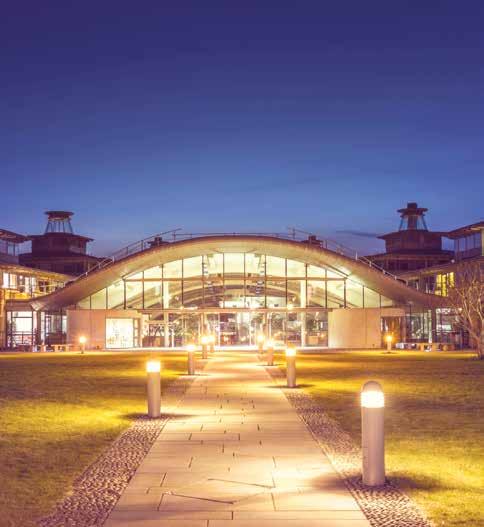
MATT ABBOTT
Director & Co-founder
Label Worx
Label WORX
DIGITAL LABEL SERVICES
Label Worx is the world's largest digital distributor of Dance & Electronic music to iTunes, Beatport, Spotify, Amazon, Google Play and more.
Being based at the C4Di in Hull has allowed us to expand rapidly as the rent, living costs and wages are considerably less than they would be if we were operating from London.
Instead, we've been able to invest in well experienced staff, system developments and cutting edge technology to ensure our business is the best it can be.
Operating from the heart of Hull strengthens our company, allowing us to grow faster than other businesses with far higher operating costs.
"I think Hull has amazing possibilities: we've got the best connectivity in the country, an amazing start up hub and cost of buildings is very affordable. And it's just a beautiful part of the world to live in."
JOHN CONNOLLY
MD, C4Di
With an established track record in software development, hardware, and publishing, Hull's current strengths include App & software development, E-commerce and Data management & analytics.
The strong digital infrastructure provided by the KCOM Group has been key to the success of Hull's diverse digital tech businesses, from locally established firms like Trident and Ebuyer, to early stage companies such as Frillo, LabelWORX and Sypro.
The cluster's startup community is small but growing, with digital tech businesses in the area having been boosted by increased access to loans and support from local incubators, such as the Centre for Digital Innovation (C4Di).
Measures are also being put in place to address the challenge of accessing finance. The Hull Business Development Fund provides up to £25,000 for businesses able to provide a sustained benefit to the local economy. The Youth Enterprise Bank, meanwhile, provides grants to aspiring entrepreneurs aged 19 or younger.
Notable Universities & Colleges
- HULL COLLEGE
- UNIVERSITY OF HULL
Notable Companies
Challenges
Benefits
Digital Tech Economy Jobs
6,070
Advertised Digital Salary
£37,258
Digital Density¹
16%
Digital GVA²
£189 million
Digital Growth
- +2% EMPLOYMENT 2011-2014
- +24% BUSINESS 2010-2014
- +14% GVA 2010-2014
Notable Sectors
- E-COMMERCE & MARKETPLACE
- APP & SOFTWARE DEVELOPMENT
- HARDWARE, DEVICES & OPEN SOURCE HARDWARE
- DATA MANAGEMENT & ANALYTICS
- Digital tech businesses as % of total businesses
- Total output (goods or services) minus value of inputs e.g. cost of production, taxes, subsidies (Source:ABS/BSD)
Leeds
COLIN RICHARDSON
Co-founder
Cocoon
cocoon
Cocoon has designed a single device to protect your whole home, across different floors, all from one device. This also removes the need for customers to install additional motion sensors, keypads, or camera systems.
Being based in the North of England means that we have access to a wealth of engineering talent that we simply wouldn't get elsewhere in the UK. The combination of high-quality skills provision and a more relaxed quality of life makes day-to-day life in the office more enjoyable and creates a fantastic company atmosphere. This is really important to us and our team.
"The biggest drawback is the amount of profile that we have nationally we're nowhere near recognised as Bristol and Manchester and Birmingham, but that is starting to change."
AMY DE BALSI
Founder, Leeds Herd
With a wealth of graduates from the city's numerous universities and education institutions, Leeds has a talent pool almost unrivalled in the UK. Between 2010 and 2014, the cluster experienced the highest advertised salary growth in the UK, at 29%.
According to Leeds Data City, there are over 3,500 digital organisations in the area, with specialisms including Digital marketing and advertising, and E-commerce. Leeds has over 2,000 data scientists and is home to the Leeds Institute for Data Analytics (LIDA). It has clear expertise in healthcare in the NHS spine project and HSCIC.
It is also home to the Northern Internet Exchange, IX Leeds, which makes Leeds the only internet independent city in the UK outside London.
Last year, Google opened its first ever Digital Garage in Leeds, supporting over 3,000 businesses in 7 months. Leeds was also among 3 cities to share £11m in government funding to develop technology hubs.
The cluster's leading businesses include Rockstar Leeds, which worked on the 54 million copy selling Grand Theft Auto V, and Sky Bet, which employs over 700 people.
Notable Universities & Colleges
- LEEDS METROPOLITAN UNIVERSITY
- LEEDS TRINITY UNIVERSITY
- UNIVERSITY OF LEEDS
Notable Companies
- FIRST DIRECT
- SKY PLC
- ROCKSTAR LEEDS
Challenges
Benefits
Digital Tech Economy Jobs
23,734
Advertised Digital Salary
£47,959
Digital Density¹
18%
Digital GVA²
£671 million
Digital Growth
- +7% EMPLOYMENT 2011-2014
- +47% TURNOVER 2010-2014
- +29% ADVERTISED SALARY 2012-2015
Notable Sectors
(BASED ON DATA FROM LEEDS DATA CITY)
- E-COMMERCE & MARKETPLACE
- APP & SOFTWARE DEVELOPMENT
- DIGITAL ADVERTISING & MARKETING
- DIGITAL MEDIA & ENTERTAINMENT
- Digital tech businesses as % of total businesses
- Total output (goods or services) minus value of inputs e.g. cost of production, taxes, subsidies (Source:ABS/BSD)
Liverpool
MARTIN KENWRIGHT
CEO
Starship
Starship
Starship is a digital media, entertainment and technology company. We decided to settle in Liverpool for a number of reasons: the depth and breadth of the talent pool, low business overheads, cost of living, quality of life, three universities and the fact that it is an established centre of excellence for software development within the games industry.
Even though we had to build a completely new development studio from the ground up, the team we were able to recruit in the city has a formidable track record, decades of individual experience, phenomenal technical skills and are incredibly talented.
"The city's continually being redeveloped and re-energised. There's a large student population, so there's a large graduate pool. We just need a smash hit to put us back on the map"
MATT SOUTHERN
Founder, Mint Games
Liverpool's gaming heritage, which stretches back to Psygnosis, and later Sony, is central to the cluster. The city's introduction of co-working spaces have helped the cluster to grow, with IoT & connected devices, App & software development and E-commerce among its specialisms.
Liverpool's commercial and residential property rents are among the lowest in the country, making it real value for money for businesses. The Baltic Triangle, home to industry-focused school and college The Studio, is enjoying a revival as a hub for entrepreneurs.
The University of Liverpool and Liverpool John Moores University attract some of the UK's top talent, producing capable and employable graduates.
Tech and science incubators include the Innovation Park, Science Park, Merseybio and Launch 22 as well as Santander's recently opened incubator for rapidly growing, small businesses.
Liverpool Vision has supported digital companies, helping to set up Baltic Creative CIC, and networking initiatives such as kin2kin network, and others including Creative Kitchen (lead by Studio Mashbo), DoES Liverpool, and the eHealth Cluster.
Notable Universities & Colleges
- LIVERPOOL HOPE UNIVERSITY
- UNIVERSITY OF LIVERPOOL
Notable Companies
- FIRESPRITE
- SONY
- STARSHIP GROUP
Challenges
Benefits
Digital Tech Economy Jobs
19,535
Advertised Digital Salary
£42,153
Digital Density¹
17%
Digital GVA²
£269 million
Digital Growth
- +7% EMPLOYMENT 2011-2014
- +16% ADVERTISED SALARY 2012-2015
- +52% GVA 2010-2014
Notable Sectors
- IOT & CONNECTED DEVICES
- APP & SOFTWARE DEVELOPMENT
- E-COMMERCE & MARKETPLACE
- GAMING
- Digital tech businesses as % of total businesses
- Total output (goods or services) minus value of inputs e.g. cost of production, taxes, subsidies (Source:ABS/BSD)
Manchester
JAMIL KHALIL
Founder & CEO
Wakelet
wakelet
Wakelet is an online platform enabling you to organise any content on the internet, and to curate stunning, shareable collections. We help people to take control of the content that interests, inspires and excites them.
With its entrepreneurial culture, Manchester makes sense for us. We were able to secure our first round investment of £1.1m from angels, led by Manchester-based and self-made business people.
The city has a rich history of innovation. The current energy and vibe in Manchester, and its increasing openness to explore new approaches, has made it a great place to develop interesting partnerships.
"It's a really vibrant city and Manchester is proud of its tech heritage, but not inward looking. And there's a ton of talent here."
AL MACKIN
Founder, Formissimo
Manchester has established itself as one of the top five clusters in the UK, with the second highest GVA growth and digital employment over 50,000. It was recently awarded £10m as Innovate UK's IoT City Demonstrator (in partnership with Cisco).
Manchester's specialisms include Edtech, e-commerce and adtech, and historically, digital entertainment. Global digital agencies located in Manchester include Amaze and Building blocks, while leading companies include online car booking service rentalcars.com and Northern Stars winner Peak.
Support organisation Manchester Digital, and events such as Ladies that UX, the weekly Friday Drinkabout MCR and the Lean Conf have fostered this active community, complementing the city's academic specialisms in materials science and computer science.
Rise, The Sharp Project, Innospace, the Landing, Together and SpaceportX provide space and assistance for startups, while MediaCityUK also contributes to Manchester's future growth plans.
The recent injection of funds from Government will help fund the building of Forward Manchester, creating a support hub for software engineers & tech entrepreneurs.
Notable Universities & Colleges
- MANCHESTER METROPOLITAN UNIVERSITY
- UNIVERSITY OF MANCHESTER
- UNIVERSITY OF SALFORD
Notable Companies
Challenges
Benefits
Digital Tech Economy Jobs
51,901
Advertised Digital Salary
£45,204
Digital Density¹
19%
Digital GVA²
£1.7 billion
Digital Growth
- +13% EMPLOYMENT 2011-2014
- +40% TURNOVER 2010-2014
- +92% GVA 2010-2014
Notable Sectors
- EDTECH
- DIGITAL ADVERTISING & MARKETING
- FINTECH
- E-COMMERCE & MARKETPLACE
- Digital tech businesses as % of total businesses
- Total output (goods or services) minus value of inputs e.g. cost of production, taxes, subsidies (Source:ABS/BSD)
Newcastle & Durham
PAUL FELLOWS
COO
Performance Horizon
PERFORMANCE HORIZON
Performance Horizon is the leading provider of SaaS solutions for digital partner marketing.
With most of our founders from Newcastle, in 2010 we made the decision to headquarter in the city, with a base in London.
Our growth is testament to that decision. We were ranked 16th in the 2015 Deloitte UK Technology Fast 50, a list of the 50 fastest-growing technology companies in the UK, earned through our 4 year growth of 1,131%.
We are second in the Northeast, which demonstrates to clients and team members that world-class technology solutions can be built in Newcastle. We are proud of our heritage in the Northeast and remain fully committed to Newcastle.
"We are very well served by universities here so much as recruitment is always an issue for a business there are a lot of talented people in the area"
PAUL FELLOWS
COO, Performance Horizon Group
With the second highest salary growth of any city in the UK at 26.6%, Newcastle & Durham continues to build on its tech history; the technological institution, Sage, is still driving employment and innovation in the area.
In addition to long established digital tech companies, Newcastle & Durham has produced Reframed.tv and Leaf.fm, both of which were finalists of the recent Northern Stars competition. Newcastle-based Moltin just raised $2 million from US VCs.
The area's benefits for digital tech businesses include the high level of talent available. This is coupled with good support from the co-working space Campus North, the angel-led accelerator programme Ignite and venture capital firm Northstar Ventures, which has over £95m under management.
Further support comes in the form of Dynamo North East, The North East Technology Fund and Newcastle Science Central's office spaces, called The Core.
Digital tech businesses in this cluster are more likely than those in any other to receive support from an accelerator, and the second most likely to receive mentoring support.
Notable Universities & Colleges
- DURHAM UNIVERSITY
- NEWCASTLE UNIVERSITY
- NORTHUMBRIA UNIVERSITY
Notable Companies
- ORCHARD
- SAGE
- VIRGIN MONEY
Challenges
Benefits
Digital Tech Economy Jobs
22,237
Advertised Digital Salary
£44,068
Digital Density¹
19%
Digital GVA²
£764 million
Digital Growth
- +5% EMPLOYMENT 2011-2014
- +29% TURNOVER 2010-2014
- +35% GVA 2010-2014
Notable Sectors
- SOCIAL NETWORKS
- DATA MANAGEMENT & ANALYTICS
- E-COMMERCE & MARKETPLACE
- GAMING
- Digital tech businesses as % of total businesses
- Total output (goods or services) minus value of inputs e.g. cost of production, taxes, subsidies (Source:ABS/BSD)
Sheffield & Rotherham
DR SAM CHAPMAN
CIO & co-founder
TheFloow
THE FLOOW
We are best known for delivering the world's most advanced telematics data management solutions through device-agnostic predictive analytics and digital end-user services, all with a view to making vehicles safer and cheaper for all.
Since we began in 2012, The Floow has grown from a team of 3 to more than 60 expert scientists, engineers, designers and support staff.
Our success is driven in part by our location. In Sheffield, we have access to 2 universities renowned for their digital and scientific innovation. The outstanding talent available locally has proved critical.
Sheffield is also a growing hub of digital tech activity and so is well placed to support high-growth companies like The Floow.
"As a community of startups Sheffield is maturing. 3 of the 10 Northern Stars are from the city, which demonstrates that there is a real depth of talent and commitment to building compelling new businesses."
EMMA CHESHIRE
CEO, Dotforge
Sheffield & Rotherham's strengths are built on expertise in Data management & analytics and Telecommunications & networking, with recentlyestablished specialisms in Hardware, IoT and E-commerce.
The cluster has an established support network, with organisations such as Dotforge delivering tech-for-good accelerators in Sheffield, Leeds and Manchester. Maker and hack culture is prominent in Sheffield with makerspaces such as ROCO and Access Space bringing digital technologies to a centuries-old heritage of craft and making.
Workspaces range from community co-working at Union St to space at Electric Works. The Sheffield City Region Enterprise Zone is ranked the UK's top enterprise zone for modern manufacturing and technology, while new industry association Sheffield Digital exists to support digital tech companies and workers.
The positive momentum in South Yorkshire's largest cluster has been recognised by the UK Government. In the 2015 Budget it was one of three cities to share £11m in funding dedicated to building technology hubs.
Notable Universities & Colleges
- SHEFFIELD HALLAM UNIVERSITY
- SHEFFIELD UNIVERSITY
Notable Companies
- HSBC
- PLUSNET (BT)
- WANDISCO
Challenges
Benefits
Digital Tech Economy Jobs
14,313
Advertised Digital Salary
£42,058
Digital Density¹
18%
Digital GVA²
£273 million
Digital Growth
- +19% PRODUCTIVITY³ 2010-2014
- +3% EMPLOYMENT 2011-2014
- +45% TURNOVER 2010-2014
Notable Sectors
- E-COMMERCE & MARKETPLACE
- HARDWARE, DEVICES & OPEN SOURCE HARDWARE
- APP & SOFTWARE DEVELOPMENT
- ENTERPRISE SOFTWARE & CLOUD COMPUTING
- Digital tech businesses as % of total businesses
- Total output (goods or services) minus value of inputs e.g. cost of production, taxes, subsidies (Source:ABS/BSD)
- Digital sales per worker
Sunderland
DOMINIC MURPHY
Managing Director
Geektalent
Geek Talent
Our product set contains a recruitment platform for companies, a careers portal and a labour market intelligence platform. We analyse hundreds of data points from millions of people across multiple social sites to understand the real time labour market.
We have received amazing support from Sunderland Council, Sunderland Software City and the community of companies we are part of in the Software Centre. Dynamo North East has made us part of a growing digital tech community, collaborating to raise the profile of the industry.
Having recently been one of the Tech North Northern Stars, we look forward to gaining further support to help us launch globally.
"There are lots of incentives to set businesses up within the Sunderland Software Centre where we are. The council is very pro-software, pro-digital businesses."
DOMINIC MURPHY
Managing Director, Geek Talent
Sunderland has enjoyed steady growth, with employment rising by almost 17% since 2010. In addition to a long-standing specialism in App & software development, it has growing expertise in Hardware, Games and Telecommunications & networking.
The local software scene can be traced back to 1996 with the creation of Domain Names, a company that grew to become the largest domain provider in Europe.
Much of the cluster's recent growth stems from the establishment of Sunderland Software City in 2009. A joint partnership between the private, public, and education sectors, it has already supported over 400 businesses and aims to create more than 2,000 jobs by 2020. Opening in 2015, the North East & Tees Valley Digital Catapult Centre is helping businesses increase efficiency and productivity.
Sunderland has benefited from the presence of companies such as Geek Talent, Epic Games, Technically Compatible and United Software, while the University of Sunderland's Hatchery acts as a startup incubator for students and graduates.
Notable Universities & Colleges
- CITY OF SUNDERLAND COLLEGE
- UNIVERSITY OF SUNDERLAND
Notable Companies
- EPIC GAMES
- TECHNICALLY COMPATIBLE
- UNITED SOFTWARE
Digital Tech Economy Jobs
3,675
Advertised Digital Salary
£38,999
Digital Density¹
12%
Digital GVA²
£107 million
Digital Growth
- +17% EMPLOYMENT 2011-2014
- +44% TURNOVER 2010-2014
- +29% GVA 2010-2014
Notable Sectors
- TELECOMMUNICATIONS & NETWORKING
- GAMING
- HARDWARE, DEVICES & OPEN SOURCE HARDWARE
- APP & SOFTWARE DEVELOPMENT
- Digital tech businesses as % of total businesses
- Total output (goods or services) minus value of inputs e.g. cost of production, taxes, subsidies (Source:ABS/BSD)
Northern Ireland
Rising from a strong industrial heritage in shipbuilding and aerospace, Northern Ireland is entering the next chapter of its history of innovation with digital technology. Outside of London and the South East, Digital Tech Industries are contributing the highest proportion of GVA to this area's economy. With excellent talent from local universities, low overheads and available business support, Northern Ireland is creating an environment for digital tech businesses to thrive. Belfast continues to be the leading cluster, closely followed by a fast growing cluster in Derry, alongside smaller communities in Newry and Omagh.
Notable Companies
- Analytics Engines
- Inflyte
- kain S
- RepKnight
- SEE.SENSE
Notable Clusters
- BELFAST
In Numbers
- DIGITAL TECH ECONOMY JOBS
24,741
- PROPORTION OF JOBS IN NORTHERN IRELAND WITHIN THE DIGITAL TECH ECONOMY
3.1%
- DIGITAL GVA*
£1bn
- DIGITAL CONTRIBUTION TO REGIONAL GVA
5.4%
- DIGITAL DENSITY
16.6%
*Total output (goods or services) minus value of inputs e.g. cost of production, taxes, subsidies (Source:ABS/BSD)
Belfast
JOHN REID
CEO
RepKnight
RepKnight
RepKnight's location is of vital importance to our success, providing us with the ideal ecosystem in which to run a cybersecurity company.
Being based in both Belfast and London allows us to capitalise on two key sources of talent and support the growth of our company.
Our network of research and development staff at CSIT in Queen's University, Belfast, is an important source of technical talent while London's status as a digital tech hub provides us with a wide range of skills and expertise.
In the future, our dual locations will allow us to manage our growth and development both flexibly and dynamically.
"There's now a vibrant tech community bringing skills and experiences from the rest of the UK, Ireland and the US – people are coming back here with ten, 20 years' significant experience."
STEPHEN MCKEOWN
CEO, Analytics Engines
Belfast is Northern Ireland's leading digital technology cluster. Digital Tech Industries contribute 5.4% GVA to the region's economy; the second highest proportion in the UK.
The cluster has developed specialisms in App & software development, E-commerce & marketplace, and Digital media & entertainment, and is also seeing significant developments in Data management & analytics and Cyber security, with companies such as RepKnight and Analytics Engines.
Belfast's digital community is cited as its leading strength, with networks including NISP Connect and Innovation Ulster. Other strengths lie in affordable property spaces, such as the Northern Ireland Science Park and Farset Labs, and the strong talent pipeline generated by Queen's University and the University of Ulster, which have facilitated the impressive growth of businesses such as Kainos.
Access to finance across the cluster is improving through the work of local angel network Halo, and funds such as TechStart NI, Invest NI and the Invest Growth Fund. Belfast also has one of the highest numbers of digital tech businesses operating within traditional industries.
Notable Universities & Colleges
- QUEEN'S UNIVERSITY BELFAST
- UNIVERSITY OF ULSTER
Notable Companies
- ALLSTATE
- CITIGROUP
- SEAGATE
Challenges
Benefits
Digital Tech Economy Jobs
7,935
Advertised Digital Salary
£35,680
Digital Density¹
19%
Digital GVA²
£521 million
Digital Growth
- +34% BUSINESS
- +5% ADVERTISED SALARY 2012-2015
Notable Sectors
- APP & SOFTWARE DEVELOPMENT
- E-COMMERCE & MARKETPLACE
- CYBER SECURITY
- DIGITAL MEDIA & ENTERTAINMENT
- Digital tech businesses as % of total businesses
- Total output (goods or services) minus value of inputs e.g. cost of production, taxes, subsidies (Source:ABS/BSD)
Scotland
Traditionally an economy dominated by heavy industries such as shipbuilding, steel and petroleum, Scotland's rising digital tech scene is notable for its sector diversity and the emergence of two billion dollar companies, Skyscanner and Fanduel. With a thriving community, great talent, and continued growth, Edinburgh leads as Scotland's digital tech centre. Glasgow's growing pool of software developers continues to draw major corporates, while Dundee has consolidated its position as a leader in the UK's games sector. Aberdeen is also benefiting from recent public investment in support centres and broadband.
Notable Companies
- adimo
- Administrate
- FanDuel
- M SQUARED
- skyscanner
- tvsquared
- vivomotion
Notable Clusters
- DUNDEE
- EDINBURGH
- GLASGOW
In Numbers
- DIGITAL TECH ECONOMY JOBS
101,397
- PROPORTION OF JOBS IN SCOTLAND WITHIN THE DIGITAL TECH ECONOMY
3.9%
- DIGITAL GVA*
£1.5bn
- DIGITAL CONTRIBUTION TO REGIONAL GVA
2.2%
- DIGITAL DENSITY
16.6%
*Total output (goods or services) minus value of inputs e.g. cost of production, taxes, subsidies (Source:ABS/BSD)
Dundee
DR MHAIRI TOWLER
Founder & CEO
vivomotion
vivomotion
At Vivomotion, we create stunning animations to illustrate scientific concepts.
We benefit greatly from being located in Dundee. First, Vivomotion received startup funding from Dundee City Council as well as support from The University of Dundee and Business Gateway. There is also an existing client base here within the life sciences sector. For us, this has lead to new international clients.
Dundee has two leading universities involved in life sciences, as well as the James Hutton Institute which is the UK's leading facility for agricultural research.
There is a strong creative sector too, with Dundee being awarded UNESCO City of Design status last year. We create jobs that cross the life sciences and creative sectors in a city that has expertise in both.
"We're really well placed geographically, and as a small and closely formed City, the sector is tight-knit and well supported by the universities and colleges"
ALISON HENDERSON
CEO, Dundee & Angus Chamber of Commerce
Dundee, the birthplace of iconic games Lemmings and Grand Theft Auto, continues to punch above its weight as a digital tech cluster. At 129%, it had the third highest growth in turnover in the UK, while its GVA grew by 42%.
Dundee's growing specialisms are in Hardware, App & software development, as well as Gaming, where companies like Outplay Entertainment, Tag Games and YoYo Games continue to complement high-growth Digital Media & Entertainment firms like Brightsolid, eeGeo and Waracle, and established companies such as DC Thomson and NCR.
The strength of the cluster is underpinned by education, with the University of Abertay, which was the UK's first university centre of excellence for computer games education, and Duncan of Jordanstone College of Art & Design.
Beyond gaming, Dundee hosts the annual NEON Digital Arts festival. Last year, the event showcased digital and electronic art from Japan, China, Hong Kong, Korea and Taiwan. Digital tech businesses in Dundee have, on average, 11% of their customers based in Asia.
Notable Universities & Colleges
- ABERTAY UNIVERSITY
- UNIVERSITY OF DUNDEE
Notable Companies
Digital Tech Economy Jobs
3,318
Advertised Digital Salary
£38,069
Digital Density¹
16%
Digital GVA²
£61.4 million
Digital Growth
- +67% PRODUCTIVITY³ 2010-2014
- +129% TURNOVER 2010-2014
- +42% GVA 2010-2014
Notable Sectors
- GAMING
- ONLINE GAMBLING
- APP & SOFTWARE DEVELOPMENT
- HARDWARE, DEVICES & OPEN SOURCE HARDWARE
- Digital tech businesses as % of total businesses
- Total output (goods or services) minus value of inputs e.g. cost of production, taxes, subsidies (Source:ABS/BSD)
- Digital sales per worker
Edinburgh

LESLEY ECCLES
Co-founder
Fanduel
FanDuel
Being in Edinburgh has given FanDuel the support, guidance and funding opportunities we needed to establish ourselves and grow.
In the early stages of developing our product and launching the business, the University of Edinburgh was a great source of support. Today, it continues to provide great talent for us. We were hosted within the University's Edinburgh Technology Transfer Centre until 2012, and benefited from contacts made through the Informatics Ventures programme.
Our first round of funding was provided by 2 Scottish investors: Pentech Ventures and the Scottish Investment Bank. Now, as an established businesses, we enjoy sharing our experience and learning with the next generation of digital tech startups.
"Edinburgh's got an amazing quality of life, a good university base, it's not prohibitively expensive, there's a really active angel community... all of those things boil down to a pretty unique platform for launching companies."
JOHN PEEBLES
CEO, Administrate
The Scottish capital is a leading UK tech cluster, home to billion dollar companies such as Skyscanner and Fanduel, along with rapidly growing startups like TV Squared and Administrate.
The city saw the fifth highest growth in digital employment (2010-2014) and had considerable growth in average digital salary. International tech companies, such as Amazon, Cisco, Oracle, Microsoft and IBM, have now also created bases in Edinburgh.
Edinburgh's strengths in academia and software, and excellent local networks, have created a stimulating environment for startups to grow. Over 2,630 people regularly attend technology Meetups in the city, and it has one of the largest active Github developer communities.
Incubators such as Codebase have helped to support the startup community. Edinburgh businesses are more likely than others to take advantage of local business and technical support.
Edinburgh's rapid digital growth has led to skills shortages, despite access to top universities and colleges being a key benefit.
Notable Universities & Colleges
- HERIOT-WATT UNIVERSITY
- QUEEN MARGARET UNIVERSITY
- UNIVERSITY OF EDINBURGH
Notable Companies
Challenges
Benefits
Digital Tech Economy Jobs
21,335
Advertised Digital Salary
£51,227
Digital Density¹
18%
Digital GVA²
£378 million
Digital Growth
- +23% EMPLOYMENT 2011-2014
- +48% TURNOVER 2010-2014
- +58% GVA 2010-2014
Notable Sectors
- FINTECH
- E-COMMERCE & MARKETPLACE
- DIGITAL ADVERTISING & MARKETING
- ENTERPRISE SOFTWARE & CLOUD COMPUTING
- Digital tech businesses as % of total businesses
- Total output (goods or services) minus value of inputs e.g. cost of production, taxes, subsidies (Source:ABS/BSD)
Glasgow

RICHARD KELLY
Founder & CEO
Adimo
adimo
Adimo makes brand marketing shoppable. FMCG brands spend over half a trillion dollars on marketing and promoting their products, driving people to websites where their products can't even be purchased.
We solve this by connecting any form of marketing directly to a shopper's online supermarket basket – increasing click through rates and providing a seamless path to purchase.
Creativity thrives in Glasgow and we've benefited from significant cost savings and great talent from Glasgow and Strathclyde Universities, and the local arts scene. More recently, we've been part of a growing tech scene, meeting up with fellow founders to support each other and share knowledge.
"I'd say there has been a cultural change across technology. There's more activity in the community, more people"
MICHAEL HAYES
Founder, RookieOven
Glasgow's transformation from industrial powerhouse to leading digital technology cluster is highlighted by the development of the Fairfield Offices in Govan – now home to Rookie Oven, and one of several locations in the city providing a home to a new breed of digital tech startups.
There are a number of thriving developments that illustrate Glasgow's vibrancy; STV and BBC in Pacific Quay, Axis and Clyde Space in City Park, JP Morgan and Morgan Stanley in the International Financial Services District, ISO Design and Adimo in the Merchant City.
Local networks, as well as a strong Github online developer community, have also created a talent pipeline for companies, with 77% of Glasgow companies citing that they rely on self-taught programmers as a talent source.
The city's universities, including the University of Strathclyde, University of Glasgow, and Glasgow School of Art, are central to providing a strong supply of talent, while the University of Strathclyde particularly excels in supporting homegrown startups, ranking 7th in the UK for company spin-outs.
Notable Universities & Colleges
- GLASGOW SCHOOL OF ART
- UNIVERSITY OF GLASGOW
- UNIVERSITY OF STRATHCLYDE
Notable Companies
Challenges
Benefits
Digital Tech Economy Jobs
26,350
Advertised Digital Salary
£46,854
Digital Density¹
18%
Digital GVA²
£480 million
Digital Growth
- +13% EMPLOYMENT 2011-2014
- +42% TURNOVER 2010-2014
- +45% GVA 2010-2014
Notable Sectors
- FINTECH
- E-COMMERCE & MARKETPLACE
- SOCIAL NETWORKS
- ENTERPRISE SOFTWARE & CLOUD COMPUTING
- Digital tech businesses as % of total businesses
- Total output (goods or services) minus value of inputs e.g. cost of production, taxes, subsidies (Source:ABS/BSD)
South West
The economy of the South West has traditionally been very diverse, ranging from a strong tourist and food industry across Cornwall, Devon and Somerset, to an industrial heritage in aerospace and silicon chips in Bristol. Bristol & Bath is the leading cluster in the region with digital expertise continuing to focus on software, gaming, media and its roots in hardware & devices. Bournemouth & Poole and Exeter & Newton Abbot both have specialisms in Digital Advertising & Marketing and E-commerce is growing. In addition, a number of major corporates, in mobile technology and electronics, can be found in Swindon.
Notable Companies
Logos for the following companies:
- 3 Sided Cube
- Crowdfunder
- Gradwell
- Healthapps
- Crowdcube
- Neighbourly
- XMOS
Notable Clusters
Map of the UK with the South West region highlighted, showing the locations of the following clusters:
- 23 Bournemouth & Poole
- 24 Bristol & Bath
- 25 Exeter & Newton Abbot
- 26 Truro, Redruth & Camborne
In Numbers
Digital Tech Economy Jobs
135,713
Proportion of jobs in the South West within the Digital Tech Economy
5.2%
Digital GVA*
£3.3bn
Digital Contribution to Regional GVA
4.2%
Digital Density
117.3%
*Total output (goods or services) minus value of inputs e.g. cost of production, taxes, subsidies (Source:ABS/BSD)
Bournemouth & Poole

Bournemouth & Poole is one of the top 10 clusters in the UK for employment growth and has the third highest density of digital tech businesses.
The cluster's strengths lie in its digital creative industry; App & software development and Data management & analytics, as well as a strong agency community working in Digital advertising and marketing.
These sub-sectors are supported by a steady supply of digital talent from local industry, while creative companies, including RedWeb and Sunseeker, act as hubs for local creative talent. Major corporations, including Nationwide, Barclays and JP Morgan also have a presence.
Local universities are also key. The highly acclaimed National Centre for Computing Animation at Bournemouth University produces VFX graduates, who have gone on to work on award-winning films and video games.
Bournemouth boasts a high quality of life, and hosts events for the digital community such as Meetdraw, Silicon Beach, and Digital Wave. It has co-working spaces such as by-the-sea and the Factory Studios. The council is active in the tech community with Bournemouth Borough Council winning Digital Council of the Year in 2015.
Notable Universities & Colleges
- Arts University Bournemouth
- Bournemouth University
Notable Companies
- JP Morgan
- Lush
- Merlin Entertainments
Challenges
- Limited access to finance: 42%
- Limited talent supply: 34%
- Low supply of affordable property: 32%
% of digital tech businesses
Case Study: 3 Sided Cube
Duncan Cook
Managing Director
3 Sided Cube
As a digital tech business we are not too reliant on infrastructure so choosing Bournemouth, which has one of the best coastlines and lifestyles in the UK, made sense!
We work with UK organisations like Mind, RNLI and Lloyds Banking Group, but 80% of our business is overseas, with clients like the American Red Cross, Nordstrom, IFRC and ASPCA.
Sourcing talent can be a challenge. To combat that we run courses, free of charge, at our local university, teaching students exactly what's happening in the industry. We offer internships and jobs to those that shine. Our Head of iOS came through this program, so it has worked pretty well.
"It's just a fantastic place to live, and I don't believe that geographic location is a barrier to working with international clients any more, at all.”
Mike Hawkyard
MD, Amuzo
Benefits
- Access to graduate-level talent: 86%
- Access to local networks: 68%
- Access to business support: 58%
% of digital tech businesses
Digital Tech Economy Jobs
13,965
Advertised Digital Salary
£37,519
Digital Density¹
21%
Digital GVA²
£350 million
Digital Growth
- +15% Employment 2011-2014
- +39% Turnover 2010-2014
- +68% GVA 2010-2014
Notable Sectors
- Telecommunications & Networking
- Data Management & Analytics
- App & Software Development
- Social Networks
1 Digital tech businesses as % of total businesses
2 Total output (goods or services) minus value of inputs e.g. cost of production, taxes, subsidies (Source:ABS/BSD)
Bristol & Bath

Bristol & Bath has continued to grow impressively; turnover has increased by 53%, and it is recognised by Centre for Cities and McKinsey & Company as one of the two globally significant digital tech clusters in the UK, including over 60,000 digital workers in the broader region.
With a history in aerospace and digital software, the cluster's specialisms now include Telecommunications & networking, Gaming, Virtual reality, and Cloud computing. Aardman, JUST EAT, IMDb, Oracle, IBM, Sony and Hewlett Packard have all been attracted by the strong digital ecosystem.
Local networks TechSPARK and High Tech Bristol & Bath are thriving; 81% of local business owners stated collaboration as a benefit, while 5,000 people regularly attend tech Meetups in the area, the third most in the UK.
Hubs like Bristol Games Hub, Engine Shed, Bristol & Bath Science Park and the Bath Guild are also supporting the growth of digital tech businesses. The Bath & Bristol SETsquared programmes generated over £48million of investment in 2015 and were named the world's best university incubator by UBI Global.
Notable Universities & Colleges
- University of Bath
- University of Bristol
- University of the West of England
Notable Companies
- Amazon (IMDb)
- Hewlett Packard
- Intel
Challenges
- Limited access to finance: 35%
- Limited talent supply: 28%
- Weak digital infrastructure: 28%
% of digital tech businesses
Case Study: XMOS

Nigel Toon
President & CEO
XMOS
XMOS is a leading supplier of multicore microcontroller microprocessors, at the cutting edge of internet connected devices. Our semiconductor products are used by customers across the globe in a range of applications from consumer audio products to robotics and automotives, where the XMOS XCORE processors are supporting the next generation of real-time networking systems in cars.
Being based in Bristol, we are part of a large community of micro electronics and software engineers. We also have close links with the local universities. In fact, the technology behind XMOS was originally developed within Bristol University. We are one of the university's most successful spin-outs to date.
"Our pool of talent has grown as major tech firms have chosen to invest in the region over the last few years, so the recruitment of senior people has become easier."
Nick Sturge
Centre Director, Engine Shed (and SETsquared)
Benefits
- Access to commercial property: 82%
- Access to local networks: 81%
- Access to business support: 65%
% of digital tech businesses
Digital Tech Economy Jobs
36,547
Advertised Digital Salary
£45,501
Digital Density¹
18%
Digital GVA²
£1.8 billion
Digital Growth
- +9% Employment 2011-2014
- +53% Turnover 2010-2014
- +26% GVA 2010-2014
Notable Sectors
- Digital Advertising & Marketing
- Gaming
- App & Software Development
- Telecommunications & Networking
1 Digital tech businesses as % of total businesses
2 Total output (goods or services) minus value of inputs e.g. cost of production, taxes, subsidies (Source:ABS/BSD)
Exeter & Newton Abbot

Digital Tech Industries are central to Exeter's economy. Between 2010 and 2014 it experienced a 161% growth in its digital tech employment, the highest in any cluster.
The city scored highly on productivity during that period, with digital tech businesses reporting a turnover growth rate of 52%, while GVA grew by 84%. Local success Crowdcube has successfully funded over 345 companies.
Exeter Science Park provides space for digital tech businesses, while The Generator is Devon's first and biggest co-working space. Local businesses are also supported by talent from South Devon University Technical College and the University of Exeter, which offers Digital and Technology Solutions as a degree apprenticeship.
Local support organisations and networks contribute to Exeter's success. Meetup groups include Digital Exeter and Exeter Web Meetup, while Koncept works with early stage entrepreneurs and startups to create usable products. Ignite Students' Guild, based at the University of Exeter, works with students to help turn their ideas into startups.
Notable Universities & Colleges
- South Devon University Technical College
- University of Exeter
Notable Companies
- Crowdcube
- Pavey Group
- ROKK Media
Challenges
- Limited talent supply: 59%
- Limited access to finance: 48%
- Weak digital infrastructure: 34%
% of digital tech businesses
Case Study: Crowdcube

Darren Westlake
CEO
Crowdcube
Crowdcube is the world's first and leading investment crowdfunding platform. Since 2011, over £135m has been invested in more than 350 raises from a crowd of 250,000 people. By opening up equity investment to everyday investors we enable tech businesses to reach hundreds of potential investors.
For us, our location has helped us attract top talent; it offers employees both a better work-life balance and a challenging and rewarding career in an innovative and growing business. That alluring mix has enticed top talent from the likes of Google, eBay, Octopus Ventures, KPMG, Amazon and Goldman Sachs, as well as Devon's top local talent, and post-graduates from the University of Exeter.
"The nature of the community here in the South West lends itself to exciting collaborations and partnerships across sectors and industry that is developing the perfect environment for the creation of innovative new business."
Neil Finnie
Founder, Corkscrew
Digital Tech Economy Jobs
11,412
Advertised Digital Salary
£39,695
Digital Density¹
16%
Digital GVA²
£133 million
Digital Growth
- +161% Employment 2011-2014
- +41% Turnover 2010-2014
- +84% GVA 2010-2014
Notable Sectors
- E-commerce & Marketplace
- Digital Advertising & Marketing
- App & Software Development
- Fintech
1 Digital tech businesses as % of total businesses
2 Total output (goods or services) minus value of inputs e.g. cost of production, taxes, subsidies (Source:ABS/BSD)
Truro, Redruth & Camborne

While Truro, Redruth & Camborne is an early stage cluster, between 2010 and 2014 overall digital turnover rose by 153%. Early analysis indicates a growing expertise in Data management & analytics, Hardware & devices, Edtech, and App & Software development.
The area has a history of innovation such as Goonhilly Earth Station, which received the first transatlantic TV images in 1962.
Access to superfast broadband is key to the cluster's potential today, with Cornwall having the most extensive commercial and residential broadband of any rural location within the UK.
Cornish companies also report benefiting from access to local networks, such as Software Cornwall, a community of digital tech businesses that work closely with local colleges and universities to design courses that match their industry needs. Other initiatives include Agile on the Beach, an annual two-day conference that brings together the cluster's digital tech community.
Local success stories include Bluefruit, a software development company looking to address the skills gap by supporting local code clubs for kids. It provides free training courses for 15-18 year olds along with work experience and apprenticeship schemes.
Notable Universities & Colleges
Notable Companies
- Bluefruit
- Headforwards
- Sullivan Cuff
Challenges
- Limited talent supply: 68%
- Low sector awareness: 52%
- Limited access to finance: 48%
% of digital tech businesses
Case Study: Crowdfunder

Rob Love
Chairman
Crowdfunder
Crowdfunder is the UK's number 1 rewards-based crowdfunding platform, with an online community of over 350,000.
Crowdfunder was founded in Cornwall thanks to the support of Plymouth University, a leading educational player in the county and were a founding partner.
The introduction of superfast broadband meant we could locate our cutting edge digital tech business on a beach in Newquay and enjoy the benefits of a stunning view, a highly motivated and creative workforce, and go surfing on a Friday!
"A rural location has traditionally been seen as a weakness. Cornwall is dissolving that urban myth, driven by superfast connectivity, a pipeline for delivering tech skills and a strong collaborative community."
Belinda Waldock
Co-Founder Software Cornwall, Agile on the Beach Organiser, Author of Being Agile in Business
Benefits
- Access to commercial property: 44%
- Access to local networks: 44%
- Access to business support: 36%
% of digital tech businesses
Digital Tech Economy Jobs
1,380
Advertised Digital Salary
£34,367
Digital Density¹
17%
Digital GVA²
£31 million
Digital Growth
- +1% Employment 2011-2014
- +153% Turnover 2010-2014
- +127% GVA 2010-2014
Notable Sectors
- Data Management & Analytics
- Hardware, Devices & Open Source Hardware
- Edtech
- App & Software Development
1 Digital tech businesses as % of total businesses
2 Total output (goods or services) minus value of inputs e.g. cost of production, taxes, subsidies (Source:ABS/BSD)
Wales

Alongside Wales' key sectors of energy, advanced manufacturing and professional services, digital technology has made its mark. A leading life sciences hub with a thriving creative industries ecosystem, Wales' expertise spans software, electronics, digital media and entertainment and is home to three market leaders - Confused.com, moneysupermarket.com and GoCompare.com. Low cost of living and a strong talent pool have helped support the sector, as well as growing support from the Welsh government. Digital infrastructure initiatives are creating vital conditions for growth.
Notable Companies
Logos for the following companies:
- Delio
- Landmax.pro
- Nudjed
- Paperclip
- Pwinty
- RAMP
- Veeqo
Notable Clusters
Map of the UK with Wales highlighted, showing the location of the following cluster:
- 27 Cardiff & Swansea
In Numbers
Digital Tech Economy Jobs
43,342
Proportion of jobs in Wales within the Digital Tech Economy
3.2%
Digital GVA*
£0.6bn
Digital Contribution to Regional GVA
2.3%
Digital Density
15.4%
*Total output (goods or services) minus value of inputs e.g. cost of production, taxes, subsidies (Source:ABS/BSD)
Cardiff & Swansea

Cardiff & Swansea, the two main clusters in Wales, featured in the UK's top 10 clusters for digital salary growth and GVA growth.
The cluster has emerging specialisms in Cyber security, App & software development, alongside a foundation in E-commerce, Fintech and Sporttech. Startups to watch include Pwinty, a photo printing API, the e-learning company Noddlepod, and E-commerce business Veeqo.
Local spaces like Welsh ICE, Indycube and GloWorks have been vital to the success of growing startups, as has TechHub Swansea, which arrived in 2013.
The emergence of local networks like Cardiff Start and the support of industry groups such as united.diff and Games Dev South Wales, have further helped to foster the entrepreneurial community.
Cardiff's three universities provide digital tech businesses with an established pipeline of talent, with 57% of local businesses noting this as a key benefit. Recognising the importance of digital, the Welsh Government has also been active in supporting the Digital Tech Industries through programmes such as Finance Wales Tech Seed Fund and Accelerated Growth Programme.
Notable Universities & Colleges
- Cardiff Metropolitan University
- Cardiff University
Notable Companies
- Admiral
- BBC Wales
- Pinewood Studios
Challenges
- Limited talent supply: 59%
- Limited access to finance: 48%
- Weak digital infrastructure: 34%
% of digital tech businesses
Case Study: Nudjed

Warren Fauvel
Founder & CEO
Nudjed
Nudjed is a unique surveying and analysis tool that uses behavioural psychology models to predict potential behaviour change in populations and allows clients to create wellbeing programmes that make health improvement more likely.
We are currently working with a number of NHS, local authority and Public Health organisations and we have found that there are many benefits to being based in Cardiff.
There are lots of active, supportive communities of entrepreneurs. Organisations like Cardiff Start and Welsh ICE have been incredibly valuable to us and the Welsh Government is very supportive of new business, with various technology funds, tax incentives and graduate employment schemes designed to help startups to succeed.
"With the right balance of good infrastructure, good skill base, Cardiff is positioned to be a leading place for technology businesses"
Owen Derbyshire
Founder, Properr
Benefits
- Access to commercial property: 84%
- Access to local networks: 61%
- Access to graduate-level talent: 57%
% of digital tech businesses
Digital Tech Economy Jobs
18,925
Advertised Digital Salary
£42,926
Digital Density¹
17%
Digital GVA²
£369 million
Digital Growth
- +21% Advertised Salary 2012-2015
- +15% Turnover 2010-2014
- +94% GVA 2010-2014
Notable Sectors
- Social Networks
- Cyber Security
- Telecommunications & Networking
- App & Software Development
- Fintech
1 Digital tech businesses as % of total businesses
2 Total output (goods or services) minus value of inputs e.g. cost of production, taxes, subsidies (Source:ABS/BSD)
Profiling Digital Sectors
As well as understanding where the UK's digital companies are growing by geographical location, Tech Nation seeks to showcase the sectors these companies are excelling in. We want to highlight the specialisms that are at the beating heart of the UK digital economy.
In this section we examine 16 digital sectors, and highlight the notable areas of expertise within the UK based on data from GrowthIntel. We provide overviews alongside case studies of UK companies leading within the digital sectors.
- App & Software Development
- Cyber Security
- Data Management & Analytics
- Digital Advertising & Marketing
- Digital Media & Entertainment
- E-commerce & Marketplace
- Edtech
- Enterprise Software & Cloud Computing
- Fintech
- Gaming
- Hardware, Devices & Open Source Hardware
- Healthtech
- IoT & Connected Devices
- Online Gambling
- Social Networks
- Telecommunications & Networking
App & Software Development

App & Software Development includes the development of software applications for consumers, web development, design, and software for devices that range from smartphones to TV setup boxes.
The key capabilities driving this sector include machine-to-machine communications, systems design and integration, mobile and tablet development and SaaS/web services.
It's top clusters are Brighton, Bournemouth & Poole, Oxford, Bristol & Bath and Reading & Bracknell.
The UK's expertise in software development and data science is producing lucrative B2B retail technology businesses, such as Qubit. Software app companies include Headspace and Citymapper.
Expertise found in:
- Brighton
- Bournemouth & Poole
- Oxford
- Bristol & Bath
- Reading & Bracknell
Case Study: Kainos

Brendan Mooney
CEO
Kainos provides digital technology solutions and agile software development to enterprise customers. Employing more than 750 people across four international and four UK-based offices: Belfast, Derry, London and Bristol, in the last three years staff numbers have almost doubled. Growth is underpinned by innovative approaches to recruiting talented people and ensuring they have the right skills for the job by providing dedicated and formal training to all employees.
Cyber Security

The UK is a global leader in cyber security, operating in a international market measured at $75bn last year and predicted to grow to $170bn by 2020.
Last year, UK businesses reported a 38% increase in IT security incidents. GCHQ in the Worcester & Malvern cluster provides a central hub for the sector, while other top performers include Oxford, Reading & Bracknell, London and Cardiff & Swansea.
Belfast-based RepKnight monitors open social media and dark sources, while London company Digital Shadows provides cyber situational awareness.
The establishment in the capital of Cyber London as Europe's first cyber security accelerator and incubator space is testament to the sector's value and importance.
Expertise found in:
- Oxford
- Worcester & Malvern
- Reading & Bracknell
- London
- Cardiff & Swansea
Data Management & Analytics

The UK's Data Management & Analytics sector includes a wide range of companies, with top capabilities in artificial intelligence, data science, machine learning, cloud computing and machine-to-machine communications.
Its highest performing clusters include Brighton, Reading & Bracknell, Cambridge, Bournemouth & Poole and London.
Big data is driving trends in this sector, and businesses are growing rapidly. Data-driven companies are 10% more productive than firms that do not exploit their data.
Barriers to accessing analytical talent are currently preventing companies from reaching their full potential. To address this however, universities are researching how data skills are taught, especially in the STEM subjects.
Expertise found in:
- Brighton
- Reading & Bracknell
- Cambridge
- Bournemouth & Poole
- London
Digital Advertising & Marketing

Digital marketing includes content and media production, visual and audio design, UI and UX design and mobile and tablet development. Digital Advertising & Marketing itself includes a wide range of services, from SEO provision to social media analytics, app development and real-time advertising.
The sector was worth £3.9bn in 2015, up 13.4% from the previous year. This year, Carat forecasts that global advertising spend in the UK will grow by 5.5%.
Clusters specialising in this field include Brighton, Norwich, Leeds, London and Manchester. Among the UK's notable successes are patent pending technology OnScroll and Adthena, a competitive intelligence tool for search engine marketing.
Expertise found in:
- Brighton
- Norwich
- Leeds
- London
- Manchester
Case Study: TVSquared

Calum Smeaton
CEO
TVSquared provides the most accurate, same-day TV attribution platform in the industry. Our analytics platform enables brands and agencies to increase ROI and improve the performance of TV ad campaigns. Though young, our technology is transforming the way brands and agencies think about, measure and benefit from TV advertising.
A person working on a laptop, editing video, with a timeline visible on the screen.
The UK is producing world leaders in Digital Media & Entertainment. Mixcloud, Resident Advisor and Mixmag attract vast musical audiences across the globe, while the MailOnline, The Guardian and BBC News have millions of online readers each month.
In addition to London's position as a world leading news and entertainment hub, clusters can also be found throughout the country particularly where major media and production corporates have a strong presence. This includes Manchester, home to the oldest television studios in the UK, as well as ITV and the BBC, and Reading & Bracknell, Brighton, London and Cambridge.
Expertise found in:
- Reading & Bracknell
- Brighton
- London
- Cambridge
- Manchester
Case Study: Lostmy.name

Asi Sharabi
Co-founder
Lost My Name is an award winning startup at the intersection between storytelling, engineering, digital and print. 2015 was the second successive year of significant growth for us, selling over 1m books globally. Our first title is now available in 9 languages and has sold in 165 different countries. Our success caught the eye of Google Ventures in June, and we raised $9m to develop new titles and further accelerate our global growth.
E-commerce & Marketplace

The UK is producing some top players in this sector, such as Deliveroo, Just-Eat and Skyscanner. Prompted by this success, vertically aligned providers are also emerging. Forward Partners, for instance, invests in E-commerce & Marketplace startups while John Lewis's JLabs accelerator supports retail technology companies.
Top clusters in this field include Newcastle & Durham, Sheffield & Rotherham, Bournemouth & Poole, Manchester and Edinburgh.
Recognising the sector's significance, The Government recently introduced revisions to its Digital Marketplace, allowing businesses to sell services to public sector organisations simply and efficiently.
Expertise found in:
- Newcastle & Durham
- Sheffield & Rotherham
- Bournemouth & Poole
- Manchester
- Edinburgh
Edtech

Valued at £45bn (London & Partners), Edtech is the use of technology to improve learning and promote education and is one of the UK's fastest-growing digital tech sectors.
Ten of the fastest growing Edtech companies in Europe are from the UK, including eSchools, Proversity and RefMe. Clusters specialising in the field include Cambridge, Brighton, Manchester, Liverpool and Newcastle & Durham.
Its growth is supported by the presence of well-established education companies, such as Pearson and Knewton, and the £900m spent by UK schools on education technology annually.
The introduction of early years coding skills into the school curriculum has also aided Edtech, while EdTech UK accelerates the UK's global position.
Expertise found in:
- Cambridge
- Brighton
- Manchester
- Liverpool
- Newcastle & Durham
Case Study: FlashSticks

Veejay Lingiah
CEO
FlashSticks® is an example of old learning methods meeting new. Printed language Post-it® notes are combined with the latest augmented reality and object recognition technology, to provide language students with a dynamic and immersive learning experience. Scan any random object and you will see it recognized and translated into 40 different languages. Scan a FlashSticks language note, and a tutor will pop up to help you pronounce the word.
Enterprise Software & Cloud Computing

As well as improving enterprise productivity, increasingly enterprise software is transforming the way businesses work. London-based Huddle, for example, is innovating project management and collaboration between teams and with their clients
The capital aside, the UK's top clusters for this sector are in fact Reading & Bracknell, Cambridge, Oxford, Birmingham and Glasgow.
Gartner forecasts that total spending on enterprise application software will reach $201bn by 2019. Cloud applications, meanwhile, will account for 90% of worldwide mobile data traffic by 2019, up from 81% at the end of 2014. Growing pressure on firms to compete on a global scale and against emerging technologies is driving this growth.
Expertise found in:
- Reading & Bracknell
- Cambridge
- Oxford
- Birmingham
- Glasgow
Fintech

The UK is a Fintech world leader, with the sector estimated to be worth £20bn in annual revenues. Over half of European Fintech unicorns are UK based, including TransferWise, Funding Circle and GoCardless.
The sector cuts across areas including peer-to-peer lending, data analytics, currency exchanges, mobile payments & security and identification.
Whilst clusters specialising in this area include Glasgow, Edinburgh, Manchester and Leicester, the strength is driven by London.
The world's leading finance capital creates optimum conditions for Fintech companies, with a supportive regulatory environment and Government policy and initiatives like Innovate Finance driving growth.
Expertise found in:
- Glasgow
- London
- Edinburgh
- Manchester
- Leicester
Case Study: TransferWise

Taavet Hinrikus
CEO and Co-founder
TransferWise is an online international money transfer platform. Every month, £500m is transferred through TransferWise, by people across the world. The impact of technology on the financial sector means that consumers now have a real alternative to banks.
In the UK, two thirds of consumers say they would consider using tech providers for financial services. We expect a massive shift in consumer behaviour in the next 5 years.
Gaming
Close-up of a person's hands holding a game controller, with a video game visible on a screen in the background.
The Gaming sector is spread across many platforms, from consoles and PCs to mobile platforms, and currently contributes £1.72billion to the UK economy.
Some of the world's most successful video game franchises and companies have come from the UK, including Tomb Raider and Grand Theft Auto. Currently, the sector's strongest clusters are Brighton, Liverpool, Newcastle & Durham, Oxford and London.
Growth is driven by the high number of specialist gaming courses in the UK, high-calibre university graduates, a strong creative industry and video games tax relief.
In the next few years we will see a rise in virtual and augmented reality. By 2018, the games market will be worth $113bn globally.
Expertise found in:
- Brighton
- Liverpool
- Newcastle & Durham
- Oxford
- London
Hardware, Devices & Open Source Hardware

Open Source Hardware refers to machines and devices whose design has been released to the public to allow consumers to modify them as they wish.
Hardware specifically refers to the physical products and parts of a computer or device, such as RAM, circuit boards and audio equipment. Clusters with emerging specialisms in hardware include: Reading & Bracknell, Manchester, Bournemouth & Poole, Cambridge and Sheffield & Rotherham.
Cambridge in particular has produced a number of leading hardware companies, including ARM, the designer of semiconductors, and Raspberry Pi, the famed creators of the palm-sized computers used for learning programming.
Expertise found in:
- Reading & Bracknell
- Manchester
- Bournemouth & Poole
- Cambridge
- Sheffield & Rotherham
Healthtech
A doctor interacting with a patient who is holding a tablet, suggesting digital healthcare consultation.
Healthtech falls into four main categories: telehealthcare, mHealth, health analytics and digitalised health systems.
With top performing clusters in Cambridge, Reading & Bracknell, Edinburgh, Oxford and Glasgow, Healthtech is central to the delivery of the Government's NHS policy agenda and key to realising its Five Year Forward View.
Several Healthtech accelerators launched last year, including Wayra's Velocity Health and the Dotforge accelerator. The number of health apps in the UK has more than doubled in the last two and a half years to over 100,000, but opportunities still exist to accelerate the adoption of secondary care electronic health records, mHealth and data analytics.
Expertise found in:
- Cambridge
- Reading & Bracknell
- Edinburgh
- Oxford
- Glasgow
Case Study: Peak

Itamar Lesuisse
CEO and Co-founder
Peak is a mobile cognitive training platform with 7 million global players. We partner with scientists from leading universities and private laboratories to bring their research to a much wider audience, including the University of Cambridge and Yale University. Our platform also helps scientists gain valuable feedback through gameplay data, which could eventually lead to deeper or wider research.
IoT & Connected Devices

The Internet of Things (IoT) is the network of physical objects containing embedded technology to communicate, sense or interact with each other or the external environment. It spans sectors including healthcare, energy and greentech, security, research and transport.
The Government has pledged to invest £40m in IoT and innovation while there are specialist clusters in Cambridge, Liverpool, Edinburgh, Sheffield & Rotherham and Manchester. Notable companies include the innovative cleantech business Pavegen and Cocoon, which produces a connected security device.
With Gartner predicting that 6.4bn connected 'things" will be in use in 2016, IoT has massive potential both in the UK and around the world.
Expertise found in:
- Cambridge
- Liverpool
- Edinburgh
- Sheffield & Rotherham
- Manchester
Case Study: Buddi

Sara Murray
CEO
Buddi provides remote monitoring technology to show how and where people are. We operate in 2 distinct markets - criminal justice and health. In the former, we deliver a platform through which offenders can be managed and tracked while in the community. In the latter, we provide a service enabling older people to raise an alarm, at any time of the day or night, if they need help.
Online Gambling

The online gambling industry is multi-faceted and fast growing. UK gambling revenue climbed from £5.6bn in 2010 to £7.1bn in 2014 (Online Gambling Commission).
Most of this growth occurred online, predominantly on mobile platforms. Online platforms enable gambling companies to offset the increased costs they are incurring through their bricks and mortar betting shops. But, far from replacing high street betting shops technology is enhancing existing brands, bringing new efficiencies and innovations to the sector.
Top performing clusters in this sector include Birmingham, Brighton, Liverpool, Newcastle & Durham and Leeds.
Expertise found in:
- Birmingham
- Brighton
- Liverpool
- Newcastle & Durham
- Leeds
Social Networks

While the social media market is currently dominated by US giants - Facebook, Twitter, WhatsApp and LinkedIn – many UK businesses are focusing their attention on shaping our offline social lives through technology
Examples of this include the going-out planner YPlan, the events platform Fatsoma and the ticket outlet, Skiddle. Two UK alternatives to Tinder have also launched: Bristlr and Double.
The top performing clusters in this sector are Newcastle & Durham, Cardiff & Swansea, Brighton, Bournemouth & Poole and London.
The government has produced a 'Child Safety Online' guide to assist parents oversee their child's activity.
Expertise found in:
- Newcastle & Durham
- Cardiff & Swansea
- Brighton
- Bournemouth & Poole
- London
Telecommunications & Networking

The Telecommunications & Networking sector covers everything from smartphone components to Wi-Fi networks, switches, routers, developing and selling the hardware and software that carry digital content and services.
Clusters specialising in the sector include Bournemouth & Poole, Reading & Bracknell, Cambridge, London and Bristol & Bath.
As telcos embrace standardisation to create leaner, more agile networks, the IoT will continue to link devices, from within the home to larger networks and entire cities.
As the price of connectivity declines, devices are becoming cheaper, more powerful and ubiquitous. Significant investment into new technologies will continue as telcos develop new 5G systems.
Expertise found in:
- Bournemouth & Poole
- Reading & Bracknell
- Cambridge
- London
- Bristol & Bath
Case Study: Relish
Headshot of a smiling man in a suit and tie, with a blurred background.
Will Harnden
CMO
Relish offers flexible contracts and plug & play broadband, delivered the next working day. Take the Arancini Brothers business, for example. When they experienced connectivity issues, our super-fast wireless service was delivered within 24 hours, set up quickly and helped to boost their sales by 39%. With no need for a landline and installation, they were even able to take their Relish Hub with them when they moved.
Methodology
Rationale
Rigorous measurement and mapping are a crucial way to raise awareness and recognition of new and innovative industries in the eyes of stakeholders - be they investors, collaborators, customers, educators or policymakers. It is why our two organisations - a national tech cluster development agency and an innovation charity – have joined forces to produce this report.
One important challenge we face is the difficulty of measuring a dynamic sector like digital tech. The Standard Industrial Classification (SIC) codes underpinning the official economic statistics - and used to derive the employment, productivity and value added estimates in this report - make it possible to track the growth of industries on a consistent basis. However since they are only updated very infrequently, they have obvious limitations in capturing the evolution of fast-changing industries. There is an SIC code for Hunting, but not one for Animation.
In this report, we have worked with GrowthIntel to build a more timely and detailed picture of digital tech than official data sources allow. We have used a "big data" method to create a "core business dataset" based on a sector classification scheme developed by GrowthIntel which is independent from SIC codes. This dataset is built using machine learning techniques on data scraped from company websites.
Notwithstanding our use of big data sources and methods, we have also made substantial use of official data sources to estimate economic statistics about the Digital Tech Economy and industries. This is based on the most rigorous selection of 'digital' SIC and SOC codes available, as developed in Nesta's previous 'dynamic mapping' research for Tech UK.
We have combined this business and Industry data with other data sources that capture the capabilities, resources and infrastructures of tech clusters across the UK, as well as an online survey of 1800 digital tech businesses, and qualitative interviews with 42 stakeholders.
Geography
The starting point for defining our areas geographically are the Office for National Statistics' 2001 Travel to Work Areas (TTWAs) (we use the 2001 TTWAs instead of the recently released 2011 TTWAs because the latter are still subject to revision and some of the datasets we use are not yet available for this geography). In three cases, we draw on Tech City UK's local knowledge to combine TTWAs for presentation purposes – Bristol & Bath, Cardiff and Swansea, and Bournemouth and Poole. Bristol & Bath very much identify as one community, with many organisations operating across both cities, and the area's inward investment agency, Invest Bristol & Bath promotes them together. In Cardiff and Swansea, relative proximity means that the digital communities work closely together. In Bournemouth and Poole, MeetDraw, the largest community group, the local council and university all oversee both areas together and the companies in each tend to associate with each other.
The Core Business Dataset
The core business dataset contains information about UK digital businesses, and was created by GrowthIntel (Gl) using two complementary classification approaches:
A supervised training approach
where around 10% (32,000) of the businesses in the initial dataset were manually assigned into one of 44 "GrowthIntel Sectors" defined by GrowthIntel. The outcomes of this manual labelling exercise were then used to model the probability that non-labelled businesses belong to a GrowthIntel sector, using as predictors features extracted from the text in their websites.
An unsupervised text clustering approach
that extracted "tags" about businesses' areas of activity from the text in their websites. The analysis revealed 500 topics. A business was tagged with one of these topics if the topic scored above a minimum threshold based on the presence of related words in the business' website. Just over half (228) of these topics described a business' industrial activity, and 49 were digital. Many of the topics captured the geographical area where a company operates.
We used the tags extracted in the clustering analysis as the primary means for identifying digital tech businesses in the dataset, and classifying them into digital sectors. GrowthIntel sectors played a complementary role in this process, and were also used in the analysis of digital intensity/disruption in non digital sectors.
The process to do this was as follows:
- Any business that had been assigned at least one digital tag was defined as a "digital tech business". This led to the identification of 58,000 digital tech businesses out of a total of 320,000 businesses.
- We mapped the 49 digital tags resulting from the clustering analysis to a list of digital tech sub-sectors based on Tech Nation 2015. We allocated each business to the digital tech sub-sector where it had the highest aggregated score (based on the sum of the scores for the tags in each of the tech sub-sectors).
- In three cases, we used combinations of GrowthIntel sectors and business tags to classify businesses into tech sub-sectors: businesses with at least one digital tag and the GrowthIntel sectors Education, Finance, or Pharmaceuticals-Biotech were respectively classified into "Edtech","Fintech" and "Healthtech."
The core business dataset also includes information about whether a company is involved in E-commerce or an App Store, based on the content and technologies in the company website. We have used some of this information to analyse the adoption of digital technologies by companies in different sectors (pages 104-113).
Economic Statistics
The main public source of business financial data in the UK is Companies House. Unfortunately, its coverage of key measures such as Employment, Turnover, Profits or Costs of Materials for smaller businesses is low because businesses with less than 50 employees are exempt from reporting their full financials
We accessed data about these important measures of economic performance from official ONS datasets:
The Annual Population Survey (APS):
APS is a household survey with information about respondent's occupation (SOC) and industry of employment (SIC). We used it to estimate employment in the Digital Tech Industries and the Digital Tech Economy. There were two reasons for using it over other official sources of employment data, such as BSD or ABS. First, we wanted to capture digital embeddedness, the phenomenon of digital experts working in non-digital industries, consistent with Tech Nation 2016's focus on the digitisation of the wider economy. Second, we wanted to measure freelancers and self-employed workers, an important component of the digital workforce which is not measured in SIC-based business surveys. We obtained the APS via the DCMS.
The Business Structure Database (BSD):
An administrative dataset including SIC, location, employment and turnover data for all UK businesses registered for PAYE/VAT. The BSD and ABS micro-data required for the project was accessed by Frontier Economics, one of our data partners, in the fall of 2014.
The Annual Business Survey:
A business survey with 2007 SIC, location and detailed financial data allowing the estimation of approximate GVA figures.
We queried these datasets with a list of digital SOC and SIC codes adopted from techUK/Nesta's Dynamic Mapping of the Information Economy. This report follows a rigorous methodology to identify digital occupations in the SOC codes, and then calculates a digital intensity measure at the SIC level to identify digital tech SICs. Digital intensity corresponds to the the share of digital workers working in an industry (SIC). Tables 1 and 2 overleaf contain the SOCs and SICs we have used in our analysis:
Other Data
Online job ad data (Burning Glass):
The Burning Glass dataset we have accessed contains detailed information about job ads posted online in the UK between 2012 and 2015, including location (using TTWA 2001 codes), role, occupation (coded as SOC codes and using Burning Glass's more detailed occupational classification), industry of advertiser (only available for around half of job ads in the 2015 period), and salary. We have defined digital job ads as those that are either in a digital SOC (see Table 1), or not in a digital SOC, but in a Burning Glass occupational code that has more than 60% of its digital job ads in a digital SOC.
Online software development activity (GitHub):
We have scraped GitHub's open API to access data about recently active (January 2014-June 2015) 18,280 UK-based developers. Our dataset contains information about their location (in ~30% of cases), the repos (projects) they are involved with and key metrics about those repos, including their number of collaborators, and their programming languages. We have used those metrics to quantify levels of online collaboration in clusters, and to allocate developers to their "dominant" programming language (based on the distribution of lines of code they have contributed to repos with different programming languages). We then combined the local and national distribution of developers specialising in different programming languages to generate local indices of programming language specialisation.
Local industry networking (Meetup):
We have scraped data about tech meetup groups and tech meetup members/attendees from Meetup's open API, focusing on public groups. We have used an unsupervised clustering analysis of group's topics to classify them into areas of activity (i.e. tech specialisation), and their location to allocate them into TTWAs. We have also used location data about Meetup users to generate counts of unique residents in an area interested or involved in tech topics.
We used the tags extracted in the clustering analysis as the primary means for identifying digital tech businesses in the dataset, and classifying them into digital sectors. GrowthIntel sectors played a complementary role in this process, and were also used in the analysis of digital intensity/disruption in non digital sectors.
The process to do this was as follows:
- Any business that had been assigned at least one digital tag was defined as a "digital tech business". This led to the identification of 58,000 digital tech businesses out of a total of 320,000 businesses.
- We mapped the 49 digital tags resulting from the clustering analysis to a list of digital tech sub-sectors based on Tech Nation 2015. We allocated each business to the digital tech sub-sector where it had the highest aggregated score (based on the sum of the scores for the tags in each of the tech sub-sectors).
- In three cases, we used combinations of GrowthIntel sectors and business tags to classify businesses into tech sub-sectors: businesses with at least one digital tag and the GrowthIntel sectors Education, Finance, or Pharmaceuticals-Biotech were respectively classified into "Edtech","Fintech" and "Healthtech."
The core business dataset also includes information about whether a company is involved in E-commerce or an App Store, based on the content and technologies in the company website. We have used some of this information to analyse the adoption of digital technologies by companies in different sectors (pages 104-113).
Survey Data
The Tech Nation 2016 Survey was conducted between 15 September 2015 and 11 October 2015. The survey received 1797 complete responses. We use postcode data to identify the TTWA of respondents in 1705 cases.
Qualitative Interviews
We undertook 42 in-depth telephone interviews with digital businesses (mainly founders/CEOS) and organisations supporting digital businesses, such as networks, membership organisations, incubators and inward investment agencies.
We carried out the interviews in two waves. In the first wave, we drew our sample from Tech City UK's contacts and aimed to complete at least one interview in all the clusters identified in the first Tech Nation report. In the second wave, we focused on five areas that represent a spread across the UK and included clusters with different characteristics (Belfast, Bristol and Bath, Cardiff, Edinburgh and Liverpool). Within these, we selected a sample of digital businesses from among respondents to the Tech Nation Survey. Respondents were stratified by area and company size (micro, small, medium and large), and then a random selection of respondents was chosen to approach for interview.
Interviews lasted around 30 minutes and aimed to generate a deeper understanding of the characteristics of digital clusters and communities and how they operate.
We explored digital businesses' relationships in and outside their cluster, how they find talent, where they get new ideas from, the benefits and drawbacks of the area as a location for digital businesses and their views and ideas on what could be done to better support digital businesses.
| TABLE 1: DIGITAL SOC CODES |
| 1136 IT and telecommunications directors |
| 2133 IT specialist managers |
| 2134 IT project and programme managers |
| 2135 IT business analysts, architects & system designers |
| 2136 Programmers & software development professionals |
| 2137 Web design & development professionals |
| 2139 IT & telecommunications professionals not elsewhere classified |
| 3131 IT operations technicians |
| 3132 IT user support technicians |
| 5242 Telecommunications engineers |
| 5245 IT engineers |
| TABLE 2: DIGITAL TECH SIC CODES |
| 26.20 Manufacture of computers and peripheral equipment |
| 58.21 Publishing of computer games |
| 58.29 Other software publishing |
| 61.10 Wired telecommunications activities |
| 61.20 Wireless telecommunications activities |
| 61.30 Satellite telecommunications activities |
| 61.90 Other telecommunications activities |
| 62.01 Computer programming activities |
| 62.02 Computer consultancy activities |
| 62.03 Computer facilities management activities |
| 62.09 Other IT & computer service activities |
| 63.11 Data processing, hosting & related activities |
| 63.12 Web portals |
| 95.11 Repair of computers & peripheral equipment |
Where possible, we have used these datasets to produce estimates of employment, turnover, and digital tech GVA at the national and local levels. One barrier to doing this with digital tech GVA is that ABS data is not available at the TTWA level. We address this by estimating digital GVA per worker at the regional level, and scaling this up, for the areas (TTWAS) inside a region, by their digital employment levels based on BSD data. We advise caution in the interpretation of this experimental statistic.
As a consequence of this, it is not possible to produce digital tech GVA per worker (i,.e. labour productivity) measures at the local level (the ratio of digital GVA to local digital employment would simply return regional digital GVA per worker). We have instead used turnover per worker from BSD as a proxy for local labour productivity in the Digital Tech Industry.
Glossary
Core capability - an area of expertise or skill. Sectors will often feature key capabilities i.e. skills that are critical to delivering success e.g. payments infrastructure skills play a large part in Fintech companies
Digital tech cluster - a critical mass of digital technology businesses within an urban location, which interact formally (e.g. by trading or forming partnerships) and informally (e.g. networking, socialising). In Tech Nation, Digital tech clusters have been identified based on quantitative indicators such as the density of digital tech businesses within an area (Source: GrowthIntel), economic performance and growth rates (Source: ONS and other data sources), level of community activity (Meetup), as well as qualitative insight such as the existence of networks and supporting organisations engaged with local tech businesses, presence of a startup/entrepreneurial community, and participation in the Tech Nation research
Digital job ads - Online job advertisements for digital occupations (see methodology) (Source: Burning Glass)
Digital salary premium - Average annual yearly salary for digital roles compared with the annual yearly salary in all roles (Source: Burning Glass)
Digital productivity - nationally based on gva per worker, and locally based on turnover per worker (Source: ONS Annual Business Survey/ONS Business Structures Database)
Digital Salary Growth - % change of average yearly salary in digital job ads between January-September 2012 and January-September 2015 (Source: Burning Glass)
Digital Tech Economy - Jobs in the digital tech industries plus digital jobs in non-tech industries (Source: ONS Annual Population Survey)
Digital tech employment/workforce - all digital and non-digital jobs in digital industries (see methodology) (Source: ONS Annual Population Survey)
Digital tech industries - Businesses operating in 4-digit Standard Industrial Classification (SIC) codes in Nesta/techUK (2015) (see methodology). (Source: ONS Business Structures Database)
Digital tech business - Company that provides a digital technical service/product (including hardware and platforms) as its primary revenue source OR Provides a product/service that is reliant on digital technology as its primary revenue source. Also refers to the 58,000 businesses in the GrowthIntel dataset. (Source: GrowthIntel)
Digital tech jobs - jobs classified as 'information economy occupations' in Nesta/Tech UK (2015) (Source: ONS's Annual Population Survey)
GVA (Gross Value Added) - GVA measures the contribution of each economic unit by estimating the value of an output (goods or services) less the value of inputs used in that output's production process. It is used in the estimation of GDP (Source: ABS/BSD)
Density - proportion of digital tech businesses as a proportion of total businesses (GrowthIntel)
Formal training - Skills training through an academic or educational institution, or accredited body
In-formal training - Individual skills training using online platforms or mentoring sessions
In-house training - Skills training provided by digital tech businesses for their employees
Local economy/regional economy - Regional economy refers to high level official geographies (government office regions in England, and Scotland, Wales and Northern Ireland). Local economy refers to a higher-resolution geography which, in Tech Nation 2016, is based on a modified version of ONS 2001 Travel to Work Areas (2001)
Location Quotient - A location quotient measures the specialisation of an area in an activity (e.g. sector) compared to a larger geographical area (e.g. UK). It is calculated by comparing the importance of the sector (e.g. % of all businesses) in the area with its importance nationally. A score above 1 indicates relative specialisation in the sector in the location. A score below 1 indicates relative lack of specialisation in the sector in the location
Meetup - Meetup.com is an online social networking portal that facilitates offline group meetings in various localities around the world. Meetup group refers to the meetings that take place
Non-digital industries - those 4-digit SIC industries not classed as digital tech industries in Nesta/techUK (2015)
Public finance/funding - finance available from Government/local Government funding mechanisms
Private finance - finance available from private individuals or companies such as friends and family, angel investors, institutional venture capital funds or corporate venture capital funds
Scale-up - company that is growing exponentially, and normally has received a number of funding rounds to support its growth
Sector - a sub-division of the Digital Tech Industries.
Standard Industrial Classification (SIC) industries/codes - a set of internationally agreed codes used to classify businesses into industries
Smart cities - a vendor/city term commonly used to refer to the creation of knowledge infrastructure. 'Smart City', in everyday use, is inclusive of terms such as 'digital city' or 'connected cities'
Startup - company with a minimum viable product, working towards establishing a repeatable and scalable business model
TTWA (Travel to Work Area) - a standardised unit of UK geography (Source: ONS) (see methodology)
Turnover - the amount of money taken by a business in a particular period
Sectors
App & software development - the development (design, building and testing) of applications/software and frameworks involved in a software product across devices and platforms
Data management & analytics - data management is the development, execution and supervision of plans, policies, programmes and practices that control, protect, deliver and enhance the value of data and information asset
Digital advertising & marketing - promotion and brand building of products and services via digital platforms and channels
Digital entertainment - digital disruption of the creation and design of digital print media, television production, radio broadcasting, music recording and production. In particular it covers online and mobile platforms
Enterprise software & cloud computing - any major software application created and/or provided to major organisations and businesses. Cloud computing is the provision of B2B or B2C services that do not require the installation of client-side software/applications, but makes use of a network of remote servers hosted on the Internet to store, manage, and process data
Internet of things/connected devices - network of physical objects or "things" embedded with electronics, software, sensors, and network connectivity, enabling them to collect and exchange data
Cyber security - the body of technologies, processes and practices designed to protect networks, computers, programmes and data from attack, damage or unauthorized access
E-commerce & marketplace - also known as electronic commerce, E-commerce is trading in products or services online. This can also occur through an online marketplace platform collating products and services from various sources for the consumer to select from
Edtech - abbreviated form of Educational Technology - the design, creation and application of technology for learning.
Fintech - abbreviated form of financial technology. Includes both facilitators (those supporting the technology infrastructure within financial institutions) and disrupters (those challenging current systems with new innovative methods). Fintech covers the application of technology across all elements of finance
Games - covers both development and publishing; creation of video games and applications, for a variety of platforms, including consoles, PCs, mobile and tablets
Hardware & devices/open source hardware - the development (design, build and testing) of the physical aspect of devices - e.g. computers, telecommunications, semi-conductors
Healthtech - design, creation and application of software driven technology within the healthcare industry to improve efficiency, assist in diagnosis and treatment, and enable better customer care within healthcare services. Also covers applications developed for personal use
Online gambling - platforms providing a range of gambling options including sports and horse race betting, poker, casinos, bingo, lotteries and gaming-based gambling
Social networks - platforms enabling users to communicate, share information and media and in certain cases engage in multiplayer games
Telecommunications & networking - infrastructure networks for data and voice communications.
We believe the UK is the best place to start and grow a digital business. Through dedicated programmes, we support the digital technology sector's need for skills, infrastructure, and investment. We gather and share vital information, which informs policymakers. Tech City UK is a hybrid organisation sitting between the tech community and government. We give digital entrepreneurs a national and local voice. Our work accelerates the growth of digital businesses, in London and across the UK, at all stages of their development. You can see our work in action with Future Fifty, Digital Business Academy, Tech Nation, Upscale, the Tech City UK, Cluster Alliance and HQ-UK; and Northern Stars, developed & launched by our sister team, Tech North.
PROGRAMME OVERVIEW
Digital Business Academy
Digital Business Academy: An online academy to help you start, grow or join a digital business.
Future Fifty
A concierge service for growth stage businesses facilitating access to UK government and private sector expertise.
We Are Tech North
Accelerating growth of digital businesses in the North of England through championing the sector.
Tech Nation 2016
An annual report outlining the depth and breadth of the UK's digital ecosystem.
HQ-UK
An outline of UK's holistic tech offer for international businesses looking to move to the UK.
Upscale
A network of founders scaling fast, scaling together coached by world-class Scale Coaches
Tech Nation Alliance
A network of startup community leaders from cities across the UK.
Tech Nation Visa Scheme
Tech Nation Visa Scheme: A dedicated Visa Scheme to attract digital expertise from all around the world.
TECH NATION 2016 IN PARTNERSHIP WITH
Nesta...
NESTA is the UK's innovation foundation. We help people and organisations bring great ideas to life. We do this by providing investments and grants and mobilising research, networks and skills. We are an independent charity and our work is enabled by an endowment from the National Lottery. Nesta is a registered charity in England and Wales 1144091 and Scotland SC042833. www.nesta.org.uk
SUPPORTED BY CORE PROJECT PARTNERS
GrowthIntel
GROWTHINTEL powers B2B trade by turning primary source unstructured data into predictive go-to-market intelligence. Its platform uses NLP, data science and machine learning to build a personalised recommendation engine that delivers the most sophisticated available overview of your addressable market: thousands of brand new prospects, each with a known likelihood of conversion. They were recently chosen to join Upscale, Tech City UK's six-month programme to support the next generation of UK scale-up digital businesses. www.growthintel.com
CrunchBase
CRUNCHBASE is the leading platform to discover innovative companies and the people behind them. Founded in 2007 by Mike Arrington, it began as a simple database to track startups covered on TechCrunch. Today, CrunchBase delivers market insights to millions of users and businesses around the world. The CrunchBase dataset is constantly expanding through contributions from its community of users, investment firms, and network of global partners. CrunchBase accelerates innovation by bringing together data on companies and the people behind them. www.crunchbase.com
Frontier Economics
FRONTIER ECONOMICS is Europe's leading economic consultancy, and with offices in Brussels, Cologne, Dublin, London and Madrid, it is one of the largest. We advise clients on matters of competition, public policy, regulation, and strategy, across the range of economic activities in the public and private sectors, including energy, financial services, healthcare, media, retail, technology, telecoms and transportation, among others. www.frontier-economics.com
The Data City
THE DATA CITY is a not-for-profit membership organisation, designed to enable organisations and individuals to use technology for the benefit of cities. Conceived by an every growing coalition of the willing across the public and private sector, the Data City represents a 'new way' for cities to be smart in how they adopt technology ensuring mutual benefit for citizens, suppliers and the local companies. www.datacity.org
Meetup
MEETUP is the world's largest network of local groups. Meetup makes it easy for anyone to organize a local group or find one of the thousands already meeting up face-to-face. More than 9,000 groups get together in local communities each day, each one with the goal of improving themselves or their communities. www.meetup.com
Multiple
MULTIPLE helps technology entrepreneurs and organisations scale through purpose, people and platforms. We enable them to build reputations, influence and value; discover new models, products and revenue streams; and develop their culture, capability and talent. www.wearemultiple.com
GitHub
GITHUB is where more than 12 million people build software together. Developers can discover, use, and contribute to over 31 million projects using a powerful collaborative development workflow. www.github.com
Seven Hills
SEVEN HILLS is Britain's leading campaigning company. Launched in 2010 by Michael Hayman MBE and Nick Giles, the firm was founded to generate momentum for Britain's explosive growth companies, entrepreneurs and mission-based businesses. It is recognised as one of the UK's fastest-growing communications businesses and was named Global Corporate Agency of the Year by communications industry monitor The Holmes Report. The founders are also co-authors of the Penguin bestseller: Mission - How The Best In Business Break Through. www.wearesevenhills.com
AngelList
ANGELLIST is a platform for startups to raise money and find talent. In 2015, AngelList helped 498 startups raise over $160m. Additionally, 16,000 companies and 250,000 candidates used AngelList Talent to hire or look for startup jobs. www.angellist.com
Dealroom.co
DEALROOM is a data-driven marketplace for venture capital, connecting founders with investment professionals while enabling better and faster investment decisions. We use algorithms, machine learning, web crawling and natural language processing to track over 500K companies and 4K investors in Europe and beyond. The aggregated data is augmented by 6,000+ contributors: founders, VCs, accelerators, governments and tech journalists. www.dealroom.co
Burning Glass
BURNING GLASS Technologies delivers job market analytics that enable evidence-based policy decisions. Burning Glass' artificial intelligence technology analyses hundreds of millions of job postings and real-life career transitions to provide insight into labour market patterns. This real-time strategic intelligence can reveal which jobs or specific skills are most in demand, and the career directions that offer the highest potential. www.burning-glass.com
Invest Northern Ireland
INVEST NI is the regional business development agency designed to grow the local Northern Ireland economy. We do this by helping new and existing businesses to compete internationally, and by attracting new investment to Northern Ireland. Invest NI offers the Northern Ireland business community a single organisation providing high-quality services, programmes, support and expert advice. www.investni.com
We would like to thank all of our community partners across the UK who helped support the creation, development and promotion of the Tech Nation project.
- 3 Beards
- Baltic Creative
- Blue Beck
- The Old School House
- Bouncha
- "the Manchester Growth Company"
- Masschallenge
- MIDAS
- Montage Communications
- NISPCONNECT
- Norfolk Chamber of Commerce
- Norfolk County Council
- Northstar Ventures
- Nep
- Bournemouth University
- Business Gateway
- Business Writers Limited
- Bristol & Bath
- C4DI
- nor(DEV)
- Norwich Research Park
- Norwich University of the Arts
- Onespacemedia
- Cambridge Network
- CW
- Campus North
- Capital Enterprise
- Cardiff
- Cardiff Caerdydd
- Optimity
- Oxford Innovation
- Oxford Intelligence
- Rookie Oven
- Cardiff Start
- Catapult Digital
- Central Working
- CFE
- Coadec
- Runway East
- Sage
- Science & Technology Facilities Council
- Scott Logic
- Codebase
- Coderdojo Scotland
- Collider
- Creative Kitchen
- SeanClark.com
- Second Home
- Seedcamp
- Sheffield Digital
- Sheffield Technology Parks
- Department for Business Innovation & Skills
- Department for Culture Media & Sport
- Digital Durham
- DO
- DF
- Silicon Breach
- Silicon Canal
- Silicon Milkroundabout
- (SILICONSPA)
- Software Cornwall
- Durham County Council
- Dynamo
- Electric Works
- Engineshed
- Entrepreneur First
- Spaceport
- Trident
- Startupbootcamp
- Startup Digest Sheffield
- Future Business Centre
- Global Innovation Partners
- GAIN
- Campus London
- Swansea Sunderland Software City
- ITEC
- Sync Norwich
- TalentScotland
- Tech Britain
- ihorizon
- Ignite
- IC
- Inn Tech
- Innovate UK
- Tech City Insider
- Tech London Advocate
- Tech Partnership
- Tech Spark
- Techuk
- Birmingham Innovation Centre
- Innovation Martlesham
- Innovation Point
- Interactive Scotland
- Thames Valley Berkshire
- The Filter
- The Guild
- The Office Group
- The Sharp Project
- Invest in Cornwall
- ISIS Oxford Innovation
- ITO
- KTN
- Lancaster University
- The Trampery
- The Up Group
- CRC
- Ubisoft
- UKSPA
- Leeds Beckett University
- Leeds City Council
- Leeds City Region Enterprise Partnership
- HE
- LP
- RD
- L39
- UK Trade & Investment
- Unfolding
- Enterprising Oxford
- University of Sheffield
- Veeqo
- Liquid 11
- Liverpool Vision
- London & Partners
- Luminous PR
- ("Manchester") + ("Digital")>
- Minifest
- Venturefest Warwick District Council
- Whisk
- Wired Sussex
- Llywodraeth Cymru Welsh Government
NOTES