What does Installer Show 2026 tell us about the current state of the UK heat pump market?
 www.nesta.org.uk/blog/what-does-installer-show-2026-tell-us-about-the-current-state-of-the-uk-heat-pump-market/
www.nesta.org.uk/blog/what-does-installer-show-2026-tell-us-about-the-current-state-of-the-uk-heat-pump-market/
www.nesta.org.uk/blog/what-does-installer-show-2026-tell-us-about-the-current-state-of-the-uk-heat-pump-market/
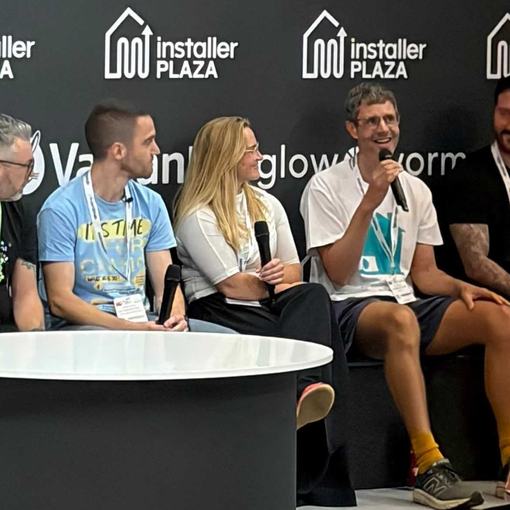
Installer Show at the Birmingham NEC has become an annual highlight for the heat pump industry, bringing together those from across this sector alongside others in plumbing and heating. What we see at the show - product launches, the appearance of new brands and faces, or the disappearance or pivots of those who’ve been around for a while - offers strong signals about the current state of the heat pump market and what’s on the horizon. I attended this year along with many others from Nesta’s sustainable future team. These are my key takeaways.
For the days of the 2026 Installer Show, Europe has sweltered in a record breaking heatwave. Temperatures in the UK have pushed the mid to late 30s, going higher in neighbouring countries, and the evidence unequivocally shows that extreme heat events such as these are exacerbated by climate change. Burning gas to heat our homes is responsible for around a fifth of the UK’s total carbon emissions. While the Installer Show exhibition halls were deliciously air-conditioned, the wall of hot air that faced attendees as they stepped out of Birmingham NEC was tangible evidence of why the heating transition is so important. The first day of the show coincided with the publication of our latest content on air conditioning, an explainer answering common questions on air to air heat pumps. The potential of this technology to cool (and heat) millions of UK homes is becoming more and more obvious.
Nesta has been working hard on the Start at Home scheme for a few years now, first as a trial with our friends at SNIPEF, and now as a fully scaled up programme open to all installers across Great Britain, delivered with a range of industry partners. The scheme enables newly trained installers taking their first steps in heat pumps to do a fully funded installation in their own home with help and support from scheme providers . We were giving information and signing up interested installers on our stand, adding around a hundred potential participants to the 350 who have already installed their heat pump at home or who are very close to having done so. More importantly, both from checking signage and by hearing conversations on scheme provider’s stands, we saw the enthusiasm of scheme providers and heating engineers for the idea. This showed that the Start at Home model has become embedded in the training journeys of those transitioning to heat pumps.
While there’s not much further to go in the technology behind heat pumps, manufacturers are innovating to eke out efficiencies and to build products that better meet consumer needs. The days of heat pumps coming in any colour as long as it is creamy plastic yellow are mercifully now behind us. They typically look the part with neutral colours and smoothed, less boxy, forms. On standard heat pumps, manufacturers are redesigning or even removing grills to boost efficiency by allowing the fan to draw as much air over the heat exchanger as possible.
We saw at Installer Show, more indoor heat pumps for flats, though because they have no outdoor units their capacity remains limited. One manufacturer moved the air intake to the side rather than the back of their outdoor unit, allowing a heat pump to be pushed into a corner making it more suitable for the tight spaces around terraced houses. Others have a mode where the fan runs constantly meaning the heat pump can go nearer a window as, were flammable refrigerant to leak, it would be quickly dispersed reducing fire risk. Innovations like these show that manufacturers are getting to know the UK market and thinking up novel ways to address the biggest challenges.
The most innovative heat pump software already uses AI to optimise design or complete paperwork. A number of start ups see a role for AI in providing additional services to aid business management. Most prominently, several companies were exhibiting AI receptionist or secretarial services where a bot could answer calls, arrange jobs and even offer indicative pricing for work. I’m interested to see how these develop over time. Our research indicates installer frustration with the time spent on admin and paperwork, but our experience from doing user testing with installers also shows that many are cautious of new tech platforms, so I will be interested to see whether installers can successfully integrate them into their workflow.
While I did hear some of the old heat pump myths – uninsulated homes are unsuitable for heat pumps, heat pumps are noisy, etc – being confidently repeated by some at the show, I also saw more and more signs of a maturing industry. Whether it’s through installation practices including Heat Geek’s Zero Disrupt, or through optimising technologies such as Adia ensuring a heat pump performs well without any radiator upgrades, the heat pump sector is moving away from seeking the highest performance possible and evolving towards the lower disruption, lower cost approaches that still provide a quality installation and will be needed for mass market adoption.
From novel approaches to training to product advances and new digital tech, the heat pump space is evolving year on year. That being said, the installers I spoke to say the retrofit market is flatlining and the numbers seem to bear that out. My hope for 2027 is an event which showcases innovation in the customer journey to make getting a heat pump easier, quicker and much more attractive.