

Local authorities often face a delivery gap between strategic plans and the actual installation of low-carbon heating. To address this, we partnered with Plymouth City Council to develop a localised, area-based clean heat planning approach.
Focused on a complex-to-decarbonise urban ward, the project output was a clean heat plan shaped by the local stakeholders, the supply chain, and residents. The result is a draft plan for the Ward of Stoke in Plymouth, assigning suitable technology to groups of properties and surfacing opportunity areas, a pipeline of prospective projects.
This work is accompanied by a playbook featuring plan templates, household communication guides, and a prototype digital automation tool. It offers a scalable, actionable framework for policymakers and communities to accelerate the transition to clean heat.
What's in the report
The clean heat plan has seven sections covering:
- Introduction: the invitation to partner
Establish the scale of ambition and the commercial intent - The track record: delivering clean heat
De-risk the project for the private sector - The market opportunity: scale and technology pipeline
Provide a granular breakdown of the project’s technical requirements - Opportunity deep dive: targeted project briefs
Provide a clear understanding of the 'ideal' solution for each pocket of area - Local authority commitment: generating demand and de-risking delivery
Align financial models with the local population- Community and resident engagement
Define the 'social infrastructure' of the project - Securing anchor projects
Make it safe for supply chain to invest in the area - Streamlining delivery
Council acting as a central coordinator to reduce friction for the supply chain
- Community and resident engagement
- The financial framework: underpinning the market
Demonstrate the plan is commercially viable - Implementation roadmap: aims, roles and next steps
Move from strategiser to market-facilitator
Findings/recommendations
Local heat plans are vital catalysts for delivery. In Plymouth, our clean heat plan sparked stakeholder discussions regarding multi-tenure, area-based solutions that otherwise wouldn't have occurred. This highlights a shift for local authorities toward becoming market facilitators, ensuring entire areas are considered rather than just isolated opportunities.
For residents, these plans provide the certainty needed to reduce transition friction and build confidence in new technologies.
While this research document doesn't constitute a formal council commitment, it identifies critical pathways for progress.
Moving forward, we are scaling this work across Great Britain to refine our data tools and communication strategies. These insights will shape our Clean Heat Neighbourhoods Playbook, supporting our ambition to see area-based clean heat delivery become a national standard.
Acknowledgements
The plan, its contents and the approach were shaped with input from local and national stakeholders. Nesta and Plymouth City Council would like to thank all those who contributed their time, including City College Plymouth, Dartmoor Energy, Kensa, Mitsubishi Electric, Peter Warm Associates, Plymouth Community Homes, Plymouth Energy Community, Thermly, The Village Hub (Plymouth), and the residents of Stoke ward who engaged with this work

Note for readers
Please note this is an output of an early-stage research project, and as such, some of the underlying data and assumptions may be rough or lack detail.
This plan is the result of research into what a granular clean heat plan may entail, what would be useful for a variety of stakeholders and what may help the supply chain move towards delivery. If you are interested in testing this approach, please contact [email protected].
Important: please note this plan is speculative and exploratory only and should not be interpreted as Plymouth City Council's intention to act.
- Note for readers
- 1. Introduction: your invitation to partner
- 2. Our track record: delivering clean heat in Plymouth
- 3. The market opportunity: scale and technology pipeline
- 4. Opportunity deep dive: defining the pathways
- 5. Our commitment: generating demand and de-risking delivery
- 6. The financial framework: underpinning the market
- 7. Implementation roadmap: aims, roles and next steps
1. Introduction: your invitation to partner
Plymouth City Council is committed to the full-scale decarbonisation of heat, a critical step in tackling climate change and delivering a sustainable energy future for our residents. This document outlines a draft template for a strategic plan to transition over 7,500 properties in Stoke ward from fossil fuels to clean, electrified heat.
We have conducted a detailed, street-by-street analysis to define the potential technical pathways and identify the scale of the opportunity. Now, we are seeking collaboration with installers, manufacturers, retrofit coordinators, and skills providers to explore what is needed to turn this ambition into a reality.
This plan provides a transparent overview of the opportunity pipeline, including the technical requirements and potential anchor partners, such as social landlords, to create the commercial conditions necessary for you to invest, train, and scale your operations.
The delivery horizon: This plan is structured on the basis of moving from strategy to implementation over a five-year period, aligned with national funding cycles and local infrastructure milestones. The goal of the Council is to create a steady, predictable pipeline of work rather than a 'stop-start' delivery model.
- Phase 1: Mobilisation (2026–2027): Identifying near-term opportunities, securing anchor partners, and resident consultation.
- Phase 2: Pilot implementation (2027–2028): Delivery of first 500 units in Stoke ward, focusing on "property readiness” and early-adopter clusters. Developing opportunities into a near-term pipeline.
- Phase 3: Scaled delivery (2027–2030): Full-scale rollout across the remaining 7,000 properties, ensuring coverage across tenure and low-carbon heat technologies.
We will be moving from strategy to delivery. This document outlines how you can be a central part of it.
2. Our track record: delivering clean heat in Plymouth
The ambition for the Stoke ward project is the next phase of a long-term commitment to decarbonising Plymouth's housing stock and energy infrastructure. Over the past decade, the Council has successfully managed significant capital funding to deliver retrofit and clean energy projects, building the internal expertise and cross-sector partnerships required to scale these interventions city-wide.
2.1. Proven retrofit delivery at scale
Since 2013, Plymouth has consistently delivered large-scale energy efficiency and heating upgrades across various tenures, working toward the goal of all homes achieving an EPC rating of C or higher. This work is supported by a history of successful funding bids and project management:
- Energy Company Obligation (ECO): Between 2013 and 2022, the Council facilitated over 3,900 measures across fuel-poor homes to improve thermal efficiency and heating systems.
- Social Housing Decarbonisation Fund (SHDF): Building on the successful completion of Wave 1, the Council is currently delivering Wave 2.1, targeting 146 social homes with approximately 310 specific retrofit measures.
- Sustainable Warmth & Homes Upgrade Grants (HUG): Through the management of multiple phases of LAD (Local Authority Delivery) and HUG funding, hundreds of low-income, privately-owned, and rented properties have received tailored energy improvements.
- Legacy of delivery: This builds on over 20 years of experience, including the Healthy Homes (2001–2012) scheme, which treated over 1,000 homes to improve health and energy outcomes.
2.2. Strategic heat network innovation and policy framework
The Stoke ward plan sits alongside Plymouth's strategic energy planning and the Council's 2019 Climate Emergency Declaration. It is supported by the Joint Local Plan (Policy DEV 32), which provides the planning framework for high-energy performance and low-carbon heating.
Recent milestones in heat infrastructure include:
- National Heat Network Zoning: Plymouth was selected as one of 28 cities for the DESNZ Heat Network Zoning Pilot (2023–2025), positioning the city at the forefront of national heat policy and regulation.
- Next-generation networks: Through the HeatNet and D2Grids projects (2019–2024), the Council has implemented high-efficiency, low-temperature network innovations.
- Capital infrastructure: Having secured Green Heat Network Fund support for the Civic Centre and Millbay heat networks, the Council is now in the process of procuring a city-wide Heat Network Development Partner.
The evidence base and delivery experience gained from these projects provide the technical and operational foundation for the transition of the 7,500 properties identified in this plan.
3. The market opportunity: scale and technology pipeline
Our analysis confirms that a mix of technologies would best meet the diverse needs of Stoke's housing stock, including several large schools, business units, City College and retail. This creates a varied and significant pipeline of work. The plan is built around three core technology pathways, with a clear initial rough breakdown of the market size for each, as shown in Table 1.
Table 1: Initial breakdown of potential technology pathways
| Technology pathway | Description | Estimated properties* |
|---|---|---|
| Individual heat sources | Standalone systems per property, such as air source heat pumps, ground source heat pumps, air-to-air heat pumps. Most suitable for: Properties with a large garden/outdoor space and properties already off the gas grid. | 3,500 - 4,000 |
| Networked heat sources | Individual ground source heat pumps connected via a shared loop, known as shared ground loops or networked ground source heat pumps. Most suitable for: dense areas with little to no private outdoor space and properties that are in listed buildings, or in a conservation area (due to the lack of changes to the built environment). | 2,000 – 2,500 |
| Communal heat sources | A single large heat source (eg, communal ASHP or GSHP) serving an individual building and multiple dwellings, or a small number of nearby buildings via a communal heat network. Networked GSHP could also be suitable. Most suitable for: Dense properties with little or no private outdoor space, with an existing communal heating system, room for a plant room or an outdoor communal heating source, or those near waste heat sources. | 1,000 - 1,500 |
| Total pipeline | ~7,500 |
Map 1: Technology suitability map for Stoke ward
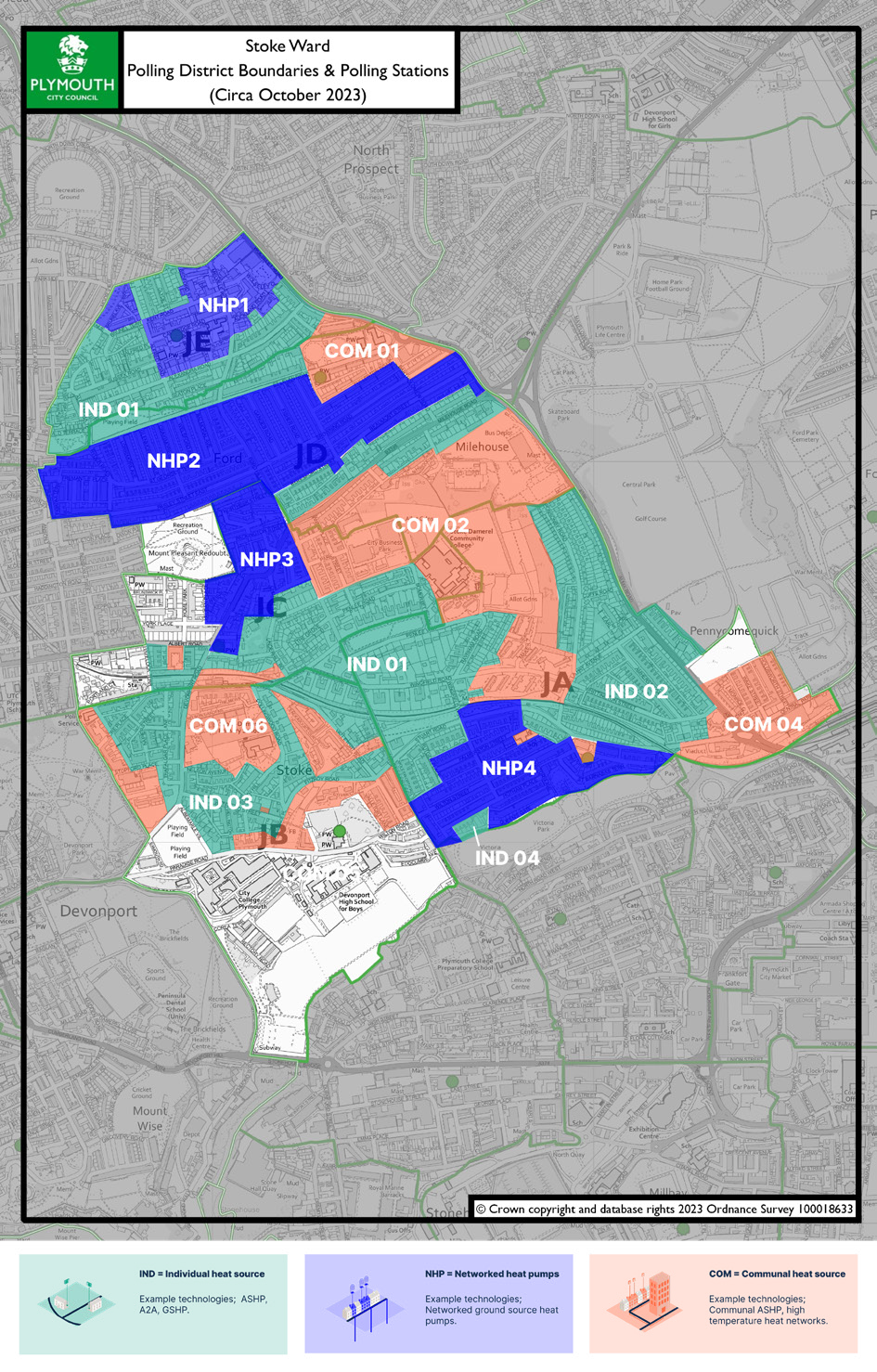
In summary, this section establishes the technical roadmap for Stoke, moving from broad ambition to defined heat pathways for different areas within Stoke ward. The analysis confirms that a mix of technologies is essential to meet the diverse needs of the ward's properties. This data-led approach provides the certainty you need to forecast demand, prepare stock, and allocate personnel.
Nesta is developing a tool to support local heat planning, which will complement this plan. The tool will help partners identify the most suitable low-carbon heating option for properties at a neighbourhood level in Plymouth, including Stoke ward. The 'Opportunity breakdown' section shows an example of the tool's potential outputs, using purely illustrative data.
4. Opportunity deep dive: defining the pathways
This section provides three illustrative examples of the detailed, localised analysis we are currently developing and refining using the Heat Planning Tool, which would allow stakeholders to identify opportunities within the area. To demonstrate the granularity and potential output of this methodology, we have focused this sample analysis on an opportunity area suited to each technology group, individual heat sources, networked ground source heat pumps and communal solutions.
These opportunity breakdowns provide a way to aggregate the data provided in this plan by area within Stoke, allowing for a crucial shift in perspective from area-wide strategic planning to local, technology-specific action. By summarising the relevant data for each identified zone, these opportunity breakdowns serve as a key operational tool for the supply chain to rapidly understand the optimal intervention for a specific area. This ensures they can efficiently deliver the plan by identifying the areas that present a clear opportunity for the installation of the appropriate technology required to meet Stoke's decarbonisation goals.
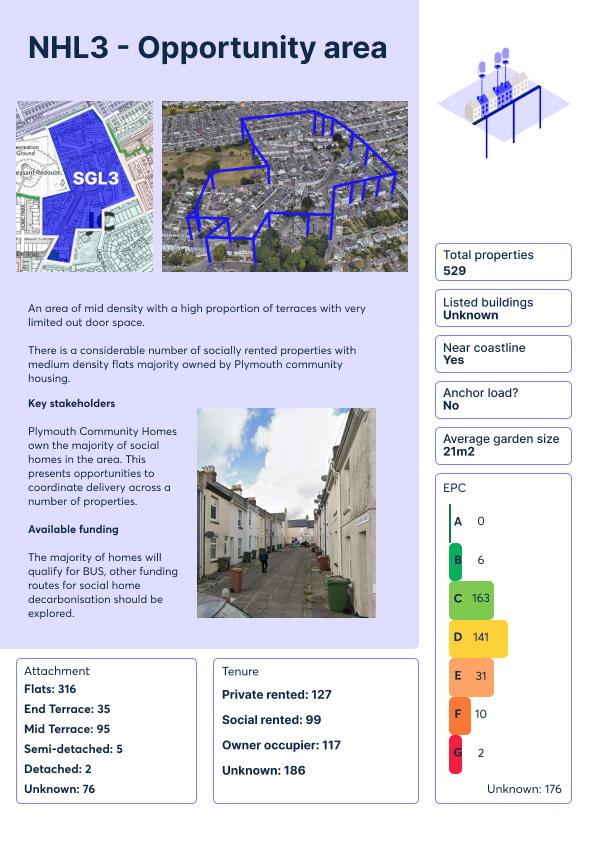
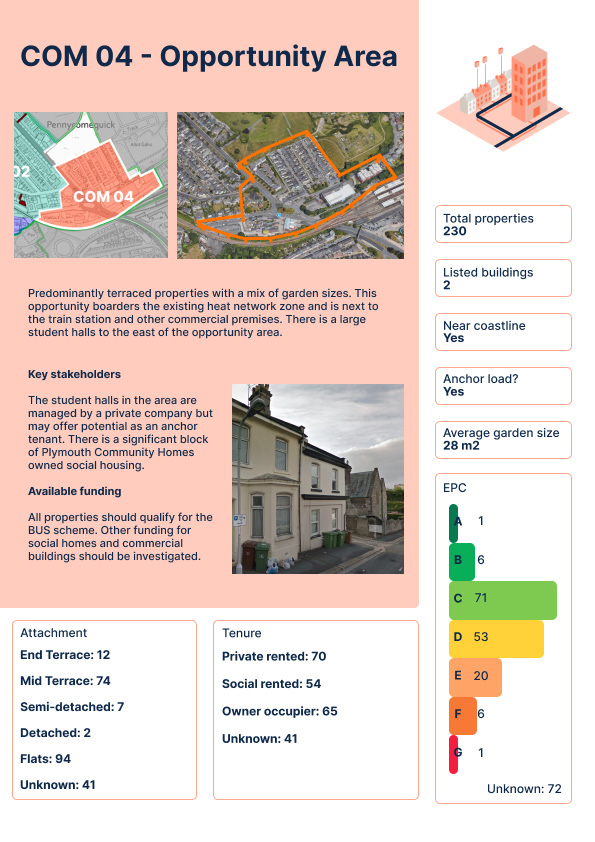
Readers should note that the data in the three summary sheets below is purely illustrative of the information that can be provided for each cluster of properties in Stoke; the data represents an attempt at summarising the characteristics of area IND01, SGL3 and COM04 and would need to be carefully verified.
4.1. Opportunity area – Example 1: Individual heat source
The key features of an area suitable for an individual heat source contrast sharply with the characteristics suitable for networked heat, making a decentralised approach highly efficient. They include:
- Building types: Low-density and outdoor space is crucial as it significantly simplifies the physical installation of both ASHPs and potentially GSHPs.
- Ownership profile and funding alignment: Although funding for individual heat sources is available across tenure types, a high proportion of owner-occupiers may suggest an easier area for individual installs that could utilise the BUS (Boiler Upgrade Scheme).
- No anchor load or network proximity: No major source of waste heat, or no buildings with a heat demand, may suggest an individual approach is more suitable for the area.
Based on Map 1 on page 8, this sample analysis focuses on Opportunity Area IND01 as a prime example of a zone strategically well-suited for a strategy centred around the large-scale deployment of individual, property-level heat sources like air source heat pumps (ASHPs) and ground source heat pumps (GSHPs).
The data aggregated on this summary sheet provides the supply chain with a clear, targeted brief:
- Building types: The dominance of detached (50) and semi-detached (45) homes strongly supports the mass-market deployment of ASHPs due to the minimal disruption and ample external space. The larger gardens with an average garden size of 49.5m2, also open the door for GSHPs in specific, high-specification projects.
- Ownership profile and funding alignment: The high percentage of owner-occupiers (50 confirmed, with many of the 71 'Unknown' likely being owners) indicates a consumer base that will be directly responsive to national grant schemes, such as the Boiler Upgrade Scheme (BUS), rather than relying on large social housing provider agreements. The high prevalence of solar panels also indicates a customer base already engaged with and receptive to investing in low-carbon, home-based energy solutions.
- No anchor load or network proximity: The area's status as 'No' for both 'Near heat network zone' and 'Near anchor load' confirms the lack of current or planned large-scale infrastructure, reinforcing the case for a self-sufficient, property-by-property approach.
4.2. Opportunity area – Example 2: Shared ground loop
The key features of an area suitable for a shared ground loop contrast sharply with those suited for individual heat sources, making a coordinated, networked approach highly efficient. These features include:
- Building types: High-density terraces where limited outdoor space makes individual heat pump installations challenging and inefficient.
- Ownership profile and funding alignment: A high proportion of social housing managed by a single provider (Plymouth Community Homes) creates a streamlined delivery mechanism, allowing for whole-area coordination rather than individual owner agreements.
- Anchor load or network proximity: While a major industrial anchor load may be absent, high housing density combined with nearby green space (like parks) offers the necessary conditions for a viable ambient heat network.
This second sample analysis focuses on Opportunity Area SGL3 as the prime example of a zone well-suited for a networked heat source, specifically a Shared Ground Loop (SGL) system, given its density and ownership profile. The key features of SGL3 make it an ideal candidate for this solution:
- Building types: The area's dense nature strongly supports the deployment of a shared ground loop. Connecting the predominantly dense terraces to a shared ground array leverages shared infrastructure and minimises the land required at each individual property.
- Stakeholder engagement: The high proportion of social housing, specifically the 45 properties owned by Plymouth Community Homes, indicates a project that can leverage bulk funding opportunities and large-scale infrastructure grants. Engagement efforts are immediately focused on this single major decision-maker to coordinate technical specifications and access.
- No anchor load or network proximity: Although the area is not currently near an existing heat network, the concentration of homes and proximity to the park provides the ideal “virtual anchor” and space for a shared ground array, reinforcing the case for a self-sufficient networked solution.
This detailed breakdown allows contractors to immediately assess the potential scale of the network, understand the required infrastructure and planning, and target the key partners necessary to deliver the plan in area SGL3.
Figure 1: IND 01 – opportunity area
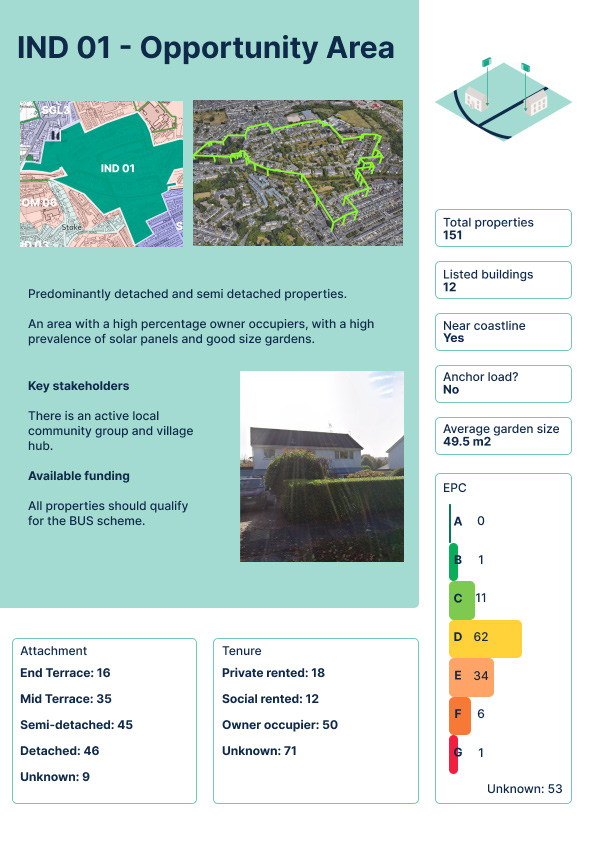
Figure 1: NHL3 – opportunity area
4.3. Opportunity area – Example 3: Communal heat source
The key features of an area suitable for a communal heat source involve high property density and shared infrastructure requirements, making a centralised approach for multiple dwellings highly efficient; they include:
- Building types: Dense properties with little or no private outdoor space, particularly those with existing communal heating systems or the capacity for a shared plant room.
- Ownership profile and funding alignment: Concentrations of social housing or managed apartment blocks (like student halls) provide a streamlined route for installing a single large heat source to serve multiple dwellings.
- Proximity to heat sources: Suitability is often defined by access to waste heat sources or enough communal outdoor space to host a shared ASHP or GSHP array (Networked GSHP).
This sample analysis focuses on Opportunity Area COM 04 as a prime example of a zone strategically well-suited for a strategy centred around a communal heat source (such as a heat network, communal ASHP or networked GSHP).
The data aggregated on this summary sheet provides the supply chain with a clear, targeted brief:
- Building types: The dominance of 94 flats and 86 terraced properties (12 end and 74 mid-terrace), combined with a very small average garden size of 28m2, makes individual installs impractical. This density strongly supports a communal approach, utilising a single large heat source or networked approach to serve the blocks of flats or clusters of terraces via a small-scale communal network.
- Ownership profile and funding alignment: The presence of 54 social rented properties managed by Plymouth Community Homes and student halls managed by a private company provides two major entry points for communal systems. These stakeholders can act as lead partners for installing shared plant rooms, leveraging funding for social homes and commercial buildings.
- Spatial opportunities: Given this density, the area is highly suited for a communal heat source to serve the residential core and adjacent units. Development should prioritise the delivery of a single large-scale heat source, such as a communal ASHP or networked GSHP, to serve multiple dwellings and neighbouring buildings via a localised communal heat network. Furthermore, the opportunity area is strategically positioned bordering the DESNZ-identified heat network zones. While the mainline rail corridor presents a significant physical constraint for immediate cross-boundary expansion, the site's high-density profile, characterised by extensive student accommodation footprints and commercial premises, establishes a robust anchor load for localised heat solutions.
This detailed breakdown allows contractors to assess the feasibility of communal plant room locations and engage with the primary local stakeholders needed to deliver a coordinated, multi-dwelling heating solution in area COM 04.
Figure 1: COM 04 – opportunity area
Readers should note that due to the limitations of this project, only three opportunity areas have been surfaced.
All data in these opportunity areas is fictional and estimated. Through Nesta's development of a heat planning tool, we would be able to provide accurate read-outs of the data shown.
We also expect that the opportunity areas would change in size based on the area that the plan covers. For example, if the process was expanded for the whole of Plymouth, we could imagine a large individual opportunity area covering a large estate, or an area with very similar property characteristics.
5. Our commitment: generating demand and de-risking delivery
This section provides key data designed to help you forecast demand, reduce commercial risk, and tailor your delivery plans.
5.1. Building a customer pipeline grounded in local context
Our priority is to ensure that this clean heat plan is grounded in the local context, not solely on technology. It must integrate critical socio-economic and property data to ensure that heat pathways are both technically viable and responsive to household needs, with a focus on safeguarding consumers against suboptimal or unaffordable technology choices, helping ensure a just transition, particularly for those in fuel poverty. In some cases, optimal installation may include packaged solutions, including heat pumps, solar, storage and relevant electricity tariffs.
5.1.1. Data and technical suitability
To inform supply chain involvement, the Council gathered the following estimates:
- Socio-economic data and vulnerability
- IMD deciles
- Tenure mix
- Property readiness
- EPC data
- Construction year
- Housing type
- Off- and on-gas properties
- Solar panels
- Listed buildings and conservation areas
- Stoke ward characteristics
- Exposure to salt
- Public greenspace
- Roads, river and railways
- Heat network zones
- Anchor load properties
Socio-economic data and vulnerability
1. IMD deciles
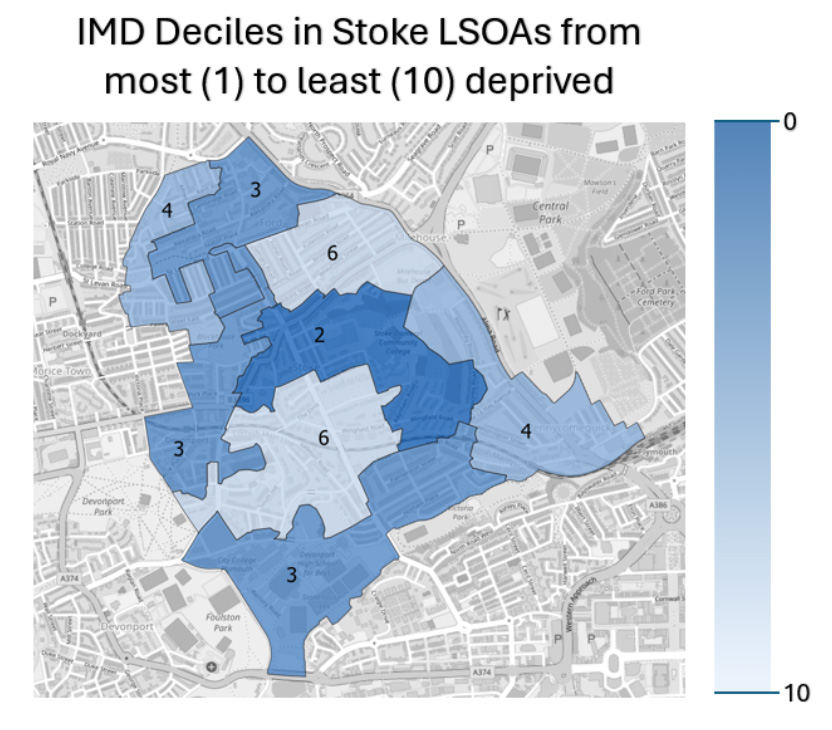
The Index of Multiple Deprivation (IMD) is a key factor influencing the required approach and funding pathways for the decarbonisation effort. Map 2 illustrates the IMD deciles across Stoke's Lower-Layer Super Output Areas (LSOAs), utilising 2025 data from the Ministry of Housing, Communities & Local Government, with decile 1 representing the most deprived areas and decile 10 the least. The map shows that Stoke is an area of relatively high deprivation, which should be taken into account.
This data directly informs our strategy, as higher deprivation levels often correlate with increased eligibility for national and regional grant funding streams and, most importantly, a greater need for energy efficiency and heat decarbonisation measures to combat fuel poverty. Supply chain stakeholders should note that the southernmost LSOA (Plymouth 033B, Code: E01015172) is missing data.
Map 2: IMD deciles across Stoke's Lower-Layer Super Output Areas (LSOAs). Source: Ministry of Housing, Communities & Local Government 2025 data.
2. Tenure mix (social, private rental, owner-occupier)
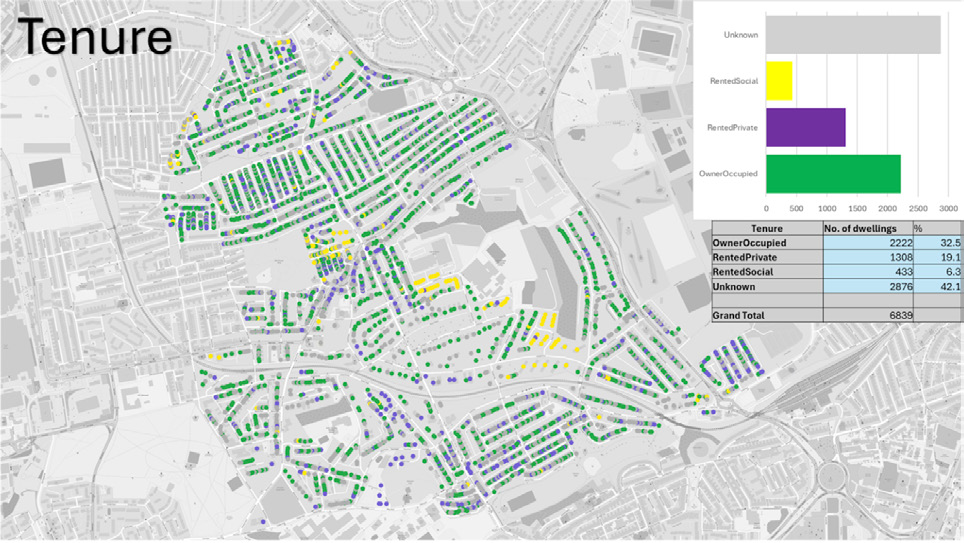
The tenure mix across Stoke directly influences business development, procurement routes, financing models, and the scalability of delivery. Map 3, informed by Council data, visualises the distribution of owner-occupied, social rented, and private rented properties across Stoke. Map 3 shows that Stoke has a relatively high share of owner-occupiers (32.5%), but a substantial portion of renters, either private or social (19.1% and 6.3% respectively). Note that there is missing data for 42.1% of households in the area. In this case, missing data may imply that this 42% share of homes in Stoke ward are owner-occupier, bringing the total to 74.6%, and have not had a change of occupants in 18 years, since EPCs were introduced as mandatory for residential property sales and rentals in 2007, and that these homes are also not social housing.
Stakeholders should note that a high concentration of social housing offers immediate opportunities for aggregated, long-term contracts with anchor partners, such as social landlords, providing confirmed, large-scale demand ideal for factory orders and workforce training. Conversely, areas dominated by owner-occupied or private rented homes require strategies focused on individual customer acquisition, grant administration support, and a greater reliance on local installer networks. This map aims to allow you to tailor your sales pipeline, allocate installation teams, and align your production capacity with the most active and accessible demand segments.
Map 3: Tenure type across Stoke ward. Source: Department for Levelling Up, Housing & Communities. (2025). Energy Performance of Buildings Data: England and Wales. Energy Performance of Buildings Search Results.
Property readiness
3. EPC data
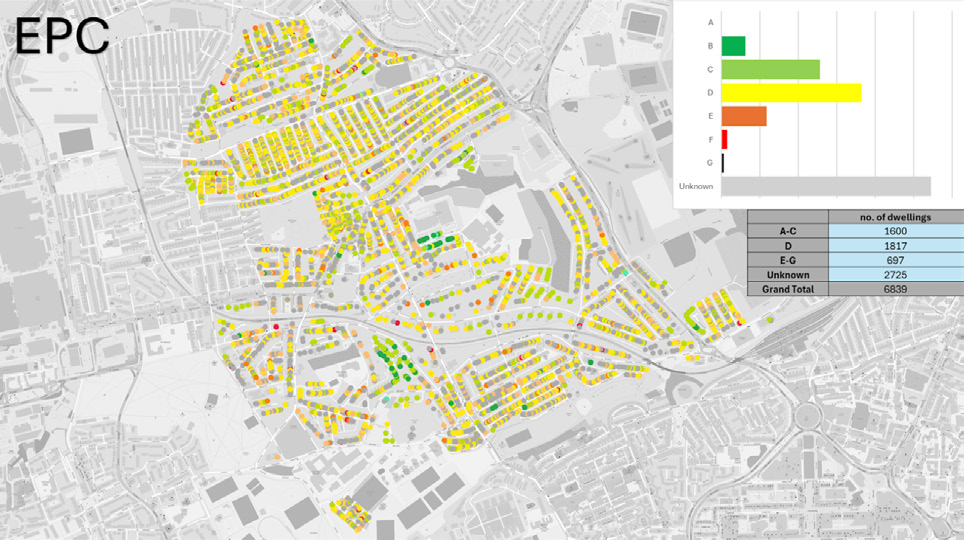
The Energy Performance Certificate (EPC) data provides information about the energy efficiency of the housing stock, directly impacting the scope and complexity of the required retrofit work. Map 4 illustrates the distribution of EPC ratings (A-G) across Stoke, offering a clear signal of where deep retrofit interventions will be necessary. Based on available data, most EPC ratings for dwellings in Stoke ward sit between C and E, with 1,817 homes with EPC D. Based on available data, around 700 dwellings have an EPC score lower than E. Note that data is missing for 2,725 dwellings (around 40% of homes in the area).
For manufacturers and skills providers, this data highlights the need for careful heating system designs and quantifies the demand for materials such as high-specification insulation and the need for accredited installers trained in whole-house retrofit. Areas with a high concentration of low ratings (E, F, G) represent the highest potential for immediate energy savings and are most likely to require fabric measures before the installation of heat pumps. This insight is aimed at enabling you to target investment in specific product lines and upskilling programmes that align with the most pressing technical challenges identified in the ward.
Map 4: Energy efficiency ratings across Stoke ward. Source: EPC register. Source: Department for Levelling Up, Housing & Communities. (2025). Energy Performance of Buildings Data: England and Wales. Energy Performance of Buildings Search Results.
4. Construction year
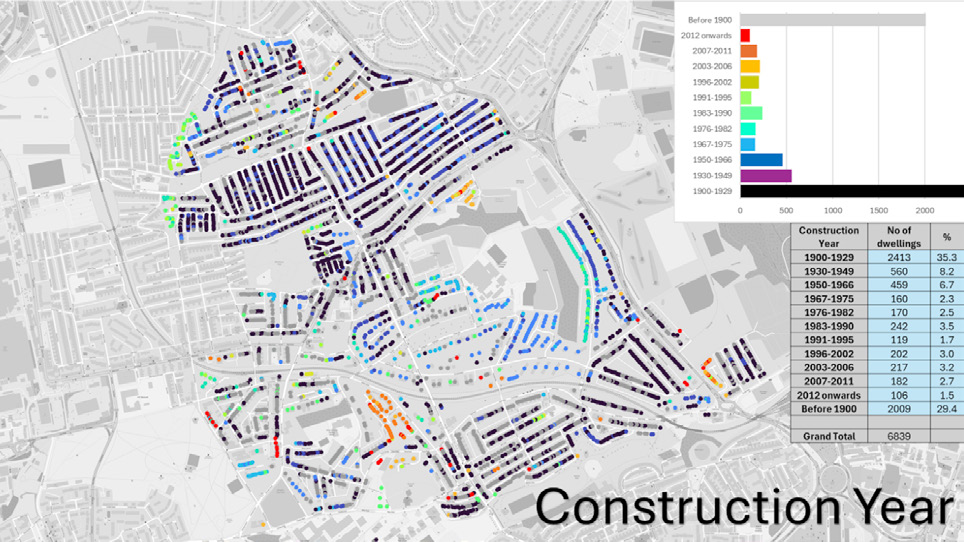
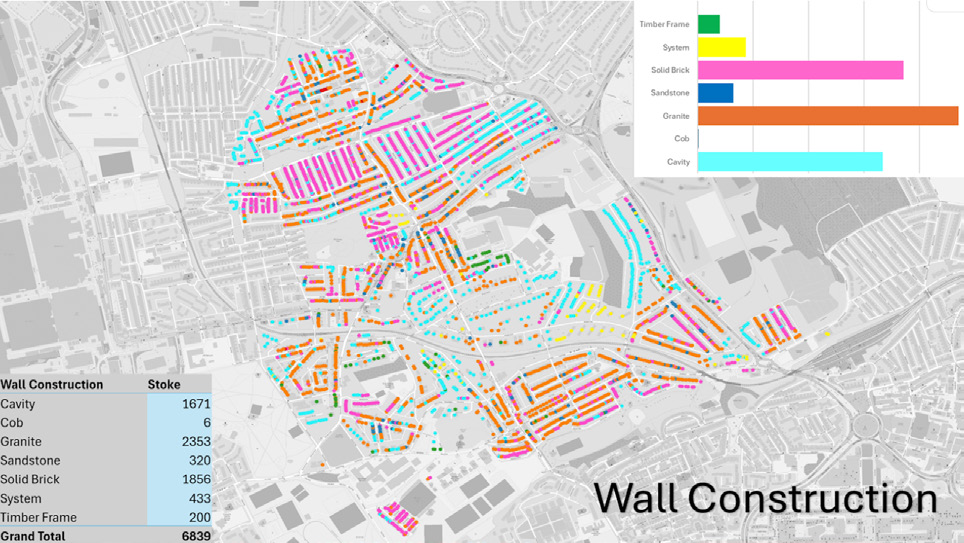
The age and construction period of the housing stock are useful indicators for technical feasibility and cost estimation for all supply chain stakeholders. Map 5 illustrates the distribution of properties by their construction year, providing an indication of the original building standards. Most dwellings in Stoke ward are old: at least 4,422 dwellings were built before 1930 (65% of dwellings for which we have data on construction year). Map 6 shows the type of wall construction.
For installers and retrofit coordinators, this data signals:
- Pre-1919/Traditional builds: These properties often require careful sizing of heat pumps due to higher heat losses and may need specialist components or heating system designs.
- Post-1990 builds: These generally offer a more straightforward and lower-cost heat pump installation due to better thermal performance and smaller heat losses, which might allow for a simpler system design and quicker installation.
These maps aim to allow manufacturers and training providers to focus on the specialised skills required for retrofitting the dominant building type in Stoke.
Map 5: Housing stock age across Stoke ward. Source: Department for Levelling Up, Housing & Communities. (2025). Energy Performance of Buildings Data: England and Wales. Energy Performance of Buildings Search Results.
Map 6: Wall construction type across Stoke ward. Source: Department for Levelling Up, Housing & Communities. (2025). Energy Performance of Buildings Data: England and Wales. Energy Performance of Buildings Search Results.
5. Housing type
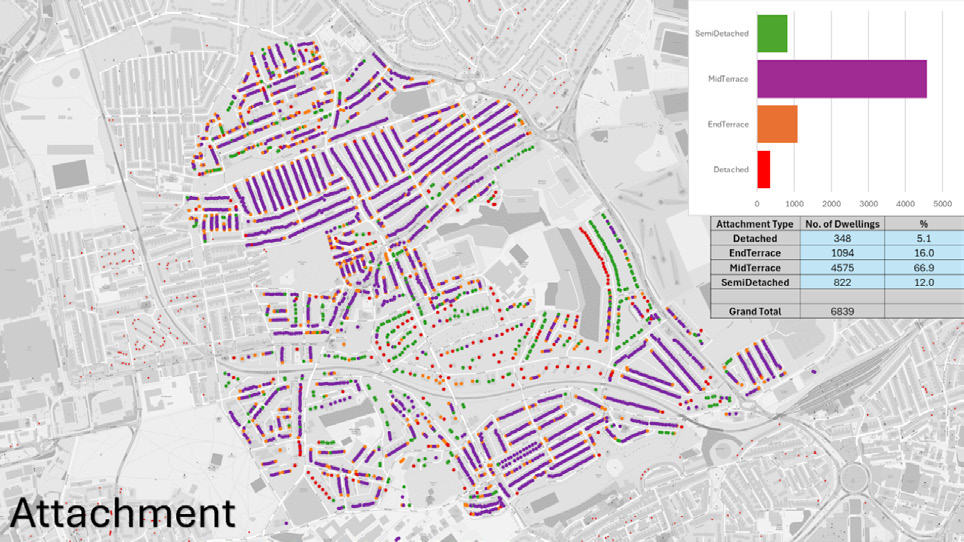
The housing and attachment type data provide essential context for the technical design and efficient execution of retrofit projects. Map 7 illustrates the distribution of housing types (eg, house, flat, maisonette), while Map 8 details the attachment types (eg, detached, semi-detached, mid-terrace). For its majority, Stoke ward is composed of houses and flats in terraced streets. Map 7 shows that 3,889 dwellings (56.9%) in Stoke are houses, 2,828 are flats (41.4%), while 82 (1.2%) and 40 (0.6%) are maisonettes and bungalows, respectively. Map 8 shows that these are primarily on terraced streets: 5,669 dwellings (83%) are either mid-terraces or end-of-terraces.
For installers and retrofit coordinators, these maps can be used to help define the technological options, scale of installation and the required access solutions:
- Individual heat source (eg, air or ground source heat pumps): The space and property ownership structure typically simplifies the installation of an external unit and internal components. This segment signals high demand for standard residential ASHP units and accompanying ancillary equipment.
- Communal heat source (within a single building)/shared ground loop: This is the preferred pathway for flats and maisonettes within single blocks, especially those owned by social landlords or managed by one freeholder. Communal systems overcome space constraints for individual units and allow for aggregated efficiency gains and maintenance. Supply chain focus here should be on commercial-scale plant equipment.
- Heat networks: High-density areas, particularly those with clusters of mid-terrace houses and social housing blocks, present the greatest commercial opportunity for a new or extended heat network. The proximity of buildings and the potential for a large, confirmed heat load from anchor partners (including the Council's building stock and the social housing owned by Plymouth Community Homes) de-risks the investment required for the pipe network.
This combined data allows manufacturers to accurately forecast best fit and demand for products tailored to high-density terraced streets and helps skills providers focus training on the most prevalent architectural challenges in the Stoke ward.
Map 7: Housing type across Stoke ward. Source: Department for Levelling Up, Housing & Communities. (2025). Energy Performance of Buildings Data: England and Wales. Energy Performance of Buildings Search Results / Ordnance Survey National Geographic Database (NGD) – Buildings Theme: OS NGD Buildings | OS National Geographic Database.
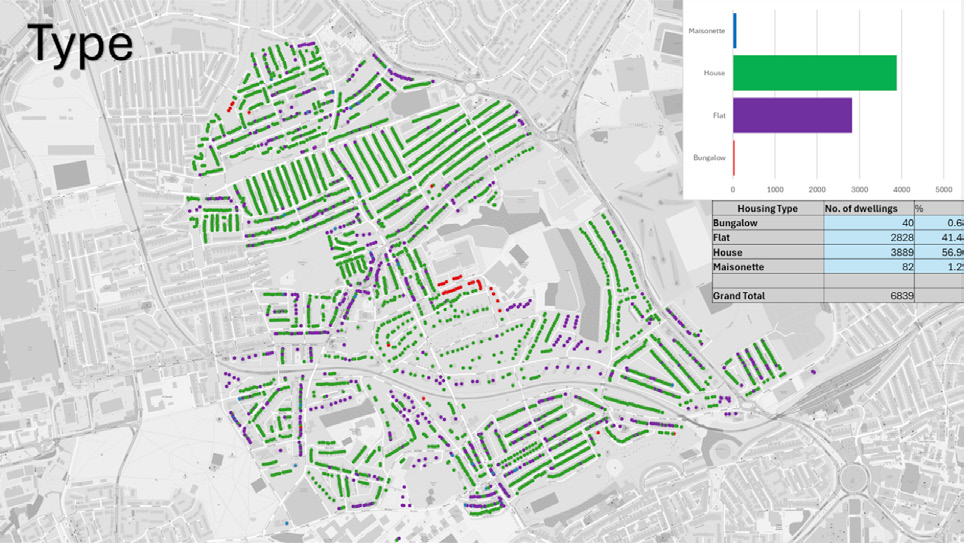
Map 8: Type of housing across Stoke ward. Source: Department for Levelling Up, Housing & Communities. (2025). Energy Performance of Buildings Data: England and Wales. Energy Performance of Buildings Search Results / Ordnance Survey National Geographic Database (NGD) – Buildings Theme: OS NGD Buildings | OS National Geographic Database.
6. Heating type and off- and on-gas properties
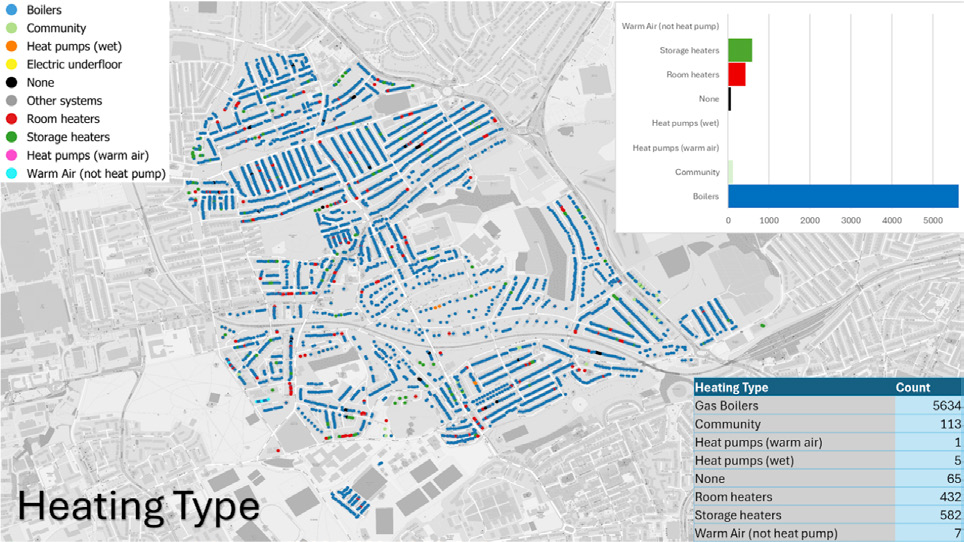
The existing heating system data defines the immediate technical scope and decommissioning requirements of the project, directly influencing the installer skillsets and removal logistics you'll need. Map 9 illustrates the predominant heating fuel types currently in use across Stoke (eg, mains gas, electricity, oil). Most dwellings in Stoke ward are currently heated with gas boilers: at least 5,634 homes (82%).
The map identifies areas reliant on mains gas, which will require the bulk of the work to be focused on like-for-like replacement of fossil fuel boilers with heat pumps or heat network connections. Crucially, the map also highlights any clusters of off-gas properties (eg, those using oil, LPG, or electric-only heating). These off-gas zones represent areas where cost-savings and carbon reductions are often greatest, making them prime candidates for early intervention. Installers should use this data to forecast the types of associated works required (eg, removal of oil tanks) and ensure their teams are proficient in both gas system decommissioning and the subsequent low-carbon technology installation.
Map 9: Predominant heating fuel types currently in use across Stoke. Source: Department for Levelling Up, Housing & Communities. (2025). Energy Performance of Buildings Data: England and Wales. Energy Performance of Buildings Search Results.
7. Solar panels
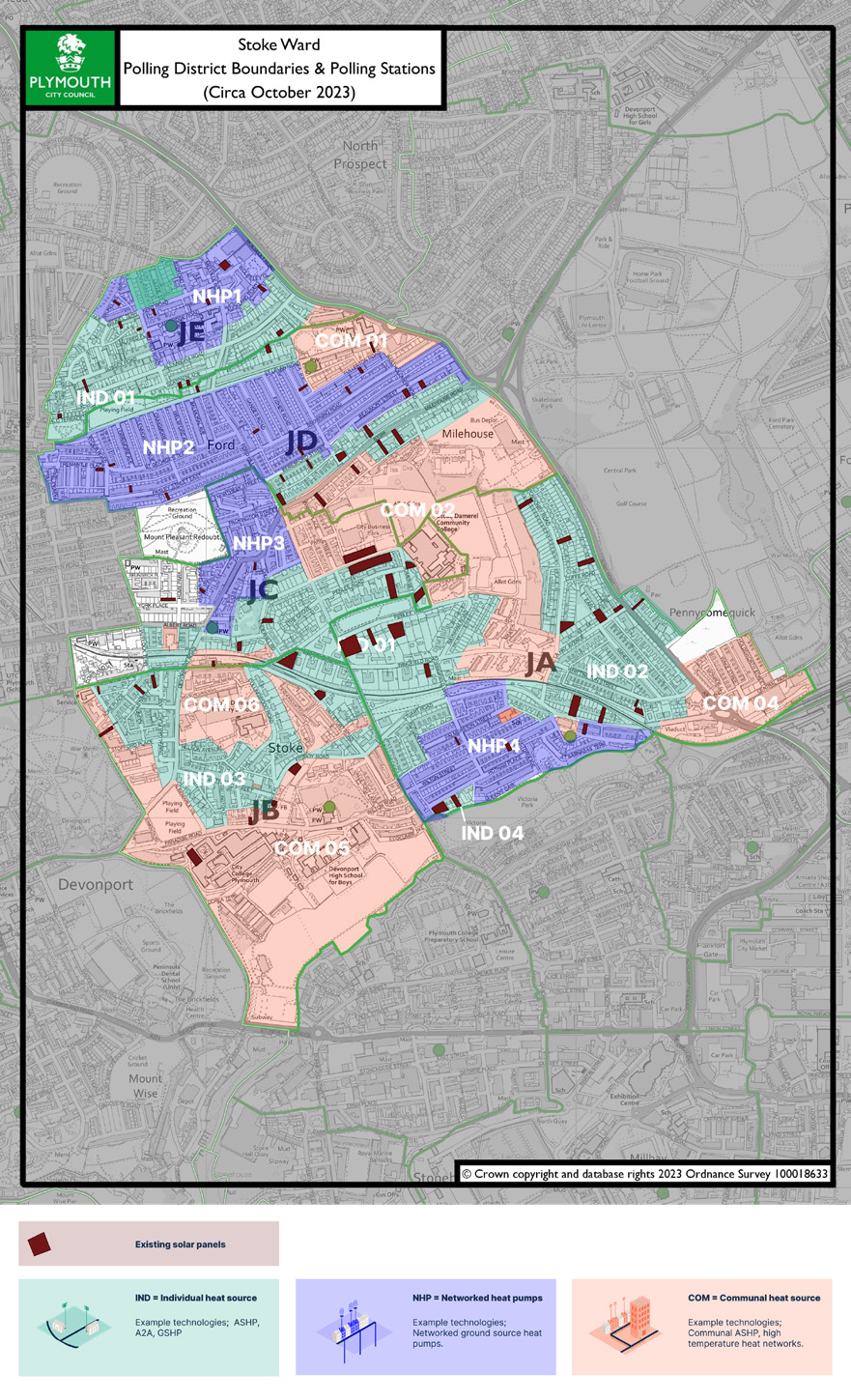
Across Stoke ward, only a few dwellings have solar panels installed. Map 10 shows existing solar installations across the ward, and Map 11 overlays this with the Council's recommended clean heat technology. The solar PV installation data provides a clear signal of energy-ready homes and directly identifies opportunities for system integration.
- De-risked heat pump sites: Properties with existing solar PV are attractive because the panels can power the electric heat pump, significantly reducing the resident's running costs and addressing a primary barrier to heat pump uptake. This overlap identifies sites where the financial case for an individual heat pump (ASHP/GSHP) is strongest and requires minimal upfront electrical work.
- Targeted upskilling: The map highlights a clear opportunity for MCS-certified installers who can offer bundled 'solar-plus-heat' packages. Skills providers should note the demand for training that focuses on the integration of these two technologies, including battery storage and smart controls, to maximise self-consumption of renewable energy.
Stakeholders may choose to prioritise engaging with property owners in the PV-dense areas identified on the maps, as they may represent the most receptive and financially prepared segment for the Council's clean heat transition.
Map 10: Existing solar installations across Stoke (draft). Source: data is taken from Google Earth.
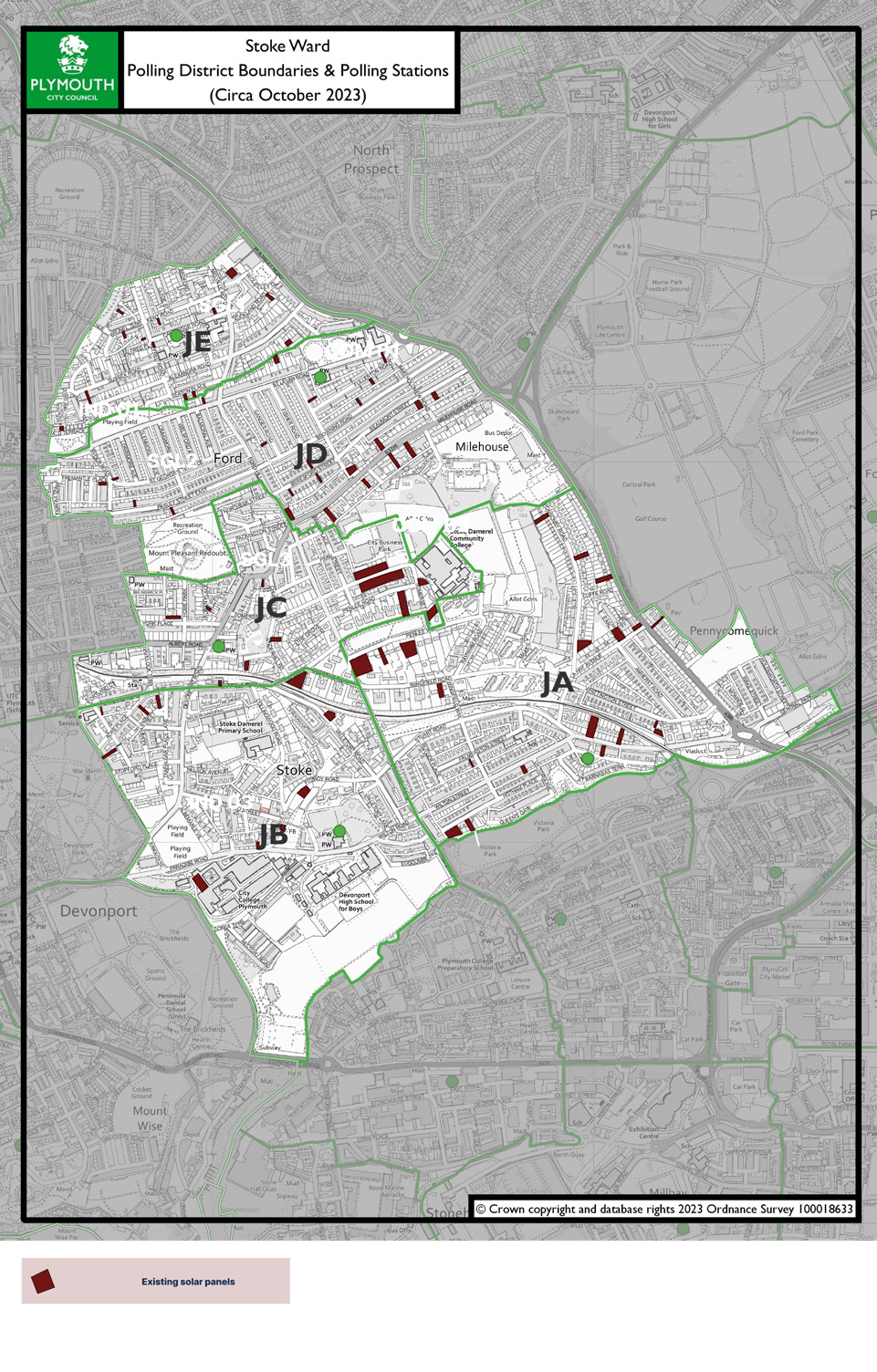
Map 11: Existing solar installations overlaid with the recommended low-carbon heat technologies across Stoke. (Note that the data on recommended heat technologies is out of date – the map is for illustrative purposes only).
Stoke ward characteristics
8. Listed buildings and building conservation areas
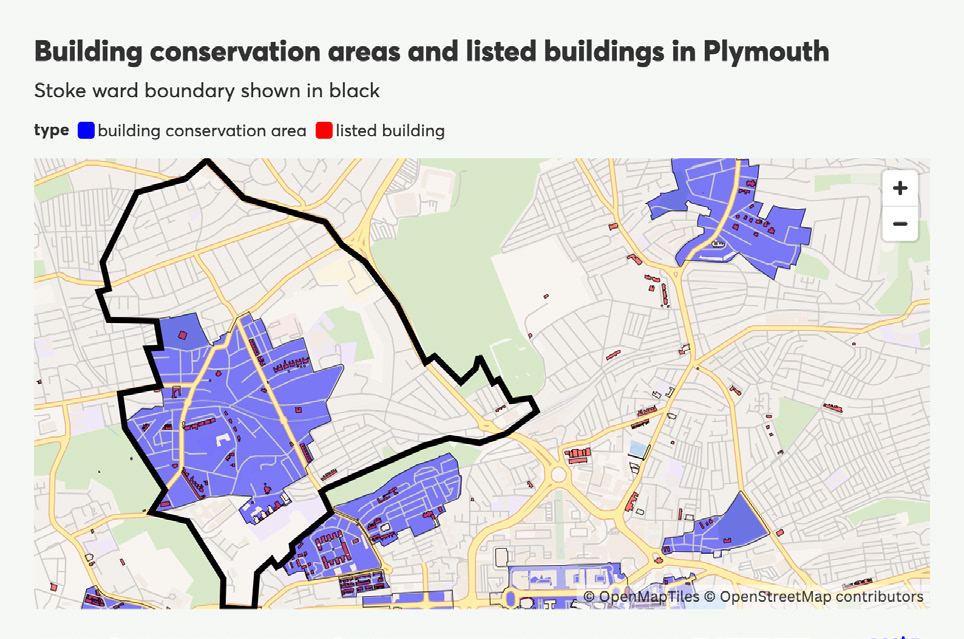
The listed buildings and conservation areas data defines statutory planning and technical constraints that directly impact project scope, cost, and timelines. A sizable portion of the west of Stoke sits in a conservation area with listed buildings scattered across the area. Map 12 delineates the boundaries of conservation areas and the location of individual listed buildings across Stoke. This signals a guaranteed demand for specialist contractors proficient in working with traditional and historic building fabric.
Any modification (external or internal) that affects the character of a Listed Building as a building of special architectural or historic interest requires Listed Building Consent (LBC) prior to the commencement of works. There are also some restrictions on certain types of development within conservation areas and where heritage assets are concerned.
Professional advice from a heritage specialist should therefore be obtained at the outset. Early engagement with the Council's Historic Environment Officers via the pre-application planning service is available to support you in this process.
Map 12: Building conservation and listed buildings in Stoke. Sources: Conservation areas and listed buildings.
Building conservation areas and listed buildings in Plymouth
Stoke ward boundary shown in black
Legend: - type building conservation area - listed building
9. Coastal proximity and salt exposure
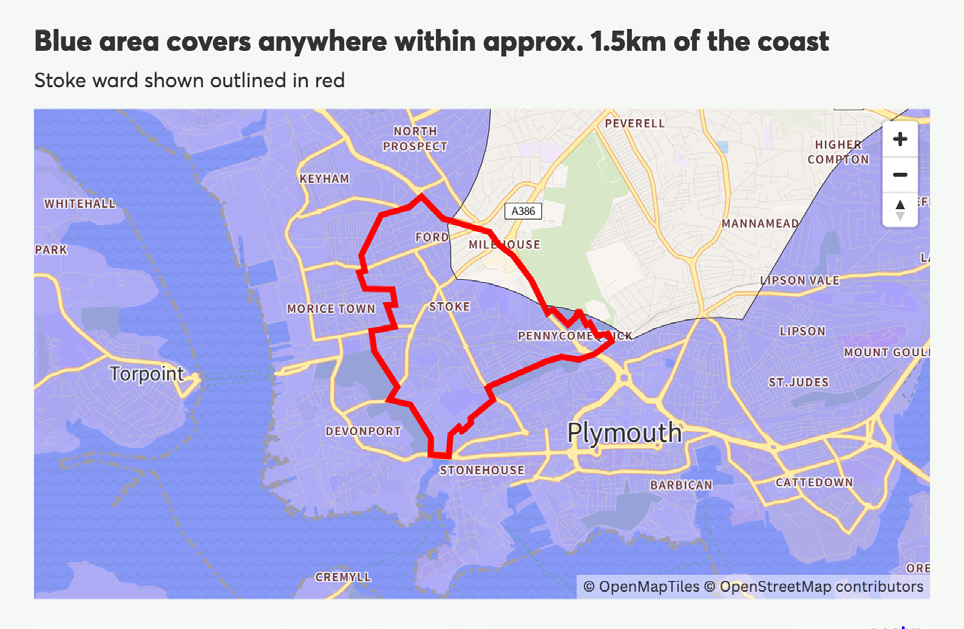
The coastal proximity and salt exposure data informs the specification and durability requirements for all external equipment. Plymouth, being a coastal city, most of Stoke ward lies within 1.5km of the seafront. Map 13 highlights areas within approximately 1.5km of the coastline in blue, based on the Mean High Water Mark, full-resolution country boundaries clipped to the coastline, indicating zones subject to increased salt-laden air. Salt exposure accelerates corrosion and wear on metals, which is critical for equipment like ASHP external units, pipework, and mounting brackets. For projects within the blue-shaded areas, stakeholders must mandate the use of:
- Marine-grade or anti-corrosion treated components: Manufacturers should specify units with highly resistant coatings or materials (eg, specific aluminium alloys, coated steel or plastic enclosures).
- Enhanced maintenance schedules: Installers should ensure their quoted operational and maintenance contracts reflect the need for more frequent checks, treatment and cleaning in these corrosive environments.
This technical constraint directly impacts the long-term reliability and warranty claims of installed systems, requiring a proactive adjustment to standard product selection and service offerings.
Map 13: Coastal proximity and salt exposure in Stoke. Source: 2024 Mean High Water Mark, full-resolution country boundaries clipped to the coastline.
10. Public greenspace
Map 14 illustrates the location and extent of publicly owned parks, green areas, and open spaces. Crucially, the utilisation of public green spaces for infrastructure requires careful consideration of statutory planning constraints, particularly related to land use, environmental impact, and securing necessary permissions, alongside proactive community consultation to manage public access and minimise disruption.
- Enabling shared ground loop/heat network infrastructure: These spaces are often the most viable and cost-effective locations for deploying the ground arrays (boreholes/ trenches) required for shared ground loop or the large-scale pipework required for heat networks. Leveraging public land minimises the cost, complexity, and disruption associated with trenching in roads or private gardens. Car parks may also offer good potential locations for this type of infrastructure.
- Signalling low-cost heat source potential: The concentration of accessible ground beneath these parks provides a natural, secure, and potentially high-volume geothermal heat source. This signals a key opportunity for GSHP manufacturers and specialist drilling/geothermal contractors to engage with the Council on large, consolidated infrastructure projects.
Stakeholders should use this map to identify areas where high-density housing (identified in the Tenure map) borders a large green space, as these represent the most commercially and technically viable areas for scalable, low-carbon heat network deployment. Note that inclusion of this information does not in any way suggest that the Council will permit installation of equipment in any particular case.
Map 14: Public green spaces in Stoke (excluding allotments and play spaces). Source: OS Open Greenspace.
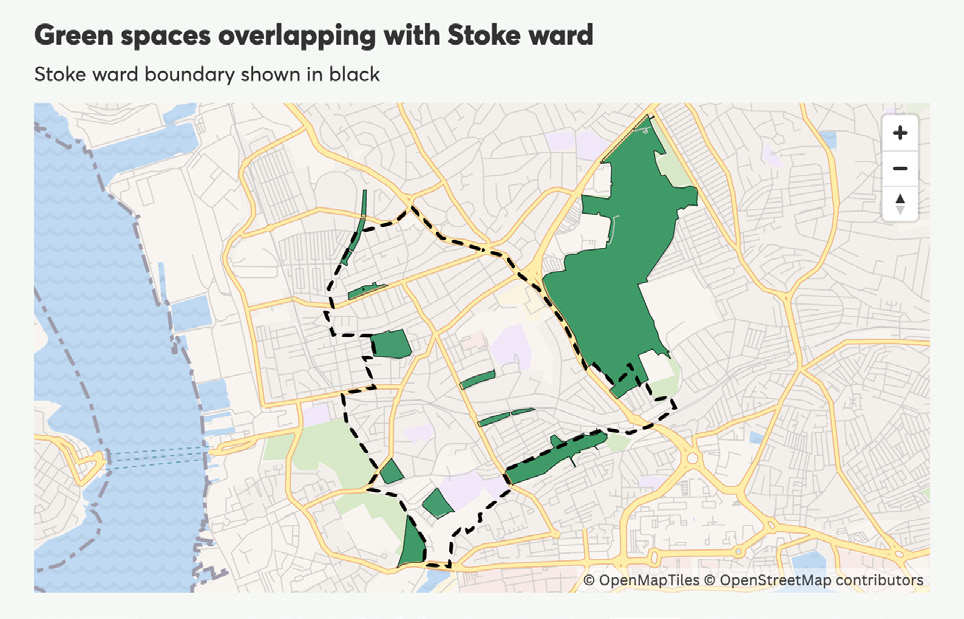
Please note that map 14 shows 11 green spaces and some might not be public green spaces. Available data includes allotments and playing fields, which may be private. The green spaces in Stoke include a variety of functions, as displayed in Table 2.
Table 2: Distribution of green spaces in Stoke by type of usage. Source: OS Open Greenspace.
| Green space us | Count |
|---|---|
| Playing field | 5 |
| Public park or garden | 5 |
| Other sports facility | 1 |
| Total | 11 |
11. Roads, rivers, and railways
Map 15 highlights major transport corridors and waterways across the Stoke ward.
- Logistical barriers: Major roads, railways, and rivers represent physical constraints for heat networks and shared ground loop deployment. These can substantially increase excavation complexity and cost. Installers and network developers must factor these constraints into project pricing and scheduling, acknowledging the potential for significant delays at these specific pinch points.
- Heat source opportunities (rivers): Conversely, major rivers are also a known potential source for water source heat pumps (WSHPs), representing a low-carbon heat source for dense urban areas near the water. This signals an opportunity for manufacturers and specialist contractors to explore commercial viability for anchor loads in proximity to the river.
This map is critical for pre-application planning and risk mitigation, allowing stakeholders to identify the major infrastructural challenges and opportunities before ground is broken.
Map 15: Major transport corridors and waterways across Plymouth and Stoke ward.
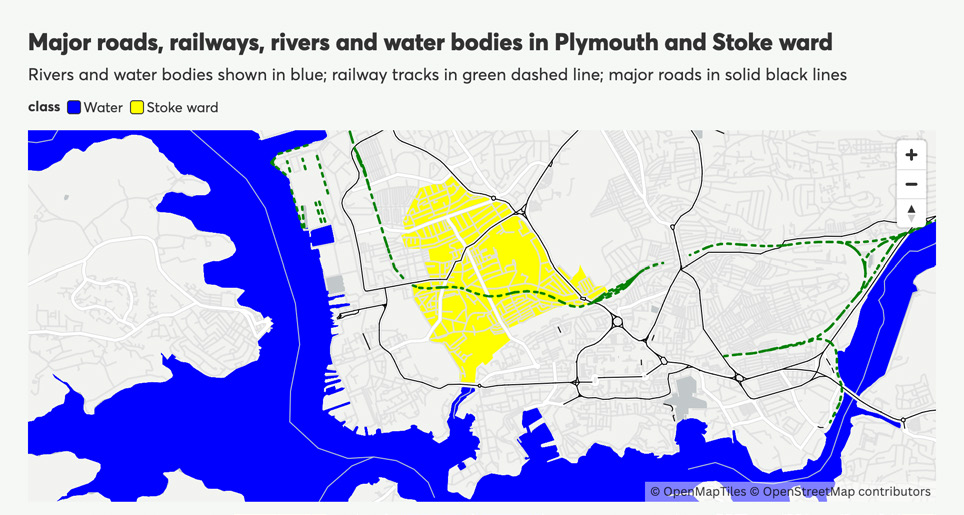
Source: OS OpenMap Local. Layers used are: roads, surface water area, tidal water, and railway tracks. Major roads include: A and B roads, primary roads, dual carriageways, shared-use carriageways and motorways.
12. Heat Network Zones
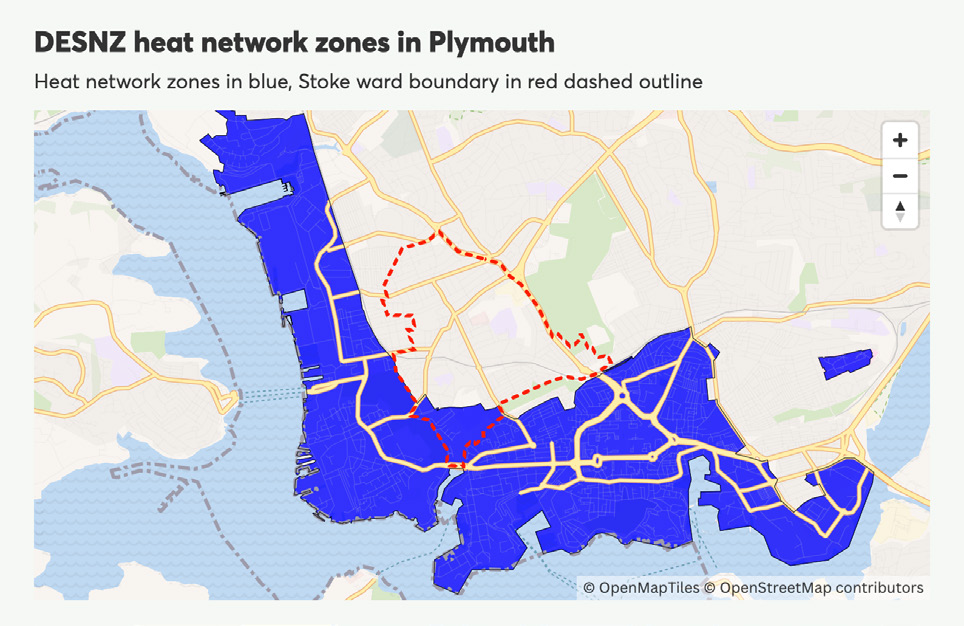
Map 16, taken from the DESNZ Heat Network Zoning pilot programme, delineates priority zones and potential zones for a heat network within the Plymouth local authority area, including Stoke. These zones are identified as areas where heat networks are projected to be the most cost-effective and technically viable long-term decarbonisation solution for homes and businesses. The heat network zones provide a signal from the central government regarding future policy direction and investment priority.
For network developers and investors, this is a direct indication of where future mandates to connect may be applied, offering guaranteed, de-risked demand. Suppliers could use this map to focus large-scale infrastructure investment, secure long-term financing, and prepare supply chains for the volume demand of pre-insulated pipework, central plant components, and associated metering and billing systems within these specific geographic areas.
Please note: these zonal boundaries are subject to ongoing refinement and are correct at the time of publication.
Map 16: DESNZ heat network zones in Plymouth. Source: Heat Network zone opportunity report.
13. Anchor load properties
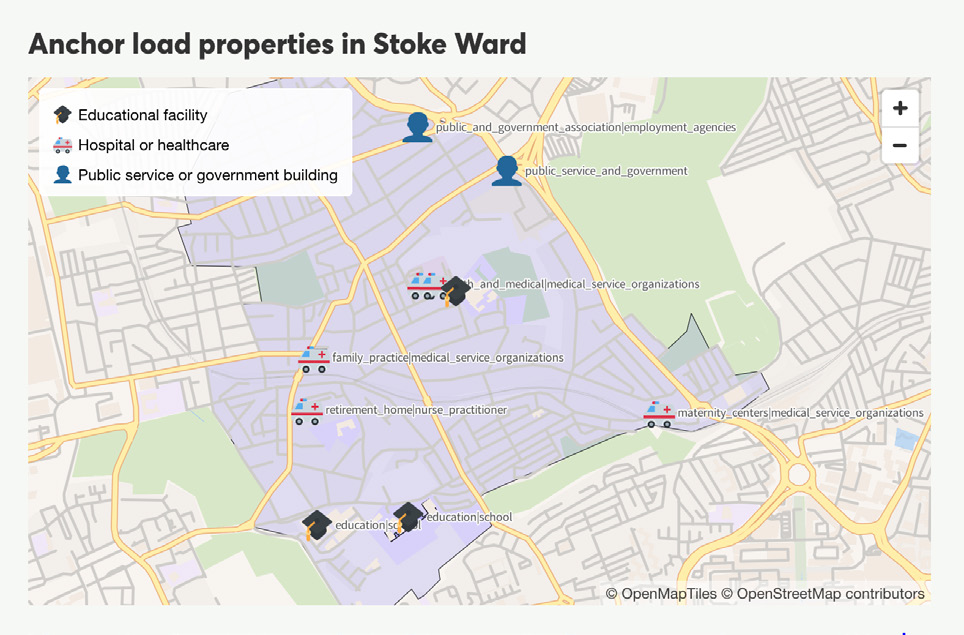
Anchor load properties data informs the commercial viability of scalable communal clean heat infrastructure, particularly heat networks. Identified using the Overture Maps Foundation's Point of Interest data, these properties (including hospitals, large educational facilities, and public service/government offices) are strategically important due to their high, consistent, and predictable heat demand.
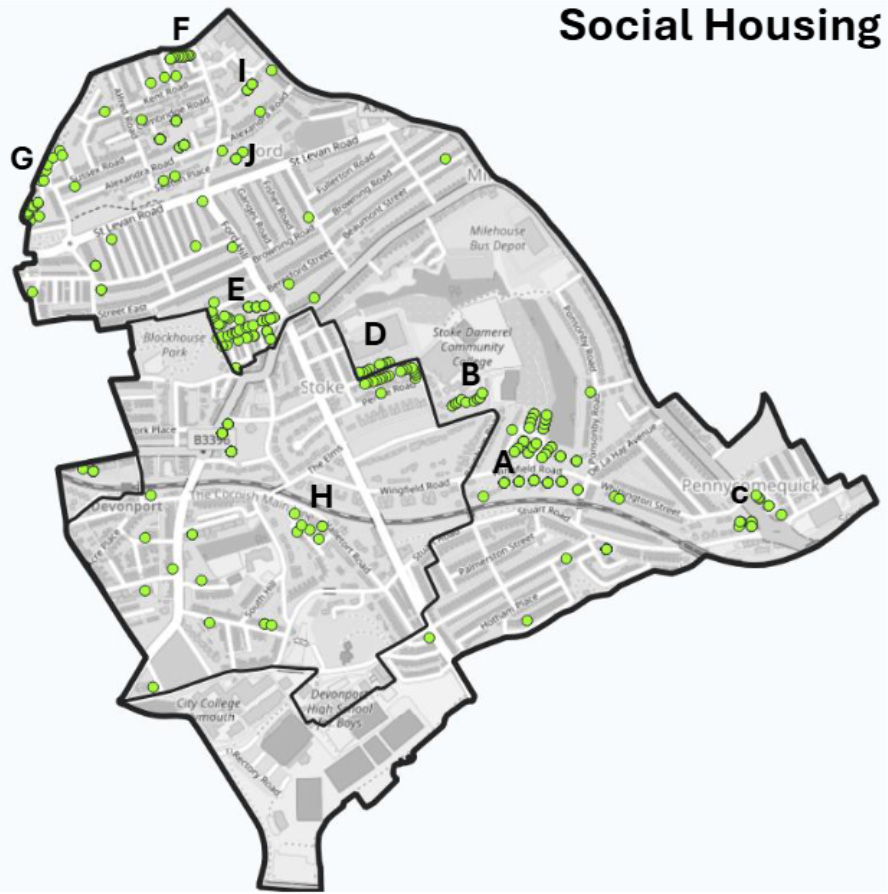
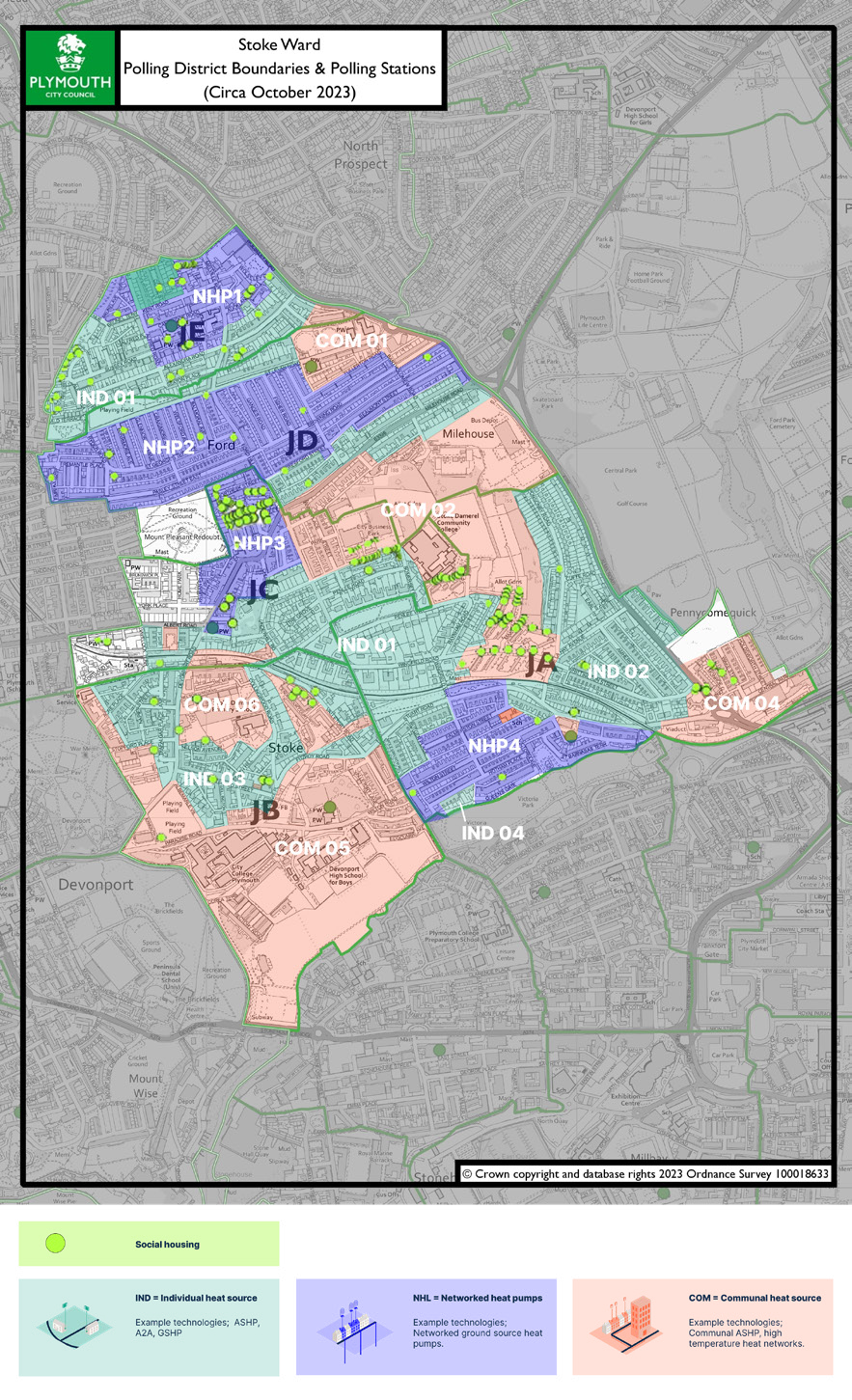
Map 17 illustrates the location of the 9 known anchor load properties in the Stoke ward, while Map 18 shows the sites of social housing (areas A, E, F and J are sites owned by Plymouth Community Housing) and map 19 shows the different sites overlaid with the recommended low-carbon heat technologies across Stoke. These sites act as the potential foundation for any network; their commitment to connecting would provide the necessary guaranteed minimum revenue stream to de-risk investment in heat generation and distribution infrastructure. In the near term, network developers and investors should focus their business planning around these locations, as they represent stable demand that underpins the financial robustness and long-term security required to commit capital and scale operations in the area.
Anchor loads are also highlighted in the opportunity areas.
Map 17: Anchor load properties in Stoke ward. Source: Overture Maps Foundation's Point of Interest data for the United Kingdom.
Map 18: Social housing in Stoke ward. Source: EPC register
Map 19: Social housing locations overlaid with the recommended low-carbon heat technologies across Stoke. (Note that this plot is created for illustrative purposes).
5.2. Community and resident engagement
In addition to the technical data above, we hope to implement an early engagement strategy designed to build on this strategic analysis and drive towards market readiness. We understand that building confidence and trust is a critical factor for successful resident uptake, and we would expect our partners to actively contribute to this goal. As for initial engagement, targeting neighbourhood clusters could build visibility and confidence in the area before wider future rollout.
Our Council-led engagement strategy includes:
- Council-led direction setting: We would build public awareness and trust through clear, consistent communication about the benefits of clean heat and overarching technology options for a given area.
- Council-led co-ordination: We would facilitate local engagement activities between multiple parties where opportunities present themselves.
- Impartial advice & qualification: Local energy advice charities, such as Plymouth Energy Community (PEC), would act as a trusted, impartial intermediary. They would provide residents with tailored advice, qualify their interest, and explain the available technology options.
- Social housing coordination: For social housing tenants, engagement would be coordinated through social housing associations such as PCH and LiveWest, aligning retrofit and heating upgrades with their existing programmes.
Engagement activity and resident experience could be closely coordinated through shared feedback mechanisms between the Council, local energy advice charities, social housing associations, and delivery partners. This would ensure a managed and continuous improvement process throughout the programme.
There are several community organisations operating in the Stoke area with active community support services, local meeting spaces and social media channels signposting the community to local activities and resources. The two main groups include Stoke Youth and Community Centre and Stoke Village Hub.
To maintain the trust of the Stoke ward community, all partnering stakeholders and supply chain partners must demonstrate an uncompromising commitment to best-practice community engagement and consultation, with a specific focus on a just and inclusive transition for local residents.
1. Evidence of prior engagement success
Delivery partners must prove their capability to integrate the needs of a highly localised area like the Stoke ward into project execution. This requires:
- Successful track record: Partners would be expected to provide concrete evidence of previous successful engagement campaigns, particularly in areas with similar housing characteristics (eg, Victorian/Georgian terraced properties common in Stoke), detailing the methodologies used and measured outcomes in resident satisfaction.
- Proactive information sharing: Demonstrating a history of transparent and proactive communication that goes beyond statutory minimums, ensuring Stoke residents are informed at every critical stage, and addressing specific local concerns (eg, parking, access, historic property considerations).
2. Mandatory consultation and compliance
All project planning must rigorously accommodate and exceed necessary resident consultation requirements, especially for social housing providers operating within the Stoke ward, to ensure project legitimacy and a just transition. This includes:
- Statutory compliance assurance: Providing assurance that all project plans fully comply with, and ideally enhance upon, required consultation frameworks relevant to Plymouth City Council and social housing partnerships.
- Inclusive transition planning: Developing tailored consultation strategies that specifically address the needs of all residents, ensuring accessibility of information and providing ample opportunity for feedback that directly influences project design, with particular outreach to elderly residents and those in high-density accommodation like converted buildings or terraced housing.
3. Stoke ward resident-centric engagement mandate (heating technologies)
To effectively deliver the proposed clean heat plan, the supply chain is mandated to undertake a highly focused, resident-centric engagement campaign designed to overcome knowledge barriers and facilitate informed decision-making regarding new heating technologies within the Stoke ward.
This mandate requires delivery partners to:
- Technology awareness & education: Conduct proactive awareness campaigns specifically targeting Stoke ward neighbourhoods to educate residents on the range of available low-carbon heating technologies (eg, heat pumps, communal and networked solutions, or other necessary home upgrades).
- Tailored guidance and recommendations: Move beyond general information to provide one-to-one, house-specific consultations with residents. This includes:
- Home assessment: Conducting basic assessments to understand the suitability of different technologies based on the individual house's Victorian/Georgian structure, current insulation, and energy usage profile.
- Bespoke recommendations: Providing written, jargon-free recommendations that clearly outline the proposed technology, expected performance, potential disruption during installation, and long-term costs/savings specific to a home in Stoke.
- Feedback integration: Establishing a formal mechanism for capturing resident feedback on the proposed technologies and using this data to refine and localise implementation strategies, ensuring community acceptance is central to project acceleration within the ward.
5.3. Securing anchor projects
We see opportunities to secure anchor projects with various partners in the Stoke ward to create scale and delivery momentum. These opportunities will need to be carefully refined with our partners. For instance, Plymouth Community Homes' (PCH) existing retrofit pipeline and its commitment to exploring communal heating provides a foundational workload that could underpin wider area-based schemes. We encourage stakeholders to engage with us on how to best secure and structure these large-scale anchor projects.
5.4. Streamlining delivery
The Council could act as a central coordinator to strategically smooth the delivery process for the Stoke clean heat plan. This role would contribute to ensuring efficiency, reducing friction and maximising the project's success. This includes:
- Infrastructure coordination: We will align clean heat works with planned highway maintenance, road closures and other utility upgrades to minimise disruption and cost to both the supply chain and Stoke residents.
- Funding and finance: We are actively securing and signposting dedicated funding streams and exploring innovative financing models to make projects commercially viable for supply chain stakeholders and highly accessible and affordable for Stoke residents.
- Skills development: We are working proactively with local colleges and training providers to address labour gaps and ensure a steady supply of qualified, locally-based professionals equipped with the specific skills needed for clean heat and retrofit installations.
- Permissions and planning: We will work with partners to signpost support within the Council, helping to secure permissions and reduce administrative friction.
- Trust and confidence building: The Council will leverage its civic position to build confidence and trust with residents around the different technologies suitable for Stoke ward.
6. The financial framework: underpinning the market
Important funding caveats: The funding opportunities and available grants outlined in this section serve as an indication of the potential financial landscape, highlighting the types of schemes and organisations that could be leveraged. However, it is crucial to note that the actual amounts available are subject to constant change. As money is continuously allocated and spent by granting bodies, and as funding schemes are regularly updated or modified, the precise financial figures and eligibility criteria may shift. Therefore, all figures presented should be viewed as illustrative of what currently exists and must be verified against the latest information at the time of application.
We understand that commercial viability is paramount. This plan is underpinned by a strategy to leverage existing funding and develop new commercial models to ensure projects are financially sound. Funding streams and grants are subject to changes and will therefore be kept under review.
6.1. Available funding streams
- Warm Homes Local Grant (WHLG) £3M: This has been designated for the retrofitting of 206 homes (owner-occupied or privately rented) before March 2028, with an average spend of £12,400 per home. The overall grant must include retrofit planning, design, co-ordination and administration and this reduces the funding available to deliver actual measures. Residents can check their availability for the WHLG through Plymouth Energy Community's eligibility tool. Ultimately, Plymouth City Council and Plymouth Energy Community are responsible for allocating the 206 properties and demand for the scheme exceeds the capacity.
- Boiler Upgrade Scheme: Homeowners or small business owners can access a grant of £7,500 for an air-source or ground-source heat pump, £5,000 for a biomass boiler or £2,500 for installing an air-to-air heat pump and heat batteries.
- Warm Homes Social Fund (formerly SHDF): South West social home provider, LiveWest, was awarded £8M from this scheme to improve the energy efficiency of around 700 homes situated in Plymouth and the South West. Plymouth Community Homes did not bid or receive funding as part of this allocation.
6.2. Finance and lending vehicles
Beyond grants, opportunities to finance clean heat projects are available through:
- National Wealth Fund, which provides financial guarantees to unlock private capital for retrofitting social housing.
- Green Retrofit Loans, which are offered by private lenders and mortgage providers, where rates are tied to sustainability outcomes such as improved EPC ratings.
Other opportunities for alternative financing models include:
- Investor-funded clean heat neighbourhoods. The first example of a ground source heat pump network was announced between Kensa and Octopus Energy Generation for over 100 homes in South Wales. This pension-backed network model mirrors how existing utilities such as water, gas and broadband are delivered, where the customer doesn't have to pay the upfront installation cost.
- Community energy models such as Rossendale Valley Energy's Net Zero Terraced Streets. With initial funding provided via the UK Community Renewal Fund, this scheme aims to test the concept of a Net Zero terraced street through a community heat service delivered through clusters of shared bore holes and ambient heat loops. With no upfront cost to the homeowner, landlord or tenant, the initial investment in infrastructure and retrofit will be paid back via a standing charge by householders. A community energy club will bring householders together to access cheaper, community-owned energy. This is part of a wider net-zero community vision.
6.3. Social housing funding plans
The main social housing providers in Plymouth are LiveWest and Plymouth Community Homes.
Plymouth Community Homes is working towards a commitment to upgrade 95% of its current housing stock to EPC C by 2028. Ongoing and previous commitments include:
- £10.7 million major works investment programme for 2025/26 focused on maintaining homes to the Decent Homes Standard. Retrofit activities include:
- Stock condition surveys (targeting 100% coverage by March 2026)
- Energy Performance Certificate (EPC) assessments
- Installation of new kitchens, bathrooms, heating systems, electrical upgrades, windows, doors, loft insulation, and lighting improvements.
- A £1.95 million retrofit project in Stoke (Alcester Close) included external wall insulation, ventilation upgrades, and window replacements, funded partly by a £270,000 SHDF Wave 1 grant.
LiveWest's commitment to decarbonisation is underlined by its significant investment of £40 million into retrofitting its existing homes. The organisation is also investing in staff training, including Level 5 Retrofit Coordinator qualifications, to build internal capacity for delivering retrofit projects.
LiveWest's Cby28 programme aims to bring 9,000 homes up to an EPC C rating by 2028, two years ahead of the government target. Retrofit measures include:
- Insulation upgrades (loft, cavity, external walls)
- Solar panels, heat pumps, high retention heaters, and smart meters
- Ventilation improvements, low-energy lighting, and new windows and doors.
Funding commitments include:
- Receiving £1.5 million SHDF funding and contributing £1.8 million of its own funds to retrofit 146 homes in and around Plymouth.
7. Implementation roadmap: aims, roles and next steps
This document marks the beginning of our formal engagement with the local supply chain. The successful delivery of clean heat in Stoke ward depends on your expertise, capacity and ambition.
We are seeking interested and competent organisations across the entire supply chain to help us deliver this ambitious plan.
7.1. Strategic aim by technology pathway
We will tailor our delivery goals to each technological pathway. By advancing different approaches at varying speeds, we can build specialised expertise and capacity across the entire clean heat plan for Stoke ward. The different pathways are outlined in Table 3 below.
Table 3, outlining potential technology pathways and delivery goals, is for illustrative and exploratory purposes only. The data and timescales presented are indicative of the project's current direction and do not constitute a binding commitment or a formal intention to act by Plymouth City Council at this stage. All information remains subject to further review and verification by the Council as the plan is refined.
Table 3: Aims by technology pathway for Stoke ward.
| Technology pathway | Aim | Plymouth Council involvement | Timescale |
|---|---|---|---|
| Individual heat sources | Have a number of providers in place who are delivering ASHP to a high standard to any interested homeowner in Plymouth, as a point of referral in the designated areas. | Engagement support in designated areas and signposting residents to delivery partners. | Our aim is to have providers in place in 6-12 months. |
| Networked heat pumps | Deliver a networked GSHP scheme in a multi-tenure area. Given the current UK government subsidies, we currently imagine this to include a substantial proportion of social homes as an anchor for delivery. | We will convene interested parties, provide marketing support and provide collaboration across the local authority to reduce delivery barriers. | Our aim is to have an area, or areas, identified with design and feasibility conducted by interested parties within 12 months. |
| Communal heat sources | To continue the work of decarbonising multi-tenure buildings by working with partners to realise wider benefits. This could be an existing block of flats, or an industrial premises utilising waste heat for surrounding domestic properties. | We will act as a convener to help these schemes move towards delivery. | We see these opportunities being led by demand and will consider what support we can provide on a rolling basis. |
7.2. Specialist roles required
To achieve the aims outlined in Table 3, the Council seeks the involvement of specific local stakeholders. Where fabric upgrades are required, these will require enabling works and professional services beyond the core clean heat installation team. We are also seeking organisations that can provide these critical skills, including qualified electricians, plumbers, carpenters, and landscaping professionals, to clear overgrown garden spaces necessary for installation access.
7.2.1. For installers and manufacturers
For installers and manufacturers, this plan offers:
- Visibility of a long-term project pipeline, broken down by technology and geography.
- Leads warmed up to the proposition of clean heat solutions, reducing your potential sales cycle time and upfront cost of engagement.
- Coordination support to simplify street-by-street and multi-tenure installations.
For local installers and plumbing and heating SMEs, this plan signals the potential demand for heat pumps in Stoke ward. We recommend that interested engineers seek necessary training, such as the courses available in local colleges, and encourage them to make use of existing opportunities to upskill in heat pump installations. For example, Start at Home schemes are available to heating engineers in Devon, which gives you the opportunity to fit an air-source heat pump in your own home for free to gain confidence and kickstart your work in the renewables sector. You can find more information about the different schemes here.
As for all current and future grants, installers must be appropriately certified, including holding MCS certification for air source heat pump (ASHP) or ground source heat pump (GSHP) installations, and PAS2030 certification for any grant-funded fabric improvements.
7.2.2. For retrofit coordinators
For retrofit coordinators, we need your expertise to:
- Where applicable, ensure a high-quality, whole-house approach that complies with PAS2035 standards. PAS2035 is essential for any grant-funded retrofit/heating installations.
- Produce retrofit designs bespoke to individual property characteristics and occupancy needs.
- Manage the complexity of multi-property schemes, de-risking the process for homeowners and installers. This will explore mechanisms or policy levers required to overcome this challenge, which is critical for whole-area schemes.
7.2.3. For skills and training providers
For skills and training providers, we will provide:
- Clear data on future workforce demand to inform vocational and relevant NVQ curriculum development, including NVQs for essential skills such as draught-proofing and individual fabric measure installations.
- A platform to connect with local installers and create clear career pathways into the clean heat sector.
7.3. Enabling works and procurement
To enable efficient delivery of energy efficiency projects, the Council is developing a Dynamic Purchasing System, outlined below. Please note that this system is not currently in use yet.
7.3.1. Overview of the system
The Energy Efficiency Dynamic Purchasing System (EEDPS) is a flexible procurement framework designed to support local authorities in delivering energy efficiency improvements across the domestic housing and commercial building sector.
It operates as a Dynamic Purchasing System, allowing contractors and suppliers to join at any time after meeting pre-qualification criteria. This ensures a continually refreshed pool of vetted providers.
The system covers 25 lots, ranging from insulation, heat pumps, solar technologies, through to whole-house retrofit to associated building works and training, enabling councils to procure individual measures or comprehensive retrofit packages efficiently.
7.3.2. How the system operates
INCIC, as the Scheme Operator, manages the DPS and provides an electronic platform for procurement, contractor monitoring, and ordering of works.
INCIC ensures compliance with Public Contracts Regulations 2015, TrustMark standards, and consumer protection requirements. Contractors are pre-qualified, vetted, and monitored continuously, with independent-backed warranties offered for works delivered through the DPS.
Local Authorities sign an Access Agreement to use the DPS, and INCIC charges a 1% management fee on the value of completed works, invoiced monthly in arrears. Work packages are awarded via the DPS lots through an online system, ensuring transparency, robust procurement, and quality assurance.
7.4. How to get involved
The outcomes detailed in the sections above can only be achieved through a coordinated effort between the Council and delivery partners. Whether you are an established installer, a training provider, or a local SME, your expertise is vital to our success. We encourage you to take the following steps to ensure your organisation is positioned to participate in upcoming opportunities:
- Register your interest by contacting Plymouth City Council to stay informed about project timelines, procurement opportunities, and briefing events.
- Attend our 'Supply chain launch event' in [Month/Quarter, Year] to meet the project team, learn more about the delivery zones, and network with other key partners.
- Contact us directly to discuss how your organisation's capabilities align with the outcomes outlined above.