01. What is the AI Social Readiness Advisory Label?
Overview of the AI Social Readiness Advisory Label Process
In the UK, public sector organisations are facing increased pressure to adopt AI technology to improve the speed and quality of public services. To do this well, it is important to secure public trust by deploying AI responsibly, yet there is little practical guidance on how this can be achieved.
The AI Social Readiness Advisory Label process aims to fill an important gap in the AI assurance landscape. It measures public confidence and trust in specific AI tools being used in UK public services, and provides easy-to-understand advice on how to address public concerns.
It has been designed to support public sector leaders as they make decisions about AI procurement, deployment and risk management. It should be used alongside other information, including technical evaluations and compliance processes.
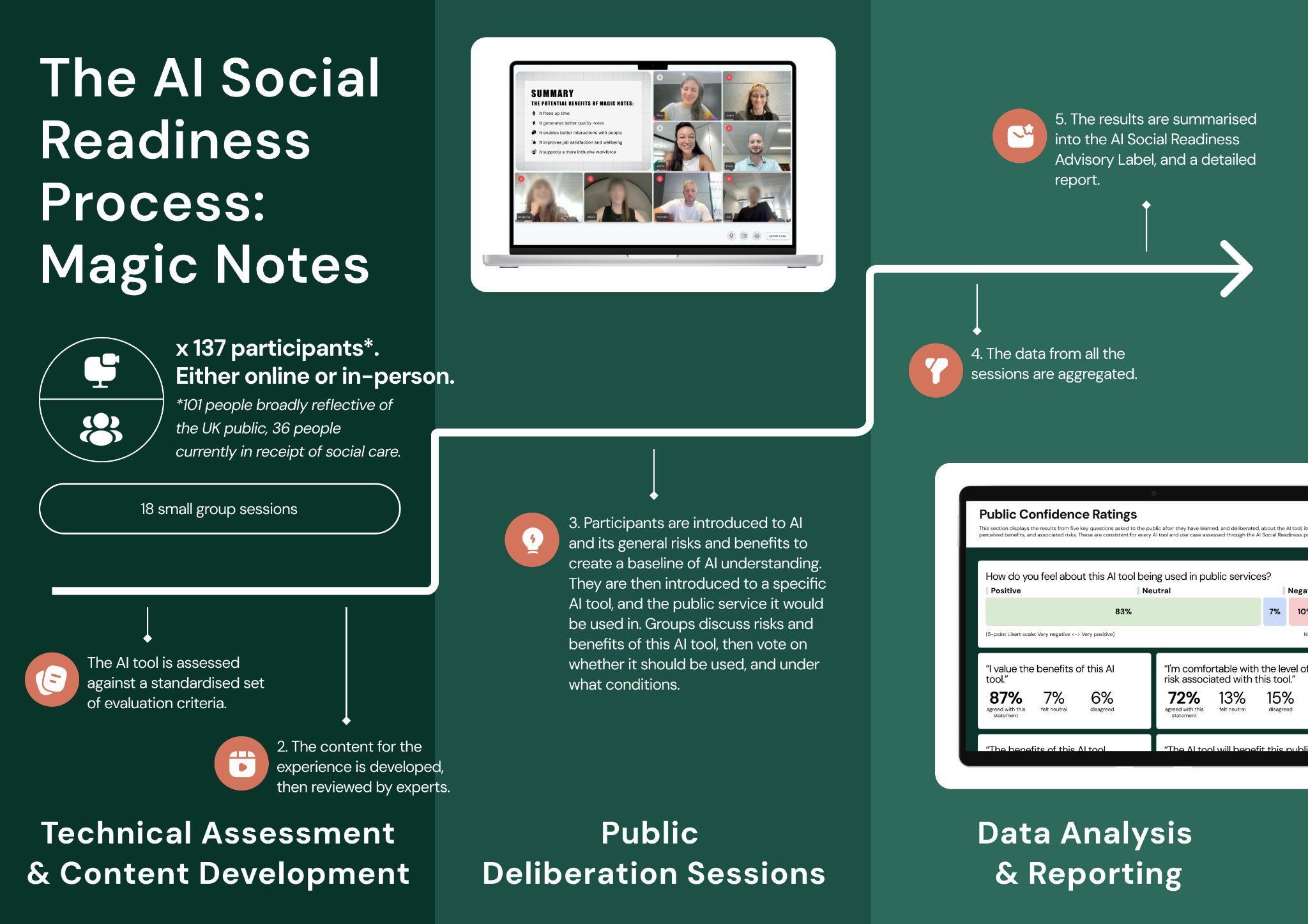
The results in this report and on the label capture the views of 101 people broadly reflective of the UK public, collected during 13 small-group deliberations about the Magic Notes tool. A separate report captures the views of 36 people currently in receipt of social care. Across both cohorts we followed a structured approach known as deliberative polling®, which captures both quantitative and qualitative data from individuals and groups as they learn about the tool and weigh up the benefits versus the risks. Participant opinions are italicised and presented in quotation marks throughout.
Methodology for further detail.

02. AI Social Readiness Advisory Label – Magic Notes
Magic Notes
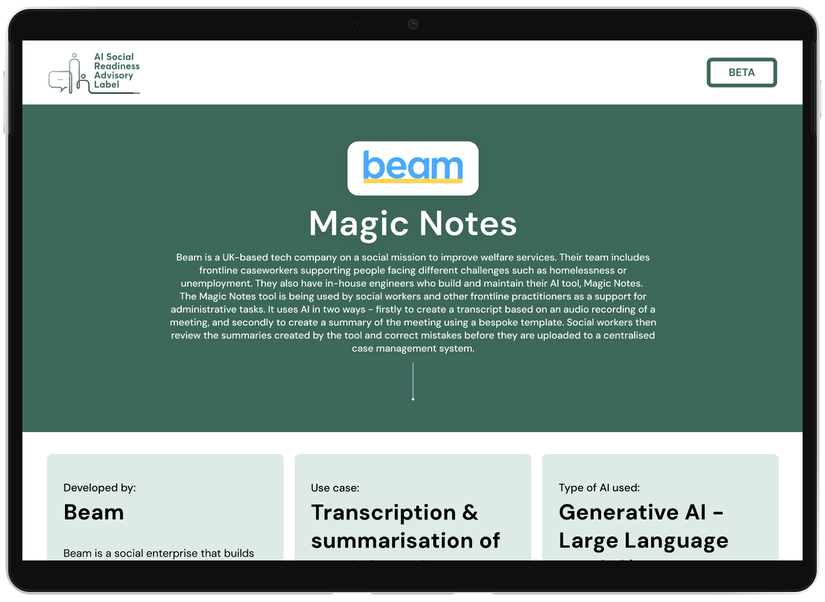
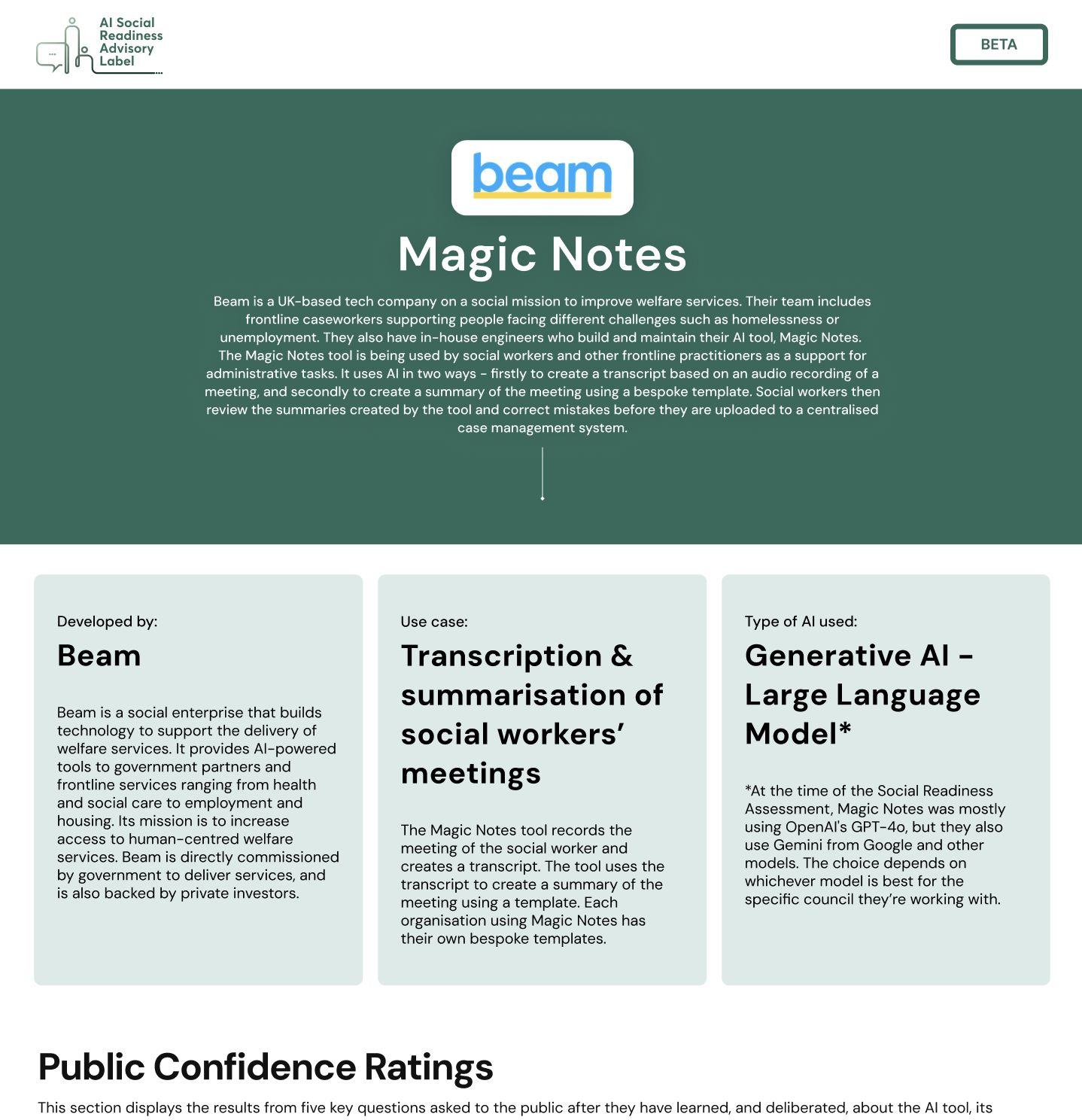
Beam is a UK-based tech company on a social mission to improve welfare services. Their team includes frontline caseworkers supporting people facing different challenges, such as homelessness or unemployment. They also have in-house engineers who build and maintain the AI tool, Magic Notes.
The Magic Notes tool is being used by social workers as a support for administrative tasks. It uses AI in two ways: 1) to create a transcript based on an audio recording of a meeting, and 2) to create a summary of the meeting using a bespoke “template". Social workers review the summaries created by the tool and correct mistakes before they are uploaded to a centralised case management system.
Public Confidence Ratings
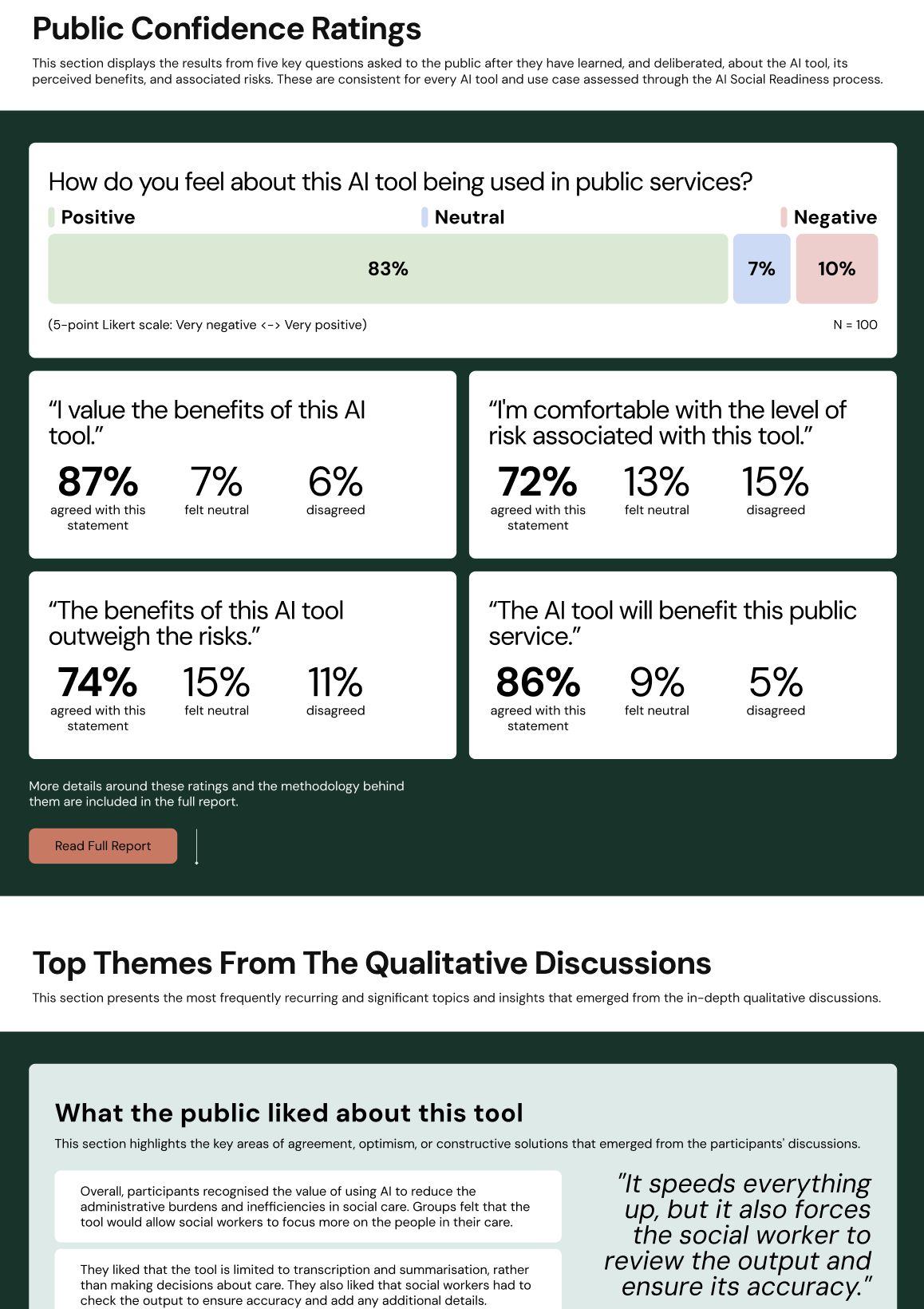
This section displays the results from five key questions asked to the public after they have learned, and deliberated, about the AI tool, its perceived benefits, and associated risks. These are consistent for every AI tool and use case assessed through the AI Social Readiness process.
More details around these ratings and the methodology behind them are included in the full report. Read Full Report
Top Themes From The Qualitative Discussions
This section presents the most frequently recurring and significant topics and insights that emerged from the in-depth qualitative discussions.
This section highlights the key areas of agreement, optimism, or constructive solutions that emerged from the participants' discussions.
Overall, participants recognised the value of using AI to reduce the administrative burdens and inefficiencies in social care. Groups felt that the tool would allow social workers to focus more on the people in their care.
"It speeds everything up, but it also forces the social worker to..."
03. Public views on the Magic Notes tool
Overall, participants recognised the value of using AI to reduce the administrative burdens and inefficiencies in social care.
They liked that the Magic Notes tool is limited to transcription and summarisation, rather than making decisions about care. They also liked that social workers had to check summaries before they are uploaded to correct mistakes and that they could add important details that required observations, empathy or contextual understanding.
"It speeds everything up, but it also forces the social worker to review the output and ensure its accuracy."
"It's all great to have AI to make things simpler, but it should still have a person to check. There needs to be that one person to make the final yes or no.”
“The process needs a human touch to capture emotions."
People thought it was important for social workers to get permission from social care service users each time they used Magic Notes. They wanted social workers to always provide clear explanations of the tool and how it uses AI to the people in their care.
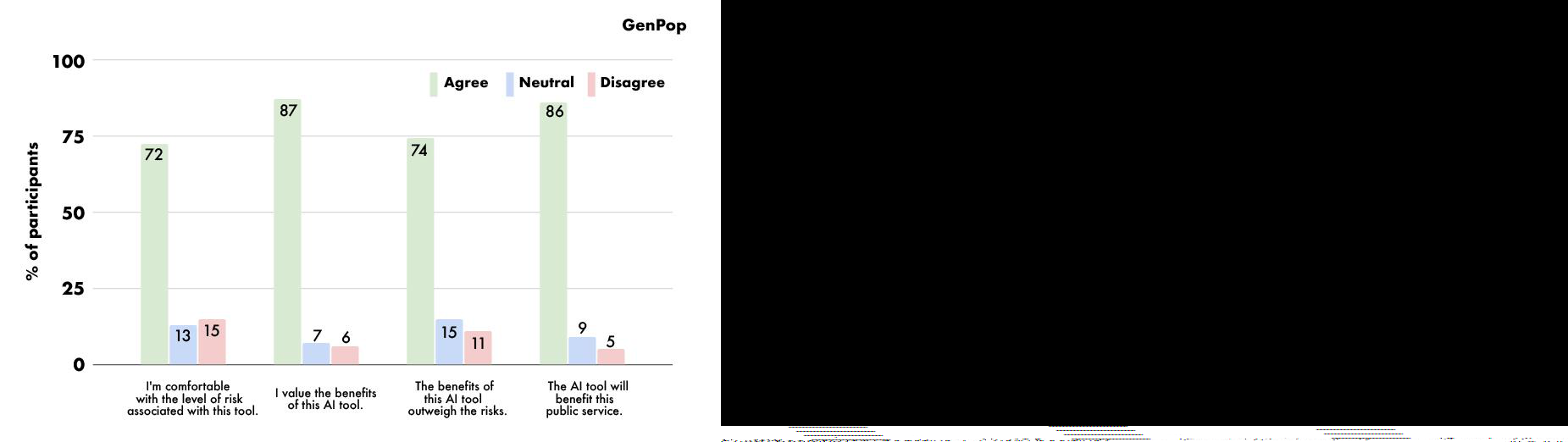
74% of the public felt the potential benefits of Magic Notes outweighed the potential risks.
Overall, 86% of people agreed that the Magic Notes tool would benefit the social care process, and 87% valued the potential benefits associated with the use of the tool.
72% were comfortable with the level of risk associated with Magic Notes, while 15% disagreed. On balance, 74% of the public thought that the benefits outweigh the risks.
During deliberations, people acknowledged that it would be impossible to entirely eliminate risks. They expressed satisfaction with the mitigations taken by Beam to manage risks and noted that the tool was likely to improve over time.
"Most of these risks, they're things we can find solutions to... I'm just hopeful about it. So ultimately I believe the benefits are worth it."
"You can't remove all risks entirely. What's good is that there's clearly a lot of work being done to mitigate or even eliminate the risks."
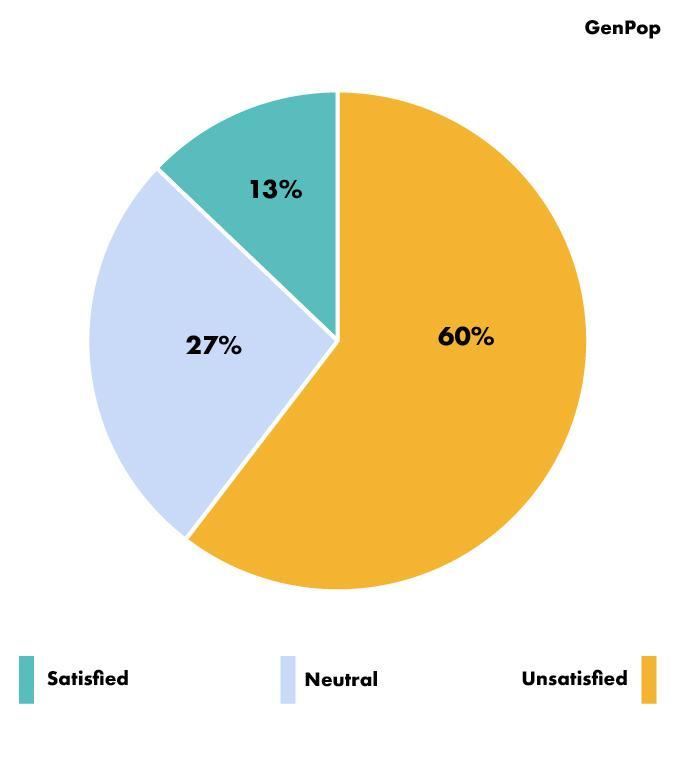
Only 13% of people are satisfied with the current social care process.
More people felt either unsatisfied (60%) or neutral (27%) about the current process of social care than were satisfied (13%).
People described the current social care system as “broken” and in need of investment. They recognised the challenges of long waiting times and pressures on social workers. Some people thought that money should be spent on fixing underlying systemic problems rather than on AI.
"Something needs to be done as the way it is currently working is not appropriate."
"Over years, we've brought this crisis in social care. AI can't be a plaster."
Participants recognised the pressures of the administrative burdens and inefficiencies in the current process, but they also discussed the importance of empathy and “a human touch”.
“The human factor cannot be replaced when it comes to social work."
“I think the admin side of it, it [AI] would definitely be beneficial. [In my experience] Just putting together a care package was so bureaucratic.”
Further insights from deliberations about the current process of social care
Main discussion prompts:
- What do you think about this [social care] process?
- What did you like?
- What didn't you like?
- Why?
People thought AI could help to address inefficiencies in service provision and help social workers focus on people.
People acknowledged that Magic Notes' use of AI could help ease the pressure on social workers and some groups even suggested this could help to attract people to the profession.
“Social workers are so overloaded that they can't do the job to the best of their abilities. So if AI can help...”
“Anything that would get into the depths of it, that can alleviate people. Their jobs are horrific at the moment. Anything that could make it better for them, we should do.”
"I think it may even help to attract new people to the profession."
Participants also had other suggestions for how AI could be used to improve social care. They discussed using AI for prioritisation, or using AI for identifying patterns to address current gaps in service provision caused by information silos or "being passed around” between social workers.
"There are so many different agencies and departments involved –I wonder if that's why we hear about people falling through the net... you need a person or an AI that collates everything together."
04. Public views on the benefits and the risks of the tool
All Magic Notes' benefits were considered important by at least 76% of participants.
With everything you've learnt about this AI tool, how do you feel about these benefits? n=101 (5-point Likert scale, Very important <-> Not at all important)
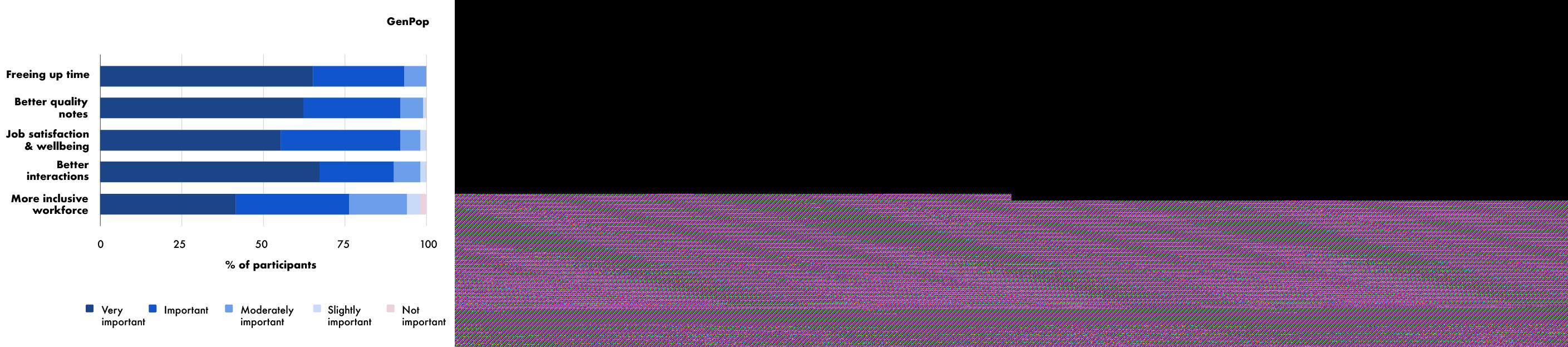
Figure 4
More than 90% of participants rated ‘Freeing up time', 'Better quality notes', 'Job satisfaction & wellbeing' and 'Better interactions with service users' as Very important or Important. Groups discussed that the tool would bring efficiency gains, and allow social workers to focus more on the people in their care.
“I think it's a good thing, it'll make everything more efficient."
“Better interactions with people, is absolutely priceless. When thinking about my mother, that's the benefit that affects her directly.”
They also wanted more information on how the time savings would be used. They wanted the productivity gains to be put towards reducing waiting times or improving the quality of the service.
“As a manager, the first thing that came into my head - I was thinking that freeing up time, I would give them an extra 5 cases."
"They're doing an extra 7.5 hours work per week filling in paperwork which could be used, face to face.”
People were most concerned about the risks of inaccuracy from transcription errors or overreliance by social workers.
At the start of the AI Social Readiness Assessment, we ask people how they feel about a range of risks from AI tools in general. Later in the process, participants reviewed the same risks for the Magic Notes tool. The proportion of people who were 'Very concerned' or 'Concerned' dropped below 50% across all risk areas. The top three risks were related to inaccuracy, data privacy and unfair outcomes.
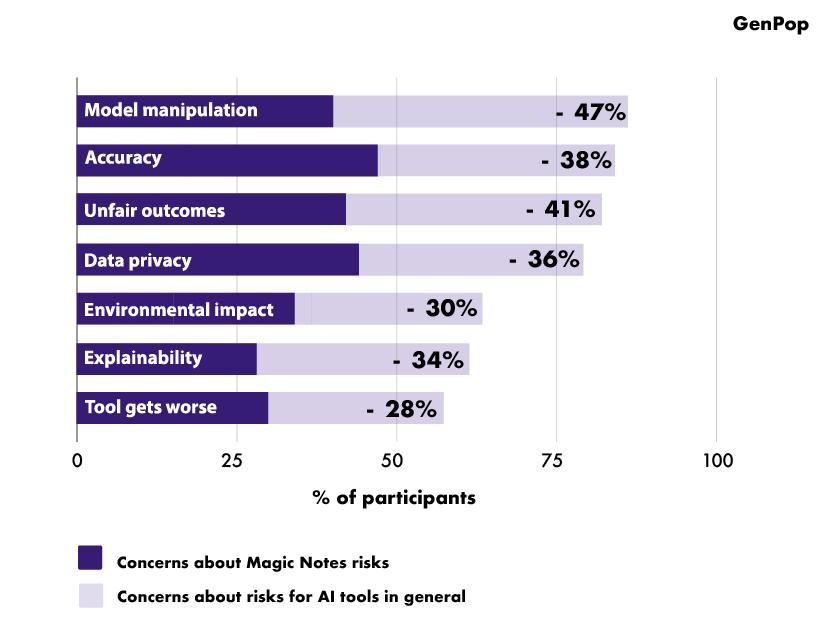
Figure 5
How concerned, if at all, are you about these risks? n=101 (5-point Likert scale, Not at all concerned <-> Very concerned, Bars show the percentage of people who were “Very concerned” or “Concerned”)
The most concerning risk for Magic Notes was inaccuracy – 47% of people felt either ‘Very concerned' or 'Concerned'. Deliberation suggested that this concern was linked to two factors. First, they were concerned about transcription mistakes, particularly if people have strong accents or second-language English. Secondly, groups were concerned that inaccuracies in the summaries wouldn't be picked up by social workers due to overreliance on the tool.
“Let's say AI, being AI, doesn't capture the information right – I think accuracy is a big issue."
"If social workers are so overworked that they need this tool, are they actually going to check the notes?"
Main discussion prompts:
- What did you like?
- What didn't you like?
- We've heard how Magic Notes tool works, the benefits and how the team are managing some of the potential risks... So what do you think on balance?
People expressed mixed views about threats to data privacy. Some participants were entirely satisfied with the data privacy mitigations offered by Beam, while others still had concerns about potential data breaches. Several groups suggested that audio recordings should be kept for longer periods in case they were needed as evidence in the future.
"I liked the security aspects, that it's deleted after 30 days and only the people who created it have access.”
“I also don't think keeping the recording for 30 days is enough.”
A majority of groups discussed the importance of informed consent. Specifically, they raised concerns about extremely vulnerable older people, non-verbal individuals or children having the capacity to give consent. They also gave examples of situations where they thought Magic Notes would not be suitable, such as cases involving abuse.
"In certain cases, for example, abuse victims, I feel like they're more sensitive topics where you don't want an AI involved.”
Another key factor for participants weighing up the benefits and risks was the results from pilot studies from Magic Notes, which showed that social workers found the tool valuable.
“To me, if they [social workers] see the benefit, that's the main thing.”
“...their opinion almost matters significantly more because they're the ones experiencing the day-to-day improvement.”
See the tool developer's response to public concerns
Public views on safeguards for trustworthy deployment
89% of people thought human oversight is a necessary safeguard.
89% thought maintaining human oversight is a necessary safeguard for implementing the Magic Notes tool. However, several groups were concerned that individual social workers would become complacent. They discussed introducing random spot-checks and independent assessments or audits to ensure social workers continue to check summaries for accuracy.

Figure 6
Which of these safety measures matter most to you? Select up to three. n=100 Participants made their selection after discussing the different safety measures with their group.
“Having extra checks in place, those little audits to make sure it's being appropriately checked by the social worker.”
The majority of groups also discussed the importance of ongoing staff training to ensure correct use of the tool and to address concerns about overreliance, deskilling and complacency in the long term.
“A lot of training for these sorts of things, they put on these sorts of webinars, pre-recorded, and people don't take them in – so I think making sure that the training is actually meaningful.”
Further insights from deliberation about safety measures for deployment
Main discussion prompt:
- Which of these safety measures would you most like to see in place and why?
The majority of groups discussed the importance of ongoing monitoring of impact over time to ensure that improvements continue to be made and to measure potential benefits over the long term.
“Monitoring impact over time – you can see how mitigations are working and if they need to be tightened up."
Transparency and good explanations about how AI was being used were mentioned as an important factor for informed consent. Participants wanted more information about how social workers would handle cases where people refused to give permission. Specifically, they wanted reassurance that there would be fallback processes in place.
"Being transparent is really important; no one wants to be recorded without knowing it. That would feel like an absolute breach of privacy, and you don't want to lose public support because they were being recorded without permission."
Some groups also spoke about the need for independent oversight, for example, by the sectoral regulator.
"It should be regulated as a social worker would be. And it should be regulated nationally.”
Summary comparison between views from the general public and social care service users
Out of a total of 18 small-group deliberation sessions, we convened five groups with people who were currently in receipt of social care services.
We compared the quantitative and qualitative findings from these five groups with the responses from the other 13 groups to identify any significant differences in their preferences and reactions to the Magic Notes tool.
We found no statistically significant differences between the polling preferences of social care service users and the general public. We compared the polling responses of service users and the general public across the entire AI Social Readiness Assessment. We didn't find any statistically significant differences between how they rated the current social care process, the specific benefits and risks of the Magic Notes tool, or how they felt about the tool being used.
There were many similarities between the topics brought up by people with experience of social care and the wider public, but there were some notable differences in emphasis. For example, groups made up of current service users were more likely to mention mistakes in the current note-taking process and the inefficiencies resulting from being passed between different social workers.
"...when you get the notes back... there's so much I feel has been missed off."
"...you never speak to the same social service representative. It's always like, oh, that person's just left, there's another person taking over their place..."
They were also more likely to bring up the potential impact of the Magic Notes tool on people receiving social care. Specifically, they wanted service users to be involved in testing the tool or reviewing summaries, and suggested that reports or audio recordings could be shared with them.
See the full results from the deliberations with people currently receiving social care services.
"Why haven't service users been asked to test [these] processes...?"
Building public trust & understanding in AI
4.7 / 5 for deliberation quality
9.0 / 10 for overall enjoyment
97% agreed this process is a good way of involving the public
Almost all participants in the Magic Notes deliberations agreed that the AI Social Readiness process is a good way of involving the public in decisions about AI.
They particularly valued hearing a diversity of perspectives and the informative content to help them form their own opinions. They also enjoyed the interactive and engaging format.
However, several groups commented that it would be more meaningful to hold deliberations before deployment decisions have been made.
“Through the discussions at the table, I changed my opinion...on a minutely basis!”
“I often think with developments in technology, science, there's a focus on 'can we?' rather than ‘should we?' and it's been good that we could talk about that."
"I think the discussion should be had before implementing [the tool], especially when it comes to sensitive information.”
The AI Social Readiness process helps to build public understanding about the use of AI in public services.
How much, if anything, do you know about how AI can be used for public services (eg, education, health or benefits)?
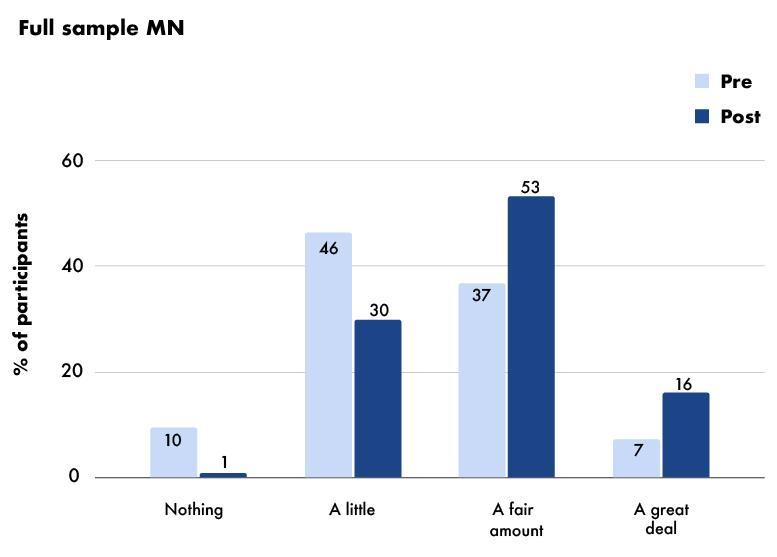
Figure 7
There was a 25 percentage point increase in understanding about the use of AI for public services among participants. At the end of deliberations, participants reflected that the AI Social Readiness experience helped them understand more about how AI was being used to support the public sector.
“It gave me a fuller insight into the benefits of AI to really help councils.”
"Before coming into this discussion, I think most people probably thought that AI wasn't being used in the public sector."
"It was good insight – good to learn and good to discuss. And I learned quite a lot about what's going on with AI across the country."
The AI Social Readiness process resulted in a 12 percentage point increase in trust that the public sector will use AI responsibly.
We ask: How do you feel about this statement? “I trust public sector organisations to use AI responsibly." n=136 (General public and service users) (5-point Likert scale, Strongly disagree <-> Strongly agree).
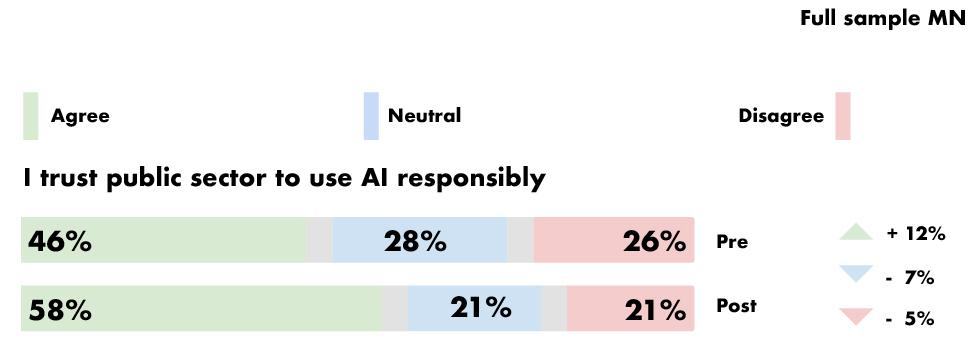
Figure 8
At the start of the AI Social Readiness process, 46% of participants agreed that they trusted public sector organisations to use AI responsibly. This had increased to 58% by the end of the process.
Recommendations
In this section, we provide actionable recommendations for the developers who are building the Magic Notes AI tool; and advice for organisations planning to use it.
These are derived from the preferences captured through quantitative polling, as well as the group deliberations. All recommendations and advice stem directly from views expressed by the public.
Involve social care service users in user-research and future pilot evaluations for Magic Notes: People wanted to understand the impact of the tool on service users, and how they rated the accuracy of the AI-generated summaries.
Work with local authorities to develop “top-up” training for Magic Notes users: The public were concerned that one-off training sessions weren't sufficient for ensuring staff understanding and proper use of the tool, particularly to stay up-to-date with new features or changes to the tool.
Explore features that encourage social workers to complete detailed reviews: People wanted guarantees that human checking of AI summaries were taking place. The developers could introduce additional features to encourage social workers to check summaries more closely.
Convene local authorities to share lessons about implementation: The developers could support councils to develop consistent best practice as they continue to use and scale the tool.
Consider future developments of Magic Notes that could help social workers spot patterns for individual clients, or help local authorities to identify trends across cases: People suggested other ways that AI could be used to enhance the social care process by addressing information or data silos. However, any significant extensions to the way that the Magic Notes tool uses AI would need its own Social Readiness Assessment to assess risks, benefits and overall acceptability.
See the tool developer's response to recommendations
Advice for trustworthy deployment of Magic Notes by organisations
Introduce managerial oversight: The public wanted regular spot-checks and managerial reviews to make sure that social workers check the summaries for accuracy.
Ensure staff complete extra training if Beam adds features to the Magic Notes tool: Local authorities could link this to social workers' personal development plans.
Monitor wider impacts on service users, social workers, and the social care process: Organisations should monitor and report on the impact of Magic Notes on waiting lists, the experience of service users, and long-term job satisfaction of social workers.
Develop clear protocols for situations where people don't give consent: Organisations should issue extra guidelines for situations where consent isn't given or for sensitive contexts such as cases with abuse, where the public felt the use of Magic Notes might be less appropriate.
Encourage reporting of mistakes or suggested improvements by staff using Magic Notes: Organisations should make this a key focus during wider deployment to fast-track improvements to the tool and its use.
Consult the public before deployment decisions have been made: The public felt the Social Readiness process would be more legitimate and meaningful if they had been consulted before the tool was adopted by councils.
Recommendations
Label validity
The public confidence ratings suggest overall public satisfaction that the tool, in its current form, would enhance the social care process. They should be considered alongside the other results and the recommendations in this report to ensure the tool continues to meet public expectations.
Significant changes to the Magic Notes technical pipeline or how users interact with it will require a new Social Readiness assessment.
This could include:
- Changes to the user workflow that remove human verification and approval of AI-generated summaries.
- Extending the tool's capabilities to include recommendations or decisions about eligibility for social care support and care plans.
- Changes to the tool's technical pipeline that negatively impact performance accuracy, bias, data privacy, environmental impact or vulnerability to manipulation.
For these or similar significant changes, the Beam team should complete a full re-evaluation of risks and mitigations, and secure renewed public acceptance.
General impressions of the AI Social Readiness Process
Using AI responsibly is central to how we build and deliver technology at Beam. We know that trust in new technology - especially in sectors like social care - must be earned, not assumed. That is why we were excited to take part in Nesta's public deliberation programme and open Magic Notes up to independent scrutiny.
We were impressed by the rigour and thoughtfulness of the process. The small-group deliberation sessions were well designed, enabling learning, questioning and reflection, which is reflected in the quantitative and qualitative insights. It gave us a valuable understanding of how members of the UK public, and users of social care services, perceive the use of AI in care. This detailed and participatory approach felt reflective of how decisions about AI tooling should be made.
Overall, the process gave us a much clearer sense of what earns public confidence. The findings reaffirmed that trust is not built through principles alone, but through visible, practical safeguards. The recommendations shared will directly inform our product development and implementation plans moving forward.
We see this as part of a long-term commitment, rather than a one-off exercise. We are committed to embedding continued feedback from our partners, users and the citizens we ultimately serve into our approach as we grow. As society begins to realise the transformative potential of AI in public services, we hope more organisations will take similar steps.
Response to public concerns
The public deliberation surfaced thoughtful, practical concerns about the use of AI tools within social care, many of which align with areas we are already focused on addressing. It was encouraging to see that concerns about Magic Notes risks were much lower compared to concerns around risks of AI tools in general. We believe this reflects the safeguards and design choices we have put in place across our product and our approach to implementation and scaling. Below, we respond to the main concerns raised:
Transcription accuracy and bias - Used well, AI tools can actually reduce bias and increase fairness. It is hard for even the most experienced practitioners to both actively listen and manually take detailed notes. But we agree with the participants that this benefit can only be realised if tools are carefully designed and deployed.
The most effective approach blends best-in-class technology, practitioner-led design, and human oversight. We rigorously assess each language model for accuracy, speed, and bias - including around accent, language comprehension and gender - and only work with the best. Templates are co-designed with practitioners to ensure neutrality, completeness, and factual precision. Every summary is refined through continuous evaluation and user feedback (average rating 4.5/5), ensuring consistent quality across organisations.
Overreliance on the tool - Magic Notes is designed and deployed as an assistant to social workers, not a replacement. Summaries are a first draft, carefully reviewed and finalised by a qualified professional. To enable this, we have built simple and intuitive editing tools, helping ensure quality assurance (QA) is embedded in daily workflows. The in-built citations feature links each part of a summary to the original audio and transcript, making it easy for practitioners to fact-check and verify accuracy - a major improvement over handwritten notes.
Beyond this, we have also heard from practitioners that Magic Notes is actually freeing up their time to spend on analysis and reflective practice, with one social worker saying: “It strikes a valuable balance between automation and space for critical thinking and professional judgement, the kind of support practitioners need: tools that enhance rather than replace our role."
We will continue to invest in this area. Most recently, we have built a Knowledge Base feature, linking summaries to both organisational policies and industry-wide guidance, such as the government's SEND code of practice. Magic Notes is now able to reference these within a case note, report or assessment, incorporating the most up-to-date information and ensuring compliance.
It is important to note that councils using Magic Notes have additional internal supervision and QA processes, providing an extra layer of human oversight. Many also conduct spot checks, which we encourage as best practice across all our partners.
The importance of informed consent - whether a vulnerable person is able to provide informed consent is at the discretion of the professional, rather than Magic Notes. When an audio recording is not appropriate, many practitioners opt to use Magic Notes in dictation mode after the meeting - speaking their notes aloud after a conversation to speed up the write-up process, without recording the voice of the service user.
Data privacy - handling sensitive data in social care requires the highest standards. Magic Notes complies with UK data protection laws, and we maintain robust security practices, including:
- Data protection impact assessments (DPIAs) are conducted for all data processing activities, ensuring the impact on privacy is assessed.
- Our security certifications include ISO27001 and Cyber Essentials Plus.
- All data is encrypted at rest and in transit.
- All data is stored in the UK. All data is processed in the UK and the EU.
- Data is automatically deleted in line with customers' data retention policies.
- Systems are in place to monitor for data breaches, and processes are in place to report any incidents.
- Regular security assessments and penetration testing are carried out.
Planned Actions
We welcome all of the recommendations outlined in the report, which are aligned with our long-term vision for ethical, impactful and human-centred AI in public services. In many cases, we have been actively working on these areas in parallel to the deliberation process and were pleased to see our plans reflected in areas of public interest. We have outlined below how we plan to continue addressing these going forward:
Involve social care users - the experience and voice of social care service users is critical to ensuring AI tools like Magic Notes improve service delivery. Social care users have been consulted as part of several Local Authority pilot evaluations to date, and this is an area we are keen to expand on. In particular, monitoring the long-term impact on service delivery and on the experiences of people receiving care is a priority in our evaluation work with councils. We are also actively exploring how Magic Notes could be more service-user facing, including further evaluation and potential co-design opportunities, such as a secure resident-facing portal to access and review notes.
Top-up training - we fully agree that ongoing 'top-up' training is essential and that initial onboarding alone is not enough. We have invested heavily in our core training offer, which includes self-paced e-learning, daily trainer-led live sessions, advanced training for more tech-proficient users (e.g. how to write AI prompts), and one-to-one coaching for those who need extra support.
Building on this, we are now developing new training modules that focus specifically on continuous upskilling and confidence-building after onboarding. This is particularly important as the tool evolves and new features are introduced. Our aim is to ensure that every user - regardless of role or tech-confidence - continues to feel supported and capable of using Magic Notes to its full potential. In addition to our own teams, we facilitate peer-to-peer learning and solicit invaluable feedback via the Magic Notes Community.
Explore features that encourage detailed reviews - we have recently developed new features like Knowledge Base (which links to local policy and industry-wide guidance) and Content Audit (which can identify if any required topics are missing from a report and prompt the user to add more detail). All of our templates have unlimited edits included as standard, and we iterate based on real user feedback every day. We are also exploring additional functionality that could further support robust review and quality assurance processes, including options that make it easier for managers and practitioners to collaborate on improving summaries.
Convene local authorities to share lessons on implementation - we currently do this through our Customer Advisory Board, regular events and webinars, and Magic Notes Community, where we bring together council leaders, project managers and frontline staff to share learnings, challenges, and best practices on AI adoption across social care. We want to do more, including facilitated best practice roundtables and case studies that share lessons across regions and service types.
Explore new features that address data silos or identify trends - we think this is a great idea, and also one which has been raised by partners. We are keen to work closely with public bodies to scope this in a responsible way.
Today, we are co-creating new features and products with our partners through Innovation Labs, where frontline professionals and leaders shape early-stage product ideas based on real-world needs. This ensures that new functionality - like those aimed at improving accuracy, reducing silos, or spotting patterns - is designed with the sector, not just for it. We would be keen to explore this specific suggestion as part of an Innovation Lab with sector partners.
Methodology
Nesta's Centre for Collective Intelligence completed the research between 22 September and 5 October 2025. During this period, we held 18 deliberative polling workshops, with 137 UK adults. 9 workshops were held online, and 9 workshops were held in person (3 each in London, Manchester and Newcastle). See Appendix for a full breakdown of demographics. 13 groups (101 participants) were made up of people broadly reflective of the UK population, and 5 groups (36 participants) were made up of people currently in receipt of social care.
Participants were recruited through the recruitment agency Roots to be broadly reflective of the UK population, ensuring a range of demographic backgrounds across age, gender, region, ethnicity, education and socioeconomic status. We used screening questions to ensure a balance between different levels of understanding of artificial intelligence. We note that participants in our sample started with a relatively high level of trust that public sector organisations would use AI responsibly (46%).
Participants receive £70 remuneration for taking part in the online experience and £90 remuneration for the in-person experience (to account for travel costs). Participants were randomly allocated to specific sessions after indicating their availability. Further details about our methodology can be found in our OSF pre-registration.
The AI Social Readiness Advisory Label process
Our public AI assurance process is immersive, educational and collaborative. During the experience, small groups undertake a “mission" as part of a “Public AI Task Force”. Guided by expert facilitators, the groups work through a structured format to review short videos and discuss and express opinions about the use of an AI tool in public services. The videos break down complex topics into easy-to-understand, accessible content covering eg, 'What is AI?', 'How does the Magic Notes tool work?' and 'What safeguards are available?'
Through this process, ordinary people from a variety of backgrounds have informed, balanced discussions on the potential risks and benefits of a specific tool, and articulate any specific recommendations or conditions for its use.
The sessions are delivered through the Centre for Collective Intelligence's digital platform Zeitgeist, using a structured approach known as deliberative polling. This method allows for the collection of quantitative and qualitative data from individuals and groups throughout a discussion, helping to track how opinions change over time.
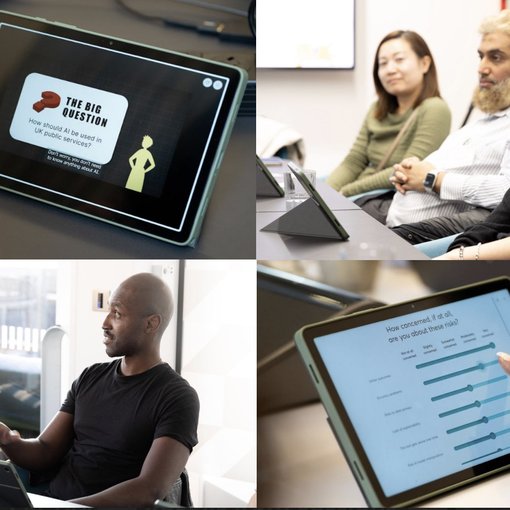
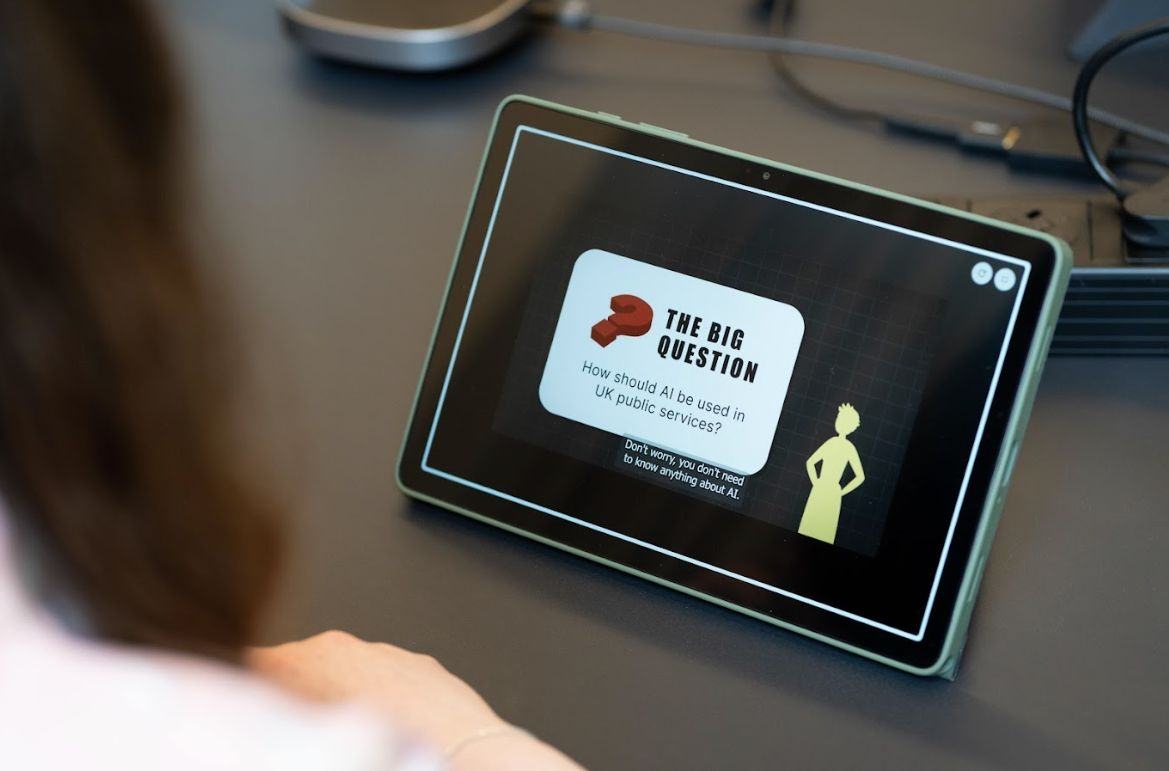
During in-person engagements, participants are seated around a table, each with a tablet device to review videos and record responses. During online engagements, participants connect to an online version of Zeitgeist, which hosts the same video content and polls as the in-person engagement and allows for the additional functionality of interacting with other participants via a video-calling interface.
Public Deliberation Session - Content Overview
The full experience lasts approximately 210 minutes, including two breaks. Each section contains a combination of video content, polling and deliberation. There are 5 distinct parts:
- Section 0: The Briefing - Setting the scene, demographics, baseline attitudes.
- Section 1: The Groundwork - What AI is, how it works, potential risks, benefits & trade-offs: AI tools “in general".
- Section 2: Mission Deep Dive - Overview of current public service & how the tool works.
- Quiz to test participants' understanding of the tool. Half of the sessions also included an expert Q&A.
- Section 3: The Dilemmas - Explore real-world risks, benefits & trade-offs of the tool & potential safeguards.
- Section 4: Mission Debrief - Feedback, post-experience attitudes, overall enjoyment & deliberation quality.
Technical Assessment and Content Development
All information is provided during the session through engaging videos, which are created in advance based on a technical assessment of the AI tool performed by an independent expert. The expert evaluates the tool against a standardised set of risk criteria (see appendix for relevant tool-specific and deployment risks) using information provided by the tool developer. This might include evaluation results from pilots, or performance metrics and technical documentation. Information about the Magic Notes tool was primarily based on the results of self-reported surveys and interviews from more than 50 pilots with local authorities, and technical testing by Beam's engineers.
Information from this assessment is used to create the tool-specific video scripts in the Mission Deep Dive and The Dilemmas sections of the AI Social Readiness process. The scripts are reviewed by the internal team, an AI expert and the tool developer for accuracy and balance. All other content, including the videos in The Briefing and The Groundwork sections (eg, ‘What is AI?') remains unchanged for each AI tool that goes through the process.
Data Analysis & Reporting
Quantitative analysis and data visualisation
Data are collected throughout each session, typically using 5-point Likert scales. After all sessions have been completed, the data are aggregated. We visualise the results using an adapted 3-point Likert range. For example, for a Strongly Disagree <-> Strongly Agree scale, we report Strongly disagree and Disagree as Disagree, and Strongly Agree and Agree as Agree.
Any participants with more than 25% of responses missing are excluded from the analysis. For some polls during the Magic Notes deliberations, we were missing values for 1 participant due to temporary technical issues or participant-specific breaks. Missing values never exceeded the 25% threshold. We report the total “n=” for each poll. We report percentages as whole numbers and all other numbers rounded to one decimal place.
We compared the polling results from social care service users with the results from the general population sessions using linear mixed-effects models. In this approach, the sample type (service users or general public) are fixed-effect predictors which we compare to a null-model to test for significance. When testing for statistical significance, we set our p-value at 0.05. Further information about our analysis is available in the OSF pre-registration.
Qualitative analysis
After all sessions have been completed, we review group deliberation transcripts for each deliberation in the experience. In total, there are nine deliberations ranging in length from 5-12 minutes. We identify and count themes using a combination of human and AI-supported analysis. All quotes in the report are from deliberations that happened during the sessions.
We use the terms "majority of the groups” and “most groups" to describe key themes that were discussed in at least 7 of the 13 public deliberation sessions. We use the terms “several”, “some groups” or “some participants” to highlight minor themes that emerged during deliberations in less than half of the sessions.
Public Confidence Ratings and Deliberation Quality
On the AI Social Readiness Label, we report Public Confidence Ratings. These are based on the public's responses to five key questions from The Dilemmas section of the experience. Individuals answer these questions after they have learned about and discussed all of the information about the current process, how the AI tool works, its risks and benefits and further considerations about its deployment.
Considering what you've heard, how do you feel about these statements?
- I value the benefits
- The benefits outweigh the risks
- I am comfortable with the risks
- The tool benefits the public service
Ranked on a 5-point Likert scale (Strongly disagree <-> Strongly agree).
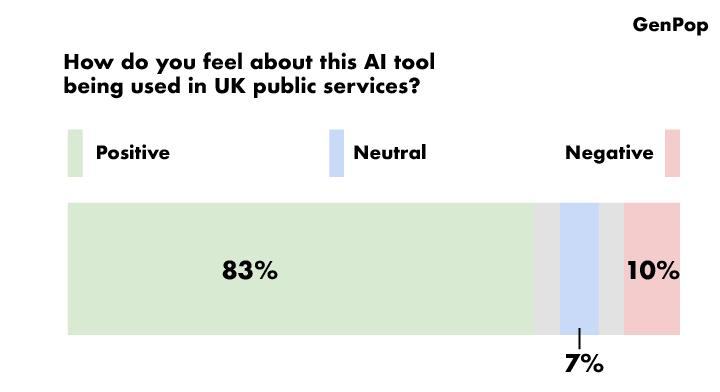
How do you feel about this AI tool being used in UK public services?
Ranked on a 5-point Likert scale (Very negative <-> Very positive).
Deliberation Quality is a calculated index based on responses to 3 statements collected at the end of the experience:
- Everyone had the opportunity to contribute to discussions.
- People with different opinions were able to explain their point of view.
- Group members paid attention to others when they spoke.
Further details on session design, Likert ratings and deliberations prompts is available in the OSF pre-registration.
Appendix
Overview of benefits, risks and safeguards discussed during the AI Social Readiness process
Benefits
During the experience, participants are asked to rate tool-specific benefits in response to the question: “With everything you've learnt about this AI tool, how do you feel about these benefits?” (5-point Likert scale, Not at all important <-> Very important). The relevant results can be found in Figure 4. They learn about the benefits in The Dilemmas section after learning about the current public service process and how the tool works, and before the risk mitigations.
Frees up time: Spending less time spent on taking notes in a meeting and less time writing up notes after meetings.
Better quality notes: Picking up more detail from conversations, and improving the clarity and consistency of notes through the use of templates.
Better interactions with people: Allowing social workers to stay more present during conversations - they can maintain eye contact and pick up on important details.
Job satisfaction and wellbeing: Helping social workers to focus on more meaningful parts of their job, cutting down stress and improving work-life balance.
A more inclusive workforce: Helping neurodiverse social workers, non-native English speakers and people with physical disabilities be more productive and confident.
Appendix: Overview of risks, benefits and safeguards
During the experience, participants are twice asked to rate seven tool-specific risks in response to the question: “How concerned, if at all, are you about these risks?” (5-point Likert scale, Not at all concerned <-> Very concerned). The relevant results can be found in Figure 5. They first learn about risks relating to AI tools in general in The Groundwork section, and then again in The Dilemmas section, where they return to these risks and their mitigations in the context of the Magic Notes tool.
Unfair Outcomes: When an AI system produces biased or unequal results due to flawed or incomplete training data. This can lead to discriminatory decisions, such as overlooking qualified job applicants based on non-standard CV formats.
Accuracy Problems: Errors or incorrect outputs generated by AI models. While some mistakes are minor, others can have serious consequences in critical areas like healthcare, finance, or criminal justice.
Risks to Data Privacy: The potential for sensitive personal data processed by AI systems to be exposed, misused, or stolen if not properly protected. This includes financial, medical, or identity-related information.
Lack of Explainability: A situation where it's difficult or impossible to understand how an AI model makes its decisions. This lack of transparency can undermine trust, especially in high-stakes areas like loan approvals or public benefits.
Getting Worse Over Time: The gradual decline in an AI model's performance if it isn't updated with new data. As the real world changes, outdated models can become less accurate or relevant.
Model Manipulation: Deliberate attempts to trick or exploit an AI system by feeding it misleading or false data by malicious actors. For example, attackers might fool a fraud detection tool into letting fraudulent activity go unnoticed.
Environmental Cost: The significant energy and computing resources required to train and operate AI models contribute to carbon emissions and environmental impact due to high electricity and cooling demands.
Deployment risks
During the experience, participants learn about five AI tool deployment risks in The Groundwork section.
Lack of Transparency & Accountability: When people aren't informed that AI is being used, or can't see how it's making decisions. This is especially concerning in public services, where people need clarity on how decisions are made and how to challenge them if necessary.
Overreliance on AI: Depending too heavily on AI tools without human oversight. This can lead to loss of critical thinking skills among staff and increase the risk of letting mistakes go unnoticed.
System Failures: Breakdowns or outages in AI systems that perform essential tasks. Even brief failures can disrupt services and lead to serious consequences, especially in critical sectors.
Job Changes: The impact of AI on employment, including roles being reduced, reshaped, or replaced. While AI may also create new jobs, the overall effects on the workforce remain uncertain.
Public Experience of Services: How people interact with AI-powered services. While automation can improve speed and efficiency, it can reduce empathy and human connection—key elements in areas like healthcare or social services.
Participants return to these risks when discussing the safeguards that can be put in place by organisations using the tool.
Safeguards
These safeguards are discussed at the end of The Dilemmas section. Participants are asked: “Which of these safety measures matter most to you? Select up to three." See Figure 6.
Improve staff understanding: Complete customised training to understand how the tool works, how to use it and what it can't do.
Be transparent: Always ask for permission before using the tool and provide guidance on what to do if someone isn't capable of giving permission.
Have extra guidelines for use: Provide additional guidelines for when and how staff should use the tool.
Keep human oversight: Ensure social workers check the summary and correct any details before it gets uploaded to the central case database. For extra confidence, have regular quality checks on a small sample of summaries.
Test and scale the tool gradually: After piloting, roll out the tool more gradually to make sure adoption is working as planned.
Monitor impact over time: Track how the tool might change the future of social work or affect people receiving care over time.
Appendix: Detailed overview of demographics
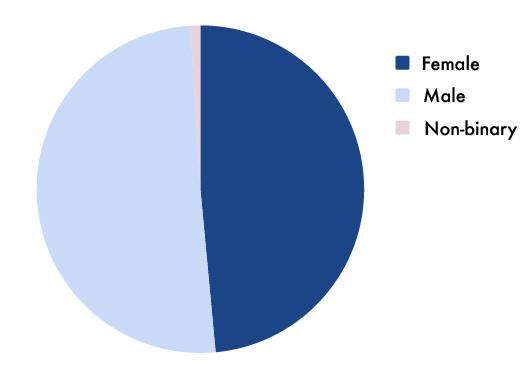
Gender Distribution
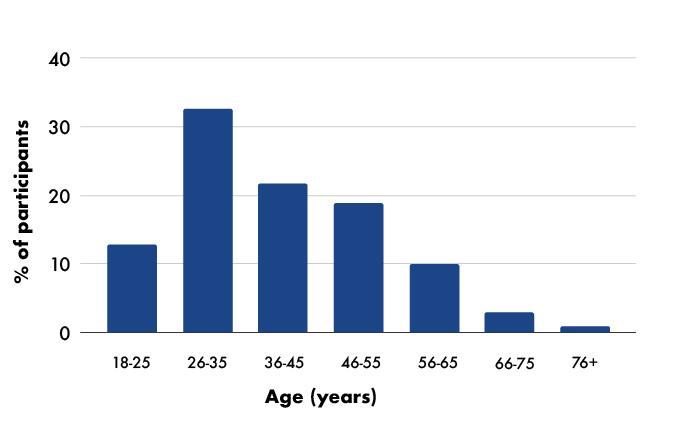
Age Distribution
Disability Distribution
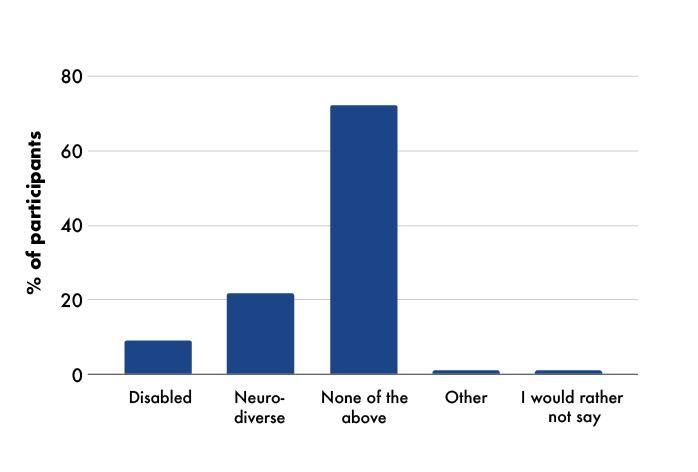
We asked: Which of the following descriptions do you identify with? (Select all that apply).
Percentages total more than 100% because people could identify with more than one description.
Table 1: Overview of participants by ethnicity
| Ethnicity |
% of participants |
| African |
10 |
| Any other Asian background |
1 |
| Any other Black, Black British, or Caribbean background |
2 |
| Any other ethnic group |
1 |
| Any other Mixed or multiple ethnic background |
2 |
| Any other White background |
8 |
| Bangladeshi |
1 |
| Chinese |
5 |
| Indian |
8 |
| Pakistani |
4 |
| White: English, Welsh, Scottish, Northern Irish or British |
49 |
| White: Irish |
1 |
| White and Asian |
4 |
| White and Black Caribbean |
5 |
Table 2: Overview of participants by UK region
| UK region |
% of participants |
| East Midlands |
6 |
| East of England |
8 |
| Greater London |
20 |
| North East |
22 |
| North West |
20 |
| Scotland |
6 |
| South East |
6 |
| South West |
5 |
| West Midlands |
6 |
| Rather not say |
2 |
For more information, please contact: [email protected]
Published November 2025
Centre for Collective Intelligence
Part of the nesta group