About this project
The Political Finance Research project is a collaboration between Nesta's Centre for Collective Intelligence and New Citizen Project. New Citizen Project led on the content and session design for the deliberations, with support from the Centre for Collective Intelligence. The Centre for Collective Intelligence led on the delivery of the deliberations, the analysis of the outputs and report writing. The research was commissioned by the Electoral Commission in November 2025.
About us
Nesta's Centre for Collective Intelligence helps people take part in the big decisions that shape our shared futures. We believe the best decisions come from many voices, not just the loudest ones. We exist to help governments, public agencies, and charities to make better, faster, and fairer decisions, guided by the collective intelligence of the people they serve.
New Citizen Project is a participation strategy and innovation consultancy with a belief that, given the right opportunity, people can and will shape the things that matter to them for the better. We work with organisations and institutions of all types to help them make the shift from seeing people as passive consumers to active citizens.
Acknowledgements
We would like to thank Phil Thompson, Helen Lyon and other colleagues at the Electoral Commission for commissioning this work and for being supportive and engaged throughout the process.
We would also like to thank the academics who contributed their time and expertise to make the workshop engaging and informative: Professor Kate Dommett from the University of Sheffield, Dr Sam Power from the University of Bristol and Professor Justin Fisher at Brunel University.
Most importantly, we would like to thank all of our participants for giving up their time and for sharing their views and ideas openly and constructively. Thank you to our facilitators, Suzannah Lansdell and Darren Ivey, for guiding participants through the content.
The project team were Olivia Stamp, Aleks Berditchevskaia, Kathy Peach, Joe Asher, Andriana Laskari (Nesta, Centre for Collective Intelligence) and Irene Ekkeshis, Anna-Maria Hosford and Andy Galloway (New Citizen Project).
Published June 2026
Executive summary
This report presents findings from a deliberative research project commissioned by the Electoral Commission and conducted by Nesta's Centre for Collective Intelligence and New Citizen Project. In February 2026, 72 members of the UK public from all four nations, took part in nine online workshops exploring the UK's political finance system.
We wanted to answer the question “How might the way we regulate political party funding help build public trust in our political system?"
Participants learned about the system through expert videos and animations, discussed in small groups, and voted, via a repeated points-allocation poll, on what options for change would be most likely to build their trust in the system. We wanted to understand: What rules matter most to them? What trade-offs are they willing to accept? And what would a political finance system that genuinely commands public trust look like?
A system that prevents undue influence and creates a ‘level playing field'
While many participants started the deliberations with limited knowledge of the current rules and low levels of trust in political parties, their expectations for a better system were remarkably consistent. Across every session, participants expressed the view that the political finance system should serve the interests of voters rather than donors. This means making sure that the rules help to prevent undue influence on parties and their policies from wealthy individuals, foreign actors and companies. Participants were particularly sceptical of the motivations behind business donations, generally assuming they were made with the expectation of a direct benefit for the business. They also wanted to make sure that the rules do not make it hard for newer or smaller parties to compete on a ‘level playing field' with larger or more established parties. Finally, they sought assurance that the system would have significant deterrents against rule-breaking and, when this happened, that the rules would be enforced.
Changes to the rules that can rebuild trust
We asked participants which combination of reforms they would recommend to build trust in the system, by allocating points between six different policy options. Participants were most convinced by four options: introducing a donation limit (22%), increasing public funding (22%), closing loopholes (21%) and increasing the maximum fine (19%). Most importantly, 93% of participants agreed that if their top three preferred options were adopted, it would help build trust in the political finance system.
1. Introducing donation limits
Over 50% of participants supported strict donation limits of under £50k. The absence of limits was seen as a direct contributor to the perception that money buys influence within the political system. There was genuine debate about what limits would achieve, with some feeling the key issue was not the amount of money but what it buys, making transparency around donor intent equally important. Participants were clear that donation limits would only be effective if combined with closing loopholes.
2. Closing loopholes
Participants were concerned about potential workarounds to the current rules, for example: if multiple donations were made just below reporting thresholds, if money was routed through multiple companies, and if foreign influence was obscured via UK-registered entities. The question of who should be responsible for checking compliance generated significant debate. Most groups moved towards independent regulation during discussion, largely driven by distrust of self-policing by parties.
3. Larger fines for rule-breaking
The current maximum fine of £20,000 for breaking existing rules was met with near-universal surprise. An overwhelming 81% of participants voted for fines to be increased. The majority of participants felt penalties needed to be proportional to the size of the violation and the size of the party. Many, however, felt that monetary fines alone are insufficient. Participants' ideas for additional deterrents included criminal consequences and temporary bans.
4. Openness to increased public funding
One of the most significant findings was a marked shift in openness to public funding for political parties over the course of the deliberation. Support for public funding increased from 13% of points at the outset to 22% of points by the end, equivalent to the level of support for donation limits. Participants did not arrive open to this idea, but learning how public funding worked elsewhere, in particular direct exposure to international comparisons (including the Republic of Ireland, the US and the new South Australian model) moved views substantially. Participants saw the benefits of increased public funding as being less reliant on wealthy donors, as well as potentially higher public engagement in politics. However, they also highlighted the dilemma: current low levels of trust in political parties make increasing public funding difficult. Even though increasing public funding could help to rebuild trust by reducing the perception that parties are beholden to their wealthy donors, it will be difficult to overcome the initial trust barrier to convince people that money will be well spent.
Reducing election spending and lowering reporting thresholds didn't shift the dial of public trust
Reducing election spend and lowering reporting thresholds were also given as potential options for participants to consider, but these did not emerge as priorities when weighed against other options, receiving just 11% and 5% of points respectively. During deliberations participants felt that privacy for smaller individual donors was broadly reasonable, though business donations were seen differently.
Deliberation helped build participants' understanding of the rules
The shift in participants' understanding of the topic across the session was striking: the proportion of individuals reporting they knew ‘nothing' or 'hardly anything' about political finance fell from 59% at the start to just 9% by the end.
This research, however, wasn't a classroom exercise in learning; it is a demonstration of how deliberation can help transform initial reactions and raw opinion into informed judgment. As participants moved from low levels of knowledge about the rules and began to discuss the options and complexities together, their perspectives shifted. They moved from a general sense of disillusionment to a practical consensus on how the political finance system could be reformed to help rebuild trust in democracy. The deliberations showed that when people are given the time and information to discuss complex topics, they not only shift their views but also arrive at considered conclusions. This in itself is a finding with implications for how trust might be rebuilt.
Their preferred policy reforms, as outlined above, are connected and mutually reinforcing. Taken together, they represent a credible basis for rebuilding trust in our political system.
This research was carried out using a method known as deliberative polling. In this approach, people learn about a policy topic through short videos, and then discuss them in small groups to explain what they thought and why. Polling and prioritisation exercises are integrated amongst the discussions to provide insight into the relative weighting and strength of participants' views, and to measure how this changes throughout deliberation. We present the aggregated results for the entire cohort throughout the report. They are descriptive of the views amongst participants in the research rather than statistically representative of the wider UK population.
Introduction
Public trust in political institutions in the UK has been at an historic low in recent years.[^3] Whilst people tend to say that they have high trust in our elections and voting processes[^4], there are serious concerns around the integrity of our democracy at home, with the UK hitting its lowest ever score in Transparency International's 2025 Corruption Perceptions Index.[^5]
These concerns are compounded by fear of foreign interference, particularly from the US, China and Russia. In December 2025, an independent review into foreign financial interference in UK politics was commissioned in direct response to these concerns, led by former DExEU Permanent Secretary Philip Rycroft and published in March 2026.[^6] Many of the findings in this report are directly relevant to the recommendations made in the Rycroft Review, notably public support for much stricter measures to prevent foreign influence over British politics.
At the heart of many of these concerns is the question of who funds our political parties, and what influence that buys.
Yet despite the significance of the issue, public debate on political finance remains limited. Most people know little about how parties raise and spend money, what rules currently govern donations, or what the Electoral Commission does.
This report presents findings from a deliberative research programme commissioned by the Electoral Commission and conducted by the Centre for Collective Intelligence and New Citizen Project. The purpose of the research was to go beyond surface-level attitudes and to explore what the public actually thinks when they are given the information, the context, and the space to deliberate. We wanted to understand:
- Public awareness of political finance and knowledge of existing rules.
- Public understanding of political donations and reporting obligations.
- Concerns with the current regime and proposed improvements.
- The public's stance on trade-offs related to reform options.
The report opens with the underlying principles and values that participants felt should define a trustworthy political finance system, before moving to the specific reforms they identified as most important: introducing donation limits, closing loopholes, strengthening deterrents, and increasing public funding. It then considers the options that generated discussion but did not emerge as priorities for change, and closes with reflections on what the deliberative process itself reveals about the value of public engagement with this issue. We hope these findings will prove useful to decision makers as they consider the future of political party finance in the UK.
Methodology
In early February 2026, 72 members of the public took part in nine online workshops exploring the UK's political finance system. Participants were broadly reflective of the UK population across age, gender, ethnicity, region and socioeconomic background. We oversampled participants from Scotland, Northern Ireland and Wales and held a separate session for 16 to 17-year-olds from across the UK. While the participant sample contained a mix of different voting intentions, it did not have the profile we set out to achieve. We completed additional analyses to confirm that the results we report were not affected by this, as detailed in the Methodology – supplementary information section. A full breakdown of voting intentions can be found in the Appendix.
The Electoral Commission decided to commission a deliberative research approach because this method is effective at gathering informed and thoughtful public opinions on policy issues that involve diverse viewpoints and where the broader public has low baseline levels of understanding. We used a deliberative polling approach where people learn about a policy topic through short videos, and then discuss them in small groups to explain what they thought and why. Deliberation is interspersed with quantitative polling and prioritisation exercises. The polls are used to provide insight into the relative weighting and strength of participants' views, and to measure how opinions have changed.
We present the aggregated polling results for the entire cohort in figures throughout the report. They are descriptive of the views amongst participants in the research rather than statistically representative of the wider UK population. Anonymised participant opinions are italicised and presented in quotation marks throughout.[^7]
A system for voters, not donors
The British public cares about political finance but knows little about how it actually works. Recent research from the Electoral Commission shows that two-thirds of people say that how political parties are funded is of some or great importance to them and yet people know very little about the political finance rules. When asked a series of True-False questions around specific rules, the single largest response was 'Don't know' in most cases.[^8]
This was mirrored among our research participants: 59% said that they knew 'nothing' or 'hardly anything' about how things currently work in political finance. This was coupled with an underlying lack of confidence that the current rules for political party finance were working for either parties or the public. Despite this, 85% of participants felt that the issue of party political finance was of 'some' or 'great' importance[^9]. The electorate is cynical and mistrustful of the system, but they do care and understand its importance in enabling a healthy democracy.
We set out to learn what the UK public would like to see from our political finance system. Our starting point was to find out how they currently feel and which underlying principles are most important to them. What emerged consistently in these discussions were significant concerns about three perceived features of the current system: 1) undue influence from wealthy donors, 2) a lack of fairness and an inherent bias towards larger parties, and finally, 3) a lack of transparency and accountability.
Ultimately, participants expressed a desire for a future political finance system that serves the interests of voters and is less easily exploitable by wealthy donors or large political parties.
Preventing undue influence
The public's top priority for the political finance system is to prevent the undermining of democracy by vested interests. 'Limiting influence' and 'Preventing Foreign Interference' were ranked as the top two most important principles for a trustworthy political finance system: by 75% and 58% of participants respectively (Figure 1).
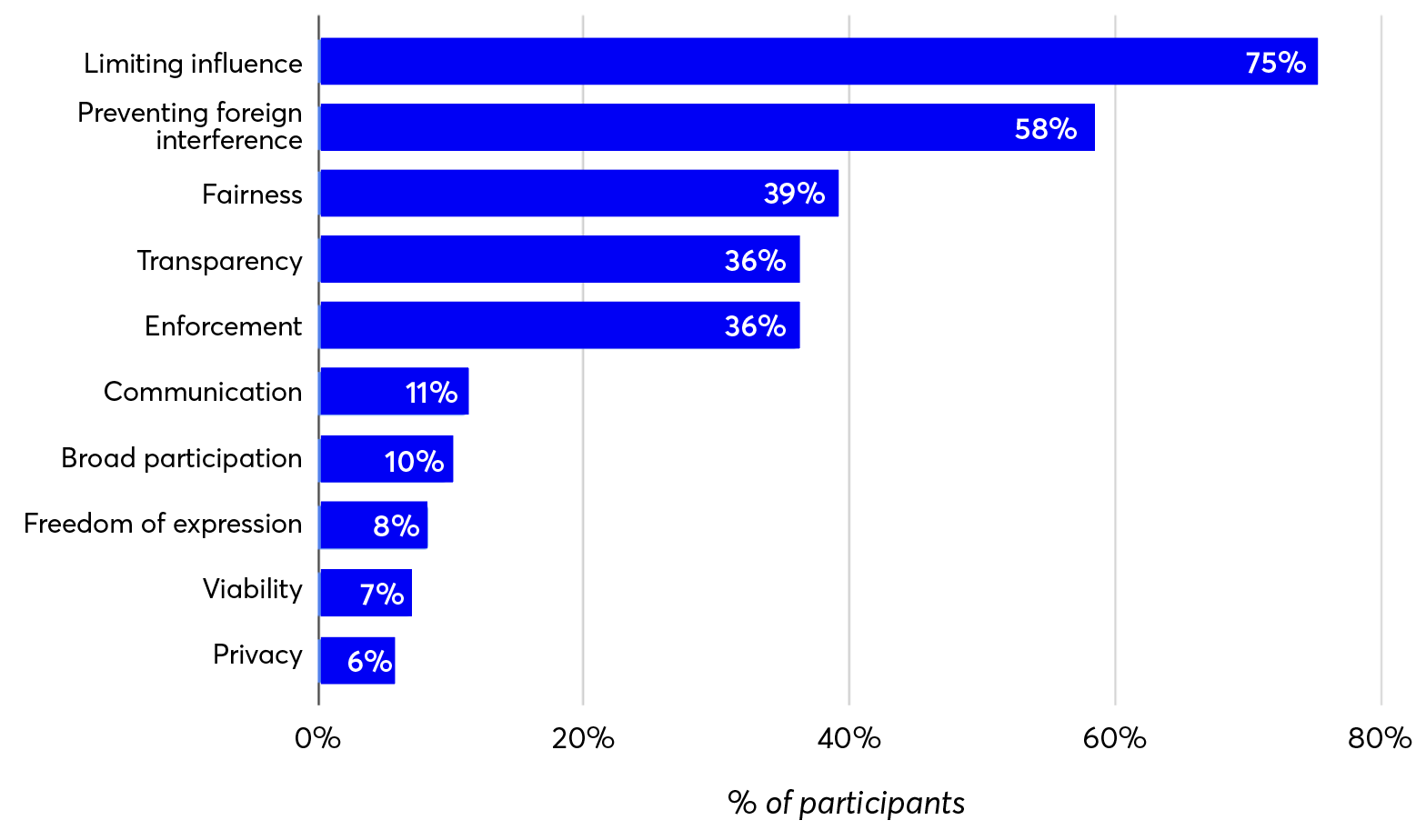
Figure 1: Participant ranking of most important principles for a trustworthy political finance system. We asked, “Imagine you are deciding the rules around political party funding... Which of the following do you think are most important?” (Select up to 3). n=72. See Appendix for full description of options.
Participants expressed concern about undue influence from three distinct sources: wealthy individuals, businesses and corporations, and foreign actors. While these were seen as distinct threats, they formed a major theme that emerged in all nine sessions: the idea that money, in sufficient quantities, can buy political outcomes that serve the interests of donors rather than voters.
"We've seen in recent years that the politicians and parties will be interested in serving the interests of their donors rather than the people who elected them."
Concern about individual donors was rooted in the fundamental belief that in a democracy, the "size of your wallet" should not determine the size of your voice. Regardless of whether a large donor expects something in return, the ability to donate unlimited sums was seen as inherently unequal, giving wealthy individuals a level of access and influence over political parties that is simply not available to ordinary voters.
"I've got more money, my view, therefore, is more important than yours.""
Underlying this was scepticism about the motivations behind significant donations, with most participants assuming some form of quid pro quo: that financial support secured policy influence, contracts, or access to politicians.
"The reason why people are donating so much to one particular party is because they are waiting for a quid pro quo, they are expecting policies to be shaped to benefit them."
This concern was even more acute when it came to businesses and corporations. Concern about the motivations of a business donating to a political party was a major theme across sessions. A supporting view, raised by a minority, was that while an individual donor might be motivated by genuine political belief, a business donation was seen as almost inherently transactional, with participants struggling to conceive of a legitimate reason for a company to make a large political donation.
"If you're an arms company paying millions of pounds to one of the political parties. Are you doing it because you're nice and you care about people? Obviously not."
Foreign interference was expressed as a related but distinct and timely concern. Seven out of nine groups referenced their worry about foreign influence over the UK during discussions about how the system should work. Participants were particularly concerned about the foreign governments and actors exploiting gaps in the current rules. Where specific countries were mentioned, the USA was most commonly cited, being mentioned explicitly by three groups. Russia and China were raised explicitly by one group, while another discussed foreign influence more indirectly through concerns about the use of social media to shape UK public opinion.
"I think it's becoming more of an important topic how we are influenced by countries like China and Russia that are trying to push their own agendas."
A minor theme, raised by two of nine groups, was discomfort with the fact that trade unions can donate to political parties. They disliked that membership of a union could lead to money going to a party they fundamentally didn't support.
"I'd rather decide who I support with my money than a union doing it for me."
Across all of these concerns (individual donors, businesses, and foreign actors), the underlying driver was the same. Participants wanted a political finance system that is answerable to voters, not to whoever has the most money, and they want a system that is not vulnerable to manipulation by geopolitical interests.
A 'level playing field'
Fairness ranked third, voted for by 39% of participants, and in discussion every group translated this into a demand for a level playing field. They wanted parties competing on the strength of their ideas, not the depth of their pockets.
"You could have a party that didn't have rich donors but actually had a tremendous amount of support from people."
Participants were concerned that wealthier parties can spend more, reach more voters, and communicate more effectively. Behind this was a deeper concern about where the wealth disparity comes from. A minor theme was that larger, established parties benefit from name recognition and donor loyalty, meaning money flows toward parties people already know, making it harder for smaller parties to break through, regardless of their policies. This was perceived as a self-perpetuating barrier: people vote for parties they recognise, those parties attract more donations, which fund more visibility, which attracts more votes and more seats.
A related concern was the current system of election spending: participants felt it was fundamentally unfair that larger, wealthier parties are able to spend significantly more during elections than smaller ones, giving them a structural advantage in getting their message to voters.
"Parties are more popular just because it's what we know. If the smaller parties had more funding, they'd have more say. People donate to the main parties because they're most likely to win."
"The system is almost rigged in favour of the big party staying big."
A related concern was the wealth influence cycle: parties whose policies favour wealthy individuals and businesses are more likely to attract large donations, funding their ability to promote those policies further.
A minor thread running through this was a belief that parties simply don't need to spend as much as they currently do. The rise of social media has changed what it costs to reach voters and, for a number of participants, forcing parties to operate on smaller budgets was less a problem to be solved and seen as a potentially positive outcome.
"Something the speaker said that I found really interesting, which is 'parties need money'. Like it's an indisputable fact that parties need money...whoever is best at fundraising and marketing gets to run the country. That's not democracy, that's just marketing."
Enforcing the rules and establishing genuine deterrents
People want to know that there are significant consequences for breaking the rules. Every single group identified the current maximum fine that the Electoral Commission can impose, of £20,000, as insufficient. A majority of participants noted it as a standout cause of surprise when they first learned about how the current system works. For many, the fine didn't match the size of the donations it is meant to deter.
"[The fines] – it's a drop in the water compared to how much they're spending."
Participants were also concerned about the potential loopholes that make the rules easy to circumvent in the first place: multiple donations split across reporting thresholds, money routed through multiple companies, and foreign influence obscured via UK-registered entities. The existence of these workarounds and the limited visibility on whether they are being exploited was a source of distrust. Five of nine groups spontaneously raised their concern about loopholes in the system.
Participants wanted penalties severe enough to outweigh the potential benefits of breaking the rules, and a regulator with the powers to actively investigate rather than rely on self-reporting. A minority went further, with two groups raising the possibility of criminal consequences for the most serious violations.
"The fines should be severe, they should be a deterrent."
```
"We don't have much faith that rules are being enforced properly."
“If the goal here is to build trust and confidence in the system, then relying on the parties to self-report isn't going to achieve all of that. And, if you could rely on the parties to self-report in that way, then we wouldn't have the crisis of confidence that we currently have."
Traceability: mapping the flow of money
While transparency ranked fourth in the poll about important principles for the political finance system, selected by 36% of participants, it was a major theme in discussions. This suggests that it is an underlying concern that people don't immediately reach for but care deeply about once prompted.
During discussions, it became clear that participants only considered transparency meaningful if it covers the entire lifecycle of a donation, including where it originates and how it is spent, rather than just the moment the money is handed over. People also felt that parties have a responsibility to proactively communicate who their donors are to the public.
The participants identified four critical areas where they want more clarity:
- The actual source of the donation: Participants were concerned about money being "hidden" behind company names or groups. Several groups felt that the public should be able to identify the individual or ultimate entity providing the funds, rather than just a legal front.
- The reasons for donating: Participants felt that making the intent of a donation more explicit would help the public judge whether a donor is seeking a specific favour.
- Where the money goes: Traceability was also seen as an important requirement by some groups. Participants wanted to know how parties actually spend the money they receive; whether it goes toward community engagement or toward expensive national advertising so that they could better understand a party's real priorities.
- The impact on the donor: Finally, people wanted to be able to look at what happens after a donation is made. There was a desire for a way to track whether big donors received any subsequent benefits, such as policy changes or big contracts.
"The UK has very little legislation to provide accountability or transparency regarding political donations, compared to other countries.”
"It's either too complicated or it's too shrouded in mystery."
[In future I want to feel the system is...] “completely transparent to assure the public of an open and fair system, free of foreign influence and conveys a strong message that democracy is not for sale."
Principles that ranked less highly
The principles that received the fewest votes were ‘Communication', 'Broad Participation', 'Freedom of Expression', 'Viability' and 'Privacy' (see Appendix for full descriptions). It is important to note that participants could only select three principles, so a lower ranking does not mean these were seen as unimportant, only that they were seen as less important than the principles that ranked higher. Percentages quoted as per Figure 1:
Communication (11%)
participants broadly felt that the cost of political communication has fallen significantly, particularly with the rise of social media. The argument that parties need large sums to reach voters was met with scepticism in a vocal minority of groups.
"Putting caps on individual donations, that would also force parties to spend less and use their money more wisely and not to just use these mass campaigns where you get into targeted advertising and things like that where it actually becomes quite malicious and quite aggressive tactics. Maybe it would mean the parties couldn't do that as much."
Broad Participation (10%)
despite a lower score, several groups emphasised the importance of democratic engagement throughout the sessions, and a minor theme emerged around public funding having the potential to increase participation by giving people a direct stake in the system. However, this was not prioritised as a principle to design the system around.
"Should we be encouraging more donations from private citizens that aren't large donations, like encouraging wider participation and, you know, more people getting involved at a grassroots level rather than parties relying on massive cash drops from businessmen?"
Freedom of Expression (8%)
a minority felt strongly that people should be free to do what they like with their own money. Most, however, felt that donating to a political party was not true freedom of expression in the way that, say, spending money on a campaign or cause might be, especially given the rules around thresholds, meaning that people and organisations can donate anonymously.
"It's not freedom of expression if you're giving secret money to a party."
Viability (7%)
framing the issue around parties' operational viability did not resonate. Participants were largely unsympathetic to the argument that stronger rules would make it more difficult for parties to function effectively, due to increased financial or administrative burdens.
“I'm sure it's the case that parties employ lots more people on much bigger operations, spend mountains more money on marketing of every kind than they did 10 years ago, 20 years ago, a generation ago, and if they had to rein that back in, I think that would be no bad thing."
Privacy (6%)
this was the most nuanced of the lower-ranked principles. For the group from Northern Ireland, it was explicitly drawn out due to the Unionist/Nationalist divide and the sensitivities around potentially ‘outing' people based on a small donation. Views on privacy typically shifted over the course of the session: privacy for individual donors increased in importance through discussion, particularly after participants engaged with the argument that small donors should not be exposed. The distinction between individual and corporate donors was key here. Privacy for individuals was seen as reasonable; privacy for businesses was not.
"I think in terms of privacy, people should be able to give a certain amount of money without everyone carelessly publishing it"
"I think with businesses ... I don't see why they should have any kind of privacy whatsoever. They're providing a business and, you know, I think you should be able to decide whether or not you want to choose to follow their business and engage with their business, based on what they're doing with their money and what things they're supporting, and whether you support that or not."
A thread running through several of these lower-ranked principles was a rejection of the assumption that parties need large sums of money to operate. This view surfaced across four of nine groups and helps explain why ‘Communication' and ‘Viability' ranked so low. For these participants, the question was not where the money comes from but whether so much is needed at all.
'One option wasn't explored in the video. They should just spend less money.""
Overall, these principles underpin what participants felt a trustworthy political finance system should look like. The sections that follow explore how they translated these values into specific preferences for reform and where the trade-offs and tensions between those preferences became most visible.
Restoring trust: practical ways to build confidence
After exploring the underlying principles that mattered to participants, we asked the groups to consider six potential options for reform of the political finance system and to rank which combination of options they would recommend to build trust in the system. These options were based on the most common proposals for reform.
Participants were given 10 points to allocate across the six options, and they could allocate these points however they chose (ie, allocating all 10 points to one option or splitting the points across various options). This format was chosen as it gives a more precise indication of which options people feel most strongly about.
The poll was repeated three times through the session to help us to understand the impact that learning about these options in more detail and deliberating on trade-offs had on people's preferences. We report the results from this poll as a percentage of the total points available. For example, out of the total 700 points available, donation limits received 156 points or 22%.
The final results show that participants had clear preferences for certain options: introducing a donation limit (22%); closing loopholes (21%); increasing the maximum fine for breaking the rules (19%) and increasing the amount of public funding in the system (22%). Reducing election spend and lowering reporting thresholds were seen as less effective levers for change (at 11% and 5% of the total available points respectively).[^16]
Crucially, 93% of participants agreed that if their top three preferred options were enacted, it would help build trust in the political finance system. This is a significant finding: despite the complexity of the topic and the range of views expressed across sessions, there was near-universal confidence that meaningful reform is achievable and would make a difference.
What emerged through discussion was how much these options depend on each other, and the importance of addressing the many different issues of the current system through a combination of reforms. Our findings suggest that people are supportive of change but they believe that no single lever will be effective in isolation.
“Because if you want to put tax money into the system without limiting external influence, well you're funding and that influence and that power is still there, so I want to look at the system as a whole."
Figure 2: Which combination of options would you recommend to build trust in the system?
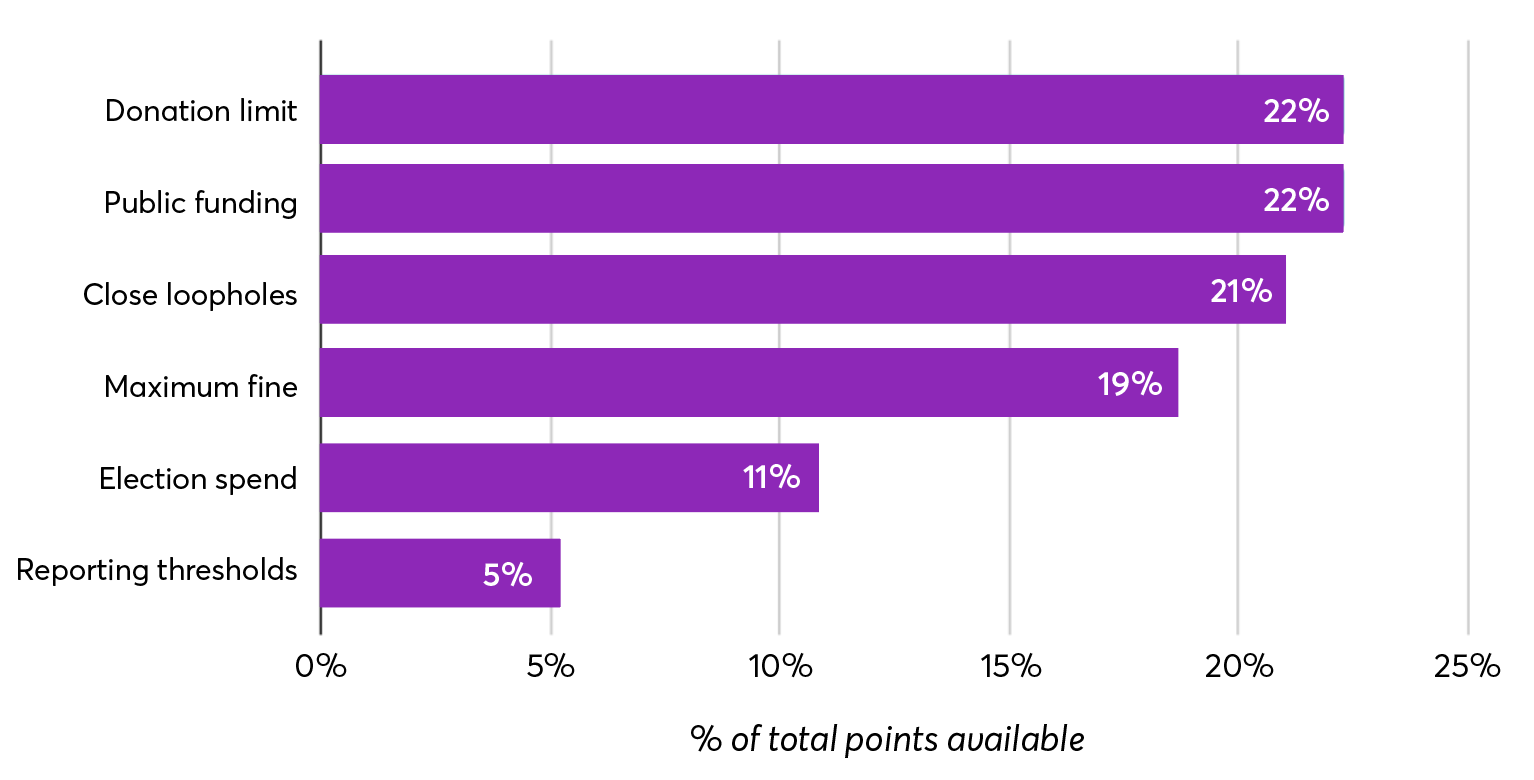
Figure 2: Results of third points-allocation poll where participants distributed 10 points between six options for change. We asked “Which combination of options would you recommend to build trust in the system?”. This poll was completed after a discussion of three foreign case studies (the US, the Republic of Ireland and South Australia), n=70. See Appendix for full description of options.
The sections that follow explore each of the four most supported options in turn, examining what participants told us about why they matter, what they would achieve, and what conditions would need to be in place for them to be effective.
Introduce a cap on donations
Key finding
In our final poll, introducing a donation limit was one of the two top-ranked options for change, receiving 22% of points. After the initial discussion on donation limits, participants were asked “What limit, if any, should be placed on donations?" Our findings demonstrated strong support for the introduction of donation limits, with over 50% voting for strict limits of under £50k.
Figure 3: What limit, if any, should be placed on donations?
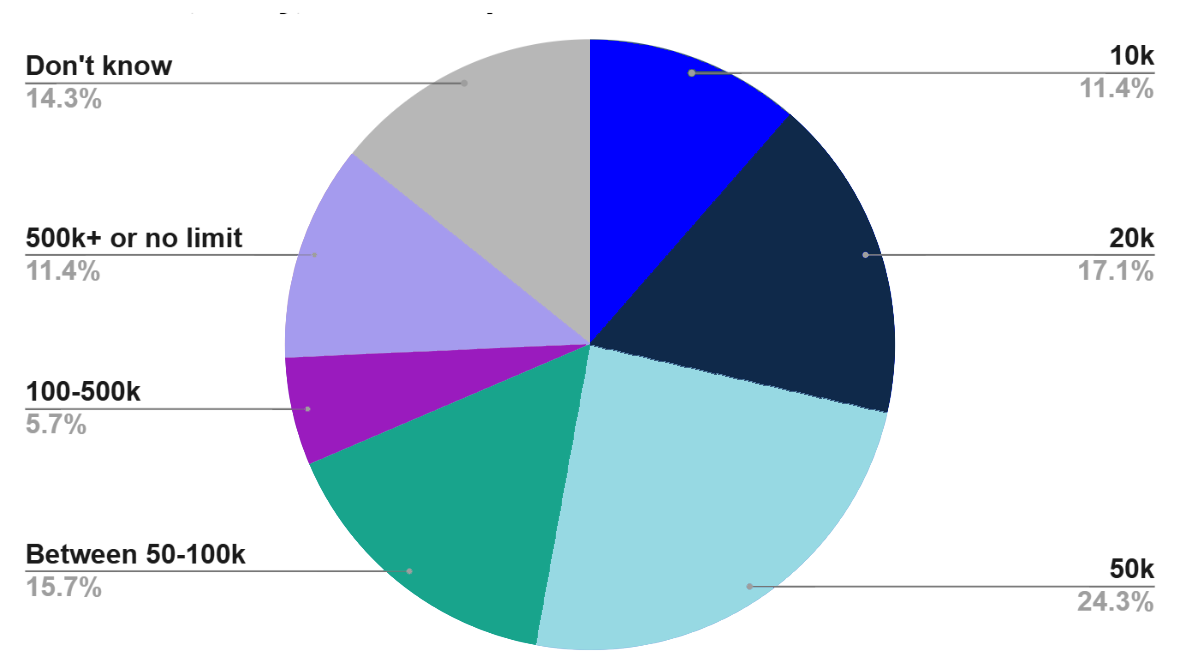
Figure 3: We asked “What legal limit, if any, do you think should be placed on the donations that an individual, company or other organisation can make to a political party each year?" (Options: No limit, 10k, 20k, 50k, 100k, 500k, 500k+, Don't know), n=70. This question preceded the main deliberation about how much money goes into the party political system, which covered both donation limits and election spending limits.
Rationale
The absence of donation limits was seen as a direct contributor to the concerns outlined by participants around the ability of wealthy donors to buy influence, or even to directly determine policy. Participants also drew connections to the underlying principle of fairness: they felt unlimited donations gave larger parties an unfair advantage compared to smaller or emergent parties. At its core, participants felt that the size of your wallet should not determine the size of your voice, either as a donor or as a party.
“I think not having a cap on donations gives the impression that democracy can be bought or certainly influenced by the highest bidder."
Caveats
There was genuine debate, however, around what the introduction of donation limits would actually achieve and the tangible benefits that it would bring.
For many, donation limits were appealing because they would reduce the overall volume of money in the system and force parties to “use their money more wisely," and that outcome was seen as valuable in itself.
“I think there's a huge opportunity to take a lot of money out of the system by accepting fewer donations and capping spending so that you just take down the amount of money that's going through the system all around and bring things back to ethics, to ideas ...really elevate the quality of the intellectual thinking and take down the level of commercialism and transactional thinking.”
A tension that emerged was the balance between limiting influence and allowing financial freedom of expression. A vocal minority felt strongly that people should be free to spend their money how they choose. Others challenged this framing directly: a donation limit would only affect a wealthy minority, making it a weak basis for a freedom of expression argument.
Another core theme was the questioning of how impactful limits could actually be if not introduced alongside other measures. For some it wasn't about the amount of money in the system but more about what that money could buy you. Unless transparency around donor intent was also made more visible, donation limits might not have the desired effect of limiting influence.
Furthermore, even with a cap in place, some felt that determined donors would find workarounds and exploit gaps in the rules. For this reason, the case for limits was seen as dependent on whether those loopholes were also closed.
"I'm a bit sceptical, unfortunately, that people aren't going to find a way to keep pumping money into the party. I do agree with the principle of putting a cap on it ... unfortunately I think the principle's right but in practice maybe there's a way to get around the system."
Practical suggestions
A small number of participants proposed concrete mechanisms for making donation limits more effective in practice:
Donor visibility on campaign materials: one participant suggested that political parties should be required to list their primary financial donors explicitly on campaign leaflets and advertising, making the source of funding immediately visible to voters at the point of engagement rather than requiring them to seek it out.
Leveraging existing public assets: one participant suggested working with publicly funded entities such as the BBC to host and promote political debates and campaign materials, reducing parties' reliance on paid advertising.
Media subsidies: providing subsidised media access to political parties was raised as a way to reduce campaigning costs (an idea partly inspired by the Irish model discussed during the session).
Centralised accessibility fund: one suggestion was a dedicated central funding pot to cover accessibility needs for political broadcasts and events, such as translations and British Sign Language interpreters.
Close loopholes
Key finding
Closing loopholes received the second-highest percentage of points across the nine sessions (21%). Those who voted for this option felt strongly about it, with several participants allocating the majority of their points to this option.
Rationale
Even among those who supported donation limits, confidence was undermined by the perceived possibility of workarounds. After learning about how the system works, participants were concerned about donations being:
- split to avoid reporting thresholds,
- routed through multiple companies, or
- obscured via UK-registered foreign entities.
The existence of these workarounds, and the lack of visibility on whether they are being exploited, was itself a significant source of distrust.
These loopholes were not explicitly mentioned in any of the material shown to participants, they spotted the potential of these workarounds based on information provided about thresholds for reporting and permissible sources.
"How do you know who's behind a company? They could just be registered in the UK."
Participants were particularly worried about the ability of foreign governments and actors to exploit these loopholes to gain influence in the UK. Concern about foreign influence centred mainly on the US, with some participants explicitly calling out the figures of Donald Trump and Elon Musk. Two of our nine groups raised serious concerns about the current rules regarding cryptocurrency, with participants voicing unease both about crypto businesses influencing policy and about the volume of money that could be donated through cryptocurrency without adequate oversight.
Caveats
A core question that emerged was who bears responsibility for ensuring the rules on permissible donations are followed. When polled, participants were split between responsibility lying with the Electoral Commission (43%) and with the parties themselves (34%), with a number of those selecting 'neutral' (23%) explaining they believed that responsibility should be shared.
Figure 4: Who should be responsible for checking donations?
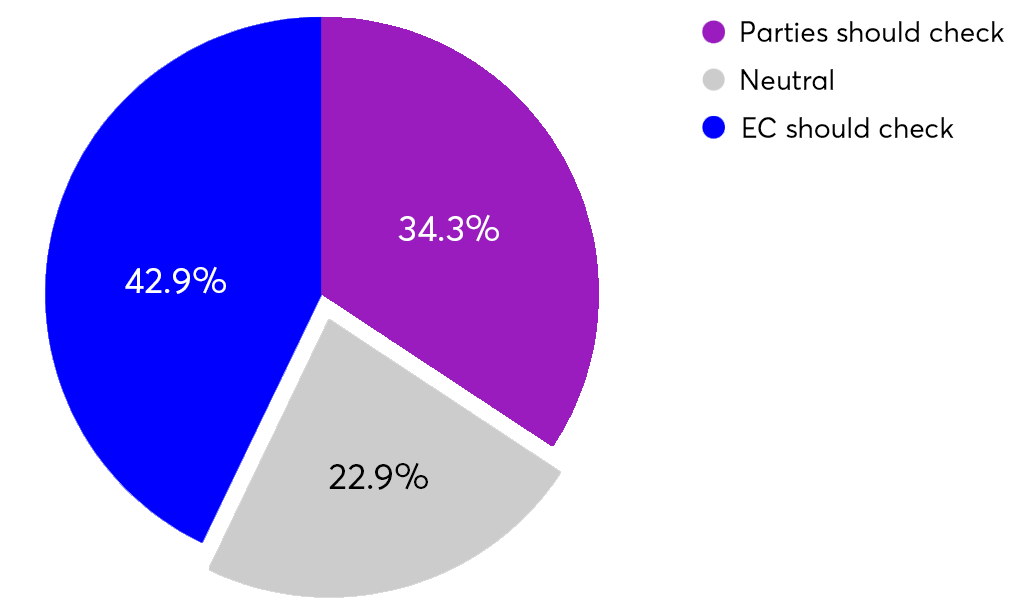
Figure 4: We asked participants, which option out of two, they were most in agreement with. Option A: Parties should conduct stricter checks on donors, even if that means a greater administrative burden on their staff and volunteers. Option B: Electoral Commission should do more to check party compliance with the rules, even if that takes more time and taxpayer money. n=70. This question preceded the second of two deliberations about how rules are enforced.
Some felt on principle that responsibility for following the rules should lie with parties: parties should be accountable for their own finances. Others felt equally strongly that self-policing is a fundamental conflict of interest.
"I'd like the parties to do more checks, but I don't trust them at all."
"I think there's a complete conflict of interest to have a political party checking to make sure that their donations are compliant."
During discussion, most groups moved towards independent regulation that would take more responsibility for holding parties accountable. This shift was largely driven by distrust of the parties to perform their own compliance checks.
Practical suggestions
Participants themselves questioned whether the Electoral Commission had sufficient regulatory powers, with two groups drawing explicit comparisons to the Information Commissioner's Office, identifying it as a model for what independent regulatory oversight could look like in practice.
"A model they could work to is that of the Information Commissioner's Office... whereby they've been given the powers to enter, seize, investigate."
Introduce stronger deterrents
Key finding
Participants were consistently surprised to learn that the maximum fine for breaking political finance rules is £20,000 and broadly felt that at this level, it would not function as a meaningful deterrent. A large majority, 81% of participants, voted for fine limits to be increased.
Figure 5: What should happen to fine limits?
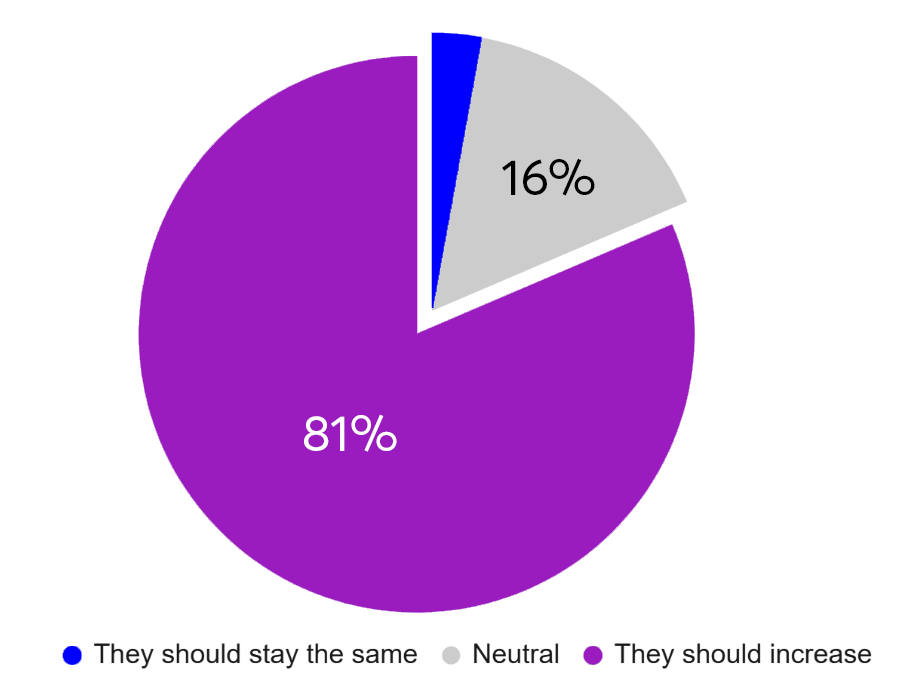
Figure 5: We asked participants, which option out of two, they were most in agreement with. Option A: Fine limits don't need to change, they are enough of a deterrent as they are. Option B: Fine limits should be significantly increased even if that could threaten smaller parties. n=70. This question preceded the first of two deliberations about how rules are enforced.
Rationale
For many, the £20,000 fine wasn't considered large enough to deter rule-breaking.
"The donations that really matter are quite a lot more than £20,000, aren't they? So if the fine is £20,000, that's nothing compared to the donation they're getting."
The key concern here is that these fines would not act as a deterrent for parties regularly receiving larger donations. The public also perceived larger parties as more likely to break the rules as the cost of these small fines could be absorbed more easily.
The fairness of fines was a significant topic of discussion. In all nine groups, participants agreed that for fines to be fair, they must be proportionate to the offense and the size of the party. For the majority of these groups this was about establishing a meaningful deterrent for larger parties, however, some groups also referenced the importance of smaller parties not being “wiped out" if they received a fine.
"I feel like the smaller parties are less likely to cause the breaches anyway because they're a lot more careful with the money because they can't afford the £20,000 that it is, but a percentage of the annual income would be so much fairer."
Caveats
A minority of individual participants across most sessions, however, pushed back on proportionality entirely, stating that if you break the rules you must be held accountable.
"When it comes to protecting the smaller parties, my view is probably quite harsh, but I think if you can't trust these parties to manage their own finances, I wouldn't really want them near any position of power, so they just need to get it right."
Practical suggestions
Fines and enforcement was the area where participants had the highest volume of ideas for how the current system could be improved.
On proportionality, which was mentioned in the explanatory video on the topic, suggestions included fines set as a percentage of a party's annual income, fines proportional to the size of the impermissible donation, and a requirement to return the original donation.
However, a major theme was that monetary penalties alone are insufficient. Participants proposed a range of alternative and complementary mechanisms, which underlined the importance of accountability and justice in building trust in the political finance system:
Proactive vetting: the Electoral Commission should act as a filter, checking donations before they are passed to political parties rather than investigating after the fact: preventing impermissible donations from entering the system in the first place.
Non-monetary deterrents: a points-based disciplinary system, a "three strikes and you're out" rule, and criminal convictions for the most serious violations.
"I'm surprised that we're just looking at small fines in the scheme of things when there's no sort of criminal implications there."
An increasing openness to more public funding in the system
Key finding
Public funding was one of the most contested topics across all sessions and produced one of the most significant shifts in support over the course of the workshops. Although there is a lack of systematic data measuring public opinion on using public funding in the political finance system, the Electoral Commission's past polling suggests that it is unpopular with the electorate.
This was backed up in our first points-allocation poll, where increased public funding received only 13% support.
By the final poll, at the end of the session, this had jumped to 22%, equivalent to the level of support for the introduction of a donation limit. This shift matters. It suggests that the public's relationship with the idea of state funding is not fixed, and that deliberation and exposure to evidence can meaningfully move opinion.
The exposure that seemed to move the dial, from the second vote to the third vote, was learning about the new system being trialled in South Australia, where a near-total ban on private donations was introduced in 2025.
Figure 6: Support for ‘Public funding' at different stages of the deliberation process
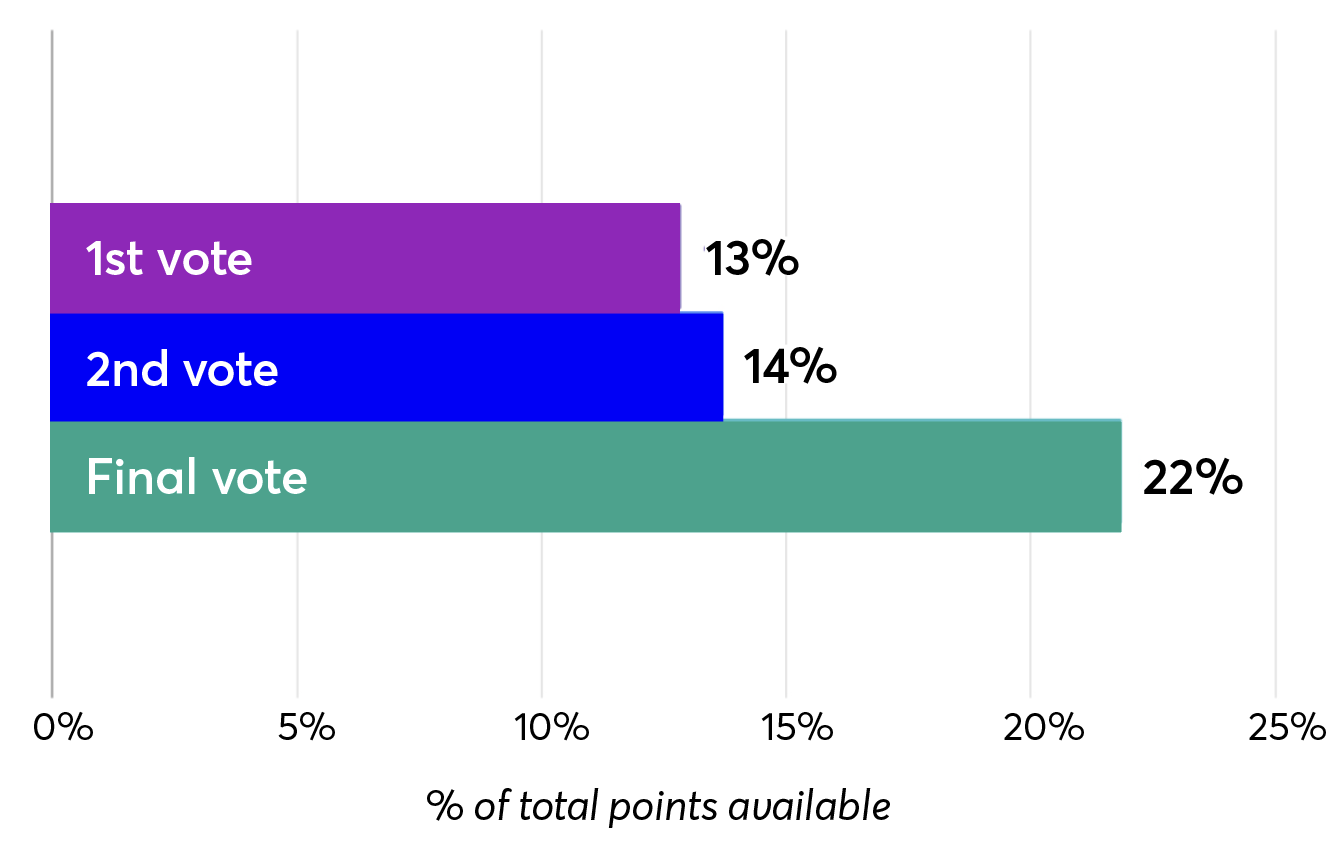
Figure 6: Results from points-allocation for the 'Public funding' option only (other 5 reform options not shown). We asked participants "Which combination of options would you recommend to build trust in the system?". They allocated 10 points between 6 different options for change. n=70. See Appendix for full description of options.
Rationale
Participants did not arrive open to this conversation. Initial reactions to the idea of public funding were resistant, grounded in three consistent concerns:
- An unwillingness to fund parties they fundamentally disagree with
- A feeling that they already pay enough tax
A belief public money should go to public services like health and education, not to political parties (which are not perceived as a public service).
I don't want my money going to parties I don't agree with at all.
As participants worked through what they actually wanted from a political finance system (a level playing field, reduced donor influence, and greater transparency), many began to see public funding differently. Learning about the proportion of public money in European political finance systems was an initial catalyst, as was learning about the new South Australian model, which demonstrated that a system with stronger public funding and caps on private donations was not just theoretical. The benefits participants began to articulate were clear: politicians more accountable to voters and less beholden to wealthy donors, and potentially greater public engagement because people would have a direct stake in the system.
Originally, I said I didn't want any money going off taxes because I thought, well, we pay enough taxes as it is, but when you look at European countries and how much they donate to the political system, I'm kind of swaying towards putting some money towards a political fund.
If parties have to rely on citizens, they'll target their interests more, instead of big companies.
Caveats
Participants also discussed the challenges of a public model. A minority (two of nine groups) perceived that there was potential for corruption in a fully public model and felt that there was a risk of giving the government too much control.
So you're very much at the whim of whoever the government of the day is, and they could, they could change their funding criteria to suit themselves, depending on what's most advantageous to them.
There was a persistent residual mistrust in how taxes are currently spent and concern about the practicalities of how this change would be administered.
So if £100 of my tax goes towards a political party or a proportion of parties, which one? Who gets what? That's so, who determines that?
I don't really trust the politicians either, so I feel like, would it be wasted having more of our taxpayer money distributed to them.
So you're telling me you're gonna increase my taxes again to improve the political system? Why would I believe you?
It can be easy for decision makers to dismiss the idea of public funding based on the assumption that the public would never accept it. Our research suggests that this is too simplistic a view. People can appreciate the benefits of the public funding model and can become open to it in principle, even while acknowledging the current trust deficit that makes it difficult to implement at present. It is something of a circular problem: people don't trust the system enough to make the switch, but making the switch could be part of what rebuilds that trust.
Personally, I think paying for the integrity of our democracy is money well spent.
What doesn't shift the dial
Election spend
Election spending generated significant discussion, particularly around the broader argument for reducing the overall volume of money in the system. Participants were vocal about the scale of political expenditure and questioned whether it was justified. Participants also questioned whether the system was fair on smaller or emerging parties.
The level of expenditure during elections is insane.
It's hard to visualise it, because it's just so much money.
Figure 7: What if anything, should happen to the election spending limit?
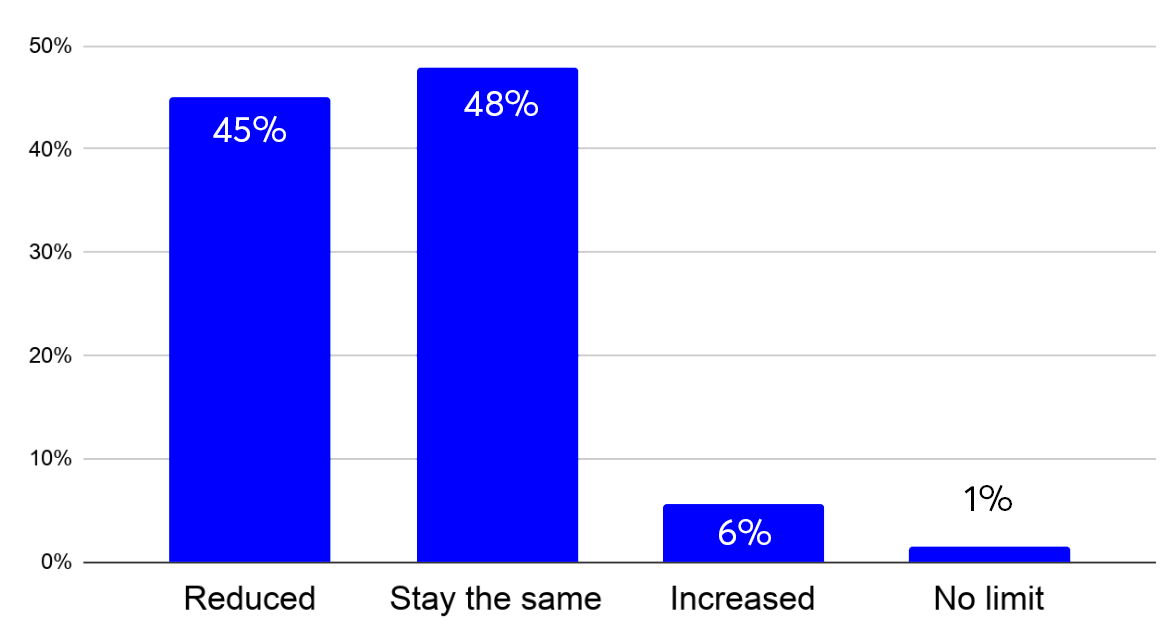
Figure 7: We asked participants “What, if anything, do you think should happen to the election spending limit?”, n=70. This question preceded the main deliberation about how much money goes into the party political system which covered both donation limits and election spending limits.
Yet despite the strength of feeling in discussion, reducing election spend never emerged as a priority in the polling of all options (it received 11% of points at the final vote). Although 45% of participants voted for spending limits to be reduced, 48% were satisfied with them staying the same. It appears to be a concern that resonates emotionally but does not translate into a concrete demand for change when compared with other options.
It just seems insane that that should be spent on campaigning where, like, things are falling apart.
Spend as much as you like but it needs to be an even playing field...the lesser parties need to be able to compete with the bigger parties.
Reporting thresholds
Reporting thresholds produced a similar pattern. A small majority (54%) voted for thresholds to be lowered, but of the six options for change considered by the participants, it ranked consistently as the lowest-scoring option (receiving 6% of total available points at the final vote).
Figure 8: What should happen to reporting thresholds?
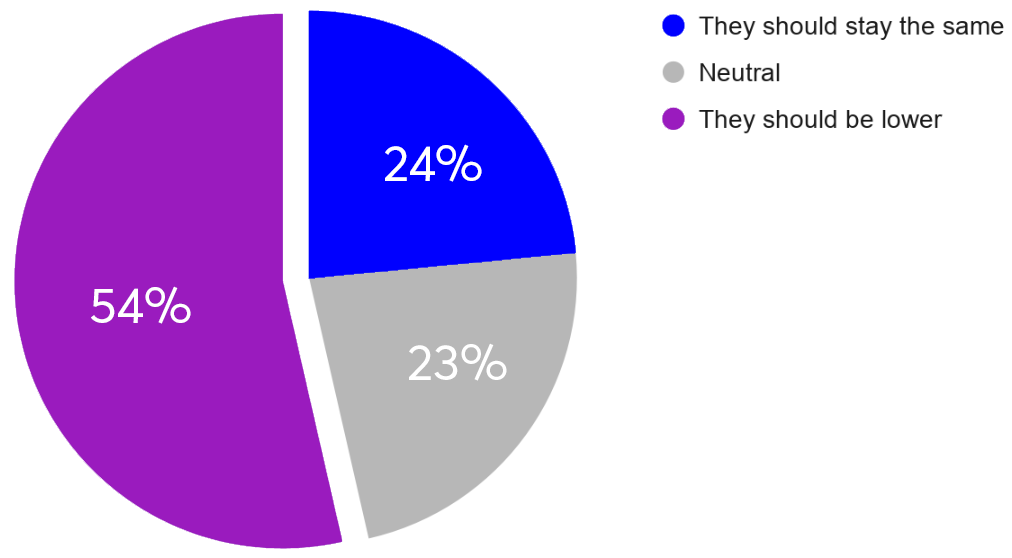
Figure 8: We asked participants, which option out of two, they were most in agreement with. Option A: Reporting thresholds should not change, they are fine as they are. Option B: Reporting thresholds should be lowered to increase transparency, at the expense of privacy and increased administration. n=70. This question preceded the main deliberation about how donations are reported. Percentages may not total 100% due to rounding.
The reason for this is that participants cared far more about the visibility of large donations than small ones. Through deliberation, many came to feel that privacy for smaller donors was reasonable and proportionate, and that the current threshold was, in their view, broadly working. What concerned them was not who was giving £500 but who was giving £500,000, and through what routes. Lowering reporting thresholds felt like a solution to a problem they didn't have, while the problems they did have lay elsewhere.
I'm not too concerned about the lower level donations, and I do think that people have the right to be able to make a donation if they want to, and I don't think it's necessary for everybody to know. But I do feel strongly about the higher level donations.
An important nuance here is that people did not support privacy for companies and there was some support for lowering the reporting thresholds for businesses. The reasons for this were twofold:
1) A belief that a business would only be donating in return for some perceived benefit
2) A belief that consumers should be aware of where money they spend is being passed on
We should know if our money is going to go into the business and then is it going to go into something that you completely don't stand for. So like, there are obviously certain parties which people boycott because of certain issues.
These findings point to a potential path forward. The public is not apathetic about political finance, they are frustrated by a system they feel does not serve them. When given the information and space to deliberate, they offer clear priorities about what needs to change. They considered their preferred reform options as connected and mutually reinforcing: donation limits, closing loopholes, deterrents and funding were perceived as not working in isolation. Taken together, they represent a credible basis for starting to rebuild public trust in the system.
Unsticking the public debate
Political finance is a topic that most people arrive at with strong instincts but limited knowledge. This research demonstrates that both of those things can change. Over the course of our workshops, people engaged in robust discussion. As they learned more about how things work and possible options for reform, they expressed nuanced views, reflecting not only on what they thought should change but also how and why. We observed shifts in opinion, most notably in attitudes towards public funding for party political finance.
This was underpinned by a significant increase in participants' understanding of the issue. Participants who initially reported knowing ‘Nothing' or 'Hardly anything' about the topic decreased from 59% at the start of the session to just 9% at the end.
Figure 9: Pre-post comparison of participants' knowledge about political finance
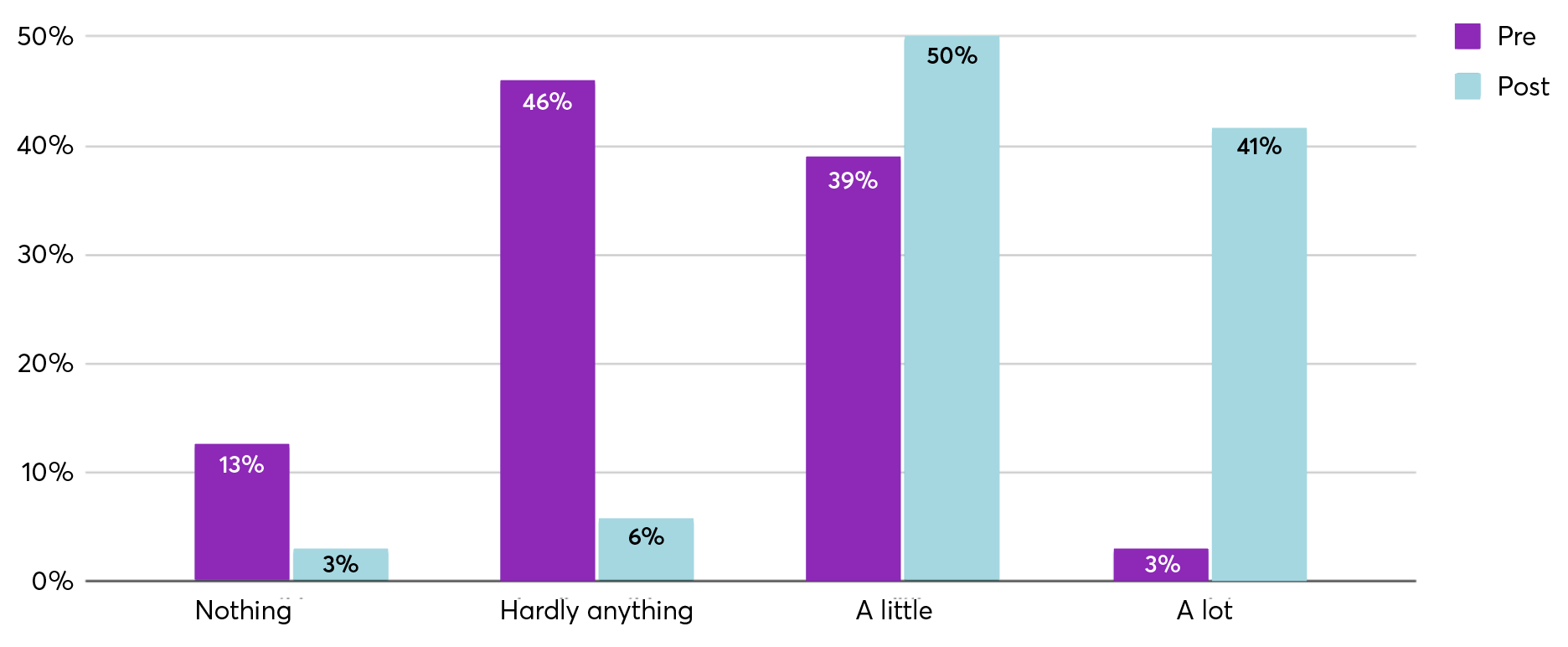
Figure 9: We asked participants "How much would you say you know about political finance?" at the start and at the end of the workshop to measure any change in their perceived level of knowledge. This shift was statistically significant (p<.001) with an effect size of 0.31 (measured using R² marginal). See Methodology for detail.
This shift in knowledge is particularly important in the context of wider public understanding of political finance. YouGov data collected by the Electoral Commission in 2025 shows that 'Don't Know' was the most common response across a range of true/false questions about political finance rules: with between 42% and 74% of respondents selecting it depending on the question. While our sample was self-assessed and therefore not directly comparable, the scale of the knowledge gap in the general population underlines the value of a deliberative approach: given the right information and context, people can move from uncertainty to considered, evidenced views.
The second largest change we observed from the start of the session was the sense of agency that people felt towards having a direct impact on decision-making. At the start of the session, just 8% of participants 'agreed' that they have the ability to influence decisions about how political parties are funded. By the end, this had increased to 24%.
Figure 10: Pre-post comparison of participants' sense of agency about decisions on political party finance
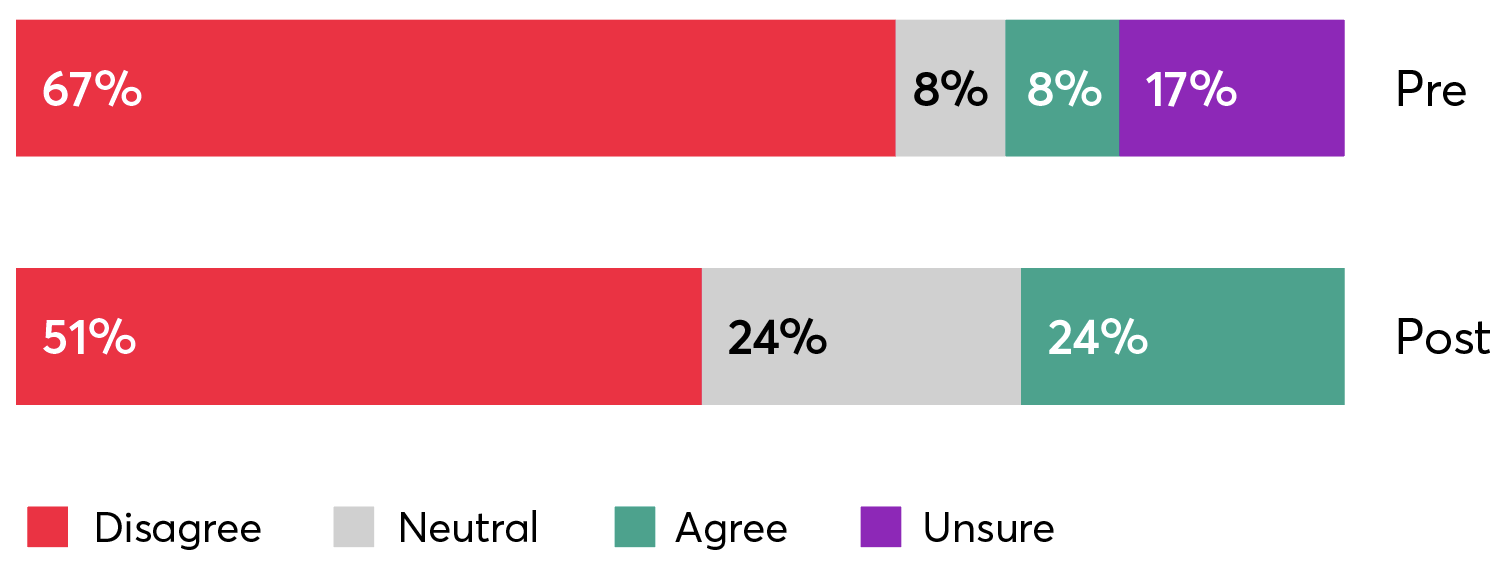
Figure 10: I have the ability to influence decisions about how political parties are funded n=70, (5-point Likert scale, Strongly disagree <-> Strongly agree)
Our analysis suggests that the public are not disengaged from questions of political finance, they are underexposed to them. The findings in this report are instructive for what needs to change and how these changes may contribute to rebuilding public confidence in the system. The process of reaching them is equally important: providing an opportunity for meaningful public engagement on this topic, where people with different views come together to discuss a way forward, is not only possible but necessary.
I have a far higher knowledge of the subject and noted how my point of view altered from the start to the finish and noted how others altered in the same way from different points of view. It has given time to pause and think and pay closer attention to the funding of parties and where the money is going and who it is from.
[It is interesting] how our views evolved during the session itself – this shows how a more informed electorate would end up in a happier place.
This is hugely important and I'm happy this work is taking place. I hope the conclusions and solutions emerging will be bold and I worry slightly they will be modest, which may not solve the confidence issue.
I learnt a lot about a subject I knew very little about and it has opened my eyes to the fact that changes must be made.
Areas for further research
The report identifies several key findings from the public deliberations that could serve as the basis for future deliberative research and exploration with the public by the Electoral Commission:
1. Exploring the 'transactional' vs. 'ideological' divide in business donations
A major theme among participants in this research was scepticism surrounding business donations, which participants viewed as inherently transactional compared to individual donations, potentially genuinely motivated by ideology. Future research could explore where the public draws the line for ‘acceptable' corporate support, and whether this depends on the type of company, eg, small business vs multinational or size of donation.
2. Designing 'meaningful' transparency
Participants felt that transparency was only useful if it covers the entire ‘lifecycle' of a donation. They expressed a desire to track what happens after a donation is made, such as subsequent policy changes or contracts, to understand large donors' motivations for donating, and how the parties spend that money. Further research could explore practical steps across these areas, and the extent to which they would help to increase trust.
3. Deterrents for rule-breaking
While 81% of participants supported increasing fines for rule-breaking, they also wanted to make sure these were proportionate (eg, not discriminatory against less wealthy parties), while many also felt that money alone was an insufficient deterrent, with some suggesting criminal consequences for serious violations. Further research could delve into what 'justice' looks like for those who breach the political finance rules, and explore potential non-monetary penalties.
4. Specific models for increased public funding
The marked shift in support for public funding (from 13% to 22% of points allocated) after learning about international models suggests this is an area where participants were increasingly receptive, but wanted to understand how it would actually work in practice to make sure that the money is "well spent". Future research could explore different models and proportions of public funding to understand which options might feel more acceptable, fair and least likely to be "wasted" by political parties.
5. The role and value of money in party politics and elections
A vocal minority rejected the premise that parties need large sums of money, for example arguing that digital communication has lowered costs and that parties should simply "spend less". Further research could test this view more deeply. If election spending limits were drastically cut across the board, what do the public fear would be lost (eg, voter information) versus gained (eg, a level playing field)? And what do they define as 'essential' for parties to do to communicate with voters vs unnecessary?
Several participants spontaneously raised concerns about foreign influence via social media and the lack of oversight regarding cryptocurrency donations. These were not included specifically within the scope of this research so further research could focus on public expectations towards how any future political finance rules might help tackle emerging digital threats.
Between 3rd-13th February 2026, we held nine deliberative polling workshops, with 72 UK adults. All workshops were held online. Four groups were made up of adults (18+) living in England, one group was adults in Northern Ireland, one group was adults in Scotland, two groups were adults in Wales (with one session conducted in Welsh). The final group was made up of 16 to 17-year-olds from across the UK. See Appendix for a full breakdown of demographics.
Social value
The entire project was delivered with a digital-first approach to reduce carbon emissions. By conducting all nine workshops online rather than in person, this project avoided an estimated 0.6 tonnes of CO2e emissions. This reflects the carbon cost of facilitation staff travelling from London to workshop locations across the UK, plus participants travelling locally to a venue, compared to the negligible emissions associated with video conferencing.
Participants were compensated for their time to ensure accessibility, well above London Living Wage, in line with MRC guidelines on public engagement for research.
Recruitment
Participants were recruited through the recruitment agency Roots Research to be broadly reflective of the UK population, ensuring a range of demographic backgrounds across age, gender, region, ethnicity, education, socioeconomic status and disability status. We used screening questions to ensure a balance across: voting intentions (ensuring we included region specific options for Northern Ireland, Scotland and Wales); interest and trust in politics. Participants received £90 remuneration for taking part. We set out to recruit a balance of voting intentions across our full cohort – our intended sampling frame for this criteria is provided in the Appendix. While we achieved a mix of different voting intentions, we note that Reform voters were underrepresented and Green voters were overrepresented in our sample compared to recent YouGov polling. Our intentional oversampling of participants from Wales, Scotland and Northern Ireland, also resulted in a higher proportion of participants who support parties that only operate in a single nation.
Workshop outline
The workshop was an interactive experience, where participants were guided by expert facilitators through a series of short informational videos, polls and deliberative discussions. Through this process, a variety of people from different backgrounds were able to learn about and reach a more informed view on how political finance currently works and how it might work differently in the future.
All workshops were delivered through the Centre for Collective Intelligence's digital platform Zeitgeist, using a structured approach known as deliberative polling. This method allows for the collection of quantitative and qualitative data from individuals and groups throughout a discussion, helping to track how opinions change over time. Participants connect to Zeitgeist, which enables interaction with other participants via a video-calling interface.
The workshop lasted for 3.5 hours, with two short breaks. There were 6 distinct sections:
- Section 1: Welcome and pre-polling – explaining the workshop, demographics and baseline attitudes.
- Section 2: How things work now – animation video explaining the current system, initial responses from participants.
- Section 3: How things should work – polling and discussion to establish what principles are most important to participants when designing the rules around political finance.
- Section 4: Options for change – outlining four potential areas for change and underlying reform options via expert videos and summaries, then discuss the merits of each and acceptability of trade-offs.
- Section 5: How things work elsewhere – outlining three international case studies linked to options for change and discussing desirable and undesirable elements of other systems and relevance to UK context. The case studies were:
- The USA - a system where there are few limits on spending and an emphasis on transparency and freedom of speech.
- The Republic of Ireland - a system where there is tight regulation on donations, clear spending limits and formal reporting.
- South Australia - a new system where there is a near-total ban on private donations, with spending caps and strict reporting.
- Section 6: Closing – capturing how perceptions may have changed, biggest take-aways, and feedback on the process.
The stimulus included a number of videos, as well as some explanatory slides. Each of these was approved by the Electoral Commission for factual accuracy.
- Introductory animation providing a brief overview of the current system for political party finance.
- Professor Kate Dommett from the University of Sheffield talking about how much money parties receive.
- Dr Sam Power from the University of Bristol explaining the different sources of money.
- Dr Justin Fisher from Brunel University discussing the rules around reporting.
- Phil Thompson, Head of Research at the Electoral Commission, talking about how the rules are enforced.
Each of these videos explained, in accessible language, what rules and regulations are currently in place, common calls for change and the trade-offs involved with making those changes.
Qualitative analysis
After all sessions have been completed, we reviewed group deliberation transcripts for each deliberation across all nine groups. We identified and counted themes using a combination of human and AI-supported analysis. All quotes in the report are from deliberations that happened during the sessions or from feedback entered in the free-text polls. Throughout, we use the terms "majority of the groups”, “most groups" or "most participants" to describe key themes that were discussed in at least five of the nine workshops. We use “several”, “some groups” or “some participants" to highlight minor themes that emerged during deliberations in less than half of the sessions.
Quantitative analysis
Polling data are collected throughout each session, using a mixture of 5-point Likert scales and closed choice polls. After all sessions were completed, the data were aggregated. We tested for significance between pre-, post- session results (see Figures 9 and 10) using linear mixed-effects models. In this approach, time is a fixed-effect predictor which we compare to a null-model to test for significance. When testing for statistical significance, we set our p-value at 0.05. We report the total "n=" for each poll. Some polls show lower numbers than the total 72 participants due to technical issues or participant-specific breaks. Percentages are given as whole numbers and all other numbers rounded to one decimal place.The results of the points-allocation poll are presented as the percentage of the total available points that each option received. For example, if 700 points were available in total, and the option for "donation limits" received 156 points, its support is reported as 22% (156/700). Results from all other polls are reported as the percentage of participants who voted in favour of a specific option.
Sensitivity analysis
Because our achieved sample included a higher concentration of Green party supporters, we carried out additional sensitivity analyses to check to what extent our results were being driven by the specific voting intentions of the people who took part. We did this in two ways by re-analysing polling results after 1) artificially removing and 2) downsampling (by half) the responses from these specific voters to see if it changed the main findings. The results of these additional tests are provided in Table A for full transparency.
The core findings, particularly the strong shift in support for public funding, remained stable across all scenarios. This suggests that the insights are a reliable indicator of broader sentiment, rather than just being driven by the specific political groups we oversampled.
Table A: Results of sensitivity analyses
|
Full sample |
Adjusted sample (all participants with 'Green' voting intention removed) |
Adjusted sample (participants with 'Green' voting intention downsampled by 50%) |
| Principles (Reference Figure 1, pg.9) |
• Limiting influence (75%)
• Preventing foreign interference (58%)
• Fairness (39%)
• Transparency (36%)
• Enforcement (36%)
• Communication (11%)
• Broad participation (10%)
• Freedom of expression (8%)
• Viability (7%)
• Privacy (6%) |
• Limiting influence (72%)
• Preventing foreign interference (62%)
• Fairness (45%)
• Transparency (40%)
• Enforcement (36%)
• Freedom of expression (11%)
• Privacy (9%)
• Communication (6%)
• Broad participation (2%)
• Viability (2%) |
• Limiting influence (75%)
• Preventing foreign interference (61%)
• Fairness (42%)
• Enforcement (37%)
• Transparency (36%)
• Communication (10%)
• Freedom of expression (8%)
• Broad participation (7%)
• Privacy (7%)
• Viability (5%) |
| Options for reform – final points allocation (Reference Figure 2, pg.16) |
Close loopholes (21%)
Donation limit (22%)
Election spend (11%)
Maximum fine (19%)
Public funding (22%)
Reporting thresholds (5%) |
Close loopholes (24%)
Donation limit (21%)
Election spend (9%)
Maximum fine (20%)
Public funding (20%)
Reporting thresholds (6%) |
Close loopholes (22%)
Donation limit (22%)
Election spend (9%)
Maximum fine (19%)
Public funding (22%)
Reporting thresholds (6%) |
Support for 'public funding'
T1 = initial vote
T2 = second vote
T3 = final vote (Reference Figure 6, pg.23) |
T1 (13%)
T2 (14%)
T3 (22%) |
T1 (11%)
T2 (14%)
T3 (20%) |
T1 (13%)
T2 (14%)
T3 (22%) |
Footnotes:
The final verification analysis we ran was a crude comparison between Left-leaning (Labour, Liberal Democrat and Green) participants and Right-leaning (Conservative, Reform) participants. We note that this was not the core focus of our research and so these results should be interpreted with care. This analysis suggests that, of the top four options for reform discussed by participants, Left leaning voters have a preference for Donation Limits and Public Funding while Right leaning voters have a preference for Closing Loopholes and Maximum Fines. Both groups showed the large shift in support for Public Funding in the final points allocation poll. This comparison is suggestive of clear differences in the ordering of priorities between Right- and Left-leaning voters although further research is needed to validate this result and to understand the underlying rationale.
Appendix
Polling options in detail
Points-allocation Poll (6 options for change) full descriptions:
- Introduce a donation limit. Restrict donations to a fixed amount per year.
- Reduce election spend. Decrease the amount each party can spend campaigning (currently a base amount + £54,010 per seat).
- Increase public funding. Reduce the need for private donations.
- Close loopholes. Put laws through Parliament to prevent unclear donors and foreign influence.
- Lower reporting thresholds. Make information about smaller donations (under £11,180) public.
- Increase the maximum fine. Make the cost greater for political parties who break the rules (maximum fine currently £20,000).
Prioritisation of “most important” values/principles (10 options)
- Limiting influence: preventing individuals or organisations having too much influence over a party
- Transparency: voters should be able to see who is funding parties and how money is spent
- Fairness: ensuring parties of all sizes have equal opportunity to raise and spend money
- Freedom of expression: protecting donors' right to spend money how they choose
- Viability: rules should not cause an administrative or financial burden that stops parties operating effectively
- Communication: rules should recognise the importance and cost of campaigning to engage and inform voters
- Broad participation: encouraging parties to build a diverse base of donors, voters and supporters
- Enforcement: rules must be easy to enforce, with necessary powers given to the Electoral Commission
- Privacy: protecting the privacy of donors who donate comparatively small amounts of money
- Preventing foreign interference: loopholes should not enable foreign organisations or governments to influence UK politics
Participant demographics
All percentages are in reference to 72 participants.
| Age |
Percentage of participants |
| 16-17 |
12% |
| 18-25 |
14% |
| 26-35 |
17% |
| 36-45 |
18% |
| 46-55 |
17% |
| 56-65 |
15% |
| 66-75 |
6% |
| 76+ |
1% |
| Gender |
Percentage of participants |
| Male |
50% |
| Female |
50% |
| Ethnicity |
Percentage of participants |
| Asian or Asian British |
10% |
| Black, Black British, Caribbean or African |
10% |
| Mixed or multiple ethnic groups |
7% |
| White |
72% |
| Other ethnic group |
1% |
| Socioeconomic grade |
Percentage of participants |
| Low |
26% |
| Medium |
39% |
| High |
13% |
| Other |
22% |
Party affiliation – intended sample
We measured voting intention based on participant responses to the question 'If there were a general election held tomorrow, which party would you vote for?'. This information was collected through anonymous polling at the start of each workshop. We set out to recruit a balance of voting intentions across our full cohort, with the aim of achieving the following quotas:
- Half of the sample (~40 participants of a total 80) to select Labour, Conservative or Liberal Democrat.
- Half of the sample (~40 participants of a total 80) to select Other parties, Other, I wouldn’t vote.
- Scottish workshop to include SNP, Welsh workshops must include Plaid Cymru and Northern Ireland Workshop must include some participants affiliated with specifically Northern Irish parties (DUP; Sinn Féin, SDLP, UUP, Alliance Party)
Party affiliation – achieved sample
While we achieved a mix of different voting intentions, we note that Reform voters were underrepresented and Green voters were overrepresented in our sample compared to recent YouGov polling. We note that our intentional oversampling of participants from Wales, Scotland and Northern Ireland, also resulted in a higher proportion of participants who support parties that only operate in a single nation.
| Party affiliation* |
Percentage of participants |
| Alliance Party |
1% |
| Conservative |
10% |
| Democratic Unionist Party (DUP) |
3% |
| Green |
32% |
| Labour |
11% |
| Liberal Democrats |
7% |
| Plaid Cymru |
10% |
| Reform UK |
8% |
| Sinn Féin |
4% |
| Scottish National Party (SNP) |
1% |
| Ulster Unionist Party (UUP) |
1% |
| Other |
11% |
*Based on the question “If there were a general election held tomorrow, which party would you vote for?"
Endnotes
- While the participant sample contained a mix of different voting intentions, it did not have the profile we set out to achieve. We completed additional analyses to confirm that the results we report were not affected by this, as detailed in the Methodology – supplementary information section. A full breakdown of voting intentions can be found in the Appendix.
- We report the results of these polls as % of support for each option based on the total amount of points available. For example, as 700 points were available in total and the option for "donation limits" received 156 points, its support is reported as 22% (156/700).
- In a 2025 study by the Electoral Commission only 14% of Britons said they trusted politicians – accessed 4/03/26.
- Ibid
- Corruption Perceptions Index 2025: UK Corruption concerns risk becoming 'new normal' – accessed 4/03/26.
- Rycroft Review 2026 - accessed 25/03/26.
- We present quotes verbatim, in the participants' own words, however filler words are removed for clarity.
- Electoral Commission, YouGov polling 2025, received directly by CCI from the Electoral Commission to support session design.
- During the pre-polling at the start of the session we asked participants “How important to you, if at all, is the issue of how political parties are funded in the UK?”, in order to establish baseline attitudes.
- We carried out a crude comparison of the preferred options for reform between Left-leaning (Labour, Liberal Democrat and Green) participants and Right-leaning (Conservative, Reform) participants. We note that this was not the core focus of our research and so these results should be interpreted with care. This analysis suggests that, of the top four options for reform discussed by participants, Left leaning voters have a preference for Donation Limits and Public Funding while Right leaning voters have a preference for Closing Loopholes and Maximum Fines. More details available in Methodology – supplementary information.
- Six participants allocated the majority of their points to this option. This was second only to the seven participants who allocated a majority of points to public funding.
- https://commonslibrary.parliament.uk/what-are-the-effects-of-political-financing – accessed 04/03/26
- We carried out a sensitivity analysis comparing the preferences of Left-leaning (Green, Labour, Liberal Democrat) participants and Right-leaning (Conservative, Reform) participants and confirmed that this large shift between the second and third votes was consistent irrespective of political preference. More details available in Methodology – supplementary information.
- In the second expert video, participants were told that "a recent study found that only 9% of funds came from the state [in the UK]. For context, in most other countries in Europe, that figure would be somewhere between 40 and 75%."
- Electoral Commission, YouGov polling 2025, received directly by CCI from the Electoral Commission to support session design.
- Carbon saving estimate calculated using DEFRA 2025 GHG Conversion Factors. Assumptions: 2 facilitators per workshop travelling from London by national rail to 7 regional locations (estimated average return journey 400km; 0.03546 kg CO2e per passenger km = 113 kg CO2e); 2 facilitators travelling by domestic flight to Northern Ireland for 1 workshop (estimated return journey 580km; 0.22928 kg CO2e per passenger km = 266 kg CO2e); 72 participants travelling locally by car to a venue (estimated average return journey 20km; 0.17304 kg CO2e per passenger km = 249 kg CO2e). Total estimated avoided emissions: 628 kg CO2e (approximately 0.6 tonnes). Online delivery emissions are not included as negligible by comparison. Actual savings may vary depending on travel routes and modes.
- Other includes: retired, student and home-maker.