How to fix social care with Sir Norman Lamb
 www.nesta.org.uk/feature/the-fix-with-ravi-gurumurthy/how-to-fix-social-care-with-sir-norman-lamb/
Nesta is a research and innovation foundation. We apply our deep expertise in applied methods to design, test and scale solutions to some of the biggest challenges of our time, working across the innovation lifecycle.
Episode Transcript: The Fix — Fixing Social Care
Host: Ravi Gurumurthy (Chief Executive, Nesta)
Guest: Sir Norman Lamb (Former Care Minister; author of Be More Human)
Norman Lamb: [0:04] Of course, every country is facing this extraordinary demographic change with so many more older people needing care, living much longer, and so we're all grappling with the same challenge. That shouldn't mean we wait until we learn something from somebody else. Let's take a lead on this.
Ravi Gurumurthy: [0:29] Hi, I'm Ravi Gurumurthy and this is The Fix. This is a podcast all about solutions, hearing from some of the most prominent people in public life about how we address the biggest challenges we face in the UK.
I run Nesta, the innovation foundation committed to finding answers to some of those problems and improving people's lives. And in this episode, we'll be looking at social care.
The Prime Minister has promised a National Care Service with free personal care for older people to be set up by the end of the next Parliament. But for decades, social care has been the problem every government promises to fix and none has.
As Ed Davey pointed out during Prime Minister's Questions a few weeks ago:
Ed Davey (archival audio): "Mr Speaker, when the Prime Minister announced cross-party talks on social care over the summer, I was delighted and immediately accepted because getting this right really matters..."
Ed Davey (archival audio): [1:16] "...He said then that to build a lasting solution on funding care, we're going to have to listen to each other and find common ground. And he said when he tried before back in 2009, his mistake had been leaving it too close to an election. Does he still think that now? And if we are to find the common ground well before the next election, will he tell us when the next round of cross-party talks will be?"
Keir Starmer (archival audio): [1:45] "Mr Speaker, I'm happy to admit that again now. I was working with a colleague of people on the Lib Dem front bench, Norman Lamb, and it did get too late and it got caught up inevitably in the climate of the election. And then it happened to Theresa May in 2017, and this side of the House perhaps was doing the point-scoring at that point in time. This is not an issue for point-scoring. When is this House going to learn that? How long is it going to turn away from this issue?"
Ravi Gurumurthy: [2:17] And I'm pleased to say Sir Norman Lamb, who was mentioned there, is my guest today. Sir Norman was an MP for 18 years, Care Minister when the Care Act went through Parliament, and later chaired the South London and Maudsley NHS Trust. What would he change and what's his fix?
Sir Norman Lamb, welcome to The Fix.
Norman Lamb: [2:33] Thank you very much.
Ravi Gurumurthy: [2:34] So when you presumably watched Andy Burnham at party conference standing on stage announcing a National Care Service, doing something quite bold and saying that he'll abolish the triple lock, you probably thought you've seen some of this movie before—maybe more than once. This time, do you feel more optimistic that it actually might work?
Norman Lamb: [2:52] I do actually, yeah. I think he is genuine in his determination to break through the logjam. I think he's put so much political capital into making this commitment that it makes it harder for him not to deliver, which is quite important.
And I think there's the personal element to this as well, which motivates all of us. He has self-evidently gone through a difficult situation with his own father, and I think that could drive you on to make something happen as a sort of legacy for his own family.
Ravi Gurumurthy: [3:40] This could go wrong in all sorts of different ways, but what would you say he should pay particular attention to?
Norman Lamb: [3:50] Well, ultimately whatever they come up with has got to be sustainable, or we just go back into a sort of awful process of another government coming in and ending it, or it not functioning effectively so you lose public support for it.
And so I think his desire to try to build a cross-party consensus is completely right. You know, there are moments when individual political parties in government are incapable of delivering a major reform. We've had it with pensions, and there was a process established that enabled a consensus to be built on pension reform. I think this is another situation of that kind.
Back in the day, I argued that there should be some sort of NHS and Care convention. I felt, in a way, it was a moment for a new Beveridge. This model has sustained for a very long time, and yet the circumstances are now so completely different from the 1940s that it surely should be time for the country as a whole—all political parties—to commit to a new settlement for health and care. That's what I wanted. It's not going to happen, but that for me is the rational thing that we should be doing.
Ravi Gurumurthy: [5:28] Yeah. I suspect we'll get on to talking about things like how do you pay for the National Care Service, how do you join up health and social care, what do you do about the workforce—those big structural questions. But I often feel we don't start at the right place, which is: what's the model of care that we want? What's the care experience that fits what we are trying to achieve?
If you think about a lot of the reforms over the last 30 years, I guess there was a big reform when we moved older people out of institutionalised settings more into care homes and into their own homes. But since then, a lot of the reforms have been things like, "Let's separate out the provider from the commissioner," or various other bureaucratic things, rather than thinking: okay, if you think about the daily experience of an older person at home receiving care, often that can mean four visits, sometimes from different carers commissioned to do 30...
Ravi Gurumurthy: [6:22] ...minutes on a particular task, like a meal or medication. But it doesn't necessarily feel the most humane or fulfilling role in its own right. So what's your view about the actual model of care and whether we need to rethink that?
Norman Lamb: [6:38] So I should say, first of all, we're experiencing this at this very moment with a 95-year-old mother-in-law. You see the different disparate agencies coming in, and nothing's joined up. The care agency is not involved at all, and yet they're the group of people that know the person best.
What we've got at the moment isn't working. It all needs to be shaped around the needs of the individual—far more relational in our approach: getting to know the person, meeting their needs, making the system work around the person rather than the person having to fit within a system that is not really conducive to their needs.
And that necessarily, in my view, involves the different fragmented parts of the system collaborating much more closely together, organising things in localities, and not trying to drive everything from Whitehall.
I'm slightly nervous about this idea of a National Care Service. I don't quite know what they mean by that. If it's just a set of standards and expectations that everyone should feel they will get, that's fine. If we try to organise things in a similar way to the NHS from the centre, that would be a disaster.
I don't think that's what he has in mind. I know that he has a strong belief in devolving power. In Greater Manchester, we've seen a model where the NHS and social care are trying to work more closely together. So that for me is the way forward: everything shaped around the needs of the individual, trying to enable people to maintain independence as long as possible if that's what they want, and a system based on assets—what people can do and what people want to do, rather than being totally risk-averse, which is what we often drift into these days.
Ravi Gurumurthy: [8:48] Andy Burnham has talked about his Live Well model in Manchester, which he says does more of that. But we've talked about organising things around the person and joining up health and social care for decades.
Norman Lamb: [9:02] We have.
Ravi Gurumurthy: [9:02] And if you sort of said, "Where's the proven model that is much more effective, works in terms of prevention, and delivers savings potentially because it ought to be preventative?" I don't see any brilliantly evidence-based models in this country or even internationally. I think the evidence base on older people is incredibly weak.
Norman Lamb: [9:23] No, I think that's right. I mean, I visited what felt like an attractive, much more joined-up service in Sweden when I was minister. But every country is grappling with this challenge.
Of course, every country is facing this extraordinary demographic change with so many more older people needing care and living much longer, and so we're all grappling with the same challenge. That shouldn't mean we wait until we learn from somebody else. Let's take a lead on this and let's build our own evidence base.
That, I think, necessarily involves ensuring that there is some diversity in approach, which you get if you have a devolved system. Localities do things in different ways, and that enables people to do the research on what's working effectively and what isn't, and then you build an approach based on the evidence we've gathered over that period.
Ravi Gurumurthy: [10:32] But if you think about how social care is commissioned, with a local authority often commissioning for a particular task rather than an outcome...
Norman Lamb: [10:39] Yeah, it's a sort of cost-based procurement system. It doesn't really create the flexibility to innovate much.
Ravi Gurumurthy: [10:46] Either we need to create a system that has more room for innovation, perhaps with more outcome-based commissioning, or we need to do bigger R&D trials and innovation outside of the system. But we can't just assume it's going to emerge.
Norman Lamb: [11:00] No, we can't.
Just by chance, yesterday I happened to meet for the first time the newish Director of Adult Social Care in Norfolk, a guy called Ian Wake, who is an absolutely committed reformer. He was wonderful. I came away feeling so enthusiastic—not an experience I have often when I learn about a new public service! But here is someone who really gets the extent to which the system is not working.
He gave a wonderful example of a couple in Great Yarmouth who faced endless referrals to different organisations, which took about 18 months, while they deteriorated.
Norman Lamb: [11:45] Nothing was happening during that period of time at all. Vast amounts of public money were spent on all these endless referrals.
So he's creating a system which is far more devolved to the locality, where agencies work together, where you don't just routinely signpost people to different places expecting them to navigate their way through a jungle. You bring the expertise, if necessary, into the team that is working with that individual.
The care agency that's working with them gets an enhanced role because they're the people who know the individual. You build relationships. Relationships are at the heart of most well-functioning services in my experience, and certainly as I did the research for this book I've written, relationships are critical.
Yet we've created a culture in public services where professional distance is seen as the right thing to do, and it actually gets in the way of effective support for someone. It ends up with a sort of "computer says no" caricature.
Ravi Gurumurthy: [13:01] How do you put relational care more at the centre of things? Is that partly through the role of unpaid carers as well, and family?
Norman Lamb: [13:08] Totally. They have to be completely part of it. You need inspiring leaders like Ian Wake in Norfolk. I asked him at the end of our discussion, "Where else is this happening?" because I was so blown away. Time will tell whether they pull it off, but they have a clear intent to shift to a completely different approach.
He couldn't come up with a load of councils. What he did say is that there is an annual conference where the sort of alliance of disruptors meet together, and he said the numbers are growing. So there are more and more people in public services who know that things aren't working, who know that we're not spending money wisely, and that we could do so much better for people with the resources we've got available.
Ravi Gurumurthy: [14:04] You mentioned the example of somebody who's deteriorating for 18 months. I sit on the NHS England board, and we often see examples where you've got people in emergency care for whom it's not really a massively unpredictable accident. They've been frail, they may have stopped eating, people have noticed that they are clearly declining, and then they fall and they end up in hospital. That is happening routinely.
It begs the question of why we can't have a more preventative approach—for instance, targeting 2 or 3% of the population with a team of people focused on managing that frail client group, spotting those patterns earlier, and doing something about it. Of course, that massively involves social care and health joining up.
Norman Lamb: [14:55] It does, because primary care in particular...
Ravi Gurumurthy: [14:58] Yeah, and so that's lots of agencies: the local council, the GP, the hospital sometimes, and the ICB—the integrated care board that commissions stuff.
You've been in joining-up conversations around health and social care. What's the sort of vision you've got around the National Care Service? Is it lots of partnership working and pooled budgets, or is it more like a merger where you have a single social care and health silo?
Norman Lamb: [15:24] Yes, so I prefer a National Health and Care Service. Rather than having two sitting alongside each other, just recognise that it's more rational to bring the two together in localities, with clear national guidelines and principles at play.
If you have a separate care service, then you need to aim to achieve the same in localities: a joined-up approach where you pool budgets as much as possible, where you focus on how we keep people well, not responding once there is a crisis.
It's an interesting point you make, because Charlie Mayfield, who's doing a report on mental health and work, is identifying exactly the same issue there: that the UK tends to invest in responses to crisis, not in preventing the crisis from happening in the first place, and that other countries get the balance better.
We have to find ways of ensuring that public money goes into that early support. It's so easy when money is tight to just cut the good preventative things because you're focusing on maintaining crisis services. But ultimately, it's completely counterproductive. If you're not supporting people early, you have more people in crisis and then the system's overwhelmed. It's never going to work.
So we need to find ways of creating a sort of preventative state at local and national levels, where there's a new recognition of the case for supporting early to prevent crises from happening in the first place.
Ravi Gurumurthy: [17:08] It sounds like you would literally integrate the NHS and care into a single organisation. How would that then be sufficiently local? Because as you said earlier, this is about lots of neighbourhood-based teams that collaborate. Does this write the local authority out of the script?
Norman Lamb: [17:26] No. What I'm arguing for is what I hope very much that Andy Burnham will seek to achieve: in other words, setting standards and principles nationally...
Ravi Gurumurthy: [17:42] And funding?
Norman Lamb: [17:43] Well, a mixture of funding. I think part of our problem as a state is that we are the most centralised of any country in Europe apart from Malta, and they probably have a good reason for it!
If all the money comes from Whitehall, then I think you create a dependency culture where you just blame Whitehall for everything. So actually, raising more money in localities so that you have a greater sense of accountability and responsibility locally is a good thing.
If you've set principles nationally about what everybody should be entitled to, that's a reasonable thing for the national government to do. It's a democratically elected government; there's a recognition across the country that our care system isn't working and that wherever you live, there are things that you should be able to expect.
So set those principles, but allow the locality—as in the Greater Manchester model, where greater devolution of powers has allowed the NHS and the local authority system of social care to get much closer. It's not perfect, and there have been attempts to try to take back some powers that were devolved to Manchester, but that's at least the start of a more rational approach.
Norman Lamb: [19:14] Given that we know so many of the issues that older people face—and indeed adults of working age who have care needs—transcend the boundaries between health and care... From their point of view, in their minds, they don't see a distinction between what's health and what's care; that's arbitrary really.
So let's just recognise that. Let's have a unified offer in a locality, with professionals from the relevant agencies collaborating together in neighbourhood teams, collaborating closely with the care agencies that I'm sure will still often be in the private sector or in the third sector. I don't think anyone actually is arguing for a whole care system where everybody's employed by the state; there will still very much be a mixed economy.
Close collaboration with those private providers—then I think you start to create a model which might actually meet people's needs far better than we are at the moment.
Ravi Gurumurthy: [20:30] I think the biggest reason for integration is not just integration in terms of people working together in teams with older people, but actually...
Ravi Gurumurthy: [20:38] ...also how the savings that you make go back to the people who are generating them. The risk with my frailty case: it may well be that frailty services are preventing admissions into emergency hospitals. We should try and capture those savings so that we can expand the client group that's working with them. And ditto when social care is there to improve discharge; you want the money to go back to social care, and that's something we really struggle with.
Norman Lamb: [21:07] Yeah. When the system is fragmented as it is—the example that I gave of this couple in Great Yarmouth—every agency is thinking, "Do we want to take on that cost? No, we don't. We're trying to push this back into the responsibility of the county council." If you've actually pooled your resources, then you overcome some of those perverse incentives that can completely undermine someone's well-being.
Ravi Gurumurthy: [21:39] You mentioned national standards before, and I think you can easily define entitlements, and that can be clearly measured and universal. But when it comes to performance standards and the quality of care, it strikes me this is an area where it's really hard to measure the value of a relationship, or the way people are treated. What are your reflections on our ability to measure performance, or how well we have regulated care?
Norman Lamb: [22:08] It is hard to measure and define the quality of a relational approach, but you can ask the users whether they've had a good experience. That tells you quite a lot.
The approach we have at the moment, where you spend a lot of money on inspections of agencies from the outside by people who don't really know that service particularly well, that's fraught with difficulties.
Ravi Gurumurthy: [22:37] Do you think they've made much of a difference?
Norman Lamb: [22:42] I think it's quite questionable how much difference they've made. It's enormously costly. I'm not saying dispense with all inspection and regulation, but I think there's a danger that we assume that it can shift cultures, and I don't think it really does.
Ravi Gurumurthy: [23:05] I want to come on to the workforce now, because obviously one of the ways in which you improve the quality of care is filling the vacancies. I think the vacancy rate is about 6.2% now, with about 96,000 vacancies. And also recruiting good people in and getting them to stay. What are your reflections on the workforce question? How do we tackle that?
Norman Lamb: [23:28] Fundamentally, you almost certainly need to spend more money on care. We have undervalued care and the importance of it, and we've undervalued care workers, with the result that they work on horribly low wages for doing incredibly challenging but important work. And so you have high turnover. We've experienced this ourselves with my mother-in-law, and that's not good when you have a succession of different people coming in to look after someone.
In any new settlement, which I would love to see, the value that we place on care workers needs to be enhanced.
One of the interesting things I heard yesterday in Norfolk from talking to the Director of Adult Social Care, Ian Wake, was: at the moment, when someone comes out of hospital, they have an entitlement to six weeks of reablement provided by one group of care workers from the county council, and then they shift over to another group of care workers provided by a care agency which is then paid for.
That's daft if we stand back and think about it! Why do we expect the older person to cope with one group of people for a period of time, and then have to shift over to another group of people when they've just got to know them after six weeks?
Why not work with the care agency to do the reablement work? That means they can then be paid at an enhanced rate, which enables the care workers to be more skilled, trained up to do the reablement, and then continue building the relationship with the individual, thereby enhancing their pay. That sounds to me like quite an attractive way of making better use of the resources that we've got available, and avoiding having to change teams and lose relationships that you've just built.
Ravi Gurumurthy: [25:48] On the question of pay and how much it's going to cost, it's also linked to the status of the workforce. I remember Andrew Adonis saying to me that one of the things he thought made the biggest difference to teaching and teacher status was creating a national pay review body. How big a change do we need to make to how pay rates are set? Should there be minimum pay rates set at a higher level? Should it be a pay review body?
Norman Lamb: [26:17] I would be in favour of professionalising the whole arrangement of people's pay.
Norman Lamb: [26:26] I don't want it to result in a loss of the personal element, because that relationship between the care worker and the individual is vital. If you're thinking about someone who's got a personal budget, for example—something that I am in favour of, because I think that potentially gives power to the person or to their family—you want to maintain the personal nature of the work that the person's doing, but be more respectful of them and the vitally important work that they're doing, and have that reflected in paying them properly.
It's a bit distasteful, but this is a predominantly—not exclusively, but predominantly—female workforce, and I think they've over the years been quite badly exploited.
Ravi Gurumurthy: [27:22] We've seen, particularly with disabled working-age people, direct payments and personal budgets work well. I don't know how far they've been used for older people or whether co-creating care packages happens routinely, but is that something you'd like to see?
Norman Lamb: [27:37] Yeah, I think it's not going to work for everybody; lots of people won't want it. But I've seen how it can make a massive difference. To someone of working age—a family we know with a disabled family member—they have recruited the team, there's continuity of support, and they all know the individual concerned. That's a vastly better arrangement than some outside agency pulling people in and out, not being respectful of the individual with care needs.
It can be massively arduous and time-consuming, but give people that opportunity if they want to organise it. It is absolutely right to enable that to happen, and it can work with older people just as it can work with people of working age. As I say, it's not going to work for everybody, but at least give that right to people to choose that option if they want it.
Ravi Gurumurthy: [28:58] Do you have views on the providers of care and who should provide care? In Burnham's speech where he talked about the National Care Service, you saw him getting annoyed about privatised utilities and private equity.
Norman Lamb: [29:10] Well, I think there have been shocking behaviours within the sector with some of the big national agencies.
Norman Lamb: [29:16] There are some that try to do it well, so I don't want to give a blanket view of this. But going back a few years, I remember a general practice in Norfolk establishing a social enterprise to provide care in their rural locality. I loved that. It just felt such an appropriate way of trying to run things without the profit going to private equity owners elsewhere.
Whether you can make that sustainable, I don't know. I'm absolutely not hostile to public-private collaboration; there is good and bad in every part of our economy.
Ravi Gurumurthy: [30:13] There's sometimes value in a larger, well-capitalised chain that can spread good practice and invest in technology.
Norman Lamb: [30:19] Yeah, absolutely. So I'm completely agnostic about the particular model. But there are some behaviours that, rather like with the water industry, should be outlawed and are not appropriate in a caring industry such as this.
Ravi Gurumurthy: [30:40] Can we actually identify those behaviours, regulate them, and enforce them? Or is it inherently hard?
Norman Lamb: [30:45] It is inherently hard, but I think it's worth trying. In a spirit where you were able to create a new settlement where you got industry on board as part of a joint endeavour, then you might be able to establish some principles about how businesses should function.
I'm a massive believer in the B Corp model, for example, and there could be no sector where it's more attractive than in care for an organisation with a social purpose. Fine to make a profit, but let's try and maintain this idea of businesses maintaining a social purpose whilst they also legitimately make a profit.
Ravi Gurumurthy: [31:44] I want to come on to the funding question. You obviously tried to get the Dilnot Review recommendations through, where there would be a cap on care costs as well as a much higher means test, and whereby individuals might insure themselves for a certain amount—between £25,000 and £50,000—and then the rest would be paid by the state. Is that still your favoured solution to some of the funding issues?
Norman Lamb: [32:16] What was attractive about it was that it felt like it could be sustainable. You could then have a political debate between parties about where you set the cap: some could make a more generous offer using more public money, others more cautious.
It's fair to say that the Burnham proposal is ultimately still...
Norman Lamb: [32:48] ...a partnership model between state and individual, because we're only talking about the care element of a package being paid by the state. We know that the majority of the cost of being in a care home is the board and lodging element of it.
Ravi Gurumurthy: [33:07] What kind of costs would the individual then have to shoulder if they're having to take care of accommodation and board?
Norman Lamb: [33:14] The levels of cost of care homes now are horrendously high—tens of thousands every year, could be up to £100,000 a year. I think I'm right in saying you would be seeing the majority of that fall outside the care element which the state would be committing to pay under the Burnham model.
So you're left still with some really tricky issues about how people can fund the board and lodging element, and what happens when the money runs out.
Ravi Gurumurthy: [33:57] People may have somebody in a care home for many years, and if it's a £100,000 cost and tens of thousands of that is board and lodging, you could end up in the same sort of situation that Dilnot tried to tackle.
Norman Lamb: [34:12] Exactly. It's a more generous alternative, but it's still a partnership model. You have to work through what you do with the board and lodging element when the individual's money runs out. You may well end up coming back to something akin to the Dilnot cap, which means that when the money does run out, there is a way of maintaining care for that individual.
You have to find a new source of funding if you are to get a more effective pooling of risk for this population.
Ravi Gurumurthy: [35:07] If taxpayer funding is part of the solution, with the cap there's quite a big private contribution; insurance could play a part in that. Are you in favour of maybe auto-enrolment for insurance, or even compulsory insurance? How do we take care of the individual aspect of this?
Norman Lamb: [35:28] When we were doing the Dilnot cap, we were having regular discussions with the insurance industry. They were indicating that they were working on packages and plans that they would introduce, but they were very reluctant to do it before it came into force. I suspect that they had doubts as to whether it ever would come into force.
If they did have doubts, they would have been right to do so, because as soon as we were out of government, it was fairly soon first of all put on hold and then abandoned altogether.
There has to be a doubt as to whether the insurance industry would just voluntarily come forward with effective packages to meet people's needs. It's still quite a difficult risk to insure, and when it's been tried in the past they've come unstuck. If someone lives far longer than expected, then the cost is potentially astronomically higher than had been expected. If you end up with very high premiums, then people don't take the insurance out in the first place.
Ravi Gurumurthy: [36:56] So your insurance is essentially just pre-funding your own care, rather than genuine pooling?
Norman Lamb: [37:00] Yeah. Andrew Dilnot makes the point that this is the one risk where there's no available means of protecting yourself against catastrophic loss. There is with driving a car; there is with our health system because we have the NHS which protects you. But with care, there is no protection.
It's a fundamental flaw of the national offer. Whatever, wherever you are on the political spectrum, it's not hard to spot that and to recognise that it needs to be confronted.
In Germany and Japan, by way of example, they introduced many years ago a contribution that you start making from your 40s onwards. That's quite attractive because it protects younger working-age people who are already stretched to the limit, often unable to get a house to rent or to buy. You don't want to add to the tax burden of people in their 20s and 30s. But perhaps when you're in your 40s and you're starting to think about the wonderful prospects of ageing...
Ravi Gurumurthy: [38:28] ...while still paying off your student loan and childcare!
Norman Lamb: [38:31] Exactly! There is no easy solution here. It's important to stress that there's no perfect solution either. It's just how you can best make a system function to meet people's needs better than they do at the moment.
Ravi Gurumurthy: [38:48] When we talk about funding, we tend to focus on the Dilnot proposals. But they solve a particular issue around people potentially having to sell up their home to pay for their costs. There's a much wider range of cost pressures on the whole adult social care system, particularly if you want to have a better, more preventative system. Do you have any sense of the size of the funding gap for the sort of system you think we should be aiming for over a 10 to 20-year period?
Norman Lamb: [39:17] First of all, I agree. I always described Dilnot as a partial solution: it addressed part of the problem, not the whole problem. It created greater certainty about what you could expect in older age, and that had real value in itself. There was the possibility of insurance coming to meet the gap that was then left. But it didn't do anything about creating a new source of resources to improve pay rates and to improve the offer that was available.
I think the Health Foundation has done some assessment of the likely total cost. I think I've heard of a figure of £18 billion a year or something of that sort. I'm not up to date with what it's likely to cost, but it's a very significant figure.
Norman Lamb: [40:20] Getting a consensus across party boundaries is probably going to be pretty difficult. I think it's absolutely right to try, but you can't not proceed just because you can't ultimately get an agreement across parties.
Ravi Gurumurthy: [40:48] And you don't think that technology might make a big difference to the potential costs? We're not going to have androids helping us...
Norman Lamb: [40:55] Having just written a book called Be More Human, it's a bit difficult to contemplate a world where you take the human out of it and save a load of money!
Technology will have an impact, and there will be cost savings that accrue from better use of technology. Technology can be used to maintain independence far more effectively than we do at the moment. There could be all sorts of ways in which we can measure someone's health through wearables—watches, effectively. There could be monitors in people's homes to prevent falls and so forth. Again, from our own family experience, the extent to which we completely fail to take preventative action is remarkable.
There are lots of things that technology can do. I've worked with a company called Alcove which has units in older people's homes—like a tablet. Each morning the person gets up out of bed and they just click the screen to say, "I'm okay today." If they don't click the screen, then the centre knows that there's a cause for possible concern, so they ring the person up to check they're okay. So there is contact then. It's a terribly simple idea, but it just ensures that you identify problems early on before their condition has deteriorated.
Ravi Gurumurthy: [42:37] You mentioned your book, Be More Human. You've worked on these issues professionally, but your views have also been shaped by your own experiences. How have they changed your thinking?
Norman Lamb: [42:53] My older sister, Katherine, after a period of acute clinical depression following the death of our mother, went into a mental health unit as a voluntary patient up in the north of England. It was a pretty dismal unit and she was locked up. Just note that she was locked up: even though she was a voluntary patient, she was there for 10 weeks. She had some periods of leave during that.
This is what we do in the mental health system: we lock 15 or 20 people up together in a confined space with virtually no access to the outside world, to fresh air, to nature, to beauty, and we expect them to recover in a place that is generally not very therapeutic. I sort of think it's remarkably stupid.
Some months after she left that place, she took her own life. Our family had to cope with that tragic loss, leaving two adult children who'd already lost their father to bowel cancer. We're one of so many families across the country who experience such loss.
It motivated me to think: there was a load of public money spent on Katherine.
Norman Lamb: [44:29] Locking someone up for 10 weeks costs a vast amount of money, but what good did it do? Was there a more enlightened, more ambitious approach that might have helped her rebuild her life?
So I went on a search for alternatives in this country and overseas. I showcase lots of examples in the book of wonderful approaches, generally all based on a relational approach to supporting people: getting to know someone, building trust, and so on.
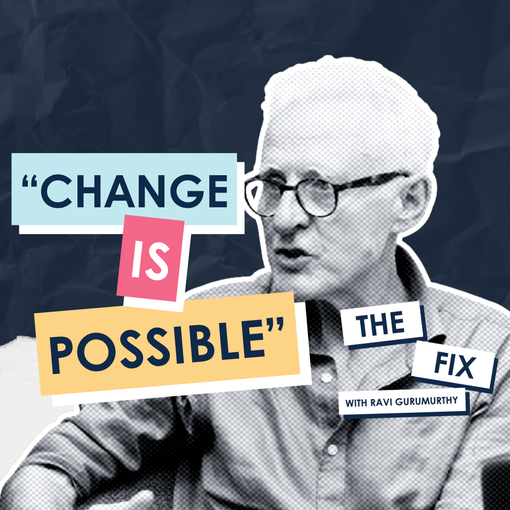
My conclusion was that there is an overwhelming moral case for change, because we cannot carry on as we are. But that change is possible, and there are loads of examples demonstrating that it can happen.
Ravi Gurumurthy: [45:25] You say about the mental health system that it's lost its humanity. Do you think the same is true of the care system?
Norman Lamb: [45:37] Yeah, I do. In a way—and I'm not claiming credit for this because it was the editor who came up with the title—it's a sort of call to our age, isn't it? We live in a very angry world these days. The public space is aggressive and hostile, and there is a real risk that we are losing our humanity.
Public services operate based on targets and performance measurements, which all seem in the office to be very sound. But when it comes down to the individual who's experiencing the service, it can often feel totally inhuman and sometimes even cruel. It costs a load of money without achieving good results.
We can spend public money so much more effectively if we just change the culture of the way in which public services operate.
Ravi Gurumurthy: [46:41] We close every episode with two final questions. One: what's the one idea from another country that Britain should adopt?
Norman Lamb: [46:51] Well, it has to be something to do with this book because I've obsessed about it for a long time. As I was doing the research on my voyage of discovery after Katherine's death, I ended up going to Trieste in northern Italy, where for decades now they've had a very different approach to mental health.
It's based on relationships. It's based on a community mental health centre which serves a community, so you know exactly where to go if you're worried about yourself or a loved one. It's the same group of people; you're not shunted from pillar to post; there are no waiting lists. They don't use restraint; they coerce very few people; very few people are locked up against their will. Where necessary, they have that power.
That earlier support, based on getting to know people, understanding them, and treating them as citizens—not as service users—is so much more humane. Uncomfortably, they spend a lower percentage of their health budget on mental health in Trieste than we do here, and yet appear to achieve so much better results.
So I would say: adopt what they do in Trieste. Obviously you need to ensure that it works in our context. Encouragingly, the NHS is trialling the principles from Trieste in six different places around England, and I'm really encouraged by that. But that's what needs to be translated into the UK.
Ravi Gurumurthy: [48:29] Your answer may be the same to this next question, which is: what's the one big thing you'd tell the Prime Minister to fix?
Norman Lamb: [48:36] If you scroll forward 20 years, I hope we would be thinking then: isn't it extraordinary that we were locking up so many people—not because they committed a crime, but because they were unwell—in dismal places?
And of course, the uncomfortable truth is that if you are Black, you are far more likely to be locked up, you'll stay locked up for longer, you're more likely to be restrained, more likely to be put into seclusion, and to have your liberties restricted when you come out of inpatient care under what we call a Community Treatment Order—11 times more likely.
I hope that in 20 or 30 years' time we'll look back and think that was an extraordinary relic of the Victorian era. We've learned from that now; we've learned that actually treating people in a more kind and decent way actually delivers better results.
Ravi Gurumurthy: [49:35] Sir Norman, thank you very much for joining us on The Fix.
Norman Lamb: [49:37] Great pleasure, thank you.
Ravi Gurumurthy: [49:39] Thanks for listening. You can hear more insightful conversations every other Wednesday. Make sure you follow The Fix wherever you get your podcasts or subscribe on YouTube, where you can catch my conversation with former Business Secretary Peter Kyle if you missed it. You can also find Nesta UK on social media.
I'm Ravi Gurumurthy. Catch you next time!
Episode recording - video
Successive governments have promised to fix social care, and none has managed it. So with a new Prime Minister pledging a National Care Service, could this time be different?
In this episode of The Fix with Ravi Gurumurthy, Nesta's CEO is joined by Sir Norman Lamb, former Care and Support Minister, to explore what it would take to build a care system that actually works.
Norman explains why he's more optimistic this time, and why any reform needs cross-party consensus if it's going to survive a change of government. Drawing on his family's experience with his 95-year-old mother-in-law, he argues that care has to be built around the person, with health and social care brought together in local teams rather than run from Whitehall.
The conversation covers the low pay and high turnover facing care workers, the behaviour of private equity in the care market, and how to pay for it all, from the cap on care costs proposed by Andrew Dilnot 15 years ago to insurance and contributions from people in their 40s. Norman also explains how his sister's experience of mental health services led him to write his book, Be More Human, why Britain should learn from Trieste's approach to mental health, and the one thing he'd tell the Prime Minister to fix.
Watch the full episode on YouTube or listen on Spotify, Apple Podcasts or wherever you get your podcasts to find out.
Liked the episode? Rate, review, subscribe – and share it with your network.
We extend our impact through two specialised units that help people and organisations to solve complex problems and achieve their goals.
BIT helps clients from government, nonprofits and the private sector to improve people’s lives through our empirical problem solving and deep understanding of human behaviour.
Challenge Works designs and runs challenge prizes to spark innovation in science, technology and society.

Join our mailing list to receive the Nesta Edit, our regular newsletter showcasing how we design, test and scale solutions to some of society's biggest challenges, with updates from Nesta, BIT, Challenge Works and the wider innovation sector.
* denotes a required field
You can unsubscribe by clicking the link in our emails where indicated, or emailing [email protected]. Or you can update your contact preferences. We promise to keep your details safe and secure. We won't share your details outside of Nesta without your permission. Find out more about how we use personal information in our Privacy Policy.