How to make the UK great for business again with Peter Kyle
 www.nesta.org.uk/feature/the-fix-with-ravi-gurumurthy/how-to-make-the-uk-great-for-business-again-with-peter-kyle/
Nesta is a research and innovation foundation. We apply our deep expertise in applied methods to design, test and scale solutions to some of the biggest challenges of our time, working across the innovation lifecycle.
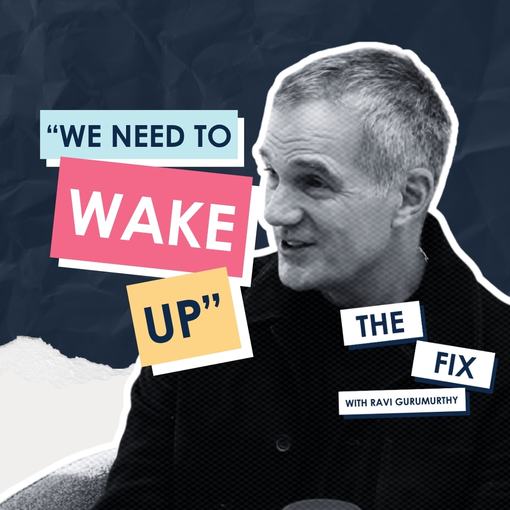
Episode Transcript: The Fix — Is Britain Still a Good Place to Do Business?
Host: Ravi Gurumurthy (Chief Executive, Nesta)
Guest: Peter Kyle (Former Secretary of State for Business, Innovation and Skills)
Peter Kyle: [0:04] We in this country need to wake up to how good a country we actually are. A lot of people who are creating businesses and growing businesses in this country and employing a lot of people—they love being here because they just love our country.
Ravi Gurumurthy: [0:18] Hello, I'm Ravi Gurumurthy and this is The Fix. The UK is a country brimming with ideas, talent, and ambition. But on some of the biggest challenges we face, we're still looking for ways to solve them.
That really matters to me because I'm chief executive of Nesta, the innovation foundation dedicated to finding solutions that make a real difference and improve people's lives. And that's what The Fix is all about.
Over the coming months, I'll be joined by some of the most prominent people in British public life to talk about those big challenges and how we address them for good. And we're starting with the economy. We've got extraordinary companies and brilliant entrepreneurs, but too often businesses struggle to scale and stay here. So, what would it...
Ravi Gurumurthy: [0:58] ...take to make Britain a great place to do business again?
My first guest knows this area inside out. Peter Kyle was until July the Business Secretary and before that served as Science and Technology Secretary. What would he change and what's his fix?
Peter Kyle, welcome. Thank you for joining us.
Peter Kyle: [1:15] Thanks for having me.
Ravi Gurumurthy: [1:17] Um, I'm going to take you to the Tory party conference. Um, unexpectedly, Jeremy Clarkson stood up and said, "Why would anyone set up a business in this country right now?" And I thought, obviously, you spent a lot of time with business when you were Business Secretary. Is there any part of you that sympathises with Jeremy Clarkson?
Peter Kyle: [1:36] No, I think it's cheap, what he said, and I think it's talking down what is a really thriving economy. We still have, if you look at the high-growth areas, the third-largest AI market in the world. We've got four of the top 10 universities in the world. We are the spinout capital of Europe. We're also the scaleup capital of Europe. So there are a lot of good things happening in this country.
And the fact that Jeremy Clarkson has gone from one sector to another sector and he is thriving in all of the sectors that he himself plunks himself in—why does he think he is so exceptional? There are other people out there that are just as skilled as he is in communication, but also in entrepreneurship, and they don't actually have the media profile that he has in order to set a business up in the first place, and they are thriving.
So, what I am not disputing is the fact that we need to do more to make it a more rewarding environment in order particularly to scale up businesses. We are fantastic when it comes to starting up businesses, and our healthy higher education sector is a real innovation hub. We need to get better at commercialising it, but particularly retaining that talent in this country, because too often it gets to a certain point where it needs so much private capital that it needs to go abroad. And for Jeremy Clarkson not to recognise that talent that is happening, I think, is cheap.
Ravi Gurumurthy: [2:59] So you think it's basically about a scaleup challenge. What's your diagnosis of why we are struggling to get businesses to scale up and stay in this country?
Peter Kyle: [3:10] Well, I've just written this essay on it. And now Tony Blair has brought essays back into fashion, I thought I would just get on the bandwagon! When I left office and Andy Burnham said there was no place in his cabinet for me, I spent the summer just reflecting on my time in government and the real privilege I had to have such a hands-on view of the economy in so many different ways, and to meet so many people in all parts of the economy, and to reflect on what is working really well, but what we can do more of—because we have to do more.
So the analogy that I've been using is that we are on the motorway and we're travelling, therefore, in the right direction, but we're only travelling 30 mph. And there's a lot that we can do in order to really expedite the reforms that will make it easier to get the capital, to commercialise, to be successful, and to grow a business here in the UK.
I've focused really, because of just coming out of government, on what government itself can do. And I think that growth now needs to be the organising principle of government. Things need to bend towards growth at the centre of government. Then we need to have the Prime Minister and the Chancellor in particular, but Lou as well at the Cabinet Office, finding mechanisms by which all policies—the policy platforms, the tax, and the incentives that we have as a government—are all judged in their relationship to growth. Are they pro-growth? Are they challenging for growth?
It doesn't mean you don't do things that aren't challenging to growth, but do you therefore put it into perspective? Do you sequence things differently? But growth has to be the organising principle of government.
And I think at the moment—I've now experienced in my two years in cabinet—a system that incentivises Secretaries of State to come to the cabinet table with their departmental priorities even if they are counter to the overall priority of government itself. We had, and we still have, our number one mission in government as economic growth.
Ravi Gurumurthy: [5:30] Yeah.
Peter Kyle: [5:30] And yet I heard week after week, not through failure of the Secretaries of State, but I heard them advocating for their departmental priorities completely in isolation or separate from what is the government's overall priority. That can only be solved by the Prime Minister changing the incentives within government itself.
Ravi Gurumurthy: [5:53] So I want to get into all the solutions that you've got, including this question about whether we can go faster on the motorway. But...
Ravi Gurumurthy: [6:01] ...first I want to just pick up on the question about what is holding back those businesses, and to what extent do you think there are common causes like scaleup capital, or is it lots and lots of sector-specific things like access to compute, or grid connections, or doing clinical trials in the NHS?
Peter Kyle: [6:17] So the challenge is it's complex and it's diverse. If there were one thing, or if it were simple, then Liz Truss, Rishi Sunak, and multiple other prime ministers prior to that would have just solved this problem and the economy would be absolutely flying. This is difficult because it's such a diverse challenge.
So yes, there are regulatory challenges. We need to modernise our regulatory system. And, you know, I can tell you—but I think many of your listeners and viewers will be very, very aware of them through your work here at Nesta and some of the other work that they'll be familiar with—we have a tax system which incentivises growth in some areas, but in other areas it doesn't. I think we need to have a review of that.
Government itself has the wrong body language. It's very stop-start when it comes to growth, and body language is really important in this day and age. What do I mean by body language? I mean Secretaries of State can't do what the system tells us to do, which is sit in offices that are very detached from the frontline experience of the sectors and stakeholders that we represent. In this day and age, you've just got to work the phones, you've got to act differently, and you've got to meet people halfway.
When I was Tech Secretary, I attracted quite a lot of attention for how I dressed. Now Andy Burnham has sort of mainstreamed it! But it was really important for me that you don't just turn up in a startup office or a scaleup office in a suit and tie and leather shoes when other people are looking relaxed. There's something about meeting people halfway and demonstrating that; half the time in government, just turning up does the job, or certainly gets you a long way there.
There are times when—I can give the example of Wayve, the autonomous vehicle company, the AI company set up by Alex Kendall—they needed regulatory acceptance to pilot in the City of London or on the streets of London. But just the City of London authorising it, central government changing the secondary legislation, wasn't enough. You know, my political team was working the phones for that company to make sure that all of the paperwork got through TfL.
Ravi Gurumurthy: [8:36] Yeah.
Peter Kyle: [8:37] Because so, so many people in our system can say no or slow things down. Yet it takes everyone aligned—very often from central government through to regional government, through to local government, or any other sort of quangos and regulatory bodies—for something to happen in an area right around the country, because what is happening and being created is novel, and we need novel to flourish.
So all of these things need to align, and it takes government to be coordinated—from tax, from regulation, as I say, body language, in terms of policy and legislation. All of these things need to align, which makes it really complicated, but we're in this job to do complicated things.
Ravi Gurumurthy: [9:28] So when you look at John Healey's statement on growth recently, it talked about investment in infrastructure, innovation, skills, tackling regional imbalances. You could have gone back to, I think, Boris Johnson's statement a few years ago and had pretty much exactly the same list of factors. And as you suggested before, the diagnosis of what is needed is not particularly novel, but it feels like the dosage or the speed that...
Ravi Gurumurthy: [9:55] ...we're going never seems to match the scale of the problem. Can you give an example of where you think we've got a mismatch between the sort of size or speed of the solution and the size of the problem?
Peter Kyle: [10:08] Well, Heathrow is an example that is contemporary and in the moment that we're living in. It is absurd to me that this decision on Heathrow has taken so long. Again, it's an example of how many people can say no compared to the number of people that have to say yes to make something happen. That's a very big, singular project, but that is replicated through the economy. Heathrow is big because it is a nationally recognised piece of infrastructure, but there are startups who are having the same frustrations that Heathrow is having from a different perspective.
Ravi Gurumurthy: [10:44] So planning is an obvious example where everyone completely moans about some of the hubristic timescales. What else?
Peter Kyle: [10:49] Planning, energy prices... I should have mentioned in the previous section: planning is a problem, energy prices are. But look, in order to do some of these things—and devolution is something we might come to, but devolution is clearly a big priority for the Prime Minister, which I share—we just need to make sure it's done in a way that is genuinely empowering for communities, generates revenue and entrepreneurial success, and public service delivery.
I discovered there are things I could do as a Secretary of State that no one else can do, and there are things you can do locally and local mayors can do that no one else can do. So let's get together and use those powers in tandem, and that is where really powerful, swift things can happen.
To give you a clear example, look at the AI growth zones that I introduced on the back of the AI Action Plan that Matt Clifford designed for me—he did an outstanding job on that. It looked around the country for areas where there was a quick connection to the grid, where there was a planning authority that would work with central government—so, in other words, allow central government to use our central powers to expedite the planning system, because we do have powers to override in some cases. But then also, there is the ability to get electricity on tap and shovels in the ground really, really quickly.
Where these things aligned, I would use the convening power I had centrally to broker deals and get investment into those areas. My condition was it would always be in parts of the country that were deprived. So that's why you see these growth zones—up to £50 billion worth of investment going into Anglesey, going into Teesside, going into Blyth. In the ones that are in the pipeline at the moment, you're going to see how AI infrastructure can really benefit communities. But that is an example of how central government can use its powers in tandem with local authorities, and when they are aligned, magic can happen in terms of real investment that matters to people.
I also added onto that the real importance of job creation on the back of AI infrastructure. You're seeing a rebellion against this in America at the moment regarding data centres. In some of the projects I was looking at, we were looking at requisitioning land around the data centres for commercial activity that would be based on compute—having access for research purposes for universities, spinout space, commercial activity, and all these sorts of things. That means that the wealth and the job creation could stay locally.
These are all the things you can do if you choose to do them, and it shows the power of aligning where different responsibilities lie. But planning, the cost of electricity, regulatory challenges—because so much regulation is so out of date, some of it is absurd—these are the big-ticket challenges that investors tell me are barriers to getting things done in this country.
Ravi Gurumurthy: [13:58] To sort of push you on why this is the case...
Ravi Gurumurthy: [14:02] ...you do see governments sometimes act incredibly quickly and in a muscular way. British Steel as an example, or COVID. But that's not the norm. Why can't it be the norm?
Peter Kyle: [14:11] I totally agree, and this was one of my observations when I was in government. If you look at some of the speeches I made when I was Secretary of State, I asked a question when I was at the Business Department: why is it that within a matter of days I could put together a package of financial support for standing up JLR to the tune of £1.5 billion in terms of financial drawdown if needed, but I can't act with that kind of swiftness, boldness, and creativity when it came to creating opportunity or mitigating potential harm? Yes, everyone recognises you need to do big, bold, difficult things, and I had no challenges at all when I did use a minister.
Ravi Gurumurthy: [14:58] What was the answer you got then when you...?
Peter Kyle: [15:01] Well, it was a rhetorical one because I talked about it around the cabinet table. I put that point to people to talk about the need for growth and the things that we need to do for it. The difference is that there is a widespread acknowledgement when there are tens of thousands of jobs on the line that you expect government just to drop everything and leap to attention in those situations—and I did.
The problem is that the growth emergency we have as a country—and I believe we inherited a growth emergency and we are still in a growth emergency—is not widely recognised around the country. So therefore, it isn't seen as a priority today. It's an overall priority, but today we've got lots of other things getting in the way as well that also need attention.
Amongst the public, people go about their lives not panicking that there's a growth emergency today, even though existentially I think most people in this country are very aware that our country and economy overall isn't performing to our potential. All I'm saying is because we've been in this position for so long, we now need to treat it as big an emergency as some of the challenges and threats you see where there is failure in the economy—British Steel and JLR. Now look at what JLR is doing with its new models. Imagine allowing that to fail! No one would think—except Nigel Farage, who said it should fail—that that should have happened.
So why can't I apply that same boldness, creativity, and urgency to regulatory reform, for example?
Ravi Gurumurthy: [16:36] So your solution is to have almost a single department in charge of growth. Is it...? We already have a single department in charge of... You were in favour, for instance, of DIT coming into...
Peter Kyle: [16:51] Well, when I was at DSIT, I loved preparing the program for government, and I relished every single second that I was at that department. Because of the nature of innovation itself, the people who are doing the innovating, the partnerships between higher education research facilities and private sector capital and venture capital was exhilarating, and we're getting better and better at it.
I always had an eye on scaleup funding, the British Business Bank. So I had Innovate UK, I had UKRI, ARIA—which I think is a remarkable organisation, but slightly aside—and I always had an eye on: wouldn't it be great if we could join these things up so it's a seamless transition into scaleup, and we can expedite the transition from spinout to startup to scaleup?
So yeah, when I look at the department now, that is why I just think we should be honest and call it the Growth Department. I can't remember the name of the department as it is at the moment, you know! So let me just call it something and be honest about what it actually is.
Ravi Gurumurthy: [17:58] Inevitably, the levers that you talk about—like planning, energy, migration, or tax—they all sit in other departments. So you're never going to get away from the fact that decisions in government are going to be cross-sectoral, and you've got to have a Chancellor and a Prime Minister who are prepared to sort of make the trade-offs or bang heads together.
Peter Kyle: [18:16] Yes, and I'm honest about that in the essay. The things that you can do as a Secretary of State where a policy is designed, deployed, and delivered from within one department is amazing, because you can just fly forward through it.
For example, within a couple of weeks of me coming into business, I had done a quick task force on the regulatory environment. It had come back and said that Companies House reporting was something very simple I could do without having to go to Parliament or anyone else. And literally within weeks, we had deployed a regulatory reform program which is giving business a saving of a billion pounds over the course of this Parliament. You know, so that's great.
Things get bogged down when you do need sign-off and cooperation with other departments. Now, all the things you just mentioned about planning and the rest of it—planning isn't 100% with Communities; you'll find it's quite often spread. So when it comes to energy planning, for example, it's DESNZ and it's MHCLG. So that's where things get stuck down, because different departments have different priorities, and that's why you need to have government being organised around the principle of growth.
I was in several meetings where I had to actually intervene and say, "Let me just change the nature of this conversation and talk about it through the perspective of growth, which is our number one mission in government that transcends all of the departmental priorities that we have and are discussing as blockages around this table." But that needs to be embedded in a system.
I also said around the cabinet table that when you have a theory for government like the Big Society, suddenly you find every stakeholder, every government department, every submission going to a minister is saying, "This is really important because it's the Big Society." Suddenly everything's framed in Big Society terms!
Now, because our thing was growth and is growth, suddenly every department is saying, "This is really important," particularly when you're in a spending review in the run-up to a budget or whatever. But I said to colleagues that every department of government is a growth department, because you can't have growth if people are on waiting lists and they're sick, or if they're stuck in traffic jams or trains aren't working. So Transport, Health, Education—they are all growth departments.
But let's be clear: they are departments that, if they don't function properly, are barriers to growth. There is only one department that actually creates the growth, and that is private enterprise and the support for private enterprise, because that is where the GDP per capita growth will ultimately come from. So we need to get everything else right, but then we need to double down on where that actual growth will come from and help shape it so it does benefit communities and people right around the country.
Ravi Gurumurthy: [21:07] You mentioned a theory of the Big Society. We have got a theory of growth that Andy Burnham talked about in conference, but it really just had two elements to it: one was control of the essentials—public control of energy and water and so on—and secondly, devolution. What are your marks out of 10 for Andy Burnham? You did a PhD in community economic development, didn't you? So you're qualified!
Peter Kyle: [21:31] Thank you so much, Ravi. I'm so happy that someone has finally recognised that!
Ravi Gurumurthy: [21:36] Um, so you can give a professorial rating.
Peter Kyle: [21:40] Well, the great thing about when you get to postgraduate work is you don't get marks out of 10, so I'm not going to do that! But what I will say is that infrastructure is really important, and control and incentives in those areas are really important.
I think we just have to prioritise. If the priority for this country is growth, then I would look at one of the challenges we've spoken a couple of times already about, which is the price of electricity. If we are going to start getting more controlling, intervening, or even owning, I would look first and foremost at the National Grid and put that to the top of the list.
All these things—if you look at the stuff that I wrote about in the essay and some of the recommendations that I made—having task forces within government, having an independent review of all taxes and incentives and judging them against growth and their impact on growth just so we know... It doesn't mean you have to change everything, but at least you're making the decision fully aware of everything. None of that costs a penny! These are things that the Prime Minister can do today which start to reorientate government towards growth.
Of course, some of these big-ticket items about infrastructure are important, but don't think that they can be done on their own. That was the mistake predecessors made. We need a comprehensive, government-wide, society-wide approach to growth. I've spoken just about government because that's the nature of the job I've just had, but in return for some of these things, we expect stuff from business as well.
If we are going to do some of the regulatory reform, lowering energy costs in certain areas, expediting planning, looking at regulation, then we need business to unlock that investment that they tell us is pent up, and we need to see a timeline for that investment in return for the work that we're doing.
Ravi Gurumurthy: [23:34] Can I comment on devolution, which is the second part of Andy Burnham's theory of growth? To what extent do you think devolution can be positive for growth, and what does it mean for, for instance, the Business Department or DSIT as it was? Should we be devolving R&D funding? And again, how do you get the coordination between sectoral visions...
Ravi Gurumurthy: [23:54] ...and place-based visions? Do you just let everyone go for it, or do you have to have each combined authority fitting in with a plan for a given sector like pharmaceuticals or life sciences?
Peter Kyle: [24:08] Yeah, it's not straightforward. But let's just take the essentials. Moving power from A to B in itself doesn't deliver growth; it doesn't deliver anything unless that power is exercised in a better way.
Now, Andy's view from his experience of being a minister and working in government and working as a mayor is that power is more likely to be exercised in the best interests of local economies and local people if it is exercised locally. His example is a good example.
So the question is: how is power devolved in a way that maintains expectations, and for which there are consequences if those expectations aren't met? Because we can't live in a world where power and resources—you know, taxpayers' money—are sent to a part of the country where it isn't delivered efficiently, effectively, and the interests of society, public services, and the economy are not being served. I think people who live in those areas wouldn't say, "Well, this has got nothing to do with central government." I think they would expect central government to have something to say about it.
So, yes, I think if devolution is managed in the correct way, with high expectations—as Andy Burnham was involved in during the Blair-Brown government where we did devolve power... Obviously, we had the regional parliaments set up, the devolved nations' parliaments set up, but we also devolved power to health trusts, to individual school communities, and to Regional Development Agencies, which were fantastically successful, particularly towards the end of their time. But alongside all of those—particularly the organisational ones—were very high expectations. There were rights and responsibilities.
Ravi Gurumurthy: [26:12] So you think national government should basically hold those people to account rather than local voters?
Peter Kyle: [26:17] I think there has to be accountability in central government, there has to be accountability to people, and there has to be expectations set by central government for what will happen in terms of some of the sectoral elements.
We have a central R&D pot here, and R&D was not devolved. R&D in this country is not devolved to the four nations even; it's held here. It enabled me, when I was Secretary of State, to do some very big things on quantum, on fusion, on AI infrastructure. If you think about some of the backing we gave to Rolls-Royce, for example, for small modular reactors—that was very expensive. But if you link that investment into R&D to the product development support we've given them as well, and the body language—because I as Secretary of State went to Sweden, to Prague, to other countries basically as a salesperson for Rolls-Royce—you can see when all these things align. Rolls-Royce, in a short space of a couple of years, is now the world leader. If we get this right, Britain will become the world leader in what will be a half-trillion-dollar market before 2040.
Ravi Gurumurthy: [27:38] Can I just pick up on that particular example? Because if you think about how other countries have done industrial policy, like China, one of the interesting things that they do is they really signal a massive shift—like, "We're going to electrify everything, we're going to put in place the charging infrastructure, we're going to subsidise cars"—but then rather than picking an individual winner, they then have a brutal technology race and competition between lots of companies. There's not a national champion appointed; it wins through a kind of Darwinian selection mechanism.
Ravi Gurumurthy: [28:05] That feels like a really nice combination of the state doing the things that it can only do, but also the market creating the right incentives. Whereas we typically don't have the diversity to do that. We end up saying, "Well, here's some money, Rolls-Royce," or whoever it is. We just don't have the scale to do it.
Peter Kyle: [28:21] And I made this decision. I had this conversation when I was putting together a program for government, and I made a choice as Secretary of State.
America and China—they can have models where they spread a lot of money very widely, because those businesses that do emerge generate enough wealth, and enough wealth that is kept locally and shared in workforces and regions, to make that worthwhile. They have the scale that allows them to do that.
Which comes to one of the other questions I ask in my essay: why is it that America, China, Japan, South Korea, and Taiwan all have companies that are valued at a trillion dollars or more, but the whole continent of Europe doesn't have one? Now, that should be an exam question that all of us in public life and in the private sector ask ourselves. What are the barriers to scaling on that level?
Why is that important? Because I don't just think creating a trillion-dollar company that benefits a few people is value added and something we should aspire to as a country. But if you get it right, it can create wealth that is very, very widely distributed amongst its workforce and therefore the communities that it's in.
To look at evidence of this, just look at Samsung in the last couple of months, where its chip department has had such a boon from the AI revolution that the government brokered a conversation or negotiations between the unions and the business, and it resulted in a £418,000 bonus for every single worker. It's in shares and cash—it's a mixture—but that's the kind of wealth generation that can come from enterprise on that level that the state could never match. We can't match people working on conveyor belts; we can't make those people as a state, however much we redistribute and give people benefits in a cost-of-living crisis. We can't do that.
So these companies do have a place, and we need to really figure out how we can generate entrepreneurial scale of that kind of magnitude, and the barriers to it should be picked apart: energy, planning, all the other things of government. But what we can't do with an economy that's our size is just stand back and then splash money very, very widely hoping that a few seeds will land as a result.
We have to pick winners. I know that's what puts me against Thatcherite ideology, but I stand by it. I think some of the winners that we have been picking—even to the point where we started taking equity stakes in scaleups—this is the sort of thing that will stand us in much better stead than if we just do a little for a lot.
Ravi Gurumurthy: [31:16] But on your scaleup point on how we get trillion-dollar companies: to return to Jeremy Clarkson again—sorry for that—it may not be irrational to start a business. I think the barriers to entry are not huge. But in terms of staying in the UK, you could...
Ravi Gurumurthy: [31:31] ...argue it's pretty irrational when you can get much more growth-oriented capital at later stages which is more patient, is prepared to allow you to grow and do R&D rather than make a return immediately, and also if you list there you'll get a much higher valuation. Why would you stay in the UK if you were them, and more importantly, what do we actually do to fix it?
Peter Kyle: [31:53] Firstly, we in this country need to wake up to how good a country we actually are. You know, we constantly frame questions as: "Why would you stay here?" Because lots of people are going, and not just now, but they have done for a long time. In fact, there are more people staying and growing here now. At Wayve, Synthesia, ElevenLabs—you've got all these brilliant scaleup companies who are here, and they are proud to stay here.
We get a lot right. Now we need to get a lot better at incentivising the next steps. But when you speak to investors, we've just had a record period of investment into our country, mostly centred around AI infrastructure, technology, and life sciences—mostly as a result of having a government that will bend over backwards to expedite so that those investments can be realised really quickly. We are doing this on a scale that we've never seen in this country before. So there's a lot that's happening.
We also have the language that people enjoy speaking. We've got the City of London. Now, I know that that's not in favour with the current conversation about devolution and all the rest of it, but London is a desirable place to be, and a lot of people are attracted to it. A lot of big global investors came to London because they wanted to come to London, and I met them in London. But I used the power of having that facilitation to push the investment outside of London. So it's a good starting point.
We've got four of the top 10 universities in the world. We've got the City of London and the capital markets here—not where they need to be, but they are still world-class. And as I said, we've got the innovation, because the life sciences sector in this country is good, the higher education sector is good, so we have a lot of innovation and talent.
The frustration I have, having spent a lot of time in Silicon Valley, is the number of English accents you hear is huge. We've got to turn this around so that people feel they can stay here. Arm, Google DeepMind—you know, there are several companies which were halfway towards becoming a trillion-dollar company if they stayed in the UK. Google DeepMind is part of Google, of course, which is a trillion-dollar company. But we've got to learn from these lessons.
And don't underestimate people's patriotism. In America, you will hear a lot of people in business talking about a love of country. We in this country frame questions in the way that you've just framed our country: basically, why would you come to Britain? A lot of people who are creating businesses and growing businesses in this country and employing a lot of people love being here because they just love the country.
Ravi Gurumurthy: [34:50] But what you're saying, though, essentially, is that what's valuable is the intangible—it's culture. You're identifying the fact that we've got a scaleup problem, and that's about quite crunchy things around incentives and access to money, and that's quite a big gap, isn't it?
Peter Kyle: [35:07] It is. And that's why—look, it's why I say we're not perfect, which is why I've used the analogy that we're on a motorway driving at 30 miles an hour, but we're on the motorway and we're heading in the right direction, and we are moving. There is more venture capital going into Britain than France, Germany, and the Netherlands combined. So there's a lot to work with. Our starting point is further down the road than I think a lot of people realise.
But the question is: if the destination is prosperity, security, and freedom for people—an increase in all of those things—why wouldn't we want to get there faster? That's my frustration. We're doing great things; we're not doing enough of it. We've got great innovation and spinouts; why don't we do more? We have a fantastic scaleup scene in this country, but it could scale up bigger and faster, and too many of them are looking to other capital markets around the world in order to get the cash faster.
So these are the things that government in this country—because we're not America and China—these are things that government needs to get out of our offices, meet people halfway, and be really creative and bold in how we engage and partner with these companies. It's why I set up the Global Talent Taskforce to help businesses get the talent they need if they can't find it locally. It's why I set up the concierge service within my department so that the 50 largest scaleup companies in this country can have a named advocate in government, because I couldn't sort all of the problems that companies face. Therefore, you need an advocate within government that can navigate it for you. So let's just make the best of an imperfect system while we're trying to fix it and make it a more perfect system.
Ravi Gurumurthy: [37:16] Can I turn quickly to AI? Now, the government got off to a slightly rocky start with abolishing DIT, and there was some question mark about whether AI is given enough...
Ravi Gurumurthy: [37:25] ...prominence by the new government. If you were going to drive at 100 miles an hour or 30 mph on AI, what are the things that you'd be pushing government to do?
Peter Kyle: [37:34] Well, we've got a good start: the AI Opportunities Action Plan. Don't forget the AI growth zones. We're increasing our sovereign compute by a factor of 20. We have skills training now happening across schools for young people, and workforce training being coordinated.
If you think about the essentials that you need for AI—chips, skills, and data—they are the three things that drive AI. Well, we're not going to be able to compete on chip production, but when it comes to skills, we can get our country skilled for the AI revolution.
Thirdly, we have something that no other country in the world has, and that is real, quality data. We need to make sure that we safely and wisely use that data, because it makes us highly, highly desirable as a destination. If we can use that desirability for companies to come to the UK, then we have more influence over them.
I'm very concerned in this debate where we must have safety baked in at the start that we don't move on from safety. Safety and security are there for a purpose: you create the safety and security, and then you harness it to deploy it safely. We need to spend much more time helping people understand the benefits that AI will have for us individually for things like health, education, communication, and also to make us more productive in the workforce.
The last two quarters' growth figures have both been upgraded. When you look at the IMF, the OECD, and the OBR, they are now identifying the role of AI in Britain as a key driver of growth. It's now being singled out because it is identifiable in singular terms. So we are doing pretty good, but we now need to really double down on the benefits.
We have the third-largest AI market in the world. We are one of the very few countries that some of the people creating this tech in its frontier form come to visit quite often. But we need to double down on the companies creating this technology, because we need a much bigger footprint for the conceptual side of AI in this country.
At the moment, there are a few barriers to it: electricity prices, planning is one of them, but also the copyright issue still exists. Just to be clear, I never ever wanted to take rights away from people producing material—creatives. In fact, I want the complete opposite: I want to give them all the rights they need, but set it in a digital age so it works in a digital age and allows AI to be created in this country in a much more potent, frontier, conceptual way. Because that means we as a country will be protected from a lot more of the dangers of AI, because we will be creating it, not just impacted by stuff that's happening in other countries, particularly America and China.
Ravi Gurumurthy: [40:53] You touched on data. We think that, for instance, the pooling and linking of data across the NHS could be an absolute gamechanger in terms of creating businesses, but also harnessing AI for cures. We could actually be a leading country in that given the NHS, but we're not capitalising at the moment.
But as well as the frontier side of AI, there's also a question about just diffusion to the everyday economy. What can we do—because that could arguably make a bigger difference to actual economic growth—what can we do to accelerate diffusion?
Peter Kyle: [41:26] Certainly in the short to medium term, diffusion is where the potential lies. Into the longer term, future generations will thank us if we can overcome some of the barriers to having the frontier and the more conceptual side of AI tackled.
In terms of diffusion, some of the incentives are now going into the system, because I worked with Rachel Reeves when she was Chancellor so that we could have e-invoicing—simple things like e-invoicing being introduced as mandatory in a couple of years. That means every single business is going to have to start adopting basic AI technology, and once you start adopting the basics, you start seeing the benefits and then you can start going further.
I wanted us to be a bit more creative. I started suggesting, for example, that we look at some of the primes in the economy and work with them—some of the big, big manufacturing and engineering primes. They will have several thousand suppliers in their supply chains, and I would have quite liked the idea of exploring working with them to see whether they as the primes can then start supporting their suppliers in a transition.
Because if you've got a company that's employing 10, 15, 20, 50, or 150 people, and you are a tier three or four supplier in a supply chain to a prime, government putting something on its website or somebody making a statement in the House of Commons is not going to be the incentive you need to suddenly start adopting sometimes free productivity technology. But if the company you are supplying to requests it, you take it really seriously because you know your livelihood depends on it.
That's the partnership government can have with some of these: the primes can put the incentive in, government can put the support in. These are the things I wanted to start exploring, but I didn't have long enough in government to get it across the line. I just hope that others have a bit more of the enthusiasm that I did for this.
Ravi Gurumurthy: [43:34] Great. I just want to finish with a couple of final questions. First, what's one idea from anywhere in the world that Britain should adopt?
Peter Kyle: [43:43] I would say DARPA from America, which relates to the conversation we had earlier about spreading a lot of resources very widely. America does it on an astonishing level. But high-risk, high-reward funding, I think, is very, very underappreciated. I suspect many of your listeners and viewers will know what DARPA is and how it funds innovation around the world. They will use government money in very high-concept, high-risk, high-reward situations—sometimes with just one PhD student who hasn't even finished their research yet.
Ravi Gurumurthy: [44:22] We have ARIA.
Peter Kyle: [44:23] And ARIA in many ways is doing work which is better than DARPA because we have to be more creative. Dominic Cummings set ARIA up. I doubled down on ARIA. I was so excited by the work that ARIA was doing. I had a t-shirt made and I wore it as Secretary of State! Because why aren't we more visibly proud of what we're doing in government, in the same way that other founders and people are wearing...
Peter Kyle: [44:47] ...t-shirts celebrating their work? But if I were to say one thing, I would double down on the work of something like ARIA.
Ravi Gurumurthy: [44:54] Okay. And then finally, what's the one big thing you'd tell the Prime Minister he has to fix? Number one thing.
Peter Kyle: [45:01] Well, it's growth. But I'll give one thing that he can do: when people around the cabinet table make a suggestion, which happens every week, the Prime Minister needs to come back and ask, "And have you considered that against its impact on growth?" and then ask for a response around the cabinet table.
That won't cost him a penny, but believe me, it will then suddenly start to change behaviour right through departments. Because it means everyone will know that when you put a proposition to the Prime Minister and your colleagues around the cabinet table, it will be judged against the number one priority of this government. It doesn't mean he says no if it's not pro-growth, but it does mean that it is recognised as being judged against our number one mission, put into context, and understood through the prism of growth. Simple things like that really start to make a difference over time, and it won't cost him a single penny.
Ravi Gurumurthy: [46:06] Peter Kyle, thank you so much for joining us.
Peter Kyle: [46:08] Cheers.
Ravi Gurumurthy: [46:09] Cheers. Thanks for listening. There are more insightful conversations on the way every other Wednesday. Make sure you follow The Fix wherever you get your podcasts or subscribe on YouTube. You can also find Nesta UK on social media. I'm Ravi Gurumurthy. Catch you next time!
Episode recording - video
Britain is good at starting businesses, but too many of its most promising companies leave when it's time to scale up. So what's stopping the UK economy from moving faster?
In episode one of The Fix with Ravi Gurumurthy, Nesta CEO Ravi Gurumurthy is joined by Peter Kyle MP, former Business Secretary and former Science and Technology Secretary, to unpack what the government needs to do to get the economy moving.
Drawing on his time in cabinet, Peter argues the UK is on the motorway and heading in the right direction, but only travelling at 30 miles an hour. He warns that Britain is in a "growth emergency" that isn't widely recognised, and explains why growth has to become the organising principle of government, with every policy, tax and incentive judged against it.
The conversation also explores the barriers holding businesses back, from planning and energy prices to outdated regulation and the long wait over Heathrow. Peter explains why devolution on its own won't deliver growth, why Europe doesn't have a single trillion dollar company and why he thinks the UK has to pick winners. He also sets out how Britain can make the most of AI, and the one simple change the Prime Minister could make tomorrow that wouldn't cost a penny.
Watch the full episode on YouTube or listen on Spotify, Apple Podcasts or wherever you get your podcasts to find out.
Liked the episode? Rate, review, subscribe – and share it with your network.
We extend our impact through two specialised units that help people and organisations to solve complex problems and achieve their goals.
BIT helps clients from government, nonprofits and the private sector to improve people’s lives through our empirical problem solving and deep understanding of human behaviour.
Challenge Works designs and runs challenge prizes to spark innovation in science, technology and society.

Join our mailing list to receive the Nesta Edit, our regular newsletter showcasing how we design, test and scale solutions to some of society's biggest challenges, with updates from Nesta, BIT, Challenge Works and the wider innovation sector.
* denotes a required field
You can unsubscribe by clicking the link in our emails where indicated, or emailing [email protected]. Or you can update your contact preferences. We promise to keep your details safe and secure. We won't share your details outside of Nesta without your permission. Find out more about how we use personal information in our Privacy Policy.