We analysed 19,000 heat pump planning applications: here are six things we found out
 www.nesta.org.uk/data-visualisation-and-interactive/we-analysed-19000-heat-pump-planning-applications-here-are-six-things-we-found-out/
www.nesta.org.uk/data-visualisation-and-interactive/we-analysed-19000-heat-pump-planning-applications-here-are-six-things-we-found-out/
www.nesta.org.uk/data-visualisation-and-interactive/we-analysed-19000-heat-pump-planning-applications-here-are-six-things-we-found-out/
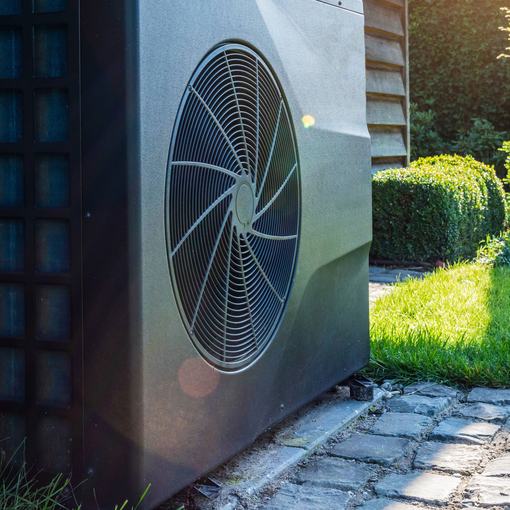
The current planning system is a costly and time-consuming barrier to the widespread adoption of clean home heating technologies.
Our new experimental dataset confirms this: over the past ten years, consumers in Great Britain have spent an estimated £3-4 million on heat pump planning applications and a further £2-4 million on professional sound assessments.
The vast majority of these applications are approved – whether for detached houses, flats or terraced homes. Even listed buildings or those in protected areas, which do not automatically qualify for permitted development rights (PDR), have approval rates of over 80%.
This raises questions about the purpose of the planning process and highlights how it introduces unnecessary friction – or ‘sludge’ – for would-be heat pump owners to navigate. One way to address this would be to extend PDR further (see our report on what changes we would like to see in the upcoming consultation).
Our novel dataset also highlights the need for reform around sound tests. While issues concerning sound are common within planning permission refusal judgements, in many cases sound is not the decisive issue. On top of this, most applications that include a professional BS4142 test are eventually approved. These tests are very expensive, costing applicants up to £2,000 a go. Replacing the tests with a cheaper alternative is one way that policymakers could reduce barriers for households.
Reducing the sludge in the UK planning system is one of many ways that policymakers can accelerate home decarbonisation – and save consumers money and time too. Our analysis confirms many of our previous views about how the system hampers heat pump uptake, and strengthens the case for reform.
Most heat pump planning applications are eventually approved. But for too many people the UK planning system still acts as a costly, complex and time-consuming barrier – or ‘sludge’ – that deters widespread adoption of clean heat technologies.
If policymakers want to encourage home decarbonisation and save consumers money and time, the ultimate goal should be to enable standard heat pump installations within a matter of days. In an ideal world consumers could install a heat pump in almost all house types, without needing to submit a planning application at all.
This is an ambitious goal. To get an idea of the scale of the challenge, and how we might start to tackle some of the administrative barriers to heat pump adoption, we designed a custom AI tool to help us build a new dataset which we then analysed. What follows are six things we found out from this experiment.
In lots of cases, heat pumps can be installed without planning permission as they fall under ‘permitted development rights’ (PDR) exemptions. But for many other situations, approval is needed by the local planning authority before work can proceed.
Understanding how councils actually treat heat pump applications means reading through the applications, looking at the decision notices, officer reports, sound assessments, as well as any objections – not just the approved/refused label.
But that detail doesn't currently exist in a structured, ready-to-analyse form anywhere. It's scattered across the websites of over 260 different local authorities, in as many different formats, buried in PDFs that were never meant to be read at scale. Reading thousands of these by hand isn't realistic.
So, we developed an AI tool to ‘read’ tens of thousands of real planning applications for heat pumps, pulling out key details: whether the application was approved, why it was or wasn’t, if there was a sound assessment, and so on. To do this, we set up an agentic system that found applications relevant to heat pumps and pulled in the relevant text, documents and data necessary for our analysis. The end output was a structured, tabular dataset we could explore and analyse.
The AI approach was honed iteratively, with human analysts manually reviewing planning applications, suggesting changes to the underlying approach, and using a hand-curated dataset to test validity. Across the entire dataset, the AI tool achieved around 85% accuracy, with particularly high performance on more objective fields such as the overall decision, whether the building is listed and the type of sound assessment undertaken.
More subjective fields, such as refusal reasons or listing the specific works bundled on the planning application, were harder to measure accurately across the documents. With this in mind, our analysis focuses on areas of high confidence and avoids granular exploration of subjective areas: for example, we don’t explore the full bundle of works in each application and instead focus on whether the heat pump was the only included item or not, which we have captured more accurately.
Planning permission application status across dataset versus HPs only
First slide: Alluvial chart displaying planning permission outcomes – accepted, refused, withdrawn or other – for all applications in dataset.
Second slide: Alluvial chart displaying planning permission outcomes – accepted, refused, withdrawn or other – for all applications for heat pumps only.
To construct the dataset, we developed a custom AI tool to extract (or ‘scrape’) data from over 260 planning authority websites, covering England, Wales and Scotland. The applications in question were dated from January 2015 to March 2026.
The novel dataset includes 19,245 planning applications, 14,202 of which are for residential buildings. Our analysis focuses on residential cases, in line with Nesta’s sustainable future mission.
The overwhelming majority of applications were accepted (83%), with less than 7% refused.
Zooming in on applications including only heat pumps (i.e., cases that don’t also include other tech like solar panels or bundled works like home extensions) filters the dataset down to 5,357 applications. In this subgroup, 83% of applications were approved, while just over 6% were turned down.
Number of planning refusals by HP relevance, and reasons for refusal as a share of all refusal cases
First slide: Alluvial charts showing number of planning refusals by heat pump relevance (all residential applications)
Second slide: bar chart ranking refusal reasons as a share of total refusal cases.
By extracting the factors affecting an application refusal, we can see how different variables shape the final outcome. One key question is whether the heat pump is relevant to the decision, whether it is part of a mixture of factors, or whether it is incidental (i.e., not important in the final decision).
Across all residential applications, heat pumps are relevant to refusals in about 45% of cases. The reasoning is ‘mixed’ in a further 36% of cases.
For the rest of the analysis, we dropped cases where the heat pump was deemed ‘incidental’ in the decision by our AI tool. This leaves us with a filtered dataset of 11,550 cases to review, including 754 refusals.
Looking at this filtered dataset, the top reason cited in a refusal is sound (more on this below), followed by missing design information, character/appearance and then policy conflict (cases where the authority in question said the proposal goes against its local plan policies).
Number of of planning refusals by sound assessment outcome. Number of planning refusals by sound nuisance reference. Number of applications with a BS4142 sound test by final outcome. Planning permission application outcome by BS4142 result.
Slide 1: Alluvial chart showing number of planning refusals by sound assessment outcome
Slide 2: Donut chart showing number of planning refusals by sound nuisance reference
Slide 3: Alluvial chart showing number of applications with a BS4142 sound test by final outcome
Slide 4: Alluvial chart showing planning permission application outcome by BS4142 result
Issues concerning sound are a barrier to heat pump uptake. In many cases, applicants must submit evidence of a sound assessment as part of their proposal.
In our filtered dataset, 30% of refusal cases do not mention a sound assessment outcome. At the same time, 26% mention an explicit sound assessment failure, 22% mention a passed assessment and 22% mention that the assessment did not report a pass or fail.
Looking specifically at refusals, 384 cases mention sound ‘nuisance’ (51%). In contrast, just 143 refusals do not mention sound (19%). It should be noted that 227 cases are categorised as 'missing' (30% of the total), making this result hard to interpret.
In the dataset, 2,031 applications include a specific mention of a BS4142 sound assessment – the UK’s standard measurement methodology used to assess the impact of sound on nearby residential properties or other sound-sensitive areas. These tests cost each householder between £1,000 and £2,000 on top of the cost of the planning application. This means that from 2015-2026, households spent an estimated £2-4 million on professional sound assessments in total.
Of the cases which mention a BS4142 test, the majority (83%) are approved. About 6-7% are refused. There has to be a better way to work out which of these applications should be approved without needing the applicant to shell out thousands of pounds on a sound test. Could cheap, robust background sound measurement kits replace expensive BS4142 tests, for example?
In cases where the BS4142 assessment is 'passed', 91% of applications are eventually approved. And even where the test is listed as 'failed', about 35% of applications are eventually approved, while 33% are refused and 28% are withdrawn.
It is worth noting that real-world sound issues from air-source heat pumps are rare. A study of FOI requests shows that 124 councils received zero sound complaints between 2020 and 2023.
Number of planning applications by dwelling type. Planning permission application outcome by dwelling type. Planning permission application outcome for flats.
Slide 1: Donut chart showing number of planning applications by dwelling type
Slide 2: Alluvial chart showing planning permission application outcomes by dwelling type
Slide 3: Alluvial chart showing planning permission application outcomes for flats
Dwelling type – whether the building is detached, semi-detached or terraced, for example – also affects approval rates.
Detached houses are most common in the filtered dataset, followed by new builds and semi-detached properties. Across dwelling types, detached houses have the highest approval rates, while mid-terrace properties have the highest refusal rates. These differences could be due to a range of variables, including building location, garden space and the differences in the shares of dwelling types across rural versus urban areas.
Zooming in on flats, over 80% of applications were accepted, with just 6% refused and 6% withdrawn. This is curious given the relatively high refusal rate for mid-terraced homes – perhaps reflecting that people only submit applications for heat pumps for flats if they are fairly confident in the outcome.
Planning permission application outcome by listing status. Number of planning refusals by designation type. Planning permission application outcome by listing status. Share of planning refusals by listed status.
Slide 1: Alluvial chart showing planning permission application outcomes by listing status
Slide 2: Donut chart showing number of planning refusals by designation type
Slide 3: Alluvial chart showing planning permission application outcome by listing status
Slide 4: Donut chart showing share of planning refusals by listed status
In our filtered dataset, 3,602 applications are for buildings with some form of special designation. Of these, most are in conservation areas – although some designations can overlap (i.e., a property can have more than one). In all designation groups, at least 80% of planning permission applications were approved.
Of those that were refused, 190 are in conservation areas (25% of the total) and 17 are in an Area of Outstanding Natural Beauty (2%). A smaller share of refusals are in Article 4 designation areas (2%), World Heritage sites (0.5%) or National Parks (0.3%).
This basically mirrors the overall distribution of cases. For example, about 25% of all residential applications are in conservation areas. So, there does not appear to be a change in refusal rates based on these designations, throwing into question the purpose of the planning application in certain cases.
We also found 2,106 applications for buildings with some form of listed status. Of these, most are Grade II. In all listed groups, at least 80% of applications were approved.
Indeed, across the dataset the majority of refusals are for buildings without listed status (84%). At the same time, 14% are for Grade II listed buildings, 0.3% are for Grade I listed buildings and 0.4% for Grade II* buildings. Again, this mirrors the proportion of listed building applications in the wider dataset.
Listed buildings are rare, making up about 2-3% of the UK’s total housing stock. This makes it slightly tricky to compare approval rates with unlisted dwellings. Even so, one possible explanation could be that applications for listed buildings are done more intentionally or professionally (but digging deeper into this idea is beyond the scope of this data story).
So, listed buildings are rare yet there are plenty of them in our dataset – why? The answer may be that listed buildings do not qualify for PDR. This means they do not benefit from exemption when installing a heat pump and must instead go through the application process by default.
But given the high approval rate once in the system, we argue that PDR should be extended to Grade II listed buildings, with listed building consent still required (which could be acquired via a listed building consent application, through a local listed building consent order, or even in the future through a national listed building consent order). Similar reforms could be applied to special designation areas.
Number of planning refusals by public objection status. Share of planning refusals by appearance concern status
Slide 1: Alluvial charts showing number of planning refusals by public objection status
Slide 2: Donut chart showing share of planning refusals by appearance concern status
Another factor that can affect a planning decision is a public objection. This is when a member of the public writes to the planning authority in question and voices their concern about a particular impact of the development. This could be anything from whether the proposed changes match the heritage/character of the building, an environmental issue, or a dispute over privacy or sound.
In our filtered dataset, over 90% of applications that didn’t have an objection were approved, while 83% of applications with an objection were successful.
About a quarter of applications that were refused include a public objection. For approved applications, 14% include a public objection.
Within the refusal group, 193 applications include a public objection (26%), while 463 have no public objection (61%). It should be noted that 98 refused applications are missing any information on public objections (13%). Although the data is patchy, we still find that 22% of planning permission refusals cite a concern about the appearance of the heat pump as a reason for rejection. Could creating clearer national design guidance about how heat pumps can be sympathetically sited, screened, and visually integrated help reduce these refusals?
The UK planning system is making the process of getting a heat pump more costly and complicated than is necessary. Our experimental dataset confirms this: over the past ten years roughly £3-4 million has been spent on residential planning applications for heat pumps, with a further £2-4 million spent on specialist sound assessments.
The overwhelming majority of applications are approved, building the case that many shouldn't have needed explicit approval in the first place. If fewer installations needed planning permission, this would save cost and time for householders and help accelerate UK home decarbonisation.
Our analysis supports three key ways to make the process quicker and easier:
Reducing the sludge in the UK planning system is one of many ways that policymakers can accelerate home decarbonisation. Our new dataset confirms many of our previous views about how the system hampers heat pump uptake, and strengthens the case for reform.