Fiscal options: what to do about property taxes
 www.nesta.org.uk/blog/fiscal-options-what-to-do-about-property-taxes/
www.nesta.org.uk/blog/fiscal-options-what-to-do-about-property-taxes/
www.nesta.org.uk/blog/fiscal-options-what-to-do-about-property-taxes/
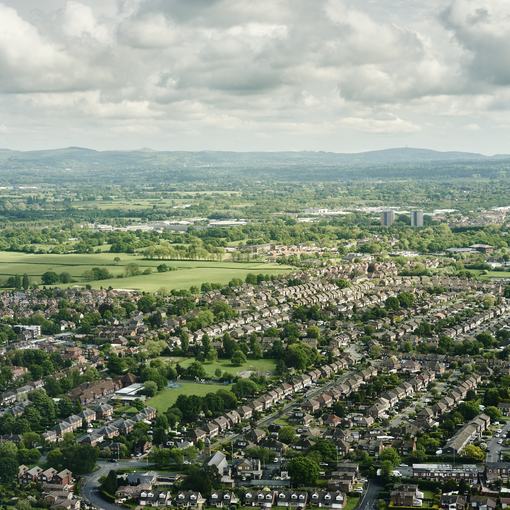
As part of Options for the UK - Nesta's home for new ideas and radical thinking on policy challenges - Nesta's chief economist Tim Leunig continues his mini-series on fiscal options, outlining the policy tweaks and fundamental reforms needed to fix council tax and stamp duty.
The UK has two property taxes - council tax and stamp duty land tax. Neither are well-designed, but both are well-understood and do bring in significant amounts of revenue.
Both are overdue for reform, but reform is not inevitable. It is of course absurd that a house’s council tax bill is based on what it was worth on April Fool’s day 1991, particularly if the house was not actually built at that point. It has, however, been absurd for many years already without action being taken. Doing nothing is an option but would lock in regional inequality for another generation.
The two taxes have different bad effects. Stamp duty land tax reduces the number of moves that people make. This reduces the likelihood of people moving house to take a new job that would raise both their own income, and national income. There is a genuine economic cost to having a tax on moving, as opposed to an annual tax on occupancy. In addition there are social costs, with, for example, families finding it more expensive to move to a “right size” house.
Notwithstanding a handful of low-tax inner London authorities, council tax is typically higher in the South than the North, simply because homes in the North are more likely to be in bands A and B in poorer parts of the country. But this is an inefficient way to redistribute income across the country, and the whole system - based as it is on the value of a home more than three decades ago - is inherently unfair.
There are many options for change, ranging from the piecemeal to the fundamental.
The simplest piecemeal change for a government that wanted to rebalance the system and lower bills in the North would be to change the ratio of council tax bands. At present someone whose house is in Band A pays 6/9ths of the amount paid by someone in a Band D house. Cutting that - say to 5/9ths, or having a flat £100 off - would go overwhelmingly to people in the North of England. Broadly speaking half of the band A houses are in the North, a quarter in the Midlands, and the remaining quarter in the South, largely in poor coastal communities. Such a change could be revenue neutral if the council tax of people in bands E and higher were raised. This would also be a step towards a proportional property tax. I shared a detailed proposal in this area in 2024, as did IPPR in 2025. This approach could be done immediately - and certainly for the next financial year.
Of course, there will be people who object and they will have a case. A nurse renting in London might well ask why they should have to pay more in council tax as well as more in rent than a nurse in Burnley. It is also the case that many taxes are nationally uniform - the duty on a litre of petrol is 52.95p, irrespective of where the petrol is sold. The same is true for beer duty, gambling levies, the landfill tax, and so on. There are no calls that these duties should vary in line with local incomes. Justice is very much in the eye of the beholder.
A more ambitious reform would reallocate council tax bands as and when a property is sold. Broadly speaking we can say that because the top band contains (say) the top 5% of the housing stock by value, so if a house is sold at a price that puts it in top 5% that year it will be reallocated to the top band if it is not already there. The same would be true for the next band, and so one. Again, this could be done very quickly.
The most ambitious approach would be to revalue all existing houses. That is a seriously ambitious approach, as it is not the case that online valuations are precisely accurate, especially for houses that have not been sold for some time. Some are much tattier or more old fashioned than houses that have been bought and sold more recently. This approach could not be undertaken quickly, and it is likely that there would be a lot of appeals.
Stamp duty also offers both small and large possible reforms. One small cost-neutral approach would be to lower the starting point for stamp duty to raise sufficient money to reduce stamp duty for more expensive properties.
For example, let us imagine that a stamp duty of 0.5% is insufficient to meaningfully distort markets. If that were true, it would be possible to levy stamp duty on all land transactions, without a minimum. That would raise revenue, and that revenue could be recycled into lowering the 2% and 5% stamp duty levels with the aim of reducing the cost of moving below distorting levels in most areas. Equally, it is possible to imagine raising the top rates of 10% and 12% still further, to allow for the 2% and 5% rates to be reduced. We might get to a position in which those high value houses are only sold on death, of course.
These sorts of reforms could be done quite quickly, but it would be important to surprise the market, otherwise the market will accelerate in some sectors, and dry up in others, between the announcement of the change, and the implementation. Neither is desirable.
A more fundamental reform would be to replace stamp duty and council tax with an annual tax. Again, this would be straightforward to implement, but there is a large short- to medium-term fiscal cost. This is because in the short term the government would lose the large upfront revenues from stamp duty, while only gaining a small amount of revenue from the replacement annual tax. With stamp duty land tax raising £15bn a year, the short to medium term fiscal black hole would be significant, even though the proposal would be revenue neutral in the longer term. Although the revenues would rise sharply over time, it would not break even for at least a decade. Still, a genuinely radical government would want to do something along these lines, and substantial background work has been undertaken.
For example, in my 2024 work, I proposed and modelled a national proportional property tax levied on house values above £500,000, as a replacement for stamp duty. This year, Think Labour also proposed a unified tax, with the politics of replacing council tax unlocked by the nationalisation of adult social care funding.
Ultimately the wide range of available paths - from immediate adjustments to fundamental overhauls - shows that while continuing with our current flawed system is possible, it is neither inevitable nor desirable. Better alternatives - cautious and ambitious - are entirely within our reach.