Fiscal options: how to build a better tax system
 www.nesta.org.uk/blog/fiscal-options-how-to-build-a-better-tax-system/
www.nesta.org.uk/blog/fiscal-options-how-to-build-a-better-tax-system/
www.nesta.org.uk/blog/fiscal-options-how-to-build-a-better-tax-system/
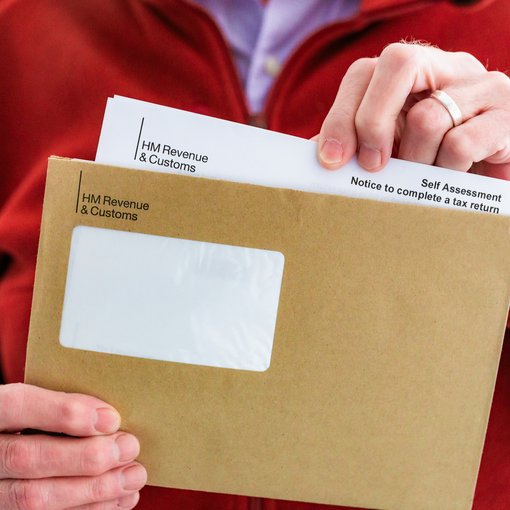
As part of Options for the UK - Nesta’s home for new ideas and radical thinking on policy challenges - Nesta’s chief economist Tim Leunig launches a mini-series on fiscal options. This first piece sets out the principles of a good tax system, outlining the big picture options the government could take if it was serious about reform.
These short essays should not be read as explicit policy recommendations, but rather as a set of provocations in terms of what is possible.
The government raises money through taxes to fund services that the public vote to be funded collectively. These include core public services such as defence and education, and, in the UK at least, healthcare. In addition, the government taxes people to redistribute income both from rich to poor, and from people of working age to those either too young or too old to work.
There are some fundamental and widely accepted principles of a good tax system. These include:
A good tax system raises a predictable amount of revenue, reliably. This should be true within a year, as well as across years, so that the government and markets know the exact state of the government finances.
A good tax system should be cheap to operate, for both taxpayers and the government. That means that taxes should be simple to understand, and levied at the point of easiest compliance.
A good tax system should be predictable, and not change too dramatically, too often. This allows individuals and companies to plan ahead.
A good tax system should not catch people out. Taxes should be simple to understand, so that mistakes are all-but impossible. Equally, fraud (that is, theft from other taxpayers) should be easy to detect.
A good tax system should tax people at a point when it is reasonable to expect them to be able to pay the amount levied.
A good tax system does not distort decisions, but instead offers a level playing field for actions that are substantively identical. It should not be the case, for example, that people should pay different amounts of tax if they are an employee, self-employed, or a company owner-manager. Nor should undertaking work in March result in a different rate of tax to doing so in April. Nor should a flapjack be taxed differently to a muesli bar. A well-designed tax system reduces the ability of individuals, companies and so on to engage in avoidance, and the extent of avoidance is a measure of a poorly functioning tax system.
A good tax system does distort decisions, when market prices do not reflect all costs borne by society. The most obvious case is pollution, whether local or transnational. Levying higher taxes on products with greater than average externalities, in order to distort decisions away from those products, is good tax policy. Similarly, if a product has positive externalities, a lower than average tax rate is appropriate.
A good tax system should support economic growth.
A good tax system should be seen as just by the public at large - this is the most important political principle. People need to feel that taxes are acceptable in terms of the amount of taxation they and others pay, and the means by which those taxes are paid. The 17th -century French First Minister of State Jean-Baptiste Colbert was right to remark that “the art of taxation consists in so plucking the goose as to obtain the largest [number] of feathers with the least possible amount of hissing.” So, as well as wanting to minimise the aggregate amount of hissing, politicians may legitimately care about who does the hissing. This broadly takes two forms.
While this piece focuses primarily on national taxation, local areas also need to have their own tax base.
As a rule of thumb, the larger the area, the more it will be approximate to the principles for national taxation. In contrast, a smaller area needs to worry about tax arbitrage - if income tax is materially different in two close by places, richer people in particular have an incentive to move house. That can create a spiral effect - which is sometimes seen in the US “rustbelt” - whereby higher taxes induce richer people and corporations to leave, hollowing out the tax base and the city. Similarly, if one place was able to lower cigarette taxes locally, they might well increase tax revenues if people travelled to that area to buy their tobacco. This would be unhelpful to public health outcomes.
Local taxes need to be regressive in the main, because rich people are unevenly distributed in a country. With the UK, a local authority like Kensington and Chelsea could raise a great deal if it could put a 0.1% supplementary income tax on higher rate tax payers, but such a tax would raise little in Merthyr Tydfil. In contrast, while the value of properties is vastly higher in Chelsea, there is, broadly speaking, one property per household in pretty much all areas, and therefore a property tax has merit for funding local services, because it is a tax base in all areas. That is why most countries have a local property tax at the heart of their local finance system, and why local sales and income taxes usually either raise relatively low rates of revenue, or are reserved for relatively large sub-national entities. It is plausible that quite small changes in income tax would lead people to move from one of London’s 32 boroughs to another, it is less likely that a small change in income tax would induce people to move into or out of Scotland, not least because few people live along that border.
The UK tax system performs mediocre against this set of principles. And on some measures, it is the worst in the world. In 2009, for example, the UK Office for Tax Simplification reported that our tax code had overtaken that of India, and runs to 11520 pages and is the longest in the world. Like all tax systems, it has evolved over time, and that evolution has usually led to the system becoming more complex, generally to little benefit.
Broadly speaking, there are three reasons why taxes become more complex over time.
As a result, when they decide to raise more revenue, they often do so in ways they believe to be stealthy. Many, although not all, of these methods make the tax system more complex. An example would be George Osborne’s introduction of a means test for both the income tax personal allowance and the pensions annual allowance. These changes made the system more complex, more costly to operate, and the latter in particular meant that many more people were likely to inadvertently underpay their taxes.
Furthermore, these changes distorted behaviour - the data show that there are significant numbers of people who ensure that their income is kept below these thresholds. This may be because the higher tax rate (typically 62p) is a deterrent to work, or it may be that people sense that going over this rate will require significant work to understand and comply with tax law, and a reasonable risk of committing tax fraud in error, or it may be sheer bloody mindedness by people who resent what they see as an attack on them. Whatever the cause, people working less because of the tax system is bad for national income, and bad for tax revenues, demonstrating that a bad tax system has bad real world effects.
These often add complexity to the tax system, while delivering slight benefits. A tragic example is the successful recent campaign to exempt women’s sanitary products from VAT. The exemption made VAT more complex, requiring a 1269 word guidance note from HMRC, including covering the VAT treatment of products for both menstrual flow and incontinence, and those designed to “hold sanitary protection in place or protect the wearer from leakage”, as well as sanitary products sold from vending machines. This has subsequently been supplemented by another 869 word guidance note, covering the period pants (that legislation’s explanatory memorandum ran to 38 clauses). Since the tampon tax raised £47 million over the previous five years, the estimated benefit was 27p per woman per year. Subsequent research has shown that only around a fifth of the new tax break was passed on by retailers, implying that this tax change made the average woman 5p a year better off. Professor Rita de la Feria has noted that other taxes will rise to replace the £47 million, a little under half of which will be paid by women. The final result is that women are on average around 3p a year better off as a result of making the tax system more complex. The ratio of gain to complexity seems poor, but the politics were very, very good, and that is why we end up with a very complex tax system.
The extreme case of this was the so-called “pasty tax”. For years the UK levied VAT on hot takeaway food, such as fish and chips. Around 2005 or so, supermarkets started introducing hot food counters, selling chicken legs and the like. These were exempt from VAT, and someone in the Treasury noticed. The Chancellor was advised - correctly - that it was unreasonable and distortive for small businesses such as fish and chips shops to have to pay VAT when they sold hot food, while large supermarkets were exempt when they sold hot food. Extending VAT to cover hot food was therefore included in George’s Osborne’s 2012 budget. It was soon dubbed the “pasty tax”, and politicians fell over themselves to assure the country that they loved pasties, and were not out of touch with the general public. The furore means that the budget was soon christened the “Omnishambles budget” and later that year George Osborne was booed when presenting medals at the Paralympics games.
Given all this, we should not be surprised that politicians will allow tax complexities to remain on the books, rather than tackling them and risking a repeat of this experience.
One option is to pledge to not make things worse. Given recent history, that would - sadly - be something of a victory for proponents of a simple tax system.
Let us, however, imagine for a moment that the government wants to achieve more than this. That it recognises the truth that a complex tax system distorts incentives, makes criminals out of honest people, and reduces economic growth.
In such circumstances, there are broadly three approaches to follow.
Take one particular tax, do a systematic review of global best practice, and - give or take - copy it. All of our principal taxes have significant distortions, and it would be possible to systematically look at international best practice concerning income tax or corporation tax, for example. While there is no way to formally measure the problems of any given tax, the UK’s approach to VAT stands out as particularly poor relative to other countries. It is possible that no other major country does it as badly as we do, in so many dimensions. A chancellor who announced a significant plan to reform VAT would win much applause from those who care about a good tax system. As I have argued, a good start would be to apply VAT to food and children’s clothes. A better approach may be to have a universal or near universal VAT system like most countries.
Identify individual tax distortions changes that have large economic effects. Stamp duty land tax would be an obvious case for reform; it reduces the incentive to move for new opportunities. There are many plausible revenue-neutral ways to improve stamp duty. These would include abolishing the first-time buyer exemption (which also deters first-time buyers, as the value of this exemption can be maximised by buying a bigger house). It could also include extending the reach of stamp duty so that it covers all housing, but at a rate sufficiently low as to be unlikely to deter moving, in order to raise enough revenue to reduce higher, distortive rates. Alternatively, we could accept that the very highest rates are already so distortive that an even higher rate would not make things worse, and do that, in order to raise the starting point at which stamp duty applies. Better still would be more fundamental reform, by, for example, replacing stamp duty altogether with an annual property tax, as has been argued by myself for Onward and by British Progress.
Similarly, such an approach would unify the tax treatment of employees and the self-employed, with the latter typically paying much lower rates of national insurance, and between workers and company-owner managers, where the latter typically find it tax advantageous to pay themselves via dividends. It might also tackle the differential tax rates levied on working age people and pensioners, with the latter exempt from national insurance.
Identify items that add the most complexity for the least benefit. It takes, for example, more than 3000 words to explain the VAT treatment of pets and pet food. It would be interesting to know whether any other country in the world follows our absurd example and treats greyhound food differently for VAT purposes, according to whether the food is “held out for sale” to racing greyhounds, or not. It is certainly implausible that any other country has a different VAT treatment for garments made from goat skin from Mongolian, Yemeni or Tibetan goats, rather than the same item made from goat skin from goats from any other country, in each case with the differential tax treatment applying only if the hair is still attached to the skin. Of course if the garment is a hat or gloves, in which case the original location of the goat does not matter for VAT purposes.
At one level, it is very easy to improve the British tax system because the current system is riddled with complexities that add costs that all of us end up paying. On the other hand it is very hard, because politically every loophole is someone’s tax break. The government needs to decide whether this is a priority or not. Each change would be vote-losing, but changing the system as a whole would raise the rate of economic growth. The latter, of course, is a reliable vote winner…