Acknowledgements
We would like to thank Stephen Nicol from Nicol Economics for his great work on the economic analysis conducted for this report. We would also like to thank the colleagues who participated in initial workshops, provided ideas and gave us feedback: Carrie Deacon, Sally Zlotowitz, Damian Hebron, Katy Rutherford, Vicki Sellick, Tom Symons, Codrina Cretu, Sarah Mcoughlin, Belinda Moreau-Jones, Annette Holman, Jenni Lloyd, Louise Bazalgette and Tara Hackett.
We would not have been able to write this report without having had the privilege of working with over one hundred incredible people-powered innovations. In particular, we would like to thank the following innovations projects who contributed to a workshop or provided inspiration for a case study: Action Tutoring; Aesop; British Red Cross; Citizens UK; Christians Against Poverty; Church Action Poverty; Compassionate Neighbours/St. Joseph's Hospice; Empowering Parents, Empowering Communities (EPEC); Family Lives; GoodSAM; Grandparents Plus; Homestart; Neighbourhood Watch; One Million Mentors; Onside Youth Zones; Purple Shoots; Restart; Shared Lives Plus; St. John Ambulance; Stay Up Late; The Cares Family; Toynbee Hall; Tutorfair; Volunteer It Yourself; Volunteering Matters; York Council.
About the authors
Rosalyn Old is a Researcher at Nesta. Her work explores democratic innovation, crowdfunded community investment and ownership of assets and innovations in technology and data governance.
Will Bibby is a Senior Programme Manager at Nesta. He works in Nesta's Government Innovation team on people-powered public services and has worked to support lots of these innovations to develop and grow.
About Nesta
Nesta is an innovation foundation. For us, innovation means turning bold ideas into reality and changing lives for the better.
We use our expertise, skills and funding in areas where there are big challenges facing society.
Nesta is based in the UK and supported by a financial endowment. We work with partners around the globe to bring bold ideas to life to change the world for good.
www.nesta.org.uk
If you'd like this publication in an alternative format such as Braille or large print, please contact us at: [email protected]
Design: Green Doe Graphic Design Ltd
Forewords
The value in civil society
Andy Haldane,
Chief Economist of the Bank of England
Measurement matters. What goes unrecorded, too often, goes unrewarded. And therein lies the story of civil society – the amorphous network of community groups, charities and social movements. Much of what the social sector does, in providing the glue holding societies together, goes unrecorded and unrewarded.
A casual glance through the history books reveals that the social sector has played an absolutely fundamental role in the social and economic transformation of the past several centuries. When social strife risked ripping a hole in the social fabric, it was civil society that prevented economies and societies coming apart at the seams. People power underpinned economic success.
The COVID-19 crisis has seen the same forces at work. At the same time stresses to public and financial health were imperilling our economies and societies, it is the social sector that emerged from the shadows to provide the solidarity essential to hold things together, from the UK's 4,000 mutual aid groups to the 750,000 NHS volunteers. People power has, once more, underpinned economic recovery.
Yet despite this crucial role, the social sector goes largely unnoticed in many policy discussions. Relative to the market and the state, it is the invisible residual when it comes to policy attention and public awareness. This has resulted in an erosion of what Raghu Rajan has recently called the Third Pillar – the pillar of community, belonging and trust.
There is no single reason for this erosion, but one key element lies in the measurement – or lack of it – of civil society's contribution to our lives and communities. As this excellent report makes clear, this contribution comes in many forms, from improved wellbeing and trust to reduced loneliness and isolation. The value created comes as much from the process of social interaction as from the services and goods that this interaction delivers.
The common denominator linking these social contributions is that few, if any, have monetary values attached to them. By their very nature they are voluntary exchanges, not commercial transactions. This is not a matter of measurement convention; it is intrinsic to these exchanges that they are non-monetary, as Michael Sandel has argued.
This does mean, however, that the contribution of the social sector is not well captured by the standard metrics of economic success rooted in monetary values, such as GDP. As an example, I have estimated that the contribution of the charitable sector to GDP may be under-estimated by an order of magnitude. In others words, around 10 per cent of our economy is being lost in translation.
Value in the age of new power
Alex Smith,
CEO at The Cares Family
This paper begins the task of providing a framework within which such contributions can be enumerated and, in time, quantified. It also makes some suggestions for next steps when developing this framework. Two of these ideas - putting issues of wellbeing centre-stage in evaluation and setting up an evidence centre in the Office for Civil Society - I would wholeheartedly endorse.
The stakes are high. Rajan believes the erosion of the Third Pillar is the reason societies themselves have subsided. Relaying the foundations of that pillar will require a rethinking of measurement. Not only would that provide a firmer basis for decision-making both within and about the social sector. It would give the sector the attention its contribution deserves and our societies badly need.
Complex questions – of power and powerlessness, heritage, healing and hope, of changing systems and cultures – are at the heart of the generational obstacles and opportunities we're currently facing. These issues intersect class, race, equity, inclusion and connection, and challenge us to build more cohesive communities in an unequal world that's changing fast.
The Cares Family, which I founded in 2011, is a group of community networks reducing loneliness and isolation by bringing older and younger neighbours together in rapidly changing cities. As we've grown from a tiny community project to a national organisation with profile and influence, we need more than ever to stay true to our values as a community-led organisation, proudly bottom-up rather than top-down – working with people rather than 'doing to' people, of the community rather than for the community.
This comes with challenges. The evaluation of community work, in its current form, sometimes feels akin to judging people's life experience: commissioning contracts often require the completion of impact surveys which, in their deficit-based questioning, can strip people of their agency rather than recognise the power in their stories. A price system now measures value; corporatism and bean-counting in the charity sector have permeated how we measure community and what we think of community – but in no way reflects the values of community.
I've seen this in various tools measuring loneliness which are 'validated' but nevertheless academic, remote and cold. I've seen it in funding streams that require that community organisations ask the people they work with about their sexual orientation, religious beliefs and gender assignment on the very first meeting. I recognise and promote the importance of ensuring inclusion – but delving into people's personal identities, labelling them before giving them the chance to be seen or heard, is not the way to build trust at the local level. Many of these tools perpetuate division and isolation, rather than solve them.
Aggregated statistics can, to be sure, be useful. They're a marker of progress. But whose progress are they marking - the people answering the questions or the people asking them? Whose value are they measuring – value as defined by communities or by investors? What do aggregate statistics and the cold questions that take us there tell us about what people in communities really want to say - often with nuance and heart, fullness and fear and love?
Crucially, we need to look at who's asking the questions in the first place and with what biases. Because as Caroline Criado Perez has shown in her book Invisible Women, if it's always the same people framing what's valuable – bureaucracy, philanthropy, established power – we will always have the same blind spots to inequity and inclusion.
To put it simply: people's stories matter. We should be seeking more subjectivity in community research, not more objectivity; the power in relationships matters, so we need to respect how people connect and the full experiences of their lives. And evaluation matters, so we need to do better to create new innovations in measurement - embedded participatory techniques, experiential learning, storytelling and richer qualitative approaches. That's why, through the support of Nesta, The Department for Digital, Culture, Media and Sport (DCMS) and the National Lottery Community Fund, The Cares Family is proud to be exploring new ways of measuring our impact – because we can't keep doing the same thing and expect a different outcome.
Our job is not to 'shift power to communities'. It's to get systems to recognise that that power is already in communities, and that those systems derive their own authority from people, their places and the relationships in between. And it's to get people in communities to recognise that they don't have to wait for big business or big government or big foundations to fix a problem that they can see right in front of their eyes - that we all have the agency to come together to make change locally and to bend power towards our own needs, not the other way around.
The clue is in the name. It's about value. What matters most is how the people who are experiencing that value – not the people who may be paying for it - define it and articulate it. As we look to the future of impact evaluation, and work with partners across the public, private and community sectors, that should be our guiding principle. 'Power over' is part of the problem; 'power to' is a means to an end; 'power with' is the destination that will lift up community, relationships, and empathy.
Executive summary
Over the last ten years, Nesta has been working to enhance and reshape public services to give local people greater control over their lives. We believe in 'people power': plugging the power of citizens back into our places, institutions, public services and democracies. This means creating new models to shape and deliver public services in partnership with citizens.
We have supported this change by backing and championing great examples of people-powered approaches across the country that shift power structures, value relationships, and combine the best approaches of working with citizens to help people to improve their lives in the places that they live.
Approaches that enable citizens inside, outside and alongside our public services to help one another and shape change are undervalued and under-supported. But whether we call it formal or informal volunteering, giving, social action, mutual aid, or simply people helping people, the power of connecting and helping each other has been a deeply ingrained part of our culture long before the COVID-19 pandemic.
In this report we make the case for twelve ways in which the range of value generated by this type of activity can be articulated, mapping and estimating the economic value as well as looking beyond approaches derived from economics to explore different dimensions of benefit and value.
Chapter 1 sets out the case for the value of people power. We explore the types of activity that make up people power in the UK context, looking at who receives value and setting out how we will explore the different types of value in the rest of the report.
Chapter 2 provides an economic analysis of the value of people power. It looks at how an economic value can be calculated, the benefits to those giving and sharing, the wider benefits to society in economic terms, and the limitations of this approach. We found that:
- People power generates between at least £103 billion and £122 billion a year in measurable economic benefit to the UK.
- The total value of the time and resources that people give in the UK is equivalent to £53 billion to £56 billion a year.
- The total value of the annual wellbeing benefits to those who take part in volunteering is in the order of between £50 billion and £66 billion.
Chapter 3 explores ten types of value created by people power - from improved health to shared power and agency to increased long-term thinking - going beyond the value that economic evaluation is able to articulate and quantify, but that should be factored into the design of public services. This section provides examples and evidence to help explore some of the value of people power we have seen in our work supporting people-powered innovations, but which despite their significance are harder to measure and quantity.
And in Chapter 4, we discuss how we can make the value of people power more visible, setting out a range of recommendations that we believe could unlock the full potential of people power, creating more value for people, communities and society.
1. Why people-powered approaches are valuable – and why we need to value them more
1.1 The power of people helping people
In early March 2020, as the severity of the COVID-19 crisis became clear, the first pandemic-related mutual aid group was set up in Lewisham, South London. Within days, hundreds of groups had been set up across the country, with thousands of people bringing shopping to neighbours, walking their dogs, picking up prescriptions or simply having a chat. We quickly heard tales of people getting the help they needed at a critical time. But it wasn't just the direct help for individuals itself that was so valuable.
Soon people shared how much this movement gave communities a sense of solidarity and connection, enabling the use of skills and experience to help others, giving people a sense of purpose amongst the chaos, and allowing them to feel positive and reassured that they had someone to call upon even if they didn't need it yet. The value of compassion, connection and collective action – as individuals, as communities, and as a society - shone through. By giving, it was clear that we all stood to gain.
Away from COVID-19, the big challenges we face as a society are increasingly complex, long-term and interconnected. As we live longer lives more of us will be living with long-term health conditions, the environmental, social and economic impacts of the climate crisis are already beginning to be felt, whilst a legacy of entrenched inequality holds back our collective potential. The crisis of trust in government and public institutions further exacerbates this predicament by eroding and undermining legitimacy of decision-making.
Each of these challenges requires new approaches, with people working together with civil society, public services and business to solve them. The complexity, scale and nature of the challenges that we face cannot be solved through top-down, paternalistic delivery approaches. It simply won't work.
1.2 People power in the UK
In the UK, as our typology in Figure 1 shows, there are many ways people can and do participate in people-powered activities, inside, alongside and outside public services. These can range from very formal voluntary roles such as acting as school governors or magistrates, or informal types of support like acts of neighbourliness, giving and sharing resources, or collectively managing community assets. Some engage in citizen participation in decision-making or organise collectively to advocate for change.
And for many forms of people power - such as peer support, sharing resources, self-advocacy groups, or community organising – the line between who gives and who benefits can be very blurred.
Figure 1: A typology of people power
This diagram illustrates six categories of people power:
- Formal volunteering: People volunteer within a public institution in a formal role such as a school governor or magistrate, or through a volunteering programme with a charity to enhance or add capacity or skills. It could be one-off, or on a more regular basis.
- Reciprocal and informal help: Often referred to as informal volunteering, this ranges from peer support to mutual aid, and from acts of neighbourliness to caring for a loved one other than your child. It is often community-based and involves mutual and reciprocal support between peers.
- Donating and sharing: Giving and sharing of resources such as money and possessions, personal data for public benefit and even donating blood. This can occur either peer to peer, through digital platforms or through community groups for the benefit of others.
- Shaping ideas and decisions: Involving citizens in decisions, ranging from more traditional forms of consultation to co-design of services to deliberative or direct democratic models such as citizens' assemblies or participatory budgets.
- Community control: Community-run organisations, co-ops, and assets such as pubs, parks or libraries that are owned or managed collectively by local citizens. These can include either management only or the legal ownership of an asset into community hands.
- Activism: Where people organise together to advocate for their own interests or affect changes in their community or society more generally. This includes through social movements, community organising, as well as more spontaneous protest.
People power can generate and unleash additional value – for example enabling greater agency, self efficacy and sense of control from an individual, or creating new relationships and informal networks of support. It can also help achieve a given outcome more effectively – for example, by reaching more people or communities that public services struggle to engage, or co-designing a service that better meets local need. In other words, who is involved and how it is done can often be as important as what is to be done. Ultimately, we believe that citizen participation adds value to and can help make public services better in a number of ways, which we discuss further in this report.
We also know from analysis of civic participation levels that people power is an integral part of many people's everyday lives, part of the fabric that runs through lives and communities up and down the country.
Figure 2: Civic participation rates in England
This chart illustrates civic participation rates in England with five key statistics:
- At least 4 in 10 regularly volunteer in some form (Source: Community Life Survey 2019/20)
- Around 2 in 3 people volunteer in some form at least once a year (Source: Community Life Survey 2019/20)
- 3 in 4 people regularly donate to charitable causes (Source: Community Life Survey 2019/20)
- Nearly half of the UK population took part in some form of civic engagement in the last year (Source: Community Life Survey 2019/20)
- We give 3.5 billion hours of time each year to helping each other (equivalent to £3.5bn, Source: Nicol Economics 2019)
In recent years, we've seen an increasing understanding that enabling the power and participation of citizens can help solve complex problems and create greater value and an increased interest from public services at the national and local levels in how they work with and mobilise citizens to do this. Though these types of approaches still remain on the margins, several examples illustrate this growth: the Wigan Deal, where the council sought to strike a new relationship between public services and local people by moving towards asset-based working at scale, and the NHS's plan to implement a model of Universal Personalised Care, are good examples.
1.3 Understanding the value of people power
"Not everything that counts can be counted, and not everything that can be counted counts."
William Bruce Cameron
Over the past decade, a range of Nesta's work has explored how to map and measure public and social value. We have explored what constitutes public value and how it can be measured, managed and grown; we have developed a collection of different tools and resources to help capture the value of people-powered health; and our standards of evidence were an early attempt to provide a robust structure for thinking about and measuring the impact of programmes we have backed.
Over this period, we have supported hundreds of organisations to understand the impact that people-powered approaches can have on people's lives. Working with these pioneers, exploring the measurement and evaluation of their innovations, we have increasingly seen that whilst it is possible to show the impact of some of the models can have – such as the impact of one-to-one tutoring on the exam results of a young person or the impact of social connections on feelings of isolation – some of the wider value of these approaches has been missed along the way.
This report is an attempt to map the many ways in which people power creates value, both quantifiable and immeasurable, financially valuable and priceless. As we will see, people-powered approaches can be complex and messy, and their value cannot be reduced to a single metric – nor should they be. Our experience of working with amazing people-powered innovations across the country has also shown that some things simply don't work, or at least are not the best way of achieving the outcomes people are trying to create.
We shouldn't be naive – that just because something involves citizens means that it's a good thing. But ultimately we hope that through mapping the value of people power, this resource will inform and enhance how commissioners consider using people-powered approaches to help them make a difference for individuals and communities, and inform decisions about public spending.
Measuring value
We know that people-powered approaches can create an enormous amount of individual, public and social value across a range of areas. From our work with 116 people-powered innovations as part of the Centre for Social Action Innovation Fund, projects have developed evidence to show their impact, a snapshot of which can be seen below.
People-powered activities can:
- Improve wellbeing.
- Promote civic engagement and participation, increasing trust in public institutions.
- Increase people's confidence into managing their health and care, and improve health outcomes and experiences.
- Reduce social isolation and loneliness.
- Improve the quality of life for end of life patients.
- Improve a range of early years outcomes for parents and children.
- Close the gap in educational attainment for disadvantaged pupils through volunteer tutoring and other initiatives.
- Improve public services by extending their reach, making them more responsive, innovative, accessible and authentic and bringing in additional resources to public services.
But, as we outlined in Public Value: How can it be measured, managed and grown?, measurement and articulation of the full social value of things like citizen participation remains underdeveloped and lacks influence compared to more traditional market valuation methods.
Our experience of working with hundreds of people-powered innovations shows that even using tools and approaches that help understand the impact of their work can be difficult for a number of reasons. Firstly, many organisations using people-powered approaches lack the skills and capacity to conduct suitable evaluations. Secondly, there is a lack of measurement frameworks that capture outcomes effectively, particularly around asset-based approaches. Thirdly, the size and nature of delivery can act as a barrier. Fourthly, even where measures are developed, suitable and implemented well, it can be difficult to attribute the difference to what a single organisation or innovation is delivering. And lastly, benefits identified as personally valuable – like love, dignity, trust, friendship, agency - often resist or feel unsuitable and inappropriate to qualification and measurement.
In spite of the growth in attempts to better measure, articulate and embed the significance of social value, from What Works Centres to the Social Value Act, there remains a consistent and systematic undervaluing of non-economic activities such as people power participation. The lack of well-established metrics for public value in all its forms makes it harder to compare alternatives and continues to bias public spending against prevention rather than cure, against indirect benefits relative to direct ones, and against intangibles relative to physical objects. To paraphrase Andy Haldane, Chief Economist at the Bank of England, if the value of people power remains out of sight, it is likely also to remain out of mind.
It would be easy to say it is impossible to measure some of the value of people power, and that we should simply assume that people-powered approaches are a good way of doing things. We don't think this is the case – but we do believe that we need different, better ways to understand and evidence the value it creates. We cannot leave it to chance that public good is automatically created.
Considerations for mapping the value of people power
And whilst there is some strong evidence on the positive effects both for us as individuals and society as a whole, there are a number of areas we know far less about, such as citizen science or sharing economy models.
We need a systemic shift in how we value these approaches. Without substantial developments in how we learn, evidence, and articulate the value of people-powered approaches, they will remain under-recognised, undervalued and under-supported.
To help better map, understand, and ultimately articulate value, we have considered some of the areas needing further consideration to help us navigate and make visible the different dimensions of value created by people power.
Figure 3: 12 ways people power creates value
This diagram illustrates 12 different ways people power creates value:
- Additional resources, skills and ideas
- Improved range of outcomes
- Improved health and wellbeing
- Increased sense of purpose
- Increased social connection and relationships
- Enabling more representative service design and delivery
- Increasing trust and legitimacy in services and institutions
- Shared power and increased agency
- Increased sense of possibility
- Prevention of issues and costs
- Better functioning democracy
- Increased long-term thinking
In this report, we use this framework to map and highlight some of the common ways in which people power is undervalued by public services. In Chapter 2, we use an economic lens to look at the value of resources and time given, the value of the wellbeing benefits to those who give their time, and the wider social benefits arising from the impacts of people power.
But, as we discuss, the approach creates a necessarily incomplete picture. This is partly due to inherent limitations of available data and our economic systems. But, more fundamentally, value is not the same as price. While some things are easy to put a price on, there are many things we deem to hold a very high value that just cannot be priced - the view of an historic church, a cultural tradition going back generations, or an expanse of wilderness, for instance.
And so in Chapter 3, we outline some of the types of value – from improved health to shared power and agency to increased long-term thinking – that we have seen in our work supporting people-powered innovations but which despite their significance are harder to measure and quantity.
The framework is not intended as an exhaustive or definitive list, but as a prompt to think about and help articulate the full spectrum of value that people-powered approaches can add.
Finally, it's also important to note that who benefits from people power and where the value is felt is not straightforward. The distinction between 'giver' and 'receiver', 'volunteer' and 'beneficiary' is not always clear cut. The benefits of people power can be felt by individuals taking part, by public institutions and by communities and society more generally.
Take a youth mentoring scheme as an example. The immediate 'beneficiary' – a young person receiving mentorship - might expect to gain new skills, increased confidence, and greater social connections. But at the individual level, the mentor might also benefit from improvements to their wellbeing and a greater sense of purpose.
At the community level, forging new connections across difference might lead to greater social cohesion. And at a societal level, more opportunities for talented young people from different backgrounds means they are able to fulfil their potential and contribute to society. Subsequently, each of these can deliver value for public institutions in the way they deliver services.
It is also likely that for any given example, one or more types of value will be experienced in the same or different ways at more than one level, with crossover between them. Who experiences the benefits can also change depending on the context: social value is best thought of as malleable, variable, and contingent, rather than fixed and stable. For example, fairness or economic value may have different weight attached to them depending on the wider political and socio-economic context.
Figure 4: Who experiences value?
This Venn diagram illustrates three overlapping areas where value is experienced:
- Value for society
- Value for communities
- Value for the individual
It's precisely this multi-dimensional and contextual nature that can make the full extent difficult to capture, but also why it's so important to try to articulate more effectively.
2. An economic analysis of the value of people power
From an economic perspective, there are many aspects of value that do not show up in the economy but can be very significant. People power is one of these areas: the benefits to society are huge, but often not visible. There is a growing trend to measure and make this value visible, however – even the Treasury Green Book provides guidance on social value, although these approaches are not without their limitations and can be controversial.
To many it can seem strange to try and quantify, in pounds and pence, a uniquely social and often intangible phenomena. However, the economic lens remains a dominant form of articulating 'value', and having an estimate of the economic value of people power can help explain why supporting and investing in it is so important. Without a reliable estimate of its economic value, the benefits of people power are at risk of remaining hidden or undervalued in decisions about public investment and spending.
There have been a number of attempts to provide the economic value of things like volunteering; the Office for National Statistics (ONS) data in this area is perhaps the most well known. However, these have not looked at the broader spectrum of people power we think are important to consider in the design of public services.
To help us explore this, we commissioned Nicol Economics to conduct an economic analysis of the value of people power in the UK with the aim to support:
- Policymakers in central government better assess the costs and benefits of investing in programmes that that will strengthen civil society
- Civil society organisations in articulating the value of their work to a wider audience
- Local government leaders to make a stronger case for investing in people-powered approaches.
So what is the economic value of people power?
Quite a lot, it turns out – between at least £103 billion and £122 billion a year in measurable economic benefit to the UK, according to our analysis.
Figure 5: Measurable economic value of people power in the UK
This chart indicates that people power generates At least £103 billion and £122 billion a year in measurable economic benefit to the UK, broken down into two main components:
- £53 billion to £56 billion: The time and resources we give helping others.
- £50 billion to £66 billion: The wellbeing benefit to those giving and sharing.
The analysis looked at three different ways that people power creates economic value:
- The time and resources we give helping others - referred to as the input value.
- The wellbeing benefit to those giving and sharing - referred to as the private benefit.
- The wider benefits that society gains - referred to as the social output value.
The analysis found that the £103 billion to £122 billion figure should likely be considered an under-estimate, as data analysed did not cover all types of people power activities such as the wealth of resources we share with each other, the value of co-producing services, or changes brought about by social movements.
Finally, whilst the overall societal value from the full range of people power activities was not possible to estimate at the aggregate level, the analysis concluded that it is likely to be considerably greater than any measure based on the inputs provided. This figure therefore provides a lower bound estimate of the benefits.
For the full analysis conducted by Nicol Economics, see here.
2.1 Valuing the time and resources we give
One way of measuring the economic value of people power is to value the time and resources that people give each year - the input value. This is the method used by the ONS, for example, as well as a previous economic analysis we commissioned in 2014.
To calculate the value of time given, the analysis followed three steps:
- Determining the number of people who regularly take part in people power for the UK as a whole, based on the Community Life Survey data for 2017/18 of 10,217 adults.
- Using data (from the Community Life Survey and other sources) on the average amount of time given, the report estimated the total total time given across the UK each year in hours. This figure turned out to be 3.5 billion hours every year.
- An average hourly value was assigned to this time, based on the replacement cost of labour, the preferred approach of the International Labour Organisation and the ONS, and then multiplied by the total time.
To calculate the value of resources given or shared, we used a range of different data sources, such as NCVO's Civic Society Almanac and the Charity Aid Foundation (CAF) report on giving in the UK, covering data on a range of charitable giving.
Using this method, the economic analysis found that the total value of the time and resources that people give in the UK is equivalent to £53 billion to £56 billion a year.
Figure 6: Total economic value of the time and resources people give in the UK
This chart represents the total economic value of time and resources people give in the UK, totaling £53-56 billion a year, broken down as follows:
- At least £1 billion in measurable donations of resources (e.g. to charity shops or giving blood)
- £8-11 billion in charitable donations
- £26 billion in the value of time given for formal volunteering
- £3 billion in value from civic and social action
- £16 billion in the value of time given for informal volunteering
Valuing the time we give
The analysis outlined that around 12 million people regularly volunteer on a formal basis each year - volunteering with a charity as a peer supporter, for example, or mentoring a young person. We estimate that the economic value of this time is worth just under £26 billion a year.
A further 14 million regularly give their time informally, such as helping an elderly neighbour with their shopping or a young person with their homework. The economic value of this time is estimated to be worth just under £16 billion a year.
The research also estimates that there is a further £3 billion in the value of time associated with what the ONS classifies as 'civic and social action'. This includes activities like being involved in issues affecting a local community, such as setting up a new service or organising a community event, as well as being involved in local campaigns or participating in local decision-making.
Taken together, the total value of the time we voluntarily give each year helping our neighbours, communities, and public services is around £44 billion.
This alone is equivalent to around 2.4 per cent of the UK's economic output – about the same size of the food and beverage industry and the building construction sector - making it one of the most important sectors in the UK.
It is likely that this figure underestimates the actual economic value. Firstly, most of the data available only covers volunteering and so doesn't capture all activities within the typology of people power participation. Secondly, the ONS only collects data on people who volunteer regularly (at least once a month), so people who give their time on a less frequent basis are not included.
It should also be noted that the figure of £53 billion to £56 billion excludes the total value of the significant, and often unrecognised, time people give caring for older, sick or disabled relatives. This has been estimated by the ONS as equivalent to about £60 billion and by Carers UK as up to £132 billion if the actual cost per hour of providing home care is provided, double the wage rate for adult social care assumed by ONS in their calculations.
Valuing the things we give and share
In addition to time, we know that people also give and share an incredibly wide range of resources each year, including:
- Giving money to organisations, projects, or causes that matter to them
- Donating possessions or resources to people, groups or sharing platforms for the benefit of others, including giving to charity shops, food banks, or donating blood
- Sharing personal data for health and scientific research or other purposes for public benefit.
The total value of resources given each year is between £9 billion and £12 billion (depending on the data source used to calculate cash donations each year).
As with the figure for time given, our analysis is likely to underestimate the true economic value of shared resources. We found that for many of the things people give and share there is no consistent or reliable data. For example, the analysis didn't find a robust way of valuing data that people give or share, so while likely to be significant is not included in the final figure.
For a full description of the methodology, data used, and findings, see pages 20-39 of the full analysis.
2.2 Valuing the benefits to those giving and sharing
Another way of valuing people power is by looking at the benefit it generates to those giving and sharing. There is a range of evidence on the benefits of volunteering, including improved wellbeing, mental and physical health, improved confidence, reduced social isolation, and improved employability, particularly for young people.
For example, a research review by NCVO on the impact of volunteering on volunteers, concluded that:
- There is strong evidence on the link between volunteering and improved mental health and wellbeing: control-based longitudinal studies suggest a causal relationship between the two.
- Volunteering can improve people's social connections and is positively associated with improved mental health and wellbeing.
- Volunteering is associated with increased physical health, but evidence for a causal relationship is weaker than for mental health.
- It noted that volunteering has a weak measurable impact on people's chances of finding work. Volunteering can and does improve people's skills but this doesn't guarantee finding a job.
Calculating the value of the benefits to those taking part in people power
Building on the work of Daniel Fujiwara for HACT's Social Value Bank, the analysis used subjective wellbeing to calculate the private value of volunteering – that is, the economic value of volunteering on volunteers themselves based on the wellbeing benefits they receive.
HACT's Social Value Bank includes estimated monetary values for a range of different factors - such as employment status, health, or whether someone volunteers - based on their impact on subjective wellbeing (see Figure 7). Andy Haldane, Chief Economist at the Bank of England, has suggested these figures could be used to give a national measure of the wellbeing benefits of volunteering, and this is the approach our analysis takes.
The values for volunteering range between £2,400 (based on analysis conducted in 2014) and £3,200 (based on analysis conducted in 2018), so we have used both to give a lower and upper range limit. We have applied the value to both formal and informal volunteering.
Figure 7: Subjective wellbeing values, 2018
This horizontal bar chart displays subjective wellbeing values in 2018 for various factors:
- Good overall health: £20,141
- Feel in control of your life: £15,894
- Full-time employment: £14,433
- Talk to neighbours regularly: £4,511
- Feeling of belonging in neighbourhood: £3,753
- Regularly volunteering: £3,249
- Access to internet: £2,413
- Regular attendance at voluntary/local organisation: £1,773
- Good neighbourhood: £1,747
- Being debt-free: £1,593
- Part time employment: £1,229
- Vocational training: £1,124
Source: HACT, 2018
Using the same data from the Community Life Survey on the number of people engaged in people power activities, the report found that the total value of the annual wellbeing benefits to those who take part in volunteering is in the order of between £50 billion and £66 billion. It should be noted that this is a different concept to that of the input value, which is comparable to measures of economic output such as Gross Value Added (GVA) and Gross Domestic Product (GDP).
Table 1: Estimates of value of total wellbeing derived from regular volunteering in the UK
|
Formal |
Informal |
Either/or |
| Millions of regular volunteers, 2017 |
11.9 |
14.2 |
20.6 |
|
£ billions |
£ billions |
£ billions |
| Value per person* |
|
|
|
| 2018 |
£3,200 |
£38.1 |
£45.6 |
| 2014 |
£2,400 |
£28.6 |
£34.2 |
| Average |
£2,800 |
£33.3 |
£39.9 |
Source: Nicol Economics analysis (2019). *Based on community investment values from the Social Value Bank. Authors: HACT and Daniel Fujiwara (www.hact.org.uk/www.simetrica.co.uk). Source: www.socialvaluebank.
For a detailed explanation of the methodology, assumptions used, and findings for this section, see pages 41-49 of the full analysis.
2.3 Valuing the wider benefits to society
A final way to quantify the economic contribution of people power is, instead of valuing the inputs (i.e. time and resources), to value outputs in terms of the wider social benefits that people-powered activities produce. These quantifiable social benefits come through people power improving a wide range of outcomes, reducing costs to public services, and preventing harmful (and expensive) situations and conditions from arising.
This approach is, therefore, more likely to give an accurate picture of the real value of people power. The problem, however, is that it is much harder to measure this kind of value consistently and particularly at an aggregate level, meaning it was not possible to estimate a national level figure. There is simply too much variation in the links between measurement approaches, activities, outcomes and monetary value of impacts across a wide range of policy areas to be able to develop an aggregate picture across all people power activities.
Nevertheless, there is reason to think that this value is very significant indeed, and likely to be considerably greater than any measure based on the inputs provided. From improving early child development to helping close the attainment gap for disadvantaged pupils, from better management of long-term health conditions to improving end of life care, our analysis found a wealth of evidence showing the positive impact that people-powered activity can have for a range of people on a range of outcomes.
To give an indication of the size of the value that people power brings to society, we have produced four case studies that explore the potential economic benefits in different fields, and use experimental and speculative modeling to extrapolate what the benefit might be if these examples operated at a national scale.
Action Tutoring: Targeted volunteer tuition in English and Maths for disadvantaged primary and secondary pupils
Action Tutoring provides high quality volunteer tutors to work with disadvantaged pupils to help improve academic outcomes in English and Maths. The programme has impressive outcomes in terms of improved GCSE and SATs results.
Our analysis used the impact of raising education performance at GCSE to estimate the economic benefit Action Tutoring produces. Lifetime earnings and productivity are strongly affected by GCSE results, with Department for Education research showing the lifetime productivity benefits for individuals who complete more than five good GCSEs as their highest qualifications compared to individuals achieving anything less are £111,000 for males and £114,000 for females.
The analysis estimated that the role of getting good GCSEs in bridging the lifetime 'attainment gap' could be in the order of up to £5 million for the 2017/18 cohort. If scaled to all disadvantaged pupils taking GCSEs in England, the long-term benefits from each year of support could be in the order of £420 million.
See Annex A in the full analysis for detailed case study.

Empowering Parents, Empowering Communities: Parent-led parenting programmes in disadvantaged neighbourhoods
Empowering Parents, Empowering Communities (EPEC) is a national, parent-led programme for those with children with behavioural problems. It combines the skills and power of parents who lead and run parenting sessions ('Parent Group Leaders') with the expertise and guidance of professionals who train, support and coach them.
A randomised control trial showed that EPEC significantly improved parent-child relationships and interactions, reduced children's behavioural problems, and increased participants' confidence in their parenting abilities.
The analysis found good evidence that child conduct disorders, if not treated, can lead to large scale costs to society and of course to children and their families, which has been put at around £175,000 lifetime cost per case. One review of the evidence suggests that the average cost of bringing a child with conduct disorder below a clinical threshold as a result of a parenting programme is around £1,750 per case, meaning lifetime costs need to be reduced by just 1 per cent to cover the costs of the intervention. The EPEC model is particularly cost effective, with an average unit cost of £458 - comparable outcomes to purely professional-run interventions, but more effective in reaching families that public services struggled to engage.
The analysis suggests that scaled up across all of England, EPEC could deliver in the order of £24 million to £41 million in annual cost savings.
See Annex B in the full analysis for detailed case study.

Grandparents Plus: Peer support for 'kinship carers' – family members and friends looking after children instead of foster carers or residential placements
There are around 200,000 children in the UK being raised by relatives or friends because their parents no longer can – more than three times the number of children in foster care. Yet kinship carers receive little or no support, despite evidence suggesting that it is an effective alternative to foster care and residential care both in terms of lower costs and better outcomes for children.
Grandparents Plus supports kinship carers through one-to-one support and a network of peer support groups in different parts of the country. The evidence produced so far for Grandparents Plus has indicated that the intervention improves the wellbeing of kinship carers. The effect of improving the wellbeing of the kinship carers is likely to increase the longevity of kinship caring – through reduced breakdown of caring arrangements and longer period of stable care – and the quality of the care they are able to provide.
Research on educational outcomes for those in foster care (both kinship and other foster care) shows a significant improvement in GCSE results between those who had been in their placement less than one year compared to over three years. Based on this, we have carried out some experimental modelling of the potential impacts of Grandparents Plus' support in improving the length and quality of kinship caring.
This modelling suggests the potential wider societal benefits from more effective and long lasting kinship care support by Grandparents Plus could be in the order of up to £2.5 million to £3.3 million based on their current scale. If scaled to every local authority area in England, the benefits could be in the order of £25 million to £33 million, based on improved education performance as a result of more stable and supportive placements. These estimates should be treated with caution, however, as they depend on a variety of factors.
See Annex C in the full analysis for detailed case study.
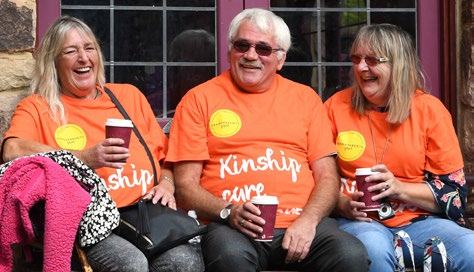
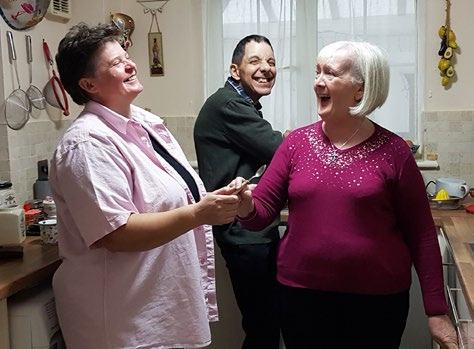
Shared Lives is a highly successful system for providing care on a sharing basis. In the model, a Shared Lives carer shares their home and family life with a young person or adult who needs support to live everyday life. People moving in with Shared Lives carers may have been in foster care, have learning or physical disabilities, be an older person with a frailty or dementia, or have mental ill health. Shared Lives Plus is the umbrella charity that supports the development and growth of the model.
The scheme has been growing rapidly across the UK and, in 2017/18, there were around 14,000 people who received this form of care, of whom around 55 per cent are in long-term arrangements. Shared living has very promising outcomes for those cared for (in terms of self-assessment) and is consistently the best performing form of care as assessed by the Care Quality Commission.
The evidence is that it is also a very cost effective form of delivering care - with annual net savings to public services of between £8,000 to £26,000 per person in long-term Shared Lives care compared to the alternatives. Extrapolated over the current levels of Shared Lives activity in the UK, the current savings could be of the order of £160 million a year just for the long-term live-in care provided. There is scope to scale up the delivery of Shared Lives across the UK to at least double the current scale of activity (doubling savings and benefits).
See Annex D in the full analysis for detailed case study.
2.4 Limitations of this approach
Our analysis provides a useful estimate of the value of people power in the UK. But it doesn't - and couldn't - capture the multitude of ways people power creates value. While the analysis is methodically rigorous, we don't confuse rigour with precision. The estimates given are based on a range of assumptions and have been compiled with the best datasets available - but these are inevitably incomplete and use various ways of conceptualising for value, each with their own pros and cons.
For instance, it is likely that the economic value we calculated underestimates actual economic value. Most of the data available only covers volunteering or charitable donations and doesn't capture all activities within the typology of people power activities, as it becomes increasingly difficult to measure value the more informal the nature of the activity. It should also be noted that our figure excludes the total value of the significant, and often unrecognised, time people give caring for older, sick or disabled relatives. This has been estimated by Carers UK as up to £132 billion.
An economic analysis of the value of people power is also necessarily reductionist and excludes benefits that are more difficult to measure or those that resist measurement all together. For example, how do you measure the value of having a sense of control over your life or, conversely, the collective impact of feeling like you don't have control? What about the value of social change, and the movements that drive it such as the Suffragettes or more recently Extinction Rebellion and Black Lives Matter?
Framing these struggles for social change in economic terms feels somehow to miss the point. They're not primarily about economics and are certainly not about econometrics. So how do we begin to measure the economic value of a more robust and participatory democracy or local public services that are more trusted, authentic, and accountable?
We also know that by aggregating value through the lens of economic analysis we fail to see the cumulative value of participation across a lifetime, seeing it as a transaction of value without temporal or behavioural factors. In many respects, they also fail to provide a critical understanding of who experiences inequalities and the relatively different starting points that people begin with. For people experiencing health inequalities for example, wellbeing benefits of participation could be more valuable, but this weighting is hard to capture.
While an economic analysis might not be able to capture everything, we hope this will prove a useful way of thinking about the contribution citizens make through individual and collective action and a tool to policymakers and commissioners alike who want to make the case for greater investment, attention, and support for people power.
3. Mapping the full value of people power
3.1 Ten further ways people power creates value
Much of what we most value – love, dignity, good conduct, pride, trust, friendship, care – cannot be bought. If we were to try to use money to buy any of these things most people would be very confused – though no doubt at some point in the history of humanity people have tried! Many aspects of our lives we value precisely because they are priceless: they cannot be produced in a market without distorting them out of all recognition.
When we are asked to show the value that an activity provides, the initial implication is often that this will be converted to fit with the dominant narrative of economic or fiscal growth or savings. However we know that, especially in the context of people-powered activities, projects and programmes, economic valuation is not enough on its own. While projects are well rehearsed in calculating and sharing the economic impact of their activities, we have heard from them that to articulate the many other positive impacts of their initiatives is more complex.
Economically, a shift towards intangible assets in the UK, with their spillover effects and synergies with other intangibles, mirrors the case with the impact of people-powered activities. While some say that putting a number on 'intrinsic' value can be reductive, problematic or cause some of the meaning to be lost, others argue that 'intrinsic' value may just be value that we have not found a way yet to properly articulate.
Beyond some of the economic value that we outlined in the previous chapter, from the literature and our work supporting people-powered innovations we know there are lots of ways that people power creates value that aren't always captured by these types of approaches but are nonetheless significant.
In this chapter, we sketch out some of these less visible types of value, many of which are often central or defining features of such approaches. These ten types of benefit are some of the more commonly overlooked, and are meant as a prompt to think about the full range of people power, helping make the invisible visible.
3.1.1 Improved health and wellbeing
People-powered approaches in health have been at the core of Nesta's work and, as we saw in the previous chapter, contribute an enormous amount of value to people through improved wellbeing, mental and physical health.
We've also seen people-powered approaches to health increase people's confidence to manage long-term health conditions and care, improve health outcomes and experience, and improve quality of life for end of life patients. Other health benefits can be more intangible or harder to quantify, such as the value of saving a life (see case study below) or the benefits of collective activism for marginalised groups.
For example, Nesta's work supporting social movements in health has shown that collective activism can build individual and community wellbeing. Communities ignored or marginalised by existing power structures - such as Black queer men can build a collective identity and provide mutual support which may not be provided by mainstream public services. Although the evidence base for the wellbeing impact of involvement in activism is small, it is growing and a correlation between campaigning and improved mental health is emerging.
Phil was getting into his car, having cheered on Wales against Scotland in a rugby match at Cardiff's Millennium Stadium, when he suffered a cardiac arrest. His partner Rosemary dialled 999 and an ambulance was soon on the way – but they didn't know how quickly it would be able to get there.
Fortunately, volunteers were on the scene almost instantaneously. Within a minute and a half, two people attending a nearby judo event ran into the car park in their bare feet. They had located a nearby defibrillator and immediately began performing CPR. Paramedics arrived more than 15 minutes later to take over and take him to receive treatment at the hospital. But it was the attention Phil received in the critical few minutes after his cardiac arrest that helped save his life and prevented potential brain damage.
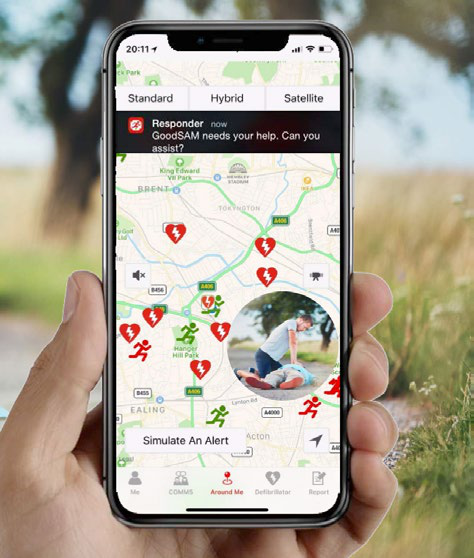
This life-saving intervention was made possible by a mobile phone app called GoodSAM, which connects local first aid trained bystanders to provide assistance to victims in the minutes before the ambulance service arrives on the scene. The GoodSAM platform is integrated into local ambulance services' dispatch systems, meaning that whenever an emergency call is made for a cardiac arrest, the app automatically notifies nearby GoodSAM responders.
Following a cardiac arrest, a patient's chances of survival falls by 10 per cent for each minute they don't have good quality resuscitation or defibrillation, so giving first aid as quickly as possible could literally determine whether someone like Phil lives or dies.
The GoodSAM platform is now integrated in ten ambulance services across the UK and is also used by individual alerters and responders in many countries including Australia, India, the US, as well as other parts of Europe and South Africa. And over the last five years, the system has evolved to also provide care for non-cardiac arrest emergencies and with video, enable earlier patient assessment.
GoodSAM has over a million users worldwide and, on average, deploys a trained responder to a cardiac arrest every three minutes. And, crucially, they estimate that a life is saved every other day through use of the app.
3.1.2 Sense of purpose
Many people find purpose, dignity and meaning by taking part in people power - whether that's getting involved to help improve one's local community, volunteering at a food bank, or using your skills and knowledge to mentor a young person.
Grandmentors, for example, is an intergenerational mentoring programme that matches older adults with young people leaving care. Inspired by the role that grandparents play, Grandmentors is about creating safe and positive relationships. With their support, care leavers identify and work towards personal goals. Often, the Grandmentor becomes a positive role model, boosting the young person's confidence, supporting them to develop their skills, and building a sense of purpose in life. But it's not just the care leavers who benefit from the relationship. For Karen, a recently retired head teacher, it's a way of putting her skills and experience to use. As Karen says: "from my point of view, I get a lot out of it and I've also gone from working a full 50 hours a week job into retirement – it's nice to have something to keep your professional brain alive!"
In our report Good and Bad Help, we discuss the role and impact of having a positive sense of purpose, and how supporting people to develop that purpose and confidence can transform lives. 'Good help', as we refer to it, is that which builds confidence, independence and a sense of purpose to enable people to take action themselves. 'Bad help' does the opposite, undermining people's confidence, sense of purpose and independence.
3.1.3 Social connection and relationships
The value of relationships often goes unrecognised, but can be enormous. Time and again, we've seen how social connection improves lives, increases feelings of belonging and positive self-identify, and protects against a range of harms from loneliness to mental ill-health. At their core, people-powered approaches bring people together: in almost all cases, there will be some value of connection between people.
People power opens up opportunities to do things in a way which can change community dynamics and develop relationships, supporting a whole range of wider impacts. Often this can stem from simple acts of neighbourliness, developing into shared understanding and through to longer term reciprocity and solidarity. And through the development of new relationships and community connections, a range of additional benefits are often seen, from love to happiness to security.
Imagine if you had to leave every night out at half past nine.
That's the reality for many people with learning disabilities. While going out to clubs, seeing bands and having fun with friends is part of everyday life for lots of people, those with learning disabilities, who might need some support to go out, often miss out on these experiences and opportunities to make friends and enjoy themselves due to inflexible support worker rotas.
Stay Up Late was set up to address this problem, supporting people with learning disabilities to go out, have fun, and lead full and active social lives. Stay Up Late started with a punk band called Heavy Load, made up of people with and without learning disabilities and known for their energetic live performances. They gained fame through an eponymous documentary.
Based on their experiences of exclusion from nightlife, they decided to do something about it, and what started off as a campaign seeking to improve the social lives of people with learning difficulties by calling for more flexible staff hours eventually grew into a charity.
Stay Up Late connects people with learning disabilities or autism with 'gig buddies', a volunteer who shares the same cultural interests and passions, to go to mainstream cultural events and live music gigs together. Through this, they can develop a friendship and grow their own informal support networks, as well as identifying with a group of people who share their interests.
Being able to go out and do these kinds of things is vitally important for developing our friendships and informal support networks, expressing who we are and just being in control of how we spend our time. Gig buddies enable people with learning disabilities to do this and be meaningfully active in their communities.
And it has a big impact. An evaluation by Research in Practice for Adults found that Gig Buddies helped people with learning disabilities feel less lonely, make more friends, and have more choice in how they live their lives.

3.1.4 Enabling more representative service delivery
People power can be particularly effective at supporting communities that public services often struggle to reach. This is particularly true for communities that may face disadvantage or marginalisation such as low-income families or immigrant communities.
In addition, people power can increase access to and extend the reach of existing services by leveraging local relationships and trust between neighbours, friends and peers.
For example, the use of Parent Champions – trained local parents who volunteer a few hours a week to talk to other parents about local services – has been shown to help increase uptake of a free childcare offer for two-year-olds in disadvantaged families, with almost half of parents taking up a place after being encouraged by a local Parent Champion.
3.1.5 Increasing trust and legitimacy in public services
Greater civic participation and the opening up of public services and decisions to the involvement of citizens can improve social trust in, and legitimacy and responsiveness of, public institutions and services. We have seen that public services that have an organisational culture open to citizen participation and who actively encourage and create meaningful opportunities for it are likely to work better for people and be trusted more.
For example, a review by the National Lottery Community Fund of their five strategic programmes – all of which have been co-designed with people with first-hand experience of the issues raised - found that co-production made services more accessible, authentic and responsive to people's needs, as well as making otherwise institutional situations feel more human.
When done well, this can be particularly effective at making public services more accessible and responsive to groups that tend to be less commonly heard. For example, a local council found that by engaging meaningfully with kinship carers in their area, they were able to more effectively understand the support they wanted and build trust.
"We realised their concerns were not simply financial, but were part of a wider need to be recognised and supported by the council. By having someone who can mediate on our behalf, and by showing we want to support kinship carers, relationships are improving," said one local authority officer.
3.1.6 Shared power and agency
One particularly significant benefit of people-powered approaches that we've seen, particularly those actively involving people in the design and delivery of services, is the shared power and agency experienced by participants. The act of being involved and having a say in what happens to you and in your community can be incredibly powerful and boost outcomes like happiness, wellbeing and social justice, as well as empowering those involved to develop skills such as organising, leadership, and the confidence to take on more projects. This has become particularly apparent as we look towards the role of co-operatives, mutual aid groups and other community organisations in COVID-19 recovery.
Self Reliant Groups: People taking control of their financial situation
The Self Reliant Group (SRG) movement, which aims to empower people to help themselves out of poverty, is a great example of the power of shared ownership and agency. SRGs are small groups of people (four to ten) who come from a shared economic or social background to support each other and develop friendships. They meet regularly and agree to start saving, rotating leadership and responsibility, learning together and sharing skills.
Many people like Claire, a member of an SRG supported by Purple Shoots, a charity supporting SRGs around the UK, go on to start small businesses which, in time, will help them earn an income to support themselves and their families.
Claire said: "The women in my SRG are amazingly inspiring. We all come from a similar background, but needed to come together to feel brave enough to follow our dreams. We all thought that people 'like us' can't launch our own businesses. Before joining the SRG I would never have thought that one day I could be my own boss, making a living doing something that I love. Now I can't wait to keep on growing with the support of my SRG."
3.1.7 Sense of possibility
Being involved in a people-powered initiative can also give us hope and a sense of possibility. For example, after years of feeling neglected by public services, residents in East Brighton, the area with the highest number of families accessing food banks in the city, decided to take matters into their own hands. The Causewayed Movement is a resident-led movement fighting for fairness in Brighton and challenging existing health inequalities. People who live there are rarely involved in decisions for the area, but residents are proud of where they live and want to have an active role in changing the way the area is perceived.
Together, they formed an informal group of local people working together to build a sense of pride and optimism in their community and to bring about change led by local residents. During the COVID-19 pandemic, this has become crucial in creating something positive from a very challenging set of circumstances.
Particularly in projects which enable participation in envisioning futures or in shaping policy through a range of online and physical methods, people are given the space to imagine, shape their thoughts and actively reflect on what the future for their context could be and how they could be part of creating it. This can often give a sense of permission and freedom to think of 'the possible', which is often not perceived in more traditional systems and approaches.
3.1.8 Prevention of issues and costs
Supporting people-powered initiatives that build community resilience and connections can have a preventative effect and play a role in avoiding costs associated with a number of long-term challenges.
Nesta's Upstream Collaborative brought together local authorities testing and developing new operating models, leaning in to people-powered approaches by working 'upstream' of social and health problems in order for citizens' needs to be met in more empowering ways. For example, Kirklees Council are working to minimise the need for social care while increasing health and wellbeing by testing out place-based approaches which create new ways of working that centre people rather than services, building upon residents' strengths and knowledge.
3.1.9 Better functioning democracy
By involving diverse groups of people who might not otherwise choose to be actively involved in traditional forms of decision-making, people-powered approaches contribute to a culture of civic participation and an effective everyday democracy. Having the power to shape and design services brings decision-making to citizens where they are, on the issues that affect their lives most, fostering a more regular and impactful type of democractic participation.
Our work with nineteen pioneers of democratic innovation across the UK has highlighted the range of people-powered initiatives working in radical ways to champion civic participation at all levels and re-energise it beyond a 'tick one box every five years' exercise.
For example, national social care charity Community Integrated Care runs a groundbreaking campaign supporting people who use the care system to develop their political knowledge and connections. As a result, the participants are empowered to campaign on changes that matter the most to them. Democratic innovations within public services such as these utilise people power methods to both improve services and empower users.
3.1.10 Increased long-term thinking
We live in a world that is often dictated by short-termism – whether that's the way our political decisions are framed, the 24-hour nature of the media cycle, or the business demand for quarterly profits. The value of long-term thinking lies in the avoidance of potential future negative outcomes, particularly for future generations.
Breaking through this inertia and shifting from a short-term to long-term mindset often requires collective action or social movements to show that there is public demand for a different approach and to stir the political class into action. Extinction Rebellion is a perfect example of the value of a people-powered movement advancing long-term thinking to shift mindsets and spurring action across society.
This is one of a growing list of examples of initiatives focused on intergenerational justice. Another is The Long Time Project, which seeks to find innovative ways for the public to think and work collectively to improve the actions we take now to be good ancestors for future generations. Others include the Welsh Future Generations Act, which provides a framework for ensuring that the needs of future generations are considered in all instances of public decision-making.
3.2 Overcoming the challenges of generating evidence for people power
One reason that many of the types of value discussed in this chapter tend to be under-valued is that they can be very difficult to measure using more classical evaluation methods. As we've seen, for many areas of people power there isn't sufficient data to properly measure its value; for others, the value itself can't be measured or quantified without distorting it.
There are also a number of challenges to generating evidence and evaluating community-based and people-powered initiatives, which call for new approaches towards evaluation and shifting roles of public service leaders and commissioners.
For example, while many formal programmes have many of the characteristics required for classical evaluation methods, much people-powered work can be on the more informal end of the spectrum, making participant engagement and evidence generation particularly difficult - especially where there is a wide range of people involved or where establishing robust control groups is near impossible.
Evaluations are also time-consuming, highly skilled, and can be costly to do well. Many organisations that do or support people-powered work are small charities or community groups that lack the time, expertise, and money to run or commission evaluations. Yet the onus is often on them to generate the evidence needed by commissioners, leading to a bias in the types of organisations and programmes able to generate evidence and therefore the types of evidence available to commissioners.
And there can sometimes be a tension between the bottom-up, participatory, citizen-led nature of many people-powered approaches and evaluation approaches that tend to be top-down, centralised, and use externally validated tools to measure pre-defined outcomes. For example, many validated questionnaires that try to measure impact are deficit-based, which is often in direct contradiction of the approach of many people-powered approaches that start from people's assets; approaches that require asking someone how lonely they are on a first meeting can get in the way of building trust and new relationships. In other words, in attempting to measure value, many current evaluation approaches can sometimes not fully reflect the values of the work itself.
Evidence matters. But as we've seen through our work, evidence for people power can't always be generated effectively using current approaches. But rather than look at these challenges and say "it's too hard!", we believe this means we need new approaches and more participatory methods to generate evidence and a different understanding of what can be used as evidence, how it can be generated, and by who.
This also requires a shift in the roles of commissioners of public services, seeing them more as holistic and collaborative designers of a local public service system rather than a procurement lead trying to minimise cost. Part of this means having a more expansive conception of value, a willingness to invest in and generate a range of types of evidence, and looking at value from a strategic or system level rather than just on a programme by programme basis.
4. Making the value of people power more visible
4.1 Recommendations
Despite all of its benefits and impacts on people, communities and society, people power is currently undervalued. This paper attempts to explore and better articulate the full spectrum of value that can be generated from people-powered activities for society, communities, public institutions and individuals. While it is easier to show concrete changes or physical outputs, we often struggle to articulate the less tangible outcomes, such as a sense of belonging felt by participants. The strength of people-powered activities such as the Big Local programme, which committed £1 million to 150 resident-led neighbourhood programmes across the country, lies in the fact that it is also the way in which the activities are done, and who does them, that create value - not just the outcome.
This becomes even more relevant as we process the response in recent months to the COVID-19 pandemic. While financial support has been crucial to offset economic damage, it has become clear that the very frontlines of crisis support and management have come from neighbours, volunteers and community organisations.
Invisible value starts to become more visible as society considers ways to tackle loneliness and boost community resilience in a socially-distanced world. A tendency for political decision-making to centralise during moments of emergency has been contrasted with widespread mutual aid groups where people from all walks of life have been realising their power and agency to reimagine their local community support networks. While transactional activities such as food delivery have clear immediate benefits, these people-powered initiatives often point towards deeper value for the beneficiaries – of human connection and relationships.
Beyond the immediate impact of the pandemic, as we move into recovery mode, narratives around levelling-up places across the country are coming to the fore. As those areas with strong social infrastructure before the crisis appear to have been more able to cope, questions are raised around how we can support other places to build their resilience in the coming months.
In order to realise the full value of people power, we need better evidence to make visible the invisible and map the different forms of value people power creates, both tangible and intangible. But without a practical way to do this, without support to develop and use new and more participatory approaches and methods of capturing value, and without systemic shifts in what we value, the value of people power will likely remain hidden and public spending decisions will be skewed against initiatives that support it.
We propose three actions that can help us better capture the value of people power.
1. Public service commissioners and funders should expand what they measure to capture the full value of people power
- We recommend starting from what is already known from the wider evidence base, focusing initially on outcomes such as wellbeing, connection and purpose where there is the strongest evidence.
- Commissioners and funders should adopt practices that create value through citizen participation in agenda-setting, service design, and accountability processes.
- In Annex A, we have included ten prompts to help think through the different types of value created by people power and how they might be evidenced.
2. The government should establish a new evidence centre for people power
Supported by the Office for Civil Society in the Department for Digital, Culture, Media and Sports (DCMS), the evidence centre would be responsible for:
- Developing new methods of evidencing the value of people power, including using more participatory and qualitative methods alongside more classical approaches, and supporting social innovators to use them and develop their evidence base.
- Bringing together the field of practitioners from academics, evaluators and What Work Centres, and identifying and coordinating research efforts.
- Working with ONS to develop more comprehensive datasets to give a better and more complete picture of activity and value created.
- Regularly (every 2-3 years) reviewing and publishing the economic value of people power.
3. The government should create new ways to include the full value of people power in decisions about public spending
- The government should update the Social Value Act - which has to date failed to drive sufficient commissioning behaviour change – to recognise and incorporate the full value of people-powered approaches, and incentivise public spending that builds social connection, encourages civic participation, and gives greater weight to long-term value.
- We need to understand that the means matter and take account of the intersecting dimensions of inequality, what particular communities want to do to be part of the solution, and which means will provide the broadest value along the way.
- The government should develop new ways to include the value of people power and informal caring into official accounting measures of activity, balancing reporting of GDP and GVA with measures of participation, wellbeing, and social connection.
Annex A
Ten questions to help consider how people power can create value for you
This section references Figure 3, "12 ways people power creates value", which includes: Additional resources, skills and ideas; Improved range of outcomes; Improved health and wellbeing; Increased sense of purpose; Increased social connection and relationships; Enabling more representative service design and delivery; Increasing trust and legitimacy in services and institutions; Shared power and increased agency; Increased sense of possibility; Prevention of issues and costs; Better functioning democracy; Increased long-term thinking.
The following set of ten questions have been drawn up for public servants, funders, and practitioners who want to consider how including a people-powered approach might create additional value, and how you might generate evidence to demonstrate this.
Aligning strategic aims
- Why is a people-powered approach in this context valuable to your overall strategy?
- In which ways can people powered methods be used in alignment with your organisational strategy?
- How will the value generated by these methods contribute to your strategic outcome goals?
Choosing the right type of people power
- Which form(s) of people power is best suited for the activity (see the Typology of People Power on page 10)?
- Who will benefit from your people-powered activities (e.g. individuals, community, institutions, wider society)?
- How can you design a service that involves people in its development, thus creating specific types of value?
Using existing evidence
- How can you increase the confidence level that using people power will generate the outcomes you're aiming for?
- Is there previous evidence of people-powered approaches in a similar context having the desired effect?
Generating new evidence
- How can you measure this type of value at the population level?
- How can you articulate and evidence a range of different types of value generated by the people-powered approach?
Endnotes