About Us
Transformative Connections (or TranConn) is an organisation based in Belfast, Northern Ireland that focuses on the role of technology in promoting peacebuilding and positive social change.
We are passionate about the use of technology to enhance peoples' lives and in the creation of mutual understanding.
We are interested in what emerging technologies mean for society in the context of areas that supply some of the most complex, physically and socially divided geographies. We work to integrate the most effective digital platforms which have the potential to increase the level of communication and engagement in divided societies
Follow us on Twitter @TranConn or Facebook for more information about our work.
About the Authors
Orna Young: Orna holds a PhD in politics from Queen's University Belfast and is the Co-Founder of TranConn. Her expertise lies in bespoke research design, community based research, ethnographic and action research, report writing, and selected lecturing.
Enda Young: Enda is an experienced conflict resolution trainer, mediator and Co-Founder of TranConn. He holds a BEng in Mechanical Engineering and an MA in Culture & Identity from the Queens University of Belfast which focused on the use of conflict transformation. Enda is a Rotary Peace Fellow, an RSA Fellow, a member of Mediators Beyond Borders International.
Keywords
Peacebuilding, Technology, #PeaceTech, #Tech4Peace, Digital Social Innovation, Northern Ireland, ICTs
Acknowledgements
We would like to take this opportunity to thank Nesta and in particular Peter Baeck and Sophie Reynolds. We are also grateful to Mark van Embden Andres and his colleagues in Elva, Helena Puig Larrauri and her colleagues in Build Peace and Build Up, Patrick Meier, Ellada Evangelou with Nilgun Arif and their other Mahallae colleagues and Dr Brandon Hamber from INCORE for contributing their views on peacebuilding and ICTs.
Executive Summary
This report explores the following areas:
- What is the role of Information and Communications Technologies (ICTs) in peacebuilding?;
- What is #PeaceTech;
- Specific international case studies;
- The Northern Ireland context in relation to ICTs and peacebuilding;
- The challenges for ICTs and peacebuilding practice; and
- Recommendations for the use of ICTs in peacebuilding in Northern Ireland.
What is the role of ICTs in Peacebuilding?
- Technology has the potential to be an inclusive mechanism in peacebuilding practices, by providing alternative and supplementary approaches to offline approaches and initiatives;
- ICTs have the potential to compliant and reinvigorate on-going peacebuilding efforts. Four central peacebuilding programme areas which resonate with the potential of ICTs in this context: early warning and early response (EWER); collaboration; attitude change; and policy change;
- The practical functions of ICTs in relation to peacebuilding are: data processing; communications; games; and engagement; and
- Peacebuilding should lead ICTs in their application in peacebuilding initiatives, rather than shaping the peacebuilding in accordance with ICTs. In practice this means that technology should be informed by established peacebuilding practice rather than be applied as some “magic bullet" for conflict.
What is #PeaceTech?
- The concept of ICTs and peacebuilding has been encompassed in a term that has been coined “#PeaceTech” or “#tech4peace;
- The following issues have been identified by Brown that require attention in relation to #PeaceTech: context; identifying appropriate technology; understanding the limits of technology; people centred approach – encouraging online/offline interaction; sustainability; risk and ethical implications; and measuring impact; and
- Challenges for #PeaceTech are also challenges for peacebuilding in general. Rather than view this as an obstacle, this reveals the potential for #PeaceTech and peacebuilding to compliment and support each other.
The Northern Ireland context in relation to ICTs and peacebuilding
“Digital social innovation” has been promoted as having the potential to impact peacebuilding work conducted by the community and voluntary sector in the region. Nesta have defined “digital social innovation” as:
“...a type of social and collaborative innovation in which innovators, users and communities collaborate using digital technologies to co-
create knowledge and solutions for a wide range of social needs and at a scale that was unimaginable before the rise of Internet-enabled platforms"; and
Existing work evidences an awareness on the behalf of some agencies (e.g. The Building Change Trust) on the need for engagement with digital forms of innovation in the “post-conflict” context of Northern Ireland. There is also a practical recognition of the impact of new forms of technology on the nature of relationships “on the ground". There is a need to ensure that existing peacebuilding practice and ICT developments do not develop in isolation in Northern Ireland.
Challenges for ICTs and Peacebuilding
Some of the many challenges involved in #PeaceTech:
- There is a disconnect between ICTs and current peacebuilding practice;
- Some peacebuilding practitioners view ICTs as not being not suited to certain sensitive issues associated with peacebuilding (e.g. trauma);
- "The bias of connectivity” is one of the key criticisms of the application of ICTs in peacebuilding programmes. The accusation that “connectivity” is in a sense presumed by those seeking to apply ICTs to peacebuilding efforts in regions where there may simply not be the access to particular technologies;
- Technology in and of itself will not solve conflicts. While there is extensive evidence of the support and development of ICTs for specific peacebuilding causes and movements, and it is unclear how this evidences itself in terms of a practical impact; and
- There is a concern over the issue of ethics, security and privacy with regard to peacebuilding and technology. Some of the international ICT and peacebuilding specialists engaging with this research identified the potential to use individuals and groups data for alternative purposes by larger corporations, and as such this was an inherent risk to all programmes employing ICTs, but one which could have a detrimental impact in the “post conflict" setting (e.g. a loss in local trust and support for wider peacebuilding processes).
Recommendations for ICTs and Peacebuilding in Northern Ireland
The following recommendations build on the findings of this report:
- Northern Ireland should build on best practice in employing ICTs in peacebuilding as developed internationally.
The organisations and initiatives currently engaged with #PeaceTech and digital social innovation have illustrated the potential for these approaches to be embedded in organisations concerned with peacebuilding. Technology and social innovation must be embedded in peacebuilding initiatives rather than seen as a separate approach;
- ICTs will provide organisations with alternative and cost effective approaches to peacebuilding for organisations working with limited resources.
Embracing new and accessible technologies will also increase the “reach” of peacebuilding efforts beyond the immediate organisations and geographical areas;
- The practical use of ICTs in peacebuilding should be specifically targeted by major funding bodies
While ICTs provide an opportunity for cost effective approaches to peacebuilding, community groups should be encouraged to partake in practical, experiential learning activities where they can physically see the benefits of using technology for peacebuilding. For example, this could include the use of Unmanned Aerial Vehicles (UAVs) and less resource intensive mechanisms such as balloons or kites (as conducted by the Public Lab) for digital cross community mapping;
- A Mahallae style platform should be adopted in Northern Ireland.
The successes of the Mahallae digital neighbourhood for civic engagement platform could be replicated in Northern Ireland. As this report detailed, this platform has a suitable application in the context of the challenges and opportunities facing this region. This may take the form of a direct licence from Mahallae or in an organisational partnership structure that could be funded through a potential European Peace IV or governmental programme. This has the potential to build on and compliment existing projects such as the Building Change Trusts “Civic Activism” project;
- Northern Ireland should host a 'Build Peace' Conference inside the next five years
"Build Peace” is a community that brings together practitioners, activists and technology experts from around the world to share experience and ideas on using technology for peacebuilding and conflict transformation. The annual conference has previously taken place in MIT and Cyprus and could draw national and international attention to the use of PeaceTech in Northern Ireland;
- A peacebuilding “hackathon” should take place inside the next two years
A hackathon focused on peacebuilding issues in Northern Ireland could be hosted by the Innovative Peace Lab (InPeaceLab), Culture Tech. BelTech or Farset Labs etc. Previous events in the region have evolved around data analysis and visualisation with the aim of improving public services. Such an event may also prove beneficial in increasing collaboration between the wider software and hardware community and peacebuilding practitioners; and
- A peacebuilding focused “techies in residence” should be adopted to bridge the gap between the voluntary, community and social enterprise (VCSE) and the tech sector in Northern Ireland.
"Techies in Residence” is a fifteen month programme, which launched in 2015, that aims to harness technical expertise from Northern Ireland's leading technology firms to support new social innovation projects devised by local VCSE sector organisations. An extension or an offshoot of this programme could have a particular peacebuilding emphasis, in a bid to ensure peacebuilding organisations are suitably supported with regard to ICTs.
1. Introduction
Digital technologies are changing how social innovation and peacebuilding are developed. Information and communications technologies (or “ICTs”) are defined by the United States Institute of Peace (USIP) as a “diverse set of tools used to create, disseminate, and manage information." This can include any platform used to relay data - from mobile phones to social networking sites to the internet itself, or any field or discipline that relies on technology. The increase in the quality and speed of internet connections and the development of mobile internet technologies means that access to such new technologies and platforms is available in an unprecedented manner. These technological advances in relation to social innovation and peacebuilding are encompassed under the term “#PeaceTech” (and #tech4peace). This is an exciting new field where practice is often years ahead of research documenting it, but some early insights on how this new phenomenon is manifesting itself has been reflected in research conducted by Nesta on social innovation, and the Young Foundation in their research on the digital social innovation in Northern Ireland.
Some of the most inspiring practical examples of the role of technology on a global scale are documented in this report. Organisations such as Elva and Mahallae have demonstrated the power of technology to engage with, and ultimately enhance, peacebuilding programmes and initiatives. This research paper provides an examination of how ICTs have the potential to impact peacebuilding practices and how this may be extended in the context in Northern Ireland. Through a combination of a scoping study, primary research and case studies, this report seeks to increase the knowledge of the role of ICTs in how peacebuilding work is approached in Northern Ireland. This approach is concerned with gaining an understanding of how new digital technologies may practically deepen the relationship between how we interact with ourselves and “others” in Northern Ireland; and ultimately how communities may be empowered to manage and transform conflict. This report will be among the first in Northern Ireland and the United Kingdom to examine the potential for the transformative use of technology in the specific context of peacebuilding. This builds on an established evidence from the United Nations and their #tech4peace initiatives. This is with a view to facilitating the engagement of communities “on the ground” in the physically and socially segregated areas of Northern Ireland in policy development, by providing an evidence base for policy reform and adaptation through the use of new technologies.
In the context of this report “peacebuilding” refers to the processes that involve recognising and supporting social initiatives that inhibit violent conflict, contribute to peace, and aid the development of a “post-conflict” society. This report explores the most effective digital platforms that may have the potential to increase the level of communication and engagement in a divided society such as Northern Ireland. These can be used to bridge the knowledge gap that exits in the quality of quantitative data available in the specific context of local community organisations in socially and physically divided areas. This data is beneficial to both local and national communities, as well as organisations and statutory agencies in tailoring their approach to social, political and economic division. Although this is beginning to happen in Northern Ireland we are still far away from making the most of this potential, and understanding the opportunities as well challenges in these new approaches. For this reason, this paper explores:
- What is the role of ICT in peacebuilding?;
- What is #PeaceTech;
- Specific international case studies;
- The Northern Ireland context in relation to ICTs and peacebuilding;
- The challenges for ICTs and peacebuilding practice; and
- Recommendations for the use of ICTs in peacebuilding in Northern Ireland.
This focus emanates from the development of ICTs and the existing research concerning their impact on the nature of communication. This has placed emphasis on the enabling aspects of ICTs for society. Shirky (2008:17) has claimed that “when we change the way we communicate, we change society”. Similarly, others have emphasised the potential of new technologies to increase or reconfigure social interactions or “to make new forms of sociality possible” (Rheingold, 2012:192). This position has been embraced by many commentators (Shirky, 2008; Gauntlett, 2011; Castells, 2012) in relation to the likelihood of new technologies (particularly the development of social media) to increase civic engagement. In the “post conflict” setting of Northern Ireland, where ICTs may provide an intermediary “space” to introduce a sense of relational “proximity” between communities. Shirky (2009:106) has argued that “new technology makes new things possible: put another way, when new technology appears, previously impossible things start occurring". This may be viewed as occurring on a multi-levelled basis and as such reveals the potential of ICTs to enhance social innovation and peacebuilding. This report is not an exhaustive list of ICTs with a peacebuilding focus, rather it seeks to act as a stimulus and resource for discussion and debate about the importance and potential of #PeaceTech in Northern Ireland.
2. What is the role of ICTs in Peacebuilding?
Given that ICTs provide us with new opportunities for contact, participation and communication, there are clear linkages to peacebuilding and its associated practices. As discussed previously, “peacebuilding” refers to the processes that involve recognising and supporting social initiatives that inhibit violent conflict, contribute to peace, and aid the development of a “post-conflict” society. There are also opportunities for ICTs to embed peacebuilding practices in “post-conflict” areas. This was encompassed by a leading practitioner in the ICT and peacebuilding field in the following terms:
“The one thing that technology can do is allow you to participate in different ways that weren't possible before and to create neutral spaces where these activities can happen and to give a voice to new people”
(Helena Puig Larrauri, interview: 12/04/15)
The key point in this analysis is the apparent ability of technology to be an inclusive mechanism in peacebuilding practices, by providing alternative approaches to offline approaches and initiatives. There is some suggestion here of what Allport (1954) termed “the contact hypothesis”. Allport's contact hypothesis is a well established theory of minimising segregation, which stipulates that under the right conditions interaction between members of different groups will reduce inter-group attitudes and stereotypes. While this theory has been much critiqued, it nonetheless underpins the vast majority of peacebuilding work. It also resonates with the inclusion of ICTs in peacebuilding efforts, given that they provide alternative spaces and mechanisms for contact which may prove beneficial in peacebuilding orientated initiatives and programmes.
ICTs are viewed as having the potential to re-invigorate peacebuilding efforts. In adherence with what may be termed “conflict transformation” approaches, with a consideration of the different “levels” (i.e. “top” or political, “middle” or statutory, and “ground” or “grass root” based). In the context of this report, this has been outlined in the following terms:
“Technology is making certain aspects of peacebuilding that seemed idealistic thirty years ago, like mobilizing social movements from the ground up, suddenly possible and tangible” (Berns, 2015:3)
Indeed, this "ground up” focus has witnessed the harnessing of ICTs in events which are often related to peacebuilding processes, such as: natural disasters; refugee crises; and in reconstruction and stabilisation of specific areas. In the context of this report, i.e. Northern Ireland, it is also important to place emphasis on the fact that as Kalathil, Langlois and Kaplan (2008) evidenced that “post-conflict" intervention involves some aspect of communication, from messaging on distinct topics to encouraging national dialogue to rebuilding destroyed media infrastructure.
A report from a KOFF roundtable (2013) identified four central peacebuilding programme areas that resonate with the potential of ICTs in this context:
- Early Warning & Early Response (EWER);
- Collaboration;
- Attitude change; and
- Policy change.
These are fundamental areas for consideration in relation to peacebuilding and evidence the potential to expand the position of ICTs in relation to it. The report also outlines how ICTs practically undertake to affect change in these four areas with the following functions:
- Data processing;
- Communications;
- Games; and
- Engagement.
However, it must be acknowledged that given the breadth of the programme areas associated with ICTs and peacebuilding, and the evolving nature of ICTs, these functions have the potential to be much further developed. In this context, the “bottom up” approach of ICTs and peacebuilding may have profound implications for how reflective, and ultimately, responsive, the developments in ICTs are for the regions they are seeking to affect positive social change in.
This report identified a central theme emerging in the existing literature on the role of ICTs and also in interviews with leading practitioners: that peacebuilding should lead ICTs in their application in peacebuilding initiatives, rather than shaping the peacebuilding in accordance with ICTs. This is an important point, as it evokes a sense that ICTs should be informed by established peacebuilding practice rather than be applied as some “magic bullet" for conflict. In the context of this report, this resonates with peacebuilding in Northern Ireland as it illustrates the potential for ICTs to drawn on and enhance established peacebuilding practice.
3. What is #PeaceTech?
The concept of ICTs and peacebuilding has been encompassed in a term that has been coined “#PeaceTech” or “#tech4peace”. It places individuals, groups and communities at the heart of how technology is applied in the context of peacebuilding. It also does not espouse that technology will have a particular or prescriptive impact on dynamic between or within communities or groups, but rather it is simply a part of the dynamic informing these relationships. This is encompassed in the following terms:
“#PeaceTech's point of departure is that technology, per say, is not inherently good or bad, powerful or not; it is people's decisions that have the power to design, use or misuse technology – and influence where it leads us” (Berns, 2015:3)
However, while the #PeaceTech approach seeks to be an embedded element in peacebuilding approaches, there have been a number of distinct and intertwining areas which have been identified as requiring consideration in this context. This has been discussed at length by Brown (2014), who discuss the following issues that require attention in relation to peacebuilding and technology:
- Context
- Identifying appropriate technology
- Understanding the limits of technology
- People centred approach – encouraging online/offline interaction
- Sustainability
- Risk and ethical implications
- Measuring impact
The latter issue, measuring impact, has concerned the global peacebuilding community in terms of how it should be approached. ICTs have been documented as providing new opportunities (and challenges) in relation to monitoring and evaluation (M&E). Költzow (2013) outlines these opportunities in relation to the efficiency afforded by online surveys, for example. This also negates the incidence of a remediation of participants' views by a third party, as it is direct. In relation to the practical benefits for peacebuilding projects, ICTs also reduce times spent on monitoring and evaluation, as well as being more cost effective. A key component in this aspect of #PeaceTech in relation to monitoring and evaluation is the accuracy of the data retrieved. Költzow (2013) develops on this in relation to geo-referencing, in allowing those conducting peacebuilding initiatives to establish areas requiring more focus. This research also outlines a range of challenges for ICTs in its #PeaceTech monitoring and evaluation focus. Many of these are generic challenges for M&E such as: accuracy; participation; and purpose. Other challenges are fundamental challenges to #PeaceTech, e.g. security of data.
A key focus of many of the issues relating to #PeaceTech appear to be those that also challenge peacebuilding. This effective identity crisis for the movement or industry (if indeed, that is what it is rather than a prescriptive approach or mechanism) is one that may afford the opportunity to encompass as wide a range of ICT inclusive peacebuilding approaches that reflect the vast range of peacebuilding needs which require a tailored approach depending on the area and context in question.
4. Case Studies
Elva
For the purpose of this report, after consulting with a number of international ICT and peacebuilding specialists, we have chosen to focus on the platform Elva. The rationale behind this is that the data (which may be predominantly collected over mobile phone text messages and web reports) is represented in a clear visual manner on maps and charts. The suitability of Elva in the context of Northern Ireland is evidenced in the accessibility of the data representations, ensuring a clear understanding of needs of specific areas over a prolonged period of time. With reference to “conflict transformation” approaches to peacebuilding, the platform represents how data has the potential to inform the need-focused distribution of resources by statutory and governmental bodies and agencies.
Elva has utilised these approaches in the following areas:
- Central African Republic: a platform that helps humanitarian actors map relevant incidents and needs of conflict-affected and displaced peoples;
- Georgia: A project to monitor and address security incidents in conflict-affected communities, using SMS and smartphone apps;
- Somalia: a platform that allows local organizations to carry out SMS polls on democratization issues amongst the general population;
- Libya: support local organisations prevent conflict using a mobile phone based reporting platform.
This report seeks to apply the learning from existing platforms to the particular context of Northern Ireland. The “post-conflict” social environment has witnessed a diversification of the population of Northern Ireland. The Northern Ireland Peace Monitoring Report (2013: 23) details that between April 2001 and 2011 the proportion of the usually resident population born outside Northern Ireland rose from 9 per cent to 11 per cent. This is led to an increase in what is termed “hate crime”. Hate incidents are defined as "any incident, which may or may not constitute a criminal offence, which is perceived by the victim or any other person, as being motivated by prejudice or hate". There are six categories of hate crime: sectarian; race; homophobic; disability; faith/religious and transgender.
This report considers race hate crime as an example of how ICTs may empower citizens to be effective agents of change. There were 982 racist incidents in the 2013/14 financial year, an increase of 30.9%. This evidences racism as a key challenge in the “post-conflict” environment of Northern Ireland, and hence peacebuilding.
Fig.1 Elva Platform Case Study. This case details the potential application of Elva in the context of Northern Ireland in relation to hate crime with a particular emphasis on race, homophobic and religious hate crime. It details the potential for Elva to be utilised to map hate crime incidents in the region. It also includes links to verified media reports detailing specific incidents. There are also graphs outlining trends in the specific issue of concern. The ‘mock-up' webpage was created by Elva for the purposes of this reported using accurate data sourced directly from the Police Service of Northern Irelands (PSNI) data sets.
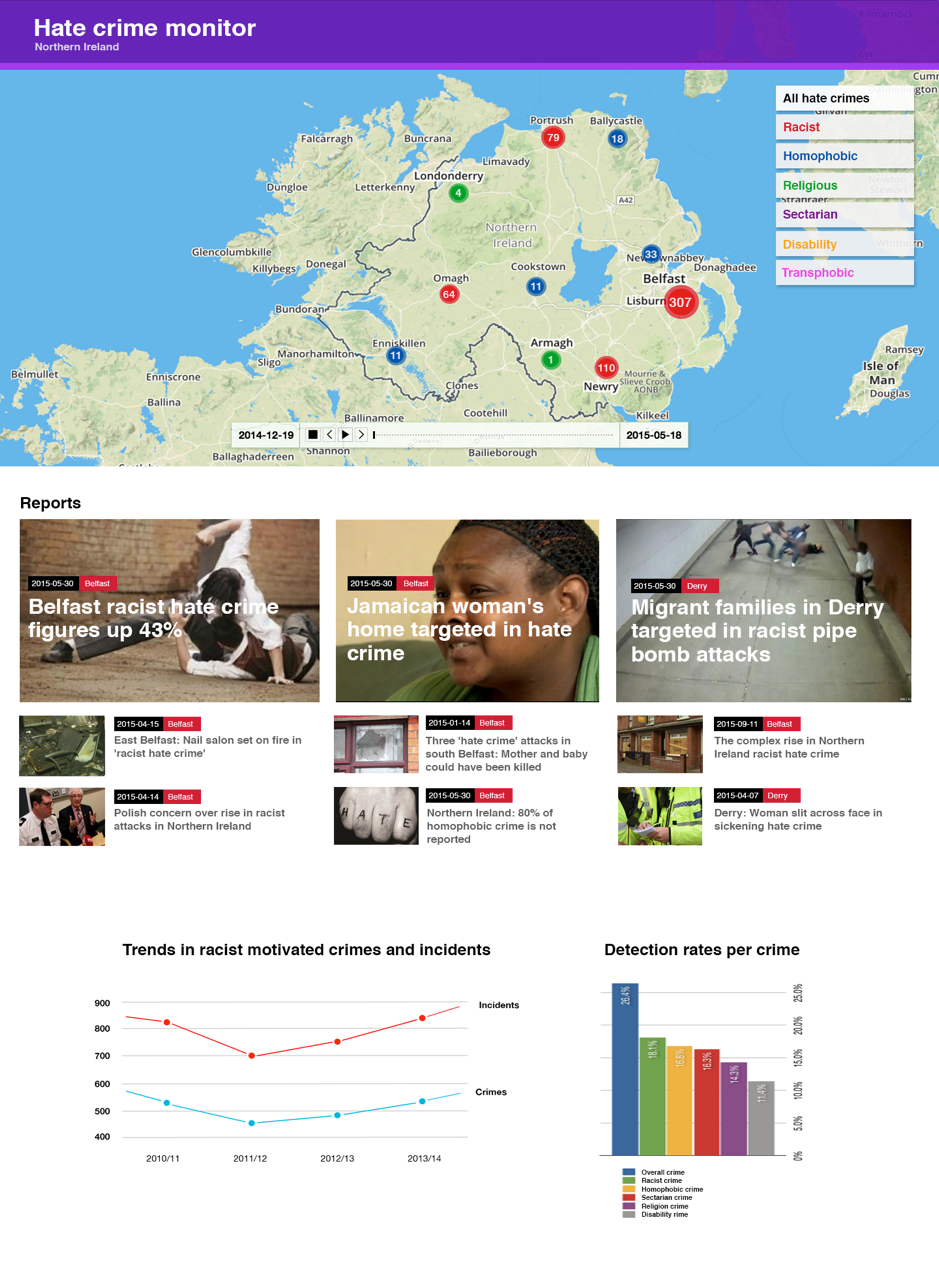
Data sourced from the PSNI Hate Motivation Statistics 2014/15.
This report is concerned with how such a platform may be utilised in the context of peacebuilding in Northern Ireland. Key factors which illustrate the suitability of a platform such as Elva include the following:
The key feature of a platform such as Elva is the accessibility of large volumes of concentrated data are readily available to audiences it may not reach ordinarily. The fact that Elva goes beyond the exclusive mapping of data to provide context (in the form of verified reports), as well as visually charting changes on graphs, is important as it ensures a more holistic approach to information gathered.
This approach also increases the likelihood of engagement from all sections of society in that it does not simply supply numerical data and it clarifies issues on a geographical basis.
Like other regions, peacebuilding in Northern Ireland is often informed by the nature of funding and resources available at a given time. Given the challenging financial circumstances many organisations find themselves in, a platform identifying the exact nature of need (in this case in relation to hate crime) could provide organisations with specific direction in relation to their work by identifying gaps and need in communities.
The information and data supplied on this platform may encourage collaboration on an inter-organisational/sector basis as it supplies evidence on a geographical basis. This may help organisations identify areas of mutual interest/benefit. In a peacebuilding context this is important, as it provides an evidence base to underpin collaboration and cooperation.
The charting function of Elva has the potential to measure and track the impact of work aimed at positively informing relationships between communities in Northern Ireland. The issue of monitoring and evaluation is one that is central to peacebuilding programmes. This also raises the issue of the earlier point regarding resources, in that Elva may also have the potential to supply groups and organisations in Northern Ireland with a means by which to inform the nature of monitoring and evaluation of peacebuilding practices on an area by area basis.
(b) Mahallae
This case study focuses on Mahallae. Mahallae has been described as “a digital neighbourhood for civic engagement” and was developed by Cypriot civil society and innovators from the Euro-Mediterranean region. The title of the platform itself has a specific significance as Mahalla (Greek) and Mahalle (Turkish) both mean neighbourhood. It also has similar meanings in many other languages including Arabic, Urdu and Bulgarian. The case of Cyprus has some similarities to Northern Ireland in that they both experience the legacy of conflict in continuing physical and social segregation. Mahallae addresses these issues, and therefore provides a suitable case study in which to address the issue of technology and peacebuilding.
To address these issues, Mahallae utilises the following:
- Collaboration;
- Civic mapping; and
- Interactive tools.
The 'Mahallae Challenges' provide opportunities for civic engagement by soliciting ideas about how best to use technology for addressing issues that can contribute to building a more peaceful society. Mahallae offers both funding and mentoring to help turn the best ideas into reality.
The innovative nature of Mahallae is demonstrated in one of their online tools for trainers and mediators e.g. “digi wisdom for mediators and trainers":
In post conflict Cyprus of the 1990s, a group of individuals from both sides of the divide, with the help of academics and conflict resolution specialists, started meeting and participating in a series of seminars and trainings. As the newly trained Mediators and Conflict resolution trainers began to educate new groups of Cypriots, Cypriot civil society slowly benefited from a growing number of enthusiastic individuals with a vision for peacebuilding and reconciliation on the island. They now share their experiences and the crystallization of their wisdom in short videos. The human stories and relationships were built out of the common belief that mediation and/or conflict resolution training can truly help alleviate differences and bring forth social change. In the context of a post-conflict society, this group of activists now share their stories from their trainings, interactions with others and journeys of overcoming obstacles encountered, both internal and external.
A key feature of this tool had been the emphasis on the “grassroot” based actors. This is evidenced in the collection of stories of the experiences of peace-builders in the region over the previous decades, which was described by a Mallahae representative in the following terms:
We went back to the people that started out the civic foundations for civil society in Cyprus in the late nineties, we met them we talked to them and discovered they had incredible things to say. They applied for an innovation grant and we worked with them on really, really long interviews to cut everything down and make sure we had the essence. We started with an eight minute clip, then five and we ended up with a three minute one which took us a few months to get it right.
These story telling processes were not just beneficial for the documentation of peacebuilding approaches in the region over the decades, but had alternative positive impacts:
Actually putting these people who were tired, who had been involved in peacebuilding work for a long time and it kind of energised them. Using technology helped them get their stories out and essentially share their experience in other places where they can be used.
In this "digi wisdom for mediators and trainers” tool Mahallae effectively utilised new technologies to ensure that the experience of those engaging in peacebuilding processes are documented and informing new generations of peace-builders. It also increases the reach and transferability of their experiences to different contexts.
There were challenges for the organisation in developing this tool. These were primarily focused on the skill set of those groups they wanted to include. This was overcome through a specific innovation fund to ensure the inclusion of a range of interested parties:
There were two distinct groups. One that had all the knowledge and one who had the innovation. Cyprus is not a place where people are up to date with the tech stuff so we launched the knowledge innovation fund to bring these two type of group together. People who had the knowledge could submit their ideas as we could match them with those who had the technical skills. This is exactly how we got most of our knowledge products.
While the engagement with established peace-builders has been central to the to this approach, this has been with a view to also engaging a new generation of individuals and groups who are and will be central to peacebuilding and social innovation:
The civic society peacebuilding community in Cyprus is quite tried and tested. It tends to be the usual subjects. This is a new crowd of young people who have a great sense of social responsibility who wanted to do something. Who maybe had never met somebody form the other side. There was this kind of process of using tech to bring people together. They turned up physically but the reason they turned up physically is because they were engaged with digitally.
The latter point is key in the context of this report, in that digital engagement is enhancing social engagement in an offline context. Therefore, Mahallae is effectively utilising technology as a stage in peacebuilding processes, to ensure the “grass-root” based, and focused, nature of the development of relationships in the “post-conflict” context.
In engaging with a range of approaches (i.e. challenges; collaboration; civic mapping; and interactive tools) Mahallae have also tapped into the diversity of applications of technology in a peacebuilding context. It reveals the need to go beyond data and engage with the human side of the legacy of conflict. While mapping is important, the narrative of the experience of conflict and the potential for the future cannot simply be plotted. In encompassing this range of approaches, Mahallae effectively encompasses digital conflict transformation, in its “bottom up" and multi-levelled approaches. The Mahallae website details to examples of online platforms that successfully won a “Mahallae Challenge":
- 'The Socialholic Typewriter' which is a creative writing tool that enables users to collaboratively tell stories, connect with their readers, and raise inter-cultural awareness to support diversity of cultural expression. It all starts with a visual stimulus.
- 'Hands-on Famagusta' is an interactive platform facilitating urban design tools and survey data from all Famagusta residents in Cyprus to build a participatory process that develops common ground and shapes conflicting priorities into a vision of a contemporary and prosperous Famagusta region. The goal is not to encourage any particular vision of the Famagusta region, but to support Famagusta residents and all Cypriots to see the region as a whole with an integrated waterfront, inter-related and inter-dependent ecological and cultural resources, and shared and effective infrastructure and services.
5. Other ICT & Peacebuilding Initiatives
This section of the report outlines some of the leading ICTs currently being employed in the context of peacebuilding. The functions and intended impact of these platforms are detailed.
Unmanned Ariel Vehicles - UAVs
Patrick Meier discusses the rise of what he terms the 'Digital Humanitarians' in his book of the same name. These individuals are volunteers and professionals from various locations and from all walks of life. In real-time they digitally make sense of vast volumes of social media, SMS and imagery captured from satellites and Unmanned Ariel Vehicles (UAVs) to support relief efforts worldwide. There has been an increase in the use of UAVs for disaster response but they can also be used for "grassroot” based, or community, mapping. The aim of mapping is to empower individuals and communities to make a difference to their local area through the use of geographical information. Mapping may be can be conducted by UAVs or balloon or kite and can be used a mode of communication and as evidence for an alternative, and community-owned, definition of a territory as done by the Public Lab. This has clear ramifications for the nature of conflict transformation orientated peacebuilding intiatives in ensuring a “multi-levelled” approach (Meier, 2014).
BuildPeace
Website: howtobuildpeace.org
Build Peace is a community that brings together practitioners, activists and technologists from around the world to share experience and ideas on using technology for peacebuilding and conflict transformation. Build Peace is also an annual, international conference.
BuildPeace Database
Website: howtobuildpeace.org/db/
'Build Peace' have compiled a database that aims to document uses of information, communications, networking and gaming technologies in peacebuilding programs around the world. This database is a collaborative project of YoLab, the International Peace Institute, the Human Data and Development Initiative and Mercy Corps.
TechChange
Website: techchange.org
TechChange provide online professional development in technology and social change. Around the world, implementers in public health, emergency response, monitoring and evaluation, all struggle to solve pressing issues with limited resources. TechChange connect them with relevant content, experts, and certification using their facilitated learning platform. Their online courses include:
- Technology for Conflict Management and Peacebuilding
- Social Media for Social Change
- Technology for Monitoring and Evaluation
- Technology for Disaster Response
- Mapping for International Development
- Technology for Data Visualization
- Gender, Technology, and Social Change
- 3D Printing for Social Good
- Digital Organizing and Open Government
PeaceTech Lab USIP
Website: PeaceTechlab.org
United States Institute of Peace (USIP) created PeaceTech Lab in 2014 as a separate entity to further advance USIP's mission: prevent, mitigate, and reduce violent conflict around the world. The Lab continues USIP's long history of ongoing work with technology and media tools for peacebuilding. The Lab brings together engineers, technologists, and data scientists from industry and academia, along with experts in peacebuilding from USIP, other government agencies, NGOs and the conflict zones. These experts collaborate to design, develop, and deploy new and existing technology tools for conflict management and peacebuilding.
ICT4Peace Foundation
Website: ict4peace.org
ICT4Peace aims to facilitate improved, effective and sustained communication between peoples, communities and stakeholders involved in conflict prevention, mediation and peace building through better understanding of and enhanced application of Information Communications Technology (ICT) including Media. It also looks at the role of ICTs in crisis management, which is defined as civilian and/or military intervention in a crisis that may be violent or non-violent, with the intention of preventing a further escalation of the crisis and facilitating its resolution.
Ushahidi
Website: ushahidi.com
Ushahidi, Inc. is a non-profit software company that develops free and open-source software for information collection, visualisation, and interactive mapping. Ushahidi (Swahili for "testimony" or "witness") created a website in the aftermath of Kenya's disputed 2007 presidential election that collected eyewitness reports of violence reported by email and text message and placed them on a Google Maps map. The organisation uses the concept of crowdsourcing for social activism and public accountability, serving as an initial model for what has been coined as "activist mapping"—the combination of social activism, citizen journalism and geospatial information. Ushahidi offers products that enable local observers to submit reports using their mobile phones or the internet, while simultaneously creating a temporal and geospatial archive of events. Their current products include:
- Ushahidi Platform: a data management system that rapidly collects data from the crowd and visualizes what happened, when and where.
- Crowdmap: a simple map-making tool, built on an open API that allows you and the world to collaboratively map your world.
- Crisisnet: “The firehose of global crisis data.” A consolidated source of global crisis data.
- Brck: A self-powered, mobile WiFi device.
First Mile Geo
Website: firstmilegeo.com
First Mile Geo is a provider of Cloud Business Intelligence (BI) and geospatial analytics. Its software enables users to collect, visualize, and monitor data, in any language, anywhere, on the fly, and through one unified interface. Data can be captured through whatever technology or third party platform deemed most appropriate (pen & paper, web surveys, SMS, mobile, tablet, etc.) and pushed into a unified system for map exploration, dashboards, and alerts across multiple languages. First Mile Geo was leveraged in Syria to collect, manage, and visualize time-series data from within Aleppo City, street block by street block during the conflict.
GeoFeedia
Website: geofeedia.com
GeoFeedia is a location-based social media monitoring, intelligence and analysis for corporate security, public safety, media/journalism and marketing teams. Geofeedia's platform enables organizations to derive social intelligence from specific geographic locations to understand, in real-time, what's happening within the area's most important to them.
Peace.Facebook
Website: peace.facebook.com
A joint project between Facebook and the Persuasive Technology Lab at Stanford University – called peace.facebook.com – is trying to bring together opposing sides in some of the most bitterly divided areas of the planet, encouraging online friendships between Israel and the Palestinian Territory, Pakistan and India and Ukraine and Russia.
Peace Factory
Website: thepeacefactory.org
In March 2012, as war between Iran and Israel seemed imminent, Ronny Edry posted a photo of himself and his daughter on Facebook with the caption: “Iranians, we will never bomb your country. We <3 you.” This message quickly went viral and gained international notoriety. It promote the “ISRAEL LOVES IRAN" Facebook community – where people from across the region and the world called for peace, not war. The aim is to connect people around the Middle East, giving them a face and a voice to promotes peace through social media
FrontlineSMS
Website: frontlinesms.com
FrontlineSMS is a free open source software used by a variety of organizations to distribute and collect information via text messages (SMS). The software can work without an internet connection and with only a cell phone and computer. FrontlineSMS can send and receive messages, group contacts, respond to messages, and trigger other events and if internet access is available, it can be connected to online SMS services and set up to feed incoming messages to other web or e-mail services.
Mobile Applications
PeaceApp
Website: unaoc.org/peaceapp
PEACEapp is a global competition organized by the United Nations Alliance of Civilizations and the United Nations Development Program in collaboration with Build Up to promote digital games and gamified apps as venues for cultural dialogue and conflict management.
Games:
Games for Peace
Website: gamesforpeace.org
Games for Peace is a growing community of people who believe that online games represent a radical new way of bridging the gap between young people in conflict zones. They use popular, commercial video games, whose themes revolve around the ideas of communication and collaboration within a virtual world. By exploiting their mass appeal, their programs aim to stimulate trust between children in Israel, Palestine, the Middle East and other parts of the world suffering from conflict.
This War of Mine
Website: thiswarofmine.com
This War of Mine is a 2014 war survival video game developed by 11 bit studios. The game, which was inspired by the 1992–96 Siege of Sarajevo during the Bosnian War, differs from most war-themed video games by focusing on the civilian experience of war rather than frontline combat.
Blogs
iRevolutions
Website: irevolution.net
A blog by Patrick Meier. iRevolutions features short thought pieces on how innovation and technology are revolutionizing the power of the individual through radical self-sufficiency, self-determination, independence, survival and resilience.
Let Them Talk
Website: letthemtalk.org
A blog by Helena Puig Larrauri focusing on peace, technology and poetry.
7. Northern Ireland & #PeaceTech
Research relating to peacebuilding in Northern Ireland has primarily focused on issues such as: the legacy of the conflict; levels of poverty associated with living in areas of multiple deprivation; the impact of sectarianism and segregation; and social exclusion (Roche, 2008: 75; Hargie et al., 2006). These issues have culminated in the almost wholly homogenous communal composition of areas in Northern Ireland. Some areas have been termed “interfaces”. Each interface area is almost wholly exclusive in its perceived ethnic/national/religious composition, which leads the urban geography of the interface areas to being defined in exclusive, and essentialised, sectarian terms. This simultaneously contributes to and (re)produces negative perceptions of the “other” community. Therefore, the particular circumstances those seeking to develop ICTs in Northern Ireland are required to work within have been summarised in the following terms:
“There are a unique set of social issues stemming from a sustained period of conflict and division within communities such as:
- Restorative justice and re-conciliation;
- Peace building and bringing divided communities together;
- Re-integration of ex-combatants into employment; and
- Trauma and victim support.” (Warnock, 2013)
There has also been exploration by the Building Change Trust of the role of “digital social innovation” which has ramifications for the peacebuilding work conducted by the community and voluntary sector in the region. Nesta have defined “digital social innovation" as:
“...a type of social and collaborative innovation in which innovators, users and communities collaborate using digital technologies to co-create knowledge and solutions fora wide range of social needs and at a scale that was unimaginable before the rise of Internet-enabled platforms”
This recent report (Hostick-Boakye, 2014) identified several organisations in Northern Ireland engaging in work characterised as “digital social innovation” (see Appendix 2). These include:
- Building Change Trust;
- Farset Labs;
- CultureTech;
- WIMPS (Where Is My Public Servant) / Public Achievement; and
- Digital Circle NI.
Specific research of the role of ICTs in relation to peacebuilding in Northern Ireland has primarily been limited to the role of social media in an inter-communal context (Young, 2013; Young and O'Reilly, 2015). Recent research (Young and O'Reilly, 2015) on the use of social media in relation to parades and protests, both contentious issues in Northern Ireland, found that social media sites are empowering individuals and groups to communicate their perspectives on issues, as well as ensuring these views were heard by a wider audience, effectively giving many “a voice". Reflecting wider theoretical analysis, social media sites were described as providing a semblance of a “safe space” or distance for individuals and groups to express their views on issues that may be considered emotive. This was described as creating opportunities to hear alternative views and positions on these issues that may have not been available in an “offline” context. Similarly, social media sites afford the opportunity to counteract rumours and misinformation during controversial marches and protests on a large and far reaching scale thus countering potential negative repercussions at the community level. However, this research also found that the technologies and social media sites that are facilitating engagement of this nature, can facilitate instantaneous reactions to events or issues and can be potentially detrimental to inter-communal relations in certain areas. This research also found that the majority of statutory agencies are actively avoiding engaging with social media in meaningful way. This was attributed to a perception that it has the potential to harm relationships between communities and the agencies themselves. Those agencies who are using it are mindfully using it to enable them to act as a conduit between the various “levels”, for example “grassroots” based groups and government. Finally, there was a view that there needs to be substantial dedicated resourcing for social media to enable groups and agencies to use it effectively in their work. For the most part, this is currently lacking and as such many agencies feel their engagement with communities via social media is curtailed as a result. There has also been some consideration of the positive potential of such platforms in relation to the nature of relationships between young people in interface areas of Belfast. This is reflected by Bell (2012) who detailed how social media was highlighted as having both positive and negative consequences on community relations.
Therefore, while this existing research evidences an awareness on the behalf of some agencies (e.g. The Building Change Trust) on the need for engagement with digital forms of innovation in the “post-conflict” context of Northern Ireland, there is also a practical recognition of the impact of new forms of technology on the nature of relationships “on the ground”. It is imperative that these developments do not run in parallel, but rather that the different “levels” informing peacebuilding initiatives support each other to ensure the application of ICTs supports local communities in adherence with conflict transformation peacebuilding approaches.
Whatever crowdsourced data management platform you employ (for example, Ushahidi or Elva) “the point is not how much data you have, the point is how many reporters you have.” (Helena Puig Larrauri, interview, 12/04/15). For implementation of any system in Northern Ireland this is a key consideration and should be designed in community based workshops to ensure community engagement.
One of the key challenges of any crowdsourced platform is the verification of the data provided by the crowd. In a post-conflict Northern Ireland this can add an extra layer of complexity in regards to the potential for “poisoned data” i.e. data that is false or has be maliciously created with the intention to create a diversion or to adversely impact the data. The “Ushahidi Guide to Verification” (Ushaidi Community Guide, ND) provides an excellent quick one-page introduction to verification criteria.
Organisation/Initiative: Innovation Peace Lab (InPeaceLab)
Website: incore.ulst.ac.uk
The International Conflict Research Institute (INCORE) at the University of Ulster in Northern Ireland, in partnership with The Nerve Centre in Derry, The Young Foundation, The Agirre Lehendakaria Center for Social and Political Studies in the Basque Country, New York based Culture Shock, and Scensei in Washington jointly launched the InPeaceLab in 2014. This initiative is based at the FabLab in Derry-Londonderry and explores how technology and new media can be used to enhance peacebuilding practice. InPeaceLab [formally the PeaceTech Lab] has been described in the following terms by one of its founders Prof. Brandon Hamber:
The idea from for lab came from the question; could we use technology for building peace rather than just making wars. For every technology used for making war you can probably use it for making peace. From satellites tracking people for genocide through to people playing collaborative computer games. Our focus now is on the relationship between social innovation, technology and peace, which then takes you into a much wider discussion about the role of the economy in conflict. So our ideas have got slightly broader than just the use of technology as a set of tools for building peace. Hence, the new InPeaceLab.
Organisation/Initiative: Building Change Trust
Website: buildingchangetrust.org
In 2008, the Building Change Trust was established by the Big Lottery Fund with a National Lottery grant of £10million as an investment for community capacity building and promotion of the voluntary and community sector in Northern Ireland. The Trust supports the community and voluntary sector in Northern Ireland through the development, delivery of, and learning from a range or programmes including commissioned work, awards programmes and other interventions.
Organisation/Initiative: Farset Labs
Website: farsetlabs.org.uk
Farset Labs is a place for creativity and technological tinkering. They are an inclusive group of students, professionals, academics, freelancers, artists, hackers, and organizers that believe strongly in experimental learning and the Do-It-Yourself ethic. They facilitate technology initiatives and encourage hands-on learning by maintaining an open workshop and creative space that is available to all. They maintain an inclusive membership policy, and strive to apply the principles of the open-software and open-hardware movements within our design policies.
Organisation/Initiative: CultureTech
Website: culturetech.co
CultureTECH was established in Spring 2012 with support from the Londonderry Chamber of Commerce. They host the largest technology and creative industries event in Northern Ireland, run one of the largest education outreach programmes and deliver a variety of innovation programmes across technology, the arts and social innovation. They also manage the “Techies in Residence” programme.
Organisation/Initiative: WIMPS (Public Achievement)
Website: wimps.tv
Where Is My Public Servant? (WIMPS) is a website and project run by and for young people by Public Achievement. The site has a database of all public representatives in Northern Ireland searchable by using your postcode to identify all your representatives from local Council to European Parliament level. At the Tech4Good awards in London in 2014 WIMPS won “The Community Impact Award”.
Organisation/Initiative: Digital Circle
Website: digitalcircle.org
Digital Circle is the representative organisation for Digital Content businesses in Northern Ireland, and aims to promote the digital content sector both within and outside of the province.
Organisation/Initiative: BelTech
Website: beltech2015.com
BelTech is an annual conference that aims to inform, inspire and engage developers and programmers, data scientists, designers and data enthusiasts.
Organisation/Initiative: FactCheckNI
Website: factcheckni.net
FactCheckNI is the first digital fact-checking platform in Northern Ireland, to compile verifiable information on a range of key topics, by monitoring sources of open data, newspapers and broadcast programmes, parties' websites, social media and Stormont debates. This approach focuses on accurate information and transparency as enhancing trust and confidence in socio-political processes which underpin peacebuilding in communities in Northern Ireland. The project is run by the Northern Ireland Foundation in partnership with us at Transformative Connections.
8. Challenges for ICTs & Peacebuilding
Existing literature documents that there is acknowledgement among the peacebuilding community that up until recently ICTs have not been utilised to their full potential in a peacebuilding context:
“...both in research and in the field, communication remains an afterthought, frequently treated as part of the public relations strategy rather than an integral and technical component of the post-conflict stabilization and reconstruction process. Because of this, there is very little understanding of the role that communication processes play in the numerous strands of post-conflict reconstruction, including peacebuilding, governance, and long term development”. (Kalathil, Langlois and Kaplan, 2008: Foreword)
Therefore, a key challenge for ICTs in relation to peacebuilding work appears to be a fundamental limitation on their use at present. This is not to suggest that this is not a huge growth area, but rather there is a disconnect between ICTs and current peacebuilding practice, which requires attention in the context of this report.
The research informing this report also identified a perception amongst those in peacebuilding work that ICTs are not suited to certain sensitive issues associated with peacebuilding (e.g. trauma):
“Certain trauma healing process and techniques do not and perhaps should not lend themselves to technology” (Helena Puig Larrauri, interview,12/04/15)
First, "virtual proximity” may strengthen the in-group identities of those who participate in parades and protests in Northern Ireland. This has been referred to as "cyberbalkanisation,” where online groups consist mainly of like-minded individuals and interactions with members of out groups are often fractious.
Given the complexity of the areas ICTs may affect change in, it is clear that are also challenges for them in relation to peacebuilding efforts. These challenges have been characterised as the following by KOFF: the bias of connectivity; designing for empowerment; and ethics, security and privacy.
a. “The bias of connectivity"
The concept of “the bias of connectivity” is one of the key criticisms of the application of ICTs in peacebuilding programmes. The accusation that “connectivity” is in a sense presumed by those seeking to apply ICTs to peacebuilding efforts in regions where there may simply not be the access to particular technologies. This is often relational to socio-economic deprivation and or issues of geographic accessibility. Therefore, ICTs for peacebuilding efforts may open to accusations of effective elitism in these contexts. This issue has been developed on by Helena Puig Larrauri & Anne Kahl (2013: 2) in the following:
“Technology tools are often seen as a means for reaching out to more people, but not everyone has equal access to all types of technology. Practitioners must assess whether some groups are more able than others to access and use a given technology. For example, in many countries certain technologies are used more by those who are young, urban, and better off economically. More importantly, practitioners must keep in mind whether access to certain technologies can be manipulated, particularly in repressive political contexts.”
These issues must be a key consideration for those seeking to utilise ICTs in peacebuilding programmes.
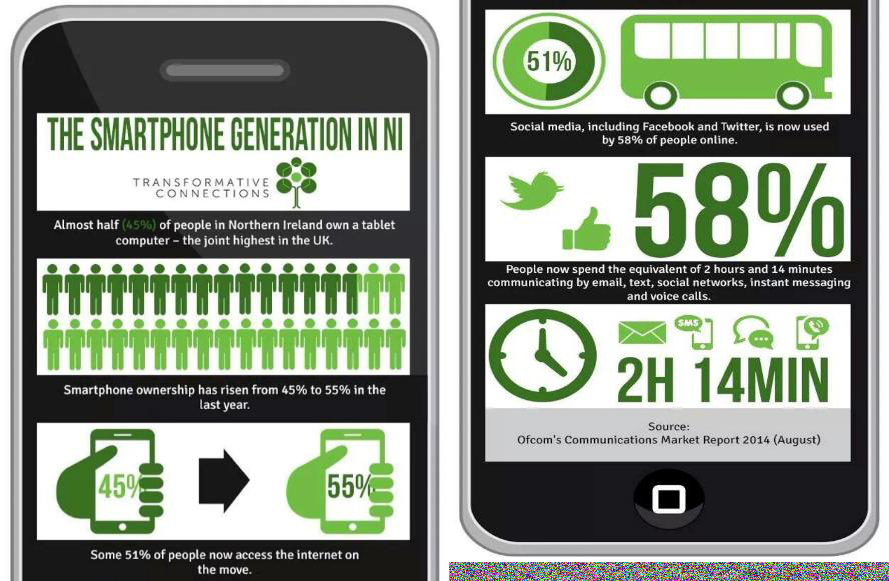
The issue of “the bias of connectivity” is also applicable in the context of Northern Ireland, as evidenced in recent OfCom (2014) report:
- Eight in ten households (80%) have access to the internet; slightly lower than the UK average;
- Consumers in Northern Ireland spend less time consuming media and communications across a typical day, compared to consumers in other nations. Media consumption would take 10 hours 38 minutes in total if each activity were consumed on its own, but simultaneous activity allowed people to fit this into 8 hours 29 minutes per day. The average across the UK was 11 hours 7 minutes of media consumption, squeezed into 8 hours 41 minutes;
- Half of consumers in Northern Ireland are accessing the internet on their mobile phone;
- Over four in ten households in Northern Ireland have a tablet computer. Internet users in Northern Ireland claim to spend significantly less time online than the UK average. Internet users in Northern Ireland claim to spend 13.8 hours on the internet per week. This is significantly lower than the UK average of 16.9 hours; and
- Smartphones are most popular among young people (aged 16-34) while tablet computers and laptops are more popular with older users (35+).
Fig. 2
b. Designing for empowerment
While much has been made of the empowering potential of ICTs, it may be deduced that the numbers engaging with peacebuilding focused ICT initiatives movements may not actually be reflected in mobilisation at a practical level. That is to say, while there is extensive evidence of the support and development of ICTs for specific peacebuilding causes and movements, it is unclear how this evidences itself in terms of a practical impact. This has been explored in relation to social media, where the term “clicktivism” has been employed to describe the practice of showing support on social media platforms (such a “liking” specific Facebook pages/posts or “re-tweeting” on Twitter) while not engaging with social/political issues in reality. Micah White (2010) has observed that "we've come to rely far too heavily on a particular form of internet organizing...we have become so dependent on digital gimmicks that our revolutionary potential is now constrained". This may be viewed as changing the nature of socio-political engagement in reality, in that it lessens the urgency of direct political engagement and may in fact undermine practical engagement and the resulting outcomes of socio-political counter movements. The development and inclusion of technology in peacebuilding processes must therefore be rooted in groups and communities themselves, and ensure that it also is based in the offline and practical experiences of those involved.
c. Ethics, security and privacy
This issue of ethics is a key concern of peacebuilding approaches. This is particularly pertinent in relation to the issue of conflict sensitivity in areas that have experienced and/or are continuing to experience conflict. There is a responsibility on the behalf of those developing and seeking to embed new technologies in peacebuilding initiatives. A key concern of peacebuilding in any context should be “do no harm". In practice, this requires practitioners to avoid or mitigate any potential negative impacts of peacebuilding. These “negative” impacts may be any of the following (Anderson and Olson 2003:22-28):
- Worsening divisions between conflicting groups;
- Increasing danger for participants in peace activities;
- Reinforcing structural or overt violence;
- Diverting human and material resources from productive peace activities;
- Increasing cynicism; and
- Disempowering local people.
ICTs provide an alternative potential to mitigate but also increase the potential for a range of these impacts. Therefore, “do no harm” must be a key component in the development and application of ICTs in peacebuilding.
Another key area of concern in relation to the use of ICTs in peacebuilding programmes, must be the use of data in relation to projects. Some of the international ICT and peacebuilding specialists engaging with this research identified the potential to use individuals and groups data for alternative purposes by larger corporations, and as such this was an inherent risk to all programmes employing ICTs, but one which could have a detrimental impact in the "post conflict” setting (e.g. a loss in local trust and support for wider peacebuilding processes). In relation to mapping platforms, there is also a concern that “conflict entrepreneurs could take advantage of such a platform by providing false information, hacking, or directing violence against people who are sharing information” (Martin-Sheilds, 2015:33).
9. Recommendations for ICTs & Peacebuilding in Northern Ireland
The following recommendations build on the findings of this report:
- Northern Ireland should build on best practice in employing ICTs in peacebuilding as developed internationally.
The organisations and initiatives currently engaged with #PeaceTech and digital social innovation have illustrated the potential for these approaches to be embedded in organisations concerned with peacebuilding. Technology and social innovation must be embedded in peacebuilding initiatives rather than seen as a separate approach;
- ICTs will provide organisations with alternative and cost effective approaches to peacebuilding for organisations working with limited resources.
Embracing new and accessible technologies will also increase the “reach” of peacebuilding efforts beyond the immediate organisations and geographical areas;
- The practical use of ICTs in peacebuilding should be specifically targeted by major funding bodies
While ICTs provide an opportunity for cost effective approaches to peacebuilding, community groups should be encouraged to partake in practical, experiential learning activities where they can physically see the benefits of using technology for peacebuilding. For example, this could include the use of Unmanned Aerial Vehicles (UAVs) and less resource intensive mechanisms such as balloons or kites (as conducted by the Public Lab) for digital community mapping;
- A Mahallae style platform should be adopted in Northern Ireland.
The successes of the Mahallae digital neighbourhood for civic engagement platform could be replicated in Northern Ireland. As this report detailed, this platform has a suitable application in the context of the challenges and opportunities facing this region. This may take the form of a direct licence from Mahallae or in an organisational partnership structure that could be funded through a potential European Peace IV or governmental programme. This has the potential to build on and compliment the Build Change Trust “Civic Activism” project;
- Northern Ireland should host a 'Build Peace' Conference inside the next five years
"Build Peace” is a community that brings together practitioners, activists and technology experts from around the world to share experience and ideas on using technology for peacebuilding and conflict transformation. The annual conference has previously taken place in MIT and Cyprus and could draw national and international attention to the use of PeaceTech in Northern Ireland;
- A peacebuilding “hackathon” should take place inside the next two years
A hackathon focused on peacebuilding issues in Northern Ireland could be hosted by Innovative Peace Lab (InPeaceLab), Culture Tech. BelTech or Farset Labs. Previous events in the region have evolved around data analysis and visualisation with the aim of improving public services in the Belfast area. Such an event may also prove beneficial in increasing collaboration between the wider software and hardware community around peacebuilding practitioners;
- A peacebuilding focused “techies in residence” should be adopted to bridge the gap between the community and voluntary sector (CVS) and the tech sector in Northern Ireland.
“Techies in Residence” is a fifteen month programme, which launched in April 2015, that aims to harness technical expertise from Northern Ireland's leading technology firms to support new social innovation projects devised by local VCSE sector organisations. An extension or an offshoot of this programme could have a particular peacebuilding emphasis, in a bid to ensure peacebuilding organisations are suitably supported with regard to ICTs.
This section details some of the prominent #PeaceTech or #tech4peace Twitter accounts. It is not intended to be an exhaustive list.
@howtobuildpeace - BuildPeace
Build Peace Conference brings together practitioners, activists and technologists to share ideas on using technology for peacebuilding & conflict transformation
@howtobuildup - Build Up
A social enterprise working at the intersection of technology, civic engagement and peacebuilding
@PEACE_app - PEACEapp
PEACEapp is a global competition to promote digital games and gamified apps as venues for cultural dialogue and conflict management
@HelenaPuigL - Helena Puig Larrauri
Peacebuilding practitioner, focusing on innovation design and technology-enabled programs to promote peace, support civic engagement and prevent conflict. @howtobuildpeace co-organizer @howtobuildup co-director
@rodrigodavies - Rodrigo Davies
Research interests are the use of crowdfunding for civic projects, crowdsourcing in organizations, ICT4D and user-centered design. @howtobuildpeace co-organizer @howtobuildup co-director
@jenwelch1 - Jen Gaskell
PhD in ICTs for peacebuilding #tech4peace @howtobuildpeace co-organizer @howtobuildup co-director
@flaniererin - Michaela Ledesma
Peacebuilding specialist @howtobuildpeace co-organizer @howtobuildup co-director
@PatrickMeier - Patrick Meier
Author of Digital Humanitarians and iRevolutions Blog
@civicMIT - MIT Center for Civic Media
The MIT Centre for Civic Media works hand-in-hand with diverse communities to collaboratively create, design, deploy, and assess civic media tools and practices
@PeaceTechFocus - PeaceTech
PeaceTechFocus on how technology can be used to enhance peacebuilding. An @INCOREinfo project by @BrandonHamber
@PeaceTechLab - PeaceTech Lab
PeaceTech Lab works at the intersection of technology, media, & data to imagine, develop, & deploy new tools to reduce violent conflict around the world
@shimelfarbCEO - Sheldon Himelfarb-
PeaceTech Lab, Connecting ideas with implementers
@sanjanah - Sanjana Hattotuwa
Editor, Groundviews & Advisor, ICT4Peace Foundation
@EthanZ - Ethan Zuckerman
Centre for Civic Media, MIT Media Lab, Global Voices, Berkman Center. Author of Rewire
@Liberationtech - Liberationtech
Stanford University high-volume news feed on tech, democracy, freedom, human rights & development
@TechChange - Tech Change
Tech Change provide online professional development in technology and social change
@ncmart - Nick Martin & @neuguy - Christopher Neu
Nick is founder and CEO of @TechChange and Christopher is the Chief Operating Officer
@ict4peace - ICT4Peace Foundation
ICT4Peace is a policy and action-oriented international Foundation. Our purpose is to save lives and protect human dignity through Information and Communication. Geneva
@mahallae - Mahallae
A Digital Neighbourhood for Civic Engagement, Supported by @undp_act in Cyprus
@Nilgunarifworking - Nilgun Arif
Working for UNDP on #knowledge #innovation and #tech4peace
@mehmeterdoganIV - Mehmet Erdoğan
Communications for @UNDPEurasia #socialmedia & #tech4peace
@elladaeva - Ellada Evangelou
Artist, activist, academic: cultural analysis, innovation in cyprus/euromed.
@ushahidi - Ushahidi
Ushahidi is a global organisation that empowers people to make a serious impact with open source technologies, cross-sector partnerships and ground-breaking ventures
@ElvaTeam - Elva
Elva is a mobile phone platform that allows organisations to map local needs and advocate change
@BPForumMag - Building Peace Forum
A Forum for Peace and Security in the 21st Century
References
Allport, G.W. (1954) The Nature of Prejudice. Cambridge, MA: Perseus Books.
Anderson, M. & Olson, L. (2003). Confronting Wars: Critical Lessons for Peace Practitioners, Reflecting on Peace Practice Project, Collaborative for Development Action, Cambridge MA.
Bell, J. (2012). Young People and Interfaces. Belfast:ICR.
Berns, J. A Forum for Peace and Security in the 21st century: Build Peace five. March 2015. Available at: http://buildingpeaceforum.com/site/wp-content/uploads/2015/04/PeaceTech.pdf [Accessed on 4 June 2015].
Brown, (2014). WHITE PAPER. “Designing Peacebuilding Projects That Utilize Technology".
Castells, M. (2012). Networks of Outrage and Hope. Social Movements in the Internet Age. Cambridge: Polity Press.
Ekine, S., ed. (2010). SMS Uprising. Mobile Activism in Africa. Cape Town: Pambazuka Press.
Gauntlett, D. (2011). Making is Connecting. The Social Meaning of Creativity, from DIY and Knitting to YouTube and Web 2.0. Cambridge: Polity Press.
Hargie, O., Dickson, D., and O'Donnell, A. (2006) Breaking Down Barriers: Sectarianism, Unemployment and the Exclusion of young people from Northern Ireland Society. Jordanstown: University of Ulster
Hostick-Boakye, S. (2014). Turning up the Dial: Digital Social Innovation in Northern Ireland. Belfast: Building Change Trust.
Kahl, A and Puig Larrauri, H (2013) Technology for Peacebuilding. Stability: International Journal of Security & Development, 2(3): 61,pp. 1-15, DOI: Available at: http://dx.doi.org/10.5334/sta.cv [Accessed on 4 June 2015].
Kalathil, S., with J. Langlois and A. Kaplan. (2008). “Towards a New Model: Media and Communication in Post-Conflict and Fragile States”, Communication for Governance and Accountability Program. World Bank: Washington, D.C.
Költzow, S. (2013). (Paper No. 9). Geneva Peacebuilding Platform. Available at: http://www.reach-initiative.org/wp-content/uploads/2013/09/PP-09-Peacebuilding-and-ME-Koeltzow-final-September-2013.pdf [Accessed 4 June 2015]
Martin-Shields, C. (2015). “Proving (Digital) Peace” A Forum for Peace and Security in the 21st century : Build Peace 5. March 2015. Available at: http://buildingpeaceforum.com/site/wp-content/uploads/2015/04/PeaceTech.pdf [Accessed on 4 June 2015].
Meier, P. (2015). “On UAVs for Peacebuilding and Conflict Prevention”. [Blog] IRevolutions. Available at: http://irevolution.net/2014/09/14/uavs-peacebuilding-and-conflict-prevention/ [Accessed 16 Apr. 2015].
Nolan, P. (2013). The Northern Ireland Peace Monitoring Report. Report Two. Belfast: JRF/CRC.
Ofcom. (2014). Communications Market Report: Northern Ireland. Available at: http://stakeholders.ofcom.org.uk/binaries/research/cmr/cmr14/2014_CMR_Northern_Ireland.pdf [Accessed 4 June 2015]
Puig Larrauri, H. (2013) The Use of New Technologies: Expanding Opportunities for Peacebuilding? Critical Reflection on the KOFF roundtable on "The Use of New Technologies: Expanding Opportunities for Peacebuilding?". Available at: http://www.swisspeace.ch/projects/koff/critical-reflections.html [Accessed 4 June 2015].
Rheingold, H. (2012). Net Smart. How to Thrive Online. Cambridge MA: MIT Press.
Roche, R. (2008) Facts, Fears and Feelings Project: Sectarianism and Segregation in Urban Northern Ireland: Northern Irish Youth Post-Agreement. Belfast: Queens University.
Shirky, C.(2008). Here Comes Everybody. How Change Happens When People Come Together. London: Penguin Book.
Ushahidi Community Resource. (ND). Ushahidi Guide To Verification. [Guide]. Available at: https://wiki.ushahidi.com/download/attachments/4260045/Ushahidi-Verification-Guide.pdf?version=1&modificationDate=1375995186000&api=v2 [Accessed: 4 June 2015]
Warnock, R (2013) “Harnessing the Power of Social Innovation to Drive the Northern Ireland Economy”, Northern Ireland Executive (Draft).
Young, O & Reilly, P. (2015). Parades, Protests and Social Media. Belfast: NICRC.
Young, O. (2014) “New Media and Young People in Interface Areas of Belfast”, Shared Space, 14. Belfast:NICRC.