About Nesta
We are Nesta, the UK's innovation agency for social good. We design, test and scale solutions to society's biggest problems. Our three missions are to give every child a fair start, help people live healthy lives and create a sustainable future where the economy works for both people and the planet.
For over 20 years, we have worked to support, encourage and inspire innovation. We work in three roles: as an innovation partner working with frontline organisations to design and test new solutions, as a venture builder supporting new and early stage businesses and as a system shaper creating the conditions for innovation. Harnessing the rigour of science and the creativity of design, we work relentlessly to change millions of lives for the better.
Find out more at nesta.org.uk.
If you'd like this publication in an alternative format such as Braille or large print please contact us at [email protected].
Authors
Research, analysis and reporting were carried out by Eunomia Research and Consulting – Sam Taylor, Joe Hudson, Laura Williams, Rhiannon Lee, Charlotte Taylor, Peter McCann and Adam Noonan.
At Nesta, Codrina Cretu, Chris Williamson, Daniel Lewis, Katy King and Madeleine Gabriel supported with sample preparation, additional data analysis and interpretation and editing.
Thank you to the Microgeneration Certification Scheme (MCS) for allowing us to use its data on heat pump installations for recruiting participants to this survey.
Introduction
Heat pumps are an important tool in the decarbonisation of heating as they are powered by electricity, which is increasingly supplied from zero carbon sources, and are highly efficient.
The UK Government has set a target of 600,000 heat pump installations each year by 2028. However, less than one percent of homes in the UK currently have heat pumps and the technology is unfamiliar to the majority of householders. A recent government survey found that only 18% of the public felt they knew ‘a lot’ or ‘a fair amount’ about heat pumps, while 51% knew ‘a little’ or ‘nothing’.
To increase heat pump uptake we need to improve confidence in, and familiarity with, the technology. As part of this, we need to know more about householders’ experiences of their heat pump and how their experiences compare to those heating their homes with fossil fuel-based systems, such as gas boilers. By identifying areas for improvement in people’s experiences with their heat pumps, we can also help the industry to improve.
To fill this gap, Nesta commissioned Eunomia to conduct a large-scale survey of 2,549 domestic heat pump owners and 1,025 domestic gas boiler owners in England, Scotland and Wales. To our knowledge, this is the largest survey of domestic heat pump owners conducted in Great Britain.
The surveys captured detailed data on satisfaction with the performance of heat pumps and boilers, the installation process, ease of use and access to information. This data is explored in depth in this report. The surveys also captured some rich information on costs, maintenance, servicing and aftercare, which we have not presented here due to its complexity. We will present this data and associated findings in future reports.
It should be noted that the heat pump owners we surveyed were demographically very different to the gas boiler owners. For example, the heat pump users lived in more rural areas and had larger, newer properties compared to the gas boiler users.
Heat pumps explained
Heat pumps absorb heat from a source – usually the outside air or the ground – into a working fluid called a refrigerant. Using electricity, the pump then compresses this fluid to increase its temperature. The heat created is released inside the home, where it is used to heat space and water. Because heat pumps make use of ‘free’ ambient heat in the outside environment, heat pumps are highly efficient. The average UK installation is around three times more efficient than a gas boiler, while the best installations can far exceed this. Some heat pumps can also provide cooling, which is likely to be increasingly important as our climate changes.
Air source heat pumps are the type most commonly found in UK homes, and the majority of these are air-to-water systems, which transfer heat from the outside air to a ‘wet’ central heating system using radiators, underfloor heating or both. Some UK homes have ground source heat pumps. These absorb heat from the ground via a ground array – flexible pipework buried in a deep vertical borehole or a long trench.
Summary
Users are highly satisfied with their heat pumps
People living in England, Scotland and Wales who own their home and use a heat pump to heat it are satisfied that heat pumps are safe, reliable, quiet heat sources that are effective for space heating and producing hot water.
Satisfaction with heat pumps is high and, overall, satisfaction levels between heat pump and gas boiler users are very similar. In both cases, at least 70% of people said they were ‘fairly’ or ‘very’ satisfied with all aspects of their heat source except running costs. Two-thirds (67%) of heat pump owners and 59% of gas boiler owners said they were satisfied with running costs.
One notable difference in satisfaction between heat pumps and gas boilers was with ‘ease of use and control’, where heat pump users reported lower satisfaction (74% ‘fairly’ or ‘very’ satisfied) than gas boiler users (88% similarly satisfied). This is reflected in the finding that heat pump users feel less confident (22% ‘not very’ or ‘not at all’ confident) in using and controlling their heating than gas boiler users (6% similarly unconfident).
Compared to their previous heating system, 73% of heat pump owners are as satisfied or more satisfied with their heat pump. People who installed a heat pump into their own home were the most satisfied (81% as or more satisfied), followed by self-builders (70% similarly satisfied). People who moved into a new build home with a heat pump were less satisfied (64% as or more satisfied), while people who moved into a house in which the previous owner had installed a heat pump were the least satisfied group (52% satisfied).
For those who installed a heat pump into their own home, their previous heating system played a role in how satisfied they were with their heat pump. Those people who previously used electric heating were the most satisfied (87% as or more satisfied), oil boilers (83% satisfied) or who had no previous heating system (87% satisfied).
Finally, we see greater variation in people’s satisfaction with heat pumps than with gas boilers. For example, a greater proportion of heat pump owners than gas boiler owners gave a score of nine or ten when asked how likely they are to recommend them, but there were also more people who gave a score of six or less. This meant that gas boilers received a slightly higher net promoter score than heat pumps (21 v 18) overall.
Satisfaction with heat pumps is just as high in older properties
There was no evidence that satisfaction varied significantly by property age. People living in Victorian houses were just as satisfied with their heat pump as people in mid-century properties or modern homes compared to their previous heating system. This suggests that heat pumps are likely to be effective across the range of British residential property types.
Upgrading building fabric alongside heat pump installations is common, but by no means universal. For those users who planned their heat pump install themselves, 55% also undertook building fabric upgrades, such as loft insulation (36% of cases), wall insulation (23%) and double or triple glazing (23%). A relatively small proportion did multiple measures – 14%, for example, insulated walls and loft, and installed double or triple glazing.
Around half (53%) of heat pump installations involved replacing the entire heating system, including new controls (72% of cases), new radiators (68%) and new pipework (55%). Only 5% of heat pump installations required no additional system components, compared to 35% of gas boiler installations.
Gas boiler installations only included energy efficiency upgrades around a third of the time (33%). However, around 30% of respondents answered that they didn’t know if any had been done, suggesting that building fabric upgrades were not a major consideration when replacing a boiler.
Satisfaction with running cost indicates growing financial appeal in Great Britain
Heat pump users are more likely to be satisfied with running costs than those using gas boilers. This reflects positively on heat pumps’ significantly higher efficiency levels, as well as reductions in the price ratio of electricity to gas. At the time of the survey, electricity and gas prices were both high, but the price of electricity was 3.3 times that of gas under the UK Government’s Energy Price Guarantee, compared to four or more times the price under previous Ofgem price caps.
Relatively high levels of satisfaction with heat pump running costs represent an encouraging indication that they are becoming an increasingly financially attractive option for heating homes in the UK. However, to make heat pumps more financially competitive with gas boilers, running costs must decrease further. This can be achieved both by reducing the relative price of electricity, and increasing heat pump efficiency. Encouragingly, recent data from the Department for Energy Security and Net Zero suggests that the average efficiency of heat pump installations is improving.
Satisfaction with installations is high, with potential for future improvements
Heat pump users and gas boiler users were satisfied with the installation process: heat pump users gave a median recommendation score of 8 out of 10, and gas boiler users 9 out of 10. However, only 37% of heat pump users had no issues during installation, compared to 76% of gas boilers. Those who encountered problems during heat pump installation mostly experienced disruption to their homes and gardens, time delays and issues with controls.
Typically, a heat pump is installed by an independent installer (90% of respondents)
Typically, a heat pump is installed by an independent installer (90% of respondents), with a lead time of one to two months. By comparison, gas boilers are typically installed by independent installers (73%) or energy companies (19%) in less than a month. The vast majority of gas boiler users (92%) told us it was fairly or very easy to find an installer, compared to 79% of heat pump users.
Heat pump inheritance is on the rise, bringing potential benefits and challenges
A minority of heat pump survey respondents (305 heat pump owners, or 13% of the total) had moved into a house that already had a heat pump installed. While still satisfied with heat pump performance overall, heat pump ‘inheritors’ are less likely than other users to prefer their heat pump over their previous heating system. As noted above, when asked how satisfied they were with their heat pumps compared with their previous heating system, 52% of this group were as or more satisfied, compared with 81% of those who had installed their own heat pump.
This may reflect the role of agency – purposefully choosing a heat pump – in satisfaction. It may also reflect relatively low levels of awareness of heat pumps among people who have not actively chosen to get one installed. The survey found that among people who had inherited a heat pump from previous owners as part of a house purchase, levels of prior awareness of heat pumps were mixed. Around half (51%) were fairly or very aware of heat pumps prior to the purchase, while the other half (49%) were not very or not at all aware.
However, heat pumps may be a selling point for some prospective house purchasers. Survey respondents who had inherited a heat pump generally said that the heat pump had a positive impact on their house purchase decision, with less than 5% suggesting it had a negative impact. However, since we only surveyed people who had decided to buy a house with a heat pump, the data does not indicate whether or how heat pumps impact house purchase decisions in general.
There are opportunities to further improve user experience and ease of control, particularly for those inheriting a heat pump
When heat pump users who had inherited a heat pump reported concerns, it was commonly with running and maintenance costs (47% and 43% respectively). Concerns may have developed from a lack of access to advice, as 44% of respondents who moved into a property with a heat pump received no advice on how to use their heat pumps. Further, 62% said that they did not find it easy to source information on how to use their heat pump effectively.
Conclusions and next steps
Over the next two decades, the decarbonisation of domestic heating will require households to replace their gas boilers with low carbon alternatives, such as heat pumps. The results from this study give us crucial insights into the experiences of heat pump users to date.
The results of this survey paint a positive picture for the future of heat pump adoption. User satisfaction levels are high and very similar to those of gas boiler owners. The overwhelming majority of heat pump users are satisfied with space and hot water heating, safety, reliability and noise. Both gas boiler users and heat pump users are less satisfied with running costs than with other features (although heat pump users appear slightly more satisfied) but are broadly satisfied with maintenance costs. The survey also suggests that heat pumps are working well in a wide range of properties: satisfaction with heat pumps compared to previous heating systems was consistent across homes built in different periods of time.
The results also highlight some improvements in key areas that could make heat pumps even more attractive.
There is a wealth of information about heat pumps online, but this research has revealed that a quarter of people stated that this information is not always easy to find. This finding is consistent with previous Nesta research that found online information can often be confusing or outdated. This could be addressed via an online one stop shop for information that is independent and accessible to all. Case studies of heat pumps installed in real homes and more transparency about the costs involved could also increase understanding of heat pumps, help to ‘normalise’ the technology and instil consumer confidence in the industry.
2. Making it easier for people to use their heat pump once they have one
Not all survey respondents found it easy to control their heat pumps. This suggests there is room to improve the ease of using a heat pump, for example through access to simple information, advice from installers during installation and servicing, and better designed controls and manuals. Importantly, the survey suggests that people who inherit heat pumps, as well as those who plan their own heat pump installations, need clear, straightforward information to help them understand and use their systems.
3. Reducing time and disruption associated with installation
Innovations to speed up the installation process and make it less disruptive would both improve the user experience and make it feasible for more households to choose heat pumps. At present, the majority of heat pump installations are planned, while the vast majority of gas boiler installations are done from necessity (when a previous system breaks down). Innovations to reduce the amount of time needed to install a heat pump would make it far easier to replace gas boilers with heat pumps when they reach end of life.
Overall, working on these areas to improve consumer experience in absolute terms and relative to gas boilers will help to ensure more people choose heat pumps.
Research background
Survey design
The heat pump and gas boiler surveys were targeted at owner occupiers of properties in England, Scotland and Wales. In terms of technology, the heat pump survey was restricted to individuals who had an air-source or ground-source heat pump installed in their property at least six months ago; the gas boiler survey was restricted simply to individuals who have a gas boiler in their property.
Questions were kept as similar as possible between the two surveys to enable the gas boiler survey to provide a reference or benchmark for the heat pump survey across key user experience themes. The gas boiler survey included 10 fewer questions than the heat pump survey (where questions were not relevant to gas boiler users).
Sampling strategy
Homes with heat pumps installed (Table 1) were identified using the MCS Installations Database, alongside those in the EPC certificate database with heat pumps installed. There were 169,139 records in the sampling frame. Postal invitations to complete an online survey were sent to a proportional random stratified sample of around 23,500 homes with heat pumps installed, with the strata defined by country, EPC rating band (as a proxy for energy efficiency) and heat pump type. The survey was targeted at properties with owner-occupiers and therefore social housing was excluded from the sample. However, a large number of properties identified in the sample frame had tenure type ‘unknown’. These properties were included in the sampling frame (discussed below).
To increase the response rate, a £200 prize draw for high street vouchers was made available to all heat pump survey respondents. A total of 2,792 responses to the heat pump survey were received, producing a response rate of around 12%. Of these responses, 2,549 were complete, equating to a response rate of around 11% for complete responses. However, 154 respondents (6% of complete responses) gave their tenure as something other than owner occupier, giving a valid sample of 2,395.
Homes with gas boilers installed (Table 1) were recruited using an online research panel, with respondents provided with a small incentive for taking the survey. A total of 1,466 responses to the gas boiler survey were received. Of these, 1,027 responses were complete, but two responses were removed where the recorded postcode suggested they were not located in England, Scotland or Wales, giving a final sample of 1,025 respondents.
Table 1: heat pump and gas boiler survey technical details.
|
Heat pump survey |
Gas boiler survey |
| Date survey conducted |
Pilot: 19/10/2022-31/10/2022 Main: 13/12/2022-31/12/2022 |
15/12/2022-17/12/2022 |
| Distribution method |
Postal invitations and online |
Research panel (online) |
| MCS/EPC sample frame size |
169,139 |
N/A |
| Number of invitations |
23,500 |
N/A |
| Total responses |
2,792 |
1,466 |
| Response rate |
11.9% |
N/A |
| Complete responses |
2,549 |
1,027 |
| Valid responses |
2,395 |
1,025 |
| Response rate for complete responses |
10.8% |
N/A |
| Incomplete responses |
239 (8.6% of total responses) |
439 (29.9% of total responses) |
| Number of survey items (total) |
67 |
57 |
| Average time to complete (median) |
12m:55s |
7m:00s |
Survey analysis
We produced frequency tabulations, descriptive statistics and summary figures of the responses to survey questions for both surveys. In the ‘Findings’ section, we specify the particular sample used in each subsection. In general, though, we conducted a complete case analysis of satisfaction and recommendation measures, and a subsequent analysis of available cases for two subgroups within the data: people who installed a heat pump (or gas boiler) into their own home, and people who moved into a home that had a heat pump (or gas boiler) previously installed into it.
We used cross-tabulations to investigate the relationship between potential drivers of heat pump user experience and various aspects of the user experience reported by survey respondents. We conducted hypothesis tests to identify statistically significant differences in user experience.
Differences between the user experiences of heat pump and gas boiler owners were also assessed. However, we haven’t applied hypothesis testing for reasons of comparability, which are discussed below. In the analysis, we use the gas boiler survey as a reference point to contextualise the results of the heat pump survey, effectively setting gas boiler ownership as an accessible baseline that many readers will have experienced.
When preparing the survey data for analysis, we engaged in extensive review and cleaning of the data. For a number of questions, this meant interpreting and, where required, recoding free text contributed as ‘other’. For example, when we asked about energy efficiency improvements and gave the original option ‘double glazing’, a number of respondents wrote in ‘other’ that they had instead installed triple glazing. As we are principally interested in whether respondents had upgraded their windows and not whether they upgraded with double or triple glazing, we combined these responses to a new “double or triple glazing” category. In other cases, we left responses as ‘other’, as in the case of previous and secondary heating systems, which revealed many uncommon technologies that people use to heat their homes.
Interpreting the findings
A summary of representativeness of the results from the survey can be found in Table 2. Sample proportions were very similar to the population for region and heat pump type. However, there was deviance for the EPC ratings, with the sample including fewer highly energy efficient homes than the sample frame. Nonetheless, we believe the sample of respondents is representative of the wider population.
While a disparity exists for EPC rating, we believe this stems from the sampling frame, which included a large number of ‘unknown’ (missing) values for tenure. So that we could capture as many owner occupiers as possible, survey invitations were sent to addresses where the recorded tenure was owner occupier and also where it was unknown. This is because we expected that a large proportion of unknown tenures would be owner occupiers. We did this under the assumption that any differences in response according to tenure type would not be patterned by EPC rating, allowing us to exclude responses from non-owner occupiers prior to analysis without biasing the representativeness of the sample.
We are satisfied that the observed distribution of EPC ratings in the sample is compatible with the sample being representative because the frequencies observed in the sample fall within the plausible values offered by the sampling frame. The sampling frame data has many more properties listed as being of ‘unknown’ tenure than ‘owner-occupied’. This means that the distribution of EPC ratings within the sampling frame is skewed towards the distribution of the ‘unknown’ tenure group. For example, within the database, 17% of the owner-occupied properties have an A-B rating, whereas 45% of the ‘unknown’ tenure properties had an A-B rating. While we can’t derive a ‘true’ population proportion for A-B EPC ratings for owner-occupiers from this, as we do not know what proportion of the ‘unknown tenure’ properties are owner-occupiers, we can assume that it falls between 17% and 45%. As such, the sample proportion of 28% A-B EPC ratings is compatible with this assumption.
As we observed reasonable response frequencies by EPC rating, we conclude that the sample drawn is unlikely to have skewed inferences about the heat pump population. We can therefore treat it as representative of the population of owner occupiers in England, Scotland and Wales who use a heat pump to heat their homes.
Table 2: sample representativeness, brackets show percentage for EPC rating excluding unknowns.
|
Sampling frame (Nesta MCS/EPC Database) |
Heat pump survey, sample proportion |
| Country |
|
|
| England |
82% |
79% |
| Scotland |
13% |
15% |
| Wales |
5% |
6% |
| EPC rating |
|
|
| A-B |
37% (40%) |
28% (30%) |
| C-D |
46% (49%) |
51% (54%) |
| E-G |
10% (11%) |
15% (16%) |
| Unknown EPC rating |
7% |
5% |
| Heat pump type |
|
|
| Air source |
87% |
84% |
| Ground source |
13% |
16% |
Comparability between heat pump and gas boiler survey responses
This report compares the results of the heat pump user and gas boiler user surveys. While this comparison is insightful, it is important to acknowledge that the two populations of heat pump and gas boiler users in Great Britain are, at present, very different. This is explored further in the next section on ‘Respondents’.
This means that comparisons made are at the population level and, in interpreting the findings, it is important to recognise the differences between the groups – they are not like-for-like comparisons. For example, it is possible to state that the populations of heat pump users and gas boiler users have differing levels of satisfaction with their respective heating sources, but we cannot directly conclude it is because of their heating – it may simply be because these different populations value things differently. Further, it is not necessarily the case that any given gas boiler user switching to a heat pump will be any more or less satisfied than they are with their present heating.
It is also important to bear in mind that gas boilers are a more established technology in the UK, with a more mature supply chain in place – and a very different technology – compared to heat pumps. In the case of heat pumps, the supply chain is still developing and we should view the current user experience in this light, understanding that there is potential to improve the user experience as the technology is rolled out in more homes. For example, the median scores for satisfaction with the installation process were 8 out of 10 and 9 out of 10 respectively for heat pump and gas boiler users, but if we consider the relative maturity of the supply chain we could conclude that heat pumps have significant potential to improve this experience in comparison to gas boilers.
Limitations
The key limitations associated with this study are outlined below.
-
The heat pump survey was hosted online. Respondents were recruited via post with a letter containing a QR code (and a web address) to the online survey. There is a possibility that this introduced a non-response bias (fewer
-
responses from individuals with lower IT literacy). To mitigate this, we provided an email address individuals could use if they were having any technical difficulties with the survey.
- The MCS Installations Database, alongside the EPC register, was used as a sampling frame for the heat pump survey. The database only includes installations by an MCS-accredited installer, or households on the EPC register with heat pumps installed, and does not record all heat pump installations in the UK. An MCS installation is required for homeowners to access government incentives and subsidies, meaning that some records will be for heat pumps that have not been paid for in full by the individual and have been installed by an installer that has shown a commitment to a certain level of quality and compliance. This introduces an element of sampling bias. However, as many domestic heat pump installations are likely to be MCS accredited, we believe the sampling bias to be small.
- There is often a view that individuals are more likely to engage in research if they have something to complain about. It is possible that heat pump users who were experiencing or had experienced problems with heat pumps were more likely to respond to the survey than those that did not. This is likely to be less pertinent for the gas boiler surveys where each individual was compensated for their time. However, this is not something that can be easily tested.
About the respondents
Key statistics
Respondents to the heat pump and gas boiler surveys are all owner occupiers who live in Great Britain (England, Scotland or Wales) and use either a heat pump or a gas boiler to heat their homes. Although our primary interest is in the use and adoption of heat pumps, we also surveyed gas boiler owners as their experiences provide important context for heat pump uptake. Three-quarters of all households in England and Wales currently use mains gas to heat their homes, making them a significant stakeholder in net zero and the electrification of home heating.
At present, homes equipped with heat pumps make up a much smaller proportion of all homes and look very different as a group compared to homes with gas boilers. To better understand the profile of respondents and to provide context for the findings, this section presents data on housing, current heat distribution systems, secondary heating systems, low carbon technologies, previous heating systems, location and neighbourhood.
Most heat pump users had air source heat pumps, while around half of the gas boiler users had combi boilers (Figure 1). For heat pump users, radiators were the most common way to distribute heat (73%) but over half also used underfloor heating (54%). In comparison, for 98% of gas boiler users, radiators were the main way that heat was distributed (Figure 2). For both groups, the majority of respondents said they were responsible for managing the heating system in their home – they were usually the ones paying bills, managing heating controls and organising maintenance. Around a fifth of respondents from both groups had a person with additional care needs in the home. These key statistics are listed in full in the appendix, Table A1.
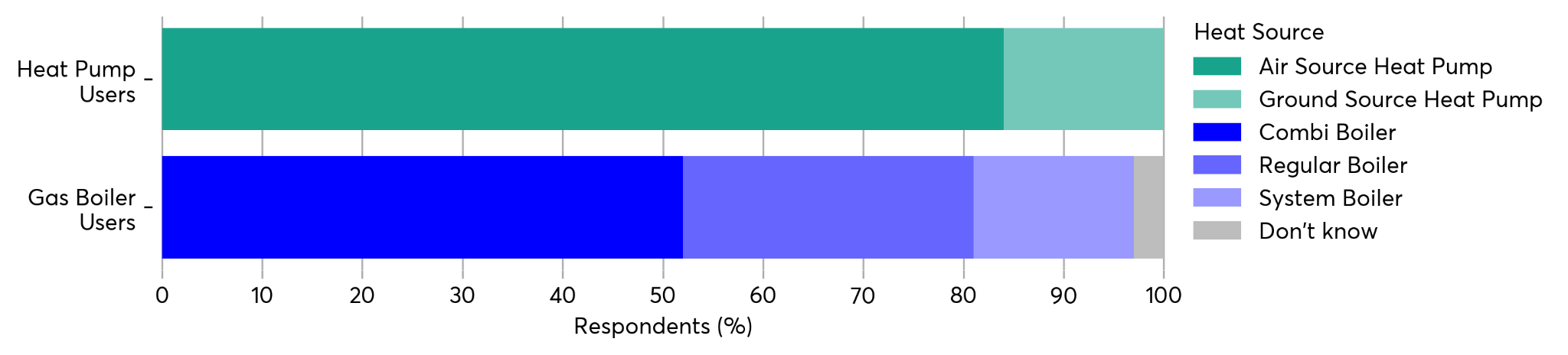
Figure 1: heat sources of heat pump survey and gas boiler survey respondents.
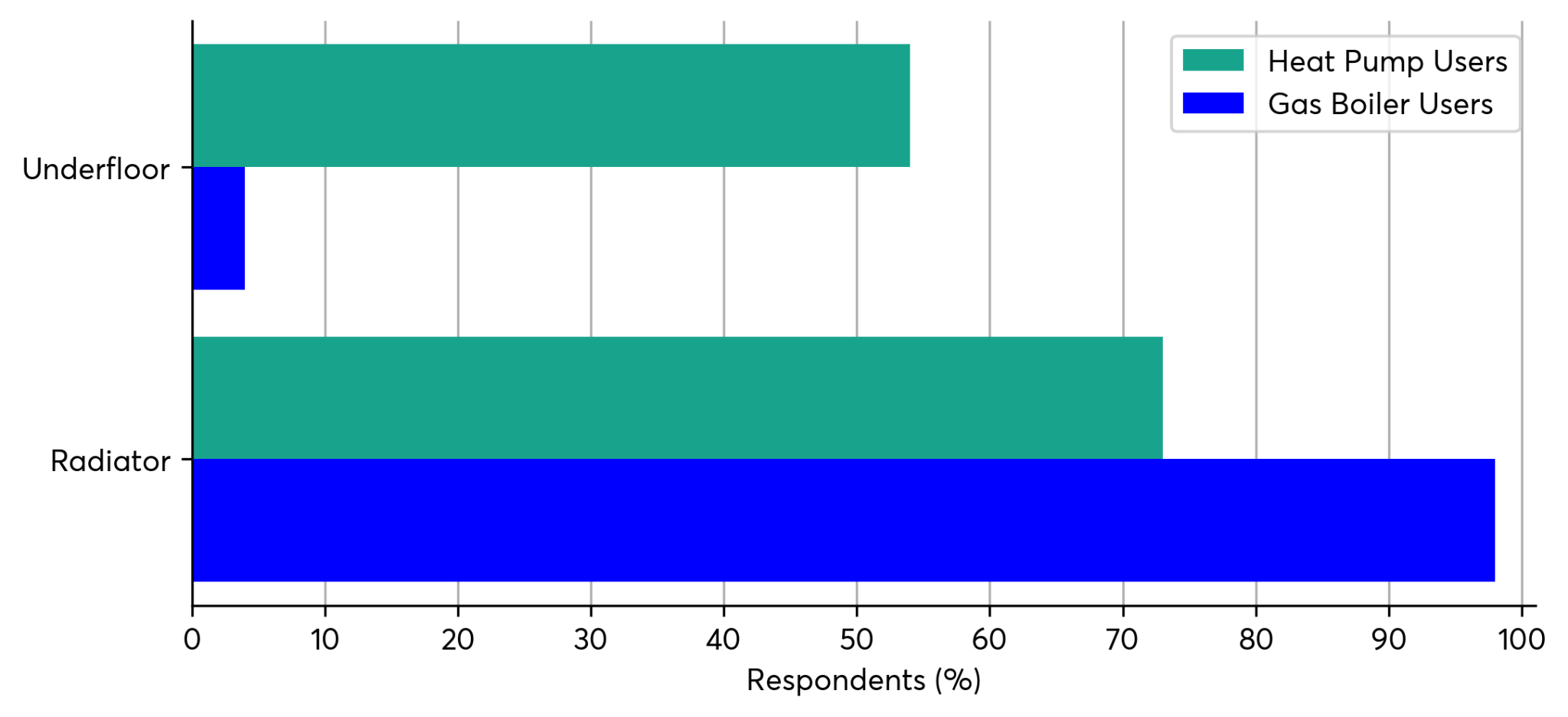
Figure 2: methods of heat distribution for heat pump and gas boiler users. Note that two heat pump respondents also reported skirting-based heating (Thermaskirt) and one reported ceiling heating.
Geographical density of responses
Heat pump users are more likely to be found in Scotland compared to England and Wales relative to gas boiler users (Figure 3).
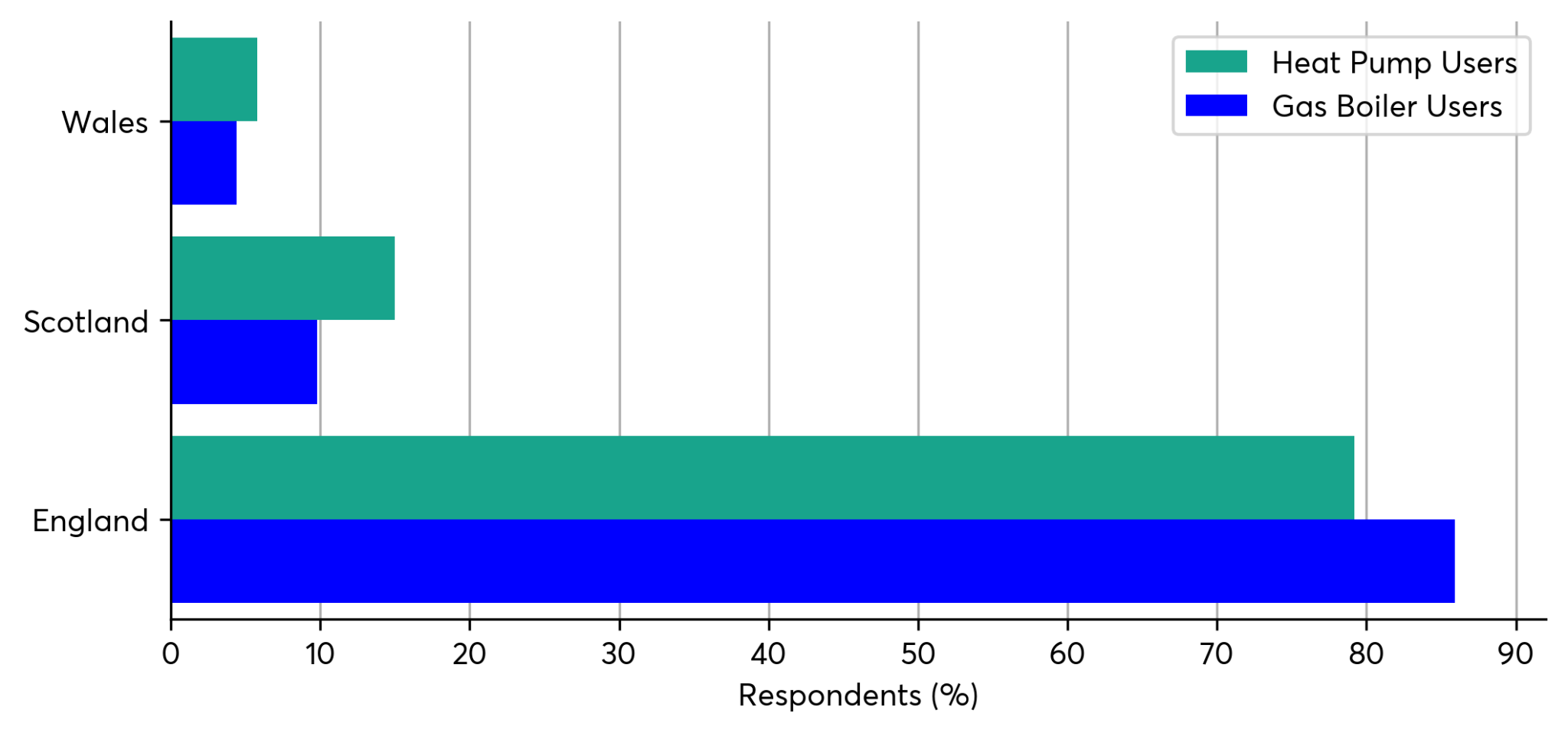
Figure 3: the country of heat pump and gas boiler users within Great Britain.
A heat map (Figure 4) shows the location of respondents around Great Britain with heat pump users less concentrated around urban centres compared to gas boiler users, as reflected in the urban-rural setting (see Table A1 and Figure 9 below). Heat pumps enable homeowners who are not connected to the gas network to heat their homes using electricity rather than storing fuel, which may drive heat pump adoption outside of urban settings.
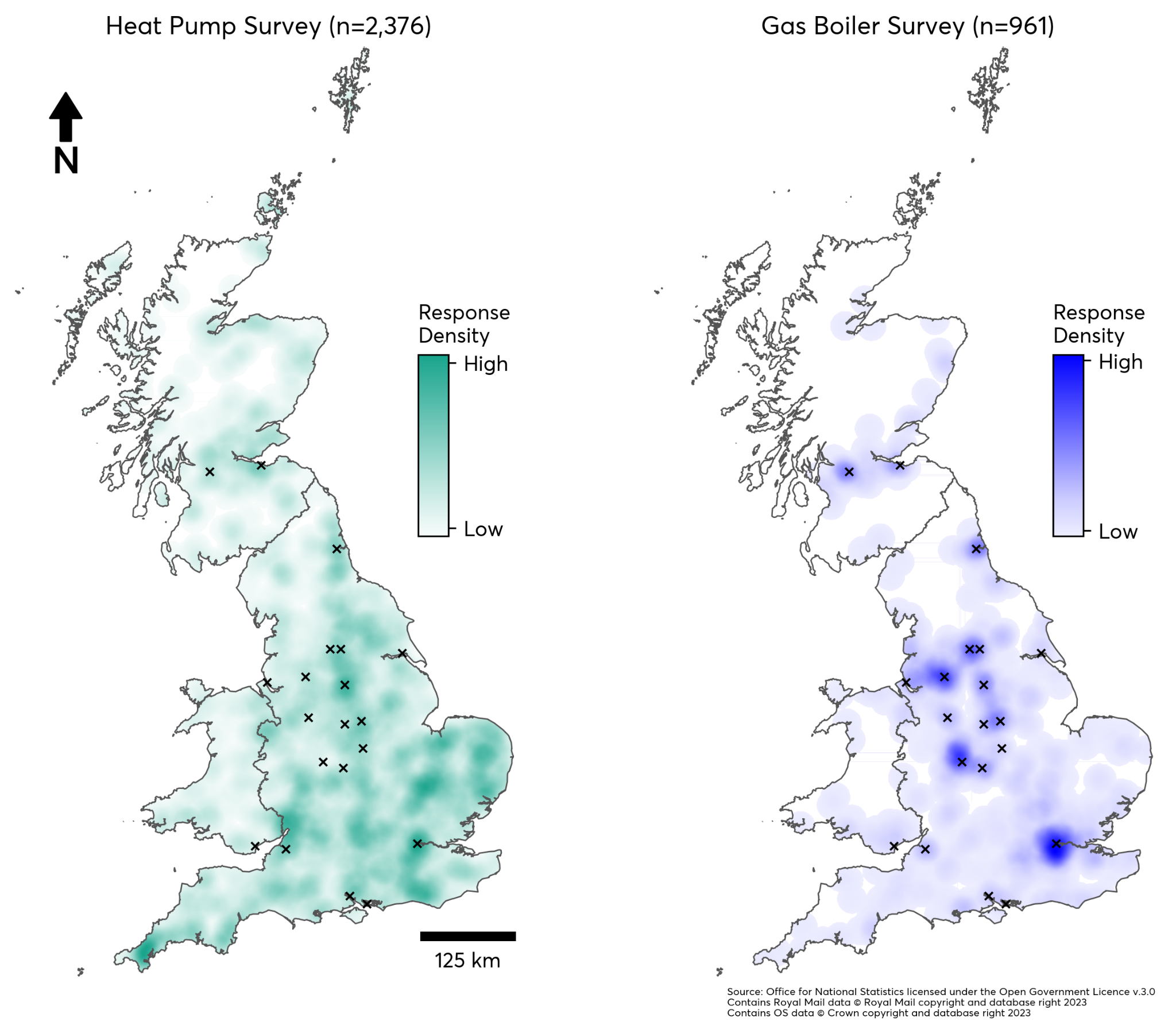
Figure 4: geographic density of responses to heat pump and gas boiler survey. Xs mark locations of the 20 most populous cities in Great Britain.
Property characteristics
Most respondents live in houses (78% for heat pump users and 82% for gas boiler users, Figure 5), bungalows are more frequent among heat pump owners and flats or maisonettes among gas boiler owners.
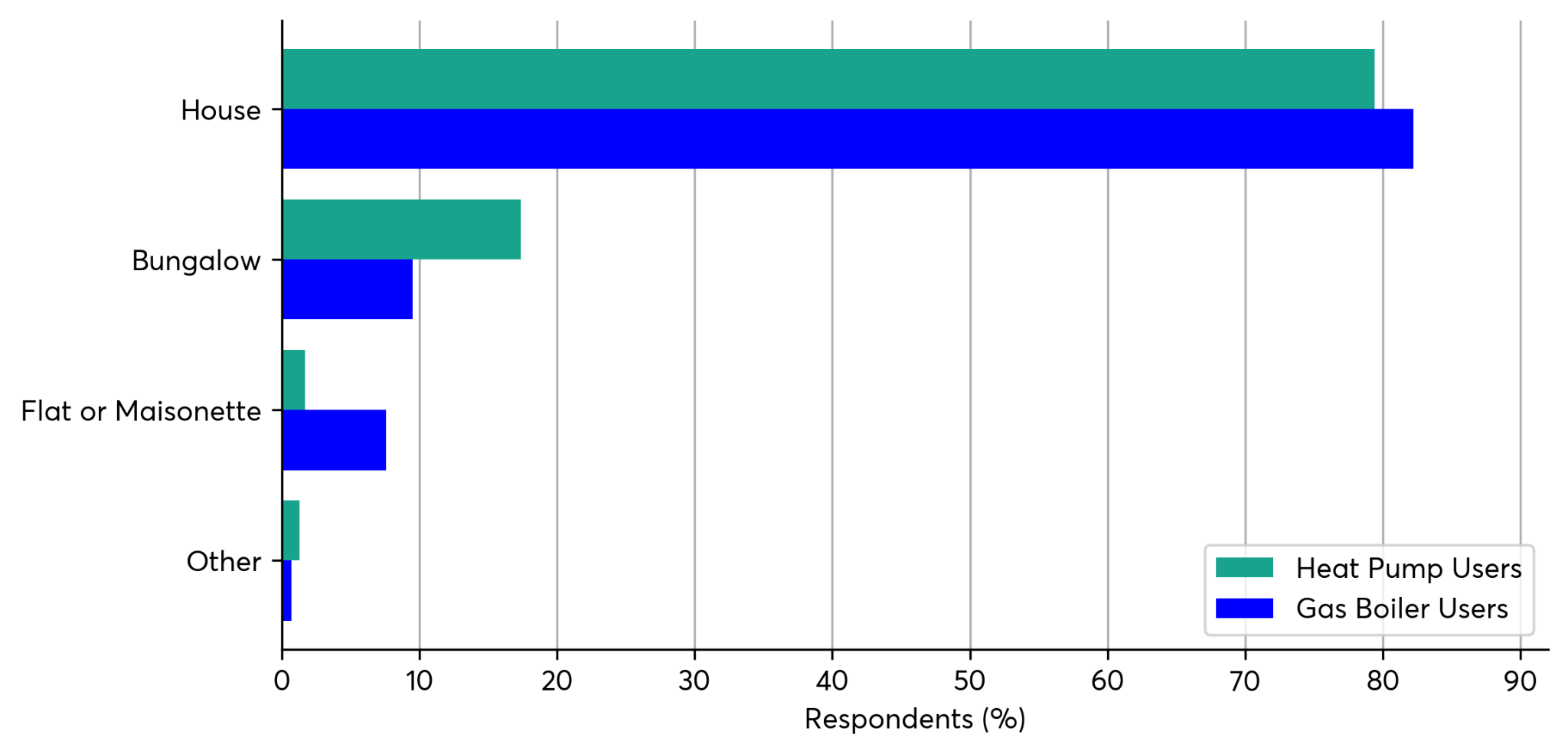
Figure 5: the property type of heat pump and gas boiler users. Note that 'other' includes conversions of industrial, religious and agricultural buildings, park homes and other less common types of home.
Over 34% of heat pump users live in properties built from 2012 onwards (6% of gas boiler users) and 16% of heat pump users live in properties built before 1900 (8% of gas boiler users). See Figure 6 for more information on the proportion of heat pump users in properties constructed at different times.
Heat pump users lived in properties with a median of four bedrooms compared to three bedrooms for gas boiler respondents (Figure 7). The larger average property size of heat pump users compared to gas boiler users likely indicates a difference in income or wealth between the two groups (see Table A1, Figure 10). However, it may also indicate that it is easier to install heat pumps in larger properties. This could be due to the increased space requirements of heat pumps (for example, outdoor garden space for the outdoor unit and indoor space for the hot water tank).
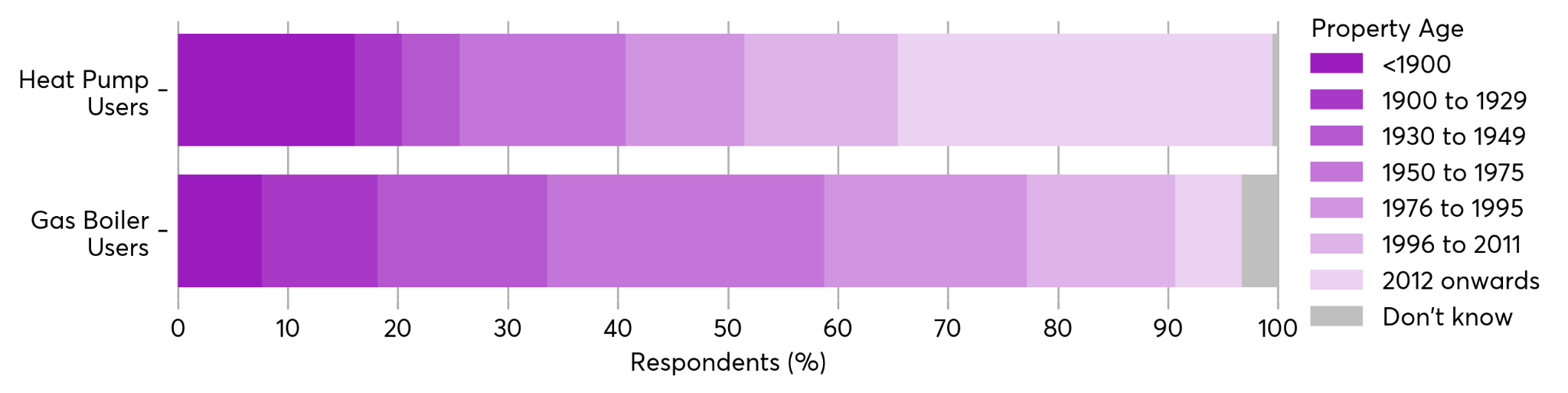
Figure 6: property age for heat pump and gas boiler survey respondents.
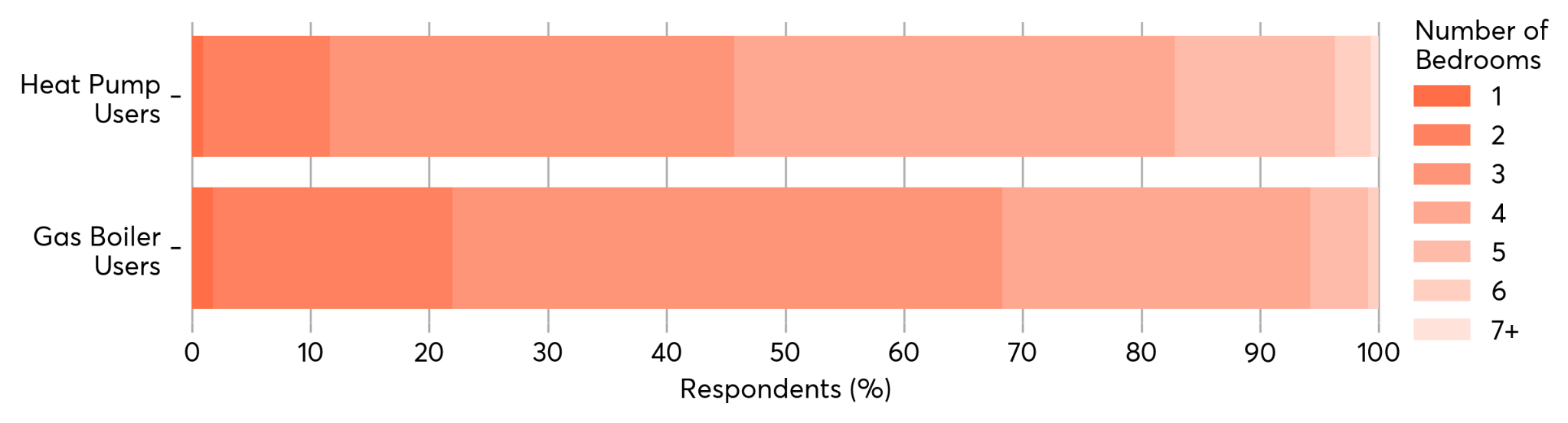
Figure 7: number of bedrooms for heat pump and gas boiler survey respondents.
Over two-thirds (69%) of heat pump users said they had a secondary heating source (Table A1), most commonly a wood stove (49%). Fewer gas boiler users used a secondary heating source (34%). Secondary heating sources can be used as a supplementary source of heat or to deliver heat to a particular area, but are also sometimes chosen for aesthetic or comfort reasons. The survey did not address why heat pump users had secondary heating sources or how these were used. The greater proportion of heat pump users with a wood stove may also be related to the wider geographic distribution of respondents (Figure 4) with more located in rural areas. Indoor domestic burning is more common in rural than urban settings, with around 13% of rural homes and 7% of urban homes burning indoors.
A greater proportion of heat pump users had other renewable or low carbon technologies installed in their homes (64%) than gas boiler users (13%). Forty-five percent of heat pump users had solar panels for electricity generation and 17% had electric vehicles, compared to 8% and 4% of gas boiler users respectively (Figure 8).
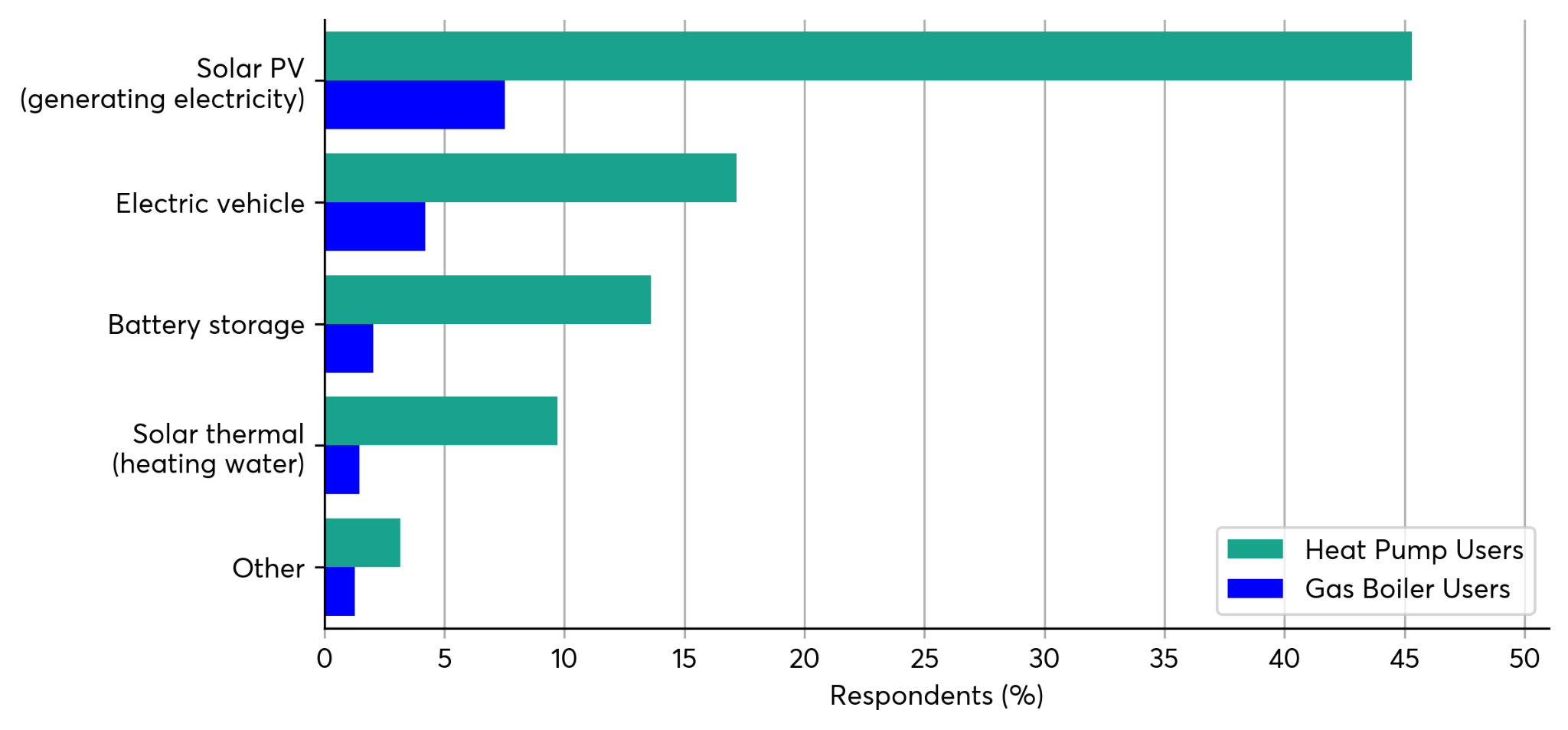
Figure 8: renewable or low carbon technologies owned by heat pump and gas boiler survey respondents.
Setting and neighbourhood
Using postcode data provided by heat pump and gas boiler owners (Table A1; Figure 9), 75% of heat pump owners live in rural areas, compared to 13% of gas boiler owners, based on national classifications of urban and rural settings.
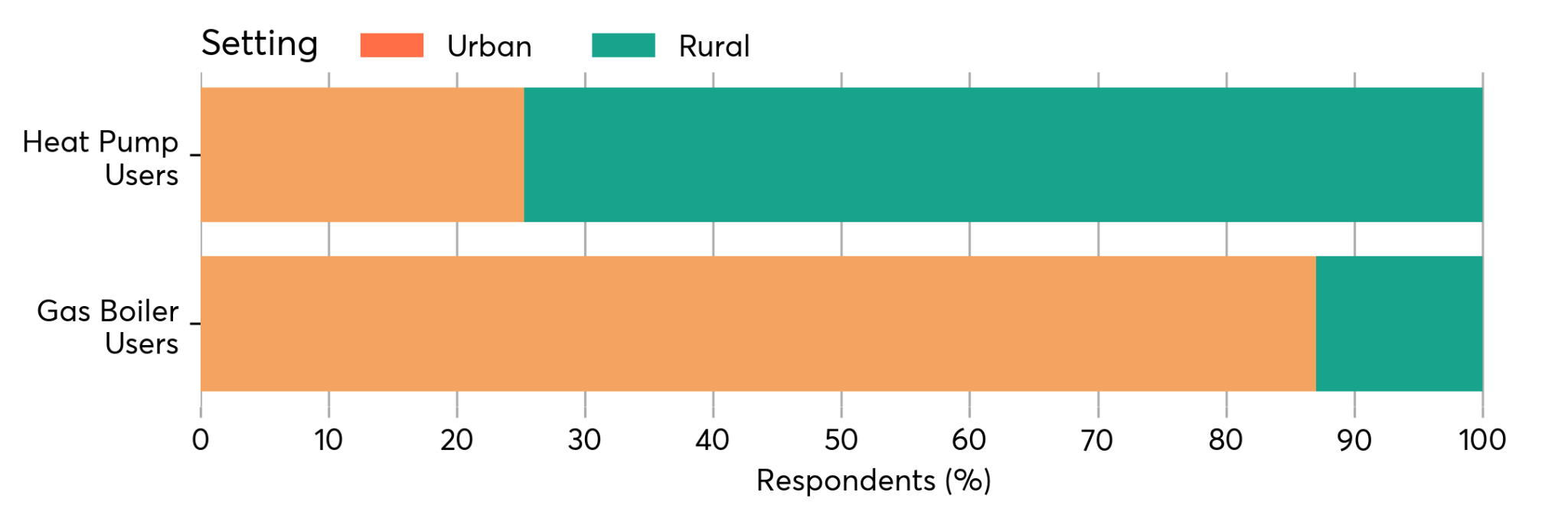
Figure 9: rural – urban setting for heat pump and gas boiler survey respondents.
Heat pump owners typically live in less deprived areas than gas boiler owners. Figure 10 shows the Index of Multiple Deprivation income domain combined for England and Wales; a similar pattern can be seen for Scotland. Note, though, that specific income data was not collected from respondents, so this insight only holds for the areas in which respondents live and not necessarily for the respondent households themselves.
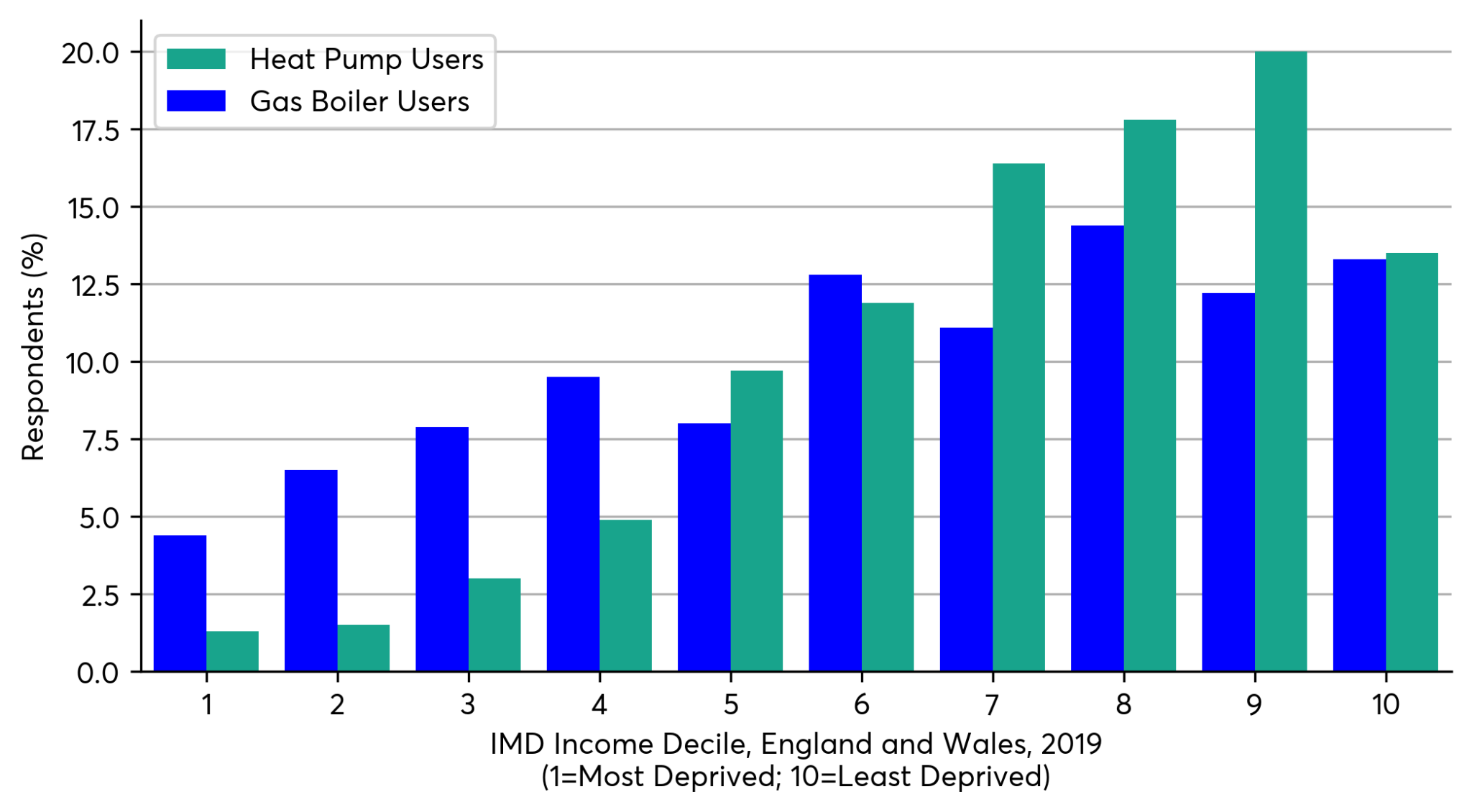
Figure 10: Index of Multiple Deprivation, England and Wales, 2019, Income Domain for heat pump and gas boiler survey respondents. Deciles by 2011 Lower-layer Super Output Areas (LSOAs), where first decile indicates highest level of income deprivation and tenth decile the lowest level of income deprivation.
What does this tell us about the two survey groups?
At present, the small population of owner occupiers in Great Britain who use heat pumps to heat their homes is distinct. Properties with heat pumps tend to be larger, in less deprived areas, in more rural settings, with greater use of renewable and low carbon technologies than properties heated by gas boilers.
Direct comparisons between heat pump users and gas boiler users are very difficult as a result. However, we feel it is valid to see gas boiler users as a reference point to put the experiences of heat pump users in a wider context. We do this where appropriate in the following sections on satisfaction, installing a heat pump into your own home, and moving into a home with a heat pump.
Reaching net zero in the UK requires widespread electrification of home heating, with heat pumps playing a substantial role. Over time, the profile of heat pump users should look more and more like the profile of gas boiler users. In the meantime, this comparison is an indication of the scale of the transition required.
Satisfaction with heat pumps
Overall satisfaction
Heat pump users were asked how satisfied they were with their heating system for the following key attributes:
- space heating
- space cooling
- hot water heating
- running costs
- safety
- reliability
- ease of use and control
- energy efficiency
- noise
- maintenance costs.
Heat pump users reported high levels of satisfaction overall, with over 70% of respondents either 'very satisfied' or 'fairly satisfied' with 8 of the 10 attributes. This is illustrated in Figure 11.
In particular, respondents were satisfied with safety (92%), reliability (85%) and hot water heating (89%). The majority of users felt that heat pumps were unobtrusive, with 85% being satisfied with noise levels. Only 56% of heat pump users (excluding the 'not applicable' category) were satisfied with the space cooling attributes. However, this lower satisfaction level most likely reflects the absence or lack of use of space cooling attributes in the majority of users' heat pumps (26% responded ‘don't know').
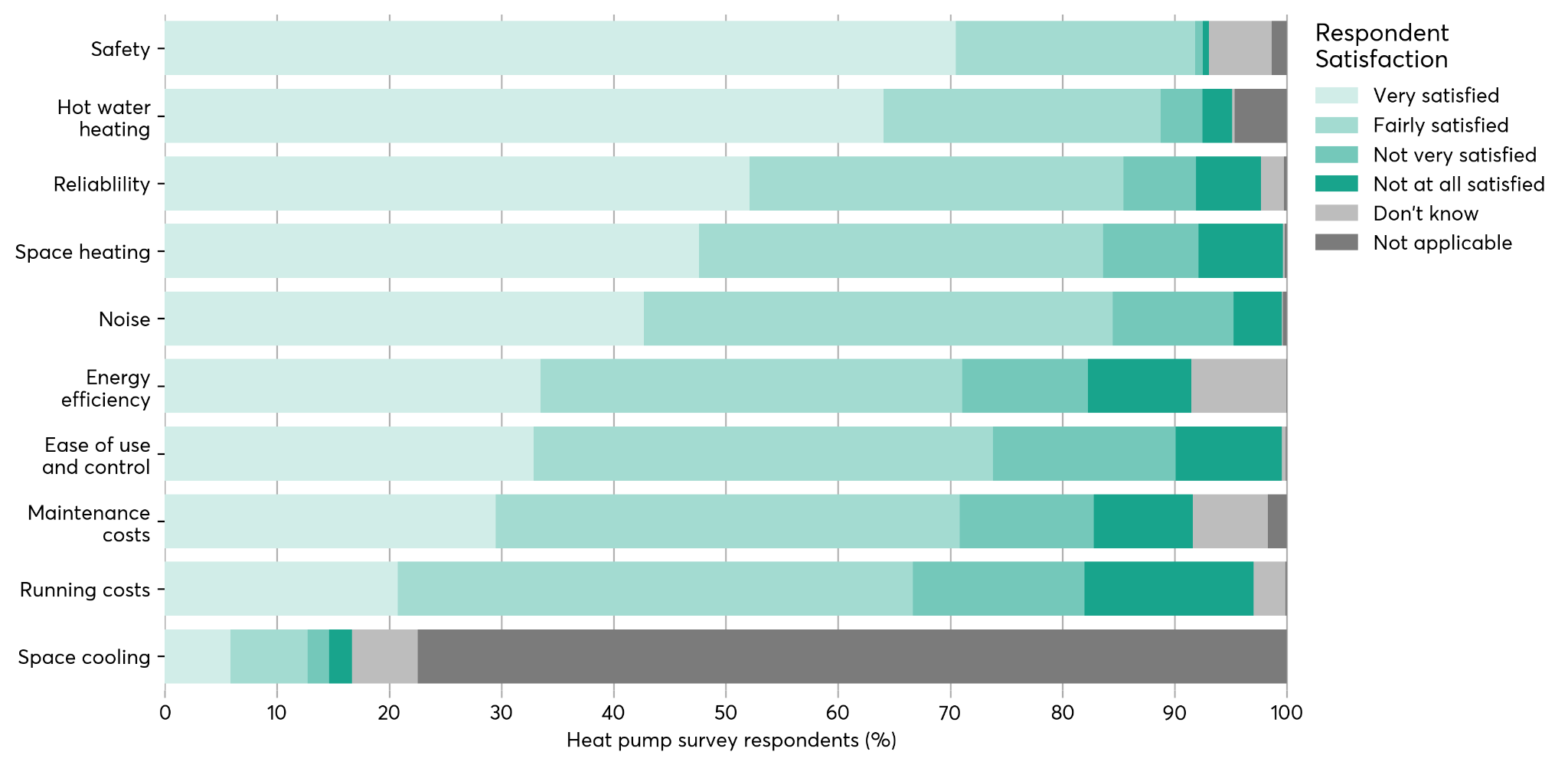
Figure 11: satisfaction with different attributes of a heat pump.
“They [heat pumps] are highly effective at providing both space heating and hot water."
Heat pump user, Scotland, 2022
"I have been, and am, very satisfied with the heat pump. It has proved very reliable and effective. Basically, it just works."
Heat pump user, England, 2022
Overall, satisfaction levels across heat pump and gas boiler users were very similar. Figure 12 shows responses for gas boiler users (n=1,025).
More heat pump users reported they were satisfied with running costs (67%) in comparison to gas boiler users (59%). Higher levels of satisfaction with running costs are likely to reflect the high efficiency of heat pumps and the high cost of gas during the 2022-2023 cost of living crisis. It may also reflect that heat pump users are on average likely to be more affluent, meaning that costs are less of a concern.
“It has become too expensive to heat my house."
- Gas boiler user, Scotland, 2022
Gas boiler users reported higher levels of satisfaction with ease of use and controls. This is most likely because gas boiler users are more familiar with the controls of these systems and may feel more ‘in control' of their system because they are able to turn it on or off, and use an app to control their heating pattern. With a heat pump, users may feel less 'in control' as the system is set up to decide when it needs to top up the heat, among other things. In many ways, heat pump controls are more advanced than typical gas boiler controls, as features such as weather compensation (which automatically modifies the temperature the heat pump runs at to improve efficiency) are standard. However, this may not be obvious to users.
This suggests there is potential to improve the user experience by ensuring that controls are well designed and intuitive.
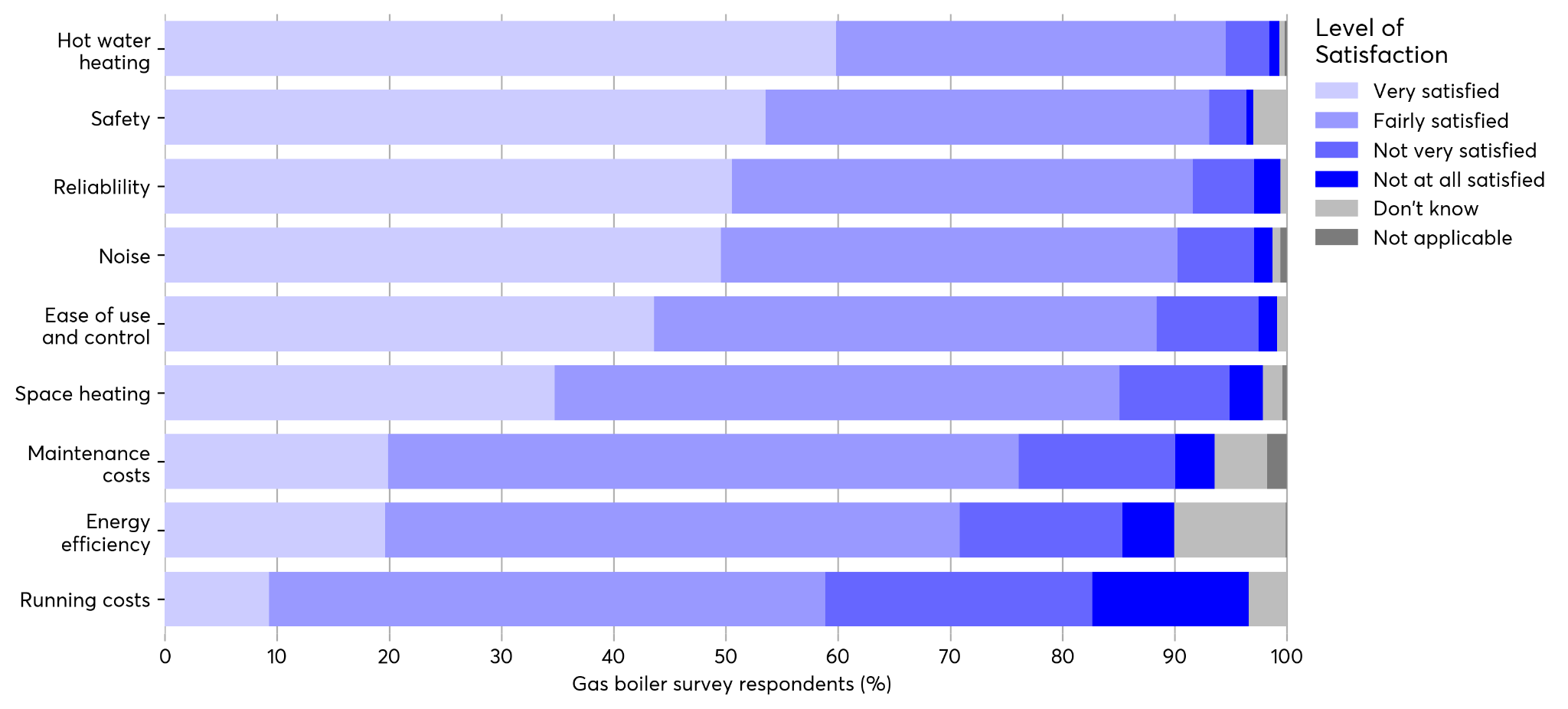
Figure 12: satisfaction with different attributes of a gas boiler.
Satisfaction compared to prior system
Nearly three-quarters (73%) of heat pump users had the same or higher levels of satisfaction with their heat pump compared to their previous heating system. This is shown in Figure 13.
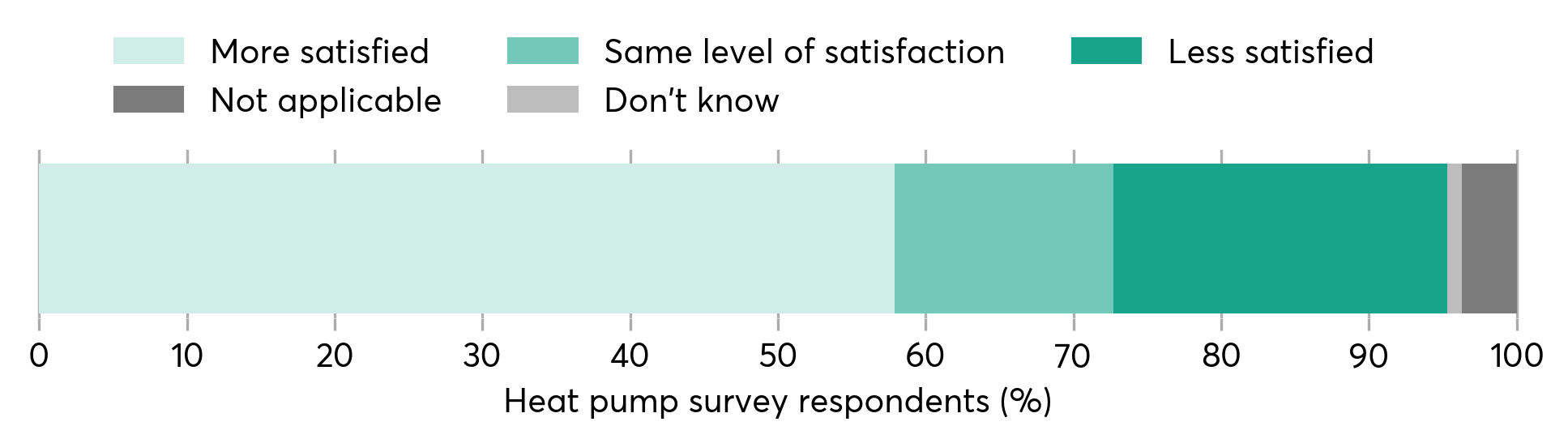
Figure 13: compared to your previous heating system, how satisfied are you with your heat pump overall?
Heat pump users were significantly more likely to have the same or higher levels of satisfaction compared to their previous heating system (Figure 14) in certain situations.
- If they had a ground source heat pump. This may be because ground source heat pumps are even more efficient than air source heat pumps.
- If they had a heat pump installed into their existing property, as opposed to moving into a home with a heat pump, buying a new build with a heat pump or installing a heat pump as part of a self-build. This may reflect the role of agency - purposefully choosing a heat pump – in satisfaction.
- If they had a heat pump installed in a property in Scotland. Heat pumps are more common in Scotland (potentially due to the need for more off gas grid options). This higher satisfaction may indicate more experienced installers or access to more accessible / better information on off gas grid technologies.
The subset of respondents (n=1,376 of complete cases) who installed a heat pump into their existing property had higher satisfaction under a couple of conditions.
- If they planned their heat pump purchase, rather than making it out of necessity. This higher satisfaction may reflect that the users had more time to access information, make informed decisions on the installed system and engage with the heat pump.
- If they moved from a prior heating system that was not a gas boiler. Satisfaction is higher among people who previously used oil boilers, LPG boilers and electric heating compared to those using gas boilers.
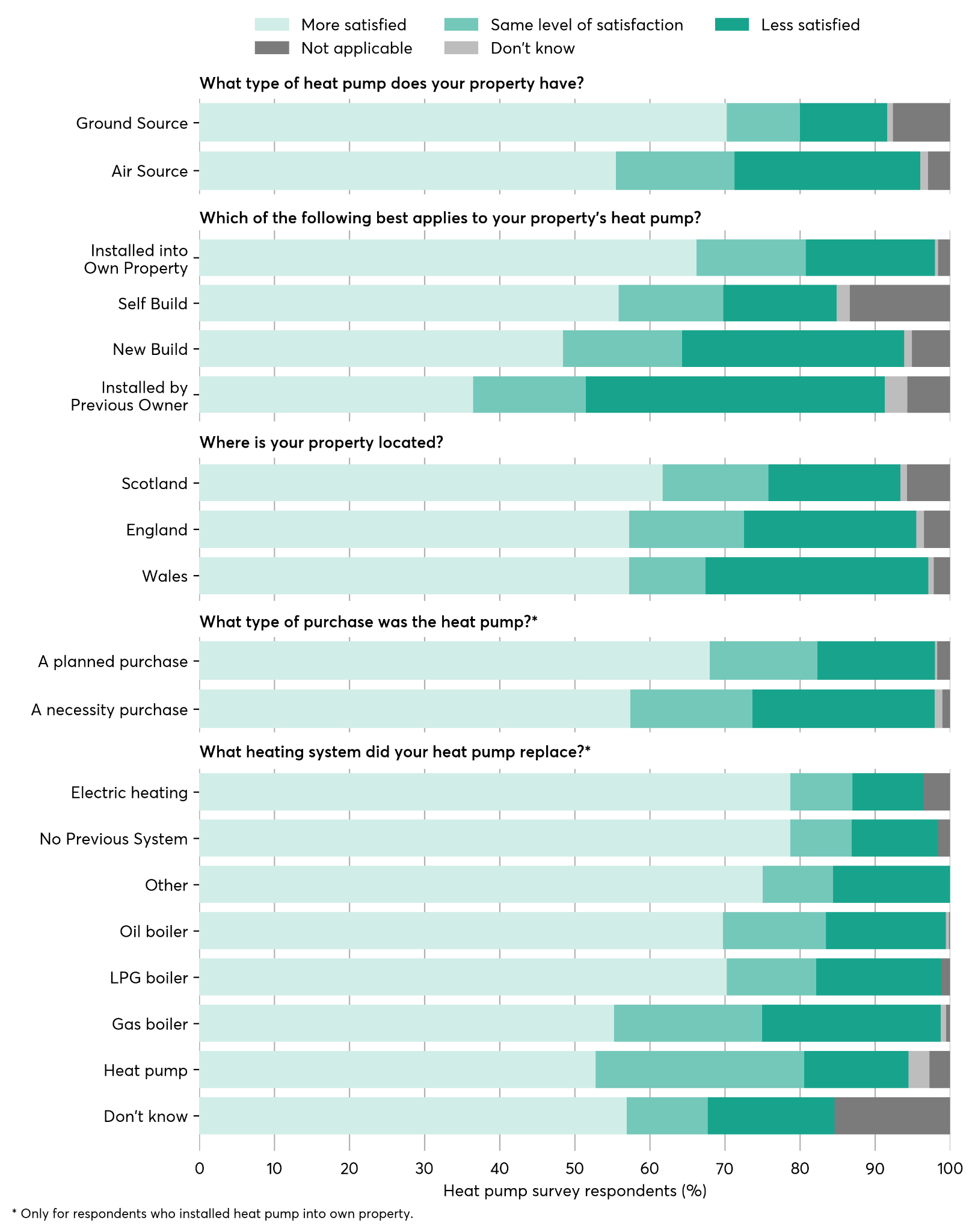
Figure 14: satisfaction compared to previous system, bivariate analyses.
Looking at the same group of people who installed a heat pump since they moved into their home, we found no evidence that satisfaction differed by property age (Figure 15). This implies that heat pumps can be effective heat sources in a wide range of properties, from Victorian to modern housing.
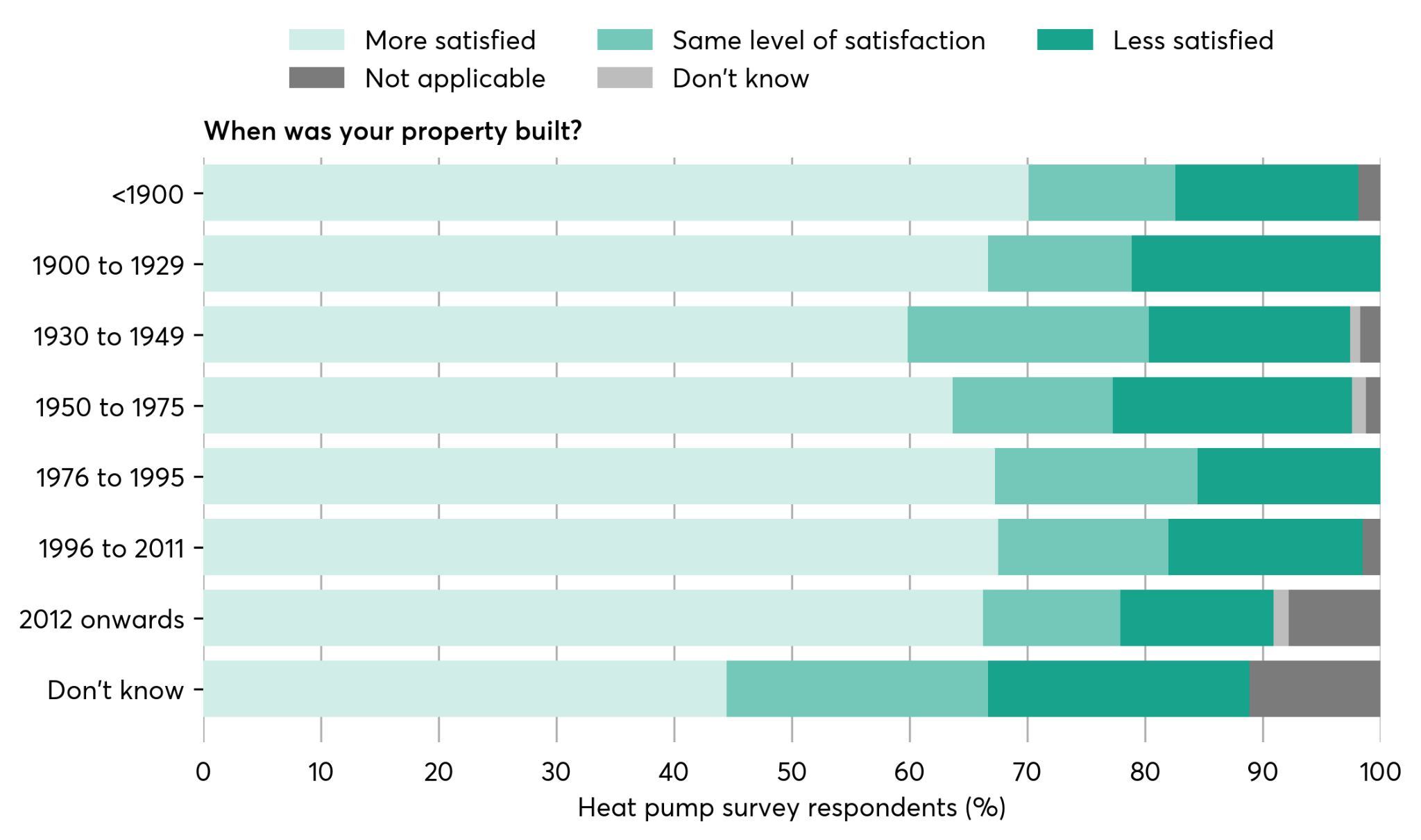
Figure 15: satisfaction compared to previous system, comparison with age of property.
Likelihood to recommend
Heat pump users were very likely to recommend the technology. The median rating of heat pump users asked about their likelihood to recommend a heat pump was 8 out of 10, with a net promoter score of 18. These scores were similar to those of gas boiler users, with a median likelihood to recommend of 8 and a net promoter score of 21. The scores are shown in Figure 16.
Among heat pump users, 31% gave the maximum score of 10 out of 10, while 64% gave at least an eight. However, 17% gave a score less than a five. This suggests that for heat pump users, experiences are more variable than for gas boiler users. As a group, almost two in six heat pump owners are likely to very strongly recommend heat pumps, while around one in six is much less likely to recommend a heat pump. Gas boiler users are likely to be more positive as a group, but with fewer users very strongly positive. This greater variation is also reflected in owners' overall satisfaction with heat pumps and in satisfaction with specific attributes (shown previously). This variation may reflect the overall novelty of heat pumps compared to gas boilers, differences in installation and use, and the maturity of gas boilers as a home heating technology.
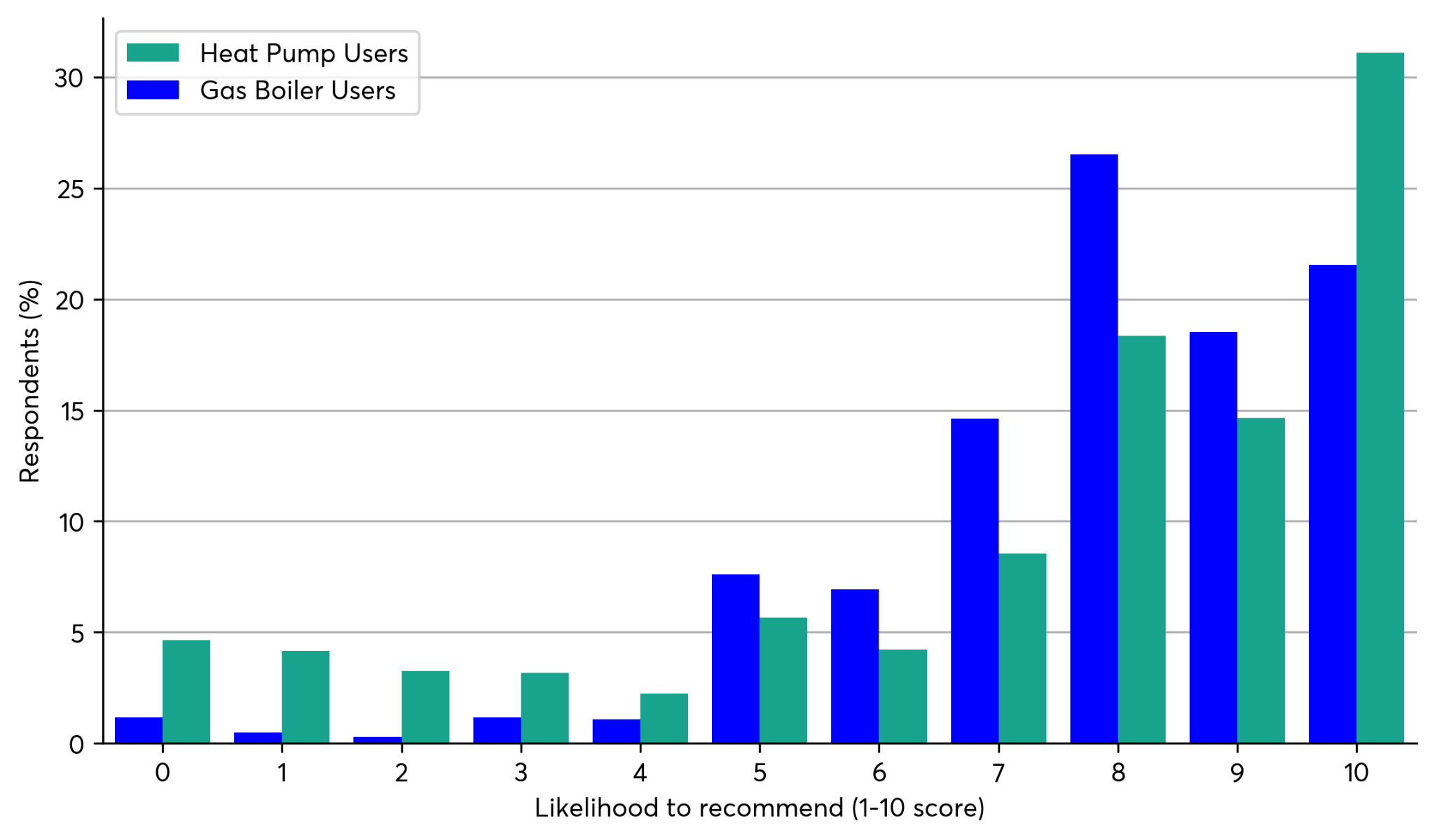
Figure 16: overall, on a scale of 1-10, how likely are you to recommend a heat pump? 1 being very unlikely and 10 being very likely.
Heat pumps in use
Over three-quarters (78%) of heat pump users were confident in using and controlling their heat pump (either 'very confident' or 'fairly confident') whereas 93% of gas boiler users were confident in using and controlling their gas boiler (very or fairly confident). This is shown in Figure 17.
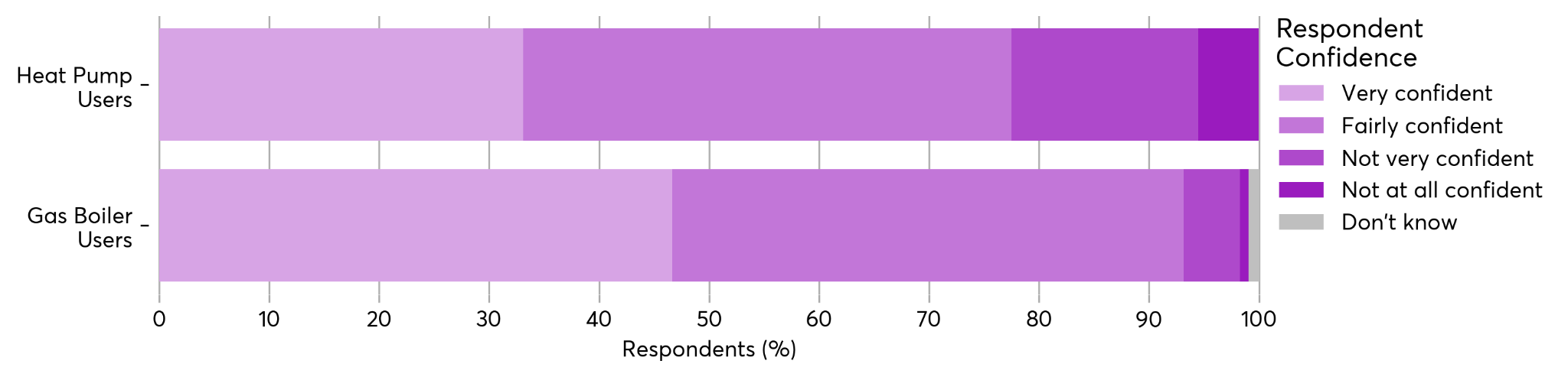
Figure 17: how confident do you feel in using and controlling your [heat pump/gas boiler]?
The higher confidence of gas boiler users compared to heat pump users is to be expected. It is positive that three-quarters of users are confident in controlling their heat pumps, but there is clear potential to improve the user experience by ensuring easy access to guidance and standardising and simplifying controls.
“I really like the heat pump but the user instructions are far more
complicated than, say, operating the thermostat on a gas boiler, but overall I am pretty happy with it and think it is far safer and cleaner than gas."
Heat pump user, England, 2022
The most commonly reported means of heat pump optimisation and control (Figure 18) was an internal thermostat (80% of users). Only 35% of users identified weather compensation as being a means of optimising and controlling their heat pump. However, the remaining 65% may not know that their heat pump has weather compensation built in, and if this was turned on or not at the point of installation. Relatively few users took advantage of smart meters (25% of users) and time of use (TOU) tariff (6% of users) to optimise their heat pumps.
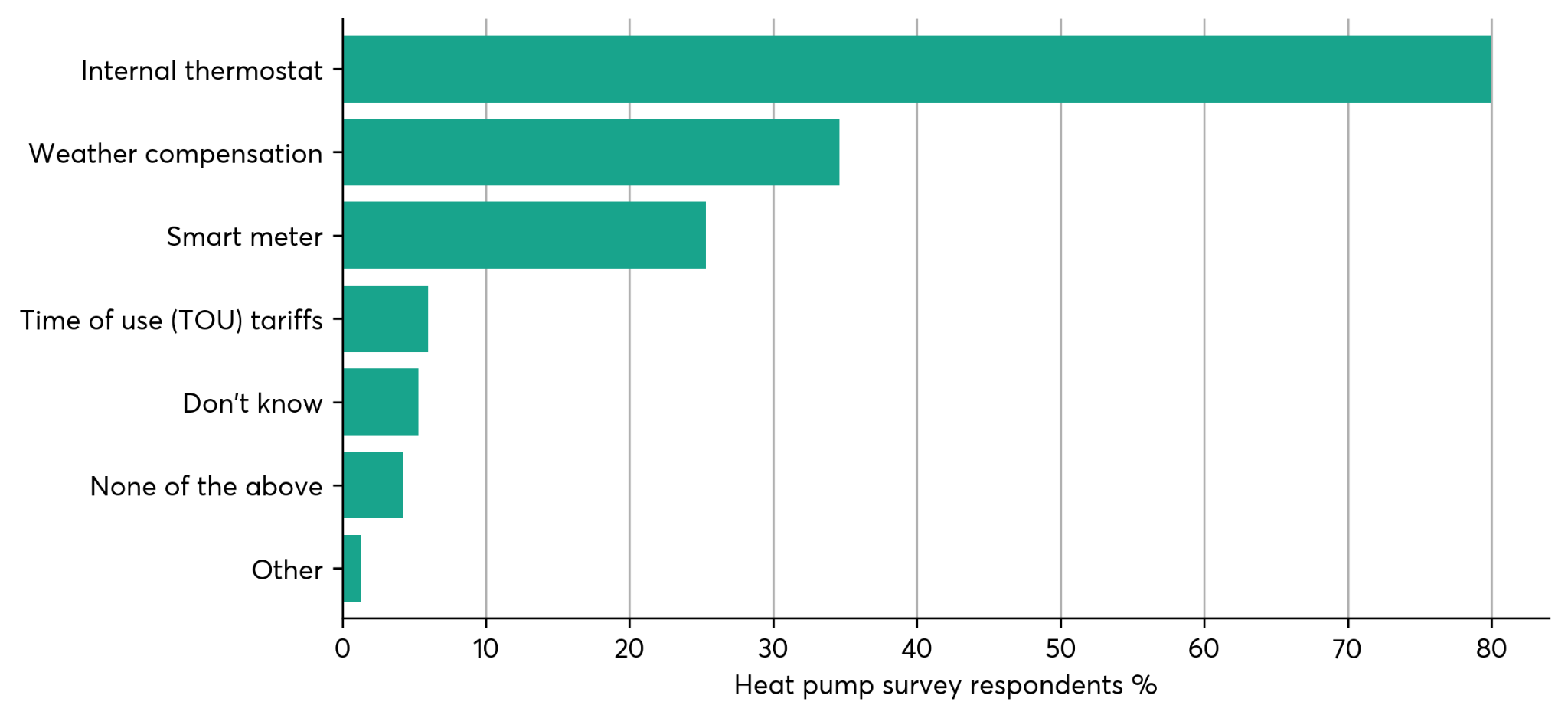
Figure 18: is your heat pump optimised / controlled through any of the following means? Please select all that apply.
Respondents who installed a heat pump in their own home
This next section explores the motivations, enabling environment and experience of installation for the 1,412 respondents (59% of total respondents) who installed a heat pump into their home, either replacing an existing heating system, or putting in a heating system for the first time. Comparisons are drawn to respondents in the gas boiler survey who have installed a new gas boiler into their home (n=664; 65% of total respondents).
Motivations
Eighty-five percent of heat pump purchases were planned and 13% were ‘distress' purchases (made out of necessity due to the failure of a previous system). In contrast, 51% of gas boiler purchases were planned and 48% were made out of necessity (1% didn't know). The higher proportion of planned heat pump purchases compared to gas boilers is in line with previous research undertaken by Nesta. The research determined that, due to the time taken to design, receive the necessary components and install a heat pump, transitioning to a heat pump is currently all but impossible at times of distress.
Heat pumps replaced a range of heating systems, most commonly oil boilers (39%) followed by gas boilers (29%), with 3% a replacement for a previous heat pump, and 4% reporting that they had no previous heating system. The majority (91%) of gas boiler installations were replacements for previous gas boilers.
The most popular motivation to install a heat pump was to be more environmentally friendly (84%). Other popular responses were taking advantage of a government subsidy (61%), saving money (54%), improving thermal comfort (29%), and improving health (12%). Not having access to the gas network or dissatisfaction with storing fuel was a motivation for 48 respondents, who indicated this using the open text response option. Motivations for heat pump installation are shown in Figure 19.
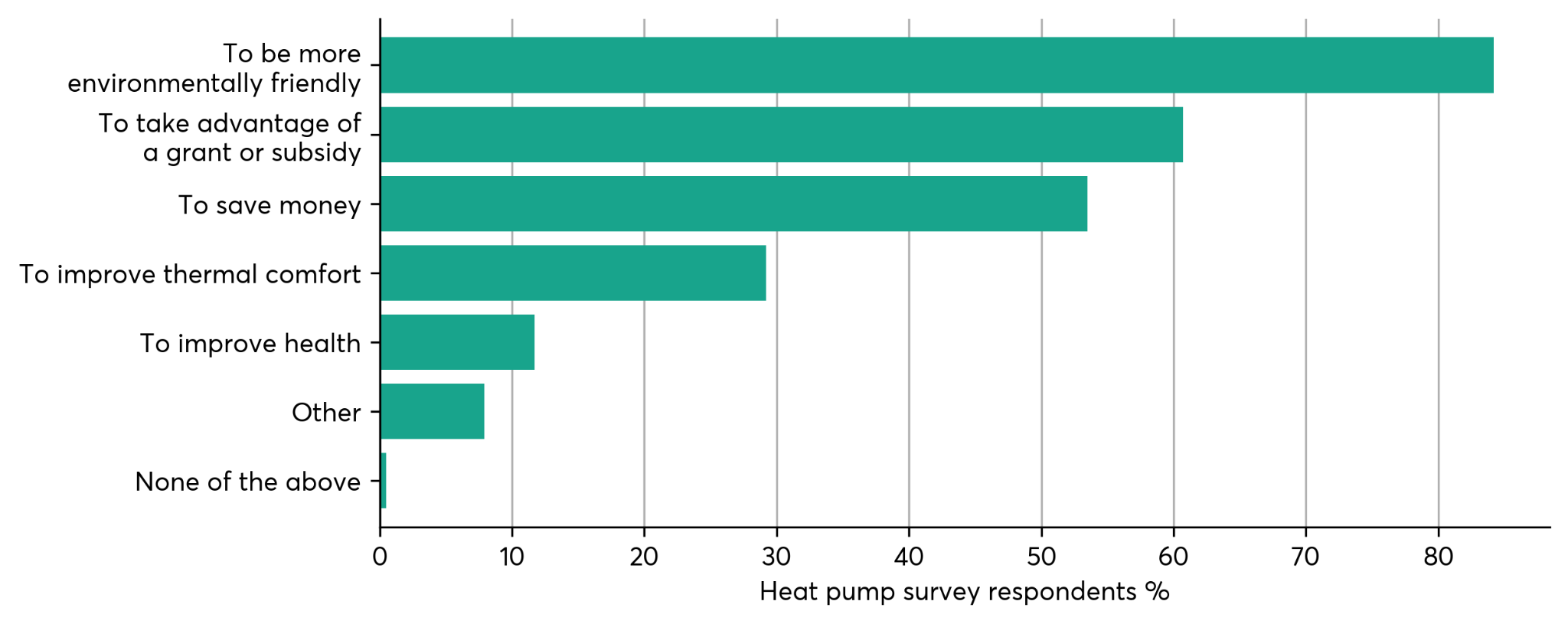
Figure 19: motivations for heat pump installation.
"The experience [of owning a heat pump] has been very positive, all the more so as we are benefiting from the RHI scheme, though our prime motive was environmental."
- Heat pump user, England, 2022.
In contrast, the most common motivations for installing a gas boiler were that they were the most straightforward option (37%) and were a tried and tested technology (37%). These differences may reflect the higher number of planned heat pump purchases where consumers made thoughtful and considered decisions taking into account long-run costs, environmental factors and available incentives. Meanwhile, when making distress purchases, consumers are more likely to focus on ensuring that their immediate needs are met and look for easy to implement and straightforward options. Given that around half of gas boiler installations are distress purchases, encouraging greater planning in the replacement of gas boilers reaching the end of life, or providing resources so that heat pumps are viable quick replacement options for gas boilers, could encourage higher levels of heat pump uptake.
Enabling environment
Heat pump users used a range of information sources when deciding whether to install their heat pump (Figure 20).
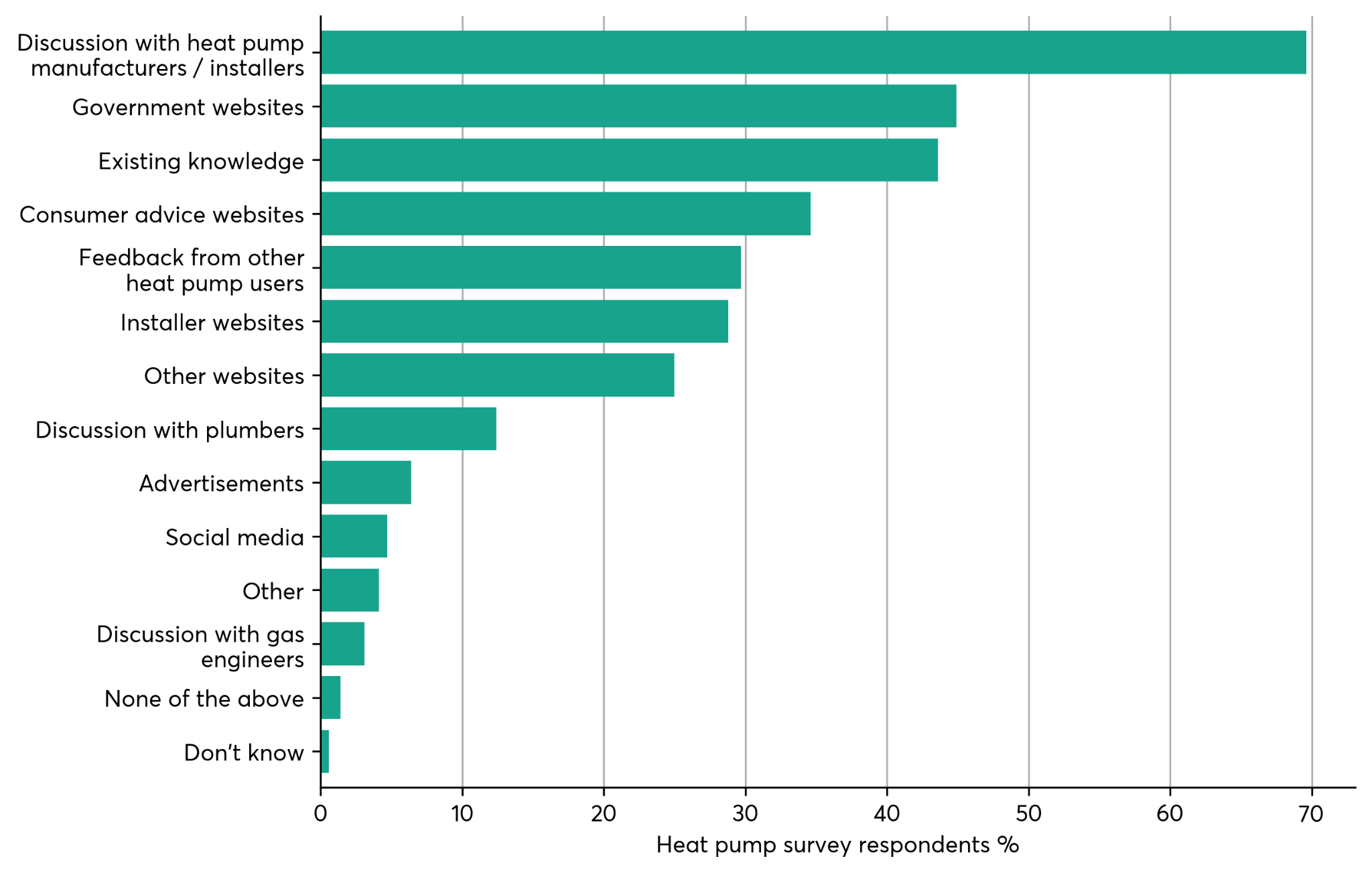
Figure 20: did you use any information sources when deciding to install a heat pump? Please select all that apply.
Almost all heat pump users used at least one source of information covered in the survey (see Figure 16), with 1% saying they did not use any of the information sources and less than 1% saying they did not know if they used any information sources. Over two-thirds (70%) of respondents discussed their installation with heat pump manufacturers or installers, with the two next most common information sources being government websites (45%) and existing knowledge (44%).
In contrast, 14% of gas boiler users did not use any of the information sources covered in the survey, with 4% saying they didn't know if they used any information sources. Just over a third (35%) discussed their installation with a gas engineer and 30% relied on existing knowledge. A substantially lower proportion (20%) of gas boiler users discussed their installation with manufacturers and installers or looked at government websites (7%). This suggests that heat pump users are more engaged in their heating installation decision than gas boiler users, who may be more familiar with the decisions required.
Nearly three-quarters (73%) of heat pump users said it was easy (either ‘very easy' or 'fairly easy') to find information to support the installation of their system. This is in comparison to 85% of gas boiler users.
"Consumers should have better access to knowledge [when making the decision to install a heat pump]. Consumers are too dependent on suppliers providing honest advice."
Heat pump user, England, 2022
The differences in the types of information sources used and ease of access to information between heat pump and gas boiler users could be explained by the increased complexity of installing a heat pump, people's lack of familiarity with the technology, the need for additional information and advice and, in the case of government websites, the availability of subsidy schemes. Within the UK, heat pumps are less common in residential properties and, therefore, many people will lack detailed knowledge of them and their installation. Furthermore, previous research has also found that online information relating to heat pump installation is frequently confusing.
Installation
Just over half of heat pump installations involved replacing the entire heating system (53%) while around two-fifths (42%) of installations involved minimal changes only.
Where new equipment was installed during the heat pump installation (Figure 21), new controls were most common (72%), followed by new radiators (68%), new pipework (55%) and buffer tanks (50%). For gas boiler installations, new controls were installed 36% of the time, new radiators 27% of the time and new pipework 32% of the time. Five percent of heat pump installations involved no additional equipment, compared to 35% of gas boiler installations.
The extent to which this equipment was 'required' for the new heating system to operate is unclear and it is possible that the installation of new equipment reflects that the installation was part of a major retrofit involving wholesale replacement of an existing system. Another possible reason why a higher proportion of heat pump than gas boiler installations required additional equipment could be that 91% of gas boiler installations were direct replacements for other gas boilers. In contrast, just 3% of heat pump installations were a direct replacement for heat pumps and more commonly replaced oil and gas boilers (see Motivations section above). Switching from systems with typically higher flow temperatures, such as oil or gas boilers, to heat pump systems with a lower flow temperature can sometimes require upgrades in pipework and radiators in order to achieve a higher flow rate and provide enough surface area to efficiently transfer heat to the air. Nevertheless, the survey results also show that it is not uncommon for distribution systems to be upgraded when replacing like for like (such as gas boilers with gas boilers). This may be due to the incompatibility of the ancillary equipment with the new system or the need for improved efficiency.
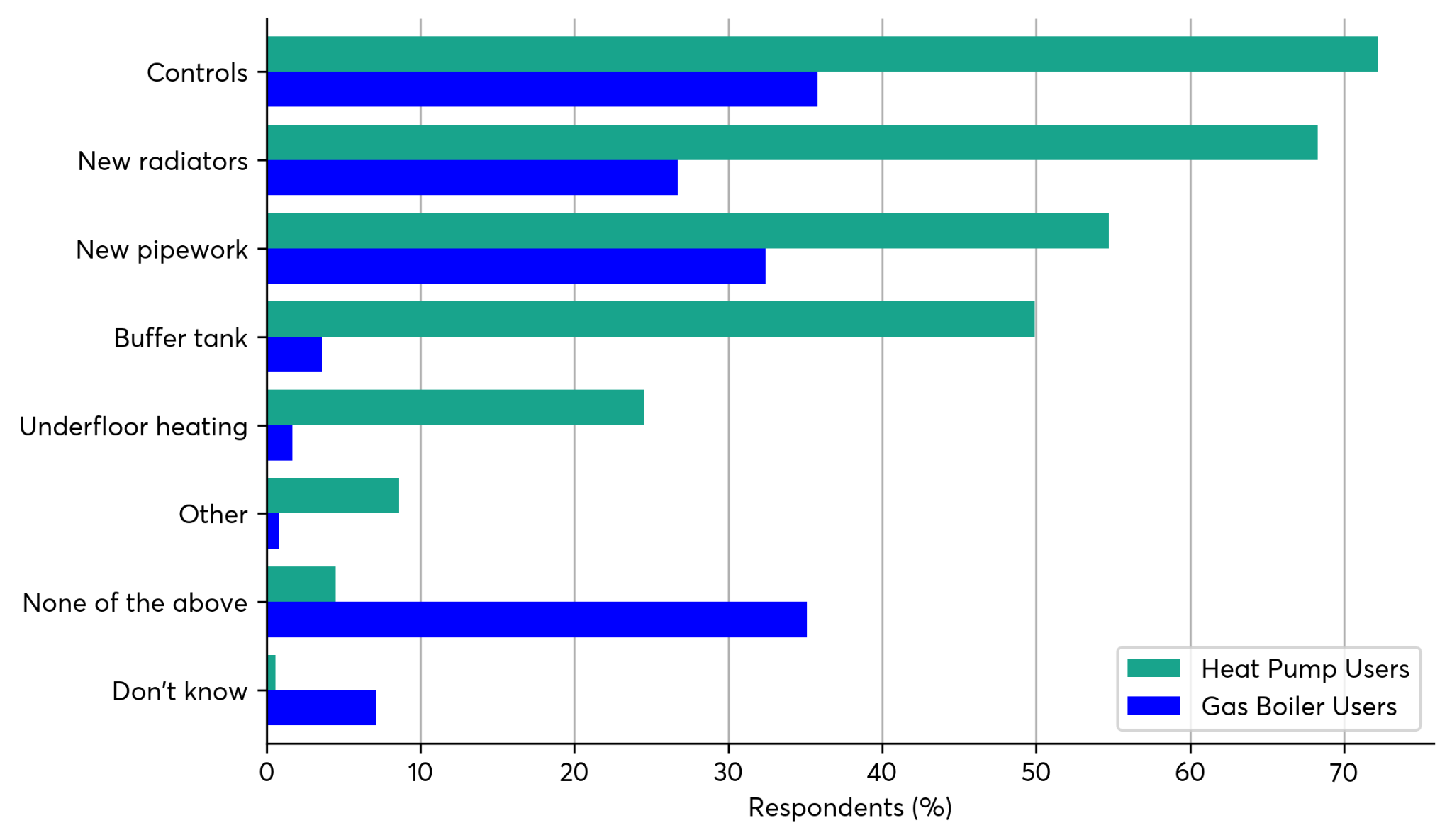
Figure 21: what supporting equipment did you need to install? Please select all that apply.
Over half (55%) of heat pump users had energy efficiency upgrades carried out at the same time as having their heat pump installed. The most common upgrade was loft insulation (36%) followed by wall insulation (23%) and double or triple glazing (23%). Fourteen percent of heat pump users upgraded all three of these common measures while 3% of users upgraded six measures.
Around a third of gas boiler users (33%) reported having energy efficiency upgrades installed when they installed their current boiler, with 17% installing loft insulation, 8% wall insulation and 15% double or triple glazing. This is shown in Figure 22.
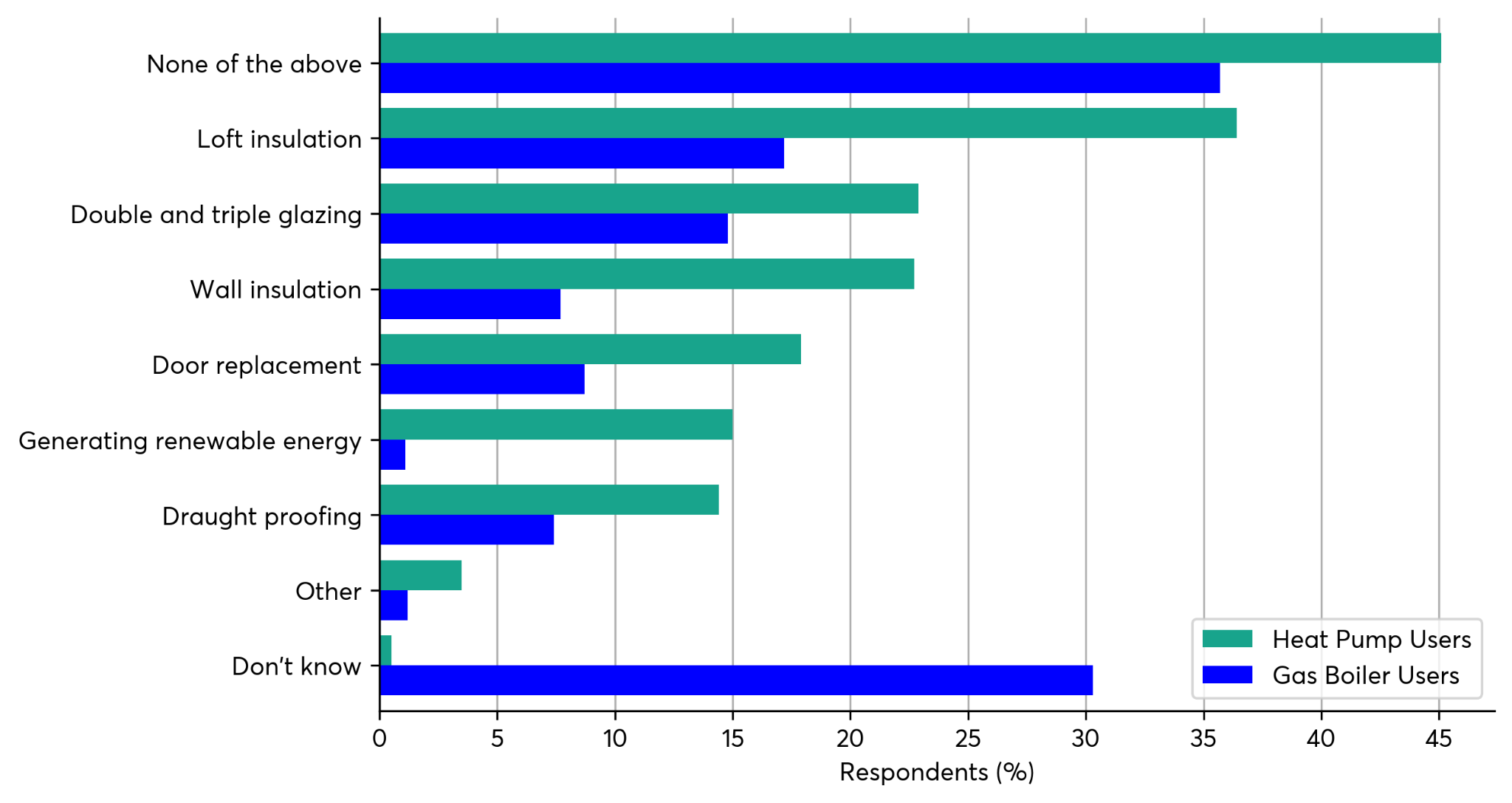
Figure 22: as part of the [heat pump/gas boiler] installation, were any other energy efficiency upgrades carried out at the same time? Please select all that apply.
There are a number of potential explanations for heat pump users having more energy efficiency upgrades at the same time as their heat pump installation. Improving insulation reduces heat loss, making it possible to reduce the size (power rating) of the heat pump. Furthermore, insulation also reduces the amount of energy required to heat the home, bringing down running costs and carbon emissions. However, insulating homes can be costly and lead to a trade-off between the cost of energy efficiency upgrades, installation costs and running costs. The high number of "don't know" responses among gas boiler users may suggest that building fabric considerations play a minor role in decisions about replacing a heat source, particularly if the decision is forced due to a breakdown rather than planned.
Heat pump owners are more likely to have installed their heat pump recently compared to gas boiler owners (Figure 23). Fifty-nine percent of heat pump owners installed their heat pump three years ago or more recently, compared to only 25% of gas boiler owners. For heat pump adoption this likely reflects a range of push and pull factors including constraints such as the proposed 2026 oil boiler ban, as well as the growing profile of, and market for, heat pumps.
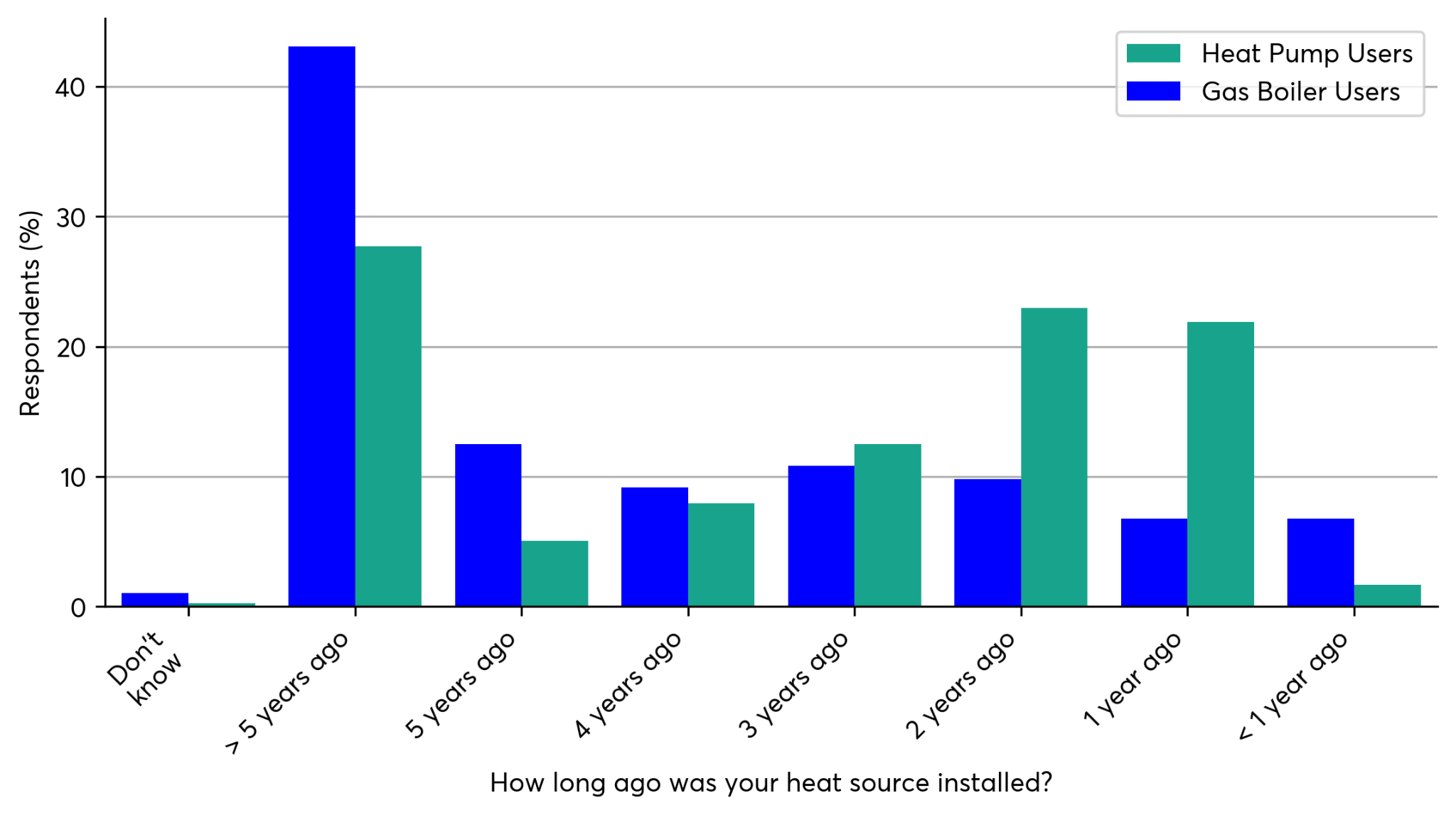
Figure 23: how long ago was your [heat pump/gas boiler] installed?
Heat pump users reported a high level of satisfaction with the installation process, with a median score of 8 out of 10. Gas boiler users gave a median score of nine. The distribution of scores is presented in Figure 24.
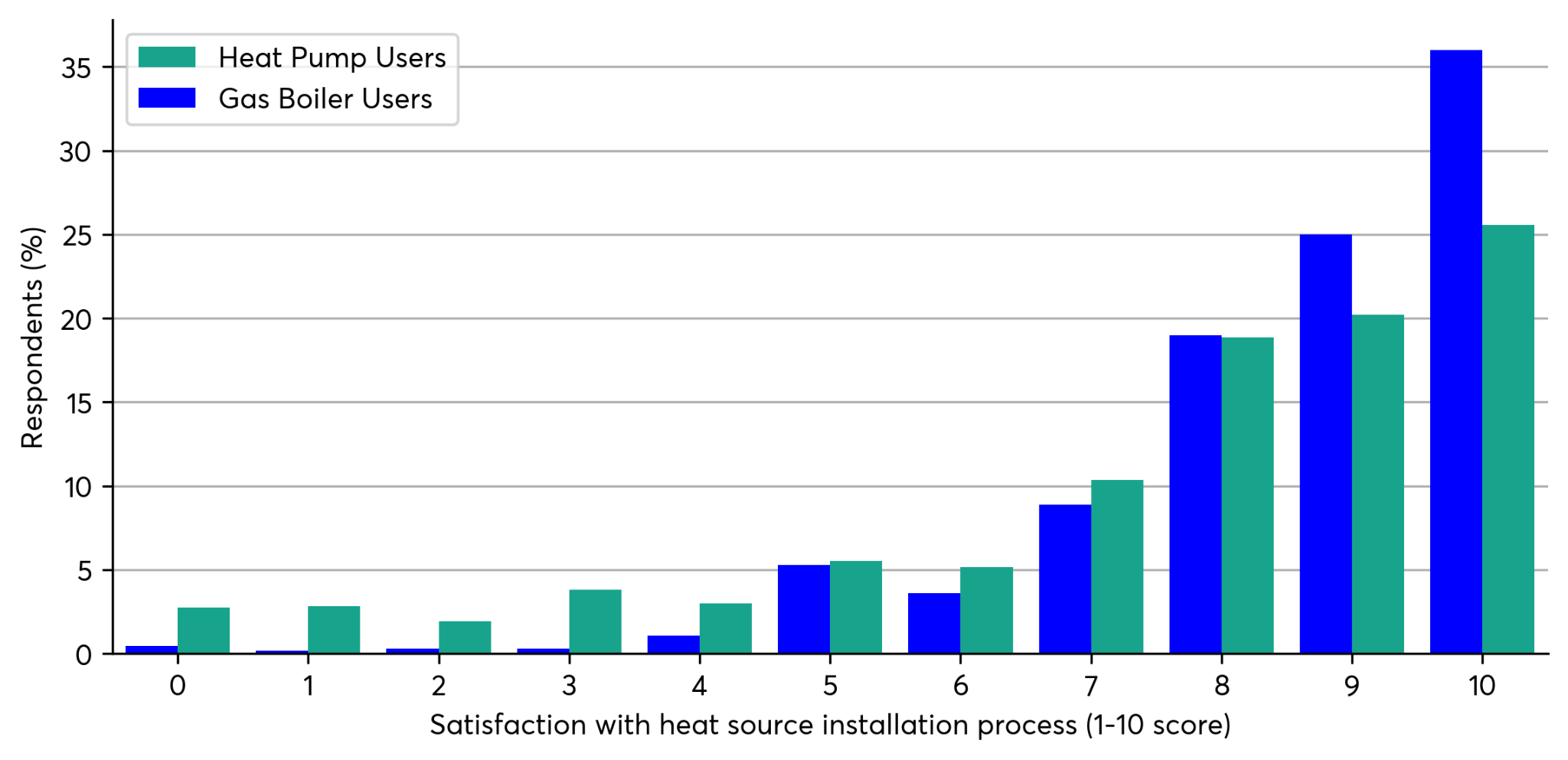
Figure 24: overall, on a scale of 1-10, how satisfied were you with the installation process? 1 being completely unsatisfied, 10 being completely satisfied.
The majority of heat pump installations (Figure 25) were carried out by independent installers (90% for heat pumps and 73% for gas boilers), with relatively few installations carried out by energy suppliers (3%, compared to 19% for gas boilers).
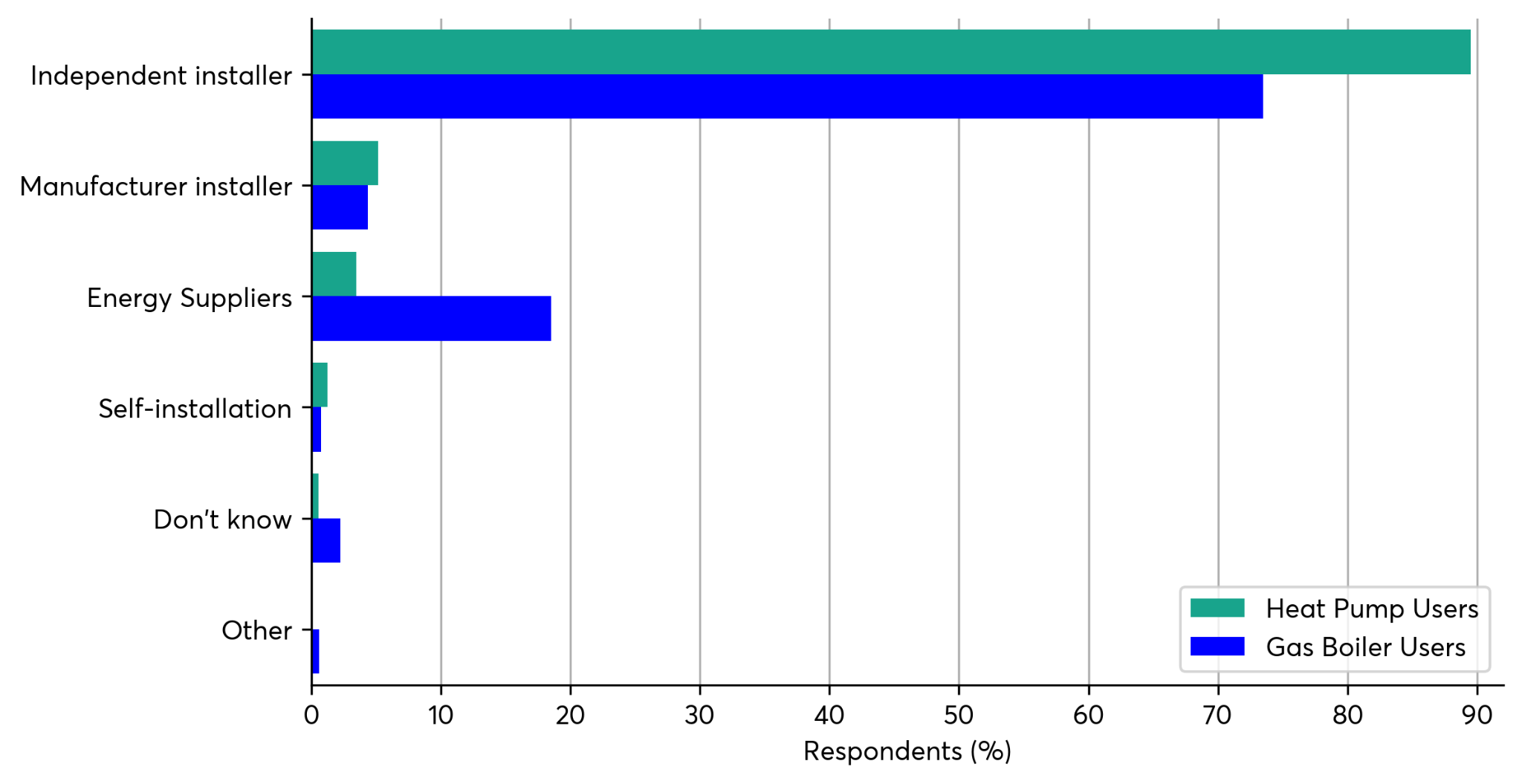
Figure 25: who installed the heat pump or gas boiler?
The modal (most common) heat pump installation took place one to two months after agreeing to the heat pump installation (Figure 26). The modal gas boiler installation took place less than a month after the agreement. In practice, gas boilers are likely to take much less than a month to install.
The length of time between agreement and installation may partly reflect the preferences of heat pump users, with the majority of these installations planned and coordinated with other energy efficiency upgrades. The shorter length from agreement to installation for gas boilers may reflect the larger number of 'distress' purchases and that the majority of installations involve a like for like gas boiler replacement.
Over two-thirds (79%) of heat pump users felt that it was easy (either 'very easy' or 'fairly easy') to find an installer, compared to 92% of gas boiler users. Thirty-seven percent of heat pump users said they encountered no problems during their installation (Figure 27), compared with over three-quarters (76%) of gas boiler users (Figure 28).
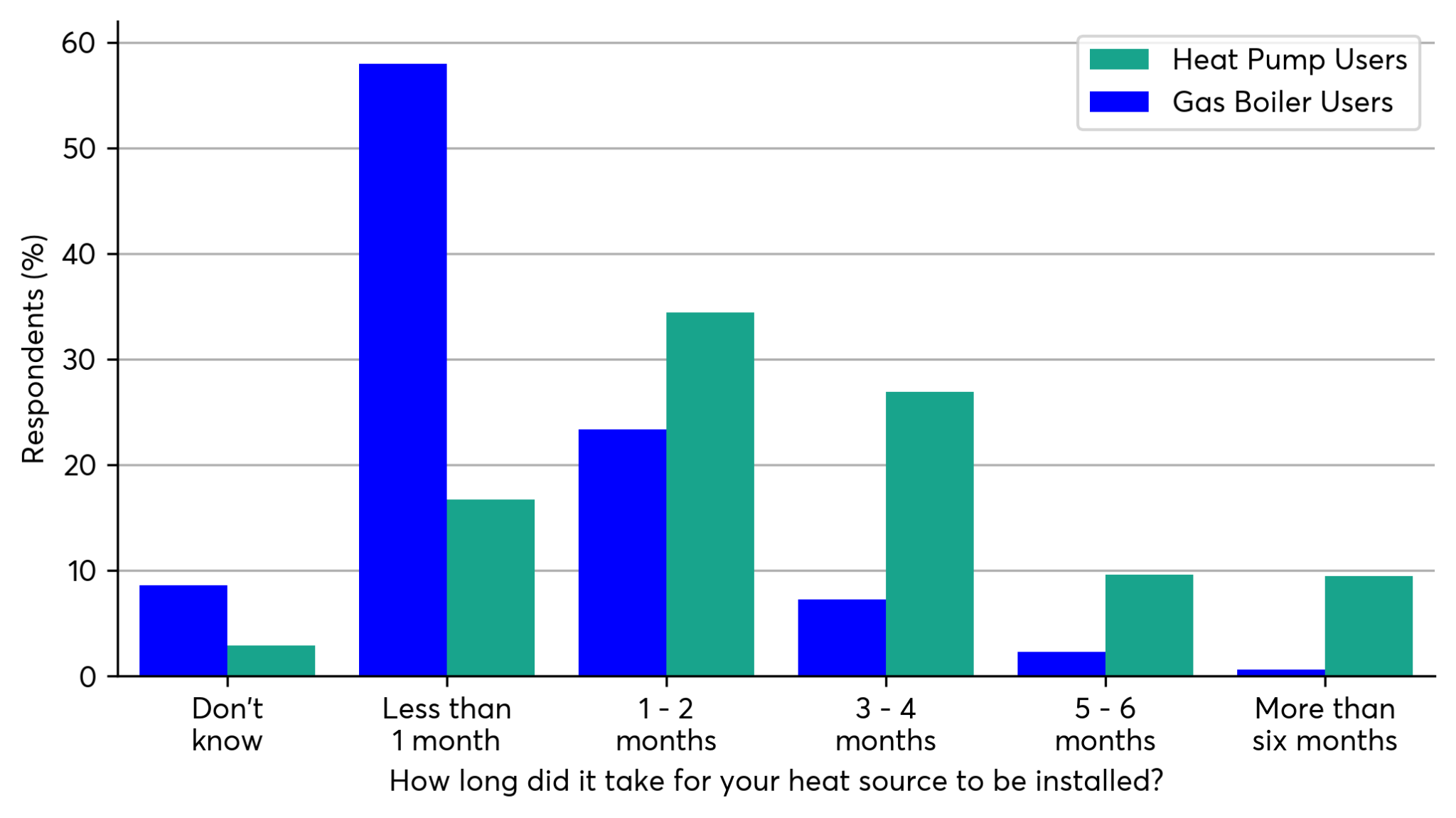
Figure 26: from the time you agreed to proceed with your [heat pump/gas boiler] installation, how long did it take for it to be installed?
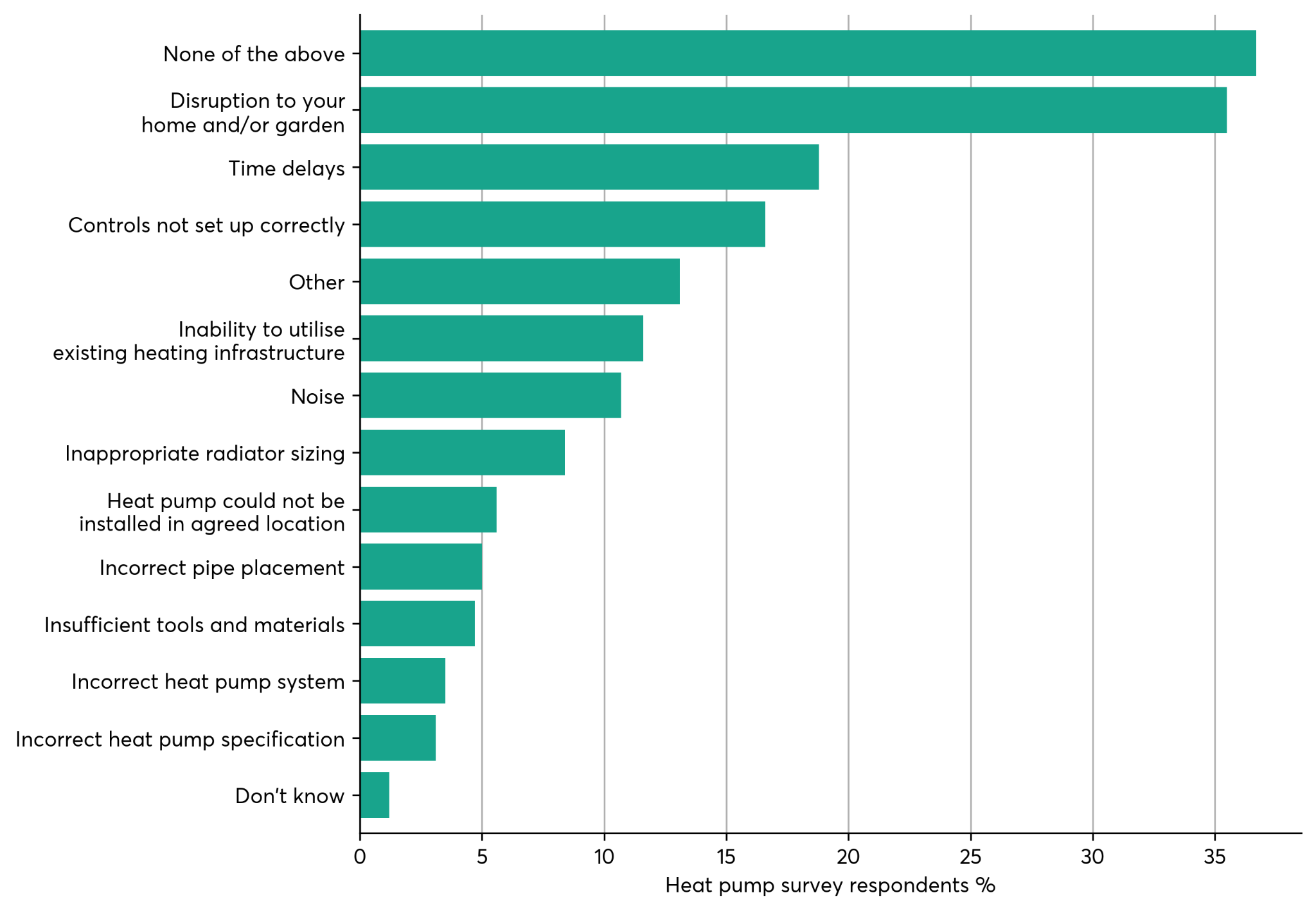
Figure 27: did you encounter any issues when installing your heat pump? Please select all that apply.
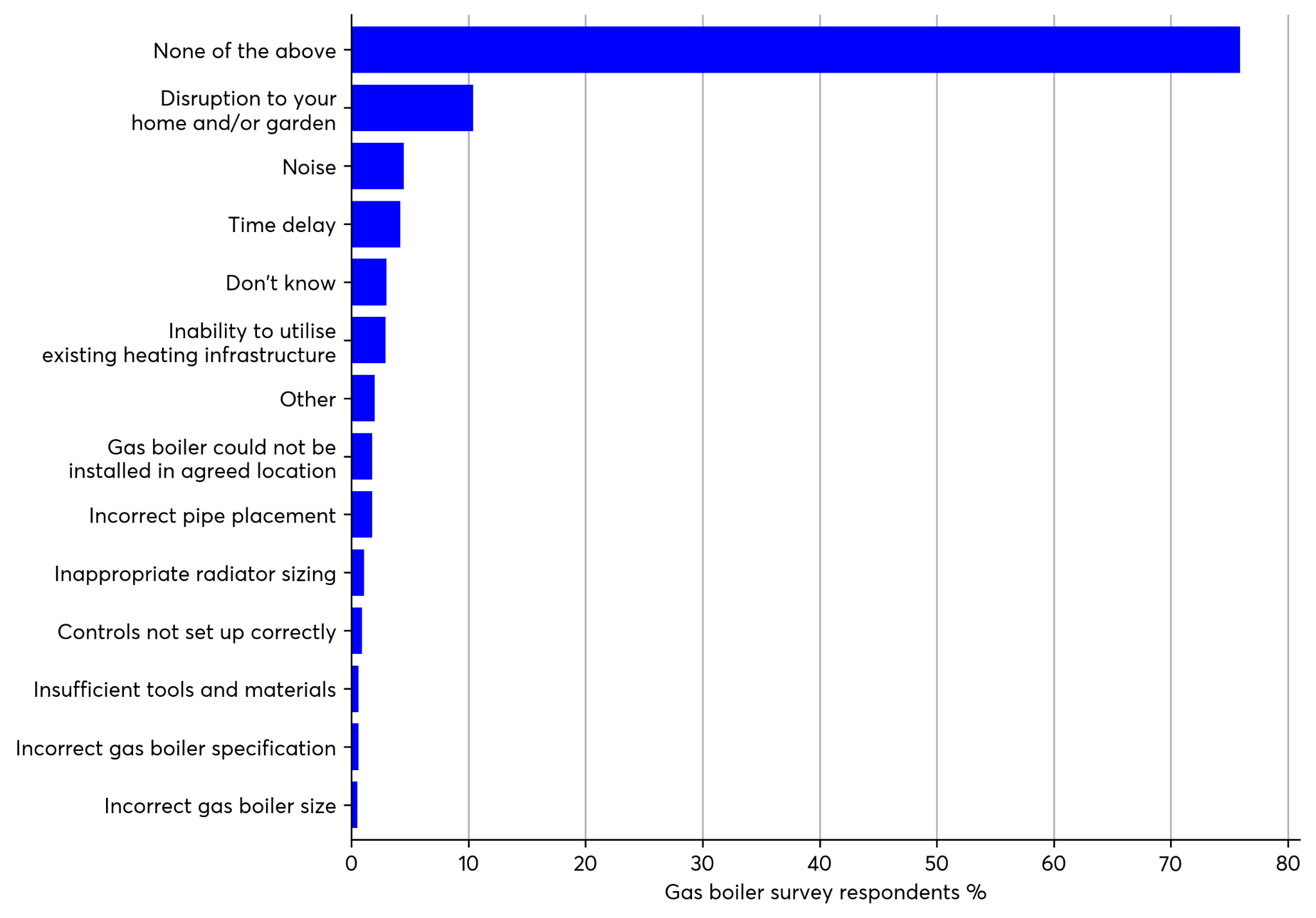
Figure 28: did you encounter any issues when installing your gas boiler? Please select all that apply.
Of the 63% of heat pump users who did encounter problems, over a third (36%) experienced disruption to their homes and gardens, 19% experienced time delays and 17% found controls were not set up correctly. Some heat pump users reported problems not captured in the response categories in the open text ‘other' option – these included leaks and faults, perceived installer incompetence and the heat pump not working as expected.
"We took our time finding a reputable MCS-accredited installer which gave us confidence that the system would be the correct size, installed correctly and more importantly had a good warranty and that the installer would sign us up to become one of their maintenance customers."
Heat pump user, England, 2022
"Heat pumps are only as good as the people designing and installing the system. There needs to be more detailed training and accreditation for installers to enable the best efficiency and uses of these systems."
Heat pump user, England, 2022.
It seems probable that the higher proportion of problems encountered by heat pump users is a result of the greater complexity of heat pump installations in our sample. The heat pump installation industry is still in its infancy in comparison to gas boiler installation, with significant potential to improve as the workforce and supply chain develops, as well as improvements in technology and installation techniques.
Respondents who moved into a home with a heat pump
This section explores the awareness, concerns and advice received by the 305 heat pump owners (13% of total) who moved into a house that already had a heat pump installed. Comparisons are drawn with respondents in the gas boiler survey who moved into a home with a gas boiler (n=361; 35% of total respondents).
Awareness and concerns about heat pumps
Around half (51%) of those who moved into a house with a heat pump were aware of heat pumps prior to the purchase (either ‘very aware' or 'fairly aware'), as shown in Figure 29.
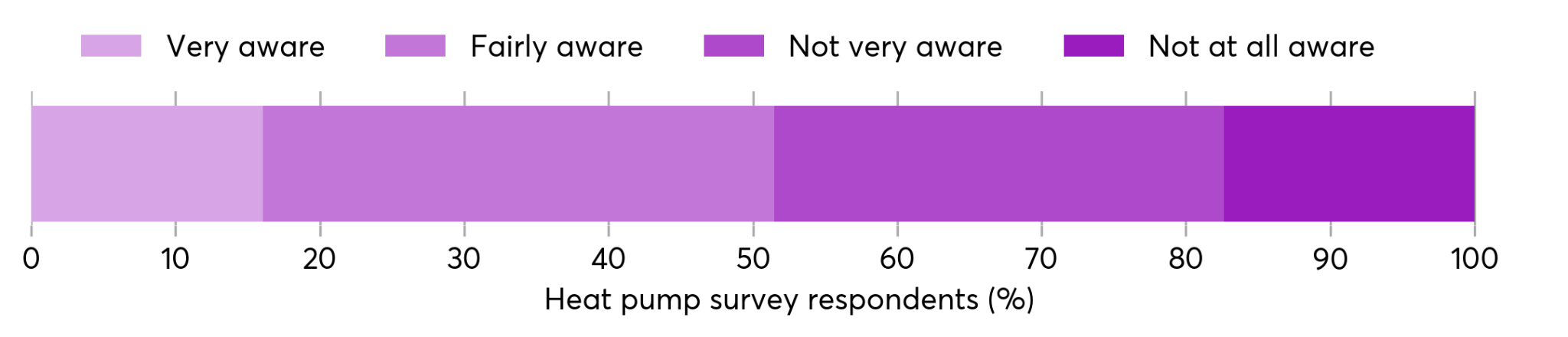
Figure 29: prior to purchasing your property, how aware were you of heat pumps?
More than half (54%) of this group reported that the presence of a heat pump had a positive impact (very or fairly positive) on their purchasing decision. This is shown in Figure 30. As this question was only asked of homeowners who purchased the property with a heat pump already installed, we would expect that it had more of a positive impact than a negative, as respondents went ahead with the purchase of the house knowing there was a heat pump. This survey does not capture the views of those that did not purchase a house due to the presence of a heat pump.

Figure 30: what impact did the presence of a heat pump make on your purchasing decision?
The most common concerns about inheriting a heat pump were the running and maintenance costs, reported by 47% and 43% of the respondents respectively. This is shown in Figure 31. Concerns around costs may have been driven by the cost-of-living crisis. The ease of use and control and the space heating ability were other concerns, each raised by around a third of respondents (35% and 32%, respectively). Just under a quarter (23%) did not have any concerns about the presence of a heat pump on the property.
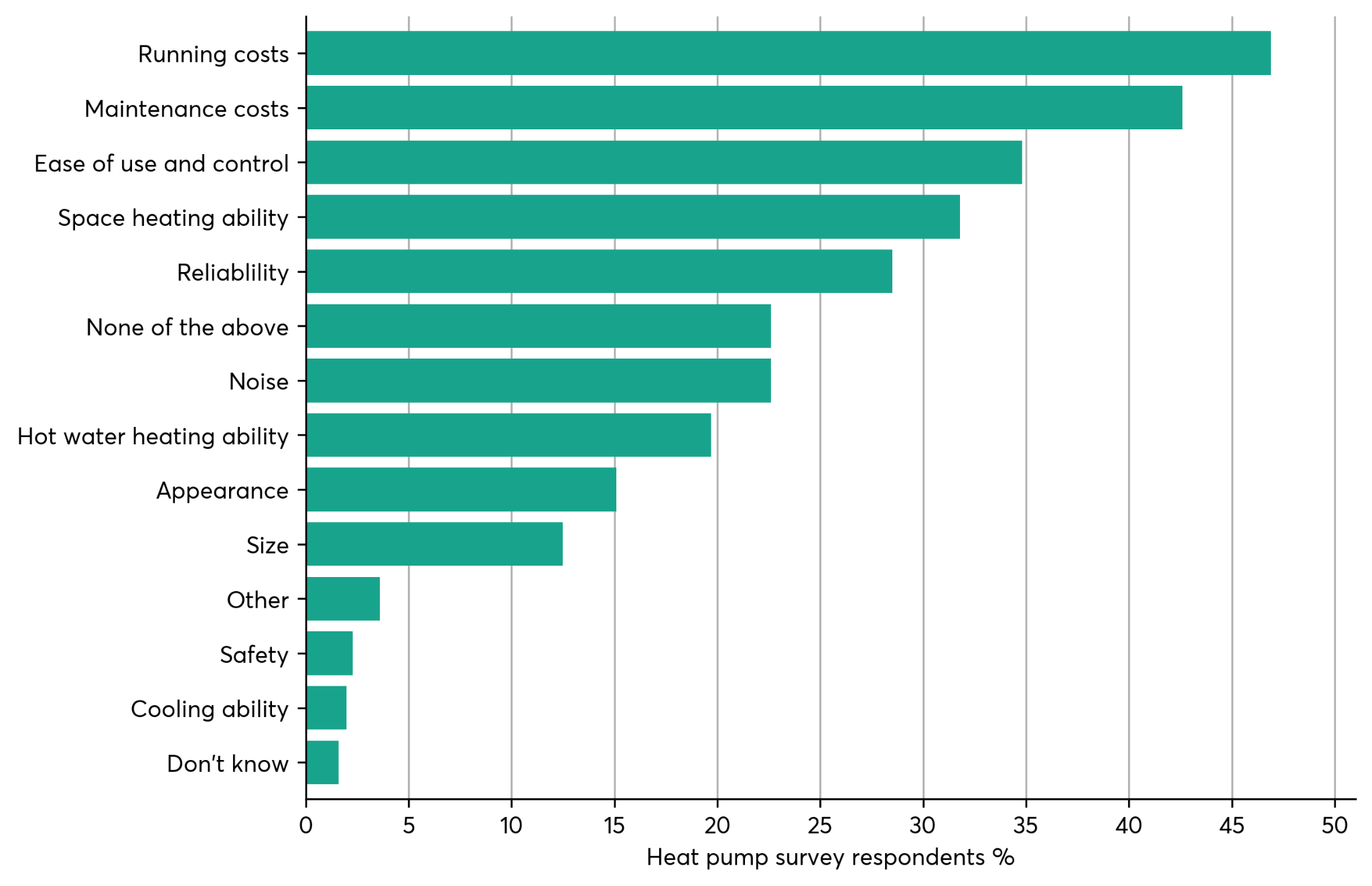
Figure 31: did you have any of the following concerns about the presence of a heat pump on the property? Please select all that apply.
Advice on use
Forty-four percent of heat pump ‘inheritors' received no advice on how to use their heat pump when moving into the property, as shown in Figure 32. Around one quarter were advised by previous owners of the property (26%) or by the installer (23%). By comparison, just over half (55%) of gas boiler users did not receive advice on their heating system when moving into their property.
"Our air source heat pump came with an instruction manual that was only one page long and it's really hard to get your head around.”
Heat pump user, England, 2022
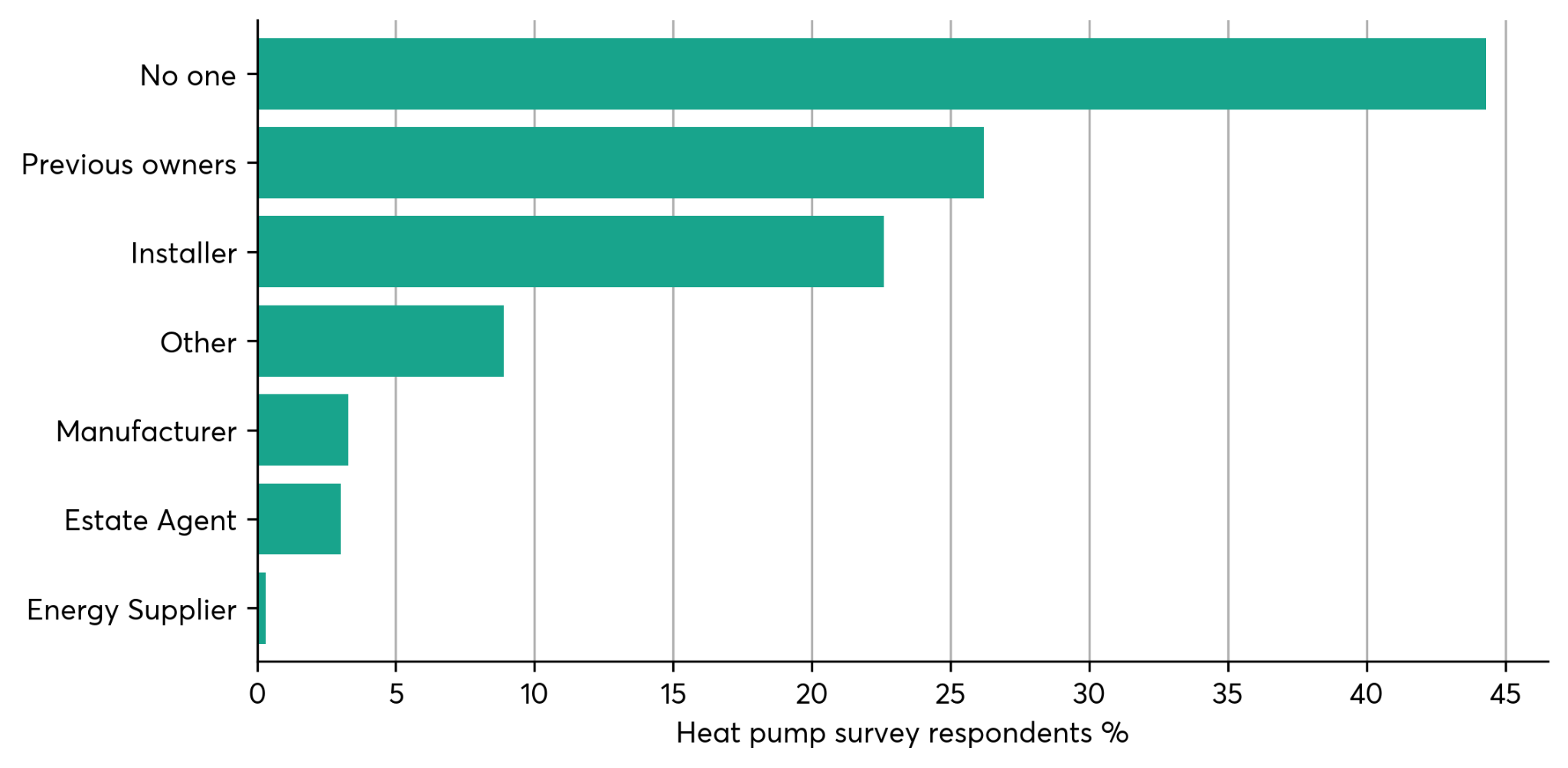
Figure 32: on moving into the property, who advised you on how to use the heat pump? Please select all that apply.
Only just over a third (37%) of heat pump inheritors found it easy (‘very easy' or 'fairly easy') to identify useful and clear information to support them with their heat pump (Figure 33).
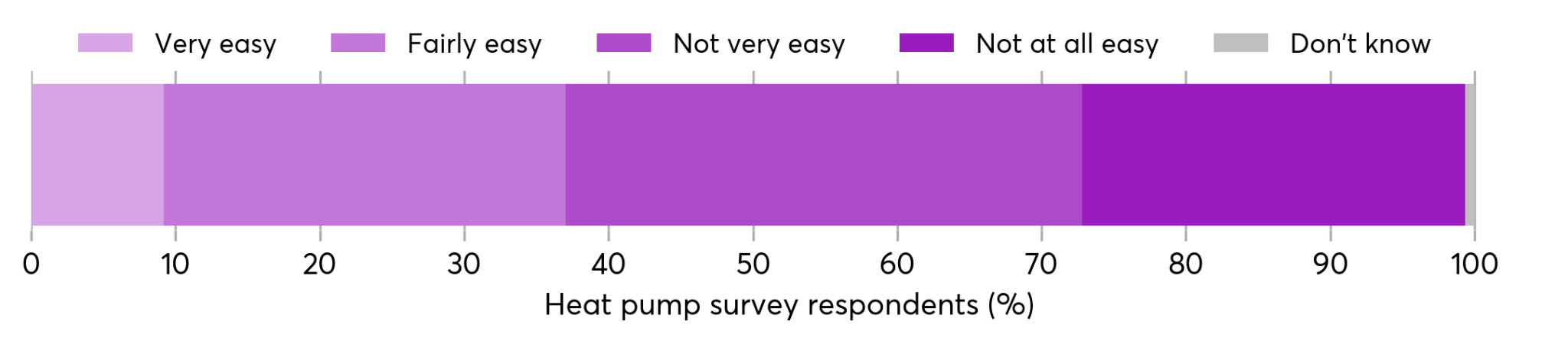
Figure 33: how easy was it to find useful and clear information to support you with your heat pump?
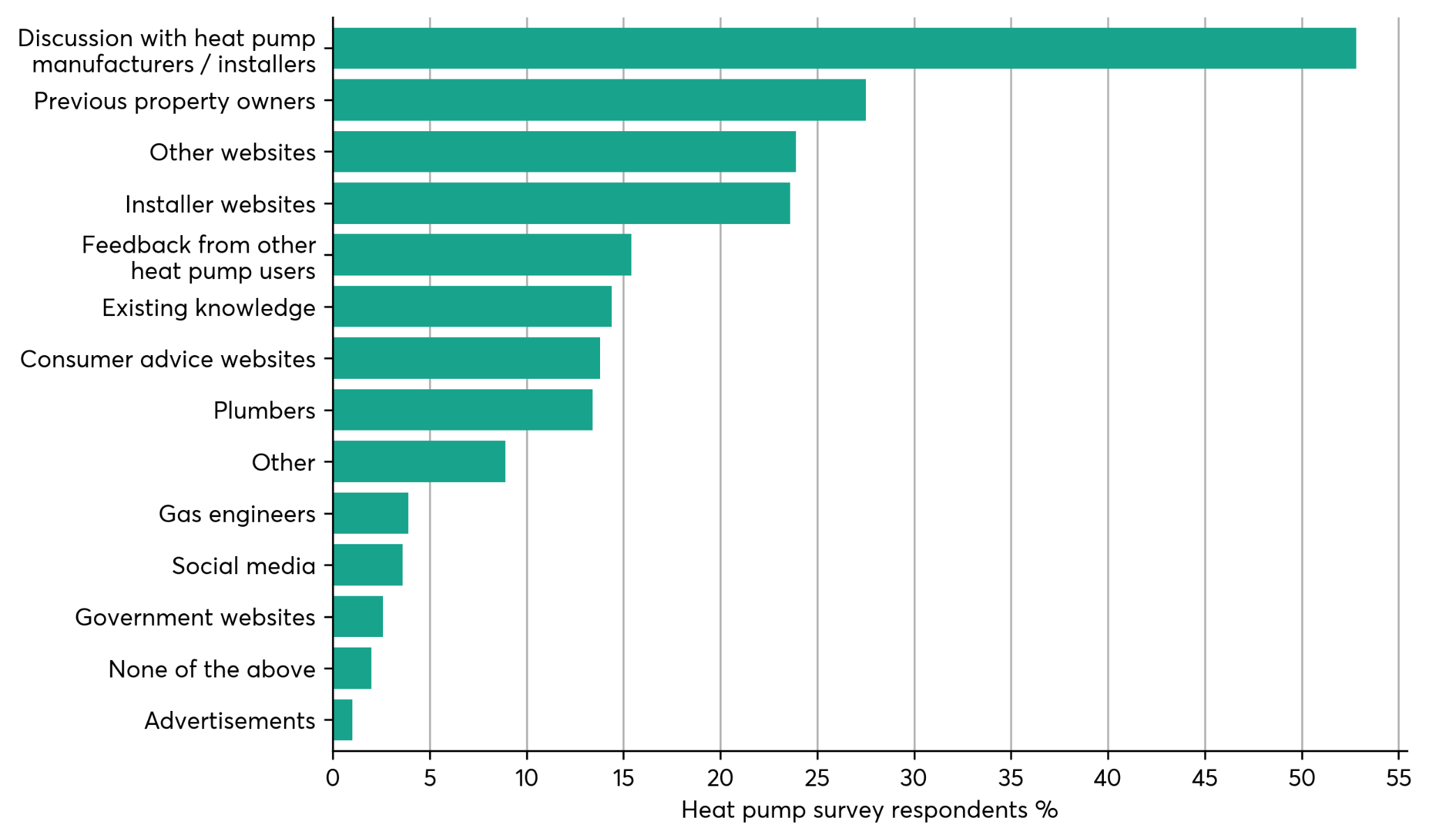
Figure 34: what information sources did you utilise? Please select all that apply.
The most common source of information was through discussion with the heat pump manufacturer/ installer (53% of respondents), as shown in Figure 30. The previous property owners (28%), installer websites (24%) and other (for example, not installer, consumer advice or government) websites (24%) were other popular information sources.
Appendix
Table A1: survey respondent key statistics.
| Type of heat source |
Heat pump survey (n=2,395) Count |
Heat pump survey (n=2,395) Percentage |
Gas boiler survey (n=1,025) Count |
Gas boiler survey (n=1,025) Percentage |
| Heat pump |
|
|
|
|
| Air source |
2,001 |
84 |
- |
- |
| Ground source |
394 |
16 |
- |
- |
| Gas boiler |
|
|
|
|
| Combi boiler |
- |
- |
533 |
52 |
| Regular boiler |
- |
- |
292 |
29 |
| System boiler |
- |
- |
166 |
16 |
| Don't know |
- |
- |
34 |
3 |
| Heat distribution |
|
|
|
|
| Radiators |
1,748 |
73 |
1,005 |
98 |
| Underfloor |
1,302 |
54 |
36 |
4 |
| Other |
3 |
0 |
0 |
0 |
| Don't know |
3 |
0 |
9 |
1 |
| Missing |
2 |
0 |
1 |
0 |
| Responsible for managing the heating system |
|
|
|
|
| Yes |
2,349 |
98 |
867 |
85 |
| Somewhat |
45 |
2 |
131 |
13 |
| No |
1 |
0 |
27 |
3 |
| Additional care needs |
|
|
|
|
| Yes |
395 |
17 |
211 |
21 |
| No |
1995 |
83 |
806 |
79 |
| Don't know |
5 |
0 |
8 |
1 |
| Property type |
|
|
|
|
| House |
1,901 |
79 |
843 |
82 |
| Bungalow |
417 |
17 |
97 |
10 |
| Flat or maisonette |
42 |
2 |
78 |
8 |
| Other |
32 |
1 |
7 |
1 |
| Don't know |
1 |
0 |
0 |
0 |
| Missing |
2 |
0 |
0 |
0 |
| Property age |
|
|
|
|
| < 1900 |
385 |
16 |
78 |
8 |
| 1900 to 1929 |
102 |
4 |
108 |
11 |
| 1930 to 1949 |
127 |
5 |
158 |
15 |
| 1950 to 1975 |
361 |
15 |
258 |
25 |
| 1976 to 1995 |
259 |
11 |
189 |
18 |
| 1996 to 2011 |
333 |
14 |
138 |
14 |
| 2012 onwards |
816 |
34 |
62 |
6 |
| Don't know |
12 |
1 |
34 |
3 |
| Number of bedrooms |
|
|
|
|
| 1 |
23 |
1 |
18 |
2 |
| 2 |
256 |
11 |
207 |
20 |
| 3 |
816 |
34 |
475 |
46 |
| 4 |
889 |
37 |
266 |
26 |
| 5 |
322 |
13 |
50 |
5 |
| 6 |
73 |
3 |
9 |
1 |
| 7+ |
16 |
1 |
0 |
0 |
| Renewable or low carbon technologies |
|
|
|
|
| Solar PV (generating electricity) |
1076 |
45 |
77 |
8 |
| Electric vehicle |
408 |
17 |
43 |
4 |
| Battery storage |
323 |
14 |
21 |
2 |
| Solar thermal (heating water) |
231 |
10 |
15 |
1 |
| Other |
75 |
3 |
13 |
1 |
| Don't know |
17 |
1 |
15 |
1 |
| None of the above |
1047 |
44 |
889 |
87 |
| Missing |
17 |
1 |
0 |
0 |
| Secondary heating sources |
|
|
|
|
| No secondary heating sources |
733 |
31 |
681 |
66 |
| Heat pump (additional) |
3 |
0 |
8 |
1 |
| Gas boiler (additional) |
85 |
4 |
10 |
10 |
| Wood stove |
1,166 |
42 |
69 |
7 |
| Portable electric heaters |
214 |
8 |
136 |
13 |
| Other |
163 |
7 |
59 |
6 |
| Open fire |
164 |
7 |
57 |
6 |
| Fixed electric room heaters |
98 |
4 |
48 |
5 |
| Solar thermal |
123 |
5 |
8 |
1 |
| Don't know |
4 |
0 |
9 |
1 |
| Missing |
47 |
2 |
9 |
1 |
| Location |
|
|
|
|
| England |
1,896 |
79 |
880 |
86 |
| Scotland |
360 |
15 |
100 |
10 |
| Wales |
139 |
6 |
45 |
4 |
| Setting |
|
|
|
|
| Urban |
601 |
25 |
836 |
82 |
| Rural |
1,775 |
74 |
125 |
12 |
| Missing |
19 |
1 |
64 |
6 |
| IMD, Income Domain, 2019, England and Wales (quintiles) |
|
|
|
|
| 1 (Most deprived) |
56 |
3 |
94 |
10 |
| 2 |
160 |
8 |
150 |
16 |
| 3 |
435 |
21 |
180 |
20 |
| 4 |
689 |
34 |
221 |
24 |
| 5 (Least deprived) |
676 |
33 |
221 |
24 |
| Missing |
19 |
1 |
45 |
5 |
| SIMD, Income Domain, 2020, Scotland (Quintiles) |
|
|
|
|
| 1 (Most deprived) |
4 |
1 |
14 |
14 |
| 2 |
18 |
5 |
17 |
17 |
| 3 |
94 |
26 |
17 |
17 |
| 4 |
174 |
48 |
16 |
16 |
| 5 (Least deprived) |
70 |
19 |
31 |
31 |