About Nesta's Centre for Collective Intelligence Design
Nesta's Centre for Collective Intelligence Design helps create new ways for communities to use technology to harness their insights, ideas and power to act on the problems that matter to them and create the futures they want. We design tools and projects that allow communities to respond collectively to challenges, and that help public and voluntary sector institutions strengthen trust and collaboration with citizens. We use rigorous research methods to test, learn and evaluate each solution. Our flagship Collective Intelligence Design Playbook helped to define the field and is used by practitioners around the world. We have worked with organisations from the UN to the BBC.
To learn more, see nesta.org.uk/project/centre-collective-intelligence-design/ or email the team at [email protected]
Author
Oli Whittington
Recommended citation: Whittington, O. (2022). Democratic Innovation and Digital Participation. London: Nesta.
Published September 2022
ISBN: 978-1-913095-67-3
In addition to the lead author, the following individuals from Nesta and the University of Helsinki helped to shape this project and report: Peter Baeck, Aleks Berditchevskaia, Issy Gill, Mikko Rask and Bokyong Shin.
Framework illustration and infographic: Vari Telleria.
If you'd like this publication in an alternative format, such as Braille or large-print, please contact us at: [email protected]
COLDIGIT is a three-year research project that aims to advance accessible and inclusive citizen participation in public decision-making, where institutions and citizens understand, are capable and work towards making the most of digital democracy. The project consortium is made up of Nesta, Digidem Lab, University of Gothenburg, University of Helsinki and SINTEF.
Acknowledgements
The research and design in this report and accompanying materials has been made possible thanks to the generosity of a community of contributors. This includes our City partners in Helsinki, Trondheim and Gothenburg, with a particular thanks to Kristin Solhaug Næss, Øyvind Tanum and Kirsi Verkka. The COLDIGIT consortium partners including Mikko Rask, Bokyong Shin and Pekka Tuominen (University of Helsinki), Sanna Ghotbi, Annie Hermansson, Pierre Mesure and David Nordling (Digidem Lab), Jacqueline Floch, Matthieu Branlat and Siri Mariane Holen (SINTEF), and Jenny Stenberg and Jaan-Henrik Kain (University of Gothenburg). Finally, a thank you to all who have reflected on our work, including Claudia Chwalisz, Colin Megill, Matt Stempeck, Miguel Arana Catania, Oliver Escobar, Paola Pierri, Theo Bass, as well as Newspeak House for facilitating an environment to experiment with ideas.
The support of the Economic and Social Research Council (ESRC) is gratefully acknowledged. COLDIGIT has been joint funded by the ESRC and Nordforsk.
NordForsk project number 100855.
CC BY NC SA
Nesta is a registered charity in England and Wales with company number 7706036 and charity number 1144091. Registered as a charity in Scotland number SCO2833. Registered office: 58 Victoria Embankment, London, EC4Y ODS
Executive summary
Democratic principles are under threat around the world. Yet democratic innovations and digital participation tools hold the potential to rejuvenate democracy and drive citizen-led decision-making in public institutions. This report highlights the barriers faced when advancing democratic innovations and how these barriers can be overcome to harness the collective intelligence of citizens.
Slow adoption in a moment of need
Our current political systems are failing to provide the scale and speed of decision-making required to tackle the crises we face, from the climate emergency to deepening inequality. A study across 17 advanced global economies found that a median of 56% of people surveyed believe there should be major or complete reform of their political systems. In the UK, this appetite for change is fuelling a growing demand for increased citizen power in political decision-making. After decades of experimentation, democratic innovations such as citizens' assemblies and participatory budgeting are proving their potential to revitalise and reform democracy.
Too often, however, participation projects stall, do not reach a diverse and representative group of people, fail to embed into institutional processes or have outcomes ignored by elected representatives. For instance, the recommendations produced by the French Citizens' Climate Convention were far more ambitious than those of the French government. While many of these proposals were ignored or diluted by the government, a survey found that the wider population supported all but one of the 149 proposals, with three out of five people viewing this as a legitimate way to make policy on their behalf. This report looks at democratic innovations beyond one-off pilots through a new framework which explores how to create an inclusive forum for citizen-led decision-making and new citizen-centred institutions.
A framework for advancing democratic innovations
Institutions and citizens face wide-reaching challenges when delivering or experiencing democratic innovations. The 'Deliver, Expand, Embed' framework presented in this report aims to unite the sector around a shared narrative to advance democratic innovations. This is the first attempt to synthesise barriers experienced across democratic innovations and lessons on how these can be overcome through enablers. Each level of the framework sets out six common barriers and enablers relating to people, process and technology. When delivered together, these enablers can help institutions advance their participation process and support democratic innovations to live up to their potential.
Deliver democratic innovations to achieve best practice.
The first level of the framework aims to get the basics right and deliver democratic innovations to established standards of best practice. Delivering these democratic innovations can improve the quality of decision-making, restore trust in government and create meaningful channels of engagement between citizens and institutions.
Although not perfect, these processes are a vital first step in preparing citizens and institutions for participation. They also lay the foundation for the next two levels of the framework.
People barriers #1 and #2 relate to the cultural and skills gaps that institutions may encounter (see page 30).
People enablers #1 and #2 set out how to establish senior champions and build institutional capabilities and capacity (see page 31).
Process barriers #1 and #2 relate to bureaucracy and regulation, and to potential inaction resulting from democratic innovations (see page 32).
Process enablers #1 and #2 set out a strategy for initiating participation and aligning it with transparent design and communication principles (see page 33).
Technology barriers #1 and #2 relate to the challenges of commissioning and integrating digital participation tools, including low user uptake and poor functionality (see page 34).
Technology enablers #1 and #2 set out foundational digital design principles and new institutional business models (see page 35).
Expand democratic innovations to build inclusive and accessible participation.
Expanded democratic innovation processes are accessible to the people impacted by the topic being addressed. They are also inclusive, so that people can participate meaningfully regardless of their experience, standing in society or any other limiting factors.
Better-quality decisions come about when democratic innovations involve a more diverse group of people, from marginalised groups to those that choose to be politically inactive. To be truly inclusive and accessible, democratic innovations need to be adequately embedded into the institution delivering the process, as explored in the next level of the framework.
People barriers #3 and #4 relate to the lack of diversity in institutions delivering participation and to the challenges of motivating citizens to participate (see page 38).
People enablers #3 and #4 emphasise the need for diverse and independent facilitators and for inclusive incentives (see page 39).
Process barriers #3 and #4 relate to processes that are inaccessible and exclude citizens and marginalised groups (see page 40).
Process enablers #3 and #4 set out principles and recommendations for designing processes with communities to improve accessibility and inclusivity (see page 41).
Technology barriers #3 and #4 relate to digital exclusion and to ways that technology can amplify negative behaviours (see page 42).
Technology enablers #3 and #4 set out best and emerging practices for inclusive digital design and community-building (see page 43).
Embed democratic innovations to create participatory systems of governance.
Embedding democratic innovations requires integrating participation into the procedures and legislation that guide public institutions, as well as a deeper transformation of political parties and organisational cultures. These institutions benefit from more effective policy and being able to tackle the crises of our time with bold ideas that galvanise the collective action of citizens.
Embedded democratic innovations ensure that citizens direct the topic of participation and have a tangible stake in decisions. Strong citizen networks hold institutions to account and work to define what future systems of governance should look like.
People barriers #5 and #6 relate to resistance to sharing power on high-stakes issues and to the effects of partisanship and outsourcing (see page 46).
People enablers #5 and #6 set out strategies for transforming institutional cultures and strengthening citizen networks (see page 47).
Process barriers #5 and #6 relate to ways that short-term, siloed and box-ticking processes may limit the impact and effectiveness of participation (see page 48).
Process enablers #5 and #6 set out steps for embedding democratic innovation into existing processes and designing new institutions for citizen participation (see page 49).
Technology barriers #5 and #6 relate to the challenges of developing and maintaining digital participation tools and the institutional risks associated with them (see page 50).
Technology enablers #5 and #6 set out ways that digital tools can become vehicles for transformation and how the open-source community can assist in developing democracy (see page 51).
What next for democratic innovation and digital participation?
Over the last decade, populism and polarisation have gripped the global debate on democracy. Yet a much quieter movement of democratic innovation has also swept across local, national and even international institutions. This has generated extensive evidence of the benefits of such processes and indicated what participatory institutions could look like in a more 'open democracy'.
For democratic innovations to become democratic norms, a coordinated effort is required to Deliver, Expand and Embed this practice. This report and accompanying toolkits provides a pathway to help institutions, practitioners and innovators get there.
A conceptual diagram illustrating the 'Deliver, Expand, Embed' framework for democratic innovations, showing "Citizens" and "Institutions" at the base. From institutions, pathways lead upwards to "Deliver democratic innovations to achieve best practice.", then to "Expand democratic innovations to build inclusive and accessible participation.", and finally, with a feedback loop back to the base, to "Embed democratic innovations to create participatory systems of governance." The Expand phase is represented by a cloud-like structure with various interconnected nodes, symbolising broad participation.
1. Introduction
The condition and quality of our democracies are degrading, and around the world, public trust in governments is at an all-time low.
In the UK, 79% of people surveyed believe that politicians and civil servants are making decisions about people and places they know little about. The number of people deciding not to vote in the 2022 French presidential election was greater than the second largest vote share. And for the fifth consecutive year, the number of countries heading towards authoritarianism outstrips those heading towards democracy. Representative democracy is not only struggling to sustain itself as a system of governance but also failing to provide the speed and scale of decision-making required to tackle the many crises we face, from climate change to deepening inequality.
Democratic innovations provide a window of hope. They promise a new form of participatory decision-making that can rejuvenate democracy and mobilise a response to our collective crises. We have seen innovative forms of citizen participation become embedded into policy processes. Municipalities from Bogotá to Newham have established permanent citizens' assemblies and the OECD reports that a 'deliberative wave' of representative mini-publics has been gathering momentum since 2010. Meanwhile, the use of digital platforms in online crowdsourcing of ideas and participatory budgeting has empowered citizens to address issues locally. The scale of some initiatives has been significant. In Brazil, for example, some cities have made citizens responsible for up to 20% of city budgets, and in Paris, citizen proposals were allocated €75 million in 2021.
New forms of participation can offer viable alternatives to current decision-making mechanisms by leveraging 'collective intelligence' – the enhanced capacity of groups to solve problems by mobilising diverse ideas, skills and insights. Digital participation tools are helping to scale collective intelligence by creating new entry points for citizens to generate ideas and debate issues that matter to them. Time has shown that such forms of engagement can bring about decisions that are more equitable, sustainable and fit for 21st-century society.
Citizens who take part in participatory processes are often willing to commit to bold and ambitious actions on complex issues such as climate change and are able to see beyond short-term politics. And there is evidence that the public may have more faith in this approach to solving problems: while the recommendations of the French Citizens' Climate Convention were more ambitious than the government, a survey found that three out of five respondents viewed this as a legitimate way to make policy on their behalf.
Too often, however, experiments in democratic innovation fail to last beyond piloting. 'Politics as usual' takes over and recommendations from citizens' assemblies are ignored by those in power. Even success stories of democratic innovation can be at risk if they are not embedded into institutional processes. For example, Madrid's participatory budgeting platform, Decide Madrid, had its budget halved and many supporting participatory activities halted after a change in administration. In addition, democratic innovations often fall short of creating a truly inclusive and accessible form of participation. These issues need to be addressed if democratic innovations are to reach their full potential.
A framework for advancing democratic innovation
Institutions and citizens face many common barriers when establishing or sustaining new forms of participation, and mistakes are often repeated across political and cultural contexts. The breadth of these challenges – from navigating digital procurement to overcoming ideological differences – can make it difficult to know where to start. Our research aims to address this gap by supporting institutions in their journey towards mainstreaming and advancing democratic innovation. This report is the first attempt to synthesise the lessons learned from the last decades of democratic innovation into practical insights to guide current and future practice. We introduce a new framework that can be used to diagnose common barriers and identify the enablers that have proven effective in addressing them.
Our methodology
The findings in this report have been generated through a mixed-methods research approach which draws on literature, expert opinion and insights iteratively gained through three democratic innovation pilots in the Nordics (see map on the following page). These pilots were conducted in partnership through the Collective Intelligence through Digital Tools (COLDIGIT) project, full details of which can be found in the Appendix.
A map of Sweden, Norway, and Finland, indicating three case studies:
* Trondheim, Norway: City masterplan citizens' assembly.
* Tool: Decidim
* Website: borgerkraft.no
* Date: December 2021 – May 2022
* Trondheim Municipality is developing a new municipal masterplan and has organised a citizens' assembly of 50 representative and randomly selected residents to discuss what Trondheim's future society should look like. They use the 'Borgerkraft' (Norwegian for 'Civic Power') platform to communicate the process of the assembly and invite comments on its recommendations.
* Gothenburg, Sweden: Housing association participatory budgeting.
* Tool: Decidim
* Website: dialog.bostadsbolaget.se
* Date: February 2021 – June 2021 (Biskopsgården), February 2022 – autumn 2022 (Hammarkullen)
* Gothenburg's public housing association, Bostadsbolaget, delivered two participatory budgeting programmes in two neighbourhoods surrounding Gothenburg: Biskopsgården and Hammarkullen. Citizens could see the process criteria, and submit or vote for proposals through the digital platform.
* Helsinki, Finland: City-wide participatory budgeting.
* Tool: Decidim
* Website: omastadi.hel.fi
* Date: October 2020 – October 2022
* OmaStadi is in its second round as Helsinki's participatory budgeting programme and platform for allocating €8.8 million over two years. Residents of Helsinki can submit, deliberate and vote for city-wide and neighbourhood-specific proposals both via the online platform and through in-person workshops. The latest round was entirely online due to the COVID-19 pandemic.
How to use this report
This report is aimed at three core audiences:
- People in local and national government, including policymakers, community engagement specialists and politicians.
- Public, private and third-sector participation practitioners and activists.
- People working in civic tech, developing digital participation tools.
You may be reading this report because you are looking to deliver new forms of participation. Alternatively, you may want to enhance and scale an existing democratic innovation project. Either way, this report can help you create a strategy for participation by identifying possible challenges and then using the enablers to help you plan and design all components of your project. We recommend using the accompanying toolkit as a workshop tool to bring the report to life.
2. The democratic innovation field
What are democratic innovation and digital participation?
Democratic innovation is an umbrella term for the 'processes or institutions that are ... developed to reimagine and deepen the role of citizens in governance processes by increasing opportunities for participation, deliberation and influence'. Digital participation in democratic processes, sometimes referred to as digital democracy, covers 'the practice of democracy using digital tools and technologies'. The overlap between democratic innovation and digital participation has increased because of the COVID-19 pandemic, which pushed forums for decision-making online, from traditional parliamentary debates to citizen assemblies. In this report, we focus on democratic innovations that have been supported and enhanced by digital participation.
An illustration of the overlap between the fields of democratic innovation and digital participation, showing a Venn diagram where 'Democratic innovation' and 'Digital participation' overlap to form a shared area in the middle.
Democratic innovations explored in this research
Citizen participation is, and always should be, a dynamic field that responds to a contemporary context. How best to engage communities depends on multiple factors, including local cultures, traditions, emerging practices and the nature of the most pressing issues.
This report mainly draws on research into two forms of democratic innovation: participatory budgeting and mini-publics. These approaches have the most momentum behind them at the time of writing and are the focus of the three pilot case studies in the COLDIGIT project. Here, we provide a short overview of these two methods and other emerging practices that fed into the research.
Participatory budgeting
Participatory budgeting is a process by which citizens generate, discuss and vote on proposals for public spending. It typically follows open participation principles, so citizens self-select to take part. Citizens can also monitor proposal implementation.
How technology is enhancing the process: Open-source platforms have driven many of Europe's participatory budgeting processes over the last decade. They provide the infrastructure for institutions to plan for participatory budgeting processes and create an end-to-end platform through which citizens can contribute ideas, collaborate and vote.
Best practice guides:
Participatory budgeting: an introduction (PB Network); What is participatory budgeting...? (PB Scotland 60-second guide); Participatory budgeting: public sector governance and accountability (World Bank); Digital tools and participatory budgeting (Democratic Society); Guide to digital participation platforms (People Powered).
Mini-publics, including citizens' assemblies and citizen juries
Mini-publics are small, representative groups of citizens who come together to debate and form consensus on specific issues. They have three core qualities, as defined by the OECD:
- They are representative and rely on 'sortition' – selecting a representative mix of participants.
- They offer ample time for deliberation, allowing participants to hear the views of experts and each other.
- They have an impact, are commissioned by an institution and are acted upon.
How technology is enhancing the process: Throughout the COVID-19 pandemic, technology has enabled many planned face-to-face activities to move online. While these are largely returning to offline or hybrid engagement, technology has also opened up mini-publics through which citizens can contribute ideas ahead of an assembly or give feedback on outcomes at the end.
Best practice guides:
Deliberative democracy toolbox (OECD), How to run a Citizens' Assembly (UK Government), Standards for Citizens' Assemblies (Involve), Enabling National Initiatives to Take Democracy Beyond Elections (UNDEF and New Democracy), Guidance on Climate Assemblies (Knowledge Network on Climate Assemblies).
Other emerging practices
Other emerging digital participation practices include crowdsourcing, Wiki-surveys and online forums. Crowdsourcing is an umbrella term for various approaches that source information, ideas, policy or law, from mass participation or self-selected specialists, by issuing open calls. Crowdsourcing is often a core component of participatory budgeting and has been used alongside citizens' assemblies to open the deliberative process to wider audiences. Likewise, tools like Polis have driven the adoption of Wiki-surveys, where people share and review opinions to find areas of consensus. These, alongside other emerging practices, have been explored to a lesser extent in the research in this report.
Selecting the right method for participation depends on various factors. These include: who you want to participate, the topic of participation, the time and resource constraints, the ability to act and respond, the information and knowledge you want to generate and the type of decision you want to reach. In practice, institutions may adopt one or multiple approaches.
Evolution of the field
In today's terms, the Ancient Greek model of democracy would probably be considered an innovative form of public participation in that it used sortition to select a representative group of the 'demos' to debate current issues and reach a consensus. Similarly, the practice of deliberation by an empowered body of people can be found in the traditions of indigenous populations prior to colonisation. An example is the Wendat communities of North America, whose deliberative councils were observed to generate a 'higher capacity of thinking' compared to the average European counterparts at the time. Democratic innovation is not therefore about creating new forms of citizen participation but rather about re-establishing and building on ancient practices of collective decision-making to meet the demands of the 21st century.
The late 20th century and early 21st century have seen a return to more deliberative and participatory practices, from the first participatory budget established in Porto Alegre, Brazil in 1989 to a permanent citizens' council in Ostbelgien, Belgium in 2019. Technology has assisted this shift, providing new ways for citizens to engage and governments to respond. Petitions, for example, had a resurgence in the 2000s thanks to the ease with which 'e-petitions' could be submitted, shared and signed through online portals. Indeed, the German Bundestag observed over 4 million people sign e-petitions between 2006 and 2011. Through these and other forms of digital engagement, the 'civic tech' field has emerged to develop digital services for governments and citizens.
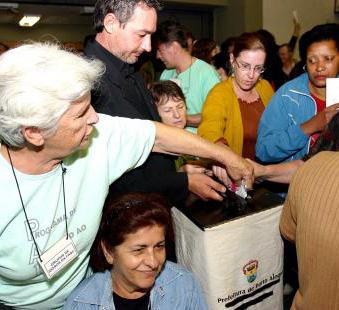 Voting in Porto Alegre's 2005 Participatory Budget, the first in the world in 1989.
Open-source tools have widened access to activities such as participatory budgeting and enabled these to be scaled to various cities around the world. Crucially, they also provide the infrastructure for a truly 'public' good that is managed, maintained and enhanced by citizens. Consul, the open-source tool developed for Decide Madrid, has been adopted by 130 entities in 33 countries, while Consul's sister platform, Decidim, has been implemented in over 300 instances. For more mature approaches, such as participatory budgeting, online and offline interactions are being combined in innovative ways. In Lisbon, the municipality has begun 'de-digitising' the process, balancing aspects that benefit from technology with those better addressed through in-person interactions.
"I think tech opens up a lot of new possibilities that revitalise the discussion about what citizen engagement really is and what it should be."
— Øyvind Tanum, Head of Smart Cities, City of Trondheim
Footnotes:
Why mainstream democratic innovations now?
After several years of experimentation, democratic innovations have been applied to a wide range of policy challenges, from urban planning to Uber regulation, and at every level of government, from local to international.
"I don't believe anymore in a democracy that is only an election every five years, without any involvement of the citizens"
Guy Verhofstadt, Member of the European Parliament
These democratic innovations have proven their worth, delivering unique benefits which have seen institutions from the EU to the OECD call for more participatory and deliberative democratic institutions.
- Better-quality decision-making. Various studies have shown that increasing the diversity of people involved in decision-making can improve the quality of decisions. This can include a reduced risk of bias, more considered judgements and increased creativity of the group.
- More ambitious decisions. Citizens are not bound by the factors that often constrain politicians, such as electoral cycles or special interest groups. Citizens can therefore think long-term and make considered judgements on risks and benefits. Deliberative exercises on the climate emergency have shown that citizens tend to propose bolder and more ambitious actions than their elected representatives.
- More socially inclusive decisions. The outcomes of deliberative processes are often more equitable, sustainable and fit for 21st-century society. Examples include unblocking political deadlock to legalise abortion in Ireland and recognising indigenous rights in climate action in Washington State.
- Improved institutional capacity. Public policy outcomes are more reflective of societal needs. Institutional actors, such as policymakers, also build a deeper understanding of effective policy and citizens' needs.
- Legitimacy to make difficult decisions. Society's current crises require difficult long-term decisions. Democratic innovations help surface public priorities and reduce the risk of failure, supporting institutions to take credible decisions that both the public and politicians will view as legitimate.
- Increased trust between citizens and institutions. When done well, democratic innovations can enable citizens and institutions to learn about each other's needs and constraints and build mutual trust.
- Empowered citizens. Democratic innovations can have a profound impact on citizens. For instance, people may be encouraged to make more socially and environmentally conscious decisions; change careers or return to education; understand the value of their lived experience; and become more politically active.
- Improved social cohesion. In a time of increased polarisation, democratic innovations can build social cohesion even on contentious topics and help people understand each other's experiences more deeply.
Despite these benefits, few democratic innovations have managed to reach a level of mainstreamed practice. In the following section, we introduce a new framework that can support institutions and practitioners to make the most of democratic innovation irrespective of the process chosen or their level of experience.
![Young people protest climate change, holding signs that read "THERE IS NO PLANET B" and "IT'S A BEAUTIFUL WORLD"].(https://media.nesta.org.uk/images/page_16_img_0_hoEG8ol.original.jpg)
People protesting for climate action
3. Deliver, Expand, Embed: A framework for advancing democratic innovation
The 'Deliver, Expand, Embed' framework is designed to help institutions, practitioners, civic tech and civil society to identify and address the many barriers to advancing democratic innovations. The three levels of transformation described in this framework are interconnected, but the path between them is non-linear.
All journeys towards a participatory future will begin with 'Deliver', but there is an interdependent relationship between 'Expand' and 'Embed'. To meaningfully expand their reach, participatory processes need to be adequately embedded within institutions and supported by the institutional belief that all voices count. Likewise, for citizen-led processes to show their full potential through embedding, participation needs to be widespread. Here, we provide an overview of the different parts of the framework. In the next section, we then explore the barriers and enablers associated with each level in more detail.
Deliver democratic innovations
The first level of the framework sets a foundational objective: to get the basics right in delivering democratic innovations. Although institutions may be interested in implementing new forms of participation, many face challenges in setting up a participatory process and then delivering it to the established best practice. This can result in superficial participation that listens but does not act, or processes that are so under-resourced that they inevitably fail, entrenching distrust on both sides.
While democratic innovations may not be perfect processes, they have many benefits for policy outcomes and for the citizens and institutions involved. Delivering these processes to the established standards of best practice is particularly important because of the scale of cultural change required to mainstream participation. The more experience people in institutions have of these processes, the more likely they are to champion participation. Likewise, the more experience citizens have of taking part, the more they will demand that institutions introduce these participatory processes.
This level of the framework helps to establish meaningful participation channels between citizens and institutions through citizens' assemblies, participatory budgeting and other emerging practices.
"The more people can have direct experiences doing these things, the more they then see themselves as someone who believes in participatory democracy and perpetuates it ... to me the question is one of: how do you scale giving people these experiences?"
Matt Stempeck, researcher, technologist and activist
This diagram illustrates the relationship between Citizens and Institutions and different forms of participatory practices.
Diagram showing flow from Citizens and Institutions to specific practices:
- Citizens arrow leads to:
- Citizen assemblies
- Participatory budgeting
- Other emerging practices
- Institutions arrow leads to the same practices, implying a connection or support role.
Challenges when delivering democratic innovations for the first time:
- Starting a process.
- Getting funding and resources.
- Finding the right skills.
- Delivering on the outcomes of the process.
- Setting up a digital participation tool.
What 'delivering' democratic innovations looks like:
- Well-resourced and skilled delivery. Institutions set up projects with well-resourced teams and skilled facilitators. They also allocate resources for supporting and integrating outputs with departments that are not directly responsible for the participation process, but are still accountable for the outcome.
- Good citizen engagement. There is good outreach and engagement with citizens, and most people affected by the issue are aware of the process. People are compensated fairly for their time and motivated to engage.
- Meaningful outcomes and clear communication. Citizen input produces a clear outcome. In the best cases, this is a tangible change to policy or the implementation of an idea; in others, it is limited to recommendations to elected officials. Either way, the outcome is clearly communicated and well understood throughout the process.
Expand democratic innovations
The second level of the framework seeks to expand the number and diversity of people engaged through democratic innovations. Most current processes fall short of being truly inclusive and accessible to all. Digital participation exercises that are open by design mostly see engagement from groups who are already active through traditional methods. In the European context, this is often white, middle-aged, educated men.
Although technology facilitates the opportunity for an 'always on' democracy where people can participate when and how they want to, our research shows that digital interactions often 'shadow' what takes place at in-person events rather than transforming participation.
Concentric circles illustrating participation levels:
- Outermost circle: Population boundary
- Middle circle: Already politically engaged
- Innermost circle: Engaged through participatory activities
An illustration showing the majority of people engaging in participatory activities are already engaged through other means.
Line graph showing Participation over Time:
Two lines:
- Offline (dashed line): Shows a peak in participation.
- Online (solid line): Shows two smaller peaks, mirroring the offline peak, suggesting a "digital shadow" effect.
An illustration of evidence from pilots in Gothenburg and Helsinki that online participation follows in-person activities, forming a 'digital shadow'. (The level of participation illustrated is arbitrary.)
"A lack of political presence in decision-making means interests are overlooked."
Graham Smith, Professor of Politics, University of Westminster
Activities can fall short even when they involve a representative group of people through sortition. Some groups are already excluded at the recruitment stage. Others find themselves sidelined during the process - for instance, when people with a higher social status dominate debate or when activities favour particular educational or cultural backgrounds. A lack of diversity in participants poses a risk to both the quality of decisions and the legitimacy of democratic innovations.
This level of the framework expands further into the citizen population to create a more inclusive and accessible form of participation.
Tree-like diagram illustrating expansion of participation:
- A central trunk labelled "Citizens" branches out into a canopy of connected nodes.
- A caption "Expanding participation to involve new groups" indicates the purpose of the visual.
Challenges when expanding democratic innovations to new audiences:
- Measuring and monitoring the diversity of participants.
- Forming an inclusive and equitable environment for participation.
- Reaching marginalised communities.
- Reaching communities that do not traditionally participate.
- Creating inclusive and accessible digital environments.
What 'expanding' democratic innovations looks like:
- Equitable voice and impact. An equitable environment is created in which all citizens can voice their opinions and experiences, and all are heard equitably.
- Accessible processes. Participatory processes take place in physical and digital environments that everyone can access, at times of day when people are available. Consideration is given to circumstances such as caring commitments or the need to work.
- Inclusive and accessible content. The way that information is designed, communicated and shared meets the diverse needs of the participants.
- Representative. The people participating reflect either society at large or those affected by the decisions. Beyond this, citizens see themselves represented in the institutions that serve them.
Embed democratic innovations
The third level of the framework addresses how institutions can undergo deeper transformation by embedding democratic innovations into mechanisms of decision- and policy-making. This is a slow process, not least because the proposed transformation assumes a redistribution of power. Building new participatory systems requires institutions to reimagine their relationship with citizens and, equally, citizens to reimagine their role in decision-making. Truly embedded democratic innovations require both an institutional belief in the power of citizen-led processes and a strong citizen network with agency.
Diagram illustrating the embedding of democratic innovations:
- A root-like structure with "Institutions" as the trunk, deeply embedded.
- A caption "Embedding further into institutional practices, processes and culture" describes the process shown.
"What are the new institutions that can be creating genuine ways for people to play a meaningful role in our everyday decision-making?"
Claudia Chwalisz, Founder, DemocracyNext
Digital transformation has disrupted almost every aspect of our lives, not only digitising services, but transforming them. Similarly, technology can be a crucial vehicle for change in everyday governance and serve as a 'Trojan horse' by aligning political differences through the modernisation of participation, while transforming how decisions are made. This once-slow transformation is picking up pace: the OECD has reported on eight different models of institutionalising permanent deliberative functions. The institutionalisation of participation concerns the formal rules, informal practices and narratives that form around participation in an institution. Embedding reaches beyond this to encompass relationships with other adjacent actors, such as citizens, civic tech and the wider ecosystem that makes up systems of participation.
Challenges when embedding democratic innovations:
- Sustaining a project beyond pilot stage.
- Developing wider institutional and non-partisan belief in participation.
- Giving citizens power over high-stakes and long-term issues.
- Creating the procedural and regulatory environment for participation.
- Adopting open government principles such as transparency and open data.
What 'embedding' democratic innovations looks like:
- More power, not more money. The citizens' sphere of influence increases such that their input has a direct impact on policy and outcomes. This is the foundational component of an embedded process. While institutions often see greater investment as a marker of the successful adoption of a process, research suggests that people would choose more influence over money.
- Legislative and cultural transformation. Clear legislation is introduced to instigate and sustain participation activities and, crucially, accompanied by broader cultural change. This ensures that participation becomes not just rules to abide by but an intrinsic mode of operation.
- Strong citizen networks. Strong and resilient citizen networks emerge when participatory systems are embedded into institutions.

Helsinki's Participatory Budget OmaStadi.
Integrated diagram showing the Deliver, Expand, and Embed framework:
- On the left, vertical labels "Citizens" and "Institutions" indicate the actors involved.
- On the right, three distinct sections, each with a bullet point and description:
- Expand: democratic innovations to build inclusive and accessible participation.
- Deliver: democratic innovations to achieve best practice.
- Embed: democratic innovations to create participatory systems of governance.
- The diagram visually represents the interconnected and hierarchical nature of these three levels of democratic innovation.
4. Barriers and enablers to advancing democratic innovation
The barriers and enablers in this section are presented at each level of the Deliver, Expand, Embed framework and have been organised into three categories:
- PEOPLE: The culture, behaviours, motivations, skills and capabilities of people or groups - including citizens, institutional actors and civic society - that enable the success or failure of participatory processes.
- PROCESS: The processes involved in democratic innovation and the elements that enable success or act as barriers. This includes engagement as well as political, policy and organisational processes.
- TECHNOLOGY: The function, design, accessibility, features and security of the technology that supports democratic innovations.
For readers who are politicians, civil servants, practitioners or technologists working in this field, many of the barriers discussed in this section will be familiar. This report is the first attempt to synthesise them in one place and present them alongside 'enablers' - practical actions and recommendations for addressing them.
The enablers are aimed at different actors depending on what the process is and who is leading it, but they are important for all to consider, especially those that are embedded within institutions. In general, barriers and enablers align by their numbering, but some enablers have wide-reaching impacts which can be used to overcome multiple barriers.
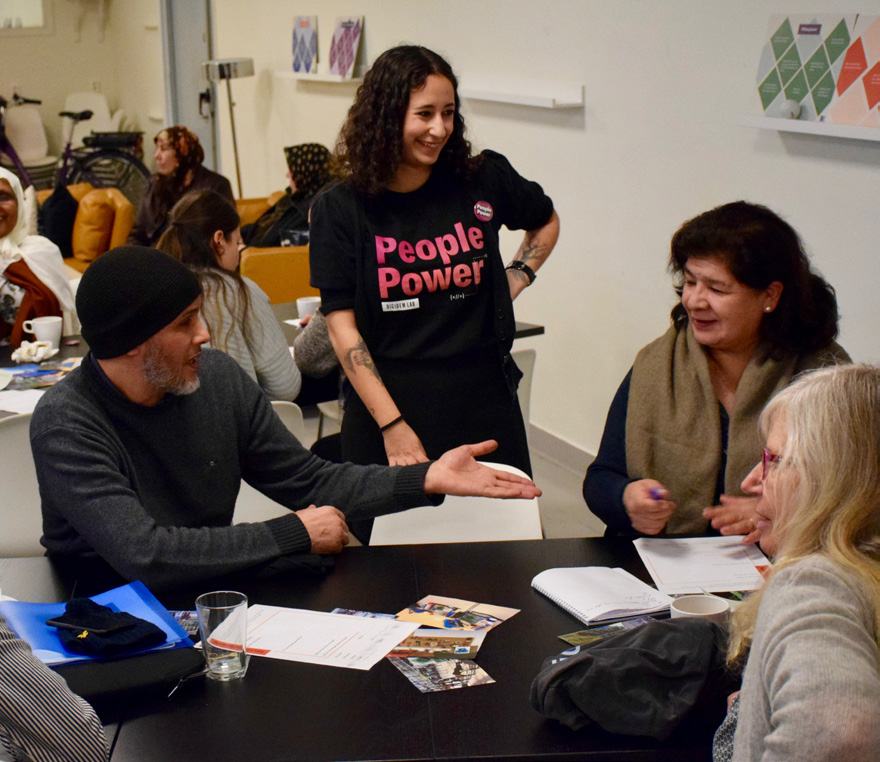
Gothenburg's Participatory Budget.
Barriers and enablers to advancing democratic innovation
Complex diagram summarizing barriers and enablers across Deliver, Expand, and Embed levels for People, Process, and Technology.
The diagram illustrates a central tree-like structure representing democratic innovations, with roots for 'Embed', a trunk for 'Deliver', and branches for 'Expand'.
On the left side, "Barriers" are listed for each level:
Barriers
Expand
People
-
3 A lack of diversity in participants and institutions
-
4 People lack the incentive or motivation to engage
Process
- Processes that some citizens cannot access
- Processes that exclude some citizens
Technology
- Digital exclusion
- Technology amplifying negative interactions
Deliver
People
-
1 Traditional culture and risk aversion
-
2 Shortage of institutional skills
Process
- Rigid regulation and processes
- No impact and poor communication
Technology
- Difficulty commissioning and integrating digital tools
- Low trust in and usability of tech
Embed
People
-
5 Reluctance of institutions to share real power
-
6 Partisanship and outsourcing
Process
- Short-term and siloed processes
- Compliance without conviction
Technology
- Poor development and maintenance of digital tools
- Transparency and security risks
On the right side, "Enablers" are listed for each level:
Enablers
Expand
People
-
3 Use independent and diverse facilitators
-
4 Develop inclusive incentives
Process
- Design for and with the community
- Design for increased access
Technology
- Treat inclusivity as standard
- Design tech for community building
Deliver
People
-
1 Gain senior and multi-departmental buy-in
-
2 Build skills and capabilities
Process
- Start small and focused, then scale
- Transparent processes and communication
Technology
- Shape new business and operating models
- Design for digital
Embed
People
-
5 Grow citizen-centred cultures
-
Process
- Embed participation into existing policy processes
- Design new citizen-led institutions
Technology
- Use technology as a tool for transformation
- Build open source tools and a civic-tech community
Barriers and enablers to deliver democratic innovations
Democratic innovations provide methods and tools to harness the collective intelligence of citizens and institutions. These approaches have been tried and tested over many years and across political and cultural contexts, yet some institutions still fail to get the basics right.
Diagram showing Citizens and Institutions connected by various pathways.
This diagram highlights the relationship between citizens and institutions and how barriers and enablers affect the flow of democratic innovations.
People barriers and enablers for delivering democratic innovations
People barrier #1: Traditional culture and risk aversion
- Top-down cultures, which are less likely to pursue bottom-up methods.
- Political parties with weak majorities, who are less likely to pursue participation.
- Institutional belief that citizens will not make the right decision or do not want to participate.
Traditional organisational culture and risk aversion prevents institutions from pursuing participation or leads to tokenistic participation. Top-down or bureaucratic cultures are less likely to initiate participation, while risk-averse public managers may use participation to promote policy that has already been decided. Equally, political context can influence the likelihood of participation being pursued and evidence suggests that while this is not a prerequisite, there is more chance for participation in cities with a leftist mayor, high median income and less competitive elections. Parties with weak majorities may even abandon participation to avoid the risk of strong opposition.
Evidence suggests that public managers resist pursuing participation when they believe citizens lack the capabilities or motivation to take part. A survey of public managers in Sweden surfaced perceptions that citizens lack sufficient knowledge and awareness of current issues or the workings of government, and only 20% believed that citizens are motivated by the collective interest rather than self-interest.
People enabler #1: Gain senior and multi-departmental buy-in
Find senior political and institutional champions and build cross-departmental support to drive participation and ensure outcomes are realised.
- Find participation champions
Almost all successful processes gain senior political buy-in. This can be achieved by presenting participation as a tool to address pressing issues. For example, participation may benefit politicians who are dealing with political deadlock, unpopular issues or topics on which their party lacks a strong stance.
"We involved people from quite a few different parts of the municipality because the more people that are part of the process, the more people understand the importance of it."
Kristin Solhaug Næss, Citizen Participation Advisor, Trondheim Municipality
- Build awareness and ownership across departments
Seeking cross-departmental ownership of and input into the participatory process at an early stage will support the implementation of outcomes. Co-designing the process across departments can lead to shared ownership of the participation agenda. Senior advisory panels can then unite stakeholders around a process while creating senior sponsorship. In Trondheim, interested members of the municipality were invited to oversee and contribute to the planning of the citizens' assembly, which extended their understanding and appreciation of the process.
People barrier #2: Shortage of institutional skills
- Low digital and participatory skills.
- Low resourcing of specialist participatory skills, such as outreach and community-building.
- Limited analytical skills to review and act on participation.
- Under-resourced specialist skills with unrealistic expectations.
The skills required to design and deliver participation, including digital participation, are often absent or embryonic when institutions first pursue a process. This can result in institutions either not pursuing or undervaluing participation. Without a deep understanding of participatory processes, institutions often fail to recruit for outreach, facilitation and relationship-building skills that are fundamental to any community-building, favouring more traditional skills such as report writing.
Community outreach can also generate a significant amount of unstructured data, which can become overwhelming, particularly when that outreach is digital. Evidence suggests that institutions lack the analytical skills and capacity to review and make sense of vast amounts of data to form actionable insights. This often leads to outsourcing to specialist teams or hiring new roles into the organisation. However, as the scope of these roles might not be well understood internally, specialists are often under-resourced, subject to unrealistic expectations and unable to deliver the scope of work intended.
"The amount of the time it takes to design and produce a variety of marketing material in seven different languages was a bit of a surprise for me. At points, maybe 70% of my time is being a marketing manager."
Kirsi Verkka, OmaStadi Development Manager, City of Helsinki
People enabler #2: Build skills and capabilities
Build participatory, digital and analytical skills to gain support for and interest in participatory processes and deliver these to best practice.
"The borough liaisons took on enormous areas of responsibility. It takes many years to gain an understanding of the dynamics of even a smaller area."
Eeva-Liisa Broman, Project Manager, City of Helsinki
- Choose the right team structure and resource for success
A digital participatory process can be delivered at different scales and costs. Teams can vary in size from one to ten people, while platform costs can range from several thousand to tens of thousands of pounds. It is important to balance external and internal resources. Generally, if staff resources are low, use outsourced staff and easy-to-operate platforms; if the team is bigger and better-resourced, building from open-source tools will be a worthwhile long-term investment. Deliberative processes require multiple skills and capabilities, from designing and conducting sortition to information design.
- Hire in-house community engagement specialists
Although some roles need to be outsourced, hiring in-house community engagement specialists to build and interact with communities is important for long-term success. These roles have promoted good engagement and trust-building in Helsinki's participatory budgeting and in participatory budgeting exercises across Scotland.
- Train for outreach and facilitation skills
Providing training in outreach and facilitation skills for employees across institutions can improve the participatory process and give institutions a deeper understanding of citizens' input. In Barcelona's Municipal Action Plan, designers and urban planners took 'carts' into the city's streets and spoke to residents about their experience so that planning decisions could be viewed from the reality of the street.
Process barriers and enablers for delivering democratic innovations
Process barrier #1: Rigid regulation and processes
- Regulation and bureaucracy that limit uptake of participation and adoption of results.
- Institutional view of participation as an add-on to existing processes.
- Failure by institutions to budget adequately for participation.
'Formalisation, strict routines and red tape' can limit experimentation in institutions and frustrate efforts by public managers to implement participation. Regulation may restrict who can make decisions on public policy or spending, or prevent institutions from acting on the outcomes of participation. For example, in Trondheim, despite political appetite to initiate participatory budgeting, anti-corruption regulation blocked public decision-making on the spending of state budgets and grants.
Perceptions of participation as an 'add-on' can result in resources being concentrated on the 'core mission' of the policy issue. Participation often fails due to insufficient financial and human resources, and while digital tools may eventually reduce engagement costs, their first deployment is typically more resource-intensive. As the OECD highlights, the cost of public participation varies significantly - from €1,000 to over €1 million - and this range can hamper effective planning.
"In these kinds of projects and innovation processes, it's really hard to get funding for the end result, because you don't know [what it will be]. And in this case, it's also about removing power from the politicians, so it makes it even harder."
Øyvind Tanum, Head of Smart Cities, City of Trondheim
Process enabler #1: Start small and focused, then scale
Start participation processes small and focus them on clearly bounded issues with predefined outputs and responsibilities.
- Set clear and tangible objectives
Clear, realistic objectives need to be established from the outset, with tangible outcomes that can be delivered quickly. This will build trust between citizens and institutions. Objectives should also align with wider strategic goals for the municipality and have a 'well-structured and focused' approach for delivery. This means even strategic topics should be grounded in tangible actions.
- Start by starting
The success of Paris's participatory budgeting process has been attributed to a 'learning by doing' culture which countered the bureaucracy that often dominates institutions. Institutions benefit when they adopt an experimental, risk-taking mindset. This was the case in Oslo, where regulation prevented participatory budgeting but local politicians agreed to follow the outcome of the process despite this.
- Plan for and protect time
Starting small may be less costly and resource-intensive, but all such projects require adequate time and can only succeed if there is an understanding of the commitment required. In Helsinki's participatory budgeting process, the process was extended from one to two years to give the government more time to respond to and act on the proposals. However, processes should not be so long that citizens lose interest.
- Evaluate and redesign throughout
Delivering participatory processes involves ongoing discovery. Budget and resources should therefore be allocated to evaluation and iterative redesign throughout the process. Research suggests that for routine projects, under 1% of a budget can be allocated to evaluation but that for innovative projects with great learning potential, 5-10% is necessary.
Process barrier #2: No impact and poor communication
- Participation with no clear impact or action.
- Mismatch between the influence promised to participants and the reality.
- Lack of communication or transparency at any stage in participation.
Participation processes commonly fail because they produce no clear impact while citizens have high expectations about how their contributions will be used. For instance, until 2018, only two of 25,000 citizen-initiated legislative proposals had reached the voting stage on Decide Madrid, which was dominated by government-led proposals. Such instances can harm credibility and result in rising apathy and resentment from citizens, ultimately reducing the effectiveness of future participation efforts.
Communication breakdowns or lack of transparency at any stage of the process - even when institutions are legitimately reviewing input - will breed distrust in the entire process. Topics for participation that are vague or unclear can confuse participants. When tangible recommendations from citizens get lost in strategic plans or institutions fail to communicate the impact of participation, it can reduce contributions and lead to public dissatisfaction. Failing to communicate the impact of participation can reduce the number of people engaged and increase public dissatisfaction. Equally, if the scope or budget of the process is small but the process takes a long time, people can be put off participating, as experienced in Gothenburg's participatory budget on social activities
Process enabler #2: Transparent processes and communication
Ensure processes follow best practice, are accessible to people affected by the issue, are transparent throughout and translate citizen input into clear outputs.
"We must learn that residents really do put time and energy into their ideas, even when sometimes they propose that a restaurant is needed 30 metres underground. We must still examine the proposal, respond accordingly and use sufficient time in doing so."
Mikko Aho, Executive Director, Urban Environment Division, City of Helsinki
- Follow best practice
Section 2 includes a selection of best practice guides, which can support institutions and delivery partners to get the basics right.
- Communicate the process and impact
Informing citizens regularly about the scope and reach of participation will guide input and avoid disappointment. Conveying how citizen input will be used is often more important than the scale of the impact itself, although people are more likely to participate if there is a tangible outcome. Similarly, citizens are more likely to take part if they understand who will participate and how, and what the outcomes of previous processes have been.
- Maintain active and meaningful communication throughout
Good engagement calls for a strong, flexible communication strategy. This will support timely and comprehensive exchanges between institutions and citizens. In digital interactions, institutions must communicate why actions have been taken to avoid the perception of censorship or manipulation. Effective communication strategies build trust and credibility in the process while giving participants a greater sense of impact and voice.
Case studies
Decide Madrid Participatory Budgeting
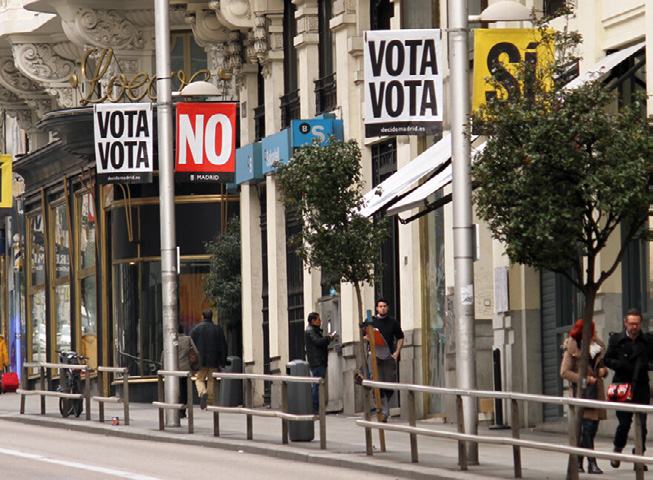
Madrid, Spain. 2015 - present
Decide Madrid was launched as a city-wide participation platform in 2015, with participatory budgeting as its central feature. This was conceived and championed by the political leadership at the time, the left-wing coalition Ahora Madrid (People enabler 1). The delivery team had the mandate and resources to establish new standards for digital participatory budgeting (People enabler 2). This became an approach which many other cities around the world followed, in large part thanks to the open source software, Consul, that was developed through the project (Technology enabler 1).
The city had a strong marketing strategy (Process enabler 2), advertising the process using both offline and online channels. Citizens contributed either through the platform or in the city's 26 citizen attention offices. However, even with these efforts, evidence suggests that it was much more widely known by higher educated people.
At its height in 2019, 91,032 participants were voting on a budget of €100 million. However, following a change in government in 2019, most of the participatory activities were halted. While much of the team has changed, the tools have remained and so, in 2021, the city restarted its participatory budgeting process with €50 million.
Barcelona's Municipal Action Plan
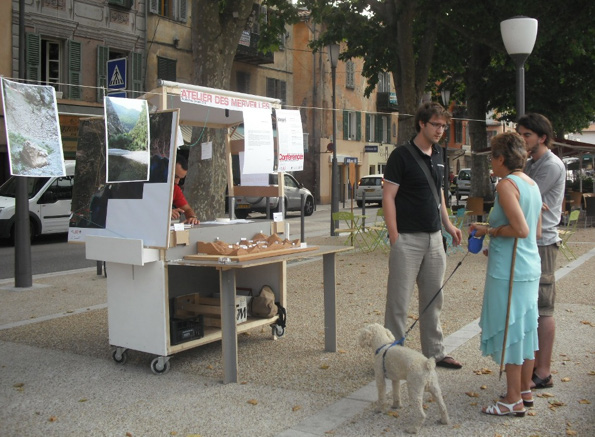
Barcelona, Spain. 2016 - 2019
The Barcelona Municipal Plan was the city's first attempt at participatory policy making championed by the Mayor, Ada Colau (People enabler 1). It was a hybrid online-offline process that brought together experts from different departments in the city, civil society organisations and local residents to discuss the future of municipal services and how they should be delivered. The urban planners and civil servants were trained in outreach skills as they engaged residents directly through street installations (People enabler 2). The Municipal Plan was a focused policy initiative and as such, set realisable, transparent objectives that were clear to the participants (Process enabler 1).
Citizens were invited to submit or support policy proposals using the open source platform, Decidim. The Decidim platform was created by the government and established a community of 700 local contributors through the forming of a civic tech community (Technology enabler 1). In total, 40,000 people participated and 72% of the 10,000 proposals were accepted. Since the plan was accepted, the platform has also offered a monitoring function where citizens can track the progress towards completion.
The Municipal Action Plan was the first of many experiments in democratic innovation for Barcelona.
Technology barriers and enablers for delivering democratic innovations
- Exclusion of early-stage civic tech companies from public procurement.
- Rigid government workflows that are difficult to integrate with digital democracy platforms.
- Inflexible institutional contracts with IT providers that hamper the integration of new tools.
- Regulatory constraints that limit the integration of digital tools.
Although institutions have access to an array of digital tools and service providers for citizen participation, digital democracy projects can fall at the first hurdle: commissioning and integration. Civic tech is a developing field and procurement rules, such as financial stability, can prevent early-stage companies from qualifying. For instance, a study found that only 3% of UK government public procurement spending went towards start-ups.^106 Some organisations are excluded from procurement entirely, while others fail to create a clear business case for institutional clients.^107
When institutions do engage with civic tech providers, they may encounter challenges integrating new tools with legacy ICT or rigid workflows. Politicians and civil servants may also struggle to draw actionable insights from digital engagement when citizens provide only 'surface-level overviews' of issues, or masses of online text make it difficult to identify the 'signal' amidst the 'noise'.^108
"The small people can't put in for big contracts. Some type of space is needed for them to be able to compete - for example, spaces to speak to commissioners, or a marketplace for collaborative bids."
Daniel Robinson, Nominet Trust^109
Technology enabler #1: Shape new business and operating models
Use creative financial and operational models to deliver innovative forms of participation.
"Being able to have one installation [of Decidim] and create a new instance for each city within that installation makes it scalable. What we're doing is then removing almost all the technical barriers for new cities to start participation."
Øyvind Tanum, Head of Smart Cities, City of Trondheim
1. Use existing infrastructure and tools
Delivering digital participation does not require institutions to develop a brand new platform. Many useful tools are already available to institutions, from social media (such as Facebook and Snapchat) to corporate licensed software (such as Zoom and SurveyMonkey).^117 Selecting a tool that people already use and are familiar with avoids the considerable task of building an active community of users.^118 Beyond general-purpose tools, institutions can choose from three options according to need and available resources: use an existing off-the-shelf platform (such as CitizenLab and Delib); adapt an open-source platform (such as Decidim and Polis); or, as vTaiwan did, integrate various tools into one platform.
2. Find partners and collaborate
Institutions should find collaborators to share the upfront costs and scale the benefits of digital participation tools. Institutions can achieve this cross-departmentally by co-designing the data each department and stakeholder needs from citizens and developing tools with various 'views' for easy access.^119 Norway's Smart City Network has gone beyond institutional departments and created an alliance of municipalities to develop Decidim centrally for local application.^120 Forming strong communities of practice between cities can encourage scaling, as cities are more likely to pursue digital participation when they are aware of processes happening elsewhere.^121
3. Iterate development
An agile and iterative process is fundamental to digital development, but is often lacking in institutions. Developing open-source tools can support this approach as many are modular. For example, after the Norwegian Smart City Network funded the development of an automated archiving system from one municipality's budget, this was adopted by almost all users.^122
Technology barrier #2: Low trust in and poor usability of tech
- Lack of in-person events resulting in falling participation on digital platforms.
- Lack of trust in the privacy and security of technology, particularly private platforms.
- Poor usability of technology.
Various studies have found that digital engagement favours those who already want to engage rather than reaching new audiences.^110 Some people simply prefer face-to-face over digital, even when they have the skills and access to data and technology.^111 In Madrid and Helsinki, access to technology is high but digital participation is relatively low and often follows in-person events.^112 Low digital participation can be driven by low trust in the security and resilience of digital platforms and concerns over the risk of manipulation from citizens, especially when the platform is run by a private entity.^113 However, for citizens to engage digitally, there must also be foundational trust in the process and institution.
When citizens do engage digitally, platforms with poor functionality can reduce participation. In Trondheim, even a registration form to the citizens' assembly was considered too arduous for some participants to complete.^114 During Estonia's digital participation activities, a lack of opportunity for peer-to-peer engagement^115 and the absence of updates on interest areas reduced engagement. However, simply increasing the number of features may not be a solution, as this led to poor user experience on the open-source platform Decidim in Barcelona.^116
"The problem isn't people not understanding technology; it's the same problem why people don't show up to face-to-face meetings - low trust, they think the municipality won't listen creating an account on a municipality platform is a step higher than turning up in person."
Sanna Ghotbi, Co-founder, Digidem Lab
Technology enabler #2: Design for digital
Do not simply digitise physical processes; use digital to make participation simple, accessible and exciting.
1. Keep interactions simple
Digital marketplaces are designed to reduce all barriers to finding and purchasing, and digital democracy tools should be equally barrier-free. User-friendly tools increase reach and engagement^123 and institutional uptake. In Trondheim, the municipality switched from the open-source tool Consul to Decidim, not just because of its functionality but also because it 'looked and felt much better'.^124
2. Meet people where they are (digitally)
Research suggests that 'creating opportunities for the first interaction on a tool is critical for sustaining engagement'. It is therefore crucial to meet people on the platforms and apps that they are already using.^125 For instance, Praekelt.org builds tools to automate WhatsApp participation.^126
3. Design to enhance rather than replicate in-person processes and interactions
Technology can change how we consume information by making content easier to explore and interpret, while sharing open data makes institutions more transparent. Tools that use gaming techniques can aid understanding of complex topics - for example, Block by Block, which uses Minecraft to gamify urban planning.^127 However, including periodic opportunities for face-to-face interaction as well can enhance collaboration and engagement. During the development of Barcelona's Municipal Action Plan, 87% of the proposals formulated through a hybrid offline/online process were implemented compared with 42% of those developed through solely digital means.^128
Barriers and enablers to expand democratic innovations
Even best practices in democratic innovation fall short of being truly inclusive and accessible to all. This can perpetuate and exaggerate societal inequalities, resulting in processes that end up serving the most powerful.
A diagram illustrating the interconnectedness of various barriers and enablers in expanding democratic innovations, all linked to "Citizens" at the center.
People barriers #3 and #4 relate to the lack of diversity in institutions delivering participation and to the challenges of motivating citizens to participate.
People enablers #3 and #4 emphasise the need for diverse and independent facilitators and for inclusive incentives.
Process barriers #3 and #4 relate to processes that are inaccessible and exclude citizens and marginalised groups.
Process enablers #3 and #4 set out principles and recommendations for designing processes with communities to improve accessibility and inclusivity.
Technology barriers #3 and #4 relate to digital exclusion and to ways that technology can amplify negative behaviours.
Technology enablers #3 and #4 set out best and emerging practices for inclusive digital design and community-building.
Case studies
Washington State Climate Assembly
 Photo credit: Washington Climate Assembly Final Report
Washington State, USA. 2020 - 2021
The Washington State Climate Assembly was the first of its kind in America. The assembly brought together 77 people from across the state to learn, deliberate and decide on climate mitigation strategies. Equity was a core design principle for the assembly. First, a selection algorithm was used to gather a broadly representative sample of people across the state. Then, during the assembly, all participants received $500 in compensation as well as additional support from childcare to technology assistance (People enabler 4).^129
The independent facilitators of the process were of a balanced race and gender to ensure inclusive participation (People enabler 3). The facilitators also used illustrations to synthesise many of the complex discussions which improved the understanding of the process for participants (Process enabler 4).^130 Finally, the scoping of the assembly was open for anyone to participate on the platform Mural (Process enabler 3).^131
Organised by the nonprofit organisation, the People's Voice on Climate, this process was not commissioned by or embedded into the government, but the recommendations of the assembly that achieved more than 80% support were submitted to the state legislature. While some politicians publicly supported the process, there is no direct evidence of impact to date.^132
Scotland's Climate Assembly and Children's Assembly
 Photo credit: Children's Parliament and Scotland's Climate Assembly Report
Scotland, UK. 2020 - 2021
Scotland's Climate Assembly brought together over 100 representative people of Scotland to debate how to tackle climate change fairly. In parallel, the organisers extended who could participate by convening a Children's Assembly with 12 children and 113 supporting members (People enabler 4). The Children's Assembly reported into the main process three times with 60% of participants finding this a helpful exercise.^133 The debate was also opened to the wider public through crowdsourcing ideas on the Dialogue platform. This resulted in 235 ideas that were shared with the assembly after experts assessed their feasibility (Process enabler 3).^134
To ensure that everyone could participate equally, laptops and dongles were provided to participants, and those with low digital skills and experience were provided with one-on-one technical support (Process enabler 4). While the Assembly addressed many of the barriers to participation, the complexity of information provided and the time required to process this outside of the assembly was a challenge that emerged through the process.^135
The Climate and Children's Assembly recommendations were presented to the Scottish government together. While this achieved broad support from the public and the Scottish government provided a comprehensive response, the immediate impact on policy is still unclear.^136
People barriers and enablers for expanding democratic innovations
People barrier #3: A lack of diversity in participants and institutions
- Participants who are not representative of the population.
- Inconsistency in how diversity is described or measured.
- Municipality staff and facilitators are not representative of the wider population.
Lack of diversity among participants and institutional facilitators is both a symptom and a cause of exclusionary practices. Across many open participatory processes, participants tend to fit a common profile: they have 'time, money and knowledge'.^137 This means, there is less participation by women, racial and linguistic minorities, young people, people with low-paid jobs and the unemployed, especially when participation is online.^138 This lack of diversity can reduce trust in a process as well as its legitimacy, as seen in Estonia's People Assembly in 2013.^139
Some institutions fail to adequately define diversity as an objective, specify what representation should look like or measure participant diversity. Moreover, the way diversity data is collected can be exclusionary, forcing marginalised groups to choose between participation or selecting a category that does not reflect their identity.^140 Choosing representative samples of participants through sortition can also be challenging when governments cannot access up-to-date registries of potential participants due to a lack of data or restrictive legislation.^141 Fundamental to this challenge is a lack of representation within institutions delivering participation. For example, research suggests that women are less likely to participate when facilitators are male, and studies indicate that marginalised communities in the US participate less when underrepresented in government.^142
"Underrepresentation of vulnerable groups in decision-making spaces has been critical and we need to face this. You will not realise the benefits of participatory decision-making if your process isn't designed for the community you're trying to empower."
Emilia Saiz, Secretary General of United Cities and Local Governments^143
People enabler #3: Use independent and diverse facilitators
To build trust and deliver an inclusive process, ensure participants can see themselves in their institutions and in those facilitating the process.
1. Set diversity standards
Organisations need to set clear targets for the diversity of both institutions and facilitators. In Washington's Climate Assembly, facilitator teams were designed to have a balance of race and gender.^152 At a minimum, these targets should reflect the population mix, but beyond this, a stronger representation of marginalised groups can benefit the entire process. For example, female moderators can lead to more inclusive engagement processes for all, while female recruiters help increase participation by women.^153
2. Recruit independent, diverse and local champions
Independent, diverse and local facilitators of participatory processes can reach more people. Community-building is a long-term endeavour and it is important that once support for a process is established, it is not lost.^154 This means finding local partners relevant to the topic, such as local charities, faith-based groups or even industry groups. Independent facilitators can also restore trust between citizens and institutions and increase deliberation quality.^155 In Gothenburg, independent facilitators acted as a bridge between citizens and the institution, while paying local champions from a youth centre to send invites and attend workshops helped to increase the number of participants.^156
3. Train for inclusive moderation
Good-quality, inclusive debate relies on good moderation, which often requires significant resourcing.^157 Appropriate training is required for moderators to avoid the same bias as participants. In Washington's Climate Assembly, facilitation techniques focused on ensuring the safety and equity of participation.^158
People barrier #4: People lack the incentive or motivation to engage
- Belief by citizens that institutions will not listen to them.
- Participation fatigue suffered by marginalised groups.
- Failure to compensate or reward participants adequately for their time.
- Topics of debate that do not motivate people.
When participation is low, institutions - and even some academic evaluations - often conclude that citizens cannot or do not want to engage.^144 There are indeed some topics of public policy that do not align with people's priorities, especially those of marginalised groups.^145 However, low participation and apathy are more often driven by distrust in political systems and the belief that institutions will not listen to citizens.^146 This can prevent people from participating entirely or cause a drop-off when people feel ignored or belittled, as was the case in Helsinki's participatory budgeting.^147 Marginalised communities can develop participation fatigue if continually engaged with little follow-up action.^148
Similarly, if people are not remunerated for participation, this can skew representation to those who can afford it.^149 Participatory budgeting is often viewed as not requiring payment, yet the majority of low-income earners in New York's participatory budgeting perceived the time commitment as a barrier to participation.^150 Some residents who submitted proposals in Gothenburg's participatory budgeting were also reluctant to give more time to further develop them.^151
People enabler #4: Develop inclusive incentives
Understand people's diverse motivations for taking part, monitor who is participating and adapt outreach and incentives accordingly.
1. Compensate people fairly for their time
Institutions should value lived experience as much as technical expertise and therefore reward participation fairly. Remuneration for mini-publics is included in the OECD's good practice principles.^159 While not always feasible for large-scale participation, institutions can consider alternative forms of compensation, such as childcare support or the provision of food.
2. Expand who can participate
Fundamental to motivating people is ensuring that everyone affected by an issue can participate. In city-scale participation, the leading practice is to include everyone who resides in a city, as in Paris's participatory budgeting and citizens' assemblies.^160 This can also make the places where people live more inclusive, as in New York where residents and participants in participatory budgeting receive an ID card regardless of legal status.^161 Selection algorithms, such as the Sortition Foundation's open-source algorithm, can also ensure fairness when generating randomly selected and representative groups.^162
3. Experiment with and adapt incentives
People participate for varied reasons and respond to different incentives. Some studies have shown that people can be driven by a sense of identity with a place, by a desire to form connections or by altruistic motivations.^163 Research found that calling participants before engagement doubled participation, whereas increasing the number of social media posts had no impact.^164 Ultimately, effective outreach and incentive design requires an experimental, creative approach. Technology can help institutions be more dynamic, facilitating a more representative sample. In Helsinki, if participation is lower in a region of the City, the marketing team target that area with personalised social media adverts.^165
"To believe in deliberative democracy is to believe that all of us as citizens are equally worthy and capable of participating in our collective decision-making."
Claudia Chwalisz, Founder, DemocracyNext
Process barriers and enablers for expanding democratic innovations
Process barrier #3: Processes that some citizens cannot access
- Written and verbal communication that does not represent the diversity of languages spoken within a city.
- Activities that are inaccessible due to time or place.
- Poor information and communication design.
Some citizens cannot access participatory processes. Municipalities can fail to engage people in their preferred language,^166 the location of a public meeting may be inaccessible without public or private transport, and engagement may take place at a time of day that excludes people working either business or shift hours. All of these factors can limit the diversity of participants.^167
Poor information and content design can also limit people's ability to participate. For example, too much information can overwhelm participants,^168 especially those with diverse cognitive needs or less experience in discussing complex topics. Mass digital deliberation can exacerbate this problem if people cannot comprehend and synthesise the large amount of information available to them.^169 In addition, institutions can fail to communicate meaningfully because they are expressing complex policy problems in technical language and jargon which most citizens do not understand.^170
Process enabler #3: Design for and with the community
Design participation through participatory methods so that the community is empowered to set the agenda, shape the process and define the outcome.
1. Citizen-led agenda setting and process design
People want to engage with topics that matter to them. Setting the agenda of participation is therefore crucial^177 and this means aligning community concerns with institutional processes early in the policy cycle.^178
Processes may also be more effective when citizens 'set the rules of the game'.^179 For example, in Gothenburg's participatory budgeting, community-led process design identified the most effective channels of engagement offline and online.^180
Existing community forums can be highly effective in connecting with some hard-to-reach groups, such as when policy makers used the social network Mumsnet to engage mothers.^181 Similarly, using physical spaces where people already gather, such as schools,^182 can help diversify reach: in Gothenburg's participatory budgeting, making meetings visible from the public square increased attendance.^183 In some instances, private spaces - such as cafes run by trusted community members - can provide a more neutral meeting place.^184
Combining participatory and deliberative activities can expand the reach of deliberation and deepen participants, understanding of topics and each other. In Scotland's Climate Assembly, participation was opened to anyone in Scotland on the Dialogue platform, feeding 235 ideas into the deliberation process.^185 Building horizontal relationships between citizens interested in specific topics also strengthens community organising. Emerging technologies, such as Natural Language Processing, can automate this process by connecting similar submissions and driving collaboration, as is being trialled using the open-source tool Consul.^186 Technology can also encourage connection within communities that are difficult to gather in one physical space, with asynchronous communication enabling an 'always on' democracy.^187
Process barrier #4: Processes that exclude some citizens
- Identity verification that prevents participation.
- Digital and physical institutional environments that intimidate and exclude some people.
- Factors such as group dynamics and dominant participants that can favour overrepresented voices.
Institutions are not always 'neutral' entities. Marginalised groups, who have often faced historic or ongoing discrimination, are more likely to feel that they do not have permission to participate and the push for participation can cause fear in the community. This fear can exclude people at multiple stages of a participation process, from identification, which can require citizenship, to attendance at large in-person events.^171 This situation is often replicated in digital participation if institutions don't engage through the digital spaces already used by diverse community groups or if participants are intimidated by the idea of contributing to an 'official' government website.^172
The way processes are designed can also result in already-overrepresented people dominating debates and discussions. For example, men are more likely to interrupt than women and some deliberative processes favour people with strong argumentation skills.^174 Those who have financial or social capital can have more influence over the outcomes than those who do not, as illustrated in Helsinki's participatory budgeting, where people with experience of campaigning or buying advertising had a major advantage.^175 Furthermore, digital participation tools can be dominated by relatively few participants, for instance, when online contributions or deliberation are monopolised by a group of editors.^176
"I think if people were able to go to school and go to work much more freely without the fear of being deported, I think if they had that security, they would be more ready to come and vote."
Canvasser in New York's participatory budgeting^173
Process enabler #4: Design for increased access
Design processes in a way that enables all community members to participate and reaches the widest range of people affected by the issue.
1. Use accessible language for all
Communication should be available in all languages spoken by the population, as well as clear and jargon free.^188 Institutions should carefully consider the level of information provided and how facilitators or technology can support people with diverse cognitive needs. For instance, it can be helpful to offer a variety of 'views' on the same information.^189
2. Use design methods to increase understanding
Designing with communities should always start from a deep understanding of their needs. Design research methods can help process designers to understand how potential participants communicate and behave.^190 Illustrations, animations and videos can also make content more accessible. During Citizens' Assemblies in Trondheim and Washington State, investment in design resources helped participants to understand synthesised information at each stage of the process.^191
3. Legislate to increase access
Institutions should protect participation by drawing on established practices such as jury duty. As deliberation is becoming increasingly mainstream in Belgium, two new areas of legislation are being developed that will provide institutions with access to citizen data for conducting a civic lottery, and protect peoples' working rights to join a citizens' assembly.^192 Legislation has also been introduced to ensure inclusive website and tool design, as is the case in the European Parliament's public sector websites.^193
4. Invest in multichannel outreach and access
Platforms Neighborland and CitizenLab often achieve high levels of engagement through investment in marketing and advertising.^194 In addition, providing multiple access points to digital platforms either in public spaces such as libraries or facilitators guiding people on tablets can increase digital participation for people without access or skills.^195
Technology barriers and enablers for expanding democratic innovations
Technology barrier #3: Digital exclusion
- People affected by digital poverty or who lack digital skills.
- People with diverse needs.
- Lack of funding for inclusive technology design.
Underinvestment in inclusive technology design can pose a threat to engaging a diverse and representative group of citizens.^196 People may be prevented from participating because of digital poverty, where they cannot access technologies and the internet. In youth participatory budgeting in Scotland, for example, people without an email address could not take part.^197 Another barrier is digital exclusion, where people lack the necessary skills and capabilities, such as the 169 million Europeans aged 16-74 who lack basic digital skills.^198 When these barriers are not addressed, digital engagement can reinforce inequality and create new 'digital divides'.^199
Technology enabler #3: Treat inclusivity as standard
Design digital tools for and with people that represent citizens' diverse needs.
1. Design digitally inclusive environments
Inclusive design often makes digital platforms more user-friendly for everyone. There are extensive guides on how to develop digitally accessible platforms, including: Access Guide, Web Content Accessibility Guidelines Version 2.2 and Inclusion, Not Just an Add-On.^209 Inclusive design principles should be applied throughout, with emphasis on easy sign-up and identification by removing barriers to entry, such as email addresses.^210 Digital accessibility can go beyond what is possible in person, for instance, through automated transcription, page translation^211 and providing multiple views of the same information.^212
Recruiting a diverse development team and group of test users is a simple way to ensure tools respond to a diverse range of needs. Open-source tools also bring a more diverse community of contributors into development, as seen with vTaiwan, where civic hackers added audio support features to face mask maps as part of Taiwan's COVID-19 response.^213 Increasing participant diversity requires investment in digital skills and access, as seen in Washington Climate Assembly where participants were provided with devices and technology support.^214
Digital tools can help level the playing field for participants. For instance, the use of a 'quality of life index' in participatory budgeting has supported participants in understanding the implications of decisions, and resulted in more socially equitable outcomes.^215 Digital tools can also dramatically change how people interpret and act on complex issues, from augmented reality to the use of topic cards.^216
Technology barrier #4: Technology amplifying negative interactions
- Echo chambers and digital trolls.
- Unstructured or unmoderated participation that reduces the quality of debate and increases the risk of abuse.
- Technology amplifying competition.
Social media - and, more specifically, the use of algorithms to increase engagement - has accelerated 'echo chambers', where people are surrounded by and incentivised to hold more extreme opinions while having less access to news and information that supports a balanced perspective.^203 This can impact participation, as was the case in Trondheim where both participants and organisers did not want to share progress of the Citizens' Assembly for fear of trolls.^204 Unstructured online discussions can lead to lower-quality deliberation and 'productive disagreement' occurs less frequently online than in face-to-face communication.^205 Online moderation and facilitation is challenging, not least because it involves synthesising large amounts of information, removing comments (from mundane entry errors to nuanced hate speech) and may raise concerns about bias or transparency.^206
Unmoderated discussion and anonymity can increase participation. However, it also leads to an environment 'without consequences', where abusive and divisive behaviour can dominate the discussion and discourage participation.^207 In addition, initiatives aimed at increasing engagement and participation can have negative side effects. For instance, in Helsinki's participatory budgeting, participants could see and adjust their votes in real time. Although this increased the number of votes, it also heightened competition and feelings of polarisation between citizens.^208
Thoughtful technology design can drive community-building and collaboration beyond the participatory process.
1. Build features for connecting communities
People are more likely to engage on a platform when they can interact with others, and it is important to consider the right moment for facilitators to intervene.^217 Platforms can encourage social connection through gamification, consensus-building or collective action through rewards.^218 Features that enable participants to send private messages, schedule meetings and form groups based on common interests can help build communities that outlive any engagement.^219 While some evidence suggests that deliberation can be better in person,^220 extensive testing of digital deliberation during the COVID-19 pandemic shows a more nuanced picture.^221 Digital deliberation therefore requires emphasis on forming social connection between participants.
High-quality deliberation can bring people together and promote consensus. Digital tools can enhance this process by, for example, automatically synthesising discussions, crowdsourcing perspectives on policy or supporting participants to structure their arguments.^222 The Wiki-survey tool Polis has been designed to reward consensus-forming,^223 unlike traditional social media, where the most popular, and often divisive, comments attract rewards or 'likes'.^224 But consensus-forming requires facilitation to ensure people are still addressing issues that matter rather than finding conflict-free topics.
3. Build features that encourage inclusive behaviour
Anonymity in participation carries risks, but it can also encourage inclusive behaviour and respectful debate by removing social cues that can lead to bias, such as gender, race or age.^225 Some platforms directly intervene, such as the Expressão digital participation platform and Slack's Allybot,^226 which remind users of more inclusive language.^227 Participatory monitoring and moderating can be an effective way to build an inclusive culture around a platform. When unmanaged, however, this can have the opposite effect.^228
"People will strive to find eclectic, nuanced feelings that somehow transcend their differences."
Audrey Tang, Digital Minister for Taiwan, on using the tool Polis to discuss policy^229
Barriers and enablers to embed democratic innovations
Very few institutions have managed to embed participation into how they operate instead of simply 'tinkering around the edges' of public policy and decision-making. For institutions to unlock the full potential of citizen participation, democratic innovation needs to extend further into institutional 'dark matter' - the organisational culture, business models, legislative frameworks, relationships and so on that make up modern institutions.^230
A diagram illustrating the interconnectedness of various barriers and enablers in embedding democratic innovations, all linked to "Institutions" at the center.
People barriers #5 and #6 relate to resistance to sharing power on high-stakes issues and to the effects of partisanship and outsourcing.
People enablers #5 and #6 set out strategies for transforming institutional cultures and strengthening citizen networks.
Process barriers #5 and #6 relate to ways that short-term, siloed and box-ticking processes may limit the impact and effectiveness of participation.
Process enablers #5 and #6 set out steps for embedding democratic innovation into existing processes and designing new institutions for citizen participation.
Technology barriers #5 and #6 relate to the challenges of developing and maintaining digital participation tools and the institutional risks associated with them.
Technology enablers #5 and #6 set out ways that digital tools can become vehicles for transformation and how the open-source community can assist in developing democracy.
Case studies
vTaiwan and g0v ('g0v-zero')
Process flow diagram of vTaiwan, from proposal to legislation stages.
It shows different stages and tools used:
- Proposal Stage: Discourse (Participants ask questions, Competent agencies respond), GitBook (Interpret and explain terminologies), Typeform (Qualify issue, Stakeholder discovery).
- Opinion Stage: Slideshare (Produce content digestible by stakeholders, Reach out to the public, Invite stakeholders through rolling questionnaires, Identify affected and knowledgeable people), Online deliberation (HACKPAD).
- Reflection Stage: Comment curation (sli.do), Face to face dialogue, Transcript (YouTube, LIVE house.in).
- Legislation Stage: Formalized consensus.
Photo credit: info.vtaiwan.tw/
Taiwan. 2015 - present
vTaiwan is an ever-evolving participation platform that enables citizens to initiate, design and influence a decision-making process for the national government. As illustrated above, the platform integrates various open and closed sourced digital components in a four-step process of participation: proposal, opinion, reflection and legislation stages. Beyond this, vTaiwan has transformed how people participate and support core government services, particularly through the civic hacker community g0v (People enabler 6). For example, during the COVID-19 pandemic, a g0v developer created a crowdsourced map of mask availability a month before the World Health Organisation issued an international alert.^231 This was later supported by Digital Minister Audrey Tang, who opened up government data to improve the accuracy of the map (Technology enabler 5).
vTaiwan is pioneering a new form of embedded participation through strengthening community organising rather than institutional transformation. Led by Tang, who was brought into the Taiwanese government in 2016 (People enabler 5), citizen participation is jointly sustained through demand for an open and transparent government by voters and participation officers embedded throughout the government (Technology enabler 5).^232 In addition, the government supports the volunteer-based civic hacking community g0v through regular hackathons and open exchanges between developers and civil servants (Technology enabler 6).
Paris: Model for a Participatory City
 Photo credit: Courtesy Mairie de Paris
Paris, France. 2014 - present
Since 2014, citizen participation has been a focus of Mayor Anne Hidalgo. Paris's participatory budget started in Mayor Hildago's first year and is open to any resident of Paris to generate ideas and vote on proposals. The process has gradually increased its budget from €20 million to €75 million in 2021. By 2026, the people of Paris are expected to decide on 25% of the City investment budget.^233 Participatory budgeting exists alongside a range of other participatory activities in the city, from the online reporting platform Fix my Street to the Conseil des Citoyens, or 'Citizen's Council', offering various channels for residents to organise (People enabler 6).^234
In 2021, the Paris Council voted to adopt a permanent Citizens' Assembly that alongside other powers, chooses the theme of next year's participatory budget. The design and ratification of the permanent deliberative function brought together all political parties to ensure the longevity of the process (People enabler 5).^235 Whatsmore, integrating participatory and deliberative functions in this way depoliticises citizen participation, reimagining the active role citizens can play in institutions (People enabler 5). Allowing citizens to set the agenda also ensures that the participatory budgeting process is reflective of the priority of Parisians (Process enabler 6).
People barriers and enablers for embedding democratic innovations
People barrier #5: Reluctance of institutions to share real power
- Processes focused on low-stakes issues.
- Institutional fears of losing control and the belief that experts know better.
- Participation as a tool to quell citizen-organising.
In many cases of participation, politicians and civil servants do not share power beyond low-stakes issues. While there may be many reasons driving this reluctance to share power, the impact is often the same: dwindling participant engagement. This was observed in Gothenburg's participatory budgeting, where residents felt disincentivised to participate because they had little influence over agenda-setting.^236 The desire for institutional actors to retain influence can be driven by ideological beliefs or simply by the dominance of the status quo, whereby institutions view participation as a risk to delivering a predetermined agenda rather than the driving force of an agenda. This is more likely in institutions that adopt a technocratic approach: they 'fear losing control' or would prefer technical experts to lead decision-making.^237 To protect against this, some institutions influence participatory and deliberative processes by carefully selecting which experts advise citizens and the information they share.^238
"At this scale, all of this is nothing but lemonade stands and tinkering."
Mikko Aho, Urban Environment Division, City of Helsinki, on participatory budgeting^239
At its worst, participation has been used intentionally by institutions as a form of 'democracy washing', designed to squash civic organising and subdue protest movements.^240 In these instances, citizen-organising may be placated by participation on smaller issues or the planned process is disrupted as citizens focus on the topics that are important to them.
People enabler #5: Grow citizen-centred cultures
Work towards the cultural transformation of institutions and political parties so that these centre on citizens and a participatory approach to decision-making.
1. Move from outsourced to in-house capacity
Institutions need to plan for the long-term transition of skills from outsourced to in-house. This can be achieved through the incremental transfer of responsibilities and by building training into the commissioning and contracting of specialists. In-house skills should be well funded and part of an independent team, which can drive more participatory cultures.^245
2. Build cross-party support and participatory culture
The OECD suggests that processes require 'three terms' in government to become properly embedded into an institution's working culture.^246 Crucially, sustainable processes achieve non-partisan support. For example, the German-speaking Community of Belgium, Ostbelgien, established a permanent citizens council through the unanimous support of its parliament. Core drivers included a positive experience of a previous citizen assembly, cross-party custodianship of the process and the personal interest of political leaders.^247 In almost every instance of non-partisan support, adequate time has been given to relationship-building and strong network-builders have convened political parties.^248 This enables each party to take ownership of and create their own narratives around participation. In Helsinki, participatory budgeting was seen as a driver of more efficient government on the political right, while the left saw it as an opportunity to radically empower citizens.^249
3. Build cross-departmental participatory culture
A survey of participation practitioners across Scotland highlighted the role of public engagement practitioners in driving internal cultural change.^250 However, developing participatory skills and experience is required at all levels of government for impact.^251 Convening people with a passion for participation through communities of practice helps organisations scale and expand the reach of new methods, such as the US Federal Citizen Science Community of Practice.^252
4. Deliver participation internally to build advocates
The more politicians and civil servants experience good participatory and deliberative processes, the more they become advocates. Trondheim municipality is holding an assembly on the future of work within their institution, opening employees' eyes to the power of participation.^253 Similarly, in a pilot in Tolosa, the Basque Country, the experience of building non-partisan backing for a deliberative process through deliberating and forming consensus between political parties is profoundly changing how politicians and parties work together more generally.^254
"We have this monolithic view of institutions, but if you look hard enough, you will find internal activists everywhere. So, the question is how do you connect them so that there is a critical mass emerging rather than a critical mess?"
Oliver Escobar, Senior Lecturer, University of Edinburgh
People barrier #6: Partisanship and outsourcing
- Partisanship limiting the adoption of participatory practices across institutions.
- Outsourcing limiting the embedding of results.
- Outsourcing limiting the development of skills and competencies.
We are living in a time of increased partisanship and polarisation.^241 While participation can be an antidote to this, partisanship is a barrier to institutionalising participatory practice. When participation is linked too closely with one political party, it becomes vulnerable to changes in power. This was the case with Decide Madrid: after a change in government resulted in the halting of most of the activities and the halving of its participatory budget.^242
Institutions often rely on outsourcing participatory processes to experienced organisations. As a result, the outcomes of these processes do not always have internal owners and a lack of accountability can lead to a 'report on the shelf' with limited impact.^243 Furthermore, outsourcing can prevent the embedding of a 'participatory philosophy' or cultural shift across the institution, as well as the capacity-building required to deliver these processes into the future.^244
"For the sustainability of new deliberative institutions, it matters to have citizen deliberation viewed as something which is a benefit for democracy, not a political win for one party or another."
Claudia Chwalisz, Founder, DemocracyNext
Build a citizen base empowered with organising, political and subject expertise to drive change within institutions beyond participatory processes.
1. Set community capacity-building as an objective
Participatory processes can build community resilience and empowerment. As set out in Section 2, there is extensive evidence of the positive impact processes have on participants. Collective decision-making can also lead to collective action increasing the impact of decisions made.^255 Instead of these benefits being a by-product of the process, institutions should set community capacity-building as an objective to enhance public service delivery.
2. Build empowered citizen networks
The COVID-19 pandemic highlighted the potential of empowered citizen networks in supporting public services. Institutions can harness this potential by designing participatory processes mindfully so that they strengthen community-organising. Building strong 'horizontal' citizen-to-citizen relationships can improve short-term decision-making and grow long-term organising muscles in the community.^256
"The idea that simply without any kind of activism or a fight the whole party machinery looks at citizens' assemblies and says, 'Oh, we're glad you're here - we've been waiting for you' ... There is zero possibility."
Colin Megill, Founder, Polis, on the need for activism
Process barriers and enablers for embedding democratic innovations
Process barrier #5: Short-term and siloed processes
- Processes that focus on short-term outcomes.
- Processes that are siloed within departments.
- Institutional processes and constraints that are not clear to citizens.
The current political and democratic system faces a 'crisis of time': electoral cycles and the 'grinding gears of the news cycle' drive decision-making towards short-term thinking.^257 Participatory processes therefore often focus on short-term challenges. Yet citizens have the capacity and desire to consider issues and opportunities beyond election cycles. Even when citizens can set the agenda, institutions may face regulatory constraints that prevent long-term decision-making.
Similarly, participatory budgeting is often constrained to disqualify funding for employment to avoid corruption, which can limit the improvement of core services.^258
Siloed institutions can limit the impact of a participatory process or lead to inaction. By contrast, citizens often view any government official they interact with as a representative of the whole and can become frustrated when institutions fail to act on proposals or when topics for participation are of little relevance to them.^259 In participatory budgeting in Hammarkullen, Gothenburg, the topic focused on activities that local civil society organisations were sometimes already running.^260 This reflects a lack of influence on the agenda but also a disconnect between institutions and citizens that can further erode trust.
"When we're engaging about climate action ... people will talk to us about things close to their own life. We need to involve people not just in planning but the projects and make it easier for people to see the change"
Kristin Solhaug Næss, Citizen Participation Advisor, Trondheim Municipality
Process enabler #5: Embed participation into existing policy processes
Design with existing and future policy processes in mind to embed participatory practice and outcomes into policy.
1. Align participation with existing policy cycles
Processes need to be co-designed with the teams responsible for delivery to ensure outcomes are clearly mapped onto existing policy cycles.^265 This embeds the results of the participatory process and can also make participation more effective, reducing participation fatigue for citizens and maximising insights for departments. For instance, a proposal to support people's mental health in Helsinki's participatory budgeting did not gain support through voting but has since been adopted by the City.^266
2. Create accountable teams with a mandate to deliver
Transparency and clear accountability lines are crucial. An issue can only be raised for public debate if there is an accountable individual within the institution on vTaiwan.^267 Depending on the type and topic of participation, the outcomes should be enacted quickly: it is recommended that 80% of successful proposals on participatory budgeting are implemented within two years.^268 Project implementation can also be tracked on Helsinki's participatory budgeting platform OmaStadi, enabling citizens to hold institutions to account.^269 SeeClickFix goes further by allowing citizens to reopen issues closed by institutions if they are unhappy with the results.^270
3. Establish new standards of practice
'Democracy will always have its price':^276 what we consider an acceptable cost and time commitment for elections in representative democracy may be considered unnecessary in a radically participatory future. Normalising the costs of participation is fundamental to its adoption: in Helsinki's case, the process cost an estimated 100% of the participatory budget.^277 As the field of democratic innovation matures towards an established practice, revisiting and consider bringing onto one line best practices is vital. Aligning with strategic and long-term planning is likewise essential, from protecting future rounds of funding for participatory budgeting to agreeing on cross-departmental, multi-term resources.^278
"This has forced and allowed a direct dialogue with the residents about ideas and their impact, financial and otherwise. I believe this has been a positive impulse for the City's public servants to also renew their work methods."
Helsinki Deputy Mayor for Social Services and Health Care^279
Process barrier #6: Compliance without conviction
- Institutions mandating participation without additional support and driving a 'box ticking' culture.
- Participation officer 'burnout' from working against the grain of the institution.
Even when democratic innovations are delivered to best practice, a lack of broader institutional support can limit their impact. Legislation is fundamental to institutionalising participation, but mandating participation without creating a deeper appreciation for its purpose and value can result in a 'box ticking' culture, where processes are ritualistic but not meaningful.^261
When institutions devalue participation, the resources and funds available tend to be tightened. This sends citizens a clear message that institutions value their input less and also makes processes less effective. Ultimately, the idea that participation does not work becomes a self-fulfilling prophecy. This places a heavier burden on the people delivering participation, to such an extent that there have been various instances of employee 'burnout' among front-line participation officers.^262 These roles may move between departments, exert little influence and be seen as a 'nuisance' within institutions rather than a core function.^263
"I don't envy her. I think she's got possibly one of the worst jobs in the council, and she's made a lot of enemies."
Scottish council official discussing an engagement specialist^264
Process enabler #6: Design new citizen-led institutions
Reimagine institutional processes, regulation and guidelines to realise the full potential of participatory governance.
1. Design participatory participation
Many of the processes and terms of engagement for democratic innovations are designed by specialists and politicians. Designing with communities can increase participation as well as presenting these processes as 'neutral', bypassing partisanship.^271 Beyond addressing existing barriers, 'participatory participation' gives citizens the agency to shape how democracy and participation should work for them. For example, Paris's new permanent citizens' assembly has the authority to initiate other deliberative processes and set the theme for the following year's participatory budget.^272
2. Establish a new regulatory environment
A national mandate for participatory budgeting at the municipal level has been introduced in ten countries,^273 while the OECD has reported on eight models for institutionalising deliberative democracy.^274 Beyond new legislation, a more permissive regulatory environment can provide the framework for delivering and auditing participatory processes.^275 However, the legal mandate needs to be enacted alongside other measures aimed at promoting cultural change.
Technology barriers and enablers for embedding democratic innovations
Technology barrier #5: Poor development and maintenance of digital tools
- Funding focused on individual projects.
- Investment in proprietary software that becomes obsolete.
- Failure to keep tools relevant and active.
Digital democracy tools are slow to improve and institutions often lack the infrastructure and capabilities to maintain and enhance them. Although a broad range of digital democracy tools are available, few have been maintained and developed with consistent funding. This challenge comes from both within the sector - failing to gain investment for the long-term development of a platform - and from institutional business models - favouring the funding of individual projects over long-term capacity-building.^280 Many digital democracy tools also fail to build sustainable business models and can become obsolete after several years. When proprietary platforms fail, this can trap institutions into discontinued software, which can reduce their capacity to deliver participation, result in data loss or halt further participation. Platforms also require consistent resourcing and maintenance: if institutions fail to monitor, facilitate and update information and contributions, participants might assume the activity is concluded or that no one is listening.
The open-source community is fundamental in the development of digital democracy tools, but this development can be sporadic and lack coherence. Funding either comes from experimental grants that drive the creation of new tools and features, or from iterative improvements that typically focus on technical capacities, like scaling the number of people engaged rather than enhancing user experience.^281
Use digital democracy tools to help institutions become more transparent and scale participatory practice.
Technology is both a participation tool and a vehicle for transformation of government. In the UK, the ongoing digital transformation of government has enabled the modernisation of public services. It has also founded communities of practice around digital, data and human-centred design methods. This was supported by independent teams with budgetary autonomy.^286 Similarly, in Trondheim, civil servants have used interest and funding in smart cities to drive open-source tool development and new participatory mechanisms in government.^287 The use of collective intelligence tools as a vehicle for transformation was highlighted in a recent study which found that they were being used to drive a policy or cultural transformation in 60% of cases studied.^288
2. Grow open and interconnected government
Digital participation platforms provide the infrastructure for citizen-to-institution, institution-to-citizen and interdepartmental communication that can scale open government principles.^289 In Taiwan, 'participation officers' both monitor participation and increase the transparency of all government departments. Alongside strong citizen demand, this has made open government the norm.^290 Technology can make collaboration easier by flagging team members to specific comments or outcomes and assigning responsibility.^291 In Helsinki, the OmaStadi development team have created a backend system on Microsoft Teams where all employees can review, comment and collaborate on proposals.^292
"The major thing that digital platforms provided was the role of the 'Trojan horse' - not necessarily getting more people to participate but more that [platforms] are something visible that ties civil servants to the promise of doing participation."
Sanna Ghotbi, Co-founder, Digidem Lab
Technology barrier #6: Transparency and security risks
- Selective transparency and digital vulnerability.
- Fear of security risks.
Digital democracy tools can drive a new form of open governance and transparency in institutions,^282 but these principles are rarely applied beyond the immediate project or participation team. For instance, institutions may claim to 'open up' data for citizens but then cherry-pick which datasets to share, which limits the ability of citizens to participate or hold the government to account.^283
Open government does come with risks. Participatory platforms have several 'weak spots' that hackers could exploit,^284 and institutions are rightly concerned about data privacy and security. Controversies over the security of Norway's e-voting scheme ultimately led to its demise in 2014, suggesting a need for both robust systems and clear communication of failings.^285
Facilitate the growth of a strong hacker and civic tech community to drive the development of digital democracy tools and grassroots networks.
The Civic Tech Field Guide reported a slowdown in civic tech projects in 2017 and 2018.^293 A positive outcome of this would be the consolidation of tools. For digital tools to reach the standard expected in other sectors, the civic tech development community needs to reduce experimentation and begin refining. Open-source tools, however, are notoriously difficult to fund and maintain, requiring a new mindset on value creation through the development of shared assets. Institutions need to support the development and funding of tools, while the civic tech community needs to become more entrepreneurial - for example, by pairing paid-for with free services or offering new consulting models.^294
A core opportunity for digital participation is the development of the civic hacker community, a unique community that is neither public nor private but comprises of self-organising groups who lead the design and management of digital public goods. There is a risk that private organisations entering the sector may create a degree of separation where profit can incentivise its use away from public benefit.^295 One of the greatest success stories of vTaiwan is g0v ('g0v zero'), which can act as a neutral mediator between government and citizens. While this community should be separate from governments, institutions can support it through investment in infrastructure and even providing physical space for members to convene.
"Speaking about civic tech, and the position that it's in, and the power that it has, and the role that it potentially plays ... In my view, there's no other global entity or swarm of people who are going to drive this change."
Colin Megill, Founder, Polis
5. Towards participatory systems: A call to action
To realise their potential, democratic innovations must become democratic norms. Following years of experimentation, these new forms of citizen participation provide a blueprint for participatory systems of governance that can respond to the plethora of crises we face in society.
"Before, democracy was a clash between two opposing values, but now democracy must become a conversation between many different values."
Tsai Ing-wen, President of Taiwan
For democratic innovations to become viable mainstream mechanisms for public decision-making, the sector needs a coordinated and coherent approach. This requires a network of institutional and non-governmental actors to champion and drive various participatory and deliberative methods. No one tool or approach will transform the field alone. Instead, we should consider each democratic innovation and digital participation tool as a 'social acupuncture point',^296 opening new channels and opportunities for a citizen-led future.
Democratic innovators should not compete over which mechanism of decision-making could replace representative democracy. Instead, they need to consider how citizens can meaningfully contribute to decision-making in public life through participatory systems - a network of participatory mechanisms that centres public policy design on the people affected. In this sense, citizen assemblies and participatory budgeting are not the end goal but provide the platform for citizens and governments to shape institutions of the 21st century.
Participatory budgeting event in Gothenburg.
Photo credit: Digidem Lab CC-BY
There is no fixed path towards participatory systems, however, this report and accompanying toolkit^297 provide the framework to expand and embed democratic innovations. Below we provide tangible next steps for institutional actors, practitioners and those in civic tech to take action.
| Your role |
Recommended actions |
| Managers in local government and city administrators who want to run a democratic innovation for the first time |
* Identify which participatory process is right for your problem and begin to convene interested parties and advocates across your institution around the delivery of a democratic innovation. * Focus on delivering best practice in your institution while exploring barriers to Expanding and Embedding democratic innovations to set up your project for long-term success. |
| Managers in local government and city administrators already running a democratic innovation |
* Seek independent evaluation of your process to test if you are delivering to best practice. Once this has been achieved and all Deliver enablers are present, progress to experimenting with Expanding and Embedding. * Co-design processes with the people you are engaging or seek their input regularly to help you continuously iterate and improve. |
| Public, private and third-sector practitioners, technologists and activists |
* Connect with others in your institution to form a community of practice and stronger advocacy group. In the UK, you can connect with national networks through the Centre for Democracy and the Democracy Network.^298 * Use the Deliver, Expand, Embed framework with collaborators to design every project towards a long-term participation strategy. |
| Developers, designers and others working in civic tech and digital participation |
* Work with practitioners, institutional actors and diverse groups of citizens to understand how your tool can support their needs. * Test and iterate new features on your platforms that focus on Expanding who and how people participate and support Embedding into institutional practice. * Open-source as much of your code as possible, to allow a wider community of users and practitioners to build on and enhance your tool. |
| Funders |
* Invest in new practical testbeds for Expanding and Embedding democratic innovations that can support multi-year programmes and experimentation with emerging technologies. * Launch new technology funding programmes that focus on enhancing online experience, usability and community-forming. * Fund open-source tool development to consolidate and enhance tools freely available to institutions. * Make technical and participatory evaluation a requirement to generate a stronger evidence base about what works. |
Appendix: Research and design approach
Footnotes
The research approach for this study has combined several methods to enable iterative reflection with practitioners and through the three pilots.
Consortium workshop with the City of Helsinki
Part 2: Co-design enablers
40 minutes
- Generate ideas, interventions, actions, etc. that could address the barrier and design challenge (10 minutes)
- Share back in your group and cluster ideas that are similar-build on each other (20 mins)
- Prepare to share ideas back with concept template (10 mins)
Starting with the city
Although democratic innovations have been applied on a national and even global scale, the focus of this report is at the local and city scale. Municipality governments have clear spheres of influence which are increasingly autonomous of national governments and often the grounds for experimentation and innovation. This report is therefore aimed primarily at helping local and city governments introduce new forms of participation, transform their institutions and work towards a new system of governance.
This research looks at how to overcome the common challenges involved in delivering democratic innovations supported by digital participation. There are two reasons for this focus on digitally enabled democratic innovations. First, digital participation includes the digitisation of more traditional, one-directional forms of institutional engagement, like consultation, which typically have very little impact on outcomes and can even diminish citizen voice. These more consultative methods would not be included within democratic innovation and are not therefore included in this report. Second, democratic innovation requires some form of institutionalisation, and these processes are part of the formal rules, informal practices and narratives that make up an institution.
This research is an output of the COLDIGIT project, a consortium of multi-disciplinary specialists from across the Nordics and the UK. At the core of this study are three pilot cities experimenting with new forms of participation:
- A city-wide citizens' assembly in Trondheim, Norway, with research led by the Norwegian innovation agency SINTEF.
- Participatory budgeting in a tenant housing association in Gothenburg, Sweden, with research led by Digidem Lab and supported by the University of Gothenburg.
- City-wide participatory budgeting in Helsinki, Finland, with research led by the University of Helsinki.
Literature review
The literature review has been conducted in two phases. The first phase began with a search of academic and grey literature. We favoured systematic reviews on the priority subject areas; references and case studies were snowballed from there. This literature was then synthesised with the findings from pilots and initial expert interviews.
The second phase began after the development of the initial barriers and enablers. As the primary interviews and observations from the pilots took place in the native languages of each location, these were translated and analysed with the delivery partners. Analysis of each pilot interview was conducted as follows:
Interviews and workshops
As the primary interviews and observations from the pilots took place in the native languages of each location, these were translated and analysed with the delivery partners. Analysis of each pilot interview was conducted as follows:
Gothenburg's participatory budgeting
- Analysis session 1, 16 November 2021: discussion of interviews related to the Biskopsgården participatory budgeting process. This included two resident interviews and two institutional representative interviews, as well as participatory observations from Digidem Lab as the lead delivery partner. Attendees: Representatives from Nesta, Digidem Lab and University of Gothenburg.
- Analysis session 2, 12 July 2022: discussion of interviews related to Hammarkullen participatory budgeting process and comparisons with Biskopsgården. This included one resident interview, two project coordinator interviews and participatory observations from workshops. Attendees: Representatives from Nesta and Digidem Lab.
Helsinki's participatory budgeting
- Review of the findings from research partners at the University of Helsinki in their report. This included a synthesis of the 12 interviews.
- Monday 22 November 2021: discussion of the findings of the report with representatives at the University of Helsinki.
- Wednesday 27 April 2022: workshop with the City of Helsinki and COLDIGIT partners exploring barriers experienced and co-designed interventions.
Trondheim's citizens' assembly
- Tuesday 23rd November 2021: workshop with the Trondheim Municipality and COLDIGIT partners exploring the pilot and early barriers experienced.
- Co-design workshop, 13 April 2022: workshop exploring the results of the citizens' assembly and opportunities to increase the reach of the process. Attendees: Aleks Berditchevskaia, Arild Ohren, Kristin Solhaug Næss, Øyvind Tanum, Oli Whittington and representatives from Digidem Lab.
- Two interviews with representatives from Trondheim municipality.
- Interview analysis session, 5 July 2022: discussion of interviews with four participants in the citizens' assembly. Attendees: Jacqueline Floch, Siri Mariane Holen, Oli Whittington.
The workshops that have taken place throughout the process have been opportunities to test the findings of the research with practitioners and through the experience of the three pilots. We have also used design methods to deepen our understanding of the challenges and experiment with developing enablers. Two co-design sessions took place with COLDIGIT consortium members and institutional stakeholders for the City of Helsinki and Trondheim Municipality.
Pilot activities
This diagram illustrates the timeline of pilot activities and research activities.
Pilot activities (left column, top to bottom):
* Helsinki OmaStadi PB process begins (October 2020)
* Biskopsgården (Gothenburg) PB process begins (February 2021)
* Biskopsgården (Gothenburg) PB voting ends (June 2021)
* Helsinki OmaStadi PB voting ends (October 2021)
* Reviewing initial barriers and enablers with the COLDIGIT consortium (visual block of people discussing)
* Trondheim citizens' assembly begins (November 2021)
* Hammarkullen (Gothenburg) PB process begins and Trondheim citizen's assembly ends (February 2022)
* Analysing draft barriers and enablers with the City of Helsinki and COLDIGIT consortium (visual block of people at a workshop)
Research activities (right column, top to bottom):
* Phase 1 literature review begins (May 2021)
* Gothenburg pilot interview synthesis (October 2021)
* Helsinki pilot interview synthesis (November 2021)
* COLDIGIT consortium meeting and Trondheim research trip (November 2021)
* Expert interviews begin (December 2021)
* Phase 2 literature review begins (January 2022)
* City of Helsinki barriers and enablers workshop (April 2022)
* Version 1 of report launched (September 2022)
There is also an image of a report cover titled "Democratic innovation and digital participation: Harnessing collective intelligence for 21st-century decision-making" by nesta.
Glossary
Citizens – throughout this report, citizens is used to mean members of the general public representing a personal or community interest rather than state or private. Citizens does not refer to a legal recognition of status.
Civic tech – the sector or organisations developing digital tools for public or institutional services, often relating to participation.
Collective intelligence – the enhanced capacity of groups to understand and solve problems by mobilising diverse ideas, skills and insights.
Deliberative democracy – the practice of relatively small and representative groups of people selected through lottery reaching a decision through interactive reflection and discussion.
Democratic innovation – a process or institution that enables citizen participation in public decision-making.
Digital democracy/digital participation – the practice of democracy using digital tools and technologies.
Institutions – throughout this report, institutions refer to public organisations that currently or traditionally hold decision-making power.
Participative democracy – the practice of open self-selected groups of people, contributing to the decision-making process.
Representative democracy – the status quo democratic system in most of the Western world where citizens elect representatives to make decisions on their behalf.
Endnotes
Democratic innovation and digital participation: Harnessing collective intelligence for 21st-century decision-making
- Rask, M., Ertiö, T., Tuominen, P. and Ahonen, V. (2021) 'Final evaluation of the City of Helsinki's participatory budgeting'. University of Helsinki, 64.
- People Powered. (2022) Guide to Digital Participation Platforms: When to Use Them, How to Choose & Tips for Maximum Results. Available at: peoplepowered.org/digital-guide-home [Accessed 5 August 2022].
- Hartz-Karp, J. and Briand, M.K. (2009) 'Institutionalising Deliberative Democracy: Theoretical and Practical Challenges'. Australasian Parliamentary Review, 24(1): 167-198.
- OECD. (2021) 'Eight ways to institutionalise deliberative democracy'. Paris: OECD Publishing. Available at: oecd.org/gov/open-government/eight-ways-to-institutionalise-deliberative-democracy.htm [Accessed 5 August 2022].
- Dias, N., Enríquez, S., Cardita, R., Júlio, S. and Serrano, T. (2021) Participatory Budgeting World Atlas 2020-2021. Faro: Oficina.
- OECD. (2021) 'Eight ways to institutionalise deliberative democracy'. Paris: OECD Publishing. Available at: oecd.org/gov/open-government/eight-ways-to-institutionalise-deliberative-democracy.htm [Accessed 5 August 2022].
- Panopoulou, E., Tambouris, E. and Tarabanis, K. (2014) 'Success factors in designing eParticipation initiatives'. Information and Organization, 24(4): 195-213; Santini, R.M. and Carvalho, H. (2019) 'Online platforms for citizen participation: Meta-synthesis and critical analysis of their social and political impacts'. Comunicação e Sociedade, 36: 163-182.
- Rask, M., Ertiö, T., Tuominen, P. and Ahonen, V. (2021) 'Final evaluation of the City of Helsinki's participatory budgeting'. University of Helsinki, 64.
- Rask, M., Ertiö, T., Tuominen, P. and Ahonen, V. (2021) 'Final evaluation of the City of Helsinki's participatory budgeting'. University of Helsinki, 64.
- Cabannes, Y. and Delgado, C. (Eds.) (2017) Another City is Possible with Participatory Budgeting. Montréal/New York/London: Black Rose Books; People Powered. (2022) Guide to Digital Participation Platforms: When to Use Them, How to Choose & Tips for Maximum Results. Available at: peoplepowered.org/digital-guide-home [Accessed 5 August 2022]; Rask, M., Ertiö, T., Tuominen, P. and Ahonen, V. (2021) 'Final evaluation of the City of Helsinki's participatory budgeting'. University of Helsinki, 64.
- Rask, M., Ertiö, T., Tuominen, P. and Ahonen, V. (2021) 'Final evaluation of the City of Helsinki's participatory budgeting'. University of Helsinki, 64.
- Knight Foundation and Rita Allen Foundation. (2017) Scaling civic tech: Paths to a sustainable future. Available at: knightfoundation.org/reports/scaling-civic-tech/ [Accessed 5 August 2022].
- Pierri, P. (2022) COLDIGIT expert interview.
- Borge, R., Balcells, J. and Padró-Solanet, A. (2022) 'Democratic Disruption or Continuity? Analysis of the Decidim Platform in Catalan Municipalities'. American Behavioral Scientist.
- Santini, R.M. and Carvalho, H. (2019) 'Online platforms for citizen participation: Meta-synthesis and critical analysis of their social and political impacts'. Comunicação e Sociedade, 36: 163-182. Borge, R., Balcells, J. and Padró-Solanet, A. (2022) 'Democratic Disruption or Continuity? Analysis of the Decidim Platform in Catalan Municipalities'. American Behavioral Scientist.
- Sgueo, G. (2020) 'Digital democracy: Is the future of civic engagement online?' European Parliament. Available at: gianlucasgueo.it/wp-content/uploads/2020/02/Digital-democracy-Is-the-future-of-civic-engagement-online.pdf [Accessed 5 August 2022].
- Aichholzer, G. and Rose, G. (2020) 'Experience with Digital Tools in Different Types of e-Participation'. In: Hennen, L., van Keulen, I., Korthagen, I., Aichholzer, G., Lindner, R. and Nielsen, R.O. eds. European E-Democracy in Practice. Cham: Springer International Publishing.
- UN DESA. (2020) United Nations E-government Survey: Digital Government in the Decade of Action for Sustainable Development. Available at: un.org/development/desa/publications/publication/2020-united-nations-e-government-survey [Accessed 4 August 2022].
- Tanum, Ø. (2022) Trondheim Kommune Interview.
- Rask, M., Kahma, N., Shin, B. and Toivanen, A. (unpublished) Collective Intelligence in the Public Sector: A Systematic Literature Review. Paper in preparation. University of Helsinki.
- Schafer, J.G. (2019) 'A systematic review of the public administration literature to identify how to increase public engagement and participation with local governance'. Journal of Public Affairs, 19(2): e1873.
- Robbins, S. (2022) 'Let's Stop Calling Taiwan a 'Digital Democracy' (And Start Telling Better Digital Stories)'. News Lens, 5 May. Available at: international.thenewslens.com/article/166440 [Accessed 5 August 2022].
- People Powered. (2022) Guide to Digital Participation Platforms: When to Use Them, How to Choose & Tips for Maximum Results. Available at: peoplepowered.org/digital-guide-home [Accessed 5 August 2022].
- Verkka, K. (2022) City of Helsinki OmaStadi Interview.
- Stempeck, M. (2019) A Timeline of Civic Tech Tells a Data-Driven Story of the Field. Available at: https://civictech.guide/a-timeline-of-civic-tech-tells-a-data-driven-story-of-the-field/ [Accessed 8 August 2022].
- Stempeck, M. (2022) COLDIGIT expert interview.
- Megill, C. (2022) COLDIGIT Interview.
- Alexander, J. (2022) Citizens. Kingston: Canbury Press.
- Whittington, O. (n.d.) 'Advancing democratic innovation toolkit'. Nesta, London. Available at: www.nesta.org.uk/toolkit/advancing-democratic-innovations-toolkit [Accessed 13 September 2022].
- Centre for Democracy. Available at: https://centrefordemocracy.org.uk/ [Accessed 15 August 2022]; Democracy Network. Available at: https://democracynetwork.org.uk/ [Accessed 8 September 2022].
- Bussu, S., Bua, A., Dean, R. and Smith, G. (2022) 'Introduction: Embedding participatory governance'. Critical Policy Studies, 16(2): 133-145.
- Rask, M., Ertiö, T., Tuominen, P. and Ahonen, V. (2021) 'Final evaluation of the City of Helsinki's participatory budgeting'. University of Helsinki, 64.
58 Victoria Embankment
London EC4Y 0DS
+44 (0)20 7438 2500
[email protected]
@nesta_uk
+ nesta.uk
www.nesta.org.uk
Nesta is a registered charity in England and Wales with company number 7706036 and charity number 1144091.
Registered as a charity in Scotland number SCO42833. Registered office: 58 Victoria Embankment, London EC4Y 0DS.
ISBN: 978-1-913095-67-3
CC BY NC SA