We are Nesta. The UK's innovation agency for social good.
We design, test and scale solutions to society's biggest problems. Our three missions are to give every child a fair start, help people live healthy lives and create a sustainable future where the economy works for both people and the planet.
For over 20 years, we have worked to support, encourage and inspire innovation.
We work in three roles: as an innovation partner working with frontline organisations to design and test new solutions, as a venture builder supporting new and early-stage businesses and as a system shaper creating the conditions for innovation. Harnessing the rigour of science and the creativity of design, we work relentlessly to change millions of lives for the better. Find out more at nesta.org.uk.
If you'd like this publication in an alternative format such as Braille or large print, please contact us at: [email protected]
Authors
Marcus Shepheard, Andrew Sissons, Madeleine Gabriel, Martina Kavan, Katy King, Codrina Cretu, Olly Zanetti, Max Woollard, Robin Parker and Elysia Lucas
Acknowledgements
The authors would like to acknowledge the work of the whole Sustainable Future team at Nesta in developing the ideas and creating the evidence base that underpins this plan. Particular thanks go to Ravi Gurumurthy, Andy Regan, Robin Parker and Andy Marsden for their regular and valuable comments as reviewers; Elin Price, Rob Harris, Mark Byrne and Kieran Lowe for their patient help producing the report; Dan Lewis, Roisin Gorman, Shaan Jindal, Oli Berry and Ana Sofia Pinto for providing additional analysis, QA and information.
We would like to acknowledge the many people who have commented on or fed into this plan, including Richard Lowes, Tim Lord, Charlotte Lee, Stew Horne, Abigail Ward, and Rajni Nair.
We would also like to thank the numerous organisations, and their teams, who have either directly or indirectly influenced or informed our work.
- Public sector: the Department for Energy Security and Net Zero (and its predecessors BEIS and DECC), HM Treasury, the Scottish Government, the Welsh Government, Ofgem, the Climate Change Committee, the National Infrastructure Commission, the Office for Budget Responsibility, the National Audit Office, the UK Infrastructure Bank, the Office for National Statistics, the Health and Safety Executive, the Competition and Markets Authority, the Construction Industry Training Board, and others.
- Others: National Grid ESO, National Gas Transmission, Citizens Advice, the Regulatory Assistance Project, MCS and the MCS Foundation, the Energy Systems Catapult, E3G, National Energy Action, the Green Finance Institute, the Heat Pump Association, the Insulation Assurance Authority, the Resolution Foundation, the Institute for Government, Arup, the Energy Networks Association, Which?, the International Energy Agency, Full Fact, and others.
Published 10/07/2024
Executive summary
By 2050, every sector of the economy needs to move away from fossil fuels. In the next decade, homes must be at the forefront of this change.
With homes responsible for 14% of the UK's territorial carbon emissions, the UK cannot meet its legally binding net-zero targets without transforming home heating. Doing so will improve energy security – heating homes with locally generated electricity instead of largely imported gas. Crucially, electrified homes can and should be better homes: healthier, more comfortable and cheaper to run. Coupled with pragmatic measures to improve insulation for those who most need support, electrification could radically reduce fuel poverty.
History shows that rapidly transforming home heating is entirely feasible. The shifts from coal fires to central heating and from town gas to natural gas in the 1960s and 70s, and the switch from traditional to condensing boilers from 2005 onwards, show how the technologies we use to heat our homes can change, and offer lessons on how to deliver those changes.
Yet despite these precedents, the story of recent policy efforts is not a happy one. Successive programmes, from the Green Deal to Green Homes Grants, have failed to deliver. Policy has been piecemeal and tentative, and has failed to offer certainty to businesses or consumers.
The new UK Government must switch gears on home decarbonisation. It is time to inject some energy into energy policy.
First, a new Government must give clarity to households and industry on the direction of travel and pace of change. It should quickly end uncertainty on the role of hydrogen in home heating and confirm its intention to phase out fossil fuel heating in all homes from 2035.
Second, it should do everything in its power to make low-carbon heating clearly the best option for any household replacing their system. Our analysis suggests that achieving lifetime cost parity between heat pumps and boilers is feasible and the Government should make this a key aim. It should rebalance energy bills to reduce running costs, work with industry to reduce installation costs and make upfront costs easier for consumers to manage through a combination of subsidies, zero-interest loans and other innovative financing. It should work with industry to improve the quality of installations and reform consumer protection, so that households feel confident to make the switch.
Third, a new government should start to pilot, test and de-risk alternative delivery models that place less onus on individuals to decarbonise their homes.
It should do this because policy outcomes are inherently uncertain and while there is good reason to believe that strong action on clarity and affordability will speed up the transition to low-carbon homes, it may still not do so quickly enough. The Government needs to be able to adapt its approach if needed, and will not have time to go back to the drawing board if policies do not work.
Upgrading some homes together in collective approaches could enable faster progress to be made – placing responsibility on trusted institutions rather than individual households to make the running, relieving households of some of the work in planning a switch, giving them more confidence to go ahead as part of a group, and, potentially, reducing costs by opening access to cheaper financing routes and achieving economies of scale.
There is a wide range of models that could be piloted, from community-led neighbourhood-based schemes to group buying across wider areas. Local authorities could commission providers to take on responsibility for switching a set number of homes in an area over a set timescale. Electricity networks could even take the lead in some places. These approaches can run alongside existing policies predicated on prompting individual households switching to low-carbon heat, and running them in parallel will enable the government to lean more heavily into one or the other in future if needed.
Success in these objectives depends on building capacity for delivery, both in public institutions and the supply chain. Local authorities currently play a key role in delivering government schemes but their capability to do so varies widely. The Government should support local authorities to develop coherent local plans for heat decarbonisation, where these do not already exist. There is a strong case for a new national heat agency to become a source of expertise that can help local authorities develop capabilities where needed. A new heat agency could potentially take on further roles, including the delivery of some government schemes.
Delivering the heat transition quickly and effectively means the Government has to see its role differently. It needs to go beyond rule making, and start setting the pace, bringing industry and the public sector together to get things done quickly, and communicating confidently with the public about the reasons and timescale for change. It will need to close down some options in order to create certainty: we do not have time for a 'technology race' for home decarbonisation. Yet there is still enormous scope for innovation in how heat pumps and other low-carbon technologies are delivered and offered to consumers. The Government should not only continue to support this but take on some of the aspects of an innovator itself: trying things, learning and adapting over time.
Alongside these priorities, there is a series of smaller but important policy changes the UK must make. Planning rules for heat pumps must become simpler. Energy Performance Certificates must become more accurate and useful to consumers. Gas heating engineers need more support and motivation to switch to low-carbon heating. The heating industry needs more new entrants with high-quality, hands-on training. The accreditation system for low-carbon heating needs to raise standards and better protect consumers.
This policy plan is directed towards the UK Government and its ministers. It attempts to set out a comprehensive view of what the new Government should do to decarbonise homes, the choices it faces and how it can operate to increase the chances of success. Moving homes away from fossil fuels by 2050 is difficult, but achievable. There is considerable consensus on what needs to be done. But there is no more time for delay.
The policy plan for heat
This plan has six key elements, each with its own policy recommendations.
1. Strategic choices on heating
Take the strategic decision on hydrogen, develop a new coordinated switching model as a complement to the current approach, and confront trade offs around insulation and technology choices.
2. Making low-carbon heating more affordable
Aim for cost parity between low-carbon heating and boilers, reduce the running costs and upfront costs of low-carbon heating, increase access to affordable finance, and help homes use energy more efficiently.
3. Delivering the transition at scale
Establish a new and improved delivery architecture to accelerate the transition and develop a coordinated switching approach. This should include setting up a new national heat agency and building capacity at local level.
4. Phasing out fossil fuel heating
Clarify how new installations of gas and oil boilers will be phased out by 2035 at the latest and create a plan for the future of the gas grid.
5. Supporting consumers through the transition
Launch a campaign to raise awareness of low-carbon heating, ensure everyone who needs it has access to home energy advice, and reform Energy Performance Certificates and planning rules for heat pumps.
6. Growing the heating workforce
Support existing heating engineers to switch to low-carbon heating, attract new entrants to the sector and raise the quality of installations.
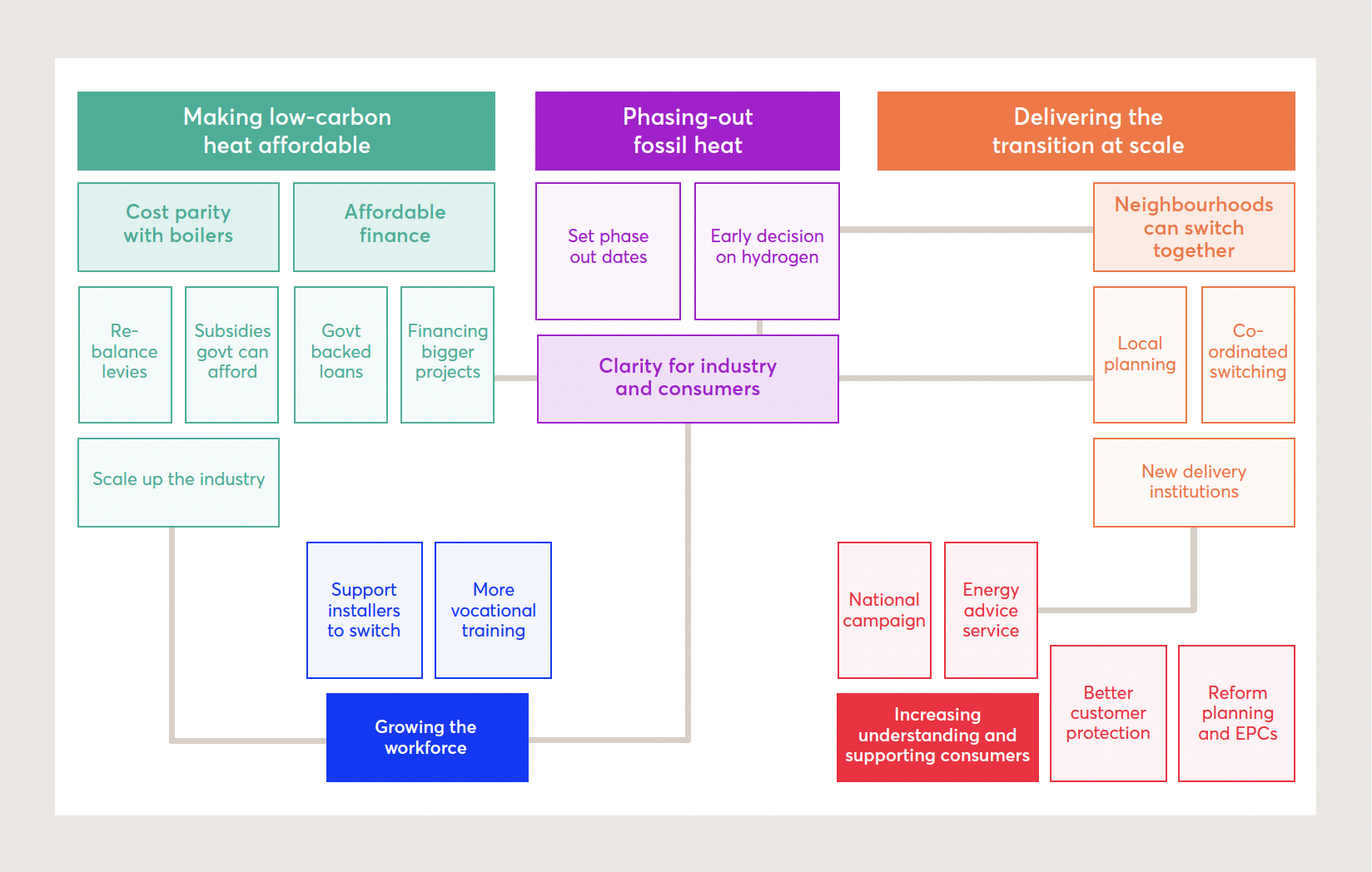
Figure 1. Summary of the policy plan
Background
Home heating is a major source of carbon emissions
Home heating accounts for 14% of the UK's territorial carbon emissions. To meet its obligations, the UK needs to eliminate these emissions by 2050, and must make considerable reductions in the years before.
While the UK has made considerable progress on reducing emissions from some sources – particularly electricity supply, industry and waste – emissions from home heating have only fallen slightly and are not far below their 1990 levels.
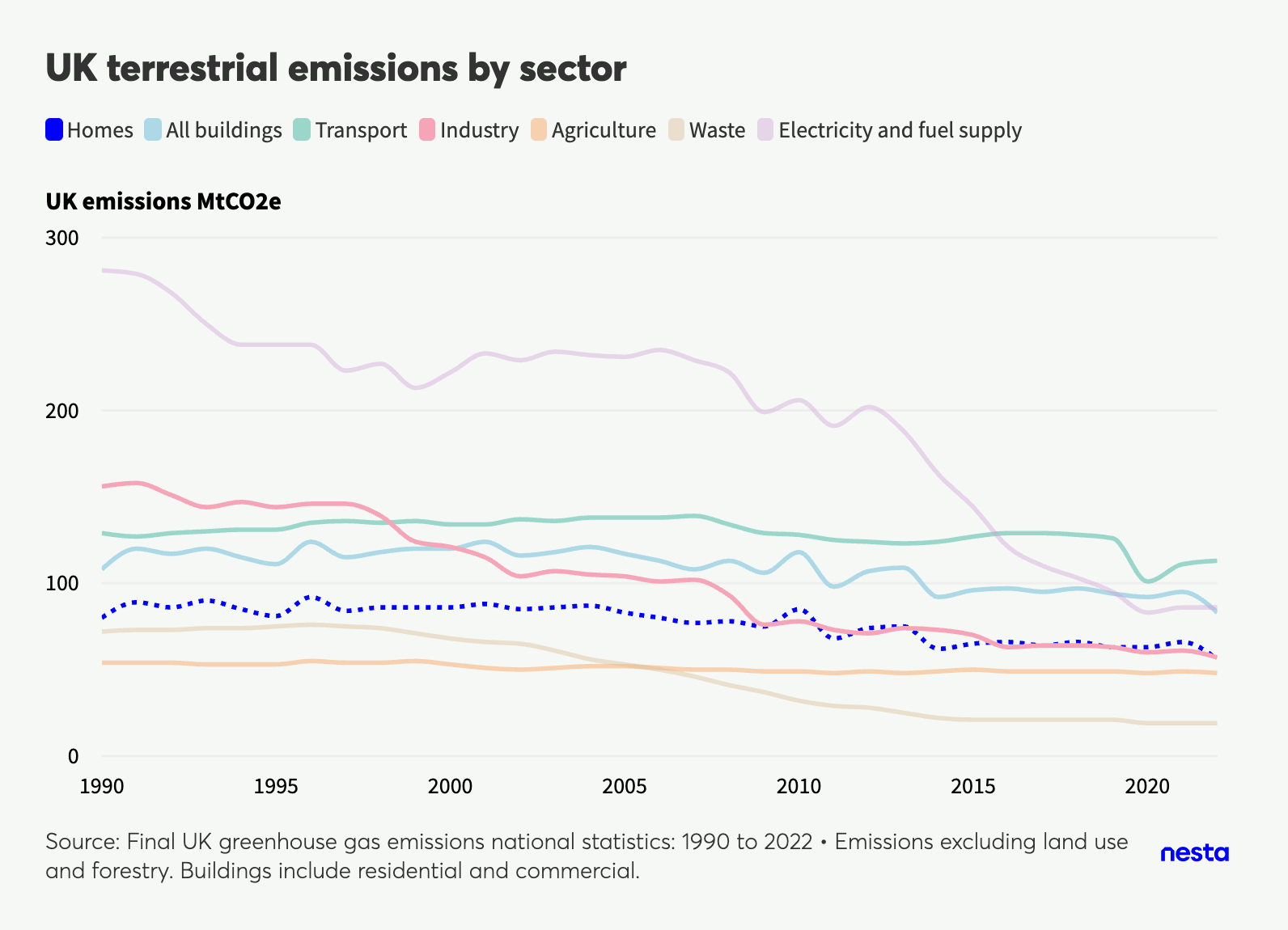
Figure 2. UK terrestrial emissions by sector
The UK installed 69,000 heat pumps in 2022, it needs to install 10 times that in 2028.
The UK is currently off track on decarbonising home heating, and could miss future carbon budgets as a result. The UK has been below the trajectory for heat pump and heat network installations set out in the Sixth Carbon Budget's Balanced Pathway. That trajectory implies rapid growth in installation from 2026 onwards, which the UK will struggle to meet. The Climate Change Committee's 2023 Progress Report found that the UK was significantly off track in many policy areas related to heat and buildings, including energy efficiency measures and heat pump installations.
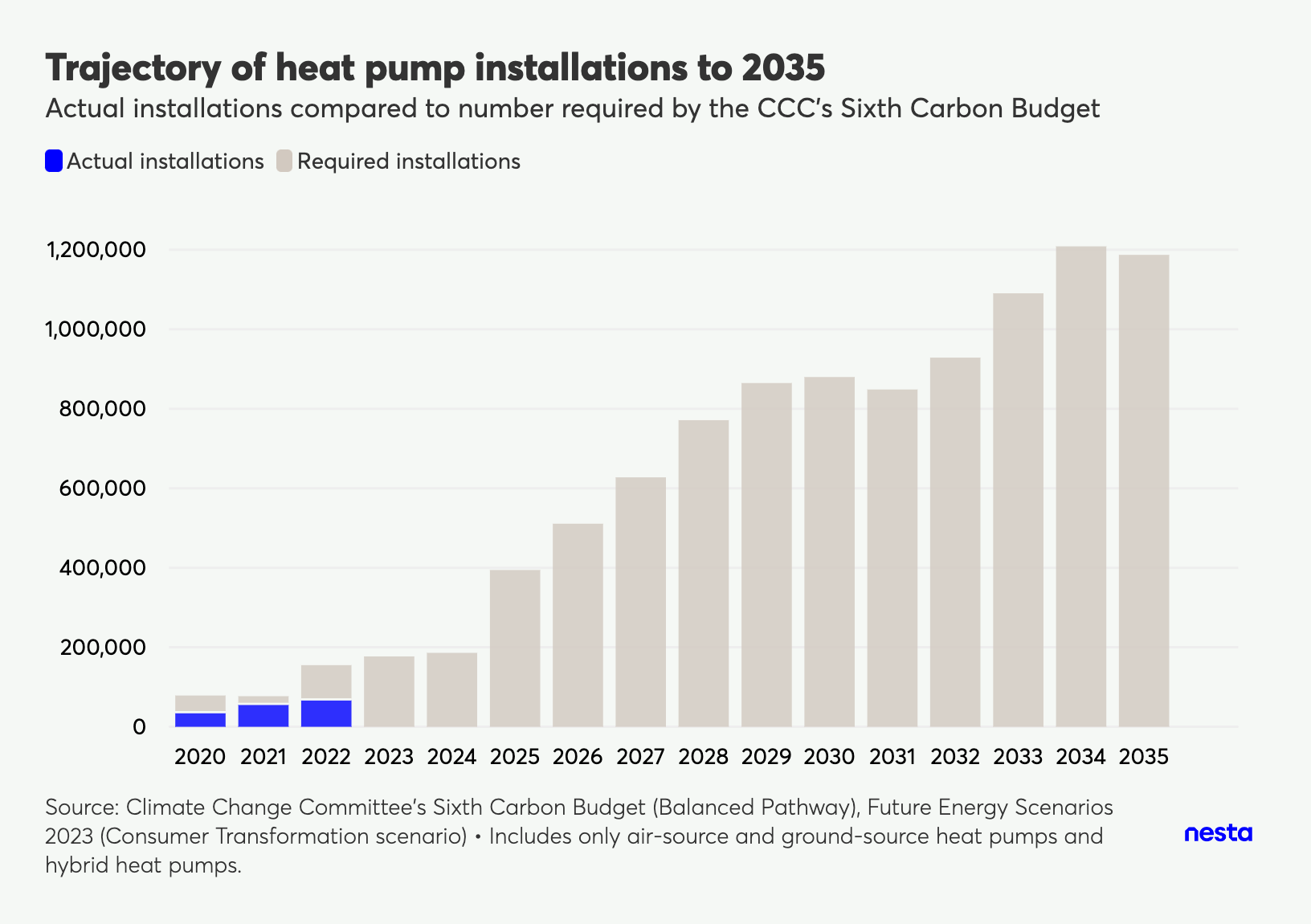
Figure 3. Actual heat pump deployment in the UK compared to the CCC's Balanced Pathway
25.5 million UK homes still use gas or oil boilers
Decarbonising home heating is primarily about replacing fossil fuel heating – mostly gas and oil boilers – with electrical low-carbon heating, mostly heat pumps and heat networks. Improving the efficiency of homes by insulating them and installing other measures, such as solar panels and batteries, can help reduce energy use and complement low-carbon heating. It is particularly important for the many fuel-poor homes, which are poorly insulated and routinely under-heated as a result.
Between 2025 and 2035 around 11 million (38%) UK homes need to make the switch to low-carbon heat. The Government has set this transition in motion, but progress towards its interim targets has been slower than hoped.
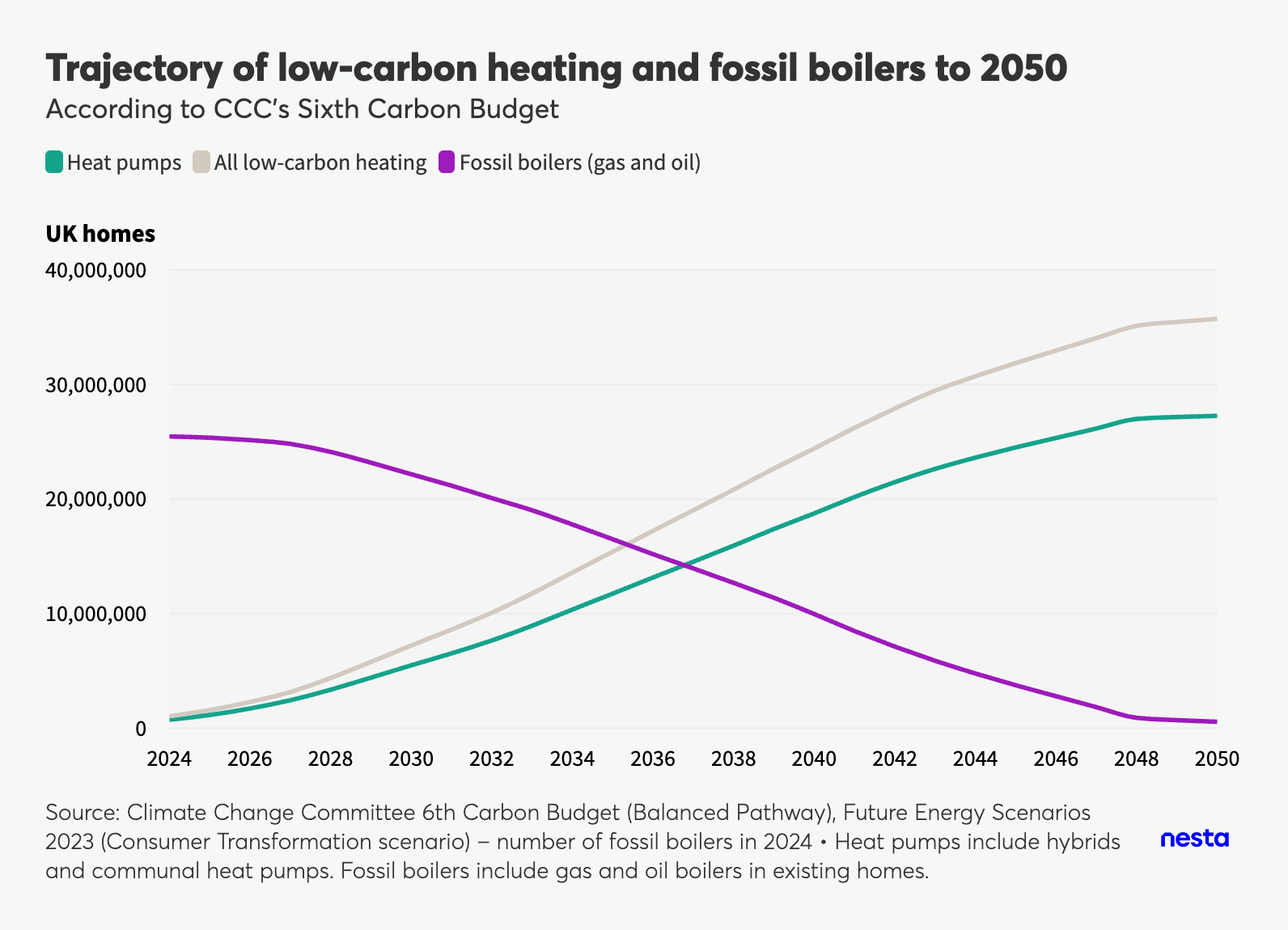
Figure 4. Trajectory of low-carbon heating and fossil boilers to 2050
There are currently around 360,000 heat pumps installed in UK homes. There are a further 2.3 million homes using direct electric heating and another 600,000 on district or communal heating (although many of these are not low-carbon sources).
Most homes (85%) in Great Britain use mains gas for home heating. Those areas that are not on the gas grid – primarily rural areas but also some city centres – mainly use oil or electric heating.
Rural areas with large numbers of homes off the gas grid are leading the way on heat pump adoption
The majority of heat pumps in the UK are in rural areas, in homes off the gas grid. The Highlands and Islands in Scotland have the greatest density of heat pump installations to date.
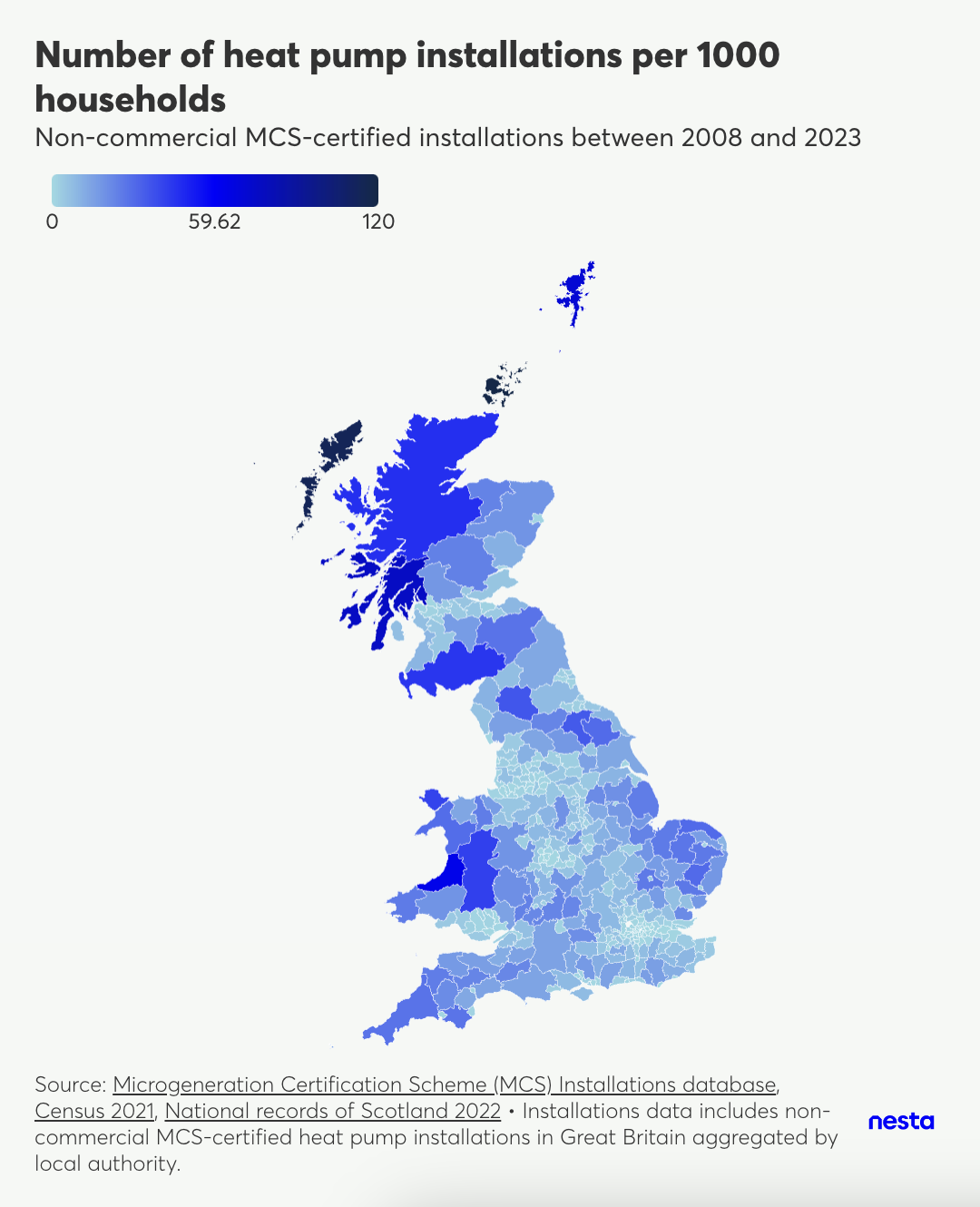
Figure 5: Heat pump installations and off-gas grid properties by local authority
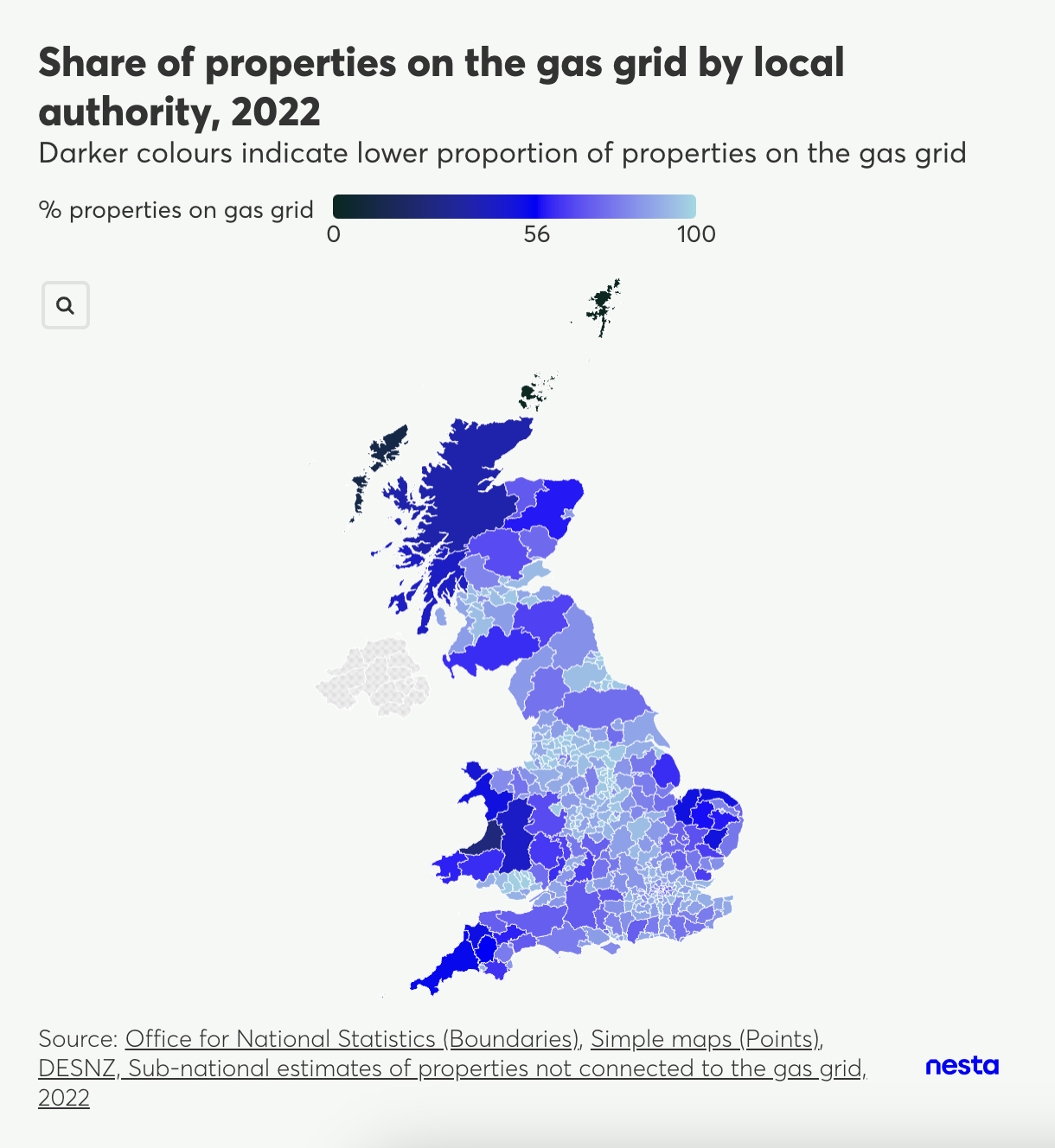
Figure 5: Heat pump installations and off-gas grid properties by local authority
The UK's dependence on fossil fuels for heat has cost households dearly
The UK's dependence on fossil fuels for heating, and gas in particular, has increased domestic energy bills. The UK has not been a net producer of gas since 2004 and depended on imports for 46% of gas consumed in 2022. Household spending on gas increased significantly faster than inflation between 2002 and 2013, despite consumption falling steadily (although domestic gas consumption rose in 2010 due to an exceptionally cold winter). The cost to households rose from £10.2 billion per year to £21.9 billion over this period (2023 prices).
Prices rose again recently as a result of the 2022 energy crisis. Households spending on gas rose from £15 billion in 2021 to £21.6 billion in 2022 (2023 prices). But this would have been far higher if the Government had not intervened. The Energy Price Guarantee shielded consumers from the most extreme prices, at an estimated cost to the taxpayer of ~£29.4 billion.
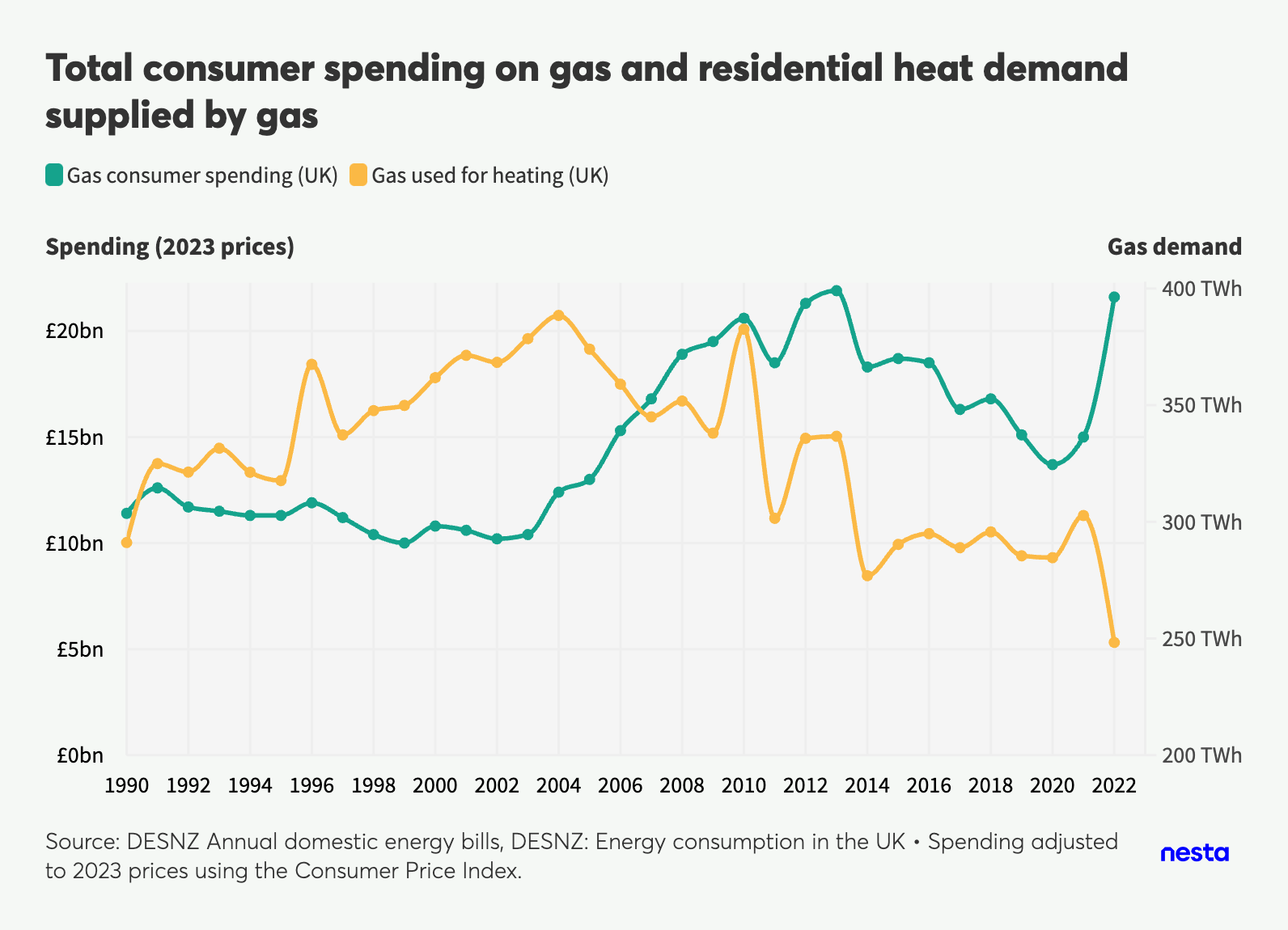
Figure 6. Total consumer spending on gas and residential heat demand supplied by gas
High gas prices have increased fuel poverty
Fuel poverty was falling in most regions of the UK prior to the energy crisis and there were ~four million households in fuel poverty in early 2021. The sudden increase in energy prices reversed this trend and by early 2024 there were an estimated six to seven million households that were fuel poor.
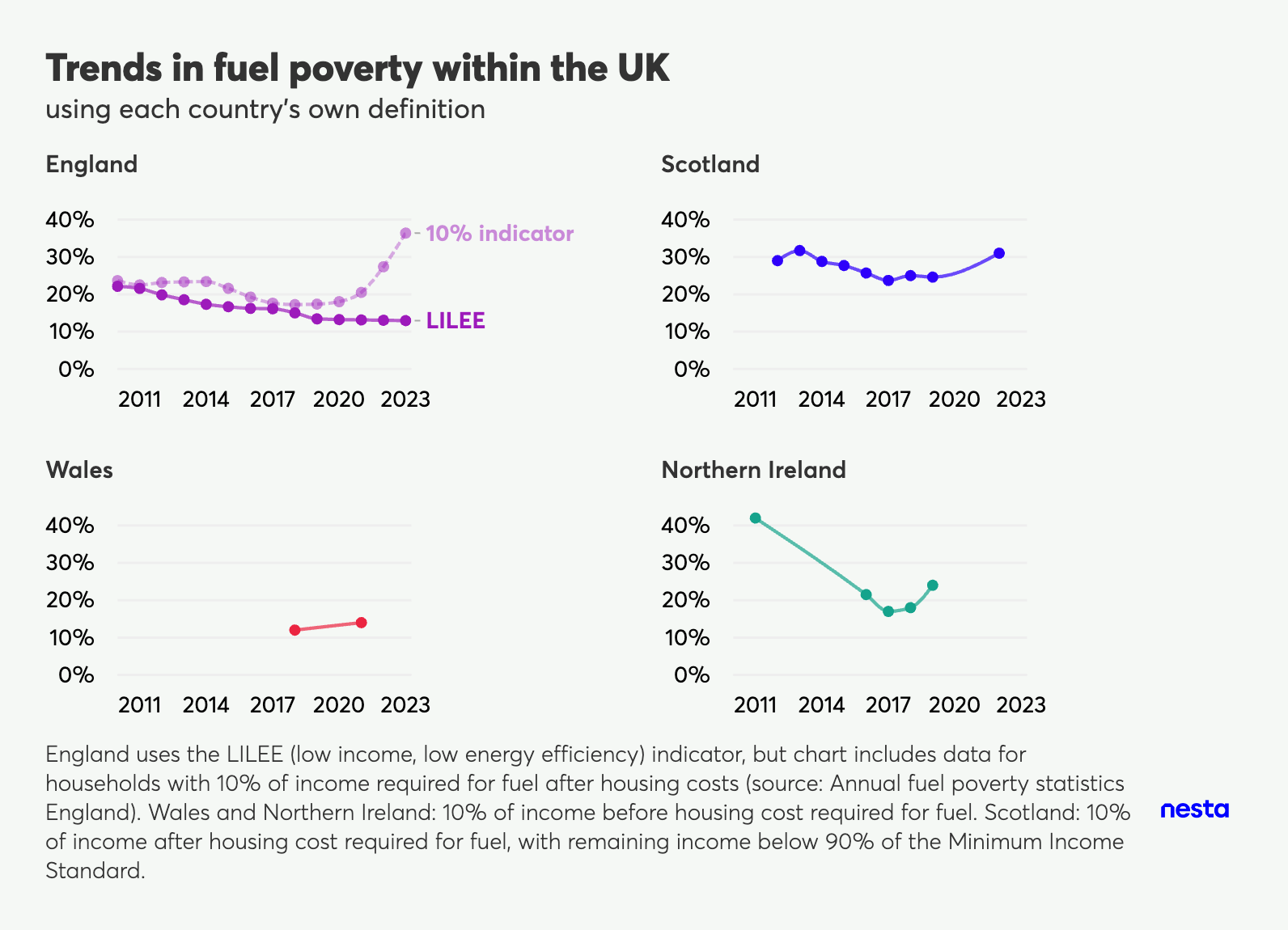
Figure 7. Trends in fuel poverty within the UK using each country's own definition
Fuel poverty in England, Scotland, Wales and Northern Ireland
Each nation in the UK has its own fuel poverty target, and none are currently on track to be met.
- England. "As many fuel poor homes as is reasonably practicable achieve a minimum energy efficiency of band C by 2030."
- Scotland. By 2040, “no more than 5% of households in Scotland are in fuel poverty, no more than 1% are in extreme fuel poverty, and the median fuel poverty gap is no more than £250 (adjusted for inflation)."
- Wales. By 2035 “no households are estimated to be living in severe or persistent fuel poverty as far as reasonable [sic] practicable; not more than 5% of households are estimated to be living in fuel poverty at any one time as far as reasonably practicable; the number of all households "at risk" of falling into fuel poverty will be more than halved based on the 2018 estimate".
- Northern Ireland. The most recent fuel poverty strategy for Northern Ireland was published in 2011, which was itself an update to the previous strategy from 2004. That strategy “was produced at a time of relatively low fuel prices and included a target to eradicate fuel poverty by 2016." The updated (2011) strategy aimed to “target available resources on those vulnerable households who are most in need of help" noting that “the eradication of fuel poverty must remain as a core goal of our efforts."
The UK's housing stock is largely inefficient
More than half of homes in England and Scotland have an EPC rating of D or below, indicating a relatively low level of energy efficiency – this is indicative of the UK as a whole.² Around 3.5 million of the households living in D-G rated homes are fuel poor. A higher proportion of the worst-performing homes are private rented properties: 14% are rated EPC E-G, compared to 11% for owner-occupied properties and 4% for social homes.
| Tenure |
Total |
A-C |
D |
E |
F-G |
All (E-G) |
| Owner occupiers: not fuel poor |
15.6 million |
7.3 million |
6.8 million |
1.2 million |
350,000 |
12% |
| Private renters: not fuel poor |
3.7 million |
2.1 million |
1.2 million |
250,000 |
150,000 |
14% |
| Social renters: not fuel poor |
3.7 million |
3 million |
600,000 |
50,000 |
<50,000 |
3% |
| Owner occupiers: fuel poor |
1.6 million |
50,000 |
1.1 million |
300,000 |
100,000 |
8% |
| Private renters: fuel poor |
1.2 million |
50,000 |
850,000 |
200,000 |
100,000 |
15% |
| Social renters: fuel poor |
900,000 |
100,000 |
700,000 |
100,000 |
<50,000 |
5% |
| TOTAL |
26.6 million |
12.6 million |
11.2 million |
2.0 million |
750,000 |
21% |
Source: Nesta analysis of DLUHC (2022) English Housing Survey 2020-2021 and Scottish Government (2022) Scottish House Conditions Survey 2021, rounded to the nearest 50,000 for smaller numbers. Definitions of fuel poverty in England and Scotland differ.
Table 1. EPC ratings of homes in England and Scotland, by tenure and fuel poverty status
Progress on making the UK's homes more energy efficient has been slow
The UK's programmes to upgrade insulation have been on a long-term downward trajectory since 2010. The Energy Company Obligation (ECO) scheme to upgrade fuel-poor homes was introduced in 2013, and since then has installed progressively fewer measures over time. This has left the UK behind on meeting its goals on fuel poverty, while leaving more homes with higher energy bills.
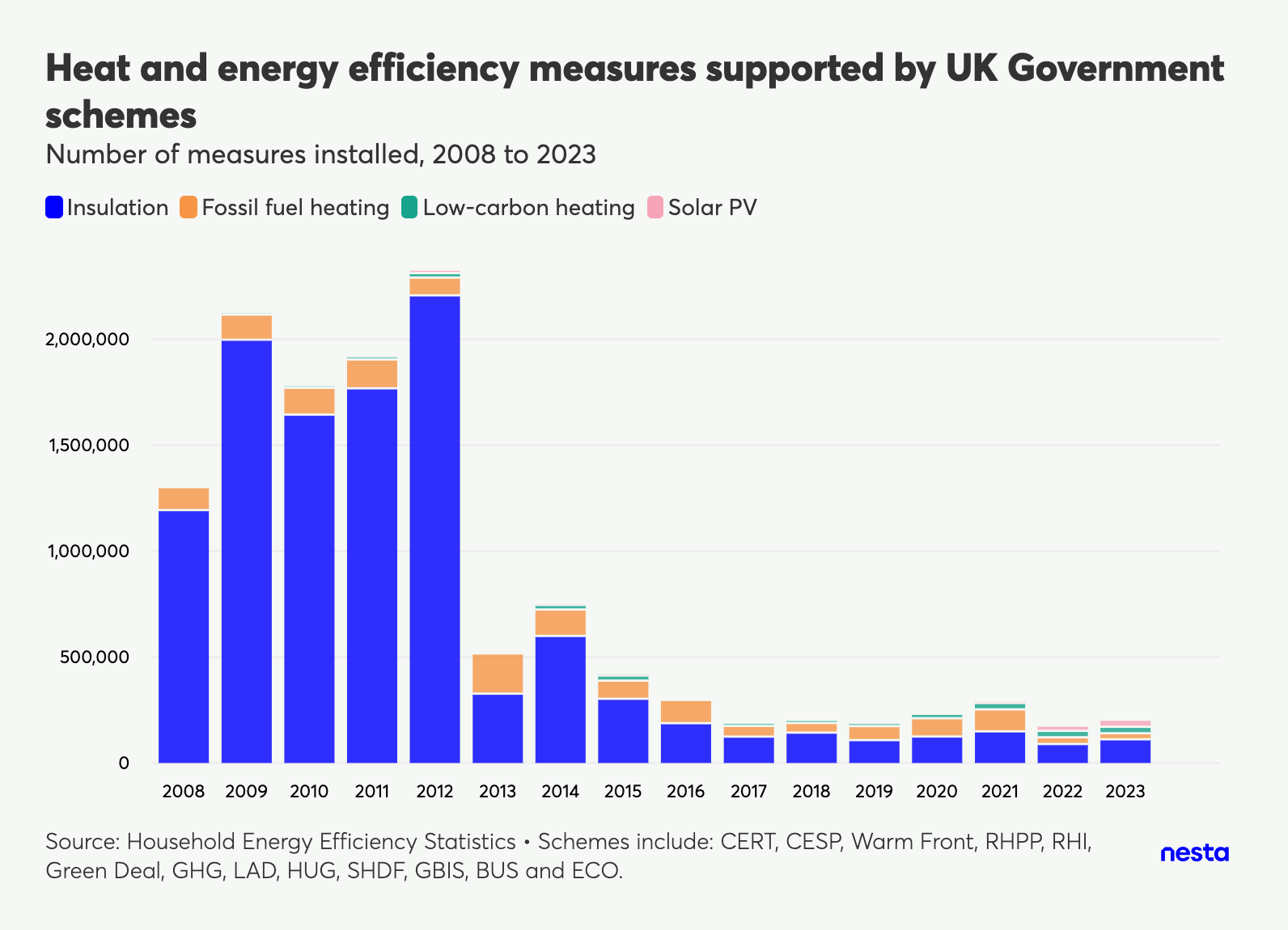
Figure 8. Heat and energy efficiency measures supported by UK Government schemes, 2008-2023
The context for this plan is the UK's underperformance at a time of urgency. The UK must move much faster on heating in the next few years to meet its climate obligations, but there are few signs of progress. The growth of low-carbon heating remains too slow, and energy efficiency measures have been in decline. Energy bills have risen at a time when the UK should be moving towards ending fuel poverty. In short, the UK needs a better policy for home heating.
Strategy
Priority actions
- Take the strategic decision on hydrogen. Implement a rapid, expert-led review to enable ministers to make a strategic decision on hydrogen before the end of 2024.
- Develop a new coordinated delivery model to complement the current individual-led model as part of a twin-track approach to provide options to households and enable governments to drive the transition more directly.
- Adopt a pragmatic approach to insulation, which emphasises lower cost measures and support for fuel-poor households, while prioritising low-carbon heating for all homes.
- Update the UK Government's Heat and Buildings Strategy to reflect its long-term plan for managing the heat transition up to 2050.
The Government needs a clear and consistent approach to reduce uncertainty and manage trade offs in the heat transition. The most significant of these involve choices about delivery models, the use of hydrogen, and the relative mix of heat, efficiency and flexibility technologies. Taken together with the policy choices outlined below this should allow the Government to create a new, resilient strategy for the heat transition with three key components.
- Take the strategic decisions on low-carbon heat.
- Deliver the transition at pace while reducing uncertainty.
- Drive innovation to preserve optionality and manage trade offs.
Take the strategic decision on hydrogen
The Government cannot delay its strategic decision on hydrogen any further. While the Government has made a good-faith effort to evaluate hydrogen, the ongoing costs and policy uncertainty that this process has created are untenable. The window of opportunity to prove hydrogen's use case has more or less closed. The Government needs a way to reach a rapid decision by the end of 2024, rather than waiting until late 2026.
- Ongoing uncertainty about the status of hydrogen has been a major barrier to the development of supply chains for heat pumps, and planning the UK's energy system. Some parts of the heating industry have diverted resources towards hydrogen boilers, and have used these in marketing to consumers (although this may have had little effect on their attitudes). The prospect of hydrogen has also deterred many heating engineers from retraining in heat pumps and other forms of low-carbon heating.
- There is overwhelming evidence that hydrogen will not play a significant role in heat. There are multiple reasons for this, including the amount of electricity required to make green hydrogen, the likely cost to consumers, and the challenges of producing or sourcing green hydrogen.
- There are many unresolved questions relating to hydrogen heating. The safety case is the most critical but others include: the household and system-level costs, the delivery mechanisms needed, the wider environmental impacts, the resilience of the fuel system, and the economics of hydrogen heating.
- Most of the trials that would have provided the evidence base needed have been cancelled. A neighbourhood-scale trial is underway in Fife, but the two village-scale trials were wound up in 2023, beset by logistical challenges and local opposition. The Government cancelled plans for a town-scale trial.
While there are also questions around how to deliver electrical heat at scale, the level of uncertainty, and the relative risks are significantly lower. The Government should take the following steps to end the uncertainty and take the strategic decision.
- Implement a rapid, expert-led review to advise the Secretary of State on making a strategic decision on hydrogen before the end of 2024. Its remit should include: applying the criteria established by the National Infrastructure Commission (NIC) and Climate Change Committee (CCC) to test the hydrogen case, and creating a roadmap for the Government to assess the technical requirements, costs, and distributional impacts of phasing down, repurposing, or decommissioning the gas grid.
- Affirmatively rule out a ‘hydrogen-ready' mandate for new boilers.
Develop a resilient strategy to deliver the heat transition
The heat transition will come in several phases, each with its own policy and delivery challenges. The Government needs to rapidly accelerate progress on delivery while managing some significant uncertainties. The challenge here is to effectively commit enough resources and attention so that the Government maximises the likelihood of near-term successes, while also building the capacity that will be needed for the later phases of the transition. There will likely be three phases of the heat transition.
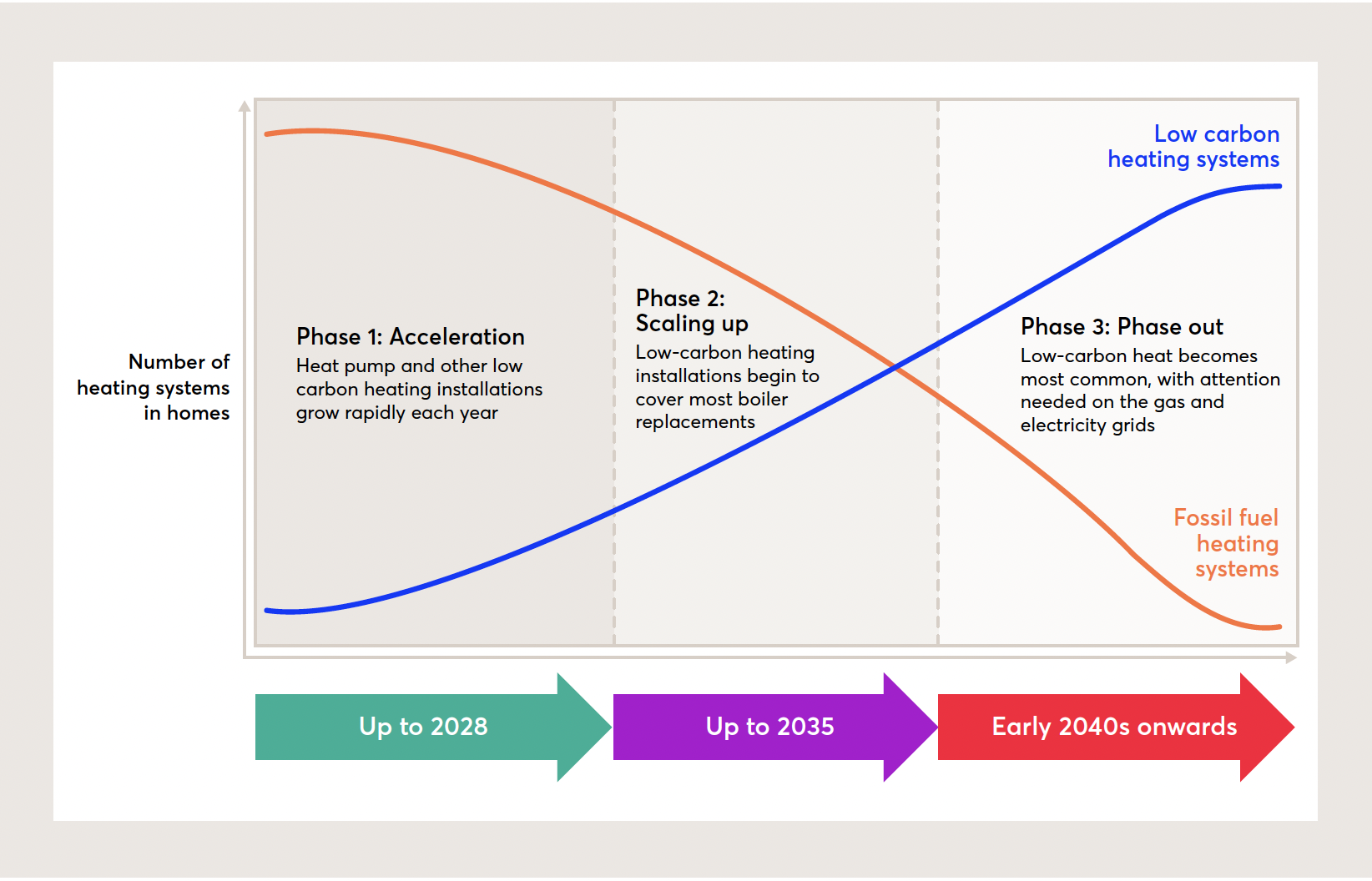
Figure 9. Three phases of the heat transition
1. Acceleration (now to 2028)
Annual installations of low-carbon heating grow tenfold, driven by a rapid expansion of heat pump supply chains.
Government policy focuses on increasing demand for heat pumps and energy efficiency while sustaining support for fuel-poor households and social homes. The main delivery model is the existing demand-led model where most homes switch on an individual basis, unless they are in a heat network zone.
Success criteria: at least 600,000 annual low-carbon heating installations by 2028.
2. Scaling up (2028 to 2035)
Annual installations of low-carbon heat double again over this period and should overtake fossil heat.
Growth is slower and harder won. The Government needs to parlay earlier progress to build interest among less-enthusiastic households. Schemes for fuel-poor households and social homes should have completed most or all of the outstanding need for insulation and pivot to low-carbon heat. The focus of financial support shifts away from direct subsidies to finance. Grid capacity needs to start expanding rapidly, in line with demand for electrical heat.
Success criteria: annual installations of new or replacement fossil boilers fall to zero by (or before) 2035. Supply chains for low-carbon heat grow to deliver 1.1 to 1.5 million new low-carbon heating installations per year by 2035.
3. Phasing out (2035 to 2050)
Low-carbon heat will cross over and become the most common source of heat in homes during this period. The focus shifts to policies needed to phase out the remaining fossil infrastructure.
The Government needs to manage the costs of the gas grid as the number of customers decreases rapidly. The electricity grids need to continue expanding to provide capacity for homes to keep switching. Ideally, the Government will no longer need to provide financial support for most homes by this point. The Government may need new forms of support for any households left behind.
Success criteria: all homes switch to low-carbon heating by 2050, and the electricity and gas grids have adapted to cope with this.
Build delivery capacity using a twin-track approach
The Government is currently delivering the heat transition using a demand-led, individual approach. Under this the majority of switches occur on a house-by-house basis, as and when the homeowner choses. The only coordinated switches are for homes with communal heating, or connecting to new heat networks. However, there is genuine uncertainty about whether the current approach will be sufficient to deliver the scaling-up phase of the heat transition, or beyond.
The Government needs to maintain and accelerate progress while avoiding further delays. This means sticking with the current approach in the near term, but working to implement it and make it ever better. At the same time it should also begin laying the groundwork for coordinated delivery models. These have significant potential upsides. They can reduce upfront costs through economies of scale, access a wider range of funding models, and simplify the home upgrade process for homeowners.
This 'twin track' approach lets the government use a balance of individual and coordinated models to build delivery capacity. In the long run we expect that coordinated and individual approaches could run side by side and complement each other. But, equally, the Government should be in a position to confidently pivot to one or other if the twin-track approach fails to deliver change quickly enough.
Develop backstop options in case progress on the transition lags
The heat transition is ultimately all about ending fossil fuel heat. But there is a risk that the Government's approach is insufficient to end either the installation of boilers by 2035 (at the latest) or their use by 2050. The Government needs a way to measure its progress towards these targets, evaluate whether its policies are doing enough, and intervene if progress is too slow. It also needs backstop options for interventions to simplify the choices that a future minister might have to take. Even if it never uses them, having these backstops will make the Government's plan more resilient. In this sense the twin-track approach to delivery is itself a form of backstop policy for the whole heat transition.
Phasing out fossil boilers is such a critical near-term milestone for the transition that it warrants special attention and specific consideration of backstop policy options. Timing matters – there are few (if any) policy options for a 2035 boiler phase-out that will be effective if implemented in 2034. Households, businesses and the wider heat industry all need a clear sense of direction from the Government.
There are many different types of potential backstop that may be useful at different points during the heat transition. Broadly, the options are: increasing incentives by offering more government support, shifting the delivery model, or increasing the incentives via regulation.
Many of these options involve a degree of difficulty for the Government. In general, delivering the transition on time is the least difficult option. The earlier these decisions are taken the more likely they are to enable positive changes. The most significant decision that needs to be taken in the near term is whether to explicitly legislate a phase-out date for boilers (and when that should be, see ‘Fossil fuel phase out' section). It may be that it is enough for the Government to simply signal that a phase-out date applies, and then support the market in ways that reinforce that perception.
Alongside these backstop options, the UK Government should also consider more radical reforms to the heat and energy sectors as part of its twin-track approach.
There may be a case for making a single body accountable for delivering the heat transition in each part of the country if delivery needs to accelerate rapidly. Nesta has set out options for more radical reforms of retail energy in this vein, with options including turning electricity distribution network operators into energy and heat suppliers, and awarding regional energy franchises on a competitive basis.
There may also be a case for considering more radical funding options, such as financing low-carbon heating as part of the energy sector's Regulated Asset Base, or socialising some of the cost of transition through energy bills.
These reforms may only come into play if the heat transition remains well off track, but they will take time to develop. The Government should develop a full range of options ahead of them being needed.
Confront trade offs in heat policy sooner rather than later
The Government needs to coordinate changes across multiple systems: heat, power supply, fuel supply, surface transport. It has a critical role here and needs a coherent plan to manage the trade offs arising from its choices in heat and energy policy, one which anticipates and evaluates these interactions.
Balance the focus on low-carbon heating and fabric insulation
Low-carbon heating is the essential step all homes must take to eliminate their carbon emissions. Earlier plans for decarbonising home heating envisaged insulating millions of homes first, before switching to low-carbon heating en masse. However, the UK has seriously underperformed on insulating homes over the last decade, and does not now have time to wait before scaling up low-carbon heating. The context has also changed since those plans were made and the balance of cost and reward has shifted in favour of prioritising low-carbon heating. In particular, Britain's electricity grid has decarbonised substantially, and low-carbon technologies have improved and become more efficient.
- Insulation reduces carbon emissions somewhat, but cannot reduce them to zero on its own. Low-carbon heat will provide the majority of domestic abatement by 2050; insulation and energy efficiency will only provide ~9.9%.
- All heating systems perform more effectively in well-insulated homes, but it is not necessarily essential to upgrade insulation before installing a heat pump or other low-carbon heating system.
- Insulation has many benefits besides carbon savings. It can help to reduce energy bills, reduce pressure on the electricity grid, enable flexible energy use and increase comfort and health for residents. It is especially important in fuel-poor homes, which are at risk of under-heating.
- Lower cost forms of insulation – such as loft and cavity wall insulation – typically represent good value, but more expensive measures – especially solid wall insulation – can be less cost effective.
The Government needs a proportionate approach to upgrading insulation. It remains a priority for vulnerable and fuel-poor households, but for other types of households, decarbonising heat should be a higher priority . This should be reflected in the way resources are allocated. Historically, the Government's delivery schemes have focused on fabric insulation over heat. This has started to shift and low-carbon heat now accounts for a growing proportion of all measures installed, but it needs to go further. By the early 2030s low-carbon heat will need to be the focus, with a balance of energy flexibility measures (such as solar PV and heat or electricity storage). The exact mix will depend on the Government's choices with respect to different technologies as part of a whole-system approach to energy planning.
Manage the heat transition within an evolving energy system
The transition to low-carbon heating needs to happen in the context of an energy system that is also undergoing rapid changes. There are key interdependencies between heat and energy policy that the Government will need to manage.
- The electrification of heat, alongside a shift to EVs, requires more capacity on the electricity grid. The cycles of energy use in the UK's homes are the most significant and predictable variable for the load on the grid. As an increasing share of heat is electrified these cycles will become more pronounced.
- Declining demand for fossil gas will make most or all of the gas distribution network redundant. While hydrogen does not have a role in heat, it will be a key fuel for other sectors. The approach taken to transform the gas network depends on the pace and scale of change in homes and other sectors.
1. Coordinating heat upgrades with grid upgrades
This is both a spatial problem and a timing problem. The electricity grid will need to be upgraded in many areas first, to provide capacity for homes to switch to low-carbon heating. Installations of low-carbon heating will be concentrated in certain areas at different times, but the exact scale, timing and type of heat technology is unknown.
Households can use heat pumps, solar PV, batteries and other devices to shift their use of grid electricity away from peak periods. This could significantly reduce the size of peak loads. The potential benefit can be magnified by improving the fabric efficiency of homes.
3. Technology choices
The overall change in electricity demand will be heavily influenced by the types of technologies used in homes. High-temperature heat pumps will draw more power than low-temperature ones. Solar PV will reduce demand from the grid, especially in conjunction with battery storage. Hybrids can potentially shift loads away from peaks by switching to an alternative energy vector during those periods.
Low-carbon heating technologies
Heat pumps are likely to be the most common low-carbon heating technology, primarily because of their high energy efficiency. We expect low-temperature air source heat pumps to be most common, with a significant role for ground source and air to air heat pumps, as well as larger heat pumps as part of heat networks.
At present, most domestic heat pumps operate at low flow temperatures to maximise their efficiency. However, there are alternatives to low-temperature heat pumps that are important for the Government to consider, as they present pros and cons.
- High-temperature heat pumps. These typically cost more than their low-temperature equivalents, and they are typically less efficient – affecting loads on the grid and running costs. However, they can reduce (or entirely avoid) the need for upgrades to radiators or pipework, and so may be an attractive option for households.
- Hybrid heat pumps. These combine a heat pump with a secondary heat source. There are a wide range of potential hybrid systems with various costs and benefits. In general, hybrids are a more expensive option, but can be less hassle to install in some homes and may have benefits as a bridging technology. Hybrids with a gas boiler bring a risk of requiring a second transition for homes, and depend on maintaining the gas grid.
- Direct electric heating. Technologies include electric boilers and infrared. They are typically cheaper and easier to install than heat pumps and can operate flexibly when coupled with a heat or electrical battery. They may be easier to install in homes with space constraints. However, they are much less efficient than a heat pump so are typically more expensive to run and require more electricity.
There are trade offs between these factors. The more efficient and flexible home heating systems can be, the less the electricity grid will need to be upgraded. But the measures which enable efficiency and flexibility typically come at a higher cost. It is important that the Government confronts this directly. It needs to balance the cost of investment in homes against new grid investment, and the specific delivery challenges associated with each of those.
Affordability
Priority actions
- Aim for cost parity between low-carbon heating and fossil boilers on a lifetime basis.
- Rebalance energy bill levies to reduce the cost of electricity relative to gas.
- Introduce government-backed loans to provide a cheaper way for households to pay for low-carbon heating and other home upgrades.
- Maintain subsidies for low-carbon heating, but reduce them over time.
Cost is the single biggest barrier to progress for the heat transition. Low-carbon heating systems typically have much higher upfront costs than boilers, but are far more energy efficient. The lower running costs should more than offset the upfront costs on a lifetime basis. However, the high cost of electricity relative to gas largely negates the efficiency bonus. The combination of high upfront costs and limited running cost savings makes low carbon heating less attractive and less accessible than it needs to be to drive large-scale adoption. Households also need support with the costs of fabric insulation, flexibility upgrades and other measures which could make their homes more energy efficient. The key issues are:
- Electricity is too expensive relative to gas. Electricity is too expensive in both absolute and relative terms. Consumers do not benefit from low-cost renewable generation, and policy costs add far more to a typical electricity bill than the equivalent gas bill.
- Domestic energy use is often inefficient. Many homes have a low standard of energy efficiency, and flexible use of electricity is still in its early stages.
- The upfront costs of low-carbon heat are too high. Low-carbon heating systems cost far more than their fossil fuel equivalents, even with government subsidies.
- There are limited options to finance home upgrades. Finance will play a key role in dealing with the upfront costs of low-carbon heating, but is not currently widely used for green home upgrades in the UK.
- Markets for heat networks are not yet self-sustaining. Heat networks still involve a degree of risk which makes it hard for them to be financed without government support.
Achieving cost parity for air source heat pumps
Nesta has analysed the lifetime costs of air source heat pumps. Under current policies, we expect an air source heat pump installed in an average home without a subsidy to cost £800 a year more over its lifetime than a gas boiler.
The most important factors in shifting heat pumps towards cost parity with gas boilers are reducing the cost of electricity and providing subsidies. The interest rate paid for finance also has a big impact on lifetime costs. Other factors, including reducing upfront costs and increasing heat pump efficiencies, also have a smaller but still important effect on reducing heat pump prices – and there is scope for a bigger effect if there is a big breakthrough in heat pump efficiency.
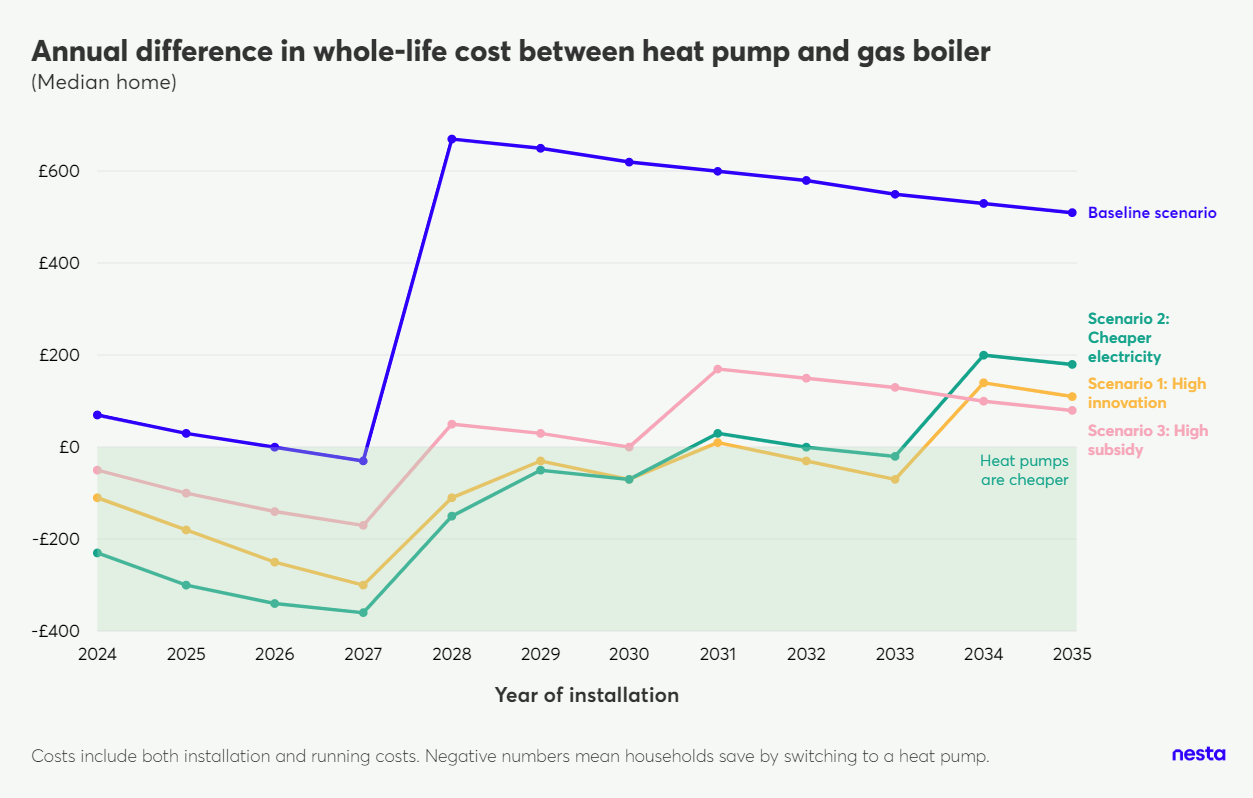
Figure 10. Scenarios to reach lifetime cost parity between heat pumps and gas boilers
Nesta analysed three scenarios that could get air source heat pumps closer to cost parity.
- High innovation, where upfront costs of heat pumps fall quickly and efficiency increases.
- Cheaper electricity, where electricity costs fall faster compared to gas.
- High subsidy, where subsidies for heat pumps stay higher for longer.
The high innovation and cheaper electricity scenarios would achieve cost parity for an average home in almost every year until 2034, while moderating the cost of subsidies to Government. The high subsidy scenario performs slightly less well on cost parity after 2030, and would involve a higher cost to Government.
Reduce the running costs of electrical heating systems
Every route to affordable low-carbon heating involves significantly lower running costs. This entails making electricity cheaper (both in its own right and relative to fossil fuels), and making low carbon heating systems more efficient.
The price of electricity relative to gas is the most important variable affecting the running costs of heat. A unit of electricity is currently 4.1 times more expensive than a unit of gas, one of the highest ratios in Europe. Because heat pumps are significantly more efficient than a fossil boiler they can still deliver bill savings when the price ratio is as high as 3.3. Lower is better though, and every marginal decrease in the ratio increases the affordability of low-carbon heating. The UK government should aim for an electricity to gas price ratio of 2.5 or lower by 2028. It can achieve this via a combination of rebalancing levies and changes in the energy market.
Rebalance levies on energy bills
The most obvious policy change to reduce the price ratio is to change the balance of levies on electricity and gas bills. There are two broad approaches to do this.
- Remove the levies from bills and put them on to general taxation. Policy costs (including both levies per unit of energy and levies in standing charges) add £142 per year to the electricity bill for a typical dual fuel household, and £46 per year on their gas bill. Rebalancing just the per unit levies (RO, FIT, ECO and AAHEDC) would reduce the price ratio to 3.3; but it would also cost the exchequer around £5.4 billion per year.
- Rebalance the levies, so that some or all of the levies on electricity move on to gas. There are choices around how far this rebalancing goes – as more of the burden of levies is moved on to gas, the lower the price ratio becomes.
- Equalise contributions: set the levies at a level so that a typical dual fuel household contributes an equal amount from their gas and electricity bills.
- Equalise rates: have a single per-unit levy cost that applies equally to gas and electricity bills while maintaining the level of contributions.
- Shift levies to gas: shift some or all of the policy costs onto gas bills.
| Approach |
Variable costs (p/kWh) |
|
Typical bill (£/year) |
|
|
Gas |
Electricity |
Gas |
Electricity |
| Current (Jul-Sep 2024) |
0.30 |
4.86 |
£45.72 |
£142.17 |
| Equal contributions |
0.75 |
3.21 |
£97.86 |
£97.86 |
| Equal rates |
1.29 |
1.29 |
£159.27 |
£45.65 |
| All on gas |
1.64 |
– |
£212.98 |
– |
| All on electricity |
– |
5.96 |
– |
£181.04 |
Table 2: Impact of different forms of levy rebalancing on energy bills
Most approaches to rebalancing levies would have a relatively small impact on the total energy bill for a typical dual fuel household. Any extra costs on gas are offset by cheaper electricity. Rebalancing levies would also be revenue neutral for the Government. However, there are important caveats to this.
- Most British households (85%) currently use gas. Any rebalancing will shift the burden of policy costs onto those households and away from those that only use electricity. The disparity would be small at first but would increase over time as the number of dual fuel households diminishes.
- There are potential distributional impacts. Under rebalancing, households that use more electricity may be better off while those who use more gas may be worse off. There are around 470,000 fuel-poor households in England that already use electrical heating, and a further 130,000 in Scotland. These households have an average fuel poverty gap of £857 and would be significantly better off under rebalancing. But there are also over 2.5 million gas-using fuel-poor households in England, and 600,000 in Scotland. Their average fuel poverty gap is only £299, but this could rise under a rebalancing scenario without safeguards.
- Any approach to rebalancing must include protections for fuel-poor and vulnerable households. This might involve direct compensation – such as increasing the Warm Homes Discount or implementing a social tariff.
We think that equalising the levy per kWh on electricity and gas provides the best balance between incentives to switch to low-carbon heating and distributional impacts. Our modelling suggests this could reduce the electricity to gas price ratio to around 2.1 in 2028. The Government should rebalance levies so that gas and electricity bills attract the same levy per unit.
Other components of energy bills
Policy costs are only one of many components affecting energy bills; but they are the one that is most amenable to change. Other policy costs include the charges associated with Contracts for Difference (CfDs), the Capacity Market, Smart Meters, and VAT. There are also some other levies which are not currently in use. We do not recommend that the government adjust any of these at this point.
- Legacy CfDs. CfDs have been used to raise capital for utility scale renewables projects. Recently agreed CfDs have generally not added to electricity costs overall, but the earlier rounds were at a much higher cost. CfDs only apply to electricity bills. Removing this on to general taxation would cost-£1.8 billion in 2024.
- Capacity Market. The capacity market pays generators to keep existing generation capacity operational or build new capacity. Like CfDs, the costs of this only apply to electricity bills and removing it on to general taxation would cost
£1 billion in 2024, rising to £3 billion by the end of the decade.
- Smart Meters. The Smart Metering Net Cost Charge covers additional costs incurred by suppliers as part of the smart meter roll out that are not covered by the operating costs portion of the energy bill.
- VAT. Domestic gas and electricity are charged at the reduced rate of 5%. This currently adds around £75 per year to a typical dual fuel energy bill. Electricity is effectively taxed twice, as VAT is also charged on fuel for generation. Removing VAT from domestic electricity bills would cost around £1.3 billion in 2024.
- Other levies. The Energy Act 2023 included a potential new levy to fund low-carbon hydrogen infrastructure. This should never be applied to domestic bills. A further (small) levy to support Energy Intensive industries is also due to come into effect this year.
Network costs are the component of bills which cover the repayment of earlier investment in the gas and electricity grids. The Government needs to consider how it will manage these. In the case of gas, as the number of customers declines these costs will be spread over an ever smaller base. This could cause gas bills to spiral. We cover this in more depth in the ‘Delivery' section. The network costs on electricity bills will also (likely) rise over the coming years to account for increased investment in an expanding grid, and other items purchased via the regulated asset base.
Manage domestic gas prices
Low gas prices pose a key risk to the relative affordability of low-carbon heat. High gas prices cause widespread harm, particularly for the more than three million fuel-poor households who rely on gas boilers. Wholesale gas prices are down from their peak in 2022 but are still higher than they were prior to the Russian invasion of Ukraine.
The Government cannot manage the volatility of wholesale gas prices set on international markets. The UK has not been a net producer of gas since 2004, and there are no viable routes to change that. All the Government can do is moderate and mitigate prices. These efforts can be expensive. Protecting consumers during the 2022 energy crisis cost the Government almost £30 billion. In contrast, electricity prices are likely to become both cheaper and more stable over the next decade as the UK expands domestic generation capacity while reducing its reliance on gas-fired power.
Consistently low gas prices will undermine any efforts to reach lifetime cost parity between heat pumps and boilers. Sustained consumer gas prices below 4p/kWh to 5p/kWh would make it almost impossible to guarantee lifetime cost parity without significantly stronger bill rebalancing or subsidies. The Government should consider setting a minimum unit price for gas at around 5p/kWh to manage this. An equivalent price ceiling at ~10p/kWh would also shield consumers from the related risk of high gas prices. In effect, this would mean introducing a tax while gas was below 5p and a subsidy when above 10p. The Government could commit to recycling any income from the price floor into support for fuel-poor households.
Improve the energy market for consumers
The UK Government should also consider reforming carbon taxes on gas. Domestic gas is currently exempt from any carbon taxes, while electricity from gas generation is included in the UK Emissions Trading Scheme. Adding a carbon price for gas would increase energy bills in a way levy rebalancing would not. But it could provide a dividend by helping to fund subsidies or tackle long-term issues in the tax system, such as falling fuel duty receipts due to EV adoption.
The Government should also take steps to reduce the wholesale cost of electricity where possible. The costs of renewable generation and battery storage have fallen rapidly. But under the current arrangements the price of electricity is almost always set by the price of gas. In 2021 the gas price dictated the electricity price 97% of the time, despite only providing 45% of the power. This means that consumers in Great Britain are denied the benefits of the growing share of low-cost generation from renewables, nuclear and other low carbon power.
We have an opportunity to break the link between gas and electricity prices. The Government is contracting more generation and storage capacity through CfDs. Over time this will shift the balance of generation so that there are fewer periods each day when gas sets the electricity price. This will slowly reduce the wholesale price of electricity. The Government's Review of Electricity Market Arrangements (REMA) is considering options for lowering electricity wholesale costs, although it has ruled out a number of more radical options. The Government should continue to work on REMA, but should not bank on any major reduction in electricity prices as a result of it.
Recommendations to reduce the running costs of low carbon heat
- Target an electricity to gas price ratio of 2.5 or less by 2028.
- Rebalance levies so that the levy is the same for each unit of gas and electricity by 2025.
- Consider setting a floor and ceiling for household gas prices.
Help households to use energy more efficiently
The Government can further reduce the running costs of electrical heat by helping households be more energy efficient. There are three ways to do this.
- Insulate homes to reduce energy consumption for heat.
- Promote flexible energy use and smart tariffs.
- Increase the efficiency of low-carbon heating systems.
Insulate homes to reduce energy consumption
Insulating homes reduces energy bills by reducing the amount of heat they need. However, some types of insulation have much higher costs relative to their benefits than others. Cheaper insulation measures, such as loft insulation, cavity wall insulation and draught proofing, are generally better investments. More expensive measures, such as solid wall and window insulation, are often much less attractive investments. These should really only be funded by the Government where absolute improvements in fabric efficiency are needed to ensure a decent level of comfort. Figure 11 below shows how the upfront costs and carbon savings compare for different types of insulation.
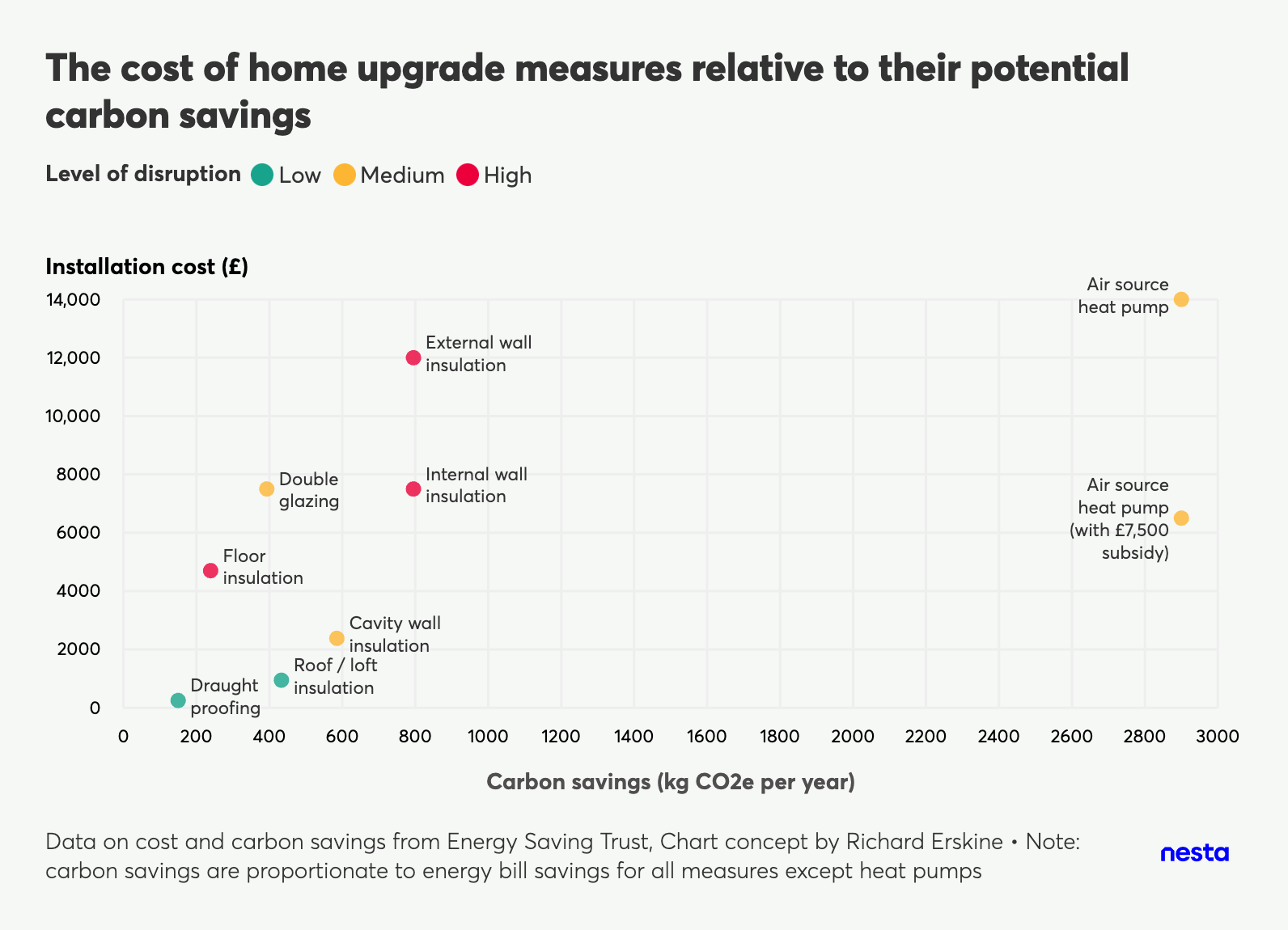
Figure 11. The cost of home upgrade measures relative to their potential carbon savings
The Government needs to prioritise low-carbon heat over insulation for most homes. But it should continue to prioritise insulating fuel-poor homes and social housing, and should encourage uptake of lower cost insulation measures in all homes.
Domestic energy demand is highly predictable on a daily, weekly and seasonal basis. Using energy flexibly benefits the electricity grid by shifting electricity use away from periods of peak demand, and towards periods of low demand or high renewables output. This can lower the cost of electricity, which can be passed on as savings for households.
Several energy companies offer time-of-use tariffs, where the unit cost for electricity varies according to the balance of supply and demand on the grid. There are several ways households can flex their electricity use.
- Flexible heating: reducing the amount of heating during peak times or pre-heat their home in periods of low demand on the grid. It is easier for homes with better fabric insulation to use flexible heating.
- Heat storage: using thermal storage to run heating systems during off-peak periods and use the heat when needed.
- Solar PV: households with solar panels can generate electricity to power their low-carbon heating system directly. They can store any surplus power in batteries for use during peak periods.
- Battery storage: charging electrical batteries from the grid during periods of low demand when electricity is cheaper, and storing it for when it's needed. EV batteries may also provide a source of battery storage for households.
It is difficult to estimate the potential future cost savings from using electricity flexibly, or from generating electricity in the home. There are also some risks associated with relying on time-of-use tariffs to reduce running costs. Households that cannot afford to invest in batteries or other enabling technology may struggle to access the benefits of flexible electricity use. There is also a risk that households which have unavoidable electricity needs, or other difficulties in managing use, may face higher energy bills. The Government should support the flexible use of energy while ensuring lower income households do not get left behind.
Increase the efficiency of heat pumps
Heat pumps are highly efficient, but this varies between technologies and settings. The typical Coefficient of Performance (COP) of a heat pump can range between 2.5-4 or above. These differences affect running costs; increasing the COP of a heat pump from three to four will reduce running costs by 25% (all else being equal). This should make them cheap to run and any further improvements in their efficiency will compound the benefit of reducing the cost of electricity.
Heat pumps have become gradually more efficient over time. The biggest factor affecting in-use efficiency for heat pumps is the quality of the installation, including achieving as low a flow temperature as possible. The key step to improve the efficiency of low-carbon heating is to raise skills and standards among installers. This is covered in more detail in the 'Workforce' section.
Recommendations to help households to use electricity more efficiently
- Fully fund insulation in fuel-poor homes and social housing, and encourage uptake of lower cost insulation measures in all homes.
- Support the flexible use of energy while ensuring lower income households do not get left behind.
- Raise standards among heating engineers to increase the efficiency of heat pumps.
Reduce the upfront costs of home upgrades
The upfront costs for low-carbon heating systems are high, and have increased over the last three years. Most of the upfront costs are driven by the cost of installation, rather than the cost of the heating unit itself. An air source heat pump typically costs between £3,000 and £6,000; but the total installation costs can vary between £8,000 and £16,500. This reflects the fact that most heat pumps are 'first time' installations. This is in contrast to the majority of boiler installations, which are like-for-like replacements. First time installations can include adjustments to the heating system, additional pipework, hot water storage and radiator upgrades. Replacement heat pump installations are significantly cheaper, closer to the cost of replacing a boiler.
Support industry to reduce installation costs of heat pumps
Heat pumps are unlikely to experience the same dramatic cost reductions of other low-carbon technologies. Their cost is driven by a service – designing and installing the heating system – rather than a manufactured good. While there is scope to streamline and standardise installations, there is a limit as every home will have some non-standard requirements. The main ways to reduce upfront costs are through innovation and economies of scale. The key opportunities include:
- using productivity aides for key parts of the installation process, such as digital tools to speed up heat loss surveys and system design
- improving service design to reduce or remove friction in the installation journey
- economies of scale in manufacturing and installation to reduce costs
- simplifying and standardising paperwork and regulatory requirements.
Nesta has previously used experience rates to estimate possible cost reductions for air source heat pump installations in future. Our most optimistic estimate implied a cost reduction of 41% from 2022 levels by 2035 (implying an upfront cost of ~£7,500). Our moderate scenario implied a 26% cost reduction from 2022 levels by 2035 (an upfront cost of £9,100). Reducing upfront costs is primarily a job for the heating industry, but governments can support this by:
- funding research and innovation projects aimed at reducing costs and streamlining the installation process
- ensuring the accreditation and paperwork process is as simple and standardised (for ease of automation) as possible
- keeping regulations agile to ensure new methods and technologies can be used in installations
- supporting the industry to scale up, by ensuring growing demand for low carbon heating.
Maintain subsidies while managing their costs
Subsidies currently play a crucial role in making low-carbon heating an affordable option for households. To provide a consistent incentive the number of grants available needs to grow in line with the market for heat pumps. But the subsidy offer needs to be balanced against the cost to the Government.
Heat pump subsidies
- The Boiler Upgrade Scheme (BUS) in England and Wales, and the Home Energy Scotland Grant and Loan in Scotland both provide £7,500 towards the cost of a heat pump. This reduces the typical upfront cost of an air source heat pump to ~£4,500.
- BUS has £150 million in funding for 2024-2025, enough for 20,000 grants. The funding will increase to £500 million for the three years after that, providing up to 66,666 grants per year.
- If subsidy schemes grow in line with the heat pump market then the cost to the Government could rise rapidly. The UK is projected to add more than 570,000 BUS-eligible heat pumps in 2030 alone. If fully subsidised this would cost over £4.2 billion.
Our estimates suggest that maintaining whole life cost parity between low-carbon heating and gas boilers through subsidies alone would cost the Government on average £4.7 billion per year between 2025 and 2035. This would impose a high cost on the public purse, so the Government will need to scale down the value of subsidies. The Government took a similar approach with subsidies for EVs and charging points.
Historical EV subsidies
The Government's Plug-in Car Grant was a subsidy scheme for EVs which ran from 2011 to 2022. By 2020 the scheme had provided over £1 billion in grants which supported the purchase of more than 230,000 cars.
- When the grant was launched in 2011, eligible vehicles accounted for 0.05% of the new car market. The initial offer for cars was £5,000 and a similar £8,000 grant for vans was added in 2012.
- The car grant was reduced to £4,500 in 2016 as sales grew to 1.1% of the market. It was then cut again to £3,500 in 2018, £3,000 in 2020, and £1,500 in 2021. The Government ended the scheme in 2022.
Our analysis suggests that subsidies could be scaled down as set out in the table below.
|
Now-2027 |
2028 |
2029-2030 |
2031-2033 |
2034 onwards |
| Subsidy value |
£7,500 |
£5,000 |
£3,750 |
£2,500 |
£0 |
Table 3: Proposed path of subsidies for low-carbon heating
These subsidies would leave heat pumps at cost parity with gas boilers as long as other policies recommended in this plan are implemented. It would also limit the cost to the public purse to a maximum of £2.4 billion per year (peaking in 2028 and 2030), with an annual average of £1.5 billion between 2025 and 2035.
However, the cost of these subsidies is dependent on the speed of the low-carbon heating rollout. If uptake is faster than expected, the cost to the public purse will rise. If uptake is slower, there may be a need to keep subsidies higher to support higher uptake.
Governments in the UK should aim to scale down subsidies gradually, but should be prepared to adjust the course of subsidies depending on the pace of low-carbon heating uptake.
Continue to fully fund upgrades for fuel-poor households and social homes
Governments in the UK should also fully fund low-carbon heating installations in fuel-poor homes and social housing. The Energy Company Obligation scheme currently installs heat pumps in some fuel-poor homes, but this would need to scale up significantly to cover all fuel-poor homes.
Recommendations to support households with the upfront costs of low-carbon heat
- Support the heating industry to lower costs, by funding research, streamlining regulation and helping technologies scale up.
- Maintain subsidies for low-carbon heat, and aim to scale them down gradually.
- Adjust the course of subsidies depending on the pace of low-carbon heating uptake.
- Fully fund low-carbon heating installations in fuel-poor homes and social housing.
Increase access to affordable finance
Given the high capital costs of the heat transition, it is likely that finance will play an important role. The types of finance involved will vary, ranging from loans to individual households to institutional investment in heat networks and other larger scale assets. Finance can also increase the attractiveness of low-carbon heat. Our research indicates that homeowners are much more likely to be open to buying a heat pump if they are able to pay monthly rather than upfront.
Finance in combination with lower running costs would make low-carbon heating more affordable and attractive for many households. The goal should be to make the monthly payment – including financing costs and running costs – lower for clean heat than boilers, and to make this accessible to everyone.
The cost of finance will determine the total investment required for the transition to low carbon heat. We estimate that every percentage point increase in the interest rate increases the total investment required up to 2035 by around £9 billion.
Debt interest
- Government borrowing. This is generally the cheapest form of debt, but rates have risen. UK 10-year gilt yields averaged 4.06% over the first five months of 2024, compared to 0.64% over the same period in 2021. The OBR projects that yields will fall by 0.5% on average per year, settling at 3.2% towards the end of the decade. These forecasts are highly volatile.
- Other borrowing. The interest rates for other forms of debt operate at a markup over the government rate of borrowing, mortgages are typically one to two percentage points above. Large, low risk assets, such as those held by Distribution Network Operators (DNOs) are typically one to three percentage points higher. Unsecured personal loans carry the highest rates, six to seven percentage points or more above the government rate (based on Nesta analysis of current finance offers for green products).
The Government should aim to use the cheapest form of finance possible to support capital investment in low-carbon heat and other home upgrades. There are various policy levers available to do this, including:
- offering government-backed loans which attract a low interest rate because they are guaranteed by the Government
- encouraging the use of mortgages for green home upgrades
- opening up innovative funding models for larger coordinated switching or shared infrastructure schemes.
Introduce government-backed loans
Government-backed loans are a form of widely accessible, affordable finance for households. A new loan would be partially underwritten by the UK Government and could either be delivered by commercial banks or directly by government bodies. The Government could make the incentive stronger by offering extra funding to reduce the interest rate further (potentially to zero) or providing a cashback deal.
Retrofit loan schemes
- Green Deal (2013-2015). This UK Government scheme was a high-profile failure. It included a retrofit loan offer (Green Deal Finance) which struggled with extremely low uptake because it was difficult to access and did not have a sufficiently attractive set of incentives for households.
- Home Energy Scotland Grant and Loan (2022-current). A broad scheme funded by the Scottish Government which includes a £7,500 grant (with a £1,500 rural uplift] and an optional additional £7,500 interest-free loan. This scheme is demand-led and provides support for a range of measures. It had 6,076 successful applications in 2023, supporting the installation of 10,791 clean heat, renewable energy and energy efficiency measures. Solar PV and batteries were the most popular (3,389 and 3,246 installations respectively), followed by 1,584 ASHPs. New solar PV and storage measures were excluded from the scheme in early June 2024.
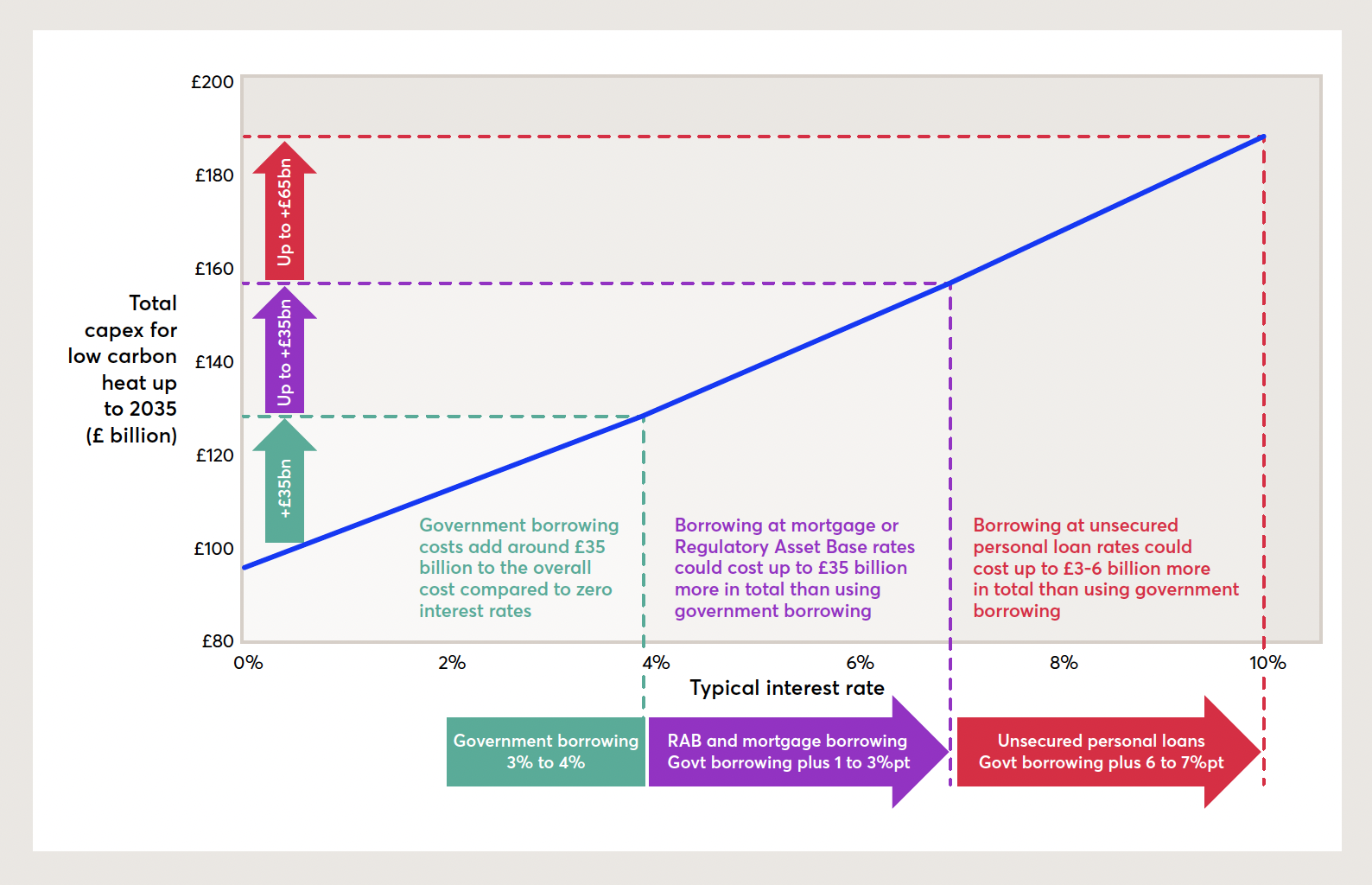
Figure 12. The impact of interest rates on total capital costs of low-carbon heating
Nesta has tested homeowners' appetite for low-interest, government-backed loans with broadly positive results. We found three factors which supported successful loan schemes: a low rate of interest; flexible repayment terms; and a complementary package of support to help people access the loans. There is a strong case for a government-backed loan to help households pay for upgrades.
- Government-backed: these loans would be partly underwritten by the Government, and would include a subsidy to either lower the interest rate or offer cashback incentives.
- A wide choice of measures: households can spend the loans on a wide range of green measures, including low-carbon heat, solar panels, batteries, or fabric insulation.
- Available to all: owner occupiers and landlords could access these loans.
- Commercial partners: these loans would be delivered by commercial banks and loan providers, with underwriting and support from the Government.
- Promotion and support: the Government could support and promote the loans through a new energy advice service and accredited suppliers.
The Government should launch a Government-backed retrofit loan scheme, and support devolved Governments to participate or develop their own schemes. These loans would be offered by commercial lenders, but be guaranteed by the Government to lower interest rates. Government should also provide a small grant with each loan to offer additional incentives.
Encourage mortgage finance to support green upgrades
Changes to mortgage lending provide other routes to help households to access affordable finance for home upgrades. The key benefit is that mortgage borrowing typically has much lower interest rates than personal loans. Because mortgages are often linked to people moving home, this also provides an opportunity for a more disruptive retrofit as part of the move. The main downside is that mortgage finance currently only covers a subset of all homes. Of the 65% of homes in England that are owner-occupied, only 46% have a mortgage, the rest are owned outright. Private rented homes account for a further 19% of homes, of which 37% have a mortgage. There is nothing stopping people who own their property outright from taking out a new mortgage, but this would represent a behavioural shift from the status quo.
More than 30 UK lenders offer green mortgages; however, these products have generally not seen much uptake. The lenders report limited appetite for these products, despite offering inducements including extra borrowing, lower interest rates and cash back for green home upgrades. There are also regulations which either directly or implicitly constrain what banks feel they can offer, The Consumer Credit Act (1974) – the primary legislation that governs consumer lending – is often cited as a barrier in this regard.
There are various ways that the Government could make mortgage lending a more widespread and effective tool to help finance home upgrades.
- Stimulate demand by highlighting the availability of green mortgages as part of an awareness campaign and generally making low-carbon heating more affordable.
- De-risk lending, by reforming EPCs and the Consumer Credit Act or providing partial guarantees to mortgages where certain green conditions are met.
- A lender obligation, which would place targets on banks to agree more green mortgages, above and beyond the banks' existing ESG commitments.
Open up alternative finance and funding models
In practice, the Government probably does not need this – the banks are broadly keen to lend money.
- Property-linked finance creates a means for homeowners to transfer borrowing when they sell their home. This could make it easier for them to pay for more expensive upgrades with longer payback periods, such as heat pumps. This is an unfamiliar form of lending in the UK (although it is widespread in other countries); the Government would need to improve public understanding about what property-linked finance is and how it works, and to reassure homeowners about the risks.
Property-linked finance
Home upgrades can often have payback periods that are over a decade, and cheaper energy makes these even longer. However, these periods may be longer than a homeowner intends to stay in a property, and homebuyers may not place a premium on low-carbon heat or efficiency upgrades. These factors create a disincentive against homeowners investing in expensive measures, even with cheap finance.
Property-linked finance avoids this issue by linking the debt to the property rather than the owner. This broadly eliminates the issue of payback periods. It is used widely in other countries, such as the US, to pay for all sorts of home upgrades.
A form of property-linked finance was trialled as part of the Green Deal between 2013 and 2015. Green Deal Finance was a failure, but the reasons for this are now well understood and are addressable. The main issue was that it was fundamentally not an attractive proposition to consumers. It was an unfamiliar concept which did not offer substantially lower costs than other forms of consumer borrowing. The scheme was also administered through a new public company.
The UK Government should agree a package of support and obligations with mortgage lenders to increase the uptake of green mortgages.
Open up alternative finance and funding models
Another route to securing affordable finance is through larger scale installations of low-carbon heating. Where a large number of low-carbon heating systems are installed in a neighbourhood – this might be shared infrastructure such as heat networks or large numbers of individual heat pumps – it is easier for financiers to bundle these investments into bigger, less risky assets. There is considerable scope for institutional investors to invest in these types of heat projects, in the same way that infrastructure such as utilities and transport can attract lower cost finance.
Financing will also play a critical role in enabling coordinated switching approaches to work. If many households in the same area are to sign up at the same time, providing finance will be key to ensuring they can all afford to do so simultaneously. There is a potential virtuous relationship here, with finance making coordinated switches easier to do, and coordinated switches potentially offering less risky, lower cost investments to financiers. There is also considerable scope for innovation in payment models for coordinated switching, such as using heat as a service or standing charges.
There is also a scenario where, under a reformed energy market, Distribution Network Operators (DNOs) or similar bodies could finance heating infrastructure at interest rates available to regulated assets.
In developing its coordinated switching approach (see 'Delivery' section), the Government should ensure its approach is attractive to financiers, especially institutional investors. As a first step, the Government should pilot a number of financing models as part of developing its coordinated switching approach.
Recommendations to increase access to affordable finance
- Launch a Government-backed retrofit loan scheme, and support devolved Governments to participate or develop their own schemes.
- Agree a package of support and obligations with mortgage lenders to increase the uptake of green mortgages.
- Pilot a number of financing models as part of developing a coordinated switching approach.
Support the development of heat networks
Heat networks will be an important part of the UK's low-carbon heating mix, but their funding models work differently to other forms of low-carbon heating. As large infrastructure projects, heat networks will need policy certainty and support in order to get built.
Heat networks face significant revenue uncertainty at the outset of project development. They cannot be sure how many buildings might connect and buy heat, and therefore how much income the project might be able to rely on. Almost all heat network projects to date have been supported by public funding, made available by the Government through the Heat Networks Development Unit (HNDU), Heat Networks Investment Pipeline (HNIP), and the Green Heat Network Fund (GHNF).
Addressing revenue risk through zoning and a requirement to connect
Heat network zoning policy gives governments a way to set out a clear view of where it expects heat networks to be and de-risk their development.” Our proposed coordinated switching approach to delivery would facilitate the expansion of heat network projects (see ‘Delivery' section). Heat network zoning should give building owners - including home owners and landlords a clear signal that a heat network is expected to be the lowest cost option for decarbonising heat in their area. This on its own should make it more likely that consumers will connect to a heat network, and reduce the revenue risks that heat networks currently face.
The crucial policy to reduce revenue risk is the requirement for certain types of building in these zones to connect to the heat network, as and when one is developed. These buildings provide ‘anchor loads' that guarantee a significant level of demand for heat from the network. This requirement should cover new buildings, residential buildings that already have communal heating systems (usually blocks of flats) and non-domestic buildings that have large heat demands (offices, leisure centres, educational facilities and so on).
The revenue certainty that this policy creates will make it much easier and cheaper for public and private organisations to develop heat networks. It makes it more likely that project development can be undertaken with private financing. While the requirement to connect shouldn't cover most types of existing homes, helping get more heat networks built will ensure that many more homes have a heat network nearby. They could therefore choose to connect where those homeowners see it as the best and most affordable way to decarbonise their heating.
Maintaining subsidy for project development and construction
While zoning policy is being developed and continues to mature, there will be an ongoing need to continue to provide public support and subsidy to help the development and scaling up of heat networks, just as there is a need with other low-carbon heating systems. These subsidies should, for the time being, continue to provide project development and feasibility support in the way that the Heat Network Development Unit (HNDU) has, as well as providing capital grant funding to help heat networks overall meet the costs of establishing low-carbon heat supply when they are developed (as the Green Heat Network Fund (GHNF) has).
Alongside subsidies, governments may also wish to consider part-guaranteeing heat networks or providing bridging finance during the development and construction phases, until the network establishes sufficient revenue that it is able to switch to using commercial borrowing as a mature infrastructure asset. This financing could be carried out by the UK Infrastructure Bank (heat networks are already within its remit) or by the UK Government directly. Low-cost lending might also benefit building owners and homeowners with meeting the 'final metres' costs of connecting to an established heat network – this could be incorporated into the other consumer-facing low-cost financing that we have proposed.
Recommendations to support the development of heat networks
- Designate heat network zones and implement a requirement to connect for some buildings (but not the majority of existing homes).
- Continue to provide subsidies for developing heat networks through the Green Heat Network Fund, and provide guarantees to lower the cost of finance where appropriate.
End fuel poverty
The UK has a legal and moral obligation to reduce fuel poverty. Doing so aligns well with its legal and moral obligation to decarbonise home heating. Our plan reflects the way these two goals complement each other and offers the Government a way to reduce and, ultimately, end fuel poverty.
In 2023 there were 3.17 million English households which meet the UK Government's definition of fuel poverty, around 13% of all households. The total number across the UK may be as high as six to seven million. Most of these households depend on fossil oil or gas for their heat and have been exposed to the volatility of prices set on international energy markets. The average fuel poverty gap in England is currently £417 – the deficit that a fuel-poor household needs to overcome to not be fuel poor.
- Simply improving the fabric efficiency of homes is not a sufficient step to close the fuel poverty gap. However it is a critical step to safeguard the health and wellbeing of fuel-poor households.
- A permanent solution to end fuel poverty must include ending dependency on fossil fuels for heat. As the UK continues to build renewable generation capacity, electricity prices should fall steadily. Helping fuel-poor households switch to use low-carbon heat will let them benefit from this windfall while making the UK more secure.
Fund better insulation for homes with fuel-poor households
The Government must continue to fully fund insulation measures for homes with fuel-poor households, and for social homes. Fuel-poor households routinely cut back on heating to save money on bills, putting their health and wellbeing at risk. Improving the energy efficiency of their homes does not necessarily translate into direct bill savings. Households routinely take some of the benefit of insulation back as increased comfort, with the effect increasing as they get poorer. But there is a bill effect, and there are other efficiency measures – such as solar PV combined with battery storage – which can dramatically increase the efficiency of electrical heating systems such as heat pumps.
Help fuel-poor households switch to low-carbon heating
A combination of fully funded low-carbon heating and rebalanced levies on electricity and gas would significantly cut energy bills for fuel-poor homes. If the UK Government can make rapid progress on fabric efficiency it could pivot its fuel poverty schemes to focus on heat in the late 2020s and early 2030s. This would allow it to benefit from the scale and efficiencies of the growing low-carbon heat market.
- Under the policies we recommend, our analysis finds the typical household switching to a heat pump would see their energy bills fall by around £400 per year.
Take steps to protect fuel-poor households during the transition
As well as funding fabric and low-carbon heating installations, the UK Government should also consider further measures to avoid under-heating, such as increasing the Warm Homes Discount or adopting a social tariff.
Delivery
Priority actions
- Improve capacity for delivery at local and national levels. The Government should strengthen local delivery arrangements, support local bodies to produce comprehensive heat transition plans and establish a new agency to support delivery of the heat transition.
- Rigorously pilot, test and de-risk coordinated approaches to delivering low-carbon heat that could run alongside the current policy approach – predicated on prompting individual households switching to low-carbon heat – and could be scaled up if the latter fails to deliver change quickly enough.
- Reform existing home decarbonisation schemes to be more effective and impactful.
The UK is at an inflection point in the heat transition. Success depends on getting millions of low-carbon heating and energy efficiency measures into homes. The current delivery model is not achieving enough, quickly enough. Three key issues need addressing.
1The UK currently has limited capacity to deliver the heat transition at national and local level. Some key functions and services are not being provided well, consistently or at all. Government-backed schemes are underperforming.
2Responsibilities are often unclear or unmet. The delivery framework has gaps where either nobody is responsible for performing a particular function, or the responsible organisation is not performing its role well enough (or at all).
3It is not currently possible to deliver low-carbon heating in a more coordinated way at scale, which could help speed up the transition and may become necessary over time, for example as the gas grid is decommissioned in some parts of the country.
Funding and labour supply, two further key constraints on the UK's delivery capacity, are addressed elsewhere in this report.
Any changes the Government makes to its delivery framework will need to account for arrangements already in place in the devolved nations. Some of the key issues we highlight here are mostly (or entirely) England-specific. For example, Scotland and Wales already have standard approaches to local area energy planning and all their local authorities are required to produce plans. Other delivery gaps are prevalent in most or all nations, but the powers needed to address them are devolved.
Improve capacity for delivery at local and national levels
Local institutions have some specific advantages in delivery: they can increase the sense of local ownership of the process, they may be better at targeting homes and they may be able to join up delivery across different programmes. Some local and combined authorities in England already deliver various Government retrofit schemes, primarily through bidding for competitive central government funds such as the Home Upgrade Grant (HUG) or the Social Housing Decarbonisation Fund (SHDF). There are also non-profit organisations and local schemes with deep local expertise, which currently provide support but could take on wider roles with more resources.
However, the UK makes limited use of local delivery. In many places, capacity and expertise to deliver the heat transition is very limited. This is a barrier to current delivery and to implementing more ambitious locally led approaches to delivering green homes and low-carbon heat. Improving delivery capacity at the local level is a no-regrets action for the Government.
Set up a local heat delivery body in each area
The Government should support each area in England to form a local heat delivery body, overseen by local government but operating as a distinct, independent organisation. Local delivery bodies could take on a variety of roles. They should lead on creating local heat plans (described further below) and engaging communities in developing these. They could also take on roles in:
- Delivering retrofit schemes, especially for fuel-poor households and social housing.
- Regulation and enforcement, such as for standards for private landlords or heat network zoning.
- Consumer advice, providing on-the ground, locally informed support. This might include: visiting homes, completing assessments and signposting households to local grant schemes and trusted traders.
- Commissioning and/or delivering street by street or neighbourhood upgrades, as described further in the section on 'coordinated switching', below.
Local areas should have flexibility and autonomy in how this body is formed. Potential arrangements might include:
- creating a retrofit hub (for example, Retrofit West) to provide advice, guidance and targeting to households and coordinate delivery for social housing and fuel poor homes
- forming publicly owned companies or other delivery vehicles in local areas
- running it as part of local government structures, but with distinct governance arrangements
- making an existing community organisation the delivery body.
This flexible approach would enable each local area to build on any effective institutions they already have, and allow some tailoring to the needs of each place. For example, the best approach in a rural, primarily off-gas area may be different to that in a large city region.
Local delivery may be best led at combined authority level. Where combined authorities do not yet exist, groups of local authorities could be asked to work together at sensible geographies ( ideally the ones that a future combined authority is likely to be at). There are likely to be around 40 local heat delivery bodies in England on this basis.
Combined authorities include individual local authorities in their governance, and it would be straightforward for them to pass roles and funding down to local authority level. This means existing good practice could be maintained (such as where districts already have effective retrofit programmes) while keeping the number of bodies that central government interacts with smaller.
While local heat delivery bodies would be able to access funding to deliver Government schemes, they would also need some core revenue funding. We estimate that around £2 million per area, or £80 million nationally, could provide a more stable foundation for local capacity and enable the bodies to deliver core functions such as heat transition planning.
Central government could go further and agree a multi-year settlement with each combined authority, with funding provided in return for delivery targets. Funding could be increased or reduced over time based on performance.
Require each local area to create a detailed plan for the heat transition
Local authorities in Scotland and Wales are already creating plans for local energy transition (Local Heat and Energy Efficiency Strategies and Local Area Energy Plans, respectively); but the picture in England is much patchier. There is a strong case for comprehensive local heat planning in every part of the country. These plans should be relatively granular, in order to identify the likely best solutions for low-carbon heating in each neighbourhood, including potential locations for communal schemes such as heat networks and networked ground source heat pumps. The process is highly likely to require partnership working with the National Energy System Operator (likely via the new Regional Electricity Strategic Planners) and gas and electricity network operators, and proactive community engagement.
Establish a new national agency to lead the heat transition
The Government could resolve some delivery gaps by establishing a new national agency responsible for delivering the heat transition. The case for creating a national agency is that:
- Limited capabilities. The capabilities needed to support local delivery are in short supply. A new agency could build these capabilities and provide expert support to local areas, helping to spread effective practices and reduce the inconsistency in capacity between areas
- Heat is not a policy priority. Heat decarbonisation and energy efficiency are not sufficiently prominent issues within government. A new agency could provide a clear point of coordination and leadership on the issue of heat.
The agency's core function would be to provide technical support and guidance to local areas.
- Specialist expertise. A centralised source of expertise to help with heat planning, finance, commercialisation, project management, procurement and specific engineering challenges. This would be similar to the successful model of the Heat Network Delivery Unit (currently within DESNZ), enlarged and given wider responsibilities.
- Heat and energy planning. Support local authorities to develop local heat and energy plans by providing guidance and advice to ensure consistent
- approaches to planning. It would also provide oversight by setting minimum standards for heat and energy plans and reviewing submissions from local authorities.
- Data and learning. The agency could also collect, analyse and share data on approaches to local delivery, in order to improve performance and impact.
The agency could also take on a wider role.
- Scheme administration. The agency could take on responsibility for administering key and/or new Government funding schemes. Consolidating some of these could simplify their administration, and allow coordination between them. The agency could also be given the power to adjust how these schemes work; it could improve their performance based on learning from delivery, and move funding between schemes to better follow need.
- Consumer awareness and advice. The agency could take on responsibility for delivering or commissioning consumer advice in England and an ongoing national campaign to increase public understanding and awareness of the heat transition.
There are benefits in creating an independent agency to lead the heat transition – for example, greater ability to be flexible and agile in its operations, ability to provide strong voice and leadership for the sector, and ability to take on more roles over time if it proved successful. However, doing so would require primary legislation and, depending on the scope of the agency, start-up costs could be significant. Alternatives would include establishing a unit within Government that could play some of these roles, along the lines of the Heat Networks Delivery Unit, or reorienting an existing independent organisation to become the agency.
The remit of any new agency would need to reflect the division of powers between the UK and devolved governments. Many of the functions, such as planning, are fully devolved, so the agency would only serve England by default. However, it would need to take account of reserved powers. Scheme administration would vary on a scheme-by-scheme basis. ECO is GB-wide, BUS is England and Wales, and HUG is England only. The technical advisory function could be delivered in a range of ways – the Heat Network Delivery Unit currently supports organisations in England and Wales.
Recommendations to improve capacity for delivery at local and national levels
- Support local areas to create heat delivery bodies at a combined authority level or equivalent.
- Create standards and guidance for local heat and energy plans and mandate English local authorities to produce one by the end of 2026.
- Establish an agency to support local areas in planning and delivering the heat transition and to pilot coordinated switching, with the potential to take on wider roles.
Rigorously pilot a variety of approaches to coordinated switching
The UK currently follows an approach to scaling up low-carbon heating that places the onus on individual households to decide whether to switch to low-carbon heating and act on their decision. To date, governments have focused mainly on providing incentives and regulations to encourage people to switch.
Alongside this approach, we think the UK also needs to develop a more coordinated approach to switching homes to low-carbon heat. Coordinated approaches would enable many households – across a street, neighbourhood or wider area – to switch at the same time. Households would choose to participate rather than being compelled to do so, which means coordinated schemes must develop attractive offers.
The potential benefits of coordinated switching include:
- Ease and attractiveness for households: a coordinated approach presents an easier and more persuasive option for households, who can opt in to a predetermined scheme rather than having to do their own research and navigate the currently complex customer journey. A default of “everyone in my street is switching" may create a new social norm, making people more likely to sign up.
- Equity: Government retrofit schemes cover social housing tenants and those in fuel poverty. Outside these schemes, low-carbon heating, even with current subsidies, requires significant upfront costs and a proactive approach. This leaves households who are not able to pay and not covered by schemes at risk of being left behind in the long term.
- Building the supply chain: a coordinated approach can give more confidence to suppliers, at a local and a national scale, that there will be concentrated local demand for low-carbon heating, and enable them to scale up their operations accordingly.
- Economies of scale: switching whole streets or neighbourhoods together can enable savings thanks to economies of scale, reduced costs of customer acquisition and sales for businesses due to demand being aggregated and fewer costs around travel and scheduling of works.
- Access to more finance at lower cost: coordinated switching could enable new models and sources of financing low-carbon heat to be used, that are not possible for individual households, for example by aggregating schemes to a level able to attract institutional finance, or enabling home upgrades to be added to a regulated asset base.
There are many ways coordinated switching could work, and many different types of organisation could be involved. The Government should set up a series of pilots to rigorously test different approaches to coordinated switching, learn quickly and scale up schemes that work. This could be led by the new agency proposed above.
Exploring this potential is a low-risk, low-regret option for the Government, with significant upside where models are shown to work. Examples of the types of coordinated switching approaches the Government could pilot include:
- communal shared infrastructure schemes
- a local energy group or cooperative offering a street by street upgrade to an already engaged local community
- a group purchasing offer for air source heat pumps over a larger geographic area, with companies bidding for the pilot in a reverse auction which finds the lowest possible subsidy
- a local authority-led retrofit and regeneration programme that involves innovative finance offers, such as the 3ci model
- a DNO-run model, where a DNO or IDNO offers a clean heat upgrade with zero upfront cost to a few thousand properties within an area, using a mix of subsidies and financing from its balance sheet.
Some examples of these types of schemes already exist, and a programme of pilots should start by learning from existing models.
Nesta's blueprint for coordinated switching
Nesta has recently produced a 'policy blueprint' that maps out the processes and structures that may be required to plan and deliver coordinated switching at scale. Our blueprint illustrates the key players involved, the steps they need to take and the interactions between them. It allows us to make explicit what resources and processes would need to be in place to make the whole system work. Our proposal is not a solution but a framework that requires further testing, iteration and de-risking. The institutions involved and roles they might play include:
- National governments. Create a supportive policy environment through funding, regulation, standards and guidance. Devolve some powers where necessary and provide resources to local government and public bodies to support coordinated delivery models.
- National delivery body. Provide specialist advice and support to local governments about projects. Allocate funding, set targets and track progress. Mediate between different stakeholders at the local and regional level. Gather and analyse data to improve guidance and inform best practice.
- Local delivery bodies. Create local energy plans and establish a local delivery body to manage the practical aspects of switching projects. Be a visible, trusted, local agent for the heat transition. Help develop local capacity and supply chains. Define zones for different heat technologies. Lead pre-market engagement for coordinated delivery schemes; review tenders and shortlist and commission scheme providers. Notify households about plans.
- Delivery organisations. Contribute to local area energy plans and tender for coordinated switching schemes. Devise attractive offers and market them to households. Build local and national supply chains.
- Households. Participate in consultations and help to shape local plans. Understand the potential changes to their home and local areas, and join switching projects to receive upgrades.
Recommendations to establish potential for a greater role for coordinated switching
- Set up a series of pilots to rigorously test a variety of different approaches to coordinated switching.
- In 2028, evaluate whether to shift the balance of public investment further towards coordinated approaches.
Consider whether and how to create new obligations and responsibilities for delivering the heat transition
A wide range of institutions are involved in delivering the heat transition. However, the current delivery framework has gaps where either nobody is responsible for performing a particular function; or the responsible organisation is not performing its role well enough (or at all).
Coordinated switching is a managed approach that benefits from clearly defined responsibilities. Different types of organisation could be responsible for some or all aspects of the delivery process. The Government should also test different leadership arrangements over the next few years to find what works best. These could include schemes led by the following actors.
- Local government: this model would create a stronger local connection and could add democratic legitimacy. It could also benefit from deeper local knowledge and buy-in. Individual local authorities may be too small to do this alone; the best arrangement might be built around combined authorities, or similarly sized partnerships of local authorities.
- Network operators: the Government could extend the existing RIIO framework to create new incentives (or obligations) for DNOs. Giving this responsibility to DNOS would create an incentive for them to align the installation of low-carbon heat with grid upgrades, facilitating planning and potentially delivering efficiencies, and would open up potential to fund upgrades using RAB-based finance.
- Energy retailers: energy companies could be given the responsibility to deliver the heat transition. This approach could be established as part of wider reforms of the retail energy market. For example, a shift to a franchise model
where retailers compete for rights to deliver energy and other services in a particular region.
- Central agency: the Government could opt to vest itself with responsibility for leading coordinated switching projects. This would likely be run through a public body, such as our proposed delivery agency, which may or may not have devolved equivalents. A central agency may find it easier to get staff with the right capabilities and it could commission projects at a bigger scale than anyone else. But centralisation would lose many of the benefits of local knowledge and consensus, which we expect will support the success of switching projects, and it increases the risk of politicising operational decision making.
- Communities: community energy projects are a well-established model in the UK, although most are focused on renewable generation. There were 271 community energy schemes across the UK in 2021, but only 28 of these were renewable heat schemes.
This would also enable the Government to test the potential to create new obligations or responsibilities for delivery of low-carbon heat. In time, the Government could set targets or obligations for delivery organisations. For example, in a DNO-led delivery model the Government could set annual targets for the number of homes switched on a region-by-region basis.
Over time, the Government could even consider wider reforms to the energy market that could support a coordinated approach to delivering the heat transition. These could include, for example, a franchise model, where each local or regional authority procures a single supplier – or franchisee – to deliver energy services to all the customers in their geographical area, for a set period of time. Another option would be to turn electricity network operators into energy suppliers. Under this model the local electricity network company would become the energy supplier for customers in its geographical area, and take on responsibility for rolling out low-carbon technologies to homes.
Recommendations to consider whether and how to create new responsibilities for delivering the heat transition
- Run coordinated switching pilots with a range of institutions leading them, in order to test the viability of different institutional models.
- Over time, evaluate whether to give institutions new responsibilities, obligations and/or targets for delivering the heat transition.
Short-termism, policy churn, complexity, and administrative issues have severely limited the effectiveness of many Government delivery schemes (for both the UK and devolved governments). The Government can and has run schemes that deliver widespread, positive changes to homes. ECO's predecessors (CERT, CESP and CERO) supported the installation of over 8.2 million measures in homes between 2008 and 2012. In contrast, the Government's current flagship scheme (ECO) has only delivered 3.8 million measures since 2013.
Common issues affecting government schemes for home upgrades
Since 2010 the UK Government has run numerous delivery schemes for home upgrades, many of which underperformed. This is largely due to a set of common issues that are within the Government's power to fix.
- Short-termism: funding is rarely guaranteed for more than three or four years. The lack of long-term certainty means that even when schemes are renewed, performance dips as providers exit and rejoin the scheme.
- Stop-start: schemes are sometimes renewed with new requirements, or replaced by others with similar aims. This discourages firms from investing in resources for delivery, while households struggle to keep track with offers.
- Restrictive eligibility requirements: eligibility requirements often serve as more of a barrier to access than a useful way to target support (for example, the Green Homes Grant).
- Lack of consumer appeal: some schemes have lacked an offer that appeals strongly to households (for example, the Green Deal).
- Poor design: unanticipated behavioural responses or other flaws make schemes more expensive than anticipated (for example, the Renewable Heat Incentive or Feed-in Tariffs).
- Competitive bidding: funding for some schemes, such as the Social Housing Decarbonisation Fund (SHDF), is awarded on a competitive basis. In practice this makes it difficult for local authorities and social landlords to act strategically, as they have to ‘follow the funding’, and means that funding does not necessarily follow need. Short timescales for bidding and delivery are likely to have resulted in areas with less delivery capacity missing out.
- Complexity across and between schemes: local authorities in England are delivering multiple schemes such as LAD, HUG and SHDF and have to juggle different requirements and timescales in order to upgrade homes in their area.
- High search costs: 7.2% of all ECO funding (since inception) has been spent on administration for the obligated energy companies. These costs are typically highest at the start of an ECO round, and fall over time.
To improve the delivery and impact of Government-funded schemes, the Government should:
- simplify eligibility requirements for key schemes and offer greater flexibility for locally set eligibility and self-referral.
- provide longer-term funding to enable local authorities and social landlords to plan and upgrade homes more strategically.
- move away from competitive bidding to provide certainty on funding at a local level.
- increasingly prioritise low-carbon heating in scheme design to ensure that lower-income households are not left behind in the heat transition.
There are at least 11 current or legacy delivery schemes for home upgrades being administered by four different organizations. Over time, the Government could consider consolidating schemes into a single universal subsidy, to make it easier for providers to deliver and for households to navigate. Households could benefit from a single point of access, while having a single, long-running support scheme would make it easier for the Government to adjust levels of support (for example, tapering down subsidies for some households).
Fossil fuel phase-out
Priority actions
- Commit to phasing out new installations of gas and oil boilers from 2035 at the latest and rule out any exemptions.
- Create a plan for the gas grid that provides technical guidance on the requirements to phase out or decommission sections of the grid and sets out how the phase-down will be managed and paid for fairly.
Fossil oil and gas provide 87% of the annual heat demand in homes. This accounts for 99% of residential emissions (and 14% of all territorial emissions). While the number of boilers installed should fall year on year, the UK will still install 16 million fossil boilers between 2025 and 2035. To reach net zero the UK must only be installing low-carbon heating in homes from 2035, and stop using all remaining boilers by 2050.
Phasing out boiler installations by 2035 at the latest is necessary to achieve net zero by 2050, but it is not sufficient to ensure that the UK meets future carbon budgets. The recent policy change to phase out dates for boilers in homes off the gas grid, combined with other policy changes, has reduced the potential abatement from the residential buildings sector. This has created a rump of additional emissions that were not accounted for in the Government's Net Zero Strategy or Carbon Budget Delivery Plan. There is a serious risk that the UK may miss future carbon budgets as a result of these changes.
Buildings emissions in the next three carbon budgets
The CCC's Balanced Pathway indicated that the UK needed to reduce emissions from UK homes by 28.6 MtCO₂e over the Fourth Carbon Budget period (2023-2027), 91.7 MtCO₂e over the Fifth (2028-2032) and 168.3 MtCO₂e over the Sixth. The Government's Carbon Budget Delivery Plan was a suite of policies (in 2021-22) which were projected to meet these targets, albeit with little (if any) headroom. Some subsequent policy changes have negatively affected the amount of abatement expected from the Government's plan, affecting the likelihood of achieving future carbon budgets. (The following abatement figures are the totals for CB4-6, based on the CBDP):
- -15.5 MtCO₂e: Scrapping higher minimum efficiency standards for the private rented sector in England and Wales.
- -24.0 MtCO₂e: Delaying the phase out dates for fossil boilers in homes off the gas grid from 2026 to 2035.
- -0.4 MtCO₂e: Delaying the Clean Heat Market Mechanism by one year
There are also other policies which are accounted for in the plan which seem unlikely to be implemented at this point:
- -18.5 MtCO₂e: Improving home energy performance through lenders
Other policy changes may increase expected abatement:
- The Boiler Upgrade Scheme was extended to 2028 with the level of annual funding increasing from £150m to £500m. We cannot quantify the abatement gained from this change.
The changes to PRS MEES, off-gas boiler regulations and the CHMM account for 7.7% of the Government's own projections for abatement from its policies in the Fourth Carbon Budget, 11.1% of the Fifth and 9.1% of the Sixth. If we include the effect of not implementing the lender obligation these rise to 16.5%, 17.0% and 12.2% respectively. While the changes to BUS will offset some of these anticipated losses, it is not enough to reverse them fully.
The ideal outcome is that homeowners, when faced with the choice, always favour a low-carbon option over a boiler. However, the current set of incentives alone is not likely to be sufficient to guarantee that homeowners stop installing new fossil boilers by 2035, and stop using them by 2050. The Government should make it clear to consumers that fossil boilers will eventually cease to be an option. This would add weight to policies that focus on increasing incentives for homeowners, and make it more likely that targets will be met.
The Government also needs a plan to manage the gas grid through a period of declining use. In particular, it needs to identify vulnerable households and groups who will be affected by grid decommissioning, and develop policies to support and protect them. There are two key issues for the Government right now.
1 Fossil boilers are an incumbent technology which are not being displaced quickly enough. The Government needs to increase the appeal of low-carbon heating systems so that they out-compete fossil boilers. The distributional impacts of this transition are complex and the Government needs to manage the risk that poor or vulnerable households get left behind in this process.
2 There is no plan for the future of the gas grid. The current operating model is not sustainable. The Government needs a plan to manage the grid's operating costs as the number of homes using fossil gas falls. It also needs to address whether the grid has a future use, what decommissioning entails, and the distributional impacts of a managed (or unmanaged) phase-down.
Displace fossil boilers as the incumbent technology for heat
There are currently ~25.5 million homes using fossil boilers, a number that was rising steadily but may have peaked in 2023. Currently, more than 1.2 million new gas boilers are sold in England and Wales every year. This number needs to fall so that the share of homeowners choosing low-carbon heat reaches 100% before 2035.
It is generally assumed that boilers have a working life of 10-15 years on average. This is the basis for the 2035 phase-out date for new boiler installations. In practice, boilers can be in use for much longer. Boilers installed in the mid-2030s could be operational well beyond 2050. The Government needs to consider how to phase out new installations by 2035 at the latest, and phase out the use of boilers by 2050.
The working lifespan of a typical boiler
Boilers are generally assumed to have a working life of 10-15 years. This is the figure that most manufacturers report, and the upper bound has been used as a core assumption in analysis by the Government and others. However, there is reliable evidence that many boilers are in use for much longer than 15 years.
- Condensing boiler regulations. Since 2005, part L of the building regulations for England has required condensing boilers for all installations. Yet in 2020 3.2 million English homes (13.7%) were still using non-condensing boilers. This is significantly more than the ~1.3 million boilers installed in total in 2005 (many of which would have been condensing). This suggests that many of the boilers remaining in 2020 must be older than 15 years.
- Gas safe register. Gas engineers in England and Wales are obliged to notify the Gas Safe Register about every new boiler installation. ~1.2 million gas boiler installations were reported in 2021/22. Historical data from the register suggests that a substantial proportion of boilers in use in 2022 were more than 13 years old.
Recommit to phase out all new boiler installations by 2035 at latest
In 2021 the Government announced its ambition to phase out the installation of boilers in homes off the gas grid from 2026, and gas boilers from 2035. In 2023, the Prime Minister rowed back on these proposals, pushing the deadline for the off-gas boiler phase-out to 2035 and announcing that 20% of homes will be 'exempt' from the gas boiler phase-out. This implied (without explanation) that some homes would continue to be able to install new gas boilers beyond this date.
The net-zero target means that no fossil fuel boilers can be in use by 2050. If installations continue beyond 2035, many boilers would need to be replaced before the end of their working life. Clarity on phase-out dates would give businesses the confidence to invest in supply chains, and consumers confidence that they are making the right decision by opting for low-carbon heat. It could also enable other benefits. For example, a clear phase-out date is likely to raise the value of properties that have low-carbon heating, which in turn could encourage mortgage lenders to offer finance to their customers to upgrade their homes.
The Government must urgently address this uncertainty and establish a position that new fossil boilers will not be an option past 2035. This position needs to be clearly communicated to both the public and industry. This phase-out date could be put into legislation, but this would not need to be done immediately as long as the intent is clearly communicated.
The Government should also consider whether the phase-out date needs to move earlier than 2035. The Skidmore review proposed a 2033 phase-out date, and there may be a need to move the date forward to meet carbon budgets.
Evaluate whether to set an earlier phase-out date for off grid boilers
The level of the Sixth Carbon Budget was set on the expectation that boilers in homes off the gas grid would be phased out from 2028. It is plausible that many off-gas homes will switch to low-carbon heat relatively quickly even in the absence of a phase-out date. Many are low-regret candidates for heat pumps and the Government should be actively encouraging them to switch early. In practice, delaying the phase-out date to 2035 means that many off-gas homes will not switch as early as they would have.
In principle, the next Government could reinstate an earlier phase-out date for oil boilers. 2026 is unrealistic at this point and 2028 would pose a significant challenge, especially given low public awareness of the phase-out dates. The early 2030s is a more plausible target.
Changing the date again could create confusion. However, given that public awareness of the phase-outs is currently so low, it may well be that the previous changes passed by largely unnoticed. The Seventh Carbon Budget is expected in February 2025, and a new Net Zero Strategy is due by May 2025. These will present opportunities for the Government to reassess and reset the timeline for phase outs.
Rule out potential exemptions from boiler phase outs
In 2023, the Government proposed that up to 20% of homes could be exempt from both the 2035 phase-out date for boiler installations and the 2050 phase-out date for boiler use. If implemented this would significantly reduce the amount of abatement from buildings and would make it difficult, or even impossible, to meet future carbon budgets. It would also be unfeasible and costly to run the gas grid for 20% of homes, especially if they were distributed across the country.
The UK will have a limited supply of biofuels in the future. Other (harder-to-abate) end uses may need to take precedence over domestic heat. However, there are some valid use cases, such as some remote rural properties, where full electrification will be difficult. The Government should assess the needs of these properties and define criteria to permit limited use of biofuels for heat. It should explicitly preclude any use of biofuels to decarbonise heat other than for this small and specific set of homes. It should also continue to develop supply chains for sustainable bioenergy.
Set an EPC C minimum energy efficiency standard for private rented homes
In 2020, the Government consulted on increasing minimum energy efficiency standards (MEES) for private rented homes from EPC E to EPC C by 2030. No response to the consultation has been published, and in 2023 the Prime Minister announced that he was scrapping the proposed policy.
The Government expected these standards to provide 2MtCO₂e abatement in the Fourth Carbon Budget, 7MtCO₂e in the fifth and 6MtCO₂e in the sixth. Reversing the earlier policy change and implementing the minimum efficiency standard as planned should be a priority for the Government.
Efficiency standards in the private rented sector
The Private Rented Sector accounts for [19%](https://assets.publishing.service.gov.uk/media/64c3c39379895000085a2253/English_Housing_Survey_2021_to_2022_Headline_Report.pdf) of British homes. Nesta's analysis of English and Scottish housing surveys suggests that 25% of these are occupied by fuel poor households (1.2 million out of a total of 4.9 million). However, the definition of fuel poverty which applies in England only counts households living in homes rated EPC D-G. Under the broader definition of households spending more than 10% of their income on heat after housing costs, the proportion of fuel poor tenants increases to ~35%.
Minimum efficiency standards are an effective tool. The Government introduced the EPC E minimum standard for private rented homes in England in 2018. In a little over a year the share of homes rated EPC F or G fell from 30% to 10%. However, progress has largely stalled since. It is unlikely that this sector will make any further progress without tighter regulation.
The Decent Homes Standard is another policy which could improve private rented properties. Currently it only applies to social housing, but DLUHC consulted on extending it to the private rented sector in 2022. Legislation to enable this was included in the Renters (Reform) Bill in 2024, but this died when the election was called. The next Government could resurrect this and use the Decent Homes Standard to set new requirements for energy efficiency in private rental properties.
Quickly implement the Future Homes Standard
The Future Homes Standard, due to be introduced in 2025, will ensure new builds in England use low-carbon heating, have high fabric efficiency and are 'zero-carbon ready', meaning that they should require no further retrofit to reach net zero emissions once the grid is fully decarbonised. Detailed design of the standard is currently underway. It should be implemented without delay to planned timescales.
Implement the Clean Heat Market Mechanism
The Clean Heat Market Mechanism (CHMM) is analogous to the Zero Emissions Vehicles mandate, which supports the transition to electric vehicles by placing an obligation on car manufacturers to shift production in this direction. The market mechanism was initially proposed in 2020 as a way of aligning incentives for boiler manufacturers, distributors and installers with the transition to low-carbon heat. It was due to be introduced in April 2024, but after a period of uncertainty about whether it would or would not be implemented, the Secretary of State announced in March 2024 that it would be delayed by a year.
This has sent mixed signals to the heating industry. Although the policy has faced opposition from some in the industry, manufacturers and distributors had started to orient themselves to deliver on the mandate. The delay has undermined this initial progress. The market mechanism must be launched in April 2025; the Government cannot allow further delays.
Clean Heat Market Mechanism – manufacturer obligation
The CHMM sets an obligation on manufacturers to deliver heat pump installations equal to 4% of their sales in the first year, and 6% in year two. Installations in new-build properties do not count towards this target. Neither do any heat pumps producing more than 45kWh of heat – which excludes most communal heating systems. The obligation applies to companies selling more than 20,000 gas boilers per year (or more than 1,000 oil boilers. Currently, four companies account for more than 90% of all boiler sales in the UK.
This obligation was expected to support 60,000 heat pump installations in the first year and 90,000 in the second. These are based on an assumption that the obligated companies are currently selling ~1.5 million boilers per year.
The Government needs to clarify how the level of the obligation will change over time. The lack of detail beyond the first year is a major source of uncertainty. In particular, the rate at which it would need to scale to keep pace with the Sixth Carbon Budget implies a rapid increase in the level of obligation. It is not clear what the Government expects the market mechanism's share of installations along the deployment pathway to 2035 will be.
The Government should also ensure that it acts on any advice from the Competition and Markets Authority's review of competition in the home heating market.
End the use of boilers by 2050
Even if the Government successfully reduces boiler installations to zero by 2035, there will still be around 15 million homes using fossil boilers in 2036. The number of boilers remaining depends on the impact of its policies between now and then.
Getting the remaining households to transition may involve different incentives, policies, and support to what was needed in the run-up to 2035. Coordinated delivery could be a well-established model by this point, which could simplify a lot of the remaining transition by switching groups of boiler-using homes en masse. The decline of the gas grid will also be a strong push factor affecting this effort.
Domestic gas demand is projected to fall by 48% between 2025 and 2035, and then a further 47% by 2045. This will inevitably push the grid into decline. The Government needs a general plan to manage the phase-down of the grid (more below). But it specifically needs to consider what happens to the last homes left in areas where gas demand has fallen too low. There will be a threshold where it is no longer practical or commercially viable to keep operating the grid for a diminishing number of households.
The Government needs to understand which types of households are at risk of being left behind at this point in the transition (early 2040s). It is likely that many will be vulnerable. It also needs to determine what the minimum-viable thresholds are for given areas of the distribution network. The Government should not forcibly disconnect people from the gas grid. The Gas Act (1986) (and other legislation) specifically prevents this by establishing a right to a gas connection. But the Government should review the relevant legislation to ensure that there are no unexpected barriers that could derail progress at a critical period.
Recommendations to help displace fossil boilers
- Assess whether it is necessary to reinstate an earlier phase-out date for oil boilers in order to meet future carbon budgets.
- Rule out any exemptions from boiler phase-outs. Achieve lifetime cost parity (or better) between heat pumps and fossil boilers.
- Implement the Clean Heat Market Mechanism and support it to succeed.
- Establish what the level of obligation will be under CHMM beyond year two.
- Raise public awareness of the heat transition, particularly phase-out dates.
- Consult on amendments to the Gas Act (1986) to facilitate the phase out.
Plan the future of the gas grid
The gas grid is a significant piece of critical infrastructure connecting 25.3 million homes, most of which use fossil gas for both heat and cooking. The annual costs to upgrade and operate the grid are recovered from bill payers via standing charges on gas bills. The number of homes connected to the grid was always expected to fall over time, as households shifted to electrical heating. However, the scale of the change has now become clearer. Electrical heat will be the dominant form of low-carbon heat in the UK and the Government needs a plan to guide the gas grid through a managed decline.
Components of the gas grid
- The National Transmission System (NTS) is a high-pressure pipeline which moves large volumes of gas between facilities across the UK. The NTS is also a form of storage, holding up to 3.8TWh of pressurised gas (linepack). It is owned by National Gas and operated by National Gas Transmission.
- Eight regional grids take gas from the NTS. These are composed of a Local Transmission System (LTS) – a high-pressure regional transport network – and a low-pressure distribution network which supplies gas to buildings.
The general consensus is that the elements of the NTS will be retained, and might be expanded, with some modifications. Its main future use will be moving hydrogen for industrial use or power generation around the UK. In contrast, there is no clear future for most of the distribution network. The parts that currently serve industrial clusters may be converted to transport hydrogen, but the remainder only exists to serve homes and other buildings, which will be steadily transitioning away from gas.
The Government has not produced specific guidance on what decommissioning the whole grid entails. Nor has it outlined how the process of phase-down will be managed, what the key timings are, who is responsible for this process, or how it will be paid for. It needs to address these issues urgently – a planned phase-down will inevitably be cheaper and less disruptive than an ad hoc one. Clarity will also help the Government to make progress on other policy topics, particularly how it finishes phasing out the use of boilers by 2050. The phase-down could also benefit from a more planned, coordinated approach to delivery. Coordinated switching projects could potentially incorporate decommissioning sections of the grid that are no longer needed.
Define what decommissioning entails
The first thing the Government needs is clear guidance on what decommissioning entails and how it will be done. Safety is the top priority, and the decommissioning process must ensure that sections of the grid do not pose any risks as they are taken out of use.
Grid decommissioning
When closing a section of the gas grid it is essential to break the connection to individual homes and remove any remaining gas from the system.
- Breaking the link to individual homes. Gas engineers cap off the service pipes to each home, and then remove the meter. In principle, any pipework beyond the meter could be left in place.
- Depressurise the system. Gas in the mains is typically pressurised up to 7bar. When a section of the grid is being closed this gas needs to be safely removed and replaced with air.
- Once this is done there is an open question about what to do with the remaining pipework. The distribution networks have around 187,000 miles of pipes, many buried under roads. Options include: removing the pipes, repurposing them, filling them in, or simply leaving them in place.
We have already argued that the Government should establish a rapid, expert-led review to address the hydrogen question. It should follow up with a separate process looking at grid decommissioning. We expect that this would entail a separate, independent review group of experts, with representation from relevant parts of Government (DESNZ, HMT, HSE, NIC, CCC and the devolved governments, for example) and industry. This group's remit would ask it to consider some (or all) of the following.
- Risk assessment: review the immediate safety issues associated with disconnecting homes and depressurising sections of the grid. Then consider whether leaving the pipework in the ground creates identifiable risks, and whether those can be mitigated.
- Evaluate alternative uses: assess the credibility of proposed alternative uses for the grid. These include: repurposing it as ducting for fibre or other cables, using it to transport water, heat, or compressed air, or as a storage facility for CO₂ or other gases.
- Cost assessment: produce an independent, impartial assessment of the costs of each step in the process.
- Governance: advise on who should be responsible for different aspects of the phase-down.
- Technical advice: provide specific guidance on the process to inform a new set of standards for decommissioning.
Manage the costs of the phase-down
There is a consensus that decommissioning will be expensive, even if the exact cost is not yet known. It is a necessary expense given that the total cost of an energy system with fully electrified heat (and the grid decommissioned) is significantly less than an energy system using hydrogen for heat. These costs have several dimensions the Government will need to manage:
- Network costs: ongoing costs from current or previous investment.
- Decommissioning costs: the direct costs to close sections of the gas network.
- Regional variation in costs: the costs of network upgrades (gas and electricity) vary significantly between rural or urban areas. It is reasonable to assume that the costs of decommissioning will follow a similar pattern.
Managing ongoing network costs
The Government needs to avoid a ‘death spiral’ scenario where rising costs force customers off the grid, increasing costs for those that remain at an unsustainable rate. This would cause widespread harm and risks creating stranded assets.
Domestic gas customers pay £4-5 billion per year in network costs. These cover the cost of earlier investment in the gas networks and are based on the Regulated Asset Value (RAV) of the gas network, currently ~£26.3 billion in 2018/19 prices. Network costs vary by region and currently add £155-203 per year to bills; 92% of which comes the distribution network. As more homes shift to electrical heating, these costs will be spread across an ever-smaller base; this creates a risk that they will grow exponentially.
If the grid operators stopped all investment today the gas grid would still have a regulatory value of £3-4 billion in 2050, even with few or no customers. But there will be ongoing investment – if nothing else there is the commitment to deliver the Iron Mains Risk Reduction Programme through to 2032. This programme is expected to deliver 15MtCO₂e of abatement worth ~£1.5 billion between 2023 and 2037.
Recent analysis by RAP outlined various approaches the Government could take.
- Accelerated depreciation: Ofgem could accelerate the depreciation of gas network assets so that the regulatory value of the networks falls quicker and reaches zero by 2050. It is already considering this approach as part of the RIIO-3 price control framework (due to start in 2026). This would represent a 'business as usual approach' where the main risk is that gas customers could see significant near-term bill increases.
- Grid nationalisation: the Government could take public ownership of the grid. The upfront cost would be significant, but the Government could recoup some or all of the costs over time through bills. This could allow for a more managed process of decommissioning, with stronger protections for fuel-poor and vulnerable households who are at risk of being left behind.
- Cross-subsidisation: in principle, the Government could subsidise the ongoing network costs via public spending, or by a levy on electricity bills. However, both options have significant downsides that make them unworkable.
Managing decommissioning costs
Decommissioning will be a multi-billion pound project, but there are choices the Government needs to make which could help to keep the costs manageable. It needs to consider the scope of what needs to be done, how quickly the grid needs to be decommissioned, and how to fairly allocate the costs of the process.
- Scope: the Government needs to determine the full extent of what needs to be decommissioned. Repurposing existing infrastructure – particularly in the transmission system – should help bring costs down. As will minimising the need to physically remove whatever infrastructure cannot be repurposed.
- Pace: the scale of future hydrogen use in the power sector and industry will dictate how quickly infrastructure can be, or needs to be, repurposed. For the redundant infrastructure that remains, as long as safety risks are addressed the Government could look to spread the process out to reduce costs.
- Costs: it is not clear what the total cost of decommissioning the grid will be, nor who will pay for it. It is not practical to allocate rapidly rising costs to a rapidly shrinking customer base. Public ownership of the grid could make it easier to socialise some of the costs through taxation, but this implies significant upfront spending. The customer base of a future hydrogen grid is likely to be too small to reasonably support these costs via bill levies.
How much does it cost to decommission the grid?
Analysis by Arup estimated that it would cost £25.2 billion to decommission the local and national transmission systems by 2050 as part of a wider £69.9 billion gas grid transition.
- In this scenario there is no domestic use of hydrogen for heat. The bulk of plastic pipes in the distribution network are left in the ground, but the entire local transmission system is decommissioned, along with 60% of the national transmission system.
- £28.5 billion relates to the domestic transition – capping off individual homes, removing meters, de-meshing and de-energising the distribution network.
- The remaining £16.2 billion relates to the construction of new local and national transmission systems for hydrogen, and the industrial transition.
Coordinate the phase down of the grid
The Government needs to have a stronger, more planned approach to delivery for the heat transition. It needs to rapidly expand capacity to do local area energy planning in England, and develop integrated models of coordinated switching that could be used nationwide. This approach could help to reduce the risks and uncertainties of the gas grid phase down. In particular, local area energy plans could simplify this effort.
- Identify potential problem areas early. Make local governments responsible for conducting risk assessments to identify areas with declining gas use as part of their local area energy plans in the 2030s.
- Find the easiest areas to switch the grid off. Use local area energy plans to find the sections of the grid which would be easiest to switch off. Seek ways to transition those areas early, potentially using coordinated delivery models.
- Target vulnerable households in high-risk areas. Prioritise access to Government support to the households most at risk of being left behind.
Recommendations to help plan the future of the gas grid
- Establish an expert taskforce to assess the technical requirements, risks, costs and governance issues of decommissioning, and develop specific advice and guidance on the approach to take.
- Consult on options to manage the future network costs of the gas grid: accelerated depreciation through the RIIO framework, nationalisation of the grid, or other approaches.
- Require local authorities to consider the current arrangement of the gas network in their local heat and energy plans, and to identify potential problem and opportunity areas.
Consumers
Priority actions
- Launch a multi-year campaign to raise the public's awareness of the switch to low-carbon heating.
- Create a new home energy advice service for households in England.
- Reform Energy Performance Certificates and planning rules for heat pumps.
The heat transition relies on the willingness of millions of households to choose to adopt new technologies in their homes. Building and maintaining popular support for the transition is crucial, as is increasing public understanding of what is involved. The Government's choices regarding the affordability of low-carbon heat, the availability of skilled installers, and the approach to delivery will all bear on public attitudes to low-carbon heat. In turn, these attitudes will directly influence people's propensity and ability to make the switch.
Most of the UK's progress with the heat transition to date has come from enthusiastic early adopters. In the coming years, the Government will also need to support an increasingly large and less-engaged group of homeowners, landlords and tenants to keep this progress going. There are three main issues that will need to be addressed.
- Uncertainty and lack of awareness around the transition: consumers are still unclear about when fossil fuel heating systems will no longer be for sale, the need to transition to low-carbon heating and the role they need to play in making this happen.
- Mistrust in installers and green heating technologies: historic issues in the supply chain, stop-start funding schemes and negative coverage of green technologies have eroded consumer trust. Combined with the high cost of the home retrofit, this makes many consumers risk averse.
- High friction retrofit customer journey: the current process of retrofitting homes is often cumbersome and complex, involving multiple steps and considerable effort, meaning that consumers who are less motivated tend to drop off early

Figure 13. The current heat pump consumer journey
The consumer journey has become fragmented. Consumer confidence and public awareness have been undermined by a 15-year run of policy churn, short-lived schemes, high-profile delivery failures, and a general lack of attention to decarbonisation. It can often be complex, long and arduous, and this creates numerous points where consumers drop off. The constant loss of potentially motivated homeowners poses a significant barrier to the transition.
Address general uncertainty and a lack of public awareness
Clear, consistent, and transparent communication from the UK Government is crucial to build trust and drive public engagement in the transition to low-carbon heating systems.
While the majority of people in the UK (75%) have heard of heat pumps, only 20% say they know "a fair amount” or “a lot” about them. This suggests a high level of surface-level awareness, but limited confidence or detailed knowledge among most members of the public.
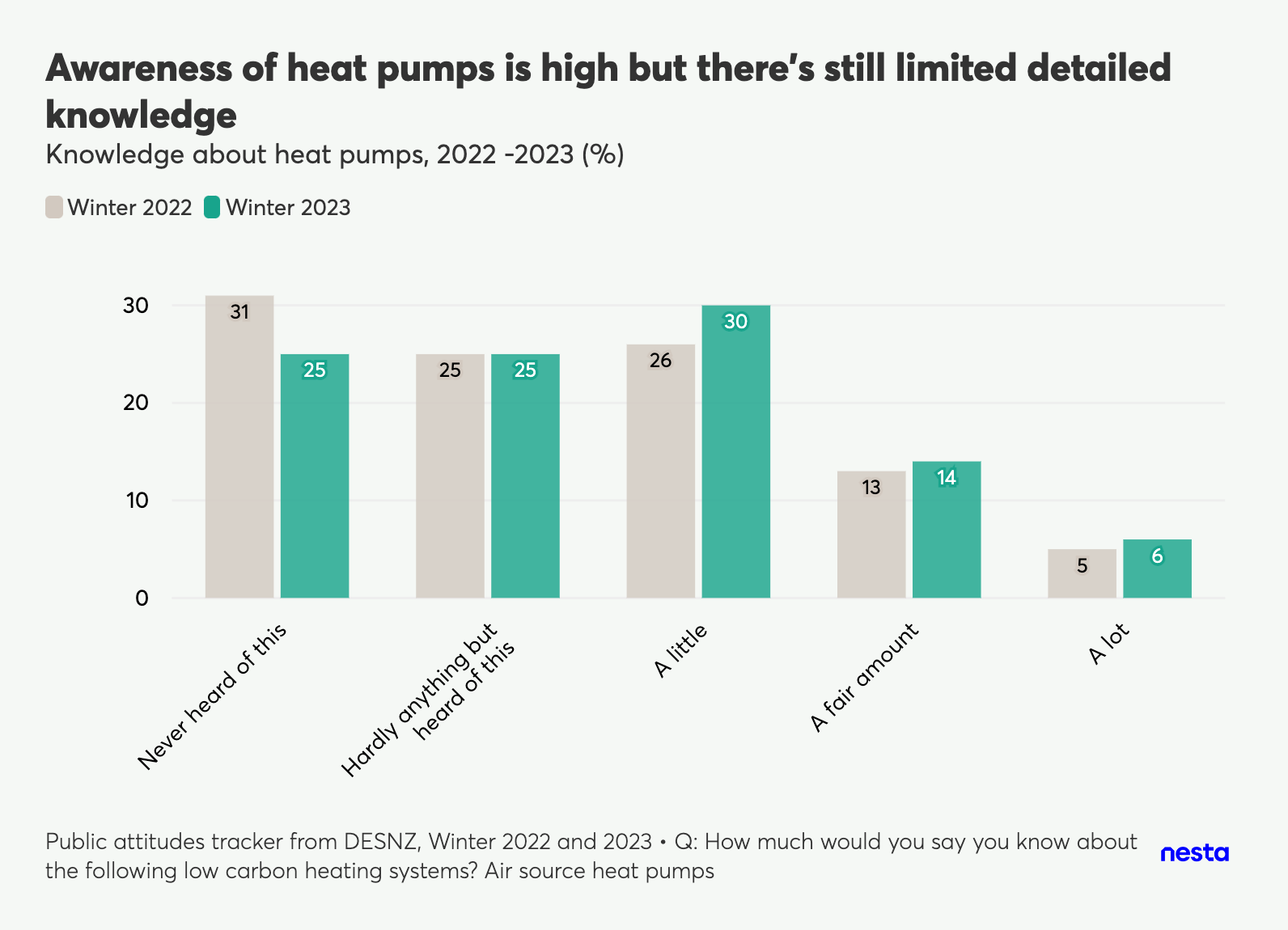
Figure 14. Public awareness of air source heat pumps
Lead from the front
The Government should provide visible leadership for the heat transition. Ministers could set examples by upgrading their own homes. Public buildings should be decarbonised early. Adopting low-carbon heating is likely the most impactful action households can take over the next 10 years to support the transition to net zero, and the Government could make this central to its messaging to the public.
Run a multi-year national campaign to raise awareness about the heat transition
The Government should implement a multi-year national campaign in partnership with industry stakeholders, focusing on raising awareness about the heat transition, instilling confidence in the upcoming shift to low-carbon heating and helping consumers take action. It should include the following components.
- Actionable information for all stages of the consumer journey. The campaign should provide actionable information to households on how they can get ready for low-carbon heat, even if they are not in a position to switch immediately. It should provide reassurance, highlight government support schemes such as the Boiler Upgrade Scheme and address misinformation.
- Collaborative partnership approach. The government should engage industry stakeholders, including banks and trusted advisors as well as consumer groups, to ensure a coherent brand and message across various channels. It should partner with local organisations for grassroots engagement, using consistent branding from the national campaign to build trust and familiarity.
- Robust testing and evaluation. Campaign materials and messaging should be thoroughly tested to ensure effectiveness in driving action. Government should identify segments of the population with different interests, needs and attitudes to low-carbon heating, and targeting communication strategies specifically tailored to their needs.
- Long-term sustainability. The government should plan for sustained engagement over multiple years, with evolving calls to action reflecting changing policy priorities. The campaign should employ a single visual identity or theme for easy recognition, and use multi-channel communication methods to reach diverse demographics effectively.
In order to enhance the effectiveness and sustainability of the campaign, the Government might want to consider delegating the management of the campaign to an independent, non-profit, government-backed organisation (potentially, the national agency proposed in the 'delivery' section above). This approach would bolster credibility by distancing the campaign from political agendas, leverage specialised expertise for tailored communication strategies, ensure sustained efforts over time, and potentially lead to more efficient resource allocation.
The Government should ensure the inclusion of information on the heat transition, available energy advice services and support and funding schemes across key consumer touch points such as annual boiler servicing, home selling and buying, mortgage lending, and planning permission processes.
This would require collaboration with industry stakeholders, including heating installers and manufacturers, financial institutions and local authorities to implement and integrate these requirements into existing practices effectively.
Recommendations to reduce uncertainty and raise public awareness
- Launch a multi-year, UK-wide campaign to raise awareness about the heat transition
- Work with industry to provide information about low-carbon heating at key customer touchpoints.
Reduce friction in the retrofit customer journey
Installing low-carbon heating systems is more complex and time-consuming than traditional, fossil fuel-based systems. This process involves significant preparation and research, finding a trustworthy installer, and upgrading the existing heating system or insulation. Consumers looking to improve energy efficiency often have to engage with multiple parties, including installers, government portals, energy companies and private banks. At this journey, consumers can encounter various issues, such as untrustworthy installers, planning issues and incorrectly installed heating systems.
Ensure everyone has access to good home energy advice
Access to good advice and guidance on home retrofits, saving energy and switching to low-carbon heating is currently patchy. While there are Government-funded home energy advice services in Scotland, Wales and Northern Ireland, nothing similar exists in England at present. Some parts of the country have well-established community organisations and social enterprises able to offer advice. Equally, the landscape of innovative companies offering low-carbon heating installations and home energy retrofits is continually developing, and many of these are investing heavily in improving the customer journey and offering tailored advice. However, households looking for independent advice, or unable to pay for home surveys, face something of a postcode lottery.
To ensure that everyone who needs it has access to advice regardless of whether they can pay, the Government should develop a home energy advice service for England (bringing England in line with Scotland, Wales and Northern Ireland). The service should ensure universal access to independent trusted advice on retrofit and low-carbon technologies, and ensure that people have access to energy advice regardless of where in the UK they live. The principles for this service should include:
- Single initial point of contact to streamline the process for consumers seeking guidance on low-carbon heating and home retrofit, to minimise consumer drop-off and ensure a smooth consumer journey.
- Personalised, action-orientated advice tailored to the unique circumstances of each household, particularly in complex or vulnerable situations. Investing in a diverse range of channels, including digital, telephone and in-person options, would mean the service could cater to various consumer preferences and ensure accessibility for all groups.
- Strong partnerships with other advice providers across the public, private and third sectors. A new service should focus on filling gaps in existing provision, rather than duplicating what is already there. To do this, it should form robust partnerships with existing services, develop strong referral pathways and focus on adding value. For example, the national service could potentially triage consumers' broader advice needs and therefore support local services by freeing up their resources to focus on delivery.
- Long-term investment, continuous improvement and data collection: Moving away from short-term funding cycles would enable long-term investment in the service and allow for continuous improvement and testing of effective strategies. Additionally, the Government should mandate standardised data collection by advice services to identify emerging market issues and service gaps.
Energy Performance Certificates (EPCs) play a vital role in helping consumers make informed decisions when buying or renting a home, seeking ways to improve energy efficiency, and accessing grants or financial products related to their properties. However, the information presented in EPCs is often limited and fails to provide accurate assessments of a home's energy efficiency. They lack the detail and clarity needed to guide homeowners in making informed decisions about upgrading to low-carbon heating systems, and the metrics used can be confusing.
To better support consumers in their efforts to decarbonise their homes, the Government should undertake a comprehensive reform of EPCs to make them more effective in guiding the transition to low-carbon heat. This should aim to do the following.
- Improve EPC rating metrics: EPC rating metrics should be improved to align with real-world energy performance. Current EPCs do not directly rate homes' energy efficiency, focusing instead on running costs. This can provide incentives against green home upgrades (for example, implementing a heat pump could reduce energy consumption, but lead to a worse EPC rating). The Climate Change Committee's recommendations on new primary metrics for EPCs ('energy', 'fabric', 'heating' and 'cost') would be a good starting point. These metrics should be presented in clear, simple terms to enhance consumer understanding and facilitate informed decision-making. The Government should also proceed quickly in developing the new Home Energy Model intended to replace the Standard Assessment Procedure (SAP), the model on which EPCs are based, in order to ensure that it provides a more accurate picture of homes' energy performance and the impact of low-carbon heating technologies and other retrofit measures.
- More actively guide consumers away from fossil fuels: as Which? has argued, EPCs could do more to actively help consumers in transitioning from fossil fuel heating to low-carbon alternatives. They could, for example, give details on the environmental impact of current heating systems or potential benefits from flexible tariffs, provide advice tailored to the specific property type and serve as a gateway to further sources of information and advice. EPCs could also become interactive, rather than static documents.
Expand permitted development rights for air source heat pumps
Planning restrictions that impede heat pump adoption should be reformed, with the principle that heat pumps should be able to be installed under permitted development rules in most cases. Octopus Energy reports that 27% of customers wanting to install air source heat pumps would need to apply for planning permission. Similarly, Aira states that 35% of customers need planning permission.
- Align ASHP permitted development rules across the UK: the Government should collaborate with the Scottish and Welsh Governments to align planning rules across England, Wales, and Scotland. Currently, disparities in planning regulations between these nations pose challenges for consumers and installers operating across multiple regions. Aligning planning rules could facilitate a more cohesive and streamlined approach to the deployment of air source heat pumps.
- Maintain the current noise limit of 42dB: Government should retain the existing noise regulations stipulating a maximum of 42dB within one metre of a neighbour's windows for heat pump installations. Given the low incidence of noise complaints to date, there is no clear case for tightening noise limits or introducing variable noise limits, which would make heat pump installations harder.
- Relax restrictions on heat pump size and number: providing that heat pump installations adhere to noise limitations, current controls on the number of units and size of heat pumps permitted for installation should be scrapped for any type of single-household dwelling. Relaxing these restrictions could accelerate heat pump adoption, particularly in rural areas, while also fostering innovation in noise reduction techniques and the development of quieter, more efficient heat pump models.
- Abandon the one-metre rule: the Government should abandon the one-metre rule in England, which restricts the proximity of heat pump installations to neighbouring properties. The one-metre rule, while initially intended to mitigate noise concerns, has proven to be an overly restrictive and inaccurate proxy measure for noise.
- Expand permitted development to include conservation areas, world heritage sites and listed buildings: Government should consider expanding permitted development rights to allow for the installation of air source heat pumps without prior planning approval in conservation areas, World Heritage Sites, and listed buildings.
Make it easier for households to disconnect from gas and adjust their electricity connection
When installing a heat pump, households typically have to notify their electricity distribution network operator (DNO) and often disconnect from the gas grid. Both of these processes often take longer than necessary, which can slow down or even discourage low-carbon heating installations.
Heat pump installers are required to notify the relevant DNO as part of the MCS certification process. Where a home's total demand exceeds a threshold (60 amps) after a heat pump is installed, the DNO has to approve this, and sometimes requires upgrades to the home's fuse or energy connection. While this process can be important, it is often beset by delays and inconsistent levels of service. The UK government and Ofgem should require all DNOs to offer a standard, prompt service and expedite heat pump installations wherever possible.
Disconnecting from the gas grid, which saves users of electric heating paying the gas standing charge, is also an inconsistent process. The UK government and Ofgem should require Gas Distribution Networks and Energy Retailers to offer a clear, standardised route to disconnecting homes from the gas grid.
Recommendations to reduce friction in the consumer journey
- Create a new home energy advice service for households in England
- Reform Energy Performance Certificates to better support consumers to decarbonise their homes
- Expand permitted development rules for heat pumps
- Require electricity and gas network operators to provide a standard, convenient service for switching to low-carbon heating.
Build consumer trust in installers and green technology
Heat pump users are highly satisfied with their heat pumps, considering them to be safe, reliable, quiet heat sources that are effective for space heating and producing hot water. However, poor-quality installations or dishonest or unskilled installers could undermine trust in net-zero technologies. With 30% of consumers relying on information from their friends and family when considering installing low-carbon home technologies, negative experiences can erode consumer trust and jeopardise net-zero objectives.
Develop an enhanced accreditation and consumer protection framework
The Government should improve accreditation and consumer protection standards for retrofits and low-carbon heat installations to increase protection for consumers and reduce administrative burdens on installers.
The accreditation system for both retrofits and low-carbon heating should shift its emphasis away from filling out paperwork before an installation towards more inspections and monitoring after installations are completed. The accreditation system may also benefit from having fewer bodies with clearer roles and accountability, including a much clearer process for resolving consumer complaints. To enable this, the technical oversight bodies for insulation and low-carbon heating should possess advanced technical expertise and sufficient staffing to oversee industry standards and practices.
The UK Government should also ensure consistent standards across all green homes upgrades, including both insulation and low-carbon heating. At present, the UK has separate accreditation systems for insulation (overseen by TrustMark) and for heat pumps, solar and batteries (overseen by MCS). The UK Government should ensure that these schemes work together effectively, so the accreditation journey is seamless for all green homes upgrades. The UK government should also mandate accreditation and consumer protection standards for all greener homes installations, rather than relying solely on individual funding schemes requiring accreditation.
The Government could also consider setting up a statutory redress advice service, such as those that exist in some other consumer markets (for example, water and energy) that could offer case handling for those who are left in complex situations or are very vulnerable. This would be able to:
- ensure seamless data transfer to enforcement bodies
- refer criminal and fraud cases to trading standards or other bodies
- work with stakeholders across industry, regulators and government to react quickly to new issues or scandals, and update consumer protection advice rapidly
- protect the reputation of low-carbon heating and retrofit by offering a channel to resolve issues
- produce a national dataset of issues and barriers, and identify where there may be gaps in policy frameworks.
Recommendations to build consumer trust
- Improve the accreditation and consumer protection systems for all green homes upgrades.
- Consider setting up a statutory redress advice service.
Workforce and industry
Priority actions
- Increase the value of the Heat Training Grant and offer free low-temperature heating training to all heating engineers.
- Fund pilot programmes to help newly trained low-carbon heating engineers with their first installation.
- Increase funding for plumbing and heating vocational training, and offer financial support to companies that take on apprentices and work placements.
The UK needs to rapidly grow its heating industry and workforce. If the UK's capacity to install low-carbon heating systems does not keep up with demand, prices are likely to rise and many homes will be unable to switch.
The workforce challenge is most acute among heating engineers, the people who install and maintain low-carbon heating systems in homes. While manufacturing capacity is important, its workforce is smaller and the industry more international. The UK needs to add between 4,000 and 6,000 FTE heat pump engineers every year between now and 2035, along with other new roles on energy efficiency and low-carbon heating. The key issues policy needs to address are:
- Limited support for existing engineers to switch. There are limited incentives and support for existing fossil fuel heating engineers to switch to low-carbon heating.
- Limited appeal to new workers. There are too few new entrants coming into the low-carbon heating workforce, and the pathways from further education to employment are too weak.
- Inconsistent quality of work. Standards among low-carbon heating engineers are mixed, and need to be raised if the UK is to install efficient heating systems.
There are around 135,000 people employed in 'plumbing and HVAC trades' in the UK, but only a few thousand of these are active heat pump installers. Most of this workforce are gas engineers, with 131,000 registered with Gas Safe in 2022.
We estimate that the UK will need to add 4,000 to 6,000 FTE heat pump installers every year until 2035 if the heat transition is to keep pace with carbon budgets. That implies a total of between 40,000 and 60,000 FTE heat pump installers by 2035, depending on whether productivity in the industry increases or not. The Construction Industry Training Board (CITB) expects similar growth with full-time employment in plumbing and HVAC trades rising by ~54,000 between 2025 and 2035.
Other skills will be required besides heat pump installation. The CCC estimates that 135,000 to 725,000 new jobs will be required in energy efficiency and low-carbon heat by 2030, although there is considerable uncertainty in this estimate. These additional jobs include construction roles involved in retrofitting homes and installers for other types of low-carbon heating.
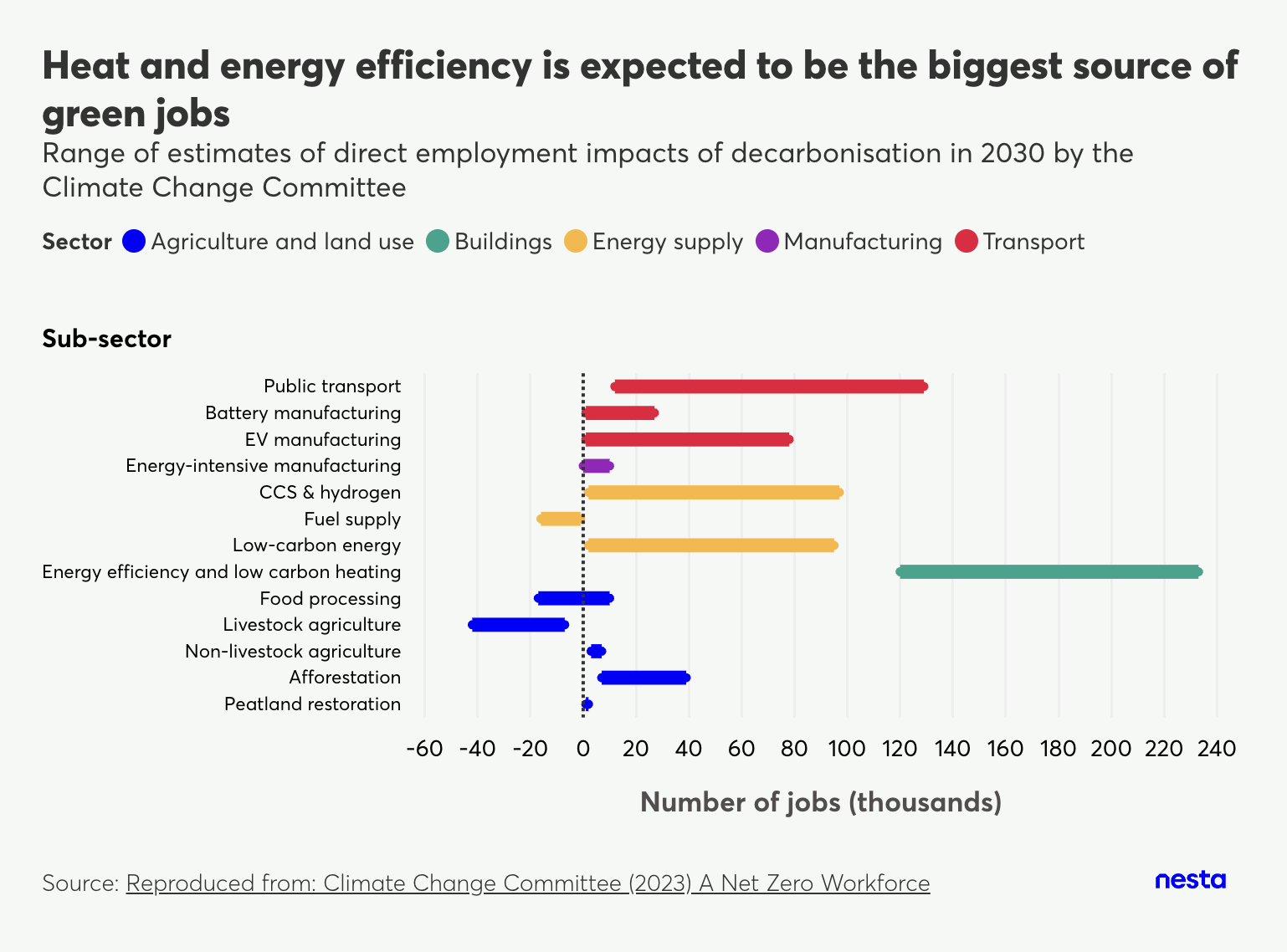
Figure 15. Projected UK labour force growth in net zero sectors by 2030
Prepare today's heating workforce for the clean heat future
The quickest and best way to grow the low-carbon heating workforce in the near term is to help more oil and gas heating engineers transition to installing low-carbon heating. This will leverage the cadre of experienced engineers who can help to train less experienced new entrants to the industry.
The Government should prioritise getting experienced fossil fuel heating engineers to move into low-carbon heating. To do this it needs to address three issues.
- Motivation. The Government needs to create a motivation for existing fossil fuel engineers to make the switch to low-carbon heating.
- Training. It needs to provide routes to the necessary skills and qualifications.
- Support. Help engineers with their early low-carbon heating installations so they can get established in the industry.
The current structure of the heating industry
Gas engineers currently form the backbone of the heating industry. Not all work with central heating, but if every one of those that does switched to actively installing low-carbon heating, the workforce challenge would be comfortably solved. The majority of gas engineers currently work either as sole traders or in small businesses. There are few large companies who directly install boilers, although there are some that play an intermediation role and sub-contract installations to small companies. The low-carbon heating industry for homes is developing in a slightly different way, with some larger companies and start-ups entering the sector alongside smaller heating companies.
Although boiler and heat pump manufacturers do not typically install heating systems themselves, they play an important role in the workforce. Heating engineers are often affiliated to one or more manufacturers, receiving training and incentives in return for installing their products. This means manufacturers have a big influence on the attitudes and commercial strategies of heating engineers.
Create the motivation to switch to low-carbon heating
Switching from gas to low-carbon heating involves costs and risks for established engineers. The necessary training courses have an upfront cost (usually slightly over £500), which is compounded by the lost earnings of around a week of work. This is variable, but it's likely to be in the order of £1,000. There is a common perception that demand for low-carbon heating is limited or weak. This is often coupled with a view that they will be able to continue to install fossil fuel heating indefinitely. Given that the average age of a gas engineer this is not an entirely unreasonable hope or expectation.
Demographics of the heating industry
The UK heating and cooling industry is predominantly white and male, and skews slightly older on average than the UK workforce as a whole.
- Heating and Cooling Installer Survey (2023). The heating and cooling installer workforce in England is 95% male, 95% ethnically white, and 63% are aged 45 and over. 54% have 20+ years of experience in the industry.
- Vaillant Installer Survey (2023). A UK-wide survey of heat pump installers found that 69% were aged over 40, and 46% have 20+ years of experience.
- England and Wales Census (2021). The 'plumbing and HVAC trades' workforce in England and Wales was 99% male in 2021 and 51% were aged 40 and over.
Older engineers may also not want to go through the hassle of going back to college or taking a course. The combination of these factors and others creates a reason not to retrain. The Government needs to address this motivation gap and provide existing engineers with clear and credible incentives.
Providing long-term policy signals, including on phase-out dates, the future path of subsidies and funding for training, should help to do this. Clarifying the role of hydrogen in home heating is also critical, as it will end the uncertainty about whether heating engineers should develop skills in electrical heating or stick with boilers. The Clean Heat Market Mechanism will play a key role in incentivising boiler manufacturers to grow their capacity for installing heat pumps, and this should have a knock-on effect on engineers.
On a more granular level, local delivery institutions could also play a role in raising perceptions of demand among heating engineers. By making local demand more visible to heating engineers – potentially in conjunction with local training offers – local bodies may be able to provide extra motivation to switch.
Provide training in heat pumps and low-temperature heating
The UK Government currently offers a Heat Training Grant which part-subsidises the cost of training courses. Governments should increase the value of the Heat Training Grant to make training free wherever possible. There is also a case for committing this funding over a number of years, so that engineers can plan to take the training at a time where they are ready to begin installing.
Designing heating systems for low temperatures will increase efficiency irrespective of the technology used, but is an essential element of heat pump installations. Government should offer free Low Temperature Heating Training to all heating engineers. This would ready the workforce for training in low-carbon technologies and help ensure heating repairs and upgrades done in the present are compatible with future low-temperature systems. Courses currently cost engineers around £370 inc. VAT and take two days to complete.
Support engineers with their early low-carbon heating installations
Focusing on training alone may not be enough. The number of heat pump training courses completed far outstrips the number of engineers actually installing heat pumps. Heat Pump Association figures show that 11,000 engineers have completed a heat pump training course in 2022 and 2023. However, the low numbers of heat pump installations suggest many of these newly trained engineers are currently either not installing or installing very few heat pumps. This is in part due to the challenges of unfamiliar, complex administrative processes and confidence of working with a different technology. This tends to crystallise in the first installation, and this can make or break an interested heating engineer's involvement in the sector.
To address this, governments should also consider offering further support, which may take the form of financial support or intensive support programmes. This is an area where experimentation and piloting may be beneficial. Nesta is currently piloting an approach called Start at Home for first-time installers. Governments should offer funding to pilot schemes that aim to help newly trained heat pump installers get up and running in the industry. These schemes could be offered by local authorities and institutions or by private companies or other bodies.
Tailoring support for larger companies
While many current gas and oil engineers are sole traders or work for small firms, there are also larger firms seeking to expand their workforce. Policy options for larger firms may include:
- offering such businesses tailored access to the Clean Heat Training Grant, enabling them to run their own training
- offering equivalent funding for their own training pathways
- offering tax breaks or other financial incentives to encourage training.
Recommendations on preparing the workforce for clean heat
- Communicate a clear direction of travel to heating engineers, including clear steers on hydrogen, the future path of subsidies for low-carbon heating and for the Clean Heat Market Mechanism.
- Increase the value of the Heat Training Grant to make training free wherever possible, and commit to the funding several years ahead.
- Offer free training in low-temperature heating system design to all heating engineers.
- Fund schemes that support newly trained installers to complete their first few installations or otherwise facilitate their entrance into the sector, allowing for experimentation to find the best models.
- Ensure any payments in lieu collected as part of the Clean Heat Market Mechanism are reinvested into training heating engineers.
Supporting new entrants to grow the overall size of the heating industry
The low-carbon heating industry also needs new entrants, not least because the heating workforce is an ageing one overall. There is a need both to replace workers who are leaving the workforce now and to catch up on replacing those who have left the sector in recent years. Bringing people into the heating industry straight from education or another career offers an opportunity to move people directly into low-carbon heating. Getting more new entrants into low-carbon involves two challenges.
- Improving and expanding vocational training for those in education.
- Providing routes for career switchers to enter the sector.
Improve and expand vocational training
At present, the training system for plumbing and heating in England is not providing enough courses with a strong vocational element. Our analysis of graduate numbers signals that there are just a few thousand graduates from all heating and plumbing courses with vocational elements across the UK (the vast majority of which are focused on gas boilers), and that dropout levels during apprenticeship schemes is high.
However, it is important that training offers include a strong vocational component, including a work placement or apprenticeship. Nesta's survey of heat pump installers found that employers considering taking on new staff have reservations about the quality of training that predominantly young, new entrants to the sector receive. When recruiting, the most desired training type for new entrants by businesses of all sizes is one that includes a substantial vocational element.
There are two elements to increasing vocational training. First, Governments in the UK must ensure that there are enough college places on offer in plumbing and heating, and that these courses all include training in low-carbon heating. To do this, Governments may need to create specific funding programmes targeting more courses involving low-carbon heating, including the new low-carbon heating apprenticeship.
Second, Governments in the UK should provide additional financial support to companies that take on apprentices or offer other forms of hands-on experience.
Providing routes for career switchers to enter the sector
It is important that all apprenticeship pathways meet the needs of new entrants of all ages, not just young people of school age. Vocational training of this type could help mid-life career changes, ex-military and other groups move sectors and bring novel skills into the sector. To encourage this, the UK Government should promote the Free Courses for Jobs scheme for plumbing and heating, which offers free qualifications to adult learners in England.
Securing new entrants from all walks of life also offers an opportunity to increase the diversity of the heating industry. The present heating industry is predominantly composed of those who identify as white and male. Our research suggests that this dissuades some people from joining the heating industry, perpetuating the demographic status quo. The government should aim to broaden the composition of the heating sector to widen the pool of people the industry can draw on.
Recommendations on supporting new entrants to the heating industry
- Ensure colleges receive enough funding to offer high-quality training courses for new entrants to heating and plumbing with a strong vocational component.
- Provide financial support to small businesses who take on apprentices or work placements.
- Ensure that training routes are open to career switchers, and appeal to people from all backgrounds, including by widening the eligibility criteria for Free Courses for Jobs for plumbing and heating.
Ensuring high standards for every low-carbon heating installation
High-quality installations are critical to ensuring low carbon heating systems work and run efficiently. Heat pumps are most effective at delivering heat with both high efficiency and high comfort levels when operating with a carefully designed heating system that's optimised for low temperatures.
At present, there is significant variation in the performance of low-carbon heating systems. Most studies of heat pump performance have found average coefficients of performance (COP) below three. However, heat pump manufacturers typically state a Seasonal Coefficient of Performance well above three, while some air source heat pump installations achieve average efficiencies above four. Assuming the heating system is operated as it is designed to be, these variations are almost certainly down to the quality of the installation.
Recommendations to ensure high standards in installations
- Improve the accreditation and consumer protection system to ensure lower quality installations are rectified.
- Work with manufacturers to provide monitoring systems with all low-carbon heating systems.
Devolved matters
This policy plan is directed towards the UK Government and its ministers. The steps they take to accelerate progress on the heat transition will have some many effects in the devolved nations. They need to consider the devolved governments' own policies for heat and the interactions which may arise.
Key areas of reserved powers
- Energy: the power to regulate energy markets in Great Britain is reserved. This will affect any plans for the heat transition that involve rebalancing energy bills, or socialising the costs of transition via new bill-payer subsidies. Energy is a devolved power in Northern Ireland where energy planning and regulation is done on an Ireland-wide basis.
- Internal markets: the ability to regulate competition and other features of the UK's domestic markets is one of the powers which underpins policies such as the Clean Heat Market Mechanism. It also means that the UK Government is largely responsible for ensuring that consumers are protected from anti-competitive practices. This work is currently provided UK-wide by the Competition and Markets Authority.
- Financial services: various policies for the heat transition would imply new or changed financial services regulations. These include reforms to enable new types of green mortgage or property-linked finance.
Key areas of devolved powers
- Housing: housing policy is devolved in all three nations. This provides their main regulatory lever for decarbonisation policy. The devolved administrations can set their own standards for energy and emissions performance in buildings.
- Environment and planning: effective planning policy is essential for large-scale delivery of the heat transition.
- Local government: the devolution of responsibility for local government affects various aspects of the heat transition. These include heat network zones, the enforcement of building standards, and any delivery models which rely on local government capacity.
- Skills: education, skills and training policy is a fully devolved matter. The devolved administrations are able to address worker shortages via training programmes if they chose to, and use their education and skills funding streams to shape outcomes as they see fit.
- Stamp duty, council tax and business rates: stamp duty is a devolved power in Scotland (the Land and Buildings Transaction Tax) and Wales (Land Transaction Tax), but not Northern Ireland. Council tax and business rates are (mostly) devolved in all three nations. The devolved administrations can potentially use these powers to create fiscal incentives for home decarbonisation or efficiency upgrades.
The definitions of fuel poverty also vary by nation.
- England: A household is fuel poor if “they are living in a property with an energy efficiency rating of band D-G, and their disposable income (after housing costs and energy needs) would be below the poverty line"
- Scotland: A household is considered fuel poor if "in order to maintain a satisfactory heating regime, total fuel costs necessary for the home are more than 10% of the household's adjusted net income after housing costs; and after deducting fuel costs, benefits received for a disability or care need and childcare costs, their remaining adjusted net income is insufficient to maintain an acceptable standard of living, defines as being at least 90% of the UK Minimum Income Standard (MIS)."
- Wales: A household is in fuel poverty if “they would have to spend more than 10 per cent of their income on maintaining a satisfactory heating regime."
- Northern Ireland: A household is considered fuel poor “if, in order to maintain a satisfactory level of heating (21°C in the main living room and 18°C in other occupied rooms), it is required to spend in excess of 10% of its household income on all fuel use.
Different things have happened in terms of heat decarbonisation in each of the devolved nations, and there are opportunities to learn from those.
Scotland
Key components of the Scottish Government's approach to decarbonising home heating include:
- Long-running area-based energy efficiency schemes that are devolved to local authorities, and a national fuel poverty scheme.
- High standards that have driven significant improvements in the energy efficiency of the social housing stock.
- The Home Energy Scotland programme, which includes a programme of grants and loans for heating and energy efficiency measures, as well as a national advice service for home decarbonisation.
- A requirement for all local authorities to produce a Local Heat and Energy Efficiency Strategy (LHEES). These are a form of local area energy plan which will enable better delivery of low-carbon heating and fabric efficiency measures.
- Legislation for heat network zones. This is functionally similar to the equivalent legislation passed by the UK Government which covers England and Wales.
- Since April 2024, it is no longer possible to obtain permission for building a new home that has fossil fuel heating.
- Consultation on a proposed programme of legislative regulation that includes minimum energy efficiency standards for the private rented sector and owner occupiers, a potential requirement for home buyers to decarbonise their heating within a set time frame, and powers for local authorities to require connection to heat networks or other low-carbon heating systems.
Wales
The Welsh Government has a number of existing and forthcoming initiatives in heat and retrofit, all of which represent opportunities for the next UK Government to learn about what works.
- The Optimised Retrofit Programme (ORP) in social housing, which funds social landlords to install insulation and low carbon technologies in tenants' homes. The ORP aims to be a test and learn programme, with findings about what works being shared rapidly across the sector, and informing decarbonisation of private homes in the longer term.
- Nest / Arbed / Warm Homes programmes – Wales has over a decade of delivering area-based and demand-led fuel poverty schemes in private housing. These have focused on fabric measures, and boiler replacements, but the latest iteration will include greater focus on whole house measures and heat switching.
- The Development Bank of Wales is working towards a pilot in later 2024 of a finance product to help homeowners pay for retrofit. This product, designed with research support from Nesta, will be complemented by the Welsh Government's newly augmented energy advice service.
- In its draft heat strategy, the Welsh Government has set out a high-level commitment to heat pumps as the main solution for heating homes, complemented by heat networks where possible. The strategy also sets out a series of actions by the Welsh Government to create an 'enabling environment' for the heat transition.
- Wales' planning rules around domestic air-source heat pumps are more restrictive than in England, requiring three metres of distance between an outside unit and the nearest window (compared to one metre in England). The Welsh Government has consulted on changing this requirement as part of its consultation on soundscapes in Wales.
Northern Ireland
- Northern Ireland has a significantly greater proportion of off-gas homes than the rest of the UK. Most of these homes use oil boilers.
- The National Grid does not cover Northern Ireland. Instead, it shares a single grid with the Republic of Ireland (EirGrid).
- None of the UK Government's building decarbonisation schemes are available in Northern Ireland. The Government of Northern Ireland does not have any equivalent schemes in place.
Actions and timings for heat policy
Summary of actions
| Action |
Timing |
| First 100 days |
|
| Rebalancing energy bills |
|
| Primary legislation |
|
| 1 Publish a proposal to equalise levies across gas and electricity bills; consult on measures to mitigate the impacts of any changes on fuel-poor and vulnerable households. Aim to implement rebalanced levies by April 2025. |
100 days |
| Take a final decision on hydrogen for heat |
|
| 2 Implement a rapid, expert-led review to advise on the necessary steps to take the hydrogen decision before the end of 2024; rule out a mandate for hydrogen-ready boilers; prioritise electrical heat. |
100 days |
| Launch a new retrofit loan scheme |
|
| Fiscal event |
|
| 3 Establish a new scheme which offers low-interest loans to support the costs of low-carbon heat or energy efficiency upgrades. These would have broad eligibility requirements and would be provided by private lenders, with a guarantee and subsidy from Government. |
100 days |
| First 6 months |
|
| Confirm approach to fossil fuel phase out dates |
|
| 4 Set out approach to phasing out fossil fuel boilers, including dates for off-gas grid and on-gas grid heating. |
6 months |
| Improve approach to accreditation and consumer protection |
|
| 5 Work with heating industry and consumer groups to improve the approach to accreditation and consumer protection. |
6 months |
| Reform fuel poverty schemes |
|
| 6 Consult on quick reforms to ECO to speed up and broaden delivery, with a view to implementing changes by late 2026. Review HUG and its funding model, potentially merging it with other schemes to improve near-term delivery. Further reforms could integrate these schemes into coordinated delivery models. |
6 months |
| Launch Clean Heat Market Mechanism |
|
| 7 Confirm launch of the mechanism from April 2025, and set out indicative plans for targets for several years of the scheme. |
6 months |
| A new agency to deliver the heat transition |
|
| Primary legislation |
|
| Machinery of Government change |
|
| 8 Create a new national body responsible for: administering government heat and efficiency schemes, providing technical support to local authorities, setting standards for, and overseeing, the planning and delivery of these projects. Establish this body in shadow form while the relevant enabling legislation is passed. |
6 months |
| Launch local heat planning and local delivery models |
|
| 9 Set out a new approach to local delivery, with a more strategic role for Combined Authorities and local government. Ask every area to form a Local Heat Planning Partnership and begin work on a local plan for heating. |
6 months |
| Reform EPCs |
|
| 10 Begin rapid review of EPCs, aiming to have a new system in place during 2025. |
6 months |
| First 12 months |
|
| Confirm Private Rented Minimum Energy Efficiency Standards (MEES) |
|
| Primary legislation |
|
| 11 Confirm start date, scope and legislative approach for MEES. |
12 months |
| Expand permitted development rules for heat pumps |
|
| 12 Consult on changes to permitted development rules for heat pumps, and implement changes as soon as possible. |
12 months |
| Extend the Boiler Upgrade Scheme (BUS) |
|
| Fiscal event |
|
| 13 At an early fiscal event, ensure that BUS's funding is guaranteed until at least the end of the next Parliament. The overall level of funding should increase to support a greater number of grants. DESNZ should consult on an approach to tapering the size of individual grants down as the market for heat pumps grows. |
12 months |
| Begin trials for coordinated switching |
|
| 14 Begin pilots in a few local areas to test deeper coordinated switching pilots. These could be negotiated with the strongest existing local areas. |
12 months |
| Agree package to boost green mortgages |
|
| 15 Agree a package of support and obligations with mortgage lenders to increase the uptake of green mortgages. This may include measures to de-risk lending – including reforms to the Consumer Credit Act and partial lending guarantees – alongside new obligations on lenders. |
12 months |
| Launch national energy advice service |
|
| 16 Launch a new advice service, to be overseen by the new agency. |
12 months |
| Create support package for the heating workforce |
|
| 17 Increase the Clean Heat Training Grant and commit to it for several years. Fund pilot programmes to support newly trained installers with first installations. Adjust funding rules to increase the number of places for plumbing and heating vocational qualifications. Offer funding for businesses taking on apprentices or work placements. |
12 months |
| Publish a new heat and buildings strategy |
|
| 18 DESNZ should develop and publish a new heat and building strategy. This should be produced as part of the Government's obligation to publish an updated net zero delivery plan. It should be produced after the publication of the Seventh Carbon Budget advice. Commit to a progress review in 2028. |
12 months |
| Longer term |
|
| Launch a national clean heat campaign |
|
| 19 Launch a new campaign – led by the new agency – to raise awareness of clean heat. |
2 years |
| Plan for the future of the gas grid |
|
| 20 Develop plan for the future of the gas grid, including uses, timings, approach to depreciation. |
Longer term |
Table 4. Summary of policy actions and timings
Primary legislation
Some elements of this plan are likely to require primary legislation. As a result, we recommend that the UK Government brings forward a bill that includes heat within its scope in the 2024 King's Speech. The areas requiring primary legislation include:
- Rebalancing levies – there are various different pieces of legislation underpinning the different levies which would need changing
- A new heat agency – setting up a new arms-length body of government would require primary legislation
- Private rented minimum efficiency standards – setting new standards for private landlords may require primary legislation
Funding this plan
We have developed this policy plan with funding and value for money in mind – we believe this plan represents an approach which minimises government spending while achieving the crucial goal of decarbonising home heating. The UK Government is already due to spend around £1.3 billion per year on home heating over the next five years, but this funding will need to increase to meet the UK's climate commitments.
The key areas of government funding set out in this plan are:
- Subsidies for low carbon heating (capital) – in our plan, this averages around £1.5 billion per year between 2025 and 2035, with a peak around £2.4 billion per year in the late 2020s. Support for heat networks would also need to be funded.
- Support for Government-backed loans (capital and guarantees) – Government-backed loans would require both capital funding and guarantees from Government. The scale of both of these depends on the size of the loan scheme; the capital funding is likely to be in the hundreds of millions if the scheme is successful, while billions of pounds of guarantees would be required.
- Funding for fuel-poor homes (capital, energy bills) – most funding for upgrading fuel-poor homes is currently provided through ECO, which is levied on household energy bills. This funding may need to increase in future, although this might involve increasing levies on energy bills.
-
New delivery institutions (capital and revenue) – a new heat agency would require government funding, likely in the tens of millions per year, although some of this may be re-directed from existing government spending. Building local delivery capacity will also likely require some revenue funding, likely to be in the tens of millions per year across the country.
-
Consumer advice and engagement (capital and revenue): running an energy advice service and a national awareness campaign would likely require tens of millions per year of government spending.
- Support for heating engineers (capital) – our proposed support for heating engineers is likely to cost in the region of tens of millions per year.
Of this funding, it is the capital support for subsidies and loans that will be most significant. Managing this funding will present a challenge for the Government, because it is highly dependent on the uptake of low-carbon heating and other green measures each year. As a result, the UK government should aim to manage capital budgets for heat decarbonisation as flexibly as possible, to avoid sudden changes in funding arrangements and manage under- or over-spends.
Endnotes
1Sources: Microgeneration Certification Scheme (MCS) Installations database; ONS (2024) Census 2021 – number of households per Lower Tier Local Authorities for England and Wales; National records of Scotland 2022 – number of households per Lower Tier Local Authorities for Scotland. Any differences between the installation numbers presented here and those on the MCS Data Dashboard originate from differences in Nesta's data processing pipeline. For further details of the data processing see the MCS Data Dashboard.
2Our analysis is based on just the English and Scottish Housing Surveys as there is limited up-to-date data for Wales and Northern Ireland. This covers ~94% of the homes in the UK.
3The proportion of homes on the gas grid in England (85%), Wales (81%) and Scotland (81%) is roughly similar. The proportion in Northern Ireland is only (~40%) with a much higher proportion using oil boilers.
4The annual average System Average Price (SAP) of gas was 0.86p/kWh in 2020, rising to 3.90p/kWh in 2021 and 7.12p/kWh in 2022. It peaked at 19.39p/kWh on 29 August 2022. SAP has averaged 2.44 p/kWh in 2024 (to date, 2 June). See ONS (2024) System Average Price (SAP) of gas.
5It is difficult to establish an exact threshold because there are so many variables involved in cost parity calculations.
6Many studies, such as the UK Government and Energy Systems Catapult Electrification of Heat Trial, have found average COPs around 2.8 or lower. However, some heat pumps monitored on Heat Pump Monitor record average COPs of 4.0 or higher.
7Nesta analysis of CCC (2020) Sixth Carbon Budget, excludes new build and communal installations.
8HNDU funding is available to qualifying organisations in England and Wales, GHNF is England-only. There are analogous schemes in the devolved nations, such as Scotland's Heat Network Fund. See: DESNZ (2024) Heat Networks Delivery Unit, BEIS (2020) Heat Networks Investment Project (HNIP): overview and how to apply, DESNZ (2024) Green Heat Network Fund (GHNF): guidance on how to apply, and Government of Scotland (2024) Scotland's Heat Network Fund: application guidance.
9Outline primary legislation for heat network zoning in England was agreed by the UK Parliament in the Energy Act 2023, and there has since been further government consultation on the potential detail of secondary legislation, see DESNZ (2023) Proposals for heat network zoning 2023. Equivalent heat network and energy planning policy programmes are being developed in Wales and Scotland by the devolved governments.
10The Scottish Government already makes available a grant and interest-free loan for homeowners, to help them meet the costs of connecting to a heat network, through its Home Energy Scotland scheme.
11DESNZ estimates that in 2024 there are ~8.6 million fuel poor households spending more than 10% of their income after housing costs (AHC) on energy. This is a broader definition of fuel poverty than the official LILEE metric.
12We define “delivery” as the activities which directly support the installation of upgrades. These include: planning, technical advice, finance, commissioning, oversight, administration.
13Responsibilities for local government and planning are fully devolved. The governments of Scotland, Wales and Northern Ireland could establish their own local bodies in line with our blueprint for coordinated switching.
14Ofgem: Boiler Upgrade Scheme (BUS), Energy Company Obligation (ECO), Smart Export Guarantee (SEG), Feed-in-Tarifs (FiT), Domestic Renewable Heat Incentive (Domestic RHI), and Great British Insulation Scheme (GBIS); Environment Agency: Clean Heat Market Mechanism (CHMM); Salix Investment Ltd.: Social Housing Decarbonisation Fund (SHDF) and Home Upgrade Grant (HUG); Triple Point Heat Networks Investment Management: Green Heat Networks Fund (GHNF) and Heat Networks Investment Project (HNIP).
15See National Grid ESO (2023) Future Energy Scenarios 2023; under the 'Consumer Transformation' scenario the combined number of oil and gas boilers peaked at 25,513,883 in 2023 (compared to 25,469,380 in 2024.
16Estimates for the size of the boiler market range from ~1.2 million per year in England and Wales, to 1.8 million per year UK wide. See Smith C (2022) Question for Department for Work and Pensions, HHIC (2021) Boilers bounce back as consumers invest in home renovation, and DESNZ (2023) Clean heat market mechanism impact assessment.
17For manufacturer examples see: Worcester Bosch (2024) Boiler replacement, Vaillant (2024) How long do boilers last?, or Baxi (2024) How long does a boiler last?. For examples of the 15-year figure being used in analysis see: DESNZ (2023) Clean heat market mechanism impact assessment or CCC (2020) The Sixth Carbon Budget –Methodology Report.
18The Government's own target was more ambitious, aiming for phase-out by 2026. See CCC (2020) Sixth Carbon Budget, and BEIS (2021) Heat and Building Strategy.
19Although the scheme has been delayed, the level of obligation for the first year (2025-2026) will be set at 6%, which was originally planned to be the level for year two of the scheme.
20CMA (2024) Secretary of State calls for Competition and Markets Authority to review competition in the home heating market.
21The Scottish Government has carried out some consultations on proposed improvements to the EPC system in Scotland, using its devolved powers. Ideally, these reforms would progress collaboratively in sync, across the UK.
22The Climate Change Committee has recommended four primary metrics, 'Energy', indicating total energy use intensity (kWh/m2/yr); 'Fabric', representing space heating demand intensity (kWh/m2/yr); 'Heating', categorising heating system types (ranked from 1 to 6); and 'Cost', reflecting energy cost intensity (£/m2/yr). See CCC (2023) Letter: Reform of domestic EPC rating metrics to Lee Rowley MP.
23Figures supplied to Nesta by Aira.
24Approximation from a range of training provider websites, e.g., NAPIT Training, Logic4training, Worcester Bosch, GTEC Training and VIVA Training.
25In situ heat pump performance can also be negatively affected by user behaviour. Users should be educated on the most efficient ways to use their heat pump by their installer.
58 Victoria Embankment
London EC4Y 0DS
+44 (0)20 7438 2500
[email protected]
X @nesta_uk
f nesta.uk
www.nesta.org.uk
ISBN: 978-1-916699-28-1
Nesta is a registered charity in England and Wales with company number 7706036 and charity number 1144091. Registered as a charity in Scotland number SC042833.
Registered office: 58 Victoria Embankment, London EC4Y 0DS.