About FutureFit
FutureFit is a major training and research project led by Nesta and supported by Google.org
Author
Chrystalla Kapetaniou
October 2019
Acknowledgements
This report benefited greatly from comments and feedback from Genna Barnett, Georgie Whiteley, and Olivia Chapman from Nesta.
Working closely with trade unions, researchers and adult learning experts from across the Nordics and Benelux region, the project uses innovative training interventions and robust research to understand 'what works' to empower workers with the skills they need for tomorrow, and improve the wider adult learning system across Europe.
Nesta is an innovation foundation. For us, innovation means turning bold ideas into reality and changing lives for the better. We use our expertise, skills and funding in areas where there are big challenges facing society.
To find out more, visit: www.nesta.org.uk/project/futurefit
For more information about this report, please contact:
Chrystalla Kapetaniou
[email protected]
Executive Summary
Rapidly changing developments in new technology – such as artificial intelligence, 3D printing, big data and the internet of things – exacerbated by demographic change, have considerably changed the nature of skills requirements. Studies report that 54 per cent of all employees will require extensive upskilling or reskilling by 2022 (WEF, 2018), while 85 per cent of jobs in the EU require at least a basic level of digital training (Cedefop, 2018). To meet the demands of a fast-changing labour market, governments, unions and industry have all made a greater effort to understand the skills that will be required and how those in work could be reskilled and upskilled. However, there have only been limited attempts to understand how training and learning approaches must be developed in order to attract workers and prepare them for the jobs of the future.
This report uses data from the European System of Statistics to explore key learning patterns and progress. It conducts an exploratory analysis of adult learning to provide a broader and deeper understanding of the ways in which workers whose roles are at risk of automation can be encouraged to engage in adult learning. It also allows us to conduct in-depth research into this area.
This report aims to answer the following questions:
- How does occupational employment change over time, and what are the implications for adult learning?
- What are the characteristics of adult learners?
- What are the attitudes towards, and barriers to, adult learning?
54% of all employees will require extensive upskilling or reskilling by 2022 (WEF, 2018).
85% of jobs in the EU require at least a basic level of digital training (Cedefop, 2018).
Devising an effective adult learning system, which helps to tackle inequality and social exclusion, still seems to be a distant goal. There are huge disparities in adult learning across the EU. But more importantly, disparities also exist between different demographic groups within individual countries. To ensure that every adult is given equality of opportunity in terms of access to adult learning, stakeholders need to focus on developing an inclusive adult education service.
This report presents the following findings:
- As demand for labour in knowledge-based and in-person services increases, employees will need to reskill, in order to gain the combination of soft skills and a learning mindset which will allow them to move easily between jobs, occupations and sectors.
- Participation rates in adult learning vary across countries and between demographic groups. Participation ranges from 64.1 per cent in the Netherlands to seven per cent in Romania, while non-participants in adult learning tend to fall into one or more of four groups: the elderly; the unemployed; those with low levels of education; and those who live in the countryside.
- The most frequently cited reasons for not participating in adult learning (averaged across the EU member states) were clashes with work schedules (39.9 per cent) and family responsibilities (32.5 per cent).
About FutureFit
To tackle the challenge of adult learning in the future workplace, we have designed FutureFit, an innovative programme in partnership with Google.org. FutureFit will deliver a series of training interventions, which will be rigorously evaluated. This will enable us to gain a greater understanding of what succeeds when reskilling and upskilling are provided to employees aged between 25 and 64 in various industries and occupations in Sweden, Finland, The Netherlands, Denmark and Belgium. These countries have been named Digital Frontrunners, because they lead the way in digitisation and broadband internet, in particular (European Commission, 2019). High-speed broadband networks in these countries will enable learners to acquire the skills that they need, making it possible for them to learn at any time, in any place and at any speed.
The programme will present evidence from a large-scale field experiment involving the provision of training programmes, in order to illustrate the development of specific training approaches designed to prepare workers for the jobs of the future. The field experiment will be conducted across the five countries in the period from 2019 to 2020.
The programme is focused on improving outcomes for workers with union representation who are at risk of job displacement or changes to their roles. These potential adult learners will already possess basic digital skills, at the very least, so that they can access online learning. They will be provided with training in digital skills specific to their industry and roles, as well as an effective combination of employability skills, such as social and problem-solving skills, so that they can move easily between jobs, occupations and sectors.
The 3 key components of FutureFit:
- Upskilling and reskilling workers
- Innovating, experimenting and testing
- Generating evidence about what works
1. Introduction

Rapidly changing developments in new technology, exacerbated by demographic change, have considerably changed the nature of skills requirements.
The future of work and skills has historically generated considerable attention among policymakers, organisations and individuals. The question most frequently asked is whether new technologies are taking jobs away from workers. In a much-quoted passage from 1930, John Maynard Keynes claimed that machines will take over all jobs from humans. Automation and digital technologies already perform a variety of tasks that had, until recently, been considered only available to humans, while rapid advances in software programming techniques and hardware will continue to increase the scope of their applications, so that they will be able to take on many new tasks and transform others (Kapetaniou & Pissarides, 2019).
A recent study by the McKinsey Global Institute (2017) claimed that, in 60% of occupations, at least one-third of the constituent activities could be automated by 2030, while 14% of the global workforce may need to switch occupational categories, implying the critical role of adult learning. Yet adults have many responsibilities that they must balance against their participation in learning. To address the challenge of upskilling and reskilling, we need to understand what motivates people to participate in adult learning.
1/3 of constituent activities in 60% of occupations could be automated by 2030 (McKinsey Global Institute, 2017)
14% of the global workforce may need to switch occupational categories by 2030 as activities become automated (McKinsey Global Institute, 2017)
Adult learning is all learning activity undertaken throughout life, with the aim of improving knowledge, skills and competence, within a personal, civic, social and/or employment-related perspective.
Source: European Commission (2001, p:9)
Adult learning is the participation of adults in lifelong learning. Adult learning can be in any of the three contexts: formal; non-formal; and informal. Formal education and training is provided by public organisations and recognised private bodies, usually with a set curriculum. Non-formal education and training is organised by education providers and leads mostly to qualifications that are not recognised by the relevant national or local education authorities, or no qualifications at all. Non-formal education training programmes are usually more flexible and shorter in duration (OECD, European Union & UNESCO Institute for Statistics, 2011). Informal learning is not institutional and can take place in the daily life of every person (Eurostat, 2016).
There are many different kinds of adult learners, with many different learning needs. There is no 'one-size-fits-all' solution and it is vital to examine the ways in which we could increase participation and keep participation rates high among different types of learners in different countries.
This report addresses three questions on adult learning. First, how does occupational employment change over time, and what are the implications for adult learning? Second, what are the characteristics of adult learners? Third, what are the attitudes towards, and barriers to, adult learning? Our hope is that the findings arising from this report will provide the foundation for evidence-based policy and open up several avenues for further research.
This report uses data from the European System of Statistics to explore key learning patterns and progress. It shows that, as demand for labour in manufacturing sectors and demand for low-skilled employees falls, shifts in the labour market to knowledge-based and in-person services will be critical to the economy, resulting in a need for adult learning.
The evidence shows variations in lifelong learning in different countries and industries, implying that upskilling and reskilling depends on the institutional environment of each country. In addition, participation in adult learning varies across population groups. Adults who do not participate in learning tend to fall into one or more of three groups: the elderly; those with low levels of education; and those who live in the countryside.
The structure of this report is as follows: the next section analyses sectoral transformation and labour market flows; section 3 presents and discusses the participation of adults in lifelong learning, and section 4 concludes with a discussion.
2. Sectoral Transformation and Labour Market Flows

Modern labour markets are always in a state of flux, with jobs destroyed and created continually in response to new technologies.
Although new technology will replace labour in situations where it is profitable for firms to substitute new capital for labour, there will also be incentives to create new jobs in sectors of the economy that are less automated (Acemoglu & Restrepo, 2018; WEF, 2018). A consideration of the shift in the distribution of employment among sectors and occupations is critical for the future of work.
In 2018 almost half of employment in the European Union was concentrated in wholesale and retail trade, transport, accommodation and food services and public administration, defence, education, human health and social work activities (48.2 per cent). The share in total employment has increased slightly since 2008 in both industries. Professional, scientific and technical activities recorded the highest increase in EU employment over the last 10 years, from 11.2 per cent in 2008 to 13 per cent 2018. In contrast, the share of manufacturing fell from 15.3 per cent in 2008 to 13.8 per cent in 2018. The long-term decline in manufacturing has led to a steady increase in the service sector (see Figure 1).
Fig 1. Changes in total employment in the EU 28, 2008-2018
The bar chart displays the percentage of total employment in various sectors for 2008 and 2018 in the EU 28. It shows the shift in employment shares, with service sectors generally increasing and manufacturing decreasing.
Source: Adapted from Eurostat (2019a)
Technological innovations transform jobs, challenge existing competencies and require new sets of skills (Abernathy & Clark, 1985). The literature on labour demand tends to use three types of skills: low, middle and high. These three categories are used to group the eight basic categories of occupations listed in the International Standard Classification of Occupations (ISCO) (excluding those in the armed forces). Mapping these skill levels to the levels of education defined by the International Standard Classification of Education (ISCED), shows that high-skilled workers are those who have completed tertiary education; medium-skilled those who have completed secondary education; and low-skilled those who have only completed primary education.
Fig 2. Changes in skills in the EU 28, 2008-2018
Two pie charts illustrate the distribution of employment by skill level (Low-Skilled, Middle-Skilled, High-Skilled) in the EU 28 for 2008 and 2018.
Figure 2 shows changes in employment in the EU 28 between 2008 and 2018 for each of these skill groups. Marker size indicates the share of the 2008 EU employment in the corresponding skill level. It is clear that labour markets have already experienced substantial growth in the share of high-skilled occupations, but simultaneous losses of low-skilled occupations. The employment in highly skilled occupations rose by about 12 per cent in the EU 28 between 2008 and 2018, while employment in low-skilled occupations fell by about five per cent.
Source: Adapted from Eurostat (2019a)
While most middle-skilled occupations showed a slight decrease between 2008 and 2018, this decrease was not the same across the respective occupations, and, indeed, varied significantly. There was a significant increase in the number of personal service workers, such as cooks, hairdressers and beauticians, sales workers and personal care workers, suggesting that job creation is taking place in sectors that have direct contact with people, such as healthcare and the hospitality and leisure industries (see Figure 3).
Similarly, a report from Deloitte (2014) showed a 909% rise in nursing auxiliaries and a 508% rise in teaching and educational support assistants between 1992 and 2014. This implies that employees will need to reskill in order to gain the necessary combination of soft skills, such as collaborative problem-solving, and a learning mindset, so that they can move easily between jobs, occupations and sectors (Brynjolfsson & McAfee, 2014; Bakhshi et al, 2017).
Fig 3. Share of mid-skilled occupations in employment in the EU 28, 2008-2018
A line graph showing the percentage of total employment for various mid-skilled occupations (Service and sales workers, Craft and related trades workers, Clerical support workers, Plant and machine operators and assemblers, Skilled agricultural, forestry and fishery workers) in the EU 28 from 2008 to 2018.
Source: Adapted from Eurostat (2019a)
There’s never been a better time to be a worker with special skills or the right education, because these people can use technology to create and capture value.
Source: Brynjolfsson and McAfee (2014:11)
Businesses are rapidly increasing the digitisation of their processes, and digital skills are needed for all occupations across all industries. The extensive use of digital technologies across organisations means that all employees will need to upskill to stay abreast of the latest technological developments. According to the European Commission (2019), during 2017, 53 per cent of all enterprises that recruited or tried to recruit ICT specialists had difficulties in filling those vacancies.
Although new technology will replace labour in situations where it is profitable for firms to substitute new capital for labour, there will also be incentives to create new jobs in sectors of the economy that are less automated (Acemoglu & Restrepo, 2018; WEF, 2018). Many employees will also need to reskill so that they can gain the right combination of interpersonal skills and learning skills needed to move easily between jobs, occupations and sectors.
3. Participation of Adults in Lifelong Learning
The diverging employment prospects for adults based on their skills, occupation and economic sector of activity have increased the importance of lifelong learning and, in particular, adult learning. Adults have many responsibilities that they must balance against their participation in learning. By optimising the potential of adult learning, businesses and society as a whole can benefit those employees who actively reskill, upskill and enhance their employment prospects (see Figure 4).
Fig 4. Effects of Lifelong learning in the EU 28, 2016
A scatter plot showing the relationship between "Employment rate in persons aged 25-64" (Y-axis) and "Participation in lifelong learning in % of persons aged 25-64" (X-axis) for various EU 28 countries in 2016.
Source: Adapted from Eurostat (2019a; 2019b)
3.1. Data on Adult Learning
The European Union produces EU statistics on adult learning by combining the Continuing Vocational Training Survey (CVTS), together with the Adult Education Survey (AES) and the EU Labour Force Survey (EU-LFS). The indicator of adult learning based on the AES and LFS is the proportion of 25 to 64-year-olds who participated in formal or non-formal education and training within the 12 months and four weeks immediately before the survey, while the CVTS provides data on vocational training within EU enterprises with at least ten employees. The AES and CVTS take place every five years, while the LFS is conducted on an annual basis.
3.2. Participation in Adult Learning
The main measure of adult learning is the participation rate in education and training, which covers participation in both formal and non-formal education and training. This report is based on the AES, which measures participation in education and training within the 12 months before the survey. We used the LFS to confirm that there have been slight changes from 2016.
According to AES-2016, an average of 40 per cent of adults (25-64-year-olds) in the EU participated in lifelong learning in the 12 months before the survey. Figure 5 shows the percentage of adults aged between 25 and 64 who participated in lifelong learning. The participation rates varied in different countries, ranging from 64.1 per cent in the Netherlands to 7 per cent in Romania (see Figure 6). Digital frontrunners (Sweden, Finland, The Netherlands, Denmark and Belgium) scored above the EU average.
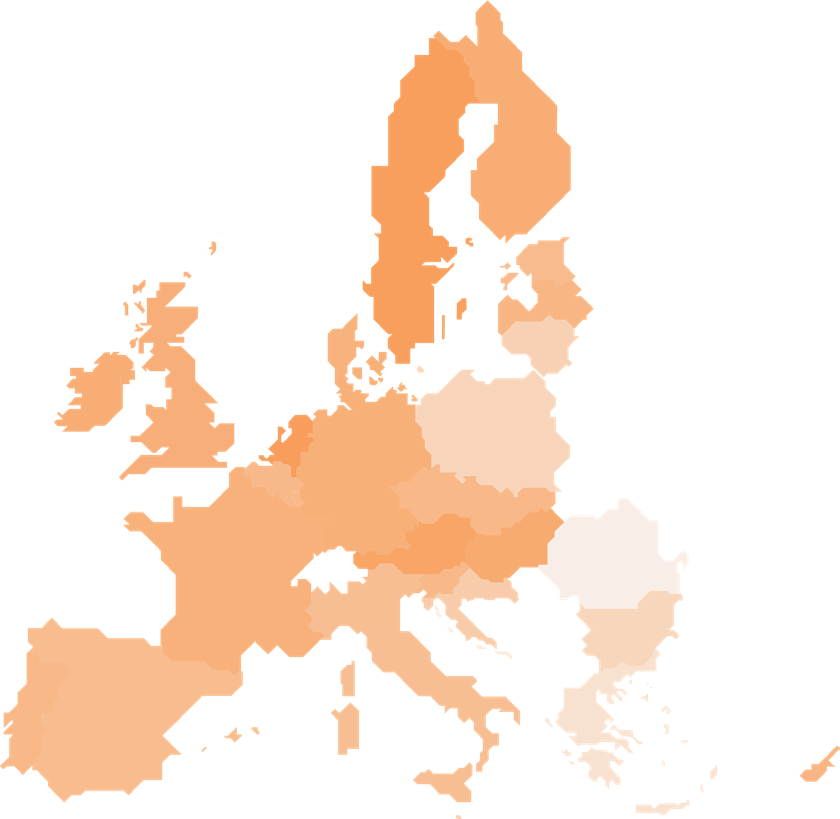
Fig 5. Participation in adult learning in % of persons aged 25-64 in the EU 28
A choropleth map of Europe showing the participation in adult learning as a percentage of persons aged 25-64 in the EU 28, with a legend indicating values from 7.0% to 64.1%.
Source: Adapted from Eurostat (2019b)
It is interesting to note that while 45.2 per cent of adults in the EU aged 25-64 participated in training and education (both formal and non-formal activities), 43 per cent of adults participated in non-formal activities, while only around six per cent participated solely in formal activities.
Fig 6. Participation in adult learning in % of persons aged 25-64 in the EU 28, by category of learning
A bar chart showing the percentage of persons aged 25-64 participating in adult learning in the EU 28, broken down by category of learning (Formal and non-formal education and training, Formal education and training, Non-formal education and training) for the years 2007, 2011, and 2016.
Source: Adapted from Eurostat (2019b)
All the countries studied showed inequalities in adult learning between different socio-economic groups. Those with insufficient learning opportunities included the elderly, the low-qualified and the unemployed. Participation rates were almost identical for men and women, but an analysis by age shows that, in 2016, the participation of those aged 25-34 in the EU was more than 20 per cent higher than for those aged 55-64. Adults living in cities were ten per cent more likely to participate in lifelong learning (49 per cent) than those living in rural areas.
In addition, in 2016, the participation rate for people with tertiary-level education was 65.8 per cent in the EU, while the rate for those with no more than lower secondary-level education was only 24.0 per cent (European Commission, 2016). The participation rate for employed people in 2016 (55 per cent) in the EU was about twice the rate for the unemployed. This is because employers were the most common providers of non-formal education and training activities in the EU (35.4 per cent).
The evidence shows variations in lifelong learning in different countries and industries, implying that upskilling and reskilling depends on the institutional environment of each country. However, we believe that low participation in adult learning could also be the result of barriers which discourage individuals to engage in training.
3.3. Attitudes towards, and barriers to, Adult Learning
How can we encourage workers whose roles are at risk of automation to engage in adult learning?
To address the challenge of upskilling and reskilling, we need to understand what motivates people to participate in adult education (Hughes et al., 2019; Whiteley, 2019). The broader question that we want to answer is: 'How can we encourage workers whose roles are at risk of automation to engage in adult learning?' We understand that there are many different kinds of adult learners who have many different learning needs. There is no 'one-size-fits-all' solution and it is vital to examine the ways in which we could increase participation and keep participation rates high among different types of learners in different countries.
A variety of factors have a major influence on participation in education and training. About half of all adults in the EU do not wish to participate in adult learning, even though they have not experienced it. To enable more adults to learn and train, it is essential that a range of practical and contextual factors is addressed, including cost, childcare, and distance. In 2016, 29.9 per cent of adults in the EU participated in some education or training in the 12 months prior to the interview but did not want to continue participating, illustrating negative attitudes towards learning, while only 14.9 per cent of those who had participated in training did wish to continue.
This percentage varied considerably in different countries within our sample. For example, around 30 per cent of adults in Denmark who had participated in training wanted to continue, while 12.7 per cent of adults who did not participate in education wished that they had done so. In 2016, 42.8 per cent of adults in the EU did not participate in adult learning during the 12-month period prior to the survey and also had no intention of participating (see Table 1). Adults who did not take part in education or training tend to fall into one or more of three groups: the elderly; those with low levels of education; and those who live in the countryside.
The 2016 Adult Education Survey asked adult respondents who wished to participate, or wished to increase their participation, to indicate what had prevented them from doing so during the previous 12 months. Barriers to adult learning activities can be classified as: a) situational barriers, arising from an adult's individual circumstances; b) institutional barriers, arising from educational providers and discouraging participation from the outset; and c) dispositional barriers, relating to individuals' own attitudes. Some barriers could fit within more than one category; for example, age could be described as both a situational and dispositional barrier (Cross, 1981).
|
Respondents who already participated |
Respondents who did not participate |
|
Did not want to participate more |
Wanted to participate more |
| EU 28 |
29.9 |
14.9 |
| Belgium |
23.2 |
22.0 |
| Denmark |
20.0 |
29.9 |
| Netherlands |
49.2 |
14.7 |
| Finland |
38.7 |
15.0 |
| Sweden |
42.5 |
19.5 |
Table 1. Distribution of the will to participate, or participate more, in adult learning in % of persons aged 25-64 in the EU in 2016
Source: Eurostat (2019b)
The most frequently cited reasons for not participating in lifelong learning (averaged across the EU member states) were situational: clashes with work schedules (39.9 per cent) and family responsibilities (32.5 per cent). Future action should therefore aim to develop learning options suited to individual needs, such as developing activities in settings other than schools or classrooms.
Some national institutional contexts make it easier to overcome these obstacles. For example, respondents in some of the countries in our sample saw them as less important. Respondents in Denmark reported the fewest obstacles, the most important being that no suitable training activities were available. In contrast, respondents in The Netherlands were more likely to highlight family responsibilities and health or age as being problems. In addition, while respondents in Denmark did not consider distance to be a major obstacle, about 17 per cent of participants in Finland and 15 per cent in Sweden did say that this was a serious problem (see Table 2).
|
EU 28 |
Belgium |
Denmark |
Netherlands |
Finland |
Sweden |
| Situational Barriers |
|
|
|
|
|
|
| Lack of employer's support or public services support |
20.9 |
11.0 |
6.7 |
20.3 |
14.7 |
18.1 |
| Schedule |
39.9 |
39.1 |
12.1 |
29.0 |
36.3 |
33.5 |
| Family responsibilities |
32.5 |
28.4 |
7.9 |
37.1 |
21.2 |
28.8 |
| Institutional Barriers |
|
|
|
|
|
|
| Prerequisites |
8.8 |
7.8 |
2.8 |
4.1 |
7.2 |
11.6 |
| No suitable education or training activity (offer) |
14.2 |
9.1 |
13.9 |
11.2 |
15.5 |
17.4 |
| Distance |
15.4 |
10.3 |
1.7 |
8.0 |
17.3 |
15.1 |
| Cost |
28.4 |
16.4 |
8.9 |
23.9 |
17.9 |
19.7 |
| No access to computer or internet |
3.3 |
1.4 |
: |
2.0 |
1.5 |
2.2 |
| Dispositional Barriers |
|
|
|
|
|
|
| Health or age |
12.9 |
20.3 |
4.5 |
20.9 |
14.8 |
11.7 |
| Negative previous learning experience |
3.0 |
1.5 |
0.7 |
3.0 |
3.0 |
2.8 |
| Other personal reasons |
18.3 |
10.9 |
5.4 |
25.8 |
12.4 |
14.8 |
Table 2. Obstacles to adult learning in % of persons aged 25-64 in the EU in 2016
Source: Eurostat (2019b)
Obstacles vary in their importance, according to socioeconomic group. Adults who do not participate in learning tend to fall into one or more of three groups: the elderly; those with low levels of education; and those who live in the countryside. For example, lower-qualified adults (those with less than primary or with primary and lower secondary education) often report that they lack the initial requirements for participation in the courses that interest them, although this is not their main obstacle. Adults with fewer educational qualifications are similar to all other adults in reporting that lack of time, and cost are major problems (see Figure 7).
In addition, as expected, health or age is the most frequently mentioned obstacle reported by older adults. Learning seems to be considered as something mainly for children and young people, highlighting negative attitudes towards participating in education.
Fig 7. Obstacles to participation in adult learning for older (aged 55-64) and less qualified workers in the EU in 2016
A horizontal bar chart comparing the percentage of persons aged 25-64 years old facing various obstacles to participation in adult learning, categorised by "Less Qualified", "Older", and "All" for each obstacle.
Source: Adapted from Eurostat (2019a)
4. Conclusions and Implications
As automation continues to transform work practices in a wide range of jobs, employees will need to adjust to new requirements.
This prediction heralds one obvious challenge, however: the need to prepare and guide people through the transition that digital transformation will bring to the labour market (European Commission, 2017).
The purpose of this report is to provide a broader and deeper understanding of adult learning. Based on EU statistics we show that the churning of jobs results in structural change. As demand for labour in manufacturing sectors and demand for low-skilled employees falls, shifts in the labour market to knowledge-based and in-person services will be critical to the economy. As a result, demand for skills is changing within and between organisations and industries, increasing the importance of lifelong learning.
The evidence shows variations in adult learning uptake in different countries, implying that upskilling and reskilling depends on the institutional environment of each country. Our analysis also shows inequalities in adult learning between different demographic groups. Those with insufficient learning opportunities include the elderly, the low-qualified and the unemployed. However, we recognise the critical role of national institutions in overcoming barriers towards lifelong learning.
Lifelong learning is a key component of inclusive growth, ensuring that people of all ages have the skills they need to navigate the challenges of a rapidly evolving labour market.
Source: Center for Progressive Policy (2018)
Devising an effective adult learning system which helps to tackle inequality and social exclusion still seems to be a distant goal. Our analysis suggests that there is substantial inequality in adult learning participation. There are huge disparities in adult learning across the EU. More importantly, however, disparities also exist between different demographic groups within individual countries. According to the University and College Union, (2009, p: 19) to ensure that every adult is given equal access to adult learning, stakeholders need to focus on developing an inclusive adult education service.
In conclusion, we feel that capturing such a wide range of evidence about adult learning will allow us to conduct in-depth research into this area. The balance between cost and benefits exists throughout an adult’s learning journey, starting before they consider participating, and continuing until the end of their training and education (Department for Education UK, 2018). In this regard, a fruitful avenue for future research is to examine adult learning as a system, with the aim of understanding what motivates adult learners to engage in training and education programmes, to complete those programmes, and to perform well in them.
References
- Abernathy, W. J., & Clark, K. B. (1985). Innovation: Mapping the winds of creative destruction. Research Policy, 14(1), 3-22.
- Acemoglu, D., & Restrepo, P. (2018). The race between man and machine: Implications of technology for growth, factor shares, and employment. American Economic Review, 108(6), 1488-1542.
- Bakhshi, H., Downing, J., Osborne, M. and Schneider, P. (2017). The future of skills: Employment in 2030. London: Pearson and Nesta.
- Brynjolfsson, E. & McAfee, A. (2014). The second machine age: Work, progress, and prosperity in a time of brilliant technologies. New York and London: W.W. Norton 1& Company.
- Center for Progressive Policy (2018). Skills for inclusive growth. https://www.progressive-policy.net/downloads/files/Report_Skills-for-Inclusive-Growth.pdf
- Cross, K.P. (1981). Adults as learners. San Francisco: Jossey-Bass.
- Cedefop (2018). Insights into skill shortages and skill mismatch: Learning from Cedefop’s European skills and jobs survey. http://www.cedefop.europa.eu/files/3075_en.pdf
- Deloitte (2014). From brawn to brains. The impact of technology on jobs in the UK. https://www2.deloitte.com/uk/en/pages/growth/articles/from-brawn-to-brains--the-impact-of-technology-on-jobs-in-the-u.html
- Department for Education UK (2018). Decisions of adult learners. https://assets.publishing.service.gov.uk/government/uploads/system/uploads/attachment_data/file/742108/DfE_Decisions_of_adult_learners.pdf
- European Commission (2001). Making an European area of lifelong learning a reality. Luxembourg: Publications Office. http://ec.europa.eu/education/policies/lll/life/communication/com_en.pdf
- European Commission (2016). European guide. Strategies for improving participation in and awareness of adult learning. https://www.ab.gov.tr/files/ardb/evt/1_avrupa_birligi/1_9_politikalar/1_9_4_egitim_politikasi/ec_guide_adult_learning.pdf
- European Commission (2017). A concept paper on digitisation, employability and inclusiveness. http://ec.europa.eu/newsroom/document.cfm?doc_id=44515.
- European Commission (2019). Digital economy and society. https://ec.europa.eu/eurostat/web/digital-economy-and-society
- Eurostat (2016). Classification of learning activities. https://ec.europa.eu/eurostat/documents/3859598/7659750/KS-GQ-15-011-EN-N.pdf/978de2eb-5fc9-4447-84d6-d0b5f7bee723
- Eurostat (2019a). Employment and unemployment (database). https://ec.europa.eu/eurostat/web/lfs/data/database
- Eurostat (2019b). Education and training statistics indicator (database), https://ec.europa.eu/eurostat/web/education-and-training/data/database
- Hughes, D., Higton, J., Beard, A., Birkin, G., Corley, A., and Milner C. (2019). What motivates adults to learn. A rapid evidence review of what drives learning new skills in the workplace. https://media.nesta.org.uk/documents/Digital_Frontrunners_Motivation_to_Learn_report_final_published.pdf
- Kapetaniou & Pissarides (2019). Robots’ impact on employment. Unpublished manuscript.
- McKinsey Global Institute (2017). Jobs lost, jobs gained: Workforce transitions in a time of automation. [https://www.mckinsey.com/
/media/mckinsey/featured%20insights/Future%20of%20Organizations/What%20the%20future%20of%20work%20will%20mean%20for%20jobs%20skills%20and%20wages/MGI-Jobs-Lost-Jobs-Gained-Report-December-6-2017.ashx](https://www.mckinsey.com//media/mckinsey/featured%20insights/Future%20of%20Organizations/What%20the%20future%20of%20work%20will%20mean%20for%20jobs%20skills%20and%20wages/MGI-Jobs-Lost-Jobs-Gained-Report-December-6-2017.ashx)
- OECD, European Union, UNESCO Institute for Statistics (2011). ISCED 2011 Operational manual: Guidelines for classifying national education programmes and related qualifications. OECD Publishing. http://dx.doi.org/10.1787/9789264228368-en.
- University and College Union (2009). UCU’s vision of adult learning. UCU’s vision of adult learning. https://www.ucu.org.uk/media/3319/UCU-vision-of-adult-learning-Apr-09/pdf/ucu_visionofadultlearning_09.pdf
- Whiteley, G. (2019). Four things Nesta has learnt about adult skills and lifelong learning. https://www.nesta.org.uk/blog/four-things-nesta-has-learnt-about-adult-skills-and-lifelong-learning/
- World Economic Forum (2018). The future of jobs and skills. http://www3.weforum.org/docs/WEF_FOJ_Executive_Summary_Jobs.pdf
-
Figures
- Fig. 1. Changes in total employment in the EU 28 2008-2018
- Fig. 2. Changes in skills in the EU 28 2008-2018
- Fig. 3. Share of mid-skilled occupations in employment in the EU 28, 2008-2018
- Fig. 4. Effects of lifelong learning in the EU 28, 2016
- Fig. 5. Participation in adult learning in % of persons aged 25-64 in the EU 28
- Fig. 6. Participation in adult learning in % of persons aged 25-64 in the EU 28, by category of learning
- Fig. 7. Obstacles to participation in adult learning for older (aged 55-64) and less qualified workers in the EU in 2016
-
Tables
- Table. 1. Distribution of the will to participate, or participate more, in adult learning in % of persons aged 25-64 in the EU in 2016
- Table. 2. Obstacles to adult learning in % of persons aged 25-64 in the EU in 2016
Our Partners
Nesta is based in the UK and supported by a financial endowment. We work with partners around the globe to bring bold ideas to life to change the world for good. www.nesta.org.uk
If you'd like this publication in an alternative format such as Braille or large print, please contact us at [email protected]
Nesta runs two programmes in the Nordics and Benelux. These are Digital Frontrunners, an active network of over 300 future of work experts, policymakers and practitioners and FutureFit, a major training and research project involving unions, researchers and learning experts. In partnership with unions, FutureFit is focused on upskilling and reskilling workers and doing innovative, robust research about what works. The programmes are supported by Google and Google.org.
Partners in the FutureFit programme include:
- Auto-ja Kuljetusalan Työntekijäliitto (AKT)
- Demos Helsinki
- Finansförbundet
- HK Privat
- Hyper Island
- Ivaekst
- Palvelualojen ammattiliitto (PAM)
- Suomen ammattiliittojen keskusjärjestö (SAK)
- Teollisuusliitto
- Työväen Sivistysliitto (TSL)
- Unionen
- The Think Tank DEA
- The University of Gothenburg
- Vision
58 Victoria Embankment,
London, EC4Y 0DS
+44 (0)20 7438 2500
www.nesta.org.uk
[email protected]
www.facebook.com/nesta.uk
@nesta_uk
Nesta is a registered charity in England and Wales with company number 7706036 and charity number 1144091.
Registered as a charity in Scotland number SC042833.
Registered office: 58 Victoria Embankment, London, EC4Y 0DS
ISBN: 978-1-84875-163-7
Delivered by Nesta. Funded by Google.org