Nesta is an innovation charity with a mission to help people and organisations bring great ideas to life.
We are dedicated to supporting ideas that can help improve all our lives, with activities ranging from early-stage investment to in-depth research and practical programmes.
Nesta is a registered charity in England and Wales with company number 7706036 and charity number 1144091. Registered as a charity in Scotland number SCO42833. Registered office: 1 Plough Place, London, EC4A 1DE.
www.nesta.org.uk
©Nesta 2015
Trustees
Illustration of the Nesta Trustees, a group of people sitting and standing.
L-R - Ed Wray, David Pitt-Watson, Madeleine Atkins, Kersten England, Rob Woodward, Sir John Chisholm, Sir John Gieve, Michelle Harrison, Dame Julie Mellor, Simon Linnett.
Sir John Chisholm
Nesta's Chair.
Executive Chair of Genomics England, and
Non-Executive Director of Health and Social Care
Information Centre.
Dr Michelle Harrison
CEO of WPP Government and Public Sector
Practice, and Global Head of Political and
Social Practice at TNS.
Kim Shillinglaw
Controller BBC 2 and BBC 4.
Madeleine Atkins
Chief Executive, Higher Education Funding
Council for England.
Kersten England
Chief Executive of City of York Council.
Dame Julie Mellor, DBE
Parliamentary & Health Service Ombudsman.
Sir John Gieve
Chairman of VocaLink.
Ed Wray
Directorships at Funding Circle and LMAX
Limited and Chair of the Development Board
at YouthNet.
David Pitt-Watson
Executive Fellow at London Business
School, and Chair of the UN Environment
Programme's Finance Initiative.
Simon Linnett
Executive Vice Chairman at Rothschild.
Piers Linney
Co-CEO of Outsourcery plc.
Rob Woodward
CEO of STV Group plc.
Chairman's Statement
Illustration of Sir John Chisholm.
Nesta has enjoyed a year of increased activity and growth. The complex economic and social challenges we continue to face have meant that more and more organisations are looking to us for inspiration, expertise and practical support.
In answer to this, we have been working on 105 projects worth a total $20 million and have engaged with more partners than ever before. To pick out just two highlights:
The Longitude Prize is a $10 million prize fund set up with launch partner Innovate UK to tackle a major threat facing humanity. We asked the British public to vote for one of six challenges they wanted the prize to focus on, and they chose antibiotic resistance. The launch campaign reached 84 per cent of UK adults, helped by great partnerships with the BBC and Amazon. The race is now on for competitors to enter and win the prize – and achieve truly world-changing impact. As well as having a direct impact on the world's battle to reduce antimicrobial resistance, Longitude Prize will also give new impetus to the use of challenge prizes as a way of mobilising ideas.
We also published a landmark piece of research: The geography of the UK's creative and high-tech economies. It revealed that the creative economy is one of the UK's unspoken success stories, accounting for 2.6 million jobs. At a time when the robot revolution is threatening to sweep away many non-creative jobs, this is a significant advantage.
At Nesta we have always prided ourselves on radical thinking backed by insight and an ability to bring diverse groups of people together.
Now there is a need for even bolder ideas to help stimulate growth and create public benefit, and thanks to the imagination and graft of our people and our partners we are helping to deliver this where it is most needed.
We are entering a time of broader horizons at Nesta. We have a dynamic and diverse team, now numbering 160, who are spreading their wings wider and enjoying unprecedented interaction with innovation entrepreneurs both in the UK and across the world. As Chair of the Trustees, I speak for the whole Board in expressing our gratitude and admiration for the efforts of our staff and all who work so enthusiastically with us. I would also like to personally thank our Deputy Chief Executive Philip Colligan, Chief Investments Officer Matt Mead and Finance Director Grace Chan, who left this year and who, through their dedication and hard work, have helped make Nesta the thriving place it is today.
In such a vibrant environment I'm looking forward to what the next year brings.
Sir John Chisholm
Chairman
Chief Executive's Statement
Illustration of Geoff Mulgan.
We were set up to advance innovation for the public benefit – and during 2014-15 we began a three year strategy, which we set out publicly for the first time, showing how we would set priorities and use our resources to achieve the greatest impact.
That strategy is on track – in terms of activities, partnerships, income and impacts. We're unique in being able to bring together the ability to invest, make grants, research and convene. And although we have relatively limited resources, certainly by the standards of some foundations and government agencies, we make our money go much further by leveraging the power of ideas and by being a good partner. Below are some of the highlights of what we have achieved over the past year.
The Centre for Social Action Innovation Fund has backed dozens of fantastic projects that mobilise public time and energy to improve education and healthcare. It's boosted the argument for better mobilising public inputs into public services, showing why it leads to better results and more accountability.
Our investment team has invested in a batch of great ventures and also showed how investment can be the ally not just of social impact but also of more rigorous attention to evidence.
The Behavioural Insights Team became a partner for Nesta in 2014. It does fantastic work in its own right, showing how psychological insights can help governments achieve results. And it's also a good illustration of how experimental methods can be made to work at the heart of governments.
Projects such as the DIY Toolkit not only helped thousands of people with practical skills for innovation, but also helped advance a big idea – that now is a time for innovation to be democratised and opened up to everyone, not just grandly funded laboratories or fashionable designers.
We're proud of all that's been achieved. But all of this is a work in progress as we evolve into becoming a network of linked units, centres and teams – all pushing forward the frontiers of practical innovation for the common good. It's been an exciting year for us – but the best is yet to come.
Geoff Mulgan
Chief Executive
Strategic Report
We have a clear strategy to meet our charitable objects, which are set out on page 26. Our mission is to increase the creation and growth of new ideas in the following key areas:
- Health and ageing
- Opportunities for young people
- Digital arts and media
- Citizen engagement in public services
- Innovation policy
- Government innovation
- New models for inclusive economic growth
- Impact investment
- Future thinking
We encourage innovation in these areas by:
- Backing promising ideas to achieve the greatest possible impact.
- Designing policies that can improve the environment for innovation.
- Improving our understanding of how innovation works by conducting original research.
- Developing new tools to turn ideas into impact.
1. Achievements in 2014-2015
Over the past year Nesta has continued to raise the scale and pace of its work. We've:
37,000
people mobilised to help
100,000
people through the Centre
for Social Innovation Fund
40 MILLION
Number of people
communicated with
through the launch and
voting for the Longitude
Prize
137
Number of organisations
we've supported
- Given financial and non-financial support to 137 organisations.
- Mobilised 37,000 people to help over 100,000 people through the work of the Centre for Social Action Innovation Fund, with the prospect of reaching many millions as these projects scale.
- Communicated with over 40 million people in the UK through the launch and voting for the Longitude Prize, a $10 million prize fund, open to competitors over the next five years, to help solve one of six fundamental issues facing the world today.
- Invested in three more organisations as part of Nesta Impact Investments, bringing the total to eight in the portfolio.
- Grown our presence in Europe with 17 European projects and major events from Brussels to Gdansk.
- Expanded our international presence with work in China, Malaysia, Brazil and UAE, and worked alongside major philanthropic foundations in North America, and had hundreds of thousands of hits for our new DIY toolkit supporting innovation in development.
- Initiated the first ever impact fund for arts organisations to support exceptional business ideas in this area.
- Successfully shown a radical new way of transforming local health systems, resulting in better care and reduced costs.
- Helped thousands of young people learn the skills of digital making, paving the way for the BBC to make this a priority in 2015.
- Increased our audience with another sell-out Future Fest event and with the launch of our new online magazine - The Long + Short.
- Begun our evolution towards becoming a network of linked organisations, with the Behavioural Insights Team, Bethnal Green Ventures and the Centre for Ageing Better.
Case Study: Longitude Prize
Past Nesta projects also came to fruition during this period. For example, the Milton Keynes driverless car experiment, the first of its kind in the UK, will use vehicle technology that Nesta funded over a decade ago. Far-reaching plans to devolve power to Manchester - a potential model for other parts of England – followed many of the recommendations made by the Nesta-funded Manchester Independent Economic Review. And many of Nesta's venture investments did so well that we were able to take profits to reinvest in new firms.
On the 300-year anniversary of the original Longitude prize – launched in 1714 to find a way of accurately measuring longitude in order to avert naval disasters – Nesta reconvened the Longitude Committee, led by the Astronomer Royal Lord Martin Rees, to create a new prize for a new century.

In partnership with the BBC and Innovate UK, we launched a public vote to choose one of six major challenges facing humanity to be the focus of a $10 million Longitude 2014 prize fund: Flight (How can we fly without damaging the environment?), Food (How can we ensure everyone has nutritious, sustainable food?), Antibiotics (How can we prevent the rise of antibiotic resistance?), Water (How can we ensure everyone has access to safe and clean water?) and Dementia (How can we help people with dementia to live independently for longer?).
The public chose antibiotic resistance as the challenge they wanted to most see tackled. Now everyone, from amateur scientists to the professional scientific community, has the chance to create a cost-effective, accurate, rapid and easy-to-use test for bacterial infections that will allow health professionals worldwide to administer the right antibiotics at the right time.
The Longitude Prize 2014 captured the imagination of the British public thanks to a dedicated BBC Horizon programme and support from a range of incredible partners, including Amazon and the Science Museum.
Nesta has limited resources and the Longitude Prize is a good example of how we make money go further by leveraging the power of good ideas and solid partnerships. The launch of the prize reached 84 per cent of UK adults, 16 million Twitter accounts and gained media coverage around the world. It is the first prize of its kind to incorporate a public vote and, true to the spirit of the original, anyone can enter.
Illustration of a person standing in front of a large colorful mural, part of The Longitude Prize vote campaign.
The Longitude Prize vote campaign reached 84 per cent of UK adults. Photo: Matt Alexander/PA Wire
Key areas of impact:
- The Longitude vote campaign reached 84 per cent of all UK adults.
- The launch campaign reached 16 million social media accounts and generated 687 pieces of media coverage.
Growing our impact through combining financial and non-financial support to innovators
We have continued to run and launch some big funds which back promising ideas across the arts, education, healthcare and social action. Our funds – a mixture of grant funds and investment funds - are designed to help innovators refine their ideas and grow them so they can achieve impact at scale. These funds are supported by a variety of partners and include:
- The Centre for Social Action Innovation Fund – a $14.5 million fund in partnership with the Cabinet Office and to which Nesta has contributed $4 million, to identify, fund and scale organisations which are putting citizens at the heart of public services.
- The Digital R&D Fund for the Arts an $8 million project, with a contribution from Nesta of over £1 million, backing groundbreaking digital projects to help arts and cultural organisations reach new audiences and generate new revenue streams.
- Nesta's Impact Investment Fund – a $17.6 million managed fund, which includes an $8 million commitment from Nesta, making investments in ventures that combine social impact with financial returns.
Case Study: Centre for Social Action Innovation Fund
The Centre for Social Action Innovation Fund is finding new ways to encourage formal and informal volunteering, giving and social action to help support public services and increase their impact. Funded in partnership with the Cabinet Office, we have invested over £12 million in grants for 52 innovations that have demonstrated impact in mobilising the talents of a wide variety of people to help one another.
In the last year we have backed six organisations that are using volunteering and social action to help unemployed people improve their skills and return to work. One of these, Volition, builds on the successful Manchester Cathedral Volunteer Programme, which provides a structured ten-week volunteering programme. This highly successful scheme will be replicated around the country.
Illustration of two children smiling, one holding a 'Code Club' sign.
Code Club. Courtesy of Chocolate Films Ltd.
We also supported six organisations developing the skills of young people at school, through mentoring, tutoring and peer-to-peer networks: Action Tutoring, City Year UK, Code Club, Team Up, TLG and The Access Project. Code Club runs volunteer-led after-school clubs to introduce nine to 11-year-olds to coding. We funded it to 'super scale' with the aim of it becoming a household name.
As a large-scale initiative the Centre for Social Action Innovation Fund has wide-reaching impact. To date, we estimate that the portfolio has helped mobilise 37,000 people to assist 100,000 more people, and we're expecting this to triple in 2015. Nesta and the Cabinet Office's £12.2 million investment in the above innovations has already leveraged £8.1 million from other sources.
We are also running two replication programmes to incentivise public services to adopt proven volunteering models. Inspired by a successful US model, Cities of Service, we're backing seven towns and cities (Bristol, Kirklees, Plymouth, Portsmouth, Barnsley, Swindon and Telford & Wrekin) to mobilise volunteers to carry out practical tasks to help improve their areas. We also created Helping in Hospitals to expand the reach and impact of hospital volunteers carrying out simple but impactful acts – such as holding someone's hand as they recover from surgery or fetching a newspaper for someone who is incapacitated.
Alongside backing fantastic projects that enable the public to help improve education, healthcare and social care, the Fund has also boosted the argument that public input results in better outcomes and greater accountability. As part of the Fund's work, we are also embarking upon the largest exercise in evidence collection ever seen in the field of citizen engagement in public services.
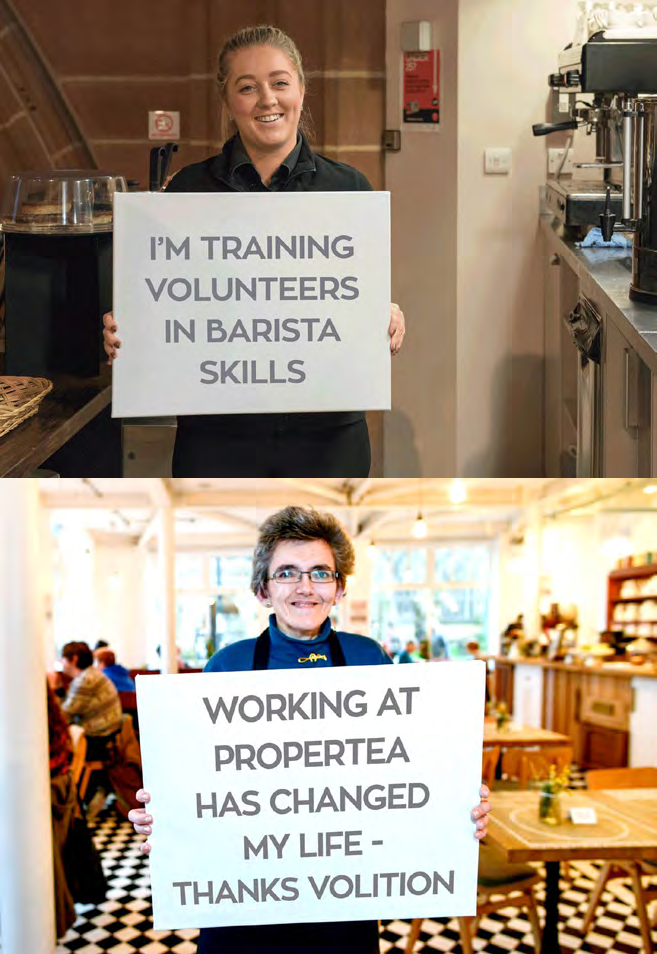
Volition provides a volunteering programme for local unemployed people
Key areas of impact:
- The Centre for Social Action Innovation Fund has mobilised 37,000 to help over 100,000 people, and we're expecting this to triple in 2015 on the way to much wider reach in the years ahead.
- Nesta and the Cabinet Office's £12.2 million investment in 52 innovations has leveraged £8.1 million from other sources to date.
Increasing our work through partnerships
We have forged new partnerships with the BBC, Innovate UK, Amazon and the Science Museum to help launch Longitude Prize. We have also deepened partnerships with a wide range of organisations across many sectors, including Google, NHS England, the Health Foundation, the Rockefeller Foundation, Bloomberg Philanthropies, Omidyar, MacArthur Foundation, the Cabinet Office and the European Commission, as research and delivery partners.
Case Study: Impact investment
Established in November 2012, Nesta Impact Investments is a partnership between Nesta, Big Society Capital and Omidyar Network. The fund invests in ventures with inclusive and scalable innovations that are run by outstanding entrepreneurs working on the major issues of an ageing population, young people's education and employability, and the sustainability of communities.
Nesta Impact Investments made three new investments worth $1.3 million in 2014-15, taking the total portfolio to eight organisations, in which we have invested £4.67 million. New investees include:
Illustration of the Ai-Media logo.
Ai-Media UK, a social enterprise that provides live captioning to improve access to education for young people who are deaf or hard of hearing, have autism or learning difficulties. The Ai captioners reiterate what they hear into voice recognition software, which turns speech to text that can be viewed on any web-enabled device.

Cogbooks, a provider of adaptive learning technology that aims to improve education outcomes. They have a unique approach to web-based learning, which puts students at the heart of the technology, allowing them to learn at their own pace, while individually supporting both them and their teachers.
Illustration of the GetMyFirstJob.co.uk logo.
GetMyFirstJob, an online platform that matches young people with appropriate apprenticeship opportunities from training providers, colleges and employers. This is achieved through an innovative approach that is specifically tailored to meet the needs of the apprenticeship market.
Nesta Impact Investments aims to bring about positive outcomes for people, communities and society as a whole, investing primarily to create a positive social impact, as well as providing financial returns for investors.
Nesta has also been working with others to broaden the adoption of our impact investment framework, for instance through our partnership with Bethnal Green Ventures (BGV), which runs acceleration programmes for early-stage social entrepreneurs. Along with the Cabinet Office and Nominet Trust, we have worked with BGV to support 46 new social ventures (21 this year), and this is set to grow to 80 over the next two years.
We have also been investing in innovative funds and social finance projects this year, as part of our work in impact investment. One organisation in this area, Resonance,
Illustration showing "Ai-Media UK" branding on a building facade.
Ai-Media UK.
has performed particularly well. Under management it has built its impact investment funds from zero to in excess of £50 million.
Over the coming year, we will continue to grow our impact investments portfolio and support the sector through research, funding and partnerships, having helped the UK to become a world leader in this area.
- Three new social innovations added to the Nesta Impact Investments portfolio, taking the total to eight.
- 21 new social ventures supported with our partners Bethnal Green Ventures (BGV).
- Resonance, supported as part of our work investing in innovation funds and social finance products, built its impact investment funds from zero to in excess of $50 million.
Illustration of people at an event, with "Bethnal Green Ventures" branding.
Bethnal Green Ventures. Photo: Paul Miller.
Shaping agendas
Funding achieves much more if it's linked to powerful ideas. That's why we have grown our work to shape agendas. We have shown how innovation policy needs to be about more than hardware and classic R&D. To help this case we conducted the first major survey into attitudes towards innovation and innovation policy. This showed the risks of an overly narrow technocratic approach: much larger proportions of the population will support innovation if they can see that it meets a public or social goal such as better healthcare, and if proper attention is paid to ethical issues, such as reducing waste. The survey informed the British Government's Science and Innovation White Paper.
We've shown new ways of running public services – how 'people powered health' can deliver dramatically better value for money in primary care, and how civic action can help achieve better results in schools, criminal justice and hospitals.
We've advocated more active policies across Europe to back new sources of wealth and growth, based on evidence from our research. We worked with the Lisbon Council in Brussels to set up the European Digital Forum, a Brussels think-tank focused on the digital economy. One of its publications, Reforming the European Commission, set out a blueprint for commission reform, including Vice Presidents for subjects like the Digital Single Market, that was subsequently adopted by President Juncker.
We've shown the importance of the creative economy with a comprehensive mapping of the UK's creative and technology clusters, and made the case through our research that the UK could, in the future, create a million creative jobs. These figures are proving central to the government's ongoing creative industries policy.
We've championed the potential of the sharing economy, funding dozens of pathbreaking projects and researching the likely impact on jobs and wealth, and highlighting the new policy options facing governments. And we've shown how governments can organise innovation more effectively – drawing together lessons from teams all over the world and how evidence can be better used in the day-to-day work of public services and departments.
We also helped to set policy agendas ahead of the 2015 election. And Future Shock, our flagship event for policymakers, explored the trends and new technologies that will be shaping people's lives after the election.
Over several years we've shown the potential of the rapidly emerging alternative finance market in the UK and demonstrated that it is fast becoming a viable competitor to more established ways of raising finance. We estimated that these new models of crowdfunding and peer-to-peer finance contribute an extra $1.74 billion to the UK economy.
Case study: Innovation Population
After two years of funding opportunities for young people to learn coding, in March we helped shape the launch the BBC's year of Digital Creativity with our Young Digital Makers survey. This was a comprehensive snapshot of how young people engage with digital making in the UK today, and showed an impressive surge in digital skills across the country.
The Innovation Population is the first major survey of attitudes towards innovation and innovation policy. It pulls together insights from an online survey of over 6,000 UK adults, and face-to-face interviews with over 100 people in six locations across the country.
Nesta commissioned ComRes to carry out the research and, as might be expected, we found that attitudes towards innovation are broadly favourable, particularly when it is seen to have a demonstrable impact on health, wellbeing and quality of life. However, we also identified five distinct groups in the UK population with particular views about innovation:
Illustration of an 'Innovation Futurist' with the text "I AM AN INNOVATION FUTURIST".
Innovation Futurists:
those who engage in the innovation debate and see the benefits of change in all aspects of life.
Illustration of an 'Innovation Romantic' with the text "I AM AN INNOVATION ROMANTIC".
Innovation Romantics:
those who view new gadgets and technology as exciting and interesting, but tend not to engage with innovation in the long term.
Illustration of an 'Innovation Creative' with the text "I AM AN INNOVATION CREATIVE".
Innovation Creatives:
those who display high levels of creativity and have a social perspective on life (and are typically younger).
Illustration of an 'Innovation Realist' with the text "I AM AN INNOVATION REALIST".
Innovation Realists:
those who appreciate innovation, but aren't excited about it, placing greater importance on ethics and rights than new ideas.
Illustration of an 'Innovation Sceptic' with the text "I AM AN INNOVATION SCEPTIC".
Innovation Sceptics:
those who are concerned about the pace of society, and are cautious and practical, placing low value on new ideas until they are confident they have real-world benefits.
While there is a group of people in the UK who are enthusiastic about innovation ('Innovation Futurists'), we discovered that it is a relatively small one – one in five people – and disproportionately affluent and male. Meanwhile, two-thirds of those surveyed ('Innovation Creatives' 'Innovation Romantics' and 'Innovation Realists') said that they were enthusiastic about technology, as long as its benefits, especially in social terms, could be clearly articulated. But these people also had clear questions about the downsides of innovation, be this the
impact of the internet on social lives, or the effects of new gadgets on the environment. We also identified one in six people ('Innovation Sceptics') who were more concerned than enthusiastic about innovation. These people were disproportionately female and less affluent, and feared for the impact of technology on wellbeing and society.
There are some organisations and individuals that view innovation as self-evidently worthwhile, but our research - which informed the UK Government's Science and Innovation White Paper - has proved it is more complex than that. As well as starting an important debate about the impact of innovation and its benefits, we also turned the survey results into an online quiz, 'What kind of an innovator are you?' This proved to be one of the most popular pieces of content we've ever published, with over 20,000 people taking the quiz.
Key areas of impact:
- The Innovation Population research surveyed over 6,000 UK adults, and interviewed over 100 people in six locations across the country.
- Our research has informed the UK Government's Science and Innovation White Paper and started an important debate about the impact of innovation and its benefits.
- Over 20,000 people took the online quiz.
Our online quiz 'What kind of an innovator are you?' was taken over 20,000 times.
Growing our audience
A new online magazine, The Long + Short, launched in September and targeted new audiences who are interested in stories of innovation. The first issue reached 10,000 readers and continues to grow with each issue. We're particularly interested in developing a way of talking about innovation realistically, combining a sense of opportunity with a sense of the practical challenges and risks that surround new ideas.
In March we held the second FutureFest, our festival looking at what the world could be like in decades to come. It was bigger and more ambitious than our inaugural event, with 3,000 people attending over the weekend.
Our audience continues to grow fast, with a 20 per cent rise in website traffic over the year, and a similar uplift in subscribers to our weekly newsletter. Our social media following has also grown 22 per cent over the year, reflecting an increasing level of engagement with our work.
Case study: Future Fest
FutureFest is an immersive weekend of performances and speakers that lets people experience what the future could feel like. Taking place every 18 months, it looks at what democracy, money, music, food and other areas of modern life might be like in the coming decades.
As with our inaugural FutureFest in 2013, this year's event sold out, attracting over 3,000 attendees. They were treated to talks from a spectacular line-up of speakers, including NSA whistleblower Edward Snowden, fashion designer and activist Vivienne Westwood, and the iconic funk musician and producer George Clinton.
Illustration of two people on stage at FutureFest.
The future of surveillance with Edward Snowden at Future Fest 2015
Edward Snowden spoke to a panel, which included Vivienne Westwood, over a live video link from Moscow. He outlined the extent of the surveillance programme being used to spy on citizens in the US, and how he believes the next generation can help reclaim the internet. George Clinton talked about how he transformed perceptions of what 'black music' could be, and gave an insight into his pioneering work in music during the 1970s. Jon Ronson questioned the power of social media and Baroness Helena Kennedy QC examined how power structures need to change in the face of globalisation. Meanwhile, the 'Sweet Shop of the Future' explored what our great-grandchildren might be spending their bitcoins on in 2050, and we also unveiled 'Neurosis', the world's first theme park ride for the mind.
Gaining support from Microsoft Research, the British Council, Transport for London, Arup and Breakin' Convention (a Sadler's Wells project), among others, Future Fest 2015 was the most ambitious large-scale event we have launched to date. It allowed us to act as a convener, bringing together a huge number of people from a variety of different fields - ranging from politics and business to science and art - in order to engage with some of the biggest issues facing the world today.
Illustration of a woman on stage with a large screen behind her displaying "The Sweetshop of the Future".
The Sweetshop of the Future
We trended in the UK on Twitter, received over 12,000 Tweets with the #futurefest hashtag (tripling from 2013) and secured over 120 pieces of international and national media coverage (broadcast interviews included C4 Sunday Brunch, Sky News, BBC Radio London, Al Jazeera, Radio 5 Live and two Guardian podcasts), successfully achieving our aim of engaging larger and more diverse audiences. The coverage was universally positive, and 90 per cent of attendees said that would come to the event again.
Our goal of designing a FutureFest event series to build on the success of the FutureFest brand is now well underway, with plans to launch further events in the UK and abroad over the coming years.
Illustration of a light art installation with the word "neurosis".
Neurosis: the world's first theme park ride for the mind
Key areas of impact:
- FutureFest 2015 attracted 3,000 attendees, trended in the UK on Twitter, received over 12,000 Tweets with the #futurefest hashtag, and secured over 120 pieces of international and national media coverage.
- 140 per cent increase in social media engagement from 2013.
- 120 pieces of media coverage (UK and international), a 50 per cent increase on 2013.
Strategic Report
Growing our international presence
A few years ago, Nesta's work was mostly limited to the UK. While our grants and investments continue to focus on the UK, we've expanded our research, skills and advisory work right across the world, ensuring that we are in touch with the leading edge of innovation everywhere.
In China we followed up our studies on the Chinese innovation system with events and research on the remarkable experiments underway across the country on smart cities. In India we followed up our research on frugal innovation methods with practical support for accelerators in many Indian states. In Malaysia we completed a project for the Government to help big businesses measure investments in innovation, designing a model which we hope will influence many other countries, including stock exchanges and accounting standards bodies.
We are running over a dozen practical collaborations across Europe with funding from the European Commission, ranging from the design of new tools for democracy in Finland and Spain, to studying over 1,000 digital social innovation projects, to building a European Challenge Prize platform. Our international development toolkit – the DIY Toolkit – has reached many hundreds of thousands of users, and has been translated into Chinese, Arabic and Spanish with another two translations in the pipeline.
Case study: Future Shock
In the lead-up to the general election, Future Shock, our flagship event for policymakers, looked at important trends and technologies that will shape the UK and its economy over the next few years. Through interactive workshops we laid out six policy ideas for the new Government. These were:
Invest in creativity to tackle the rise of the robot revolution
The UK has the potential to generate one million new creative jobs that, unlike many other areas of work, are unlikely to be replaced by machines. Our recommendations to achieve this include: placing the arts at the heart of education, alongside science, technology, engineering and mathematics; and making arts funding go further through research and development, venture funding and accelerators.
Support a collaborative economy that responds to people's needs
Technology is creating a new 'sharing' or 'collaborative' economy through sites like AirBnB and Uber, and crowdfunding platforms. Our recommendations for supporting this include: backing experimentation through providing the finance, space and support for developing research; and launching a prize for the best designs for sharable, adaptable consumer products.
Use technology to create a healthcare system that empowers patients
Chronic disease is the 21st century's public health crisis, but we are not doing enough to deploy innovations in technology as a response. Our recommendations include: a pledge to provide peer support to every patient living with a long-term condition and to use digital resources to achieve this; and a new research programme to build the field of digital health.
Our Future Shock event showcased the trends that will shape the future
Enable educational institutions to combine practical and academic learning
There is a movement to combine education with practical learning, but despite evidence that this approach works, it isn't being widely supported. Our recommendations include: ending barriers to interdisciplinary teaching; developing a kite mark for digital education technology; and adding digital making to the national curriculum.
Foster innovation through industrial policy
Innovation is essential to economic growth and governments are increasingly turning to industrial policy to achieve this. To ensure it is done well, our recommendations include: shifting government funding away from blue-sky research towards development; and expanding the use of randomisation and testbeds in economic policy.
Strike a balance between data-driven innovation and data protection
Data will be a valuable resource in the future, but data privacy is also a concern. To ensure a balance between these things, our recommendations include: ensuring the public are aware of the significance of the forthcoming European Data Protection Regulation; and encouraging the Government to expand existing measures for developing for data analysis skills.
Nesta... FUTURE SHOCK NEXT EXIT
The trends, technologies and movement that should be defining the 2015 election (but aren't)
Speakers at the event included Diane Coyle, Izzy Kaminska, Michael Osborne, Tyler Cowen, Paul Mason, Kathryn Perera and a host of experts from the UK and around the world.
Key areas of impact:
- Six important policy ideas presented to and debated by policymakers.
Becoming a hub for a wider network
We're continuing to grow Nesta as a network of connected organisations. The Behavioural Insights Team (BIT), our joint venture with the Cabinet Office, has been a great success in its first year as an independent social business. The team has achieved significant impact across a wide range of policy areas, including consumer protection, energy, tax and public health.
Alongside BIT, we have extended our incubator space to accommodate the Centre for Ageing Better, who are part of the new national network of What Works centres. Their aim is to help more people have a better later life by identifying evidence of what works and encouraging change in line with this evidence.
Our partnership with Bethnal Green Ventures (BGV) has resulted in an exciting number of startups. BGV runs acceleration programmes for early-stage social entrepreneurs and their organisations. Nesta has provided funding alongside the Cabinet Office and Nominet Trust to help create 80 new ventures over four years. BGV has helped to found and create 21 exciting ventures over the last year including TalkLife, Andiamo, HearToday, Club Soda and Birdsong.
Nesta has also grown its role as a convenor. The Alliance for Useful Evidence now has over 2,000 members, our Lab Notes newsletter links 300 labs globally, and the Coalition for Collaborative Care brings together national organisations like NHS England and the Royal College of GPs to make people powered health a reality. Our FutureFest event brought together 3,000 people over a weekend to engage with a number of big issues facing the world, from the future of democracy to the future of money. In September 2014 we unveiled a new cohort of 50 New Radicals from all over the UK - people whose ideas and actions are helping to change the country for the better.
2. Performance and impact
Nesta's main activities are organised in functional teams, supported by the Communications and Corporate Services teams.
- Policy & Research: carry out and finance research and use the findings to encourage debate and develop policy, in particular to improve the conditions for innovation.
- Innovation Lab: Nesta supports people and organisations who are developing ideas to solve big social challenges through the Innovation Lab team, who provide practical and financial support across a range of sectors, including health, education, volunteering, civil society and creative industries.
- Investment management: Nesta invests primarily for a positive social impact, but also for a financial return, through a range of funds. Helped by research, funding and our own investments, we have helped the UK's impact investment sector become a world leader.
- Communications: This team works to develop and deliver coherent and impactful communications to a wide variety of audiences. They are responsible for Nesta's events programme, multi-channel media and stakeholder relations. They are also responsible for our innovation skills programme and digital magazine output.
| Nesta Team | Current Impact |
| Policy and Research | - Readership of Nesta's research increased dramatically. Report downloads increased by 264 per cent, and blog post unique views increased by 255 per cent. The average number of people reading each Nesta report and blog post more than doubled. - Our research informed the public debate on innovation, society and the economy, and was covered in a variety of news outlets, from BBC Radio 4's Today programme to The Times, The Guardian, the Financial Times and The Economist. - Working with the Malaysian Government, we successfully developed Nesta's Innovation Index into a tool to measure business innovation: this is now being rolled out across Malaysia and globally. - Our new approach to measuring the size and structure of the Creative Economy was endorsed by the Government, and demonstrated the importance of creativity throughout the economy, not just in the Creative Industries. - Significantly expanded Nesta's international work, delivering groundbreaking research projects in China, South America, India, and across the European Union. - Established the Innovation and Growth Lab, a global initiative to run randomised controlled trials into innovation and entrepreneurship policy, backed by innovation agencies from around the world. - Established the European Digital Forum, a Brussels-based think-tank that helps the European Commission and some of Europe's largest companies take advantage of digital technologies. | - Use the results of our research on using big data to measure innovation to provide policymakers with useful dashboards for making economic policy. - Further develop our international reputation, growing our research and training offer on both innovation policy and innovation in international development. - Helping shape the future of innovation policy in the UK and Europe. |
| Innovation Lab | - In 2014/15 Nesta's Innovation Lab ran seven grant funds, 13 open innovation competitions and nine practical programmes. We also led nine projects that involved us acting directly to create and test new innovations. - Our interventions addressed all of the priorities set out in Nesta's strategy including health and ageing, government innovation, citizen engagement in public services, inclusive economic growth, opportunities for young people and digital arts and media. - During the year we awarded 121 new grants with a total value of £11.6 million, a median value of £85,000 and an average value of £95,000. - We provided practical support to 221 innovators including 110 grantees from previous years that we continued to work with. - The Innovation Lab held or participated in over 150 events, reaching over 14,000 delegates, the majority of which were focused on providing practical support to innovators. - Through the Centre for Challenge Prizes we launched the Longitude Prize 2014 in partnership with Innovate UK. A major public engagement campaign undertaken with the support of the BBC and Amazon reached 40 million people. The £10 million prize is focused on the challenge of antimicrobial resistance. - The Centre for Social Action Innovation Fund completed its selection establishing a portfolio of 52 innovations that are engaging citizens in public services. We estimate that in total the portfolio has already mobilised almost 40,000 people to help more than 100,000 other people (and we're expecting that to triple in 2015). The £12.2 million of grants from Nesta and the Cabinet Office in those innovations has already leveraged £8.1 million from other sources. The portfolio is also the largest effort in evidence generation ever seen in the field of citizen engagement in public services. - The Digital Arts R&D Fund – a partnership with Arts & Humanities Research Council and the Arts Councils in England, Wales and Scotland – has supported 68 partnerships between technologists, arts organisations and researchers to apply R&D methods to innovating new artforms, new revenue streams and extending audience participation. - Working with our partners in the US-based Rapid Results Institute, Essex County Council and local health practitioners, we prototyped a new approach to achieving systemic change in health and care. The initial results showed a substantial decrease in unplanned hospital admissions amongst the frail elderly population. | - Extending our impact through the Centre for Challenge Prizes, working with more partners to create challenges that address big social challenges and demonstrating the potential for prizes to stimulate innovation. - Demonstrating the demand and viability of social investment for arts organisations through the Arts Impact Fund. - A significant expansion of our work to support innovation in health and care, including partnerships with the NHS, government and other funders to put People Powered Health into practice. - Launch of a new partnership with the Welsh Government and Cardiff University to run programmes, open challenges and policy trials to improve Welsh public services. - Working with the Behavioural Insights Team to develop and launch products and services that integrate behavioural insights to achieve better social outcomes. - In partnership with others, driving forward a campaign to encourage the UK's trusts, foundations and other funders to open up their data about who, and what they fund. | Investment | - Our £17.6 million FCA regulated impact investment fund is actively investing – four new investments made this year taking the total portfolio to eight. - Continuation of our four-year partnership with the Bethnal Green Ventures accelerator programme that will support 80 early-stage social innovations. - First year of successful trading for the Behavioural Insights Team, a joint venture with Nesta and the Cabinet Office. - Demonstration of evidence-based impact using our Standards of Evidence. - Continued management of our early-stage venture portfolio. | Investment | - Creation of a portfolio of high-impact early-stage innovations, addressing major areas of social need, operating as sustainable enterprises, and providing returns to investors. - Growth of further impact investment funds supporting organisations delivering evidenced impact. - Working with others to broaden the adoption of our impact investing framework. - Successful growth of venture portfolio with profitable exits, enabling reinvestment into charitable activities. |
| Communications | - Our second FutureFest event in March 2015 outstripped the success of the first. We achieved a bigger capacity audience – 3,000 attendees – across the weekend, trended top on Twitter in the UK, generated 50 per cent more national and international media coverage with over 120 pieces and doubled our online audience with over five million people reached via our website and social channels. - The launch campaign for our flagship project Longitude Prize in May 2014 reached 84 per cent of all UK adults during a five week voting window. The campaign reached 16 million social media accounts and generated 687 pieces of media coverage. - Our annual predictions series saw a 52 per cent increase in readership to 61,000 readers. - Our Skills team delivered 25 events across 12 countries. - The DIY Toolkit, designed by our Skills team in partnership with the Rockefeller Foundation, was downloaded over 85,000 times. - Our digital channels performed better than ever. Our website was visited 1.2 million times this year, and our combined social media presence increased 30 per cent to over 100,000 followers and subscribers. - We ran 145 events for over 9,500 people – in addition to FutureFest. Almost 90 per cent of attendees were either very satisfied or satisfied with their entire event experience. - We achieved a 50 per cent increase in our media coverage from last year, with over 2,965 pieces of media coverage. This includes 573 in the national press and 84 pieces of national broadcast coverage. - We published over 500 blogs and over 70 reports. |
| Investment Management | - Our £17.6 million FCA regulated impact investment fund is actively investing – four new investments made this year taking the total portfolio to eight. - Continuation of our four-year partnership with the Bethnal Green Ventures accelerator programme that will support 80 early-stage social innovations. - First year of successful trading for the Behavioural Insights Team, a joint venture with Nesta and the Cabinet Office. - Demonstration of evidence-based impact using our Standards of Evidence. - Continued management of our early-stage venture portfolio. |
| Communications | - Our second FutureFest event in March 2015 outstripped the success of the first. We achieved a bigger capacity audience – 3,000 attendees – across the weekend, trended top on Twitter in the UK, generated 50 per cent more national and international media coverage with over 120 pieces and doubled our online audience with over five million people reached via our website and social channels. - The launch campaign for our flagship project Longitude Prize in May 2014 reached 84 per cent of all UK adults during a five week voting window. The campaign reached 16 million social media accounts and generated 687 pieces of media coverage. - Our annual predictions series saw a 52 per cent increase in readership to 61,000 readers. - Our Skills team delivered 25 events across 12 countries. - The DIY Toolkit, designed by our Skills team in partnership with the Rockefeller Foundation, was downloaded over 85,000 times. - Our digital channels performed better than ever. Our website was visited 1.2 million times this year, and our combined social media presence increased 30 per cent to over 100,000 followers and subscribers. - We ran 145 events for over 9,500 people – in addition to FutureFest. Almost 90 per cent of attendees were either very satisfied or satisfied with their entire event experience. - We achieved a 50 per cent increase in our media coverage from last year, with over 2,965 pieces of media coverage. This includes 573 in the national press and 84 pieces of national broadcast coverage. - We published over 500 blogs and over 70 reports. |
| Communications | - Our second FutureFest event in March 2015 outstripped the success of the first. We achieved a bigger capacity audience – 3,000 attendees – across the weekend, trended top on Twitter in the UK, generated 50 per cent more national and international media coverage with over 120 pieces and doubled our online audience with over five million people reached via our website and social channels. - The launch campaign for our flagship project Longitude Prize in May 2014 reached 84 per cent of all UK adults during a five week voting window. The campaign reached 16 million social media accounts and generated 687 pieces of media coverage. - Our annual predictions series saw a 52 per cent increase in readership to 61,000 readers. - Our Skills team delivered 25 events across 12 countries. - The DIY Toolkit, designed by our Skills team in partnership with the Rockefeller Foundation, was downloaded over 85,000 times. - Our digital channels performed better than ever. Our website was visited 1.2 million times this year, and our combined social media presence increased 30 per cent to over 100,000 followers and subscribers. - We ran 145 events for over 9,500 people – in addition to FutureFest. Almost 90 per cent of attendees were either very satisfied or satisfied with their entire event experience. - We achieved a 50 per cent increase in our media coverage from last year, with over 2,965 pieces of media coverage. This includes 573 in the national press and 84 pieces of national broadcast coverage. - We published over 500 blogs and over 70 reports. | - Complete a perceptions audit to gain a more sophisticated understanding of our different audiences. This will improve how we target our communications and increase our impact in the future. - Conduct a brand review and brand refresh to help focus our work and support a wider network of linked organisations. - Increase engagement levels and coverage across all communication channels. - Deliver a series of large-scale external events that attract a wider audience to complement our big themes. - Design a FutureFest event series to build on the success of the FutureFest brand. |
3. Plans for the Future
We have achieved much in the last year, and our plans for the future remain ambitious. We're in the middle of implementing the strategy we set out last year, covering the period from 2014-17, and see this as very much the right course to pursue. That means that we intend to:
- Continue Nesta's evolution to become a network of linked organisations with the launch of a new hub in central London which we will share with many others.
- Expand our work in healthcare, with far-reaching new projects to help influence research and mobilise the public to manage their own care.
- Influence the next government by providing practical recommendations based on our research for: changing the way central government works; generating one million creative jobs; and improving conditions for innovators everywhere to help boost economic growth and wellbeing.
- Grow the field of public innovation worldwide, through advisory work, skills and publications.
- Launch new impact investment funds linked to other areas of Nesta activity.
- Build on our recent work around data to develop new programmes around collective intelligence.
4. Financial Review
The Group currently comprises Nesta (the main operating charity through which all charitable activity is undertaken), the Nesta Trust (a charitable trust which holds all the investment assets invested to fund the charitable activities of Nesta in advancing the objects of the Trust), four companies and three limited liability partnerships.
A number of subsidiaries have been set up to manage investing and fund management activities undertaken by Nesta's investment and programme teams and expanded to manage Nesta's new social impact investment activity. It enables Nesta to manage and invest funds on behalf of its investment partners in compliance with the Financial Conduct Authority's (FCA) requirements. This structure is made up of Nesta GP Limited, Nesta PRI Limited, Nesta Partners Limited, Nesta Kinetique LLP and Nesta Investment Management LLP. The Group also includes Nesta Enterprises Limited, incorporated as a trading subsidiary for non-primary purpose trading, Nesta Arts Impact LLP established to provide financial support to arts organisations, and has a 30 per cent holding in a joint venture partner, Behavioural Insights Limited. The results of the Group consolidate all subsidiary undertakings as well as the Trust and the joint venture in Behavioural Insights Ltd.
The Nesta Trust provides funding to Nesta to carry out the Trust's charitable objectives and this year provided $18.0 million (2014: £16.8 million) of which $16.0 million was applied to charitable operating activity and $2.0 million applied against Nesta's commitment to the Impact Investment Fund and other programme-related investments which are held on Nesta's Balance Sheet.
The assets of the Trust are held as an expendable endowment, and the Trust is therefore able to fund charitable activity beyond the income it received of £3.0 million during the year.
The Trustees have agreed a funding rule for the three years to 31 March 2017. To enable longer-term planning Trustees have agreed, in principle for Nesta to draw down up to $45 million for operating expenditure over the three years, drawn down on an as-required basis, in addition to any unspent drawdown agreed for prior years. A further $12 million may be drawn down for Nesta programme-related investments over the three year period, of which $4.9 million has already been committed to the Nesta Impact Investments Fund, as yet undrawn, and a further £0.6 million for other programme-related investment commitments as disclosed in Note 19 to the Accounts.
In addition to funding from the Nesta Trust, the Nesta Board of Trustees sets income targets for Nesta's Executive team. Income of $11.9 million was recognised in addition to $3.0 million income from Nesta Trust investment income. This income is predominantly in the form of partnership funding, where Nesta's expertise in programme design and project management is combined with the funding capacity of other, typically larger, organisations. Examples include our work in Digital Research and Development for the Arts and the Centre for Challenge Prizes. Income is also received which supports our research work such as our report on measuring the size and structure of the UK's creative economy, as well as fund management fees received from external partners in the Nesta Impact Investment Fund. Nesta is also the lead partner or partner in a number of European-funded grant programmes or service contracts, an increased funding source compared with previous years totalling £0.6 million.
Group expenditure totalled $32.0 million, of which $30.4 million was spent on charitable activities, £0.2 million spent on governance costs, £1.3 million on managing the endowment assets held in the Trust and impact investment funds held by Nesta and £0.1 million on Nesta Enterprises trading activities. Of the group expenditure of $32.0 million, £12.5 million was committed to grant distributions. Recipients of grants during the year of over £50,000 during the year are listed in Note 6b to the accounts and a list of all 150 grant recipients can be found on our website at www.nesta.org.uk. A wider programme of non-financial support such as advice, mentoring and coaching is provided to grant recipient alongside grant funding.
Income Resources (£ million)
Pie chart showing distribution of income resources:
* 9.3 Funding - government bodies
* 2.4 Funding - non-government bodies
* 3.0 Income from endowment
* 0.5 Other charitable activity
* 0.2 Trading operations
* 0.2 Other Income
Expenditure on Charitable Activities (£ million)
Pie chart showing distribution of expenditure on charitable activities:
* 22.2 Programmes
* 5.0 Policy and Research
* 1.8 Investment Management (early-stage and social impact)
* 0.7 Skills
* 0.7 FutureFest
Spend on practical programmes totalled $22.2 million for the year (2014: $18.6 million). A large proportion of this spend is funded by external income.
Spend on investment (early-stage and social impact) management of $1.8 million (2014: $1.9 million) includes the investment team who look after the early-stage venture portfolio held by the Trust, and the programme related investments held by Nesta. Costs for the year also include a £0.6 million charge for impairment in the value of Nesta's portfolio of programme related investments.
Nesta has continued to build capability in policy and research and spend in this area was £5.0 million (2014: $4.6 million). Nesta also spent $0.7 million in relation to its Skills offer (2014: £0.8 million). Nesta spent $0.7 million delivering FutureFest (2014: £0.7 million), building on the success of the first FutureFest event held in 2013-14 which showcases some of the work we do with the aim of engaging a larger and more diverse audience.
Support costs comprising Communications and Corporate Service costs are allocated to programme areas as shown in Note 6a to the Accounts. At $6.9 million for the year, costs have increased compared to the previous year (2014: $5.7 million) as planned and reflects the continued growth in the scale of Nesta's activities.
At 31 March 2015, the Group had net unrestricted incoming resources of £1.8 million (2014: $1.3 million) as shown in the Consolidated Statement of Financial Activities and reserves (restricted and unrestricted) of $4.3 million (2014: $3.9 million).
At 31 March 2015 the reserves of the expendable endowment stood at $388.8 million (2014: $359.8 million).
The Trustees consider the expendable endowment reserves level to be appropriate to sustain the future underlying value of the assets and funding plans for the Group.
As Nesta is able to draw down cash from Nesta Trust as required within the approved three year funding envelope, the Trustees have concluded that there is a reasonable expectation that the Group has adequate resources to continue activities for the foreseeable future and have therefore adopted the going concern basis in preparing the financial statements.
Investment Review
The assets of the Trust provide income and capital to be applied by Nesta as sole Trustee to further the objects of the Nesta Trust. The investment strategy balances the desire to maintain the real value of the endowment and its ability to generate the income which Nesta will require, while at the same time maximising total return to fund activities to advance the charitable objectives of the Nesta Trust. The strategy aims to balance risk, return and capital preservation.
At 31 March 2015 the value of Trust cash and investment assets have increased to $388.6 million (2014: $359.5 million), after annual transfers to Nesta to carry out the objectives of the Trust in line with the Trust Deed. The cash and investment asset values and relative allocation of the Nesta Trust at 31 March 2015 compared with the previous year are as follows:
| Asset class |
Market value of investment assets 31 March 2015 £'000 |
Proportion of total endowment assets 31 March 2015 % |
Market value of investment assets 31 March 2014 £'000 |
Proportion of total endowment assets 31 March 2014 % |
| Current assets: |
|
|
|
|
| Cash |
90,703 |
23 |
15,047 |
4 |
| Fixed asset investments: |
|
|
|
|
| Gilts |
23,905 |
6 |
108,628 |
30 |
| Property trust funds |
4,654 |
1 |
4,152 |
1 |
| Private equity funds |
13,436 |
4 |
11,760 |
3 |
| Global equities |
198,244 |
51 |
166,668 |
47 |
| High yield bonds (fixed income) |
33,809 |
9 |
32,822 |
9 |
| Early-stage venture portfolio |
23,880 |
6 |
20,456 |
6 |
| Deferred investment and loans in early-stage companies |
11 |
|
|
|
| Total fixed asset investments |
297,939 |
77 |
344,486 |
96 |
| Total Nesta Trust Cash and Investments |
388,642 |
100 |
359,533 |
100 |
At the end of March 2015 the asset allocation contained a high proportion of cash following the maturity of some of our gilt holdings. The majority of the cash will be reinvested into property and fixed interest asset classes after the year end in line with tactical allocation bands set by the Trustees, with the aim of improving portfolio returns whilst maintaining an acceptable level of risk.
Actions taken during the year included the following:
i. The gilt position.
There has been a reduction in exposure to gilts relative to other asset classes. In 2014-15 the value of the holding in gilts reduced by $84.7 million to $23.9 million (2014: $108.6 million) as a result of gilts maturing to term.
ii. Increasing the strategic allocation to global equities and move to passive management.
Our global equity holding has continued to drive the majority of the Trust's positive returns. At the start of the year the holding stood at $166.7 million and has increased to $198.2 million (51 per cent of endowment assets) at 31 March 2015. This remains in line with the tactical allocation policy for global equities of 30-60 per cent.
During the year $17 million of assets under active management were realised and the proceeds invested, along with a further $1 million of available cash, in UK equity funds with passive management. This reallocation follows the decision to reduce the fee burden from investing in actively managed funds.
The global equity portfolio produced an 18 per cent total return for the 2014-15 year.
iii. Continuing to manage holdings of alternative asset classes.
Drawdowns against the Trust's commitment to two private equity secondary funds continued during the year, with drawdowns of £2.0 million and capital returns received of £2.3 million. It is expected that these two funds will continue to draw down over the next two years. The £8.3 million financial commitment outstanding for this asset class is disclosed in Note 19 to the Accounts.
iv. Continuing to maximise value from our self-managed venture portfolio.
The early-stage venture portfolio includes equity and loan investments in nineteen early-stage companies, and commitments to five early-stage investment funds. The Trust's investment strategy is to maximise the returns from the current portfolio transferred from NESTA but not to invest in any new early-stage companies or funds in the near future. Follow-on funding invested in 2014-15 in accordance with this strategy totalled $1.6 million. A net realised gain of $1.2 million was recognised in the year, due in part to earn-outs from realised investments in early-stage companies and in part due to disposals of holdings in various companies held by two early-stage fund of funds. A net unrealised gain of £2.3 million was also recognised, applying the valuation methodology which remains unchanged from previous years and is detailed in Note 1h to the Accounts.
Direct costs, reported by external fund managers, of the Trust's investment assets totalled $1.3 million across the Group and include external fund manager fees and custodian fees. Where fund manager fees are offset against the relevant fund's value, in accordance with normal practice, these fees are grossed up and shown as fund manager fee expenditure, in the Consolidated Statement of Financial Activities, along with those fund manager fees that are invoiced and paid for in cash. During the year, for each of our managed asset classes, we have requested increased transparency on all fees charged against funds.
All asset classes generated a positive total return over the year – the portfolio as a whole achieved 13 per cent (2013–14: 4.85 per cent).
Investment Policy
The Nesta Trust was established by a Trust Deed dated 22 September 2011. As the sole Trustee of the Nesta Trust ('the Trust'), Nesta is responsible for the Trust's investment policy. The investment strategy is delegated to the Trust Investment Committee of the Board which is responsible for strategic and tactical asset allocation, rebalancing, styles and weighting within asset classes, as well as monitoring manager, consultancy and custodial arrangements.
Nesta holds the investment assets of the Trust without distinction between capital and income, applying them in furtherance of the Trust's objects. These investment assets are held as an expendable endowment.
Trust assets are invested in accordance with the wide investment powers set out in the Trust Deed, which places two specific conditions on Nesta's power to invest:
- UK Government Gilts may only be sold to fund the activities of Nesta in advancing the charitable objects of the Trust, to purchase other UK Government Gilts, or with the consent of the Secretary of State for the Department of Business, Innovation and Skills;
- Nesta must set the investment and spending policy for the Trust with a view to preventing the value of the Trust assets and any returns generated by the Trust assets falling below $260 million.
Nesta's investment objective for the Trust is to balance the current and future needs of the Group by:
- Producing a consistent and sustainable level of income to support the work of Nesta in advancing the charitable objects of the Trust;
- Ensuring sufficient liquidity to avoid the forced sale of Trust assets at distressed prices, while ensuring that the majority of the assets are invested in higher returning investment instruments;
- Maintaining if possible the value of investments in real terms;
- Delivering these objectives within acceptable levels of risk.
To meet these objectives Nesta invests globally and maintains diversification across a range of asset classes in order to produce an appropriate balance between risk and return, believing that diversification can limit the impact of any single risk.
The cash policy is to allocate cash holdings across banking institutions in order to manage counter-party risk, and in order to further manage risk there is an express preference for banking institutions with significant United Kingdom government ownership.
Nesta achieves its charitable objects, and the objects of the Nesta Trust, in a number of ways which include providing investment, grantmaking, providing non-financial support, and carrying out research. Support is provided in a range of different ways, depending on the nature and objectives of each programme.
In line with Charity Commission guidelines, programme-related investments are made primarily to further the objects of the charity for public benefit but are also expected to make a financial return and are managed in line with programme objectives. Consequently they are, as permitted by Accounting and Reporting by Charities: Statement of Recommended Practice 2005 issued by the Charity Commission, included in the balance sheet at cost less any provision for impairment.
There is no set allocation of the annual budget for overall grant expenditure, rather Nesta sets programme deliverables and the appropriate method of delivery will be determined within that programme's budget. Where grants are appropriate as a funding mechanism, Nesta sets out specific entitlement criteria for each programme at its launch. These criteria vary from programme to programme and are made available on Nesta's website where open calls are invited. Applications are then assessed against these criteria and awards made taking into account funds available, ability to deliver the objectives of the programme, and the quality of applications. The period for which grants are awarded depends upon the programme but typically lasts between one and three years. Grants are monitored regularly and appropriate progress reports are required from recipients. (A list of grants over $50,000 can be found on pages 41 to 43, and a comprehensive list of all grants made during the year can be found on the Nesta website.)
Free Reserves Policy
In accordance with the Trust Deed of the Nesta Trust, Nesta's reserves policy is to provide sustainable funding to advance the charitable aims of the Nesta Trust whilst holding reserves at sufficient levels with a view to maintaining the underlying assets above a market value of $260 million.
At 31 March 2015 the reserves of the Group stood at $393.1 million (2014: £363.7 million). Nesta Trust provided funding to fulfil its charitable objectives, through activities carried out by Nesta, totalling $18.0 million ($16.8 million).
Nesta, as the parent charity, has no requirement to maintain its own reserves provided that expenditure remains within the approved amount of drawdown from the Trust. The policy for drawdown was established in line with the Trust Deed and subject to the powers of the Protector of the Trust, and allows drawdowns at any time during the year as long as the approved drawdown total is not exceeded.
This Reserves Policy would only be reviewed on a change in the funding relationship between the Trust and Nesta; a change currently not foreseeable.
5. Principal Risks and Uncertainties
The Trustees are responsible for the management of risks within the Nesta Group and consider risk in two areas – organisational risk and activity risk.
i. Organisational risk:
The monitoring and implementation of the risk management framework and consideration of organisational risk is delegated to the Finance and Audit Committee. The top-level organisational risk register is presented regularly to the Finance and Audit Committee and reviewed by the Board annually. Broader strategic risks including reputational risks are considered by the Executive Team collectively when they meet each quarter to review the top-level register for the organisation as a whole.
The key controls in place include:
- An established organisational and governance structure and lines of reporting.
- Detailed terms of reference for the Board and all Board Committees.
- Comprehensive financial planning, budgeting, management reporting and monitoring.
- Formal written policies and hierarchical authorisation and approval levels.
- Internal audit services engagement with programmes selected for review which are informed by the risk register.
One of the Group's main financial risks is the investment activity of Nesta Trust. Investment risk is managed with the support of our investment advisors, through regular review of the Nesta Trust investment policy, management of the strategic asset allocation, regular performance reporting, diversification across a broad range of asset classes, investment managers and investment strategies, and ongoing manager reviews.
Objectives
The majority of Nesta Trust's investments are externally managed by investment managers in pooled fund vehicles.
ii. Activity risk:
Nesta's mission to help people and organisations bring great ideas to life requires it to have an element of risk-taking in its activities if it is to succeed, as the mission requires experimentation. Accordingly the risk appetite is for 'managed risk-taking' rather than simple 'risk aversion'. This includes the recognition that some activities or projects may fail to a greater or lesser extent, and that such failure can be an important source of learning.
The risk management of individual programmes is the responsibility of the relevant Executive Director. Risks identified in the normal course of business and performance dashboards for each programme with relevant risk ratings are discussed by the Executive Team in their monthly meetings.
Trustees are satisfied that the major risks identified through the risk management processes are being adequately managed where necessary while recognising that any framework can provide reasonable but not absolute assurance. There were no material control weaknesses identified by Trustees or management during the year.
Nesta has identified the following major organisational risks and uncertainties:
- Failure to achieve demonstrable impact in our projects (while recognising that some failure is inevitable in innovation) leading to an adverse impact on Nesta's reputation as a catalyst for innovation.
- Inability to attract or retain staff with the skills we need to carry out the range of work we do, leading to lower quality management of projects and diminishing outputs.
- Failure to attract sufficient match-funding to enable us to grow our activities and leverage our own resources, in line with our three year strategy.
- Risk that poor investment returns over an extended period put pressure on income available to fund our activities and achieve our objectives.
1. To advance education, and in particular the study of innovation, by the promotion of research and the publication of the useful results thereof, in:
- Science and technology
- The arts
- The efficiency of public services
- The voluntary sector and social enterprise
- Industry and commerce
2. To advance:
- Science and technology
- The arts
- The efficiency of public services
- The voluntary sector
- Industry and commerce and social enterprise which
- Relieves poverty
- Relieves unemployment
- Advances health
- Advances environmental protection or improvement and sustainable development
- Advances citizenship or community development
through or by encouraging and supporting innovation.
The voluntary sector means charities and voluntary organisations.
- Charities are organisations, which are established for exclusively charitable purposes in accordance with the law of England and Wales.
- Voluntary organisations are independent organisations, which are established for purposes that add value to the community as a whole, or a significant section of the community, and which are not permitted by their constitution to make a profit for private distribution. Voluntary organisations do not include local government or other statutory authorities.
- Sustainable development means 'development that meets the needs of the present without compromising the ability of future generations to meet their own needs.'
Governance and Management
3To advance any other purpose which is recognised as exclusively charitable under the laws of England and Wales and Scotland.
Public Benefit Statement
The Trustees confirm that, in exercising their powers and duties in relation to both Nesta and the Nesta Trust, they have had due regard to the Charity Commission's statutory guidance on public benefit.
A copy of the Charity Commission's guidance on public benefit is provided to each Trustee. Every proposal brought to the Board for approval outlines how it will advance Nesta's charitable objects for public benefit.
This report sets out some of the activities and achievements of Nesta in carrying out its charitable purposes, and the purposes of the Nesta Trust, for the public benefit over the year. These range from major grant programmes and programme related investments in education, healthcare and the arts, to challenge prizes and other projects looking for ways to improve public services and encourage children to learn about coding. Nesta undertakes and disseminates research to improve public understanding of innovation through its reports, events and digital media, and provides training and tools to teach innovation skills to a variety of audiences.
Support is provided to private and for-profit companies only where this will further Nesta's charitable purposes for public benefit and where personal benefit is incidental to the furtherance of those purposes. The potential for personal benefit is assessed on a case by case basis, through due diligence on potential investments, for example, and appropriate conditions are imposed to ensure this is incidental to the furtherance of Nesta's charitable purposes. Grants and investments are closely monitored to ensure they continue to further Nesta's charitable purposes throughout the project.
The details of Nesta's purposes and objectives and its strategies and achievements in pursuing these purposes and objectives, are set out on pages 7 to 27.
Nesta was established and registered as a charity in 2011 to act as successor body to the National Endowment for Science, Technology and the Arts (“NESTA”). NESTA was a non-departmental public body with a statutory remit to promote talent, creativity and innovation in science, technology and the arts and with an endowment from the National Lottery. All NESTA activities, staff, assets and liabilities were transferred on 1 April 2012 to Nesta and to the Nesta Trust, registered charity no. 1144091. The Trust holds the expendable endowment and Nesta, its sole trustee, uses returns from the Trust to pursue the charitable objects of the Trust.
Nesta is a company limited by guarantee and a charity registered with the Charity Commission and the Office of the Scottish Charity Regulator (OSCR). Its Trustees are both directors and members of the company. For more information on the group structure and subsidiaries please see page 21.
Under company and charity law, the Board of Trustees retains overall responsibility for Nesta and its role as Trustee of the Nesta Trust. Trustees at the date of this Annual Report are listed on page 57. Sir John Chisholm is Chair of the Board, which met six times in the year with members of the Executive Team also present. The Nesta Trust also has a Protector appointed by the Secretary of State for Business, Innovation and Skills with a fiduciary duty to ensure the integrity of administration of the Trust. The current Protector is James Sinclair Taylor.
Trustees receive no remuneration for acting as Trustees and are appointed for an initial term of three years, renewable for another three years with Board approval. The Nominations Committee recruited a new Trustee during the year to act as Chair for the Finance & Audit Committee after an open recruitment process. All new Trustees receive a tailored induction and information about structure and governance and their responsibilities as charity Trustees.
In April 2014, the Board commissioned an independent review of Nesta's governance against the six principles set out in Good Governance – A Code for the Voluntary and Community Sector, the leading governance code developed by the charity sector and endorsed by the Charity Commission. The review concluded that Nesta was well governed by a skilled Board. All six principles of the Good Governance Code were observed and the Board provided appropriate control, challenge and support to the Executive team. Recommendations from the review were discussed at a Board away day in May 2014 and several were implemented during the year.
The Board has adopted a conflicts of interest policy and processes for both staff and Trustees to ensure that conflicts of interests are declared and managed appropriately, and maintains a Register of Interests. Trustees are reminded to declare relevant interests at the start of every Board and Committee meeting.
The Board has appointed a Chief Executive to lead and manage Nesta by implementing the policy and strategy adopted by the Trustees within the plan and budget approved by the Board. The current strategy was adopted in November 2013 and a financial three year plan was approved in January 2014.
The Board has delegated approval for decisions up to certain financial thresholds to the Chief Executive and other Executive Directors under a Scheme of Delegation. All decisions above this threshold must be approved by the Board or its Committees. The Board has also reserved to itself certain important decisions, such as changes to the Articles, appointment of the Chief Executive and approval of the long-term objectives and strategy.
Nesta's Executive Team comprises the Chief Executive, Deputy Chief Executive, Finance Director and the Executive Director of each of its main areas of activity, each of whom report to the Chief Executive. A full list is given on page 58.
The Board has established a number of Committees to oversee aspects of Nesta's activities. These include main Board Committees with delegated authority in respect of certain functions and activities, and Advisory Committees which advise and support the Board but do not make decisions for Nesta. Each Board Committee has written Terms of Reference approved by the Board and reports to the Board at each Board meeting. A list of Trustees and members of main Board Committees is provided on page 57.
The main Board Committees are as follows:
Finance and Audit Committee
Finance and Audit Committee which reviews management reporting and financial performance against budget and recommends to the Board the annual budget; as well as reviewing audit and financial reporting, internal financial controls, risk management and compliance. Grant Thornton are engaged to provide internal audit services to assist the Committee with monitoring the effectiveness of internal control arrangements. The Committee met four times during the year.
Trust Investment Committee
Trust Investment Committee whose key responsibilities are to draw up the policies and objectives governing the investment of the assets of the Nesta Trust, to approve the making of investments within ranges set by the Board, to oversee their implementation and to monitor financial performance of the Nesta Trust. The Committee met five times during the year.
Venture Investment Committee
Venture Investment Committee which manages the Trust's portfolio of interests in early-stage companies and funds transferred from NESTA and certain programme-related and mixed-motive investments. The Committee met ten times during the year.
Innovation Lab Committee
Innovation Lab Committee was established in September 2014 in line with recommendations from the governance review in April 2014. The Board has delegated to the Committee authority to approve up to a certain threshold, and oversee, programmes in Nesta's Innovation Lab. The Committee met five times during the year.
Remuneration Committee
Remuneration Committee whose key responsibilities are staff terms and conditions, ensuring fair and appropriate remuneration and benefit policies. The Committee met twice during the year, determined an annual pay review and agreed annual remuneration of the Chief Executive and other Executives.
Nominations Committee
Nominations Committee which manages the recruitment of new Trustees and oversees appointments to other Committees. The Committee met four times during the year.
Advisory Committees
The Board has established the following Advisory Committees to provide advice and scrutiny in particular areas:
- Policy and Research Advisory Committee
- Creative Economy Advisory Committee
Remuneration Policy
Nesta aims to offer a competitive mix of rewards, which attract and retain highly effective people with a diverse range of experience and expertise from all sectors of business. We aim to be an employer of choice and are committed to paying a fair salary and competitive benefits for the jobs undertaken by our employees. To ensure transparency, we are detailing our approach to remuneration in line with recommendations from the National Council for Voluntary Organisations inquiry into charity senior executive pay.
The Board of Trustees at Nesta have established a Remuneration Committee with responsibility for agreeing salary levels for all Executive posts and annual awards for all staff. Each role at Nesta has a salary range which is determined by benchmarking against the appropriate external market and monitoring recruitment and retention experience. Individual salaries are set on appointment and reviewed annually. Nesta is an Accredited Living Wage employer. The ratio between the Chief Executive and median based salary is 3.5:1.
Nesta's Executive team are responsible for the strategic and operational running of the organisation. The Executive salaries are disclosed in Note 8d of the accounts. The Board of Trustees have agreed that these salaries are appropriate to ensure we attract and retain an Executive team that can successfully run a complex organisation recognised as a leader in innovation in the UK and beyond.
Nesta's annual salary review takes place each year with any changes taking effect from 1 April. A general award to salaries may be made to reflect changes in the wider labour market and levels of inflation. A general award of 2 per cent was made in April 2014. In addition individual pay awards are available and decided with reference to individual achievement against objectives, demonstrating Nesta values or where there have been substantial changes to a role. Individual pay awards are in the form of a salary increase within the range and are approved by Executive Directors who meet to review and agree any proposed increases. All increases must fall within the budget set aside for salaries which is signed off by the Remuneration Committee. The budget for April 2014 individual pay awards was 1.4 per cent.
Nesta has a competitive flexible benefits system, Nestaflex, that all employees are entitled to. Nestaflex enables employees to choose a mix of pay and benefits best suited to their own personal circumstances, and offers them the opportunity to buy a wider range of benefits that support our aspirations for health and wellbeing at Nesta. Nesta offers a defined contribution pension scheme with the contribution from Nesta ranging from a minimum of 8 per cent and up to 12 per cent of salary depending on the level of contributions made by the employee.
Statement of Trustees' Responsibilities
The Trustees are responsible for preparing the Strategic Report, the Annual Report and the financial statements in accordance with applicable law and regulations.
Company law requires the Trustees to prepare financial statements for each financial year in accordance with United Kingdom Generally Accepted Accounting Practice (United Kingdom Accounting Standards and applicable law). Under company law the Trustees must not approve the financial statements unless they are satisfied that they give a true and fair view of the state of affairs of the Group and charity and of the incoming resources and application of resources, including the income and expenditure, of the Group for that period. In preparing these financial statements, the Trustees are required to:
- Select suitable accounting policies and then apply them consistently;
- Make judgements and estimates that are reasonable and prudent;
- State whether applicable accounting standards have been followed, subject to any material departures disclosed and explained in the financial statements;
- Prepare the financial statements on the going concern basis unless it is inappropriate to presume that the Group will continue in business.
The Trustees are responsible for keeping adequate accounting records that show and explain the Group's and charity's transactions, and disclose with reasonable accuracy at any time the financial position of the Group and charity, and enable them to ensure that the financial statements comply with the Companies Act 2006.
Jom Chisholm
Independent Auditor's Report to the Members and Trustees of Nesta
We have audited the financial statements of Nesta for the year ended 31 March 2015 which comprise the Consolidated Statement of Financial Activities, the Consolidated and Parent Charitable Company Balance Sheets, the Consolidated Cash Flow Statement and the related notes. The financial reporting framework that has been applied in their preparation is applicable law and United Kingdom Accounting Standards (United Kingdom Generally Accepted Accounting Practice).
This report is made solely to the charity's Trustees and members, as a body, in accordance with Chapter 3 of Part 16 of the Companies Act 2006 and the Charities and Trustee Investment (Scotland) Act 2005. Our audit work has been undertaken so that we might state to the charity's Trustees and members those matters we are required to state to them in an auditor's report and for no other purpose. To the fullest extent permitted by law, we do not accept or assume responsibility to anyone other than the charity and the charity's Trustees and members as a body, for our audit work, for this report, or for the opinions we have formed.
Respective responsibilities of Trustees and auditor
As explained more fully in the Statement of Trustees' Responsibilities, the Trustees (who are also the directors of the charitable company for the purposes of company law) are responsible for the preparation of the financial statements and for being satisfied that they give a true and fair view.
We have been appointed as auditor under section 44(1)(c) of the Charities and Trustee Investment (Scotland) Act 2005 and under the Companies Act 2006 and report in accordance with regulations made under those Acts.
Scope of the audit of the financial statements
A description of the scope of an audit of financial statements is provided on the Financial Reporting Council's website at: www.frc.org.uk/auditscopeukprivate
Opinion on financial statements
In our opinion the financial statements:
- Give a true and fair view of the state of the group's and the parent charitable company's affairs as at 31 March 2015 and of the group's incoming resources and application of resources, including its income and expenditure, for the year then ended;
- Have been properly prepared in accordance with United Kingdom Generally Accepted Accounting Practice; and
- Have been prepared in accordance with the requirements of the Companies Act 2006, the Charities and Trustee Investment (Scotland) Act 2005 and regulations 6 and 8 of the Charities Accounts (Scotland) Regulations 2006 (as amended).
Opinion on other matter prescribed by the Companies Act 2006
In our opinion the information given in the Trustees' Annual Report, including the Strategic Report, for the financial year for which the financial statements are prepared is consistent with the financial statements.
Matters on which we are required to report by exception
We have nothing to report in respect of the following matters where the Companies Act 2006 and the Charities Accounts (Scotland) Regulations 2006 (as amended) requires us to report to you if, in our opinion:
- The parent charitable company has not kept proper and adequate accounting records or returns adequate for our audit have not been received from branches not visited by us; or
- The parent charitable company financial statements are not in agreement with the accounting records or returns; or
- Certain disclosures of Trustees' remuneration specified by law are not made; or
- We have not received all the information and explanations we require for our audit.
Andrew Stickland
Senior Statutory Auditor
for and on behalf of BDO LLP, Statutory Auditor
Gatwick
United Kingdom
Date: 23 July 2015
BDO LLP is eligible to act as an auditor in terms of section 1212 of the Companies Act 2006.
BDO LLP is a limited liability partnership registered in England and Wales (with registered number OC305127).
Consolidated Statement of Financial Activities for the year ended 31 March 2015
| Notes to the accounts |
Unrestricted funds 2015 £'000 |
Restricted funds 2015 £'000 |
Expendable endowment 2015 £'000 |
Total funds 2015 £'000 |
Total funds 2014 £'000 |
| Incoming resources |
|
|
|
|
|
| Incoming resources from generated funds |
2 |
66 |
|
2,957 |
3,023 |
| Incoming resources from charitable activities |
3 |
624 |
11,243 |
|
11,867 |
| Other incoming resources |
4 |
2,071 |
|
|
2,071 |
| Less: share of joint venture turnover |
|
(1,320) |
|
|
(1,320) |
| Total incoming resources |
|
1,441 |
11,243 |
2,957 |
15,641 |
| Resources expended |
|
|
|
|
|
| Cost of generating funds |
5 |
133 |
|
1,300 |
1,433 |
| Charitable activities: |
|
|
|
|
|
| Policy and Research |
|
4,205 |
841 |
|
5,046 |
| Programmes |
|
6,473 |
15,754 |
|
22,227 |
| Investment (early-stage and social impact) management |
|
1,754 |
|
|
1,754 |
| Skills |
|
504 |
155 |
|
659 |
| FutureFest |
|
685 |
|
|
685 |
| Total charitable activities |
6 |
13,621 |
16,750 |
|
30,371 |
| Governance costs |
7 |
183 |
|
27 |
210 |
| Total resources expended |
|
13,937 |
16,750 |
1,327 |
32,014 |
| Net incoming/(outgoing) resources before transfers |
|
(12,496) |
(5,507) |
1,630 |
(16,373) |
| Share of operating profit in joint venture |
|
357 |
|
|
357 |
| Net transfers between funds |
15 |
13,933 |
4,096 |
(18,029) |
|
| Net incoming/(outgoing) resources before other recognised gains and losses |
|
1,794 |
(1,411) |
(16,399) |
(16,016) |
| Other recognised gains/(losses) |
|
|
|
|
|
| Foreign exchange gains/(losses) |
|
|
|
260 |
260 |
| Gains on investment assets |
10 |
|
|
45,131 |
45,131 |
| Net incoming/(outgoing) resources |
|
1,794 |
(1,411) |
28,992 |
29,375 |
| Reconciliation of funds |
|
|
|
|
|
| Total funds brought forward |
|
1,393 |
2,541 |
359,780 |
363,714 |
| Total funds carried forward |
|
3,187 |
1,130 |
388,772 |
393,089 |
A summary income and expenditure account is presented in Note 17 in compliance with the Companies Act 2006. Total incoming resources for the year of Nesta, the parent charity, were £30,593k (2014: £28,891k); total resources expended were £30,547k (2014: £26,636k); and total net incoming resources were £46k (2014: £2,255k).
The Group has no recognised gains or losses other than those included in the Consolidated Statement of Financial Activities. All activities are continuing.
The notes on pages 34 to 56 form part of these accounts.
Balance Sheet as at 31 March 2015
Company Number: 07706036
| Notes to the accounts |
Group 2015 £'000 |
Parent Charity 2015 £'000 |
Group 2014 £'000 |
Parent Charity 2014 £'000 |
| Fixed assets |
|
|
|
|
| Tangible assets |
9 |
552 |
552 |
866 |
| Investments: |
|
|
|
|
| Investments - quoted and unquoted |
10 |
297,939 |
|
344,486 |
| Programme-related investments |
11a |
3,925 |
3,925 |
2,718 |
| Programme-related investment in joint venture – share of gross assets/costs |
11b |
456 |
30 |
445 |
| Total Fixed assets |
|
302,872 |
4,507 |
348,515 |
| Current assets |
|
|
|
|
| Debtors |
12 |
1,774 |
2,050 |
3,648 |
| Bank and cash |
|
101,745 |
10,612 |
24,423 |
| Total current assets |
|
103,519 |
12,662 |
28,071 |
| Current liabilities |
|
|
|
|
| Creditors: amounts due within one year |
13 |
(13,064) |
(12,878) |
(11,276) |
| Net current assets/(liabilities) |
|
90,455 |
(216) |
16,795 |
| Total assets less current liabilities |
|
393,327 |
4,291 |
365,310 |
| Creditors: amounts due after one year |
13 |
(238) |
(238) |
(1,596) |
| Net Assets |
|
393,089 |
4,053 |
363,714 |
| Charitable funds |
|
|
|
|
| Expendable endowment funds |
15a |
388,772 |
|
359,780 |
| General funds |
15a |
2,923 |
2,923 |
1,466 |
| Total charitable unrestricted funds |
|
391,695 |
2,923 |
361,246 |
| Restricted funds |
15b |
1,130 |
1,130 |
2,541 |
| Total charitable funds |
|
392,825 |
4,053 |
363,787 |
| Funds retained within non-charitable subsidiaries |
15a |
264 |
|
(73) |
| Total funds |
|
393,089 |
4,053 |
363,714 |
The notes on pages 34 to 56 form part of these accounts.
Approved by the Board of Trustees and authorised for issue on 16 July 2015, and signed on its behalf by Sir John Chisholm, Chair of the Board of Trustees.
Jom Chisholm
Consolidated Cash Flow for the year ended 31 March 2015
| Note |
Group 2015 £'000 |
Group 2014 £'000 |
| Net cash outflow from operating activities |
(a) |
(11,909) |
| Return on investment and servicing of finance |
(b) |
1,696 |
| Capital expenditure and financial investments |
(c) |
87,535 |
| Increase/(decrease) in cash in the year |
|
77,322 |
| Cash at 1 April |
|
24,423 |
| Cash at 31 March |
|
101,745 |
Cash flow statement notes:
a) Reconciliation of changes in resources to net cash outflow from operating activities
|
|
|
| Net outgoing resources |
(16,373) |
(12,554) |
| Depreciation |
421 |
408 |
| Impairments |
628 |
577 |
| Grossed up investment costs (non-cash) |
2,807 |
3,002 |
| Interest and dividends received |
(3,023) |
(3,436) |
| Interest paid and bank charges |
5 |
5 |
| Investment fees |
1,322 |
1,856 |
| Decrease/(increase) in debtors |
1,874 |
(2,035) |
| Increase in creditors |
430 |
2,090 |
|
(11,909) |
(10,087) |
b) Return on investment and servicing of finance
|
|
|
| Interest and dividends received |
3,023 |
3,436 |
| Interest paid and bank charges |
(5) |
(5) |
| Investment fees |
(1,322) |
(1,856) |
|
1,696 |
1,575 |
c) Capital expenditure and financial investments
|
|
|
| Payments to acquire property, plant and equipment, and intangible assets |
(107) |
(265) |
| Payments to acquire quoted investments |
(94,769) |
(36,720) |
| Payments to acquire unquoted investments |
(3,592) |
(4,853) |
| Payments to acquire programme-related investments |
(2,006) |
(1,967) |
| Proceeds from sale or maturity of quoted investments |
182,517 |
48,163 |
| Proceeds from sale or maturity of unquoted investments |
4,975 |
3,136 |
| Proceeds from sale of programme-related investments |
517 |
168 |
|
87,535 |
7,662 |
The notes on pages 34 to 56 form part of these accounts.
Notes to the Accounts
1. Accounting policies
a. Basis of preparation
The financial statements are prepared under the historical cost convention, modified by the revaluation of financial assets. They have been prepared on a going concern basis and in compliance with Accounting and Reporting by Charities: Statement of Recommended Practice 2005 "SORP" issued by the Charity Commission, applicable UK accounting standards, and with the Companies Act 2006.
b. Basis of consolidation
The consolidated financial statements incorporate the results of Nesta and all its subsidiary undertakings including Nesta Trust, "the Trust", from the date that control commences to the date that it ceases.
Subsidiary undertakings are consolidated on a line-by-line basis using the acquisition method of accounting in accordance with FRS 2 Accounting for Subsidiary Undertakings.
Details of Nesta's subsidiary undertakings can be found in Note 14.
Joint ventures that are not held as part of an investment portfolio are consolidated using the Gross Equity method of accounting in accordance with FRS 9 Associates and Joint Ventures. Details of Nesta's joint ventures can be found in Note 11b.
The group applies the exemption contained in FRS 9 Associates, Joint Ventures and Joint Undertakings so that where joint ventures and associates are held as part of an investment portfolio, they are included within investment assets.
No separate Statement of Financial Activities has been presented for Nesta as permitted by section 408 of the Companies Act 2006 and section 397 of the SORP.
c. Fund accounting
The General fund consists of unrestricted funds that are available for the furtherance of the objects of the charity at the discretion of the Trustees.
Restricted funds are subject to specific restrictions as applied by programme funders.
Where Nesta provides match-funding or programme support on projects, total expenditure is shown in the restricted fund and a transfer from the general fund to the restricted fund is made to account for Nesta's share of expenditure.
The expendable endowment fund relates to the funds of the Trust. These funds are held without distinction as to capital and income and can be applied in furtherance of the objects of the Trust. The Trust makes an annual transfer to Nesta to deliver its charitable aims as detailed in the reserves policy.
d. Incoming resources
Income is recognised in the Consolidated Statement of Financial Activities in the period in which Nesta is entitled to receipt and where the amount can be measured with reasonable accuracy.
Grant income is recognised in the Consolidated Statement of Financial Activities when the SORP's criteria of entitlement, certainty and measurability have been met.
Investment income includes interest and dividends from investment assets and deposits, with any associated tax credits or recoverable taxation, and included in the Consolidated Statement of Financial Activities on an accruals basis.
Income from gilt investments is the gross interest receivable adjusted for the amortisation of any premium or discount to nominal (redemption) value. The amortised premium or discount is calculated on a straight-line basis over the remaining duration of the gilt. Where gilts are sold prior to maturity date, any unamortised discount or premium is recognised in the Consolidated Statement of Financial Activities at the date of sale.
e. Resources expended
Expenditure is accounted for on an accruals basis.
Expenditure on charitable activities is incurred in pursuit of the group's charitable objects and is reported as a functional analysis of the work undertaken. The categories defined by the Trustees for the purposes of organisational management are Programmes; Investment (early-stage and social impact) management; Policy and Research; Skills, and FutureFest. Expenditure includes direct expenditure and allocated support costs.
Grants payable are recognised as expenditure in the Consolidated Statement of Financial Activities on the date when a grant agreement is signed or equivalent obligation created less any awards cancelled or refunded. Grants awarded but not yet paid are recorded as a liability in the Balance Sheet. Where grants paid are selected to be converted to an equity holding in the grantee organisation by virtue of grant conditions being met, on the date where there is a binding contract with investment
terms agreed by both parties, grant expenditure is reversed and an investment asset is recognised and the asset valued in accordance with Nesta's investment valuation policies.
Commitments or approvals to fund specific projects not yet signed by Nesta are disclosed by way of note.
Non-grant direct costs include staffing, programme delivery partner costs, workshop event costs, commissioned research and evaluation, and any other direct costs attributable to a specific activity.
Governance costs include direct expenditure and support costs attributable to maintaining the public accountability of the charitable group and compliance with regulation and good practice. Costs include those incurred by Trustees, internal and external audit costs and legal fees.
Investment management costs include investment fund manager fees paid in cash as well as those that have been grossed up where they are offset against the fund's value rather than payable in cash, dilution levies, investment consultancy and custodian fees.
Irrecoverable VAT incurred is allocated to the expenditure category to which it relates.
f. Support costs, allocation and apportionment
Support costs include costs shared by all activities. Support costs including the office of the CEO, communications, front of house, and corporate services such as facilities, finance, legal, information technology, and human resources are allocated to each area of programme activity and governance on bases appropriate to the activity concerned. These include drivers such as percentage of total cost, headcount or floor space.
g. Tangible fixed assets and depreciation
Property, plant and equipment are capitalised at their historic cost and stated at cost less depreciation. Assets costing less than $500 are expensed in the year of purchase.
Depreciation is calculated on a straight-line basis over the expected useful life of the assets as follows:
- Leasehold improvements – over the remaining life of the lease
- Office equipment, fixtures and fittings – three to five years
- Computer hardware – three years
- Computer software – three to five years or the life of the licence
h. Investment assets - quoted and unquoted
Investments assets include quoted and unquoted investments. The Trustee holds the investment assets of the Trust on trust without distinction between capital and income, applying them in furtherance of the Objects of the Trust. These assets are classed as an expendable endowment.
Cash and short-term deposits are presented in the Balance Sheet as current assets. All other financial assets are presented as fixed assets. Deferred investments and loans represent the portion of commitments which remain undrawn but draw down has been requested at the balance sheet date. The corresponding commitment is recognised under current liabilities.
Loans are recognised as financial assets when repayment of the loan or the option to convert to equity has not expired by the balance sheet date. The loans are included in fixed assets except where repayment is expected within 12 months of the balance sheet date, when they are included as current assets.
The carrying value of all investments is at market value and unrealised changes between accounting periods are charged or credited to the Consolidated Statement of Financial Activities. For financial assets for which there is no quoted market, market value is established by using valuation guidelines as detailed below.
I. Valuation - quoted investments:
The market values of quoted investments are based on externally reported bid prices at the balance sheet date.
Equity investments, high yield bonds, and property trusts are held in pooled funds and are stated at market value, being the market value of the underlying investments held. These valuations are provided by the relevant fund manager.
II. Valuation – unquoted investments:
Private equity investments are held through funds managed by private equity managers. As there is no identifiable market price for private equity funds, these funds are included at the most recent valuations provided by the private equity managers.
Where a valuation is not available at the balance sheet date, the most recent valuation from the private equity manager is used, adjusted for cash flows between the most recent valuation and the balance sheet date. Where a private equity manager does not provide a market value that complies with the above, the group is unable to obtain a reliable market value and therefore these investments are held at cost.
An estimated value of unquoted investments in early-stage companies is established by using valuation guidelines produced by the British Venture Capital Association (BVCA).
- BVCA guidelines provide for investments to be carried at cost unless there is information indicating an impairment or sufficiently clear evidence to support an increase in valuation.
- Where the price of a recent funding round (within previous 12 months) is not available, investments are valued using standard valuation methodologies, as appropriate and in the following order:
- Earnings multiple
- Net asset value
- Discounted cash flow
- Applying BVCA valuation benchmarks
- At the balance sheet date, management assesses whether there is objective evidence that a financial asset or a group of financial assets should be revalued. The approach, which is within the principles of the BVCA guidelines, is to review and give a 'health' status:
- Healthy: value held at cost unless sufficiently clear evidence to support an increase in valuation; company is performing to plan, unlikely to run out of cash within 12 months.
- Sick: value down according to the seriousness of a number of events considered by management; company is performing off-plan, may or may not be recoverable.
- Terminal: value down, company is performing off-plan, likely to run out of cash within six months, recovery not foreseen, no intervention planned.
Valuation of companies at this early stage of development is an inherently volatile and uncertain process. The valuation guidelines used are considered to be the best estimate of market value at the balance sheet date.
Loans to early-stage companies have the same valuation methodology applied as for investments in early-stage companies.
An estimated value of investments in early-stage funds is calculated as the group's share of partnership net asset value as stated in the last audited financial statements of each investment fund. Contributions made by the group in any period between the date of a fund's balance date and the group's own for which there is no audited valuation, are valued at cost unless there is information to determine otherwise.
Transaction costs incurred by the group and management support costs are not included in valuations and are charged to expenditure in the period in which they are incurred.
III. Treatment – Unquoted investments
Investments, loans or contributions to funds to date are recognised in full in the Balance Sheet. Un-drawn commitments are disclosed by way of note.
Unrealised changes in value between accounting periods are reflected in the Consolidated Statement of Financial Activities.
Financial assets are derecognised when the rights to receive cash flows from the investments have expired or have been transferred with all risks and rewards of ownership.
Unquoted equity and similar programme-related investments are held at cost, less any provision for diminution in value, as Nesta is unable to obtain a reliable estimate of fair value. Programme-related investments that are loans are accounted for at the outstanding amount of the loan less any provision for unrecoverable amounts. Any diminution or impairment in value is charged to the Consolidated Statement of Financial Activities under charitable activities.
j. Significant estimates
The preparation of financial statements requires management to make estimates and judgements that affect the reported amounts of assets and liabilities as well as the disclosure of contingent liabilities at the balance sheet date. Actual outcomes could differ from those estimates. This is especially the case of the valuation of the group's investment in early-stage companies which is an inherently volatile and uncertain process. However, the valuation guidelines applied are considered to be the best estimate of market value.
k. Debtors receivable, provisions and contingent liabilities
Debtors receivable are recognised at fair value less any provision for bad debt. A provision for bad debt is established when there is objective evidence that the debtor will not be collected according to the original terms.
Provisions are recognised when the group has a present legal or constructive obligation as a result of past events, it is probable that an outflow of resources will be required to settle the obligation, and the amount can be reliably estimated.
Where there are significant obligations which do not meet the requirements for recognition as a provision set out in FRS12 – Provisions, Contingent Liabilities and Contingent Assets these are disclosed as a note to the accounts.
l. Pension costs
For defined contribution schemes the amount charged to the Consolidated Statement of Financial Activities in respect of pension costs and other post-retirement benefits is the contributions payable in the year.
Differences between contributions payable in the year and contributions actually paid are shown as either accruals or prepayments in the Balance Sheet.
m. Taxation
Nesta and the Nesta Trust are charities within the meaning of Para 1 Schedule 6 Finance Act 2010. Accordingly they are potentially exempt from taxation in respect of income or capital gains within categories covered by Chapter 3 of Part 11 of the Corporation Tax Act 2010 or Section 256 of the Taxation of Chargeable Gains Act 1992, to the extent that such income or gains are applied exclusively to charitable purposes.
No tax charge arose in the period.
The subsidiary companies make qualifying donations of all taxable profit to Nesta. No corporation tax liability on the subsidiaries arises in the accounts.
n. Exchange gains and losses
The consolidated financial statements are presented in pounds sterling, the functional and presentational currency. Foreign currency transactions are translated using the exchange rates prevailing at the date of settlement. Realised and unrealised exchange gains and losses are recognised in the Consolidated Statement of Financial Activities.
o. Operating leases
Leases where the lessor retains a significant portion of the risks and rewards of ownership are classified as operating leases. Payments made under operating leases (net of any incentives received from the lessor) are charged to the Consolidated Statement of Financial Activities on a straight-line basis over the period of the lease.
Material transactions with related parties are disclosed in the notes to these financial statements. The group's policy is for all Trustees, non-Trustee Committee members, Executive Directors and senior direct reports to Executive Directors, to declare interests and related party transactions on appointment and at least annually. Declared interests are recorded in the Register of Interests and these are reviewed by the Finance and Audit Committee.
2. Incoming resources from generated funds
|
Group 2015 £'000 |
Group 2014 £'000 |
| Quoted investments: |
|
|
| Interest and dividends receivable |
4,254 |
5,261 |
| Amortisation of redemption premiums |
(1,573) |
(2,137) |
| Total income from quoted investments |
2,681 |
3,124 |
| Unquoted investments: |
|
|
| Interest and dividends receivable |
149 |
140 |
| Total income from unquoted investments |
149 |
140 |
| Bank interest |
193 |
172 |
| Total incoming resources from generated funds |
3,023 |
3,436 |
3. Incoming resources from charitable activities
|
Group 2015 £'000 |
Group 2014 £'000 |
| Funding from government bodies |
9,289 |
10,637 |
| Funding from non-government bodies |
2,363 |
910 |
| Other charitable activity income |
215 |
436 |
| Total incoming resources from charitable activities |
11,867 |
11,983 |
Other charitable activity income includes income from consultancy services, monitoring and product sales.
4. Other incoming resources
|
Group 2015 £'000 |
Group 2014 £'000 |
| Impact fund management fees |
7 |
477 |
| Events and workshops fees |
131 |
56 |
| Income from Trading operations |
499 |
|
| Returns on legacy investments |
67 |
4 |
| Share of income from joint ventures |
1,320 |
124 |
| Other sundry income |
47 |
18 |
| Total other incoming resources |
2,071 |
679 |
Returns on legacy investments relate to investments granted which were expensed to programme expenditure in NESTA and were not transferred as a financial asset on 1 April 2012.
5. Cost of generating funds
5a. Trading operations
|
Group 2015 £'000 |
Group 2014 £'000 |
| Cost of trading operations |
111 |
|
| Total trading operations |
111 |
|
5b. Investment management costs
|
Group 2015 £'000 |
Group 2014 £'000 |
| Investment manager fees |
1,256 |
1,351 |
| Investment consultancy fees |
22 |
466 |
| Custodian fees |
44 |
39 |
| Total investment management costs |
1,322 |
1,856 |
6. Charitable activities
|
Grant making £'000 |
Non-grant direct cost £'000 |
Allocated support costs £'000 |
Group total 2015 £'000 |
Group total 2014 £'000 |
| Policy and Research |
254 |
3,167 |
1,625 |
5,046 |
4,586 |
| Programmes |
12,097 |
5,674 |
4,456 |
22,227 |
18,575 |
| Investment (early-stage and social impact) management |
150 |
1,167 |
437 |
1,754 |
1,861 |
| Skills |
|
416 |
243 |
659 |
786 |
| FutureFest |
|
529 |
156 |
685 |
721 |
| Total charitable activities |
12,501 |
10,953 |
6,917 |
30,371 |
26,529 |
6a. Support costs
Support costs have been allocated to charitable activity areas as follows:
|
Support staff costs £'000 |
Premises, technology and other costs £'000 |
Group total 2015 £'000 |
Group total 2014 £'000 |
| Policy and Research |
578 |
1,047 |
1,625 |
1,387 |
| Programmes |
1,919 |
2,537 |
4,456 |
3,268 |
| Investment (early-stage and social impact) management |
228 |
209 |
437 |
642 |
| Skills |
137 |
106 |
243 |
249 |
| FutureFest |
66 |
90 |
156 |
155 |
| Total allocated to charitable activities |
2,928 |
3,989 |
6,917 |
5,701 |
| Allocated to Governance costs |
12 |
7 |
19 |
10 |
| Total support costs |
2,940 |
3,996 |
6,936 |
5,711 |
The basis for allocation of support costs is as follows:
- Office of the Chief Executive, Front of House – Allocated equally to each area
- Finance, Legal, Publications, Events and Communications, FutureFest – Allocated on the ratio of direct costs of each area or project in the case of FutureFest
- Facilities – Allocated on the basis of floorspace occupied
- Information Technology, Human Resources – Allocated on the basis of headcount
6b. Grants
Included in the cost of charitable activities are grants committed. Grants of $50,000 and above are detailed below. A full list of grants committed is available on Nesta's website.
| Recipient |
Grants to institutions 2015 £'000 |
Grants to individuals 2015 £'000 |
Charitable activity area |
Programme |
| Code Club World Ltd |
525 |
|
Programmes |
Centre for Social Action Innovation Fund (CSA-IF) |
| The Conservation Volunteers |
475 |
|
Programmes |
CSA-IF |
| The Co-Sponsorship Agency Ltd |
409 |
|
Programmes |
CSA-IF |
| Carers UK |
392 |
|
Programmes |
CSA-IF |
| The British Red Cross Society |
389 |
|
Programmes |
CSA-IF |
| Stockport Metropolitan Borough Council |
349 |
|
Programmes |
CSA-IF |
| Manchester Cathedral |
335 |
|
Programmes |
CSA-IF |
| Age UK |
320 |
|
Programmes |
CSA-IF |
| Greater Manchester Arts Centre Limited |
300 |
|
Programmes |
Digital Arts R&D, England (R&D, England) |
| The Audience Agency |
300 |
|
Programmes |
R&D, England |
| FutureEverything |
299 |
|
Programmes |
R&D, England |
| Vi-Ability Educational Programme |
265 |
|
Programmes |
CSA-IF |
| The Good Gym |
245 |
|
Programmes |
CSA-IF |
| Stroke Association |
236 |
|
Programmes |
CSA-IF |
| Smart Works Charity |
235 |
|
Programmes |
CSA-IF |
| My Support Broker Community Interest Company |
205 |
|
Programmes |
CSA-IF |
| Royal National Institute of Blind People |
191 |
|
Programmes |
CSA-IF |
| Dance City |
184 |
|
Programmes |
R&D, England |
| Get Connected Helpline |
184 |
|
Programmes |
CSA-IF |
| Virtual Class Ltd |
169 |
|
Programmes |
Digital Education |
| Social Innovation Camp |
150 |
|
Investment Management |
Accelerators |
| uMotif Limited |
150 |
|
Programmes |
CSA-IF |
| vInspired |
150 |
|
Programmes |
CSA-IF |
| Chartered Institute of Personnel and Development |
142 |
|
Programmes |
CSA-IF |
| D2.Digital by Design Ltd |
132 |
|
Programmes |
CSA-IF |
| NL Cares Ltd |
131 |
|
Programmes |
CSA-IF |
| Bedfordshire Rural Communities Charity |
129 |
|
Programmes |
CSA-IF |
| Hijack Limited |
125 |
|
Programmes |
R&D, England |
| The Ministry of Stories |
125 |
|
Programmes |
R&D, England |
| We Are Freewheeling Limited |
125 |
|
Programmes |
R&D, England |
| Film London Ltd |
125 |
|
Programmes |
R&D, England |
| National Art Collections Fund |
125 |
|
Programmes |
R&D, England |
| ArtForms Music + Arts |
125 |
|
Programmes |
R&D, England |
| Stagetext |
125 |
|
Programmes |
R&D, England |
| Abandon Normal Devices Limited |
125 |
|
Programmes |
R&D, England |
| Bristol City Council |
125 |
|
Programmes |
R&D, England |
| Comma Press |
125 |
|
Programmes |
R&D, England |
| Firestation Arts and Culture Community Interest Company |
125 |
|
Programmes |
R&D, England |
| The National Holocaust Centre & Museum |
125 |
|
Programmes |
R&D, England |
| Leicester City Council |
125 |
|
Programmes |
R&D, England |
| Black Radley Culture Limited |
125 |
|
Programmes |
R&D, England |
| Sinfonietta Productions Limited |
124 |
|
Programmes |
R&D, England |
| North Yorkshire Youth Music Action Zone |
123 |
|
Programmes |
R&D, England |
| London Ambulance Service NHS Trust |
120 |
|
Programmes |
CSA-IF |
| Orphans of the Storm Limited |
119 |
|
Programmes |
R&D, England |
| Metal Culture Limited |
119 |
|
Programmes |
R&D, England |
| Performances Birmingham Ltd |
112 |
|
Programmes |
R&D, England |
| The Spark Arts For Children |
104 |
|
Programmes |
R&D, England |
| Cambridge University Hospital NHS Foundation Trust |
100 |
|
Programmes |
Helping in Hospitals |
| Great Western Hospitals NHS Foundation Trust |
100 |
|
Programmes |
Helping in Hospitals |
| Greenspace Scotland |
100 |
|
Programmes |
Innovation Parks |
| Kingston Hospital NHS Foundation Trust |
100 |
|
Programmes |
Helping in Hospitals |
| National Trust |
100 |
|
Programmes |
Innovation Parks |
| Talklife Ltd |
99 |
|
Programmes |
CSA-IF |
| Bristol City Council |
99 |
|
Programmes |
Innovation Parks |
| Derbyshire Community Health Services NHS Foundation Trust |
99 |
|
Programmes |
Helping in Hospitals |
| Burnley Borough Council |
99 |
|
Programmes |
Innovation Parks |
| Barts Health NHS Trust |
99 |
|
Programmes |
Helping in Hospitals |
| Heeley Development Trust |
98 |
|
Programmes |
Innovation Parks |
| London Borough of Camden Council |
96 |
|
Programmes |
Innovation Parks |
| Sheffield Teaching Hospitals NHS Foundation Trust |
93 |
|
Programmes |
Helping in Hospitals |
| Groundwork London |
90 |
|
Programmes |
Innovation Parks |
| Thames Chase Trust Limited |
85 |
|
Programmes |
Innovation Parks |
| Body & Soul |
83 |
|
Programmes |
CSA-IF |
| Groundwork North East |
80 |
|
Programmes |
Innovation Parks |
| Bournemouth Borough Council |
76 |
|
Programmes |
Innovation Parks |
| The Land Trust |
67 |
|
Programmes |
Innovation Parks |
| The Chartered Institute for IT (BCS) |
60 |
|
Programmes |
Digital Education |
| Alan Gardner |
59 |
|
Programmes |
Make it Local - Scotland |
| Yello Brick Limited |
57 |
|
Programmes |
R&D, Wales |
| Community Music Wales |
55 |
|
Programmes |
R&D, Wales |
| Andrew Sage Arts & Entertainment Ltd |
50 |
|
Programmes |
Make it Local - Scotland |
| Exergy Devices Ltd |
50 |
|
Programmes |
Dynamic Demand Prize |
| MIME Consulting Ltd |
50 |
|
Programmes |
Prizes - Open Data Challenge |
| National Children's Bureau |
50 |
|
Programmes |
Digital Education |
| Grants below £50,000 (number of grants to institutions 62 to individuals 13) |
736 |
154 |
|
|
| Grants rescinded in the year |
(145) |
|
|
|
| Total grants |
12,288 |
213 |
|
|
7. Governance costs
|
Group 2015 £'000 |
Group 2014 £'000 |
| External audit fees |
48 |
46 |
| Internal audit fees |
29 |
33 |
| Legal fees |
81 |
28 |
| Protector fees |
23 |
9 |
| Other |
10 |
17 |
| Allocation of support costs |
19 |
10 |
| Total governance costs |
210 |
143 |
Expenses of £636 (2014: £1,655) were reimbursed to four (2014: three) Trustees during the year. The Trustees received no remuneration for their role as Trustee during the year.
External audit fees incurred for Nesta, the parent charity, were £19,500 (2014: £19,500) excluding VAT.
8. Employees
8a. Staff costs
|
Group 2015 £'000 |
Group 2014 £'000 |
| Salaries and emoluments of directly employed staff |
7,177 |
5,832 |
| Social security costs |
817 |
682 |
| Pension costs |
811 |
575 |
| Agency/temporary staff costs |
379 |
356 |
| Other staff costs |
20 |
51 |
| Total |
9,204 |
7,496 |
For the year ended March 2015, no bonuses (2014: nil) were due except in relation to certain staff who were eligible for contractual payments as part of Nesta's Carried Interest Plan. This plan was introduced in 2008 by NESTA as a non-departmental public body, and provides participants with a share of any cash returns made by Nesta from its portfolio of early-stage venture investments.
8b. Staff numbers
|
Group 2015 |
Group 2014 |
| Policy and Research |
30 |
23 |
| Programmes |
56 |
44 |
| Investment (early-stage and social impact) management |
8 |
7 |
| Skills |
5 |
5 |
| Publications, Events and Communications |
17 |
13 |
| Governance and Corporate Services |
28 |
22 |
| Total |
144 |
114 |
8c. Higher earners
The number of employees who earned remuneration (salaries, bonus and benefits in kind) of more than $60,000 in the year was as follows:
|
Group 2015 |
Group 2014 |
| £60,000 - £70,000 |
8 |
10 |
| £70,001 - £80,000 |
4 |
2 |
| £80,001 - £90,000 |
4 |
5 |
| £90,001 - £100,000 |
3 |
1 |
| £100,001 - £110,000 |
1 |
1 |
| £120,001 - £130,000 |
|
4 |
| £130,001 - £140,000 |
1 |
|
| £150,001 - £160,000 |
1 |
1 |
| £170,001 - £180,000 |
1 |
|
| £200,001 - £210,000 |
|
1 |
Of staff with remuneration over £60,000, 23 (2014: 25) are members of Nesta's defined contribution pension scheme. Employer contributions to the scheme relating to staff in these salary ranges during the year were £232k (2014: £219k).
Remuneration for the Chief Executive Officer totalled £150k (2014: $151k).
8d. Senior Executive Pay
The annual salaries of the Executive team as at 31 March 2015 are below:
|
£ |
| Chief Executive |
149,145 |
| Deputy Chief Executive |
130,708 |
| Chief Investment Officer |
159,607 |
| Executive Director of the Innovation Lab |
94,700 |
| Executive Director of Policy and Research |
107,598 |
| Executive Director of Communications |
91,700 |
| Finance Director |
90,000 |
In addition to the above salaries:
a) A bonus carry payment of $14,624 was earned during the year by the Chief Investment Officer.
b) The Executives are entitled to the same flexible benefits (up to the value of £2,000) and pension scheme as all staff. Nesta offers a pension contribution of 12 per cent to all employees.
8e. Pensions
Nesta offers employees a 12 per cent contribution, on a defined contribution basis, to a personal pension scheme or group stakeholder scheme. Nesta's total contribution made in respect of the period, for all schemes, totalled £811k (2014: £575k) including outstanding contributions of £75k (2014: £55k).
9. Tangible assets
|
Leasehold improvements £'000 |
Computer hardware £'000 |
Computer software £'000 |
Office equipment £'000 |
Fixtures and fittings £'000 |
Parent Charity and Group Total £'000 |
| Cost |
|
|
|
|
|
|
| At 1 April 2014 |
2,415 |
619 |
16 |
17 |
529 |
3,596 |
| Additions |
|
71 |
|
|
36 |
107 |
| Disposals |
|
|
|
|
(41) |
(41) |
| At 31 March 2015 |
2,415 |
690 |
16 |
17 |
524 |
3,662 |
| Less depreciation |
|
|
|
|
|
|
| At 1 April 2014 |
1,910 |
395 |
16 |
15 |
394 |
2,730 |
| Charge for the year |
240 |
130 |
|
1 |
50 |
421 |
| Disposals in the year |
|
|
|
|
(41) |
(41) |
| At 31 March 2015 |
2,150 |
525 |
16 |
16 |
403 |
3,110 |
| Net book value at 31 March 2015 |
265 |
165 |
|
1 |
121 |
552 |
| Net book value at 1 April 2014 |
505 |
224 |
|
2 |
135 |
866 |
10. Investments
| Category |
Group total market value 1 April 2014 £'000 |
Additions £'000 |
Maturities, proceeds and disposals at market value £'000 |
Amortisation and charges £'000 |
Realised gain/(loss) £'000 |
Unrealised gain/(loss) £'000 |
Group total market value 31 March 2015 £'000 |
| Quoted investments: |
|
|
|
|
|
|
|
| Gilts - UK Government |
108,628 |
75,757 |
(165,517) |
(1,573) |
12,794 |
(6,184) |
23,905 |
| Global equities |
166,668 |
19,012 |
(17,000) |
(867) |
5,251 |
25,180 |
198,244 |
| Property trust funds |
4,152 |
|
|
(40) |
40 |
502 |
4,654 |
| Fixed income |
32,822 |
|
|
(67) |
67 |
987 |
33,809 |
| Total quoted investments |
312,270 |
94,769 |
(182,517) |
(2,547) |
18,152 |
20,485 |
260,612 |
| Unquoted investments: |
|
|
|
|
|
|
|
| Private equity funds |
11,760 |
1,961 |
(3,259) |
|
926 |
2,048 |
13,436 |
| Investment in early-stage companies |
14,697 |
224 |
(1,004) |
|
1,004 |
1,187 |
16,108 |
| Loans to early-stage companies |
1,011 |
795 |
|
|
|
|
1,806 |
| Investment in early-stage funds |
4,748 |
601 |
(712) |
|
216 |
1,113 |
5,966 |
| Deferred investment in early-stage companies |
|
11 |
|
|
|
|
11 |
| Total unquoted investments |
32,216 |
3,592 |
(4,975) |
|
2,146 |
4,348 |
37,327 |
| Total investments |
344,486 |
98,361 |
(187,492) |
(2,547) |
20,298 |
24,833 |
297,939 |
As at 31 March 2015, total cash and investment assets held by Nesta Trust totalled £388,642k (2014: £359,533k). Refer also to the Investment Review on pages 23 to 24 of this report.
Amortisation relates to any gilt premiums paid, calculated on a straight-line basis over the remaining duration of the gilt.
Charges reflect investment management fees grossed up where offset against the value of a fund.
Deferred investments represent the portion of commitments which remain undrawn but for which draw down has been requested at the balance sheet date. The corresponding liability recognised under current liabilities.
Investment assets consist of the following:
|
Market value at 31 March 2015 £'000 |
Market value at 31 March 2014 £'000 |
Percentage of 2015 portfolio % |
Percentage of 2014 portfolio % |
| UK quoted investments |
28,559 |
112,780 |
9 |
33 |
| Overseas quoted investments |
232,053 |
199,490 |
78 |
58 |
| UK unquoted investments |
23,229 |
19,847 |
8 |
6 |
| Overseas unquoted investments |
14,098 |
12,369 |
5 |
3 |
|
297,939 |
344,486 |
100 |
100 |
11a. Programme-related investments
Total gains and losses on investment assets above impacting the Consolidated Statement of Financial Activities are summarised as follows:
|
Realised gain/(loss) March 2015 £'000 |
Unrealised gain/(loss) March 2015 £'000 |
Group total gain/(loss) 2015 £'000 |
Group total gain/(loss) 2014 £'000 |
| Quoted investments |
18,152 |
20,485 |
38,637 |
15,291 |
| Unquoted investments |
2,146 |
4,348 |
6,494 |
(385) |
|
20,298 |
24,833 |
45,131 |
14,906 |
|
Parent Charity and Group total value 1 April 2014 £'000 |
Additions £'000 |
Disposals £'000 |
Impairments £'000 |
Parent Charity and Group total value 31 March 2015 £'000 |
| Investment type: |
|
|
|
|
|
| Equity |
2,483 |
1,978 |
(142) |
(628) |
3,691 |
| Unsecured loan |
235 |
- |
(1) |
- |
234 |
| Total |
2,718 |
1,978 |
(143) |
(628) |
3,925 |
11b. Programme-related investments in joint venture – share of gross assets/costs
| Organisation name |
Country of registration |
Class of ownership |
Joint venture interest |
Year end date |
Nature of business |
Group share of gross assets 2015 £'000 |
Group share of gross assets 2014 £'000 |
| Behavioural Insights Ltd |
UK |
Ordinary |
30% |
31 March |
A social purpose consultancy company |
456 |
445 |
| Investment type: |
Parent Charity total value 1 April 2014 £'000 |
Additions £'000 |
Repayments £'000 |
Parent Charity total value 31 March 2015 £'000 |
| Equity |
30 |
- |
- |
30 |
| Unsecured loan |
362 |
12 |
(374) |
- |
| Total |
392 |
12 |
(374) |
30 |
12. Debtors
|
Group 2015 £'000 |
Parent Charity 2015 £'000 |
Group 2014 £'000 |
Parent Charity 2014 £'000 |
| Amounts falling due within one year: |
|
|
|
|
| Trade receivables |
320 |
513 |
256 |
593 |
| Amounts due from subsidiaries |
- |
467 |
- |
220 |
| Accrued income |
843 |
816 |
2,961 |
2,935 |
| Prepayments |
217 |
213 |
113 |
111 |
| Tax receivable |
32 |
- |
4 |
- |
| Other debtors |
362 |
41 |
314 |
41 |
| Total debtors |
1,774 |
2,050 |
3,648 |
3,900 |
13. Creditors
|
Group 2015 £'000 |
Parent Charity 2015 £'000 |
Group 2014 £'000 |
Parent Charity 2014 £'000 |
| Amounts falling due within one year: |
|
|
|
|
| Amounts due to subsidiaries |
- |
70 |
- |
25 |
| Trade creditors |
467 |
453 |
584 |
576 |
| Accruals |
985 |
774 |
1,155 |
1,036 |
| Deferred income |
411 |
411 |
246 |
246 |
| Grants payable |
10,650 |
10,650 |
8,514 |
8,514 |
| Deferred investments |
11 |
- |
- |
- |
| Other tax and social security |
262 |
262 |
223 |
225 |
| Other payables |
278 |
258 |
554 |
554 |
| Total creditors falling due within one year |
13,064 |
12,878 |
11,276 |
11,176 |
| Amounts falling due after more than one year: |
|
|
|
|
| Grants payable |
238 |
238 |
1,596 |
1,596 |
| Total creditors falling due after more than one year |
238 |
238 |
1,596 |
1,596 |
Deferred investments represent the portion of commitments which remain undrawn but for which draw down has been requested at the balance sheet date.
14. Subsidiaries
| Organisation name |
Country of registration |
Class of ownership |
Parent interest |
Share capital held |
Year end date |
Nature of business |
| The Nesta Trust |
United Kingdom |
Sole corporate Trustee |
|
|
31 March |
A charitable Trust that holds investment assets |
| Nesta Enterprises Limited |
United Kingdom |
Ordinary |
100% |
£1 |
31 March |
A charitable trading company |
| Nesta GP Limited |
United Kingdom |
Ordinary |
100% |
£1 |
31 March |
General Partner in the Nesta Impact Investments 1 Limited Partnership Fund |
| Nesta PRI Limited |
United Kingdom |
Ordinary |
100% |
£1 |
31 March |
Limited Partner in the Nesta Impact Investments 1 Limited Partnership Fund |
| Nesta Partners Limited |
United Kingdom |
Ordinary |
100% |
£1 |
31 March |
(Dormant) Partner in Nesta Investment Management LLP and Nesta Kinetique LLP |
| Nesta Kinetique LLP |
United Kingdom |
Limited Liability Partnership |
|
|
31 March |
(Dormant) General Partner in the Kinetique Biomedical Seed Fund |
| Nesta Investment Management LLP |
United Kingdom |
Limited Liability Partnership |
|
|
31 March |
Investment manager of funds |
| Nesta Arts Impact LLP |
United Kingdom |
Limited Liability Partnership |
|
|
31 March |
(Dormant) Financial support for arts organisations |
The results of the subsidiary entities consolidated are as follows:
|
Nesta Trust 2015 £'000 |
Nesta Trust 2014 £'000 |
Nesta GP Limited 2015 £'000 |
Nesta GP Limited 2014 £'000 |
Nesta PRI Limited 2015 £'000 |
Nesta PRI Limited 2014 £'000 |
Nesta Investment Management LLP 2015 £'000 |
Nesta Investment Management LLP 2014 £'000 |
Nesta Enterprises Limited 2015 £'000 |
Nesta Enterprises Limited 2014 £'000 |
| Income |
2,957 |
3,369 |
440 |
440 |
- |
- |
- |
- |
- |
- |
| Expenditure |
(19,356) |
(18,166) |
(440) |
(440) |
(533) |
(421) |
(470) |
(491) |
(268) |
- |
| Other gains (losses) |
45,391 |
14,769 |
- |
- |
- |
- |
- |
- |
- |
- |
| Partner share/ Profit/(loss) for the period |
28,992 |
(28) |
- |
- |
(533) |
(421) |
(21) |
(12) |
231 |
- |
| Assets |
388,998 |
359,859 |
- |
- |
1,966 |
915 |
432 |
478 |
233 |
- |
| Liabilities |
(226) |
(79) |
- |
- |
(3,070) |
(1,486) |
(30) |
(47) |
(233) |
- |
| Net assets/(liabilities) |
388,772 |
359,780 |
- |
- |
(1,104) |
(571) |
402 |
431 |
- |
- |
| Opening reserves |
359,780 |
359,808 |
- |
- |
(571) |
(150) |
431 |
443 |
- |
- |
15. Funds
15a. Unrestricted funds
|
Group 2015 £'000 |
Group 2014 £'000 |
| General funds: |
|
|
| Balance at 1 April |
1,466 |
222 |
| Net outgoing resources |
(12,476) |
(11,358) |
| Transfers to restricted funds |
(4,096) |
(4,164) |
| Transfers from endowment funds |
18,029 |
16,766 |
| Balance at 31 March |
2,923 |
1,466 |
| Endowment funds: |
|
|
| Balance at 1 April |
359,780 |
359,808 |
| Net incoming resources |
1,630 |
1,969 |
| Gains |
45,391 |
14,769 |
| Transfers to unrestricted funds |
(18,029) |
(16,766) |
| Balance at 31 March |
388,772 |
359,780 |
| Funds retained within non-charitable subsidiaries or joint ventures: |
|
|
| Balance at 1 April |
(73) |
(114) |
| Net outgoing resources |
(20) |
(12) |
| Share of operating profit in joint venture |
357 |
53 |
| Balance at 31 March |
264 |
(73) |
| Total unrestricted funds at 31 March |
391,959 |
361,173 |
15b. Restricted funds
| Funder |
Programme |
Parent Charity and Group 1 April 2014 £'000 |
Income £'000 |
Expenditure £'000 |
Transfers from general fund £'000 |
Parent Charity and Group 31 March 2015 £'000 |
| Rockefeller Foundation |
Innovation Skills |
- |
- |
(102) |
102 |
- |
| European Commission |
EU Design Innovation Platform |
- |
44 |
(55) |
11 |
- |
| Australian Department of Industry |
Innovation & Growth Lab |
- |
25 |
(36) |
21 |
10 |
| Danish Business Authority |
Innovation & Growth Lab |
- |
25 |
(33) |
21 |
13 |
| Dutch Ministry of Economic Affairs |
Innovation & Growth Lab |
- |
25 |
(26) |
16 |
15 |
| Technology Strategy Board |
Innovation & Growth Lab |
- |
25 |
(25) |
16 |
16 |
| The Department of Business Innovation & Skills |
Innovation & Growth Lab |
- |
25 |
(22) |
14 |
17 |
| Swedish Agency for Growth Policy Analysis |
Innovation & Growth Lab |
- |
25 |
(19) |
12 |
18 |
| Agency for Business Competitiveness - Accio |
Innovation & Growth Lab |
- |
25 |
(13) |
8 |
20 |
| Foreign & Commonwealth Office |
China Phase 2: Smart Cities |
- |
10 |
(32) |
22 |
- |
| Cabinet Office |
Good Incubation Event |
- |
7 |
(9) |
2 |
- |
| Department for International Development India |
DfID India |
- |
31 |
(20) |
- |
11 |
| The Arts & Humanities Research Council |
Understanding Chinese Demand |
22 |
- |
(24) |
5 |
3 |
| Skillset and Royal Statistical Society |
Datavores 3 |
- |
- |
(94) |
94 |
- |
| The Arts & Humanities Research Council |
Measuring cultural value |
- |
149 |
(111) |
7 |
45 |
| The Economic & Social Research Council |
UK Alliance for Useful Evidence |
- |
100 |
(50) |
18 |
68 |
| Big Lottery Fund |
UK Alliance for Useful Evidence |
- |
83 |
(68) |
15 |
30 |
| Carnegie UK Trust |
UK Alliance for Useful Evidence |
- |
20 |
(9) |
4 |
15 |
| Joseph Rowntree Foundation |
UK Alliance for Useful Evidence |
- |
50 |
(22) |
9 |
37 |
| NSPCC |
UK Alliance for Useful Evidence |
- |
5 |
(6) |
1 |
- |
| European Commission |
Caps/ D-CENT |
- |
99 |
(102) |
3 |
- |
| National Philanthropic Trust |
iTeams |
- |
- |
(47) |
47 |
- |
| Rockefeller Foundation |
Social Innovation Research Conference |
27 |
- |
(40) |
13 |
- |
| European Commission |
European Digital Forum |
- |
6 |
(5) |
(1) |
- |
| European Commission |
Startup Europe Partnership |
- |
8 |
(6) |
(2) |
- |
| Futurelab Education |
Digital Education |
170 |
- |
(60) |
41 |
151 |
| The Scottish Government |
Digital Education |
107 |
(17) |
(267) |
181 |
4 |
| Mozilla |
Digital Education |
- |
106 |
(330) |
224 |
- |
| Mozilla |
Digital Education |
- |
38 |
(119) |
81 |
- |
| Cabinet Office |
Innovation in Giving |
57 |
(61) |
(60) |
64 |
- |
| The Department of Business Innovation & Skills |
Prizes |
457 |
21 |
(396) |
- |
82 |
| The Department of Business Innovation & Skills |
Prizes - open data challenge |
209 |
531 |
(404) |
- |
336 |
| The Department of Business Innovation & Skills |
Prizes - longitude |
- |
- |
(509) |
509 |
- |
| European Commission |
Prizes |
- |
27 |
(22) |
(5) |
- |
| Centre for Innovation and Social Action |
Centre for Social Action Innovation Fund |
- |
6,000 |
(7,675) |
1,675 |
- |
| Big Lottery Fund |
Parks |
- |
490 |
(552) |
62 |
- |
| Heritage Lottery Fund |
Parks |
- |
500 |
(563) |
63 |
- |
| National Philanthropic Trust |
Bloomberg Mayors challenge |
16 |
- |
(7) |
- |
9 |
| Department for Education |
Childcare SBRI |
- |
20 |
(20) |
- |
- |
| European Commission |
Apps for EU |
- |
14 |
(15) |
1 |
- |
| European Commission |
Commons Europe |
- |
115 |
(127) |
12 |
- |
| Aberdeen City Council |
Make it Local Scotland |
- |
35 |
(65) |
31 |
1 |
| Clackmannanshire Council |
Make it Local Scotland |
- |
25 |
(65) |
31 |
(9) |
| Edinburgh City Council |
Make it Local Scotland |
- |
50 |
(65) |
31 |
16 |
| East Lothian Council |
Make it Local Scotland |
- |
25 |
(65) |
31 |
(9) |
| Creative England |
Creative Business Mentor Network |
- |
- |
(175) |
175 |
- |
| Digital R&D Scotland - Creative Scotland |
Digital Arts R&D (Scotland) |
- |
- |
(9) |
9 |
- |
| The Arts & Humanities Research Council |
Digital Arts R&D (Scotland) |
- |
- |
(4) |
4 |
- |
| Arts Council England |
Digital Arts R&D Fund (scale) |
1,185 |
2,000 |
(3,309) |
302 |
178 |
| The Arts & Humanities Research Council |
Digital Arts R&D Fund (scale) |
197 |
324 |
(572) |
51 |
- |
| Arts Council for Wales |
Digital Arts R&D Fund (Wales) |
- |
194 |
(256) |
62 |
- |
| The Arts & Humanities Research Council |
Digital Arts R&D Fund (Wales) |
94 |
- |
(41) |
- |
53 |
| European Commission and European Business & Innovation Centre Network |
Accelerators |
- |
19 |
(22) |
3 |
- |
|
|
2,541 |
11,243 |
(16,750) |
4,096 |
1,130 |
In many cases, restricted income is received for programmes for which there is part or match-funding by Nesta (either in cash or in kind). The expenditure shown as restricted is the total expenditure of the programme funded by both Nesta and the external donor. A transfer from the general fund represents the portion of the programme funded by Nesta.
16. Analysis of net assets between funds
|
Unrestricted funds 2015 £'000 |
Restricted funds 2015 £'000 |
Expendable endowment funds 2015 £'000 |
Group Total funds 2015 £'000 |
Group Total funds 2014 £'000 |
| Fund balances are represented by: |
|
|
|
|
|
| Tangible fixed assets |
552 |
- |
- |
552 |
866 |
| Investment assets |
4,381 |
- |
297,939 |
302,320 |
347,649 |
| Current assets |
476 |
11,984 |
91,059 |
103,519 |
28,071 |
| Current and long-term liabilities and provisions |
(2,222) |
(10,854) |
(226) |
(13,302) |
(12,872) |
| Total net assets |
3,187 |
1,130 |
388,772 |
393,089 |
363,714 |
17. Summary consolidated income and expenditure account for the years ended 31 March
This summary income and expenditure account is presented in order to ensure compliance with the Companies Act 2006.
The major difference in the figures presented from those in the Consolidated Statement of Financial Activities is that unrealised gains and losses on investment assets are not recognised.
|
Notes to the accounts |
Group 2015 £'000 |
Group 2014 £'000 |
| Gross income: |
|
|
|
| Gross income of continuing operations |
|
30,593 |
28,891 |
| Income of non-charitable subsidiaries |
|
1,439 |
603 |
|
|
32,032 |
29,494 |
| Less: share of joint venture turnover |
|
(1,320) |
(124) |
|
|
30,712 |
29,370 |
| Gross expenditure: |
|
|
|
| Total expenditure of continuing operations |
|
30,547 |
26,636 |
| Expenditure of non-charitable subsidiaries |
|
139 |
491 |
|
|
30,686 |
27,127 |
| Share of profit in joint ventures |
15a |
357 |
53 |
| Net income for the year |
|
383 |
2,296 |
| Reconciliation to Consolidated Statement of Financial Activities: |
|
|
|
| Net income for the year |
|
383 |
2,296 |
| Movement on endowment funds |
15a |
28,992 |
(28) |
| Net incoming resources |
|
29,375 |
2,268 |
18. Contingent liabilities
There were no contingent liabilities at the Balance Sheet date.
19. Commitments
Investments, loans or contributions to funds that have been contracted but not yet drawn down, and grant agreements not yet signed by Nesta by balance date, are shown as commitments below.
|
Parent Charity and Group Total 1 April 2014 £'000 |
Additions £'000 |
De-committed £'000 |
Drawn down £'000 |
Contracted £'000 |
Parent Charity and Group Total 31 March 2015 £'000 |
| Investments, loans, contributions to funds: |
|
|
|
|
|
|
| Private equity secondaries |
9,407 |
- |
- |
(1,071) |
- |
8,336 |
| Programme-related investments |
7,309 |
- |
- |
(1,829) |
- |
5,480 |
| Investments in early-stage funds |
950 |
- |
- |
(583) |
- |
367 |
| Investments or loans in early-stage companies |
550 |
525 |
- |
(1,006) |
- |
69 |
| Grants: |
|
|
|
|
|
|
| Grant agreements not yet signed by Nesta |
2,531 |
10,625 |
(47) |
- |
(12,613) |
496 |
| Total |
20,747 |
11,150 |
(47) |
(4,489) |
(12,613) |
14,748 |
20. Operating lease commitments
At 31 March 2015 the Group was committed to annual payments during the next year in respect of operating leases which expire within the following periods:
|
Expire within one year £'000 |
Expire within two to five years £'000 |
Expire in more than five years £'000 |
| Buildings - 1 Plough Place |
- |
709 |
- |
| Photocopiers |
11 |
5 |
- |
| Total |
11 |
714 |
- |
21. Related party transactions
Where transactions between Nesta and its wholly owned subsidiary undertakings have been eliminated on consolidation in these financial statements, advantage has been taken of exemptions under FRS 8 Related Party Disclosures not to disclose balances.
The Trust holds the investment assets previously held by NESTA which was abolished on 1 April 2012. The Trust is a registered charitable trust which is classified by the Office of National Statistics as within the public sector boundary. The Trust has transferred sums to its Trustee Nesta in furtherance of its charitable objects during the year. Nesta has had transactions with Government Departments and bodies during the year as part of its ordinary course of business. As the Trust is not involved in the operational decisions of Nesta, any transactions between Government Departments/bodies and Nesta are not considered to be related party transactions.
| Name |
Position at Nesta |
Related party |
Transaction |
Outstanding balance 1 April 2014 £'000 |
Expense £'000 |
Payments/ (Receipts) £'000 |
Outstanding balance 31 March 2015 £'000 |
Amount committed not drawn down 31 March 2015 £'000 |
| David Pitt-Watson |
Trustee |
Trustee, IPPR |
Grant for Bright Ideas Research |
- |
10 |
5 |
5 |
n/a |
| Kersten England |
Trustee |
CEO, City of York Council |
Reimbursement of Travel costs |
- |
1 |
1 |
- |
n/a |
| Sir John Gieve |
Trustee |
Chairman, Clore Social Leadership Programme |
Grant to develop social leadership |
- |
28 |
28 |
- |
n/a |
| Michelle Harrison |
Trustee |
Global Head of Political & Social, TNS |
Survey work |
- |
26 |
26 |
- |
- |
| Ernie Richardson |
Committee Member |
Limited partner in the UMIP Premier Fund |
Investment in early-stage fund |
- |
- |
350 |
- |
- |
| Geoff Mulgan |
Chief Executive |
Board Member, Big Society Capital |
Programme related investment co-investor in fund |
- |
- |
1,584 |
- |
4,930 |
| Geoff Mulgan |
Chief Executive |
Board Member, Social Innovation Exchange |
Payment for organisational membership |
- |
10 |
10 |
- |
n/a |
| Halima Khan |
Staff |
Trustee, Diabetes Uk |
Grant to promote citizen engagement in health |
415 |
25 |
150 |
290 |
- |
| Hasan Bakhshi |
Staff |
Research fellow, Queensland University of Technology |
Grant for research on dynamic mapping research |
30 |
- |
15 |
15 |
- |
| Hasan Bakhshi |
Staff |
Panel Member, BIS Expert Peer Review Panel on Evaluation |
Grant for various projects |
- |
38 |
38 |
- |
n/a |
| Hasan Bakhshi |
Staff |
Advisory Board Member, AHRC Cultural Value Project Advisory Board |
Grant for various projects |
- |
963 |
963 |
- |
n/a |
| Christopher Haley |
Staff |
Advisory Board Member, Invest Horizon (H2020 Consortium) |
Grant for various projects |
- |
142 |
142 |
- |
n/a |
22. Post balance sheet event
Nesta Trust entered into an agreement on 16 July 2015 to purchase a long leasehold interest in a property located in London for $50.95 million. The lease will run until November 2162. The property is currently under development and the intention is for completion to take place late Summer 2016 subject to certain contractual conditions being met.
Reference and Administrative Details
Trustees and Main Board Committee Members
Trustees
- Sir John Chisholm (Chair)
- Madeleine Atkins
- Kersten England
- Sir John Gieve
- Michelle Harrison
- Simon Linnett – appointed 1 August 2014
- Piers Linney
- Dame Julie Mellor
- David Pitt-Watson
- John Sheldrick – resigned 31 July 2014
- Kim Shillinglaw
- Rob Woodward
- Ed Wray
Finance and Audit Committee
- John Sheldrick (Chair) – resigned 31 July 2014
- Simon Linnett (Chair) – appointed 1 August 2014
- Madeleine Atkins
- Ed Wray
- Tony Thomas (Non-trustee member)
Trust Investment Committee
- David Pitt-Watson (Chair)
- Sir John Chisholm
- Simon Linnett – appointed to Committee 20 November 2014
- Rob Woodward – resigned from Committee 20 November 2014
- Sally Bridgeland (Non-trustee member) – appointed 1 May 2015
Venture Investment Committee
- Rob Woodward (Chair)
- Piers Linney
- Ernie Richardson (Non-trustee member) – re-appointed 16 April 2014
- Natalie Tydeman (Non-trustee member) – appointed 1 June 2015
Innovation Lab Committee
- Kersten England (Chair) – appointed to Committee 22 September 2014
- Madeleine Atkins – appointed to Committee 22 September 2014
- Dame Julie Mellor – appointed to Committee 22 September 2014
- Geoff Mulgan (Chief Executive Officer) – appointed to Committee 22 September 2014
- Jon Drori (Non-trustee member) – appointed 1 May 2015
Remuneration Committee
- Dame Julie Mellor (Chair)
- David Pitt-Watson
- John Sheldrick – resigned 31 July 2014
- Simon Linnett – appointed to Committee 20 November 2014
Nominations Committee
- Sir John Gieve (Chair)
- Sir John Chisholm
- Dame Julie Mellor – resigned from Committee 20 November 2014
- Rob Woodward
- Ed Wray - appointed to Committee 20 November 2014
Protector of the Nesta Trust
Executive Team
|
|
|
| Geoff Mulgan |
Chief Executive Officer |
|
| Philip Colligan |
Deputy Chief Executive |
Resigned 10 July 2015 |
| Grace Chan |
Finance Director |
Resigned 20 January 2015 |
| Sharron Costley |
Finance Director |
Appointed 5 January 2015 |
| Nathan Elstub |
Executive Director for Investments |
Appointed 17 June 2015 |
| Helen Goulden |
Executive Director of the Innovation Lab |
|
| Halima Khan |
Executive Director, Health Lab |
Appointed 1 July 2015 |
| Matthew Mead |
Chief Investment Officer |
Resigned 20 May 2015 |
| Simon Morrison |
Executive Director of Communications |
|
| Stian Westlake |
Executive Director of Policy and Research |
|
Company Secretary
Clare Goodman
Administrative Details of the Charity
- Registered name: Nesta
- Companies House registered number: 07706036 (registered 15 July 2011)
- Charity Commission registered number: 1144091 (registered 30 September 2011)
- Office of the Scottish Charity Regulator registered number: SC042833 (registered 30 December 2011)
- Registered Office:
1 Plough Place
London
EC4A 1DE
- Independent Auditor:
BDO LLP
2 City Place
Beehive Ring Road
Gatwick
West Sussex
RH6 0PA
- Internal Auditor:
Grant Thorton UK LLP
30 Finsbury Square
London
EC2P 2YU
- Principal Bankers:
Lloyds Bank plc
25 Gresham Street
London
EC2V 7HN
Nesta
1 Plough Place
London EC4A 1DE
[email protected]
nesta_uk
www.facebook.com/nesta.uk
www.nesta.org.uk
July 2015
Nesta is a registered charity in England and Wales with company number 7706036 and charity number 1144091. Registered as a charity in Scotland number SC042833. Registered office: 1 Plough Place, London, EC4A 1DE.