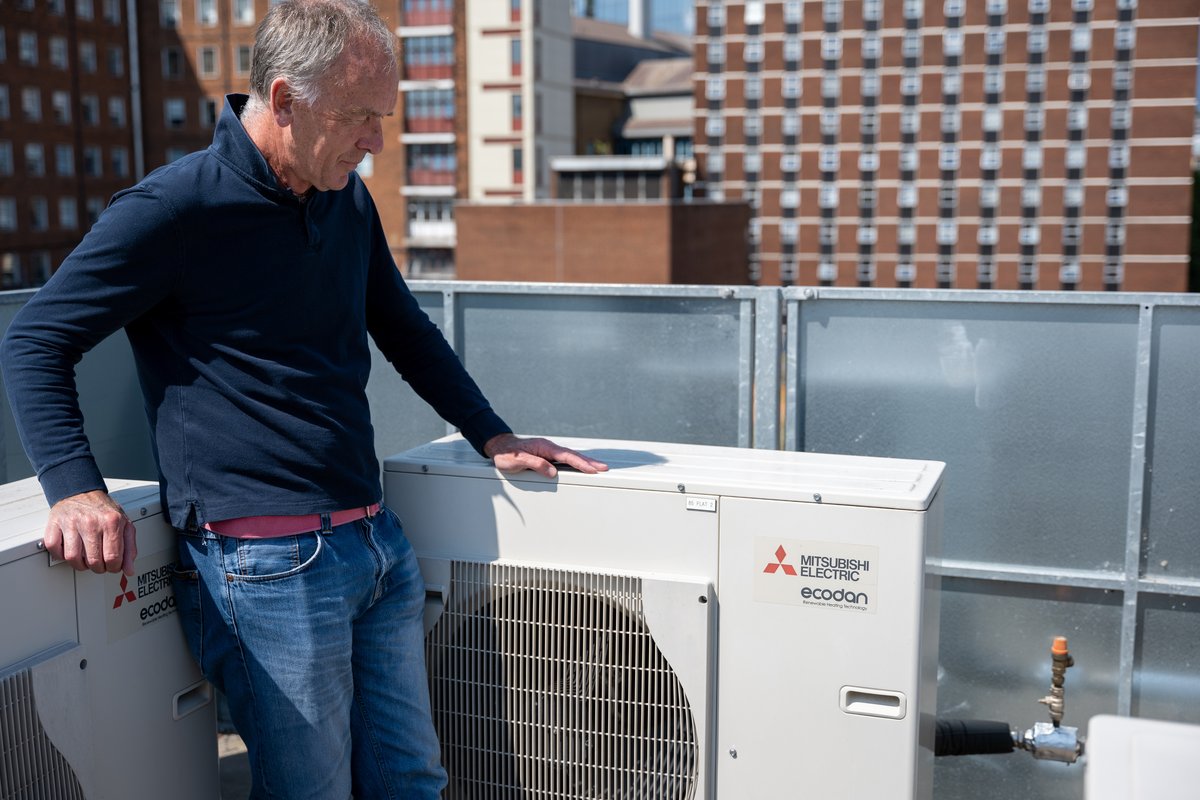
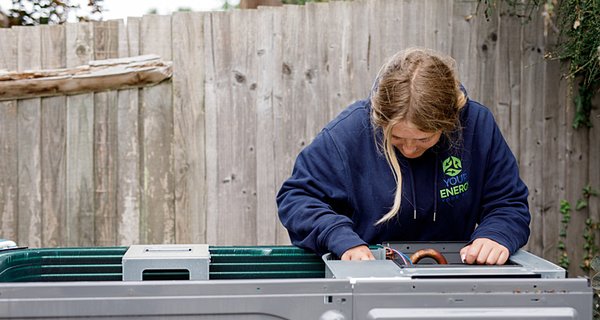
Around 15% of homes across Great Britain are flats, so it’s important that they’re included in the transition to clean heat. Nesta is finding out if the process of getting an air source heat pump installed in your own flat is any different from installing one if you lived in a house.
Surprisingly, there are some significant differences. This is partly because most flats are owned by leasehold, subject to freeholder consent, and partly because a lack of outdoor space and proximity to your neighbours can make it difficult to position your heat pump without needing planning permission.
We recently published our report identifying barriers to heat pump adoption, which set out some of the challenges any homeowner faces when they want to install a heat pump.
This project draws out the additional challenges that flat owners will come across on their journey to installing a heat pump. Even though there will be some constraints in terms of tighter spaces, the issue we’re looking at here that’s significantly different for flats is the process of approval, which includes planning permission and freeholder consent.
Before we started this project, we looked at how flats are currently heated. We found that a significant number of flats in low-rise buildings were dependent on fossil-fuel heating systems. Low-rise blocks and converted flats are also more likely to have an individual heating solution that could easily be changed, without needing the whole block to upgrade. We found that many higher-rise blocks are either using (or are better suited to) a shared system, or they are already using electric heating, which has the potential to be low-carbon. So we’re focusing on low-rise blocks of flats, up to around four storeys, and maisonettes.
This project will delve into the rationale behind the extra requirements that apply to flats to see if the rules can be simplified. We think some things could change at national government level, whether that’s the UK, Wales or Scotland’s rules. We’re going to develop some theories around this and test them out with people who own or manage flats.
We think some other things could be made easier more locally, where planning authorities could choose to take a different approach, such as the Royal Borough of Kensington and Chelsea has done in simplifying the approval process for upgrading windows in conservation areas.
This project is all about making low-carbon heat an easier option. This will help us to reach our mission goal of significantly reducing carbon emissions from our homes. We’ve hit on a few things which are getting in the way, and we’ve split them into three strands:
Permitted development rights (PDR)
- If you can pass the tests for space, noise and line of sight, it’s possible to put in a heat pump without needing to make an application for planning permission. We want to know how likely it is for flats to pass these tests.
- Under current rules, only one heat pump is allowed per block under permitted development rights. We want to test some theories about when more than one should be allowed.
Full planning applications
- If you own a flat, making a planning application for anything requires a tedious amount of additional work ,including potentially costly independent assessments on things like flood risk. We think that this is irrelevant for heat pumps and want to make the application process more proportionate.
Freeholder consents
- A lease for a flat usually specifies that the freeholder must give their consent for any works on the flat. Sometimes their neighbours within the block of flats own a share of the freehold. So it could mean having to persuade everyone in your building. We’re hoping to understand what influences those decisions.
We’re going to approach these three strands in different ways.
To test the practicality of the permitted development rights tests, we’re going to work with real life flats and their owners. We’re looking for a good selection of the most common types of low-rise flats across Great Britain. Using a combination of calculations, we can make using simple software, and the in-person calculations of the people who live in the flats, to work out the likelihood of achieving a pass.
This exercise will identify where it’s more likely a heat pump can be located. It will also give an indication if it’s more likely for flat owners with a garden, for example, than it is for others, such as those on floors above ground.
We’ll also work with some of these flats to calculate the impact of installing two heat pumps on the same block.
On the full planning application process, we’re going to speak directly with planning experts, such as local and national planning authorities, to clarify the rationale for the process and begin to shape some ideas for changes that could be made.
Finally, we’ll be working with a selection of leaseholders and freeholders to explore the tensions with lease requirements. Our aim is to identify what could change, for example, varying the conditions of leases or changing how the freehold is managed or controlled. What we hope to achieve is well-informed, sound advice for both leaseholders and freeholders to help guide those conversations and influence decision-making opportunities.
 www.nesta.org.uk/project/saying-yes-to-more-heat-pumps-in-flats/