How to scale social innovations: growing an organisation to deliver
 www.nesta.org.uk/event/how-to-scale-social-innovations-growing-an-organisation-to-deliver/
Nesta is a research and innovation foundation. We apply our deep expertise in applied methods to design, test and scale solutions to some of the biggest challenges of our time, working across the innovation lifecycle.

Joe Owen: Good evening everyone, in the room and online. I'm Joe Owen, Executive Director for Policy here at Nesta, and I am absolutely delighted to welcome you to the fourth and final event in our Scaling Innovation series. This one is about growing an idea into an organisation that can deliver at scale. And we have got a proper blockbuster set of panellists for you tonight.
So, the way this evening is going to work: first, we're going to hear from Louis Stupple-Harris, our Strategic Partnerships Lead, who is going to discuss our scaling toolbox and some of the practical exercises that you and your teams can use. Becky Lane, co-founder and Chief Executive of Furbnow, will then join Louis on stage to discuss Furbnow's story and their journey from an initial venture developed by Nesta's venture-building studio.
We will then be joined by the rest of our incredible panel: we've got Tessa Clarke, co-founder and Chief Executive of Olio; Philip Colligan, Chief Executive of the Raspberry Pi Foundation; and Sir Tim Smit, co-founder of the Eden Project. You're going to hear a bit about their scaling journeys and the practical steps that you can take to do your own.
I'm going to leave loads of time for questions both in the room and online, so please do think of them as you go along, and I will try my best to make sure you have an opportunity to ask them. But if I fail, for those in the room at least, I'm sure you can nab people at the drinks afterwards, where you are very welcome to stay.
So, with that said, first up, please welcome Louis Stupple-Harris to the stage.
Louis Stupple-Harris: Thanks very much. Yes, as Joe says, I'm Louis, and I'm Strategic Partnerships Lead here at Nesta. One part of my role is to think about how we scale our ideas. What I mean by that is that Nesta is really good at coming up with bright ideas, testing how they work, evaluating them, and proving that they function and have a good impact on the world. What I wanted to do is come in and rethink how we take those ideas that we know work, scale them into the world, and help them to reach millions and millions of people.
A couple of years ago, I started working on scaling and thinking about it. I brought together all the different project leads across Nesta for lots of conversations and ideas, did lots of reading around this topic, and ended up putting together a scaling toolbox. It is a collection of activities, ideas, and ways of thinking about scaling that we use internally at Nesta.
This started off as a messy set of notes—questions I would ask project leads at the beginning of their project, halfway through, and then continue to ask them over and over: How are you thinking about scaling? How are you thinking about ambition? All of those kinds of things. Now it's a public-facing piece of work that everyone can use.
That's what's inspired this series of events, and I'm really pleased that you're all here to chat with us about growing an organisation to deliver a social innovation.
This is a little map of what the toolbox looks like. There are lots of different sections, and you don't need to follow these in any particular order. You might want to start with the introduction; that does kind of make sense. But after that, there are six main areas:
For this event, I've chosen just three exercises that I thought I might describe in a little bit more detail. Don't worry, I'm not expecting you to read all of this text; it's not designed to be presented at events.
This is a worksheet around analysing potential routes to scale. What we decided was that Nesta uses roughly the same six routes to scale for lots of our work:
What happens most often is that my colleagues come up with a great idea and they've got a route to scale in mind. They might have an intervention where they're thinking, "Oh yeah, government needs to deliver this." What this task does is challenge them to think through all the other potential routes to scale, and also how you might combine different routes together. If you're thinking about central government delivering something, how might industry deliver this thing? How might the voluntary sector deliver this intervention? You're forced to flesh that out so that you can justify your decision at the end to say, "Maybe it's not government that's going to deliver this," or "It is definitely government that's going to deliver this." It's just that kind of exhaustive comparison there, which is really useful.
The next one, which is very relevant when you're building an organisation, is called Finding the Core. This is about really determining what is special, unique, and vital about your intervention, and what is not.
Using an apple analogy:
Being really clear about what is specifically vital to your innovation, your intervention, is really useful when you're thinking about scaling.
The final one is about Motivation. This is really relevant for Nesta because we have a range of different colleagues with lots of different motivations. All of you have different motivations, and so will your partners as well. Quite often it's really easy not to have that conversation about: What are you actually motivated to do with this intervention?
Are you the kind of person who's happy to come up with the idea, prove that it works, build up that evidence, write a report, and move on to the next thing? Or are you the kind of person who wants to do all of that and then see it right to the end? Or are you the person who wants to just pick up a really good idea that someone else has proved works and go, "Okay, I'm going to put this into the world"? Having a clear conversation about that and how you fill in the gaps in your team is really, really important, particularly when you're thinking about building an organisation.
With that, I'm going to invite Becky Lane, who is CEO and co-founder of one of Nesta's Mission Studio ventures, to come and join me on stage.
Louis Stupple-Harris: Becky, thank you for joining us.
Becky Lane: Thank you.
Louis Stupple-Harris: We're doing a sort of fireside chat before the rest of the panellists join us. My first question: can you tell us what Furbnow is, and the problem you were setting out to solve when setting it up?
Becky Lane: Of course. Where we are today is not where we were four and a half years ago; it's changed quite a lot over that time period. The core mission, though, is: if we're going to decarbonise homes, it's an absolute nightmare to figure out what to do and then to get it done. That's the core problem statement at the start of everything.
Right back at the start, four and a half years ago, our approach to that was, "Oh, we'll just build a platform. We'll have all these retrofit professionals, and we'll have customers who want to find good people, and then we'll make sure that we're vetting the quality." That doesn't work. I think you've got a question later on about the retrofit skills gap that we have, and we very much found that in that process.
Instead of just really going down the technology route, we found that we had to be a lot more hands-on. Today what we look like is a direct-to-consumer business. Homeowners come to us; we scan; we have our own design tooling. It integrates heat pump design, cooling design, ventilation, and insulation all in one, phased within renovation work, because we've found over that time period that is exactly when people do this kind of work.
It's taken a long time to get there—to figure out the intervention that is really helping people take that step forward and has a viable route to market. It's actually quite funny seeing some of the things you just put in the toolkit there, because every single thing is something we've done at different time points based on the priority.
Underneath all of it, the core mission is making it simple. Our underlying belief was that there is this latent demand. The word 'retrofit' might be familiar to many people in the audience; the average consumer does not use that word, but they're very interested in it. Probably when they're decorating: "Oh, maybe I should think about doing some insulation, but I spoke to my plasterer and I don't trust them, so I'm not going to do it." Or: "I'm thinking about this heat pump thing—actually had this conversation with a few people already this evening—not sure it's going to work for my home, I'm quite worried, my home is old." Things we hear about all the time.
Then you get stuck in YouTube, blogs, speaking to lay people, installers, and ultimately all this activity and interest is not really going forward to decarbonising homes. We call it this trust curve that goes to die, and then ultimately we're not getting any decarbonisation. Our intervention in that was: do the hard stuff, build the software, but also the service alongside it to get people through "I'm not sure what I want to do" to getting it done, and getting them along with the installers.
Louis Stupple-Harris: That's cool. You kind of started answering my next question, which is around what the core was, and you said simplicity. So I'm interested: is there anything that you decided was a leaf or was flesh and you've dropped since starting?
Becky Lane: In the early days, particularly because we had investors—doing ICs and going through the idea of the business model and what we're trying to prove over time—I had these grand plans: we're going to do monitoring and evaluation at the end, we're going to prove all the work has happened. That's a good example of something where I would love to do that, but today it's not really the focus, because nobody wants to pay for it and it's not needed. I want to do it, and a lot of people in the sector that we're in want to see the evidence that it's worked, but it doesn't work with the business model where it is today.
That's an example of a leaf: a nice-to-do in the future, but if we spent all of our time there, we'd be spending our time on verifying the proof of the work, but then we haven't actually done the work. That's really the meat of what we're about: simplifying the process to get it done, cutting away the things that don't really matter, and basically getting it done right to a high quality and standard for homeowners.
Louis Stupple-Harris: I like that example because at the start you might think, "Okay, well, we need to be able to prove that every job has done its job," but in the end maybe you just decide that once you walk away from the job, you're like, "Okay, this is finished. We're happy. The customer's happy. We're happy. Everybody's done. We don't need to be monitoring it for a hundred years afterwards to prove that it's been successful."
Becky Lane: We still monitor them, I will say—it's not like that! But we don't have a very complicated smart meter programme that requires a huge kind of product support after it, right? Doing enough that supports the core value proposition rather than overengineering the solution.
Louis Stupple-Harris: Got you. Okay, cool. You work with homeowners and councils on their retrofit programmes. How did you decide which routes to scale to focus on, and which to say no to?
Becky Lane: This has actually been one of the hardest things for us to do. As I said earlier, the hypothesis is that there is this latent demand for retrofit. Nobody is using that language, but they're searching for things. Maybe some of you in the audience have done it as well when you've been thinking about renovating your own house. I don't know what you've searched for—loads of different things. In the old world, it was: "Well, you just need to do SEO long-tail keyword stuff to capture people and do blogs." Now AI's come in and it's even more complicated.
We've had Google Search as a strategy that we focus on to find people in their process who are proactively looking into it. We found that did kind of work, but it wasn't very scalable.
When you're asking which routes to market we've prioritised over time, it's the ones where we find that we can put in more money or invest more time and see things coming through into the sales pipeline. Things might show fruit, but if you can't scale them, that doesn't necessarily help with ultimately achieving the impact as well. How you find that is just a case of kissing many frogs and doing a lot of fast experimentation.
Local authority partnerships have been fantastic at the start, but they're not very easy to scale. On the other hand, doing Meta marketing—I'm so sorry if you guys see my face on your Meta feeds after today, because you might do—is very scalable. We find the right type of customer at the right time, and we can track and see that growing.
That learning has only come from four and a half years of experimenting, putting some patience into the tests to see which routes to market could potentially work—and work in terms of the unit economics—and then brutally cutting a lot of things as well, and being happy to cut them when they don't work. It's just experimenting on routes to market. This is what works for us, and for a different business, even if it's direct-to-consumer, what we're doing might not work for you. It literally is just a case of experimenting and seeing what works best with your business model and your unit economics to get something that you can ultimately scale and find the right customers for your business.
Louis Stupple-Harris: That's super interesting. Another question about money: you've combined grants with angel and venture investment, and most recently went through a £2.5 million seed funding round. Congrats! How did you work out what kind of money you needed at each stage, and the skills that you needed in your team to achieve that?
Becky Lane: There could be the wonderful story where I tell a beautiful story arc—that every time I had perfect control, had the brilliant plan, and everything went to plan. But in fact, it's a combination of being strategic and fortuitous at the same time, and luck coming in alongside things.
We were very fortunate in the early days that it was a priority for Innovate UK that net zero in buildings was a big focus for them. We were in our pre-seed stage at the perfect time to win those grants alongside the early amounts of money that we raised. So a bit of luck came into things as well.
We also chose grants that lined up with our strategy. We tried not to get distracted by money, because it always sounds good to get as much as possible, but sometimes, particularly with grants, it can take you down a route that doesn't really line up with your product roadmap and what you're really trying to build. There's still a time cost associated with doing that; it's not free money. You have to deliver what you set out to achieve. Making sure you get the right grants in is very important.
Then, with raising funding, I've had loads of fantastic advice from Nesta and from other investors as well. It's a bit of a case of: number one, what do we need to plan in terms of milestones we need to hit to raise another round or hit profitability? Therefore, what do we need in terms of resources and time to hit those business goals? Realistically, how long is that going to take? That gives you that capital plan of how much you're going to need to raise to hit the KPIs. If you don't have enough money, you don't have enough time, and you don't have time to hit the business goals that you need to ultimately scale and get to the next step.
That's the great plan. You can have the best plan, then you hit the market, you try and raise the money, and your plans swiftly change. There's a bit of flexibility in that process, and a bit of luck. At its core, it's setting realistic timelines of what it's going to take you to get from step A, where you are right at the start, to step B, and then what you're going to need realistically, planning for contingency underneath that. It's a little bit of boring business planning, but it's the reality of doing something at this point in time where a lot of capital is going behind big AI and big infrastructure projects. Raising via more the traditional route of venture capital, having those kinds of plans really helps to shore up and give confidence to investors when they're looking to invest in you.
Louis Stupple-Harris: It's great to hear about some of the challenges. What would you say is the absolute hardest moment you've been through in growing the organisation, and what did you change or how did you respond?
Becky Lane: Looking back, we haven't had a rosy 12 months. We raised our seed round about a year ago, and we essentially changed the structure of our proposition from how it used to be. Things were growing, things looked kind of good, but the business model and the unit economics didn't look like they were really going to scale very effectively. Sometimes when that happens, it can feel good, but you have to step back and take a realistic perspective: "Is this realistically going to get to where we need to be in 12 months, in two years from now?"
That was very hard, because it was a combination of needing to switch track a little bit. We're still doing the core of the same thing, but we've cut the things that weren't essential to our proposition and working most effectively, and restructured the team. That's really, really hard. But it is a factor of when you go into setting up a company: you are responsible for making sure the trajectory goes in the right direction, and making the tough calls when things are not working.
You have to own those decisions, keep the course, and keep going. We've switched our focus now with our product called the Build Plan: scan the house, design everything, get it installed—still going back to that core mission. But these are the kind of tough calls you have to make realistically along the way when you're building an impact-focused business.
Louis Stupple-Harris: Cool. Final questions: what's next for Furbnow, and what advice would you give to someone in the audience who is in a position similar to where you were four and a half years ago when you started working on Furbnow?
Becky Lane: Looking forward for us, we're in a fortunate position now where we've kind of answered the question for our route to market—a route to market that works, that we can sustainably invest money into, that sells well, goes forward, and works in terms of economics. Profitability is the next milestone for us so we can grow after that. That's our first focus, and then grow from there, really. We've got some exciting plans, but I can't really talk about them right now—it's top secret!
To those thinking about following this journey: it is hard, but it's incredibly rewarding. I love what I do. I love my team. I feel incredibly motivated. I would be lying if I said I wasn't stressed a lot as well, but it's so incredibly rewarding.
When you start—I remember when I first quit my job to start this, I was like, "Six months: could win, could fail." I was perfectly happy to fail and put it on the line. I was like, worst-case scenario, I've learned a lot about what doesn't work, and then I'll probably do the same thing and try to convince a company to do it. I'm incredibly stubborn, and this is just what it takes: being kind of resilient and stubborn to find that route, and do what it takes to keep to your mission's core, find what works in the market, and be sustainable and grow. But it does take time. Patience is key underneath all of it as well.
Louis Stupple-Harris: Lovely. Thank you so much. I'm going to add stubbornness as a new exercise to the toolbox; I think we need to figure that out. Thank you so much, Becky. I'm now going to invite Joe and the other panellists back onto the stage.
Joe Owen: This is my cue. Please do take a seat. Thank you.
We're going to start by hearing a little bit more from the other three panellists so you can get a sense of their organisation and how they scaled it. I should say just now, Tim unfortunately has to leave us at 7:00, so if he gets up at any point in the next however long, it's not because he's bored of my questions; it's because he has a pre-arranged appointment. But I will make sure there's time for questions from you guys before he does clear off.
I'm going to just start by running down the panel, starting with you, Tim, for a bit of an overview of your organisation and how you built and scaled it. I'm going to pick on you first.
Sir Tim Smit: Yeah, I've got a place: the Eden Project in Cornwall. It was born out of another project, a garden restoration called the Lost Gardens of Heligan. The secret of it was, first of all, to know nothing about plants at all, which stopped you getting interfered with by people who did.
Plant lovers have got a view that things can take forever; it's a kind of Zen approach to things. Okay, I'm a bit more impatient.
I think the real secret of success is to persuade an awful lot of people who think their best years are behind them, to tell them that you're about to embark on an adventure which means that they can still become the person they dreamt they might be when they were 19. It's all human. Everything is human. We talk a lot about tactics and things like that, but it's actually the narrative arc which gets people committed to doing something they really believe in.
Then there are all the clichés, which are clichés because they're true: make sure that you don't have the vanity to not realise that the greatest gift you've got is to appoint people who are better than you, because actually they don't think you're really smart for recognising that! So it's a good trick.
Eden grew like billio. Heligan grew like billio because, exactly as Becky was saying, my biggest love in life is the kissing of frogs. It is the same for everybody. Ask yourself: why is The Repair Shop such a popular TV show? It's because we all like mending things, healing things, making things. It's a total human thing; that's who we are.
I think if you can frame what you do in terms of making things good and kind—it sounds slushy, but actually it gets through every time. It's like a rapier to the heart, and that's how Heligan grew. That's how Eden grew, and where we have become really, really big.
The temptation is that tossers like me get up on stage and tell you there's a secret, and you haven't got it. Actually, almost all of it is by being lucky enough to persuade a lot of really great people to join you, and they then all collectively need to be managed in such a way where they don't believe that you're just being an autocrat. It's a kind of management thing, and I'm sure my colleagues on the panel will probably share some of those views.
Ultimately, I think the last bit of growing is to realise at which stage—a bit like when David Bowie stopped going down the direction he was doing when he did Ziggy Stardust—always stop what you're doing before everybody thinks you're doing something because you're failing. Make sure that it looks like a really bold decision to take a new journey, always.
Joe Owen: Just before I move on to Tessa: did you start with a clear sense of what your narrative arc was? If we'd gone back in time and said, "What's your narrative arc?", would it be the same as you would argue your narrative arc is now?
Sir Tim Smit: Oh, for God's sake, man! I'm a man—we always lie about our past!
The truth is, I think we cannot accept how chaotic we all are. Therefore, once you reach age whatever, you look backwards and you find a pattern. It was always chaos—always. I'd love to tell you, "Yes, I had this direction." And that lovely word 'focus'—God, I had that in oodles! It was coming out of every pore of my body! I focused; my God, did I focus! Eagles focus. You know how they focus? By having a very wide scanning until something moves; then they focus.
Joe Owen: Tessa, tell us about Olio.
Tessa Clarke: Honestly, you are singing my song. I was thinking: naive ambition—tick; fundamental inability to focus even when everyone's telling me that we need to focus—tick; zero narrative arc—tick. But we're still here, surviving and thriving a decade later, so maybe there's a method in the madness.
The Olio story started just over a decade ago. I was relocating back to the UK, and on moving day the removal men told me I had to throw away all of our uneaten food. Now, I'm a farmer's daughter; food waste is basically a crime in my family. So, I flat out refused to do that. Instead, I bundled up my newborn baby and toddler, set out into the streets looking for someone to give my food to, failed miserably, cried, went back to my apartment, and then did what any sane person would do: I resorted to cross-border vegetable smuggling.
That was the moment when I thought, "This is ridiculous, the lengths I'm going to here. Why isn't there a simple app where I can just give my spare food to a neighbour living nearby who would like it?" That was the light bulb moment for Olio.
We ran a very scrappy proof of concept using WhatsApp. If you fast-forward to today, we've got a community of just over 10 million people. They have collectively rescued 165 million meals' worth of food. They've rehomed 17 million household items. And—we've recently just calculated this—we have collectively generated £1.1 billion worth of social impact.
In the pre-briefing, you asked us to share just one or two key lessons from that journey. If I had to pick any:
The first one would be that if you are wanting to do work with impact, like we all are, I would really encourage you to be religious about your mission, but completely agnostic about the solution. I think where many people get tripped up is they fall in love with their idea. No one cares about your shitty little idea! Forget about your idea; stay really, really laser-focused on the mission.
Where I see this playing out most often in the space is that many founders are really excited about the idea of building a direct-to-consumer proposition, and they want to build their own brand and have a direct relationship with the customers. But actually, if you want to have impact at scale, partnering with the incumbents—who you might well think are the bad guys and the evil ones who created a lot of the problems in the first place—if you can partner with them, then you can get impact at scale far more rapidly. I've spoken to hundreds of founders over the years, and I would say that 90% of consumer-facing founders have pivoted to B2B or B2B2C.
The second thing that I'll just very briefly touch on, which has been a major lesson for us, is not to underestimate the power of community. Again, it echoes what Tim was saying: humanity. We live in such an economics-driven world which assumes that people will only take an action if it is economically beneficial to them, and that's just flat-out not true.
We have 100,000 volunteers across the country who are collecting and redistributing surplus food, saving it from going to waste, and helping feed people in their local community. They're not being paid to do that, and yet they do that with incredible energy and fervour. There's a real skill to managing community at scale, and I'm very, very happy to share the learnings we've had around how to do that later on.
Joe Owen: That would be great. Philip, I'll come to you next: the story of the Raspberry Pi Foundation, and your lesson for the audience.
Philip Colligan: Raspberry Pi Foundation is a non-profit; we're a charity. We were set up back in 2008 by a group of people who were concerned that we weren't equipping kids to participate in and get the benefits of a digital economy.
They had a very inventive, but narrow perspective on the problem: they were all involved in the University of Cambridge, and they were worried that not enough kids were applying to study the undergraduate computer science course at Cambridge. So they wanted to invent a low-cost, programmable computer at the price of a textbook in order to inspire maybe 10,000 kids to tinker, learn a bit of programming, and maybe a few hundred of them would study at Cambridge.
The origin story is important because they never saw it as a commercial proposition. It was set up as a charity with a trading subsidiary.
I came into the story about 2015. It had been running a few years then and sold maybe a million, a million and a half products. Just to give you the arc of the story—again, retrofitted appropriately—what started as an educational product has found its home in industry. Today, I think 80-something million Raspberry Pi computers have been sold. They're used to automate factories, do AI processing at the edge of systems, and you can get them in your white goods increasingly. We listed the commercial company in 2024 on the London Stock Exchange; that isn't something that charities do very often.
One of the core elements of our success was diversification. When I arrived as CEO of the charity, one of the deals I did with Eben Upton—who is a co-founder and still to this day leads the technology company—is that we should have a shared mission and shared values, but we should express that in different ways.
What I mean by that is, from the day I arrived, we said: Raspberry Pi Foundation, which is all about teaching kids computer science, AI literacy, and digital skills, should not require a young person to have a Raspberry Pi computer; and the Raspberry Pi technology company should make computers for whoever needs them, not just for education. That conscious decoupling and diversification freed us up to be as successful as we are today. We can talk more about the company and the IPO—I think that's a key part of the scaling story.
The foundation is an operating foundation. We have three pillars of our activity: again, kissing lots of frogs, placing lots of bets. I tend to describe it as systems thinking—sounds grander! Essentially, we work in schools, non-formal learning, and research, and we think very systemically about how they work together.
Today we have organisations and teams in six countries: in India, Kenya, South Africa, America, Ireland, and the UK. We have partnerships in 65 other countries. We'll support maybe upper tens, maybe a hundred million young people over the course of our history. I don't even know how many tens or hundreds of thousands of teachers we'll help train this year.
It's a pretty large-scale endeavour now, and lots of the lessons about building that part of the organisation have really been about capabilities and culture, I would say.
When I look back, I think I always built capabilities a little bit later than I needed them in the company. We are building our marketing capability out now; this year feels a little bit late. I've been there 11 years; we've got a good marketing team, but we're building it out properly for the first time.
Then culture: particularly when you're thinking about growing something internationally, you really have to think deeply about which elements of your culture have to be consistent because they embody your brand, and where do you need to engage with and allow space for the local cultures in those countries to come to the fore. That's been one of the areas where we've learned a lot.
Joe Owen: I do want to pick up on the culture thing, but I wanted to start by asking about funding. I was going to come to you actually, Becky, first on this, and just get your advice for securing early-stage funding—pursuing early-stage investment, but also retaining focus on the longer-term social or environmental impact. What advice would you give to people in juggling the short-term requirements of funding with the long-term ambitions that you went into Furbnow to deliver?
Becky Lane: Tessa should come in after me as well, because she's further along in her scaling journey.
In the early periods, the challenge with raising venture capital money and angel money is: obviously there's the longer-term mission and the scale you're trying to achieve, and then there's the short-term: how much money you're going to need to get there as well. My focus has been trying to show as much as possible early, rather than waiting too long to show the fruits of the labour.
To give a real example of that: we launched the company on the 10th of October 2022, and two weeks later we had our first paying customer. Did I know everything about how we were going to do that at the time? No. Were we ready? No. And we just pushed ahead quickly to demonstrate the impact and validate the hypothesis. I said, "Oh, there's this latent market that we think is there." Well, then prove it—don't just talk about it all the time.
That's why we've managed to get as far as we have in the time that we have: just relentlessly proving the point and showing it, rather than talking about it in more of a hypothetical way. Relentlessly build proof points.
Joe Owen: Tessa, Olio raised—is it $50 million in venture funding? How did you align venture capital expectations with your purpose-driven mission?
Tessa Clarke: We have a couple of criteria that all of our investors have to pass, and the first one, which is absolutely non-negotiable, is they have to be mission-obsessed. Not just mission-aligned, but mission-obsessed.
What that really means is they are emotionally bought in to what you're doing; they're not just looking at spreadsheets. Often I'd have meetings with people and they'd be asking us to build out a super-detailed five-year model: "What about row 323?" I just immediately knew that was never going to work. Whereas truly mission-obsessed investors just can't help but share a story as to why your mission relates to them, and then they can't help but co-create with you what the vision is going to be.
Sadly, finding mission-obsessed investors when you're a female-cofounded, tech-for-good, no-revenue business was... well, we had to kiss an awful lot of frogs. We'll just leave it that way.
It was no coincidence that our earliest investors were almost exclusively female and people of colour. I have noticed that when you're investing in the early days, you are backing the founders, and there's no surprise that that was the profile of investors we were able to attract. As we then had a more scalable business with more data, momentum, and traction, that was when the dominant demographic of investors showed up and started to get more excited about Olio.
One other thing I will say: I remember in the early days being really torn because we had some conventional Silicon Valley investors and we had some impact funds as well. I can remember having this visual of the lady in the circus who's cantering around with a leg on each horse. I was thinking, "Oh my goodness, this feels really unsustainable, having impact investors and VC investors together. I'm going to have to figure out which horse I need to get onto."
Actually, I ended up realising that was a bit of a false dichotomy. Having both investor profiles on our cap table has worked really, really well to create a much more resilient and diverse business. We've got the more commercial of the impact investors, and we've got the heart and soul of the commercial investors.
Joe Owen: You just got better at doing the splits!
Tessa Clarke: Yes! Exactly.
Joe Owen: Tim, I was going to turn to you and to the topic of culture. You obviously do both visitor operations and educational and environmental initiatives. How did you go about building the sort of culture that you wanted at the Eden Project?
Sir Tim Smit: Throw good parties! That's the first thing. People don't talk about this. You can't get an MBA, right—I've never seen an MBA document which talks about your ability to throw a great party. Never. It's all wanky stuff about return on investment.
I tell you: anybody who wants to start a business, if you're a bore, you're not polymathic, and you don't like people, don't start. Really, don't. Go and drag someone else into the mire. If you want to do something big—this is about big, right? Scale. I don't mean you crucify yourself; I think the truth is everything is social.
We don't touch venture capitalists normally. It's against my religion—only because I went to the Skoll World Forum once and I nearly threw up in the street after talking to a bunch of American impact investors who talked to me really brilliantly, not realising what my interest might be, about how great it was to get philanthropy to back what they call the "mining of the bottom of the pyramid". It makes me so angry.
Most of these venture guys are asking exploitative returns. No imagination, except some of them have been house-trained so they can smile in the right place, but actually they're sharks. I think most big businesses that emerge out of founders—the founders that get the venture capital are so picky. Almost everybody who isn't picky ends up with the investors suddenly killing the founder, because the people who've invested think they know better.
They're predominantly—I hate to say it—male. Men are not good at this stuff. We pretend to be, but our testosterone gets in the way, and then we build the testosterone responses into a religion of business.
You asked me about the culture: I knew we needed to have rock-and-roll concerts—a lot of them, really big acts. Why? Because people love being with other people doing something they love together. Also, most of the people who were doing plants and gardens wear tweed and are members of the National Trust or the RHS. They're going to die soon! That's not a good market. Go for youngsters. So we had rock concerts. Just be honest about this stuff: it was great.
The culture thing has got to be... All right, this is a tip for all of you who've got businesses. How many of you have gone to conferences and talked bollocks to an audience of people who look as bored as you feel, and you then, ages later, realise you've wasted a day of your life with people you'll never meet, who don't care about you, and who won't ever remember what you said?
Think about this, and tattoo it on your arse if you can—no, you can't tattoo anything on your arse if you're doing it yourself, it's a very dangerous activity! Oscar Wilde said something which is beautiful: "No one remembers the well-mannered person at a party."
If you're going to speak in public or go anywhere, make sure—I'm not saying you've got to insult somebody—make sure you say something memorable about what you do that no one will forget. Yes, it's attention-seeking behaviour, but that's your business: to seek some attention. Really plan out how you're going to project yourself and your views.
Also, something else people aren't honest about, especially in England, which is an anti-intellectual country: read some books!
Honestly, the amount of people I know who talk about the environment—you know, "We're in the environment now, it's all green"—you ask them. I love it, it's so cruel: I love going into a room with people who think that daddy's just turned up, and I say, "How many people here hate nuclear power?" They will put their hands up to please daddy. Then you can hear a pin drop, and you say, "Why?" Hardly anyone in the room knows why! They're wearing all the clothes of being right-on: "I'm really right-on."
Ask them about solar energy, deep geothermal, nuclear power, the power of the sun. Then you talk about carbon—the amount they know about carbon is zilch. You tell them that almost everything on Earth is made from carbon, and they look at you as if you're a lying swine.
Scientific ignorance: if you want to really shock yourself, go and talk to the House of Commons Environment Committee. I had to go there last year and I thought it was a joke. I was talking to 20-odd people, of whom only two knew the difference between heat and power. This is shocking. The level of education in our country, the level of education in organisations—dare I say, like Nesta or anywhere else—it is the love of an idea rather than any knowledge. It's fed by a bunch of loveys like me and you, because we want to be right-on.
If you want to be successful, do that really nasty thing you once did at school: read the odd book! Especially one that looks as if it might be a bit tricky and doesn't have a happy ending.
Joe Owen: I think that is good advice, and I think Louis is probably updating the toolbox as we speak to catch some of that! I also would love to be invited to one of your parties.
Philip, how did you think about culture, and also leadership and staff capability?
Philip Colligan: You're going to ask me to follow that?! I know it feels jarring leaving Tim's parties—our parties are legendary, genuinely legendary!
I do want to pick up this point about knowledge and expertise, actually, because that's one of the things. We're an operating foundation at Raspberry Pi. One of the things that we wanted to do was build a centre of expertise in the thing that we do.
What we do is help schools teach technical content, concepts, and ideas to young people. The thing you have to remember is that the overwhelming majority—statistically almost all computer science, data science, and AI lessons taught today and forever—will be taught by a teacher who doesn't have a degree in the subject.
When you get back to what the core problem is that we're trying to solve: it is that we're trying to get adults who don't understand something to teach young people something that will open up opportunities for themselves and their communities. Knowledge and expertise has been at the core of the culture we want to build.
We hire experienced educators, we hire researchers, real specialists, and then we also give them a lot of space to continue learning. One of the things we introduced about five or six years ago is that every other Wednesday afternoon, there are no meetings, no work. It is learning time. You are held accountable for how you're using that time to read books, to discuss with your colleagues, to spend time either doing an online course or some sort of further studies. That's been an important part of our culture: a learning culture where feedback, engagement with the communities, the teachers, and the students we serve, and learning all the time is a big part of it.
The other thing I would say in our field—and it's not true in all fields—is that we never wanted to be a UK organisation writing curriculum and shipping it around the world. I always had an aversion to that. As we've got into this journey to be a more global organisation, we have learned that the only way you can really design learning experiences that happen in a formal education setting is to have a team located in that market.
We have a team in India: a team of educators and researchers, real experts and specialists in the Indian education system working in Odisha and Telangana, two states that we partner with the governments on. We've realised over time that unless you want to sell to private schools candidly—which do buy English qualifications—you need to build those teams locally.
That led us to a really important realisation, which is that we probably can't do more than six countries. The cost, the overhead, and the complexity involved in building teams in every other country around the world is just too difficult. Back to the culture: that's become a really important part of our culture, which is when we invest in a country, we do it for the long term. We build an organisation and a team there, and then we partner with local non-profits, teachers, unions, associations, and crucially governments, to figure out how we can bring our expertise, capability, and resources to achieve the mission collectively.
One other point, if I can just pick one more, because it links to the funding point: we built a technology company and we listed it, which means we have an endowment. I worked in Nesta previously, so I know endowments: they are a blessing and a curse. The problem with an endowment is it can make you complacent—or as Nesta's former chair said to me, "It's going to make you fat, lazy, and happy, Philip. You have to guard against that."
One of the other things we have which is a core value is that every pound we spend from the endowment, we match with a pound of somebody else's money. Actually having to go and compete for philanthropic, government, or contract resources—you can't invest in us because we're not that kind of structure—having to compete for resources really helps us not be complacent, and not be too focused on our ideas, but rather on our capabilities and how we deploy them to solve the problem.
Joe Owen: I don't want to come off as "fat, lazy, and happy" as a result of our endowment!
Right, I'm going to go to questions from the floor now, and from those online. Just as a reminder, Tim's got to leave in five minutes, so if you've got a question for Tim, please direct it at him in this first round of questions. Hands up if you would like to ask a question. I'll take this gentleman here, and then we'll do the gentleman at the back.
Francisco Ortiz Yuli: Hi everyone. My name is Francisco Ortiz Yuli. I'm Head of Impact Strategy at Bloomsbury Football Foundation, a charity that uses the power of football to reach positive outcomes for young people from different backgrounds.
My question is about prioritising. I think that sometimes when we want to grow as fast as possible, we try to do as many things as we can possibly get done, and more. A struggle that we have with the senior leadership team is: should we be prioritising every pillar of the business? You mentioned that it was 11 years before focusing on marketing, right? If you want to push marketing, if you want to push fundraising, if you want to push programmes' growth, is it about focusing on one at a time? How many can an organisation get done at a time? Is the solution prioritising, or just making sure that we hire the best people to lead those departments? I would love if you guys have contradicting views as well.
Joe Owen: Great. And we'll take this question as well.
Dom: Hi, my name's Dom. I'm from a company called Common Story; we're a TV production company specialising in kids, up in Westmorland. You've talked a lot about finding and working with great people. The question is: how do you do that?
Joe Owen: Great. I might start with you, Becky, and then move down the panel. Actually, Tim has to clear off soon...
Sir Tim Smit: To answer your question: if you've got lots of things that are going on and all of them excite you, and you can persuade yourself you're not like a kitten in a room where a feather pillow has just been broken, dare to go for all of it. You'll get the opposite advice from almost everybody. But if I was you, I'd go for all of it and watch what burns first. The moment it starts to burn, kill it.
Let it sort itself out, because you might find that you get more excited about one of the things that was tempting you than you are actually excited about the core product, and just move. I know that sounds ruthless, but life is not very long. Actually, if you're doing something which is not exciting the people in the organisation, do something else. I do mean that.
I just notice in many of the organisations I go into—especially foundations as well, where you have to put up with dreadful trustees, oh God, I didn't say that!—there is something about the love of the thing that made you do it. Then how you sometimes invite some mind-numbingly awful people to work with you, that suddenly you feel like being a bomb under your own seat.
It's true, but no one tells you the truth about bad apples. The people that are the real killers in your organisation are the people that your best people have to bail out. It happens everywhere. You find that because you're too weak; you have not yet grown up to the point where you've lost your fear of dislike. That will be the weakness of most youngsters in this room: you do not know how to be hard. The people that suck your life away because they're not very good at their jobs—you'll find that the people who are good will then start to do their jobs, and they will stop loving the organisation, and it will bring you to your knees. I promise. So help me God.
Joe Owen: My God! Tessa: priorities and people.
Tessa Clarke: I, too, am in the anti-focus brigade. Every time I go to these aforementioned boring conferences, I come out because everybody has just sung from the 'focus' hymn sheet, and I come out thinking, "I must focus more, I must focus more." But actually, I think it varies according to the stage you're at.
At the early stage, the last thing you should do is focus. You should just throw as much stuff at the wall as you humanly can as quickly as possible, learn as much as you can as fast as possible, and then just kill all the children that don't work, right? Just be really, really ruthless about that. Test and learn as quickly as possible.
Now that we're slightly larger, we do tend to have one or maybe two areas that the organisation is really investing in, and then we've got another five to 10 things that we're experimenting with quickly. It's very easy to convince yourself of the business case of doing something, or lock yourself in this ivory tower and think that you can come up with what the right priorities are without actually doing anything. You can only figure out the right priorities by actually doing something, getting the data, and then responding.
In terms of attracting the right people: again, for me, it comes down to just being as loud and attention-seeking as you can in the world so that everyone knows that you exist, and just leading with your mission always. It's like this bright torch that will attract the right people to you.
Something we did in the really, really early days was on our website: we put up a careers page when we weren't even recruiting for anyone, but we did start doing email capture. Every single person who reached out to us saying, "Oh, I'm interested in Olio," we said: "Sorry, we're not recruiting, but please go here and leave your email." We got thousands of email addresses through that path. Whenever we want to recruit, we just go straight out to those people.
The key thing about recruitment—I think it's the single most important thing to get right to set your culture: we recruit, same as our investors, not just for mission alignment, but for mission obsession. They're two very, very different things. Then we recruit for our company values.
I always thought company values were a bit of a waste of time because I had a 20-year corporate career. I worked for one company that had 10 pages of company values and no one could remember any of it. I worked for another company that had pages of "Here are our values and here are our behaviours", and no one knew the difference between a value and a behaviour, and they had them on mouse mats and mugs and everything, but they didn't mean anything.
Whereas at Olio, what we've done is we've got just four values so no one can not remember them: Inclusive, Resourceful, Caring, and Ambitious. We recruit to those values, and they're really baked into that process. Every single person at Olio is mission-obsessed and fulfils those four values. Honestly, everything else takes care of itself thereafter.
Joe Owen: Philip, are you going to disagree on focus?
Philip Colligan: I am going to disagree. I have an analogy of the leaky hose.
We're about 240 people; we'll spend about £27 million this year, spread all over the world, as I said. One of my concerns is: if any of you are gardeners and you are trying to water a plant at the end of your garden, you have a long hose. If that hose has tiny little holes in it along the way, by the time you get to the place where you're trying to direct the water, there's no flow, there's no velocity, there's no water nourishing that plant.
This is one of the problems as organisations grow. What sounds like a good idea to foster creativity—which is let a thousand flowers bloom, give people lots of discretion to start new things, and so on—each of those is a little pinprick hole. In and of themselves, you look like—and in fact you are—an arse when you say, "Stop doing that." But if you don't do some of that, you will find that the things that really do move the dial, the things that are proven, won't get the resources they need.
The way that we think about prioritisation—and we're literally living this this week, as I'm reviewing the work the team's done on priorities for next year—is we think of it as a good-natured argument about where we should collectively put our focus. It's highly delegated. We have delivery groups for different parts of the business that bring together different disciplines and different teams, and they propose annual what we call key results. We use the Objectives and Key Results (OKR) methodology. We set those key results to be objectively measurable: do you know if you've hit it?
Then there's huge amounts of delegation to cross-functional teams to decide the activities. But every quarter they have to have a couple of days where they get together and they batter out: What are we going to focus on? Which are going to be the priorities we work on now? The thing that has enabled for us is unlocking the real magic when you get engineering, product, learning experience design, UX, and marketing people together around a shared objective.
In a way, I guess it's not that much of a disagreement. What I'm saying is we have a process that allows for that creative disagreement, and then we have what I think of as a process of alignment where we say, "Guys, I know that maybe we didn't put the things that you care about in this quarter, but we're all going to get behind this, and we're going to give it our best shot." Then the data point will know whether or not it's moving the dial, because we've thought about metrics and so on. It's not perfect—some percentage of my team would say, "It's the most terrible system in the world"—but it's enabled us to achieve an awful lot at real velocity.
On the people point: I say to managers—and they will all say that I say this all the time—the single most important decision any of them make is who they hire, and the second most important decision is who they decide to keep. Everything else is noise. Culture is an emergent property of the people you hire. Quite frankly, you can have the best plan and the best priorities in the world; it doesn't mean a thing if you haven't got the capabilities and talent to execute on it.
The only thing I would add perhaps is: don't just think about your employees as the talent. In non-profits and UK charities, to Tim's point, your board has an enormous amount of power—more than anywhere else in the world, I think, in terms of the governance structures that we have set up. Think really hard about your board: what capabilities and talents do you need there? Again, the most important decision you make is who you invite to be on it; the second most important decision is who stays, because these are dynamic things and it doesn't always work out.
Also, think about your partnerships and your community building—all of those are about talent too. Think about your talent spectrum in the broadest sense. One of the best things we ever did in the early days of Raspberry Pi Foundation is we started essentially an ambassador programme called Certified Educators. We recruited teachers, and we selected them very intentionally to be mission-aligned, values-aligned, and also highly socially connected. What we offered them was a couple of days of free training; we paid for their transport, accommodation, etc. But then we kept in touch with them and built them as a network. Most of the teachers we employ as learning experience designers today built a relationship with us through that programme. It was the best recruitment device we ever could have had back when we couldn't afford to hire people. We just said, "We've got to start building this network now and thinking about how we can give them value, but also learn from them and build a relationship." Now many of my most senior people started their relationship with us through that.
Joe Owen: Tim, do you need to head off?
Sir Tim Smit: I'm afraid I do. I'm really enjoying it! Thank you very much. As I go, can I say one thing? Aren't they cool?
Joe Owen: They are very cool. Thank you, Tim.
(Sir Tim Smit exits the stage)
Joe Owen: Becky, from the conversation you had earlier with Louis, you're more on the focus end. Is that fair, or is that unfair?
Becky Lane: My co-founder in the audience might roll his eyes! I think priorities are a factor of the timescale. We have focus broadly: where are we going? But also, if I said what I did every day, it's not focused, because that is not who I am. But I don't necessarily filter that out to the rest of the team; we are there with a long-term plan.
In reality, particularly in the earlier stages, opportunities come up and you just respond to them. It's not a perfect "do this and nothing else". The only reason we've got to this point is, as Tessa said earlier, we just did a lot—a tremendous amount. Oh, so much advice that I received: "Track all your experiments, make sure you compound your learning..." Did we do that a little bit, and then forget? There are Notion pages of the past, and they're in a graveyard now!
You just have to have many shots on goal. Try and find the route that works, and then double down on that. Priorities are a factor of time: you can have your long-term plan, and what you do in a day or a week is different, but it should align with what you're doing long-term. It gives that space for experimenting, which is really important when you're doing hard things that are new, which is what we've all done at different times.
On people, I don't really have much to add; I think Tessa covered pretty much our approach as well. I'm going to be a millennial here and say 'vibe check'—you've got to fit the team. In the early stages, even through scaling as you get further along, it sounds very glamorous when you raise more and more capital, but the problems just become harder and different. You need to find people who are really excited, motivated, and can adapt. You might have a job title that puts you over here, but you're probably going to be stretched in two or three different areas at the same time. Finding those people is a little bit of being loud, but also getting out there and meeting people.
We are hiring, by the way! If you'd like to join our home decarbonisation journey and help us with that scaling journey, check out the jobs that we have on our website.
Joe Owen: Good pitch! I think we've probably got time for one more round of questions. Rory, have we got any from online? And then we'll go for the lady here, and the gentleman at the back, and see if we can fit them all in if you guys answer quickly.
Rory (Online Moderator): Becky mentioned that the local authority partnership was highlighted as crucial. Could Becky elaborate on how this was initiated, and the most challenging aspect of the process that new organisations should be mindful of in starting partnerships with government?
Joe Owen: Happy to share. Should we collect them, and then we'll try and address them?
Sophie Livingstone: Hi, I'm Sophie Livingstone from Little Village and the Baby Bank Alliance. We are passing on pre-loved baby essentials to families in poverty across London for Little Village, and the Baby Bank Alliance represents all the baby banks across the country.
This work is really hard personally. What is the personal skill or quality that you've had to cultivate or develop in yourself to get you through? Mine would be holding my nerve, which I feel like I need to do a lot.
Daniel: Hello, Daniel from Vie. We're trying to work with work coaches to give them the time to focus on the things that matter. A question for Tessa: you mentioned scaling communities on an international scale. Would you mind expanding on that?
Joe Owen: Why don't we start with Tessa, then move down the panel, and Becky, you can end with your word on the joys of local government.
Tessa Clarke: A lot of people ask us: How did you build your community, and how do you get these 100,000 volunteers who are collectively distributing stuff? We've also got about 50,000 ambassadors who are spreading the word about Olio.
The really facetious answer is: we just asked people. That kind of is step number one: put up your big sign saying, "Please come help us." If you've got a very, very clear, compelling mission, you'll be amazed at how many people want to help you. Saasha, my co-founder, and I probably did phone calls with the first hundred people to co-create with them what them helping us could actually look like. It took a lot of experimentation to develop those two models.
In terms of maintaining the community, what is most challenging is that we have people from all walks of life: with different cultural backgrounds, different levels of education, and different communication skills—you name it. Very, very quickly, people can fall out with one another. I spend a lot of my time figuring out how to keep that community cohesive, and also to make sure that everyone does what they're supposed to do when they say they will.
I have this little framework that I'm constantly hammering on about internally. It's an acronym: PAW.
I could talk at great length about this, but that's enough—there'll be drinks afterwards!
Joe Owen: Philip, your interpersonal skill?
Philip Colligan: Gosh, I get that one! It is literally in the kitchen at work in neon on the wall: Work hard, take breaks.
I wasn't a founder of Raspberry Pi—I was employee number seven, but I feel like a founder; I'm very invested in it, and it's been a huge part of my life. It is very easy to let it become everything. Particularly if you're in a leadership role, you have to figure out how you're going to step away properly from time to time. We think about that not just for me, but generally across the whole team. Taking breaks is an important part of leading something.
Can I just pick up on the community side, because I think it's so impressive what you've done. Raspberry Pi has always been a community endeavour right from the start. We sold a million computers before we had a full-time member of staff. The forums on Raspberry Pi are to this day still monitored and maintained largely by an amazing community of volunteers. We have 30,000 volunteers running Code Clubs for kids all over the world every week.
I loved your framework, Tessa. The one thing I would add to that is: we all see ourselves as part of that community. There's a psychological and cultural thing about: they're not separate to us; we are them, they are us. We really encourage staff to be out, involved, engaging, volunteering, and participating, because that's how you get a real deep understanding.
Joe Owen: Great. And Becky: local government, and also on the personal skill.
Becky Lane: Very briefly on the skill: trust your gut, because probably nobody else knows better than you. Just trust it quickly so you don't waste time.
On local government: private organisations work at a different pace to local government, and startups even more so, so that becomes more of a disparity. The benefit and the challenge:
The shape of what we do and how it works has changed so much over four years; it can be a blessing and a curse at the same time. It also helps you figure out—as Tessa said, B2B2C could be something that we look at again in the future. We tested it, found it difficult to scale, and came back, but we have those lessons to take forward into the future.
It depends on the business and how important it is to you to work with them and collaborate as a proof point or a route to market. You just have to figure out—as I mentioned earlier with the grants—what does it mean for you and your business that you're actually trying to achieve? Rather than: "Oh, we've got a partnership, it's wonderful, a tick in the box, something to add to the pitch deck." That is not the purpose; it has to line up with what you are trying to achieve.
Joe Owen: Thank you, Becky.
Before we give a massive round of applause to our excellent panellists, a few final bits from me:
On the screen, you should see a QR code pop up, and there'll be a link in the chat for those online. Please do give us some feedback on today's event; it helps us continually improve what we do. For those who fill it in, you'll be in the running for a £50 bookshop voucher, so if you want to take Tim's advice of—I think it was "read a book"—this should help!
For those who are interested in the scaling toolbox that Louis talked about, we will circulate a link to that to everyone who registered, and I think there will be a link going in the chat online for those watching.
For those in the room, if you're interested in talking to people who are working in a similar area to you, please do stay for drinks. Thank you all very much for coming, and please join me in thanking our panel!
Event recording
Be obsessed with your mission, but agnostic about the solution.
Falling in love with a specific product or idea can blind founders to what actually works. Scaling successfully requires treating your initial concept as a working hypothesis. Run rapid experiments, build evidence early and be prepared to pivot your delivery model- for example, moving from direct-to-consumer to business partnerships- to achieve the greatest impact.
Match your prioritisation strategy to your stage of growth.
Early-stage ventures thrive on curiosity, broad exploration and "kissing frogs" to discover viable routes to market. As an organisation matures, however, focus becomes essential to avoid the "leaky hose" effect, where spreading resources too thin drains operational momentum. Disciplined frameworks and clear boundaries ensure teams channel energy into proven and high-leverage activities.
Cultivate talent and build community through purpose
Culture and capability ultimately determine an organisation’s trajectory. Beyond standard hiring, successful scaling relies on mobilising communities, whether that's volunteers, teachers or local ambassadors who are emotionally invested in the cause. Recruiting for genuine mission alignment (or "mission obsession") and lived values, rather than rigid corporate statements, creates a resilient, high-performing culture that outlasts shifting commercial plans.
Plenty of promising social innovations never get past the pilot. Others lose momentum once the early enthusiasm fades, because the organisation behind them doesn’t have the direction or capacity to grow.
On Tuesday 3 November 2026 we held the final event in our How to scale social innovations series, at The Line, 58 Victoria Embankment, London and online.
Following previous events that looked at forming strategic partnerships, how to use delivery networks and policy influencing as routes to scale, this event looked at the organisation behind the idea and what it takes to build one that can grow.
Through lightning talks and discussion, our speakers shared practical lessons from scaling their own organisations, drawing on Nesta’s scaling toolbox.
They discussed:
Speakers included: Sir Tim Smit KBE, co-founder of the Eden Project; Becky Lane, co-founder and chief executive of Furbnow; Philip Colligan CBE, chief executive of the Raspberry Pi Foundation; and Tessa Clarke, co-founder and chief executive of Olio. The event was chaired by Joe Owen, Nesta's executive director of policy and government partnerships.
This event recording is for social innovators, charity leaders, funders and anyone who wants practical tools to help their idea grow.
The opinions expressed in this event recording are those of the speaker. For more information, view our full statement on external contributors.

He/Him
Joe is director of policy and government partnerships at Nesta. Joe was a senior civil servant in the Cabinet Office, where he worked on a wide range of economic and domestic policy issues including climate, regional inequality and migration. He also worked at the Institute for Government, as both Director of Impact and the director of the Institute's Brexit programme. He is a senior fellow at the Institute. Joe has also worked with a number of government departments as a consultant, including the Ministry of Justice, Ministry of Defence and he spent a year at Transport for London in its strategy team.

She/Her
Becky has been a leading light in the retrofitting game for the past 10 years. Now she's decided to tackle the inefficiencies in people's homes and in the wider industry head-on with Furbnow, as co-founder and CEO. Becky's currently on the board of Sustainable Housing Action Partnership, working for a smart, sustainable national housing infrastructure in the UK. And prior to that she was the Net Zero Neighbourhood Delivery Manager for Energy Capital and Business Modelling consultant for Energy Systems Catapult.
She/Her
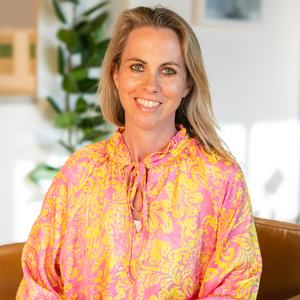
Tessa Clarke is the Co-Founder and CEO of Olio, the community-driven app tackling waste and promoting sustainable living. Under her leadership, Olio has grown into a global movement of 10 million people who have together rescued 160 million meals worth of food and re-homed 17 million household items. Tessa is also a TED speaker, columnist for Sifted, and an ambassador for the Better Business Act. In recognition of her impact, she was named Veuve Clicquot Bold Woman of the Year in 2023. Passionate about the power of technology to drive systemic change, Tessa champions purpose-led business, climate action and community collaboration to build a more sustainable and equitable future.

He/Him
Sir Tim Smit read Archaeology and Anthropology at Durham University. This began a lifelong passion for regeneration and working to put things into good heart. Following occupations embracing his many interests from Archaeology through music to wreck diving, Rare Breed animal husbandry and building restoration, in 1990 He ‘discovered’ and then restored ‘The Lost Gardens of Heligan’ with John Nelson. Of which he remains a Director. This is now one of the UK’s best loved gardens having been named ‘Garden of the Year’ by BBC Countryfile Awards (Mar 2018). Tim’s book ‘The Lost Gardens of Heligan’ won Book of the Year in 1997. Tim is co-founder of the multi award-winning Eden Project in Cornwall. Since its opening in 2001, it has contributed over £1.7 billion to the Cornish economy as people visiting the county have come to see a once sterile pit, turned into a cradle of life containing world-class horticulture and startling architecture symbolic of human endeavour and our dependence and unbreakable part in the systems of the natural world.
He/Him
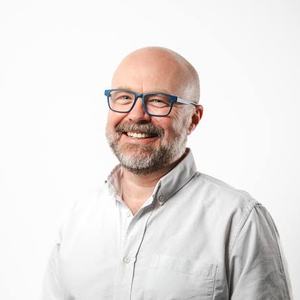
Philip Colligan is chief executive of the Raspberry Pi Foundation, an educational non-profit with a global mission to enable young people to realise their full potential through the power of computing and AI. The Foundation empowers schools to teach computing and AI through free curricula, classroom resources, purpose built software tools, and professional development for teachers. They inspire young people to become tech creators through the world's largest network of computing clubs and undertake original research into the teaching and learning of computing and AI. Philip was previously a non-executive director of the Foundation's commercial business, Raspberry Pi Ltd. He was part of the team that led the successful IPO of the business on the London Stock Exchange in June 2024, generating an endowment that fuels the Foundation's educational mission. Prior to joining Raspberry Pi, Philip was Deputy Chief Executive of the UK's innovation foundation, Nesta. He was a founding non-executive director of the Behavioural Insights Team (the Nudge Unit) and a founding trustee of the Centre for London. He served as an adviser on social innovation to the UK government, and has advised municipal and national governments, charities, and social enterprises all over the world. Earlier in his career, Philip was a chief officer at the London Borough of Camden and a senior civil servant in the Home Office. Philip has a degree in law from the University of Liverpool and qualifications in management and finance. He was awarded a CBE for services to Engineering and Technology for Societal Impact in the King's Birthday Honours in 2025. Philip was included in TIME magazine’s list of the 100 most influential people in artificial intelligence in 2026. Outside of work he is a dad, craft cider maker, and a slow cyclist. He is an active member of the local community, having served as a scout volunteer, a school governor, and trustee of a local arts organisation.
We extend our impact through two specialised units that help people and organisations to solve complex problems and achieve their goals.
BIT helps clients from government, nonprofits and the private sector to improve people’s lives through our empirical problem solving and deep understanding of human behaviour.
Challenge Works designs and runs challenge prizes to spark innovation in science, technology and society.
