About Nesta

Nesta is a research and innovation foundation. We apply our deep expertise in applied methods to design, test and scale solutions to some of the biggest challenges of our time, working across the innovation lifecycle.

Building trust: how can we use AI responsibly in research for social good? - 17 Nov 2026 12:30 – 13:30

AI has the potential to make research for social good faster, more accessible and more inclusive. However, adoption is outpacing guidance, leaving many organisations without a shared framework for responsible practice that is practically grounded in reality.

For charities, public bodies and social innovators, the questions are urgent: how do we protect sensitive data, avoid bias and ensure AI-assisted outputs are trustworthy? What does responsible use of AI in research look like in practice?

Join us online on Tuesday 17 November, 12:30-13:30 GMT for the third episode in Nesta’s Methods in Action event series as we have a practical discussion on using AI responsibly in social research. Chaired by Dr Camille Stengel, head of applied research, qualitative methods at Nesta, the panel features Reema Patel, research director and founder at Elgon Social Research, Dr June Brawner, head of research at Open Data Institute, Pablo Garfias Torrent, co-founder of Langwith Research, and Genna Barnett, senior programme manager at Nesta. The speakers will share examples and reflections about the safeguards, human judgement and critical thinking needed to use AI responsibly in a research context.

Who should attend?

This online event is for anyone interested in using AI responsibly to generate evidence for social good. It will be especially relevant for:

  • Policymakers and public servants working across the UK and devolved administrations
  • Leaders within the charity and civil society sector
  • Researchers and those interested in the ethics of AI in practice

You’ll leave with thoughtful considerations around opportunities and risks and learn practical questions to ask in your organisation around the use of AI in a research context.

Register to receive event details, reminders and joining links straight to your inbox.

Speakers

Camille Stengel

Dr Camille Stengel

She/They

Camille is the head of applied research - qualitative methods. Before joining Nesta, Camille's career spanned academic and third-sector roles. Her previous work has included leading studies and providing technical guidance for international research projects using qualitative, participatory, and creative research methods with marginalised and criminalised populations. She has also taught about these topics as a former university lecturer. Camille holds a dual PhD in Cultural and Global Criminology, and is certified as a data ethics professional through the Open Data Institute. Outside of work Camille can be found walking in the countryside or laughing along with the audience during a live comedy show.

Genna Barnett

Genna Barnett

She/Her

Genna is the senior programme manager for the data science practice at Nesta. She works across the team’s portfolio of projects to provide project management support, strategic and programmatic oversight for current and emerging projects, and to help ensure that all of our work is running according to time, cost and quality. She’s particularly interested in understanding the impact of the team’s projects and engaging with stakeholders to understand how diverse groups can make use of our outputs in practice. Prior to working in the data science team, Genna worked on a range of projects at Nesta exploring the future of work and the impact of technology on jobs, including Digital Frontrunners and FutureFit. Before joining Nesta, Genna worked on a range of international development projects in education and youth empowerment with local organisations across Sub-Saharan Africa, Central America and the Middle East. She has a Masters of Education in Community Learning and Development and certification in Permaculture Design. In her spare time, she enjoys being creative (painting, pottery), running and tending to her 70+ plants. She’s also a trustee for Tourettes Action.

Reema Patel Headshot

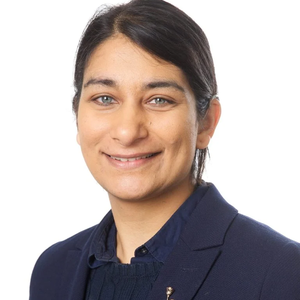
Reema Patel

She/Her

Reema Patel is a social researcher, public engagement expert, and founder of Elgon Social Research. A co-founder of the Ada Lovelace Institute, she established its public engagement work and authored key reports on AI, data equity, and participatory governance. With a focus on bridging technology, inclusive and democratic governance, technology development and policy, Reema’s debut book, AI Accountability: Beyond the Black Box, will be published by Palgrave Macmillan and Springer Nature in 2027. Reema has led major global initiatives, including directing the COP27 Global Science Partnership, designing the 2025 Global Climate Assembly on food systems, and co- authoring public engagement research for the Wellcome Trust. She also advises on monetary policy engagement and sits on the Bank of England’s Central Bank Digital Currency Engagement Forum.

June_crop.2e16d0ba.fill-437x437

Dr June Brawner

She/Her

June is an anthropologist of data, studying how societies create knowledge through data, measurement and AI. Her work explores how data, metrics and classification systems are created; what they make visible, what they leave out, and how these choices shape decisions across science, policy and public life. Before joining the ODI, June led AI and data policy programmes at the Royal Society, the UK’s national academy of sciences. There, she developed research-informed policy initiatives spanning privacy-enhancing technologies, AI ethics, scientific frontiers of AI, data for scientific research and inclusive digital systems. She has worked with partners including the OECD, the United Nations, UK government and regulators, the Chinese Academy of Sciences, and the US National Academies. June’s work has been cited in the UK Parliament, featured in TIME, and contributed to major international initiatives including the UK–US PETs Prize Challenge and the UN AI Advisory Body. She regularly speaks on AI, data governance, privacy-enhancing technologies and responsible innovation, including at events organised by All Tech Is Human, the International Association of Privacy Professionals, the Dubai Future Forum, Computing on Encrypted Data, the University of Cambridge, the UK Embassy in Beijing, and IIT Bombay. Alongside her research leadership, June has experience in research consultancy and has held fellowships from the Fulbright Foundation, Columbia University’s Council for European Studies, the University of Cambridge’s Centre for Science and Policy, and the University of Tübingen’s Forum Scientarium with Professor Bruno Latour. June holds a PhD in anthropology, with an interdisciplinary background bridging sociology, ecology and the arts.

05c6d377-1fe6-44d1-beb4-7e0c7d737b6f (1)

Pablo Garfias Torrent

He/Him