Five things Scotland can do to prevent the next energy crisis and best use its renewables windfall
 www.nesta.org.uk/blog/five-things-scotland-can-do-to-prevent-the-next-energy-crisis/
www.nesta.org.uk/blog/five-things-scotland-can-do-to-prevent-the-next-energy-crisis/
www.nesta.org.uk/blog/five-things-scotland-can-do-to-prevent-the-next-energy-crisis/
When First Minister John Swinney set out his Programme for Government he promised a Scotland reshaped around prevention rather than crisis management. This winter, the Scottish Government will have to manage an ongoing energy crisis - as heating oil prices remain high and gas prices, moderated so far by the energy price cap, climb higher.
A strategy centred on prevention, must also try to prevent the next energy crisis - and by far the best way to do that is to fund electrification, helping Scottish consumers embrace electricity in many more aspects of their lives. Yet, as new ministers in Holyrood and Westminster settle into a new parliamentary term, the energy debate continues to be dominated by supply and North Sea drilling.
The reality is that the North Sea is a declining, high-cost basin - there is no getting away from that. The falling amounts of oil and gas produced there disappear into volatile international markets and do nothing to lower domestic energy prices. Meanwhile, the opposite problem is happening on the renewables side: we have more in Scotland than we can currently use. In 2024, Scotland generated twice the amount of electricity that we consumed, over 70% of it from renewables, with most of the surplus sent south. And we could have generated much more electricity: with the grid currently unable to carry more electricity into England, in 2025 57% of the time there was a windfarm somewhere in Scotland being paid to turn off. The costs of paying these Scottish windfarms to turn off costs the UK hundreds of millions of pounds every year. Yet at the same time, over 85% of households remain dependent on gas or oil for their heating, the main chunk of home energy usage.
To deliver a preventative approach to future global energy price shocks, the Scottish Government should focus on five critical reforms:
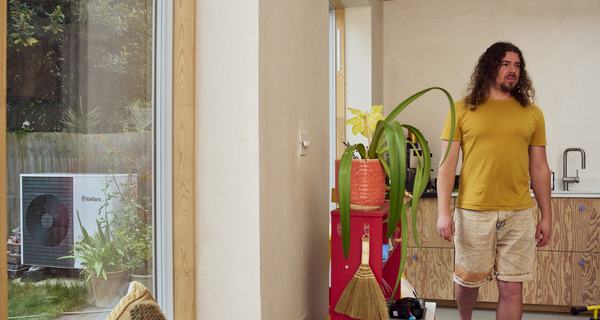
Heat pumps are the best technology for decarbonising heat because they are three to four times more efficient than traditional gas boilers, converting every unit of electricity into significantly more heat output. At present Scotland’s installation ambition is too modest and overly delayed. Nesta has calculated that over this Parliament there need to be 110,000 heat pump installations to achieve effective residential electrification. Setting this target and being publicly ambitious about installation provides policy certainty for industry to build supply chain capacity and ensure the heating engineering sector can scale to meet this demand.
Perhaps understandably, given our drafty homes and chilly climate, there is often a focus on insulation and taking a fabric-first approach to decarbonisation. The idea is we can reduce our energy demand through insulation as a route to decarbonisation. However the reality is that the Climate Change Committee have made clear that enhancements to building fabric and insulation would only deliver 14% of residential emission cuts advised by 2035. Insulation is important but not sufficient to meet the challenge.
The Programme for Government announced a heat in buildings bill due in the first year of the Parliamentary term. This Bill, which was delayed in the previous session, presents a significant opportunity for this Parliament to introduce tangible legislative mandates. There remain a number of options that the Government could consider to phase out the installation of gas boilers that go beyond the current draft bill. However, all would likely create political difficulty, and it is crucial that the Government builds broad political consensus and fosters deep public engagement to secure support for the shift to electrification. This legislation must also address the complexities of Scotland's diverse housing stock, including tenement reform, to facilitate neighbourhood-scale electrification rather than relying on isolated individual actions.
While Scotland’s fuel poverty programmes might currently take the edge of energy costs for homes with a new boiler or insulation, they all-too-often keep homes locked in to an international fossil-fuel cost rollercoaster. Last year, Scotland’s flagship Warmer Homes Scotland scheme, which gives fully funded home upgrades to homes in fuel poverty, still installed three times more fossil fuel heating systems than clean, electrified heating systems. Reforming this national fuel poverty scheme, and local-authority led programmes, to focus on providing these homes with high-quality electrified systems - heat pumps, batteries and solar - will ensure that public funds are driving the transition to an electrostate and giving homes greater energy independence.
Scotland finds itself in the advantageous position of being a two-time beneficiary of an energy windfall: once in the fossil fuel era and once again for renewable energy. But those two energy systems are at two very different life stages.
Scotland is therefore no passive bystander in the energy transition; it holds significant leverage to push the UK government to move further and faster on clean technology. Despite the huge amounts of clean electricity generation in Scotland, that isn’t reflected in cheaper electricity bills. Electricity continues to cost well more than three times the unit cost of gas - a level much higher than comparable European countries. While key policy levers remain at Westminster, Scotland can utilise its powerful position in electricity generation to push for further UK government reform to bring down the costs of electricity. By doing so , the Scottish Government can help ensure that homegrown, renewable electricity finally becomes the affordable, obvious choice for every Scottish household
-
The focus of the conversation in Scotland needs to shift from supply to demand and how to transform Scotland into an ‘electrostate’ - with electrified heating and transport that reaps the rewards of cheaper, abundant renewables supply. This transition will insulate Scottish citizens from international price shocks providing reliable, clean, cheap energy to our radiators.
By transforming Scotland’s vast renewable energy surplus into affordable home heating, the Scottish Government can help prevent fossil fuel price-driven threats to our energy security and lead the way as a thriving electrostate.