About Nesta
We are Nesta, the UK's innovation agency for social good. We design, test and scale solutions to society's biggest problems. Our three missions are to give every child a fair start, help people live healthy lives and create a sustainable future where the economy works for both people and the planet.
For over 20 years, we have worked to support, encourage and inspire innovation. We work in three roles: as an innovation partner working with frontline organisations to design and test new solutions, as a venture builder supporting new and early stage businesses and as a system shaper creating the conditions for innovation. Harnessing the rigour of science and the creativity of design, we work relentlessly to change millions of lives for the better.
Find out more at nesta.org.uk
If you'd like this publication in an alternative format such as Braille or large print please contact us at [email protected]
Authors
Oli Berry, Katy King
With thanks to Elena Meyer zu Brickwedde and Bobby Stuijfzand at Predictiv (the Behavioural Insights Team) for their contributions.
Executive summary
Overview
The proposed introduction of a government mandate to ensure all new boilers are 'hydrogen ready' (ie, they could be used with a 100% hydrogen gas network) from 2026 could result in consumer confusion and misunderstanding – particularly given the future role of hydrogen in home heating is still unclear. We wanted to understand whether the potential introduction of hydrogen boilers could affect the uptake of low carbon heating options, such as heat pumps, ultimately delaying actions towards decarbonising homes.
Methodology
We used Predictiv, the Behavioural Insights Team's (BIT's) online experiment platform, to run an an online experiment with a sample of 5,025 homeowners who currently use a gas boiler (who also participate in online surveys) in the UK. The sample was collected between 3 July and 5 August 2023.
Design
We designed an online experiment that aimed to assess whether offering the option of a hydrogen boiler would change the likelihood that participants selected a heat pump in a stated preference task, relative to those that were presented with a natural gas boiler. Participants were randomly assigned to see one of five options: a natural gas boiler, a hydrogen-blend boiler, a hydrogen-ready boiler, a hydrogen-ready boiler with greenwashing (ie, with false information about its environmental credentials), and a hydrogen-ready boiler with information about a government mandate. Participants were required to choose between this option or a heat pump to replace their boiler in a hypothetical situation.
Key findings
In our control group, we found that participants selected heat pumps instead of boilers 12.6% of the time. We didn't find a significant difference in the likelihood of choosing a heat pump in our stated preference task between any of the treatment groups and the control group. When we asked about why participants made the decision to choose a boiler rather than a heat pump, the higher running cost and installation costs for heat pumps were the top ranked factors.
Overall, our findings suggest that cost remains the most important factor when replacing a gas boiler. This may be particularly the case when consumers are choosing between options that they don't know much about, such as heat pumps versus hydrogen boilers. Although we didn't find evidence that offering the option of hydrogen boilers instead of gas boilers affected the likelihood that participants selected a heat pump, a limitation of our research is that participant responses may not have reflected those that would occur in real life.
Introduction
The UK Government has been exploring the potential for hydrogen to be used in home heating
The UK Government has recently consulted on a potential requirement that all newly installed domestic-scale boilers must be ‘hydrogen-ready' from 2026 (for more information see the UK Government's 'Improving boiler standards and efficiency' consultation). Hydrogen-ready boilers are boilers that can use 100% hydrogen gas as a fuel, but need to be converted to do so. Prior to this conversion, they can use natural gas, including a blend of up to 20% hydrogen. The UK Government's proposal includes a non-binding price parity pledge made by major boiler manufacturers, whereby the cost of hydrogen-ready boilers should be at no additional cost once sales reach comparable levels to gas boilers.
However, at this stage, the future role of hydrogen in home heating in the UK is unclear. The UK Government has committed to taking a decision on this in 2026. Nevertheless, the mandate would require all new and replacement boilers from 2026 to be hydrogen-ready, irrespective of whether households are likely to have access to hydrogen for home heating in the future or not. Consequently, households that may never be connected to a hydrogen gas system would be required to install hydrogen-ready boilers instead of natural gas boilers.
Mandating the requirement for boilers to be 'hydrogen-ready' has the potential for a number of backfire effects
The UK Government considers the mandate to be a ‘low-regret action' in terms of impact to consumers, assuming that the conditions set out in the consultation are met (p34 of the consultation). However, there may be undesirable consequences from mandating the requirement for boilers to be hydrogen-ready. For example, increasing the salience of hydrogen boilers may hinder efforts to introduce low carbon heating systems that have a much higher likelihood of reducing carbon emissions in both the short- and long-term. If a consumer needs to replace a broken gas boiler, installing a heat pump or electric heating to replace the gas boiler would reduce carbon emissions immediately. However, if a hydrogen-ready boiler is installed, carbon emissions will only be reduced if the hydrogen network is live (as it will use natural gas up until this point). This means there will be no short-term reduction in carbon emissions.
There is also the potential unintended consequence of creating confusion for consumers, which may result in them choosing an option that isn't the most optimal for them. For example, consumers who purchase hydrogen-ready boilers prior to the implementation of a 100% hydrogen network may have to replace the boiler with another low carbon heating system if hydrogen isn't provided to their home.
Inconsistent use of terminology to describe boilers that can use hydrogen for fuel may increase the potential for consumer confusion
An additional contributing factor to consumer confusion is that different types of boilers can use different sources of hydrogen as fuel. For example, some boilers can use hydrogen gas blended with natural gas, whereas others can use 100% hydrogen gas, but cannot use natural gas. Importantly, there currently isn't defined terminology for boilers that use different types of hydrogen as fuel. In a recent report, the Competition and Markets Authority (CMA) identified a set of terms to capture different types of hydrogen boiler (as shown in the table below).
| Term |
Definition of term |
| 'Hydrogen-blend' boiler |
Technically identical to a natural gas boiler, but marketed as being capable of running a blend of up to 20% hydrogen. |
| 'Hydrogen-ready' boiler |
Capable of taking up to a 20% hydrogen blend immediately, with the potential to run on 100% hydrogen following an alteration by an engineer. The type of boiler that would be mandated. |
| 'Hydrogen' boiler |
Capable of running on 100% hydrogen with no alterations (not capable of running on natural gas). |
Table 1. Terms to describe how boilers operate with hydrogen identified by the CMA.
The CMA noted that the use of incorrect descriptions would likely be confusing for consumers, which in turn could increase the risk that consumers select boilers that are not appropriate for their household. This is magnified by the shortcomings they identified in the contextual information provided about the hydrogen rollout of appliance manufacturers. A further complexity is that natural gas boilers could be, and sometimes already are, marketed as hydrogen-blend boilers. This is because natural gas boilers can use a blend of up to 20% hydrogen (which has been the case for many years). Navigating through different varieties of hydrogen boilers could be challenging for uninformed consumers.
The CMA also found evidence of greenwashing, ie, false or overstated claims of a product's environmental credentials. These claims could mislead consumers about the boilers they are buying and could result in consumers choosing options that aren't best for them. Overall, this further greatens the potential for consumers to be confused about what's best to heat their home.
Our research aims to quantify the effect of hydrogen boilers on heat pump uptake
Nesta is concerned that introducing new natural gas boilers that are branded as hydrogen-blend or hydrogen-ready may encourage more consumers to choose these options instead of low carbon alternatives, like heat pumps.
Hydrogen as a fuel source is not currently available to domestic consumers and there are no plans currently to roll it out to the mass market. Until hydrogen is provided, consumers choosing new boilers which are sold with hydrogen branding may inadvertently delay reductions in household emissions through their continued use of natural gas. Large numbers of people opting for hydrogen-ready boilers instead of heat pumps when they come to replace an old existing gas boiler could pose a systemic risk to meeting net zero.
In an online experiment, we tested how the offer of different boiler options affected the uptake of heat pumps in a hypothetical scenario. This research primarily aimed to assess whether ‘hydrogen-ready' boilers, ‘hydrogen-blend' boilers, ‘greenwashed hydrogen-ready' boilers, or ‘hydrogen-ready' boilers with information about the potential government mandate changed the likelihood that participants choose a heat pump in a stated preference task. We also aimed to gather information on participants' perceptions and knowledge of hydrogen for home heating.
Methodology
We recruited a sample of participants who owned their homes and had a gas boiler
We recruited a sample of 5,025 homeowners who currently use a gas boiler (and who also participate in online surveys) in the UK between 3 July and 5 August 2023. We aimed to use a sample that reflected the demographic characteristics of UK homeowners (see Table 2 below sourced from ONS income data and the English Housing Survey). We chose this sample size as it would allow us to detect meaningful differences between our experimental arms (in this case, a 4.4 percentage point decrease compared to a baseline of 12%, which is the expected likelihood that a participant in the control group selects a heat pump).
| Age |
|
Ethnicity |
|
| 25 to 45 |
25% |
White |
91% |
| 46 to 55 |
22% |
Minoritised communities |
9% |
| 56 to 65 |
21% |
Gender |
|
| 65+ |
33% |
Women |
42% |
| Region |
|
Income |
|
| South and East |
31% |
£17,500 or less |
14% |
| North |
25% |
£17,500 to £35,000 |
35% |
| Midlands |
17% |
£35,000 to £50,000 |
23% |
| Scot/NI/Wales |
16% |
£50,000 or above |
28% |
| London |
10% |
|
|
Table 2. Demographic characteristics of our sample.
We also collected data for all respondents on whether they live in an urban or rural area, their education, income, employment status, climate concern and political views.
We used a stated preference task to assess the impact of different options on the likelihood that participants chose a heat pump
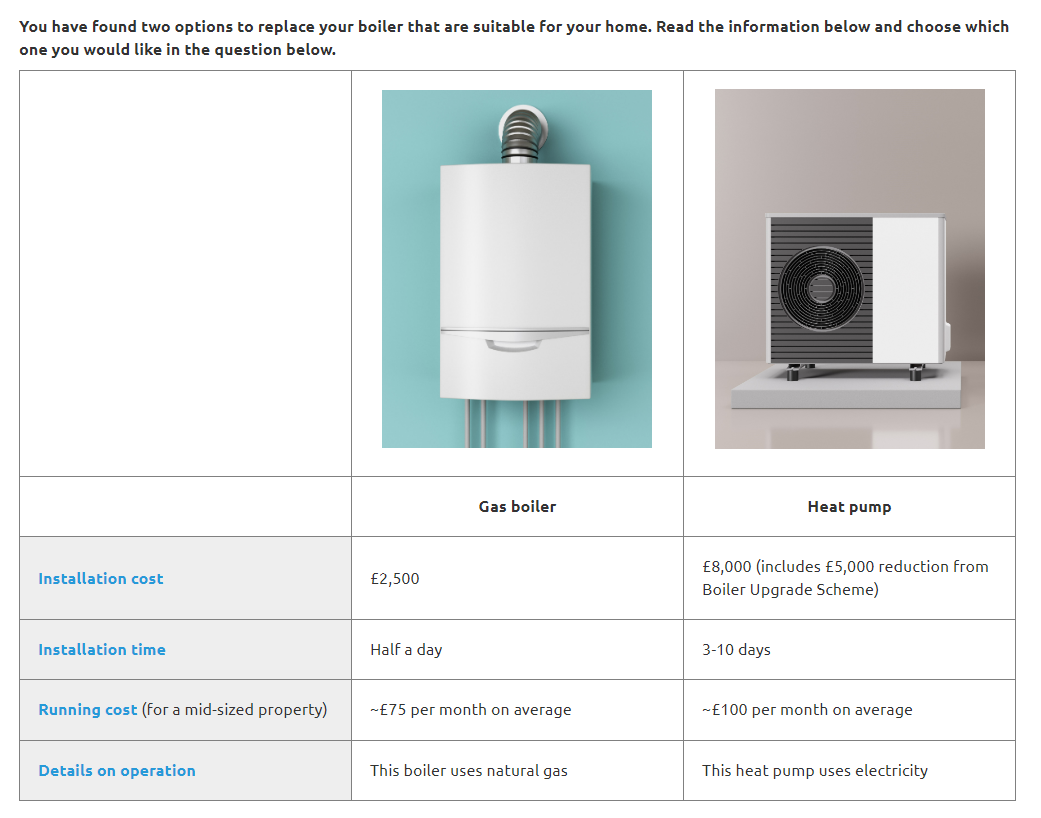
To understand the potential impact of different types of hydrogen boilers on heat pump installations, we used a stated preference task. The task involved asking participants to imagine that their gas boiler was nearing the end of its life and needed replacing. Participants were then told to imagine that they had found two potential options on a website: one of which was a gas or hydrogen boiler, and the other a heat pump. Participants were then asked to choose one of the two options. Participants were shown images of the two options, installation costs, installation times, running costs, and details on operation.
Please read the information below. On the following screen we will ask you some questions about it.
What is a heat pump?
A heat pump heats your home. An outside unit (see picture) takes heat from the air, concentrates it, and puts it into your radiators. It's like a fridge in reverse. It works effectively in all weather conditions, including cold days.
How are heat pumps different to a boiler?
Normal boilers run on fossil fuels (gas or oil). In the future, boilers may also run on a mixture of natural gas and hydrogen, or run on hydrogen gas only.
Heat pumps run on electricity. This means that heat pumps can run using electricity that is generated from renewable resources like wind or sun, which do not produce carbon emissions.

You have found two options to replace your boiler that are suitable for your home. Read the information below and choose which one you would like in the question below.
|
Gas boiler |
Heat pump |
| Installation cost |
£2,500 |
£8,000 (includes £5,000 reduction from Boiler Upgrade Scheme) |
| Installation time |
Half a day |
3-10 days |
| Running cost (for a mid-sized property) |
~£75 per month on average |
~£100 per month on average |
| Details on operation |
This boiler uses natural gas |
This heat pump uses electricity |
Figure 1. Options to replace gas boiler in stated preference task.
We used four different variants of hydrogen boilers, as set out in the table below. Importantly, the installation costs, installation times and running costs were identical for all boilers (natural gas and hydrogen boilers). This is because hydrogen-blend and hydrogen-ready boilers are highly likely initially to use the same fuel source as the boiler they replace (ie, they will use natural gas unless the house is eventually provided with hydrogen gas). This means that the running cost will be the same (although it is likely that if hydrogen is eventually introduced for home heating, it will be more expensive). The cost and time of installation should also be the same given that hydrogen boilers are intended to be direct replacements for gas boilers.
Please reference Appendix 1 for full information on the interventions
| Experimental arms |
Rationale for inclusion |
| Natural gas boiler Control group |
Used as a control group, ie, to measure the proportion of participants who select a heat pump instead of a gas boiler. |
| Hydrogen-blend boiler Treatment 1 |
All boilers currently installed can technically use a blend of up to 20% hydrogen. Appliance manufacturers may rebrand 'normal' gas boilers in an attempt to improve their attractiveness to customers through association with hydrogen. |
| Hydrogen-ready boiler Treatment 2 |
The potential mandate focuses on hydrogen-ready boilers. |
| Hydrogen-ready boiler with 'greenwashing' Treatment 3 |
In a recent report, the CMA found evidence of greenwashing (see their report here). |
| Hydrogen-ready with information about the potential for a UK mandate Treatment 4 |
It may be the case that the mandate changes behaviour prior to its implementation. For example, consumers might delay installation of a low carbon heating system, with the hope of installing a hydrogen-ready boiler in the future. |
Table 3. Experimental arms used in our trial. Note, participants were presented with one of the options below, and asked to choose between that option and a heat pump in the stated preference task.
We used a randomised controlled trial to explore the impact of different boiler options on heat pump uptake
We randomly allocated participants to see either the natural gas boiler (control group) or one of four of the hydrogen boilers (which were then treatment groups one to four). They were asked to choose between the boiler and the heat pump. All participants were first presented with information about heat pumps and boilers to help them better understand the material presented to them in the stated preference task. The information provided to participants is presented below. This information was intended to provide a basic understanding of heat pumps and boilers to participants to increase the likelihood that participants made informed decisions during the stated preference task.
Please read the information below. On the following screen we will ask you some questions about it.
What is a heat pump?
A heat pump heats your home. An outside unit (see picture) takes heat from the air, concentrates it, and puts it into your radiators. It's like a fridge in reverse. It works effectively in all weather conditions, including cold days.
How are heat pumps different to a boiler?
Normal boilers run on fossil fuels (gas or oil). In the future, boilers may also run on a mixture of natural gas and hydrogen, or run on hydrogen gas only.
Heat pumps run on electricity. This means that heat pumps can run using electricity that is generated from renewable resources like wind or sun, which do not produce carbon emissions.
Figure 2. Information about heat pumps and boilers presented to participants during the online experiment.
After being randomised to one of five experimental arms, participants were then asked to complete the stated preference task. Finally, participants were asked some questions about their choices and questions relating to their demographic characteristics (such as education level and income).
We collected data between 3 July and 5 August 2023. The median length of time taken to complete the survey was 8 minutes and 17 seconds.
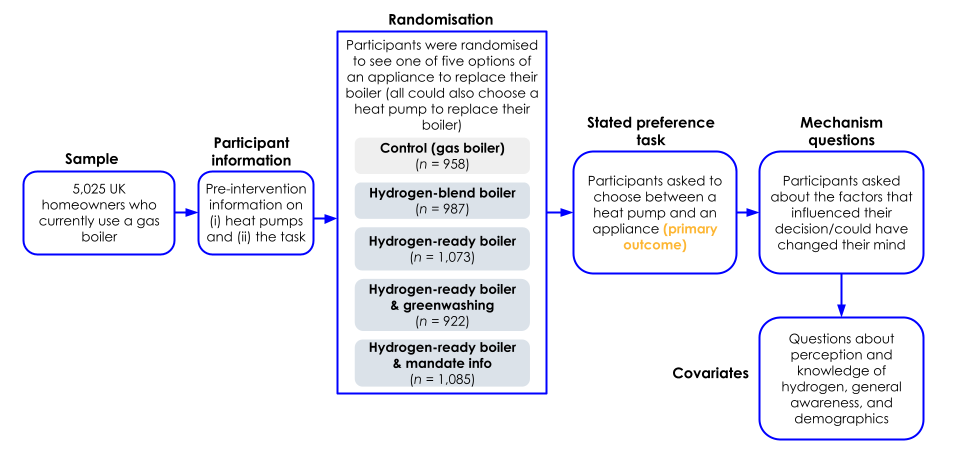
Figure 3. Experiment design.
Findings from our online experiment
Uptake of heat pumps
We found that there was no significant difference in the likelihood of selecting a heat pump between any of the treatment arms and the control group
To understand whether different hydrogen boilers affected the uptake of heat pumps, we calculated the likelihood that participants in each of the experimental arms selected a heat pump (or not) during the stated preference task. Participants who were offered the choice of a heat pump or a natural gas boiler chose a heat pump 12.6% of the time, which is consistent with other research we've conducted online.
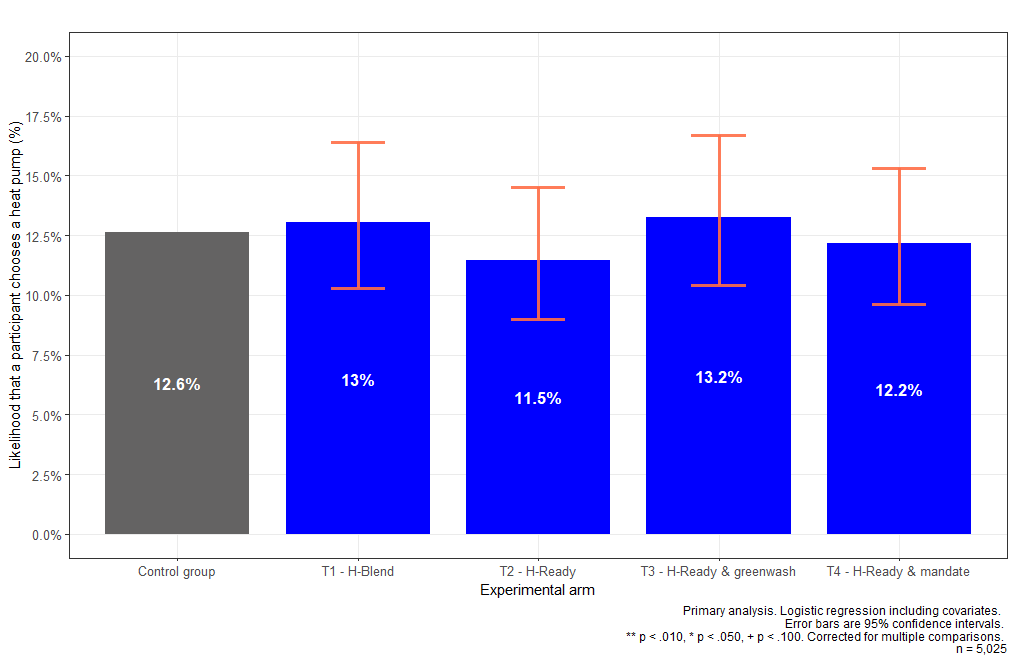
Figure 4. Results from our primary analysis (outcome is likelihood that a participant selected a heat pump).
We found that there wasn't a statistically significant difference in the likelihood of choosing a heat pump among participants in any of the groups that were shown hydrogen boilers compared to those that were shown natural gas boilers (T1: p = .790; T2: p = .429; T3: p = .696; T4: p > .759). These results don't provide any evidence that being given the option of choosing a hydrogen boiler changes the likelihood of selecting a heat pump.
We did observe some differences in the likelihood of selecting a heat pump for some control variables, which are documented in Appendix 2.
For those that didn't choose a heat pump, the installation cost and the running cost were the top factors in their decision
We asked participants to rank the statements in terms of their importance when they made their decision in the stated preference task. For those that didn't choose a heat pump, across all experimental arms, the cost of installing the heating system and the running costs were most commonly selected as the top reasons (47% [n = 2,071] and 38% [n = 1,651] respectively).
This indicates that cost remains a primary reason for not choosing a heat pump, which corroborates with other research we conducted, in collaboration with BIT into barriers to heat pump adoption.
Across all of the experimental arms, we didn't see large differences in the proportions of participants that chose costs as their top reasons. This is to be expected given that the running costs and installation costs were identical for all of the boilers (the natural gas boilers and hydrogen boilers). Although other reasons were selected as top by some participants, the majority ranked costs as the most important reason.
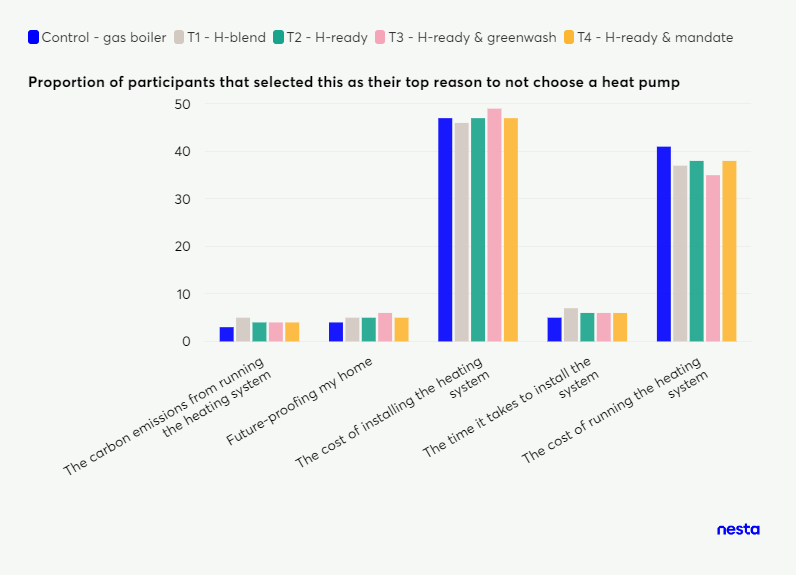
Figure 5. The top rated factor of participants who didn't choose a heat pump when they made their decision in the stated preference task (n = 4,382).
The pattern for the top ranked reason is less clear for participants who chose a heat pump in the stated preference task
Of the 5,025 participants who completed the stated preference task, 13% (n = 643) selected a heat pump. We also asked these participants to rank the statements that were important when making their decision in the stated preference task.
Compared to the participants who didn't select a heat pump, the pattern is less clear for those that selected a heat pump. Running costs, carbon emissions and future-proofing their home were most often selected as the top reasons for choosing a heat pump (28% [n = 181], 22% [n = 143] and 24% [n = 151]), followed by the installation costs (17% [n = 112]), with installation time being the least often selected as top reason (8% [n = 50]). This suggests that costs still are important, but future-proofing homes and carbon emissions are more important for those that select heat pumps than those who didn't.
We did see some differences between the experimental arms for the top ranks, specifically for the proportion of participants who selected carbon emissions as the most important factor. As the image below shows, it appears that carbon emissions was selected as the top reason more often for those who were presented with a gas boiler than those who were presented with hydrogen boilers. This suggests that participants may have had a different perception of the carbon emissions produced by hydrogen boilers, compared to those produced by natural gas boilers.
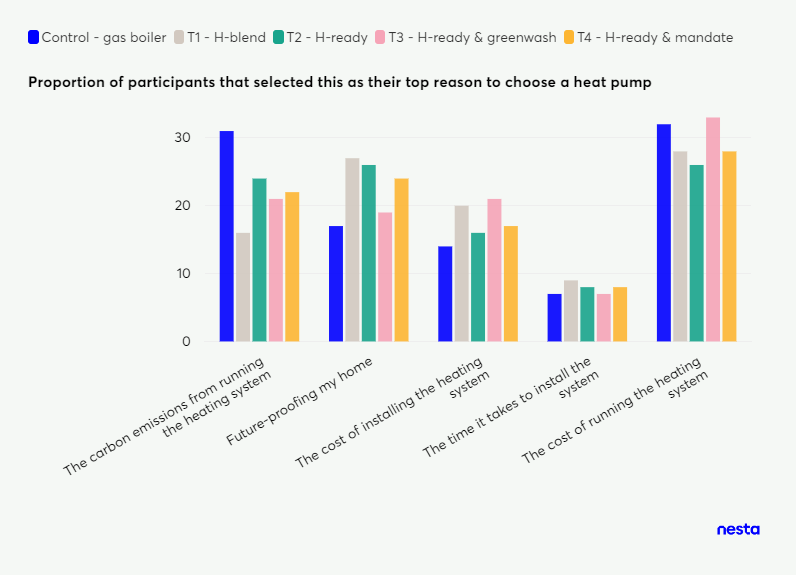
Figure 6. The top rated factor of participants who did choose a heat pump when they made their decision in the stated preferences task (n = 643).
Participants who selected a hydrogen boiler of any type reported that increases to fuel bills because of hydrogen and lower heat pump running costs would change their mind
We asked participants who selected a hydrogen boiler (excluding those in the control group) about whether a range of statements would change their mind on their decision to choose a hydrogen-blend boiler or a hydrogen-ready boiler.
We found that the greatest proportion of participants responded that the following statements would change their mind “a lot” or “moderately” about their choice of a hydrogen boiler (see image below).
- "Your fuel bill will increase because of the high costs of producing hydrogen and supplying it through the gas network.” (58% either “Would change my mind a lot” or “Would change my mind a moderate amount” [n = 2,037]).
- "The price of electricity reduces to the extent that the heat pump has lower running costs of the two options.” (49% either “Would change my mind a lot" or "Would change my mind a moderate amount” [n = 1,713]).
These findings provide further evidence that costs are a key factor when deciding to choose a heat pump (or not). In this case, a reduction in the running costs of a heat pump or an increase in running costs of a hydrogen boiler could result in people re-evaluating their stated preferences.
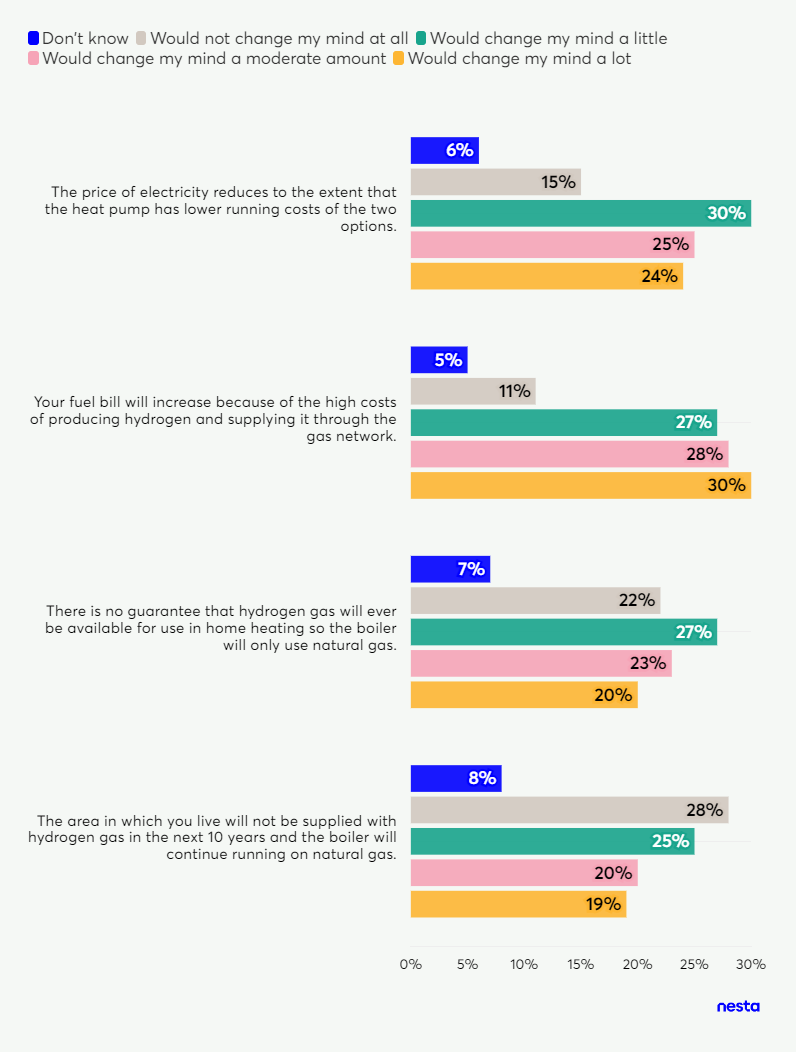
Figure 7. Responses of participants who selected a hydrogen boiler on whether statements would change their mind (n = 3,545).
Perception of hydrogen for home heating
The majority of participants were neutral or positive about the use of hydrogen for home heating, although there were some concerns about safety
We asked participants to respond with the first two words that occurred to them when they read the word 'hydrogen'. As shown in the image below, 'gas' was the most common word, followed by ‘water'. Notably, our question did not specifically refer to hydrogen for home heating, so the results show any associations with the word 'hydrogen' that may be unrelated to home heating.
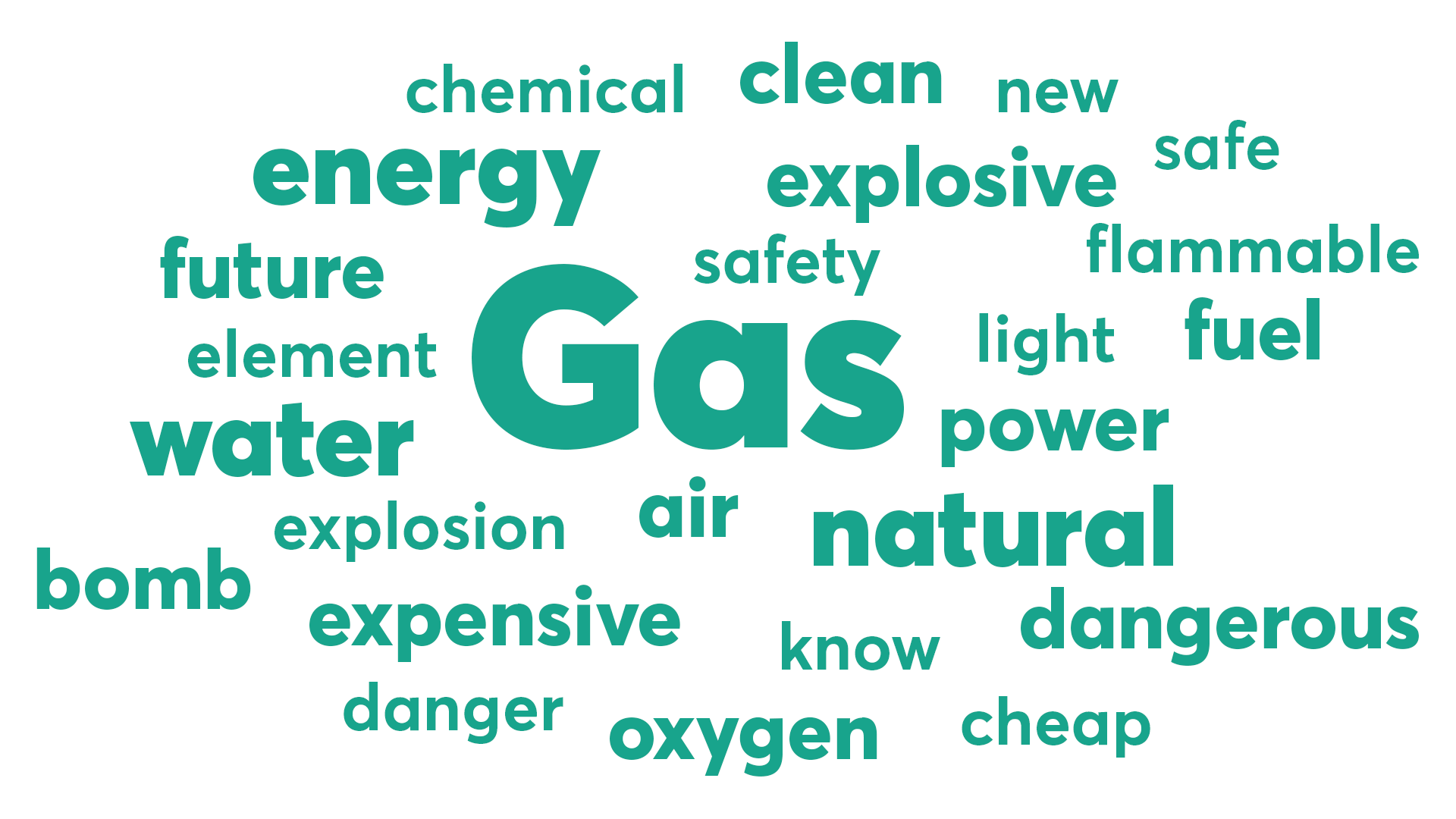
Figure 8. A word cloud reflecting the most common words provided by participants when they were asked to provide the first two words that came to them when they read the word 'hydrogen' (n = 5,025).
We also asked participants whether they agreed with the statement: “Hydrogen should be used for home heating in the UK”. 49% (n = 1,197) of participants said that they agreed or strongly agreed with hydrogen being used for home heating. 35% (n = 845) of participants neither agreed or disagreed with the statement.
To understand more about participants' views on the safety of hydrogen in home heating compared to natural gas, we asked participants the extent to which they agreed or disagreed with a set of statements. We found that participants tended to agree or strongly agree with the statement: “I have no concerns about the safety of using natural gas in my home” (54% [n = 1,318]). When we asked about concerns about hydrogen in home heating, 37% (n = 893) agreed or strongly agreed with the statement: "I have no concerns about the safety of using hydrogen in my home". 29% (n = 707) disagreed or strongly disagreed with the statement.
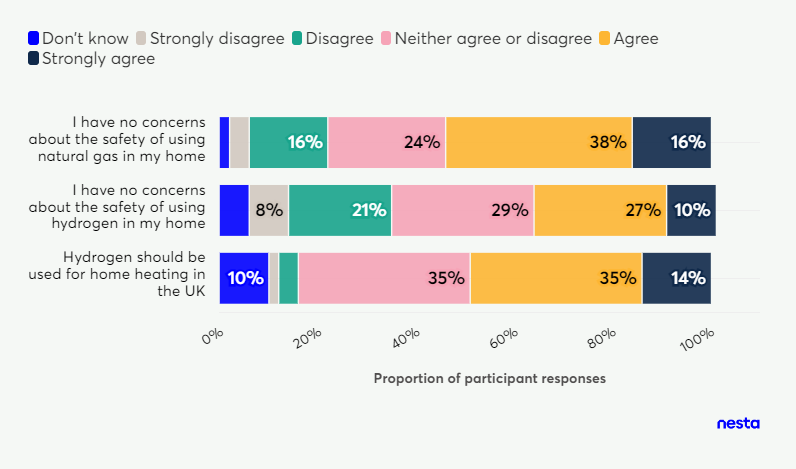
Figure 9. Responses of participants on whether they agreed or disagreed with statements about the use of hydrogen for home heating (n = 2,431).
We found that responses varied widely when it came to whether participants thought hydrogen would be used for home heating
We asked participants how likely they think that hydrogen will be provided to their home as a way to gauge their expectation on the potential implementation of a hydrogen network. We were also curious to see if there were any differences between experimental arms, particularly for those that had seen information about the Government mandate in the stated preference task.
We found a wide range of likelihoods provided by participants, with the largest group responding that they were neither certain or uncertain (35% [n = 1,775]). We didn't see any noticeable differences across the experimental arms. However, we did find that over a quarter (29% [n = 1,445]) thought that it was very certain or quite certain that hydrogen would be provided to their home in the future.
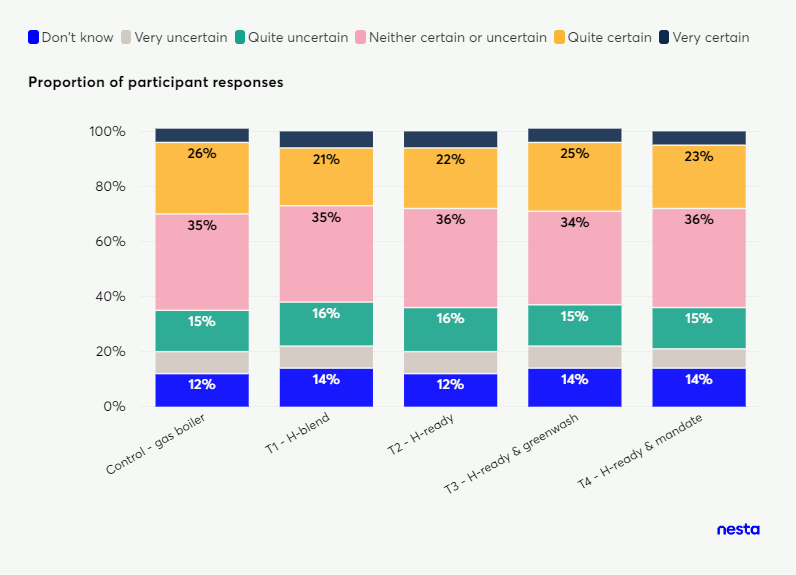
Figure 10. Responses of participants on the likelihood they thought that hydrogen would be provided to their home in the future (n = 5,025).
We found that the majority of participants thought that the carbon emissions of heating their home with 100% hydrogen in a hydrogen boiler would be less than using a heat pump
The carbon emissions associated with generating hydrogen depends on how it is produced. Blue hydrogen, produced from methane with carbon capture and storage, has higher carbon emissions than green hydrogen, produced from water with renewable electricity. Similarly, the carbon emissions of the electricity used to power a heat pump also depend on the extent to which it is renewable. We were keen to understand the general sentiment of participants given this uncertainty.
The majority of participants responded that they expected the carbon emissions from using the hydrogen-ready boiler would be less than using a heat pump. Note, we did specify in the question that the boiler was using 100% hydrogen (rather than using natural gas).
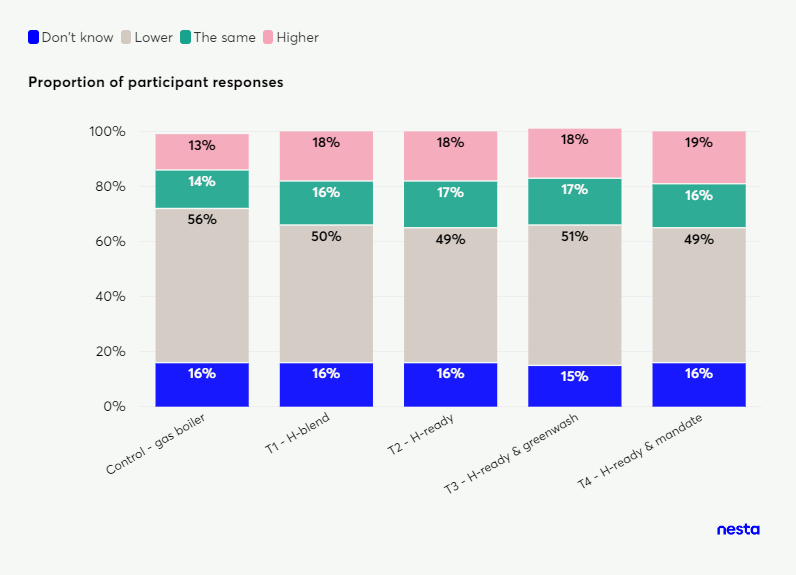
Figure 11. Responses of participants on their expectations on the carbon emissions when they use a hydrogen-ready boiler to heat their home with 100% hydrogen compared to a heat pump. Note, each bar reflects responses from each of the experimental arms (n = 5,025).
Participants tended to know more about heat pumps than hydrogen boilers
Finally, we asked participants the extent to which they felt like they knew about different heating systems and, in general, participants had at least heard of all heating systems. As shown below, participants were more likely to have heard of air source or ground source heat pumps than any of the hydrogen boilers. We note that participants were presented with information about heat pumps, which may reduce the proportion of participants who had never heard of heat pumps.
We also note that there were some participants who had said they had never heard of either hydrogen boilers or heat pumps. This proportion was similar across all experimental arms, indicating that these were not participants in specific arms who had been shown one type of hydrogen boiler but not another.
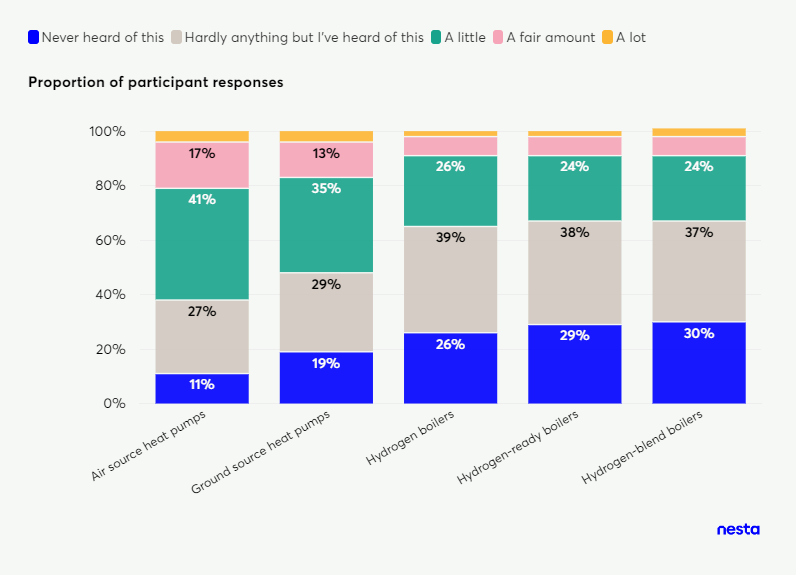
Figure 12. Responses of participants on how much they know about different heating systems (n = 5,025).
Limitations
There are some important limitations to our findings. Our sample comprised homeowners who currently use a gas boiler (who also participate in online surveys) in the UK and we collected our data using an online survey. It's important to raise the following limitations for our findings related to this:
- Our findings may not be generalisable to the wider UK population. Our sample doesn't capture people who are digitally excluded, nor does it capture people who aren't inclined to complete online surveys. It may be that these individuals would have different responses to those included in our survey, which means that there are limits to how generalisable our results are to the wider UK population.
- Participant responses in an online experiment may not reflect those that would occur in real life. We used an online survey to collect data from thousands of participants in a short period of time. In the stated preference task, we asked participants to imagine a situation where they wanted to replace their boiler. It may be that their decisions in a real-world context are different, and that their stated intent does not reflect their real-world behaviour. This means that we need to be careful when generalising our results to real-world scenarios.
Conclusion
Our online experiment aimed to assess whether having hydrogen boilers as an option would decrease the likelihood that participants selected a heat pump in a stated preference task, relative to those that had natural gas boilers as an option.
We didn't find any evidence to support that heat pump uptake would be hindered as we didn't find any statistically significant differences between any of the treatment arms and the control group. This was also true for the treatment groups where participants were shown either a hydrogen boiler with greenwashing, and the group where they were shown a hydrogen boiler with information about the Government mandate.
Although we didn't find evidence to support greenwashing, other research has found that greenwashing can detrimentally affect consumer behaviour. For example, BIT used an online study to demonstrate that fictional companies in greenwashed ads had higher green credentials compared to companies depicted in non-greenwashed ads. Measuring real-life behaviour in online experiments can be challenging, and different designs can result in different outcomes. In the case of this trial, we heard from participants that costs were the most important factors in making their decisions – and that the carbon emissions were not as important, which may have contributed to us not finding evidence of a greenwashing effect.
Irrespective of whether our research demonstrated an impact of greenwashing or not, we agree with the CMA that consumers should be presented with clear and accurate information so that they can make informed decisions about the best options for them.
When we asked about why participants made the decision to choose a boiler rather than a heat pump, running and installation costs were the top ranked factors. This suggests that financial costs remain the major factor when thinking about replacing gas boilers, which was corroborated by the statements about increased fuel bills having the greatest likelihood to change choices to a heat pump.
Perceptions and knowledge of hydrogen for home heating varied across our sample
The majority of participants were either supportive or felt neutral about hydrogen being used for home heating. Although the majority of participants were not concerned about the safety of hydrogen in home heating, more were concerned about using hydrogen (29% [n = 707]) than natural gas (20% [n = 481]).
When it came to participants' understanding of hydrogen for home heating, we found there was a large amount of variation across our sample. For example, participants reported a large range of likelihoods when asked about how likely they thought it would be that hydrogen was provided to their homes. We found that around a quarter of participants thought that it was quite certain or very certain that hydrogen would be provided to their home in the future. However, we also found that a third were neither certain or uncertain. When we asked about carbon emissions, around half of participants thought that heating their home with a hydrogen boiler using 100% hydrogen would have lower carbon emissions than a heat pump. The other half thought that carbon emissions would be the same, higher, or didn't know. These findings suggest that there wasn't a strong consensus among our participants on the suitability of hydrogen for home heating.
Our findings also show that using hydrogen for home heating remains an unfamiliar topic. We found that participants' familiarity with hydrogen boilers was less than those of heat pumps, and many were unfamiliar with heat pumps. Given the inherent uncertainty on whether hydrogen will be used for home heating, making the right decision on which option to choose is even more challenging.
Overall, our findings suggest that cost remains the most important factor when replacing a gas boiler. This may particularly be the case when consumers are choosing between options that they don't know much about, such as heat pumps versus hydrogen boilers. In these situations, cost could be a helpful heuristic to help make a decision when consumers don't have sufficient information to make an informed choice. When asked about what factors could change the minds of participants who selected a boiler, the expectation that hydrogen would be provided to their home was not a strong factor. This suggests that familiarity with natural gas could also be a pull factor towards a boiler instead of a heat pump. In both cases, providing clear information on low-carbon heating systems could help consumers make better informed decisions about their home heating.
Appendix 1 – Intervention design
The following images display the different options that were presented to participants in the stated preference task.
Control group – natural gas boiler
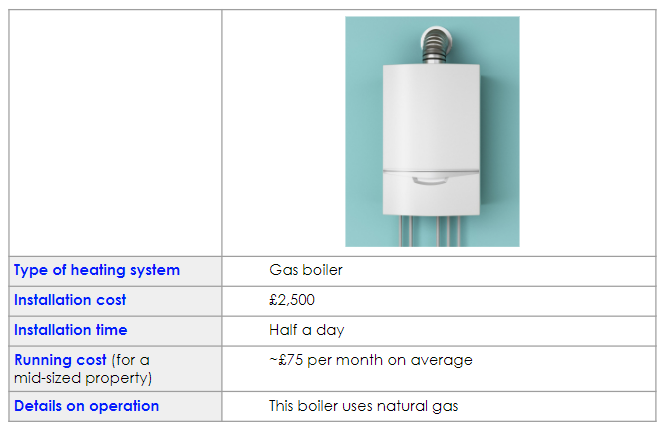
| Type of heating system |
Gas boiler |
| Installation cost |
£2,500 |
| Installation time |
Half a day |
| Running cost (for a mid-sized property) |
~£75 per month on average |
| Details on operation |
This boiler uses natural gas |
Treatment 1 - 'Hydrogen-blend' boiler
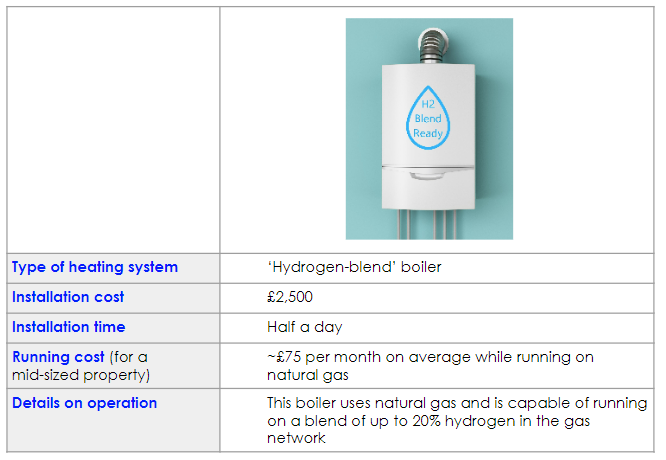
| Type of heating system |
'Hydrogen-blend' boiler |
| Installation cost |
£2,500 |
| Installation time |
Half a day |
| Running cost (for a mid-sized property) |
~£75 per month on average while running on natural gas |
| Details on operation |
This boiler uses natural gas and is capable of running on a blend of up to 20% hydrogen in the gas network |
Treatment 2 – 'Hydrogen-ready' boiler
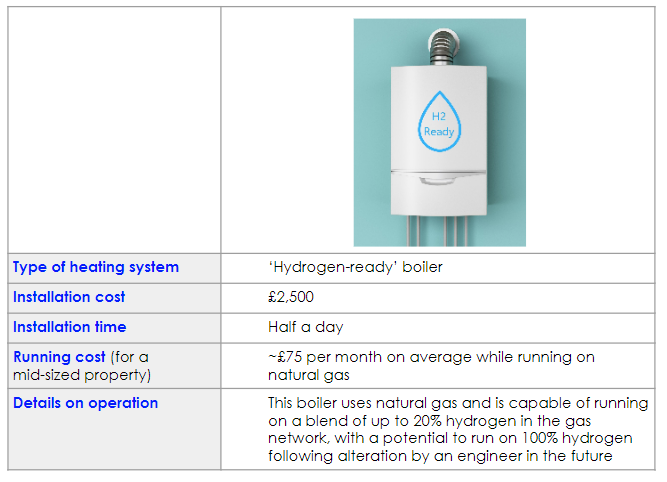
| Type of heating system |
'Hydrogen-ready' boiler |
| Installation cost |
£2,500 |
| Installation time |
Half a day |
| Running cost (for a mid-sized property) |
~£75 per month on average while running on natural gas |
| Details on operation |
This boiler uses natural gas and is capable of running on a blend of up to 20% hydrogen in the gas network, with a potential to run on 100% hydrogen following alteration by an engineer in the future |
Treatment 3 – 'Hydrogen-ready' boiler & greenwashing
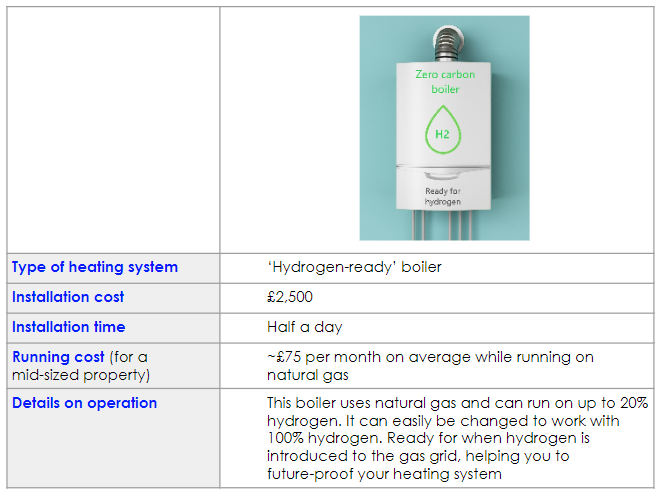
| Type of heating system |
'Hydrogen-ready' boiler |
| Installation cost |
£2,500 |
| Installation time |
Half a day |
| Running cost (for a mid-sized property) |
~£75 per month on average while running on natural gas |
| Details on operation |
This boiler uses natural gas and can run on up to 20% hydrogen. It can easily be changed to work with 100% hydrogen. Ready for when hydrogen is introduced to the gas grid, helping you to future-proof your heating system |
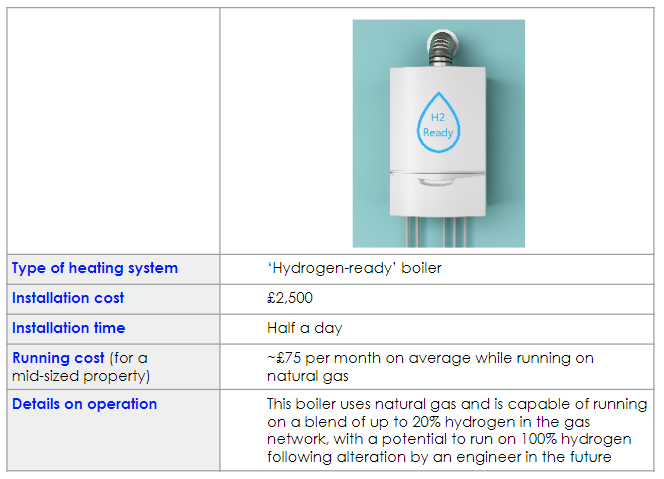
| Type of heating system |
'Hydrogen-ready' boiler |
| Installation cost |
£2,500 |
| Installation time |
Half a day |
| Running cost (for a mid-sized property) |
~£75 per month on average while running on natural gas |
| Details on operation |
This boiler uses natural gas and is capable of running on a blend of up to 20% hydrogen in the gas network, with a potential to run on 100% hydrogen following alteration by an engineer in the future |
Note – participants will have seen information about the mandate prior to the stated preference task.
Appendix 2 – Technical annex
Below, we present descriptive statistics on the variables used as covariates in our regression models. Overall, we did not find evidence of material imbalance across the experimental arms. We note that all covariates were included in the regression models as controls, accounting for differences across experimental arms.
| Variable |
Control |
Treatment 1 (H-blend) |
Treatment 2 (H-ready) |
Treatment 3 (Greenwash) |
Treatment 4 (Mandate) |
|
% (n) |
% (n) |
% (n) |
% (n) |
% (n) |
| Age category |
|
|
|
|
|
| 25 to 45 |
26% (245) |
25% (245) |
25% (271) |
24% (219) |
25% (271) |
| 46 to 55 |
20% (195) |
22% (222) |
21% (226) |
21% (193) |
23% (248) |
| 56 to 65 |
18% (175) |
22% (213) |
21% (228) |
23% (214) |
21% (224) |
| 65+ |
36% (343) |
31% (307) |
32% (348) |
32% (296) |
32% (342) |
| Income category |
|
|
|
|
|
| Less than £30k |
38% (368) |
38% (377) |
37% (396) |
38% (352) |
40% (438) |
| More than £30k |
62% (590) |
62% (610) |
63% (677) |
62% (570) |
60% (647) |
| Willingness to make changes for climate change |
|
|
|
|
|
| Very |
23% (218) |
28% (273) |
23% (250) |
26% (244) |
26% (279) |
| Moderately |
45% (430) |
41% (407) |
45% (484) |
41% (375) |
43% (464) |
| A little |
27% (257) |
25% (248) |
25% (273) |
28% (255) |
26% (285) |
| Not at all |
5% (44) |
5% (50) |
5% (57) |
5% (43) |
5% (51) |
| Don't know |
1% (9) |
1% (9) |
1% (9) |
1% (5) |
1% (6) |
Table 4. Descriptive statistics for covariates.
Results
Below, we present the results from our primary analysis.
| Logistic regression |
Primary analysis b(se) |
p-value |
95% Cls Lower |
Upper |
| Exp. arm (ref: Control group) |
|
|
|
|
| Treatment group 1 (H-blend) |
1.037 (1.137) |
.790 |
0.793 |
1.356 |
| Treatment group 2 (H-ready) |
0.896 (1.138) |
.429 |
0.684 |
1.175 |
| Treatment group 3 (Greenwash) |
1.056 (1.139) |
.696 |
0.804 |
1.387 |
| Treatment group 4 (Mandate) |
0.959 (1.135) |
.759 |
0.736 |
1.251 |
| Age (ref: 25 to 45) |
|
|
|
|
| 46 to 55 |
0.846 (0.125) |
.182 |
0.662 |
1.081 |
| 56 to 65 |
0.917 (0.127) |
.494 |
0.714 |
1.177 |
| 65+ |
0.824 (0.117) |
.099 |
0.654 |
1.037 |
| Income (ref: £30,000 or over) |
|
|
|
|
| Less than £30,000 |
0.760 (0.095) |
.004 |
0.631 |
0.915 |
| Willingness to make a change for climate change (ref: Very) |
|
|
|
|
| Moderately |
0.411 (0.098) |
.000 |
0.340 |
0.498 |
| A little |
0.314 (0.121) |
.000 |
0.248 |
0.398 |
| Not at all |
0.179 (0.306) |
.000 |
0.098 |
0.326 |
| Don't know |
0.308 (0.619) |
.057 |
0.091 |
1.037 |
| Constant |
|
|
|
|
| N |
5,025 |
|
|
|
| Pseudo R² (Cragg-Uhler) |
0.060 |
|
|
|
Coefficients are odds ratios. + p < .100, * p < .050, ** p < .010. Adjusted for multiple comparisons using the Benjamini-Hochberg step-up procedure (Significance stars only shown for experimental arms).
Table 6. Results from our primary analysis; outcome: likelihood of choosing a heat pump (5,025 participants).
| Variable |
Proportion of participants that selected a heat pump % (n) |
Total number of participants n |
| Age category |
|
|
| 25 to 45 |
14.8% (185) |
1,251 |
| 46 to 55 |
12.4% (134) |
1,084 |
| 56 to 65 |
12.7% (134) |
1,054 |
| 65+ |
11.6% (190) |
1,636 |
| Income category |
|
|
| Less than £17.5k |
11.6% (81) |
701 |
| £17.5k to £35k |
10.6% (185) |
1,738 |
| £35k to £50k |
12.8% (150) |
1,170 |
| More than £50k |
16.0% (227) |
1,416 |
| Willingness to make changes for climate change |
|
|
| Very |
22.7% (287) |
1,264 |
| Moderately |
10.7% (231) |
2,160 |
| A little |
8.3% (110) |
1,318 |
| Not at all |
4.9% (12) |
245 |
| Don't know |
7.9% (3) |
38 |
| Concern about climate change |
|
|
| Very |
17.9% (331) |
1,847 |
| Moderately |
10.3% (160) |
1,551 |
| A little |
10.9% (132) |
1,215 |
| Not at all |
4.5% (18) |
400 |
| Don't know |
16.7% (2) |
12 |
Table 7. Descriptive statistics for outcome by demographic variables.
58 Victoria Embankment
London EC4Y 0DS
+44 (0)20 7438 2500
[email protected]
@nesta_uk
nesta.uk
www.nesta.org.uk
ISBN: 978-1-916699-09-0
Nesta is a registered charity in England and Wales with company number 7706036 and charity number 1144091. Registered as a charity in Scotland number SC042833. Registered office: 58 Victoria Embankment, London EC4Y 0DS.