Nesta Working Paper 13/15
Issued: November 2013
JEL Classification: O38
Keywords: Innovation, standardization, standards
Abstract
This paper reviews the role of standardization and standards for the various phases of the innovation process ranging from the supply side, i.e. research, to the demand side, i.e. public procurement. In addition, the interrelation between standards and intellectual property rights, especially patents, is addressed. So far, standards have only rarely been considered in policy programmes to promote innovation. Consequently, the number of empirical studies assessing the impact of standardization and standards on innovation is quite limited. However, in contrast to traditional perception of a contradictory relationship, they promote innovation, if several framework conditions, like the openness of the standardization process, are considered. Consequently, the effectiveness of future innovation policy schemes can benefit by a careful consideration of the options standardization and standards offer.
Author
Knut Blind
The Nesta Working Paper Series is intended to make available early results of research undertaken or supported by Nesta and its partners in order to elicit comments and suggestions for revisions and to encourage discussion and further debate prior to publication (ISSN 2050-9820). The views expressed in this working paper are those of the author(s) and do not necessarily represent those of Nesta.
The Impact of Standardization and Standards on Innovation
Knut Blind TU Berlin, Rotterdam School of Management and Fraunhofer FOKUS
Nesta Working Paper 13/15 November 2013 www.nesta.org.uk/wp13-15
Abstract
This paper reviews the role of standardization and standards for the various phases of the innovation process ranging from the supply side, i.e. research, to the demand side, i.e. public procurement. In addition, the interrelation between standards and intellectual property rights, especially patents, is addressed. So far, standards have only rarely been considered in policy programmes to promote innovation. Consequently, the number of empirical studies assessing the impact of standardization and standards on innovation is quite limited. However, in contrast to traditional perception of a contradictory relationship, they promote innovation, if several framework conditions, like the openness of the standardization process, are considered. Consequently, the effectiveness of future innovation policy schemes can benefit by a careful consideration of the options standardization and standards offer.
JEL Classification: O38 Keywords: Innovation, standardization, standards
The Compendium of Evidence on the Effectiveness of Innovation Policy Intervention Project is led by the Manchester Institute of Innovation Research (MIoIR), University of Manchester, and funded by Nesta, an independent charity with the mission to make the UK more innovative. The compendium is organised around 20 innovation policy topics categorised primarily according to their policy objectives. Currently, some of these reports are available. All reports are available at http://www.innovation-policy.org.uk. Also at this location is an online strategic intelligence tool with an extensive list of references that present evidence for the effectiveness of each particular innovation policy objective. Summaries and download links are provided for key references. These can also be reached by clicking in the references in this document. Corresponding Author: Knut Blind. Postbus 1738. 3000 DR, Rotterdam. Netherlands. Email: [email protected]
The Nesta Working Paper Series is intended to make available early results of research undertaken or supported by Nesta and its partners in order to elicit comments and suggestions for revisions and to encourage discussion and further debate prior to publication (ISSN 2050-9820). © Year 2013 by the author(s). Short sections of text, tables and figures may be reproduced without explicit permission provided that full credit is given to the source. The views expressed in this working paper are those of the author(s) and do not necessarily represent those of Nesta.
This report is part of the Compendium of Evidence on the Effectiveness of Innovation Policy Intervention Project led by the Manchester Institute of Innovation Research (MIoIR), University of Manchester. The project is funded by the National Endowment for Science, Technology and the Arts (NESTA) – an independent body with the mission to make the UK more innovative.
The compendium is organised around 20 innovation policy topics categorised primarily according to their policy objectives. Currently, some of these reports are available.
All reports are available at http://www.innovation-policy.org.uk. Also at this location is an online strategic intelligence tool with an extensive list of references that present evidence for the effectiveness of each particular innovation policy objective. Summaries and download links are provided for key references. These can also be reached by clicking in the references in this document.

Table of Figures
- Figure 1: Research trends for standardization and innovation for 1995–2008 (Choi et al. 2011, p. 263)
- Figure 2: Major subject domains of the publications on innovation and standardization
- Figure 3: Research and standardisation in a simple technology transfer model
- Figure 4: Various roles of different types of standards in the innovation process
- Figure 5: Role of standards in public procurement
- Figure 6: Likelihood of aspects included in the specifications of tenders
- Figure 7: Intensity of co-operation with different institutions during the tendering procedure
List of Tables
- Table 1: Exploratory taxonomy for literature on standardization and innovation
- Table 2: Types of Standards and their Effects on Innovation
- Table 3: National studies of the effects of standards on economic growth
- Table 4: Types of Standards and Role of Public Policy in order to Promote Innovation
Executive Summary
In the past, standardisation and standards have often been perceived as a contradiction to innovation. This report provide conceptual arguments and empirical evidence that standardization as such and standards can be used as to promote innovation especially in three different areas. After a brief section on the general economic functions of standards, the relationship between research and standardisation is examined by first showing both standardization as a technology transfer channel and standards as enablers and facilitators for research. The second area focuses on the difficult but promising issue of transferring intellectual property rights (IPR) into standards, and shows how this can be beneficial both for IPR holders and standards implementers. The third newly emerging field concerns the role of standards and standardization in procurement processes, which are more and more forced to address and promote innovation. In the final chapter, the results are summarised and recommendations for policy makers are derived.
1 Introduction
Standards form the basis of our professional and private life and innovation is the major source of growth and welfare for our economies. The challenge both for decision makers in industry and policy is an effective and efficient use of standardization also to promote innovation, especially since the traditional view has always been that standards and innovation contradict each other. This perception had some negative implications for the integration of standardization both in companies' innovation processes and in a comprehensive innovation policy. Here, we observed in the past a strong focus on public funding of research and development and on intellectual property rights (IPR) as instruments of innovation policy. However, economic impacts of research results and IPR can only be realised through their successful transfer into innovative products and processes. Unfortunately standardization has not yet been used in a comprehensive sense as effective and efficient technology transfer channel. In addition, standards can play an effective leveraging and diffusion mechanism for IPR. However, this might also create possible conflicts between the actors involved. Standardization is also a platform used by researchers and other actors in the innovation process, and standards are important elements in the framework conditions for research, development and innovation. Finally, user driven innovation strategies and consequently demand driven innovation policies have recently been promoted, but standardization as a tool to coordinate the preferences and actors of the demand side has not been considered.
In sum, there is a large potential for standards and standardization to promote innovation for policy makers. However, only recently have we observed some policy initiatives, such as the Lead Market Initiative of the European Commission and some national innovation strategies now focusing on standardization as a crucial innovation policy instrument.
This report will give an overview of the function of standardization and standards to promote innovation from a conceptual view in the second chapter, which is complemented by an overview of the existing, but limited empirical evidence in the third chapter. The report is concluded by a summary and a set of recommendations how policy makers should use standardization and standards in shaping future innovation policies.
1.1 Definitions
Facing a controversial discussion about the definition of standardization and standards (De Vries 1997), we make use of the official definition of the International Organization for Standardization (ISO) and the International Electrotechnical Commission of standardisation (IEC) as producing documents "by consensus and approved by a recognized body, that provides, for common and repeated use, rules, guidelines or characteristics for activities or their results, aimed at the achievement of the optimum degree of order in a given context" (ISO/IEC Guide 2004).
The key point is that standardization is a voluntary process for the development of technical, but more and more also other types of specifications based on consensus amongst the interested parties themselves: industry in first place, but also a variety of users, interest groups and public authorities. Standards, as result of standardization, have the following characteristics. They are made available to the public free of charge or for a mostly cost covering fee. Implementation is in general free of charge. Only in some cases they are subject to the payment of compensation to owners of related IPR, mostly patents (Blind et al. 2011). Finally, the usage of standards remains voluntary, although harmonised European Standards are part of the regulatory framework within the context of the so called new approach (www.newapproach.org). 1 Formal standardisation includes the following organisations. Standardisation bodies such as British Standards Institution (BSI) are the institutions responsible at the national level. At the European level, the European Standards Organisations CEN, CENELEC and ETSI have been established for the general, the electrotechnical and the telecommunication related standardisation areas. Correspondingly, the international standards organisations, ISO, IEC and ITU, share the standardisation work at the international level. In general, I will focus on standardisation in these formal standardisation organisations and will not address rather informal standardisation consortia and fora, which are especially specialised in the information and communication technology (Blind and Gauch 2009).
1.2 Types of standards and their effects on innovation
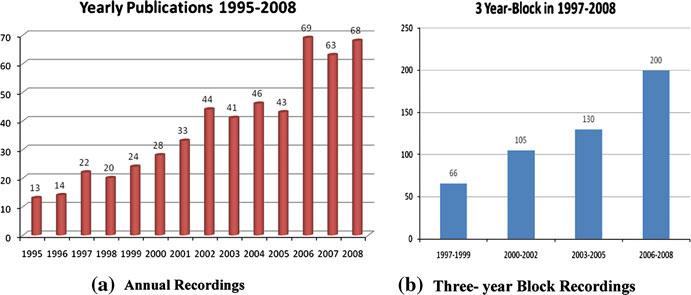
In his update of his report published in 2000, Swann (2010) stated that there is still only a rather limited number of publications and especially limited empirical research evidence on the interrelationship between innovation and standardization. However, he concedes that the literature has made some steps forward in the last ten years. This is underlined by the recent literature review by Choi et al. (2011) on standardization and innovation covering the period between 1995 and 2008, which shows a continually increasing number of publications. 2
Figure 1: Research trends for standardization and innovation for 1995–2008 (Choi et al. 2011, p. 263)
The publications have clearly their focus in the management, business and economics area followed by some specific network technologies or papers on environmental standards.
Figure 2: Major subject domains of the publications on innovation and standardization
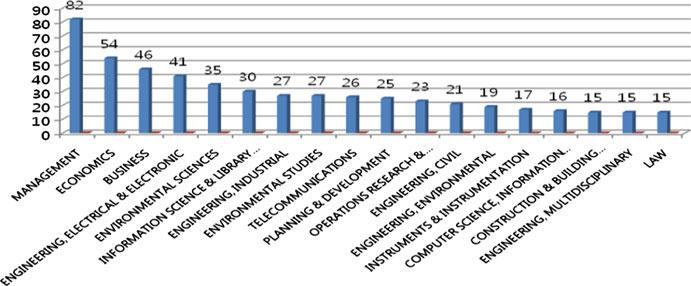
Choi et al. 2011, p. 265
A clustering of the papers revealed the following list of clusters displaying different, but rather heterogeneous dimensions of the interrelationship between standardization and innovation. 3
| Clusters | Descriptions |
|---|---|
| Inter-relationship of Standardization and Innovation | Interrelationship between standardization and innovation; Implementation of standardization as an innovation tool; Policy perspective of technological standards and innovation |
| Diffusion/Transfer of Tech/Knowledge | Standards adoption, and innovation diffusion (model, factor, network); Standards and knowledge transfer |
| Regulation/Integration | Standardization as an integration tool; Regulatory standards and innovation in technology-based industry |
| IPR/Patent/Law | Standards and IPR in a competitive market; Patent, standards, and legal issues |
| Impact and Competitive Strategy | Impact of technology standards in market competition; Standards and structure and modeling; Standardization as a business competition strategy |
| Business Performance | Business development, performance, standards; Standardization for innovation and technological performance |
| Technology and Product | Specific technology development, standards, and innovation; Technology and product design and standards and innovation |
| Quality and Management System | Quality assurance and management system standards for innovation; Environmental management systems standards |
| Service | Role of standards in service innovation; Service, network, and communication standards |
Table 1: Exploratory taxonomy for literature on standardization and innovation 4
In contrast to this data driven and little intuitive taxonomy, Swann (2000) conducted a first comprehensive survey on the existing literature on standards and standardization. Related to innovation, he identified the following factors:
- Standardization helps to build focus, cohesion and critical mass in the emerging stages of technologies and markets
- Standards for measurements and tests help innovative companies to demonstrate to the customer that their innovative products possess the features they claim to have, but also acceptable levels of risks for health, safety and the environment
- Standards codify and diffuse state of the art in science and technology and best practice
- Open standardization processes and standards enable a competition between and within technologies and contribute therefore to innovation-led growth.
Overall, standardization generates standards, which are an essential component of companies' infrastructure. Consequently, they enable innovation, but also try to hinder undesirable outcomes (see references in Swann (2000)). A crucial question is whether standardization overall constrains or enables innovation, which was also addressed in his updated survey (Swann 2010). The perception of standardization as infrastructure combines both impacts, because any type of infrastructure generates opportunities for its users, but also does not allow some options to be realised, i.e. standards reduce the transaction costs and facilitate trade, especially of complex products and across borders. Furthermore, the infrastructure standards build provides the basis for subsequent generations of innovation. By limiting the variety of all available options standards help to focus on specific technologies and consequently promote the development of critical masses, which increases the credibility especially in new technologies attracting further investments and the development of complementary technologies. When technologies have been established, standards allow the exploitation of economies of scale, which generates profits both as incentives to innovate and to re-appropriate the investments into innovation. Innovative technologies and products contain often a higher level of risk for health, safety and the environment, which endanger their acceptance among private and commercial users, but also policy makers. Thus, standards can provide some contribution to the trust into innovative technologies and products by reducing the various types of risks both for the users, but also for society. In cases of strong network externalities economic models help to explain why radical innovations are sometimes considerably delayed by the presence of standards (e.g. Arthur 1989 and Katz and Shapiro 1992). However, standards are not only contributing to lock-ins into old technologies becoming inferior over time, but can also be shaped to avoid these lock-ins, e.g. by designing appropriate interfaces between old and new technologies allowing their simultaneous use or ensuring their compatibility.
Based on the various literature reviews, Table 1 provides a condensed overview of four types of standards and their positive and negative impacts on innovation. 5
| | Positive Effects on Innovation | Negative Effects on Innovation ## Executive summary 1 Companies need to understand the relationship between regulation and innovation. This paper discusses current research on the effects of regulation on innovation at the firm and country levels. 2 This paper focuses on two types of regulation: environmental regulation and intellectual property rights (IPR) regulation. It summarises relevant literature and empirical studies on each. 3 The third section of the paper considers the different impacts regulations have on innovation, considering factors like direct versus indirect effects, and the level of the regulatory framework.
1 Introduction
4 Regulatory frameworks are a critical aspect of modern economies, directly affecting the innovation process at all levels – from individuals and firms to entire countries. Regulators face the challenge of designing regulations that achieve public policy objectives without inadvertently hindering innovation. Innovation is essential for economic growth, productivity, and addressing societal challenges.
5 The traditional view, still prevalent in some circles, posits a contradictory relationship between regulation and innovation. This perspective suggests that regulations impose costs, restrict choices, and create uncertainty, thereby discouraging firms from investing in R&D and innovative activities.
6 However, an alternative perspective argues that regulations can, under certain conditions, stimulate innovation. This "Porter hypothesis" (Porter and van der Linde, 1995) suggests that well-designed environmental regulations, for example, can trigger innovation that not only leads to compliance but also improves competitiveness.
7 This paper aims to synthesize the current understanding of this complex relationship. It moves beyond simplistic views to explore the nuanced ways in which regulation interacts with innovation, drawing on both theoretical arguments and empirical evidence.
1.1 Scope and Objectives
8 This report provides a conceptual framework and an overview of empirical evidence concerning the impact of various types of regulation on innovation. Specifically, it focuses on:
- The direct and indirect effects of environmental regulations on firm-level and industry-level innovation.
- The role of intellectual property rights (IPR) in incentivizing or sometimes hindering innovation, particularly patents and copyrights.
- The influence of regulatory design features, such as stringency, flexibility, and predictability, on innovative responses.
9 The objective is to provide a balanced view and offer insights for policymakers seeking to foster innovation while achieving regulatory goals. The report concludes with a summary and policy recommendations.
2 Environmental Regulation and Innovation
2.1 Theoretical Perspectives
10 The relationship between environmental regulation and innovation has been a subject of extensive debate, primarily driven by the Porter Hypothesis.
11 Traditional view (compliance costs): This perspective argues that environmental regulations impose additional costs on firms for compliance, diverting resources from productive investments including R&D. This leads to reduced profits and a decrease in innovative activities (Jaffe et al., 1995).
12 Porter Hypothesis (innovation offsets): Porter and van der Linde (1995) argue that strict, but flexible, environmental regulations can stimulate firms to innovate. These innovations, known as "innovation offsets," can lead to new production processes, technologies, and products that not only reduce pollution but also improve resource efficiency, enhance product quality, and open new markets, ultimately boosting competitiveness.
13 The key mechanism behind the Porter Hypothesis is that regulations, when properly designed (e.g., performance-based rather than technology-prescriptive), create incentives for firms to search for and implement cleaner and more efficient solutions.
2.2 Empirical Evidence
14 Empirical studies on the Porter Hypothesis have yielded mixed results, reflecting the complexity of the relationship and methodological challenges.
15 Supportive evidence: Some studies find a positive link. For instance, Lanjouw and Miron (2001) found that environmental regulations in the US encouraged patenting in pollution control technologies. Arora and Gangopadhyay (2003) showed that firms facing stricter environmental regulations tend to invest more in green R&D.
16 Mixed or negative evidence: Other research has failed to find strong support or has even indicated a negative impact. Jaffe and Palmer (1997) found a positive effect on environmental R&D but not on overall R&D or patents. Brunnermeier and Cohen (2003) identified a positive relationship between environmental R&D expenditures and environmental innovation but a negative impact on overall productivity.
17 Contextual factors: The impact often depends on the type of regulation (e.g., command-and-control vs. market-based instruments), industry characteristics, and the level of technological development. For example, market-based instruments like carbon taxes or tradable permits are often more effective at fostering innovation than prescriptive standards (Popp, 2006).
3 Intellectual Property Rights (IPR) Regulation and Innovation
18 IPRs are designed to provide creators with exclusive rights over their inventions and creative works, thereby incentivizing innovation by allowing them to appropriate the returns from their investments.
3.1 Patents and Innovation
19 Patents grant inventors exclusive rights for a limited period, typically 20 years, to prevent others from making, using, or selling their invention without permission.
20 Incentive mechanism: Patents are a cornerstone of innovation policy. They address the "public good" nature of knowledge, allowing inventors to recoup R&D costs and profit from their innovations (Arrow, 1962). This incentive is particularly important for industries with high R&D intensity and long product development cycles, such as pharmaceuticals and high-tech manufacturing.
21 Disclosure of knowledge: In exchange for exclusivity, patent applicants must disclose their invention in detail. This disclosure contributes to the public stock of knowledge, facilitating further innovation (Scotchmer, 1991).
22 Empirical evidence: Studies generally confirm a positive relationship between strong patent protection and innovation, particularly in industries where imitation is easy and costly to prevent otherwise. However, the strength of this effect varies significantly across industries (Levin et al., 1987).
23 Potential downsides:
- Patent thickets: An accumulation of overlapping patents that requires innovators to secure licenses from multiple rights holders, leading to high transaction costs and hindering follow-on innovation (Shapiro, 2001).
- Patent trolls: Entities that acquire patents primarily to enforce them against alleged infringers, often without producing goods or services themselves, which can stifle innovation by imposing litigation risks (Bessen and Meurer, 2008).
- Blocking patents: Broad patents that can prevent others from developing related technologies, especially in foundational areas of research.
3.2 Copyrights and Innovation
24 Copyrights protect original literary, dramatic, musical, and artistic works, including software and architectural designs, granting creators exclusive rights to reproduce, distribute, and display their work.
25 Promoting creative works: Copyrights incentivize the production of creative works by ensuring creators can control and profit from their creations. This is crucial for industries like publishing, music, film, and software.
26 Challenges in the digital age: The ease of digital reproduction and distribution poses significant challenges to copyright enforcement, leading to debates about balancing creator rights with public access and fair use in the digital environment.
4 Regulatory Design and Impact on Innovation
27 The impact of regulation on innovation is not monolithic; it depends heavily on how regulations are designed and implemented.
4.1 Stringency and Flexibility
28 Stringency: Extremely weak regulations may not provide sufficient incentives for innovation, while excessively strict or poorly implemented regulations can stifle it by imposing unbearable compliance burdens. An optimal level of stringency is often debated.
29 Flexibility: Regulations that are flexible and performance-based tend to promote innovation more effectively than prescriptive, technology-specific regulations. Performance-based regulations allow firms to choose the most cost-effective and innovative ways to achieve regulatory goals (OECD, 2007).
4.2 Predictability and Stability
30 Predictability: A stable and predictable regulatory environment reduces uncertainty for firms, encouraging long-term investments in R&D and innovation. Frequent changes or unclear regulatory signals can deter such investments.
31 Stability: While regulatory stability is important, regulations must also be adaptable to technological advancements. A balance between stability and adaptability is crucial to avoid locking in outdated technologies or hindering emerging innovations.
5 Summary and Outlook
32 The relationship between regulation and innovation is complex and multifaceted. This report has highlighted that while regulations can impose costs and potentially hinder innovation, they can also act as powerful drivers, particularly when well-designed.
33 Key takeaways:
- Environmental regulations: Can stimulate "green innovation" and improve competitiveness if flexible and performance-based.
- IPR regulations: Patents and copyrights are crucial for incentivizing creative output and R&D, but issues like patent thickets and patent trolls can create barriers to innovation.
- Regulatory design matters: Stringency, flexibility, predictability, and stability are critical factors influencing the innovative response of firms.
34 Future research: More empirical work is needed to quantify the effects of different regulatory designs across various industries and economic contexts. Longitudinal studies would be particularly valuable to capture dynamic impacts.
35 Policy recommendations: Policymakers should:
- Adopt flexible, performance-based regulations where possible, especially for environmental protection.
- Regularly review IPR systems to address issues like patent thickets and ensure a balance between protection and access to knowledge.
- Foster a stable and predictable regulatory environment while maintaining the capacity for adaptation to new technologies.
- Promote regulatory impact assessments that explicitly consider innovation effects.
36 By carefully considering these factors, policymakers can leverage the power of regulation to achieve public policy objectives while simultaneously fostering a dynamic and innovative economy.
References
- Arrow, K. J. (1962). Economic Welfare and the Allocation of Resources for Invention. In The Rate and Direction of Inventive Activity: Economic and Social Factors (pp. 609-626). Princeton University Press.
- Arora, S., & Gangopadhyay, A. K. (2003). Environmental regulation and firm-level inventive activity. Journal of Regulatory Economics, 23(1), 1-21.
- Bessen, J., & Meurer, M. J. (2008). Patent Failure: How Judges, Bureaucrats, and Lawyers Put Innovators at Risk. Princeton University Press.
- Blind, K., & Gauch, S. (2009). Research and Standardisation in Nanotechnology: Evidence from Germany. Journal of Technology Transfer, 34(3), 320-342.
- Blind, K., Jungmittag, A., & Mangelsdorf, A. (2011). The impact of standards on innovation: Empirical evidence for the Netherlands. Journal of Innovation Economics & Management, 1(7), 105-131.
- Brunnermeier, S. B., & Cohen, M. A. (2003). Environmental regulation and firm-level inventive activity in the United States. Journal of Environmental Economics and Management, 45(3), 519-532.
- Choi, D. G., Lee, H., & Sung, T. (2011). Research profiling for 'standardization and innovation'. Scientometrics, 88(1), 259-278.
- De Vries, H. J. (1997). Standardization—What's in a name? Terminology, 4(1), 55-83.
- ISO/IEC Guide 2:2004. (2004). Standardization and related activities—General vocabulary. International Organization for Standardization.
- Jaffe, A. B., & Palmer, K. (1997). Environmental regulation and innovation: A panel data study. Review of Economics and Statistics, 79(4), 610-619.
- Jaffe, A. B., Peterson, S. R., Portney, P. R., & Stavins, R. N. (1995). Environmental regulation and the competitiveness of US manufacturing: What does the evidence tell us? Journal of Economic Literature, 33(1), 132-163.
- Katz, M. L., & Shapiro, C. (1992). Product introduction with network externalities. The Journal of Industrial Economics, 40(1), 55-83.
- Lanjouw, J. O., & Miron, J. A. (2001). The changing nature of patenting: An econometric approach. American Economic Review, 91(2), 297-302.
- Levin, R. C., Klevorick, A. K., Nelson, R. R., & Winter, S. G. (1987). Appropriating the returns from industrial research and development. Brookings Papers on Economic Activity, 3, 783-820.
- OECD. (2007). OECD Environmental Outlook to 2030. OECD Publishing.
- Porter, M. E., & van der Linde, C. (1995). Green and competitive: Ending the stalemate. Harvard Business Review, 73(5), 120-134.
- Scotchmer, S. (1991). Standing on the shoulders of giants: Cumulative research and the patent law. Journal of Economic Perspectives, 5(1), 29-41.
- Shapiro, C. (2001). Navigating the Patent Thicket: Cross Licenses, Patent Pools, and Standard-Setting. In A. B. Jaffe, J. Lerner, & S. Stern (Eds.), Innovation Policy and the Economy, 1, 119-150. MIT Press.
- Swann, G. M. P. (2000). The Economics of Standardization: Final Report for Standards and Technical Regulations Directorate Department of Trade and Industry. Manchester Business School.
- Swann, G. M. P. (2010). The Economics of Standardization: An Update. Innovative Economics Limited.
1 The link between voluntary standards and governmental regulations is quite different in other regions of the world. In Japan, but also China, the standardization activities are under the roof of ministries, which leads to standards being equivalent obligatory like technical regulations. In the United States, technical standards are produced by numerous industry associations and are in general not linked to the regulatory framework.
2 The search was based on an extensive number of keywords in the scientific domains of management, environment, economics, computer and information systems, chemistry and telecommunication and electro-technology.
3 Recently, Narayanan and Chen (2012) present an analysis of 89 papers published in top management journals on technical standards in general. On the macro level, the positive impact on the diffusion of innovation has been confirmed, whereas on the company level they mention only that compatibility is functionally critical when innovative firms desire to shift the locus of standards from an existing new technological system to a new one.
4 based on Choi et al. 2011, p. 271
5 Guasch et al. (2007) introduce a second dimension related to innovation, i.e. the exploitation of network effects; innovative and productive efficiency, reduction of imperfect information and innovation diffusion. Leech and Scott (2011) have applied this approach to so called documentary standards based on Tassey (2000), who introduced standardization as infratechnology. However, this approach does not provide further insights for the purpose of this overview.