Abstract
This paper is part of the Compendium of Evidence on the Effectiveness of Innovation Policy Intervention. It examines the evidence on the policies which have been employed to support users and would be users of the intellectual property system and which can be described as policy or programme support measures. The focus of the review is not therefore upon the IPR system itself, or its detailed development over time. Rather, the focus is upon those policies that seek to help inventors and other commercial actors become aware of the IP system, and explicitly to help them know how they might use it. The review is in five main sections, a short introduction, a conceptual background to orient the reader, a description of the scope of the review, a description of the main findings from the review, and then conclusions are presented. The findings fall into two main sections to cover two fundamentally different forms of support, on the one hand a) programmes and initiatives focused upon public sector organisations, including universities which are often responsible for the development of their own strategies, information and awareness schemes for their own staff and b) government initiatives directed at private sector organisations, principally firms but also at inventors. In each section we have considered the details of the schemes, the assumptions that they make their mode of operation, their targets and look at the validity and appropriateness of their models, and the evidence of their effectiveness and efficiency.
JEL Classification: O31, O32, O34, O38
Keywords: IPR, Codified knowledge; policy
The Compendium of Evidence on the Effectiveness of Innovation Policy Intervention Project is led by the Manchester Institute of Innovation Research (MIoIR), University of Manchester, and funded by Nesta, an independent charity with the mission to make the UK more innovative. The compendium is organised around 20 innovation policy topics categorised primarily according to their policy objectives. Currently, some of these reports are available. All reports are available at http://www.innovation-policy.org.uk. Also at this location is an online strategic intelligence tool with an extensive list of references that present evidence for the effectiveness of each particular innovation policy objective. Summaries and download links are provided for key references. These can also be reached by clicking in the references in this document.
The Nesta Working Paper Series is intended to make available early results of research undertaken or supported by Nesta and its partners in order to elicit comments and suggestions for revisions and to encourage discussion and further debate prior to publication (ISSN 2050-9820). © 2012 by the author(s). Short sections of text, tables and figures may be reproduced without explicit permission provided that full credit is given to the source. The views expressed in this working paper are those of the author(s) and do not necessarily represent those of Nesta.
This report is part of the Compendium of Evidence on the Effectiveness of Innovation Policy Intervention Project led by the Manchester Institute of Innovation Research (MIoIR), University of Manchester. The project is funded by the National Endowment for Science, Technology and the Arts (NESTA) – an independent body with the mission to make the UK more innovative.
The compendium is organised around 20 innovation policy topics categorised primarily according to their policy objectives. Currently, some of these reports are available.
All reports are available at http://www.innovation-policy.org.uk. Also at this location is  an online strategic intelligence tool with an extensive list of references that present evidence for the effectiveness of each particular innovation policy objective. Summaries and download links are provided for key references. These can also be reached by clicking in the references in this document.
Figure 1 Growth of Global University PCT Patents (1980-2010). Figure 2 University PCT Patent Applications (1980-2010)
List of Tables
Table 1 National Patent Counts 2000-2007 (selected countries)
Table 2 Ratio of Licensing Income to Research Expenditure (%) 2000-2009
Table 3 Canadian and US University Start-ups (selected years)
Table 4 UK University Spin-offs (2003 – 2009)
Table 5 AIDA Model
Table 6 EPO Free Services
Table 7 User Classification
Table 8 Key Factors Supporting Quality of Service
Table 9 Key Factors Underpinning Quality of Service..
Table 10 Key Factors Underpinning Quality.......
Table 11 Novartis Internal Training Key Training Goals.
Executive Summary
Aims and Scope
1The IPR systems of the various countries and regions of the world are designed to facilitate innovative activity. Their origin and development have been directed at this goal, and have been long, complex, and at times, surprising. An account of how these developments have served innovators – firms, individual inventors, and now, more recently university academics – and of course the beneficiaries of innovation – would be a significant undertaking, but not one that could be conducted sensibly within 30 pages. For conceptual clarity and relevance to policy makers, this review has focused on those policies which have been employed to support users and would be users of the intellectual property system and which can be described as policy or programme support measures. The focus of the review is not therefore upon the IPR system itself, or its detailed development over time. Rather, the focus is upon those policies that seek to help inventors and other commercial actors become aware of the IP system, and explicitly to help them know how they might use it.
Structure of the Document
2This review is in five main sections, a short introduction, a conceptual background to orient the reader, a description of the scope of the review, a description of the main findings from the review, and then conclusions are presented. The findings fall into two main sections to cover two fundamentally different forms of support, on the one hand a) programmes and initiatives focused upon public sector organisations, including universities which are often responsible for the development of their own strategies, information and awareness schemes for their own staff and b) government initiatives directed at private sector organisations, principally firms but also at inventors. In each section we have considered the details of the schemes, the assumptions that they make, their mode of operation, their targets and look at the validity and appropriateness of their models, and the evidence of their effectiveness and efficiency.
Literature Reviewed
3The review of literature has been world-wide, on account of the fact that, while the UK and the EU IPR systems are different from each other and from those found in other parts of the world, the systems operate with many similar principles. Furthermore, there are a number of international overarching agreements that have sought to ensure that national IPR policy adopts common approaches to certain issues so as to facilitate, for example, global protection of IP rights and international trade in IP rights.
Main Findings
4The scope of our review has included academic reviews of policies and programmes that support users of the IPR system both public and private, and reviews conducted by a number of other bodies such as organisations that are part of the IPR system itself. The most important of these organisations that are part of the IPR system itself are the national patent offices, commonly referred to as NPOs.
5Decisions taken by firms, especially SMES, and by public organisations to deal with their knowledge assets of know-how and codified knowledge so as to optimize their innovation activities are normally complicated and difficult decisions to make. Very often immediate patenting of their innovations following discovery is the most inappropriate step of all for some firms and inventors. And yet it is a widely held view that patenting is the only and best way to safeguard and protect a firm or inventor's intellectual property and therefore defend, and extend a competitive advantage.
6Support on the use of the IPR system and upon the formation of an IPR strategy is mediated support in all economies reviewed in that it is provided by major institutional and legal structures. On one hand we have the TTOs which provide the context for the university / public sector; on the other we have the NPOs and a range of public and private operators serving the firm and inventor sector. Within the TTO sector, the individual inventors are working within an institutional structure which may provide incentives to a small degree that affects their research efforts, and to a large extent directs their invention and innovation practice, including patenting and licensing. Differences between TTOs in terms of the support they give, and their views of strategy therefore have major implications for the way in which knowledge and invention impacts upon the economy.
7There is an evident tension in the initiatives taken to promote awareness, knowledge and use of the IPR system between public and private provision. This distinction of core and periphery is the difference between a core set of services that are provided free of charge to all that wish to use the IPR system, or which are provided at a subsidized rate by NPOs or government bodies, and a wider set of services that are commercially provided by private organisations.
8Within this context, excessive public provision is seen as a threat to private services and such provision carries the risk of crowding-out private sector suppliers. This core periphery distinction is subject to change over time however. Over the last two decades, the IT revolution, the development of databases has led to a large rise in the level of free including on-line services that can be offered by the public authorities.
9The literature does not address as other literatures with an evaluation aspect to them might do the issue of the effectiveness of support schemes and their economic impact. We believe that the reasons for this are that it is exceedingly difficult to frame a model of impact of information and advice, and to find evidence of such impact taking place as a result of support services by themselves. Where evaluations have been undertaken, they are relatively simplistic and limited, noting the overall cost of action, and the number of times advice has been given. In other words, evaluation in this policy context mostly takes the form of auditing rather than evaluation, with clearly consequences for understanding the actual impact of measures.
10Attribution of the changes in the use of the IPR system, for example patenting, are difficult to attribute to changes in the way in which firms are advised and supported in their use of the IPR system. No studies we have covered have been able to distinguish between changes at the institutional level and changes in the support provided to explain changes in actual IPR behaviour of firms. There is clear evidence that changes to structure has changed patenting behaviour, for example Bayh-Dole in the US, and similar legislation elsewhere; but attempts to distinguish these causes of change in behaviours relating to IPR from changes arising from support initiatives have not been conclusive.
Policy Challenges
11The development of an understanding of the impact of support services upon users of the IPR system is desirable but remains a significant challenge for those wishing to establish the appropriateness, effectiveness and efficiency of policy actions. The difficulty identified by MacDougall (2003) that "one size does not fit all" – with the implication that the tailoring of support is essential - remains a significant barrier to the development of support to those wishing to exploit their intellectual property.
12Frameworks for support for users of the IPR system generally conform to the two-fold system, with TTOs on the one hand and NPOs and related agencies on the other. However, within TTOs are influenced by and assisted by further initiatives. In the UK for example the HEIF support has provided an important further support for patenting activity which has given substantial grants to a number of institutions.
13The attribution of impact to policy support measures is not an easy task. It is difficult in principle let alone in practice to distinguish for example between changes attributable to the system itself and changes that result from policy support measures. The picture may be further complicated by the use of support measures that have an economic effect upon users of the system. Such measures include subsidies and tax breaks. These forms of policy are beginning to emerge as new forms of support measure, and while there may be some indication of initial impacts on the extent of patenting behaviour, the effect upon innovation and economic growth has yet to be demonstrated.
1 Introduction
This review has focused on those policies which have been employed to support users and would be users of the intellectual property system. The focus of the review has not been upon the rules, the legislation or the legal framework of the IP system, or its detailed development over time, see for a discussion of development of IPR system nationally and internationally (Roffe, 2000). Rather, the focus is upon those policies that seek to help inventors and other commercial actors become aware of the IP system, and explicitly to help them know how they might use it (MacDougall, 2003).
Before explaining what policy and programmes we have sought to review, it is necessary briefly to define the system with which such policies and programmes are concerned, namely the IP system. We then seek to show how, within this context, the main innovation support measures, how they have been established, their principle modi operandi, and, where the evidence from a limited review of the academic and policy literatures permits, their successes.
2 Conceptual Background
2.1 The Intellectual Property System
The intellectual property system is that system comprising of the laws, regulations and institutions, including the courts system, that exists to designate, define, and grant intellectual property rights (to individuals and corporate bodies), to settle disputes that arise over such rights, increasingly to trade intellectual property, and to provide information and services relating to all these aspects. This system will include, most importantly, at national level, an office often linked to the trade ministry that is concerned with the examination of applications for grant of the right of intellectual property to inventions which are submitted and or concerned solely with the grant of such rights. National offices may provide extensive services similar in form to a land registry that allows applicants and holders of IP to view the corpus of existing IP, thereby assisting with process of application by identifying the existing rights, and making possible the process of application. In recent years, with the rise of information technology and globalization, a range of international organisations have come into being to support, regulate and management national and international IPR systems. This has led, to important convergences, including, in the EU, the legal frameworks associated with the granting of European Patents through the European Patent Office, and, internationally through the Patent Cooperation Treaty Procedure (PCT).
The IPR system provides for a range of monopoly rights, the most common of which are patents, but three other forms of right which are considered economically important are copyright, trade mark, and design right. While these three other rights have important economic role, it has not been possible to consider them specifically and individually, although the institutions of the IPR system, including the courts, and the support mechanisms to provide help to those using or seeking to use the IPR system, often deal with these other forms of right as well.
The objectives of the IPR system are to provide a monopoly right to use to give incentives to innovators ex ante and protection ex post to engage in economic activities that are distinctly new and therefore thought beneficial to society. It should be noted, most importantly, that the IPR system is therefore established to promote innovation, and it does so through the grant of temporary monopolies. As such it is a way of encouraging innovation through the protection of one person's ideas or knowledge. In the US Constitution, the so-called “copyright clause" (Article I, Section 8, Clause 8) gives the power to Congress: “ To promote the Progress of Science and useful Arts, by securing for limited Times to Authors and Inventors the exclusive Right to their respective Writings and Discoveries."
The design of the IPR system must consider a wide range of issues and it is not within the scope of this review paper to consider all of them, suffice it to say that the operation of the IPR system in a manner which achieves the objective of increasing innovation is by no means simple, there being a range of challenges to be met and balances struck between competing requirements. Key issues for the design of the system, many of which give rise to the complexity that results in the need for support measures are as follows:
- To what kinds of knowledge should the protection of intellectual property be given? What is patentable subject matter, for example software, business methods?
- How tightly drawn should be the specifications of property – what should be the breadth and height that a patent claim must reach to be capable of grant?
- For how long should the monopoly right be given? Are utility models appropriate?
- What are the correct penalties for infringement of IPRs?
- What configuration of the IPR system will lead to the most innovation?
- What account should be taken of sectoral differences in innovation practice? Should the pharmaceutical sector be treated different from, for example, the chemicals sector, or the entertainment / digital industries?
These many questions relate to the design of the IPR system and they are each and every one questions of enormous economic and social importance (Hargreaves, 2011). But they are also questions of great difficulty in that the right answer to any of them is not clear cut. The fact that such questions can be posed is a strong indication of the complexities involved in the design and operation of intellectual property systems. Such complexities necessarily apply to those who use the system themselves as innovators, inventors, researchers, intellectual property professionals, and consultants. Our review therefore does not seek to address these questions, each of which is a significant policy literature by itself, but focuses on how government, qua a key IPR regulator and key influencer of the system can, through the provision of support and design measures, address the performance of those using the system itself.
2.2 Support Measures or Changes to the System?
The existence of the IPR system could be seen to provide the necessary and sufficient conditions for innovation to take place. The IPR system provides a powerful incentive – the granting of an explicit monopoly power to exploit an innovation and a strong ex ante incentives to innovators to invest, explore and commercialize their ideas. However, long experience shows that the IPR system does not provide this guarantee. The presence of intellectual property framework is never by itself sufficient to ensure that all inventors can acquire all the intellectual property protection that they want, when they want, at a price that they can afford, a situation that might be expected to occur where markets and regulatory systems work efficiently. A range of difficulties exists which governments have sought to deal with in various ways.
As we note above, governments, and the courts, can of course change the system if they believe that the system is not working properly; but they can also provide a range of measures, what we call support measures here, to address the problems of the IPR system when no change to the system itself is, for whatever reason, proposed. The decision to change the system or to provide measures to support users of the system is not a simple dichotomy. There is, however, a strong interaction between the way the system is designed and the kinds of action that are needed to help innovation actors make best use of it.
2.3 The Approach
Our review makes therefore a clear distinction between the IP system and initiatives that are taken by government to help users operate within such a system. A small overlap between these two categories might be considered to exist in that the information provided by national patent officers (NPOs) is both part of the system and helpful in that the provision of this information in terms of its quality and character may influence the ease of use of the system and could constitute "assistance". In practice therefore there are some difficulties in drawing a clear line between information provided by the respective NPOs to help users of the national (or international) IP registration and granting system on the one hand and government policy which is directed at helping the users of these systems do so more easily on the other. Indeed, when government mandates an NPO to make changes to the system of IPR registration in regard to ease of use, such a policy constitutes both an example of structural change and a specific policy affecting ease of use by promoting awareness. In our review we have concentrated upon specific initiatives that have been launched with government support to improve the position of those wishing to commercialize their inventions.
We believe that initiatives that promote use of the IPR system to be capable of division into two broad types: a) programmes and initiatives focused upon public sector organisations, including universities which are often responsible for the development of their own strategies, information and awareness schemes for their own staff (to which could be added schemes devised by firms for their own staff, and to address a specific requirement see for details of such a scheme recently developed at Novartis (Pilote et al., 2011)); and b) government initiatives directed at private sector organisations, principally firms but also at inventors.
We divide our review into two to cover these two different forms of support. In each we consider the details of the schemes, the assumptions that they make, their mode of operation, their targets and look at the validity and appropriateness of their models, and the evidence of their effectiveness and efficiency. We also consider those closely related programmes of support that are designed to work in conjunction with initiatives to increase awareness of and capability with IPR systems. We note, further, the existence of new forms of information provision by a new class of service firm that has emerged with the Internet. A good example of such service is Google Patent Search which from 2011 is claimed to provide access to the whole USPTO body of patents.
3 Scope
The scope of our review has been world-wide, on account of the fact that, while the UK and the EU IPR systems are different from each other and from those found in other parts of the world, the systems operate with many similar principles. Furthermore, there are a number of international overarching agreements that have sought to ensure that national IPR policy adopts common approaches to certain issues so as to facilitate, for example, global protection of IP rights and international trade in IP rights.
The scope of our search has included academic reviews of policies and programmes that support users of the IPR system both public and private, and reviews conducted by a number of other bodies such as organisations that are part of the IPR system itself. The most important of these organisations that are part of the IPR system itself are the national patent offices, commonly referred to as NPOs.
While NPOs disseminate a variety of types of information to those concerned with the operation of the IPR system, and there are additionally other government funded actors who also assist users and prospective users of the IPR system through information services of various kinds. There are also, in the UK, a number of organisations that have public-private status, in that they are jointly funded by private and public. One such organisation is Ideas21, which acts, in the UK as a means of promoting understanding of IPR amongst the firms and inventors sector, and seeking to help government develop policy in this area. Furthermore, there are a significant number of private actors who provide information and advice on IPR. These include those legally qualified and designated by statute to provide legal advice and prosecute patent applications to grant and litigate to deal with infringements of IPRs, and to advise on all other aspects of IPR registration, and defence; but there are also a range of businesses offering information, advice and consultancy on IPR including IPR strategy that are not defined by statute but whose presence is important.
The very long history and development of the IPR system and its close relationship with government policy in two major areas namely regulation and competition law has required us to focus our work on support measures for the main institutional actors of the system as a discrete but important part of the process of knowledge generation and exploitation. It has been with some reluctance that we have not included explicitly within the remit of this study the issues of regulation of the IPR system by statute, the role of competition policy and its link with knowledge production and use, and the related developments occurring through case law to legal systems. To include such large areas would have extended the scope of our work to what was more than manageable and would very possibly have drawn attention away from the main lessons we wished to draw about the impact of government support policy. Our focus makes the key distinction on the basis of the type of actors we believe are the main targets for government policy: on the one hand private sector firms and on the other, the publicly funded knowledge generation institutions, including universities and government laboratories. Both have been significantly influence by government supported measures intended to stimulate knowledge production and to encourage is transfer to actors in the economic system thought more able to exploit it commercially. The distinction we made between the types of actor targeted by policy provides the main organizing principle of the report: a) measures targeted on firms that develop capability and provide information; and new incentive structures, including rules and funding arrangement that have had in a number of cases important effects on the publicly funded knowledge production system.
4 Summary of findings
4.1 Programmes and Initiatives Focused upon Public Sector Organisations
We turn now to instruments or mechanisms directed towards supporting the interface between public research activities and the private sector commercialisation.
4.1.1 Basic Rationale
Over the last two or three decades various policies avenues have been explored for promoting the commercialising of public research results. Governments concern with the creation, ownership and exploitation of intellectual property emerging from publicly funded research organisations (PRO) is driven by three factors (OECD, 2003). Firstly, the existing evidence that the output of public sector scientific research (publications and intellectual property) contributes to technological innovation and economic growth. Secondly, as important funders of public research, they have the responsibility to ensure that the IP generated is diffused broadly and contributes to economic and social development. And thirdly, given the growing complexity of financing and performing research, governments have a role to provide legal and regulatory frameworks for IP that can support not only the education and research missions of PROs but innovation.
In this section of the report we focus on the emergence and impact of technology transfer offices (TTOs). These have featured prominently in policy discussions about the role of universities in driving innovation agendas forward. TTOs are the visible face of the commercial dimension of university and represent the formal mechanism of knowledge transfer of the 'connected university' (Kitson et al., 2009). In the following Sub-sections (4.1.2 and 4.1.3) we outline the various instruments and their development in recent years before summarising impacts in Sub-section 4.1.4.
4.1.2 Legislating for University innovation
While universities have long interacted with industry and served as sources for technological advancement, this role has intensified in recent years as additional incentives/pressures have been brought to bear on them to play a leading role in furthering economic innovation and development. There are many reasons for this (Bercovitz and Feldmann, 2006), but perhaps the most compelling one relates to government policies aimed at encouraging universities to raise the economic returns of publicly funded research by utilizing the intellectual property created during the research process. The kinds of initiatives pursued to this end were based on the assumption that the most important channels to support innovation and economic growth were those of patent licensing and the formation of university 'spin-off' firms (Mowery, 2011). Achieving the former necessitated removing any legal or other barriers to universities interacting with the IPR system hence, as discussed below, a variety of legislative support frameworks emerged across different countries.
4.1.2.1 Paving the way for change
The idea of university patenting raises fundamental issues about the incentives and tensions between public and private knowledge. As Bruneel et al., (2010) emphasise, the primary motivation of firms' knowledge creation activities is the appropriation of knowledge for private gain. In recognising this, the institution of the patent tries to strike a fine balance between the private interest and public interest by providing limited monopoly rights but, in return, makes the knowledge public so that it may be available to others to build upon to develop further new knowledge (Verspagen, 2006).
As part of an open science system, universities usually operate under a different incentive scheme from that associated with patenting, that is one of patronage (David, 1994). They receive public funds to develop basic knowledge, knowledge often without immediate applicability. This kind of knowledge is not addressed by the patent system as firms, motivated by profit, are likely to under-invest in basic research with an opaque returns horizon (Arrow, 1962; Nelson, 1959). In enabling university patenting, universities are under the influence of two different incentive systems, patronage and property rights, and this raises the fundamental question that Verspagen (2006) so succinctly posed:
Why would it be necessary to provide an incentive, in the form of a patent, for research that has been financed by public money and to which no individual person, firm or organization can hold any rights that restrict the free flow of knowledge through the economy?
This is an extremely difficult question to answer and the principal argument for universities patenting given in the academic and policy literature is that this will facilitate technology transfer to firms. The supporting logic is that firms will not make the additional investments to transform basic knowledge (created by universities) into applied knowledge unless they can be assured that they have the exclusive right to do so. This is only possible if universities patent their discoveries and are therefore in a position to grant exclusive licenses to firms.
Few will disagree that the landmark event that signalled the onset of policy changes directly or indirectly affecting universities across the world took place in the US with the passing of the Bayh-Dole Act into law in 1980 (Apple, 2008). In effect this legislation institutionalised intellectual property rights of American universities with respect to federally funded research. While some universities had been involved in exploiting intellectual property through patent ownership since the 1920s the Act provided the first dedicated legal framework that enabled American universities to own inventions and to be able to exclusively license those inventions. It simplified an existing complicated process by replacing the web of rules and procedures for university technology transfer to industry across the numerous government agencies funding university research with a unified framework (Sampat, 2009). Universities were additionally required to establish patent policies for their employees, to actively seek patent protection and to encourage the development of their inventions.
By the end of the 1990s, several European, Asian and other high-income countries had in place either new legislation or were employing existing law to pursue objectives that were at least similar in spirit to the Bayh-Dole (OECD, 2003). The UK and Spain were among the early adopters of university IP ownership in Europe. In the UK the appropriate legal framework was in place with the Patent Act of 1977 which gave employers the legal entitlement to employees' inventions. However, while there were existing arrangements for dealing with academic property rights, it was only after the White Paper Realising our Potential (DTI, 1993) called upon universities to play a key role in national innovation and competitiveness that university patenting activity began to increase (McDonald 2009 cited in Geuna & Rossi, 2011). Spain too started to develop a regulatory framework very similar to the US with its University Reform Laws in 1980s, although it did not appear to have been directly inspired by the US model.
Other European countries such as France and Greece had structures in place for institutional ownership, but these were not enforced. University professors and teachers in France held the status of civil servants (Geuna & Rossi, 2011). This gave ownership of their patent rights to their university employers. Universities however chose not to retain these rights as prevailing sentiment was that this was not productive for knowledge diffusion or attracting industry funding. Such thinking changed with IPR awareness campaigns as part of new legislation aimed at improving the commercialization of university invented technologies, of which the Innovation Act of 1999 is a cornerstone (Lissoni et al., 2008).
National regulations defining university ownership of IP from research across European countries thus vary widely and in some cases changes in perspectives on university commercialisation were tied to other more general reforms (Geuna & Rossi, 2011). Among the majority of European countries for example, a key issue was to address the status quo in which IP ownership was assigned to the faculty inventor – the professor's privilege or to firms that funded the researchers, rather than to the universities. Most, but not all of them have subsequently moved away from inventor ownership of intellectual property rights towards university or PRO ownership. The transfer to institutional ownership occurred in Germany, Austria, Denmark, Norway and Finland during the period 2000-2007. However professors' privilege was preserved in Sweden and Italy where it was introduced in 2001 (Geuna & Rossi, 2011).
In Asia, IP (patent) rights were transferred to public research institutions with similar legislation in 1998 and 1999 respectively and the Republic of Korea implemented similar policies in 2000 (WIPO, 2007; WIPO, 2011). While efforts are still emerging in other middle and low-income countries they have tended to follow the Bayh-Dole direction: India, Brazil, South Africa, Malaysia, and Jordan for example are debating or have recently passed legislation modelled on the Bayh-Dole Act (Sampat, 2009).
4.1.3 The rise of the Technology Transfer Office (TTO)
TTOs emerged as the principal organisational structure that was established by universities to facilitate the transformation of university created knowledge into wealth generating innovations. Whilst not directly created by Bayh-Dole legislation, this organisational form quickly became the mechanism of choice for facilitating the widespread transfer of academic research results into practice in developed and developing countries.
TTOs effectively serve an 'intermediary' function operating between university scientists and firms, entrepreneurs or venture capitalists, potential partners in the drive to commercialisation. In a sense TTOs solve a double ignorance problem in that they bridge the gap between scientists, who do not know which firms can make use of their discoveries, and firms who do not know which scientific discoveries might be useful to them (Baldini, 2009). TTOs therefore facilitate commercial knowledge transfers of IP that results from university research through patenting technologies and licensing to existing firms or through start-up companies (Siegel et al., 2007). Thus there may be potentially important economic impacts associated with the activities of TTOs. Not only can university revenue streams can be enhanced through licensing agreements and university-based start-ups or spin-offs for example, but such activities can provide a foundation for employment creation opportunities for university-based researchers and or students and generate local economic and technological spillovers via stimulation of additional R&D investment and job creation.
Funding models of TTOs varied from country to country developed to fit respective cultural, political and economic conditions. The following examples drawn from (Young, 2007) illustrate: In the UK, in the late 1990s the government introduced various policy initiatives and funding streams to stimulate university industry cooperation. Some universities created separate companies to commercialize IP, especially where the innovations were thought to have potential to serve as foundations for spinout companies. Subsequently the growth and development of TTOs have been stimulated by direct government funding through the Higher Education Innovation Fund in England and Wales (HEIF). Initially, HEIF funding was awarded through a competitive process but the model evolved to a direct distribution one based on a formula funding process that takes into account institutional research capacity (quantity and quality) and TTO performance measures.
By contrast, the US and Australia provided no government funding for TTOs. In the former, the Bayh-Dole Act mandated that part of the commercialisation income can be used for funding the administration of the technology transfer function. The remainder goes to rewarding the inventor as an incentive to participate in technology transfer and for supporting education and further R&D. Universities thus determine the distribution of commercialisation income with allocations for TTO operations usually ranging from 10% to 25%. In most cases, the TTO is subsidised from internal sources during phases of operation but the subsidy is reduced over time as income is realised from license agreements.
In Australia, TTOs are directly funded by host organisations. Two primary models have emerged: the formation of an external company, and the establishment of an internal institutional department or office. Under the company model, cash flows are generated through a variety of related business activities such as consulting, conference management, and professional development courses. This income stream enables the company to support the organization's technology transfer function. In some cases, university provide seed funding to initiate the company's operations. By contrast under the internal-office model, funding is provided directly to the TTO as it is considered to be part of the central administrative functions.
In China most TTOs – called ‘technomarts' operate as associated private companies, solely owned by the corresponding university and initially supported with university funds. As private companies, TTOs are very active in business-development services for example setting up incubators, assisting small and medium-sized enterprises prepare business plans, helping develop spinout company requirements and investing in new spinout companies with university-based venture funds. Often TTOs negotiate for equity shares in new university spinout companies and may wholly own some spinout companies. According to WIPO (2007), income generated from university industry collaboration in China is distributed with 50-80% going to the R&D team, the university taking 10-25% and the TTO taking 10-25%. TTOs are expected to become self-sufficient from their equity holdings and the income received from licensing and other related business development activities.
As the cases outlined above show, two themes are common in most international models. Firstly, the TTO typically is allocated a percentage of the income stream from the commercialization of innovations and secondly, it is expected to eventually become self-supporting. The extent to which this is possible depends not only on the strengths of the underlying research base but on the quality of the TTO. In respect to the former, particularly in Europe, it is more than likely the vast majority of universities will have few research results of sufficient value to justify an attempt to monetize the results. This has not received recognition in much of the TTO literature (Grimaldi et al., 2011) although the quality issue has been commented on by the Lambert Review of Business-University Collaboration (HM Treasury, 2003) in the UK which recognised it as potential barrier to the commercialising IP from higher education institutions (HEIs). Moreover it argued that (at that time) in the UK very few HEls had a strong enough research base to sustain their own in-house offices of this kind even though most HEls were attempting to do so.
4.1.4 Technology Transfer Performance
4.1.4.1 Growth of Patenting
With limited indicators available for understanding about the complex process of knowledge transfer between universities and industry, researchers and policy makers revert to data on patents and licenses. These are fundamentally inadequate to the task but at best provide a partial understanding of the on-going dynamic of university commercialisation. WIPO (2011) has recently undertaken a comprehensive analysis of the growth of university patenting activity using patents registered under the Patent Co-operation Treaty (PCT). PCT patents enjoy the advantage of being comparable across countries as there is a unified procedure for filing patent applications for all signatories of the treaty compared to cross country difference under national patent systems.
Figure 1 shows the global changes in university PCT applications steadily increasing from well below 1000 in the early 1980's to over 10,000 by 2010 equivalent to 6 per cent of the share in total PCT applications. The bulk of these applications as Figure 2 shows come from universities in the United States which account for 56 per cent of applications followed by Japan and the UK at 9 and 7 per cent respectively.
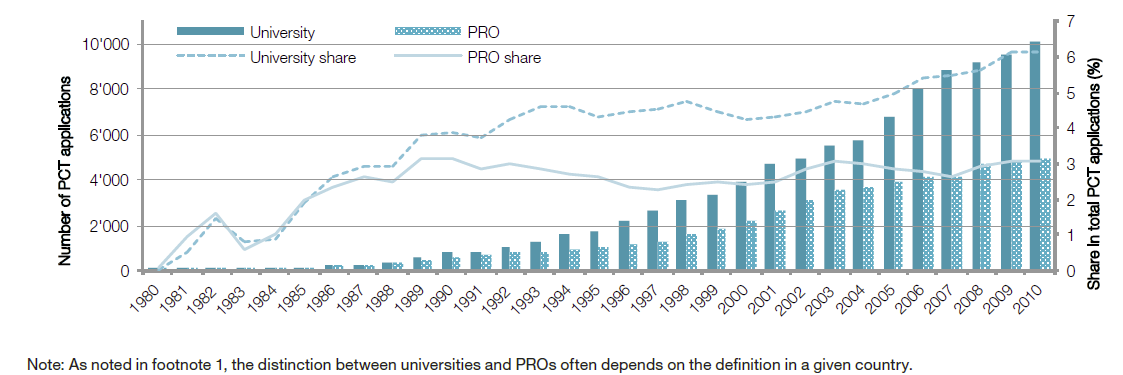
Figure 1 Growth of Global University PCT Patents (1980-2010)
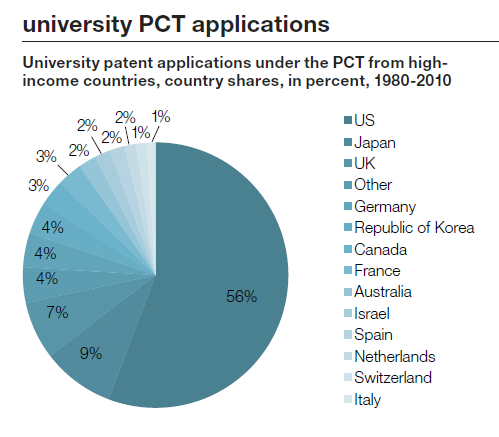
Figure 2 University PCT Patent Applications (1980-2010)
Table 1 shows patent counts for selected countries at national patent office level. Apart from comparability issues due to difference in procedures across different national patent offices, such data can capture the full significance of university patenting activity within countries. This is so because some universities may not be inclined, perhaps for strategic reasons, to incur the additional costs of seeking international IP protection for all patents. The table exemplifies a variety of trends. Germany had a three-fold increase in university patenting between 2000 and 2007 while UK patenting was strong but suffered a relative decline after peaking at 911 in 2003. Starting from a relatively similar position in 2000, Brazil outperformed Italy with a five-fold increase over the period compared to a three-fold increase in Italy. Israel showed a decline in activity after 2002 although there appeared to be a slight recovery toward the end of the period.
| Universities |
2000 |
2001 |
2002 |
2003 |
2004 |
2005 |
2006 |
2007 |
| Germany |
231 |
240 |
357 |
487 |
509 |
563 |
670 |
647 |
| UK |
897 |
942 |
971 |
911 |
770 |
803 |
824 |
734 |
| Brazil |
60 |
65 |
162 |
176 |
187 |
233 |
246 |
325 |
| Italy |
66 |
108 |
62 |
26 |
139 |
133 |
186 |
197 |
| Israel |
61 |
77 |
112 |
66 |
36 |
21 |
68 |
70 |
Table 1 National Patent Counts 2000-2007 (selected countries)
Quoting data on both university and public research offices available from various national reports or studies, WIPO(2011) reports a doubling of applications in France reaching 724 between 1996 and 2004. Using different a data source Geuna and Rossi (2011) confirm a broad upward trend in European patenting since 2000, partly due to the entry of new universities with active TTOs and improved performance from existing TTOs. The increase is greater for countries with more recently established knowledge transfer infrastructures, as in Italy and France for example, where the number of university-owned patents was on the rise between the mid-1990s and the mid-2000s.
Elsewhere, in Asia, Japanese university applications increased from 1089 in 2000 to 7,151 in 2009 while in the Republic of Korea applications were reported growing at an annual growth rate of 41 per cent from 2000 to reach 9,980 in 2008. These efforts are dwarfed by China however where university applications grew at 44 per cent annually from 2000 to reach a staggering 17,312 in 2006 thus making Chinese universities some of the most active patenters in the world(see also Li (2011)).
4.1.4.2 Impact of the legislation
On the basis of the evidence presented above there has been substantial growth in academic patenting and researchers have tried to assess the extent to which this was related to the legislative changes or whether the increased propensity to patent was fuelled by other drivers. In relation to the US, Mowery et al. (2001) argue that Bayh-Dole was only one of several important factors behind the rise in university patenting and licensing activity and in fact there was growth in university patenting long before the act. This was partly driven by changing technological possibilities associated with biomedical and pharmaceutical research during the 1970s. This position is supported by Rafferty (2008) who also highlights other changes in the legal environment in the early 1980s that make it difficult to interpret any positive patenting effects as being statistically due to the Bayh-Dole alone. EU researchers reach a similar conclusion although for different reasons. Geuna and Rossi (2011) for example, point to a range of support policies implemented at national level that makes it difficult to ascribe the growth in university patenting to changes in IPR legislation alone. These include for example various seed funding and entrepreneurial activity schemes operated through the Higher Education Funding Council in the in the UK, federal subsidies for regional patent exploitation institutions in Germany and Danish funding for the creation of technology transfer infrastructure following the introduction of institutional ownership.
Recently some researchers have begun to comment on what is perceived as a slowing down in academic patenting activity, mainly by universities in the West. Leydesdorff and Meyer (2009) refer to this as the withering away of the Bayh-Dole effect. Wong and Singh (2009) showed that based on patents registered at the US Patent Office, the patenting growth rates of 281 leading research universities fell from 12.5 percent annually between 1995-2000 to -0.9 percent between 2000 and 2005. North American universities in the sample went from 11.5 percent growth in the earlier period to -2.0 percent over 2000-2005 while those from Europe, Australia and New Zealand went from 26.1 percent down to 3.4 percent in the later period. Using data from the USPTO and the EPO, Leydesdorff and Meyer (2009) suggest that despite measurement problems, the downward trend is robust and conjecture that it reflects the changing nature of competition among universities where international collaborations and co-authorships have become more important in research assessment exercises and international benchmarking than university industry relations.
4.1.4.3 Academic Patenting: negative impacts?
A growing literature has identified and examined various possible negative side-effects of academic patenting. Patenting can limit the freedom of scientific enquiry, change the nature of university research, create imbalances within the academic system and induce universities excessively to favour applied research at the expense of both basic research and education and training (Andersen and Rossi, 2010). The debate around academic patenting has focused mainly around three issues (see for example Baldini (2008) for a comprehensive review). The first is whether academic patenting has reoriented research agendas from basic research towards more applied research activities with immediate commercial potential and relatedly, whether such an emphasis has affected researchers' productivity in terms of publication rates. The evidence of both these issues is mixed. Azoulay et al. (2006) found that patenters may be shifting their research focus to questions of commercial interest in biotechnology while Thursby and Thursby (2002) find that the increasing university licensing across 64 US universities is not due to the production of more applied research but rather to an increased willingness to license available inventions. In a later paper, Thursby and Thursby (2007) analysed the research outputs of 3241 scientists from six major US universities. They found that between 1983 and 1999 the share of research going to 'basic' scientific journals has remained relatively constant while there was a tenfold increase in the probability of patenting. Fabrizio and Diminin (2008) found that the citation intensity of researchers who patented repeatedly declined suggesting a possible fall in research quality or impact and indicative of a possible shift away from high quality fundamental basic science. By contrast Rafferty (2008), using both aggregate data and individual university data on university R&D, noted a shift toward undertaking more basic R&D by US universities, a shift which predated the Bayh-Dole Act.
Evidence on the impact of patenting on publication productivity seems less contentious as some empirical research using patenting and licensing fail to find evidence of a negative effect of patenting on the number of publications. Calderini and Franzoni (2004), for example, examined data for Italian scientists working in engineering, chemistry and nanotechnology (new materials). They found a positive relationship between patenting and publication quantity and quality although there was evidence of publication delays associated with academic patenting. Breschi et al. (2008) found that Italian academic inventors were more prolific and produced higher quality papers compared to non-patenting colleagues. Moreover, the beneficial effect of patenting on publication rates lasted longer for serial inventors. For the US, Stephan et al. (2007) show that only a small proportion of faculty in top US universities were involved in patenting and for those there appears to be a positive relationship between patenting and publishing. Azoulay et al. (2006) using life science data found patenting was positively related to publication rates but had no effect on the quality of publications. In a subsequent paper, Azoulay et al. (2007) suggested that patenting was probably associated with an increase in productivity as they found that patents were preceded by strong publication activity in the year leading up to the patent application.
The second set of issues relate to potentially negative impacts of academic patenting on the norms of open science. There is an inherent tension between the conventions of academia which advocate the publishing of research results and open discussions among colleagues on the one hand, and firms which seek to protect the value of their knowledge investments, on the other. Such differences can lead to various difficulties not only in respect to information dissemination but also in possible research directions and access to research results. Van Looy et al. (2006) point to a number of empirical studies that have shown a link between industry support for research and restrictions regarding the disclosure. Among them the early study by Blumenthal et al. (1996) provide evidence on delaying publications and information sharing restrictions to enable sufficient time for patent applications by firms, to protect the financial value of research results, or to avoid undermining the firm's competitive status. In a recent study, Murray et al., (2009) examine whether formal IP restrictions limit diversity and experimentation in follow on research. Following the lifting of restrictions on important patents about mouse genetics for downstream research they found that the granting of control rights to researchers and the subsequent openness favoured both follow-on research and an increased diversity of research lines. The authors argue that restrictions on scientific openness limit diversity and experimentation in upstream academic research.
The third related set of issues relate to the debates of the anti-commons hypothesis. These refer to the idea that the privatization of the scientific commons reduces the benefits from scientific progress. There are concerns that in the biomedical field in particular, the fragmentation of property rights may impede the development and commercialization of promising therapeutics and diagnostics (Montobbio, 2009). Researchers have approached this in various ways. Among the more recent studies, Murray and Stern (2007) based on a sample of 169 patents associated with papers published in Nature Biotechnology, analysed citation patterns before and after a patent was granted. They found that citation rates declined between 10 and 20 per cent and researchers with public-sector affiliations were the ones most severely affected. This provides some evidence that the diffusion of scientific research was being affected by trends in patenting university created knowledge. These results were subsequently confirmed in Huang and Murray (2010) in regard to patents about human genes, and particularly in the presence of patent thickets and ownership fragmentation.
Approaching the problem from a slightly different perspective Rosell and Agrawal (2006) analysed whether knowledge from university research was being disseminated to a narrower variety of users. Using the National Bureau of Economic Research patent database they calculated a Herfindahl type measure of the concentration of patents to compare university versus firm patents and estimated whether patented university inventions were more widely disseminated than those of firms. They found that the 'university diffusion premium' a measure of the degree to which knowledge flows from patented university inventions is more widely distributed than from those of firms – declined by over half between the early and late 1980s. This the authors suggest provide evidence that the increasing trend towards formal intellectual property protection has restricted the breadth of knowledge flows
In another study, Fabrizio (2007) shows that increase in university patenting is associated with a slowing pace of knowledge exploitation. Using US patents, Fabrizio finds that citation lags in industrial patents are increasing as university patenting increases. This is indicative of a slowing down in the pace of knowledge exploitation and it is found to be greater in technology areas that rely more heavily on public science (medical preparation and semi-conductors) as an input to the innovation process. Such evidence Fabrizio concludes, appears consistent with the prediction that the increase in formal IP rights for university research hinders knowledge transfer between university and industry, and impacts negatively on industrial innovation that relies on university-generated knowledge as an input to the innovation process.
4.1.4.4 The Impact of TTOs on Licensing
But as hinted above patents registrations or applications only tell a small part of the technology transfer story. The key measures used in the literature for assessing the performance of university commercialisation relate to the number of licences issues and the associated licensing income. Such data are only available for a few countries and tend to be collected using different methodologies thus reducing the strength of comparative assessments. Studies measure total license income earned per year as a percentage of the total research expenditure (called the return on investment in technology).
In an early comparative account Heher (2007) shows the licensing income as a percentage of research expenditure for the US, Canada, Australia and the UK. For the US the return increased from 1.5% in 1991 when survey data from the Association of University Technology Managers first became available to around 3.5% by 2003. Similar data available for the UK, Australia, and Canada showed returns ranging between 1% and 1.5% over roughly the same period. One important characteristic of the data noted was that it was highly skewed. Effectively most universities earned little licensing income with 95% of universities have returns of less than half respective averages, while 50% earn only very small amounts from technology transfer. Heher (2007) notes that in Australia, for example, the omission of a single equity transaction in 2000 resulted in a change in income earned by over 50%; while in 2001 and 2002, one university accounted for 66% of all income earned. In Canada, omission of two universities had a similar impact, while in Europe omitting two universities reduced income by 70%. The high variability induced by a few large transactions makes measuring and interpreting data for benchmarking purpose particularly difficult.
More recent data compiled in Australia's National Survey of Research Commercialisation 2008 and 2009 report (DIISR, 2009); and WIPO, 2011; is presented in Table 2. Here the returns on investment in technology licensing income including income from licences, options and assignments expressed as a percentage of research expenditure in Australia, North America and Europe over the period 2000 to 2009.
| Country / Region |
2000 |
2001 |
2002 |
2003 |
2004 |
2005 |
2006 |
2007 |
2008 |
2009 |
| Australia |
2.8 |
2 |
1.9 |
1.6 |
1.3 |
1.3 |
2.1 |
3.6 |
1.5 |
4.1 |
| Canada |
1.8 |
2.3 |
1.6 |
1.6 |
1.4 |
1.2 |
1.4 |
1.2 |
1 |
- |
| Europe (excl UK) |
- |
- |
- |
- |
3.2 |
3.2 |
0.4 |
1 |
1.3 |
- |
| UK |
0.6 |
1.1 |
1.1 |
1.1 |
1.5 |
1.3 |
1.3 |
1.4 |
2.1 |
- |
| US |
4.8 |
3.4 |
3.5 |
3.4 |
3.4 |
5.3 |
5.3 |
5.5 |
6.6 |
6.5 |
Table 2 Ratio of Licensing Income to Research Expenditure (%) 2000-2009
The data shows a substantial disparity between the licensing incomes of US universities with an overall average of 4.7% and those in other countries. Australia's returns appeared to be quite variable over the years and its 2009 high is driven by one patent filed generating the majority of its 2009 income. The Canadian results show a gradual decline from a peak of 2.3% in 2001 to 1.1% in 2008 while the UK has shown a gradually increase from a low base of 0.6% in 2000 to 2.1 % in 2008.
The contrasting performance between Europe and US has given rise to considerable policy discussion at the European Commission level about the so-called European paradox. This refers to the perceived failure to translate scientific advances into commercially viable technologies in Europe. Such a view has been highly contested by European academics. By distinguishing between university owned and university invented patents Crespi et al.(2007) show the perceived gap between the US and Europe university patent production to be much smaller than imagined. Indeed, in six countries two thirds of the patents with at least one university inventor are not owned by universities. Lissoni et al. (2008) also show a similar result for France, Italy, and Sweden. It is not that European universities do not contribute as much as their American counterparts, they argue, it is that they are less likely to claim the IP on their patents.
Rather than use patent as the object of interest, Conti & Gaule (2011) focus more precisely on the licensing activity to determine whether US TTOs outperformed their European equivalents in negotiating licence agreements or earning licence revenue. Controlling for various factors (such as quality of academic institutions, their research orientation, number of publications, demand for technology, TTO staffing levels and experience), they found that in terms of licensing European TTOS performed as well as their US counterparts but earned significantly less revenue from licensing activities. Surprisingly, the explanation for this was not that US TTOs were more focused on generating revenue relative to other objectives such as local development and faculty service, but that they employed more staff with industry sector experience that might be more skilled at negotiating the financial clauses of licensing contracts. Such analysis points to supply side factors. Inputs such as publications are undoubtedly important, but other factors such as TTO size, age and experience are equally important in explaining the gap in the licences concluded.
Clearly patenting IP is just one element of the innovation value chain and all elements must function effectively to translate research outputs into economic and social benefits. Not only is a strong research system necessary, academics must be incentivised to participate in the process particularly with regard to disclosure. Belenzon & Schakerman (2007) through an analysis of the relationship between pay incentives and licensing activities found that incentive pay positively affects income earned from licenses. But the TTO too must also possess adequate institutional capacity to take an idea, evaluate it, appropriately protect IP and then seek a path to commercialisation through licensing or a spinout. Interviews with entrepreneurs, scientists, and administrators at five universities by Siegel et al. (2003) suggested that staff with experience in the industry sector might better understand the needs and values of private companies.
Various studies (for example, Siegel et al., 2007) have suggested that the main determinant of increasing enforcement of intellectual property ownership by universities has been the creation of a formal TTO. However, despite the spread of TTOs, in several countries where universities had owned the IP, patenting activity appeared weak (Baldini, 2009). Various reasons have been suggested in the literature. These include inadequate internal support mechanisms, the relatively embryonic nature of TTOs, and the thinly spread commercial capabilities of those within TTOs (Lockett and Wright, 2005). Further, beyond legal requirement there is a lack of incentives for the faculty to disclose and exploit IP compounded by public sector pay-scales making qualified technology transfer personnel difficult as well as scarce diffusion of institutional level policies among researchers (Conti and Gaule, 2011; Wright et al., 2008).
Bruneel et al (2010) point out that early research has recognized that the increase in university patenting has been accompanied by a slowdown in joint research collaborations. Moreover, in some cases serious distributional conflicts arise with industrial partners. These in part come about by the unrealistic expectations held by universities about the commercial potential of university research, which can result in their overvaluing IP (Clarysse et al., 2007). Such conflicts with TTOs and university administration may put a significant strain on industrial collaborations and perhaps deter firms from collaborating with universities. In the UK, various funding programmes have led to experimentation and learning in terms of the infrastructure for technology transfer and knowledge exchange (PACEC/CBR, 2011). As a result technology transfer (and business development) offices have expanded and many undergone significant restructuring over the period to reflect learning and the sharing of good/best practice. However as the PACEC/CBR (2011) report pointed out, constraints still exist: staff recruitment and retention is difficult given salary structures and negative perceptions by academics and external organisations about these offices can hinder their effectiveness. Such findings are reflected in another recent report on the European Research Areas (David and Metcalfe, 2007) which suggests that some of the difficulties facing technology transfer offices lie not merely in 'start-up' issues that can be remedied by learning by doing and the sharing of best practice, but as a result of more fundamental structural issues. Although there are some highly expert and effective technology transfer offices around Europe, many are unable to recruit the top-flight staff required to successfully commercialize research due to the inability to offer competitive compensation packages to individuals with better opportunities in the private sector. David and Metcalfe (2007) also suggest that the staffing levels are typically too high for the volumes of transactions that they effect.
4.1.4.5 Technology transfer through Academic Spin-offs (Start-ups)
A further measure of the effectiveness of TTOs in delivering technology transfer objectives is the efficacy with which they deliver spin-offs or start-ups. Again here the datasets are sparse and tend to be country specific. Outside of the North America and a few countries in Europe including the UK few reliable dataset exists on academic spin-offs. Tables 3 & 4 show the most recent data available for North America and the UK.
| Spin offs |
1996 |
2001 |
2002 |
2003 |
2004 |
2005 |
2006 |
2007 |
2008 |
2009 |
| Canada |
46 |
68 |
49 |
57 |
45 |
36 |
31 |
48 |
39 |
48 |
| US |
199 |
424 |
393 |
352 |
436 |
437 |
534 |
544 |
584 |
585 |
Table 3 Canadian and US University Start-ups (selected years)
Based on data drawn from the Association of University Technology Managers in the US, Table 3 Canadian and US University Start-ups (selected years)) shows considerable growth in the US since the early 1990s while in Canada the growth appears downward in recent years. However as WIPO (2011) notes care must be exercised interpreting the data as the reporting universities have increased over the period and the numbers include hospitals and research centres.
| UK Spin-offs |
2003–2004 |
2004–2005 |
2005–2006 |
2006–2007 |
2007–2008 |
2008–2009 |
| Spin-offs estab. |
167 |
148 |
187 |
226 |
219 |
191 |
| Spin-offs active after 3 years |
688 |
661 |
746 |
844 |
923 |
982 |
Table 4 UK University Spin-offs (2003 – 2009)
Overall the UK data also show a consistent improvement in the growth of spin-offs and even more importantly the general upward trend in spin-offs still active after 3 years.
By and large the debate on academic start-ups is usually centred around either the TTO or university on the one hand and the individual entrepreneur on the other. Both of these actors are central to understanding the challenges of converting the revenue potential of these new enterprises.
Moving in the spin-off direction facilitates possible distribution of equity ownership from within the university, the academic inventor or the university itself, and from outside, external managers/entrepreneurs (surrogate entrepreneurs) or venture capitalists. Models of this nature appear an attractive option to universities as it reduces university in risk taking and there is some evidence taking equity in a spin-out company produces a greater average return in the long run compared to the average return available from the average license (Lockett et al., 2003). One of the early UK studies compares the views of those universities that have been more successful in spinning-out companies with those that were less successful universities with respect to the strategies pursued and the way in which the process was managed. The evidence indicated that those universities generating the most start-ups have more explicit and proactive strategies about the formation and management of these enterprises(Lockett et al., 2003). The nature and character of the start-up appears to be influenced both by the organisational form and the utilisation of resource. A synthesis of case studies across Europe 50 European universities identify three 'ideal' cases involving different resource and capability combinations depending on whether the primary objective for the particular enterprise is to a start-ups that becomes global businesses generating significant capital gains, a national level player generating revenue streams, or smaller consultancy or service type businesses concerned with local employment (Clarysse et al., 2011; Mathieu et al., 2008)
There also seems to be a type of path dependence involved in the creation and economic development of spin-offs from universities insofar as prior success has emerged as a key explanatory factor for start-ups. While there are obviously learning effects, previous success may also depend on the commercial capabilities of TTO staff (O' Shea et al., 2005). Training and recruitment issues emerge as important for Lockett & Wright (2005) who found that the number of spin-out companies created with or without equity investment are significantly positively associated with expenditure on intellectual property protection, the business development capabilities of technology transfer offices and the royalty regime of the university (see also Conti & Gaula, 2011). Such results highlight not only the importance of resource stocks, but also of developing appropriate capabilities of technology transfer officers in spinning-out companies.
Several studies shift the focus to the role of individual scientists and entrepreneurs in the commercialisation of IP. The seminal paper by Zucker & Darby (2001) points to the role of 'star' scientists in the creation and location of new biotechnology firms. Measuring research productivity by the number of patents granted, number of products in the pipeline and number of products on the market Zucker et al., (2000) (cited in Siegel et al. (2007)) find that ties between star scientists and firms' scientists have a positive effect on aforementioned indicators of research productivity, as well as on firm performance and rates of entry in the US biotechnology industry.
Focusing on the characteristics of scientists who become entrepreneurs and factors influencing the performance of their ventures and spillovers created, Audretsch (2000), cited in Siegel et al.(2007) found that university entrepreneurs tend to be older and more scientifically experienced. However, Bercovitz & Feldman (2006) find that faculty entrepreneurial behaviour can be substantial or symbolic. It is only under certain conditions e.g. presence of local entrepreneurial norms do academics engage in substantial entrepreneurial behaviour rather than superficially comply.
More recently Aldridge & Audretsch (2011) argue that that the data collected by TTOs may not be fully accurate in respect to scientist entrepreneurship. They therefore develop alternative measures based on the commercialization activities reported by scientists and identify the factors that are conducive or inhibit scientific entrepreneurship to examine how this differs from the established literature. Using a new database to measure the propensity of scientists funded by the National Cancer Institute in the US to commercialise their research, they conclude that scientific entrepreneurship may be considerably more robust than has generally been indicated in previous studies based on TTO data.
4.2 Government Initiatives Directed at Private Sector Organisations,
4.2.1 Frameworks of Legitimation
Our review of policy and programme implementation for the support of firms begins with an examination of their rationales, their modes and logic of operation. Explanation of why support should be given uses a variety of frameworks. We note the presence of economic theory as a justification but the marketing concepts are also used to frame a justification for and plan of action. We firstly consider justification for theory that employ economic concepts, then consider the marketing framework.
4.2.1.1 Justification with Economic Theory
A recent review paper (Radauer and Walter, 2010) is one of the first to propose that, in the case of patent information and awareness programmes, the rationale for policy is that there is a market failure in that no market exists or could exist to provide a service of the kind that small firms especially require to protect and manage their intellectual property. The argument attributes the lack of a market to the absence of capability amongst small firms to understand and use the patent system. Without the presence of sufficient knowledge and expertise within the demand side, the supply side faces too great a cost in providing any service at all. Therefore there is not market or a limited market (what might be called a thin market, a term given currency by NESTA). In the long term, the provision of services through public money might lead to changes in awareness and capability such that a private service provision might be profitable. Once profit opportunities are present, these forms of support might be possible to take away. The evidence of problems in the provision of services to firms is clear. A recent initiative by BSI following confusion over and dissatisfaction with the best way of providing assistance to the smallest firms and the stimulus of the Hargreaves Report (2011) in 2011 has led to the publication in 2011 of a British Standard on how such advice should be given. The advice presents a set of criteria, which set out how professional advice on patent strategy might be given small firms.
Views critical of the notion of market failure suggest however that this lack of a market is not necessarily an issue that calls for government action. For example, a public choice perspective would encourage consideration of likely costs that government action in this area might give rise to compared with any overall benefit. Indeed there would be a risk of displacing a private market of support that could offer a more cost-effective service more finely tuned to the needs of users by working through the price mechanism. More sceptical perspectives still might suggest that if there is insufficient capability to use the IPR system on the part of any given firm or inventor, then there is no economic activity that could be worth supporting, and any government support would be inappropriate.
Attempts to deal with market failures that arise from information asymmetry have two main policy approaches, support for information dissemination awareness and capability building on the one hand, and reduction of the costs associated with engagement with more or more aspects of the IPR system.
4.2.1.2 Justification and Framing with Concepts from Marketing Theory
By contrast with explanations of why support for use of the IPR system ("innovation promotion activities") should be given that employ economic theory, we see marketing theory used in one report (IBM, 2003) to explain what policies should be implemented to support firms and inventors. In the IBM Report, marketing theory provides the model of how to give help firms such that, ultimately, they are able to use the patent system in a manner considered to be in their true interest. The model has four stages, an awareness phase, and interest phase, and desire phase and an action phase. Policy aims to move firms and inventors through the stages to the point where they become actual users. Various forms of activity can be found under each phase. The notion of awareness is a key issue for all policy makers and has been examined regularly by the UKIPO in recent years (UKIPO, 2010).
| Awareness |
Interest |
Desire |
Action |
| Advertisements |
Lectures for students |
Small-scale seminar |
In-house workshop |
| Articles |
Target group presentations |
User workshops |
Business products |
| Promotional materials |
Forum/panel discussions |
User training and Education |
Licence-release database |
| Competition/awards |
|
|
IP consultancy |
| Trade and technical fairs |
|
|
|
| Exhibitions/open house |
|
|
|
Table 5 AIDA Model
We may also assume that national governments have an interest in ensuring that their own patent systems operate successfully and that the services that are provided are effective and will lead to economic impact. That such action might constitute a subsidy to innovators is a possibility; however, as we have noted above, the lack of a clear model of impact of patent information suggests that establishing evidence of subsidy would be difficult.
4.2.2 Forms of support
Publicly funded support, which is closely linked to private support, and which is sometimes offered via private institutions, including patent attorneys, comprises a very wide range of services indeed but is broadly of the information, awareness and capability building kind. This information can be provided free at the point of use or can take the form of a subsidized service where reimbursement of some proportion of the costs of using a particular service is made by the state.
Examples of particular services which are provided by some governments through a subsidy system include the filing of a patent application, the payment of patent renewal fees, normally to support patenting of inventions, but, in a number of cases, IPR clinic style activities that seek to embed IPR management within organisations. Thus subsidies are generally provided for what can be regarded as market transactions where a specific service is given although, as we note above, in some cases, the support service provided is more general and not targeting a specific innovation activity. Notable amongst the 24 measures identified by the ERA-Watch review of innovation support measures (as relating in some way to the IPR system) are a range of subsidy schemes that pay part or all of the costs of professional IPR services that are provided by private sector actors. However, amongst these support activities there are schemes that defray the costs applicable under statute or respective IP authority, such as application fees, search fees, and, of long term interest to SMEs in particular, the fees required to maintain a patent. Related to these subsidy schemes are those which provide for tax deductions for patent income.
Review of the ERA-Watch information on innovation support (Joint Research Centre, 2012) measures identifies 25 programmes that address in some way the needs of firms wishing to use the IPR system but which, for a variety of reasons, do not do so as policy makers require. The earlier material on models of support, justification for government support and the marketing model is illustrated with a range of types of activity. But other frameworks of support less closely related to rationales for policy are evident: the EPO for example provides a vast array of services, in what might be termed the core offerings area, see below (Table 6).
|
|
| Espacenet - patent search |
|
| • |
Free access to more than 70 million patent documents worldwide containing information about inventions and technical developments from 1836 to today. |
| European publication server |
|
| • |
The official publication platform of the EPO. Get copies of European patent applications, granted European patent specifications and corrected documents. |
| European Patent Bulletin |
|
| • |
The weekly European Patent Bulletin contains the bibliographic and legal-status data for European applications and patents required under Rule 143 EPC. |
| IPscore |
|
| • |
Software that helps you evaluate, analyse and manage your patent portfolio. |
| Common Citation Document |
|
| • |
The Common Citation Document (CCD) application is a patent information tool developed by the Trilateral Offices to provide single point access to citation data for their examined patent applications. |
| European patent register |
|
| • |
Direct access to all the publicly available information on European patent applications as they pass through the grant procedure: grants, oppositions, patent attorney/EPO correspondence and more. This service also allows public file inspection. |
| Register Alert |
|
| • |
The Register Alert service (formerly WebRegMT) allows you to automatically monitor changes to data contained in the European Patent Register. You can monitor up to 1 000 files of your choice. |
| Open patent services (OPS) |
|
| • |
OPS delivers the same data as the Espacenet interface but in a customised and more flexible form. Create customised patent databases, track patent status changes and download data in bulk. |
| EBD (EPO Bibliographic Data) |
|
| • |
Download one or several weeks EP patent bibliographic data in XML. |
Table 6 EPO Free Services
It is evident that NPOs (including the EPO) have been increasingly innovative in terms of the services they offer. In the UK, a relatively recent example of a free yet service is the IP Health Check service but similar developments are evidence in nearly all countries that possess a national patent office. NPOs, especially those which are examining offices, possess a range of expertise which can be used as a basis for the offering of services. Furthermore, because NPOs normally possess one or more registers of the granted IP rights (patents, trademarks and design rights), their databases are a definitive resource for a variety of information services and products.
Innovation in patent information provision is constant both at the basic non-paid services and those for which a charge is made. Notable examples of new, paid for provision that support skills training and development are those provided by the EPO's Training Centre which provides lectures, seminars, journals, news briefs as part of an extensive distance learning framework of activities.
There is a constant development and innovation of the information services provided. High quality information has become very widely available, and has been achieved through connecting the service provided to the same databases used by the patent offices themselves (List, 2008). The continual desire to extend the information provided is evidenced by a proposal (EPO, 2011) to provide within the EPO range of services a patent data search system that is linked to various forms of contextual economic data, thereby giving those carrying out a patent search data that may help not only identify the prior art but also the potential economic value of an invention. The heavy and increasing use of information technologies and database management systems is now very characteristic of these publicly supported schemes. The German government's approach to the issue of how to make best use of information technology, outlined in the a review of its IPR support activities is typical (Bundesministerium für Bildung und Forschung, 2002).
It should be further noted that support services provided by government or the NPO to disseminate information and advice often use a range of private agencies. Also, public support to promote understanding of and information of the IPR system is provided through a network of often many public organisations. The analysis by IBM (IBM, 2003) shows that information and dissemination in the UK has used a wide range of intermediaries: Regional Development Agencies (RDAs), (now of course disbanded), Small Business Services (SBS)/ Business Link, which helps target SMEs, Her Majesty's Customs & Excise, (now HMRC) and to the TTOs within the university sector and representative organisations, (AURIL). UK Trade and Investment has also been used as a dissemination mechanism. Similar interactions with other government and publicly funded bodies is evident in all of the larger economies, France, the US, Germany, while amongst the smaller economies, there are usually few or no strategic partners. Greece for example has none (page 100).
4.2.3 Who are the Users?
No discussion of the use of patent information, the form of the services provided, and the quality of the provision and related concepts of best practice should take place without reference to the issue of who the intended users of such information are. In a recent discussion of the information services provided by the EPO and the type of users to whom the material was provided (Edfjäll, 2007), it was noted that demand generally for the services provided (including patent searching) had risen significantly as measured by esp@cenet use, but that the demand from advanced users was falling. Jansson's framework (Jansson, 2000) is the most representative of the classifications of users. Of the great majority of schemes noted in the ERA-Watch review, most are targeting SMEs in the first instance, while some targeting of subsidies aims at only those SMEs which seek to make patent applications under the PCT procedure, i.e. it is highly specific.
The following table describes the general categories of users of the IPR system. We note that all, including the most experienced in the use of the IPR system, including patent agents, will need to use or be involved in the use of services that are publicly provided free or on a subsidized basis.
| Header 1 |
| • The Executive Management Of Companies |
| • Researchers |
| • Scientists |
| • Product Designers |
| • Economists |
| • University Students |
| • Inventors |
| • Patent Agents |
Table 7 User Classification
4.2.4 Defining Good Practice and Evaluation of Impact
The definition of good practice in patent information services publicly provided to firms has been attempted by a range of writers. Best practice covers a range of actions, including pre-requisites for the provision of quality support activities (Table 8). A more detailed set of criteria is can be found that elaborates the key dimensions to policy support (Radauer and Streicher, 2008) which sets out five main areas of concern and then notes the key subsidiary factors that should be addressed to ensure success.
Recently, pressure from the private advisory sector for improvements in the quality of advice given to firms and inventors has led to the British Standards Organisation (BSO) developing a code of conduct (British Standards Organisation (BSO), 2011). Entitled "Specification for the provision of services relating to the commercialization of intellectual property rights", the standard lays out a range of principles to be observed in the advice provided to firms and inventors.
| Header 1 |
| i) ease of identification of the service, |
| ii) the competence of the service operating staff, |
| iii) timely delivery and the provision of information on different IP strategies. |
Table 8 Key Factors Supporting Quality of Service
| Header 1 |
| • Portfolio view (Availability of support for SMEs, coherence, overall effectiveness) |
| • Design of the services (Preparatory activities, clearness of the goals, topics addressed and focus on IP management explicitly, resource endowment) |
| • Implementation (Governance structures, marking activities and visibility, integration, individual SME tailed approaches, competence of service operating staff, inter-institutional cooperation, costs, interaction with private sector, referral activities) |
| • Performance (User outreach, added value, user satisfaction) |
Table 9 Key Factors Underpinning Quality of Service
But other writers (Mueller and Nyfeler, 2011) have focused upon more specific steps that relate to the process of innovation itself, building up a profile of the activities of innovation and the factors that ensure success. Their approach adopts a classification of the key phases of innovation with a mapping to specific patenting activities. Their conclusion is that support is mainly dependent upon the provision of capable experts to render the service within the sequence of activities as shown below. The classification is notable because of its reference to the difficult issue of infringement, defence of claims and litigation, a vital issue that is not considered in very much detail elsewhere.
| Header 1 |
| • State of the Art (Assisted patent search, Prior Art Search |
| • Patentability (Novelty and inventive step approach) |
| • Technology Free to be Used (Freedom to operate search, Infringement Search) |
| • Selling of the Technology (Licensing partner search) |
| • Defend Attack Rights (Validity Search and Technology Monitoring) |
Table 10 Key Factors Underpinning Quality
It is possible to infer what firms themselves believe to be best practice, by contrast with government based evaluations, by examining the patent information literature where discussion takes place about key skills and capabilities. A study published by an employee of Novartis (Pilote et al., 2011) reports the company based view of what are essential skills and capabilities for employees who are non-patent law trained but have technical background and are based within a large international firm in the pharmaceutical sector. Wider review of the literature may locate the views of what is required in other sectors of the economy.
| Header 1 |
| i) Understanding Patents and the Patenting Process a. Structure of a patent document (locating information within the different sections of the document and reading the claims) b. Concept of a patent family and legal status c. Basic knowledge of the major patent filing systems |
| ii) Searching and Retrieving Patent Information a. Finding information to determine the patentability of a compound b. Building effective search strategies c. Strengths and unique features of commercial databases d. Keeping up-to-date with patents and literature on compounds and competitors e. Finding an English equivalent of a foreign patent f. Differences between various types of IP searches (such as a novelty, state-of-the-art, freedom-to-operate) |
| iii) iii. Interpreting Search Results and Patent Documents a. Understanding the output of the searches conducted by the S&A team b. Determining the relevance and impact of the prior art |
Table 11 Novartis Internal Training Key Training Goals
From the review of the literature as to best practice for the provision of support measures that leads to impact, we must conclude firstly that what is publicly provided has changed significantly over time. We will discuss the reasons for this below. We must also conclude that evaluations of recent policy initiatives are uncommon, and, where they have been published, they are limited to investigation of how well simple targets have been met, for example, for the numbers of firms with whom contact has been made. Again, we discuss why this is the case below.
Firstly, as to why levels of provision of service have changed and why what is core today in terms of provision is not necessarily core tomorrow. There appear to be two reasons why this has happened. Firstly, there has been an IT revolution. Information relevant to inventors and patent holders is now much more easily provided and at negligible cost, and it can be easily connected to other sources of information to yield new opportunities for inventive behaviour, for example through data mining. Extra services publicly provided can be easily made available as adjunct to the existing IPR systems of national patents offices. What were previously specialist activities, such as patent searching, because they were costly, and only affordable by experts, are now much more easily conducted by non-specialists. But this has not taken the difficulty out of patenting process. Secondly, the level of provision has risen because governments see the IPR system, rightly, as complex and difficult and prone to market failures. Small and medium enterprises, with little or no capability in the management of their intellectual property continue to face major challenges in determining the best course of action to protect their inventions. Most governments believe that the success of their national economies depends upon the quality of the IPR support policies. Consequently, most governments both within the EU and beyond have extended the range of the services they provide, and are constantly looking to improve provision of services. Although the area of patent subsidies and taxation policy are formally outside the scope of this review, we do note the growing use of subsidization of the patenting process and the use of tax relief, and regard these developments as symptomatic of the problems of the IPR system, i.e. that it is inherently complex, indeed too complex for most SMEs.
IPR support measures comprise the information, awareness and capability building exercises and more specific consultancy, provided either by government or publicly funded programmes or through private providers who enjoy a public subsidy to carry out their work. The inherent difficulties of the IPR system, and yet its key role in the innovation system, have tempted a range of governments to subsidize the patent process by paying firms to patent, and by introducing, or promising to introduce tax incentives that reduce a firm's tax burden when earnings derive from patents. Our review of the literature and of policies covered by ERA-Watch show the evaluation of IPR support measures undertaken is limited, as we have noted, to a very small number of studies. Of the policies and programmes in current use, many have not yet been evaluated and, most surprisingly, many have little an ex ante evaluation to provide the basis by which their performance in the medium and long term can be judged. Where targets have been set for programmes and policies, these tend to be in terms of contacts made with firms and the count of services rendered, rather than in terms of the extent to which known market failures have been corrected.
5 Lessons
5.1 Complexity
Decisions taken by firms, especially SMES, and by public organisations to deal with their knowledge assets of know-how and codified knowledge so as to optimize their innovation activities are normally complicated and difficult decisions to make. Very often immediate patenting of their innovations following discovery is the most inappropriate step of all for some firms and inventors. And yet it is a widely held view that patenting is the only and best way to safeguard and protect a firm or inventor's intellectual property and therefore defend, and extend a competitive advantage. The assumption that services (predicated on the marketing model) that information will lead unproblematically to awareness and then to direct engagement with the patenting process certainly underlies a large range of initiatives that have been undertaken, including discussion of a so-called innovation chain; however the evidence from the UK IP awareness survey (UKIPO, 2010) is that there is not the evidence that this progression reflects the reality of use of the IPR system, nor that IP awareness generally is increasing amongst SMEs.
It should also be noted that even if a firm makes its way down the set of steps towards engagement with the IPR system it will, even if it is a large firm, still need specialist advice (patent attorney, patent agents – EPO -, business strategists, accountants) as to how to frame its claims, structure its application, and determine the timing of its approach to the patent office and fit is application within a coherent IPR strategy. Indeed, the choice of patent offices to which application can be made is an important matter of strategy for all firms, large or small.
Even within the now quite regulated context of the university systems of the US and the rest of the developed world where the expectation is that knowledge can ultimately be privatized in the model of the Bayh Dole process where knowledge is passed transferred down the pipeline from the university to the private sector - there is no guarantee that this seamless transfer will take place because of the inherent uncertainty of the innovation process. The decision of what to patent has given and will continue to give rise to significant dilemmas for the university sector.
5.2 Support Mechanisms – a Matter of Contexts
Support on the use of the IPR system and upon the formation of an IPR strategy is mediated support in all economies reviewed in that it is provided by major institutional and legal structures. On one hand we have the TTOs which provides the context for the university / public sector; on the other we have the NPOs and a range of public and private operators serving the firm and inventor sector. Within the TTO sector, the individual inventors are working within an institutional structure which may provide incentives to a small degree that affects their research efforts, and to a large extent directs their invention and innovation practice, including patenting and licensing. Differences between TTOs in terms of the support they give, and their views of strategy therefore have major implications for the way in which knowledge and invention impacts upon the economy.
5.3 Core and Periphery
There is an evident tension in the initiatives taken to promote awareness, knowledge and use of the IPR system between public and private provision. This distinction of core and periphery is the difference between a core set of services that are provided free of charge to all that wish to use the IPR system, or which are provided at a subsidized rate by NPOs or government bodies, and a wider set of services that are commercially provided by private organisations.
Within this context, excessive public provision is seen as a threat to private services and such provision carries the risk of crowding-out private sector suppliers. This core periphery distinction is subject to change over time however. Over the last two decades, the IT revolution, the development of databases has led to a large rise in the level of free including on-line services that can be offered by the public authorities. This constant raising of the bar in terms of the public provision puts private operators permanently under threat therefore. Not surprisingly therefore, there is evidence that this tension has led to the formation of groups to defend the interests of private providers both in continental Europe and in the US, and to the threat of legal action by them against public authorities who are believed to be exceeding their remit.
Although we make the distinction between core and periphery services, the evidence about the use of the IPR system in terms of the challenges faced by users of it does not suggest that all those with a need to develop an IPR strategy must employ so-called core services first; in many cases, these basic or core services are simply inadequate to deal with the complexity and difficulty of the decisions faced by those wishing to develop their own IPR strategy. For these users, it is only the paid for and sophisticated services that may be charged at the full economic cost are appropriate.
5.4 Models, Efficiency and Impact
The literature does not address as other literatures with an evaluation aspect to them might do the issue of the effectiveness of support schemes and their economic impact. We believe that the reasons for this are that it is exceedingly difficult to frame a model of impact of information and advice, and to find evidence of such impact taking place as a result of support services by themselves.
Attribution of the changes in the use of the IPR system, for example patenting, are difficult to attribute to changes in the way in which firms are advised and supported in their use of the IPR system. No studies we have covered have been able to distinguish between changes at the institutional level and changes in the support provided to explain changes in actual IPR behaviour of firms. There is clear evidence that changes to structure has changed patenting behaviour, for example Bayh-Dole in the US, and similar legislation elsewhere; but attempts to distinguish these causes of change in behaviours relating to IPR from changes arising from support initiatives have not been conclusive.
References
- Aldridge, T.T., Audretsch, D., 2011. The Bayh-Dole Act and scientist entrepreneurship. Research Policy 40, 1058-1067.
- Andersen, B., Rossi, F., 2010. The Flow of Knowledge from the Academic Research Base into the Economy: the Use and Effectiveness of Formal IPRs and “Soft IP” in UK Universities.
- Apple, K.S., 2008. Evaluating University Technology Transfer Offices, in: Acs, Z., Stough, R. (Eds.), Public Policy in an Entrepreneurial Economy. Springer, pp. 139-157.
- Arrow, K., 1962. Economic welfare and the allocation of resources for invention, in: Nelson, R.R. (Ed.), The Rate and Direction of Inventive Activity. Princeton University Press: Princeton, NJ, pp. 609-625.
- Azoulay, P., Ding, W., Stuart, T., 2006. The Impact of Academic Patenting on the Rate, Quality and Direction of (Public) Research, NBER Working Paper Series
- Azoulay, P., Ding, W., Stuart, T., 2007. The determinants of faculty patenting behavior: Demographics or opportunities? Journal of Economic Behavior & Organization 63, 599-623.
- Baldini, N., 2008. Negative effects of university patenting: Myths and grounded evidence. Scientometrics 75, 289-311.
- Baldini, N., 2009. Implementing Bayh Dole-like laws: faculty problems and their impact on university patenting activity. Research Policy 38, 1217-1224.
- Bercovitz, J., Feldmann, M., 2006. Entpreprenerial Universities and Technology Transfer : A Conceptual Framework for Understanding Knowledge-Based Economic Development. Journal of Technology Transfer 31, 175-188.
- Blumenthal, D., Campbell, E.G., Causino, N., Al., E., 1996. Participation of life-science faculty in research relationships with industry. New England Journal of Medicine 335, 1734-1739.
- Breschi, S., Lissoni, F., Montobbio, F., 2008. University patenting and scientific productivity: a quantitative study of Italian academic inventors. European Management Review 5, 91-109.
- British Standards Organisation (BSO), 2011. BS 8538:2011 Specification for the provision of services relating to the commercialization of intellectual property rights.
- Bruneel, J., D'Este, P., Salter, A., 2010. Investigating the factors that diminish the barriers to university-industry collaboration. Research Policy 39, 858-868.
- Bundesministerium für Bildung und Forschung, 2002. Zukunft der wissenschaftlichen und technischen Information in Deutschland. BMBF.
- Calderini, M., Franzoni, C., 2004. Is academic patenting detrimental to high quality research ? An empirical analysis of the relationship between scientific careers and patent applications, Transformation.
- Clarysse, B., Tartari, V., Salter, A., 2011. The impact of entrepreneurial capacity, experience and organizational support on academic entrepreneurship. Research Policy 40, 1084-1093.
- Clarysse, B., Wright, M., Lockett, A., Mustar, P., Knockaert, M., 2007. Academic spin-offs, formal technology transfer and capital raising. Industrial and Corporate Change 16, 609-640.
- Conti, A., Gaule, P., 2011. Is the US outperforming Europe in university technology licensing? A new perspective on the European Paradox. Research Policy 40, 123-135.
- Crespi, G.A., Geuna, A., Verspagen, B., 2007. University IPRs and Knowledge Transfer . Is the IPR ownership model more efficient ?
- David, P.A., 1994. Can "Open Science" be Protected from the Evolving Regime of IPR Protections? Journal Of Institutional And Theoretical Economics 160, 9-34.
- David, P.A., Metcalfe, J.S., 2007. Universities and Public Research Organisations in the ERA: Draft Report prepared for the 8th June 2007 Brussels Meeting of the EC (DG-Research) Expert Group on "Knowledge and Growth”.
- DTI, 1993. Realising our Potential: a Strategy for Science Engineering and Technology. HMSO, London.
- Edfjäll, C., 2007. The EPO's patent information policy reviewed. World Patent Information 29, 14.
- EPO (European Patent Office), 2011. Data dominates EPO patent information conference. Patent Information News 4/2011. http://documents.epo.org/projects/babylon/eponet.nsf/0/219EBCDC9EF372D8C1257968004BBCCC/$File/PatentInfo_News_1104_en.pdf.
- Fabrizio, K., 2007. University patenting and the pace of industrial innovation. Industrial and Corporate Change 16, 505-534.
- Fabrizio, K., Diminin, a., 2008. Commercializing the laboratory: Faculty patenting and the open science environment. Research Policy 37, 914-931.
- Geuna, A., Rossi, F., 2011. Changes to university IPR regulations in Europe and the impact on academic patenting. Research Policy 40, 1068-1076.
- Grimaldi, R., Kenney, M., Siegel, D.S., Wright, M., 2011. 30 years after Bayh Dole: Reassessing academic entrepreneurship. Research Policy 40, 1045-1057.
- Hargreaves, I., 2011. Digital Opportunity: A Review of Intellectual Property and Growth.
- Heher, A.D., 2007. Return on Investment in Innovation: Implications for Institutions and National Agencies. The Journal of Technology Transfer, 31(4): 403-414.
- HM Treasury, 2003. Lambert Review of Business-University Collaboration. HM Treasury: London.
- Huang, K.G., Murray, F.E., 2010. Entrepreneurial experiments in science policy: Analyzing the Human Genome Project. Research Policy 39, 567-582.
- IBM, 2003. Role of national patent offices, the European Patent Office, as well as the Japanese and US patent offices in promoting the patent system - IBM Final Report to the EC Commission
- Jansson, U., 2000. Patent Documents as a Source of Technological Information, WIPO Roving National Seminar on Industrial Property.
- Erawatch, 2012, Joint Research Centre.
- Kitson, M., Howells, J., Braham, R., Westlake, S., 2009. The Connected University Driving Recovery and Growth in the UK Economy, London.
- Leydesdorff, L., Meyer, M., 2009. The decline of university patenting and the end of the Bayh-Dole effect. Scientometrics 83, 355-362.
- Li, X., 2011. Behind the recent surge of Chinese patenting: An institutional view. Research Policy 41, 236-249.
- Lissoni, F., Llerena, P., McKelvey, M., Sanditov, B., 2008. Academic patenting in Europe: new evidence from the KEINS database. Research Evaluation 17, 87-102S.
- List, J., 2008. Free patent databases come of age. World Patent Information 30, 185-186.
- Lockett, A., Wright, M., 2005. Resources, capabilities, risk capital and the creation of university spin-off companies. Research Policy 37, 1043-1057.
- Lockett, A., Wright, M., Franklin, S., 2003. Technology Transfer and Universities' Spin-Out Strategies. Small Business Economcs 20, 185-200.
- MacDougall, W., 2003. Survey of international best practices in intellectual property information dissemination. World Patent Information 25, 7.
- Mathieu, A.I., Meyer, M., de la Potterie, B.V.P., 2008. Turning science into business: a case study of a major European research university. Science and Public Policy 35, 669-679.
- Montobbio, F., 2009. Intellectual Property Rights and Knowledge Transfer from Public Research to Industry in the US and Europe: Which Lessons for Innovation Systems in Developing Countries?, The Economics of Intellectual Property. WIPO, pp. 180-209.
- Mowery, D., Nelson, R.R., Sampat, B., Ziedonis, A., 2001. The growth of patenting and licensing by U.S. universities: an assessment of the effects of the Bayh-Dole Act of 1980. Research Policy 30, 99-119.
- Mowery, D.C., 2011. Learning from one another? International policy "emulation" and university-industry technology transfer. Industrial and Corporate Change 20, 1827-1853.
- Mueller, H., Nyfeler, T., 2011. Quality in patent information retrieval – Communication as the key factor. World Patent Information 33, 383-388.
- Murray, F., Aghion, P., Dewatripont, M., Kolev, J., Stern, S., 2009. Of Mice and Academics: Examining the effects of openess and innovation.
- Murray, F., Stern, S., 2007. Do formal intellectual property rights hinder the free flow of scientific knowledge? An empirical test of the anti-commons hypothesis. Journal of Economic Behavior & Organization 63, 648-687.
- Nelson, R.R., 1959. The simple economics of basic scientific research. Journal of Political Economy 67, 297.
- O'Shea, R.P.; Allen, T.J.; Chevalier, A.; Roche, F., 2005. Entrepreneurial orientation, technology transfer and spinoff performance of U.S. universities. Research Policy, 34(7): 994-1009.
- OECD, 2003. Turning Science into Business. Organisation for Economic Co-operation and Development, Paris.
- PACEC/CBR, 2011. Understanding the Knowledge Exchange Infrastructure in the English Higher Education Sector.
- Pilote, N., Endacott, J., Miller, K., Peterson, G., Poolman, R., 2011. Creation and implementation of a customized patent information training program for chemists in a global company. World Patent Information 33, 340-344.
- Radauer, A., Streicher, J., 2008. Support Services in the Field of Intellectual Propery Rights (IPR) for SMEs in Switzerland - A Review.
- Radauer, A., Walter, L., 2010. Elements of good practice for providers of publicly funded patent information services for SMEs - Selected and amended results of a benchmarking exercise. World Patent Information 32, 237-245.
- Rafferty, M., 2008. The Bayh-Dole Act and university research and development. Research Policy 37, 29-40.
- Roffe, P., 2000. The political economy of intellectual property rights an historical perspective",, in: Faundez, J., Footer, M., Norton, J. (Eds.), Governance, Development and Globalization: A Tribute to Lawrence Tshuma,. Blackstone Press, London,, pp. 404-405.
- Rosell, C., Agrawal, A., 2006. University Patenting: Estimating The Diminishing Breadth Of Knowledge Diffusion And Consumption.
- Rothaermel, F.T., Agung, S.D., Jiang, L., 2007. University entrepreneurship: a taxonomy of the literature. Industrial and Corporate Change 16.
- Sampat, B.N., 2009. The Bayh-Dole Model in Developing Countries: Reflections on the Indian Bill on Publicly Funded Intellectual Property, Policy Brief No 5, UNCTAD ICTSD Project on IPRs and Sustainable Development.
- Siegel, D.S., Veugelers, R., Wright, M., 2007. Technology transfer offices and commercialization of university intellectual property: performance and policy implications. Oxford Review of Economic Policy 23, 640-660.
- Siegel, D.S., Waldman, D., Link, A., 2003. Assessing the impact of organizational practices on the relative productivity of university technology transfer offices : an exploratory study Research Policy 32, 27-48.
- Stephan, P.E., Gurmu, S., Sumell, A.J., Bend, S., 2007. Who's Patenting in the University? Evidence from the Survey of Doctorate Recipients. Economics of Innovation and New Technology, 37-41.
- Thursby, J.G., Thursby, M.C., 2002. Who Is Selling the Ivory Tower? Sources of Growth in University Licensing. Management Science 48, 90-104.
- Thursby, M., Thursby, J., Gupta-Mukherjee, S., 2007. Are there real effects of licensing on academic research? A life cycle view. Journal of Economic Behavior & Organization 63, 577-598.
- UKIPO, 2010. UK IP Awareness Survey.
- Van Looy, B., Callaert, J., Debackere, K., 2006. Publication and patent behavior of academic researchers: Conflicting, reinforcing or merely co-existing? Research Policy 35, 596-608.
- Verspagen, B., 2006. University Research, Intellectual Property Rights and European Innovation Systems. Journal of Economic Surveys 20, 607-632.
- Wong, P.K., Singh, A., 2009. University patenting activities and their link to the quantity and quality of scientific publications. Scientometrics 83, 271-294.
- Wright, M., Clarysse, B., Mustar, P., Lockett, A., 2008. Academic Entrepreneurship in Europe. UK Edward Elgar, Cheltenham. Edward Elgar, Cheltenham.
- Young, T.A., 2007. Establishing a Technology Transfer Office, in: Krattiger, A., Mahoney, R.T., Nelsen, L., Thomson, J.A., Bennett, A.B., Satyanarayana, K., Graff, G.D., Fernandez, C., Kowalski, S.P. (Eds.), Intellectual Property Management in Health and Agricultural Innovation: A handbook of best practices. MIHR (Centre for the Management of Intellectual Property in Health Research and Development), Oxford.
- Zucker, L.G., Darby, M.R., 2001. Capturing Technological Opportunity Via Japan's Star Scientists : Evidence from Japanese Firms' Biotech Patents and Products. Journal of Technology Transfer 26, 37-58.