Centre for Challenge Prizes
The Centre for Challenge prizes was launched in April 2012 and brings together the growing expertise and interest in challenge prizes.
This will help build an understanding of how challenge prizes can play an effective and strategic role in the stimulation and support of innovation.
Visit: www.nesta.org.uk/areas_of_work/challengeprizes to find out more.
Nesta...
Nesta is the UK's innovation foundation.
An independent charity, we help people and organisations bring great ideas to life. We do this by providing investments and grants and mobilising research, networks and skills.
Cabinet Office
The Cabinet office support the Prime Minister and Deputy Prime Minister, and ensure the effective running of government.
The Cabinet Office is also the corporate headquarters for government, in partnership with HM Treasury, and take the lead in certain critical policy areas such as Civil Society.
Nesta. 2013
INTRODUCTION
The Giving Challenge Prizes were designed and delivered by Nesta's Centre for Challenge Prizes to stimulate social innovation in the giving of time, skills and resources to tackle two distinct social issues: reducing isolation of older people and reducing waste.
Funded by the Cabinet Office, the Giving Challenge Prizes were launched in July 2012 with a combined prize pot of £210,000.
£10,000 was given to each of five finalists to test their idea and a final award of £50,000 was given to the winner of each challenge prize.
We want to make it easier and more compelling for people to get involved in their communities. That's why we set up these Challenge Prizes to give organisations an exciting opportunity to come up with ideas to solve social issues such as tackling isolation in older people or helping reduce waste in our communities. We want to hear about ideas that make a difference but also mobilise people to get involved.
Nick Hurd MP, Minister for Civil Society, Cabinet Office
The challenge prize model was staged (outlined on pages 10-11) – inviting ideas from a wide range of organisations, enterprises and community groups. Twenty-five semi-finalists developed detailed business plans and then the five finalists piloted their concepts to determine whether they could achieve impact in tackling these social issues.
This report provides an overview of the prize model and the ideas that were piloted by finalists of each Challenge.
What is a challenge prize?
Challenge prizes, also called ‘inducement' prizes, offer a reward to whoever can first, or most effectively, meet a defined challenge. They act as an incentive for meeting a specific challenge, rather than an award for past achievements.
Offering cash prizes to incentivise breakthrough innovations is a time-honoured practice.
Today, the practice of using prizes to stimulate innovation is on the increase. Experiments in spurring innovation with prizes are now taking place around the world, by governments, corporations and charities – tackling both technical and social challenges.
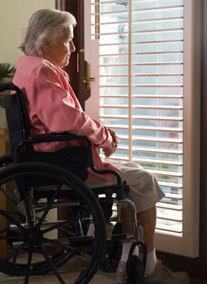

Something's got to give: the issues the challenges tackled
The following section outlines why Nesta sought innovative solutions to address the issues of helping older people to age well by reducing isolation and waste reduction.
AGEING WELL CHALLENGE
Life expectancy is increasing by five hours a day and has been growing steadily for over half a century: the UK has now reached a point where there are more people over the state pension age than there are children. We need to innovate to enable us to adapt to an ageing population. That includes reimagining our social institutions and creating new ways for people to help one another to enable all of us to age better.
Today there are 10,000 people aged 100 or over. By 2050 there will be 275,000. By 2030, people over 50 will comprise almost a third of the workforce and almost half the adult population.
Isolation and loneliness are growing problems in the UK. In 2007 Help the Aged found that 13 per cent of older people felt often or always lonely; an increase of 7 per cent from the previous year. This rate is steadily increasing. The same survey found that 22 per cent of older people were effectively isolated as they needed help to get out and about but could not access the support required.
Isolation is a major factor impacting on older people's wellbeing and life expectancy. Isolation and loneliness are not necessarily effects of the ageing process, but life events associated with older age such as leaving work, health decline and bereavement do put people at greater risk. At the same time, factors such as a good local environment and good social networks can help protect older people.
Being able to stay mobile is crucial to older people's wellbeing, as loss of mobility means the loss of so many other things from their lives such as the ability to go shopping, meet friends and pursue hobbies and interests.
Older people want to be valued, use their skills and be supported to live independent lives at home. Yet, at present many older people feel over-institutionalised and disengaged from society. There is, therefore, a huge opportunity to drive more creative, inclusive and innovative solutions to help improve older people's lives.
STATS
- One-third of people lack confidence to tackle isolation of elderly in their community.
- Only 14 per cent people are already trying to reduce the isolation of elderly in their community.
- 42 per cent cite lack of funding as barrier to putting ideas into action to tackle social issues.
WASTE REDUCTION CHALLENGE
The Waste and Resources Action Programme (WRAP) at Defra estimates that around 600 million tonnes of products and materials enter the UK economy each year and we generate approximately 290 million tonnes of waste. Only 115 million tonnes of this combined material gets recycled.
Although there has been a gradual decline in waste over the past few years, there is still a long way to go in identifying ways to prevent waste in manufacturing and production processes, through supply chains and particularly at a community level.
For this challenge, Nesta has been interested in understanding how community resource can be better utilised to have more significant impacts on waste reduction. The giving of time had to be an integral part of the solution.
- There has been significant success in reducing waste in recent years, but it remains an enormous challenge and an area which needs new solutions.
- We throw away more than seven million tonnes of food and drink every year from our homes – most of which could have been safely consumed.
- UK hospitality sector (hotels, pubs, restaurants and quick service restaurants) could save £724 million a year by tackling food waste.
- Between now and 2020, WRAP estimates that electronic waste in the UK will total more than 12 million tonnes. A quarter of this will comprise of IT equipment, consumer electronics and display screens. This 12 million tonnes will include precious metals, which have a total estimated market value of £7 billion.
There is already some interesting innovation that seeks to respond to this challenge, but the scale of the challenge demands more and there is good evidence that this is an area where social action has an important role to play.
STATS
- 73 per cent of people worried about what the UK is producing every year.
- 42 per cent of people said the main barrier was not knowing where to start with putting their idea into action.
- 55 per cent of people say they are already taking steps to reduce their own waste.
THE CHALLENGE PRIZE PROCESS
Entry Criteria
The prizes were open to any organisations, community groups or businesses based in the UK provided that the benefits of their proposal focussed primarily or significantly on England.
Judging Criteria
The entries were being judged throughout the process on six key criteria.
- Innovation
- Impact (against specific issue)
- Giving and engagement
- Other social impacts
- Potential for sustainability
- Potential for scale
The Challenges
Nesta offered a prize for the innovation that could reduce the isolation and/or increase the mobility of vulnerable older people by providing new opportunities for communities to come together to give time, skills and resources.
Isolation: For the purpose of the challenge we defined isolation as the lack of access to professional and/or social support and the lack of meaningful relationships, opportunities, roles and activities.
Mobility: For the purpose of the challenge mobility could relate to social, physical or financial mobility.
The involvement of older people at all levels of planning and delivery was key to social inclusion.
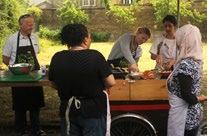
Nesta offered a prize for the innovation that achieved the biggest measureable reduction in waste, by providing new opportunities for communities to come together to give time, skills and resources.
Waste: For the purpose of the challenge we defined waste as unwanted or discarded products, material or matter. Additionally, this could include items which people are required to discard such as materials with hazardous properties. The waste could be generated through household, industrial or commercial channels.
Many items can be considered as waste e.g., household rubbish, sewage sludge, wastes from manufacturing activities, packaging items, discarded cars, electrical items, old televisions, garden waste, old paint containers etc.
Waste Reduction: We took an integrated approach to defining waste reduction to include prevention, re-use and/or recycling.
Weight, mass and carbon mitigation based measures were used to assess the amount of waste reduced. This was proportionate to the type of waste.
Staged process with increased support
The challenge prizes were designed in stages to maximise the potential of success by creating low barriers to entry and providing expert guidance and support through the different stages.
Stage 1: Open Call
10 July 2012 – 17 September 2012
- Entrants completed a simple online registration form outlining their idea.
- Entries were assessed by Nesta staff, against the criteria with particular focus (at this stage) on innovation and addressing the issues.
- Expert judging panel made decisions on semi-finalists.
289 ENTRIES RECEIVED
206 Ageing Well
83 Waste Reduction
Stage 2: Up to 25 Entries selected (per prize)
October 2012 – January 2013
- Semi-finalists were brought together for an induction day with support partners (100% Open, Icarus and Eunomia).
- Semi-finalists were supported by Nesta and partners to develop detailed plans, which were submitted as stage 2 entries.
- The detailed plans were assessed by experts in each field with particular focus at this stage on their potential for impact, sustainability and scale
- Expert judging panel made decisions on finalists.
50 SEMI FINALISTS
25 Ageing Well
25 Waste Reduction
Stage 3: Around five finalists selected to test their ideas (per prize)
Set Up: February – March 2013
Testing: April – September 2013
- £10,000 awarded to each finalist and all received a range of non-financial guidance (prototyping and impact measurements) provided by support partners.
- Finalists attended a two-day workshop, they then set up and established baseline data for their ideas and tested their projects over a period of six months.
- Finalists submitted a mid-term report.
- Visits by Nesta, support partners and Judges took place over the course of the testing period.
- Final reports were submitted outlining impact measures, reflections on their experiences and achievements; these were assessed by partners, Nesta and judges.
- Expert judging panel made decisions on the winners.
- Panel decision.
11 FINALISTS
5 Ageing Well
6 Waste Reduction
Winner(s) selected and £50,000 Prize Fund awarded for each prize
Announcement Event: December 2013
The finalist/s that demonstrated significant impact by mobilising community resources and stood out when assessed against the other judging criteria were selected as winners.
2 WINNERS
1 Ageing Well
1 Waste Reduction
SEE PAGES 46-47 FOR THE WINNERS!
AN OVERVIEW OF SEMI-FINALISTS AND FINALISTS' IDEAS
SEMI-FINALISTS
Twenty-five semi-finalists were invited to an induction day and supported for two months to develop a more detailed plan of their idea.
Following assessment of the detailed plans and selection of the five finalists, the semi-finalists whose ideas were not taken forward were given detailed feedback by phone. All (bar one) expressed what a positive experience taking part in the challenge had been. The detailed plans that they developed gave them something tangible to garner the interest of other funders and partners.
| Organisation/Group |
Name of project |
Summary |
| Royal National Institute of Blind People (RNIB) |
Enabling E-products |
Training and supporting volunteers including older people to train older people with sight problems to use technology to find and access activities, networks and local services. |
| DiSC CIC |
Circles of Care |
Connecting family, friends, carers, other volunteers and community organisations though circles of care to connect isolated older people with a strong community network. |
| Sustrans Limited |
Travel champions |
Travel Champions is a travel buddy scheme where participants are matched with givers who accompany them on trips and encourage active living. |
| London Borough of Camden |
Making Camden Dementia Friendly |
Making Camden a dementia friendly borough through a community approach using peer-education, forums and online tools. |
| Age UK Lancashire |
Cinema and Theatre Outings & Workshops |
A partnership with Dukes Theatre to create dementia-friendly theatre experiences with an accompanying volunteer transport and support network. |
| Tottenham Hotspur Foundation |
The THF Activators |
The THF Activators proposes to bring isolated and inactive people to access existing sports and social activities. |
| USS Ltd |
Golden Games |
The Golden Games, a sporting festival for elderly people – the games will be about celebrating elderly people in a new way. Not only will they be athletes but they will also be amongst the volunteers who help run the event. |
| Plunkett Foundation |
Home Cooked Meals |
Bringing people together for group cooking sessions and to provide home cooked meal deliveries, using surplus food from community-based shops. |
| Uniitee Ltd. |
Home sharing |
Enabling older people to safely share their homes – increasing social interaction and companionship and allowing older people to live in their homes for longer while benefitting from the mutual support of home sharing. |
| The Fox and the Squid |
The Fox and the Squid |
A co-working café that connects older people and entrepreneurs with caring responsibilities. Both can continue to learn and make the most of their skills in a care-friendly environment. |
| The Reading Agency |
The Reading Agency |
The Reading Agency mobilises digital reading groups. |
| London Play |
Mud Pies etc. |
Mud Pies are community play spaces set up in vacant retail units. London Play want to develop volunteer opportunities for older people in these centres, building on a lifetime of stories, games and playmaking. |
| Online Centres Foundation |
Inter-generational Bake Off |
Intergenerational Bake Off arranges for older people with a passion for baking to visit younger people in their community to swap skills, and hosts bake-off parties. |
| Bexley Accessible Transport Scheme |
Accessible Transport Scheme |
Accessible transport sheme, a social car club, aims to offer transport that is both accessible and affordable to allow independent living. |
| Helen Platt Ltd. |
Radio Club |
The Radio Club takes the 'call-in' format one step further by organising a community of older members who can socialise live on air. |
| Magic Lantern Film Club |
Accessible Cinema Experience |
Accessible Cinema Experience plans to take their mobile cinema club directly to people in their homes or care facilities. |
| Age UK Exeter |
Tools Company |
Tools Company enables men to repair broken and old garden and trade tools to send to local UK charities and to Africa for business start-up schemes. |
| The After Work Club |
Task Force |
Task Force a network to engage, inspire and connect men to help redefine retirement. |
| Fair Shares Gloucestershire |
Fair Shares Gloucestershire |
Linking older people affected by bereavement or new caring responsibilities to a time bank to identify the support they need and social opportunities they could contribute to. |
| Age UK Cheshire East |
Digital Doorstep |
An online place where people can connect with others with shared interests and with local groups and events. |
| Stonewall Housing |
One Small Step |
Connecting older lesbian, gay, bisexual and transgender (LGBT) people with trained volunteers who can offer support with small tasks that will allow them to maintain a high quality of life and reduce isolation. |
| NANAS Café |
NANA |
NANA is a comfort food and community café run by older ladies from the local area; the space will also host activities run by and for people in the local community. |
| West Midlands Special Needs Transport |
Wheels to Meals |
Wheels to Meals collects people from home and takes them to their chosen lunch venue to eat out with others. |
| Gransnet |
Gransnet Mobile App |
Gransnet Mobile App connects grandparents so that they can get together more easily. |
| North Bristol Advice Centre |
The Golden Gym |
The Golden Gym, an actual gym and a virtual one, where older volunteers are linked with isolated people to support them to become more active. |
MEET THE FINALISTS
Five finalists were selected following assessment of their detailed plans. They were awarded £10,000 each to set up and pilot their projects.
The set up phase which included them gathering baseline data to measure impact took place during February and March 2013. The pilot phase of their projects took place over a six month period from April to September 2013.
Following assessment of their final reports and interviews with the judging panel, a decision was taken on the winner of the challenge.
In addition to the winner's prize, Nesta is pleased to have established a partnership with the Pargiter Trust who will be funding two runner-up awards for the Ageing Well Challenge.
The Pargiter Trust
The vision of the Pargiter Trust is a society where elderly people enjoy a better quality of life. The Trust was founded by the Late Honourable Mrs Cooper-Heyman in 2005 for the relief of the elderly living in England and the Bailiwick of Guernsey. She was a passionate campaigner ensuring older people have the support they need to maintain independence and live healthy, happy lives.
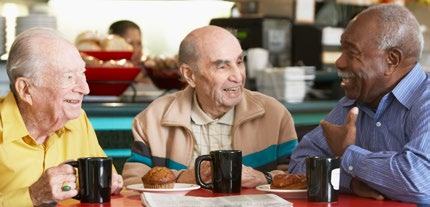
The Trust is sole shareholder of Sarnia Properties Ltd, a company registered in Guernsey, which remits a sum of money annually to the charity. The shareholding in Sarnia Properties Ltd and other investments act as expendable endowment to fund the work of the Trust.
Through its mission to support disadvantaged elderly people to be independent, healthy and socially included Pargiter Trust is focussed on its grant making and support for innovation. Building strong relationships with worthwhile organisations such as Nesta and Community Foundations is important in achieving the mission.
The Trustees are delighted to have the opportunity to be working with Nesta helping support older people through the Ageing Well Challenge Prize; this incredibly exciting initiative promotes new opportunities for communities to come together with new radical approaches to help older people live well.
2014 presents the inspiring prospect of watching the ongoing results of these innovative ideas and even the potential of them being replicated across the UK.
MEET THE JUDGES
| Halima Khan |
Emma Soames |
Mark Winwood |
| Nesta (Chair) |
Saga Magazine |
AXA PPP Healthcare |
| Almudena Lara |
John Coxon |
Sam Haskell |
| Cabinet Office (succeeded by Allison Smith) |
Department for Work and Pensions |
Department of Health |
| Jade Belletty |
Kevin Waudby |
Victoria Westhorp |
| Cabinet Office |
Good Innovation |
Pargiter Trust |
TOOLS COMPANY
AGE UK EXETER
www.ageuk.org.uk/exeter/
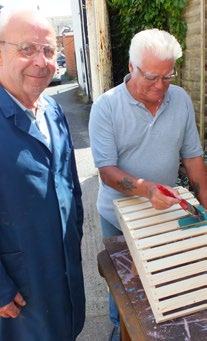
Tools Company (Tools Co.) provides older men with physical and mental disabilities an opportunity to come together in a hands-on workshop environment. At the 'shed', the 'Chaps' mend and recondition old garden tools and make bird boxes, trugs and other items.
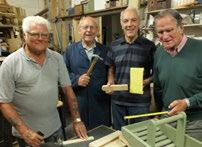
Tools Company has been developed based on the Men in Sheds concept that does similar activities with older men with less complex needs. Age UK Exeter recognised the need to develop more structured support into the concept to cater to men with complex needs.
The Chaps are supported by volunteer ‘Buddies' who give their time to enable the Chaps to fully participate in the workshop activities. The Buddies are older men who attend Men in Sheds.
Innovation
Tools Company is innovative because it is designed specifically to engage men with complex needs and creates a cycle of giving between these men whose physical and mental health issues have previously excluded them from activities with men engaged in Men in Shed activities. Being engaged in this activity helps to reduce the isolation of Chaps while giving them an opportunity to give back to the community by recycling tools and building garden furniture and equipment, such as birdboxes and benches.
Impact
Tools Company is a transformative experience for all. For the Chaps, it significantly reduces isolation and builds self-esteem. For their carers, it provides a break and the joy of knowing their loved one is doing something positive that they enjoy.
We have significantly increased the amount of time in which older men are engaged in meaningful activities each week.
Tools Company
For the Buddies, the satisfaction and experience of giving has been a revelation.
A Godsend. It has made a tremendous difference to my life. From being down in the gutter to actually feeling good about myself.
Chap
Other Social Impacts
Tools Company also has an environmental impact though recycling donated tools which would have otherwise gone to waste. The tools are sold locally and also made into start-up kits for enterprises in Africa.
During the pilot
- Sessions two days a week, creating 16 spaces for Chaps over 25-week period.
- Received 41 referrals to the service from social services and mental health services among others.
- Had six regular giving Buddies.
The Future
Tools Company has secured additional funding from The Pheobe Wortley-Talbot Charitable Trust to maintain the project over the next three years and extend activities to an additional day.
It will continue to look into how they can most effectively structure a viable business model.
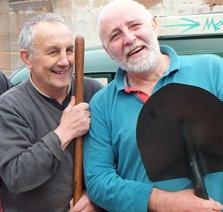
The mere fact of helping someone helps me. I have much more self-worth.
Buddy
NANAS COMFORT FOOD CAFÉ
NANAS
www.wearenana.com
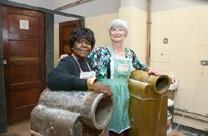
NANAs is a comfort food and community café hosted by older ladies from the local area.
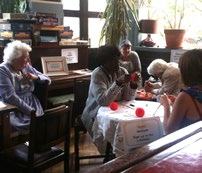
For older ladies – the nanas - it's a chance to get out of the house, meet new people, and put a lifetime worth of skills to good use, and for everyone else it's a place to enjoy proper hearty home cooked food at a reasonable price.
Nanas volunteer at least five hours of their time a week, and after three months of commitment, they become part of the NANAs partnership. This means a percentage of the profits are shared between them every four months. Some people use this to supplement their pensions, others give it to charity.
Innovation
NANAs is innovative because it puts older people at the heart of the business model, not at the edge as beneficiaries. It also puts a lifetime worth of skills and nurturing to good use within a business context. The model is highly replicable and working towards becoming self-sustaining.
Impact
NANAs has indicated that the project has fostered new aspirations. It is reported that interactions with other generations in the café environment have also contributed to a sense of being valued.
Many Nanas say that they feel like they have purpose now they have joined NANAS and know that their time and energy is both greatly received by us and the customers.
NANAS
Impact measures signify that nanas feel happy to be part of the scheme and are enjoying the chance to meet new people (both other Nanas and general public) see a direct impact of how working at NANAs makes others in the community happy.
We have been overwhelmed by the amount of people and organisations that have offered their time, support, expertise or money to make NANAs happen.
Katie
Nanas that aren't able to volunteer at the café are offered a range of other NANA-facturing opportunities, such as bobble hat making and maintain regular contact with the team to help reduce isolation.
Other Social Impacts
NANAs is providing a hub that draws the community in. Many young mums come into the café and have received support and guidance from Nanas about experiences they may have concerns about as young mums.
There is also a strong intergenerational connection enabled through the NANAS café model.
During the pilot
- Started operating ‘proof of concept' NANAs café at local pub.
- Won a bid to operate new premises seven days a week.
- Raised £15,000 through Kickstarter to refurbish new premises.
The Future
NANAs is keen to franchise the model to let other people start NANA cafés in their local areas and are working with franchise experts to see how this might happen. However, they want to ensure a strong sustainable foundation for their own activities in the first instance.

A place of delightful wonder'... Because it's wonderful that the Nanas can share all of their different qualities. Everyone has their own shade of colour. Cooking, speech, craft...anything. It feels like we're all good at something.
NANA
There has been a lot of interest in NANAs Café pop up model from the likes of department stores and local authorities.
RADIO CLUB
HELEN PLATT LTD
myradioclub.com
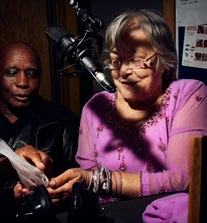
Radio Club is a weekly live radio show where up to 15 older people are the contributors on New Style Radio in Birmingham.
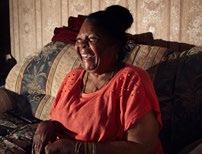
As members of their Radio Club they talk about anything and everything, giving them a chance to chat and reminisce, while creating great content for the listeners - as well as some radio stars of the future!
The show also has over 50 members who regularly take part in surveys, get mentioned in the show and sometimes do interviews or ring in.
Innovation
Radio Club makes the radio a friend an older person can genuinely interact with.
It is a transformative experience for the members who are on-air, but it is also hugely beneficial to those who take part off-air.
Radio Club
Radio by its very nature is a broadcast-to-many medium, yet Radio Club changes that so that radio is able to broadcast to one - and interact with them on a personal level.
Impact
There is strong evidence to indicate that the project has engaged people that are vulnerable to isolation: 100 per cent of members live in low income areas with high crime rates and all the older people display at least one 'indicator' of social isolation. Qualitative evidence indicates that Radio Club activities build confidence, friendship and pride among the older people that take part. Radio Club has the ability to reach entire communities through its listenership. Listeners indicate that it creates a sense of belonging, even if they never ring or take part in the show. The show makes them feel part of a generation that still has an important role to play in the community, to pass on experience and culture.
And for the other listeners of all ages, Radio Club presents a way to challenge stereotypes about ageing and creates a rare moment in the media to hear the opinions and experiences of the older generation.
It lets you feel useful in a way, to reach out to the younger generation.
Marjorie, member
Other Social Impacts
New Style Radio is a radio station with a listenership of predominantly young people so it has been a significant shift to include 13 hours of radio created entirely by older people. Being part of a radio station with a young target audience has meant that the voices, stories and opinions of older people have been heard by the younger generation.
During the pilot
- 12 weekly radio shows.
- Focus groups with older people (insight and development).
- Recruitment of 59 off air members and growing number of over 200 older listeners.
The Future
There is potential for regional and national radio stations across the country to all have Radio Clubs as part of their programming. Key to this is further refining the format that fits different styles, while protecting its core features.

I struggle to get out, particularly when it's bad weather - I fell in the snow last year. Radio Club is an honour to share my stories to talk about playing jazz around the world and about St Kits. I like to know my stories aren't eliminated when I'm gone.
Rudy, 83, member
ONE SMALL STEP
STONEWALL HOUSING
www.stonewallhousing.org
One Small Step is a small project that makes it easier for volunteers in London to help isolated older Lesbian Gay Bisexual and Transgender (LGBT) people with small day-to-day tasks, like going shopping for groceries or walking the dog.
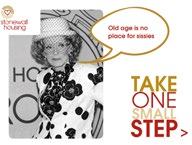
The main aim is to reduce isolation for older LGBT people by connecting them with volunteers and to provide opportunities for people to volunteer that will fit more with people's busy lifestyles. The volunteering opportunities are open to older and younger members of the LGBT community.
Innovation
One Small Step is innovative because it addresses a well understood problem in a way that's not been successfully applied to the LGBT community before. While similar things exist (befriending services, for example) nothing quite like this giving service exists.
Impact
Stonewall is a trusted organisation for older LGBT people both as volunteers and as clients.
One Small Step has provided an opportunity for intergenerational collaboration giving both older and younger members of the LGBT community a chance to meet and share experiences.
From Clients' experiences, Stonewall understood that LGBT people have experienced poor service and homophobia from other services.
Stonewall Housing
This is an entirely new service for Stonewall Housing and a key impact for them as an organisation has been the ability to test the model, learn from the LBGBT community and continue to refine their offering.
Other Social Impacts
MSc Design Ethnography students at the University of Dundee are undertaking research on behalf of Stonewall Housing looking more in depth at why older LGBT people don't engage with services in order to help improve social services that Stonewall Housing provide and share insights with other organisations.
During the pilot
- Hosted Cream Tea Tuesday events at local pop up café.
- Generated step by step guides and other publicity materials.
- Held two volunteer support group meetings.
- Recruited 29 volunteers.
The Future
Stonewall Housing feel that the test period along with validation of the importance of the problem by the University of Dundee suggests that the project has the potential to be applied nationally. They are also looking into how this can be facilitated with technology.
I felt less isolated as a direct result of One Small Step.
Participant
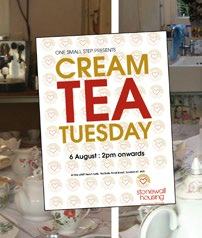
Working with Stonewall Housing on service user research for the One Small Step project has been a real eye-opener. As an ethnographer highly engaged with public service design I am regularly astounded by how few projects out there really tackle those deeply difficult to reach groups like isolated elderly LGBTs.
Catriona McCauley, Course Director University of Dundee
TASK FORCE
AFTER WORK CLUB
theafterworkclub.co.uk
The After Work Club (AWC) exists to help men reduce the risks of loneliness, social isolation and depression to which they are disproportionately prone as they age, particularly during retirement.
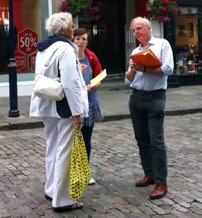
The Task Force was set up by the After Work Club to provide a ‘preventative' approach to isolation and loneliness by engaging men in interesting and stimulating activities that redevelop their sense of self-worth and establish new relationships to enable them to be better able to cope with the challenges of ageing.
The intention is that older men would work on self-selected projects that are of interest to them, for example that address issues in their local community.
Innovation
The innovative aspects of the Task Force are that aims to find solutions to preventing the risks of isolation rather than being an intervention at the point of isolation and loneliness. The project aims to engage older men as part of the solution to community issues while increasing their own self-worth. It also challenges traditional ideas of retirement and of service development.
Impact
After Work Club tested different interactions as they tried to establish an understanding of how to reach and engage their target audience of older men in Task Force activities. The testing period proved to be a valuable learning opportunity.
After Work Club has interacted with about 100 people during the piloting period and about 15 of these have been more centrally involved in giving regular input to project design.
Task Force
AWC have received positive support from a wide range of groups, organisations, charities and corporate entities including Friends of the Elderly, Innovation Warehouse London, Penna plc, Surrey County Council and the FCO.
This demonstrates a belief in the potential of the Task Force model.
Other Social Impacts
After Work Club developed one to one mentoring as a mechanism for putting older, experienced men together with people who can benefit from that expertise. Two sources of ‘mentees' were identified: younger entrepreneurs (Google London Campus) and older people coming up to retirement or looking for alternative career options (Penna plc).
During the pilot
- Created series of interviews with inspiring men.
- Partnered with Local Authority to run one day challenge event.
- Tested model of ‘advice bank' linking retired professionals with young entrepreneurs.
The Future
After Work Club remain committed to developing the Task Force concept and bringing the service to fruition.

It would have to be something that I was really interested in to get me interested and involved.
Participant
WASTE REDUCTION CHALLENGE
Gleaning Network
AN OVERVIEW OF SEMI-FINALISTS AND FINALISTS' IDEAS
SEMI-FINALISTS
Twenty-five semi-finalists were supported for two months to develop a more detailed plan of their idea. All the unsuccessful candidates expressed during feedback sessions how useful it had been for them to take part in the process and develop detailed plans of their ideas.
| Organisation/Group |
Name of project |
Summary |
| Bags of Goodies |
Bags of Goodies |
Doorstep waste collection that returns profit to households in the form of local currency to donate to charities or spend with local retailers. |
| Proper Oils |
Proper Oils |
Community-scale cooking oil recycling, generating profit for local community organisations. |
| TimeMachineFun |
ReclaimFun, UndoRobot, Bigclearout |
Increasing the repair and reuse of electrical waste by working with young people to take apart analogue electricals, making new products from component parts and through public events. |
| Resource Futures |
Sustainability One Stop Shop |
A reuse centre and 'one stop shop' for sustainable living with and for the community. |
| London Sustainability Exchange |
Community Textile Collection |
A community-based textile collection, alteration, re-design and re-fashioning enterprise. |
| WorkSpring |
WorkSpring |
Working with young adults not in education, employment or training on mini-enterprises based on the reuse of retail waste. |
| Quick Compost Ltd |
All in One System |
Community level composting. |
| Grounds to Green |
Grounds to Green |
Freeing Brighton and Hove of coffee ground waste through community composting and developing composite materials from the grounds. |
| The People's Kitchen |
People's Kitchen UK wide |
Spreading people's kitchens across the UK and combing community dining using food waste with free-shops and upcycling workshops. |
| VillagePowerCIC |
Community AD |
Community level anaerobic digestion. |
| The London Orchard Project |
London Orchards |
Harnessing community resources to source and process products from un-harvested fruit on London trees. |
| National Community Wood Recycling Project |
Wood Recycling Enterprises (WRES) |
Social franchising of community wood recycling enterprises, each working with trainees and volunteers to reuse and recycle construction site waste wood. |
| FareShare/Foodcycle |
Food Connection Programme |
Creating a national network of just-in-time food donations, linking up charities serving those at risk of food poverty to surplus supplies in their local area. |
| Devon and Cornwall Food Association (DCFA) |
The Devon & Cornwall Food Association |
Creating surplus community food hubs and volunteer collection/delivery networks across Devon and Cornwall. |
| Brixton People's Kitchen |
Brixton People's Kitchen |
Creating a mobile People's Kitchen for Brixton, collecting and using food surplus, run by and for the benefit of local people. |
| EMERGE Food |
FareShare Harvest Champions |
'Harvest champions' will gather outgraded produce from farmers and market traders in Manchester to produce and share good food locally. |
| Feeding the 5000/Tristram Stuart |
Gleaning Network UK/Feeding the 5000 |
The Gleaning network gather outgraded produce to share with local communities. |
| Cwm Harry Land Trust |
The Rubbish Diet |
Like weight watchers for waste reduction, using peer-support and motivation to prevent waste. |
The output will start here.
<div class="table-container" markdown="1">
| Project Name | Organisation/Group | Description |
|:---------------------|:----------------------------|:-----------------------------------------------------------------------------------------------------------------------------------------------------------------------------------------------------------------------|
| The Restart Project | Self Repair Communities | Empower people and facilitate the formation of ‘self-repair communities’ where fixing skills can be shared among community members. |
| Newmarket Open Door | Create4Reuse | Materials recovery centre for re-use through the renovation by repair and cleaning of sofas and mattresses, operated by time given by young people in supported housing. |
| BioRegional Development Group | Compost Doctors | On-site food composting in community hubs, and creating a network of volunteer ‘compost doctors’ to assist hubs adopting the initiative. |
| Cwm Harry Land Trust FINALIST | People’s Design Lab | A forum of volunteer ‘curators’ where problem products that create waste can be assessed and the community can work with manufacturers to find solutions. |
| Groundwork Leeds | Wood Doctor | A community wood collection and recycling scheme in Leeds called Wood Doctor, aiming to refurbish, recycle and create saleable items, creating sustainable jobs, training and volunteering opportunities for local people. |
| Hackney City Farm | Resources based at Hackney City Farm | Social enterprise which stimulates new uses from diverse range of local waste resources. To develop a platform making waste resources visible to everyone to unleash the creative potential of communities and incentivising businesses to save money. |
| Brixton People’s Kitchen | Food Rescue Squad | Young people develop skills by collecting food surplus from local businesses, learning how to cook healthy meals for local events, and to then develop local food surplus enterprises. |
</div>
## MEET THE FINALISTS
Six finalists were selected following submission of their detailed plans. They were awarded £10,000 each in February 2013 to aid the set up and testing of their projects.
During the set up phase (February and March 2013), finalists collected baseline data to measure impact, which was a central feature in their final report. Following this stage, finalists piloted their projects over a six-month period (April to September 2013).
Following assessment of their final reports and interviews with the Judging panel, the panel decided on the winner of the challenge.

## MEET THE JUDGES
<div class="table-container" markdown="1">
| Philip Colligan | Kevin Waudby | Nicola Leeds |
|:--------------------------|:---------------------|:----------------------------------------------------------------------------------------------------------------------------------------------------------------------------------------------|
| Nesta (Chair) | Good Innovation | Defra (covered by Barbara Franceschinis, Defra in first round) |
| Gary Harvey | Marek Gordon | Sophie Chapman |
| Creative Director | SITA Trust | Cabinet Office |
| (specialism recycled clothing) | Nick Kightley | (succeeded by Katy Owen) |
| Graham Winter | WRAP | |
| Environment Agency | | |
</div>
## GLEANING NETWORK {: #section-gleaning-network }
**PROJECT NAME**
GLEANING NETWORK
**ORGANISATION/GROUP**
FEEDING THE 5000
[www.feeding5k.org](http://www.feeding5k.org)
FINALIST
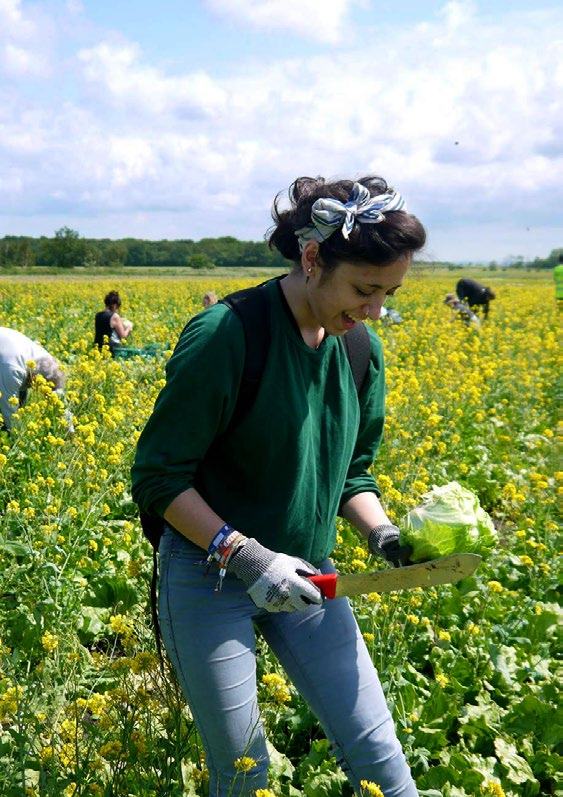
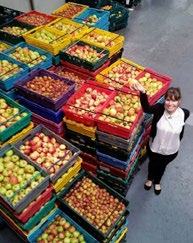
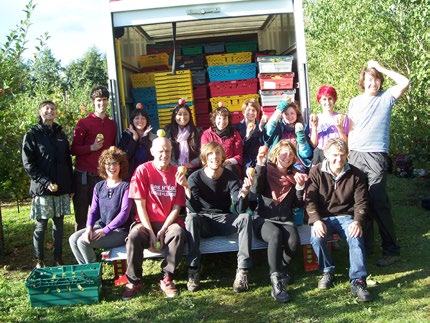
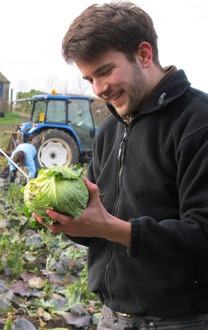
Gleaning Network UK harnesses ‘Feeding the 5000’s’ national profile, large network of volunteers and close links with farmers around the country to provide an effective mechanism to divert wasted fruit and vegetables from farms to charities to provide food to the most vulnerable groups in society.
The project provides giving opportunities for hundreds of people, who are encouraged to volunteer on regular gleaning days in the countryside.

### Innovation
Gleaning Network demonstrates innovation in two ways. Gleaning hubs are designed to bring together local communities of volunteers, growers and charities to create a grassroots movement connecting people of all ages back to the countryside in which they live. At the same time, working to catalyse change on a national and international level by engaging the media to secure public interest and support, and through extensive face-to-face consultation with government departments, NGOs and some of the largest food retailers in the world.
### Impact
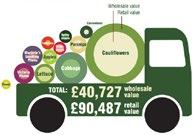
* In total 36,744 kg of food was collected by the Gleaning Network.
* Approximate net saving of 101,607kg of CO2 eq. (101.6 tonnes of CO2 eq).
* 208 volunteers took part in Gleaning days.
* 670 new volunteers added to the Gleaning Network UK database.
### Other Social Impacts
At least ten redistribution charities and companies have distributed gleaned produce to beneficiary charities, low income families and schools.
Approximately 350 beneficiary charities have received produce providing 16,500 beneficiaries with a meal every day by FareShare depots that received gleaned produce from Gleaning Network UK.
### During the pilot
* 16 Gleaning days.
* Providing 183,720 meals to beneficiaries.
* Worked with 11 farms.
* Worked with ten charity depots in six counties.
### The Future
The team are exploring options for generating income. Some ideas are focused on a model, of converting ‘unwanted’ fruit and vegetables into value-added products.
They expect to be able to directly move upwards of 80,000 kg of produce per year from farm level back into the human food system per year in Years two and three, and more as the project develops.
<blockquote markdown="1">
The highlights were both the social element (doing something good with a group of people), and the personal/wildlife element (doing something physical in the outdoors, interacting with plant life). I couldn’t choose which I loved more!
</blockquote>
Volunteer, plum and apple gleaning
## BRIXTON PEOPLE'S KITCHEN {: #section-brixton-peoples-kitchen }
**PROJECT NAME**
BRIXTON PEOPLE'S KITCHEN
**ORGANISATION/GROUP**
BRIXTON PEOPLE'S KITCHEN FINALIST
[brixtonpk.wordpress.com](http://brixtonpk.wordpress.com)
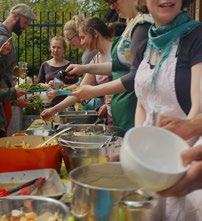
Brixton People's Kitchen (BPK) turns food surplus from local businesses into free, healthy meals for local people.
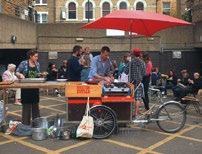
For the piloting phase they invited local people to design and build a mobile kitchen that travelled throughout the diverse communities in Brixton and beyond, to inspire positive action against food waste by acting as an open, convivial platform for food education, community building and skills-sharing.
### Innovation
BPK innovation lies in not just tackling business waste by receiving products from local businesses, but also in enabling people to apply new skills and behaviours to reduce their household waste, and to take ownership of the project within their own communities and organisations.
### Impact
* In total 719.9 kg of food was collected for use by the Brixton People's Kitchen.
* Overall this resulted in a net saving of 1,979kg CO2 eq. (**1.97 tonnes** of CO2 eq).
* 135 volunteers.
* 758 hours volunteers.
* 657 meals served.
<blockquote markdown="1">
The food hygiene certificate was definitely an extra motivation for some of the parents who have been looking for a job for a while.
</blockquote>
Host
### Other Social Impacts
BPK facilitates a range of activities that have underlying social benefits. These include:
* **Formal Training** - supporting 22 volunteers to gain hygiene and food preparation qualifications.
* **Connecting isolated parents** - working with community groups focused on working with vulnerable communities
* **Community cohesion** - bringing people together to share food and raise awareness of food waste issues.
<blockquote markdown="1">
It was great that the cooking wasn't dictated. We created our own menus and everyone was fully involved and then we ate what we made!
</blockquote>
Host
### During the pilot
* 20 events hosted.
* Three new groups inspired to set up their own food waste projects.
* Tripled their Twitter following to well over 1,000, and were ranked seventh in a list of ‘Top 20 people to follow' on food poverty/food waste issues.
### The Future
Activities for BPK are now focused on developing their coaching models for host organisations to sustain their legacy, in a way that is relevant to them.
They will also continue to develop food donors at local business level.
### Invest in more coaching
The team are still figuring out their business model and how to run Brixton People's Kitchen in what is essentially their spare time as the team have full-time jobs. BPK is not likely to be a fast growth venture but there is strong evidence that they can divert food waste whilst doing social good for people and they do have a strong business case.
## FOOD CONNECTION PROGRAMME {: #section-food-connection-programme }
**PROJECT NAME**
FOOD CONNECTION PROGRAMME
**ORGANISATION/GROUP**
FARESHARE AND FOODCYCLE
[www.fareshare.org.uk/food-access](http://www.fareshare.org.uk/food-access)
FINALIST
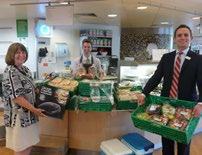
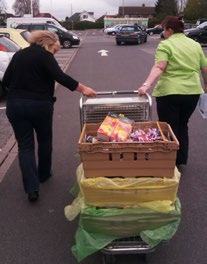
The Food Connection Programme connects small grassroots community organisations with supermarkets to rescue surplus food to prepare nutritious meals for the vulnerable, socially isolated and hungry.
Fareshare and Foodcycle are food connectors with intimate knowledge of supermarket systems, facilitating access to untapped surplus food for local community organisations.
FareShare and FoodCycle are creating a framework to empower local communities to collect surplus food in an effective, safe and efficient way that can be replicated across the country.

### Innovation
This is an unprecedented collaboration; with supermarkets adapting operating culture's to access food wasted at the back of store and connect it with disadvantaged people. Local supermarkets and charities are working closer together strengthening local community links.
Three key elements:
**Certification** - providing voluntary organisations with a permit to show they have suitable facilities to receive surplus food.
**Connection** - linking up potential organisations with their local store that has bought into the scheme.
**Education** - both of the retailers, on appropriate storage of surplus food for collection, and charities on receipt and preparation of short life food.
### Impact
* 5,066 kg of food was collected by FareShare - Food Connection Network.
* Net saving of 14,004 kg of CO2 eq. (**14 tonnes** of CO2 eq).
* Five Retail stores donated goods.
* 294 hours of volunteer and staff time to redistribute goods.
<blockquote markdown="1">
I hate throwing this stuff away. I understand it has to be fresh each day for our customers but it's still good food. When we started the café here sometimes we had two bin bags of food per day.
</blockquote>
member of Waitrose staff
### Other Social Impacts
An improvement in 12 stores waste management practises moving food up the waste hierarchy by feeding people first. Increased monitoring of waste from retailers, improve management practices, reducing waste and costs.
### During the pilot
* 15,928 nutritious meals prepared.
* Five charities took part in the trial but 15 signed up.
* Developed toolkits and templates for charities and retailers.
### The Future
The rising interest in this initiative from WRAP, the British Retail Consortium and CEO's of supermarkets is giving The Food Connection Programme the confidence to look at the future potential for rolling this out.
There is potential for this model to become widespread throughout the UK.
## UNBLOCKING THE COMMUNITY {: #section-unblocking-the-community }
**PROJECT NAME**
UNBLOCKING THE COMMUNITY
**ORGANISATION/GROUP**
PROPER OILS
[www.properoils.co.uk](http://www.properoils.co.uk)
FINALIST
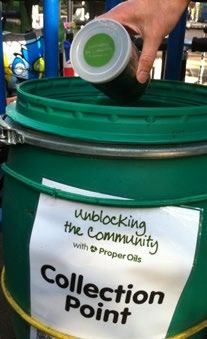
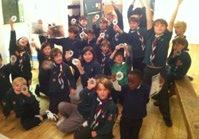
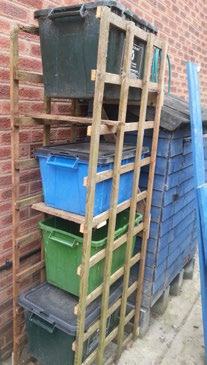
Proper Oils has involved the setting up of a collection of convenient community-based collection sites in the London area to enable householders to come together to collect and recycle used cooking oils and fats (UCO). To do this an online support platform was created to show community champions and recyclers how to access the appropriate resources and learn how to collect and recycle their used cooking oils and fats. All collected oils would be turned in to the renewable fuel, biodiesel.
Recovered oils will be processed to make biodiesel.
### Innovation
Proper Oils provides a cheap and easy way to recycle household cooking oil and developed an approach to engage/get buy in from multiple communities.
Innovation lies in the community approach to the collection of used oil. Local community champions are recruited (from housing co-ops, schools and faith groups – and also including the Barnes Wetland and Wildlife Centre).
Community Champions volunteer their time to facilitate the setting up and ongoing monitoring of collection sites.
Champions are supported by a website and online tools and publicity as well as face to face via the project manager.
### Impact
* 53kg of UCO was collected from 1,180 households during the trial.
* 755kg of used cooking oil was collected from 10 commercial premises during the trial.
* 3,833 givers (household reach through communities engaged).
### Other Social Impacts
The project also found a way to make collection secure in high-risk environments, where vandalism or theft may be a problem, such as housing estates. The project allows for simple retrofit and scaling without huge infrastructure costs.
Community engagement of schools, faith groups and Tenant management groups in understanding the issues their communities face with discarded oils.

### During the pilot
* 15 collection sites have been established.
* Production of community and household oil containers that meet the required standards.
* Chesham Town Council invited Proper Oils to work with them to provide a recycling service for both households and businesses.
### The Future
Unblocking the Community has demonstrated worth to the core business by providing a growth in customer acquisition and strong direct evidence that businesses chose them because of this wider community action. As an established business the viability for continued community engagement is high.
<blockquote markdown="1">
... Unblocking the Community, gave us to opportunity to enhance our visitor engagement activity with a call-to-action empowering people to dispose of their used cooking oils and fats responsibly...
</blockquote>
Barnes Wetland and Wildlife Centre
## RUBBISH DIET {: #section-rubbish-diet }
**PROJECT NAME**
RUBBISH DIET
**ORGANISATION/GROUP**
CWM HARRY LAND TRUST FINALIST
[www.therubbishdiet.org.uk](http://www.therubbishdiet.org.uk)
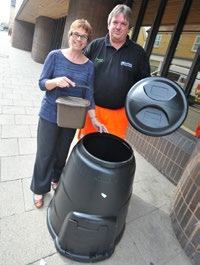
The Rubbish Diet provides a new, community voice to motivate people to slim their bins and achieve lasting reductions in waste.
The network of Dieters contribute to citizen learning on pre-cycling and waste reduction. It asks people to look at the waste in their bin, set a target for reduction and track the top five things they find filling it up.
Dieters are supported over eight weeks with ideas for reducing waste, either through regular emails or through meetings.
### Innovation
The Rubbish Diet tackles the whole domestic waste stream by providing a new, community voice motivating people to slim their bins and achieve long-lasting reductions in waste. The Diet is light-hearted. Unlike a static leaflet which, for many people is their only interaction with waste reduction initiatives, it creates a dynamic peer-to-peer ripple of learning which supports behaviour change.
### Impact
* 62 per cent reduction in residual waste per household.
* 525 Dieters.
* 15 Bin doctors.
* 22 local specialists.
* Over 2,200 people engaged directly with the zero waste challenge (mainly zero waste week participants 1,694).
### Other Social Impacts
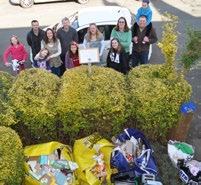
In Suffolk over an eight week period there was fantastic publicity from the local radio station. It allowed Rubbish Diet to explore waste issues in a level of detail that would normally only happen in a one-to-one discussion at an event. For example, there was really detailed discussion about the different types of plastics that can be recycled. Because of the prolonged campaign it achieved what you can do in a one to one to a mass audience.
### During the pilot
* Eight week BBC Suffolk trial.
* Diet group established in Shropshire.
* Diet group established in Suffolk.
* Developed website and supporting material.
### The Future
The Rubbish Diet will continue to roll out the Diet in Newton, Powys funded by the Welsh Government and in Harrow which is part funded by West London Waste Authority. Continuing to generate funding from Local Authorities seems highly plausible.
They believe that if they can get funding that will help them develop further over the next two years that they will then be able to operate in a financially sustainable basis.
<blockquote markdown="1">
I never ever thought that the size of my rubbish bags would put a smile on my face.
</blockquote>
Graham, Stockport
## THE PEOPLE'S DESIGN LAB {: #section-the-peoples-design-lab }
**PROJECT NAME**
THE PEOPLE'S DESIGN LAB
**ORGANISATION/GROUP**
CWM HARRY LAND TRUST FINALIST
[www.thepeoplesdesignlab.org.uk](http://www.thepeoplesdesignlab.org.uk)
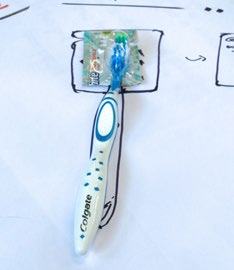
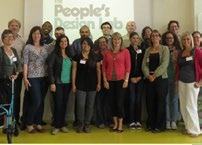
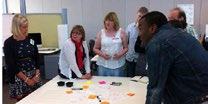
The People's Design Lab (formerly the Museum of Bad Design) aspires to a design team of thousands - from all walks of life - coming together to tackle to issue of bad design and the production of waste: bad physical design, wrong-headed economics or wayward behaviours amongst consumers.
They want to create a space (physically and virtually) where industry's best brains come together with the collective intelligence of this community design team to generate solutions.
### Innovation
The innovation lies in the method of gathering collective intelligence, because they are harnessing the involvement of a passionate and positive community.
Linked to academics and to advisors its true strength comes from ideas loitering in the minds of dog walkers and dustmen (and women), with economists and accountants, social workers and teachers. It has the potential to change the dynamics of design by offering up solutions that can be technical, behavioural, economic or political.
### Impact
* 1000 people voting across two stages (short online clicks and discussions at Hay Festival).
* 34 people attended workshops.
* Seven MSc students contributing to research and redesign.
* 77 contributing to research.
* Seven expert advisors.
### Other Social Impacts
By engaging industry players such as Waste Watch (part of Keep Britain Tidy) who recognise the importance for engaging the public, raising awareness and understanding and providing a voice that demands change, and able to use a variety of levers for change.
### During the pilot
* Changed their name.
* Questionnaires (online and at Hay Festival).
* Ran a number of workshops and a conference.
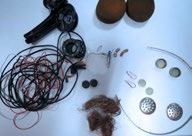
* Carried out research and analysis of waste products.
### The Future
Conceptually the project is getting stronger at engaging the public online and in person to identify products that can be redesigned. The challenge process has afforded them valuable development and proof of concept space to shape their proposition. They need to develop relationships and propositions for Industry to be able to fully engage with their process and a business model that will enable them to become self-sustaining. They believe that another two years of development funding will help them reach that point.
<blockquote markdown="1">
I felt I would be intimidated being in a design workshop but actually felt I had contributed to the development of a solution.
</blockquote>
Workshop Participant
...AND THE WINNERS ARE...
AGEING WELL CHALLENGE WINNER
WINNER OF £50,000
NANAS CAFÉ, NANAS
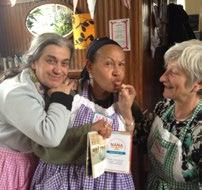
NANAs translated an innovative concept into a viable model that had compelling impact across all of the judging criteria. NANAs have developed a community inclusive project run by older women, which they plan to replicate in partnership with local authorities, retailers and hospital service providers. We see lots of NANA franchises popping up in the future.
RUNNERS UP PARGITER GRANT £25,000 EACH
Tools Company,
Age UK Exeter
Tools Company achieved significant impact for men with complex needs and their carers' as well as engaging male volunteers who were new to volunteering. This tiered level of giving, particularly with a traditionally hard to reach target group is remarkable.
Radio Club,
Helen Platt plc
Radio Club brought the voice of the elderly to an intergenerational community and achieved a good level of quality giving opportunities on air. Every local community radio station should have a Radio Club.
WASTE REDUCTION CHALLENGE
WINNER OF £50,000
THE GLEANING NETWORK, FEEDING THE 5000
The Gleaning Network achieved a significant amount of waste reduction, giving and engagement opportunities and food distribution through their network of partners. Coupled with their campaigning efforts, they are credible advocates for gleaning.
Tools Company
People's Design Lab
Radio Club

Brixton People's Kitchen
Fareshare
NANAS
Gleaning Network
Rubbish Diet
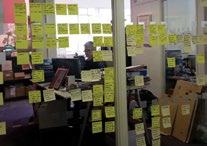
One Small Step
ENDNOTES
- Cabinet Office (2010) 'Promoting social action: encouraging and enabling people to play a more active part in society.' London: Cabinet Office.
- http://www.dwp.gov.uk/policy/ageing-society/
- Help the Aged (2007) 'Spotlight Report 2007.' London: Help the Aged.
- Defra (2011) 'Waste Data Review.' London: Defra.
- Holt-Lunstad et al., 2010.
- Defra (2011) 'Applying the Waste Hierarchy: Evidence Summary.' London: Defra.
ACKNOWLEDGEMENTS
Special thanks are extended to Jennifer Clayton, without whom we would never have achieved successful delivery of the Challenge Prizes. All the experts consulted to help shape the challenge. The judging panels for their time and commitment to the programme. 100% Open, Icarus and Eunomia for the support and guidance they provided to the semi-finalists and finalists of the challenges. And particularly to all entrants and participants in the Giving Challenges for their contributions and efforts in tackling waste reduction and the isolation of older people.
Nesta...
Nesta
1 Plough Place
London EC4A 1DE
[email protected]
www.twitter.com/nesta_uk
www.facebook.com/nesta.uk
www.nesta.org.uk
© Nesta. December 2013
Nesta is a registered charity in England and Wales with company number 7706036 and charity number 1144091. Registered as a charity in Scotland number SCO42833. Registered office: 1 Plough Place, London, EC4A 1DE.