FOREWORD
(or Aperitifs)
Welcome to The People's Supermarket How to Guide.
Think of this book as a recipe guide, a set of ingredients that the members of our co-operative and our many advisors and supporters have gathered to cook our enterprise – ingredients that you can use to create your own version of our venture.
The People's Supermarket opened its doors to the public on Lamb's Conduit Street, London in June 2010. Like many entrepreneurs and communities who want to do something new and make a difference, we started with just a vision but over time, with the support of a small army, turned it into a business.
Two years on, membership numbers of The People's Supermarket reached a peak of 1,000 members in late 2010. Today, the venture serves an average of 6,000 customers a week, has grown a worldwide community of over 15,000 people via social media and won several prestigious awards for its innovative approach to commerce.
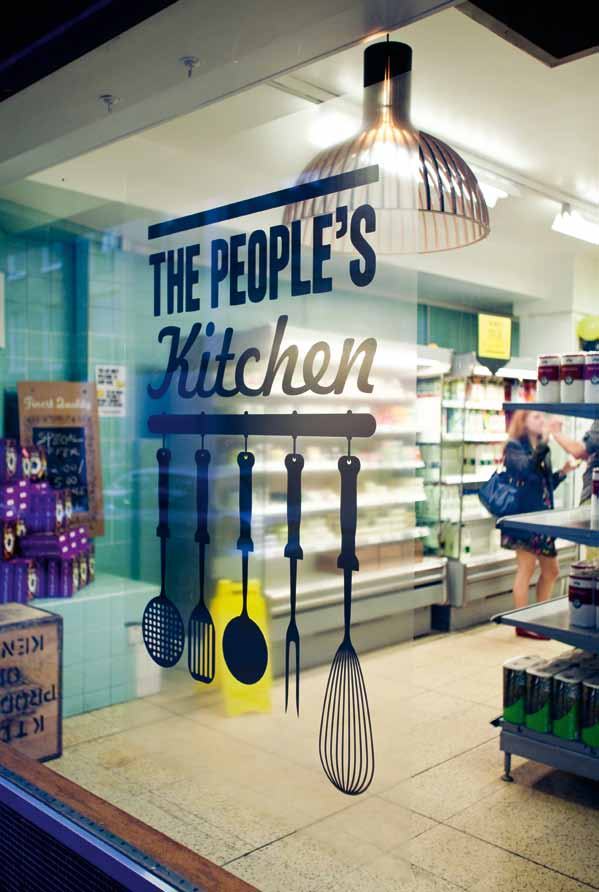
From a workforce of pure volunteers, we had nineteen employees at February 2012 and since start-up, we have trained over twenty-five people who were previously unemployed. Our in-store cooking service, The People's Kitchen, now serves over 700 take-away meals a week, made from stock in the store that would have otherwise gone to waste.
At The People's Supermarket, we think of ourselves as a convenience store with a difference: a retail outlet whose business is ethics and whose customers are members of a community. Others in the UK and countries as far away as Argentina, Australia, Thailand, Japan, Denmark, the Netherlands, Finland, Brazil and Greece claim that we are a high street revolution.
This booklet is designed simply to share our story, and what we have learned so far. Many people have approached us since we opened our doors wanting to know how to “do their own”. Often they have lost their local shop, are fed up with mainstream, conventional forms of grocery shopping, or want to grow a community organisation around a retail enterprise.
How does The People's Supermarket operate? How can you find and secure the right premises? How do you finance yourself at start-up? How do you attract members, stock the shop, organise an effective product offer and keep the momentum going?
We hope in this booklet to give you a few first answers and insights into these questions from our own experience. It's a tough, tiring, complex and messy job but also hugely exciting. We are only at the start of our journey – in many ways still in our first 'Hundred Days'.
We hope to whet your appetite to gather a group of people together in the area in which you live or work, investigate the needs of your local community and develop, perhaps even launch, your own version of our venture.
Reading this booklet, we hope that you'll keep some of our 'ingredients', throw away others, replace them with your own, and take forward an experience that seeks to transform the way in which people shop and put smiles on the faces once again of food shoppers.
If you are involved in social business, community development, social investment or economic development, we want to share our experience with you, so you will have more with which to appraise both the risk and reward of a social enterprise operating at the heart of the consumer economy.
Without a doubt, creating The People's Supermarket has been an adventure. It has and remains a challenging and inspirational journey for us and has transformed the lives of many who have been involved. We hope that this publication gives you the motivation to establish your own People's Supermarket, while also making you aware of the challenges. It may transform your lives too!



INGREDIENTS
(...or what we are)
The People's Supermarket started up as a co-operative enterprise, registered as an Industrial & Provident Society. We chose to take the co-operative as our foundation model because we wanted to subscribe to a form of organisation that's described technically by the International Co-operative Alliance as “an autonomous association of persons united voluntarily to meet their common economic, social, and cultural needs and aspirations through a jointly-owned and democratically-controlled enterprise.” Phew.
Anyone can shop at The People's Supermarket but by becoming a member, a person is entitled to certain benefits, rights and responsibilities. Each member pays a £25 annual fee which includes £1 for a cooperative share and commits to giving four hours every four weeks to the running of the organisation. In return, members obtain a 10% discount on the cost of their shopping – or more during certain promotions – a share in the ownership of the store and engagement in a democratic process.
The People's Supermarket has a mission and seeks to attract individuals to share in it but the venture is a business and in the earliest days, we needed to repeat this idea continuously and adjust our vocabulary and minds. The venture is a for-profit that, after paying its operating costs, returns any financial surplus to its members in the form of additional discount or price reductions. People who aren't members can share in that benefit and buy the staples that we stock in the store. The challenge is to come up with an offer for both non-members, members and prospective recruits that is both unique and differentiated: and we think that we have achieved this by offering an outstanding selection of fruit and vegetables, unique takeaway meals produced by our in-store Kitchen and a store that's convenient, employs local people and enables the local economy to capture the financial and social surplus of the venture to the full.
There is a formal management structure to The People's Supermarket, supported by a self-organising group of committees that, at times, seems to have all of the complexity of a small nation. That's because, yes, we are a business. But the beating heart of the enterprise is a collective of owners, managers and shoppers. We are a community – and it is this that drives our business, profitability and determination to succeed.
The overall management of the venture is the responsibility of the Management Committee or Board. The Board is appointed by a vote of the membership once a year at an Annual General Meeting and it is made up of people with experience of finance, retailing, human resources, ethical food, food policy, investment and public relations. The Board meets at least once a month.
On a daily basis, The People's Supermarket is led and managed by a General Manager, supported by a Commercial Manager, Product Buyer, the People's Manager, Financial Controller and a small army of assistants. The People's Kitchen is managed by professional chefs. So far, we are almost like a conventional convenience store, except you're unlikely to find volunteers in a branch of Tesco working alongside employees, or shop assistants known (with affection) as the 'Dynamic Duo’.
As with all cooperatives, each member of the organisation holds a share in the business and has one vote. But in our case, members also contract to forsake gardening, boozing, romancing and watching highlights of Match of the Day and donate four hours of their labour to the success of an enterprise and for the opportunity to participate in a community.
Every month, members attend general meetings to decide on aspects of the management of the business, such as capital expenditure, product offering and marketing. A thousand people can't run a business so the Committee or Board has the right of veto, but only on issues that compromise the commercial viability of the supermarket.
At times, issues arising at general meetings provoke feverish discussion. General meetings are often passionate, sometimes rowdy. Should the Supermarket stock cigarettes or strong alcohol? Should popular – and for some shoppers delicious – two litre bottles of Coca Cola be stocked at the front of the shop to catch shopper's attention and custom? Or should they be replaced by equally delicious organic oat-cakes to declare our ethical intent? In the early days, we held general meetings in the downstairs area of the shop. Nowadays, meetings take place in a nearby neighbourhood centre to accommodate numbers.
Once a year, members gather at an Annual General Meeting. A quorum of ten per cent of the members needs to be formed to elect a new Board. At our first AGM on 20 April 2011 located at Arsenal football club's Emirates Stadium in North London – the existing Board introduced the evening with a review of the year, a slideshow of key facts on our performance, then a beauty parade of those who'd put themselves forward to join the new Board, followed by a two-minute speech. There was cross-examination by members from the floor; and then voting with ballot papers raised in the air – democracy at its most basic and old-fashioned which you need to embrace, should you wish to start your own version of our venture.
The fun – and particularly difficult aspect – of managing The People's Supermarket are the membership committees. These are self-organising bodies of members who form around a particular interest or expertise, be it – finance, environment, operations, marketing, products, membership, events and fundraising. The Marketing Committee once had an email subscription list of seventy people. The Environment committee works tirelessly to improve the store's environmental performance. Health & Safety is not the sexiest aspect of running a business – and that's maybe why the committee has a grand total of just two members.
The committees meet monthly – or as often as they choose – and report to and make recommendations to the Board. In the future, it is planned that members of the committees will be represented on the Board to increase direct engagement of the membership in the duties of their elected representatives.
The membership committees are vitally important to the organisation, since they are where members collect and can actively voice their interests and concerns, and actively support the management of the Supermarket. We have found that committees with specific projects seem to work best.
The difficult bit is that the committees require motivated members and chairpersons, seamless communication between them and the employed management and Executive Board, and early clear evidence of their influence upon the steering of the entire ship.
All of this demands total transparency throughout the organisation – and this isn't easy when up to a thousand people are involved, both the Board and membership are volunteers and there's a shop to run.
It calls for community organising and leadership: and if you want to create your own People's Supermarket, a key piece of advice from us is that you should nail this from the start, by ensuring that effective and clear internal communications are treated as the life-blood of the organisation. You can go some way to achieving this by ensuring good attendance at members' meetings and by regularly updating key communications media, such as noticeboards in store and also by creating a dedicated webspace, such as a Facebook page.
One of your very first employees should be a community organiser. We call this role The People's Manager: an individual with a wide range of responsibilities, including the co-ordination and implementation of a recruitment programme and the organisation of inductions of new members.
Yes, The People's Supermarket is a shop. It has rates, rent, staff and suppliers to pay, so needs to generate income and so sell things that people find useful. This is a full time job. But The People's Supermarket is also an association of people – mess this up and you'll lose customers, your workforce and watch out, the spirit and personality of the organisation will leave the building.
MISE EN PLACE
(...or how we started)
In early 2009, chef Arthur Potts-Dawson, retail expert Kate Bull and David Barrie, an advisor in urban renewal and project producer, came together to create a convenience store with a difference.
The idea for the business was inspired in part by the Park Slope Food Cooperative in Brooklyn, New York – a hugely successful members-only store that started in 1973 and now, with an annual sales turnover of over $30m and 15,000 members, has contributed to the economic and social development of its neighbourhood.
Arthur was motivated by the need to provide people with healthy, sustainably produced food at affordable prices, and to engage with and address the issue of food waste generated by the grocery industry.
Kate was inspired by the need to offer people a more personal, inspiring and ethical shopping experience, an alternative to the impersonal, industrial sheds that populate many High Streets and out-of-town retail parks. She was inspired by the belief that ethical shopping need not be a fringe, well-meaning ethos at the edges of people's experience but can sit profitably at the centre of popular experience of the High Street.
David was motivated by the need to develop entrepreneurial, revenue-earning uses for redundant property assets; create new social uses for local High Streets, by encouraging people to associate and trust one another; and to extend the range and type of profit-seeking businesses in the consumer economy which have a positive, beneficial impact upon society.
The joint mission and mantra: create a new kind of food retailer that addresses the needs of the local community and offers an alternative food buying network – one that supplies food produced by independents and local farmers to people living in cities.
How to do it: create and run a business that's supported by volunteers, takes a highly focused approach to waste and its management, and through membership subscriptions and reduced overheads, subsidises the cost of independently produced and sourced food – the sort of product that attracts a price premium in a conventional supermarket.
From the very start, Wall to Wall Television, an independent television production company won the agreement of broadcaster Channel 4 Television to follow and film the start-up of the venture for a documentary TV series, pulling a sharp focus upon Arthur.
We saw the involvement of the TV production company and broadcaster as offering an important, added opportunity should we manage to set up the business. A TV series would give us free marketing, share our ethic nationwide, grant charisma and so help us enrol members.
Certainly, the involvement of the media helped us to generate interest and promote the concept, and gave us some key creative ideas and time-targets – essential to the realisation of any human enterprise.
Clearly, not everyone seeking to establish their own co-operative supermarket will have a national broadcaster or TV series following their every move. But if you want to start up a new business – and are in the business of making a business, not creating entertainment – think of "Channel 4” and “Wall to Wall Television” simply as project partners. You can forge your own partnerships with other kinds of organisations or individuals that bring added value and reach to the venture, be it philanthropists, local authorities, social networks, even brands. The principle is the same.
In the early stages of business development, a team of advisors gave their time for nothing to help shape and build the business idea, contributing especially to the creation of our first business plans. The group included architects, designers, experts in planning, property, retail, project management, cost management and co-operative enterprise. All were committed to promoting healthy living and innovation in public life.
In the first half of 2009, we won free consultancy advice on business planning through a programme of support for community shops financed by the charity The Plunkett Foundation. Arthur visited the Park Slope Food Co-operative in New York, met with food producers and worked on financial forecasts and cashflows. Kate and David worked with project managers, cost consultants and others to scope the construction, finance and delivery of the new venture.
In Summer 2009, we started to look for premises. We looked in cities like Birmingham and Portsmouth but soon realised that to capitalise upon Arthur's outstanding experience and contacts with food suppliers, born from working at some of the most innovative and ethical food-friendly restaurants in London, the first store had to be located in the capital.
Our property consultants Jones Lang LaSalle ran a search for locations that pointed in the direction of Brixton, South London – and so began six months of energetic pursuit of properties in the London Borough of Lambeth.
When looking for and evaluating premises, there were certain key questions that we asked and that guided our search. These are worth borrowing from when looking to locate your own version of The People's Supermarket:
- Will people want to come to the site? Does it feel safe, welcoming and accepting?
- Where is, or where will the refrigeration and air conditioning plant go?
- Are there big ticket costs from the outset, such as asbestos removal or replacement of the shop front?
- Is the local environment well maintained?
- Does the site have car parking and how accessible is it for public transport?
- Where will the customers come from and is there a sufficiently broad income mix?
- Will the site allow sufficient provision of toilets for both staff and customers?
- Where will the members/volunteers come from and can the site engender a real community spirit?
- Does the property have the right infrastructure, people, place and community to make the venture work?
- Is the space a regular shape, without many columns or walls to remove – since the simpler the better?
- How would you fund a rent deposit or premium?
- What other shops and supermarkets are nearby and what size are they?
- What was the former use of the site and why did it close?
- Does the property have planning permission and what is it for?
- What was the property previously used for and is there sufficient supply of power into the prospective premises?
- Where will rubbish be stored?
- What's the largest lorry that can be loaded/unloaded by or near the property?
- Is there ease of access for the disabled, and what space is there to support the back office of the venture – i.e. training rooms, staff lockers, offices, a cash room/safe and small kitchen?
- Where will local products be sourced from?
- What local support may be available to a possible store from the local authority, the landlord and local community?
The Area Seemed Perfect for a Supermarket
Armed with a checklist, we scoured Brixton for sites. Some were enticing such as a former carpet shop and tyre dealer in Brixton Town Centre. But there were two problems and classic barriers to the successful start-up of any new retail or social venture the landlord was based overseas and had little faith in the ability of a small group of social entrepreneurs to pay the rent. We also had competition for the lease: an immensely wealthy, major health charity who wanted to open a charity shop at the location and was dismissive of the idea of working in partnership with us.
We succeeded in winning a small financial grant from the Meanwhile Use Community Interest Company an organisation committed to supporting creative re-use of vacant properties but the £15,000 was for capital expenditure and was going to go nowhere to providing the landlord with confidence that we would, or could, pay the rent. In other words, we had insufficient money to covenant the landlord of the property.
Then one day, at a time when all bets were looking off, Arthur met someone at an event who worked for a charitable trust with extensive properties in the London Borough of Camden. We went to have a look at the premises. We fell in love.
Since time forgot, 72-78 Lamb's Conduit Street had been a supermarket but when we first came across it the property had been empty for some time. Owned by the estate of Rugby School, the landlord was interested in seeing the site used, but at the best available price for the school's charity. Local people wanted a new convenience store, as an alternative to the large branches of Sainsbury's and Waitrose just five minutes walk away. There were rumours that Tesco were interested in the location and many local people thought that use of the premises by a large, `industrial' operator would be inappropriate to a street that is increasingly known for its independent retail offer.
Supported by Jones Lang LaSalle, we negotiated with the property's estate agent Farebrother and the landlords for the property. We revised the business plan for the venture for what must have been the twenty-fifth time. The rent and rates for the premises were expensive respectively £80,000 and £50,000 but the area seemed perfect for a new convenience store, with many local people living in rented social housing and a high level of passing footfall, made up of office workers, students from the University of London and the staff, friends and families linked to the world famous Great Ormond Street Hospital close by.
While we lacked strength in banking covenant, we found favour in a positive supportive estate agent and
landlord. The agent saw that an innovative start-up could support and add value to their larger, longer-term strategy to turn an area of London known as Midtown into a haven for independent retail. The landlord appreciated that we offered in our proposed use of the site both financial and communal benefits a 'blended value' that could contribute to the sustainable development of both their estate and the neighbourhood.
What we lacked in cash, we made up with numbers. We now had almost forty people that we could call upon to help with fitting out the property and staffing the enterprise in its earliest days, but only on a volunteer basis.
While we lacked a relationship with the local community we were advised not to talk to local people until we had secured the premises, to avoid raising expectations and its rental cost we were buoyed by the confident support of the London Borough of Camden and two officers in particular: Philip Colligan and Natalie Creary.
Both recognised that The People's Supermarket was an imaginative idea, with a creative, entrepreneurial approach to involving local communities and the management of waste, and that if we got it right the venture could make a valuable contribution to the social, civic and consumer economy of the area of Bloomsbury.
By this time, we had insufficient money banked to offer as a guarantee to the landlord but it looked as if we might win additional financial support from the London Borough of Camden because of our involvement of volunteers and the nature of our service offer supplying the community with healthy food at low prices.
Some heavy hitters from the real estate sector were recommending to the property agents and landlord that we were a good bet, in that we would see the thing through, had strong management experience and creative pedigree and that the locked-in media coverage, commissioned by Channel 4 Television, could work wonders for marketing the area.
Taking care not to inflate the asking price for the property, we carried out what research we could into the local community, understanding 'community need' and what benefits would be popular, clarifying through business planning the ratio of members to non-members that would be required to keep the business solvent, finding local suppliers and identifying local civil and civic organisations that we could work with.
We had all had enough of writing and re-writing business plans. While our spreadsheets were improving but only by small increments we had reached a stage when either we would start the venture AND NOW or pack our bags
Were We Lucky Enough to Have a Generous Backer? Yes
and continue with our lives. But we still had no answer to the critical question: how to offer the necessary financial guarantees to secure the lease?
At the eleventh hour, the cavalry arrived in the shape of Wall to Wall Television, the production company commissioned to produce a TV series on the start-up of the venture. The company recognised that we were serious. They recognised that a start-up could never afford rental guarantees on the lease for premises in London and in an area that is almost Central London. They had followed our progress for over a year and wanted us to see our efforts through to the end. They recognised that over the last few years, in projects such as Jamie's Kitchen, Chicken Out!, Village SOS, The Castleford Project and Dragon's Den, there is an emerging track record in the UK of media organisations acting as promoters, as well as investors in business innovation and social change, motivated by philanthropy, new narrative and the need to secure unique access to unique content. To help us on our way, Wall to Wall Television agreed to offer us interest-free loans of £130,000, £94,000 of which would not be spent on anything but would be held on deposit to guarantee forward rental payment on the site.
Were we lucky to have a generous backer? Yes. To have a backer associated with high-profile media? Yes. Unusual? Yes. But also, no because anyone who has started up a social enterprise or community venture knows that if you're not prepared to take out a personal mortgage or bank debt, you need a first ‘angel', an individual who will stand behind the venture and assume some of the risk of initial costs. This is what public agencies like the Big Lottery and Arts Council, philanthropists and sponsors do with their programmes of grants and other investments.
If we were ahead of the game, it was that we recognised that we were creating a 'hybrid social business', an organisation that delivers a product or service that directly addresses social need but which also seeks to employ members of a target population. We aimed to create a business that was self-sufficient able to fund its future through earned revenue. We recognised that to make the venture sustainable, we needed to finance it through a combination of philanthropy, government subsidy and earned revenue. We recognised that the mission of the business was to create a blend of social and financial value and that while we may be able to take on loans, bonds or other finance, we should never be hostage to it. Revenue from trading should be our priority.
On 19th May 2010, we signed the lease on Lamb's Conduit Street. At last! The lease is for ten years with no break. The landlord can terminate the lease on three months notice. In 2015, the rent on the premises will be increased against either a base sum or the open market value of the rent. We pay a share of the insurance and maintenance of the building. A rental premium of £150,000 is payable by us over three years. There is also a £94,000 rental deposit in a bank account, returnable to the enterprise when the lease on the property is either assigned or terminated.
If you want to establish your own People's Supermarket, assuming responsibility for the lease and its obligations is The Big Moment and understanding the detail is critical. This is the moment when vision turns to reality, when running your own venture is no longer about dreaming the dream. It is real. It costs. You will be accountable. The Big Question: how to pay for it?

Vinaigrette
When The People's Supermarket first opened in May 2010, the store was almost empty of stock. The TV series on Channel 4 showed endless sequences of co-founder Arthur Potts-Dawson as The Lone Chef hammering shelves into a wall, with a quiet army of helpers just out of shot. A feature article in The Daily Telegraph newspaper highlighted a journalist walking in to the store, being given rubber gloves, a bucket of water and asked to get on with cleaning the premises.
The hand-to-mouth, Do-It-Yourself existence of the venture, as shown on the television, was a pretty fair reflection of the venture at start-up and not much different to date too. But two years in, reviewing the cost of starting the business and how it was funded shows that while we were strapped for cash, we were millionaires of good will. The message: there may be no such thing as a “free lunch” but you will be surprised forever by just how much can be foraged.
The hard costs at start-up were securing the rental premium of around £150,000 (payable in three instalments of equal parts across the first three years), rental costs (£80,000 payable quarterly in advance by standing order), and a rental deposit (£94,000 a sum of money which has to be deposited in an interest-bearing account and is returned to the tenant when the lease is either assigned or terminated).
At start-up we had the agreement of Wall to Wall to guarantee the rental payments. We had a grant of £15,000 from the Meanwhile Use Community Interest Company an organisation devoted to supporting the community use of empty premises. The London Borough of Camden agreed to grant us a further £25,000. And there was a private loan of £15,000. Total kitty: £185,000. But the true cost of start up, and hold your breath: £820,000.
What made up the difference was something that you will need to make the most of should you decide to start your own venture: philanthropy.
- Between January 2009 and opening in June 2010, we benefited from over £100,000 of free advice from accountants, lawyers, architects, quantity surveyors, project managers and property consultants
- We received £100,000 of reconditioned fridges, plus removal of the illegal old fridges and a maintenance contract, through the generosity of a supermarket chain which had the equipment sitting unused in their warehouses
- Paint, floor cleaning, pest control, refurbishment, tills and no less than forty metres of grocery counters were provided by companies either free of charge or agreeing to hold back invoicing until the moment was right for us. Local people donated us furniture that was either delivered in vans or dragged down the street. Also, we benefited from receivers who were looking to get rid of bankrupt retailers' stock
How did we pay people's wages? We didn't. No one was on a salary, at least at the start.
How did people keep going? Day jobs. Constructive, old-fashioned values like togetherness, purpose and generosity. But also an understanding that the more resourceful we were, the more value we would create, and the more value that we would create, the more likely that contributors would generate a personal return on their investment of time, energy and emotion and for those who wanted it, we might enter in the future into a supply or service contract.
Question: Why was no one paid? Answer: Because we didn't have the money to pay them. We had spent months trying to raise finance from specialist social enterprise finance organisations, banks and other venture funding bodies but with no success. Some said that we were too risky; others that the viability of a volunteer-based co-operative shop in an urban setting was unproven; some said that our business plans were too aggressive and would put other local independent retailers out of business; others simply thought that because we were being followed day and night by a team of documentary filmmakers we were starting the venture to create content for a series of reality TV programmes. Wrong.
As soon as we opened the premises, we started slowly to achieve sales. Painstakingly, we managed payment terms with suppliers, sought good deals with producers and slowly, but surely, managed to start to take on some staff on contract and pay them.
Then we had a key breakthrough. The Esmée Fairbairn Foundation is a charity that supports the arts,
education and the environment, and disadvantaged people to participate fully in society. In July 2010, the Foundation agreed to finance the role of a General Manager. The investment of £110,000 across two years was transformational, allowing us to start to pay for core management of the shop.
Then came a second breakthrough. Through a welfare-to-work programme called the Future Jobs Fund, and with the support of an organisation called Social Enterprise London, we managed to bolster the ranks of our first few paid staff with subsidised employees under twenty-four years of age and several of the people who joined us with support from the Future Jobs Fund are now permanent employees.
Then in April 2011 came a vital third stage of investment, allowing the venture additional room to breathe. UnLtd., a social enterprise organisation, awarded co-founders Arthur, Kate and David a grant of £15,000 to focus upon stabilising the management of the venture and considering options for growth.
For anyone wanting to start their own People's Supermarket cook their own venture here are nine tips when it comes to financing:
- Never underestimate the power of giving. Always ask the right people for the right thing: you'll be surprised the extent to which people will say “yes”
- Match your request to what people can give, so if you need flooring ask a flooring supplier. It's easier for people and organisations to give something which they already have
- Be creative with what you have already recycle, reuse and refit
- Create a decent business plan with a robust integrated financial forecast model which can be easily updated and flexed. This is a financial plan, a forecast of sales and costs that uses internal accounting and sales data, and a model that clearly shows the basis upon which you are making your calculations
- Create a daily rolling 13 week model of how cashflow operates to ensure control over daily cash, identify cashflow issues early on and never forget PAYE/NIC and VAT
- Find an
angel investor
- Work closely with suppliers to ensure extra credit
- Persist all round
- Thank everybody once and then a second time!
Should you borrow money from a bank or another institution? We didn't. In fact, we couldn't get an overdraft, despite trying, and almost two years on, we still struggle from a lack of cash in the business. Solvency is an on-going issue that has had to be resolved in recent times by reaching agreements with creditors, and setting ourselves stringent weekly sales targets.
What's the answer to this solvency question? There can only be two answers: manage the costs of your overheads, especially the big ticket rent and rate lines of any budget, and secondly, provide a service and offering that people, be they members or not, will pay for, time and time again.
Master Recipe
If you want to start your own People's Supermarket, you're likely to be driven by an ethic a commitment to offer shoppers something different to the usual "buy one, get one free” attitude of the conventional multiple grocery stores, as well as a service that's more local and personal.
Certainly, when we surveyed our members in Spring 2011 on why they signed up to join the venture, it was because they wanted to subscribe to a different sort of shopping experience. The financial discount on offer was not a priority. That's not because they are rich. Most aren't, at all.
What is that ethic? How to express it? How to deliver it? How to balance morality with good business? You'll need to answer these questions from the start because running a venture like The People's Supermarket is a fine equation of the commercial and the ethical. “Being different” needs to pay the bills. What's more, your members are your key investors.
When we started up the venture, the ‘E' for ‘ethical’ issue seems to have hardly been discussed. It was a given. Our commitment to making it all happen, coupled with a lack of time, never offered opportunities to go off to a country house hotel to evaluate the concept and debate strategy, with afternoons of flip-charts and squeaky pens. We had a set of values as long as a United Nations charter that we established in the very earliest days but it has only been through the experience of trading, understanding our members, trying out new offers on customers and through clarifying who and what we are, that we have arrived at a more fine-tuned definition of the ‘E' word.
The United Nations-style version of our philosophy was an early declaration of values.
- To create a supermarket which meets the needs of its members and the local community by offering high quality, healthy food at low prices
- To buy from trusted suppliers with whom we develop mutually sustaining relationships
- Wherever possible, to buy British produce, ideally local to London
- Provide choice and information to our members to help them make healthy decisions
- To create a community supermarket that highlights the possibilities of consumer power and challenges the status quo
- Minimise wastage, by creating prepared dishes from food coming up to its sell-by date, and by composting all other waste material
- To provide inspirational training and life skill opportunities to the local community
- Create a working environment that values everyone's contribution, is welcoming, safe, and non-judgmental
- To be a training and development resource for our community
- To buy sustainable energy and other inputs, and to promote alternative, forward thinking ideas and solutions
But if this is some form of ethical master recipe, what's become the signature dish?
Intrinsic to the ‘offer' of The People's Supermarket is a commitment by members to donate four hours of their time per month to the venture. However, as of February 2012, not quite one in three members actively do this and that's why we have so many permanent employees.
At first, in order to improve turn out, we made contact pro-actively with members to encourage them to come in and do their shift. Inevitably, this proved counter-productive. To overcome the problem, we have created and encouraged members to create an events programme for members and non-members alike, and we have pulled sharp focus on allocating members to particular, personally relevant tasks.
In effect, we have responded to the problem of participation by highlighting participation, celebrating community and making the venture as personally relevant as possible. A great example: green-fingered members running a planting weekend for the membership.
That's all very well, but how to create a product offer which serves the ethical values and needs of members and generates sufficient sales?
Our first response was to ask an expert. From the earliest days, we had co-founder Kate Wickes-Bull, a veteran of twenty-years at Marks & Spencer, and Amanda Galliano, a product buyer with experience in baked products and their supply to retailers. David Barrie had been introduced to Kate by Gleeds, cost consultants who specialise in the refurbishment of retail property. Amanda and Arthur Potts-Dawson were both active in the local and sustainable food' movement and knew one another through this shared interest. If you want to start your own People's Supermarket, you will need to work your own networks of people and their shared interests and find your own experts. You can do this by talking to friends, work colleagues, local shopkeepers, community groups, activists interested in food and the environment, and identifying professionals who live and work locally and service the retail market.
Our second response was to develop a product mix that works within the constraints of the property, market and available finance.
When The People's Supermarket opened on Lamb's Conduit Street, we had little available cash, only a certain square footage available to use for sales and a key objective to minimise waste an objective that, if you are serious about it, translates into not over-buying stock. In other words, we were obliged to offer customers only a certain number of things to buy and stocked around 2,000 product lines, whereas a branch of Tesco of comparable size stocks 5,000.
Within that constraint, we have originated a product mix that seeks to appeal to a broad consumer base and remain financially viable by offering, where possible, three options per product:
- The brand leader
- An ethical variant i.e. fairly traded, organic, local and
- A low cost option (often the “value” range that you'll find in your standard commercial supermarket)
We seek to include “local” and “British” options and this frequently appears in the fresh product categories such as meat, dairy, fruit & vegetables.
The brand leaders and ethical variants tend to be the more expensive options however we do operate a variable margin policy and suppress the margins on those foods with “values". On the whole, local and seasonal fruit and vegetables are always cheaper than the major store offering.
Target Market?
Depending on your customer base, it may not always be necessary to offer either the brand leader or a budget option and you may decide that a low cost option offers poor quality, so that you do not want to stock it.
Alternatively, if you can buy an ethical version of a product line at a good price, you may not need to stock either a brand leader or a budget version this has been our experience with some organic tinned goods.
People who shop at The People's Supermarket are often surprised when they walk in for the first time. Because we are independent of the large multiple operators, first-time visitors expect to land on a planet of artisan bread or fifty-seven varieties of pulse. Instead, in The People's Supermarket they'll see Wispa Bars and Coke, alongside independently grown and supplied fruit and vegetables and yes, some artisan bread and pulses but they're not pushed in your face.
Why? Because people like Wispa Bars and Coke and want to buy them, which is why they are such prominent brands. Unless the venture is commercially successful in other words, sells customers what they want we won't be able to pay our bills, return members the benefit of a discount on the cost of their shopping or grow the community. Transparency is critically important, as is providing a mix of product experience that works. If we 'fail' with our ethical offer on selling sugary breakfast cereal, we 'win' on other fronts for instance, by recovering the values of an old-fashioned greengrocer and selling (and pricing) fruit and vegetables by weight, rather than the confusing and often disingenuous miracle of 'buy one, get one free'.
All of this balancing of the ethical and commercial touches on a key question that anyone starting up a similar venture will need to address, and head on. In order to generate sufficient sales revenue, the venture and its offer needs to appeal to non-members as much as members, since they generate sales and don't benefit from the discount.
What's more, the more non-members who shop at the supermarket, the higher the sales revenue and margins, the more the venture can pay the higher costs of independently produced and supplied product, the more benefit members can realise as a discount at the till and so the more ethical the venture.
In the earliest days, some people advised us to be a members-only, subscription-based venture that serviced the needs of a small community, highly motivated by food values. This was the founding ethos of the inspirational Park Slope Food Coop in Brooklyn, New York and it is certainly one way to progress. But we were committed to the idea of not starting up the venture as a closed
community. We wanted to be a service to all. We felt that the cause of healthy living had been hijacked by boutique values and exclusivity. We wanted to be a store that's convenient, open to all and would share a return to as broad a group of people as possible.
So if you want to start up your own version of the venture, you will need similarly to balance ethics and commerce and like us, you will need to address certain issues head on: Who's your target market? What are your priorities? How will you make money? Will you be a supermarket available to the few or, like us, open to all?
Exclusivity?
Priorities?
STORIES FROM OUR CHEFS
Most chefs will tell you that what matters with food is not just the dish itself, or its ingredients, but that it's the right food at the right time.
With The People's Supermarket, we think that the right people came together in the right combination and at the right time to start up our venture. We have a long way to go to stabilise and grow our business and still, three years after the idea for the business first started, there are days when it feels as if there is a wolf at the door.
However, for others to cook their own version of our venture, we thought that it would be useful to share some first-person advice from just a few of the many people involved in The People's Supermarket. Think of these as notes scribbled by our chefs on a Post-It note, not an ultimate manual on ‘How to be a Supermarket Goddess'.
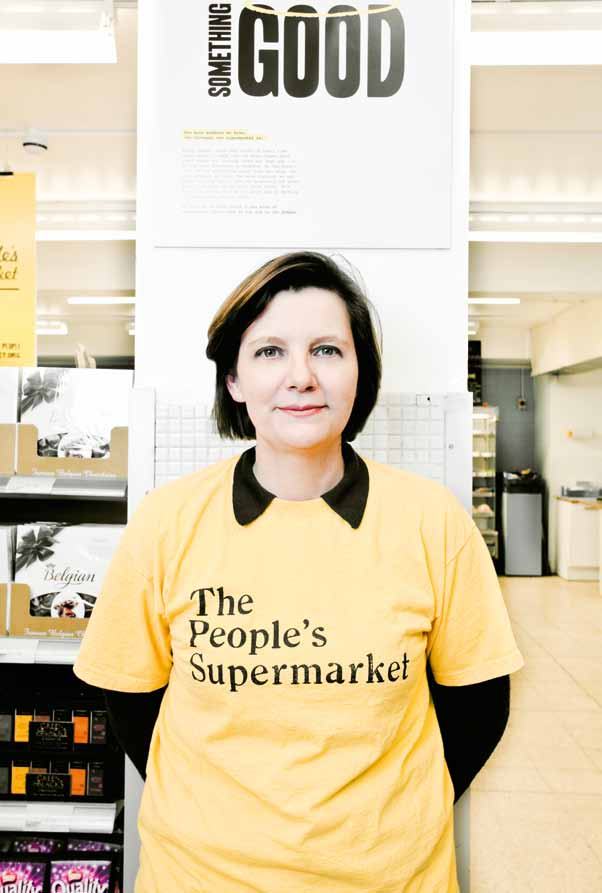
KATE WICKES-BULL
Co-founder and Chief Executive
WHATE DOES KATE DO AT THE PEOPLE'S SUPERMARKET?
- Create the marketing & event strategy
- Lead the workforce, members and volunteers
- Take final decisions on merchandising and marketing
- Grow customers and members
- Financial Management
- Seek commercial funders and supporters
- Liaise with local community and business leaders
- Develop new ways for the store to make money
...all following the guidance of the Board.
WHAT DID SHE DO BEFORE CO-FOUNDING THE VENTURE?
Kate ran her own retail consultancy after a twenty-year career at Marks & Spencer plc, which included working as an executive in store operations, a regional store manager and a project manager for store developments.
HER KEY PRACTICAL ADVICE TO RUNNING YOUR OWN PEOPLE'S SUPERMARKET:
- Never assume what members want to do
- Have a clear plan of daily, weekly and monthly tasks that need to be completed in the store
- Ensure you have an effective and efficient rota system that covers peak trading times and opening and closing times to minimise risks to health, safety and stock
- Make sure you know and understand the venture's legal obligations
- To help build a community, create an inspiring and fun programme of promotions and events for members and, at every turn, encourage members to come up with their own ideas and to run events themselves
- Your cash, stock & equipment are your major financial assets make sure you have processes in place to safe guard them
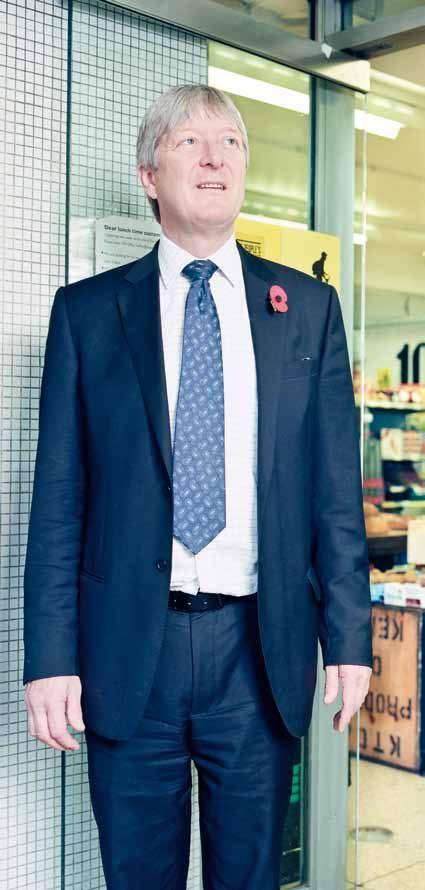
WHAT ARE RICHARD'S RESPONSIBILITIES AS CHAIRMAN?
- To monitor closely the operational and financial performance of the enterprise
- Ensure that all members of the Board know their roles, turn up for meetings and do what they have elected, or been asked, to do
- Act as both sounding board and trouble-shooter for the Chief Executive
RICHARD BROOKS
Chairman, Board
WHAT DOES RICHARD DO OTHER THAN SUPPORT THE PEOPLE'S SUPERMARKET?
Richard co founded FD Solutions in the early 1990s. FD Solutions employs around 30 experienced finance directors and they provide FD services on an as needed basis to over 150 businesses and organisations. Richard is an experienced Finance Director, managing director and CEO. He has a particular interest in new technology start ups and the food sector, and has supported entrepreneurship in developing countries. Richard was elected to the role of Chairman of the Board at The People's Supermarket in April 2011.
KEY PRACTICAL ADVICE TO RUNNING YOUR OWN PEOPLE'S SUPERMARKET
- Communicate, communicate, communicate and listen twice as much as speaking
- Understand clearly where in the business you are generating cash and, on the basis that you will not be able to offer as many product lines as Tesco, Sainsbury's, Waitrose etc., analyse which categories of product generate maximum cash and build your product offer out from that
- Right at the beginning, the Board of the enterprise and its operations need to behave like a medium-sized firm and have sufficient representation and effective management skills in place: skills in operations, finance, sales, marketing, facilities management, legal/contract and ideally at least two non-executive directors
- Consider carefully the merits of establishing the venture as an Industrial & Provident Society. It has benefits, such as an historic protocol, established format and rules but it has its drawbacks too, such as time-consuming regulatory compliance and it is a form of organisation that, in our experience, feels awkward to banks and investors
- Identify your key business drivers and prioritise these in an integrated financial forecast model. This contains a financial plan, a forecast of sales and costs that use internal accounting and sales data, and a model that clearly shows the basis upon which you are making your calculations. You will need to update this model frequently
The People's Supermarket OWNED BY THE PEOPLE. FOR THE PEOPLE. WWW.THEPEOPLESSUPERMARKE
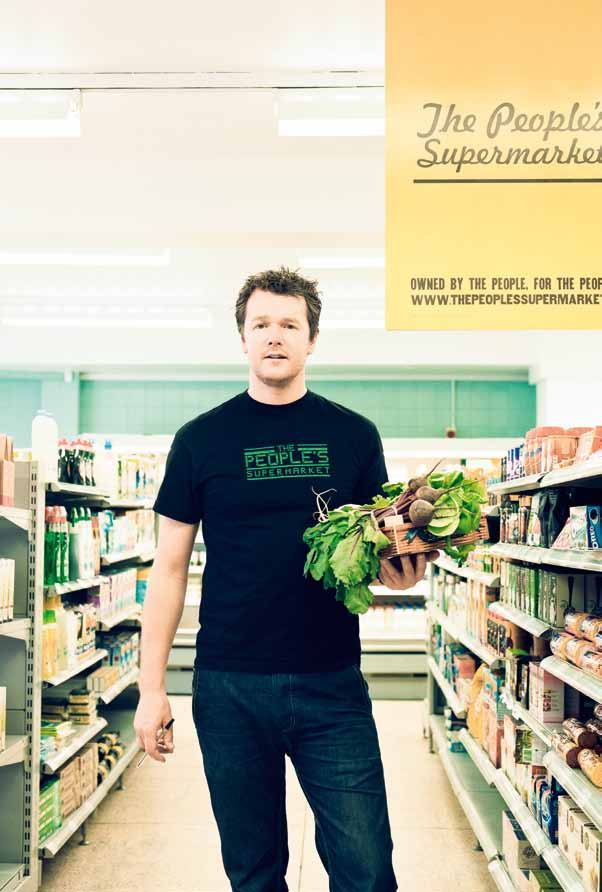
ARTHUR POTTS-DAWSON
Co-Founder and Creative Consultant
WHAT'S ARTHUR'S RELATIONSHIP TO THE PEOPLE'S SUPERMARKET?
Arthur co-founded the venture with an army of others and was first Chair of the Board. He stepped down in February 2011 and remains an occasional creative consultant to, and Ambassador for, the venture.
WHAT EXPERIENCES DOES ARTHUR BRING TO THE VENTURE?
Arthur is a leading chef, food and sustainability activist in the UK. Trained by the Roux Brothers, he went on to be head chef at the feted restaurant Acorn House, for Jamie Oliver at his restaurant Fifteen, the Soho House Group at Cecconi's, Ruth Rogers and Rose Gray at the River Cafe and Hugh Fearnley-Whittingstall at River Cottage HQ. Arthur has recently written Eat Your Veg, a vegetarian cookbook.
KEY ADVICE IN STARTING UP A VENTURE:
- Put waste management and ethically-sourced British produce at the centre of your offer
- You will author upwards of twenty versions of a business plan. Watch out for weaknesses in your numbers, and unrealistic projections of the funding and cashflow that you will require to ensure that the venture can stand on its own two feet
- Embrace anyone who wants to be a part of the venture but share as much responsibility as you can, since otherwise the role as leader can become claustrophobic
- Do not spend money on advertising but concentrate on public relations

DAVID BARRIE
Co-Founder and Board Member
RESPONSIBILITIES AT THE PEOPLE'S SUPERMARKET:
- Assemble the founding project team
- Position the venture for successful start-up
- Promote the venture to strategic partners and prospective funders
- Build and maintain relationships with public agencies
- Write applications for external funding and support relationships with existing funders
- Support the Chief Executive with development of the business
EXPERIENCE:
David's background is as an economic and creative consultant working in urban renewal and the property sector. He has created and managed several large-scale economic development projects, as well as supported the creation of several self-sustaining for profit and non-profit enterprises for clients in the real estate, housing, creative, community and entertainment industries.
ADVICE:
- You will need optimism, determination and drive - surround yourself with people with these personality traits
- From the earliest days, decide whether your priority is to be a convenience store or an ethical retailer
- Anyone lending you money (or their premises) will want to know that you can pay them back. Don't borrow money against your house to do this but find ‘angels’
- The test for everything is: does the venture improve the quality of people's lives? Does it help its members and customers be who they want to be?
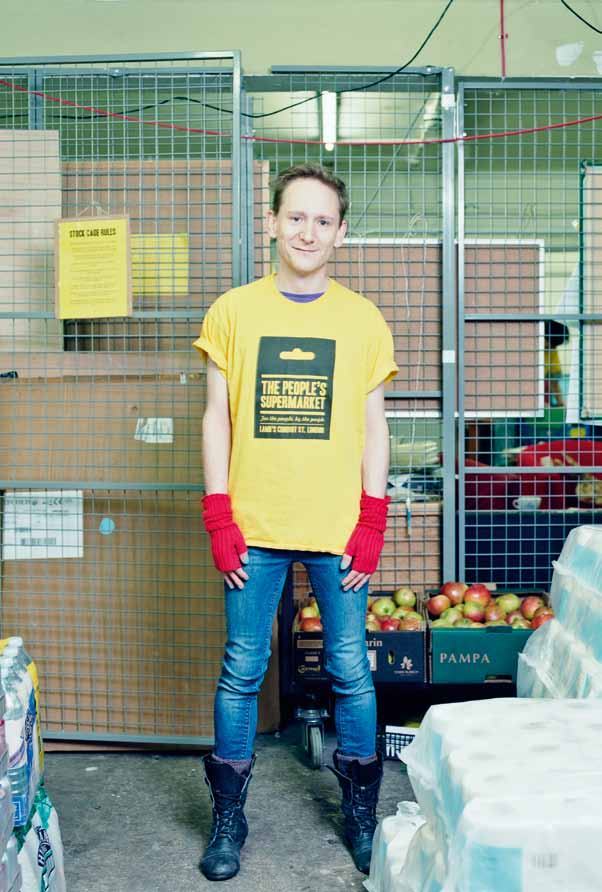
ANDY LEACH
Commercial Manager
RESPONSIBILITIES:
- Day to day management of the shop, including liaison with suppliers
- Setting prices and margins
- Managing the layout of the store
- Employee rotas
- Cash and stock
- Ordering and rotation of products on the shelves
EXPERIENCE:
Andy signed up as a member in the first week that the shop was opened for trading, after seeing a link to the venture on Facebook. Prior to joining TPS, Andy had worked for a year in retail management at a chocolate shop in Cambridge and in the merchandising department of Forbidden Planet.
ADVICE:
- Make sure your supplier base is in place before opening your doors, get the prices right and on the till system
- Concentrate on planning the store so that product sells: sandwiches sell better by the kitchen, rather than in the drinks section; don't put household products in the window; 97% of the product that people buy is habitual so you need to make that accessible
- Know your stock on day one: who supplied it, how much you paid for it, what is the recorded retail price, how much you are going to sell it for, how much profit are you going to make?
- Be totally on top of what's selling, and perishable and sell-by dates, you need to do this to build in time to get stock in from suppliers, while managing limited storage space
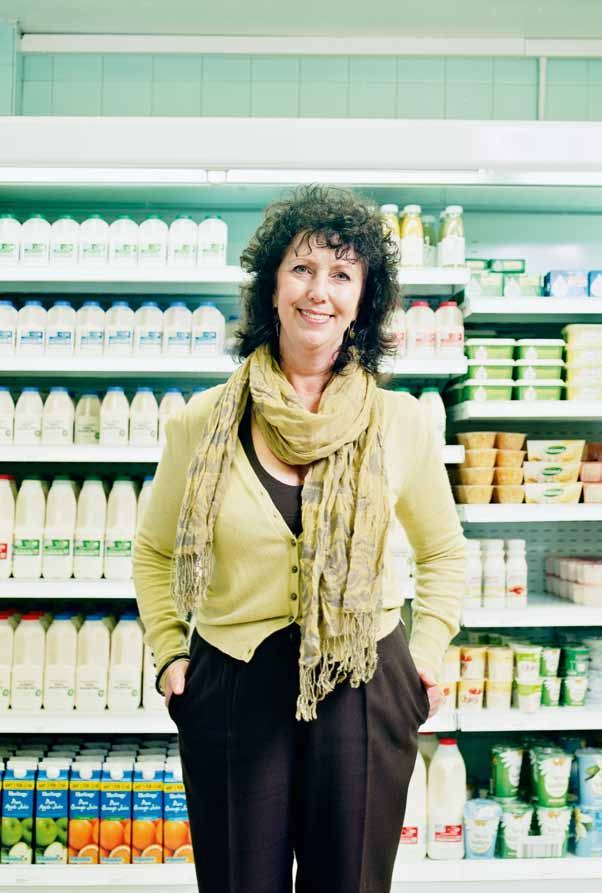
RACHAEL BLOCK
Board Member
RESPONSIBILITIES:
Rachael is a volunteer member who helps with management of people in the organisation, membership recruitment, and relationships within the workforce. She’s responsible for this at Board level but also in the ‘engine room' of the day-to-day enterprise.
EXPERIENCE:
Rachael is a former Human Resources Director with experience supporting companies and organisations such as Perrier, Tetley, BSkyB and Business Link London. She has a lot of experience working with start-up companies and supporting Trustees, charities and other voluntary bodies.
ADVICE:
- From the beginning, have a volunteer manager, support them with technological expertise, for example in using digital spreadsheets and programmes, and pay them if you have any funds
- Don't expect all of the membership to be active
- Take care with the induction of members: don't just give someone a broom and say “sweep up”
- Everything runs on four hour shifts, so you need to make sure that people know what they need to do and how they record what they have done for people on the following shift. Think work packages and that you are running and managing a relay race, with batons that people inherit and hand on
- Without being patronising, at the end of each shift, people need to know that their contribution has been recognised: “Did you have a good shift?” “Thank you for coming in”
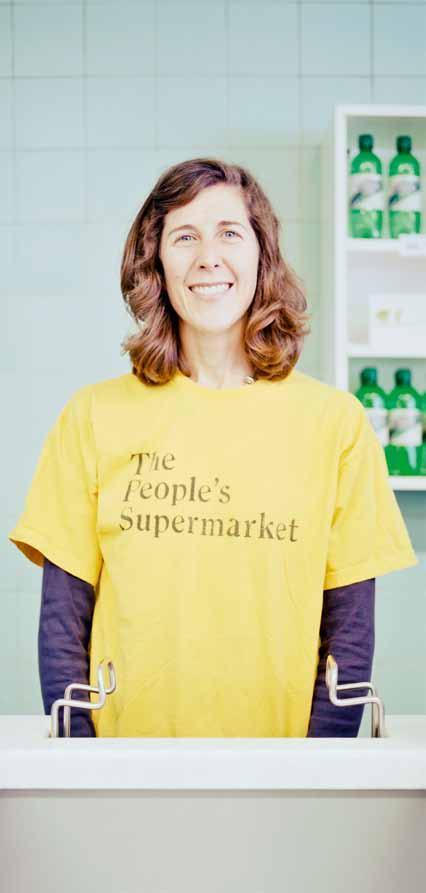
RESPONSIBILITIES:
- Identifying suppliers through networking and procurement specialists, NGOs and local food networks
- Sourcing a fresh and dry goods food offer
- Negotiating prices and establishing strong supplier partnerships
EXPERIENCE:
A self-confessed "food fanatic”, Amanda studied Home Economics, has worked as a Food Technologist in Canada and worked for eight years in Product Development, Category Management and Buying, all within the plant baking sector.
AMANDA GALLIANO
Project Manager and Product Buyer
ADVICE:
- You need to understand the basics on profits, pricing and margins, and be clear on what it is that you want to achieve
- Be clear on what are your high-margin and fast-moving lines and provide an appropriate mix of items to deliver the profit you require
- Before you offer a discount on a product, you need to understand its sales history. You may not want to discount fast moving lines because they will be purchased anyway (unless your competitors are promoting these lines, and then you might need to)
- Don't think or assume that good food is cheap. No good food is cheap; and “good” to me is food that is produced with the environment, animal welfare and human health in mind
- Be transparent. Always put the real price of produce in BIG capital letters and price goods by the kilo supermarkets don't do this, they just tell you that it's ‘half price' or 'two for one’
- From the start, have someone around you, who has serious knowledge of local markets, seasonality and who has good relationships with wholesalers and traders
- Active membership will only come one by one: "one good member is worth more than ten not so good ones”
- Position your business for ordinary members of the community, not “creative types” and enjoy the mix
- Because you are setting up a co-operative, there's a tendency to treat the new enterprise as if it is Animal Farm and to become obsessed with perfecting a chain of command but don't set down too many rules, since the venture will lose its vitality and invention
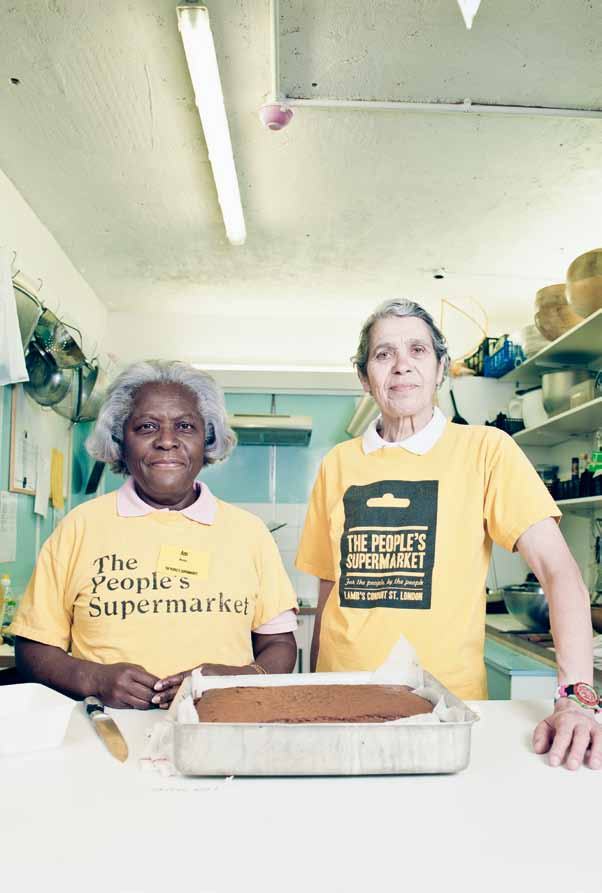
ANNE DANIELS & JEAN FISHER
Dynamic Duo
RESPONSIBILITIES:
- Support the work of The People's Kitchen
- Select fruit and vegetables that are just coming to the end of their 'best-before' date and that can then be used as ingredients in takeaway meals from the Kitchen
- Keep a register of the waste that you save - you'll be amazed by the numbers!
EXPERIENCE:
Anne is a retired radio and TV broadcaster from Bermuda. Jean is a retired teacher of the hard of hearing
ADVICE:
- You are looking for carrots that are going a little bit soft, cabbage that's turning yellow and fruit that has a few spots and a little softness
- Then you weigh the waste product, cost it up and enter it in to the supermarket register of waste
- The produce then either goes directly in to the kitchen for cutting up and preparation, in to the chef's fridge or thrown in the bin for composting
- There always needs to be a system of organisation within the venture
- Scrub, scrub and scrub again
CHRIS BROWN
Member
RESPONSIBILITIES:
Chris was member No. 47 and relinquished the Chair of the Finance Committee early in 2011. He remains an arms-length person to give small but key pieces of advice.
EXPERIENCE:
Chris is Chief Executive of igloo Urban Regeneration and direct of Isis Waterside Regeneration and Blueprint and a leading figure in the world of urban regeneration and renewal.
ADVICE:
- Start with the members before the shop and develop a compelling membership proposition
- Don't try to take on the big boys or the specialists head to head. Be different. Offer value
- Draw up a business plan: it won't be right but it will help you to make sure that you have thought about everything
- You not only need money for stock, fixtures and fittings, payments to landlord, recruitment costs (of members and paid staff) you critically need money to cover initial losses while trade builds up
- Start with raising equity - not debt - and raise it by selling shares to members. If possible, finance the entire exercise from this source
- Borrow as a last resort, but try and borrow from friends at low or no interest and with flexible repayment terms
MIEKE
Kitchen support and general responsibilities
RESPONSIBILITIES:
- Helps to clean the store
- Stacks shelves
- Prepare fruit and produce for the kitchens
EXPERIENCE:
Mieke works in marketing and advertising for publishing companies and she has run her own marketing agency.
ADVICE:
- Go for a convenience store offer, everyday products that everyday people enjoy. In other words, if you are an ethical foodie, be prepared to compromise
- Don't create too many rules and regulations for members because this will be alienating - allow people to carry out particular jobs that they want to do
- We are building a community and democracy, not an ideology
- Don't create a manicured shopping experience - allow it to be rough at the edges and utilitarian
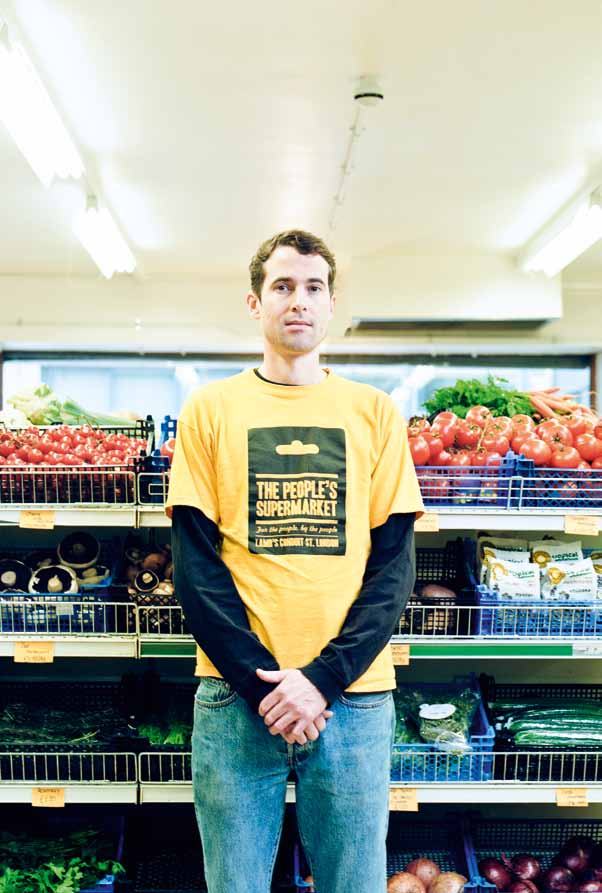
MICHAEL MULCAHY
Duty Manager
RESPONSIBILITIES:
- Oversee the management of the premises
- Oversee management of shifts
- Oversee deliveries to the store
- Oversee health and safety of both staff and customers
EXPERIENCE:
Michael has several business interests outside of the supermarket, including commercial property and investment and his previous work experience has included managing hotel gift shops, cafes and a cookery business
ADVICE:
- Don't micro-manage paid staff, volunteer members and other volunteer staff, but be on top of all of the detail of what they are up to so as to make sure that the enterprise works effectively and efficiently
- You need to be flexible in the hours that you can give the store, since it is never absolutely certain that there will be adequate staffing

GEORGIE KNIGHT
Social Media
RESPONSIBILITIES:
- Runs Twitter account
- Shares in managing Facebook group
- Takes photos of the store to upload on Flickr.com
EXPERIENCE:
Georgie has two jobs outside of the time that she volunteers as a member. She works for Sustain - the food charity looking after London Food Link, a network of organisations and individuals who care about sustainable food and are committed to tackling the barriers that prevent access to healthy and sustainable food for all Londoners. Georgie also works part-time for Vodafone, the mobile telephone company, on systems documentation and community management.
ADVICE:
- Encourage news generation within the organisation, since news from the store, ideally in the form of newsletters, is ideal material to tweet or post on social media platforms
- Twitter can service many different purposes, such as sharing information and engaging with people but remember that engagement is about human interaction, so exchange ideas and enter into a dialogue with people
- Encourage other members to set up Twitter accounts since you need to be able to re-tweet their tweets to spread news and comment
- Don't be combative with people who post negative tweets
- The number of followers is less important than the level of engagement you have with them, and they have with you


DESSERT
Desserts are deliciously sweet. But for all their whipped eggs and sugar, often they need a binding agent. What are the binding ingredients of The People's Supermarket and what's our closing advice to ‘chefs’ from across the UK and around the world, from Aberdeen to Amsterdam and Brighton to Bangkok who have come to us and said “We want to set up our own"?
Gather a group of exceptionally driven people with diverse and practical professional skills and an ethical commitment to the cause
The People's Supermarket has benefited from a peculiar combination of talents that only can only be gathered by a collection of people who share a common passion – a ‘community of interest’.
Our advice: put a call out to the people who live or work in your area, friends, family, people who are already active in the politics of food or want to improve or change what's on offer in their town, city or local High Street, see what comes back and if people share interests and enthusiasms, hold a meeting. Build commitment. And foster momentum by creating tasks that require mutual endeavour.
Find business partners who are as determined as you to make the venture happen
The People's Supermarket has only achieved what it has because we have managed to find organisations and individuals who are equally driven to give shoppers an experience that they want to buy and share.
How can you find these committed partners?
First, talk to public agencies operating locally who have an interest in improving the quality of retailing in the area, reviving empty properties or finding new ways to improve people's health. Find out who they work with, visit them, tell them what you want to do, see who comes back to you, run a meeting for them all, and find tasks that they can work on together.
Second, become a social enterprise and ‘local food’ junkie': read Government documents, local authority strategies, enterprise and food sections of daily newspapers, neighbourhood and food blogs and specialist property magazines and if anyone writes anything relevant, inspirational and can contribute tothe cause', network, contact, and meet them.
Finally, on first meeting an individual or organisation who is a prospective financial investor, don't talk money. Whether they declare it or not, people and for-profit and non-profit agencies like to be won over to what you are trying to do through interest, passion, a sense of newness and joy. As serial entrepreneur and investor Luke Johnson has written in his latest book Start it up: Angels want to have fun making money.
Run a business first, `engine’ of ethics second
Without cash in the till and defence of margins by stealth, you'll go bust - and fail to share and spread your values.
How to do this? Think “business”, not “project”.
Follow the advice of the Chair of our Board, experienced Finance Director Richard Brooks and at the outset create a vision document, a business plan and most importantly, an integrated financial forecast model.
Put in place weekly reporting, covering takings (estimated, actual and previous year of trading) revenue from Top 10 lines, a summary of activities, press, any issues arising around personnel and the General Manager/ Chief Executive's diary.
Then pull sharp focus on categories of product that generate the most cash and highest margins, as outlined earlier.
Foster a sense of belonging and mutual trust
This is one of the hardest things to achieve - and especially in the earliest years of the venture, since you will be totally focussed upon generating sufficient sales revenues.
You will find your own ways to foster these values - but also soon realise that it is a process of continual improvement.
At the People's Supermarket, we have sought to do this through the business model itself, enthusiastic management, and enabling people to access the life, times and trading of the store in ways that play to their strengths.
Part of this is about giving people as many opportunities as possible to run things by and for themselves. If people are good at making sandwiches, encourage them to become Head of Sandwich-Making. If they care about Fair Trade products, encourage them to run an event for other members celebrating the theme. At monthly members' meetings create plenty of opportunities for an open discussion on buying policies and management. Why? Because the venture is a co-operative. What it buys and sells is a collective decision. Members are investors - not just signatories to a cause.
In the development phase of the venture, operate as a 'do-ocracy'
A 'do-ocracy' is an organisational structure in which individuals choose roles and tasks for themselves and execute them. This is a very old-fashioned survival technique - the 'he-who-puts-his-hand-up-to-do-something-gets-the-job' approach. It has also been heralded as a key ingredient in the successful management of new communities, such as the annual Burning Man event in Nevada, United States or the setting up of small units within, or at arm's length from, bigger agencies to develop innovative ideas, especially in the technology sector - what the experts call 'skunk works'.
In the eighteen-month development period before opening the store in Lamb's Conduit Street, the People's Supermarket was a fully-fledged 'do-ocracy'. It worked - but if you adopt it as an approach, make sure that you are sufficiently flexible to accommodate people who put their hands up, then withdraw their labour or just disappear off the radar, a common human trait.
Allow people to participate on their own terms
One of the reasons why The People's Supermarket has thrived as a community since opening - and survived countless setbacks, such as massive dips in revenue during The Great Snows of Christmas 2010, failed applications for discretionary rates relief from the London Borough of Camden and a small bout of petty theft from trainee staff - is because we have formed an organisation that allows people to participate on their own terms.
If you start up your own version of the People's Supermarket and have paid staff, ensure that they are employed to do what they want to do and design induction processes for members that clarify carefully how they can, and will, be able to contribute to the operation of the venture.
If people volunteer to carry out a management task but are unable to fulfil it due to other commitments or constraints - such as the need to do their daily job or make a living - let it go. Find another way to get the job done.
Equally, take care at all times on how you stock the shop to respond to the tastes, demands and opinions of both member and non-member alike.
‘S’ is for ‘solvency' and staring it in the face
In the alphabet soup of The People's Supermarket, 'S' has been the critical letter and for ‘solvency', not soya milk or Snickers. In two years of trading, some weeks we have traded at a financial surplus but we still bear the burden of, and seek to service, the heavy costs of our rental and rate payments and it is only through the goodwill of our landlord, the London Borough of Camden, and suppliers that we have managed to maintain trading.
How to manage solvency? First, monitor from day one the venture's liabilities. Have an open, honest and keen relationship with your suppliers, and keep them in the loop as to how the venture is trading. Build a healthy and transparent relationship with your landlord and the ratings office of your local authority. Constantly discuss at Board meetings and on the shopfloor why the venture is or isn't trading at a surplus and whether the doors should remain open, or closed. Finally, every day and in every way, innovate the offer to members and customers to ensure that you are maximising shopping in the store and the revenue that it generates.
It has been a prevailing theme in this booklet that The People's Supermarket is a 'community'. Like all forms of human association, communities have their own personality, strengths, weaknesses, eccentricities and determinations. But because The People's Supermarket is a co-operative (by definition a collective enterprise that, in our case, purchases goods on a collective basis for collective benefit) a core value has to be that the organisation is as open, responsive and interactive as possible - and with everybody and everything that it engages with.
If you want to start up your own People's Supermarket, our best advice is to be bold, brave, cautious and fearful - and all at the same time! But if there is one secret ingredient to our ‘sauce' that you should know, it is the ‘something' that we feel has been instrumental to us creating new full-time jobs, serving thousands of customers each week, and using the revival of a vacant retail premises to start to improve the health and well-being of people who live and work in our corner of London.
That 'something' is an instinctual understanding that to create a successful retail business, as well as a social venture and membership organisation, you need to combine skills, commitment, product and service in such a way that puts a smile on the face of all customers, members and staff.
For your version of the People's Supermarket to succeed, you will need to create a place, space, relationship and experience that enables everybody who interacts with you to be the person that they want to be. That's the people in the organisations who host and supply you, the people who join you, but also those who pass by and hand money over at the till.
A graphic illustrating different labels for products, reading "Fearful", "BRAVE", "BOLD", and "Cautious". These are stylized black shapes with white labels, suggesting categories of mindset or approach.

SCRIBBLES ON THE BACK OF THE BILL
Countless volunteers, supporters and members have contributed to the start up and growth of The People's Supermarket and we would like to take this opportunity to thank them. Here are just a few...
BUSINESS TEAM (FEBRUARY 2012)
Board of Trustees
- Richard Brooks (Chair)
- Anna Sanders
- David Barrie
- Gillie Severin
- Heidi Proctor
- Rachael Block
Membership committees
- Environment: Jane Dennyson
- Events: Lida Hujic
- Finance: Andrew Coulson
- Fundraising & Public Affairs: David Barrie
- Health and Safety: Kate Bull
- IT: Pranav Bihari
- Marketing: David Barrie/Robin Smith
- Membership: Rachael Block
- Operations: Andy Leach
- Products: Amanda Galliano
Senior Team
- Kate Bull (Chief Executive)
- Amanda Galliano (Product sourcing)
- Andy Leach (Commercial Manager)
- Jessica Green (Office Organiser)
- Jo Jarrett (Accounts)
People's Team
- Charlie Grant (Membership Coordinator)
- Kyoko Hoda (Employees)
- Susan Nettleton (Volunteers)
- Tara Mulqueen
Interns
- Gabriela Raison (Fundraising/Events)
- Henry Cann (Environment)
- Jenny Hearn (Events/PR)
- Kate McPartland (Events/PR)
Duty Managers
- Craig Jobbins
- Elliot Bannister
- Michael Mulchay
- Nigel Hughes
- Osman Zein
- Tara Mulqueen
- Tom Smith
Sales Assistants
- Aktar
- Karen
- Mo
- Natasha
- Nelson
- Pascale
THOSE WHO HAVE CONTRIBUTED IN THE BACKGROUND:
Individuals
- Andreas Georgiou
- Andy Munro
- Carolyn Steel, Callum & Nightingale Architects
- Chris Brown, Igloo Regeneration
- Florian Eames
- Geoff Crook, Central St Martins College of Art & Design
- Haarala Hamilton Photography
- Helen Richards
- Joe Holtz, Park Slope Food Coop
- Leanne Klein
- Maurice McCartney, Fresh Management Solutions
- Steve Moore, Big Society Network
- Susan Brown, SBM Manchester Ltd
Public Bodies
- Greenwich Co-operative Development Agency
- London Borough of Camden
- Meanwhile Space CIC
- Social Enterprise London
- Sustain
- Transition Towns Bloomsbury
Corporations
- Acuity Associates
- Arsenal Football Club
- Channel 4 Television
- Charles Russell LLP
- Farebrother Chartered Surveyors
- FD Solutions
- Gerald Eve
- Gleeds
- IDL Architects Ltd
- Jones Lang LaSalle
- MACE
- Membership Engagement Services
- Metro Bank PLC
- NISA-Today
- PrimeTimers
- RD Electrical Ltd.
- ResPublica
- The Local Epicurean Ltd.
- Unreal Design
- Wall to Wall Television
Funding and Grant Agencies
- Esmée Fairbairn Foundation
- Meanwhile Space CIC (Locality) Development Trusts Association
- Nesta
- The Plunkett Foundation
- Unltd.
Acknowledgements
This book was written by David Barrie, designed by Liana Zammitt of unreal-uk.com and carries photographs by Haarala Hamilton Photography. It was commissioned by Helen Goulden and Mark Griffiths, Nesta, and its production overseen by the Board of The People's Supermarket. Thanks to Jessica Green and Caspar Barrie for helping with its production.
All images ©2012 Haarala Hamilton photography
A stylized graphic of an abstract shape resembling a bursting star with text "Employee of the month"

ISBN 978-1-84875-137-8
Produced with support from Nesta...