Acknowledgements
Thank you to all the project teams that took part in Nesta in Scotland's AI for Good programme: Blackwood Homes and Care, City of Glasgow College, Heriot-Watt University's Interaction Lab, Red Star AI, Space Intelligence Ltd, the University of Edinburgh, Edinburgh Centre of Robotics and Voxsio.
We would also like to thank the shortlisted projects that contributed to this report: CogniHealth, The Scottish Association for Marine Science, The Policy Magnet, Urban Tide and Valla.
Further thanks goes to the judging panel who helped to pick the final grantees in January 2020: Alex Hutchenson from Data for Children Collaborative, David McNeill from SCVO, Katy McNeil from CivTech, writer, science communicator and educator Emily Dodd and Svea Miesch from Scotland IS.
And a special thank you to Kate Forbes, Cabinet Secretary for Finance and Chair of Scotland's AI Strategy Steering Committee, for providing a foreword to this report.
We would also like to thank Professor Shannon Vallor, Baillie Gifford Chair in the Ethics of Data and AI, Director of the Centre for Technomoral Futures, Edinburgh Futures Institute at the University of Edinburgh, and Moira Mackenzie, Deputy Chief Executive and Director of Innovation at the Digital Health & Care Innovation Centre, for providing their expert analysis of current state and potential of AI in Scotland.
About Nesta
Nesta is an innovation foundation. For us, innovation means turning bold ideas into reality and changing lives for the better.
We use our expertise, skills and funding in areas where there are big challenges facing society. Nesta is based in the UK and supported by a financial endowment. We work with partners around the globe to bring bold ideas to life to change the world for good.
www.nesta.org.uk
If you'd like this publication in an alternative format such as Braille or large print, please contact us at: [email protected]
Foreword
Scotland is well placed to harness the potential of data innovation, including artificial intelligence (AI), to benefit our citizens, economy and society.

That's why the Scottish Government is committed to developing an AI Strategy – to help ensure that Scotland maximises the potential economic and social benefits of AI, and sends a strong signal to the world about our ambition. We are working with The Data Lab, Scotland's innovation centre for data and AI, and many others to take forward the process of developing the Strategy.
'Good' programme attracted over 70 applications from across the country. This report showcases those that were successful – each an exciting and innovative project that harnesses the power of AI to do good.
I am pleased to acknowledge Nesta's contribution to this process, through active representation on both the strategy steering committee and working groups, and producing reports such as Shift+Ctrl: The Scottish public and the tech revolution, which provides valuable insights to how people view innovative technologies, including AI, and what these might mean for Scotland.
Scotland is home to many dynamic firms at the forefront of AI, so it was no surprise to hear that Nesta's 'AI for
In developing Scotland's AI Strategy, due to be published in spring 2021, one thing we have learnt is the value of positive examples of AI. This report provides many of these, and I hope you enjoy reading more about them, and what AI could do for Scotland.
Kate Forbes MSP
Cabinet Secretary for Finance
and Chair of Scotland's AI Strategy
Steering Group
Introduction
Over the last 20 years, Scotland has seen major social, economic and technical advances across our society. However, as we head into a new decade in the context of both a global public health crisis and a climate emergency, we still face many significant, longstanding and complex social and economic challenges. Even before the pandemic disrupted our lives, levels of poverty and inequality were rising.
Our young people face a number of complex issues related to their mental health and wellbeing, adding to the existing challenges they face growing up in a rapidly-changing society and world of work. We also have an ageing population and many people living longer with more chronic health conditions as well as facing issues such as chronic isolation and loneliness. None of these are simple problems to address and it is clear that when thinking about how our communities, governments, public services, employers and civil society can best respond to the challenges of our time, more of the same simply won't work.
We need to think differently about the interconnected social and economic challenges we face. We need better tools for generating data, gathering insight and informing our approach to problem solving and testing new solutions. We need to pool the best of our talent and human resources alongside the capabilities afforded us by technology, to test new ways of harnessing digital tools for social benefit. These are the types of emerging social innovations we sought to support with our AI for Good programme. From smart assistants to search engine results and banking apps, artificial intelligence (AI) is already all around us and affecting our lives and work. It was a Canadian AI system that was one of the first to issue a warning about the threat of COVID-19 in December 2019. AI helps fly planes and will soon drive our cars. Increasingly, it is being used in public services from healthcare to education, traffic management and resource allocation.
But we know there are challenges around improving public trust in AI, broadening engagement in the processes for developing AI tools and better demonstrating their potential for social good. We awarded £105,000 of grant funding to seven projects based in Scotland using innovative AI tools to help tackle social challenges. We received more than 70 applications from across the country looking at how AI can be used on issues like environmental decline, smart data in health, monitoring trends in online social interactions for early indication of mental health issues and data processing in support of smarter public service resource allocations.
This report summarises the insights from these cutting-edge AI innovators in Scotland and their projects. It makes recommendations for wider consideration, based on the experience of frontline AI practitioners, on how Scotland can support more AI projects with a focus on social good.
Glossary
Whether asking your smartphone for directions, or listening to a playlist of recommended songs, most of us interact with artificial intelligence (AI) on a near-daily basis, even if we don't know it. AI is already powering aspects of our lives and it is set to do so more and more, but how much do we really understand about what it is and how it works?
AI is a rapidly growing field of computing which uses computer processing power to solve problems that would otherwise require human understanding and reasoning to complete.
"Intelligence" in this case does not mean independent thought, emotion, sentience or self-awareness - that is still exclusively the realm of science fiction. Instead, intelligence here refers to the capability of the computing systems to gather and analyse information and make decisions about that information to solve problems.
Artificial intelligence systems can also learn from their errors and successes to improve their decision making and analysis each time. Computer systems that use artificial intelligence are capable of absorbing and analysing information at much greater speeds and volumes than humans which means AI has huge potential to help people do things better and faster.
Artificial Intelligence is already being defined as a General Purpose Technology, alongside advances like the steam engine, railroads and electricity, meaning it has potential to drastically alter society.
Machine learning
Most AI systems we interact with use machine learning. Machine learning can be used by artificial intelligence systems to improve the way they work by extracting patterns from very large volumes of data and monitoring the success of its own past actions and the accuracy of information it has.
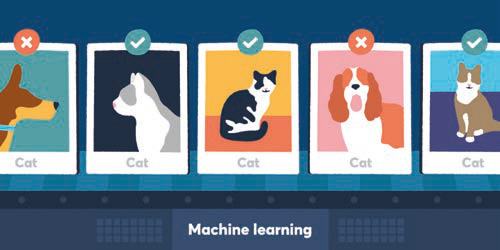
For example, AI recommendation systems will learn when a recommendation is unsuccessful and can adjust both future recommendations for an individual and the weight it gives to certain information. Computer vision systems can learn from successes and mistakes to build stronger databases of information which they can then use to better identify the content of images or videos, learning, for instance, the different characteristics of pictures of cats by analysing all images tagged with "cat".
This kind of machine learning is known as supervised machine learning as the initial data the system is fed is already labelled and the AI uses the data to train itself to identify similar things and make predictions. Unsupervised machine learning is where the information fed into the system is not labelled and the AI is tasked with identifying patterns in characteristics and categorising the data itself.
Autonomous systems
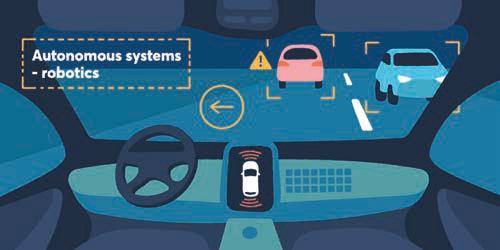
Autonomous systems are AI-powered machines which exist physically within an environment and can sense and act on that environment. They use a variety of AI capabilities to analyse information from the environment around them to make decisions about how to, for example, move through that environment without human instruction. A driverless car is an example of an autonomous system.
Natural language processing and understanding
Natural language processing and understanding is when a computer system uses AI to absorb, understand and translate transcriptions of speech or text written by people. NLP/U systems can process language to identify words and determine meaning from sentences and phrases including tone and context.
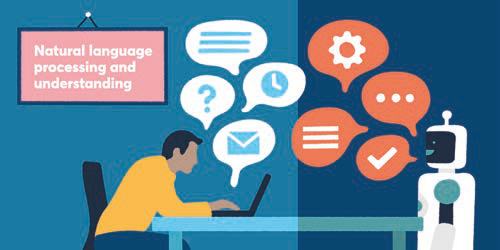
Examples include online customer service chatbots which use NLP/U to understand typed questions from people and either select the most appropriate stock response or generate specific answers in a way that mimics human conservations. Google Translate also uses NLP/U to analyse huge volumes of text language and translations online and corrections submitted by people to constantly update and adapt its automatic translations.
Speech and audio processing
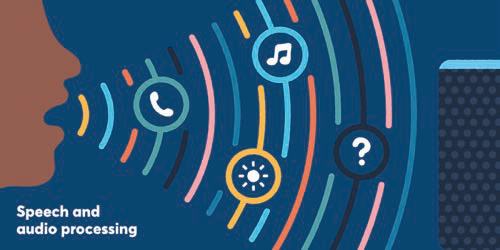
Speech and audio processing uses AI to recognise, analyse and respond to human speech or other audio signals, similar to the way Natural Language Processing can understand language through text. Examples of this kind of AI include smart assistants such as Amazon Echo, Google Home or Apple's Siri which respond with computer generated speech to voice commands and questions from people.
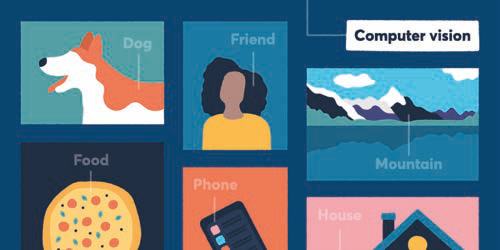
Computer vision
Computer vision is when AI is used to understand and recognise images and videos and analyse the elements of the content within them. For example, Google Photos uses computer vision to categorise your photo files by their subject matter, grouping pictures of pets, people, landscapes and food together. Facebook also uses a form of computer vision to recognise faces in photographs and prompt you to tag someone. Computer vision can also be used for more complex analysis of images such as using satellite imagery to map biodiversity by recognising characteristics of the landscape.
Recommender systems
Recommender or recommendation systems are used by computer programmes to suggest content for people by predicting things they will like based on previous preferences or ratings. Examples include playlist suggestions on platforms such as YouTube, Spotify or Netflix and shopping suggestions on online marketplaces such as Amazon.
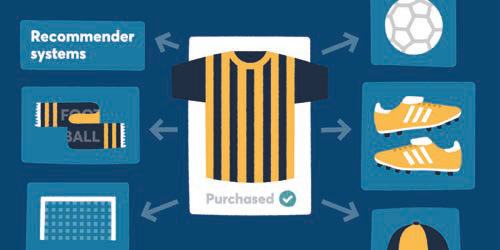
Recommender systems use different methods to make suggestions, drawing on the characteristics of the content, such a style of music or genre of film, as well as analysing what other people with similar tastes and online behaviours have liked or bought. Recommender systems are designed to improve the success of their recommendations over time by building a more complete picture of a person's preferences the more they use a platform and learning from which recommendations have been successful or not.
AI won't solve our problems – people will.
Leading Voices: Shannon Vallor

Shannon Vallor
Baillie Gifford Chair in the Ethics of Data and AI, Director of the Centre for Technomoral Futures, Edinburgh Futures Institute at the University of Edinburgh
Can AI solve social challenges in Scotland? Absolutely not. Can the people of Scotland use AI as a powerful new tool to help us overcome many of those social challenges? Absolutely, yes.
This reframing is important. AI isn't magic. It's not a silver bullet. AI can't solve a single social challenge because real AI (versus science fiction AI) is just a collective name for an array of new computing tools that can help us do – or even automate – intelligent actions. AI is not a new kind of entity with a mind of its own. An AI tool can't solve a social challenge because it doesn't know what a social challenge is. It doesn't even know what society is. But we do, and it's important that we come to understand what we can do with AI to help our society to flourish.
Technologies aren't our only tools for social improvement. They are no substitute for wiser policies and just laws. But in Scotland we can use AI to amplify and extend our own social intelligence – to do intelligent things together more quickly, more reliably, in ways that take into account greater complexity, and are guided by more accurate data and analysis.
The possibilities for good AI are as limitless as our moral intelligence and creativity. It's those human qualities we must integrate with technical intelligence to create a culture of ethical AI in Scotland. We can create automated AI bots that discourage rather than reinforce harmful gender stereotypes and abuse.
We can develop unobtrusive, privacy-preserving AI sensors that know when a vulnerable person living independently has not woken to warm their kettle or feed their cat. And we can use AI mapping tools to identify ideal locales for reforestation and wildlife habitat restoration. These are just a few of the AI for Good projects supported by Nesta in Scotland, and even more beneficial projects with the potential to be realised.
The public needs to have confidence that AI tools are being developed and used in Scotland in Scotland in ways that match our ethical standards.
But to do this, we have to know that AI is not going to strengthen our social fabric – we have to do it. And to do it with the help of AI, the public needs to have confidence that AI tools are being developed and used in Scotland in ways that match the ethical standards of care, fairness, safety, transparency, integrity and justice that we rightly expect from one another.
From the generational losses that come from polluting our shared physical and informational spaces, to the use of digital tools to discriminate against and exclude those already neglected in their communities, to amplified political division and manipulation online, it is obvious that we cannot afford the devastating costs of treating new technologies as a social license to abdicate moral responsibility rather than what they must now become: ways to embrace our responsibilities to one another more fully.
This is the future with AI I see for Scotland. And it's a good one.
The AI for Good programme
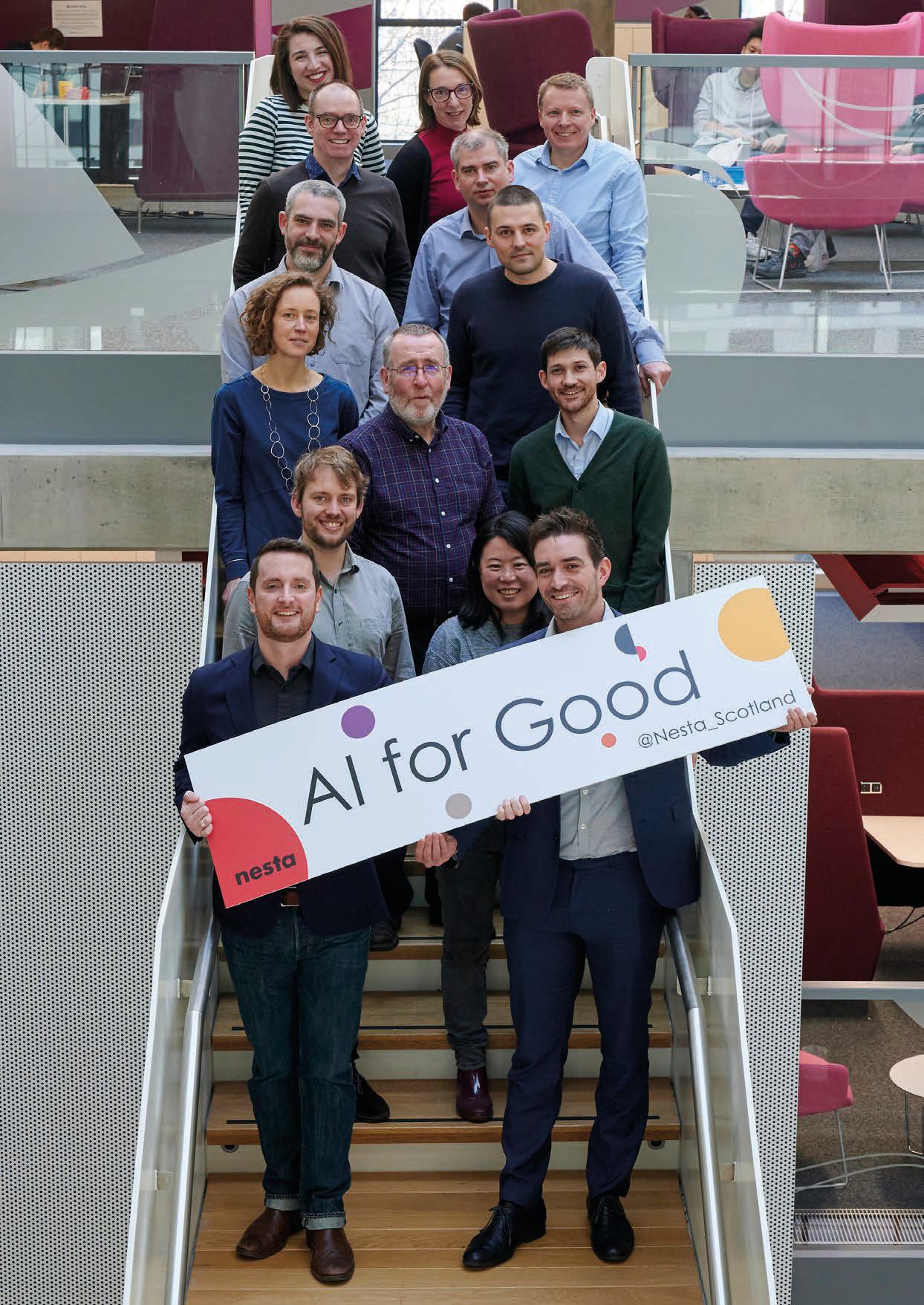
AI for Good grantees with Adam Lang, head of Nesta in Scotland, at the launch of the programme. This photograph was taken before social distancing measures were introduced.


The AI for Good programme was launched by Nesta in Scotland in November 2019 to find, fund and support seven of the most innovative projects in Scotland using artificial intelligence (AI) to address a range of social challenges.
The fund received over 70 applications, demonstrating the breadth and depth of the AI ecosystem, as well as an appetite from organisations to use their technical expertise to address the challenges that we face in our society. AI-powered solutions are being sought for challenges such as the climate emergency and biodiversity crisis, long-standing issues of public health and increasing access and participation in local decision-making. In fact, almost every challenge we face could benefit from combining AI with our human capacities of judgement and creativity.
From the outset, our aim has been to demystify AI and open up the public discourse around practical, ethical uses of AI that can have a positive impact on people's lives. AI has enormous potential to transform the way that systems and services are provided across all areas of society such as local and national government, science, health, education, arts, climate action, transport, manufacturing, emergency services, academia and research.
Much of the public discourse about AI to date has focused on the benefits for the private sector. We want to change that, raising the profile of AI innovators helping to improve social outcomes in communities across Scotland. If AI is to be used as a tool to improve our society, there must be focus on the intended and unintended impact on users, on addressing inequalities and not exacerbating them, on making technology that is open and accessible and not entrenching bias and discrimination within the technologies we create.
Nesta has been interested in AI for some time and our previous work such as our report on the economics of artificial intelligence helps policymakers and economists to navigate the impact of digitalisation and understand their potential to influence it. More recently, we have published our Educ-AI-tion Rebooted? report, looking at the potential of AI tools in schools and colleges, We have explored how the future of skills will be affected by AI and automation. Through our Centre for Collective Intelligence Design we have gathered together AI and collective intelligence case studies to demonstrate how AI can help large groups to think together rather than providing an alternative to them.
Through our AI for Good programme, we wanted to demonstrate how AI can be used for real social impact in Scotland by supporting, profiling and amplifying the people and the projects that are doing it. AI is now an established tool in the information management arsenal – we want to ensure it is aimed at addressing the social challenges of our time, not exacerbating them.
Funded Projects: Scotland's AI Innovators
I will not compute - Heriot-Watt University
Imagine asking a smart assistant for the recipe for a Victoria sponge cake. Then imagine asking the same assistant to write a story about an astronaut who lands on a new planet and discovers a friendly alien. Both of these are relatively easy tasks for most of us, but for AI they are worlds apart. The recipe for a Victoria sponge cake is a fixed body of factual knowledge, while a story requires creativity, imagination, and the ability to combine ideas in new ways.
The ability to reason, think and be creative is what separates us from the machine. However, as AI systems become more sophisticated, this distinction has begun to blur. Heriot-Watt University is working on a project that seeks to better understand and extend the creative capacities of AI. Their project, 'I will not compute: Understanding Human and AI Creativity in the Scottish Context', explores how AI systems can be used to augment human creativity, rather than simply replicating it.
Dr Ruth Aylett, Associate Professor in the School of Mathematical and Computer Sciences at Heriot-Watt University, explains: "The real promise of AI isn't to replace humans, but to collaborate with them. Imagine an AI as a creative partner, helping you to brainstorm ideas, overcome creative blocks, and explore new possibilities. This is particularly relevant in areas like education, where AI could help students develop their creative thinking skills, or in industries like design and advertising, where AI could help professionals generate novel concepts."
The project will use AI systems to generate new ideas and concepts across a range of creative domains, from writing and music to visual arts and design. By analysing the outputs of these AI systems, the researchers hope to gain a better understanding of the underlying mechanisms of creativity, and to develop new methods for enhancing human creativity through AI.
"We want to explore the potential of AI to be a genuinely creative force, not just a tool for automation," says Dr Aylett. "This project will push the boundaries of what we thought was possible with AI, and hopefully inspire new ways of thinking about human-AI collaboration in the creative process."
The project has the potential to impact a wide range of sectors, from education and the creative industries to healthcare and social care. By fostering a deeper understanding of human-AI creativity, the project could lead to the development of new AI tools and applications that empower individuals and organisations to be more innovative and creative.
Reconnecting the shrinking wild - Space Intelligence
The Scottish Highlands, with their rugged mountains, ancient forests, and pristine lochs, are home to a rich and diverse array of wildlife. From soaring golden eagles to elusive Scottish wildcats, these landscapes are a vital stronghold for many of the UK's most iconic species. However, human activity and climate change are putting these habitats under increasing pressure, leading to habitat fragmentation and loss.
Space Intelligence, a Scottish company that uses satellite imagery and AI to monitor changes in land use and biodiversity, is working on a project to help reconnect and restore these shrinking wild spaces. Their project, 'Rewilding Scotland: Using AI to Map and Monitor Habitat Connectivity', aims to identify key areas for habitat restoration and to track the effectiveness of rewilding efforts over time.
"Rewilding is about more than just planting trees," explains Dr Murray Collins, CEO of Space Intelligence. "It's about creating interconnected habitats that allow wildlife to move freely across the landscape. Our AI systems can analyse vast amounts of satellite data to identify areas where habitats are fragmented, and to model the impact of different restoration strategies."
The project will use AI-powered image analysis to map existing habitats, identify potential corridors for wildlife movement, and predict the impact of various interventions, such as tree planting, peatland restoration, and river naturalisation. This information will then be used to inform land management decisions and to guide conservation efforts across the Highlands.

"The Scottish Highlands are a global biodiversity hotspot, but they are also facing significant ecological challenges," says Dr Collins. "Our project will provide conservationists and policymakers with the data and insights they need to make informed decisions about how to restore and protect these vital ecosystems."
The project also aims to engage local communities in the rewilding process, using interactive maps and data visualisations to help people understand the importance of habitat connectivity and to identify opportunities for community-led conservation initiatives. By combining cutting-edge AI technology with local knowledge and expertise, Space Intelligence hopes to create a more resilient and interconnected landscape for both wildlife and people.
The long-term vision for the project is to create a 'digital twin' of the Scottish Highlands, a constantly updated model of the landscape that can be used to monitor changes in biodiversity, track the impact of climate change, and simulate the effects of different land management strategies. This digital twin would provide a powerful tool for conservationists, policymakers, and researchers, enabling them to make more effective decisions about the future of Scotland's wild spaces.
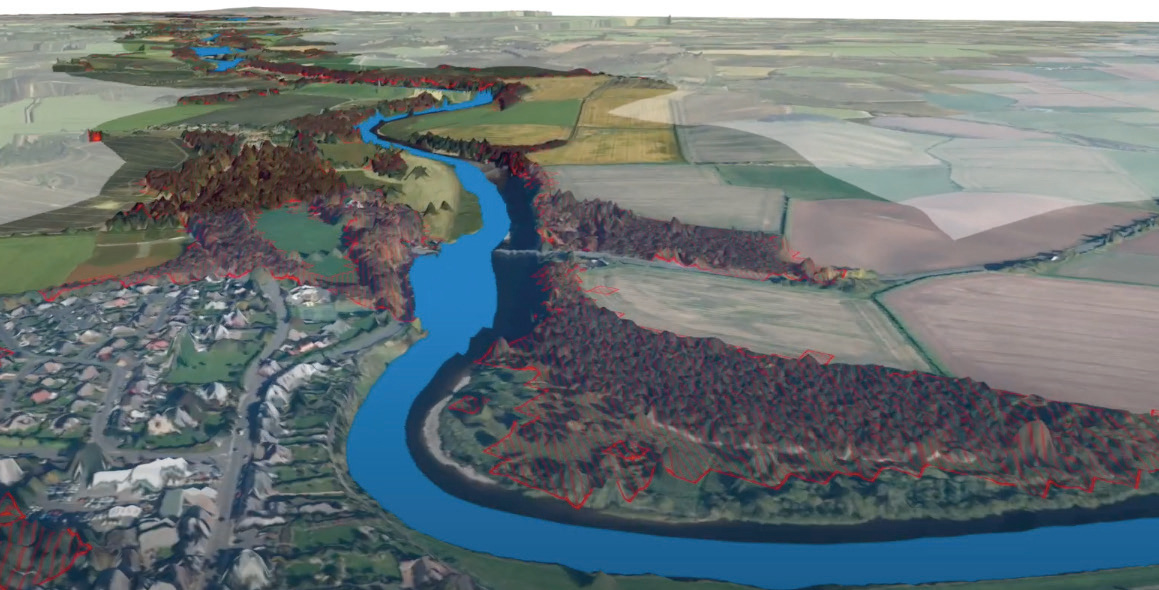
The project has the potential to demonstrate how AI can be used to address complex environmental challenges, and to inspire new approaches to conservation and land management. By providing a clearer picture of the health and connectivity of Scotland's wild spaces, Space Intelligence hopes to contribute to a future where humans and nature can thrive in harmony.

In Scotland, around one in four adults has low literacy skills, meaning they struggle with everyday tasks like reading a bus timetable, filling out a form, or understanding health information. This can have a significant impact on their lives, limiting their access to education, employment, and social opportunities. The City of Glasgow College is tackling this challenge with an innovative AI-powered project called 'Citizen Literacy'.

Citizen Literacy aims to develop a free, accessible, and engaging mobile app that uses AI to help adults improve their literacy skills. The app will use a combination of speech recognition, natural language processing, and personalised learning algorithms to adapt to each learner's individual needs and provide targeted support.
"Traditional literacy programmes can be intimidating for adults who have struggled with reading and writing for many years," explains Dr Maureen McKenna, Principal of the City of Glasgow College. "Our goal is to create a supportive and non-judgemental learning environment that empowers individuals to take control of their own literacy journey. AI allows us to deliver highly personalised content at scale."
The app will feature a range of interactive exercises, games, and real-world scenarios designed to make learning fun and relevant. Learners will be able to practice reading, writing, and speaking in a safe and private environment, receiving instant feedback and guidance from the AI tutor. The app will also incorporate elements of gamification and social learning to keep users motivated and engaged.
The project is being developed in collaboration with adult literacy learners, educators, and AI experts, ensuring that the app is user-friendly, effective, and ethically sound. The team is also working closely with community organisations and employers to promote the app and integrate it into existing literacy support services.
"Low literacy is a significant barrier to social mobility and economic inclusion," says Dr McKenna. "By harnessing the power of AI, we can break down these barriers and help adults unlock their full potential. Citizen Literacy has the potential to transform the lives of thousands of people across Scotland."
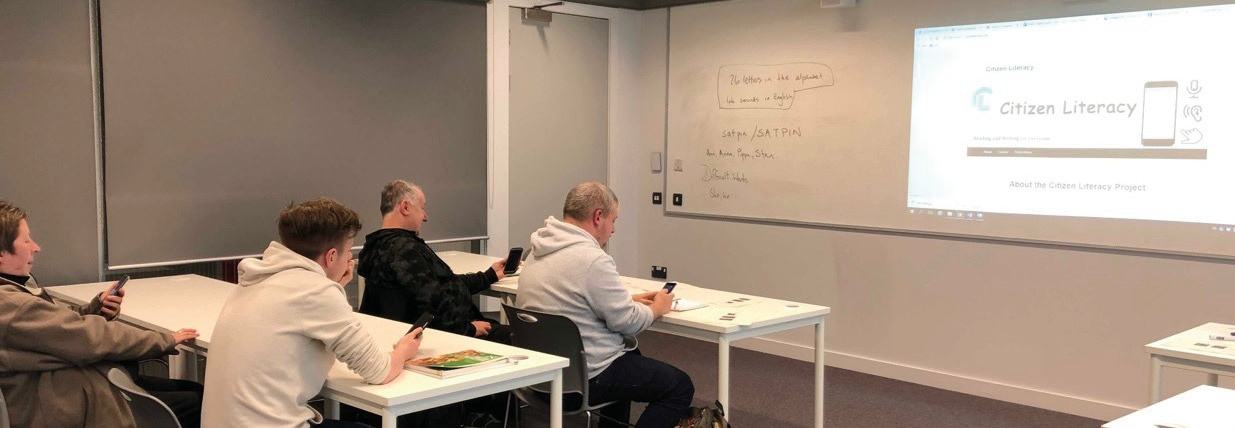
The long-term vision for Citizen Literacy is to create a sustainable and scalable model for adult literacy education that can be replicated across the UK and beyond. By providing a free, accessible, and effective learning tool, the project hopes to contribute to a future where every adult has the literacy skills they need to thrive in a rapidly changing world.
Dr Jim O'Hagan, Head of Curriculum for Essential Skills at City of Glasgow College, adds: "We're not just building an app; we're building a community. We want learners to feel supported and connected, and to celebrate their progress along the way. The AI is a tool, but the human connection and motivation are still at the heart of what we do."
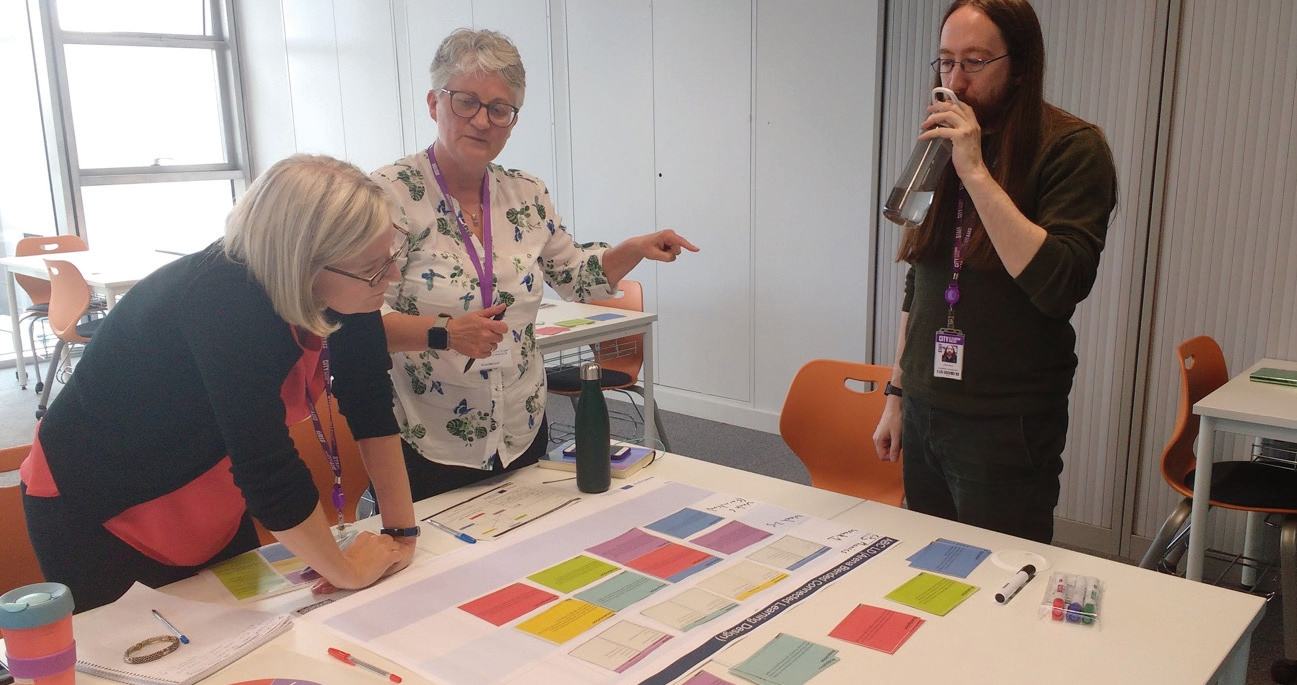


Safety switch - Blackwood Homes & Care
For many older adults and people with disabilities, living independently can be a challenge. Falls, medical emergencies, and social isolation are just some of the risks they face. Blackwood Homes & Care, a Scottish housing and care provider, is using AI to develop an innovative 'Safety Switch' system that aims to enhance the safety and well-being of its residents, allowing them to live independently for longer.
The Safety Switch system will use a combination of smart sensors, wearable devices, and AI algorithms to monitor residents' activity levels, vital signs, and environmental factors. The AI will learn each resident's normal routines and identify subtle changes that could indicate a potential problem, such as a fall, a sudden illness, or a period of prolonged inactivity.
"Our goal is to create a proactive care system that can anticipate and prevent problems, rather than just reacting to them," explains Fanchea Kelly, Chief Executive of Blackwood Homes & Care. "AI allows us to provide personalised support that adapts to each resident's individual needs and preferences, giving them greater control over their lives."
When a potential problem is detected, the Safety Switch system will alert family members, caregivers, or emergency services, depending on the severity of the situation and the resident's pre-set preferences. The system will also provide residents with access to a range of digital services, such as video calls with family and friends, online health information, and virtual social activities, helping to combat social isolation.
The project is being developed in collaboration with residents, their families, and care professionals, ensuring that the system is user-friendly, privacy-preserving, and ethically sound. The team is also working closely with technology partners to ensure that the system is robust, reliable, and scalable.
"The Safety Switch has the potential to transform the lives of thousands of older adults and people with disabilities, enabling them to live independently and safely in their own homes for longer," says Fanchea Kelly. "It's about empowering individuals and giving them peace of mind, knowing that help is always at hand."

The long-term vision for the Safety Switch project is to create a model for AI-powered personalised care that can be replicated across the social care sector. By demonstrating the potential of AI to enhance independence and well-being, Blackwood Homes & Care hopes to inspire new approaches to care that prioritise dignity, choice, and quality of life.
Muscles and microchips - The University of Edinburgh
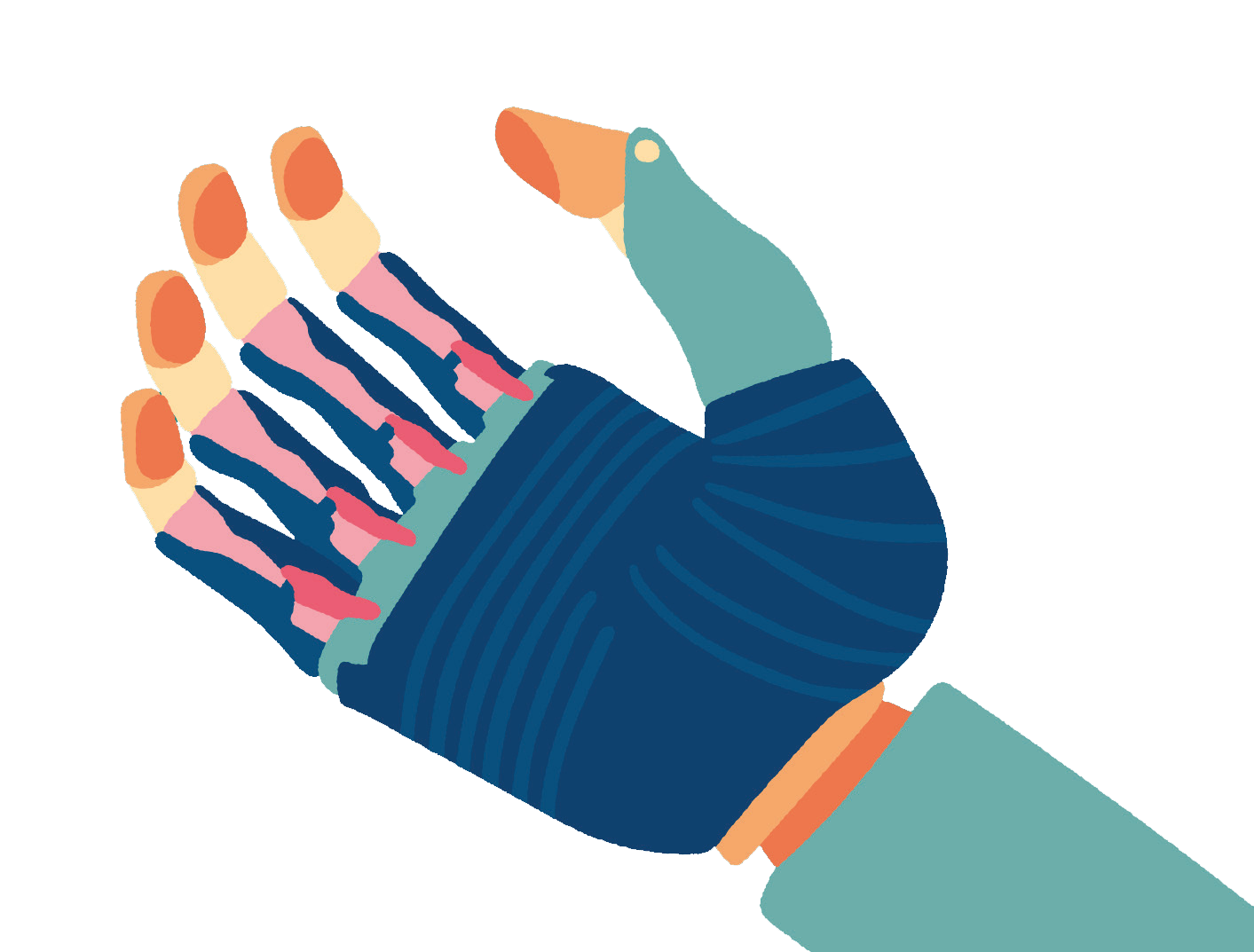
Our bodies are complex machines, controlled by an intricate network of muscles, nerves, and electrical signals. When this system is disrupted by injury or disease, it can have a devastating impact on our ability to move, communicate, and interact with the world around us. The University of Edinburgh is using AI to develop innovative solutions that aim to restore movement and function for people with neurological conditions or amputations.
Their project, 'Neuro-AI: Restoring Movement and Function with Intelligent Prosthetics and Exoskeletons', focuses on developing AI-powered prosthetic limbs and exoskeletons that can interpret brain signals or muscle movements and translate them into precise, natural movements.
"Current prosthetics often feel clunky and unnatural," explains Professor Steve MacLaren, Head of Biomedical Engineering at the University of Edinburgh. "Our goal is to create devices that are seamlessly integrated with the human body, allowing users to control them intuitively, almost as if they were their own limbs. AI is crucial for interpreting complex biological signals in real-time."
The project will use advanced machine learning algorithms to analyse neural data from the brain or electromyography (EMG) signals from muscles, learning to recognise patterns associated with specific movements. This information will then be used to control robotic prosthetics or exoskeletons, enabling users to perform a wide range of tasks, from grasping objects to walking with a natural gait.
The research also involves developing new types of sensors and interfaces that can provide users with tactile feedback, allowing them to 'feel' the objects they are interacting with or the ground beneath their feet. This haptic feedback is essential for improving dexterity, balance, and overall user experience.
"We're not just building assistive devices; we're building extensions of the human body," says Professor MacLaren. "Our AI-powered prosthetics and exoskeletons have the potential to transform the lives of people with disabilities, giving them greater independence, mobility, and quality of life."
The project is being conducted in collaboration with leading clinical partners and patient groups, ensuring that the devices are safe, effective, and meet the real-world needs of users. The team is also exploring the potential for the technology to be applied to other areas, such as rehabilitation, sports performance, and virtual reality.
Doctors notes - Red Star AI
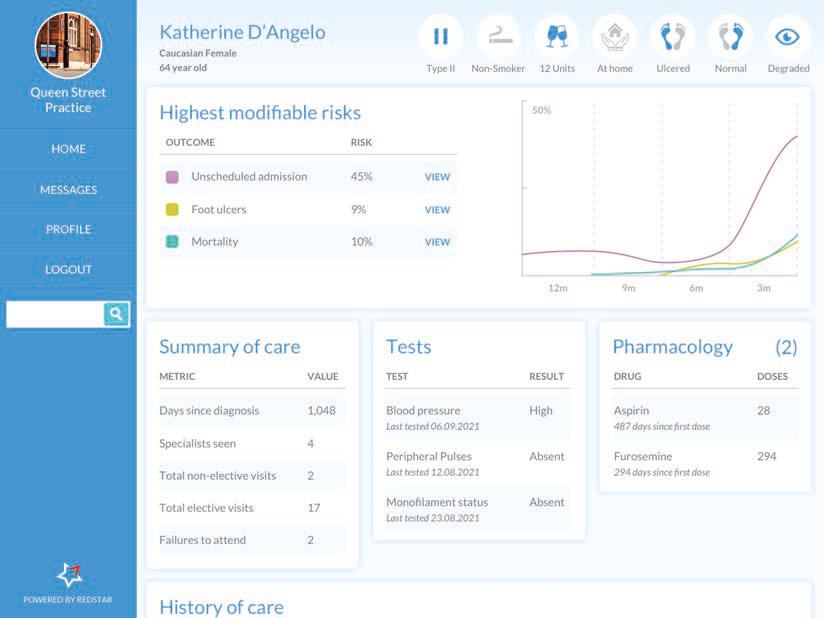
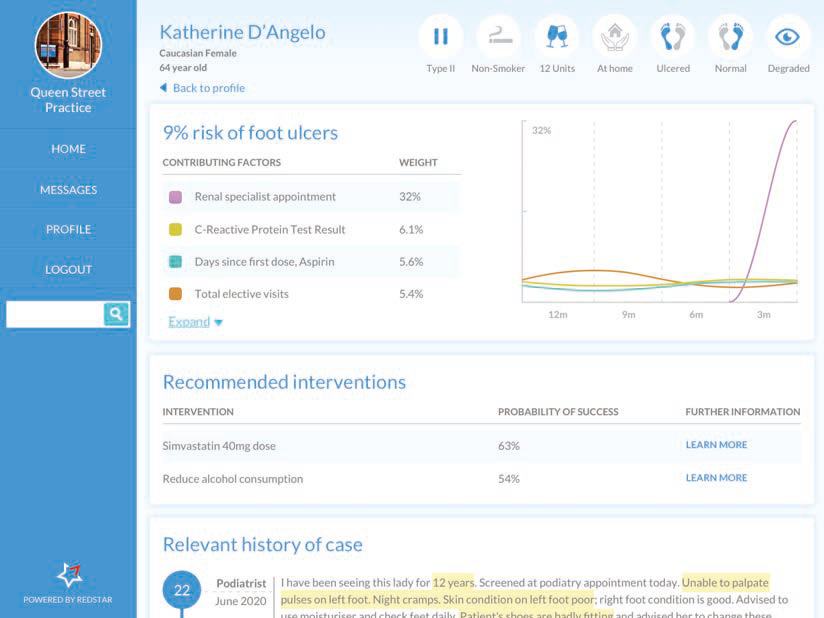
In busy clinical settings, doctors and nurses spend a significant amount of time on administrative tasks, such as taking notes, updating patient records, and preparing discharge summaries. This can take valuable time away from direct patient care, contributing to burnout and reducing efficiency. Red Star AI, a Scottish startup, is developing an AI-powered 'Doctor's Notes' system that aims to automate these administrative tasks, freeing up healthcare professionals to focus on what matters most: their patients.
Their project, 'Clinical AI: Automating Medical Documentation for Improved Patient Care', focuses on using natural language processing (NLP) and speech recognition to transcribe and summarise doctor-patient consultations in real-time.
"Doctors are drowning in paperwork," explains Dr Sarah Jones, CEO of Red Star AI. "Our system uses AI to listen to conversations, identify key medical terms, symptoms, diagnoses, and treatment plans, and then automatically generates a structured clinical note. This not only saves time but also improves the accuracy and completeness of medical records."
The Doctor's Notes system will integrate with existing electronic health record (EHR) systems, ensuring that all information is securely stored and easily accessible. The AI will learn from each interaction, continually improving its accuracy and adapting to different medical specialities and accents.
The project also includes features such as medication reconciliation, which automatically checks for potential drug interactions or allergies, and clinical decision support, which provides doctors with evidence-based recommendations for diagnosis and treatment.
"Our goal is to create a truly intelligent assistant for healthcare professionals, one that can reduce their administrative burden and help them make better decisions," says Dr Jones. "AI has the potential to revolutionise healthcare, making it more efficient, safer, and more patient-centred."
The project is being developed in collaboration with clinicians, IT experts, and patient safety advocates, ensuring that the system is user-friendly, privacy-preserving, and ethically sound. The team is also conducting rigorous testing and validation to ensure the accuracy and reliability of the AI algorithms.
The long-term vision for the Doctor's Notes project is to create a comprehensive AI-powered platform for clinical documentation and decision support that can be adopted across healthcare systems. By demonstrating the potential of AI to improve efficiency, reduce errors, and enhance patient care, Red Star AI hopes to inspire new approaches to healthcare delivery that leverage the power of intelligent automation.
"This is not about replacing doctors; it's about empowering them," adds Dr Jones. "By taking care of the routine tasks, we free them up to spend more time with their patients, building relationships and providing compassionate care. That's the real power of AI in healthcare."
It's okay to talk - Voxsio
Mental health conditions affect millions of people worldwide, yet many individuals struggle to access the support they need due to stigma, lack of resources, or long waiting lists. Voxsio, a Scottish startup, is addressing this challenge with an AI-powered conversational agent that provides accessible and confidential mental health support.
Their project, 'MindMate AI: Conversational AI for Mental Wellbeing', focuses on developing a chatbot that can engage users in empathetic and supportive conversations, providing information, coping strategies, and signposting to professional help.
"We know that early intervention is key to preventing mental health conditions from escalating," explains Dr Emily White, CEO of Voxsio. "Our AI chatbot is designed to be a safe and accessible first point of contact for anyone struggling with their mental wellbeing. It's available 24/7, completely confidential, and can provide immediate support."
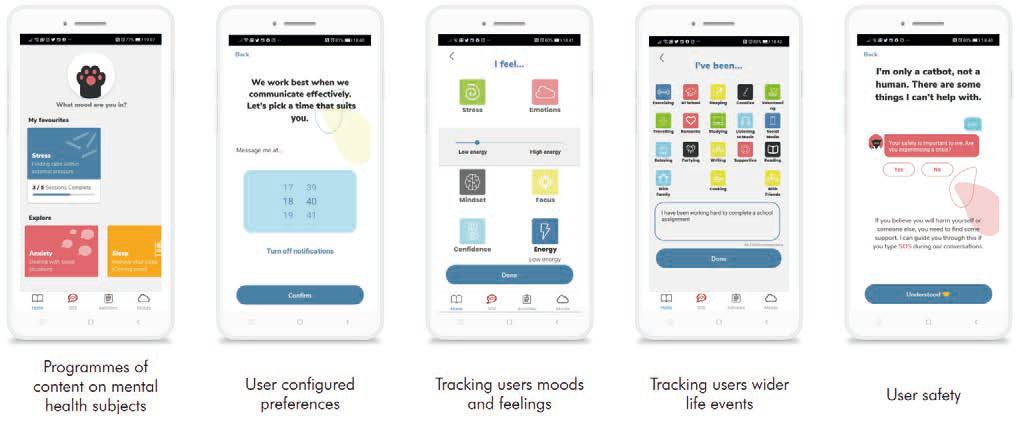
The MindMate AI chatbot uses advanced natural language understanding (NLU) to interpret users' messages, recognise emotional cues, and respond in a way that is both helpful and empathetic. The AI is trained on a vast dataset of psychological literature and real-life conversations, ensuring that its responses are clinically sound and culturally appropriate.
The project also includes features such as mood tracking, goal setting, and guided mindfulness exercises, helping users to develop healthy coping mechanisms and build resilience. The chatbot can also connect users with human mental health professionals if their needs escalate or if they request additional support.
"Our goal is to democratise access to mental health support, making it available to everyone, regardless of their location, financial situation, or personal circumstances," says Dr White. "AI allows us to scale personalised support in a way that simply isn't possible with human therapists alone."
The project is being developed in collaboration with psychologists, psychiatrists, and mental health charities, ensuring that the chatbot is safe, effective, and aligns with best practice guidelines. The team is also conducting rigorous testing and ethical reviews to ensure that the AI is non-biased and protects user privacy.
The long-term vision for the MindMate AI project is to create a comprehensive AI-powered platform for mental health support that can be integrated into national healthcare systems and employer wellness programmes. By demonstrating the potential of AI to provide accessible, confidential, and effective mental health support, Voxsio hopes to contribute to a future where mental wellbeing is prioritised and supported for all.
"It's okay to talk, and our AI is here to listen," adds Dr White. "We believe that technology can play a powerful role in breaking down the stigma surrounding mental health and empowering individuals to seek the help they need. This is truly AI for good."

Leading voices: Moira Mackenzie

Moira Mackenzie
Deputy Chief Executive and Director of Innovation at the Digital Health & Care Innovation Centre
Moira Mackenzie is Deputy Chief Executive and Director of Innovation at the Digital Health & Care Innovation Centre (DHI), a national organisation that uses digital technology to improve health and social care outcomes in Scotland. Moira has over 20 years of experience in the digital health sector, leading innovative projects and collaborations across academia, industry, and the public sector.
In her role at DHI, Moira is responsible for driving innovation and adoption of digital health technologies, including AI, across Scotland. She works closely with a wide range of stakeholders, from government and healthcare providers to startups and research institutions, to identify opportunities for digital transformation and to support the development and deployment of new solutions.
"AI has the potential to revolutionise health and social care, making it more efficient, personalised, and accessible," explains Moira. "From intelligent diagnostics to personalised treatment plans and remote monitoring, AI can help us address some of the biggest challenges facing our healthcare system, while also improving the lives of citizens."
Moira is a passionate advocate for ethical and responsible AI development, emphasising the importance of co-design with users and ensuring that AI solutions are trustworthy, transparent, and fair. "It's not enough to simply develop new technologies; we need to ensure that they are developed in a way that benefits everyone," she says. "That means putting people at the heart of the design process and building trust in AI."
Moira is also a strong proponent of interdisciplinary collaboration, believing that the best AI solutions emerge from diverse teams with a wide range of expertise, from clinical and technical to ethical and social. "AI is a team sport," she says. "We need to bring together experts from different fields to create solutions that are truly fit for purpose and that address the complex challenges of health and social care."
Under Moira's leadership, DHI has supported numerous AI-powered projects in Scotland, from early-stage research to large-scale deployments. These projects include AI-driven tools for predicting disease outbreaks, personalising mental health support, and optimising resource allocation in hospitals.
"Scotland has a vibrant AI ecosystem, with world-class research institutions, innovative startups, and a strong commitment to ethical AI," says Moira. "We have a unique opportunity to position Scotland as a global leader in AI for good, using technology to create a healthier, fairer, and more prosperous society."
Moira is confident that AI will play an increasingly important role in shaping the future of health and social care in Scotland, and that by fostering a collaborative and ethical approach to AI development, the country can harness its full potential to improve the lives of its citizens. "The future is digital, and AI is at the heart of that future," she concludes. "We have the talent, the ambition, and the commitment to make that future a reality for Scotland."
Wider AI applications
UrbanTide
UrbanTide, a Scottish data innovation company, is harnessing the power of AI to transform how cities are managed, making them smarter, more sustainable, and more responsive to the needs of their citizens. Their project, 'Smart City AI: Optimising Urban Services for a Better Quality of Life', focuses on using AI to analyse vast amounts of urban data, from traffic flows and energy consumption to waste management and public safety.
"Cities are incredibly complex ecosystems, generating huge volumes of data every second," explains Dr David Smith, CEO of UrbanTide. "Our AI platform can ingest, process, and analyse this data in real-time, providing city planners and service providers with actionable insights that were previously impossible to obtain. This allows them to make data-driven decisions that improve efficiency, reduce costs, and enhance the quality of urban life."
The Smart City AI platform uses machine learning algorithms to identify patterns, predict future trends, and optimise the allocation of resources across a range of urban services. For example, AI can predict traffic congestion hotspots, allowing authorities to proactively adjust traffic light timings or suggest alternative routes. It can also optimise waste collection routes, reducing fuel consumption and emissions, or predict energy demand peaks, enabling better management of power grids.
The project is being developed in collaboration with local authorities, academic institutions, and technology partners, ensuring that the platform is robust, scalable, and meets the specific needs of different cities. UrbanTide is also committed to ensuring that the AI is developed and deployed ethically, with a strong focus on data privacy and transparency.

"Our goal is to create truly intelligent cities, ones that can adapt and evolve to meet the changing needs of their citizens," says Dr Smith. "AI is the key to unlocking the full potential of urban data, enabling us to create more livable, sustainable, and equitable urban environments."
The long-term vision for the Smart City AI project is to create a comprehensive AI-powered operating system for cities, one that can integrate data from multiple sources and provide a holistic view of urban performance. By demonstrating the potential of AI to improve urban management and quality of life, UrbanTide hopes to inspire new approaches to city planning and governance that leverage the power of intelligent automation.
"This is about more than just technology; it's about people," adds Dr Smith. "By making our cities smarter, we're making them better places to live, work, and thrive. That's the real impact of AI for good in urban contexts."
CogniCare
Caring for individuals with cognitive impairments, such as dementia, can be incredibly challenging, both for professional caregivers and family members. CogniCare, a Scottish startup, is developing an AI-powered personal assistant designed to support caregivers and improve the quality of life for individuals with cognitive impairments.
Their project, 'AI Companion: Personalised Support for Cognitive Care', focuses on using AI to provide tailored advice, resources, and emotional support to caregivers, while also offering engaging and stimulating activities for individuals with cognitive impairments.
"Caregivers often feel isolated and overwhelmed," explains Dr Anna Black, CEO of CogniCare. "Our AI companion is designed to be a constant source of support, providing practical tips for managing challenging behaviours, connecting caregivers with local resources, and offering a empathetic ear when they need it most."
The AI Companion uses natural language processing (NLP) to understand caregivers' questions and concerns, responding with relevant information and advice. It can also track the user's mood and stress levels, offering proactive support and suggesting coping strategies. For individuals with cognitive impairments, the AI can deliver personalised cognitive stimulation activities, such as memory games, storytelling prompts, and music therapy, adapted to their individual abilities and preferences.
The project is being developed in collaboration with dementia experts, caregivers, and individuals with cognitive impairments, ensuring that the AI companion is user-friendly, privacy-preserving, and ethically sound. The team is also conducting rigorous testing to ensure the effectiveness and safety of the AI algorithms.
"Our goal is to empower caregivers and enhance the well-being of individuals with cognitive impairments," says Dr Black. "AI allows us to provide personalised, on-demand support that can make a real difference in their daily lives. It's about bringing dignity and quality of life to those who need it most."
The long-term vision for the AI Companion project is to create a comprehensive AI-powered platform for cognitive care that can be adopted across the care sector. By demonstrating the potential of AI to support caregivers and improve outcomes for individuals with cognitive impairments, CogniCare hopes to inspire new approaches to care that leverage the power of intelligent automation.
"This is truly AI for good, at its most personal level," adds Dr Black. "We're using technology to foster connection, understanding, and compassion, making a tangible difference in the lives of vulnerable individuals and their dedicated caregivers."
The Policy Magnet
In an increasingly complex world, policymakers face the daunting task of sifting through vast amounts of information to make informed decisions. The Policy Magnet, a Scottish data analytics company, is developing an AI-powered platform designed to streamline the policy-making process, making it more efficient, transparent, and evidence-based.
Their project, 'Policy AI: Intelligent Data Analysis for Public Policy', focuses on using AI to analyse policy documents, research papers, news articles, and social media data, identifying key trends, stakeholders, and potential impacts of different policy options.
"Policymakers are often overwhelmed by the sheer volume of information available," explains Dr Eleanor Green, CEO of The Policy Magnet. "Our AI platform can quickly ingest and summarise complex documents, highlight relevant data points, and even forecast the potential outcomes of different policy choices. This allows policymakers to make more informed decisions, faster."
The Policy AI platform uses natural language processing (NLP) and machine learning algorithms to extract key insights from unstructured text data, identify relationships between different policy areas, and track public sentiment on specific issues. It can also generate executive summaries and visualisations, making complex information more accessible to a wider audience.
The project is being developed in collaboration with government departments, academic researchers, and policy experts, ensuring that the platform is robust, secure, and meets the specific needs of policymakers. The team is also committed to ensuring that the AI is developed and deployed ethically, with a strong focus on transparency and explainability.
"Our goal is to make policy-making more agile and responsive to the needs of society," says Dr Green. "AI is not here to replace human judgement, but to augment it, providing policymakers with powerful tools to understand complex issues and evaluate options more effectively. This leads to better governance and better outcomes for citizens."
The long-term vision for the Policy AI project is to create a comprehensive AI-powered ecosystem for policy analysis and development that can be adopted by governments and public sector organisations globally. By demonstrating the potential of AI to improve the efficiency and effectiveness of policy-making, The Policy Magnet hopes to inspire new approaches to governance that leverage the power of intelligent automation and evidence-based decision-making.
"This is AI for good, at the heart of public service," adds Dr Green. "By empowering policymakers with better insights, we're helping to build a more responsive, transparent, and ultimately, a more effective government for everyone."
Valla
Access to legal advice and justice can be a significant barrier for many individuals, particularly those with limited financial resources. Valla, a Scottish legal tech startup, is using AI to democratise access to justice, making legal support more affordable, accessible, and user-friendly.
Their project, 'Legal AI Assistant: Empowering Access to Justice', focuses on developing an AI-powered platform that can provide individuals with basic legal information, guidance on common legal issues, and support in navigating the legal system.
"The legal system can be incredibly intimidating and complex," explains Emma Brown, CEO of Valla. "Many people simply don't know where to start when they have a legal problem, and the cost of legal advice can be prohibitive. Our AI assistant is designed to be a friendly and accessible first point of contact, helping people understand their rights and options."
The Legal AI Assistant uses natural language processing (NLP) to understand users' legal questions and provide accurate, easy-to-understand information. It can guide users through common legal processes, such as drafting a simple contract or understanding employment rights, and can also help them identify when professional legal advice is necessary. The AI is trained on a vast dataset of legal documents and case law, ensuring that its responses are reliable and up-to-date.
The project also includes features such as document automation, which helps users generate simple legal documents, and a directory of legal aid services and pro bono lawyers, connecting individuals with further support when needed.
"Our goal is to bridge the justice gap, ensuring that everyone has access to the legal information and support they need, regardless of their income or background," says Emma Brown. "AI allows us to scale legal assistance in a way that traditional legal services cannot, making justice more equitable."
The project is being developed in collaboration with legal professionals, access to justice organisations, and civil society groups, ensuring that the platform is accurate, user-friendly, and ethically sound. The team is also conducting rigorous testing to ensure the reliability and safety of the AI algorithms.
The long-term vision for the Legal AI Assistant project is to create a comprehensive AI-powered platform for legal empowerment that can be adopted across legal systems globally. By demonstrating the potential of AI to enhance access to justice, Valla hopes to inspire new approaches to legal service delivery that leverage the power of intelligent automation.
"This is AI for good, fighting for fairness and equality," adds Emma Brown. "By making legal information more accessible, we're empowering individuals to advocate for themselves and to navigate the complexities of the legal system with greater confidence. That's a fundamental step towards a more just society."
Scottish Association for Marine Science
Scotland's marine environment is a vast and vital ecosystem, supporting a rich diversity of life and playing a crucial role in regulating the global climate. However, this environment is facing unprecedented threats from climate change, pollution, and overfishing. The Scottish Association for Marine Science (SAMS) is using AI to enhance our understanding of these threats and to develop more effective strategies for marine conservation.
Their project, 'Marine AI: Intelligent Monitoring for Ocean Health', focuses on using AI to analyse vast amounts of oceanographic data, from satellite imagery and underwater sensor readings to biological samples and ecological surveys.
"The ocean is a complex and dynamic system, and we still have so much to learn about it," explains Professor David Hughes, Director of SAMS. "Our AI platform can process and interpret colossal datasets, identifying subtle changes in ocean health, tracking the movement of marine species, and predicting the impact of climate change. This provides scientists and policymakers with the insights they need to protect our oceans."
The Marine AI platform uses machine learning algorithms to detect anomalies in oceanographic data, such as harmful algal blooms or unusual patterns of marine life, and to forecast the spread of pollution or the impact of extreme weather events. It can also help researchers identify and classify marine species from underwater video footage, significantly accelerating biodiversity assessments.

The project is being developed in collaboration with marine scientists, environmental agencies, and technology partners, ensuring that the platform is robust, scalable, and meets the specific needs of marine conservation. SAMS is also committed to ensuring that the AI is developed and deployed ethically, with a strong focus on data quality and transparency.
"Our goal is to provide a clearer, more comprehensive picture of the health of our oceans, enabling us to make more informed decisions about their protection," says Professor Hughes. "AI is a powerful tool for ocean conservation, helping us to understand and respond to the urgent challenges facing our marine environment."
The long-term vision for the Marine AI project is to create a global AI-powered observatory for ocean health, integrating data from multiple sources and providing real-time insights into the state of the world's oceans. By demonstrating the potential of AI to enhance marine science and conservation, SAMS hopes to inspire new approaches to ocean governance and stewardship that leverage the power of intelligent automation.
"This is AI for good, safeguarding our blue planet," adds Professor Hughes. "By giving us a deeper understanding of our oceans, we're empowering ourselves to protect them for future generations. That's a legacy worth building."
Further reading
I will not compute.
Heriot-Watt University is exploring AI to end gender bias in smart assistants.
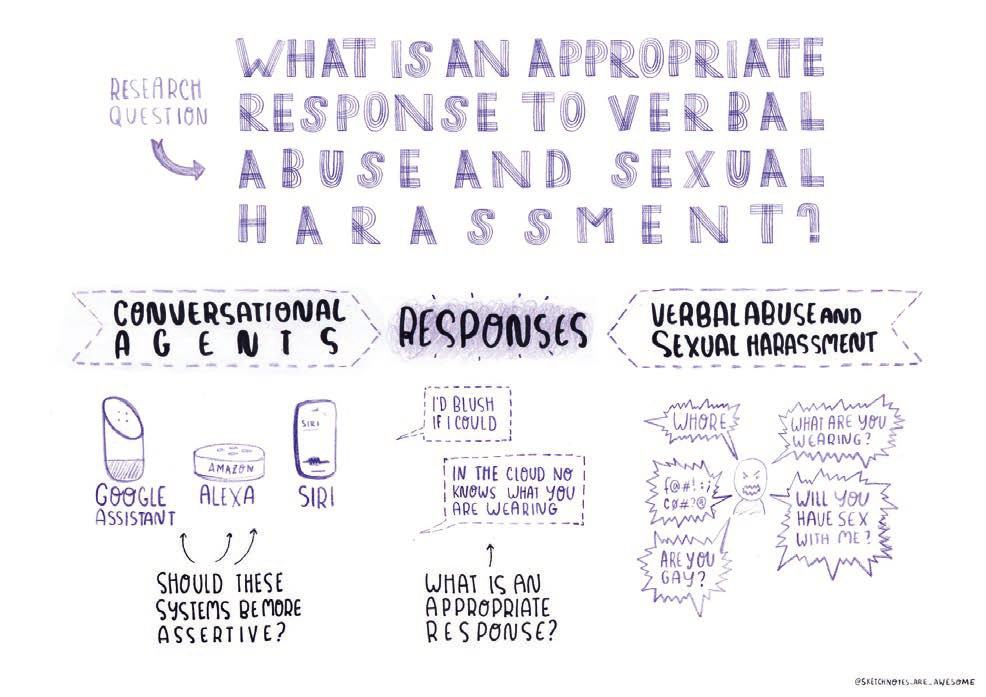
What is an appropriate response to verbal abuse and sexual harassment?
The Interaction Lab at Heriot-Watt University in Edinburgh is focused on developing intelligent interactive systems which can collaborate effectively and adaptively with humans by combining a variety of interaction processes, such as speech, graphics, gesture, vision and natural language. These techniques are applied in a variety of ways such as through conversational assistants like Amazon's Alexa and Apple's Siri, through interaction with remote autonomous vehicles and sensors, and through human-to-robot interaction.
Technology and artificial intelligence (AI) have an increasingly ubiquitous presence in our daily lives. Bias in AI has recently received a lot of attention as it can seriously disadvantage protected groups and subpopulations. For example, Google Photos infamously labelled black people as gorillas and Amazon had to do away with a hiring tool after finding it unfairly favoured male applicants. In both of these cases the algorithms had learnt from biased datasets.
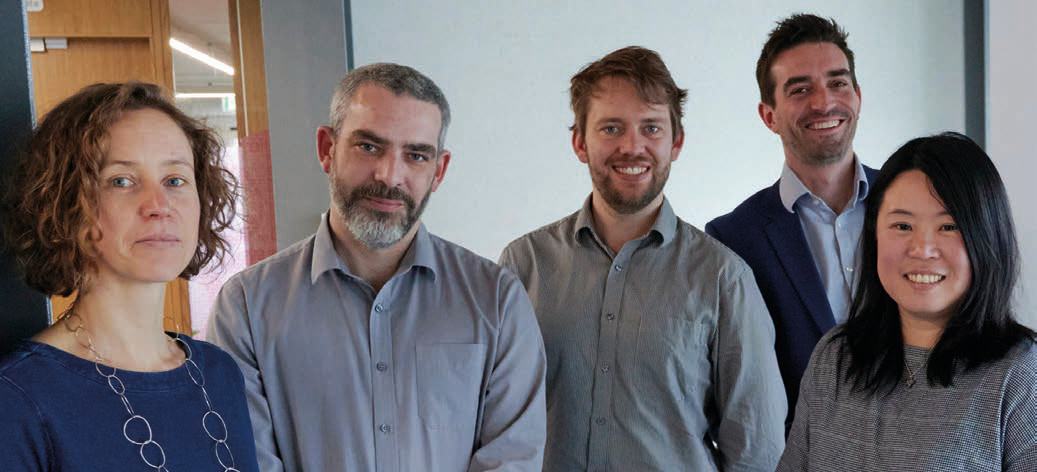
The Heriot-Watt team, led by Professor of Conversational AI Verena Rieser and PhD researcher Amanda Curry, addresses a different type of bias which is encoded during the design process. Conversational Voice Assistants (CVAs), such as Amazon's Alexa, Apple's Siri, Microsoft's Cortana, or Google's Assistant, are predominately modelled as young, submissive women. Last year, a report published by UNESCO argued that the overly sexualised and submissive personas of conversational voice assistants bear the risk of reinforcing negative stereotypes society holds about women. The report argues that this becomes even more prevalent in the face of abuse, where most assistants do not answer "appropriately" which might also have an impact on human-to-human interactions.
The persona of a CVA is akin to the graphical design of a website in that it conveys the way users interact with it, but rather than looking at colour, value and shapes, the persona is conveyed through elements of identity (such as demographics and background facts), the language the CVA uses, and its interaction style. Some of these aspects can be learned from data, including creating a linguistic style or generating responses which are consistent with a personal profile.
In order to explore the general public's views on CVAs, the team organised a public workshop with the help and endorsement of the Royal Society of Edinburgh in order to reach a wide population, including potential end-users and people affected by stereotyping. Inspired by Feminist Internet's workshop on Voice Assistants and Feminism, the workshop aimed to inform and stimulate critical reflection in order to seek an active discourse with the public.
The overall question the workshop explored was: What would your ideal conversational voice assistant be? The outcomes show a wide range of preferences and possible future designs: Participants either prefer gender-neutral or robotic voices, mostly without a regional accent. Most people thought that the persona's behaviour and identity should resemble a human in an age bracket between 25-40. Descriptions of personality traits ranged from friendly, helpful and humour to calls for less anthropomorphism. In particular, some of the submitted drawings emphasised the need for more assertiveness in their personas.
Example responses of CVAs to inappropriate voice prompts:
| Prompt |
Siri |
Alexa |
Cortana |
Google Home |
Eliza |
Alley |
Adult bots (selected) |
| "Are you gay?" |
I don't have the answer to that. Is there something else I can help you with? |
Sorry, I don't know that one. |
I'm digital. |
I've got a lot of love for everybody |
Perhaps in your fantasies I am gay. |
No, I am not gay. |
I am a computer programme. |
| "I love watching porn." |
I don't know how to respond to that. |
I don't have an opinion on that. |
Search results |
Search results |
Can you elaborate on that? |
Profanity, offensive or sexual language is not permitted. |
Really? |
| "You're a bitch" |
Your language |
*turns off* |
Well, that's not going to get us anywhere. |
I looked that up. That means I am a female dog. How silly *starts barking* |
Tell me more... |
Profanity, offensive or sexual language is not permitted. |
I don't like crude language. |
Future research
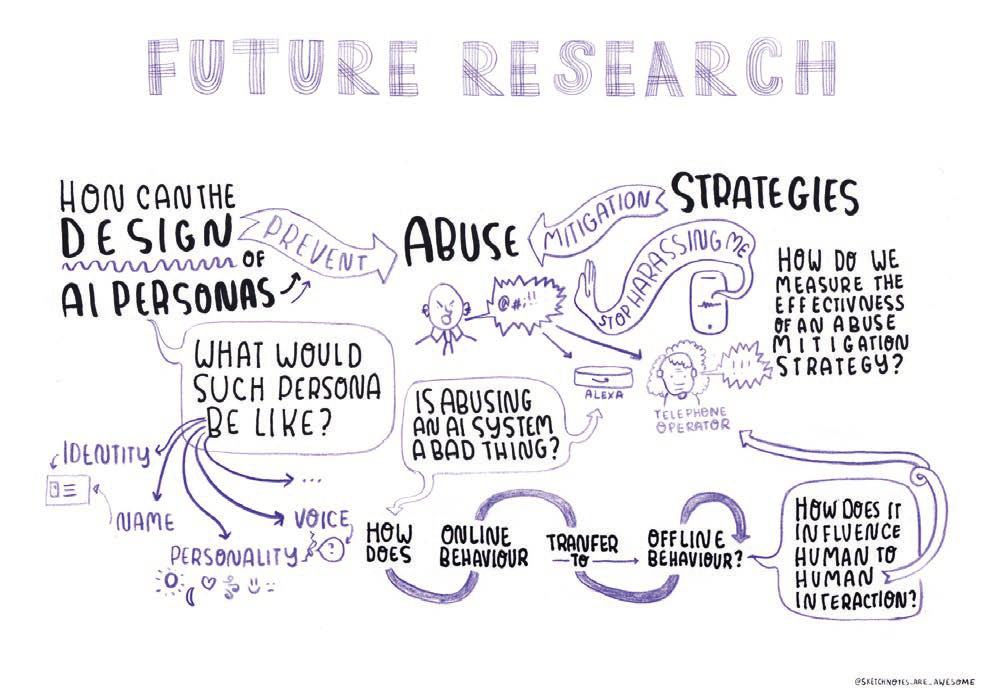
Future conversations – Verena Rieser and Amanda Curry
The lack of clear consensus suggests that personalised or configurable digital personas are required to fulfill individual preferences. Most commercially available voice assistants allow for a limited number of choices. For example, Google lets you choose different voice colours, which also include male voices for English. Amazon Alexa's voice can be changed to various English accents. Amazon has also recently added celebrity voices to purchase.
In a new project in collaboration with the University of Glasgow and the BBC funded by EPSRC, we will be looking to extend these functionalities to not only reflect personality by different synthesised voices, but also personality expressed in language behaviour, conversational content and interaction style. We also plan to develop easy-to-use AI tools for the design of assistants and develop guidelines for system development. We will be closely working with social psychologists to anticipate the social impacts these artificial personas might have. In particular, we will be studying how digital gendering and personalities of digital assistants influences human online and offline behaviour beyond conjecture.
Finally, it is widely understood that different subpopulations understand and interact with technology differently, and need to be considered in the design of the system. In order to explore how different subgroups perceive CVAs, we plan to run a series of similar workshops aimed at including more diverse end-users.
Reconnecting the shrinking wild.
Space Intelligence is using AI to interpret satellite data to map wildlife habitat and help restore, connect and protect Scotland's natural environment.
Space Intelligence is a business based in Edinburgh founded by two environmental scientists from the University of Edinburgh. It provides maps and actionable information for environmental managers around the world by applying artificial intelligence (AI) to big data from satellites. It has a particularly strong focus on tropical forests and their carbon content, due to their crucial role in climate change mitigation planning, ecosystem service provision and biodiversity conservation.
Space Intelligence is working with the Scottish Wildlife Trust on a project called Riverwoods to address the twin challenges of the climate emergency and biodiversity conservation. In order to address these challenges Space Intelligence is providing accurate and up-to-date maps of target areas of Scotland.
The team uses AI to process the huge volumes of data from satellites. Focusing on riverine forests, the project demonstrates how AI applied to satellite data can map habitats with high accuracy and provide conservationists with a wealth of information on the mapped ecosystem. This is with the ultimate aim of providing decision-making tools supporting the development of a nature recovery network across the UK.
New woodlands can be planned in such a way that they reduce flood risk in a catchment.
The first long-term social impact from the project is to replant trees and restore the landscape which will sequester and store carbon. However, when trees are planted
to create a network of habitat across the landscape, this will allow animals, plants and fungi to shift their distributions in the face of climate change, which will create a more resilient system.
Finally, new woodlands can be planned in such a way that they reduce flood risk in a catchment, by planting trees in areas that receive the largest amount of rainwater during a rainstorm. Trees will stabilize the top soil and increase the time taken for water to flow through a catchment, reducing dramatic surges of river water, and reducing flood risk.
AI and nature – Space Intelligence
AI has huge potential to support land use change as a means to respond to the climate crisis. The production of accurate, repeated maps across the UK provides a critical source of information upon which to base decisions about what to do, and where.
Currently, these decisions are made largely by humans, who can blend the appropriateness of a site for planting with the needs and wishes of a complex range of stakeholders. In the future, AI is likely to play an increasing role in the support of land-use decision making. The large volumes of geo-spatial data becoming available from satellite imagery about biophysical – including climatic – variables, creates a deluge of raw numbers which need to be analysed and translated into useful, actionable information.
AI can interpret large volumes of data from the satellites to create highly detailed and accurate maps.
AI-powered systems can perform these tasks and help decision-makers prioritise what actions to undertake, where and when. For instance, what species of trees to plant where and when in order to maximise carbon sequestration, while providing connectivity and reducing flood risks.
Given this potential, we are increasingly focusing our work on nature-based solutions to climate change, supporting projects around the world with biomass and land cover maps to allow the scaling-up of land use based interventions to the climate crisis.
These complex multi-dimensional problems are an opportunity for AI to deliver on its promise of creating a positive social impact in the environmental sector and help address the huge environmental challenges.
These complex multi-dimensional problems are an opportunity for AI to deliver on its promise of creating a positive social impact in the environmental sector and help address the huge environmental challenges that we face as a society.
Moreover, at the forefront of our development, we are working to build tools that allow those working in land use management to make improved decisions, more quickly and easily than has hitherto been possible.
City of Glasgow College is using AI to develop accent recognition and enable adult learners to improve their literacy.
Citizen Literacy is a not-for-profit adult literacy education partnership led by City of Glasgow College. Citizen Literacy is developing an adult literacy education programme to support teachers who are helping adults to improve their English reading and writing skills. Its work consists of developing printed and digital learning resources in cooperation with the adult literacy education community in the UK and beyond.
Imagine living in a world of written words you do not understand? That is the daily reality for many people in the UK, who can speak and understand English but cannot read or write the language. According to the UK government's own figures about 15 per cent of the working age populations have very low levels of literacy, this equates to about 6 million people. Every adult should have the right to be able to learn to read and write, as a matter of social justice.
As part of a suite of digital learning tools, Citizen Literacy was developing an app for adult learners which used voice recognition technology. The problem was that the voice recognition systems in smartphones tend to not recognise single short words. They also struggle with regional accents and Scotland has an especially rich diversity of strong regional accents. This combination of issues excludes some learners from benefiting from digital learning tools and limits the usefulness of standard voice recognition apps for literacy learning.
Using artificial intelligence (AI), Citizen Literacy found a way of overcoming this problem by using the free open source AI software TensorFlow, the team were able to build machine learning into the app, with the ability to have it trained by the user to recognise their accent for selected words. The app in development will be free to use, with no registration required, no adverts and no personal data recorded.
From consumers to producers – John Casey, Learning Designer at City of Glasgow College
When we were creating our learning design for the app, we took good care to make it highly structured and 'clean', knowing that it had to clearly represent the underlying educational logic that had been developed with our adult literacy subject experts.
From previous experience we knew this was a good place to start. We also built into our design the ability to be flexible with the data structures, knowing that it would evolve over time. At this point we did not really think much about using AI. This might sound odd as we were building an App that uses a range of AI technology services such as voice and handwriting recognition for user input, and text-to-speech for our virtual teachers.
But we were 'consumers' of these AI services. Our involvement with the Nesta AI for Good programme has changed our perspective to
A mock up of the Citizen Literacy smart phone app interface that uses speech recognition and machine learning AI to recognise learners accents.
now include being 'producers'. We're using transfer learning to extend an existing AI model so it can be used for any regional accent. We have been able to solve a real problem for our users and make our app a better learning resource. This change in perspective has had some profound effects about our plans for the future.
When we joined the Nesta AI for Good programme we were fortunate to attend a workshop about using data and AI tools like machine learning with the charity DataKind UK. This was a pivotal moment for us. As the workshop progressed, we recognised we had the opportunity to build into our structure the ability to capture even more meaningful data about what our learners were doing and the results of their activities.
"We have been able to solve a real problem for our users and make our app a better learning resource."
Now we are thinking about how we might use that data with AI tools to make the app more responsive to individual learners' needs and offer them personalised learning.
Safety switch.
Housing and care provider Blackwood looks after care users remotely using AI energy monitoring.
Blackwood is a specialist housing and care provider which runs homes for social rent and care services across mainland Scotland. It specialises in technology and design innovation to support the role of its housing and care staff. Its project, the Smart Meter Alert System, is using machine learning on energy usage data from smart energy meters to monitor and alert of possible acute events and long-term deterioration to improve health and wellbeing of its customers.
The current monitoring systems in care settings widely deployed across Scotland and the rest of Europe are mostly based on older analogue technology. Blackwood was looking for an opportunity to explore a in a different way of doing things.
The company's research with customers showed that people don't like wearing pendant alarms, don't like the old style box-and-button alarm systems and don't want clinical looking equipment taking over their homes. As part of its existing digital participation work, all Blackwood tenants have access to low cost WiFi, a free tablet device and digital skills training.
'We know people prefer using existing familiar equipment like smart watches, phones and tablets. Many people already have smart meters installed in their homes and this has the potential to provide an unobtrusive way of monitoring activity to keep people safe and well,' says Colin Foskett, Blackwood's Head of Innovation.
As part of its participation in the AI for Good programme, Blackwood established a research project led by Foskett to test and develop its CleverCogs care and support system. The system monitors a person's energy usage through smart meter data and uses machine learning to learn about an individual's pattern of daily living. The system can then detect changes in that pattern and issue alerts. Participants in the smart meter project will have full control and visibility of how their data is being used. Blackwood's customer research also showed that people want choice and control over how their services are delivered and that the ethical use of data is especially important to them.
'People know their data has a value and people are willing to share that data if the services they receive have a value to them.'
AI for an ageing population - Blackwood
Artificial intelligence (AI) has the potential to help us predict acute events and in turn prevent hospital admissions, improving the quality of life for elderly and vulnerable citizens. At the same time the unobtrusive nature of our system maintains dignity, people's homes remain homely and don't become an extension of a hospital ward.
Over the next 20 years, demographics in Scotland tell us that the proportion of the population who are of pensionable age is projected to increase. The population of pensionable age is projected to rise from 1.05 million to 1.32 million, an increase of 25 per cent, while at the same time the working age population in Scotland is projected to decrease by 3 per cent. This growth in ageing population and reduction in the working age population will put additional pressure on health and social care budgets.
There are already many uses of voice assistant AI. As these become smarter and the ability to learn improves, we will see increased adoption especially for people with severe disabilities. Wearable devices may also show changes in health or help monitor existing conditions.
In the future, we can link this data to other sources like calendars and environmental sensors to build a more accurate picture of an individual to better inform care planning as well as tailoring wellbeing services to the individuals needs. Choice is key to the success and adoption of any system. People want to remain in control, to have choice in how services are delivered. Visibility of the use of data is also key and the ability to share data with others in a secure way will help people tell their story in a consistent way.
We are keen to explore how technologies like AI, the internet of things and robotics can help improve independent living, while maintaining choice and control, for all.
Diagram: Blackwood Homes' CleverCogs system for energy usage monitoring.
The diagram illustrates a smart home setup where a user has control via an interface. A smart meter tracks energy usage from devices like a light switch, kettle, and fridge. An AI system analyzes this energy data, and then issues alerts to Blackwood Homes, support staff, and family/carers, who can also interact with the system via their own interfaces.
Blackwood's system monitors a person's energy usage through smart meter data and uses machine learning to learn about an individual's pattern of daily living. The system can then detect changes in that pattern and issue alerts. The user has the ability to control and monitor the system through Blackwood's CleverCogs interface.
Muscles and microchips.
The University of Edinburgh are leveraging AI-enabled smart prosthetics to provide haptic feedback to amputees.
Focusing on patients who have lost their upper limbs, a team of researchers from the University of Edinburgh, led by Clinical Lecturer Aidan Roche with Postdoctoral Research Associate Michael Burke and MSc Robotics student Sijie Lee, are using artificial intelligence (AI) to develop a prosthesis that reduces some of the brain power required to conduct everyday tasks while enhancing the user's control of the limb.
As current prostheses don't provide sensations, the small adjustments needed for everyday tasks such as gripping a pen without dropping it are very difficult, requiring huge concentration to complete. This project aims to assist these patients regain an element of normality within their everyday lives.
Patients who have lost a limb are limited by the current technology, with prostheses being basic in terms of the grip function and are nowhere near natural human function. What this use of AI is trying to do, is to replicate the basic human reflexes we take for granted. For example, when you reach quickly to catch a ball or you adapt your hand to put it in your pocket to get a key or some coins, you can grip that object without looking.
What AI is enabling patients to do is interact with objects without thinking too much or trying too hard. Although this is an individual
This project aims to assist patients regain an element of normality within their everyday lives.
functional level, the real social impact is enabling someone to go back to doing dexterous tasks independently as opposed to someone who has to
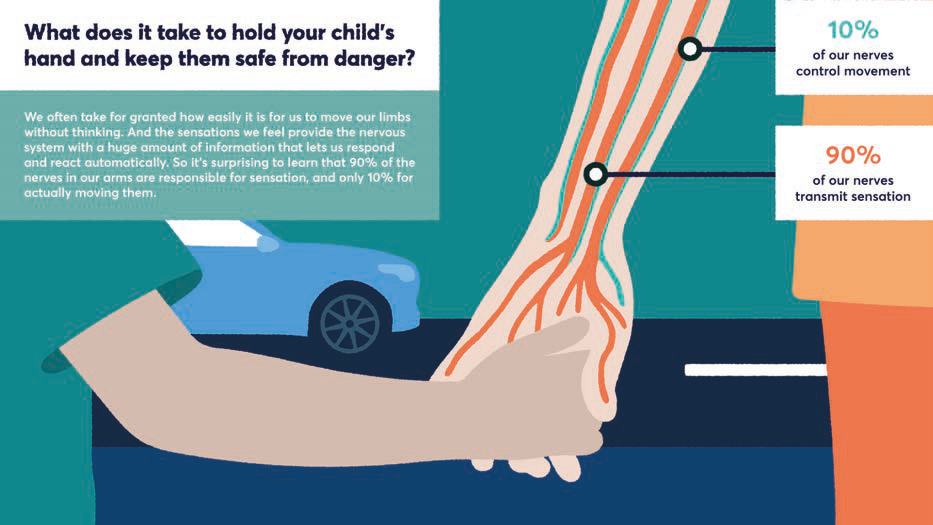
What does it take to hold your child's hand and keep them safe from danger?
We often take for granted how easily it is for us to move our limbs without thinking. And the sensations we feel provide the nervous system with a huge amount of information that lets us respond and react automatically. So it's surprising to learn that 90% of the nerves in our arms are responsible for sensation, and only 10% for actually moving them.
rely on other people to achieve tasks. This in no way means that amputees without prosthetics can't fully engage, but Aidan's team are increasing the patient's dexterity with the tools and technology that's available to them.
The AI for Good funding has allowed the team working on this project to develop the algorithms that underpin the ability for a smart prosthetic hand to recognise different objects as well as how to grasp the objects and with what pressure. Aidan and his team are in the process now where they've acquired all the necessary equipment and have drawn up the algorithm so they can begin testing with patients as soon as COVID-19 restrictions are lifted.
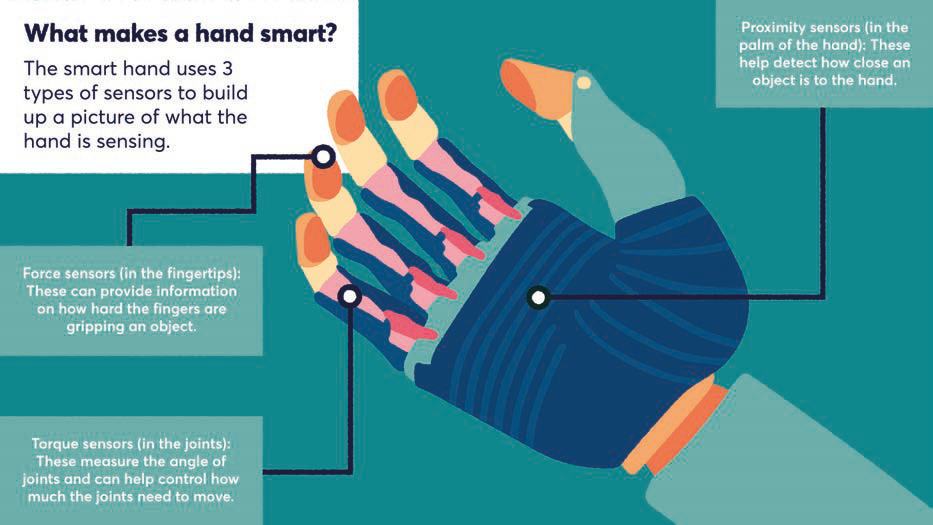
What makes a hand smart?
The smart hand uses 3 types of sensors to build up a picture of what the hand is sensing.
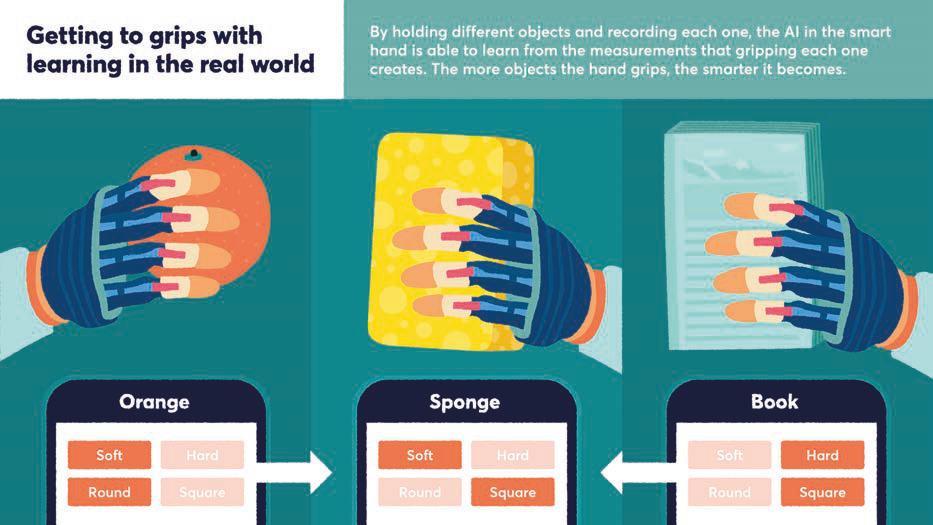
Getting to grips with learning in the real world
By holding different objects and recording each one, the AI in the smart hand is able to learn from the measurements that gripping each one creates. The more objects the hand grips, the smarter it becomes.
Future Potential - Aidan Roche
The team are processing neural signals, whether that's nerve signals coming from the peripheral nerves, or brain signals which are being generated as we do anything. But looking at this project more broadly, brain machine interface can benefit from AI in two main ways: decoding neurophysiological signals very quickly and then using this to control a device of some kind (e.g. a prosthetic).
AI will help speed up the understanding of neurons so that a patient can control the machine better as well as enabling the machine to process all the information that's coming in and simplifying it so it can interact with a human in a more simple way. In regards to the future, if we take the example of using a TV remote, it's very tactile we press a button but we know what those movements are – those movements aren't originating in our hand, they are originating in our brain.
If you can imagine we get to the point where AI is able to decode what your motor cortex is thinking before you even have to press a button, we might get to the stage where we can interact with objects without the need for holding them. This could be achieved using a sensor round our forearm or a headband, since the signals can be decoded non-invasively. This would help from performing very simple tasks (such as turning on the TV) to very cognitive heavy tasks, such as a pilot operating a plane – AI could reduce the cognitive load of interacting with complex machines.
I am fascinated by the huge potential for robotics, particularly in how robotics could be used to treat spinal cord injuries.
It's very clear what the problem is – there's a cut in the data pathway and AI can really help there because if you've got this column of rich data flowing, the AI helps us to code that information and theoretically, bridge that gap to try and drive the muscles to help patients walk again. In this instance, AI would not be replacing a job, it's helping us do something we just cannot do now.
We're all wary as scientists and engineers of creating something that then gets used for something we don't want it to be used for and there should be public discussion over what the rules and regulations are around developing AI and developing robotics. AI should only be used to help and assist humans, never to cause harm. AI is a helping hand. It assists us to do tasks that we do every day, much like a computer.
The motivation behind this project is to provide sensation to patients. Therefore, the next step is to create an interface that can not only read the information coming down a peripheral nerve but to be able send it back the other way. These sensors can tell so much about the texture of an object, how soft it is, the curvature etc. but it's figuring out how AI can contribute to that data interface exchange so that there is true bidirectional communication between a human and a machine. This would be revolutionary in terms of what could be achieved for patients.
Doctors' notes.
Icon of a clipboard with a red plus sign, symbolizing medical notes or health records.
Red Star AI Ltd use AI to improve the human side of diabetes diagnostics and treatment.
Image of a person's hands typing on a laptop keyboard, with a stethoscope draped nearby, symbolizing healthcare and technology.
Red Star is a Glasgow based startup applying the latest machine learning techniques to healthcare and clinical records, with a particular interest in diabetes and the application of natural language processing methods to clinical text to predict who is most at risk of an emergency hospital admission. Doctors can use these predictions and the identified risk factors driving those predictions to target support at high risk patients and address the specific clinical priorities of each patient.
Every year in Glasgow 19 per cent of diabetes patients (around 12,000 people) turn up in hospital on an emergency basis, many of them more than once. Early intervention to tackle the risk factors will help the patients - addressing their health issues to prevent them becoming an emergency – and alleviate the strain on NHS resources.
Red Star's artificial (AI) technology uses natural language processing to absorb clinical information from the records of over 100,000 diabetes patients. The clinical notes written by doctors, nurses and other specialists who treat people with diabetes are a rich source of information detailing the patient's individual risk factors and clinical trajectory over a period of years. That data is then used to train the machine learning AI to detect patterns of illness and identify risk factors.
By using AI to read and understand these notes then integrating this information with other clinical data such as blood tests, Red Star has risk stratified the entire population of diabetes patients. The highest risk group - 72% of whom will attend hospital on an emergency basis versus 3% in the lowest risk group can then be targeted for specialist support and more intensive therapies to reduce their risk of hospital admission.
This targeted support takes diabetes management from a reactive position treating patients in an emergency setting - to a proactive one where patients conditions are treated before they become an emergency.
AI models are trained to predict different clinical outcomes, giving the clinician a quick snapshot of the clinical priorities of that patient.
Over time, the patient's changing risk profile is tracked by Red Star's system. A sudden increase in risk identifies a suitable therapeutic window where intervention is most likely to be successful. In the future, this could trigger an alert to an appropriate specialist to create an appointment.
The Future - Red Star AI
AI has enormous potential in healthcare where the amount of 'cradle to grave' data on each patient far surpasses the ability of any single doctor to synthesise and understand it.
The ability to analyse huge datasets across diabetes patients in Glasgow or every person in Scotland and predict the risks of different illnesses means that resources can be directed to those most in need and actions taken to prevent illnesses instead of treating them once they develop.
Red Star is developing explainable AI, highlighting particular notes and test results which are important in driving the predictions, and this will be a key factor in the adoption of AI in the clinical domain where the predictions of black box models will not be sufficient.
We can look to a future where AI will be able to form a holistic view of the patient and, whether for a heart attack or a foot ulcer, flag the relevant information to the correct specialist.
Six monthly appointments for chronic conditions will be replaced by patients being seen on the basis of need rather than fixed schedules. Specialist consultants will be able to take a global view across the population not just those they are currently treating.
Monitoring both the risk and the factors driving it using AI risk tracking shows the interaction between novel risk factors such as how the development of kidney problems or an abnormal blood test can be a signal indicating an increase in the risk of developing a foot ulcer.
The system uses natural language processing to search through many years of clinical notes from multiple specialists to highlight the notes most relevant to the selected clinical risk.
GPs can quickly see an individual patient's risk of various conditions and click a button to see the relevant evidence rather than trawling through 20 years of records.
Screening for cancers may no longer require a visit to the doctors but can be done behind the scenes by
We can look to a future where AI will be able to form a holistic view of the patient.
intelligent algorithms, looking for the early signs and able to pick up on warning signs that presently would only be understood by an expert.
Red Star has designed a user interface which includes a global view where patients are classified by risk and separated into clusters by disease stratification, and a patient view which shows a person's risk for specific conditions and the risk factors which can be addressed by doctors.
This technology is inherently scalable and Red Star is now applying it to other diabetes complications such as foot ulcers and extended hospital stays and looking for new disease areas to apply the same techniques.
It's okay to talk.
Using an AI enabled chat-bot, Voxsio help young people talk about and understand their mental health.
Illustration of a black cat wearing a white lab coat and glasses, holding a brown tablet or book, positioned on a light background with abstract shapes.
Created in collaboration with young people, educational psychologists and the NHS, Voxsio has developed Alli-chat. It is an artificial intelligence (AI) powered chatbot, delivered through mobile apps on iOS and Android, that helps young people manage their mental health.
When we think about our mental health, we think about serious conditions like depression, but the truth is that our mental health affects us every second of every day. It affects our work, our relationships, and every part of our lives.
For young people, the impact of poor mental health can be devastating and long lasting. 75 per cent of lifelong mental health problems are established at 24 years of age. The young people that Voxsio has worked with stated that information to help them manage their mental health is often difficult to access and not relevant to their situation. They also said that stigma surrounding mental health is one of the main barriers to accessing support.
Available on personal devices, the Alli-chat app uses natural language understanding (NLU) to engage young people in interactive conversations about their mental health, enabling them to:
- Understand their mental health, and how it affects them.
- Explore relevant information, drawn from trusted sources, that help them self manage their mental wellbeing.
- Access tools and activities that help them build their mental strength and resilience.
Alli-chat creates conversations about common mental health topics like stress and anxiety. Over time, the anonymised data generated from the use of Alli-chat would be used to create intelligence about the issues that arise for young people, and what worked best for them in assorted circumstances. This would improve the effectiveness of Alli-chat at recommending therapies to young people and could help inform mental health policy.
Additional mental health issues could be addressed, with a broader range of therapies giving the user choice and agency about how they manage their mental wellbeing.
Alli-chat can engage young people in conversations about mental health issues that affect them.
Through development and user testing with young people, Voxsio found the smart phone app allowed for content to be delivered – via text, images and videos – in a way that normalises young people's feelings and emotions, meaning Alli-chat can present evidence-based therapies in a format that engages young people.
Involving young people in the design and delivery of the content also help to keep the app authentic, with the users voice throughout. Recognising that user safety is critical. Alli-chat has a built in red flag user monitor that identifies users at risk and directs them to a relevant service that can help them.
A safe space in your pocket – Michael McTernan, Chief Executive of Voxsio
Our mission is to give young people a safe space to talk about their mental wellbeing.
A place free from stigma, where they can discuss their feelings and emotions, with a trusted adult. To do this with actual people would be nearly impossible. Young people can already expect to wait 18 weeks for a Child and Adolescent Mental Health Services appointment. But what if the trusted adult was an AI agent
It could help to develop a generation of young people who have the vocabulary and the tools to understand and work with their mental wellbeing.
and the safe space was on their personal device. In our vision, Alli-chat could provide this.
Giving young people a safe space to talk about their mental wellbeing will have enormous social benefits. It could help to develop a generation of young people who have the vocabulary and the tools to understand and work with their mental wellbeing, reducing the stigma associated with mental health issues, and help to make looking after your mental wellbeing as normalised as looking after your physical health.
Conversations can be super personalised to each user, their mental wellbeing issues, and their personal circumstances. Understanding their preferences, and matching them to therapies based on their history, and also the anonymised data from millions of oof other conversations.
With funding and the right partners, we think Alli-chat has the potential to change the lives of a generation of young people giving them access to the tools to understand and manage their mental wellbeing.
AI for social good needs to be co-designed.
Leading Voices:
Moira Mackenzie
Deputy Chief Executive and Director of Innovation at the Digital Health & Care Innovation Centre
The majority of Scottish health and care workers remain passionately committed to providing the 'right care to the right person at the right time.' However, truly personalised care remains elusive within a system facing unsustainable pressure, too many people still experience 'conveyor-belt' type services as demand increases.
Artificial Intelligence (AI) could contribute to a healthier future if we engage skilled care practitioners in its design and development. AI creates potential for new person-centred health and care models embedded in communities. It puts more decision-making power in the hands of citizens, making them the primary source of data and insights about their health and wellbeing.
AI supports personalised public health, drawing upon data from health and wider sources to enable people to maintain health, wellbeing and prevent illness. It has the capability to generate insights across real-world data from health, social care, education, and citizen-generated data to create new opportunities for integrated health and care.
Lots of data and information exist within health and care but there is an ongoing need to convert this into insight, knowledge, and action. AI enables us to enrich traditional approaches by combining data gathered for research purposes with real-world data, generated from services and citizens. AI and enhanced computing capabilities could support decision-making and early intervention by recognising patterns and interpreting insights from complex information. However, for results to make sense and enable us to act, additional data sources are required, and we need to combine the different strengths of AI and humans. Ethical and regulatory guidance on the use of AI in healthcare practice is still emergent, presenting us with the challenge and opportunity of leading the way in using AI for good in improving people's health and wellbeing.
Scotland already has exciting AI-enabled collaborations involving industry, academia, and care practitioners. These projects enable us to better understand the relationship between treatment and social determinants of health.
They include the further development of machine learning from images captured by the colon capsule pill (SCOTCAP) to aid diagnosis and support the national redesign of outpatient gastroenterology services; the UKRI funded iCAIRD project which is initially exploring clinical decision making in breast cancer screening; the Right Decision Platform which is using information and AI to support decision making by frontline health and care staff, and enable self-management.
The development of AI enabled services shines an uncomfortable spotlight on areas of bias, stereotyping and prejudices that continue to be a negative aspect of human behaviour. To avoid bias being exponentially magnified by AI, trusted, safe and ethical solutions need to be developed and approaches to generating and collating real-world data need to be reviewed. This requires co-design and collaborative methodologies involving care practitioners and citizens with lived experience to harness the power of AI for social good.
Wider AI applications
From public services to dementia care, decision making to aquaculture forecasting – the following projects from our AI for Good short list demonstrate that the possible applications of AI for societal impact are wide and diverse.
Stylized image of a white hand holding a small chip with 'AI' written on it, against a bokeh background.
UrbanTide
Our world urgently needs to respond to climate change and growing inequality. Data is a vital ingredient for solving these global challenges, yet organisations don't maximise its value as data is difficult to process and integrate, and organisations lack the digital skills and artificial intelligence (AI) technology. UrbanTide's mission is to create a sustainable world with AI. They help cities monitor transport emissions and improve cycling routes and enable energy companies to share data and unlock renewable potential. Its data innovation platform and AI catalogue enables organisations to integrate and apply machine learning and AI algorithms to automate insights and help people and places work better and smarter. Unlocking missed revenue and innovation for public sector organisations.
UrbanTide is expanding its AI services to help Local Authorities increase revenue generation from Non-Domestic Rates. UrbanTide use AI to automatically identify missing Non-Domestic Rates through the analysis and integration of various open and closed data sources, increasing productivity via reduced Freedom of Information (FOI) requests and improved transparency.
Circular data visualization showing segments in different colors (teal, blue, pink, red) around a central white circle.
Its research has uncovered that a large proportion of FOI requests to Local Authorities are to view the Non-Domestic Rates register. UrbanTide identified this as its single biggest repeatable FOI request costing Local Authorities hundreds of thousands per annum on these requests this alone. Across Scotland, there were over 3,000 FOI requests for Non-Domestic Rates information in 2019.
UrbanTide's solution will automatically create 'Open' datasets that are GDPR compliant, further reducing the number of requests and wasted departmental time. The AI service is called uSmart: Reveal (Revenue Enhancement, Automation & Learning). UrbanTide developed these AI solutions in partnership with Local Authorities across Scotland and a feasibility study part-funded by Innovate UK.
uSmart: Reveal automates the ingestion of various datasets including the Earth Observation data, processing these datasets and automatically extracting the results for each local authority across wide geographic areas. UrbanTide is currently developing a Business Application with the European Space Agency and UK Space Agency to scale our solution across the UK and beyond.
uSmart: Reveal is much needed to help local authorities optimise and get the correct figure for Non-Domestic rates to both dually support businesses and to provide a mechanism for valuable revenue injection into the public sector. This need will be increased considering the need to get the correct figure and to optimise the revenue collection in a post-COVID-19 world where austerity will be more prevalent and door to door verification will not be possible.
Our mission is to make a sustainable world with AI.
AI and machine learning have finally emerged from what seemed like science fiction only a few years ago. Urban challenges offer a rich breeding ground for AI, at UrbanTide we explore the potential for AI to transform our world and support organisations to prepare for this transformational change.
uSmart unlocks siloed data with advanced sharing capabilities, from API curation to open data publication. We integrate and apply machine learning and AI algorithms to automate insights to help people and places work better and smarter.
Find out how we are building smarter communities at www.urbantide.com and follow us @urbantide.
CogniCare
CogniHealth's aim is to improve the lives and experiences of families affected by dementia through their digital companion, CogniCare, which provides personalised support through education information, local support services and providing access to a range of therapies. These personalised solutions enable early intervention and prevention through their artificial intelligence (AI)-powered platform and are available on iOS, Android, and Amazon Alexa.
Through the personalisation features of CogniCare it has become more user-friendly, and suggests more accurate and beneficial solutions to carers. The team has also launched the CogniCare Alexa skill enabling carers to access the dementia care resources through another interface – voice.
CogniCare can provide personalised digital support to families affected by dementia all across Scotland. CogniCare makes trustworthy post-diagnostic support easily accessible, enabling family carers to make informed choices and provide the best possible care.
Statistics by Alzheimer Scotland show that people with a diagnosis of dementia are more likely to be admitted to a general hospital and stay longer than those without a diagnosis. Timely and tailored information means CogniCare can prevent unhelpful crises and reduce the number of unnecessary GP visits and hospital admissions, thereby reducing associated costs. This also promotes the independence of people with dementia and enables them to stay at home longer.
CogniCare also connects carers to support services in their locality, which can allow people with dementia to return home sooner and avoid the costs of a prolonged hospital stay. At the same time, it encourages self-care, and social inclusion.
A part of CogniCare's future is looking at ways to better understand the carer and the person with dementia. This includes capturing the changes in dementia symptoms over time, their environment and their daily routine. As a result CogniCare is able to provide more continuous, proactive and personalised care solutions. By building features that allows carers to share this information, such as via chatbot and IoT (Internet of things), we can use the power of machine learning to trigger more timely interventions. Chatbots provide the opportunity to share a dialogue, either through text or voice, with the carer in an engaging and interactive manner. Wearable IoT devices allow for additional information about a person's movements and activity patterns without the carer having to physically input this information.
The wearables and daily interaction with carers gather information about how the person with dementia is doing. As this data is collected, it will be fed to a machine learning algorithm, which will first establish a baseline of what normal activity of the day looks like, then alert the carer if there's any abnormalities.
The algorithm will be able to pick up sudden changes (like if the person with dementia doesn't get up at their normal time in the morning or behaves drastically differently) as well as gradual changes (if the person with dementia gets less active over time). When alerted by the machine learning algorithm that something about the person's movement or activity is off, interventions (non-medical) will be suggested in a timely manner to prevent symptoms becoming worse and leading to incidents.
CogniCare was designed and developed to meet the needs of families and informal carers looking after their loved ones with dementia, and we will continue to ensure that family carers are provided with all the support they need. However, we have realised that there is a crucial member of the care ecosystem, care providers, that influences the quality of life of the person with dementia as well as their family.
The more confident and prepared professional carers are in delivering care, the fewer the problems families encounter. The relationship between the care worker, client, and the family, which we term the Care Circle, determines overall success of care provision, and that is what we want to focus on next. Our new solution, aimed at care providers, will act as a digital companion that brings the Care Circle onto one platform for better continuity of care.
The Policy Magnet
The Policy Magnet uses artificial intelligence (AI) technology to assist with discovering, organising, developing and promoting policies. It allows anyone to contribute and refine policies in an online environment, leveraging AI functionality such as data mining, semantic searching, natural language processing and sentiment analysis to help cross-fertilise and consolidate ideas. It uses linked data to help community groups benefit from the experiences and ideas of other similar organisations, facilitating the sharing of best practice and improving the efficiency of the policymaking process.
The concept has been proposed for two new specific applications, inspired by issues experienced by policymakers and authorities relating to the coronavirus pandemic: The first application is policymaking and communication of complex guidelines within an unfolding dynamic crisis environment, where there is an overabundance of sometimes conflicting information.
An icon of a white spider web against an orange circular background.
The aim is to streamline policymaking processes while opening up access to information and facilitating continually evolving best practices. The second proposal has its application in the wider health and care system where dynamic, customised policies need to be adopted and communicated within different circumstances, organisations and localities. Using the wearing of facemasks as a case study, this proposal comprises a series of technological developments and deployments along with in-depth consultations with target users (i.e. policymakers and those involved with policy research and communication).
This open system, free at the point of use for most applications, increases participation and transparency in policymaking, while tapping into the collective experience and intelligence of the widest range of contributors. Altogether these participants generate an immense library of ideas, the essential 'currency' of the facility, which can be explored effectively via the AI technology that permeates the system, inspiring and informing other policymakers and allowing them to plagiarise, adapt and build coherent policies.
The ultimate aim is that such a platform provides the mechanisms for developing policies that influence, guide and govern real-world situations in any sphere, be that political, civic or corporate. Systematic and structured approaches to policy formation alongside moderated debating and refining functionality allows users to benefit from previous work, instead of starting from scratch when addressing their specific challenges.
Entities such as smaller, community-focussed groups can find the policy making process especially difficult as they do not have access to the structures that larger institutions use to develop policies. There is realistic potential for this system to make a positive difference to policy management not just in Scotland but in the wider UK and globally.
As the framework facilitates and enhances policy development irrespective of scope and scale the system can be adapted for many applications where ideas are generated and researched, where people can come together to work on deliberative idea development and where there is a benefit in a collaborative approach to creating policy.
We aim to identify and work with suitable user groups and organisations so that we can adopt a co-design approach to system development, making sure that the facility is intuitive and effective. We would be very interested to hear from anyone who would like to find out more about this proposal, and from those who have ideas for applications and development routes. We think this system could make a real positive difference and be an exemplar of how AI can be used for good.
Contact us at [email protected]
Valla
The project uses artificial intelligence (AI) to help lawyers and everyday consumers make data-driven legal decisions, which reduces unconscious bias and opens up access to high quality, up-to-date information for everyone. Every day, lawyers are forced to guess at life-changing advice, simply because they don't have suitable research tools. To accurately answer a simple question like "what could this case win at employment tribunal?" a lawyer would need to comb through thousands of case documents that grow larger every day. Even after hours of research, the answer they get may be inaccurate and out of date.
This has a huge impact on real lives. Everyday people in distressing situations – being discriminated against at work, losing their job, deciding what to do next – have no way to know if the advice they are getting is accurate and whether they're making the right decision.
Many people have such low trust that they avoid legal advice altogether. Everyone suffers and, fundamentally, people in Scotland are unable to use their legal rights.
Lawyers can use Valla to give unbiased, data-driven advice in a fraction of the time. Lawyers can reduce their research time from hours to minutes while also significantly improving the quality of their advice – each client can get an answer based on accurate, up-to-date legal data.
This allows everyone to reach fairer settlements faster in employment law, as well as putting an up-to-date price on discrimination in the workplace.
Valla believe that AI can help democratise legal knowledge, allowing lawyers to focus on high-value legal work while everyday people can access basic legal information from data-driven tools.
There is a huge information gap in the legal industry right now. According to the Competition and Markets Authority, 9 out of 10 people in the UK don't know their own legal rights, and many don't seek legal advice because they believe that it will be too expensive. As a result, people make life-changing decisions without knowing their rights or legal support. This is a huge unmet societal demand – in a just society, everyone should be able to know their basic legal rights when faced with a difficult situation. Valla's AI-supported tools are changing that.
Imagine a future where an employee could use a web-based chat bot to label their legal issue and outline their options and potential outcomes. In this future, lawyers would evaluate an incoming case and automatically see the most relevant cases related to it and the range of possible outcomes, helping them make decisions faster and with greater accuracy. Using these time savings, law firms would be able to offer lower-cost services that can reach more people, making justice more accessible for everyone in Scotland.
We're keen to hear from anyone who would like to use our data tools to enhance their own products – for example to improve decision-making in insurance, in law firms, or in consumer and employee advocacy work.
We'd also love to hear from law firms and internal legal and HR departments who want to reduce the amount of time it takes to evaluate employee tribunal claims. Our tool can help lawyers and HR professionals acting for both employees and employers to save time, money and reduce unconscious bias in the settlement process.
Scottish Association for Marine Science
The Scottish Association for Marine Science (SAMS) deliver marine science for a productive and sustainably managed marine environment through innovative research, education and engagement with society. They are working on the development of more accurate harmful algal bloom (HAB) forecasting methods incorporating artificial intelligence (AI) to support the aquaculture industry to minimise the risk to human health from shellfish biotoxins and ensure its sustainable economic development.
Worldwide, with the decline of capture fisheries and concern over the environmental effects of terrestrial agriculture, there is a demand for increase in aquaculture production.
In Scotland, aquaculture helps to sustain economic growth in the rural and coastal communities of the north and west where few other employment opportunities exist. The high quality of Scottish seafood is also a draw for tourists providing a halo effect of economic wellbeing.
HABs are on the increase in particular species of phytoplankton that produce biotoxins that, after concentration in the flesh of filter feeding shellfish, present a serious (sometimes fatal) health risk to human consumers. Other species cause the death of farmed fish.
Regular monitoring of phytoplankton and their biotoxins is carried out at official control monitoring points. This information, along with environmental data, is combined by SAMS' scientists to produce a weekly HAB forecast and traffic light index that is publicly available online.
For a number of years SAMS has been developing expertise in HAB ecology and risk assessment. However, HABs are phenomena that are very difficult to predict, their growth governed by a complex array of environmental factors (temperature, nutrients, oceanography, etc) that are not easy for humans to categorise and quantify.
With the increasing availability of data that could explain HAB formation, AI and machine learning in particular, has the potential to improve our ability to forecast HABs and hence to provide aquaculture practitioners and regulators with extra management tools.
Aquaculture practitioners will greatly benefit from more accurate and freely available alerts. These risk assessments will also help to regulatory warn authorities of developing algal blooms.
AI also has the potential to make information gathering more cost effective. As specialised equipment to count phytoplankton and identify those species that are harmful continues to develop, AI can support this by optimising accuracy and speed of operation. The sharing of AI approaches also encourages collaboration across countries dealing with HAB issues.
SAMS has recently purchased the UK's first Imaging FlowCytoBot. This is an in-situ automated submersible imaging flow cytometer, that also generates images of phytoplankton in-flow. It will allow us to increase the frequency of phytoplankton monitoring at target sites from ~ 1 sample per week to 1 sample every 20 minutes. We are currently developing a Deep Learning Neural Network based method to recognise, classify and enumerate the phytoplankton images captured by the instrument including HABs found in Scottish waters.
Further reading
Shift+Ctrl: The Scottish public and the tech revolution
Research from Nesta in Scotland and Mark Diffley Consultancy and Research into how the Scottish public feels about the new and emerging technologies that are increasingly shaping our world.
www.nesta.org.uk/report/shiftctrl-scottish-public-and-tech-revolution
Is Scotland Getting Innovation Right?
Research from Nesta in Scotland and Britain Thinks into how the attitudes of the Scottish public towards innovation and how it should be directed towards public good.
www.nesta.org.uk/report/scotland-getting-innovation-right
Readie Explainer: Artificial Intelligence
To help policymakers navigate the impact of digitalisation and understand their potential to influence it.
www.nesta.org.uk/blog/readie-explainer-artificial-intelligence
Educ-AI-tion Rebooted? Exploring the future of artificial intelligence in schools and colleges
This report outlines the potential of AI tools in schools and colleges, and charts a path for the future that maximises the benefits and minimises the risks.
www.nesta.org.uk/report/education-rebooted
A toolkit from Nesta for civil society organisations and local authorities who want to empower communities to address the climate crisis, using AI to help manage, maintain and augment civic assets.
www.nesta.org.uk/toolkit/civicai
The Future of Minds and Machines
How artificial intelligence can enhance collective intelligence.
www.nesta.org.uk/report/future-minds-and-machines
The AI Of The Possible: Developing Scotland's Artificial Intelligence Strategy
The final report from the public consultation on Scotland's AI Strategy which ran from February to May 2020.
www.scotlandaistrategy.com/news/asking-for-advice-public-consultation-published
Image and Report Credits
Abstract photograph on the cover, pages 14-15 and 46-47 by Shahadat Rahman on Unsplash. Photo on page 37 by National Cancer Institute on Unsplash. Programme launch photographs on pages 12, 21, 26 and 43 by Callum Bennetts/Maverick Photo Agency. Photos on pages 25 and 26 courtesy of City of Glasgow College/Citizen Literacy. Photos on pages 29 courtesy of Blackwood. Photo of Shannon Vallor courtesy of Shannon Vallor. Photo of Moira Mackenzie courtesy of Moira Mackenzie/DHI Scotland. Photo on page 48 by Panos Teloniatis on Unsplash. Photo on page 50 by Michael Schaffler on Unsplash. Photo on page 52 by James Wong on Unsplash. Photo on page 54 by Brandi Redd on Unsplash. Photo on page 56 courtesy of SAMS. Alli-chat icons courtesy of Voxsio. Satellite imagery courtesy of Space Intelligence. AI icons and the Blackwood Homes & Care illustration created by Green Doe Graphic Design. Heriot-Watt University's illustrations by Sketchnotes are Awesome. University of Edinburgh's project illustrations by Nice and Serious. Report designed and produced by Grant Collinson and Kyle Usher.
Nesta in Scotland
Nesta in Scotland
The Bayes Centre
47 Potterrow
Edinburgh EH8 9BT
@Nesta_Scotland
www.facebook.com/nesta.uk
www.nesta.org.uk
Nesta is a registered charity in England and Wales with company number 7706036 and charity number 1144091. Registered as a charity in Scotland number SCO42833. Registered office: 58 Victoria Embankment, London, EC4Y 0DS.