The EU has supported social innovation to help meet its goal of getting 75 per cent of people into work. How has it done this, and what can be learnt for future activity in this field?
Key findings
- EU-funded social innovations are taking new approaches to tackling employment problems by making links with other social policy issues.
- Most cases we observed did not fundamentally challenge existing systems. Given the scale of funds such as ESF, it would be possible for the EU to fund innovations with far greater radical potential.
- The relationship between EU structural funds and the support for social innovations can be more closely aligned. Funds such as the ESF can contribute to “structural inertia” by propping up otherwise failing public employment systems.
Employment is a key priority for the EU, and top-level strategies such as Europe 2020 recognise the role of social innovation in achieving these goals. But in practice, how has the EU supported employment social innovations? And, given responsibility for employment policy sits with member states, what can the EU do to influence activity on the ground?
EU funds are key levers to support the implementation of both strategies and initiatives. Three EU funds in particular have been important in driving social innovation in employment: European Social Fund (ESF), the Youth Employment Initiative, and the EU Programme for Employment and Social Innovation (EaSI).
We identified five case studies that had been funded through at least one of these funds. These represent a mix of types of innovation and include innovations conceived at transnational, national and regional/local levels.
We found that EU policy has driven new collaborations and models of service delivery, helped shift goals of traditional employment services and helped make services more responsive to users’ needs. We suggest that national level involvement is important in helping innovations to scale, but that this is best combined with flexibility for local testing and adaptation, which creates more buy-in among those delivering services. At the same time, we argue that there has been a relatively narrow focus on labour market integration and that innovations have been more ‘sustaining’ than ‘disruptive’ of public employment systems.
Policy recommendations
Our research suggests the EU should:
- Help public administrations and managing authorities acquire skills to better manage innovation programmes.
- Establish cross-European institutional guidance and support to help national and regional public managers.
- Put more resource into expanding networks that seek to forge a stronger link between learning and practice.
- Increase the support mechanisms available that help multilevel actors design, set up and evaluate social policy experiments.
- Encourage greater attention on innovations in governance - for example, giving actors new roles and responsibilities, offering different types of funding mechanisms or creating new links between employment and social services - to increase the chance of new approaches getting adopted, and potentially spread more widely.
- Combine support for regional initiatives with support for national level initiatives to provide regional actors with policy frameworks for social innovation.
- Review selection processes and lighten the administrative burden on organisations that receive funding, so that they allow for greater participation from smaller, nimbler organisations that can achieve real outcomes on the ground.
Generate guidance on impact measurement sensitive to the needs of social innovators to enable the development of a robust evidence base but also maintain proportionality, allow flexibility and avoid stifling innovation.
Authors
Isaac Stanley, Sophie Reynolds, Madeleine Gabriel, Nabeela Ahmed (The Young Foundation), Dr Sandra Gulyurtlu (The Young Foundation)
Grant Agreement No.: 693883 Project title: Social Innovation Community Project acronym: SIC
| Field | Value |
|---|---|
| Work package | WP5 - Policy |
| Task | 5.6: Annual State of the Union Report – Part 2 |
| Originally submitted | 14/11/2017 |
| Deliverable lead | Dr Sandra Gulyurtlu (The Young Foundation) |
| Dissemination level | Public |
| Nature | Report |
| Authors | Nabeela Ahmed (The Young Foundation), Sophie Reynolds (Nesta), Isaac Stanley (Nesta), Sandra Gulyurtlu (The Young Foundation), Madeleine Gabriel (Nesta) |
| Reviewers | Luigi Martignetti and Erdmuthe Klaer (REVES), Armelle Ledan Prade (AEIDL), Ursula Holtgrewe (ZSI) |
| Status (Options) | Plan, Draft, Working, Final, Approved |
| Current Status | Submitted |
Acknowledgements
We would like to thank Gianluca Misuraca and Giulio Pasi at EC-JRC, and Peter Oeij at TNO who, in addition to partners in the SIC consortium, kindly reviewed our draft and offered invaluable feedback and comments. We are very grateful to all the interviewees who participated in our research; they are listed in the annex to this report. We also extend our thanks to Amanda Hill-Dixon, Monica Nagore and Hannah Green at the Young Foundation, and Mariam Mohamed Salah at Nesta, for their support in producing and editing this report.
Disclaimer
This report is funded under the EC H2020 project SIC, Grant Agreement 693883. The information, documentation and figures in this deliverable are written by the SIC project consortium under EC grant agreement 693883 and do not necessarily reflect the views of the European Commission. The European Commission is not liable for any use that may be made of the information contained herein.
- Acknowledgements
- Disclaimer
- Executive Summary
- 1. Introduction
- 2. Research questions
- 3. HOW IS SOCIAL INNOVATION PROMOTED IN EU POLICY?
- The evolution of EU employment policies: a brief overview
- EU employment strategies and initiatives from 2010 onwards
- The European Platform against Poverty and Social Exclusion
- The role of social innovation within EU employment policy
- EU funds to support employment social innovation
- Learning from past programmes: The EQUAL Community Initiative
- Footnotes
- Policy in practice: how well does EU employment policy drive social innovation?
- 4. CASE STUDIES OF EU-SUPPORTED EMPLOYMENT SOCIAL INNOVATION
- Case Study 1: Garantie Jeunes
- Case Study 2: Ohjaamo
- Emerging outcomes
- Case study 3: HomeLab
- Case Study 4: ESF Department Flanders' Innovation Funding Mechanism
- Case Study 5: Portugal Social Innovation
- How has EU policy helped drive this innovation?
- 5. CONCLUDING OBSERVATIONS AND RECOMMENDATIONS
- Concluding remarks and recommendations
- Building capacity
- Recommendation 1. Create greater institutional support to help multi-level actors (including public administrations and managing authorities) acquire necessary innovation skills.
- Recommendation 2. Establish cross-European institutional guidance and support to help national and regional public managers.
- Recommendation 3. Put greater resourcing into expanding networks that seek to forge a stronger link between learning and practice.
- Recommendation 4: Increase the support mechanisms available that help multilevel actors design, set-up and evaluate social policy experiments.
- Embedding social innovation
- Recommendation 5: Encourage greater attention on innovations in governance.
- Recommendation 6: Combine support for regional initiatives with support for national-level initiatives which will provide regional actors with policy frameworks for social innovation.
- Empowering new actors
- Recommendation 7: Review selection processes linked to large funding instruments such as the ESF and Youth Guarantee, and lighten the administrative burden on organisations that receive funding, so that they allow for greater participation from smaller, nimbler organisations that can achieve real outcomes on the ground.
- Impact measurement
- Recommendation 8: Generate guidance on impact measurement sensitive to the reality of social innovators' and target users' needs and behaviours to enable the development of a robust evidence base but also maintain proportionality, allow flexibility and avoid stifling innovation.
- APPENDIX: LIST OF INTERVIEWEES
Executive Summary
The European Commission has recognised a need to address fundamental challenges around work and employment across the European Union. The European Pillar of Social Rights (2017) highlights that the future of the EU depends on its ability to position itself as a promoter of solutions to social challenges, in a context of growing social and economic deprivation in the post-crisis era. In this context, the importance of social innovation (SI) becomes clear. Social innovation has been broadly defined by the Commission as the development of “new ideas, services and models to better address social issues”, involving both public and private actors (including civil society).1 In the absence of clear top-down policy ‘solutions', it essential for the EU to support experimentation, through both national and transnational projects, so that imaginative answers may develop to the questions around employment and work which loom large over Europe's future.
This report aims to find out how the EU is promoting these solutions. Through a detailed policy analysis, expert interviews and a comparative study of five cases from across Europe this report seeks to answer the following questions:
01 What are the characteristics of EU-supported employment social innovations? 02 How is the EU driving these innovations?
Employment is a key priority for the EU. The Europe 2020 strategy includes a target to raise the employment rate to ensure 75% of people aged 20-64 are in employment by 2020, alongside related targets on poverty and skills. Europe 2020 and several key employment policy strategies and initiatives make explicit reference to social innovation. They also broadly recognise innovation in both processes and governance as a crucial factor in achieving policy goals. Meanwhile, EU funds are key levers to support the implementation of both strategies and initiatives. Our literature review and expert interviews suggested three EU funds in particular have been important in driving social innovation in employment: European Social Fund (ESF), the Youth Employment Initiative, and the EU Programme for Employment and Social Innovation (EaSI).
In order to explore how EU policies and tools are supporting employment social innovation in practice, we identified five case studies that had been funded through at least one of the selected EU policy instruments. These represent a mix of types innovation and include innovations conceived at transnational, national and regional/local levels. The cases are taken from a variety of European regions, providing geographical spread.
In our case studies, we find three examples of programmes that attempt to improve labour market integration for different groups, and, two mechanisms that are both forms of governance innovation in themselves, and support employment social innovation. The cases we selected were as follows:
- Garantie Jeunes: A national programme providing vulnerable young NEETs with training, professional experience and financial support. (One part of the Youth Guarantee as implemented in France.)
- Ohjaamo: A network of almost 40 ‘one-stop shops', operating nationally across Finland and offers young people a diverse service offer ranging from health, housing and employment under one roof. It was funded by the ESF and acts as an implementing tool of Finland's Youth Guarantee.
- HomeLab: A transnational pilot project implemented by partners in Hungary, Poland, Czech Republic and Slovakia, focused on the social and labour market integration of marginalised groups (including homeless people and Roma).
- ESF Department Flanders' Innovation Funding Mechanism: A funding mechanism that uses part of the total ESF Flanders budget to stimulate and fund very early-stage employment and labour market innovations in the Flanders region.
- Portugal Social Innovation: A fund designed to grow social impact investment in Portugal, to support social innovation in a range of areas, including employment.
Key findings
What are the characteristics of EU supported employment social innovations?
Our research showed that the EU is supporting innovations in processes, governance and goals, and that different cases combine these types of innovation in a variety of ways. We also noted that:
- EU-funded social innovations are taking new approaches to tackling employment problems by making links with other social policy issues.
- The majority of our cases we observed do not fundamentally challenge the objectives of existing systems. Given the scale of funds such as ESF, it would be possible for the EU to fund innovations with far greater radical potential (such as a basic income pilot); at present, this potential is underexplored.
All our case studies exhibited multi-sectoral cooperation between partners across local and national governments, funding bodies, civil society organisations and in certain cases, research institutions. In addition, our research suggested that:
- Shared ownership and participation by social partners and civil society is key to effectively delivery of employment social innovation, and in some cases enabled
- social partners to scale their impact. However, a lot of funding is tied up with larger, more bureaucratic institutions.
- EU-funded social innovations can change traditional roles assigned to service users and beneficiaries, by bringing them into the design and development process.
We observed considerable variation in the different 'stages' of innovation being driven. For example, HomeLab has so far focused on testing and discovery, while both Ohjaamo and Portugal Social Innovation have enabled a combination of testing, adoption and scaling.
Our research suggested that the geographical level at which programmes we looked at were designed and conceived may have implications for wider adoption and scaling. We found that:
- Both national and local-level engagement appears to be necessary for social innovations to gain wider traction.
- Maintaining space for local experimentation and testing is important. In the case of Garantie Jeunes France, although the innovation has been rolled out at national level, the uniform approach has come at the cost of some lack of buy-in from local implementers. Local or regional leadership also enables social innovations to respond to needs that might not register at a national level.
- Nevertheless, buy-in and support from national-level stakeholders seems important for wider adoption and scaling.
How is the EU helping to drive these innovations?
The EU is shaping activity at a national or local level partly through funding conditionality. For example, funding instruments can encourage funding applicants to seek out new types of partners, and our case studies also suggest that the EU can shape the direction, focus and form of local and national innovations.
There were also several examples through which the EU was influencing employment social innovation through facilitating policy learning and transnational collaboration. We found that:
- By creating learning networks and network governance structures that operate nationally and transnationally, the EU is driving mechanisms that can support knowledge exchange, and the sharing of good practices and new ideas.
- Employment social innovation is most likely to emerge in instances where there is both policy learning/transfer and domestic experimentation.
Finally, the empowerment of domestic policy actors also emerges as an extremely significant mechanism through which the EU is supporting employment social innovation. We noted that:
- Political buy-in, the role and capacity of local institutions and broader changes in
- EU funding transfer structures within member state contexts can all be considered as key factors in enabling of domestic policy actors. In our case studies this also allowed for these national or local actors to take risks, using EU funding for experimentation.
- By enabling national regional actors to fund and stimulate local and grassroots employment social innovation, innovators are empowered to respond directly to needs that may not register on the national policy radar.
Further findings
The findings from our case studies and policy and stakeholder interviews also allowed us to draw out broader lessons in the field of social innovation in EU employment. Our expert interviews suggested that:
- The relationship between EU structural funds and the support for social innovations can be more closely aligned. A key challenge observed was how funds such as the ESF can contribute to “structural inertia" by propping up otherwise failing public employment systems.
- Some managing authorities and other regional actors can be resistant to innovation and new ways of working in general. This resistance was viewed as being linked to both cultural and capacity issues.
- There is a need for greater levels of robust and reliable impact measurement to capture the level of activity of social innovation in employment and to better understand its role in the field.
Recommendations
Our research highlighted some clear capacity gaps among actors using EU funds for employment social innovation.
Recommendation 1. Create greater institutional support to help multi-level actors (including public administrations and managing authorities) acquire necessary innovation skills.
Recommendation 2. Establish cross-European institutional guidance and support to help national and regional public managers.
Recommendation 3. Put greater resourcing into expanding networks that seek to forge a stronger link between learning and practice.
Recommendation 4: Increasing the support mechanisms available that help multilevel actors design, set-up and evaluate social policy experiments.
We identified different dynamics relating to the geographical level at which employment social innovations are designed and led. This can have an impact on the prospect of whether a social innovation can become embedded and gain wider traction.
Recommendation 5: Encourage greater attention on innovations in governance - for example, giving actors new roles and responsibilities, offering different types of funding mechanism or creating new links between employment and social services - to increase the chance of new approaches getting adopted, and potentially spread more widely.
Recommendation 6: Combine support for regional initiatives with support for national-level initiatives to provide regional actors with policy frameworks for social innovation.
Our expert interviews suggested that while EU policy in theory provides an enabling framework for social innovation and EU funding instruments can be used to support it, in practice these funds are often difficult to use for this purpose
Recommendation 7: Review selection processes linked to large funding instruments such as the ESF and Youth Guarantee, and lighten the administrative burden on organisations that receive funding, so that they allow for greater participation from smaller, nimbler organisations that can achieve real outcomes on the ground.
Finally, our expert interviewees reiterated the need for more evaluation and impact measurement, but pointed out that protocols need to be sensitive and proportional to its given context while avoiding the over-imposition of standards and procedures on innovators.
Recommendation 8: Generate guidance on impact measurement sensitive to the needs of social innovators to enable the development of a robust evidence base but also maintain proportionality, allow flexibility and avoid stifling innovation.
1. Introduction
Social innovation and the future of work in Europe
A growing need to address fundamental challenges around work and employment across the European Union has been recognised in the European Commission. The European Pillar of Social Rights highlights that the future of the EU depends on its ability to position itself as a promoter of solutions to social challenges in a context of growing levels of social and economic deprivation in the post-crisis era.
At the Gothenburg Social Summit (2017), EU Commissioner for Employment, Social Affairs, Skills and Labour Mobility Marianne Thyssen highlighted that “concrete resolutions for to how to achieve 'fair jobs and fair growth' were intentionally not the focus of discussion"; it is the responsibility of member states to work individually and come up with their own plans of action.2 However, this is perhaps easier said than done. There is little evidence to suggest that by continuing to use existing tools for post-war employment policies, will continue to provide solutions to the challenges that face European countries today.
In this context, the importance of social innovation (SI) becomes clear. Social innovation has been broadly defined by the Commission as the development of “new ideas, services and models to better address social issues”, involving both public and private actors (including civil society).3 In the absence of clear top-down policy 'solutions', it essential for the EU to support experimentation, through both national and transnational projects, through which imaginative answers may develop to the questions around employment and work which loom large over Europe's future. As BEPA noted in an influential 2010 report on social innovation:
"The lessons learned from both the Lisbon Strategy for Growth and Jobs and the financial crisis have revealed structural weaknesses and presented the social dimension of Europe in a new light: the well-held belief that economic growth creates employment and wealth to alleviate poverty has been disproved by recent events, and the time has now come to try new ways of bringing people out of poverty and promoting growth and well-being not only for, but also with, citizens."4
This report seeks to answer the question of how the EU should do this. Presenting a detailed comparative study of several cases from across Europe, it draws out lessons for how the EU can best nurture social innovation in the field of employment, or employment SI, at local, regional, national and transnational levels. While other recent studies have focused on identifying what kinds of social innovation are needed to respond to the work-related policy challenges,5 this report seeks to address a significant and unresolved complementary question: how should the EU go about supporting this kind of innovation?
This is an important question for two key reasons. First, it recognises that the role of the EU within social policy is ultimately structurally limited. The Commission can advise, but not determine member states' social policy; as President Jean-Claude Juncker stated at the recent Social Summit Commission, “we do not want a social union, but rather a union of social standards."6 Given these limitations on policy making, the importance of the EU's role as a supporter of social innovation becomes clear. Secondly, and more simply, without a better understanding of how to support social innovation for employment, it is unlikely that the potential of any emerging ideas and approaches will be realised in practice - particularly at a wide scale.
In order to make recommendations as to how the EU should best support social innovation for employment, this report explores two questions about the employment social innovations that the EU is currently supporting:
01 What are the characteristics of EU-supported employment social innovations? 02 How is the EU driving these innovations?
This report explores these questions through the comparative analysis of five employment social innovation initiatives from across Europe, all of which were funded through EU instruments. All of these initiatives are focused around the well-established objective of labour market integration. This was a pragmatic choice: EU social policy has been dominated by the question of unemployment since the 1990s (see Section 3), meaning that a substantial proportion of EU-supported employment SI activity, across contrasting member states and regions, has focused on the challenge of labour market integration. This geographically spread activity provides opportunities for meaningful comparison and the drawing of relevant lessons for EU policymakers who would like to better support social innovation at member state level.
The focus on labour market integration initiatives in this report should not be taken to imply that labour market integration is the only important objective for employment SI, or even the most important. The focus of EU social policy on unemployment has long been contested, and recent initiatives such as the Social Summit are helping to bring important questions around, for example, the quality of work to the fore. Fields such as workplace innovation or innovation in the social economy are emerging as important means to address urgent challenges around the deterioration of working conditions in increasingly flexible and 'Uberised' economies.
A detailed appreciation of these new forms of innovation is beyond the scope of this report. However, the lessons we draw are likely to be relevant for the support of other kinds of employment SI, including forms which address these new challenges.
Methods
The report is based on information gathered using the following methods. An initial two-part scoping desktop review was conducted on:
01 the literature on challenges in employment in the EU 02 policies and funding instruments supporting social innovation in employment.
In addition, a series of scoping interviews was conducted with experts in research/academia and policymakers identified through desktop research, all focused on aspects of employment in the EU and/or social innovation. The findings of these interviews were used to inform and supplement our desktop review findings as presented below, refine our report objectives, select some of our case studies and develop our analytical framework. We snowballed from our initial list of experts to identify further experts and specific examples of policy programmes or initiatives with a goal of supporting social innovations in the field of employment. Overall we conducted thirteen expert interviews, and an additional eight interviews h to form the basis of the some of the case studies. In the final stage of our research we identified and selected five case studies according to the following criteria:
| Criteria | Approach |
|---|---|
| Funding through at least one of the selected EU policy instruments | The selected cases were all funded through the ESF, EaSI or Youth Guarantee. The decision to focus on projects funded by these instruments was guided by our findings from expert interviews and our observations of the concentration of employment social innovation activity around these instruments. |
| Innovativeness of the project/activities | In order to enable comparative analysis of the processes enabling different kinds of innovation, we sought to select projects which, explicitly presented themselves as innovative, and appeared to present substantive innovative features (in the context of the member state in question). |
| Variety of levels of conception/design | In order to enable a comparative analysis of the processes enabling innovations at different administrative levels, we aimed for a variety of levels of conception/design (local, regional, national or transnational network level) when selecting cases. |
| Geographical variety | In order to analyse the processes associated with supporting innovations in different socio-economic and policy contexts, and in the context of different welfare systems, we aimed to select cases from a variety, we aimed to select cases from across a variety of European regions. |
Each case study was based on a combination of desktop research and/or two to three interviews carried out with key stakeholders involved in leading the project or activity (e.g. relevant public authorities, social partners or beneficiaries, such as social innovators). Importantly, while we targeted examples of potential or established good practices, the aim of the case studies was not to evaluate projects or organisations - since even less 'successful' cases can yield important insights about existing barriers to innovation. Some of the case studies were supplemented with information gathered through expert interviews.
Structure of the report
Section 2 sets out the research questions that will guide the report, drawing inspiration from the existing literature.
Section 3 provides a brief review of relevant EU policies in the employment area, the ways in which social innovations features in these policies, and tools through which the EU seeks to implement these policies in practice, focusing on three EU funding instruments: the European Social Fund (ESF); the EU programme for Employment and Social Innovation (EaSI); and the Youth Guarantee.
Section 4 offers five detailed case studies of social innovations in the field of employment from across Europe, all of which have been supported by EU funding, and explores their dynamics and characteristics.
Section 5 offers a comparative analysis of these cases, and draws out lessons and recommendations for EU policy makers aiming to support social innovation for employment, whether in the context of employment, cohesion or regional policy.
2. Research questions
In order to make recommendations about how the EU should best support social innovation for employment, this report seeks to draw lessons from the current landscape of EU-supported employment SI. It does this through exploring two research questions (RQs):
- RQ1. What are the characteristics of EU-supported employment social innovations?
- RQ2. How is the EU driving these innovations?
This section sets out the approach through which each of these questions will be addressed, where necessary defining sub-questions.
The remainder of this report then attempts to answer these questions, first by examining the EU policy landscape, and then by exploring how policy is applied in practice, through five case studies of EU-supported employment social innovation.
RQ1. What are the characteristics of EU-supported employment social innovations?
In exploring the characteristics of EU-supported employment social innovations, we focus in particular on four dimensions: the level at which these innovations are designed within member states (national, regional or local); the ways in which EU-supported innovation is innovative; the roles of different sectors and actors in the social innovation process; and the stage(s) of the innovation process being driven. These dimensions are explored in the four sub-questions set out below.
RQ1.1. In member states, at what level are employment social innovations conceived and designed?
The impact of EU structural funds on regional powers and decentralisation has been the subject of lively and productive discussion. It has been argued that structural funds have contributed to the growing importance of regional governance, and stimulated decentralisation.7 There is also an increasing trend for structural funds to be managed at regional rather than national level. While social innovation is often associated with decentralisation and local experimentation, the relationship between these two processes needs to be understood rather than assumed.
In the context of our study, this translates into the question of whether the EU-driven employment Sl we observe is being designed at national or regional/local level. It should be noted that while variation in this regard this may result partly from the design of EU policies and instruments, it may also be significantly shaped by domestic governance structures. For example, in France, with its high degree of administrative centralisation, the Youth Employment Initiative led to the national rollout of a particular innovative programme, while in Spain to the development of several original approaches at municipal level, are, in a large part, a result of Spain's more federal governance structure.8
RQ 1.2. How is EU-supported employment SI innovative?
To understand the dynamics of EU-supported employment SI, it is also helpful to consider the kinds of innovation that are being supported. In other words, in what sense is EU-supported SI innovative?
A useful starting point is the typology developed as part of the EQUAL programme9 (an ESF-supported programme that ran from 2000 to 2006 but nevertheless bears consideration in this study for its explicit employment social innovation focus). EQUAL's typology distinguishes three categories of employment SI driven by EU policy. “Process-oriented innovation” refers to "the development of new approaches and methods and the improvement of existing ones". "Context-oriented innovation” refers to changes in "political and institutional structures and systems development”. Finally, “Goal-oriented innovation” refers to “the formulation of new objectives including the identification of new qualifications and the opening up of new areas of employment".
These distinctions are echoed in the emerging literature on the EU and social policy transfer. For example, studies of the impact of the ESF and the Youth Guarantee on labour market policies at national level have distinguished “changes in the policy toolkit" (similar to the idea of process-oriented innovation) and changes in governance (comparable to context-oriented innovation).10 In this report, therefore, drawing from the EQUAL typology and similar distinctions in the literature,11 we distinguish:
- Innovation in processes: new methods, intervention models and approaches.
- Innovation in governance: new institutional arrangements of control and responsibility, including around financing.
- Innovation in objectives: actions with new ends as well as means.
Throughout the case studies and comparative analysis, we consider which of these kinds of innovation seem to be at play, and which conditions and processes are associated with them.
RQ1.3. What roles are different sectors and actors playing in employment social innovation?
An important characteristic of social innovation is the blurring of traditional roles and boundaries between the state, private sector, and civil society and how they collaborate and interact.12
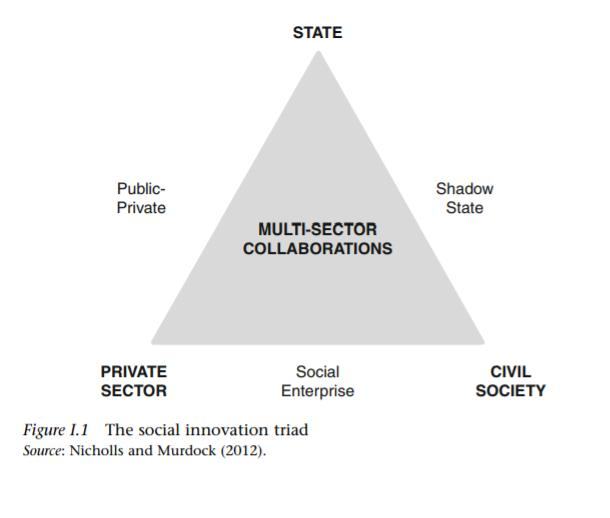
Figure 1.1 The social innovation triad Source: Nicholls and Murdock (2012).
This dimension is particularly relevant for our report, given the key role played by public institutions in labour market integration in most member states. We might expect that many examples of social innovation in this field would require the state to work with other actors in new ways. In our case studies and comparative analysis, we explore the roles that different
Footnotes
sectors and actors appear to be playing in EU supported employment SI, to draw lessons about the conditions and processes associated with certain kinds of collaboration and boundary blurring.
RQ1.4. Which stage(s) of the innovation process are being driven?
A further significant characteristic of EU-driven employment SI is what we might label the "stage" of the innovation process to which it corresponds. Borrowing from the social innovation literature, 13 we can distinguish employment SI which involves:
- Invention and testing: localised experimentation
- Adoption and institutionalisation: being taken up and institutionalised in particular locations
- Scaling: wider adoption and diffusion.
The question of which 'stage(s)' of innovation are being driven is significant because it gives us a sense of the 'weight' of employment Sl as a concern for local policy actors, and a sense of how much wide an impact EU policy is having in this area. The role of experimentation should not be diminished, and evidence-based experimentation is an important objective. However, If EU policy is succeeding in supporting numerous imaginative experiments, none of which are ever spread, or even durably adopted in the place of their creation, the full potential of SI is undoubtedly not being realised. Throughout the case studies and analysis, then, we consider which of these 'stages' the EU appears to be driving, to draw lessons about the processes and conditions associated.
RQ2. How is the EU driving employment social innovations?
Our second major research question concerns the mechanisms through which the EU is driving employment SI. While this question, like the report in general, is framed around EU policy, EU policy is of course not the only driver of employment SI at member state level. Other dimensions may include local political and economic dynamics, governance structures, welfare systems, labour market structures and education systems. In analysing how the EU drives employment SI, we are in effect analysing the interaction of EU policy and these domestic conditions and dynamics.
The emerging literature on the EU and social policy transfer identifies three different causal mechanisms through which the EU, in interaction with member state political and economic dynamics, drives domestic social policy innovation. 14 These are:
- Conditionality: which involves changes compelled by the requirements of structural funds, notably the European Social Fund, which has since 1999 been explicitly framed as a lever for the implementation of EU employment policies.
- Policy learning: which refers to processes through which domestic actors are exposed to policies already established in other countries, and engage with them through formal or informal networks – leading, sometimes, to policy transfer
- Domestic empowerment or leverage: which refers to processes by which so-called domestic ‘policy entrepreneurs’ – actors who seek to take advantage of circumstances to shape the domestic policy agenda in a particular way – are empowered by EU policies and funding to pursue a particular agenda.
While these categories are useful, it may be misleading to treat them as alternatives. For example, policy learning may take place in different ways; domestic actors may be compelled to adopt new approaches through structural fund conditionality, but domestic policy entrepreneurs may be empowered to adopt ideas from other places. In certain circumstances, they may be empowered to creatively experiment with quite new approaches.
3. HOW IS SOCIAL INNOVATION PROMOTED IN EU POLICY?
This section explores the current EU policy landscape to examine the ways in which EU employment aims to drive employment social innovation. It draws on a desk review of literature and, where appropriate, on the expert interviews carried out as part of this study. To help ground the policy analysis, we first offer a brief account of the evolution of EU employment policy approaches, and consider their implications for social innovation. We then provide an overview of three EU funds that either explicitly or implicitly support some employment social innovation through:
- European Social Fund (ESF)
- Youth Guarantee
- Employment and Social Innovation (EaSI)
The evolution of EU employment policies: a brief overview
'Employment policy' is a broad field that includes several different types of policy approach. These can be broadly grouped as follows:
- Macroeconomic policies: Expansionary fiscal policy in line with traditional Keynesian approaches to employment policy. These seek to stimulate the creation of employment by boosting aggregate demand.
- Labour market policies: These seek to influence the interaction between the supply and demand of labour. 15 Passive labour market policies (PLMPs) provide income replacement to the unemployed (unemployment benefits), while active labour market policies (ALMPs), on the other hand, seek to promote the integration of the unemployed into the labour market, or the 'activation' of the non-employed. Some ALMPs include a demand-side dimension, for example public works programmes or wage subsidies. However, they are largely associated with supply-side measures, aiming to promote employment through increasing the size and quality of the labour supply.
- Employment protection policies: These aim to regulate individual and collective working conditions, and thus frequently take the form of laws, known as Employment Protection Legislation (EPL).
The EU's approach to employment policy has changed over time, and the relative merits of these approaches have been a source of contention. While the objectives of the European Economic Community (EEC) at its genesis were primarily economic, 16 there has always been a 'social dimension'. The consequences of economic integration often require social policy responses, most notably, employment policies. In the period 1958-1972, against a background of Keynesian fiscal policies and low unemployment, EU employment policy focused on encouraging the freedom of movement. The 1970s and 1980s saw substantial focus on employment protection policies. These took the form of employment protection legislation: 'hard law' implemented through the 'community method' (i.e. embodied in directives and treaties). 17
The economic convergence criteria imposed by the Maastricht Treaty effectively precluded previous Keynesian solutions to unemployment. In this context, a supply-side approach, with active labour market policies accompanied by labour market deregulation, was adopted. The post-Maastricht period saw a significant shift in the EU's focus from employment protection to employment promotion, particularly through active labour market policies. This can be seen as part of the transformation engendered by the move towards the Economic and Monetary Union (EMU) and as a response to the persistence of high rates of unemployment across member states.
The focal point of this shift was the European Employment Strategy (EES), initiated under the 1997 Treaty of Amsterdam. 18 Under the EES, member states were required to share national action plans detailing planned active labour market policies. Compliance was encouraged through the 'Open Method of Coordination' (OMC), an innovative system of benchmarking, peer review and monitoring. Thus, the EES pushed for enactment of policy through 'soft laws'. The implementation of such 'soft laws' has also been supported through the mobilisation of structural funds. In 1999, the criteria of the European Social Fund (ESF) were reformed to align explicitly with the EES. 19 This approach has remained in place ever since.
EU employment strategies and initiatives from 2010 onwards
Employment is currently a key strategic priority for the EU, marking a shift from its traditional position within member state competencies. The Europe 2020 strategy, launched in 2010 and revisited in 2015, sets out the EU's overall policy and initiatives for the current decade. Aiming to create smart, sustainable and inclusive growth, three of its headline targets are relevant to employment policy:
- Employment: Raising the employment rate to ensure 75% of people aged 20-64 are in employment
- Poverty and social exclusion: At least 20 million people to be taken out of poverty (or out of risk of poverty)
- Education: Reducing early school leaving (to below 10%), ensuring at least 40% of people aged 30-34 have completed higher education
With regards to employment policy, the EU has competence to support, coordinate and supplement the actions of member states (but not to adopt legally binding acts that require member states to harmonise their laws and regulations). 20 One key mechanism for doing this is the European Semester, which monitors progress of member state actions towards the objectives of Europe 2020 (a process which has been described as “the so-called macroeconomic conditionality” of Europe's cohesion policy). 21 A number of soft law procedures are attached to the European Semester, such as Country Specific Recommendations and the Open Method of Coordination (OMC) — specifically the Social OMC, which in the field of social protection and social inclusion is deemed “an essential instrument in the development of the European social model”. 22
To support and complement the achievements of objectives at member state level, the EU has developed a series of policy initiatives. These EU-wide policy packages provide more guidance on how targets in Europe 2020 will concretely be achieved. For example, the Agenda for New Skills and Jobs, one of the seven flagship initiatives set out in 2010, sets out an overall framework for action to increase employment levels and tackle unemployment. It features four main priorities: better-functioning labour markets; a more highly skilled workforce; better job quality and working conditions; and promotion of job creation and demand for labour. It is recognised in the Agenda that activation and skills improvement will not be sufficient; policies are also needed to incentivise the creation of jobs.
Youth on the Move, launched in 2010, is a comprehensive package of European policy initiatives in education and employment for young people, under the wider Europe 2020 strategy. The package aims to improve young people's education and employability, and increase youth employment through improved skills-matching, mobility and Member State level actions.
The European Platform against Poverty and Social Exclusion
The European Platform against Poverty and Social Exclusion is another of the flagship initiatives established in 2010. It supports the headline target of lifting 20 million out of poverty by 2020, setting out five key areas for action:
- Delivering actions to fight poverty and social exclusion across the policy spectrum
- Better use of EU funds to support social inclusion
- Developing an evidence-based approach to social innovations and reforms
- Promoting a partnership approach and the potential of the social economy
- Better policy coordination between EU countries.
Another relevant policy initiative is the Social Investment Package (SIP), adopted in 2013. This provides an EU-level framework for social policy reform in response to economic and demographic transformations – in particular Europe's shrinking working-age population, at a time when the older population is growing. Social investment can be defined as policies which invest in inclusive human capital development. 23 The SIP marks a conceptual shift in EU social policy, offering a framework for redirecting Member States' policies towards greater investment throughout the life-cycle. 24 Social policies are reconceptualised as a productive factor, supporting economic development rather than hindering it. 25
More recently, the European Pillar of Social Rights has been introduced as a framework that sets out to deliver new and more effective rights for European citizens. It has three main categories: equal opportunities and access to the labour market; fairer working conditions; and social protection and inclusion. The Commission has already presented several legislative and non-legislative proposals to implement the Pillar at EU level. At the Social Summit for Fair Jobs and Growth (November 2017, Gothenburg) a joint proclamation drafted by the Parliament, the Council and the Commission was signed by all parties, including Member States. While this is a good indication of the political support for the Pillar, some challenges remain in mandating its implementation across the EU27.
The role of social innovation within EU employment policy
While EU employment protection policy in the 1970s and 1980s featured some elements that could be described as socially innovative (for example, the institutionalisation of EU social dialogue), social innovation has become a more explicit feature of EU employment policy in the last decade. Prior to the financial crisis, social innovation primarily held EU interest insofar that it offered pathways towards activation and integration. Post-crisis trends, however, show social innovation starting to be posed as a potential solution to more fundamental problems, such as youth unemployment.
This section gives a quick outline of key ways in which EU policy provides a framework for social innovation. As shown below, several key employment policy strategies and initiatives make explicit reference to social innovation, as well as more broadly recognising innovation in both processes and governance as a crucial factor in achieving policy goals.
Europe 2020 mentions social innovation explicitly; for example, to boost demand for labour, member states are advised to "actively promote the social economy and foster social innovation". 26 Meanwhile, it also includes some calls which could implicitly provide a mandate for social innovation. For example, to enhance labour supply, it mentions a need for "individualized active support” for a return to the labour market and a "structural improvement in the school-to-work transition”, both of which imply a need for innovation in these areas. Similarly, the call to provide “more effective public employment services” and more tailored services to jobseekers implies a need for innovation in the delivery of public employment service programmes.
Various EU flagship initiatives and other policy initiatives also make reference to social innovation in a variety of ways. For example, the Agenda for New Skills and Jobs (ANSJ) makes reference to the need for innovations in governance, under its call to “enhance the implementation, monitoring and governance of flexicurity”. 27 Specifically, it calls for public employment services to play a more holistic lifelong role, and calls for the promotion of partnerships "between and among services (public, private and third sector employment services), education and training providers, NGOs and welfare institutions. " 28 The ANSJ equally draws attention to the social economy and micro-enterprises (including self-employment) as “innovative solutions to respond to social demands in a participative process, providing specific employment opportunities for those furthest away from the labour market”. 29 It also gives examples of how the European Social Fund (ESF), as well as other funds including the European Regional Development Fund (ERDF) and the Rural Development Fund (EARDF), can be used to support the implementation of its recommendations.
The European Platform against Poverty and Social Exclusion introduces some further considerations, including:
- The need for more “intelligent" use of EU funds and “innovative approaches" that "complement existing tools and help to ensure a cost-efficient, effective and equitable use of public social spending.” 30 These approaches include both innovations in process, such as “integrated approaches to fight poverty”. They also include innovations in governance; it is suggested that the ESF "could also contribute through innovative ways to leveraging more private resources in support of social inclusion". 31
- Calls for more “evidence based social innovation” as a tool to "guide the structural reforms that will be needed to implement the Europe 2020 vision". This refers to rigorously evaluated social policy experimentation, i.e. "small scale projects designed to test policy innovations (or reforms) before adopting them more widely. The platform proposes that member states' efforts in this area could benefit from a “European initiative on social innovation”, which would complement national funds with EU funds and critically ensure a “larger diffusion of knowledge”. The platform also highlights that the ESF, along with the PROGRESS programme, can provide funding for testing innovative actions, and can provide "a framework for mainstreaming social innovation". 32
- The Platform also includes notable calls for innovation in its emphasis on deeper engagement with civil society, and more strikingly, the “participation of people experiencing poverty", in the fight against poverty. It also makes specific reference to the importance of supporting national, regional and local authorities as proven “incubators' of social innovation”.
- Finally, the Platform highlights the value of social economy initiatives in "bringing innovative responses to emerging social needs and challenges that neither the state nor market are able to meet". 33
The Social Investment Package (SIP), meanwhile, makes explicit reference to the need for innovation both in processes and governance. Innovation is described as “an essential element of social investment policy", because of the requirement for “constant adaptation to new challenges.” This implies a need to develop and implement “new products, services and models, testing them and favouring the most efficient and effective.” 34 The SIP underlines the need for "an enabling framework" for testing and promoting new approaches, and points to funds such as EaSl and the ESF as means of financing experimentation. It also identifies that social policy innovation needs to “upscaled, embedded into policy making, and connected to priorities such as the implementation of Country Specific Recommendations". 35
The need for innovation in the governance aspects of social protection and intervention is also highlighted. The SIP specifically mentions the need to test and promote "new finance mechanisms" 36 and the value of “private and third sector resources to complement public efforts". Specific mention is made for the need to provide support schemes for social enterprises, and reference is made to European Social Entrepreneurship to be available from 2014. It also announces that Commission support will be made available for the exploration of new financial instruments, and notable Social Impact Bonds, as a means of incentivising the mobilisation of private capital to finance longer-term social investment spending. It is identified that the Commission will also facilitate the exchange of member state experiences in this area. 37
Finally, while the Pillar of Social Rights is best understood as an affirmation of commitment to the 'social dimension' of the EU, rather than a source of detailed guidance on how to promote social innovation, it does have a number of elements relevant for employment social innovation:
- Its assertion of the universal right to "timely and tailor-made assistance to improve employment or self employment prospects” and “adequate activation support" 38 implies a call for effective labour market integration interventions. Where these are not effective, innovation is an implied need.
- The Pillar also declares that “innovative forms of work that ensure quality working conditions shall be fostered” and that “entrepreneurship and self-employment shall be encouraged.” This implies a call for employment SI that addresses the deterioration of working conditions in a context of increasing ‘Uberisation'.
Beyond providing an enabling policy framework, the Commission makes use of a number of policy tools aimed at encouraging Member States to adopt EU policy proposals - a number of which also serve to drive innovations in the employment field. For example, the Social Open Method of Coordination (Social OMC) implicitly supports employment social innovations at the member state level by facilitating changes at the levels of governance, process and objectives in the following ways: 39
- In accordance with the Renewed Social Agenda, it outlines that all European policies should have a social impact, assessed by the Commission, and related to this, it seeks the improved integration of economic, social and employment policies.
- It endorses the improvement of member state capacity to adopt evidence-informed policies (such as through programmes like PROGRESS) so that its objectives can be supported.
- Finally it proposes two significant roles for social partners and civil society: who are seen both as 'partners' in the OMC's process of period review carried out by the Social Protection Committee - and as 'owners' whose increased participation throughout the cycle is seen as “essential to fully achieve the targets set by the OMC."
EU funds to support employment social innovation
Funds are levers which in practice enable the implementation of both strategies and initiatives. Our literature review and expert interviews suggested three EU funds in particular have been important in driving social innovation in employment: European Social Fund (ESF), the Youth Employment Initiative, and the EU Programme for Employment and Social Innovation (EaSI). These are detailed below.
European Social Fund (ESF)
The ESF is one of the EU's oldest structural funds, established in 1957, and has evolved to become a key support mechanism for structural reform and investment across EU member states in employment and social policy. Although the Commission sets funding priorities, it is not directly involved in selecting projects. ESF targets four key thematic areas:
- Getting and keeping people in employment (particularly young people)
- Social inclusion and combating poverty
- Better and more accessible education
- Improving the quality of public administration and governance.
The ESF has incentivised innovation in several ways and directly funds social innovations. For example, it stipulates that there needs to be experimentation of solutions targeting social needs related to employment and social inclusion. 40 This enables the processes of testing and scaling up innovative approaches to the policy level. The ESF also creates an enabling framework for social policy experiments developed through EaSI, by providing funding so that they can be scaled up.
The ESF is also explicitly concerned with promoting governance innovations that strengthen institutional and administrative capacity, reduce administrative burdens and improve the quality of legislation of the public sector. This focus on innovating the public sector directly is significant since it is itself is a significant employer in Europe, accounting for over 25% of total employment and a significant share of economic activity in the EU28. 41 These governance innovations are rationalised as drivers of growth: the modernisation of public administration is one of the five priorities of the EC's last three Annual Growth Surveys. Reform of public procurement, digitisation of public administration, reduction of administrative burden, and increased transparency are all acknowledged as growth enablers. 42
The ESF also promotes social innovation as a horizontal objective – complementing policies contributing to Europe 2020. Social innovation cuts across all policy fields in the ESF investment priorities. Furthermore, each operational programme co-financed by the ESF are required to set out the contribution of its planned actions in social innovation. This paves the way to mainstreaming social innovation in all areas of operational programmes and enables thematic concentration. 43
Youth Employment Initiative (YEI) and the Youth Guarantee
The YEI implements direct actions on behalf of the Commission to support youth employment activation measures. These direct activation measures respond to the long-term “scarring" impacts of youth unemployment and for young people not in education, training or employment (NEETs), and the potential loss to future human capital resources. Its budget is EUR 6.4 billion, half of which is sourced from ESF national allocations (2014 prices). These funds are channelled towards youth investment priorities related to education and training, as well as youth social inclusion. It consists of a range of tools including the Youth Guarantee.
Under the Youth Guarantee, the Commission requires member states to adopt more integrated approaches to youth policies, and to consider the needs of particularly marginalised young people. In so doing the Commission catalyses process innovations at the national and regional level by encouraging Member States to design and implement actions for youth which are built on a strategic, integrated approach and complement Youth Employment Package objectives. They can also directly target young people (e.g. job placement, training) and/or adjust systems and structures (e.g. employment or education services access and quality). The Youth Guarantee entails partnerships at national and regional/local level between key stakeholders (employers, public employment services, education and training institutions, sub-national government and youth organisations). Overall, the YEI investment priorities target actions for individuals as well as systems. 44
There is also a degree of conditionality attached to YEI which can potentially promote governance innovations. Member states are required to complement YEI support with additional ESF and national-level investments that enable structural reform and enhances a combination of employment, social and education services for youth. This is achieved by strengthening structural capacity and improving access and quality of education and supply-demand linkages.
EU Programme for Employment and Social Innovation (EaSI)
EaSl was launched in 2013 in response to the social and economic challenges facing Europe's social protection systems and labour markets. EaSI's priority targets are:
- Promoting sustainable employment
- Enabling adequate and decent social protection
- Combating social exclusion and poverty
- Improving working conditions
Other priority areas include supporting job creation and promoting a highly skilled workforce that is resilient to future labour market changes. EaSI consists of three axes:
01 PROGRESS (Programme for Employment and Social Solidarity):
Supports development and coordination of EU policy for employment, social inclusion, social protection, working conditions, anti-discrimination and gender equality;
02 EURES (European Employment Services):
A cooperation network between the EC and PES of the Member States that encourages mobility amongst workers;
03 PROGRESS Microfinance:
Aims to increase microcredit access for small business (since 2016, PROGRESS Microfinance has been succeeded by the EaSI Guarantee Financial Instrument).
EaSI's objectives are to complement the ESF and to serve as a vehicle for achieving Europe 2020 objectives in scaling “innovating policy solutions” that foster long-term growth and jobs and reduced inequalities across the EU. 45 It was also designed to improve coordination between EU programmes that had been managed separately from 2007 to 2013, enabling greater policy coherence and efficiency in delivery and management.
EaSI supports process innovations through its push for social policy experimentation. The PROGRESS programme (61% of EaSI's total budget) earmarks 15-20% of funds for social policy experimentation to foster social innovation. 46 It aims to foster social innovation by creating conditions for innovative solutions to be developed, tested and disseminated at EU level. Since being incorporated into EaSI, PROGRESS has increased support for testing social and labour market policy innovations and experimentation by supporting Member States in adopting robust scientific approaches when designing potentially policy-relevant interventions. It commits EUR 10-14 million annually to financial support for testing social and labour market policy innovations and improving capacity for organisations to implement EU policies. 47
EaSl's emphasis on improving governance through evidence-based policies and mutual learning between member states, through approaches such as transnationality, is an example of its role in driving governance innovations. In 2012, a monitoring report of the formerly standalone PROGRESS programme highlighted its contribution to generating a robust evidence base for developing EU policies in employment.
Learning from past programmes: The EQUAL Community Initiative
Although it ended over a decade ago, the ESF-led Community Initiative EQUAL offers some useful insights about how the EU can design effective policies that enable employment social innovation. 48 EQUAL is worth highlighting for two reasons in particular: it was implemented by all member states, following common guidelines established by the Commission; and had been described as "the largest programme to support social innovation in the fields of social inclusion and employment ever". 49
Key features
Financed by the ESF between 2000 and 2006 to the sum of EUR 3 billion, EQUAL was designed as an implementing instrument for the European Employment Strategy, the Social Inclusion Process and the Lisbon Strategy. More specifically, it was designed to investigate and test different ways of tackling discrimination in employment and on the job market and to share examples of the resulting good practice across borders, with the intention of influencing policy and general practice throughout Europe. 50 In this respect, EQUAL's operating model has been likened to "a laboratory to test new ideas and solutions to discrimination problems in the labour market". 51 Transnationality was a core feature of the EQUAL programme, with the programme's guidelines stipulating that projects should be carried out by Development Partnerships in cooperation with transnational partners. This focus on transnationality was intended to bring actors into contact with new ways of doing things and help to "stimulate changes in both in ways of thinking and development of practical solution to problems." 52 In addition to transnational cooperation, the programme's implementation was guided by four other principles: partnership, empowerment, innovation and mainstreaming. It had nine thematic fields of activity:
- Access and return to the labour market
- Combating racism and xenophobia in relation to the labour market
- Opening up the business creation process
- Strengthening the Social Economy
- Promoting lifelong learning and inclusive work practices
- Supporting the adaptability of firms and employees
- Reconciling family and professional life
- Reducing gender gaps and supporting job desegregation
- Asylum seekers
EQUAL in practice
EQUAL provided considerable evidence for more innovative and inclusive employment policy approaches and delivery mechanisms, based on the efforts and lessons drawn from 3,480 development partnerships with more than 20,000 partners, reaching over 200,000 persons in Europe. 53 Yet a more interesting question is whether EQUAL had a lasting impact on how EU employment policy drives social innovation. The ex-post evaluation of EQUAL suggested it did, in the following ways:
- It increased awareness amongst relevant actors and decision makers of the existence and needs of certain target groups, such as asylum seekers, immigrants and ethnic minorities (in particular, Roma) and ex-prisoners, whose needs had not been sufficiently addressed before in some member states "where their inclusion in employment policies and actions was obstructed by the legal framework and prejudice. " 54
- It contributed to the evolving debate on employment, social inclusion and sustainable development influencing the development of the main EU policies and strategies, and strengthening the local dimension of the EES and the integration of various approaches (e.g. local employment and development initiatives, local welfare systems). 55
Importantly, it underscored the need for more integrated approaches to economic, social and employment policy by demonstrating the limitations of fighting social exclusion and poverty through employment and jobs alone and that growth and jobs were necessary but not enough to combat complex yet connected issues such as income disparities, regional disparities, gender and ethnic disparities or household hardships. 56
EQUAL was held in high regard by our expert interviewees for its explicit pursuit of social innovation (facilitated through transnational partnerships) and some hoped that an iterated version of the programme could be relaunched. They did, however, perceive some particular challenges in its approach:
- According to one interviewee, EQUAL “stimulated an active culture of transnational working", which continues currently through the ESF Transnational Cooperation Platform. However, some interviewees perceived an overfocus on transnationality at the expense of innovation. While establishing cross-border learning networks was seen as an important precondition for employment social innovation, a lot of focus and energy was spent in finding and establishing the cross border partnerships.
- Another interviewee noted that although training and support was offered to help set up cross-border partnerships, there was little support for the design and implementation of innovative products or services. This was seen to pose challenges– particularly in contexts that lacked the skills to design and support new ideas from pilots, and to evaluate them effectively.
- In practice, little attention was given to ensuring there was a demand for the innovations developed once the programme had stopped, meaning there was a failure to institutionalise and scale many of the more promising innovations that were piloted during the programme.
- While the multi-staged approach to the programme's design was deemed effective (and has informed the design of programmes such as Flanders' Innovation Funding Mechanism), the overall duration of EQUAL was seen as being too short given its ambitions. Some interviewee noted the programme itself would have benefitted from a stage-gate design approach, "using the first iteration of the project to establish partnerships, the second for development, and the third for mainstreaming and upscaling." 57
Footnotes
Policy in practice: how well does EU employment policy drive social innovation?
This section has described the ways in which EU employment policy provides a framework for social innovation and noted various policy levers that the EU has attempted to use to drive employment social innovation. For instance, the Commission uses conditionality to drive social innovation in and beyond the employment field in the case of ESF regulation, which stipulates that:
"Member States shall identify, either in their operational programmes or at a later stage during implementation, fields for social innovation that correspond to the Member States' specific needs."58
Examples of the Commission playing a more direct role in this regard are also evidenced by past examples such as the EQUAL programme, which required innovation, partnership and transnational cooperation, and 'forced' the Development Partnerships formed over the course of the programme to cooperate and develop new ideas.59 The Commission also plays a role in enabling transnational learning and sharing of good practices through mechanisms such as the ESF Transnational Cooperation Platform.60
While the variety of approaches used by the Commission to either enable or compel Member States to support objectives linked to employment social innovation are shown here, findings from our expert interviews highlighted some of the strengths and weaknesses associated with these approaches.
One consideration highlighted in our expert interviews is the increased importance of mutual engagement between local and national government bodies in creating the conditions necessary for social innovation to take place, particularly as structural fund transfers are becoming increasingly decentralised. In addition, while Article 9 of the ESF's regulation suggests social innovation has been mainstreamed into ESF policy practice, some of the experts interviewed questioned how far this was the case in reality. An example given was that some territorial authorities seemed to be adopting the language and rhetoric of social innovation but without a regard for social innovation principles or processes in practice.
Further, in the context of ESF specifically, the experts we consulted as part of this study noted some limitations in using the instrument to bring about social innovation on the ground. These included:
- A disproportionate focus on quantitative metrics rather than qualitative targets which can have a stifling effect on innovation processes — aligned with broader comments on the evidence gap in this sector overall.
- The administrative burden associated with managing ESF projects, which poses a major obstacle to smaller, nimbler organisations (such as social partners and NGOs) in accessing the funds (one interviewee described ESF as “tied up with old systems players who have little impact on outcomes").61
- A cultural resistance amongst managing authorities to experimentation and innovation.
Several interviewees also questioned whether EU funding instruments were effectively designed to catalyse large-scale social innovation. For example, some believed that in the context of ESF, social innovation will remain a fringe activity, and that for those on the ground, funding can seem too tightly specified — with a lot of funding tied to top-down priorities and in some instances “the propping up of failing PES actors.” Another interviewee noted that funding instruments like the Youth Guarantee have been designed in such a way as to result in distorted incentives — with managing authorities needing to get all this funding “out the door quickly, meaning a lot of it goes into the same big players' pockets".
Others acknowledged more general concerns about the nature and varying regional understanding of social innovation — a concept considered by some of our experts to have a conceptual fuzziness and a preoccupation with novelty rather than impact. Some of our experts suggested that adopting a more pragmatic rather than overly-theoretical approach to social innovation could help draw outs its utility and potential for impact as a horizontal priority in the context of EU employment and cohesion policy. To realise this, however it was suggested that more attention needs to be paid to devise practical strategies to help build the institutional capacity of multi-level actors to effectively design, operationalise and evaluate innovative solutions and approaches. Doing this, it was suggested, would require moving beyond innovation toolkits and practice guides to practical demonstration projects.
Some of our interviewees commented on the value of transnationality as a mechanism to facilitate mutual learning, knowledge transfer and exposure to new ways of doing things and suggested that post-crisis trends have been marked by a shift toward prioritising domestic policies across member states rather than seeking transnational partnerships. While noting that making transnationality a mandatory requirement (as in past programmes such as EQUAL) could lead to it simply becoming a tick-box exercise, interviewees suggested that that current approaches to supporting transnational learning, like the ESF Transnational Cooperation Platform's learning networks, could be made more intensive. This would shift the focus of transnational partnerships and networks towards responding to genuine learning or skills needs, and their potential to be activated with more flexibility.
Another key challenge observed in our expert interview findings is the lack of robust evidence from across the spectrum of innovation stages (testing through to scaling), and as a result, it is difficult to fully understand the successes and limitations of such funding approaches. While evaluations are being completed in this area, for example through progress reports under the EaSI programme, much of this is in the area of piloting and experimentation, making it hard to draw conclusions on long term impact.62 Insights from our expert interviews show there is a pressing need for greater impact measurement, that is both robust and reliable, to capture the level of activity of social innovation in employment and to better understand its role in the field. However, a tension exists in terms of maintaining agility and reducing administrative burdens for social innovation actors and the need to impose standardised impact measurement protocols.
That said, interviewees nonetheless acknowledged the promising progress that some national and regional stakeholders have made, described separately as both "little islands of positive deviance” and “clinks of optimism”. The following section examines five national and regional case studies, in order to extrapolate lessons about how well this interplay between EU policy strategy and national and regional stakeholders is translating into employment social innovation on the ground.
4. CASE STUDIES OF EU-SUPPORTED EMPLOYMENT SOCIAL INNOVATION
This section presents five case studies of employment social innovations supported by EU funding. While Section 3 explored the policy landscape and the ways in which the EU has provided a framework for social innovation in employment, the case studies seek to further our understanding of how EU policies support and drive employment social innovation in practice.
Selection criteria
As highlighted in the introduction, the selection criteria for these cases were:
- Funding through at least one of the selected EU policy instruments. The selected cases were all funded through the ESF, EaSI or Youth Guarantee. The decision to focus on projects funded by these instruments was guided by our findings from expert interviews and our observations of the concentration of employment social innovation activity around these instruments.
- Innovativeness of the project/activities. In order to enable comparative analysis of the processes enabling different kinds of innovation, we sought to select projects which, explicitly presented themselves as innovative, and appeared to present substantive innovative features (in the context of the member state in question).
- Variety of levels of conception/design. In order to enable a comparative analysis of the processes enabling innovations at different administrative levels, we aimed for a variety of levels of conception/design (local/regional, national or transnational network level) when selecting cases.
- Geographical variety. In order to analyse the processes associated with supporting innovations in different socio-economic and policy contexts, and in the context of different welfare systems, we aimed to select cases from a variety, of European regions.
We also chose to focus on initiatives directed towards labour market integration. The substantial quantity of employment SI activity in this area, across member states, creates particular opportunities for the drawing of lessons from cross-national comparison.
Using these criteria, we selected five examples of innovation in five different European contexts. A snapshot of the key characteristics of each case study are presented here:
| Case study | Location | Employment focus | Type of Innovation | Level of design | Funding instrument & budget |
|---|---|---|---|---|---|
| Garantie Jeunes | France | Youth employment | Process, objectives | Local pilot leading to national scale | YG: €75m 2014-15; €54.9m in 2017 |
| Ohjaamo – One Stop Guidance | Finland | Youth employment | Objectives, governance, process | National | YG, ESF and European Social Reform Fund: €3.1m ESF contribution (out of total budget €4.1m) |
| HomeLab | Poland, Slovakia, Czech Republic & Hungary | Labour market inclusion – vulnerable groups | Governance, objectives and process | Local and transnational | EaSI: €1.3m (80% co-financing) |
| ESF Department Flanders | Flanders, Belgium | Local/regional employment and labour market challenges | Governance and process | Local | ESF: 8.5% of its total ESF budget – €32m |
| Portugal Social Innovation | Portugal | Youth employment, graduate employment | Objectives, governance | National | ESF: €150m (2014-20) |
As illustrated in the table above, the selected cases are a varied group in several ways. As well geographical variety, and variety in level of design (national, regional/local, or transnational), they also vary in terms of institutional character. Garantie Jeunes, Ohjaamo and Homelab are all programmes; the first two both form part of their respective member states' implementation of the youth guarantee. ESF Department Flanders and Portugal Innovation Social (PSI), on the other hand, are mechanisms that are both innovative in themselves and that aim to drive social innovation in employment — among other areas.
By exploring these and other variations across the cases we aim to increase our understanding of the different ways in which the EU can support innovation in employment.
Case Study 1: Garantie Jeunes
Project/organisation name Garantie Jeunes ("Guarantee for Youth")
Location France
Level at which it was designed National (following localised pilots)
EU instruments used Youth Employment Initiative
Launched Phased launch starting with regional pilots in 2013; broader roll-out from 2015; rollout across entire country from 2017
Employment challenge addressed Youth unemployment
Key organisations involved Missions Locales
Annual spend/total EU contribution EUR 75 million for the period 2014-15 (part of the EUR 620 that France accessed in the same period through the Youth Employment Initiative).63 EUR 54.9 million in 2017.64
Background
Garantie Jeunes (GJ) is a national French programme focused on the integration of socially 'vulnerable' young people who are not in education, employment or training (NEETs).
Youth unemployment has been an important issue on the French political agenda since the 1980s. In 2006 the French unemployment rate was four percentage points higher than the European average; in 2014 it was still 1.3 percentage points higher. The gap between general and youth unemployment is higher in post-crisis France than the OECD average.65
Despite the resemblance in name, the Garantie Jeunes should not be confused with the French Youth Guarantee programme (referred to in French as the 'Garantie pour la Jeunesse'), but rather is one among a range of measures through which France is implementing the YG. It is delivered by the Missions Locales (MLs), a national network of youth employment-focused ‘local missions' distinct from adult Public Employment Services (PES). It can be understood as a form of process innovation which also embodies a new objective: enabling the 'autonomy' of vulnerable young NEETS. It contains elements of both policy transfer and domestic experimentation, and has resulted from the empowerment of domestic policy entrepreneurs. Although first implemented through pilots in ten départements (regions), is a national initiative, which has been conceived and driven from the level of national government.
How is it innovative?
GJ represents a significant innovation in the French context and official descriptions explicitly emphasise its 'experimental' nature.66 These largely consist of process innovations (described below); which also involve new objectives. GJ can thus be seen as an example of ESI that combines new means with new ends.
GJ is a programme of support for young people, providing access to a range of professional experiences or education/training opportunities. It is delivered by the Missions Locales (MLs), a national network of 'local missions', separate from the Pole Emploi (job centres), which have been the focus of labour market integration interventions for young people since the 1980s. It involves a one-year contract between the participant and the Missions Locales, which can be extended once for up to six months. Participation is voluntary and prior to national roll-out in 2017, it was selective.
Youth employment initiatives based on a 'contractual' approach are well established in France. However, GJ has four process elements which can be considered innovative in the French context:
- The support participants are offered is both 'individual and collective'. Individual support follows an initial phase (six weeks) of cohort activities.
- There is a strong emphasis on getting participants quickly into work, referred to as a 'work first' approach. The emphasis on quick access to professional experience is linked to a new set of expectations in terms of the support the participant is offered, as well as a new role for job advisors in liaising with local businesses, articulated through the concept of active mediation. (Nevertheless, despite the use of the term 'work-first', GJ arguably does not constitute a work-first approach in the conventional sense, as will be discussed below.)67
- It specifically targets 18-25 year old NEETs living in vulnerable and precarious situations: In an experimental phase, participants also had to go through a selection process, but since national roll-out in January 2017, all eligible individuals can participate. In order to reach these vulnerable individuals, partnerships are established between Missions Locales, schools, social workers and outreach workers.68
- It includes a guarantee of monthly resources through a monthly means-tested allowance, currently up to EUR 461. This amount is equivalent to the revenue de solidarité active (RSA), the main French unemployment benefit, available only to job seekers aged 25 and over. The GJ payment can be added to wages received from work accessed through the programme and the allowance can be combined in full with wages up to EUR 300 per month, and decreases proportionally beyond that amount, with total monthly income capped at EUR 1,165.
While these innovations can partly be understood as 'new means' of tackling the barriers faced by vulnerable NEETs in entering the labour market, at least some of them can be seen as driving at new ends. The last two in particular, can be understood as linked to a distinctive objective in the French context: the “autonomy” of vulnerable young people. This concept features heavily in official documentation around the policy as well as in reports leading up to its conception.69
The emphasis on a relatively rapid entry into work experience seems not to have resulted from an ideological assertion of the value of work, as suggested by the use of the term 'work-first', but rather from the lessons of previous youth insertion programmes.70 Evaluations of these programmes identified that relatively rapid entry into work experience is more effective than experience following extended training in promoting durable employment among NEETs who have just left the education system. 'Work first' in this context, seems to be best understood as a pragmatic means to an end, rather than a radical new end in itself.71
What roles are different sectors and actors playing?
GJ is largely driven by public sector actors, notably the Missions Locales. These are local-level public structures, which act as one-stop shops for NEETs aged 16-25. The need to identify eligible young NEETS, which follows from the targeted nature of GJ, has also has also led to the development or strengthening of partnerships with external actors and organisations. Many of these are part of the public sector, and include notably youth justice and probation bodies, education establishments, Pole Emploi (mainstream PES), police, and social workers employed by Départements (regional governments). Some partnerships have also been created with civil society, for example organisations providing housing for particularly vulnerable young people, or local sports associations working with young people. An intermediate evaluation, however, found that the success of these partnerships in providing eligible participants for GJ has been limited. A number of reasons are identified for this, including conflicts of interest and of perspective between different public agencies, but also the fact that 'access' to a vulnerable young person is not significant to secure a referral to a programme that is not compulsory.72
An additional set of partners are the local businesses which take on participants for work experience or employment in the course of the programme. One of the innovations associated with GJ has been the idea that advisors in the MLs should play a role of 'active mediation' with local businesses. This refers to engagement with small businesses, typically lacking HR departments, to create work experience opportunities which might not have otherwise existed. In principle, then, GJ represents a means by which the public sector supports small businesses to take on a greater role in tackling youth unemployment. In practice, intermediate evaluation has found that the success of job advisors in playing the role of 'active mediators' has varied a great deal, reflecting the different capacities and levels of experience of different MLs.73
Which stages of the innovation process are being driven?
GJ can be considered an example of EU policy driving the 'scaling' and institutionalisation of ESI. Starting with 10 pilot locations in 2013, between 2015 and the end of 2016 it was extended to 91 out of 96 mainland French Départements (regions). From January 2017 under the loi travail, the GJ was instituted nationwide and the selection process was removed to make the programme available to all 16-25 year old NEETs fulfilling a simple set of vulnerability criteria.74
It is notable however that GJ has provided relatively little space for testing out new approaches at a local level. Evaluators found that despite the emphasis on the 'experimental' nature of GJ, MLs have lacked opportunities to contribute to this experimentation. Rather, the perception has been that MLs are responsible for rolling out the measure in an “industrial" manner.75 This is perhaps reflected in the failure to line up elements of the GJ with other aspects of the MLs” work, to the detriment of the former; for example, a failure to draw from the knowledge of local employers held by other staff within the Missions Locales, for the purposes of finding suitable employers for the GJ (which has sometimes posed a challenge).
How has EU policy helped drive this innovation?
GJ presents elements of policy transfer and learning, as well as important elements of domestic experimentation. On the one hand, GJ displays clear inspiration from the Scandinavian Youth Guarantees that preceded it. The drive towards “autonomy” through the provision of an allowance can also be partly understood as a shift towards a more Scandinavian-style approach to social protection, giving less weight to the family; even if it is one that has developed through a thorough domestic process of empirical study and reflection of the sociological impact of French social security system on young people.76
The emphasis on a rapid access to professional experience, by contrast, can be understood as more a form of domestic experimentation. As mentioned above, while the use of the term "work first” gives the impression of the adoption of an Anglo-Saxon style workfare approach, closer inspection suggests the application of an 'alternance' approach to the challenge of youth insertion.77 This is a domestic experiment, resulting from the lessons of previous French youth insertion schemes.78 Likewise, while the adoption of the term NEET, an EU statistical category, suggests EU influence, it should be noted that the target of GJ is not actually young NEETs, but vulnerable young NEETs: a much more specific — and arguably more pertinent — category.
GJ can also be understood as an initiative that has resulted from a process of the empowerment of domestic policy entrepreneurs, rather than compelled through funding conditionality. It is just one of the measures through which the Youth Guarantee was officially implemented in France. Perhaps reflecting the long-standing political importance of the issue of youth unemployment, France was the first member state to access funding through the initiative, accessing EUR 620 million for 2014 and 2015.79 The Commission's 2013 Country Specific Recommendations for France encouraged the implementation of Youth Guarantees, and France introduced a 'National Youth Guarantee Implementation Plan' in December 2013. This plan included the strengthening and expansion of a number of existing initiatives, and the introduction of a new one: the GJ.80
However, in fact the idea for the GJ predates any official proposal to implement it through the Youth Guarantee. The suggestions for the GJ date back to the “National conference on the fight against poverty and for social inclusion" in December 2012. One of the reports prepared for this conference, co-authored by the influential senior civil servant and anti-poverty campaigner Jean-Baptiste de Foucauld, highlights a specific need for action in the area of youth in difficulty, and identifies a number of possibilities, including a “right to support into work" including financial support.81 Indeed, this in an idea that de Foucauld had been advocating since the early 2000s, notably through the 2002 report to the Prime Minister produced by the “National commission on the autonomy of young people".82 Arguably then, the EU Youth Guarantee initiative created a window of opportunity that domestic policy entrepreneurs, notably de Foucauld, used to bring a longstanding agenda to fruition.83
Some elements of GJ do reflect compliance with EU recommendations, for example the use of the term 'NEET' for the first time in a French insertion initiative. However, as evaluations of the programme have identified, the use of this term is relatively cosmetic, as in practice MLs have in effect long targeted young NEETs in France without using this term.84 Furthermore, as mentioned above, GJ, while using the NEET terminology, actually targets a more specific group. Other EU recommendations were complied with, but did not represent a novelty in the French context, an example being the use of a 'contract' between MLs and participants.
Emerging outcomes
While the final evaluations of the 'experimental' phase of GJ are not yet available, an intermediate evaluation published in November 2016 suggests promising results in terms of supporting the labour market integration of vulnerable NEETs.85 The reports indicate that the GJ is successfully reaching the vulnerable with 27% of participants reporting that their parents faced a difficult or very difficult financial situation, and 33% reporting having experienced severe housing difficulties, not knowing where to sleep. They also indicate that on average, 14 months after entering the programme, 40.4% of participants were in employment, as opposed to 34.1% of those who would have been eligible but did not participate.86
Reports on the impact of GJ on MLs, established actors in the labour market integration of young NEETs in France, are more mixed. The scale of GJ and the funding associated with it has led to significant changes in the dynamics of MLs, as large numbers of new staff have been recruited to deliver the programme, sometimes necessitating expansion into new premises. Some of the innovative processes that the GJ incorporates are described as being appreciated by MLs as effective in enabling the building of better relationships with participants. MLs have also successfully been able to establish local partnerships, notably with social workers, in order to access vulnerable participants even if this process has taken some time. Others seem to have been rather unevenly implemented, notably the "active mediation" approach, which seems to depend rather a lot on the capacities at local level. It is also noted that the GJ has brought with it significant new bureaucratic requirements, which can come to be perceived as a burden.87
Case Study 2: Ohjaamo
Project name Ohjaamo 'One-Stop Guidance' (OSG) Centres (coordinated by the Kohtaamo project)
Location Finland
Level at which it was designed National
EU instruments used Youth Guarantee, ESF and European Social Reform Fund
Launched March 2015 (this first phase of the project pilot ends February 2018)
Employment challenges addressed Youth unemployment, marginalisation and social exclusion
What makes it innovative System-level innovation
Key organisations involved Ministry of Economic Affairs and Employment, with support from the Ministry of Education and Culture and the Ministry of Social Affairs and Health
Annual spend/total EU contribution EUR 3.1 million ESF contribution (out of a total budget of EUR 4.1 million)
Background
Finland's economic position weakened in the immediate post-crisis of period 2010-14. Of all age groups, young people's incomes were hardest hit, and young people also faced increased difficulties in transitioning into the labour market.88 Finland's youth unemployment profile is diverse, with a growing trend amongst young people from migrant backgrounds.
As an implementing tool of Finland's Youth Guarantee, Ohjaamo looks at the challenges associated with youth unemployment from a complex, multi-causal perspective to offer an integrated service offer tailored to individual young persons in search of employment. The Ohjaamo project consists of a network of almost 40 ‘One-Stop Guidance' (OSG) 'Ohjaamo centres' operating nationally across Finland. Ohjaamo centres operate in both urban municipalities and rural areas.
The model adopts a holistic user-centred approach, that is responsive to the young person's mental health and other needs, and offers an entire package of support that aims to improve their access to education, training, employment, and wellbeing. The model emphasises individuals' entrepreneurialism and success, and as such reflects “the new liberalistic thinking in the Finnish 2010s labour market policy in which the role of the public sector is based on the normative guiding through individual freedom".89
How is it innovative?
Ohjaamo can be defined as a systemic innovation that encompasses process, governance and objective oriented innovations. Furthermore, the model reflects an effort to re-think and reorganise how public services aimed at tackling youth unemployment and marginalisation are developed and delivered, and in so doing its cross-sectoral partners are invited to participate in a wider process to support systemic thinking.90 To facilitate this, the model takes public services such as youth services, social services and employment services and facilitates their cooperation "with one another to really provide specialised services for the young people.”91 Staff from public agencies and private and social partners are physically co-located under one roof, to help simplify how young people access the help and services they may need. In the Helsinki centre, for instance, five services have been staffed by people from 27 different professional backgrounds, including job coaches, housing counsellors, nurses and psychologists. This allows Ohjaamo to align services closer to the real needs of young people.
At the governance level, Ohjaamo's 4P approach (public-private-people-partnership) is influenced by New Public Governance (NPG) thinking – in particular, its focus on innovations in democratic practices and a change in the role of end users who become co-producers of service models9293. Efforts have been taken to localise decision making and commissioning to the local Ohjaamo centres, and management are encouraged to look for ways to improve the efficiency of information flows and empower frontline staff to get on with day-to-day service delivery, operating where possible a “need-to-know basis” to make daily functioning more efficient.
Many process innovations have been developed to support the model. Young people have played a key role in helping to co-design the overall service model and local centres. This direct engagement with end users has yielded some interesting results: firstly (and perhaps surprisingly), even though its target users are typically digital natives, young people indicated that their preference was to have face-to-face interaction over online support.94 This is an important insight given the recent trend amongst public employment services (PES) to shift to web-based support services. Secondly, the centres have a friendly, 'coffee shop' atmosphere – unlike typical government buildings. While evaluations of the project are still ongoing, meaning it is difficult to assess Ohjaamo’s longer-term impact, indications suggest that the model is creating positive outcomes for clients (i.e. young people) and stakeholders (project partners) – and the model has been credited as having a “remarkable” reach in terms of the numbers of young people it has managed to engage.95
What roles are different sectors and actors playing?
Blurring boundaries between 'traditional' roles played by different sectoral actors is a key feature of the Ohjaamo model, which works as a multisectoral cooperative network. Ohjaamo has benefited from inter-ministerial support, which has allowed a cross-departmental and joined-up approach at the national policy level. Government officials, private businesses, social partners, representatives of entrepreneurs, civil society organisations and young people have all played a role in Ohjaamo's design and roll-out. By drawing on the expertise and networks of social partners such as NGOs, Ohjaamo can offer a more tailored offer to young people in a number of previously disconnected areas, such as sports and education. The closer involvement of specialist social partners enhances the effectiveness of mainstream public services and enables the needs of historically underserved segments of the population, such as newly arrived young migrants, to be better met.
Which stages of the innovation process are being driven?
The Ohjaamo model has already scaled nationally to 40 centres across Finland, and beyond its initial pilot phase, has shown promise in being institutionalised and sustained. Funding is based on public, private and ESF funding (which provided 75% of total funding), and from 2018, the Finnish Government will cover the contribution previously made by ESF.96 To help facilitate cross-network learning, sharing and coordination peer support for Ohjaamo employees "in order to develop the model to be partially coherent in Finland without losing the innovativeness on the local level”,97 a coordinating project, Kohtaamo, was established to support the centres' implementation and development needs.
Local policy entrepreneurs substantively shaped the design and implementation of the Ohjaamo model. Alongside representatives from the founding partner organisations, service designers from the Helsinki Design Lab helped to guide and support the co-design process that helped inform Ohjaamo's eventual design.
That said, a number of the model's features and its route to scale have been largely enabled through EU funding. One of the key mechanisms that enables cross-network learning and peer support across the Ohjaamo centres is Kohtaamo, which is itself a separate ESF project (it received EUR 26 million of ESF funding alongside EUR 23.6 million from the Finnish Government and EUR 2.4 million from municipalities).98 Some of those involved in the early phases of developing Ohjaamo have noted that working within the framework of an ESF project helped to accelerate the development of the Ohjaamo model, and although some smaller form of the model may have emerged, ESF funding enabled it to be bigger and more multi-professional.99 An implementing partner of the project also noted that funding guidance offered as part of the ESF support was really valuable in helping to operationalise the Ohjaamo model, and that the ESF funding was particularly useful and appropriate in helping to support this service development in the Finnish case.
The Youth Guarantee also comes with a certain degree of conditionality. National schemes are compelled to build on the European Youth Parliament policy framework and must meet certain criteria, but the way these measures are designed and implemented varies widely from country to country.100 Finland was one of the first countries to pioneer the Youth Guarantee, something which has been attributed to Finland's high-level sponsorship and supportive national policy framework for this kind of public sector experimentation.101 At national level, the
Footnotes
Ministry of Employment has supported the national roll-out of Ohjaamo and in cities like Helsinki, the new city strategy is endorsing this kind of integrated service model approach. While this highlights the importance of Finland's political landscape as enabling this sort of employment social innovation, it is also important to note the oversight and guidance provided from the EC. For instance, in 2016 the EC produced its three-year evaluation of the Youth Guarantee programme,102 it highlighted that in Finland and elsewhere the programme had not so far adequately responded to the needs of marginalised young people, and that greater cooperation was needed between key stakeholders. This helped form the basis for some of what can be seen in the Ohjaamo model today.103
Emerging outcomes
Even where there has been general reduction in youth unemployment in locations with a Ohjaamo centre,104 it is not possible to attribute this to the ‘one-stop shop' approach alone. Nonetheless, recent data from the Helsinki Ohjaamo Centre found that client satisfaction rates were reported to be 9.4 out of a possible 10,105 while interviews carried out by Innosi with a small number of Ohjaamo clients found that young people who had experienced both Ohjaamo's integrated service model and the former public service employment model found Ohjaamo more valuable in helping them find a job or training opportunity, and to source information.106 The Finnish Government has announced that as of 2018, the Ohjaamo service will be made permanent and for this purpose an additional appropriation totalling EUR 5 million will be included in the operating expenditure of Employment and Economic Development (TE) Centres, and that ongoing multisectoral cooperation will be strengthened.107
One interesting question to explore is whether the Ohjaamo model's recognised performance in helping to reach a large number young people may also have spillover effects for social partners involved. While more research is needed to conclusively show this, a social partner from the Helsinki Ohjaamo Centre consulted as part of this study noted that their organisation has seen a notable increase in the number of new clients (migrant youths) they are now seeing – and that since their staff have been co-located at the centre, they have seen more than a 100% increase in the total number of client meetings they had so far in 2017 compared with total figures for 2015.108
A key message from the interviews carried out for this case study is that Ohjaamo's multiprofessional ‘one-stop shop' approach has facilitated greater learning for participating professionals about previously disconnected services and fields, and the role different agencies and partners play. This in turn has enabled greater 'systems learning'. As Saana Rantsi from Kohtaamo highlighted, “We learn where the system doesn't work for young people - so we recognise those areas and provide solutions to address them at the structural level.”
Case study 3: HomeLab
Project name HomeLab - Integrated Housing and Labour Services in the Social Rental Enterprise Model
Location Central Europe - Poland, Slovakia, Czech Republic and Hungary
Level at which it was designed Local municipality level and transnational collaboration
EU instruments used EaSI
Launched 2016
Employment challenges addressed Promoting social and labour market integration of vulnerable and marginalised groups. A 'one-stop shop' programme combining housing and employment needs for excluded and vulnerable people.
Key organisations involved Civil society organisations, research organisations, local municipalities. Lead partners are: Habitat for Humanity (HFH) in Poland, Metropolitan Research Institute (MRI) in Hungary, People in Need (PiN) in Slovakia and Romodrom in Czech Republic.
Annual spend/total EU contribution EUR 1.3 million (80% co-financing)
Background
HomeLab is designed to test the idea that poverty, housing shortages and unequal work opportunities are interlinked policy challenges and should be addressed as such. The project is funded by the EU Programme for Employment and Social Innovation (EaSI) and explicitly addresses the fund's priority area of using innovations to link together social inclusion and employment needs. This is delivered through a 'one-stop shop' combining employment services, rental housing support, and social integration support within a single institutional framework.109 The project takes place in parallel across four Central European countries which share a similar, Soviet-governed political past and now jointly seek to integrate into the European market, in line with the traditional ‘Visegrad' alliance.110
Each country pilot reflects its specific context regarding social demography, institutional environments, labour market conditions and housing systems. The project has just come to the end of its initial pilot stage and will draw from learning so far to further refine the service models, with a view to scaling them nationally, and eventually at the EU level.
Specifically, HomeLab seeks to resolve the policy challenges by addressing the needs of vulnerable and excluded groups who are either homeless or lack access to social housing located close to labour markets. According to the project partners, Public employment services (PES) in Central European contexts are considered weak in terms of capacity and outreach when it comes to addressing these groups. Instead civil society organisations tend to be better placed as:
- they have an established relationship with local communities including excluded groups
- they are perceived to benefit from a 'politically neutral' stance which is amenable to bridging local government and beneficiary actors, an important factor in the Central European context.[^111]
The programme beneficiaries (poor and excluded groups) differ slightly in each country but broadly include homeless people; those experiencing deeply entrenched debt burdens and housing dispossession due to the 2008 financial crisis; and the Roma community. Targeted support to the Roma Community has been a particular focus in Hungary, Czech Republic and Slovakia. As one partner pointed out, for these groups, NEET can often mean 'never' rather than 'not in employment, training or education'. The programme partners in Homelab all have extensive experience and established networks and systems for delivering services to these groups. Through HomeLab, the project partners aim to provide "legal and long-term work for beneficiaries".
In each country, HomeLab is being rolled out in multiple regions where there are burgeoning industries and labour markets. In addition to providing housing in places where jobs can be accessed, the programme offers intensive social counselling to enable beneficiaries from vulnerable and historically excluded groups to overcome challenges such as lack of job-market awareness and social/psychological barriers to seeking employment. It also delivers labour matching and relationship-building with potential employers in the private sector. In this case study, we focus specifically on the Polish perspective, as they are the lead partner, with input from the Slovakian and Hungarian partners.
How is it innovative?
HomeLab is an example of a governance innovation and, to some extent, process innovation that has been enabled through EU funding. At the domestic level, HomeLab is innovative in being built on new partnerships between local municipalities and a range of civil society organisations, while its transnational element (albeit built on a traditional four-country alliance) can be considered innovative in the context of employment services. The project also provides a 'one-stop shop' design, as outlined above, combining employment and housing services for beneficiaries. This integrated service model entails a shift towards a beneficiary-centred framing of social and economic needs and is innovative in the Central European public sector context. Finally, the objectives of the programme can be considered innovative in terms of the aim to use the pilot model to generate robust evidence to help guide policy-making decisions. The experimental design of the project incorporates strong monitoring and evaluation (M&E) components built in to generate quality evidence a design type that has hitherto largely absent in the Central European policy context, according to the project partners. The experimental design and M&E component is built into the core of each research pilot to allow for the development of a robust evidence base with which to convince innovation-shy state actors and policy makers, according to the Slovakian partner, PiN.
As well as context and process innovations, there is also some innovation in terms of project objectives. The project aims to facilitate entry into the open labour market and establish direct contact with employers. This is implemented through NGOs who have an established presence in this sector. The innovative element in this case is the development of systematic linkages between vulnerable groups and private companies.
What roles are different sectors and/or actors playing?
HomeLab consists of new forms of partnerships between local municipality actors and civil society organisations (CSOs) within each country, connecting partners from civil society, research and local government within an institutional framework. For example, in the case of Poland, a large international NGO (Habitat for Humanity) partnered with the City of Warsaw council to design and develop the innovation, and took the lead in its implementation, taking on some capacities traditionally assigned to Public Employment Services (PES). While in Hungary, a research institute (MRI) partnered with smaller NGOs and local municipal partners to implement the Hungarian arm of the pilot, an atypical alliance embodying both the objectives and governance innovations outlined in this case study. In a context characterised by weak welfare systems, particularly in the area of PES, this is considered a novel approach for local municipalities in reaching out to NEETs and excluded groups.
According to the project partners, NGOs are well placed to deliver services to traditionally excluded groups, including NEETs, as their modus operandi (in the regional context) is through "one-to-one intense social work with beneficiaries".112 Meanwhile, PES and labour offices lack experience and capacity required to deliver complex social and employment services that meet the needs of typically excluded beneficiaries such as Roma people. HomeLab therefore links both 'alternative' (in this case, municipalities) and traditional actors to implement services for both traditionally and recently excluded groups. In Slovakia, for example, a labour matching database for the Roma community has been developed. Private sector employers are also specifically targeted and trained in how to deal with social tensions and help the Roma adapt to the workplace and deal with language barriers and discrimination.
Which stages of the innovation process are being driven?
In line with EaSI targets, HomeLab is at the pilot and experimentation stage of the innovation process, with a view to later scaling nationally and potentially, across the EU. The programme goes beyond policy norms in that the type of beneficiaries it targets - people facing intense poverty and social exclusion are usually considered high-risk and high-cost by policy-makers, particularly in the context of unproven innovations. The appetite and inclination for this unusual type of project was directly attributed to EU funding by all the partners involved.
How has EU policy helped drive this innovation?
The idea behind HomeLab was identified by local policy actors. However, EU funding has helped mobilise project implementation process and partnerships with municipal actors, and linked up civil society organisations with local government actors. For example, in Poland, Habitat for Humanity offered their outreach skills and expertise to meet an ongoing need for innovations in providing employment and housing for excluded groups. The City of Warsaw Council had developed a housing strategy which explicitly mentioned social innovation, but lacked capacity to implement this. The EaSl funds provided an opportunity for driving this partnership-based innovation, at both domestic and transnational levels.
In Poland, Habitat for Humanity (HfH) was perceived as a good NGO to invest in, as it has credibility and international presence. Although access to national funding and institutional buy-in for 'unproven' ideas and innovation is difficult in the Central European region overall, where entrepreneurialism is still in its incipient stages, the Warsaw Council seized the opportunity to reach out to HfH to work on their proposal for HomeLab, due to their partnerships and track record.
Regulations under the EaSI mechanism stipulate that complementary mechanisms should catalyse transnational partnerships and networking between public, private and civil society sector actors, as well supporting their involvement in designing and implementing innovations to address social challenges. The fund also explicitly encourages ‘one-stop shop' approaches for employment.113 In terms of design and implementation, HomeLab has met these requirements and gone one step further in their innovation by reinterpreting the 'one-stop-shop' model to combine two related sectors (housing and employment).
The regional partnership reflects the similarity of challenges regarding integration of vulnerable groups into labour markets which can be addressed through collective and transnational practices. These included regular consortium meetings, coordinated national workshops, and bi-annual transnational workshops to monitor progress and exchange practices and knowledge. For this, EaSI funds earmarked specifically for transnational workshops and for the development of their transnational project website were utilised.114
Emerging outcomes
As this social innovation is in its pilot stages, the long-term impact on beneficiaries cannot be measured. However, the completed pilots in all four partner countries have successfully demonstrated proof of concept by bringing together housing and employment needs in one programme, and systematising links between civil society and local municipalities in design and implementation of such services for excluded groups.
From a policy formulation perspective, the local municipality in Poland has been able to develop a policy based on consultations with the public and inclusion of traditionally excluded groups into the process, with the help of HFH in support and outreach, an example of 'policy as social innovation'.115 The programme has increased the willingness to target groups previously associated with risk and high social costs. The partnership between the Warsaw Council and HfH has also mobilised other policy offshoots in this area both large and small innovations in the area of employment and housing.
Case Study 4: ESF Department Flanders' Innovation Funding Mechanism
Programme name ESF Department Flanders' Social Innovation Funding Priority
Location Flanders, Belgium
Level at which it was designed Regional
EU instruments used European Social Fund (ESF)
Launched 2014
Employment challenges addressed Local/regional employment and labour market challenges (including social exclusion and poverty)
What makes it innovative Governance and process
Key organisations involved ESF Agency Flanders, ESF Department in the Flemish Ministry for Employment and Social Economy
Annual spend/total EU contribution 8.5% of its overall ESF budget – €32m – is used for innovation and transnationality
Background
With an objective to support the development, introduction and evaluation of new labour market tools and approaches that can meet the goals of European and Flemish employment and labour market policy, ESF Agency Flanders has earmarked 8.5% of its overall ESF budget - €32m – to stimulate innovations at the regional level. To facilitate this, the ESF Department in the Flemish Ministry for Employment and Social Economy has developed an Innovation Funding Mechanism (IFM) that incorporates and encourages social innovation principles such as user-centeredness in its approach.
The IFM is not directly an employment social innovation; instead it sets out to stimulate and fund regional innovations. One such example of an employment social innovation supported through the programme is 'Doorstart'. This is a pilot service that provides early guidance and support to employees facing collective dismissal and restructuring in the region in a context of declining manufacturing and other service industry jobs – linked to factors like globalisation and automation.116 The service is deemed a social innovation in its 'line zero' approach. In practice, this is an employee-led approach to defining the tailored workshops and supports staff undergoing collective dismissal or restructuring want or need, and takes into account some psychological supports that staff may require. As a result of support received from the IFM, the project carried out research to develop the service model and to support its piloting and evaluation.
The Flanders IFM is illustrative of how both governance and process innovations are being used to pursue strategies to drive employment social innovation. The current iteration of the Flanders IFM was established in 2014 (coinciding with the 2014-2020 programming period). It has been shaped by local policy entrepreneurs building on the well-established tradition of local experimentation to tackle regional labour market challenges in the region, and at the same time, it has been enabled through a number of European-level mechanisms. ESF Agency Flanders was a key managing authority involved in EQUAL and the programme's methodology borrows elements of the stage-gate approach to funding and supporting social innovation first adopted by EQUAL.117 Furthermore, the research and development that gave rise to the Flanders' IFM was enabled in part thanks to a transnational ESF development project,118 carried out under the Flemish ESF programme by the Flemish ESF Agency itself, in collaboration with ESF Managing Authorities from Poland, Sweden and the Czech Republic. In practice, this transnational ESF project helped support both transnational policy learning (including horizon scanning and study visits) as well as the local experimentation that would eventually shape the design of the Flanders IFM.
How is it innovative?
As a funding instrument that has been especially established to discover and support employment social innovation, the IFM can be thought of as both a governance innovation and a process innovation. At the process level, the ESF-funded IFM can best be described as a 'facilitating'119 mechanism for the ESF funding framework to be used to help discover and/or develop employment social innovations put forward by regionally-based organisations. In practice, the programme works by helping to surface, develop, test or adapt innovative ideas or services. It aims to mitigate potential risks faced by organisations looking to respond to a recognised labour market or social challenge, or who are seeking to adapt an existing employment social innovation. The programme offers two types of funding calls:
1. Innovation via exploration
Innovation via exploration aims to stimulate the discovery of entirely new ideas that respond to labour market and other 'societal' challenges.120 The call is designed around a two-stage process. In the first phase, applicants propose specific challenges they want to address. This phase is largely research-led: ‘promoters' (i.e.lead project partners) are encouraged to generate new insights about their target beneficiaries' needs, using this as a basis for proposing concepts for ideas or services that address their challenge. Phase one ends with a pitch to a panel of experts who assess the viability of the concept. If the concept is approved, the innovation proceeds on to phase two, a process of ongoing iteration and prototyping, including with end users. In final stages of support, once the service has been developed, promoters are expected to pilot it in a real-world setting.
2. Innovation via adaptation
Innovation via adaptation focuses on "adapting” existing employment social innovations that have already proven their potential abroad, or have been tried within the region but remain underutilized (e.g. in certain sectors, regions, for certain organisations, groups, needs, etc.).121 The call invites proposals for services that have been demonstrated to work well in a different context or for which there is already an evidence base that the proposed concept is sound. Here there is no stage-gate system.
The IFM sheds light on some of the limitations in pursuing social innovation as a horizontal priority within the ESF framework. This includes that a high proportion of ESF funding is tied up with maintaining mainstream programme delivery; and that the strong link to specific outputs (including large numbers of participants) and outcomes (including mostly short-term employment related ones) can dis-incentivise the kinds of risk-taking needed for radical innovations to be pursued.122 The need to sidestep some of the perceived challenges associated with using ESF to fund such radical and/or 'untested' social innovations informed the decision to establish the IFM as a separate programme priority from the mainstream ESF priorities. Finally, the programme's reasonably flexible, bottom-up approach is intended to allow projects ('promoters') to help pinpoint local needs or challenges which may be still emerging or below the radar of policymakers.
What roles are different sectors and/or actors playing?
The IFM adopts a regional ecosystem approach to sourcing and scaling innovative concepts and services, wherein ESF Department Flanders plays the role of 'facilitator' of employment social innovation for the Flanders region. In selecting 'promoters', regionally-based organisations tend to be favoured over large international consultancies a decision which is seen to support the programme's explicit aim of using its funding support to embed innovation capacity and learning in the region. In addition, regional novelty is a criterion for both of the programme's two funding calls: an organisation may not receive support if another regional organisation has developed something similar.
Projects funded through the programme are often concerned with cross-sectoral collaborations, with different multi-sectoral actors (including public and social organisations) playing the role of developer ('turning ideas in products and more recently services').123 The 'Doorstart' project nicely illustrates the different roles played by multi-sectoral actors. The project is led by VDAB – the public employment service of Flanders – in collaboration with three labour unions (General Labour Federation of Belgium - ABVV / FGTB, The Confederation of Christian Trade Unions of Belgium - ACV and The General Confederation of Liberal Trade Unions of Belgium - ACLVB / CGSLB). Funding and coaching were provided through the Flanders IFM. Evaluation of the pilot was carried out by HIVA (the Research Institute for Work and Society, which is connected to the University of Leuven). While support from the Flanders IFM will end in November 2017, Doorstart will continue piloting and testing the service in new organisational settings with sponsorship – in the form of public subsidies - from the Flemish Government's Department of Work and Social Economy.124
Which stages of the innovation process are being driven?
What is distinctive about the IFM is not just the stage of the innovation process that is being driven; it helps fund and support invention and testing through a stage-gate process of iterative development. Rather, it is the way in which the innovation process is being driven. The IFM is set up so that local actors can define labour market and social inclusion challenges from the bottom-up. The fund's design is organised around staged-phases and is intended to manage the risk associated with supporting very early-stage (and pre-concept) projects. There is an open acknowledgement that in practice this will typically mean that only a small percentage of promoters who receive support will develop a viable product or service.
How has EU policy helped drive this innovation?
The Flanders IFM has been enabled thanks to a combination of conditionality and domestic empowerment. For instance, in line with the ESF regulations' strong focus on experimentation,126 projects funded through the IFM must be piloted and tested with evaluators to demonstrate their viability at key phases of support. Furthermore, in the Flemish ESF, the same individual is responsible for the evaluation function (the establishment of which is a requirement of the ESF regulation) and the support function for the IFM, and has promoted a strong view that innovations must be piloted to understand their potential via rigorous impact evaluation (counterfactual or theory-based).
Significantly, transnationality has remained a strategic objective of the agency (sitting as a separate funding mechanism alongside the IFM). ESF Flanders has participated on several transnational EU projects aimed at supporting transnational policy learning and transfer. This has in turn supported local policy entrepreneurs to carry out research and identify good practices from elsewhere. The IFM design has drawn from this transnational policy learning. For instance, the IFM follows a stage-gate process which draws from the methodology adopted in EQUAL. However, in Flanders the focus is on stimulating regional rather than transnational innovations. Furthermore, programme managers involved in managing the IFM are involved in learning networks linked to the ESF Transnational Cooperation Platform,127 which has established transnational learning networks to support policy transfer and sharing of good social and employment policy practices.
Emerging outcomes
The first round of projects supported through IFM are coming to an end late in 2017. Their impact evaluations are due in March 2018. That said, some emerging outcomes are evident. While the inherent risk in supporting very early stage innovations is openly acknowledged by programme managers, the IFM shows promise in helping to surface regionally-relevant employment social innovations. For instance, the evaluation carried out on the Doorstart pilot found the service was viable, and the series of workshops created positive benefits for participating employees, such as: they felt more informed about their future; they perceived themselves to have a higher self-employability; and younger employees (>45 years of age) felt more motivated to apply for a job.128 The pilots are now being replicated in new locations.
Flanders IFM's funding calls requirement that prospective project applicants have an end-beneficiary focus means that projects have a clear intention to address the needs of really specific target groups, which may not be a policy priority at the European or national policy levels. For instance, in the most recent funding cycle for 'innovation via adaptation' funding ran from 2014 up to 2017, 32 projects applied to the ESF Department Flanders' funding call and 13 were selected for funding. Over a third of project proposals submitted to this call applied to the “Active Inclusion” theme which focuses on strengthening individual job seekers in their search for work, and were framed according to different target stakeholder groups: migrants; disabled people; people and families in poverty (later focused on single parents); and workers affected by collective redundancies. As such, the IFM could be used to raise awareness amongst policy-makers and social partners on changing or emerging labour market or social needs of specific or vulnerable groups.
In theory, the Flanders IFM functions as a platform to help identify and test 'unproven' yet viable employment and labour market social innovations. From a structural perspective, pilot funding mechanisms like this can play an important complementary role to results-based funding instruments, such as Social Impact Bonds, which the Flanders IFM sees more as a scaling instrument rather than an instrument for generating innovation. As one lead partner of a project supported by the IFM noted, Flanders is increasingly shifting over to a more results-based funding environment, making mechanisms like this (that create the space to experiment and test unproven employment and labour market social innovations) have even greater value.
Case Study 5: Portugal Social Innovation
Project/organisation name Portugal Social Innovation
Location Portugal
Level at which it was designed National
EU instruments used European Social Fund
Launched 2015
Employment challenges addressed Multi-sectoral. Areas related to employment include skills development and social inclusion
What kind of innovation? Systems, means and ends
Key organisations involved Portuguese government, Fundação Calouste Gulbenkian, Laboratorio de Investimento Social
Annual spend/total EU contribution EUR 150 million (2014-20)
Background
Portugal Social Innovation (PSI) is a Portuguese government initiative, launched in 2015. It aims to tackle a range of social challenges, including challenges around employment, by developing the Portuguese social impact investment market. It consists of four funds to support social impact investment in various ways, making use of EUR 150 million of structural funds, notably the European Social Fund. It can be characterised as a form of systems (governance) innovation, which has been enabled by the ESF, but substantively shaped by local policy entrepreneurs rather top-down EU influence. PSI can thus be understood as the result of local policy entrepreneurs making use of EU Funds to enable a certain kind of horizontal EU policy learning. PSI has been designed at national level, having been conceived by civil society actors with national clout, notably through the support of the Gulbenkian Foundation.
How is it innovative?
As a fund that seeks to promote social impact investment in Portugal, PSI is best characterised as an example of systems (or governance) innovation. Social impact investment (SII) has been defined as "the provision of finance to organisations addressing social needs with the explicit expectation of a measurable social, as well as financial, return."129 The premise of SII is that effective intervention to tackle social problems can enable financial savings as well as social benefits, and that such interventions can therefore feasibly be financed through investment, as well as by public or private grants or donations. Since the benefits of new interventions or approaches may be uncertain, or may not manifest immediately, it is argued that there is a specific role for non-state impact investors in shouldering the risks associated with social innovation.130
PSI consists of four funds which aim to develop the Portuguese social impact on the investment market in different ways:131
- Social Innovation Fund (EUR 100 million) is a wholesale fund that will mostly co-invest in social enterprises with some maturity and thus demonstrate their potential to generate social and financial returns.
- Fund for Social Impact Bonds will finance local and central governments to develop Social Impact Bonds (SIBs).
- Partnerships for impact will provide (non-reimbursable) match funding for venture philanthropy: financial and non- financial support for social enterprises over at least three years, which aims to make grantees more sustainable and effective.
- Capacity building for social investment: through a voucher system, this fund will provide grants to social enterprises enabling them to access specialist support in financial management, impact measurement and governance.
These funds aim to strengthen both the supply side and the demand side of the social impact investment market, in order to change the way that innovative social intervention is financed and its risks apportioned. PSI can thus be understood as an innovation in the governance of social intervention. Implicit in the PSI proposition is the idea that this governance innovation will in turn enable the development and scaling up of innovative new approaches. Governance innovation is, in other words, posited as the structural precondition for large-scale process innovation.
It is possible to see here a shift not only in the means but the ends of innovation. The idea of social investment reframes social expenditure as a productive investment in the future. PSI is partly animated by this idea of reframing social protection in this way; even if it focuses particularly on social impact investment as a means of doing this.
What roles are different sectors and actors playing?
Although PSI is a government initiative, its explicit focus is strengthening the role of both third sector organisations and private investors in innovative social intervention. The social impact bonds it has supported have involved investment in innovative programmes delivered by third sector organisations, including both non-profit 'NGOs' and social enterprises, by private foundations including the Gulbenkian Foundation and Deloitte. These investments are repaid by municipal government if the innovations in question are measured as successful on certain indicators. PSI can thus be schematised as a central government initiative using EU funds to incentivise municipal investment in third-sector driven social innovation, through encouraging private foundations to provide the initial investment.
Which stages of the innovation process are being driven?
Portugal Social Innovation has led to support for activity at various 'stages' of the innovation process. As well as supporting the localised testing of employment SI, it has also supported adoption and institutionalisation, and in one case even seems to have led to national scaling.
Of the three SIBs which have so far been developed through PSI, two are focused on employment. Borrowing from an increasingly established model in the USA, 'Coding Bootcamp' is an intensive 14-week training programme for unemployed individuals aged over 18, that has been delivered since 2014 by Academia de Codigo. The SIB version of Coding Bootcamp, conforming to ESF conditionality, takes place in Fundao, a town in the relatively less-developed Alentejo region, and is designed to incentivise graduates of the Bootcamp to stay and work in the region. 100% of graduates from the first two camps were contracted within two months of graduation.132
Meanwhile, Faz.te forward ('Bring yourself forward') is an intervention addressing youth unemployment, developed by the charity Associação para o Desenvolvimento (TESE). It targets "sandwich families” - families which earn just above the threshold for social support eligibility, but nevertheless suffer from serious difficulties, a substantial neglected group constituting around 31% of the population.133 Faz.te Forward adopts a close relationship with participants throughout the programme, actively involves a range of experienced professionals.
Footnotes
in developing the programme and involves individual sessions from certified coaches.
PSI also seems to be leading to the adoption and diffusion of innovations. The SIB for Faz.te forward has enabled it to spread to a new location, the city of Porto (see discussion below of emerging outcomes). The Junior Code Academy, a coding education initiative for primary school students, was financed as a pilot SIB by the Gulbenkian Foundation at the time of the launch of PSI. While it was not financed through PSI, it was conceived of as a pilot SIB for the initiative, and laid the ground for the later financing of Coding Bootcamps delivered by the same organisation. The Junior Code Academy was successful in driving improvement on its pre-defined outcomes, and reimbursed by Lisbon City Council. Not only has the innovation been adopted across Lisbon, and all primary schools in Fundao1 but it is now being supported by the national Ministry of Education to be rolled out nationwide.2 There are also plans for the spread of the Coding Bootcamp to other southern European countries including Italy and Greece. 3
How has EU policy helped drive this innovation?
PSI is clear example of a policy transfer, which has resulted in significant part from processes of policy learning. While EU policies such as the Social Investment Package promote the exploration of social impact investment, the substantive influence for PSI seems to have come more directly from the UK, where the social impact investment trend is more established. This has been reinforced through the involvement of Social Finance UK in developing PSI.
The 2014 Portuguese Social Investment Taskforce that made the recommendations leading to the development of PSI was financed by the Commission as part of the DG-EMPL call for proposals "Supporting the demand and supply side of the market for social enterprise finance". 4 However, it seems that the driving force for PSI came from local policy entrepreneurs, who have forged effective networks for transnational policy learning and engaged in successful lobbying for structural funds to be used in new ways. In this case, EU policies and initiatives are best understood as having enabled local policy entrepreneurship, both in the development and implementation phases of PSI. Using ESF to fund PSI has been described as a "game changer". 5 Certain elements of the initiative, however, do reflect ESF conditionality, notably the regions of the country in which it has been implemented.
Significant among the local policy entrepreneurs behind Portugal Social Innovation have been the Calouste Gulbenkian Foundation (CBF) and academics based at the IES Social Business School in Lisbon. It was CBF which collaborated the IES Business School and Social Finance UK to launch the Laboratorio de Investimento Social (Social Investment Lab) in October 2013. The Lab was conceived of as a social finance intermediary, with the task of devising social investment financing mechanisms. The lab has effectively provided a channel for policy learning from the UK Social Impact Investment experience, and has been successful in promoting social investment as a policy approach in Portugal.
It was also the CBF, again with the involvement of the lab and Social Finance UK, which launched the Portuguese Social Investment Taskforce in 2014. This brought together 21 members from across sectors to develop a proposed strategy for the Portuguese social investment market. The work of the Taskforce resulted in the Portuguese government announced the creation of Portugal Social Innovation with the use of EUR 150 million in EU structural funds.
Emerging outcomes
As highlighted above, PSI seems to be enabling the scaling as well as testing. The SIB for Faz.te Forward, has enabled the scaling of the intervention to expanding its services to the city of Porto.6 The upper age limit has also been increased from 25 to 29, to reflect the difficulties faced by 25-29 year olds in accessing employment, and the programme has been compressed from six months to five, to allow two cohorts of 30 to participate each year. If the objectives are achieved, i.e. contributing to the employability of 150 young people, and helping at least 40% become professionally integrated, the EUR 387,000 of investment received will be reimbursed by the Institute of Employment and Vocational Training (the relevant responsible public entity). While data is not yet available on the performance of the SIB editions of Faz.te Forward, earlier editions were found to be promising, with an average of 73% of participants integrating the labour market following the end of the programme. (although there was no control group).7
5. CONCLUDING OBSERVATIONS AND RECOMMENDATIONS
This report sought to find out how EU employment policy is driving social innovation. In this concluding section, we bring together findings from our policy analysis, interviews with experts in the field and case studies of social innovations in employment, to develop a series of lessons and observations related to our broad research questions:
- What are the characteristics of EU-supported employment social innovations?
- How is the EU driving these innovations?
Based on our findings, we propose a series of recommendations targeted at improving the ways in which the EU supports employment social innovation across the EU in the contemporary context.
What are the characteristics of EU-supported employment social innovations?
Types of innovation
The case studies display a mix of innovations in processes, governance and goals, and they each combine these types of innovation in different ways. Garantie Jeunes, for example, combines process innovations (new types of support for young people to get into work) with new goals (introducing the idea that vulnerable young people can be more ‘autonomous', for example by extending a form of means-tested allowance, normally only available to older jobseekers, to this group).
Several of the cases include process innovations and innovations in governance. HomeLab introduces a new service design - a one-stop shop - while also setting up new types of partnerships between municipalities and civil society organisations. It also introduces some new objectives that were not previously the focus of local PES - for example, connecting jobseekers directly with private sector employers.
Ohjaamo also combines process, governance and goal innovation in an effort to create a systemic change in the way public services aimed at tackling youth unemployment and marginalisation are developed and delivered. In co-locating different types of public services under one roof, involving users and stakeholders in designing services, and forming new types of 'public-private-people partnerships', Ohjaamo reflects the ideas behind New Public Governance (e.g. more networked, decentralised and ‘relational' public services that recast citizens as active participants rather than passive recipients of services).
As innovative mechanisms to support employment social innovation, ESF Department Flanders' IFM and Portugal Social Innovation are both forms of governance innovation. Both include new processes, for example stage-gate funding mechanisms (Flanders) and Social Impact Bonds (PSI). Meanwhile, PSI, by reframing social expenditure as a productive investment in the future, is also introducing new goals.
There are several examples of EU-funded social innovations taking new approaches to tackling employment problems by making links with other social policy issues. For example, Ohjaamo, HomeLab and ESF Flanders do not treat employment as a 'singular' issue but use holistic approaches that tackle social inclusion alongside employment issues. This is exemplified in HomeLab's one-stop shop approach. According to the project partners, this provides a more holistic and sustainable approach in the Central European context to tackling unemployment, and emerging findings suggest that it is effective.
The initiatives profiled do, then, involve new objectives as well as new forms of process and governance. However, it is worth noting that for the most part these new objectives do not challenge the established goals of labour market integration and activation. Our analysis thus raises questions about the ability of these EU instruments to bring forward more ‘radical' forms of social innovation, which may be necessary to respond to the fundamental challenges around work and employment Europe increasingly faces.
Some interviewees argued that, given the scale of ESF, it would be conceivable for the EU to fund innovations with more 'radical' ambitions (such as a basic income pilot), but that at present this potential was underexplored. Similarly, the Social Policy Experimentation funded through PROGRESS was seen as an interesting avenue with systems-changing potential, but interviewees commented that this activity was small-scale and under-explored.
Roles of different actors
All our case studies exhibit cross-sector collaboration between partners including local and national governments, funding bodies, civil society organisations and in certain cases, research institutions. Ohjaamo involved users and key stakeholders in the processes of social innovation. Our cases suggest that shared ownership and participation of social partners and civil society is key to the effective delivery of employment social innovation. However, our expert interviewees pointed out that currently, a lot of funding is tied up with larger, more bureaucratic institutions.
HomeLab, meanwhile, incorporates a transnational dimension. EaSI funds are in part geared toward promoting transnational linkages to foster innovation and HomeLab used this to share effective practices and learning. However, as pointed out in our expert interviews, post-crisis trends have marked a shift away from transnational innovation projects, and an increased emphasis on domestically-focused efforts. The case of HomeLab's transnational innovation pilot may have only been possible due to existing linkages under the Visegrad alliance.
Stages of innovation
We observed considerable variation in the different 'stages' of innovation being driven.
At one end of the spectrum, HomeLab has so far focused on testing and discovery. The Flanders IFM is designed to enable development and testing of early-stage innovations, though its fund managers recognise the need to create greater support for institutionalisation. At the other end of the spectrum, GJ France has involved full national roll-out, with a lack of opportunities for local experimentation. Meanwhile, both Ohjaamo and Portugal Social Innovation have enabled a combination of testing, adoption and scaling. Ohjaamo is now being announced as a permanent programme in the 2018 Finnish national budget (thus addressing past concerns about how to embed the model after the project funding ends8), and PSI has supported localised testing of employment social innovation as well as wider adoption and institutionalisation.
National versus regional (or local) design and leadership
Our case study analysis highlights some interesting points relating to the administrative level at which innovations are designed and led. Firstly, administrative level seems to bring some implications for wider adoption and scaling. For example, while some nationally implemented initiatives were designed for scale (GJ France), the locally and regionally-designed innovations among our cases do not include a focus on adoption or scaling. ESF Department Flanders' IFM, for instance, does not explicitly address scaling or adoption, and interviewees pointed out that this brings with it a risk that innovative projects cease after project funding finishes.
However, while GJ France does not facilitate local testing and experimentation, other innovations designed by actors at a national level - Ohjaamo and PSI - do make this possible. This suggests that buy-in and leadership at a national level assists wider scaling and adoption, while not necessarily precluding local testing and experimentation. Our analysis also suggests that enabling adoption or scaling, while maintaining space for local experimentation and testing can be beneficial. In the case of GJ France, while the innovation has been rolled out at national level, the uniform approach has come at the cost of some lack of buy-in from local implementers.
Our cases also suggest that a combination of national level conception with 'governance' innovations that provide a framework for local experimentation and testing can mitigate against risks. National level conception in particular facilitates impact at a bigger scale, while governance innovation and implementation support can translate into approaches that apportion responsibility for innovation more diffusely within the system. In Finland, for example, the nationally-led Ohjaamo achieved a balance between a coherent national roll-out, and space for local experimentation and buy-in, by establishing a separate coordinating network (Kohtaamo). In contrast, where initiatives are more narrowly focused on promoting a new process, but with little scope for local testing and adaptation - as in the case of GJ France - this may result in lack of local ownership and commitment to the innovation process.
Meanwhile, enabling regional actors to fund and stimulate grassroots employment social innovation can potentially bring forward innovations that respond to needs that may not have registered on the national policy radar. This was considered an important function of the Flanders IFM, since a great deal of EU funding can be tied up with supporting high-level priorities. Similarly, HomeLab introduces a focus on supporting Roma people (among other target groups) whose needs had not been prioritised at a national level. Nevertheless, as our expert interviewees pointed out, if instruments like this are to effectively influence policy, strong institutional connections are needed between stakeholders involved in administrative management, policymaking and practice on the ground.
Our expert interviews suggested that these points may be important given an increasing trend for structural funds to be managed at regional level. One key expert we spoke to highlighted that employment innovation schemes, projects, programmes can vary from one locality to another, even within one member state. However, without national level funding and support, local bodies may lack a “platform to launch from”. Both national and local level engagement would thus appear to be necessary for social innovations to gain wider traction.
How is the EU helping to drive these innovations?
Conditionality
In some instances, the EU is shaping activity at a national or local level through funding conditionality. Funding instruments can encourage funding applicants to seek out new types of partners, and our case studies also suggest that the EU can shape the direction and focus of local and national projects. For example, the ESF funding that Ohjaamo used was specifically intended to support service development to help implement Finland's Youth Guarantee. In developing the service, the Finnish partners sought to act upon the Commission's call9 to improve the Youth Guarantee 'offer' made available to the most disadvantaged young people. This prompted public sector actors to collaborate with social partners and young people, enabling them to better meet the needs of specific target groups (such as young migrants) and was found to improve the service offer, compared with what was there before.
Furthermore, by tightly specifying certain targets, the EU prompts innovations to develop in response to certain criteria. As exemplified in Flanders, the creation of a separate social innovation funding priority was largely motivated by a desire to sidestep some of the specific outputs (including large amounts of participants) and outcomes (including mostly short-term employment related ones) associated with ESF mainstream programmes. While this approach has enabled the Flanders IFM to focus specifically on funding and supporting innovative projects, there is still an implicit expectation that it can achieve some of the quantitative targets associated with mainstream programmes. However, in practice, requirements such as increasing the number of projects (‘promoters') accepted for support or targets linked to project success rates (in piloting) do not fully take into account the risk and 'failure rate' associated with supporting very early stage innovation projects.
Policy learning and transnational collaboration
The cases also exhibit significant examples of policy learning and transfer. This was observed at national level through Ohjaamo's establishment of Kohtaamo, and at a transnational level in the ESF Transnational Cooperation Platform and in the HomeLab partnership. Transnational collaboration was also evident in the case of ESF Flanders, historically through EQUAL, and more recently the ESF Transnational Cooperation learning networks. The example of PSI provides further evidence that EU support for transnational learning and collaboration can lead to the development of innovative new initiatives at member state level. In this case a DG-EMPL call for proposals provided support for exchanges between Portuguese actors and the UK-based Social Finance UK.
Transnational learning thus emerges from our case studies as an enabler of domestic innovation - particularly when it is focused on a particular theme of shared interest such as social impact investment. However, our findings also suggest a need to distinguish transnational learning as such from 'transnationality' as a dimension - and sometimes a requirement - that has sometimes appeared in EU-funded projects. For example, several expert interviews highlighted that the requirement of 'transnationality' in the now-defunct EQUAL had led to undesirable rigidity. Other experts suggested that for the work of ESF's Transnational Cooperation learning networks to translate into actual innovation on the ground, they would have to be made more intensive and would require more resources.
Domestic empowerment and leverage
While conditionality and policy learning appear in our case studies, the empowerment of domestic policy actors also emerges as an extremely significant mechanism of EU support for employment SI. There are several examples of EU instruments enabling domestic actors to do things that may not otherwise have been possible. GJ provide the opportunity to implement a long-advocated innovation in support the of "autonomisation” for vulnerable young people. The Ohjaamo project may have gone ahead as some sort of one-stop shop without EU funding, but according to a professional involved in designing and delivering the service, it would not have had the same ambition in terms of scale of activity or its multi-professional aspect without European funding. Likewise, in the case of HomeLab, local municipalities were able to mobilise EaSI funds to implement an institutionalised framework for partnering with NGOs to test existing ideas for innovation. This also allowed for these national or local actors to take risks, using EU funding for experimentation. In the case of PSI, the EU not only financed preliminary policy-learning network activity, but also provided 'game-changing' support for the group of domestic advocates behind the social impact investment agenda by making ESF funds available.
Concluding remarks and recommendations
In sum, we found that the EU can drive employment social innovation in a number of ways. At EU level, strategies and funding can exert influence through:
- Stipulating the direction, focus and form of innovation (e.g. a service)
- Encouraging innovation applicants to seek new partnerships
- Setting targets through funding opportunities
- Enabling employment social innovation activity to take place at a larger scale, geographically or in terms of impact
- Providing credibility and helping local policy entrepreneurs make their case
- Making it possible for national or local actors to take risks, using EU funding for experimentation
- Supporting transnational networks for policy learning, which provide the basis for domestic innovation
Nevertheless, our findings also suggest several ways in which EU policies and funds could support employment social innovation more effectively.
Building capacity
Our research highlighted some clear capacity gaps among actors using EU funds for employment social innovation. For example, experts we interviewed commented that some managing authorities and other regional actors can be resistant to innovation and new ways of working. These was seen as both a cultural and capacity issue. On one hand managing authorities had fallen into 'safe' and familiar modes of working (for example with regards to technical reporting), rather than exploring how to operationalise new, innovative approaches to tackling policy challenges, or working differently themselves. On another hand, many acknowledged there is a lack of adequate supports to help address the innovation capacity gap of many public organisations lacking the resources, skills or know-how to operationalise innovations. Furthermore, some of our expert interviews pointed to the distance between many managing authorities and central government as a factor which contributed to a distance between policy strategy and practice, and felt that efforts to bring them closer together could have considerable benefits for those looking to drive employment social innovation nationally or regionally.
Recommendation 1. Create greater institutional support to help multi-level actors (including public administrations and managing authorities) acquire necessary innovation skills.
A lack of innovation capacity amongst managing authorities, and wider partners and stakeholders to operationalise innovation can pose a significant barrier to supporting employment social innovation.
Recommendation 2. Establish cross-European institutional guidance and support to help national and regional public managers.
This should set out guidance at key phases throughout the implementation period: from helping set up and design effective innovation pilots; designing effective evaluation frameworks; to co-designing strategies early on and to offer guidance about supporting scaling and institutionalisation beyond the funded project period.
Recommendation 3. Put greater resourcing into expanding networks that seek to forge a stronger link between learning and practice.
A lack of innovation capacity amongst managing authorities and wider partners and stakeholders to operationalise innovation can pose a significant barrier to supporting employment social innovation. In support of recommendation 1 and 2, there is a need to provide greater support and resourcing for more flexible learning and practice networks, which in some instances could be self-organised by managing authorities or others around specific topics or issues, as well as more formalised and intensive networks activated around identified policy themes (as is the starting premise of the ESF Transnational Cooperation Platform).
Recommendation 4: Increase the support mechanisms available that help multilevel actors design, set-up and evaluate social policy experiments.
The EU actively endorses social policy experimentation in its recommendations and guidelines, and through the PROGRESS axis of EaSI. However, our interviewees noted that when it comes to designing and operationalising innovations, the amount of resources and supports available do not adequately respond to the widespread lack of innovation capacity and skills encountered both nationally and regionally in Europe. Some highlighted the need to go much further than toolkits and practice guides, which alone do not translate into experimental policy approaches on the ground. More emphasis thus needs to be given on developing practical support mechanisms that specifically focus on developing and building up key actors' (like National Government and Managing Authorities) ability to effectively design, operationalise and carry out rigorous impact evaluations.
Embedding social innovation
Our research highlighted some interesting dynamics relating to the administrative level at which employment social innovations are designed and led and the prospects for social innovations becoming embedded and gaining wider traction. While local or regional leadership enables social innovations to respond to needs that might not register at a national level, buy-in and support from national-level stakeholders seems important for wider adoption and scaling. However, if on the other hand social innovations are designed at a national level and there is no room for local testing and adaptation, this can reduce local buy-in and ownership.
Recommendation 5: Encourage greater attention on innovations in governance.
Our findings suggest that innovations in governance - for example, giving actors new roles and responsibilities, forming new types of partnerships, offering different types of funding mechanism or creating new links between employment and social services - can increase the chance of new approaches getting adopted, and potentially spread more widely. Innovation in governance seems to be a factor which helps preserves space for local experimentation even in large scale programmes. This does not mean that domestic actors should be discouraged from exploring innovative new processes; it does mean, however, that these new processes should be explored in conjunction with new forms of governance that may increase their likelihood of becoming embedded and sustainable.
Recommendation 6: Combine support for regional initiatives with support for national-level initiatives which will provide regional actors with policy frameworks for social innovation.
Our case studies highlight that programmes designed at national level, when incorporating governance innovations, have relative success in combining space for local experimentation with wide-scale impact. Of course, this does not mean that all programmes should be designed at national level. EU structural funds represent a great opportunity to empower regional as well as national policy 'entrepreneurs'. However, it should be recognised that national level attention to social innovation remains an important enabler of employment social innovation at a regional level. The increasing emphasis on decentralisation should not be allowed to obscure the fact that without the existence of national frameworks, it is difficult for regions to make sufficient space for innovation. EU policymakers thus need to be aware of the need for balance here, and not regard regional policy as a means of bypassing the need for buy-in from national level actors.
Empowering new actors
Our expert interviews suggested that while EU policy in theory provides an enabling framework for social innovation and EU funding instruments can be used to support it, in practice these funds are often difficult to use for this purpose. One key challenge observed was how funds such as the ESF can contribute to “structural inertia” by propping up otherwise failing public employment systems. According to one interviewee:
"huge sums of money are available through ESF, but it's tied up with old systems players who have little impact on outcomes. What they do have is the experience and competence to apply for these bids and win them, and they have the resource to bear the administrative burden of dealing with EU funding of this kind... smaller, nimbler organisations that could work really well in this context are disincentivised from applying to this funding - with some referring to it as the "kiss of death."
This was also reflected in some of our case studies. For example, PSI experienced significant bureaucratic barriers, and it required the negotiating muscle of a minister to mobilise ESF funds for it.
Recommendation 7: Review selection processes linked to large funding instruments such as the ESF and Youth Guarantee, and lighten the administrative burden on organisations that receive funding, so that they allow for greater participation from smaller, nimbler organisations that can achieve real outcomes on the ground.10
Impact measurement
The need to measure the impact of social innovations in employment is further reinforced by the inclusion of specific conditionalities to address social needs in employment, under funding frameworks such as EaSI. While expert recommendations11 reiterate the need for more evaluation and impact measurement, these protocols need to be sensitive and proportional to its given context while avoiding the over-imposition of standards and procedures on innovators.
Recommendation 8: Generate guidance on impact measurement sensitive to the reality of social innovators' and target users' needs and behaviours to enable the development of a robust evidence base but also maintain proportionality, allow flexibility and avoid stifling innovation.
APPENDIX: LIST OF INTERVIEWEES
| Name | Role | Organisation / Network |
|---|---|---|
| Anette Scoppetta | Head of Work and Welfare, Deputy Director | European Centre for Social Welfare Policy and Research |
| Armelle Ledan Prade | Policy officer / Skills and Learning Lead - ESF Learning Network | AEIDL / ESF Transnational Cooperation Platform |
| Toby Johnson | Team Leader - ESF Transnational Cooperation Platform | AEIDL / ESF Transnational Cooperation Platform |
| Claire Grapeloux | Team Leader - Social Innovation | DG EMPL, European Commission |
| Risto Raivio | Senior Expert | DG EMPL, European Commission |
| Dr. Jacqueline O'Reilly | Academic / Researcher on Strategic Transitions for Youth Labour in Europe (STYLE) project | University of Sussex & STYLE project |
| Eddy Adams | URBACT Programme Level Expert / Youth Unemployment Lead - ESF Learning Network | ESF Transnational Cooperation Platform / URBACT |
| Benedict Wauters | Director ESF Department | Ministry of Employment and Social Economy Flanders |
| Dr. Bridget Anderson | Academic | University of Bristol |
| Elva Mourelo Lopez | Researcher | ILO |
| Patrick Develtere | Principal advisor on European Social Policy | European Policy Strategy Centre, European Commission |
| Saana Rantsi | Ohjaamo Project Coordinator | City Business Department,, Helsinki City Authority |
| Vladimir Kvaca | Director within the National Coordination Authority of European Structural and Investment Funds (ESIF) | ESIF |
| Harri Nieminen | Head of Individual Work / Kurvi Team Leader (Ohjaamo Centre Finland Social Partner) | Finnish Refugee Council |
| Ama Koranteng | IFM Flanders Promoter | Karel de Grote University |
| Veerle Desutter | Project Leader ESF Doorstart | VDAB |
| Martin Vavrincik | People in Need (PIN) | |
| Hanna Szemző | Metropolitan Research Institute | |
| Sebastian Musioł | Habitat for Humanity, Poland | |
| Joanna Erbel | City of Warsaw Council |
-
see: https://www.interregeurope.eu/osiris/news/news-article/1237/good-practice-from-fundao-the-academias-de-codigo/ [accessed 22/11/17]; see also: https://www.rtp.pt/noticias/pais/fundao-reforca-projeto-de-reconversao-profissional-que-tem-apoio-da-gulbenkian-e-iefp_n985097 [accessed 22/11/17] ↩↩
-
https://www.noticiasaominuto.com/economia/854962/academia-de-codigo-quer-provar-que-as-criancas-tambem-conseguem-programar [accessed 22/11/17] ↩↩
-
http://expresso.sapo.pt/economia/2016-09-04-Escola-de-programadores-vai-para-fora [accessed 22/11/17] ↩↩
-
Hofman, J., Harte, E., Lepetit, L., Labrum N., and Hoorens, S. (2016) Pilot projects under the call for proposals 'Supporting the demand and supply side of the market for social enterprise finance'. EU Commission, Directorate-General for Employment, Social Affairs & Inclusion. ↩↩
-
Miguel, A., (2016). The Social Investment Ecosystem in Portugal. Available online at: https://ec.europa.eu/esf/transnationality/filedepot_download/895/479 [accessed 22/11/17] ↩↩
-
See: https://www.dinheirovivo.pt/economia/programa-faz-te-forward-chega-ao-porto/ [accessed 22/11/17] ↩↩
-
Sorsa, K. (2016). Case Study: Youth Guarantee and One-Stop Guidance Center, Finland. Innosi, p. 6. ↩↩
-
See more at http://eur-lex.europa.eu/legal-content/EN/ALL/?uri=CELEX:52016DC0646 [Accessed: 12/10/17] ↩↩
-
This objective could be feasibly aligned with the existing efforts of the ESF's Transnational Cooperation Platform's Simplification network. ↩↩
-
As proposed in 'Proposed Approaches to Social Impact Measurement' (2015). See : http://ec.europa.eu/social/main.jsp?catId=738&langId=en&pubId=7735 [Accessed 14/12/17] ↩↩
-
Nicholls, A., Murdock, A. (eds.) (2012) Social Innovation: Blurring Boundaries to Reconfigure Markets ↩
-
e.g. Mulgan, G. with Tucker, S. Ali, R. and Sanders, B. (2007) Social Innovation: what is it, why it matters and how it can be accelerated. Working Paper, Skoll Centre for Social Entrepreneurship. ↩
-
e.g. Verschraegen, G., Vanhercke, B. and Verpoorten, R. (2011), The European Social Fund and domestic activation policies: Europeanization mechanisms. 'Journal of European Social Policy, 21 (1)'; Zartaloudis, S. (2013), Wielding Soft Power in a World of Neglect: The Europeanization of Greek and Portuguese Public Employment Services. 'Journal of Common Market Studies, Vol. 51, No. 6'; van Gerven, M., Vahercke, B. and Gürocak, S. (2014), Policy learning, aid conditionality or domestic politics? The Europeanization of Dutch and Spanish activation policies through the European Social Fund. 'Journal of European Public Policy, vol 21, issue 4'; Ed. Petmesidou, M. and González-Menéndez, M. ibid. ↩
-
See: http://www.ilo.org/empelm/areas/labour-market-policies-and-institutions/lang--en/index.htm [accessed 22/11/17] ↩
-
Gold, M., (2009), Employment Policy in the European Union: Origins, Themes and Prospects. Basingstoke: Palgrave Macmillan. p.2 ↩
-
ibid. p.10 ↩
-
ibid. p. 20 ↩
-
Brine, J., (2004), The European Social Fund: the Commission, the Member State and levels of governance. 'European Educational Research Journal, Vol. 3, No. 4'. ↩
-
http://ec.europa.eu/citizens-initiative/public/competences/faq#q1 ↩
-
See for example: https://www.theparliamentmagazine.eu/articles/eu-monitoring/macroeconomic-conditionality-cohesion-programmes-yes-or-no ↩
-
Available at: https://www.eurofound.europa.eu/observatories/eurwork/industrial-relations-dictionary/european-social-model ↩
-
Morel, N., Palier, B., and Palme, J., (2012), Beyond the welfare state as we knew it? In ed., Morel, N., Palier, B., and Palme, J., 'Towards a Social Investment Welfare State?'. Bristol: Policy Press. p. 2. ↩
-
European Commission (2013). Guide to Social Innovation. Brussels: Regional and Urban Policy Publications, Office of the European Union. ↩
-
Morel, N., Palier, B., and Palme, J., op. cit. p. 2. ↩
-
Available at: http://eur-lex.europa.eu/legal-content/EN/TXT/?uri=CELEX:52017PC0677 ↩
-
European Commission (2010). An Agenda for new skills and jobs: A European contribution towards full employment. p. 7. ↩
-
ibid. ↩
-
Ibid. p.18. ↩
-
European Commission (2010). The European Platform against Poverty and Social Exclusion: A European framework for social and territorial cohesion. p. 12. ↩
-
Ibid. p. 13. ↩
-
Ibid. p. 15. ↩
-
Available at: http://eur-lex.europa.eu/legal-content/EN/ALL/?uri=CELEX%3A52010DC0758 [accessed 14/10/17] ↩
-
European Commission (2013), 'Towards Social Investment for Growth and Cohesion – including implementing the European Social Fund 2014-2020'. P. 11. ↩
-
Ibid. ↩
-
Ibid. ↩
-
Ibid. p.19 ↩
-
Available online: https://ec.europa.eu/commission/priorities/deeper-and-fairer-economic-and-monetary-union/european-pillar-social-rights/european-pillar-social-rights-20-principles_en (Accessed 15/10/17) ↩
-
Available online: http://eur-lex.europa.eu/legal-content/EN/TXT/?uri=LEGISSUM:em0011 [Accessed 25/11/17] ↩
-
European Commission (2013). Guide to Social Innovation. Brussels: Regional and Urban Policy Publications, Office of the European Union. ↩
-
Directorate-General for Employment, Social Affairs and Inclusion (2014). Promoting good governance: European Social Fund thematic paper. Luxembourg: Publications Office of the European Union. ↩
-
Directorate-General for Employment, Social Affairs and Inclusion (2014). Promoting good governance: European Social Fund thematic paper. Luxembourg: Publications Office of the European Union. ↩
-
European Commission (2013). Guide to Social Innovation. Brussels: Regional and Urban Policy Publications, Office of the European Union. ↩
-
Directorate-General for Employment, Social Affairs and Inclusion. (2014). Youth Employment Initiative and the European Social Fund. Luxembourg: Publications Office of the European Union. ↩
-
Directorate-General for Employment, Social Affairs and Inclusion. (2013). EaSI, new EU umbrella programme for employment and social policy. Luxembourg: Publications Office of the European Union. ↩
-
Available at: http://ec.europa.eu/social/main.jsp?catId=1082 [Accessed: 10/10/17] ↩
-
Directorate-General for Employment, Social Affairs and Inclusion. (2013). EaSI, new EU umbrella programme for employment and social policy. Luxembourg: Publications Office of the European Union. p. 7. ↩
-
EQUAL quite explicitly encouraged innovative approaches to tackling a variety of employment-related challenges, and was described as helping to 'stimulate and support innovation, mutual learning and change on the ground.' ↩
-
European Commission (2008) EQUAL opportunities for all: Delivering the Lisbon Strategy through social innovation and transnational cooperation. Luxembourg: Office for Official Publications of the European Communities. p.6. ↩
-
European Commission (2005) EQUAL Success Stories: Development Partnerships working against discrimination and inequality in Europe. Directorate-General for Employment, Social Affairs and Equal Opportunities. Luxembourg: Office for Official Publications of the European Communities. ↩
-
Metis GmbH (2010). Final report: Ex post evaluation of the EQUAL Community Initiative (2000-2006). p. 85. ↩
-
Metis GmbH (2010). Ex post evaluation of the EQUAL Community Initiative (2000-2006). p. 165. ↩
-
European Commission (2008) EQUAL opportunities for all: Delivering the Lisbon Strategy through social innovation and transnational cooperation. Luxembourg: Office for Official Publications of the European Communities. p.7. ↩
-
Metis GmbH (2010). Final report: Ex post evaluation of the EQUAL Community Initiative (2000-2006). p. 14. ↩
-
Metis GmbH (2010). Final report: Ex post evaluation of the EQUAL Community Initiative (2000-2006). p. 11. ↩
-
European Commission (2013). Guide to Social Innovation. Brussels: Regional and Urban Policy Publications, Office of the European Union, p. 7. ↩
-
Interview with Vladimir Kvaca, Director of department within the National Coordination Authority of European Structural and Investment Funds (ESIF). [10/10/17] ↩
-
The full article reads as follows: Regulation (EU) No 1304/2013, 17 Dec 2013 Article 9 – Social innovation: 1. The ESF shall promote social innovation within all areas falling under its scope, as defined in Article 3 of this Regulation, in particular with the aim of testing, evaluating and scaling up innovative solutions, including at the local or regional level, in order to address social needs in partnership with the relevant partners and, in particular, social partners. 2. Member States shall identify, either in their operational programmes or at a later stage during implementation, fields for social innovation that correspond to the Member States' specific needs. The Commission shall facilitate capacity building for social innovation, in particular through supporting mutual learning, establishing networks, and disseminating and promoting good practices and methodologies. ↩
-
Final report: Ex post evaluation of the EQUAL Community Initiative (2000-2006), p. 15. ↩
-
See more at: https://ec.europa.eu/esf/transnationality/ [Accessed 20/09/17] ↩
-
"Huge sums of money are available through ESF, but it's tied up with old systems players who have little impact on outcomes. What they do have is the experience and competence to apply for these bids and win them, and they have the resource to bear the administrative burden of dealing with EU funding of this kind... smaller, nimbler organisations that could work really well in this context are disincentivized from applying to this funding - with some referring to it as the "kiss of death." (Expert interview) ↩
-
Expert interview ↩
-
http://www.gouvernement.fr/action/la-garantie-jeunes [accessed 22/11/17] ↩
-
http://europe-en-sarthe.eu/garantie-jeunes-fonds-europeens-aux-missions-locales/ [accessed 22/11/17] ↩
-
Smith, M., Toraldo, M., L., Pasquier, V., (2015) Barriers to and triggers of innovation and knowledge transfer in France. 'STYLE WP4 - Policy Transfer and Comparative Frameworks'. ↩
-
Ministère du travail, de l'emploi, de la formation professionnelle et du dialogue social (2013). Garantie Jeunes: Dossier de Presse, Mercredi 2 octobre 2013. ↩
-
Fravaque., N., Kramme., C., Tuchszirer, C., (2016). La Garantie Jeunes du point de vue des Missions locales : un modèle d'accompagnement innovant, mais source de bouleversements organisationnels. Ministère du travail, de l'emploi, de la formation professionnelle et du dialogue social - DARES. ↩
-
DG Employment, Social Affairs and Inclusion, Mutual Learning Programme. (2016). Key policy messages from the Peer Review on 'The French Guarantee for Youth' (a particular measure within the broader context of the Youth Guarantee). ↩
-
Fravaque., N., Kramme., C., Tuchszirer, C., op. cit. ↩
-
Délégation générale à l'emploi et à la formation professionnelle (2013). Appui au recrutement & Médiations pour l'emploi: Recueil des travaux préparatoires au séminaire DGEFP du 24 octobre 2013. p.30. ↩
-
Ibid. ↩
-
Ibid. ↩
-
Comité scientifique en charge de l'évaluation de la Garantie Jeunes (2016). Rapport Intermediare. Ministère du travail, de l'emploi, de la formation professionnelle et du dialogue social – DARES. ↩
-
http://droit-finances.commentcamarche.net/faq/29114-garantie-jeunes-conditions-et-montant-de-l-aide [accessed 22/11/17) ↩
-
Fravaque., N., Kramme., C., Tuchszirer, C., op. cit. p. 7 ↩
-
Ibid. p.14 ↩
-
Ibid. p. 93 ↩
-
Délégation générale à l'emploi et à la formation professionnelle, op. cit. ↩
-
Smith, M., Toraldo, M., L., Pasquier, V., op. cit. ↩
-
Fravaque., N., Kramme., C., Tuchszirer, C., op. cit. ↩
-
Barbaroux, C., and De Foucauld, J.-B. (2012) Emploi, travail, formation professionnelle : Un droit au parcours accompagné vers l'emploi. Conférence nationale de lutte contre la pauvreté et pour l'inclusion sociale. ↩
-
De Foucauld, J.-B. (2002) Pour une autonomie responsable et solidaire: Rapport au Premier Ministre. Commission nationale pour l'autonomie des jeunes ↩
-
Fravaque., N., Kramme., C., Tuchszirer, C., op. cit. p. 7 ↩
-
Ibid. p. 38 ↩
-
Comité scientifique en charge de l'évaluation de la Garantie Jeunes. op. cit. ↩
-
Ibid. ↩
-
Fravaque., N., Kramme., C., Tuchszirer, C., op. cit. ↩
-
European Youth Partnership. (2016). Country Sheet on Youth Policy in Finland. Available at: http://pjp-eu.coe.int/documents/1017981/9038134/Finland-2016.pdf/303907e4-df72-4045-b165-9eb25d8ec351 ↩
-
Sorsa, K. (2016). Case Study: Youth Guarantee and One-Stop Guidance Center, Finland. Innosi p. 43. ↩
-
For a more detailed study of systemic innovation see Gannon TF and Monat JP (2015). Systems Thinking: An Enabler for Innovation. Worcester Polytechnic Institute, Worcester MA. ↩
-
Interview with Saana Rantsi, Ohjaamo Project coordinator (10/10/17) ↩
-
Langergaard, L. L. (2011). Innovating the publicness of the public sector. Roskilde: Roskilde University Press ↩
-
Hartley, J. (2005). Innovation in governance and public services: Past and present. Public money and management, 25(1), 27-34. ↩
-
Adams, E. (2017). ESF Youth Employment. Thematic Network. Integrating services to promote youth employment: Lessons from Finland. Sharing Paper No. 1. Directorate General for Employment, Social Affairs and Inclusion. Available at: https://ec.europa.eu/esf/transnationality/sites/esf/files/esf-service_integration_youthemploy-tn-web.pdf ↩
-
Sorsa, K. (2016). Case Study: Youth Guarantee and One-Stop Guidance Center, Finland. Innosi ↩
-
Interview with Saana Rantsi, Ohjaamo Project coordinator (10/10/17) ↩
-
Sorsa, K. (2016). Case Study: Youth Guarantee and One-Stop Guidance Center, Finland. Innosi ↩
-
Sorsa, K. (2016). Case Study: Youth Guarantee and One-Stop Guidance Center, Finland. Innosi ↩
-
Interview with Saana Rantsi, Ohjaamo Project coordinator [10/10/17] ↩
-
Escudero, V. & López Mourelo, E. (2015). The Youth Guarantee programme in Europe: International Labour Office. Research Department Working Paper No. 4. International Labor Office. ↩
-
Interview with Saana Rantsi, Ohjaamo Project coordinator (10/10/17) ↩
-
See more at http://eur-lex.europa.eu/legal-content/EN/ALL/?uri=CELEX:52016DC0646 [Accessed: 12/10/17] ↩
-
Adams, E. (2017). ESF Youth Employment. Thematic Network. Integrating services to promote youth employment: Lessons from Finland. Sharing Paper No. 1. Directorate General for Employment, Social Affairs and Inclusion. Available at: https://ec.europa.eu/esf/transnationality/sites/esf/files/esf-service_integration_youthemploy-tn-web.pdf ↩
-
For instance, the number of unemployed young people has diminished during 2015 in Turku compared to all unemployed people. See more at: Sorsa, K. (2016). Case Study: Youth Guarantee and One-Stop Guidance Center, Finland. Innosi, p. 73. ↩
-
Adams, E. (2017). ESF Youth Employment. Thematic Network. Integrating services to promote youth employment: Lessons from Finland. Sharing Paper No. 1. Directorate General for Employment, Social Affairs and Inclusion Available at: https://ec.europa.eu/esf/transnationality/sites/esf/files/esf-service_integration_youthemploy-tn-web.pdf ↩
-
Sorsa, K. (2016). Case Study: Youth Guarantee and One-Stop Guidance Center, Finland. Innosi ↩
-
Available at: http://valtioneuvosto.fi/en/article/-/asset_publisher/1410877/tyo-ja-elinkeinoministerion-vuoden-2018-talousarvioehdotus-kasvun-edellytyksia-rakentamassa ↩
-
Interview with Harri Nieminen, Head of Individual Projects, Finnish Refugee Council [12/10/17] ↩
-
For further information, see: http://www.housingeurope.eu/resource-941/homelab ↩
-
'Visegrad group' refers to historical alliance between Poland, Hungary, Czech Republic and Slovakia based on shared cultural and political factors, forged to enable further European integration as well as strengthening economic, military and energy cooperation with each other. Further information can be found here: http://www.visegradgroup.eu/ ↩
-
Interviews with MRI and PiN ↩
-
Interview with PiN, Slovakia. ↩
-
REGULATION (EU) No 1296/2013 OF THE EUROPEAN PARLIAMENT AND OF THE COUNCIL of 11 December 2013 on a European Union Programme for Employment and Social Innovation ("EaSI") and amending Decision No 283/2010/EU establishing a European Progress Microfinance Facility for employment and social inclusion. http://eur-lex.europa.eu/LexUriServ/LexUriServ.do?uri=OJ:L:2013:347:0238:0252:EN:PDF ↩
-
Drawn from interviews with partners: MRI (Hungary) and Habitat for Humanity (Poland) ↩
-
Reynolds, Gabriel and Heales (2016) Annual State of the Union - Part One. Social Innovation Policy - Where Next? Deliverable 5.3 of the Social Innovation Community project. ↩
-
Interview with Veerle Desutter of VDAB (17/11/17) ↩
-
Interview with Benedict Wauters of ESF Department Flanders (07/09/17) ↩
-
ESF project 4895 "Meer werk maken van innovatie voor werkgelegenheid en arbeidsmarkt" ↩
-
The IFM was hugely influenced by the innovation 'roles' set out in De Bes, F. T., & Kotler, P. (2011). Winning at innovation: the A-to-F model. Palgrave Macmillan. ↩
-
ESF Agentschap Vlaanderen VZW (2015). Toolkit for supporting social innovation with the European Social and Investment Funds: Guiding the reflection on and implementation of social innovation support measures by ESIF programme managers. Flanders. Available at: http://www.esfvlaanderen.be/sites/default/files/attachments/articles/toolkit_on_si_in_esif.pdf ↩
-
ESF Agentschap Vlaanderen VZW (2015). Toolkit for supporting social innovation with the European Social and Investment Funds: Guiding the reflection on and implementation of social innovation support measures by ESIF programme managers. Flanders. Available at: http://www.esfvlaanderen.be/sites/default/files/attachments/articles/toolkit_on_si_in_esif.pdf ↩
-
Interview with Benedict Wauters of ESF Department Flanders (07/09/17) ↩
-
ESF Agentschap Vlaanderen VZW (2015). Toolkit for supporting social innovation with the European Social and Investment Funds: Guiding the reflection on and implementation of social innovation support measures by ESIF programme managers. Flanders. Available at: http://www.esfvlaanderen.be/sites/default/files/attachments/articles/toolkit_on_si_in_esif.pdf ↩
-
Interview with Veerle Desutter of VDAB (17/11/17) ↩
-
Interview with Benedict Wauters of ESF Agency Flanders (07/09/17) ↩
-
European Commission (2013). Guide to Social Innovation. Brussels: Regional and Urban Policy Publications, Office of the European Union, p. 51. ↩
-
For more see: https://ec.europa.eu/esf/transnationality/ ↩
-
Expert interview (17/11/17) ↩
-
http://www.oecd.org/sti/ind/social-impact-investment.htm [accessed 22/11/17] ↩
-
Lipparini, F., Addarii, F., Johar, I., (2015). From good to growth. Promoting social investment and public good to stimulate the European Economy. The Young Foundation, London. ↩
-
OECD/EU (2017) Boosting Social Enterprise Development: Good Practice Compendium, OECD Publishing, Paris. ↩
-
https://www.interregeurope.eu/osiris/news/news-article/1237/good-practice-from-fundao-the-code-academies [accessed 22/11/17] ↩
-
Dos Santos Casimiro, A., (2015). Social Impact Bond Feasibility Study, Youth Employability: Faz-te Forward. Master's Thesis, NOVA School of Business and Economics. ↩