

Camden Council is currently piloting the Family Hubs Pregnancy Grant, a programme designed to provide timely financial and practical support to low-income families during pregnancy.
About the pilot
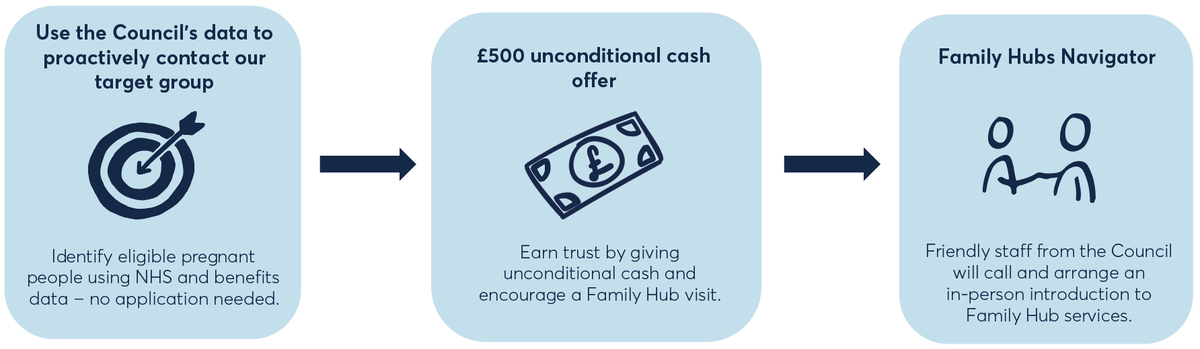
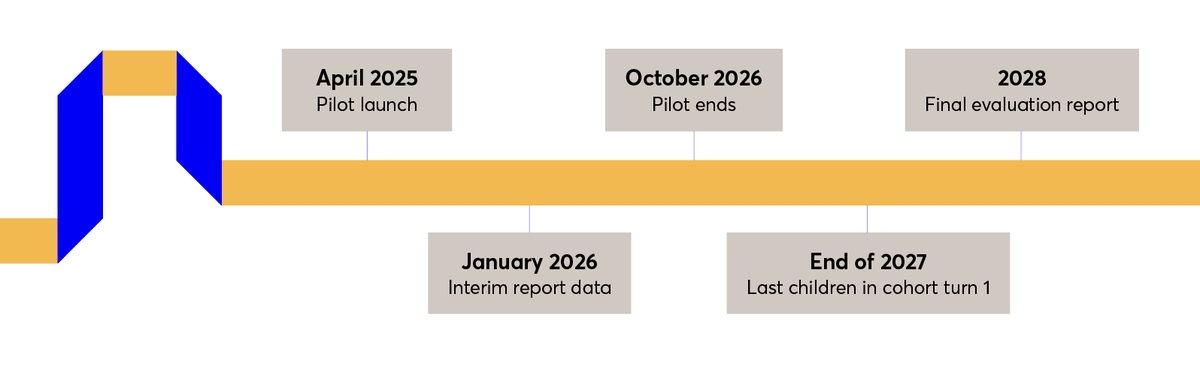
In April 2025, Camden Council began piloting the Family Hubs Pregnancy Grant. This is an offer of £500 to low-income pregnant people. Parents are notified of the grant and given simple instructions to collect it – they do not need to apply.
As part of the pilot, we are trialling pairing the cash offer with proactive outreach to tell recipients about broader support available to them through Family Hubs. This involves a phone call from a family navigator, who explains what Family Hubs are and offers to meet recipients in person to show them around their local hub.
The pilot is made possible through the use of administrative data. Working with Policy in Practice, we have linked together information from the council and the NHS on who receives benefits and who is pregnant. Camden Council is then able to proactively offer this support, without parents needing to know about it and apply.
Why was this programme needed?
Camden, like much of the UK, has experienced increasing rates of child poverty over the past decade. In 2024, two in five children in Camden were living in relative poverty after housing costs. Babies and young children growing up in poverty are less likely to live healthy, fulfilling and happy lives than their peers. Prior research tells us that a grant in pregnancy can improve babies’ health, with potential long-term benefits. We also know that the types of broader, integrated support services that Family Hubs offer can improve children’s longer-term health and education outcomes. But lower-income families across England are systematically less likely to access such services.
Intended outcomes
By providing parents with financial as well as practical support, we aim to reduce stress in pregnancy, which will make the baby healthier. In the long-term, we aim to build the foundations of trust for parents with young children to continue engaging with Family Hubs.
We are evaluating this pilot to learn about…
- Implementation and acceptability: Is it possible to implement this programme, and do parents and practitioners like it?
- The grant: In what ways does the £500 grant affect parents?
- The family navigator: Does proactive outreach help families access available services?
- ‘Stacked’ support: What is the value of providing the grant and family navigator support together?
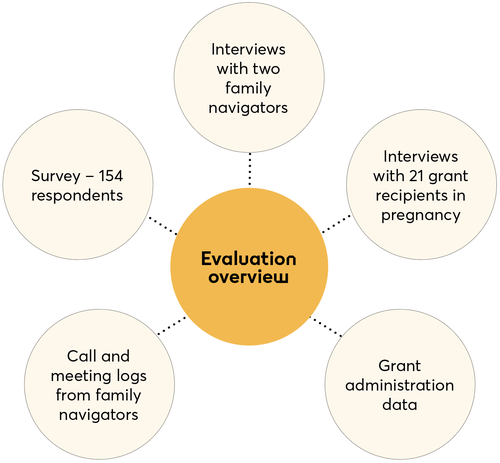
This report draws on our evaluation data from our surveys and interviews with programme participants (both grant recipients and family navigators), as well as administrative records. More details about these data sources are provided in the Appendix.
Where this report fits in the overall evaluation
This interim report sets out what we have learned so far, roughly halfway through the pilot. It largely covers implementation, acceptability, and immediate user experience.
We cannot yet draw any firm conclusions around the impact and effectiveness of the programme, though in this report, we share some early insights.
This report does not provide any outcomes from the randomised trial of the family navigator intervention, which is embedded into this pilot - we expect to publish results from this trial in mid-2028, when all babies in the cohort will have turned one.
The final report will also present additional data we have not yet collected, including more interviews with parents, interviews with staff, and data on Family Hub engagement.
Acknowledgements
We would like to thank the following individuals for their assistance in creating this report: Denise Amankwah, Jess Gillam, Amy Kimbangi, Abigail Knight, Jun Nakagawa, Carla Sanke, Benny Souto, Zoe Tyndall, Sophie Jobbings, Alex Baiden, Hudda Abukar, Lorraine Richardson, Julie Peel, Anna Lesnykh and Mara Bruno.