Acknowledgements
This paper started life as a conversation with Geoff Mulgan, and we are hugely grateful to Geoff and his Nesta colleagues – particularly Kirsten Bound, Halima Khan and John Loder - for their encouragement and advice, which has strengthened and sharpened our argument. Thanks also to those who have provided helpful input or commented on earlier drafts, including Andrew Baker, Athene Donald, Paul Martin, Jasper Montana, Jon Nicholl, David Price, Shamit Saggar, Jack Scannell and Jack Stilgoe. At the University of Sheffield, Jenn Chubb and Jon Griffiths provided valuable research support. At Nesta, Cath Sleeman and Helen Durham lent us their skills in data visualisation and design. Any errors or omissions remain our own.
Our analysis is inevitably influenced – we hope not unduly so – by our own perspectives as a physicist and social scientist, based in the north of England. But it draws on wider strands of our work over recent years: on research policy and funding; industrial strategy and innovation; productivity and public engagement. Above all, it is motivated by our abiding conviction that the ultimate purpose of research is for the widest benefit of society, and our hope is to provoke a richer debate about how best that is effected.
Richard Jones and James Wilsdon, July 2018
About the authors
Richard Jones (@RichardALJones) is Professor of Physics at the University of Sheffield, and was a member of the Council of the Engineering and Physical Sciences Research Council (EPSRC) from 2013 to 2018. From 2009 to 2016 he was Pro-Vice Chancellor for Research and Innovation at the University of Sheffield, where he helped to develop the Sheffield City Region Advanced Manufacturing Innovation District. He was elected a Fellow of the Royal Society in 2006, and is an Associate Fellow of the Sheffield Political Economy Research Institute (SPERI). He is an experimental soft matter physicist, and in addition to his work as an experimental scientist has written extensively on science, innovation, productivity and economic policy. He is the author of over 160 research papers, and three books including Soft Machines: nanotechnology and life (2004). He is a member of the Industrial Strategy Commission, which published a major report in November 2017.
James Wilsdon (@jameswilsdon) is Professor of Research Policy and Director of Research and Innovation in the Faculty of Social Sciences at the University of Sheffield. He is also vice-chair of the International Network for Government Science Advice (INGSA). From 2013 to 2017, he chaired the UK's Campaign for Social Science, and from 2014 to 2015, he led an independent government review of the role of metrics in the UK research system, published as The Metric Tide. Previously, he worked at the universities of Sussex and Lancaster, and as Director of Science Policy at the Royal Society. He is co-editor of the Guardian's Political Science blog on research and innovation policy. In 2015, he was elected a Fellow of the Academy of Social Sciences, and he now chairs its Policy Working Group.
About Nesta
Nesta is a global innovation foundation. We back new ideas to tackle the big challenges of our time.
We use our knowledge, networks, funding and skills - working in partnership with others, including governments, businesses and charities. We are a UK charity but work all over the world, supported by a financial endowment.
To find out more visit www.nesta.org.uk
If you'd like this publication in an alternative format such as Braille, large print or audio, please contact us at: [email protected]
Foreword
The UK is on the cusp of what we hope will be the greatest surge in public investment in science and innovation for a generation. And the launch of UK Research and Innovation (UKRI) brings a radical reorganisation of its institutions. This presents a huge opportunity to do things better, and not just to remake the existing system on a grander scale.
We want to see a UK research and innovation system which is not only more productive and dynamic, securing long-term economic growth and competitiveness, but also fairly geared towards addressing the priorities of the people within it.
There have been important discussions about the need to shape the 'direction' as well as speed of economic growth through investments in science and innovation - for instance about 'mission driven,' 'transformative' and 'inclusive' innovation policy. Yet we are still early in implementing the bold shifts in policy thinking and practical organisation required, and in understanding how to deal with the complex trade-offs.
The 'biomedical bubble' is the ideal lens through which to consider these difficult balances. The authors show it is a field the UK excels in, and one that has benefited disproportionately from public funding as a result. But as funding as grown, the productivity of that investment has declined. The authors question not only a broken R&D model, but an endemic bias in public support for R&D which still hugely prioritises manufacturing over services, decades after the UK economy shifted. They also question a system in which the health benefits of research and innovation spending do not spread in a way that is fast or fair enough.
Around half of all health issues are rooted in environmental and behavioural factors, yet too little of the R&D budget for health is invested in exploring these more fully.
The authors are not arguing against vital medical research or discovery-led biological research. Far from it. They are champions of UK science investment. But they are arguing for a review and reassessment of spending priorities, and a more sophisticated way to get the balance right in the future.
So far this concentration on biomedical life sciences has not been challenged or debated. We believe that there needs to be a proper debate about whether or not this is the right balance. For the first time, this report sets out the evidence, facts and analysis we need to have that debate.
This report raises important and challenging questions, and also offers practical ways to capitalise on the opportunity of UKRI for the UK's future. We look forward to the ideas and conversations it generates, and to working with UKRI and the wider community to shape an innovation system that powers a thriving future economy and society.
Kirsten Bound, Executive Director of Research, Analysis and Policy at Nesta
The Biomedical Bubble - a summary
"As a government, we have set the goal of research and development investment reaching 2.4 per cent of GDP by 2027 - more than ever before. That could translate to an additional £80 billion investment in the ideas of the future over the next decade."
Prime Minister Theresa May, speech at Jodrell Bank, 21 May 2018
Biomedical science and innovation has benefited from significant increases in public investment over the past 15 years. This builds on the remarkable strengths of the UK's academic life sciences base and pharmaceutical industry. But continuing to prioritise the biomedical, in a period when government aims to boost research and development (R&D) spending to 2.4 per cent of GDP, risks unbalancing our innovation system, and is unlikely to deliver the economic benefits or improvements to health outcomes that society expects.
For too long, the pharmaceutical and biotechnology sectors have dominated policy thinking about translating research, but these sectors are in deep trouble, with R&D productivity plummeting and R&D investment falling. Meanwhile, much of the wider innovation needed for the NHS, public health and social care has been under-resourced. Greater emphasis needs to be given to the social, environmental, digital and behavioural determinants of health, and decisions about research priorities need to involve a greater diversity of perspectives, drawn from across the country. The creation of UK Research and Innovation (UKRI), which aims to bring a more strategic approach to funding and prioritisation, is the right moment to rethink this balance. This paper sets out why and how the UK needs to escape the biomedical bubble if it is to realise the economic, social and health potential of extra investment in R&D.
A question of balance
Over recent decades, research in the biomedical sciences has been a great British success story. It has produced a remarkable body of knowledge with direct impact on people's lives, through new medicines and improved health outcomes. It has underpinned the pharmaceutical industry, the UK's leading knowledge-intensive sector. And it enjoys widespread public support, with around 11 million people donating to medical charities each month.
Globally, in excess of US$200 billion is invested each year in biomedical research. In the UK, since the mid-2000s, there has been a substantial expansion of health-related research as a fraction of overall public investment in R&D. This covers a range of disciplines and goals, but around half of all health-related research is in basic biomedical science. The share of overall research council spending accounted for by the Medical Research Council (MRC) has risen from 16 per cent in 2004 to 24 per cent in 2015 a 75 per cent increase in real terms. There have also been substantial uplifts in the volume of funding available from the Wellcome Trust and other charities.
This emphasis on the biomedical components of the wider health and research system is not well supported by evidence of impact or value for money, but reflects the power and influence of the biomedical community in shaping research priorities and the allocation of resources.
A biomedical bubble has developed, which threatens to unbalance the UK's research and innovation system, by crowding out the space and funding for alternative priorities. This is not a speculative bubble, as developed for tulips in the 1630s, or dotcoms in the early 2000s; there is far too much substance in the biomedical sciences for this. But it is a social, political and epistemic bubble (similar to the 'Westminster bubble', or the 'filter bubble'), in which supporters of biomedical science create reinforcing networks, feedback loops and commitments beyond anything that can be rationalised through cost-benefit analysis.
The biomedical bubble represents a risky bet on the continued success of the pharmaceutical industry, despite mounting evidence that this sector faces a deepening crisis of R&D productivity, and is cutting its own investment. And it favours a particular approach to the commercialisation of science, based on protectable intellectual property and venture capital based spinouts - despite the evidence that this model rarely works.
Our health and social care system is under growing strain, and as the NHS marks its 70th birthday this month, there is renewed debate about its long-term affordability. Too often, the biomedical bubble distracts attention and draws resources away from alternative ways of improving health outcomes. Only 5 per cent of health research funding is spent on researching ways of preventing poor health. And more than half is spent in three cities - London, Oxford and Cambridge - despite variations in life expectancies of up to eight years across the country. This paper argues for a more balanced distribution, aligned to what the evidence clearly shows are crucial social, economic, environmental and behavioural determinants of better health outcomes.
The UKRI moment
Despite the Prime Minister's recent announcement of extra investment, the UK's ageing population means that pressures can only intensify across our health and social care system. As a country, we are also aiming to invest more than ever in research and innovation, with an ambitious R&D intensity target of 2.4 per cent of GDP by 2027 (up from 1.7 per cent of GDP today).
In this paper, we argue that the current weighting in the research and innovation system towards biomedical science needs to be rethought. The contours and distorting effects of the biomedical bubble are becoming more visible: in terms of corporate R&D and industrial strategy; health outcomes and inequalities; regional growth; and the long-term sustainability of the research and innovation system. After decades of success, the biomedical sector is in danger of becoming a case study in how research and innovation policy go wrong.
What lies beyond the bubble? This is the right time to be asking this question. In April 2018, the UK's new strategic funding agency - UK Research and Innovation (UKRI) - opened its doors for business. By 2020, UKRI will have a turnover of £8 billion a year. In return, it promises smarter coordination and prioritisation, more creative interdisciplinarity, and a step-change in research and innovation performance.
UKRI recently published an initial prospectus, which signals its intention to look afresh at questions of prioritisation and balance across the research and innovation system. There are multiple aspects of balance to consider: between disciplines and research councils; between quality-related, responsive mode and directed funds for industrial strategy, global challenges and other strategic priorities; between the south-east of England and the rest of the UK. The outcomes of this process are likely to coincide with the 2019 Spending Review, which will present UKRI with its first opportunity to start reshaping the funding landscape.
The structure of this paper
We begin by revisiting some of the highlights of UK biomedical research, rewarded with a succession of Nobel prizes. For a golden period, these breakthroughs were complemented by a world-leading pharmaceutical industry, which yielded bumper returns on investment, both financially and in terms of health gains. Chapter two describes how the UK has doubled down on biomedical research over recent years, ploughing an ever-greater share of public funding into this part of the system, despite growing signs of a mismatch between disease burden and research efforts.
Chapter three explores the extent of the R&D productivity crisis now afflicting the pharmaceutical industry, as the number of new drugs developed per billion US dollars of investment has been halving every nine years. It describes how the UK's biotechnology 'revolution' continues to disappoint, and outlines the problems that are created by relying too heavily on innovation models based on the particular features of this sector. Chapter four examines the uneven regional distribution of biomedical R&D in the UK, and how this maps onto health needs and priorities. Chapter five considers the dividends that flow from involving a greater diversity of people, disciplines and perspectives in setting research and innovation priorities – and drawing on more collective, distributed and democratically-accountable forms of intelligence and expertise.
Finally, chapter six asks: how can we make the most of the exciting possibilities of UKRI? Questions of balance across the research and innovation system need to be addressed with robust evidence, pluralism of views, and a genuine openness to rethink what's not working.
To escape the biomedical bubble and realise the potential of future investment, we end with nine recommendations. Two of these are focused on the future of health research and the rest on how UKRI tackles questions of balance, prioritisation, place and public engagement.
Recommendations for the future of health research
The purposes of the Government's Life Sciences Strategy should be more clearly articulated and separated into two distinct strands: a strategy for the UK's pharmaceutical and biotech industries; and a wider strategy for its health and social care systems. As part of this, UKRI should make targeted interventions to support the pharmaceutical and biotech sectors as they tackle a deepening crisis of R&D productivity, and to accelerate the development of an internationally competitive medtech sector.
The research system needs to scale up investment in integrated strategies for innovation in health, public health and social care. In the past decade, government has demonstrated its commitment to cutting-edge biomedical science through the establishment of the Francis Crick Institute. A similar commitment is now needed to a National Institute for People Powered Health, able to harness patient and community participation to improve the effectiveness of the health and social care system including effective preventative approaches that address the social, behavioural and wider determinants of health. This could be delivered at a fraction of the cost of the Crick Institute but bring just as much benefit to the UK population, particularly if it was located outside the south-east of England.
Recommendations for UK Research and Innovation (UKRI):
- In the context of the Government's 2.4 per cent of GDP R&D intensity target, UKRI should lead a debate about the nation's research and innovation goals, missions and priorities - for health, defence, energy decarbonisation, economic productivity and so on - and the optimal balance of funding to deliver these.
- In developing a roadmap towards the 2.4 per cent GDP target, UKRI needs to benchmark interventions against the scale of its strategic aspirations, and the need to increase R&D spending across the public and private sectors by tens of billions of pounds. The 2019 Spending Review needs to commit to significant stepped increases in R&D investment, and UKRI should produce an annual 'state of UK research and innovation' report on progress towards the 2.4 per cent target and measures of outcome, performance and effectiveness.
- In its recent strategic prospectus, UKRI commits to reviewing the balance of funding across the UK R&I system. This review must be open, inclusive and evidence-informed, addressing multiple dimensions of balance: between individual disciplines and councils, and new cross-disciplinary schemes; between quality-related (QR), responsive mode and directed funding for industrial strategy, global challenges and other strategic priorities; between the south-east of England and the rest of the UK.
- UKRI is a funder for all the nations and regions of the UK, and its governance structures need to reflect this. A high level UKRI advisory group should be created with representatives of the devolved administrations, city-region mayors and other regional authorities. In the context of the 2.4 per cent GDP target, greater priority for new facilities and large strategic investments should given to regions outside the south-east of England.
- As UKRI reviews balance and priorities across the research and innovation system, it must ensure diverse public and stakeholder engagement. Its forthcoming vision for public engagement must be backed up by significant resource and meaningful mechanisms to influence high-level strategy and priorities.
- To better support interdisciplinary health research, UKRI needs to be more experimental in the modes of funding it deploys - for example, through greater use of sandpits, lottery-based mechanisms, and co-design of research with patients, carers and clinicians. There should be a particular focus on supporting early career researchers through diverse, cross-disciplinary career pathways.
- UKRI should join forces with others to commission a What Works Centre for Meta-Research (or 'research on research'). This could support small-scale experiments across the research and innovation system and undertake independent evaluation of policies, funding schemes and wider progress towards long-term goals.
1. The long boom of UK biomedical science
1.1 The age of the genome
On 25 June 2000, a scientific breakthrough was announced, not just with a paper and a press release, but through a joint statement by Prime Minister Tony Blair and President Bill Clinton. The release of the first draft sequence of the human genome made front page news around the world.
This was the culmination of an international race that, to many, symbolised all that is best about modern biomedical science. It was underpinned by remarkable technological progress, its approach was collaborative and truly international. The USA played the leading role, providing about half of the estimated US$300 million cost of the first draft, but there were sizeable contributions from the UK, Japan, France, Germany and China. It brought together publicly-funded science, medical charities – particularly the UK's Wellcome Trust - and the private sector. That collaboration shaded into outright competition, with the entry of a rival effort from the private sector, venture-funded Celera, whose brash CEO Craig Venter's commercial attitudes contrasted with the public service ethos of the UK lead, John Sulston.
But there was agreement about the ultimate goal - improving human health. The ambition was obvious. Craig Venter, in his remarks at the launch event, focused on cancer: "...each day approximately 2,000 die in America from cancer. As a consequence of the genome efforts that you've heard described by Dr. Collins and myself this morning, and the research that will be catalyzed by this information, there's at least the potential to reduce the number of cancer deaths to zero during our lifetimes."
Since the first announcement of the human genome sequence, the field has accelerated. The cost of sequencing whole human genomes has been falling exponentially; dropping from about US$100 million per genome in 2001 to below the psychologically important US$1,000 benchmark in the last year or two. We can now envisage routine sequencing of individual patients, to establish genetic susceptibilities to certain diseases and profiles for the efficacy of certain drugs.
This is the promise of stratified medicine - the benefits of which have been long anticipated, though slower to materialise than expected. The significance of the Human Genome Project has also been emphasised by the chief executive of UKRI, Mark Walport. Interviewed after stepping down from his earlier role leading the Wellcome Trust, he said: "People said it was hyped, but if anything the benefits of the project were underestimated."
1.2 Unravelling the secrets of the cell
But there is much more to the progress of the biomedical sciences than genomics. The discovery of ribonucleic acid (RNA) interference – for which Andrew Fire and Craig Mello received a 2006 Nobel prize – provides an example of the uncovering of an entirely new role for RNAs, a twist in our understanding of gene expression, and a fresh avenue for the development of anti-viral drugs.
The mechanisms of some of the central elements of biology have been unravelled at astonishing levels of detail. For example, Venki Ramakrishnan, from the MRC Laboratory of Molecular Biology (LMB) in Cambridge, shared the 2009 Nobel prize for chemistry with Thomas Steitz and Ada Yonath for disentangling the details of how ribosomes are build and operate. Paul Nurse and Tim Hunt, then working at the Imperial Cancer Research Fund, shared the 2001 Nobel prize for medicine (with Leland Hartwell) for their discoveries of how the cell cycle is controlled.
Our new understanding of fundamental mechanisms at the level of the molecule and cell has been driven by the development of new techniques, especially in microscopy. The 2017 Nobel prize for chemistry was awarded to Richard Henderson, also based at the LMB, for one such technique, cryo-TEM.
Other breakthroughs in UK biomedical science have had direct implications for medicine. In Aberdeen, Philip Cohen identified the signalling networks that control the inflammation response in the innate immune system. Another promising avenue for regenerative medicine - the repair of organs and tissues - rests on the discovery that mature cells can be reprogrammed to form pluripotent stem cells (which led to the award of a 2012 Nobel prize to John Gurdon and Shinya Yamanaka).
The unravelling of mechanisms by which cells recover damaged DNA won Tomas Lindahl, of the Cancer Research UK Laboratory at Clare Hall, a 2015 Nobel prize (shared with Modrich and Sancar). These insights led directly to the development of drugs which stop the operating of these repair mechanisms in tumour cells. These so-called PARP inhibitors, for example AstraZeneca's olaparib, are now being commercialised as anti-cancer drugs.
1.3 The golden years of the UK's pharmaceutical industry
The historic strength of the UK in academic biomedical research was matched by a powerful and innovative pharmaceutical industry. No-one did more to shape that industry than William Black, who developed the beta-blocker propranolol for ICI in the 1960s. Then, having fallen out with ICI's management, Black went to rival drug company Smith Kline and French, where he developed the histamine H2 receptor antagonist Cimetidine, for the treatment of stomach ulcers. This went on to make US$14 billion during the 17 years it was protected by patent.
By 1987, H2 and beta-blockers accounted for 36 per cent of the value of the world's top 20 selling medicines, with nearly 75 per cent of these sales of products invented and developed in the UK. Black's work has been described by the economist John Kay as perhaps the biggest individual contribution to shareholder value ever made. And it went well beyond discovering two highly lucrative drugs. The dominant paradigm for drug discovery - based on the idea of drug receptors and a systematic exploration of chemical space to find molecules that would bind to and block those receptors - was largely his creation; and for this he was awarded a Nobel prize in 1988.
In 1975, César Milstein and Georges Köhler laid the foundations for an entirely new class of drugs, with their discovery of a method of making monoclonal antibodies. This work, which won a Nobel prize for medicine in 1984, was again carried out at the LMB in Cambridge. Later LMB work by Greg Winter developed methods for 'humanising' these antibodies, rendering them suitable for use as drugs.
The UK's first major biotechnology company - Celltech was created in 1980 to capitalise on the discovery of monoclonal antibodies, with an initial 44 per cent UK government stake. Greg Winter later founded another biotech company - Cambridge Antibody Technology - in 1989. This company had a success with the development of Adalimumab (Humira) - a humanised antibody effective against auto-immune diseases like rheumatoid arthritis. Celltech was sold for £1.5 billion in 2004 to the Belgian chemical company UCB, while Cambridge Antibody Technology was bought by AstraZeneca for £702 million in 2006.
By the 1990s, there were already signs that the flow of 'blockbuster' drugs was slowing, prompting a series of corporate rearrangements and mergers. The UK pharmaceutical industry is now dominated by just two companies: AstraZeneca, the successor to ICI Pharmaceutical; and GlaxoSmithKline, the successor to Smith Kline and French and Glaxo Wellcome. Their importance to the national innovation landscape is underlined by the fact that they are the only two UK entries in the world's top 100 firms by R&D spending.
1.4 The health dividend
The most direct benefits of health research are visible in the data on mortality, morbidity and disease. The big killers of the past are still with us, but we have seen steady improvements. Cardiovascular diseases - coronary heart disease, strokes and other circulatory diseases - still account for more than a quarter of all deaths in the UK, but death rates have seen a 73 per cent fall between 1974 and 2013.
Figure 1.1. Improvement in cardiovascular disease death rates in the UK. Age standardised death rates per 100,000 from cardiovascular disease.
| Death rate per 100,000 |
1960 |
1970 |
1980 |
1990 |
2000 |
2010 |
2020 |
| Men |
1,400 |
|
|
|
|
|
|
| Both |
1,200 |
|
|
|
|
|
|
|
1,000 |
|
|
|
|
|
|
| Women |
800 |
|
|
|
|
|
|
|
600 |
|
|
|
|
|
|
|
400 |
|
|
|
|
|
|
|
200 |
|
|
|
|
|
|
|
0 |
|
|
|
|
|
|
Source: British Heart Foundation.
Figure 1.2. Age standardised cancer mortality rates for the UK from 1971 to 2014. Data from Cancer Research UK.
| Death rate per 100,000 |
1960 |
1970 |
1980 |
1990 |
2000 |
2010 |
2020 |
| Men |
500 |
|
|
|
|
|
|
|
400 |
|
|
|
|
|
|
| Both |
300 |
|
|
|
|
|
|
| Women |
200 |
|
|
|
|
|
|
|
100 |
|
|
|
|
|
|
|
0 |
|
|
|
|
|
|
Source: Cancer Research UK.
More dramatic improvements are to be found in cancer survival rates, which are steadily increasing. The 1 year standardised survival rate in England increased from 50 per cent in 1971, to 65 per cent in 2000 to 70 per cent in 2010.
Figure 1.3. Improvement in cancer survival rates. One year, 5 year and 10 year survival rates, all patients, England.
| Net survival index /% |
1971-72 |
1980-81 |
1990-91 |
2000-01 |
2005-06 |
2010-11 |
| 1 Year |
100 |
|
|
|
|
|
|
80 |
|
|
|
|
|
|
60 |
|
|
|
|
|
| 5 Years |
40 |
|
|
|
|
|
| 10 Years |
20 |
|
|
|
|
|
|
0 |
|
|
|
|
|
Source: Licenciatura et al. (2015).
A key question is what proportion of these improvements can be ascribed to biomedical research, and what to other factors, such as public health measures? We contend that the biomedical contribution is exaggerated and diminishing, but will return to this question in section 6.4.
1.5 Return on past investments
What was the rate of return on these golden years for academic biomedical science and the pharmaceutical sector? We can express this both in improved health outcomes for the population at large, and in direct financial returns as measured by increased GDP growth. A series of influential What's it worth? reports by the Wellcome Trust, Medical Research Council and Academy of Medical Sciences have attempted to quantify these outcomes. These studies consider the impacts of all kinds of medical research, not just biomedical science.
Looking first at the health improvements that have resulted, we can quantify these in terms of a net value of £25,000 for one extra quality adjusted life year, less the cost of the treatment to achieve that.
- For cardiovascular disease, the UK public and charity research effort amounted to £133 million a year between 1975 and 1998. This represented about 17 per cent of the world research in the area, which in total produced a net health gain valued at £3.6 billion between 1992 and 2005.
- The largest health gain was found for cancer. Here, UK public and charity research investment was about £290 million a year between 1976 and 1995. This represented 17 per cent of the world's investment, which in total produced a net health gain valued at £6.5 billion between 1991 and 2010.
The second outcome is in direct economic returns to GDP. This builds on the finding that an increase in public-sector R&D leads to a corresponding increase in private sector R&D. This in turn leads to a direct return to the sponsoring company through the development of new and improved products, and to wider spillovers to other companies, who can use the knowledge generated to create further value of their own. Recent estimates put the total economic rate of return on public health research spending from 1975 to 1995 at between 15 and 18 per cent.
Combining this economic return with the net estimated monetary value of the health gain puts the total rate of return on this historic investment at between 24 and 28 per cent per annum - that is, society gains between 24 and 28 pence every year, into the indefinite future, for every pound that we invested in medical research in the 1980s and 1990s.
This work is part of a large literature attempting to quantify the economic and social returns on R&D, which use a variety of methodologies and produce a diverse set of estimates. It is important to understand the assumptions behind this work so as not to misuse it. Two issues stand out.
1.6 People power: medical charities and public support for research
The first is one of attribution. Any particular health or economic benefit will flow from a multiplicity of causes, and identifying what proportion of the benefit should be ascribed to underlying biomedical research is likely to be problematic. As we describe in section 6.4, important questions remain about the relative contributions of biomedical research and public health measures, particularly in the case of cardiovascular disease, where smoking cessation and other public health measures have played a significant role.
The second issue relates to timing. Such analysis is necessarily retrospective, but from a public policy or UKRI perspective, what we need to understand now is the likely future return on current investments. Estimates of economic return rest on assumptions about the relationship between the volume of public and private R&D, and the rate of return on that private R&D. Both of these relationships have changed since the period considered in the Wellcome/MRC/AMS studies. As we discuss in section 6.5, a strong correlation between public health-related R&D and business R&D in pharmaceuticals broke down around 2012, while the fall in the productivity of pharmaceutical R&D (see section 3.1) means that the rate of return on private sector R&D is considerably lower now than in the period considered in these studies.
There is no doubt that medical research is a popular cause. Of the £9.7 billion given to charitable causes in the UK in 2016, 8 per cent (£776 million) went towards medical research, and around 11 million people donate to medical charities each month. This helps to create and sustain a direct connection between the British public and medical research, and many charities are exemplary in the way in which they connect public, patient and carer priorities to the research they support. The Alzheimer's Society, for example, aims to "put the knowledge and experiences of people affected by dementia at the heart of the research agenda", and supports such engagement through its Research Network Volunteer programme.
The UK's largest medical research charity, the Wellcome Trust, supports research through funding generated through its endowment, rather than by direct donations from the public. Wellcome has also been a long-term and thoughtful supporter of public engagement, not least through a series of reports tracking public views on science and biomedical research. In the latest of these, carried out in 2015, 77 per cent of respondents are very or fairly interested in medical research, and 94 per cent think medical research will definitely or probably lead to an improvement in the quality of life for people in the UK over the next 20 years. Wellcome's new strategy for public engagement, developed by Imran Khan and colleagues, promises a greater focus on 'people-centred health research', which aligns well with the arguments in this paper.
2. Priorities: doubling down on biomedical science
Success breeds success, and the strength of the UK's biomedical life science sector has led to its further growth. Especially since the mid-2000s, there has been a substantial expansion of the fraction of overall government research spending devoted to health-related research, and to biomedical research within this. This increase in public funding has been supplemented by additional charitable funding, particularly from the Wellcome Trust.
What is the strategy underlying this expansion? The research effort devoted to different disease areas does not closely match the burdens those diseases place on the health of the population; rather the model has been one of emphasising excellence in basic biomedical science, with the assumption that this will naturally translate into clinical benefits and wider economic gains.
The danger of this expansion is that it is starting to unbalance the system as a whole. A strategic approach to government support for research and innovation needs to consider questions of balance explicitly, uncomfortable though these discussions might be. What is the right balance between health research and research in support of other strategic goals? What is the right priority to attach to the pharmaceutical and biotech industries, compared to other industrial sectors? And within the overall envelope of health research, what is the right balance between biomedical life sciences and other approaches to improving health, which may be based as much on digital, environmental, social and behavioural factors.
2.1 Changing priorities for UK research
What are the big trends in UK government research and development spending over the past 25 years? The first is a relative decline in defence-related R&D. In 1995, this accounted for 37 per cent of government R&D spending; by 2015, this had fallen by more than half, to 16 per cent. Research related to health has been one of the main beneficiaries of this 'peace dividend', with a particularly steep increase beginning around 2005, to become - in the OECD's classification - the second largest objective of publicly-funded R&D, after the 'general advancement of knowledge', accounting for around 23 per cent of total expenditure. Other objectives, such as industrial production (3.6 per cent in 2015), agriculture (3.5 per cent in 2015) and energy (2.5 per cent in 2015), remain surprisingly modest components of overall government support for research.
2.2 The UK health research landscape
In total, health-related research funding in the UK in 2014 was estimated to be £3.7 billion a year. The largest proportion, £1.6 billion (42 per cent of the total), was from government sources, mainly the National Institute for Health Research (NIHR) and the Medical Research Council (MRC). Medical charities funded £1.4 billion (37 per cent), while the pharmaceutical industry spent £0.7 billion (18 per cent) in the UK. This makes the UK second only to the US in terms of total medical research spending, relative to GDP.
The largest government funder of health research is the NIHR, which spent £1.1 billion in 2014-15 on research that provides evidence to support the NHS, and focuses on research that provides a direct benefit to patients.
The Medical Research Council (MRC), a constituent part of UKRI, funds fundamental biomedical research. Its spend of £0.5 billion in 2014-15 represents the largest portion of the research council budget (24 per cent in 2015). This represents a 75 per cent real-terms increase in its budget since 2004, at a time when the budgets of other research councils, with the exception of the Biotechnology and Biological Sciences Research Council (BBSRC), have been broadly flat.
The two largest charities, the Wellcome Trust (with annual research spending of c. £400 million a year ) and Cancer Research UK (CRUK, c. £300 million a year) dominate the medical charity sector.
2.3 Mismatches between disease burden and research effort
The UK spends less than 5 per cent of its health R&D budget on public health and prevention. This can be compared to the finding that around 40 per cent of NHS spend goes on conditions that are largely preventable. Even when we combine NIHR and MRC spend, less than 2 per cent of their combined research spend goes to public health research, while the majority goes to basic biological sciences and disease-specific research.
When we look at the UK's main health challenges, we can find some important mismatches with research spending. Mental health problems for example affect a quarter of the population at some point in their lives, and mental ill health is responsible for 28 per cent of the burden of disease, making it the largest single cause of disability in the UK. Yet, only 5 per cent of health research funding is dedicated to mental health.
One major health challenge where there has been increased research funding is dementia. While the number of people with dementia is expected to increase from 850,000 to over 1 million by 2025, the research effort is not currently adequate, at around 1 per cent of the cost of care. An ambitious five-year £300 million national research initiative was set in 2012 by then Prime Minister David Cameron, and the UK research effort has now overtaken that of the USA to become the largest in the world outside the EU. But despite the scale of the challenge and the increased funding, we are still a long way from a fully effective treatment. Indeed, in Alzheimer's disease there has been a 99.6 per cent failure rate of drugs in clinical trials over the last 15 years. This points to the need for a re-evaluation of the scientific approach to finding a therapy, and to the development of better understanding of the basic biology of the disease. This may require an increase in diversity of approaches, rather than a narrow focus on pharmaceutical targets.
The UK's health profile means that we now face a combination of health challenges: a growing older population with complex needs, and a health burden strongly influenced by environmental, social and behavioural factors. This is a very different picture from 30 years ago when infectious diseases and conditions like cardiovascular disease dominated. A shift towards chronic conditions calls for research focused on multiple risk factors, complex interventions and different approaches to diagnosis, prevention and care.
2.4 The right research for population health outcomes
In this shifting landscape, the UK continues to lead the world in basic biomedical science, yet ranks 15th in terms of the actual health of its population.
There is growing recognition of the need for greater diversity in the determinants of health and in research approaches. An important report from the Academy of Medical Sciences, Health of the Public 2040, argues for a broader definition of public health research, encompassing all research that benefits the public's health, including the social, economic and environmental factors. These broader factors account for around half of all health issues, as Figure 2.1 shows. They are currently not well-served by health research funding, accounting for less than 5 per cent of the total spend.
Figure 2.1. Social, environmental and behavioural determinants of health compared to research spending.
The diagram shows a breakdown of factors affecting health outcomes and the corresponding proportion of health research funding.
- Social, Environmental & Behavioural Factors: ~40-50% contribution to health outcomes. Research spend: <5% of total.
- Genetic Predisposition: ~20-30% contribution. Research spend: High (dominated by biomedical).
- Healthcare Access & Quality: ~20% contribution. Research spend: Moderate.
This suggests a mismatch between the current UK research effort and the actual determinants of health. The implication for policy is that the UK needs to invest more in a diverse range of research to improve population health, including the social, behavioural, digital, and environmental sciences.
2.5 The right research for industrial strategies
Industrial strategies involve identifying and then stimulating investment in sectors of the economy where a country has, or can develop, a comparative advantage. The UK Industrial Strategy, launched in November 2017, includes four 'Grand Challenges': AI and Data Economy; Future of Mobility; Clean Growth; and Ageing Society. The Ageing Society Grand Challenge is of particular relevance to health. The strategy notes that "By 2040, five million more people will be over 65 - and an extra one million over 85". It sets the ambition that "people can enjoy five extra healthy, independent years of life by 2035, while tackling the associated disparities between the richest and poorest." This will require not only new medical technologies and pharmaceuticals, but also innovations in social care, healthy living and prevention.
The UK's industrial strategy for the pharmaceutical and biotechnology sectors (the Life Sciences Industrial Strategy ) sees the UK as a global hub for life sciences, building on the country's research strengths and a strong science base, with specific interventions in terms of clinical research and trials, medical data, regulation and skills. But the Life Sciences Industrial Strategy is based on an assumption that the pharmaceutical and biotechnology business model is capable of delivering the required benefits, and that the long-term trends identified in section 3 - that R&D productivity in these sectors is falling, and that they face a broken business model - can be overcome.
The UK has not yet developed industrial strategies for other sectors that are equally important to health and social care. For example, the social sciences (e.g., economics, sociology, psychology) and humanities have a critical role to play in tackling grand challenges like the Ageing Society or the Future of Mobility, but receive far less attention and funding in this context. The UK is strong in these areas and has world-leading expertise, but they are often overlooked in current industrial strategy thinking.
There are signs of growing awareness of this problem. The government recently launched an 'Industrial Strategy Challenge Fund' which aims to bring together researchers and businesses to tackle defined challenges. While the first rounds of funding have focused primarily on traditional R&D intensive areas, there is an opportunity for UKRI to use the fund to promote a more diverse and inclusive approach to innovation policy, including new funding streams for the social sciences and arts and humanities, and for a wider range of sectors beyond the life sciences.
2.6 What else matters, apart from health?
Finally, it is worth asking whether, in the context of the government's 2.4 per cent R&D intensity target, too much emphasis is placed on health and the life sciences. The current system prioritises health over other strategic objectives, such as energy, environment, agriculture, defence, and manufacturing, all of which are critical for the UK's long-term economic and social wellbeing.
The UK is facing major challenges in these areas: the need to transition to a low-carbon economy, to ensure food security, to adapt to climate change, and to strengthen its manufacturing base. These challenges require significant investment in research and innovation across a wide range of disciplines, not just the biomedical sciences.
A more balanced approach to funding would involve a strategic assessment of all national priorities and a more equitable distribution of R&D resources across different sectors and disciplines. This would ensure that the UK is well-equipped to tackle the full range of challenges it faces, rather than focusing predominantly on one area.
3. Politics: how biomedical models shape policy thinking
3.1 Big pharma now - a broken business model?
One of the defining features of the UK's biomedical bubble is the continued reliance on a pharmaceutical industry model that is increasingly broken. For decades, pharmaceutical companies have been seen as the primary route for translating scientific discoveries into new medicines and treatments. However, this model is no longer delivering the returns it once did.
R&D productivity in the pharmaceutical sector has been in steep decline. The cost of bringing a new drug to market has risen dramatically, while the number of new drugs approved has stagnated or fallen. This is partly due to the 'low-hanging fruit' having been picked, but also to increasingly complex regulatory requirements and the rising cost of clinical trials. The economic returns from pharmaceutical R&D are now lower than the cost of capital, implying that, on average, the industry is destroying rather than creating shareholder value.
This crisis of productivity is leading pharmaceutical companies to cut their own R&D investment and to rely more on acquiring smaller biotech companies or licensing their products. This trend reinforces the biomedical bubble by making it seem as if the only viable path to commercialisation is through established pharmaceutical giants, even as their own innovation capacity wanes.
A 2018 report by the Institute for Public Policy Research (IPPR) highlighted that the cost of bringing a new drug to market has more than doubled in real terms since 2000, reaching £2.5 billion per drug. This is unsustainable.
Another consequence of this broken model is the growing focus on 'me-too' drugs - slight variations of existing drugs that offer little or no therapeutic advantage, but can be marketed as new. This diverts resources from genuinely innovative research and exacerbates the problem of declining R&D productivity.
The pharmaceutical industry also faces increasing pressure from governments and healthcare systems to reduce drug prices. This, combined with the high cost of R&D, is putting a squeeze on profit margins and making it even harder for companies to justify large investments in drug discovery.
The solution is not to abandon pharmaceutical research, but to foster a more diverse ecosystem of innovation. This includes supporting new business models, promoting open science, and investing in research that focuses on prevention and public health, rather than just treating established diseases.
Figure 3.1. Declining R&D productivity in the pharmaceutical industry.
The chart illustrates the inverse relationship between the increasing cost of bringing a new drug to market and the decreasing number of new drugs approved per billion US dollars invested in R&D over time. The trend shows an exponential decrease in productivity, approximately halving every nine years.
- Y-axis: Number of new drugs per $1bn R&D (log scale)
- X-axis: Year
- Trend line: Steadily decreasing, showing that more money is needed to produce fewer drugs.
Source: Scannell et al. (2012).
3.2 Whatever happened to the UK's biotechnology revolution?
The UK has a strong history of basic research in biotechnology, but its commercialisation efforts have been less successful. In the 1980s and 1990s, there was much optimism about a 'biotechnology revolution' that would transform the economy and deliver a steady stream of new products. However, the reality has been more modest.
Many UK biotech companies have struggled to scale up, and a significant number have been acquired by larger pharmaceutical companies or foreign investors. The sector has also been criticised for its reliance on a 'spinout' model, where university research is commercialised through new companies, often with limited success.
One of the challenges for the UK biotechnology sector is access to capital. While there is strong early-stage funding, securing later-stage funding for clinical development and commercialisation remains difficult. This often forces companies to seek investment from overseas, or to be acquired prematurely.
The high-risk, long-term nature of drug development also makes it difficult for biotech companies to attract and retain investors. Many promising therapies fail in clinical trials, leading to significant financial losses and a cautious investment climate.
The UK needs to rethink its approach to biotechnology commercialisation. This includes supporting a broader range of business models beyond spinouts, encouraging greater collaboration between academia and industry, and providing more robust funding mechanisms for later-stage development. There is also a need to focus on areas where the UK has a genuine competitive advantage, rather than trying to compete across the entire biotechnology landscape.
The government's 'Innovate UK' agency plays an important role in supporting innovation, but its funding is often focused on short-term projects with clear commercial outcomes. A more strategic approach is needed to nurture long-term, high-risk research in biotechnology.
Figure 3.2. UK biotechnology company formation and exits.
The bar chart shows the number of new biotechnology company formations and the number of exits (e.g., acquisitions, IPOs) in the UK over time.
- X-axis: Year (e.g., 1980, 1990, 2000, 2010, 2017)
- Y-axis: Number of companies
- Bars: Separate bars for 'Formations' and 'Exits', showing periods of high formation followed by fluctuating exits.
The chart shows that while there was an initial boom in company formations, the rate of successful exits has not always matched the early optimism, suggesting challenges in scaling and commercialising.
Source: BioIndustry Association (2018).
3.3 Biomedical science and its discontents
The biomedical bubble has generated a number of discontents, not just within the pharmaceutical and biotechnology sectors, but also among researchers, policymakers, and the public. These discontents stem from the perception that biomedical science has become too dominant, too narrow in its focus, and too disconnected from societal needs.
One key area of discontent is the overemphasis on basic, discovery-led research at the expense of translational and applied research. While fundamental discoveries are essential, there is a perceived gap in translating these into tangible health benefits. This 'valley of death' between basic science and clinical application is a persistent problem, and despite numerous initiatives, it remains largely unbridged.
Another concern is the lack of diversity in research priorities. As discussed in section 2.3, there are significant mismatches between disease burden and research funding, with areas like mental health and public health being consistently underfunded relative to their societal impact. This narrow focus can lead to a neglect of broader determinants of health and a perpetuation of health inequalities.
The dominance of biomedical science also affects career pathways for researchers. The intense competition for funding and publications in this field can create a 'winner-take-all' environment, making it difficult for researchers in other disciplines to gain recognition and support. This can stifle interdisciplinary research and limit the diversity of expertise in the research system.
Finally, there is a growing public unease about the commercialisation of science and the influence of private interests on research agendas. Questions are being raised about the transparency of research funding, the independence of clinical trials, and the affordability of new medicines. This erosion of public trust can have long-term consequences for the legitimacy and support of science.
The challenges highlighted in this section are not unique to the UK, but are part of a broader international debate about the future of science and innovation. The UK, with its strong biomedical base, has an opportunity to lead the way in addressing these discontents and fostering a more balanced and inclusive research system.
Figure 3.3. Concerns about the biomedical bubble.
An illustrative diagram depicting the various criticisms and issues associated with the biomedical bubble:
- Top: "High cost, low productivity R&D"
- Left: "Narrow focus on drug discovery"
- Bottom: "Funding mismatches with disease burden"
- Right: "Limited public and stakeholder engagement"
- Center: "Concentration in 'golden triangle'"
This diagram visually summarises the key "discontents" discussed, highlighting the systemic problems.
3.4 A bubble at bursting point?
Is the biomedical bubble at bursting point? While it's not a speculative financial bubble in the traditional sense, there are growing signs that the current trajectory is unsustainable and that a correction is needed. The indicators pointing to this include:
- Declining R&D productivity: As discussed in section 3.1, the cost of drug discovery is spiralling, and the returns on investment are diminishing. This raises questions about the long-term viability of the current pharmaceutical business model.
- Mismatches in funding: The continued imbalance between research priorities and actual disease burden, particularly the underfunding of public health, prevention, and mental health, suggests a system that is not optimally serving societal needs.
- Geographic concentration: The disproportionate concentration of biomedical R&D in the 'golden triangle' (London, Oxford, Cambridge) exacerbates regional inequalities and fails to leverage the research and innovation potential of other parts of the UK.
- Lack of diversity in models: Over-reliance on a specific model of commercialisation (protectable IP, venture-funded spinouts) limits innovation and excludes alternative approaches that might be more effective for complex health and social challenges.
- Erosion of public trust: Growing questions about the cost of medicines, the influence of industry, and the lack of engagement with broader public priorities could undermine long-term public support for science.
The good news is that the UK has an opportunity to address these issues. The creation of UKRI provides a powerful new mechanism for strategic oversight and coordination across the research and innovation system. This, combined with the government's ambitious R&D intensity target, creates a window of opportunity to rebalance priorities, diversify approaches, and ensure that public investment in science delivers the widest possible benefits for society.
However, this will require bold leadership, a willingness to challenge established interests, and a genuine commitment to evidence-based decision-making. If the UK fails to seize this opportunity, the biomedical bubble could indeed reach a breaking point, leading to reduced innovation, missed health opportunities, and a decline in international competitiveness.
4. Places: how biomedical science exacerbates inequality
4.1 The gilding of the golden triangle
The concentration of biomedical research and innovation in the 'golden triangle' of London, Oxford, and Cambridge is well-documented. This region benefits from a virtuous cycle of world-class universities, major research institutes, venture capital, and a skilled workforce, attracting further investment and talent. While this concentration has undoubtedly driven excellence, it also exacerbates regional inequalities and raises questions about equitable access to the benefits of science and innovation across the UK.
More than half of all health research funding in the UK is spent in these three cities. This includes significant public and charitable investment, creating a powerful ecosystem that, while successful, also crowds out resources and opportunities for other regions. The consequences are stark: disparities in health outcomes, economic growth, and innovation capacity between the golden triangle and the rest of the UK continue to widen.
This concentration is not just about funding; it's also about influence. The powerful networks and institutions within the golden triangle shape research agendas, policy discussions, and funding decisions, potentially reinforcing the biomedical bubble and sidelining alternative perspectives from other regions.
Addressing this imbalance does not mean undermining the excellence of the golden triangle, but rather actively investing in and nurturing research and innovation ecosystems in other parts of the UK. This requires a deliberate strategy to build capacity, foster collaboration, and attract investment outside the south-east.
4.2 The benefits of clustering
The concept of 'clustering' – the geographical concentration of interconnected companies, specialised suppliers, service providers, firms in related industries, and associated institutions (e.g., universities, standards agencies) in a particular field – is often cited as a key driver of innovation and economic growth. The golden triangle is a prime example of a successful cluster in life sciences, demonstrating benefits such as:
- Knowledge spillovers: Proximity facilitates informal exchange of ideas and tacit knowledge, accelerating innovation.
- Specialised labour markets: A concentration of talent reduces recruitment costs and allows for more specialised skill development.
- Access to specialised inputs: Easy access to suppliers, research infrastructure, and services tailored to the industry.
- Competition and collaboration: Firms compete for talent and market share but also collaborate on research and shared infrastructure.
The success of existing clusters naturally leads to arguments for replicating them. However, simply trying to create new clusters by injecting funding may not be sufficient, especially if the underlying conditions (e.g., a strong pre-existing research base, entrepreneurial culture, supportive local government) are not in place.
4.3 How many clusters can we have?
The question of how many successful innovation clusters a country can sustain is complex. While the UK has a highly successful biomedical cluster in the golden triangle, trying to replicate this everywhere might spread resources too thinly and fail to achieve critical mass elsewhere.
Instead of trying to create identical replicas, a more realistic approach might be to:
- Identify existing strengths: Nurture and build upon specific regional research and innovation strengths in areas beyond biomedical science.
- Foster regional specialisations: Support distinct regional clusters focused on different grand challenges or industrial sectors (e.g., advanced manufacturing in the Midlands, clean energy in the North East, digital health in Manchester).
- Invest in connectivity: Improve physical and digital connectivity between regions, enabling distributed collaboration and reducing the need for all expertise to be concentrated in one place.
- Empower local institutions: Provide local universities, businesses, and civic institutions with the resources and autonomy to drive their own innovation agendas.
The challenge is to move beyond a 'one-size-fits-all' model and embrace a more polycentric approach to innovation, where different regions contribute to the national economy and research effort in diverse ways. This requires strategic vision and a willingness to decentralise funding and decision-making.
4.4 Where the ill people are
The geographic imbalance in biomedical research funding is particularly stark when considering where the burden of ill health is greatest. There is often an inverse correlation between the concentration of research funding and areas with the highest health inequalities and poorest health outcomes.
For example, regions outside the golden triangle, particularly in the North of England, Scotland, Wales, and Northern Ireland, often experience higher rates of chronic diseases, lower life expectancies, and greater health disparities. Yet, these regions receive a significantly smaller share of health research funding.
This mismatch means that research questions most relevant to the health challenges of these underserved populations may not be adequately addressed. It also limits the opportunities for local communities to participate in and benefit from research.
A more equitable distribution of research funding would not only address regional inequalities but also foster research that is more directly relevant to the diverse health needs of the entire UK population. This requires a deliberate shift in funding priorities and mechanisms, ensuring that research investment flows to areas where the health challenges are most acute and where local expertise can be developed and leveraged.
4.5 The revolt against the elites
The concentration of wealth, power, and opportunity in a few metropolitan centres, often referred to as the 'elites', has fuelled a broader sense of discontent and resentment in many parts of the UK. This phenomenon has been particularly evident in recent political shifts, such as the Brexit vote, which highlighted deep divisions between urban and rural areas, and between the south-east and other regions.
In the context of science and innovation, the 'biomedical bubble' can be seen as part of this broader trend, reinforcing the perception that national resources are disproportionately allocated to a privileged few, while other regions are left behind. This can lead to:
- Decreased public trust: A feeling that science is disconnected from the daily lives and concerns of ordinary people in disadvantaged areas.
- Limited engagement: Reduced public participation in and support for scientific initiatives in regions that feel overlooked.
- Political backlash: Growing calls for redistribution of resources and a more equitable approach to public investment.
Addressing this 'revolt against the elites' in science and innovation requires more than just economic redistribution. It necessitates a more inclusive approach to setting research agendas, engaging with diverse communities, and empowering local stakeholders to shape their own innovation futures. UKRI has a critical role to play in fostering this broader geographic and social inclusion.
5. People: who sets the agendas for biomedical research?
5.1 Gene editing, Asilomar and epistemic bubbles
The setting of research agendas is a crucial, yet often opaque, process. In the biomedical field, this process has historically been dominated by a relatively small group of experts, often operating within what might be termed 'epistemic bubbles'. These are closed communities of knowledge producers and consumers who primarily communicate with each other, reinforcing their own perspectives and potentially overlooking alternative views or societal concerns.
The story of gene editing, particularly the CRISPR-Cas9 revolution, provides a contemporary example. While offering enormous potential for treating diseases, it also raises profound ethical, social, and governance questions. The early discussions around CRISPR, reminiscent of the 1975 Asilomar Conference on recombinant DNA technology, initially involved a relatively small group of scientists. While these discussions were important for establishing scientific norms, they also highlighted the need for broader public and stakeholder engagement.
Epistemic bubbles can lead to:
- Narrowing of priorities: Research agendas may focus on questions deemed important by the 'bubble', potentially neglecting issues of greater public concern or alternative scientific approaches.
- Groupthink: A lack of diverse perspectives can lead to a consensus view that goes unchallenged, even when evidence suggests otherwise.
- Reduced societal relevance: Research may become detached from the needs and values of the wider public, leading to a loss of trust and support.
Breaking out of epistemic bubbles requires deliberate efforts to foster diverse participation in agenda-setting, including:
- Involving patients and the public: Direct engagement with those affected by diseases can bring invaluable insights into research priorities.
- Broadening disciplinary input: Integrating perspectives from social scientists, ethicists, and humanities scholars can enrich research questions and approaches.
- Engaging policymakers and industry: Ensuring that research agendas are informed by broader economic and societal strategies.
5.2 Experiments in engagement
There is a growing recognition of the need for greater public and stakeholder engagement in science and innovation. This is not just about communication or outreach; it's about genuine co-creation and co-ownership of research agendas. Various 'experiments in engagement' are being trialled to achieve this:
- Citizen juries and assemblies: Bringing together diverse groups of citizens to deliberate on complex scientific and ethical issues, and to provide recommendations for policy.
- Participatory budgeting for research: Allowing communities to have a say in how a portion of research funds are allocated.
- Patient and Public Involvement (PPI) in research design: Integrating patient perspectives from the very beginning of the research process, ensuring that studies are relevant and acceptable to those they aim to help.
- Deliberative workshops and dialogues: Creating structured opportunities for scientists, policymakers, and the public to engage in informed discussions about emerging technologies and their implications.
These experiments demonstrate that meaningful engagement is possible and can lead to more robust, socially relevant, and publicly acceptable research outcomes. However, scaling up these efforts and embedding them systematically within institutions like UKRI remains a challenge. It requires resources, training, and a cultural shift within the scientific community towards greater openness and responsiveness.
The Wellcome Trust, for instance, has been a leader in this area, developing innovative approaches to public engagement and advocating for a 'people-centred health research' agenda. Their work provides valuable lessons for how to move beyond tokenistic engagement towards genuine co-production.
5.3 Diversity dividends and collective intelligence
The arguments for greater diversity in science and innovation extend beyond ethical considerations to fundamental questions of research quality and impact. Diverse teams, perspectives, and approaches are not just 'nice to have'; they are essential for fostering creativity, challenging assumptions, and solving complex problems. This is the concept of 'diversity dividends'.
Collective intelligence – the ability of a group to perform better than any individual within it – is maximised when the group is diverse in terms of:
- Disciplinary backgrounds: Bringing together natural scientists, social scientists, engineers, and humanities scholars can unlock new insights and methodologies.
- Demographic characteristics: Gender, ethnicity, age, and socio-economic background can influence perspectives and problem-solving approaches.
- Geographic origins: Perspectives from different regions can highlight distinct challenges and opportunities.
- Experiential knowledge: Including patients, carers, and practitioners can bring valuable real-world insights that complement academic expertise.
Homogeneous groups, even if composed of highly intelligent individuals, are more prone to groupthink and blind spots. By contrast, diverse groups are more likely to generate a wider range of ideas, identify unforeseen risks, and produce more innovative and equitable solutions.
Investing in diversity means:
- Promoting interdisciplinary research: Creating funding schemes and career pathways that support collaboration across traditional disciplinary boundaries.
- Addressing systemic biases: Tackling inequalities in recruitment, promotion, and funding within the research system.
- Fostering inclusive environments: Ensuring that all voices are heard and valued, and that different perspectives are genuinely integrated into decision-making.
Ultimately, a greater diversity of priorities, politics, places, and people will lead to a more effective, responsive, and impactful research and innovation system for the UK.
6. Beyond the bubble: the opportunity of UKRI
The establishment of UK Research and Innovation (UKRI) presents a once-in-a-generation opportunity to move beyond the biomedical bubble and build a more balanced, diverse, and impactful research and innovation system. UKRI brings together the seven Research Councils, Innovate UK, and Research England, with a mandate to ensure that public investment in research and innovation delivers the maximum possible benefit to society and the economy.
This new structure provides a unique platform to:
- Rebalance funding priorities: UKRI can strategically reallocate resources across disciplines and sectors, addressing the current overemphasis on biomedical science and investing in neglected areas like public health, social sciences, and environmental research.
- Foster interdisciplinary collaboration: By bringing together different Research Councils, UKRI can break down traditional silos and encourage new forms of collaboration across disciplines to tackle complex grand challenges.
- Drive regional development: UKRI has the potential to invest strategically in research and innovation capacity outside the golden triangle, supporting regional growth and addressing geographic inequalities.
- Enhance public engagement: With its broader remit, UKRI can champion new models of public and stakeholder engagement, ensuring that research agendas are informed by diverse societal perspectives.
However, realising this opportunity will not be automatic. It will require a deliberate and sustained effort to challenge established norms, overcome institutional inertia, and engage openly with a wide range of stakeholders. UKRI's initial prospectus signals a willingness to embark on this journey, but the real test will be in its implementation.
6.1 The return of industrial strategy
The UK has seen a return to industrial strategy, with a renewed focus on government intervention to steer economic development and innovation. This marks a significant departure from previous decades, which favoured a more laissez-faire approach. The current Industrial Strategy aims to boost productivity by focusing on five foundations: Ideas, People, Infrastructure, Business Environment, and Places, and identifies four Grand Challenges.
For UKRI, the return of industrial strategy provides a framework for aligning research and innovation investments with national economic and societal priorities. However, it is crucial that this strategy:
- Is broad and inclusive: It should not be confined to a narrow set of 'high-tech' sectors, but embrace a diverse range of industries, including services, creative industries, and those with strong regional footprints.
- Embraces all disciplines: Recognises that innovation stems from contributions across the natural sciences, engineering, social sciences, and humanities, and ensures funding reflects this.
- Focuses on outcomes: Beyond simply generating research outputs, it should prioritise the translation of knowledge into tangible economic and social benefits, including improved public services and reduced inequalities.
- Is agile and adaptive: Industrial strategy should be flexible enough to respond to emerging opportunities and challenges, rather than being locked into pre-determined priorities.
The challenge for UKRI is to ensure that the industrial strategy actively promotes a more diverse and balanced research ecosystem, rather than simply reinforcing existing strengths or biases.
6.2 An industrial strategy for the pharmaceutical, biotech and medtech sectors
The UK's Life Sciences Industrial Strategy explicitly focuses on the pharmaceutical, biotechnology, and medtech sectors. This strategy aims to build on the UK's world-leading research base and accelerate the development and commercialisation of new medicines, devices, and diagnostics. Key components include:
- Investment in R&D infrastructure: Supporting facilities and capabilities for drug discovery and development.
- Access to health data: Leveraging the NHS's unique patient data to accelerate research and innovation.
- Streamlined regulatory processes: Creating a supportive regulatory environment for new products.
- Skills development: Ensuring a pipeline of talent for the life sciences industry.
While these interventions are important for supporting a vital sector, the strategy must also acknowledge and address the 'broken business model' issues discussed in section 3.1. A truly effective industrial strategy for these sectors must include:
- Support for new business models: Exploring and incentivising alternative approaches to drug discovery and commercialisation that move beyond the traditional pharmaceutical model.
- Emphasis on prevention and public health: Integrating a focus on preventative interventions and population health outcomes, not just treatments for established diseases.
- Strategic investment in neglected areas: Directing resources towards areas of unmet medical need that may not be commercially attractive to large pharmaceutical companies.
- Transparency and accountability: Ensuring that public investment delivers demonstrable public benefit and that ethical considerations are fully integrated.
UKRI has a critical role in shaping how this industrial strategy is implemented, ensuring it drives sustainable innovation and delivers broad societal value, rather than simply propping up an outdated model.
6.3 The innovation we need for health and social care
Innovation in health and social care needs to extend far beyond new drugs and medical devices. The UK faces complex challenges related to an ageing population, rising chronic disease rates, and widening health inequalities, all of which demand a much broader approach to innovation. This includes:
- Social innovation: New ways of organising care, supporting communities, and empowering individuals (e.g., peer support networks, community-led health initiatives).
- Digital innovation: Leveraging data, artificial intelligence, and digital platforms to improve diagnosis, treatment, and self-management of health conditions.
- Behavioural innovation: Applying insights from behavioural science to promote healthier lifestyles and prevent disease.
- Environmental innovation: Addressing the impact of environmental factors on health, such as air pollution, housing quality, and access to green spaces.
- Integrated care models: Innovations that bridge the gap between health and social care, providing seamless and holistic support for individuals with complex needs.
UKRI needs to actively promote and fund research and innovation in these diverse areas, recognising that solutions to many of the UK's health and social care challenges will not come from the biomedical bubble alone. This requires:
- Dedicated funding streams: Creating specific calls and programmes for social, digital, and behavioural health innovation.
- Interdisciplinary platforms: Fostering collaboration between health researchers and experts in social sciences, computer science, engineering, and environmental science.
- User-centred design: Ensuring that innovations are developed in close partnership with patients, carers, and frontline health and social care staff.
- Evaluation and scaling: Investing in robust evaluation of new models of care and supporting the widespread adoption of successful innovations.
6.4 Pushing for 2.4 per cent R&D intensity - what kind of research and where?
The government's ambitious target to raise total R&D investment to 2.4 per cent of GDP by 2027 is a welcome commitment. However, merely increasing spending is not enough; the critical questions are what kind of research this investment will support, and where it will be located.
If the additional £80 billion projected investment primarily flows into the existing biomedical bubble and the golden triangle, it risks exacerbating the imbalances and discontents discussed in this paper. Instead, UKRI should use this opportunity to:
- Diversify research portfolios: Ensure a significant proportion of the new investment goes into neglected areas, including public health, social sciences, environmental research, and cross-disciplinary approaches to grand challenges.
- Promote regional redistribution: Implement mechanisms to actively build research and innovation capacity outside the golden triangle, supporting a more geographically balanced distribution of funding and opportunity. This could include:
- Place-based funding initiatives: Targeted investment in regional research strengths and innovation ecosystems.
- Matching funds for regional collaboration: Incentivising partnerships between golden triangle institutions and those in other regions.
- Investment in regional infrastructure: Supporting local universities, incubators, and innovation hubs.
- Balance basic and applied research: While fundamental discovery is vital, ensuring that a greater proportion of funding supports translational and applied research that directly addresses societal needs.
- Rethink incentives: Reviewing funding mechanisms and performance metrics to encourage interdisciplinary collaboration, public engagement, and diverse career pathways, rather than solely focusing on traditional academic outputs.
The 2.4 per cent target represents a strategic inflection point for the UK's research and innovation system. UKRI has the chance to shape a future that is not just more productive, but also more equitable, inclusive, and responsive to the full range of national challenges.
6.5 Getting serious about place and regional balance
Achieving true regional balance in research and innovation is a complex, long-term endeavour that requires more than just rhetoric. UKRI needs to adopt a comprehensive and sustained strategy to address the deep-seated geographic inequalities that currently characterise the UK's R&D landscape. This involves:
- Dedicated leadership and accountability: Appointing a senior leader within UKRI with a clear mandate for regional development and holding them accountable for progress.
- Data-driven strategy: Developing a robust evidence base on regional R&D strengths, gaps, and needs, and using this to inform funding decisions.
- Collaborative governance: Engaging actively with devolved administrations, city-region mayors, local authorities, and regional universities to co-design and implement place-based initiatives.
- Capacity building: Investing in people, infrastructure, and institutions in underserved regions, including supporting early-career researchers and fostering local talent pipelines.
- Strategic partnerships: Encouraging collaborations between research-intensive institutions in the golden triangle and those in other regions, leveraging their respective strengths.
- Long-term commitment: Recognising that building strong regional innovation ecosystems takes time and requires sustained investment over many years, rather than short-term, episodic projects.
The potential benefits of getting serious about place and regional balance are immense: unlocking untapped innovation potential, creating high-value jobs, improving public services, and reducing social and health inequalities across the UK. It is a critical component of building a resilient and equitable national innovation system.
6.6 Engagement and experimentation
A key lesson from the discontents of the biomedical bubble is the need for greater engagement with a wider range of publics and stakeholders, and a more experimental approach to how research and innovation are funded and governed. UKRI has an opportunity to lead in both these areas:
- Meaningful Public Engagement: Moving beyond tokenistic consultation to genuine co-design and deliberation. This includes:
- Investing in public engagement infrastructure: Supporting local initiatives, citizen science projects, and deliberative forums.
- Embedding engagement in funding processes: Requiring grant applicants to demonstrate how they will engage with relevant publics and stakeholders.
- Training researchers: Equipping scientists with the skills and confidence to communicate their work effectively and listen to public concerns.
- Measuring impact: Developing robust metrics to assess the quality and impact of public engagement activities.
- Experimentation in Funding and Governance: Being willing to try new approaches and learn from them. This could involve:
- Sandpits and challenge funds: Creative mechanisms for fostering interdisciplinary collaboration and tackling grand challenges.
- Participatory grant-making: Involving diverse groups (e.g., patients, community leaders) in decisions about research funding.
- Adaptive governance: Regularly reviewing and adjusting policies based on evidence and feedback.
- Meta-research: Funding research on the research system itself – what works, what doesn't, and why – to continuously improve effectiveness.
By embracing engagement and experimentation, UKRI can build a more responsive, legitimate, and ultimately more effective research and innovation system, capable of addressing the complex challenges facing the UK.
To effectively move beyond the biomedical bubble and build a more balanced research and innovation system, UKRI needs robust mechanisms for measuring success and learning from experience. This is where 'meta-research' – or 'research on research' – plays a critical role.
Meta-research involves systematically studying the research process itself: how research is funded, conducted, disseminated, and used, and what factors contribute to its impact and value for money. Key areas of meta-research include:
- Evaluating funding mechanisms: Assessing the effectiveness of different grant schemes, funding models, and strategic initiatives in achieving their stated objectives.
- Understanding research productivity: Analysing trends in scientific output, innovation rates, and the translation of research into economic and social benefits.
- Assessing diversity and inclusion: Measuring progress in fostering diverse research teams, addressing systemic biases, and promoting equitable participation.
- Mapping research landscapes: Analysing funding flows, collaboration networks, and disciplinary dynamics to identify gaps and opportunities.
- Studying public engagement: Evaluating the impact and effectiveness of different approaches to engaging publics and stakeholders in science and innovation.
By commissioning and supporting meta-research, UKRI can:
- Become an evidence-informed organisation: Base its decisions on robust data and analysis, rather than assumptions or anecdote.
- Foster continuous improvement: Learn from its own initiatives and adapt its strategies to maximise impact.
- Increase transparency and accountability: Demonstrate to the public and policymakers that resources are being used effectively and efficiently.
- Inform broader policy debates: Contribute to a national and international understanding of how best to manage and govern research and innovation systems.
UKRI should consider establishing a dedicated 'What Works Centre for Meta-Research' or similar initiative, collaborating with national and international partners, to ensure that the UK is at the forefront of understanding and improving its research and innovation ecosystem.
Endnotes
The Biomedical Bubble: Why UK research and innovation needs a greater diversity of priorities, politics, places and people
Figure 2.1. The fraction of overall UK Government spending since 1995 on R&D whose socio-economic objective is health.

Source: OECD 'Government budget or appropriations for RD by socio-economic objective' Data extracted 13 Feb 2018.
This rise partly reflects the introduction of a new organisation to coordinate R&D in the NHS - the National Institute of Health Research - created in 2006, with a budget rising to over £1 billion in 2015/16.
Figure 2.2. Fraction of Research Council spending accounted for by the Medical Research Council.

There has also been a shift in the balance across the research councils, with the fraction of total research council spend accounted for by the Medical Research Council rising from 16 per cent in 2004 to 24 per cent in 2015, a 75 per cent budgetary increase in real terms.
2.2 The UK health research landscape
The most detailed analysis of the UK's health research landscape is that produced by the UK Clinical Research Collaboration (UKCRC), most recently in 2015. This provides a complete, bottom up analysis of research grants, covering all significant funders in the public sector. And it includes medical research charities, which are themselves significant funders.
The most important charity funder is the Wellcome Trust. Thanks to a highly effective investment strategy, the size of Wellcome's endowment portfolio has grown substantially over the past decade, and in 2017 reached £23.2 billion. This enabled it to spend £1.1 billion on research in the past year, double what it was investing a decade ago. Around £800 million of this annual spend goes into biomedical research or related infrastructure, though Wellcome has also diversified in recent years to support more work on the social and environmental determinants of global health, and on policy, ethical and regulatory issues.
Figure 2.3. Direct spending on health related research by funder, UK Health Research Analysis 2014, UK Clinical Research Collaboration 2015.

Health related research covers a variety of disciplines and goals. Within the 2014 UKCRC analysis, 5.4 per cent is classified as 'prevention', which includes behavioural and environmental factors, 6.1 per cent is classified as 'health services', covering organisational and system-wide studies of healthcare. 'Disease management', accounting for 4 per cent of research, is concerned with the experience of patients and practitioners, including self-management and palliative care.
Detection and diagnosis, at 10.2 per cent of research, focuses on the development of new biomarkers and new diagnostic methods, and as such will include physical as well as biomedical science.
The majority of research supported is in classifications dominated by biomedical science, either basic or translational. 'Underpinning' research accounts for 22.7 per cent, with 'aetiology' (studies of the fundamental causes of disease and its development) accounting for a further 29.3 per cent.
At the translational stage, 13 per cent is classified as 'treatment development' - translating basic biomedical research into experimental treatments in the preclinical stage, and 9.7 per cent is 'treatment evaluation', including clinical trials of new treatments.
So overall, more than half - 52 per cent - of health research is in basic biomedical science, while a further 22.7 per cent is devoted to translational biomedical science. Funders have different emphases, but around 81 per cent of the spending of the research councils and medical research charities falls into areas dominated by basic and translational biomedical research.
Another lens through which to scrutinise health research expenditure is that provided by the Higher Education Statistics Agency (HESA), which collects research income statistics for universities by category. (This data does not give a complete picture, as it leaves out freestanding research institutes run by research councils or charities.)
Table 2.1. Research income (expenditure) in Medicine, health, and bioscience in UK Universities, 2014/14.
| HESA Cost Centre |
Research income 2014/15, £k |
Fraction of total medicine, health and bioscience income |
| 101 Clinical medicine |
1,866,116 |
63.0 per cent |
| 102 Clinical dentistry |
21,933 |
0.7 per cent |
| 103 Nursing and allied health professions |
56,898 |
1.9 per cent |
| 104 Psychology and behavioural sciences |
93,833 |
3.2 per cent |
| 105 Health and community studies |
82,840 |
2.8 per cent |
| 106 Anatomy and physiology |
63,668 |
2.1 per cent |
| 107 Pharmacy and pharmacology |
72,002 |
2.4 per cent |
| 112 Biosciences |
7,06,433 |
23.8 per cent |
| Total |
2,963,723 |
100 per cent |
Source: Higher Education Statistics Agency.
This classification is much coarser than the detailed analysis in the UKCRC data, but it confirms the broad picture of an overwhelming dominance of clinical medicine and fundamental bioscience in the overall balance of health-related research.
2.3 Mismatches between disease burden and research effort
What is the mechanism by which the supply of research is matched to the demand for its results? A natural expectation by those who support biomedical research is that it addresses the health problems that are most important to society - too much focus on questions that are academically interesting but not relevant to clinicians and patients has been characterised by Iain Chalmers and Paul Glasziou as a form of research waste. But on a global scale, the misalignment between research effort and the burden of disease has been frequently remarked upon, most recently by Ismael Rafols and Alfredo Yegros.
We should not expect a complete correlation between the diseases that cause the highest burden in mortality and morbidity and the research effort devoted to them. To some extent we should expect that research will follow lines of attack that are most likely to yield results, and some diseases may just be too difficult to address given the current state of background knowledge. It may also be prudent to undertake research for disease areas that currently don't impose major burdens, on a precautionary basis against future changes. But this kind of analysis should be an essential first step in assessing whether research efforts are being appropriately prioritised.
The UKCRC analysis compared research spending in specific disease areas with a measure of their impacts derived from the World Health Organisation's 'Global Burden of Disease' project. Here, disease burden is measured by the total number of 'disability adjusted life years' lost to that disease in the UK. We plot the results below, together with the line that would represent an assignment of total research income in proportion to the disease burden. The correlation isn't strong.
Figure 2.4. The relationship between the disease burden for the UK and the total research funding in that disease category. Disease burden is measured as lost disability adjusted life years. The solid line is the relationship expected if research funding was in exact proportion to the UK disease burden.

Source: UK Health Research Analysis 2014, UK Clinical Research Collaboration 2015.
Some caution is needed in interpreting this graph. First, the analysis doesn't include the 29 per cent of research funding not assignable to these disease categories, which is dominated by basic science in the category 'generic health relevance'. Second, given the breadth of the categories, even if the research effort was strictly proportional to the burden of a particular disease, that is no indication that the kind of research being supported within that category is directed in the most effective way to reduce it.
Nor should we always expect the research effort in a given disease to be proportional to the existing disease burden in the UK. The apparent overemphasis on infection is a case in point; research in this category accounts for about 11 per cent of the UK's total 2014 spending, second only to cancer, and ahead of neurology and cardiovascular. This is despite the fact that infection only accounts for 1.2 per cent of the disease burden in the UK, as measured by impact on disability adjusted life years.
The international dimension is important here. Infection represents a much higher disease burden in other parts of the world; accounting globally for 19 per cent of disability adjusted life years. So a focus on infection that might be disproportionate judged solely by its importance in the UK, can be justified by taking a global view on at least three grounds:
- On a humanitarian basis: many people rightly feel that the UK's research base should contribute to the health and wellbeing of people across the world, including in the least developed countries. This aspiration is supported by UK funders (such as the Wellcome Trust) and overseas counterparts (e.g. the Gates Foundation). The UK government has also supported this aspiration by earmarking £1.5 billion of the overseas aid budget to support research through the Global Challenges Research Fund.
- In the context of industrial strategy: such investment can help to expand UK export markets for drugs, vaccines, diagnostic devices and so on. Countries like India and Brazil, with growing middle classes and expanding health systems, offer fast-growing markets, and still suffer from a substantial burden of infectious disease.
- As a precaution against the possibility that infectious disease might again become important in the UK. We need to take account of the ability of infectious diseases to cross borders with ease in a highly connected world, exacerbated by the problem of antimicrobial resistance and the potential for climate change to drive changes in the geographical range of pathogens (the growing prevalence of tick-borne Lyme disease in the UK being a good example).
Nonetheless, other disparities are striking. There is a relative lack of research attention paid to cardiovascular disease - the cause of more than a quarter of all deaths in the UK. And categories that are less susceptible to a purely biomedical approach - such as mental health, injuries and accidents - appear under-researched.
A perfect correlation between 'demand' for research - in the form of the relative burden of mortality and morbidity arising from different disease burdens - and its 'supply', in terms of research priorities, is neither expected nor desirable. But we need to understand and be able to rationalise such mismatches, and correct them if necessary.
2.4 The right research for population health outcomes
It is hard to be opposed to more health research. But resources are limited, and every decision to devote more to one goal is in effect a decision to devote less to another. Public policy has to consider the opportunity costs of investments not made, as well as the outcomes of investments that are made, and concentrate effort where the marginal pound delivers the most benefit.
The advent of UKRI creates the opportunity for a more considered approach. It needs to open up a debate about how we as a nation set priorities within the overall budget for health research - and about the emphasis we place on health research relative to other strategic imperatives.
If the goal is to improve the overall health outcomes of our citizens, what is the right balance between the biomedical science which currently dominates budgets, and other approaches? New drugs underpinned by biomedical science have transformed the lives of many patients, and there are untreatable conditions for which a desperate need for new medicines persists. But the pharmaceutical industry's research efforts are largely steered by economic and market conditions which don't obviously map onto societal goals. More generally, a focus on finding new medicines may blind or distract us from the possibility of more cost effective interventions.
A series of recent studies – including by Nesta's Health Lab – have coalesced around the need for a people-centred health and social care system, enabled by digital technologies as much as biomedical innovations. Has the UK got the balance right between the biomedical and the social, physical, environmental and digital sciences that will be required for this approach? Many would argue that the answer is no. The issues here include:
- Many of the improvements in mortality and morbidity that we now take for granted arose from improved nutrition and public health measures. Can continued improvements be taken for granted?
- Social and economic determinants of health remain dominant influences on our life expectancy, as made clear by the persistence of wide health inequalities across our nation and its regions and cities. What can be done to reduce these inequalities?
- Many effective ways of improving health outcomes demand large-scale behaviour change. How can this be achieved?
- Variations in quality of care remain widespread. How can these be reduced?
- If the prospects for the cure of conditions like dementia remain distant, as we discuss in section 6.3, then should we be considering care as much as cure?
- Hard clinical outcomes may not always be the same as quality of life - what is the right balance between autonomy and control, and raw life years?
These are the sorts of questions that UKRI must address as it develops a set of national research and innovation priorities. The evidence we present suggests that, at the moment, the balance isn't right.
2.5 The right research for industrial strategies
The pharmaceutical industry is one important route through which the results of biomedical research can get translated into health benefits for patients. It also forms an important sector of the economy, with high productivity and a good export performance. This high productivity - defined here as the value of the output produced per hour of labour input - is a consequence of its success in introducing innovative new products, which meet clinical needs and can command high prices, under the temporary monopoly provided by patent protection.
But as we shall see, the industry faces serious challenges. The innovative new products it depends upon are the product of intensive R&D. A different kind of productivity - the productivity of this R&D effort, defined as the number of new products introduced per millions of pounds of R&D spend - has been falling for some time. As the returns on investment of R&D fall, so too does the total amount invested. For this reason, it is entirely appropriate for the sector to be a key focus of the government's new industrial strategy.
How much support and attention should the sector receive? The scale and nature of support needs to be tensioned against that given to other sectors of the economy, looking at what each sector can potentially deliver in terms of driving up the overall productivity of the economy, improving its trading performance, and reducing regional economic inequalities.
It is tempting to compare the pharmaceutical and biotech sectors with other R&D-intensive, high productivity sectors such as aerospace and automotive. These are the kinds of areas that industrial policies have in the past focused on. But there is a growing recognition that we should give at least equal attention to those sectors of the economy which combine lower productivity with larger scale. Here even relatively small increases in productivity could have a significant impact on the overall economy.
We should, therefore, think of health and social care as a big and important sector in its own right. So in the context of government support for industrial strategy, we need to ask, have we got the balance right between supporting pharma and biotech, and driving innovation and productivity increases through the wider health and social care sectors? Are we seizing the opportunities to create high value industries in medical technology, including digital technologies, to underpin the health and social care sector in the UK, and compete for large and growing markets around the world?
As the government's industrial strategy takes shape, these are the kinds of choices that need to be made, and which need to inform UKRI's developing strategy for public R&D. Our view is that these questions have not yet been clearly posed, much less answered.
Three types of productivity: in R&D, healthcare and the whole economy
Productivity is a measure of the efficiency with which inputs are converted into outputs of value - increasing productivity enables us to get more from less. In this paper, we address three different kinds of productivity:
- Economic productivity: at the level of the nation, regions and industry sectors, most usefully expressed as labour productivity.
- R&D productivity: the effectiveness with which R&D expenditure translates into new products and processes, and generates economic value.
- Healthcare productivity: the effectiveness with which given inputs of money and labour produce improved health outcomes.
The performance of the entire national economy is measured by labour productivity - the value of the goods and services (as measured by GDP) produced by an (average) hour of work. Increases in labour productivity arise from a combination of capital investment and technological progress, and are fundamental drivers of economic growth and increased living standards.
Labour productivity in the UK has stagnated since the global financial crisis a decade ago and is now 15 to 20 per cent below what would be expected if the pre-crisis trend had continued. It is this stagnation of labour productivity - the worst performance for a century - that sets the wider economic environment, and has led directly to wage stagnation, a persistently challenging fiscal situation for the government, and sustained austerity.
The overall labour productivity of the economy is an aggregate; we can break it down to consider the contribution of different geographical regions or industry sectors. A regional breakdown reveals how geographically unbalanced our economy is. London dominates, with labour productivity 33 per cent above the UK average. Of all other regions, only the South East is above the national average. Wales and Northern Ireland are 17 per cent below average, with regions in the English North and Midlands between 7 and 15 per cent below average.
There's a very wide dispersion of labour productivity across industrial sectors. In understanding their contribution to the overall productivity puzzle, it's important to consider both the level of labour productivity and the rate of growth. The pharmaceutical industry is particularly important to the UK here – its level of labour productivity is very high, so even though it only constitutes a relatively small part of the overall economy, shifts in its performance can have a material effect on the whole economy.
But recent years have seen a big fall in the rate of growth of labour productivity in the pharmaceutical industry. Between 1999 and 2007, labour productivity in the pharmaceutical industry grew by 9.7 per cent a year - this excellent performance made a material difference to the whole economy, contributing 0.11 percentage points to the total annual labour productivity growth in the pre-crisis economy of 2.8 per cent. But between 2008 and 2015, labour productivity in pharma actually shrank by 11 per cent a year, dragging down labour productivity growth in the whole economy.
Labour productivity gains arise from the introduction of new, high value, products and improved processes. In the pharmaceutical industry, new products are created by R&D, with their value being protected by patents.
R&D productivity expresses the efficiency with which R&D produces value through new products and processes. This can be difficult to quantify: a new drug is the product of perhaps 15 years of R&D and for each successful drug produced many candidates fail. One simple measure is the number of new drugs produced for a given value of R&D; as we shall see, on this measure R&D productivity has fallen substantially over the decades.
Falling R&D productivity explains falling labour productivity in pharmaceuticals, with a lag time that expresses the time it takes to develop and test new drugs. This will be exacerbated if the total volume of R&D falls as well, as it has begun to do in recent years.
The recent weak performance of the UK economy can be linked in part to its low overall R&D intensity, and this has been recognised by the government's commitment to raise this to 2.4 per cent of GDP. As we shall see, R&D intensity varies strongly across the country, with these variations being correlated with regional economic performance. The commitment to raise the overall R&D intensity of the UK economy is welcome, but it will only deliver the hoped-for economic benefits if overall R&D productivity across all sectors can be maintained or increased.
Of course, the purpose of health-related research and development is not simply economic. It aims to improve people's lives, reducing mortality and morbidity. But we can't avoid the economic dimension of healthcare either - in its 70th year, the pressures on NHS budgets are all too obvious. So the idea that innovation – technological, social and organisational – can enable us to achieve the same or better healthcare outcomes for less money is compelling.
Healthcare productivity can be estimated by comparing inputs - labour, goods, services and capital expenditure – with some measure of the amount of treatment delivered. This needs to be adjusted for improved quality of care - for example, from improved survival rates, and measures of patient satisfaction. The ONS produces estimates of quality adjusted public service healthcare productivity, which show an average increase of 0.8 per cent a year, between 1995 and 2015.
The context for this continuous improvement in healthcare productivity is an even larger increase in demand for healthcare. For example, between 2003-2004 and 2015-2016, there was a 40 per cent rise in the number of hospital admissions per year among people aged 85 and over. Demand pressures are likely to continue into the future, so without further increases in healthcare productivity, quality will suffer and costs will rise.
These three aspects of productivity are linked. Falling R&D productivity in pharmaceuticals has led to falling labour productivity across that industry. That in turn has made a material contribution to stagnant labour productivity across the whole economy. And stagnant labour productivity has produced a government response of continuing austerity, putting pressure on health service budgets, and increasing the demand for improved healthcare productivity.
How can we break out of this trap? Improving the effectiveness and targeting of our R&D effort has to be a central part of any solution. Better R&D productivity will lead to improvements in labour productivity in pharmaceuticals, biotechnology and medical technology across the whole country, leading to sustained, geographically balanced economic growth. And if R&D is targeted towards improved healthcare productivity, that will lead to better health outcomes for everyone.
2.6 What else matters, apart from health?
Health is hugely important, but it's not the only thing that matters for the country. Decisions need to be made about the overall balance between research spending on health and other crucial areas of importance. How much resource and effort should be given to the challenge of shifting to a sustainable, low carbon economy? Should we be doing more to support productivity growth across UK industry? Do we need to rethink the decrease in defence and security-related research, given new geopolitical and strategic threats?
These are difficult and politically controversial questions, but that's all the more reason to address them with data, deliberation and seriousness of purpose. The UKRI moment is the right time for this discussion to get properly underway.
3 Politics: how biomedical models shape policy thinking
If research in the biomedical sciences has been a UK success story, why shouldn't we simply have more of it? In this chapter, we consider the sustainability of these research fields, and the prospects of the pharmaceutical and biotechnology industries that are underpinned by them. And we explore a subtler, but more pervasive issue - whether the dominance of biomedical models privileges particular approaches to research, innovation and industrial policy, and to the challenges of improving the effectiveness of healthcare.
What do we mean by a Biomedical Bubble?
The bubble metaphor can be applied in a variety of contexts:
- A speculative bubble, as developed for tulips in the 1630s, or dotcoms in the early 2000s.
- An epistemic bubble, where individuals or groups are closed off from alternative views and voices (e.g. the 'Westminster bubble' or the 'filter bubble').
- A valuation bubble, where share prices are artificially inflated (e.g. a 'carbon bubble' in the value of oil companies, which fails to account for the costs of climate change).
- A social bubble, in which interactions between strong supporters (e.g. of an emerging technology or sector) create reinforcing networks, feedback loops and commitments beyond anything that can be rationalised through cost-benefit analysis.
- An attention bubble, which crowds out the political, public and investment space for support of alternatives.
We use biomedical bubble to convey several of these meanings. Biomedical research has far too much substance to constitute a formal speculative bubble, but it does reflect aspects of an epistemic, valuation, social and attention bubble.
3.1 Big pharma now - a broken business model?
There is a widespread view that the pace of innovation is accelerating, with new techniques and new technologies making research and innovation ever more productive, leading to a virtuous circle of exponential change. But this is not happening in the pharmaceutical industry. On the contrary, while the cost of inputs to pharmaceutical research are falling, the costs of developing new drugs - the outputs of R&D are rising exponentially.
Figure 3.1. Eroom's law: the number of new molecules approved by the US Food and Drug Administration (pharma and biotech) per US$bn global R&D spending.

Source: Plot after Scannell et al. (2012), with additional post-2012 data.
In the 1960s, by some measures a golden age of drug discovery, developing a successful drug cost US$100 million on average. Since then, the number of new drugs developed per billion (inflation adjusted) dollars has halved every nine years. Around 2000, the cost per new drug passed the US$1 billion dollar milestone, and R&D productivity has since fallen for another decade. This dismal tendency, which analyst Jack Scannell has called Eroom's Law, in ironic reference to Moore's law in computing - is clearly unsustainable. A slight stabilisation of the situation since 2012 is perhaps attributable to incentives for 'orphan drugs' for rare diseases.
The exponentially increasing cost of developing new drugs is directly reflected in low rates of return on R&D spending. A recent estimate puts this rate of return at 3.2 per cent for the world's biggest drug companies; substantially less than their cost of capital. A more detailed study puts this into historical context. The drugs launched between the late 1970s and early 1990s benefitted from relatively cheap R&D, growing markets and strong real-terms price inflation in the USA, and decreasing tax rates, yet produced rates of return only moderately higher than their cost of capital. New drugs are now being produced in a much less favourable environment, with expensive R&D, slower market growth, and a growing sense that recent levels of US drug price inflation are unsustainable.
If these estimates of rates of do reflect future reality, it is not clear that R&D expenditure can be justified as a good use of shareholders' money. Certainly, European pharmaceutical stocks are not valued in a way that reflects confidence in the future growth of the sector. It is also clear that low rates of return do not reflect a decrease in the cost of new drugs. On the contrary, the very high cost - especially of some anti-cancer treatments - is hugely politically sensitive, with a number of new drugs failing to pass the cost-benefit tests imposed by the National Institute for Health and Care Excellence (NICE), so not available on the NHS.
The price of new drugs reflects the pricing power of the pharmaceutical industry, which varies across the world. This pricing power is at its maximum in the US, where the healthcare system sustains drug prices at a higher level than is possible in the UK or European systems. If pharmaceutical companies do not have the pricing power sufficient to make their business plans add up, they won't do the R&D.
Differentials in pricing power for different therapeutic areas also account for the way priorities are set in pharmaceutical research. There is currently a massive emphasis on oncology: 37 per cent of the late-stage pipeline by forecast revenue is for new cancer drugs, with only 3 per cent in the cardiovascular area.
Diminishing returns to pharmaceutical R&D present an existential challenge to the UK's current model of biomedical research and innovation, so it is urgent that we understand the origins of this problem.
The fall in R&D productivity isn't happening because inputs are increasing in price. On the contrary, there have been exponential drops in the costs of genome sequencing and information technology (leading to massive improvements in bioinformatics). There are wider ranges of chemical libraries, and we should have an expanding biomedical knowledge base to draw on, underpinned by the share of resources being devoted to it.
Despite all this, the costs of the outputs of R&D - new drugs - continues to rise. We are left with two broad (and non-exclusive) possibilities to explain this slow-down in R&D productivity. First, that there is something fundamentally wrong with our approach: the classical model of creating fundamental knowledge in basic cell biology and genomics, and then translating that knowledge into the discovery of new medicines is flawed.
Second, that the process of discovering new drugs is encountering increasing headwinds, summarised by the idea that 'we've taken all the low-hanging fruit'. This phrase is commonly heard but is not a very precise analogy. There are several separate issues here:
- The 'Better than the Beatles' problem. A new drug has to be better than existing drugs: a lot better, since drugs out of patent cost very little. The growing repertoire of existing drugs reduces the potential value of undiscovered drugs until the point at which it isn't worth spending money to develop them. This accounts, for example, for the low level of investment in hypertension, despite its continuing clinical importance. New drugs here would have to displace existing generics, which are very cheap and generally effective.
- Have we cured all the easy diseases? More precisely, there is an argument that we have cured all the diseases for which we have good screening and disease models. We have made good progress with diseases based on single gene defects that can be reproduced in animal models. But for diseases where it is less clear whether the animal models are good representations - many solid cancers, and neurological diseases like Alzheimer's and motor neurone disease - progress has been slow or non-existent.
- The drugs don't work. Perhaps the most far-reaching conclusion is that the assumption that there is a drug to cure every disease, even if still undiscovered, is incorrect. In this more pessimistic view, the idea of rational drug design - in which protein binding sites associated with key biological processes are identified, and then a molecule is found which selectively binds to that site - has almost run its course.
The industry response to this issue has taken two forms. Pharmaceutical companies have tried to address the problem of falling R&D productivity directly, for example through AstraZeneca's 5R Framework. This focuses decision-making on five technical determinants: the 'right target, right tissue, right safety, right patient, right commercial potential', and AstraZeneca claims that it has boosted the success rate from drug candidate nomination to successful completion of phase III clinical trials from 4 per cent (for the 2005 to 2010 cohort) to 18 per cent (for the 2012 to 2016 cohort).
Nonetheless, across the sector, 81 per cent of drug candidates are failing, with 84 per cent of failures at phase III arising from lack of efficacy. The drugs don't work, either because they don't effectively engage their molecular target, or because the scientific hypothesis on which they are based is incorrect.
At the same time, pressure from financial markets on the pharmaceutical industry has led to reductions in R&D spending on a significant scale. In real terms, R&D spending by the UK pharmaceutical sector peaked in 2011 and has since fallen by more than 20 per cent, reflecting an R&D shift towards physical and digital sciences.
The pharmaceutical industry, then, is in serious trouble. Our biomedical research enterprise largely depends on the pharmaceutical industry to translate its results into clinical benefit. The industry's ability to deliver on this is increasingly in doubt.
And it doesn't attract much public sympathy. High public trust in biomedical research is mirrored by low trust in the pharmaceutical industry. Fewer than one in five think the industry is 'trustworthy' or has 'high ethical and moral standards', and 67 per cent of people believe that clinical trials funded by industry are often biased to produce a positive outcome. Some might ask if these low levels of trust reflect some kind of public ignorance. But medical experts are even more sceptical, with 82 per cent of general practitioners agreeing that clinical trials funded by the industry are biased.
3.2 What happened to the UK's biotechnology revolution?
For many years, the hope has been that a biotechnology revolution would cure the malaise of the pharmaceutical industry. At a global level, the impact of biotechnology has been substantial: six out of ten of the current best selling drugs are monoclonal antibodies. This reflects the very high prices that US manufacturers can command for these biological agents, and regulatory barriers placed in the way of competing 'biosimilars'. The top placed drug is Humira, which (as mentioned earlier) was developed by Cambridge Antibody Technology on the basis of research from the MRC LMB, before being brought to market by the US firm Abbott (now AbbVie).
And yet none of the top six biotech drugs is manufactured or marketed by a UK company. Humira has brought substantial licensing revenues to Cambridge Antibody Technology and the MRC, yet the long-anticipated biotechnology revolution has not happened in the UK.
The UK commercial landscape for pharmaceuticals and biotechnology remains unbalanced and dominated by two major players: AstraZeneca and GSK. The long-held aspiration for a middle tier of innovative, well-capitalised and profitable biotechnology companies has not materialised. The contrast with the US is stark, where four large and profitable companies - Gilead, Amgen, Celgene and Biogen - anchor a dynamic sector with more than 20 companies, each valued at more than US$10 billion. This sector has brought many therapeutically valuable and commercially successful biological drugs to market.
Yet the importance of the biotechnology sector has been an article of faith for UK governments for more than 20 years, even when any notion of industrial strategy in other sectors was derided. So the failure of the UK to develop a thriving biotechnology sector at anything like the scale anticipated should prompt reflection on our assumptions about how technology transfer from the science base occurs. The most dominant of these is that biomedical science would be brought to market through IP-based, venture capital funded spin-outs. This approach has largely failed, and we are yet to find an alternative.
As discussed in chapter one, UK government sponsorship of the biotech industry began in 1980, with the foundation of Celltech with a large public stake. By the mid-1990s, Celltech and other public companies like British Biotech and Scotia were seeing their share prices rise, but after a 1996 peak, a series of setbacks caused a loss of investor confidence in the sector.
Across the Atlantic, biotech companies saw valuations rise even faster, against the backdrop of the dot-com boom. Excitement around the Human Genome Project took valuations of genomic companies in particular into speculative bubble territory. The subsequent market fall in 2001 was as painful as it was inevitable, and contributed to a general shift of emphasis in the UK venture capital community away from high risk, early-stage technology-based companies, to management buy-outs in more established sectors like retail.
By the 2000s, the most successful UK biotech companies had crystallised their value by being sold to larger companies. Celltech itself sold to Belgium's UCB for £1.5 billion in 2004; Cambridge Antibody Technology sold to AstraZeneca for £702 million in 2006, and Powderject sold to Chiron for £500 million in 2003. The biggest success was perhaps Shire, although this came by moving away from being a pure biotech company, and specialising instead in buying in late-stage drug candidates, to reduce risk. In 2008, Shire moved its headquarters to Ireland for tax reasons, reducing further its involvement in the UK, and is currently in the process of being acquired for US$46 billion by the Japanese company Takeda.
The financial crisis hit the UK's still emerging biotech industry badly. In 2009, one commentary concluded "the UK's industry has suffered a near collapse in the past two years and now has little private or public investment and no candidates for world class companies". According to this account, failure was down to "two interacting factors: first, undercapitalization, especially in the early stages of a company's evolution...and second, excessive expenditure on items other than R&D, and especially on board- and executive-level salaries."
By 2015, some signs of recovery were visible, with companies like GW Pharmaceuticals and Circassia successfully floated on the markets. A £205 million funding round was completed for Oxford spin-out Immunocore. The sector was also helped by long-term investment from specialist groups such as IP Group and Imperial Innovations.
Such successes should be celebrated, but they need to be placed in context. The overall scale of the VC-backed sector remains tiny, in the context of the economy as a whole, and compared to the pharmaceutical majors. Between 2010 and 2015, total VC investments in pharmaceutical and biotechnology companies averaged just £60 million a year.
Could the government do more to encourage VC investment in early-stage pharma and biotech firms? The total extent of current support is not widely appreciated. This takes indirect forms, through tax breaks given to all R&D-intensive companies (R&D tax credits), through specific tax breaks generated from profits from protectable intellectual property (the Patent Box), through to tax breaks given to investors in startup companies (Venture Capital Trusts and the Enterprise Allowance). It also takes the direct form of the government or its agencies (including EU agencies) injecting money directly into companies by taking equity stakes.
It is not always possible to separate out how much of this support goes to pharmaceutical or biotech companies, but here are some figures illustrating the scale:
- R&D tax credits. Annual cost: £2.875 billion (2015-16). Assuming this is distributed between sectors in the same way as business R&D (likely a good assumption, as the total R&D expenditure found in the ONS BERD survey closely corresponds with the amount cited in R&D tax credit claims), about £570 million of this will have gone to the pharmaceutical sector (which accounted for just under 20 per cent of all business R&D).
- Patent Box. Annual cost: £651.9 million (2014-15) up from £365 million (2013-14).
- Venture Capital Trusts (VCTs). Annual cost: VCTs raised £570 million (2016-17). Investments in these attract 30 per cent income tax relief.
- Enterprise Investment Scheme (EIS). Annual cost: £460 million (2015-16). This supports direct investment into new high-tech companies. About a quarter of companies invested in through VCTs and EIS were R&D-intensive companies, and these reported 54 per cent of their funding was subject to tax relief.
- Direct investment in VC supported companies (all sectors) by government and its agencies (including EU). Annual cost: £293 million a year (average from 2010-15), compared to total UK VC investment of £323 million a year over the same period.
VC-backed biotech companies have brought some useful technologies to market, and have created some value for individual inventors, their employers, and for investors. This modest success has left a big downside, though. The legacy of decades of uncritical cheerleading for the 'biotech revolution' has been an over-emphasis on spin-out companies as the most important route for knowledge transfer from the academic research base.
There is ample evidence that other routes for knowledge exchange are more important: particularly through consultancies, partnerships and joint research projects with existing companies and, above all, the movement of trained people. This distortion has affected other areas of science and technology. The experience of VC-backed 'cleantech' companies in the US is instructive. Between 2006 and 2011, US$25 billion of VC funding was ploughed into clean energy firms, more than half of which was lost. Unsurprisingly, the bursting of this bubble led to a sharp reduction in available funding.
The overemphasis on VC supported, IP-based spin-outs has also led to an undervaluing of other business models for new, R&D intensive companies. Research by David Connell has highlighted the importance of 'soft startups' in high-tech regions such as the Cambridge cluster. A soft startup is one with a business model built on providing R&D-based services on a contract basis to paying customers. This contrasts with a hard startup, where companies are set up to develop and commercialise a new product based on scientific research, leading to protectable IP. Hard startups rely on venture capital for support for a long and uncertain period, without significant revenues, while soft companies can fund their development from customer contracts, in the process developing their technology and gaining insight into market demand. As soft companies mature they often are able to transition to a 'harder' business model, developing their own products based on proprietary technologies.
Cambridge Antibody Technology is best described as a soft startup. It had only very modest startup funding in 1990, and by 1993 was operating profitably on the basis of R&D contracts. Prior to its pre-IPO funding round in 1996, two-thirds of the £12.25 million of funding the company raised came from customer contracts. Following an IPO in 1997, the company had the resources to invest more in its own, proprietary programmes, but even at the point of its acquisition by AstraZeneca in 2006, roughly half of its £294 million revenue came from external contracts.
Another analysis of the Cambridge biotech cluster showed that most companies were funded by revenues - including research grants and R&D contracts - with only 13 per cent supported purely by investment.
Overall, venture capital as a funding route for risky, science-based enterprises has failed in the UK. With most funding for early-stage technology companies now coming from the state, venture capital is essentially a nationalised industry. The overemphasis on VC-funded hard startups has distorted public policy. Too much weight has been given to using public funds to subsidise VC investment, and to intervene in that market directly. Instead, a higher proportion of public support should be given to using R&D grants and contracts to drive innovation and support young, technology-intensive companies.
The emerging lesson is that for many areas of new technology in the material and biological world, where expensive research needs to be sustained over many years to produce a return, the venture capital supported spin-out simply doesn't make economic sense.
3.3 Biomedical science and its discontents
Our argument in this paper is not with health research. Far from it: the research and innovation needed to maintain a high quality health and social care system remain a high priority. Nor are we suggesting that there is no longer value in discovery-led biomedical research. It is possible to support these priorities while also recognising the growing tensions in our research system, which are often most acute within biomedical research. Many of the sharpest analyses of these tensions come from leaders within the biomedical research community, concerned that the system they inhabit is increasingly unsustainable. Four issues stand out.
Problems of reproducibility
Science advances more quickly when researchers can test and verify the results of others, and not waste effort on false leads. Over the past decade, concern has grown about the scale of results that cannot be reproduced. This problem is widespread, but is particularly visible in biomedical science.
A recent report from the Academy of Medical Sciences (AMS) summarises the issues: "The emphasis on novelty means that direct replication is surprisingly rare in biomedical science, even in areas where it is not prohibitively expensive or time-consuming. This means that, rather than science being self-correcting, whole lines of research can develop, based on shaky foundations." Some irreproducibility is inevitable, given the natural variability in biological systems. But several studies have found levels that are higher than should be expected. Fifty-two per cent of 1,576 scientists responding to a recent Nature survey agreed there is now a 'significant crisis' of reproducibility, and 32 per cent a 'slight crisis'. Deliberate misconduct or fabrication of results is far less common than questionable or sloppy research techniques. The AMS identifies six practices that contribute to irreproducibility:
- Data dredging (or p-hacking), which involves repeatedly searching a dataset or trying alternative analyses until a 'significant' result is found.
- Omitting null results, when scientists or journals decide not to publish studies unless results are statistically significant.
- Underpowered studies, which are too small to reliably indicate whether or not an effect exists.
- Technical errors, which may exist within a study, such as misidentified reagents or computational errors.
- Underspecified methods, which even in a robust study, may not be shared in enough detail to allow other scientists to replicate it.
- Weak experimental design, with methodological flaws that make reliable or valid results unlikely.
One recent analysis suggests that a combination of irreproducible findings and wider inefficiencies in research regulation and management, mean that up to 85 per cent of biomedical research efforts are wasted – equating to around US$200 billion of annual investment worldwide (see Figure 3.3).
Figure 3.3. Research waste
This diagram illustrates different aspects of research waste, categorized into five main areas, each with bullet points detailing specific issues:
Are research decisions based on questions relevant to users of research?
* Low-priority questions addressed.
* Important outcomes not addressed.
* More than 50 per cent of studies designed without any reference to systematic reviews of existing evidence.
Appropriate research design, methods, and analysis?
* Adequate steps to reduce bias not taken in more than 50 per cent of studies.
* Inadequate statistical power.
* Inadequate replication of initial findings.
Efficient research regulation and management?
* Complicit with other sources of waste and inefficiency.
* Disproportionate to the risks of research.
* Regulatory and management processes are burdensome and inconsistent.
Fully accessible research information?
* More than 50 per cent of studies never fully reported.
* Biased under-reporting of studies with disappointing results.
* Biased reporting of data within studies.
Unbiased and usable research reports?
* More than 30 per cent of trial interventions not sufficiently described.
* More than 50 per cent of planned study outcomes not reported.
* Most new research not interpreted in the context of systematic assessment of other relevant evidence.
Source: Macleod, M.R., et al. (2014) Biomedical research: increasing value, reducing waste. 'The Lancet' Vol.83, 101-105, January 2014.
If this estimate is correct, this problem could be a significant contributor to falling R&D productivity in the pharmaceutical industry. As we have seen, a high proportion of failures at the most expensive stage of clinical trials - phase III - arise from lack of efficacy. A proportion of these fail because the scientific hypothesis on which they are based is not correct. It is hard to quantify this proportion, however. Some of these failures will be due to poor quality, irreproducible research - though one should never underestimate the sheer difficulty of research in biology.
Problems of incentive and reward structures
In the past five years, there have been a series of high-profile efforts from within the scientific community to address reproducibility, including Science Exchange, Registered Reports and the Reproducibility Project. Various guidelines have also been produced to improve research practices. Such initiatives are welcome, but there is only so much progress that can be made without addressing more systemic causes of poor practices: in particular, the reward and incentive structures at play within research. As summarised by one recent review: "A burgeoning number of scientific leaders believe the current system of faculty incentives and rewards is misaligned with the needs of society and disconnected from the evidence about the causes of the reproducibility crisis..."
For researchers in biomedicine and other fields, maintaining funding relies on being able to demonstrate a regular flow of successful results, even though the significance and impacts of research can take years to become apparent. In the absence of better information, funders, institutions and policymakers often reach for available but inadequate metrics – the impact factor of a journal in which research is published, or an applicant's track record of earlier funding – as proxies for research quality and future potential. There is concern that this encourages scientists to aim for “short-term success instead of cautious, deliberative, robust research that will take substantially longer to produce less exciting (but more valid) findings."
The Metric Tide, a 2015 independent review of the role of metrics in the assessment of research (which we co-authored), highlighted the risks of inappropriate weight being given to such proxy indicators, and the negative effects these can have on research cultures and diversity. Other initiatives, including the San Francisco Declaration on Research Assessment and the Leiden Manifesto, have made similar arguments.
The Metric Tide identified these challenges across the UK research system, but suggested they are particularly acute in biomedical science, where the value of research often appears to be judged less by its quality or clinical relevance, than by a tightly-sealed and metric-reliant circle of scientists, who edit and referee for leading journals, judge grant applications, and sit on assessment panels. This concern was reinforced by a correlation analysis that we undertook of the results of the 2014 Research Excellence Framework against a basket of bibliometric indicators. Across the REF Panels for clinical medicine and biological sciences, we found a strikingly high correlation between the scores awarded to papers and the impact factor of the journals they are published in. Typically, only 10 per cent – 20 per cent of the papers published in a journal are responsible for its impact factor, so this hints at deeper flaws in the way research quality is being understood, measured and rewarded. This account of the UK system is echoed and reinforced in other international studies.
A related problem is that researchers tend to over-prioritise publications and grant income as measures of success, at the expense of broader contributions to the health innovation system. A survey of biomedical researchers conducted by Bain for the Wellcome Trust found UK academics were about half as likely to patent as their counterparts in a top US cluster, with nearly a third of UK respondents saying that their decision was based on the need for publications 'to drive grants or my career'.
Problems of career pathways
In 2014, four giants of the US biomedical establishment, including a Nobel laureate and a former president of the National Academy of Sciences, joined forces to offer some uncomfortable truths to their community. In a high profile article, they opened on a celebratory note: "By many measures, the biological and medical sciences are in a golden age", before pinpointing 'a central flaw': "the long-held assumption that the enterprise will constantly expand...[which] has created a hypercompetitive atmosphere in which scientific productivity is reduced and promising careers are threatened." This imbalance between uneven funding and the size of the biomedical workforce has, the authors argue, created a situation where "even the most successful scientists and most promising trainees are increasingly pessimistic about the future of their chosen career."
Similar issues are highlighted by Paula Stephan, who argues from an economist's perspective that the biomedical system has become grossly inefficient. Researchers spend ever more time applying for, reviewing and administering grant proposals (up to 42 per cent of an average week, according to one survey). The system "has particularly failed young investigators', with an 'over-supply" of highly trained PhDs in larger quantities than can ever be absorbed into permanent positions. US universities now behave like 'high-end shopping malls', building state-of-the-art facilities and leasing them to faculty through indirect costs on grants and the buyout of salary. But the financial risks are also offloaded, particularly to those on soft money, further limiting their appetite for novel research.
A more recent study, by the US National Academies of Sciences, Engineering and Medicine (NASEM), suggests that the situation is worsening, with a growing gulf between the aspirations of biomedical researchers, and the career prospects that are open to them. The NASEM study notes that: "There have been warning signs for years that the enterprise may be calcifying... Multiple national reports have been penned... But many of the recommendations have gone unaddressed." It presents new data showing that only 18 per cent of those trained to PhD level in the biomedical sciences in the US is employed in a tenured or tenure-track position six to ten years after their PhD. The average age at which researchers receive their first significant grant from the US National Institutes of Health has risen from 39 in 1990 to 44 in 2016. As a result, NASEM argues, the research career path is "increasingly unattractive, in terms of pay, duration, culture, risk-taking, and future job prospects...[in] an environment in which scientific misconduct appears to be increasing."
A steady flow of PhD trained scientists into industry or other sectors is of course one feature of a healthy research and innovation system. The question is whether the system is now out of kilter: whether training 82 biomedical researchers to PhD level for every 18 who stay in academia is an efficient use of financial and human capital? NASEM insists that it isn't, and recommends various measures to repair and strengthen the research career pipeline.
In the US, stop-start flows of investment, and a reliance on grant funding, have made these problems particularly acute. But similar patterns can be seen in the UK and elsewhere in Europe. A recent qualitative study of PhD and postdoctoral biomedical researchers in Austria found that "a sense of crisis currently pervades the academic life sciences", caused by unsustainable growth, hyper-competition and an excessive reliance on narrow performance and publication metrics. In the UK, reports by the Nuffield Council on Bioethics, Campaign for Science and Engineering and Science is Vital have all drawn attention to similar pressures on early career researchers.
Problems of financial sustainability
In addition to the competing demands it places on individuals, the size and scale of the biomedical research enterprise is also straining the finances of some UK institutions. Large research-intensive universities like UCL, Cambridge, Oxford and Imperial have significant concentrations of biomedical research funding. Typical research council grants are awarded on the basis of 80 per cent of their full economic cost (FEC), with the institution making up the rest. But significant slices of biomedical funding are exempt from FEC – including from the National Institute of Health Research (NIHR), and biomedical charities such as Wellcome Trust and Cancer Research UK. The resulting shortfalls are covered in part through the quality-related (QR) block funding that universities receive. But for a number of universities, the QR is by no means sufficient – so biomedical research effectively becomes a loss leader.
David Price, Vice-Provost for Research at UCL, explains how research in its Faculty of Medical Sciences now operates at a significant loss – of up to £70 million each year – compared to other parts of the university. This is in part because of the volumes of NHS/NIHR funding that come through its links to several London hospitals, and around £90 million of grants each year from the Wellcome Trust. Price admits "a big value for us institutionally of biomedical research is it pushes us higher up the university league tables, which in turn helps us to recruit students, especially from overseas." But without an increase in QR contributions from government and charities, he worries that "the current biomedical funding model is broken – it's simply unsustainable."
3.4 A bubble at bursting point?
So whether we look at the R&D pipeline of big pharma, the market for biotech startups, or the sustainability of the underpinning research enterprise, the biomedical model is in trouble. The tensions we have described are not unique to biomedical research. But across the UK research and innovation system, even with all the extra investment of recent years, they are most visible and acute in the biomedical arena.
In some respects, biomedical research is a victim of its own success. But it needs to own up to these problems and stop believing - and propagating - its own hype to policymakers and the public. Fortunately, many of the fiercest and most eloquent critics of the biomedical bubble come from within that community's own ranks.
From a UK perspective, adding yet more investment in the context of the 2.4 per cent R&D intensity target, without a reappraisal of research priorities, cultures and incentives, risks inflating the biomedical bubble to bursting point. Just as in 2014, Bruce Alberts and colleagues called on US policymakers "to confront the dangers at hand and rethink some fundamental features of the US biomedical research ecosystem", so their UK counterparts must now do the same.
4 Places: how biomedical science exacerbates regional inequality
Gross regional inequalities across the UK have become a political sore point, and biomedical research has played a part in exacerbating them. Inequality has many dimensions: economic performance is unevenly spread, and most core cities are underperforming; de-industrialised regions face seemingly intractable economic problems; and some of the poorest parts of the country lie in its coastal and rural peripheries. Profound inequalities in health outcomes - in mortality rates and incidence of cancer and cardiovascular disease - mirror these wider economic inequalities.
Investments that might lead to improvements in productivity are also regionally unbalanced: with the lion's share going to places that are already prosperous. This is true for research and development in general, but biomedical science is particularly concentrated. Well over half of all government and charity investment in health-related research takes place in London, the south-east and east of England. Health research spending is being concentrated in areas that are already the most prosperous, and any resulting gains in productivity will exacerbate economic inequalities.
The UK has the most regionally unequal economy in Europe. It includes the region with the highest GDP per capita in the EU - inner West London. Yet its four least productive regions Cornwall and the Scillies, South Yorkshire, Tees Valley and Durham, and West Wales and the Valleys - produce less output than any other region in north-west Europe. As Philip McCann observes, "much of the UK resembles East Germany and the Northern Mezzogiorno while the southern parts of England and Scotland more closely resemble the richest parts of Norway, Germany and Austria..."
Economists agree that innovation and technological change are the fundamental drivers of productivity growth. There is less consensus on the extent to which the benefits of formal research and development are localised to particular regions, but policymakers stress the importance of high value tradable goods and knowledge-intensive services in driving productivity growth in lagging regions, and the need to support those sectors. So it is not surprising to find a correlation between the total R&D intensity in a region and its GDP per capita, as figure 4.1 shows.
Figure 4.1. GDP per capita against total R&D (public and private) per capita by NUTS 2 regions (excluding London), 2014.
This scatter plot shows the relationship between GDP per capita (in €) and Total R&D per capita (in €) for various NUTS 2 regions in the UK, excluding London.
The X-axis represents Total R&D per capita, ranging from 0 to 2,000 €.
The Y-axis represents GDP per capita, ranging from 20,000 to 50,000 €.
Several regions are explicitly labelled on the plot: NE Scotland, Oxfordshire, Cheshire, East Anglia, and West Wales and the Valleys. There is a general positive correlation visible, with Oxfordshire showing higher GDP and R&D per capita compared to West Wales and the Valleys showing lower values.
Source: Eurostat Gross domestic product (GDP) at current market prices by NUTS 2 regions [nama_10r_2gdp] and Intramural R&D expenditure (GERD) by sectors of performance and NUTS 2 regions [rd_e_gerdreg], all sectors.
This correlation is imperfect: clearly many other factors can drive or hinder economic growth. For example, the outlying position of north-east Scotland undoubtedly reflects the importance of the offshore oil and gas industry. Nor is the direction of causality obvious. Nonetheless, it seems clear that further concentrating R&D in areas of the country which are already the most prosperous can only exacerbate these inequalities.
In this context, the importance of publicly-funded health-related research - and particularly biomedical research - is that it is even more geographically concentrated than other sectors, and given its overall volume and weight, this unbalances the entire system.
Of course, economic growth is not the only purpose of health-related R&D spending - we also expect it to have a direct impact on health outcomes. We have discussed already the mismatch between areas where research is focused and where the health burdens are the greatest. If we seek a closer alignment between research efforts and the causes of ill-health, the combination of geographical inequality in health outcomes and gross regional imbalances in R&D may form another barrier. Currently, we are concentrating the research we do in the parts of the country that are the healthiest, rather than the sickest. It isn't difficult to imagine that this might skew research priorities.
4.1 The gilding of the golden triangle
R&D in the UK is strongly concentrated in London and in the prosperous south and east of the country. These disparities in R&D intensity are strongly correlated with the inequalities in productivity and prosperity that make the UK the most regionally unbalanced economy in Europe. Three sub-regions of the UK - from a total of 40 - account for 41 per cent of its publicly-funded research. These three sub-regions - Oxford and its environs, Cambridge and its sub-region, and inner West London - constitute the so-called 'golden triangle'.
Nowhere is this concentration more pronounced than in biomedical research. More than half - 54.9 per cent - of government and charity supported biomedical research takes place within the golden triangle. Inequalities in public R&D spending drive regional economic inequality, and across public R&D, biomedical research is the most unbalanced of all.
Figure 4.2. Geographical distribution of health-related research supported by government and charities. These 19 cities receive more than 90 per cent of total funding; 55 per cent goes to London, Oxford and Cambridge.
This bar chart illustrates research spending in £ millions across 19 UK cities, categorized by funding source (Charity, Government, Research councils).
The X-axis lists cities: London, Cambridge, Oxford, Edinburgh, Glasgow, Manchester, Birmingham, Bristol, Newcastle upon Tyne, Dundee, Nottingham, Leeds, Liverpool, Cardiff, Southampton, Sheffield, Leicester, Belfast, Aberdeen.
The Y-axis represents Research spending in £ millions, from 0 to 700.
London, Cambridge, and Oxford show significantly higher combined spending across all three categories compared to other cities. London's total is highest, followed by Cambridge and Oxford. Other cities have substantially lower research spending.
Source: UKCRC 'UK Health Research Analysis 2014'.
This arises in part from the natural tendency for a concentration of research capacity to attract more research funding. Until recently, the research councils and Innovate UK have adopted a 'place-blind' approach to funding decisions as a matter of policy. But place-blind is not the same as place-neutral. A policy which makes 'excellence' its sole criterion for funding will naturally lead to concentration, through what Robert Merton described 50 years ago as the 'Matthew effect', a winner-takes-all dynamic within the science system. Institutions with a strong research base will have better facilities and be more attractive to the best researchers, which in turn helps them to raise even more funding and make their facilities even more attractive.
This tendency has been accentuated by deliberate policy decisions. In 2000, the government decided to build a new synchrotron X-ray source, the Diamond Light Source, at the Harwell campus in Oxfordshire, replacing an older facility at Daresbury in the north-west. This move was influenced by the Wellcome Trust, which contributed around £100 million of funding to the new facility, reflecting the growing importance of X-ray crystallography for structural biology. Another new facility, the Rosalind Franklin Institute, was announced last year for the same Oxfordshire location, with an initial investment of £100 million. This will develop new technologies for application in the life sciences.
Most significantly, in 2016, the Francis Crick Institute opened near St. Pancras in London. Built with an initial £650 million investment from the MRC, Wellcome Trust, Cancer Research UK and three London universities (Imperial, King's College and UCL), this new national hub for biomedical research has 1,500 staff, of which 1,250 are scientists, and an annual revenue budget of around £160 million, making it the largest biomedical laboratory in Europe. While there are some obvious advantages to this approach, the Crick will also undoubtedly lead to a further concentration of biomedical research in the golden triangle. Asked about these dynamics by the Financial Times, Sir Paul Nurse, chief executive of the Crick, has said: "We see ourselves with a role to support other places throughout the UK. It would be very difficult to do that if we were placed somewhere else, because it would automatically become local if it was in Birmingham or Edinburgh or Manchester, say. In London it can serve the national agenda much more straightforwardly." This is one view - and an influential one, given Sir Paul Nurse's role not only at the Crick but as the original advocate and architect of UKRI through his 2015 review of the research system - but it is not without critics or countervailing evidence, and sits in some tension with the Government's aspirations for industrial strategy and place.
4.2 The benefits of clustering
Concentration has its benefits, and the powerful clustering effect of the golden triangle has strengthened the science base in this area, and supported a wider innovation ecosystem, especially in and around Cambridge. The Cambridge biotech cluster is one of the most important in Europe, so it is worth looking in more detail at what has made it successful.
The underpinnings are scientific: large, world-leading research institutions which generate innovations, intellectual property and (possibly even more importantly) attract outstanding global talent. In addition to the University of Cambridge, these include free-standing laboratories such as the LMB, with its string of Nobel prizes, the Wellcome Sanger Institute, which played such an important role in the Human Genome Project, and the Babraham Institute, founded as an agricultural research institute for animal health, but now focused on biomedical science.
A soft infrastructure of seasoned managers and venture capitalists has grown up around these research institutions, which tilt the odds in favour of new biotech startups. This is backed up by a physical infrastructure of innovation centres and science parks, and a network of support services, including contract R&D firms. Would-be company founders are encouraged by highly visible success stories and role models, and success breeds success, with major facilities such as AstraZeneca's R&D site relocating from Cheshire in 2016 to join the Cambridge cluster.
How big can a cluster be? One widely used criterion is that talented workers should be able to change jobs without their children having to change schools, which links the maximum size of a cluster to a travel-to-work area. Anecdotal stories from Cambridge stress the need for even higher densities, to enable informal meetings and serendipitous encounters. Significantly, the Babraham Institute, based in the countryside some five miles from the city centre, stresses the number of its researchers who cycle to work, notwithstanding the brutal incline of the intervening Gog Magog Hills. Even in the more sprawling urban geography of the United States, the heart of successful clusters can be small. The highly successful Boston biotech cluster is focused on a small slice of the city, within a mile or so of Kendall Square.
On the other hand, the UK Bioindustry Association talks about the whole of the UK as a cluster, to be benchmarked against successful US clusters around Boston or the Bay Area in California. There is an acceptance, though, that “realistically, the centre of gravity for this will be in the south east". In 2014, as then Mayor of London, Boris Johnson launched the MedCity initiative to promote London as the centre of a life-sciences super-cluster, incorporating Oxford and Cambridge. So to some extent, we can see the concentration of biomedical research in this region as a matter of policy, driven by the winner-takes-all dynamic of international competition.
But this concentration comes at a cost. There are opportunity costs: of growth foregone in the many parts of the country caught in a low innovation, low skills, low productivity trap. But there are also costs in the places where research is concentrated: of an overheating economy, with strained infrastructure and costs of living and housing that ironically threaten the very foundations of success, making it difficult for talented young researchers or entrepreneurs to settle there.
4.3 How many clusters can we have?
The growth of the Cambridge cluster was organic and mainly unplanned, for all that it was underpinned by large volumes of public spending in its research institutions. The MedCity concept of a super-cluster centred on London, but incorporating Oxford and the Cambridge cluster, is a more deliberate initiative, supported by new public investments such as the Crick Institute. This is regional industrial strategy at work.
Can we develop similar industrial strategies for the poorer parts of the country, as well as those regions that are already prosperous? Scale does matter, and so does the international context. Smaller clusters can be difficult to start, at risk of being subscale by international standards, and vulnerable when established. There are smaller clusters based around biomedical science, biotech and pharmaceuticals, for example around Dundee University, and in Cheshire, based on that region's historical strengths in fine chemicals. AstraZeneca's R&D move from Macclesfield to Cambridge illustrates well the risks that a golden triangle biomedical supercluster poses to these smaller clusters.
On the other hand, the need for innovation for health and social care beyond biomedicine, in the physical, digital, environmental and social domains, suggests that we could build clusters around new healthcare industries. These might well be located in less prosperous parts of the country.
The Government's ongoing programme of regional 'science and innovation audits' provide the basis for identifying places where there is an existing science, innovation and business base that such clusters could be built on. In the first wave of audits, Manchester and Cheshire East identified health innovation as being one of two core strengths (the other being materials), and highlighted clinical trials and health informatics as two areas of opportunity. In the second wave, Leeds picked out medical devices and diagnostics as strengths, based on an existing cluster of medical instrument manufacture and a growing digital health sector. Liverpool focused on the diagnosis, therapeutics and prevention of infectious diseases; an interesting choice because the main markets for such products are likely to lie outside the UK.
Opportunities in Manchester are hugely strengthened by the devolution of a £6 billion health and social care budget to the city's combined authority. If the city is serious about using this budget to drive the innovation needed for a newly coherent health and social care system, and if appropriate infrastructure for innovation and skills can be built up, that could provide a strong draw for new businesses.
4.4 Where the ill people are
Perhaps the most telling indicator of the failure of a purely biomedical approach to health is the persistence of wide inequalities in health across our cities and regions. People living in the most deprived areas in England have on average the lowest life expectancy and conversely, life expectancy is higher on average for those living in areas with lower deprivation. The differences are stark: men living in the most deprived tenth of areas can expect to live nine fewer years compared with the least deprived tenth, and women can expect to live seven fewer years.
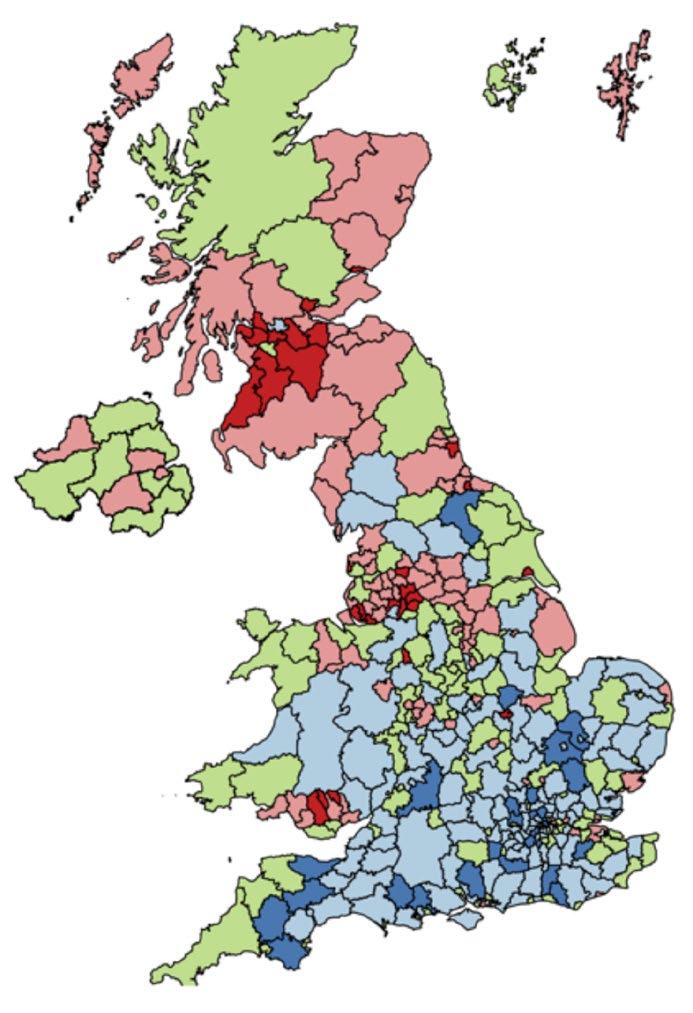
Source: ONS.
Although deprived areas can be found in all regions of England, there is a higher concentration of deprived authorities in the north. In addition, life expectancy in local authorities within the same deprivation group is generally lower among authorities in the north than those in the south. So there is a persistent north-south divide in life expectancy and healthy life expectancy. Those in southern regions can on average expect to live longer and with fewer years in poor health than their fellow citizens further north.
The cost of this health inequality was stressed in Sir Michael Marmot's 2010 report on health inequalities in England. Alongside the issues of equity and social justice raised, the economic benefits in reducing health inequalities would be substantial. Each year in England, the economic costs of health inequalities are estimated as productivity losses of £31-33 billion, reduced tax revenue and higher welfare payments of £20-32 billion, and increased treatment costs well in excess of £5 billion.
How important is the mismatch between where health-related research is done and where the burdens of ill-health are greatest? There are two issues to consider here: how fast does innovation diffuse from where it is developed, and how are priorities for research set?
If biomedical innovation was the main driver of health outcomes, and if the products of that biomedical innovation rapidly diffused across the country, then there would be a strong argument that the location of biomedical research would not matter from the perspective of health outcomes (the economic arguments would retain their force, however).
The second condition probably does hold: the use of new drugs and medical procedures can in principle be rapidly and relatively uniformly adopted across the country, supported by the guidelines and standardised clinical pathways produced by the National Institute for Health and Care Excellence (NICE).
However, the very existence of such deep-rooted regional health inequalities reinforces the conclusion that biomedical research, as driven by its current agendas, is far from the only ingredient in determining health outcomes. Research suggests that as little as 10 per cent of population health outcomes are determined by access to medical care: political, social, economic, environmental and cultural factors may be much more significant. This suggests that the public health issues that these factors underlie need to receive far more attention than they do at present.
This leaves the question of how the agendas of current biomedical research are set, and who determines those priorities? We argue in the next chapter that a wider range of perspectives need to be taken into account when research agendas for health are set. People in different parts of the country - patients, clinicians and health professionals, as well as the broader public - have widely differing health experiences, and these needs to be reflected in the breadth of perspectives that inform the formation of research agendas. The concentration of biomedical research in a few cities, where health problems are not always typical of the rest of the country, makes this more difficult than it could be.
4.5 The revolt against the elites
There is a further point to be made about the UK's regional inequalities in R&D spending. In recent years, we've heard a great deal about the political significance of revolts against elites, and heightened scepticism towards the notion of expertise. There is a widespread recognition that science needs to renew and retain its social license to operate, and this has prompted a new appreciation for the importance of public engagement with science and scientists, as we'll discuss in the next chapter.
The regional polarisation of research puts science in greater danger of being seen as captured and led by remote elites. If science is something that happens somewhere else, done by people they never meet, why should people in Redruth, Neath, Dudley or Hull think that it has anything to do with them? It would be particularly ironic if it is those areas of science that are most likely to attract public support - healthcare and medical-related research - that contribute to this alienation, through their extreme geographical concentration.
Footnotes:
5. People: who sets the agendas for biomedical research?
"In the future, the most valuable science institutions will be closely linked to the people and places whose urgent problems need to be solved; they will cultivate strong lines of accountability to those for whom solutions are important; they will incentivize scientists to care about the problems more than the production of knowledge."
Daniel Sarewitz
5.1 Gene editing, Asilomar and epistemic bubbles
In December 2015, the US National Academies of Sciences and Medicine teamed up with the UK's Royal Society and the Chinese Academy of Sciences to host an historic meeting. Almost 500 scientists, ethicists, lawyers, and civil society groups from over 20 countries gathered in Washington DC for the International Summit on Human Gene Editing. Over three days, they debated the scientific, ethical and governance dilemmas raised by human gene-editing research, and concluded with a statement calling for the creation of an ongoing international forum. This forum, they argued, "should be inclusive among nations and engage a wide range of perspectives and expertise – including from biomedical scientists, social scientists, ethicists, healthcare providers, patients and their families, people with disabilities, policymakers, regulators, research funders, faith leaders, public interest advocates, industry representatives, and members of the general public."
Many of those who participated in the Washington DC summit saw it as a model of responsible self-governance by the scientific community, involving a diverse group of stakeholders. Parallels were drawn with earlier such efforts: particularly the influential 1975 Asilomar conference, which addressed the risks and regulation of recombinant DNA. In his opening remarks, David Baltimore, Nobel laureate and former president of Caltech, reflected how at Asilomar, 40 years earlier, "we believed that it was prudent to consider the implications of a particular remarkable achievement in science. Then as now, we recognized that we had a responsibility to include a broad community in our discussion."
As Sheila Jasanoff and colleagues have pointed out, such an account mischaracterises the history and limitations of the Asilomar model. Rather than providing us with a template to apply to the choices and dilemmas raised by the biomedical sciences today, Asilomar shows how "under the guise of responsible self-regulation, science steps in to shape the forms of governance that societies are allowed to consider. As a first step, questions are narrowed to the risks that scientists know best, thereby demanding that wider publics defer to scientists’ understandings of what is at stake… When larger questions arise, as they often do, dissent is dismissed as evidence that publics just do not get the science."
Among the attendees, nearly all of them biologists, at the original Asilomar meeting, there was a huge amount of expertise. What was missing was a plurality of perspectives. As Senator Ted Kennedy observed later, the scientists at Asilomar "were making public policy. And they were making it in private." As Jasanoff and colleagues describe, we can locate in the framing of Asilomar the source of subsequent battles over biotechnology: "In retrospect, one can see the long, at times tragic, controversy over GM crops…as a reopening by global citizens of all the dimensions of genetic engineering that Asilomar had excluded."
Forty years later, the gene editing summit assembled a far broader range of participants. But even here, "the questions asked, the forms of expertise called upon, and the definitions of stakes for science and human life were all shaped by those communities most aggressively advancing the research." And the debate quickly split into two streams which rarely crossed: the scientists present explored technical issues and attempted to quantify risks; while other participants grappled with broader social, political and ethical questions.
Expertise is vital as an input to decision-making. But we also have ample evidence from psychology and behavioural science of the fallibility of experts, and their susceptibility to confirmation biases, hubris and groupthink. And as the Asilomar example illustrates, despite a professional commitment to organised scepticism, debate among scientists can be as susceptible to epistemic bubbles and echo chambers as that of any other community.
These are two distinct phenomena: an epistemic bubble develops when you don’t hear views and voices from other sides; an echo chamber occurs when you don’t trust those views. Neither is of course uniquely found within biomedicine. But given the resources and relative power that biomedical scientists enjoy within the UK system, there is a risk that this community more than others ends up shaping key questions, dominating funding agendas, and closing down alternatives, sometimes without even realising it. So the debate about research priorities across health and social care ends up being derailed by a push for particular biomedical solutions. And what is at stake in such choices gets framed in narrow, technical terms.
5.2 Experiments in engagement
Pricking our epistemic bubbles and escaping our echo chambers requires more creative and determined efforts to engage with different groups and perspectives, to listen properly to what they are saying, and to feed their insights and concerns into decisions at a point when they can meaningfully influence outcomes. New institutions may also be required. For gene editing, Sheila Jasanoff and Ben Hurlbut propose a 'global observatory', able to gather information and promote exchange across disciplinary and cultural divides, and in doing so, broaden the way that problems are being framed. Writing from a UK perspective, Simon Burrall advocates something similar: an international consortium able to facilitate dialogue between scientists, civil society, community groups and policymakers. One could make similar arguments with respect to innovations in artificial intelligence, machine learning and driverless cars (just as we and others did a decade or more ago over advances in nanotechnology).
The familiarity of these arguments makes them no less important - particularly at a time when, thanks to the creation of UKRI, so much is up for grabs in the direction and governance of our research system. Public engagement is now such an established feature of the landscape that it's easy to forget how far we have travelled. From the paternalistic talk of 'public understanding' of science in the 1980s, through three decades of often heated debate over GM foods, climate change, bees and badgers, we have reached a point where the volume and intensity of conversations between researchers and different publics - at schools, science festivals and in pubs; on blogs and Twitter; on TV, radio and YouTube – is a standout strength of UK research.
The UK has also become a testbed for creative approaches to public engagement with science and technology. Health research has been at the forefront of this: since 1996, INVOLVE (part of the NIHR), has supported public involvement in NHS, public health and social care research, and is one of the largest publicly-funded programmes of this kind in the world. As Professor Dame Sally Davies, Chief Medical Officer, puts it in the foreword to one INVOLVE report: "No matter how complicated the research, or how brilliant the researcher, patients and the public always offer unique, invaluable insights. Their advice when designing, implementing and evaluating research invariably makes studies more effective, more credible and often more cost efficient as well." There is a wealth of guidance and case studies on the INVOLVE website that can help researchers to put engagement into practice.
Across the broader research landscape, one of the quietly radical measures in Gordon Brown's 2004 ten-year framework for science and innovation was the establishment of the Sciencewise programme, to support dialogue on policy issues involving science and technology. Since then, Sciencewise has facilitated a vast array of experiments in public dialogue and engagement, across issues such as bovine TB; flood risk; bioenergy; fracking; space weather; and patient data.
One positive example of engagement was in the lead up to the 2015 Parliamentary vote in favour of mitochondrial transfer. This was underpinned by a process involving more than 3,000 people in a series of deliberative workshops, focus groups, open meetings and opinion polls, to better understand the issues at stake, and identify what information people needed to reach informed views. Another is synthetic biology, where Patrick Middleton, then head of engagement at the Biotechnology and Biological Sciences Research Council (and now at UKRI), says that Sciencewise’s contribution proved particularly useful: "What we learnt from the dialogue fed directly into our synthetic biology roadmap, and led us to overhaul the way we assess and evaluate the social and ethical dimensions of new grants."
Yet despite these and other success stories, there is also a sense that public engagement has dropped down the agenda of research policymakers and funders in recent years – and was perhaps regarded by some as an indulgence in the period of austerity following the financial crisis. An overarching government 'vision for science and society' was last published in 2008, and while INVOLVE, Sciencewise and the other key players – including Wellcome Trust, British Science Association, Nesta and the National Coordinating Centre for Public Engagement – have continued to support many valuable activities, an injection of fresh energy and high-level commitment is overdue. So UKRI’s recent pledge to "develop a new public engagement vision and strategy by March 2019" is welcome.
5.3 Diversity dividends and collective intelligence
In many respects, the biomedical research community has a positive story to tell when it comes to diversity. A 2017 analysis by Elsevier of gender in global research, which looked across 12 countries and 27 disciplines, showed clearly that the highest representation of women is found among researchers in health and life sciences. Funders like Wellcome Trust are now placing ever-greater emphasis on diversity and inclusion in their policies, and working with others through initiatives like the EDIS Network (Equality, Diversity and Inclusion in Science and Health Research) to enable as many people as possible to contribute to the scientific enterprise.
But there is still a lot more to be done. A review by a University of Sheffield team of the evidence for the benefits of a more diverse and inclusive biomedical and health research community highlights a number of gaps. The literature is dominated by US-based work, and by questions of gender, with some work on race/ethnicity, and comparatively little on other axes of difference. The common level of analysis is that of individuals, with far less work on dynamics of exclusion and inclusion at an organisational or systemic level, or on how multiple disadvantages can reinforce one another.
In addition to the force of the moral and political case for diversity and inclusion, there is a solid evidence base to show it enables better science. Decades of research underscore the extent to which socially diverse groups are more creative and innovative than homogenous groups, and as a recent editorial in Nature summarised: "A more representative workforce is more likely to pursue questions and problems that go beyond the narrow slice of humanity that much of science (biomedical science in particular) is currently set up to serve."
For all of these reasons, it is encouraging to see the emphasis that UKRI is placing on diversity and inclusion, both in its strategic prospectus, and with a clear statement of ambition on its website: to "embed equality, diversity and inclusion at all levels and in all that we do, both as an organisation and as a funder." An external advisory group, chaired by Jennifer Rubin, executive chair of the Economic and Social Research Council, will help to embed this agenda and develop an action plan by spring 2019.
Despite these efforts, UKRI has already attracted some criticism for a perceived lack of diversity in its own governance structures. Of the 15 members on its main board, only one – Sir Ian Diamond – lives and works outside the south-east and golden triangle of London, Oxford and Cambridge. Others have queried the high proportion of biomedical and life scientists on UKRI’s main board, and the low number of of black and minority ethnic appointments to the other research councils.
Diversity in science, technology and society can take many forms. If UKRI is to take seriously its commitments to equality, diversity and inclusion then it will need to reflect on the contours of the biomedical bubble, its effects on resource allocations, and on the models and assumptions that shape priorities. Science studies scholars such as Sheila Jasanoff have coined the term “sociotechnical imaginaries” to describe these "collectively held, institutionally stabilized, and publicly performed visions of desirable futures…attainable through, and supportive of, advances in science and technology."
The challenge posed for policymakers by the biomedical bubble is how to ensure a more plural and inclusive range of inputs to decision-making, so that the sociotechnical imaginaries at play are more reflective of all that the UK’s research base, regions and citizens have to offer. This brings us back to questions of balance in all its forms, and the contribution of different disciplines, sectors, geographic regions and funding modes to a vibrant and sustainable innovation system.
Above all, a commitment by UKRI to "embed equality, diversity and inclusion at all levels and in all that we do” will require it to look beyond individual protected characteristics - fundamental and crucial as these are - to also consider the systemic aspects of equality and diversity in the way our R&D system is designed and operates.
Part of this is about the relationship between research and innovation performance and aspects of structural diversity - by disciplines, regions, institutions and support mechanisms - which remain poorly understood (“criminally understudied and undervalued", according to one recent study).
It also requires a willingness to look afresh at how concepts such as 'excellence', which run through UK funding policies like letters through a stick of rock, create their own hierarchies and forms of exclusion. As we described earlier, 'excellence' has been used as the justification for an ever-greater concentration of research spending in the biomedical sciences and in the golden triangle. But whose 'excellence' and what does it even mean? As one recent commentary asks: "Is there a single standard for identifying this apparently ubiquitous quality?" or is excellence both unreliable as a measure of actual quality and "dangerous rhetoric that undermines the very foundations of good scholarship?" Similar questions apply to the language of 'future leaders' and 'rising stars', which is prominent in the fellowship schemes now available to early career researchers, but can be exclusionary and off-putting to many in the way it frames individual career pathways and criteria for success.
In the context of the 2.4 per cent of GDP target for R&D investment, there has to be a further broadening out of perspectives and an opening up of the ways that the UK designs, implements and evaluates its policies for research, innovation, health and social care. Ensuring diversity and inclusion will be crucial, as will new forms of public engagement and dialogue. For UKRI, particular opportunities lie in harnessing what Geoff Mulgan calls 'collective intelligence' - a mixture of human, machine/AI and group capabilities - to support prioritisation and decision-making.
6. Beyond the bubble: the opportunity of UKRI
"This is a significant moment we are an organisation with over 7,000 staff across the world – from Swindon to Antarctica and from Beijing to the Boulby Mine. Our work will span all research disciplines at scales ranging from the galactic to subatomic and we will partner with UK and international businesses in every sector."
Sir Mark Walport, Chief Executive, UKRI
On the evening of 14 May 2018, a crowd of around 300 researchers, university and business leaders thronged the entrance hall of the British Library in London for the official launch of UK Research and Innovation (UKRI). Representing the biggest shake-up of the UK funding system for decades, UKRI brings the seven research councils, Innovate UK and a new body, Research England, under one roof for the first time. By 2020, UKRI will have a turnover of almost £8 billion a year. In return, it promises a step-change in research and innovation performance. Speakers at the launch all underlined the significance of UKRI’s 'once-in-a-generation' opportunity.
The other star of the show was a 55-page strategic prospectus, which sets out UKRI’s initial priorities. Alongside the new governance arrangements for research, UKRI’s birth has seen a growing portion of R&D funding being channelled through cross-cutting, challenge-directed schemes. In its prospectus, UKRI commits to taking a fresh look at funding balance and priorities: a task handed originally handed to Sir Paul Nurse in his 2015 review of the research councils, but sidestepped at the time in favour of a focus on the case for structural reform.
The work that is now ongoing to flesh out UKRI’s strategy, sharpened by the government’s target for public and private R&D investment to reach 2.4 per cent of GDP by 2027, offers a moment of rare opportunity to think more openly and deliberately about the principles that underlie prioritisation and balance across our research and innovation system. There are also approaches from other national systems that UKRI can draw on: the 2017 Naylor review of the Canadian science system is one useful example. In this final chapter, we draw together our conclusions and offer some recommendations for how to make the most of the UKRI moment.
Recommendation 1
In the context of the government's 2.4 per cent of GDP R&D intensity target, UKRI should lead a debate about the nation's research and innovation goals, missions and priorities - for health, defence, energy decarbonisation, economic productivity and so on - and the optimal balance of funding to deliver these.
Figure 6.1: Breakdown of 2018/19 funding allocations between UKRI councils. This includes funds for cross-council programmes that individual councils manage on behalf of UKRI, but not centrally-held UKRI funds.
(Visual description: A bar chart showing funding allocations in £ millions for different UKRI councils in 2018-2019. The y-axis ranges from £0m to £2,500m. The x-axis shows the year 2018-2019. Multiple bars represent different councils: Research England, EPSRC, Innovate UK, STFC, MRC, NERC, BBSRC, ESRC, AHRC, each with a distinct color, and their corresponding funding levels. Research England has the highest allocation, followed by MRC and EPSRC.)
Source: UKRI.
6.1 The return of industrial strategy
Industrial strategy is now firmly back in vogue. The weakness of the UK economy since the financial crisis - in particular, the pronounced slow-down in productivity growth that has had such a depressing effect on growth and living standards - has removed the inhibitions preventing governments since the 1980s from thinking they should intervene directly in the economy. In November 2017, the government released an Industrial Strategy white paper which enshrines the need to create 'the world’s most innovative economy' as the first of its five foundations of productivity.
The independent Industrial Strategy Commission (of which one of us was a member) called for an industrial strategy with health and social care at its centre, and stressed the importance of using the state’s purchasing power to create new markets and drive demand for innovation.
The government’s white paper identifies four 'grand challenges', one of which is an 'ageing society'. These challenges will inform priorities for the £4.7 billion Industrial Strategy Challenge Fund (ISCF), which represents a substantial increase to the government’s R&D spend. The white paper also recognises the large regional imbalances in R&D spending.
One of the key instruments of industrial strategy to date has been the development of 'sector deals', described as "partnerships between the government and industry on sector-specific issues". Four sector deals were announced in the white paper; one of which was for life sciences. This reflects the privileged place of biomedical science, which for some years has had its own mini-department within government, the Office for Life Sciences, set up in 2009 to coordinate activities in support of this sector.
Sir John Bell, Regius Professor of Medicine at Oxford and former President of the Academy of Medical Sciences, was commissioned by government to develop proposals for a life sciences industrial strategy, which he published in August 2017. The government responded four months later with its life sciences sector deal.
This document proposes a number of measures that in themselves are valuable. However, we argue that thinking of the 'life sciences' as an industrial sector is a wrongheaded approach, which reflects a lack of clarity of purpose. It cannot be the basis for a coherent industrial strategy, because the life sciences are not an industrial sector.
Rather we need to start by being clear about what the strategy is trying to do:
- Is it a sector strategy for the pharmaceutical/biotechnology industry?
- Is it a strategy for research to underpin the health and social care system of the UK?
- Or is it a science push strategy, underpinned by an implicitly linear model of innovation?
This approach is not a helpful basis for organising academic research, either. The implicit definition of life sciences that underpins it is both too wide, and not wide enough.
On the one hand, biology has wider applications than medicine, important though that is. The life sciences are important to underpin our understandings of animal health, agriculture, fisheries and industrial biotechnology. They are vital for understanding our environment and ecosystems, and how these are changing. And we shouldn't neglect the importance of genuinely blue skies research in this area: big questions about what life is, how it works and how it arose are some of the greatest challenges in science today, and well worth studying in the absence of any direct applications.
On the other hand, the science and technology that is needed to underpin innovation in healthcare goes well beyond life sciences. It should include include physical sciences and engineering, especially in digital technology. And the social and behavioural sciences are also crucially important in understanding the organisational changes needed if new technologies are to be effective, and the wider societal and economic determinants of health and wellness.
In summary, there’s more to biology than the biomedical life sciences - and the sciences that underpin health go well beyond the biomedical life sciences. Healthcare innovation in future will come as much from the physical, the digital, the social and the environmental as from the biomedical. So it simply doesn’t make sense to base an industrial strategy around an incoherent 'life sciences sector'.
This doesn’t mean that health and social care, and the industries that support them, should not be at the centre of industrial strategy. They should be - but with a clearer recognition of the different objects and purposes that need to be distinguished. The idea of a 'life sciences industrial strategy' reflects at least four quite different goals:
- To promote the productivity and international competitiveness of the UK’s pharmaceutical and medical technology industries.
- To foster the innovation needed to make the UK’s health and social care system more humane, effective and affordable, in the context of changing demography.
- To support the productivity of the UK’s wider economy through ensuring a healthy workforce, and reducing the costs of avoidable ill-health.
- To support an outstanding and internationally competitive research base in relevant areas of science and social science.
These goals sometimes reinforce each other; at other times they are in tension. The essence of a strategic approach is to make these choices explicit and deliberate between them in an intelligent and accountable way.
Recommendation 2
In its strategic prospectus, UKRI commits to reviewing the balance of funding across the UK R&I system. This review must be open, inclusive and evidence-informed, addressing multiple dimensions of balance: between individual disciplines and councils, and new cross-disciplinary schemes; between quality-related (QR), responsive mode and directed funding for industrial strategy, global challenges and other strategic priorities; between the south-east of England and the rest of the UK.
6.2 An industrial strategy for the pharmaceutical, biotech and medtech sectors
The industrial strategy is rightly focused on the UK’s overall poor productivity performance, and on regional disparities in productivity. There are flourishing sectors in pharmaceuticals, biotechnology and medical technology, which contribute strongly to the UK’s GDP and to its balance of trade. The overall scale of the pharmaceutical and medtech industries, together with the research services industry that supports them, has been estimated as follows (including direct and indirect contributions).
Table 6.1.
|
GVA/£bns |
Employment/000's |
Tax/£bns |
| Pharmaceutical industry |
15.7 |
312 |
4.1 |
| Life sciences research |
3.2 |
26 |
1.1 |
| Medical technology |
11.5 |
144 |
3.3 |
| Whole UK economy |
1,639 |
30,755 |
647 |
The pharmaceutical industry is a significant part of the economy - representing about 1 per cent of the economy in terms of gross value added (GVA) and employment. And its productivity is very high. According to Eurostat, direct GVA per employee was €190.7k in the pharmaceutical sector, compared to €70.6k for the manufacturing industry as a whole, and exceeding the value of €144.5k for motor vehicles, trailers and semi-trailers - another high productivity sector.
So pharmaceuticals contributes above average productivity to the UK economy on a material scale. We should be concerned about the long-term sustainability of the industry in the light of falling R&D productivity and the resulting challenges to its business model. A recent sector-level analysis of the UK’s productivity puzzle identifies the pharmaceutical sector as having suffered one of the largest collapses in labour productivity growth in the last decade.
Industrial strategy should support the pharmaceutical industry to respond to these challenges. It should not be forgotten that this is a manufacturing industry, based as much on the chemical engineering of formulating medicines, as on the discovery of those medicines in the first place. The life sciences industrial strategy is right to highlight this through its commitment of: "£162 million to develop the manufacturing infrastructure for innovative medicines and enable small and medium-sized businesses to produce advanced therapies."
The pharmaceutical sector is important to the UK economy because of its productivity and contribution to international trade. But it does not primarily respond to the UK’s needs and priorities for healthcare. The NHS is rigorous about testing the cost-effectiveness of new drugs through NICE, and we have frequently seen assumptions of cost-effectiveness being questioned, especially for the kinds of new cancer drugs that dominate the industry’s product pipeline. The most important market, by far, for the UK pharmaceutical industry is the US, not least because the peculiarities of its healthcare system sustain extremely high drug prices. So a UK industrial strategy based on pharmaceuticals and biotechnology is, in effect, a bet on the impossibility of reforming the US health system.
Recommendation 3
The purposes of the government's Life Sciences Strategy should be more clearly articulated and separated into two distinct strands: a strategy for the UK's pharmaceutical and biotech industries; and a wider strategy for its health and social care systems. As part of this, UKRI should make targeted interventions to support the pharmaceutical and biotech sectors as they tackle a deepening crisis of R&D productivity, and to accelerate the development of an internationally competitive medtech sector.
6.3 The innovation we need for health and social care
The biomedical bubble focuses attention on one dimension of healthcare related research: in pharmaceuticals and biotechnology. But the health and social care sector forms a significant part of the wider economy and is, by common consensus, in great need of innovation, yet structurally not very innovation-friendly.
It is important to appreciate the scale of health and social care it represents about 10 per cent of the UK economy by GVA and by employment, with total spending in 2015 of £195 billion (£185 billion on health and £10 billion on social care). The proportional significance of the sector is likely to increase as the population ages. So an industrial policy for health and social care needs to be driven by the need to make healthcare affordable, as well as effective.
New drugs are important: for example, if the long, enormously expensive, and so-far entirely unsuccessful worldwide effort to find an effective, disease-modifying treatment for Alzheimer’s disease were to succeed, that would be transformational. And given the diminishing returns from the process of discovering new drugs, finding new uses for old drugs may grow in importance. Precision medicine: using better genomic and other diagnostic data at the level of individual patients to establish at the outset which treatments are most likely to work, will reduce unnecessary and ineffective interventions.
But increasingly, the innovation that matters will not be biomedical - it will be about the digital, the physical, the social and the social, the environmental and the behavioural. New devices and systems will exploit the potential of ubiquitous sensing and digital technologies, and new ways of organising health and social care will need to be devised to benefit from them.
Key to this strand of industrial strategy must be using the purchasing power of the NHS to create and nurture markets that drive the development of these new products, systems and services. This means clarity about the impact it is looking for, the evidence it needs, who entrepreneurs should talk to, and how its decision making works. It also means engaging with innovators from an earlier stage to shape ideas into useful products and services. This in turn will give opportunities for our companies to refine new products and services with export potential. NHS England spends about £9 billion a year on procurement, excluding medicines: more or less equally divided between everyday goods and services, medical consumables and high-cost medical devices. The cost of medicines adds another £15.5 billion.
The Small Business Research Initiative (SBRI) is one way in which government procurement can be used to drive innovation. SBRI Healthcare is part of the SBRI led by NHS England, in collaboration with the Academic Health Sciences Networks, which provides fully funded R&D contracts to innovative small companies to address healthcare problems, with positive outcomes for the NHS and its patients, the businesses involved, and the wider economy. Yet the scale of this programme - around £13 million per year - is derisory, compared to the overall NHS procurement budget, or the scale of publicly-funded biomedical research.
The most ambitious proposal in Sir John Bell’s recent report was for a Health Advanced Research Programme (HARP) - modelled on the US Defence Advanced Research Projects Agency (DARPA) - “to undertake large research infrastructure projects and high risk ‘moonshot programmes’, that will help create entirely new industries in healthcare.” This appeals to the widespread outbreak of DARPA-envy amongst UK policymakers - and of course, in DARPA’s long track record, there is much to be envious of. But as Stian Westlake has pointed out, this success needs to be understood in the context of DARPA’s own scale as a US$3 billion a year operation, and more importantly, of the far larger US defence-related innovation ecosystem that DARPA fits into.
There are important lessons to be learnt from DARPA, which any HARP-like programme should heed. DARPA is driven by a very clear strategic priority: to make sure that the US military is always in a position of overwhelming technological superiority. DARPA’s success in part arises because it is closely connected to the people who own the problems that its programmes are trying to solve. For DARPA, that means generals in the US military. And the problems that DARPA tries to address are concrete, rather than vague aspirations. Can you build a legged robot that can carry loads for an infantry squadron? Can you create a handheld version of a cabinet sized GPS unit? It is easy to see how projects like these arose from the soldiers that DARPA is intended to serve.
For a health equivalent of DARPA, the owners of the problems are the NHS, and the local authorities responsible for social care. Primary input into problem selection needs to come from clinicians, patient groups, and carers. Businesses are important, both as potential providers of solutions, and as beneficiaries of any new opportunities that innovations should give rise to, but they don’t own the problems, and neither do academic researchers.
New devices by themselves are not enough; the systems and organisations where they will be used need to change to make the most of them - so the challenge is often one of co-innovation of technologies and systems. At a minimum, technological innovations need to be developed in the clinical context in which they are going to be used, and there needs to be a commitment from participating health and social care organisations to reform working practices to make the most of these. And companies that might develop new technologies need a stronger commitment at the outset that the NHS will support a market for successful innovations. The NHS Testbeds programme is one attempt to bring these ingredients together.
Public health should be another priority of this strategy, as avoidable poor health across labour markets is a substantial drag on productivity, alongside its other human and social costs. The total costs of working-age ill health are estimated to exceed £100 billion per year; the value of lost work and other costs to employers is estimated to be £40 billion per year; and the cost to taxpayers – in benefit costs, additional health care and foregone taxes - is estimated at over £60 billion.
It is striking that since 2011, the rate of improvement in mortality rates in the UK has markedly slowed. The reasons for this are unclear, but seem likely to be related to public health issues rather than a slow-down in the outcomes of biomedical research. As we have discussed already, significant health inequalities persist across the UK, many of which again seem likely to reflect public health factors.
The social determinants of health include the strength of family and community ties, the economic situation of individuals and communities, the quality of housing, education and skills, and the availability of rewarding work. Transport systems can promote health by encouraging exercise, but can also contribute to polluted environments and accidents. Poor diet remains one of the biggest risk factors.
We discussed in chapter two the case of cardiovascular diseases - coronary heart disease, strokes and other diseases of the circulatory system - which still account for more than a quarter of all deaths in the UK. The dramatic fall in death rates for cardiovascular disease, 73 per cent down between 1974 and 2013, in part resulted from biomedical science. There were new interventions and treatments: aspirin, statins and stents, for example. But analysis of the decline in coronary heart disease mortality between 1981 and 2000 shows that more than half of the fall came not from improvements in medicine, but in public health: largely people smoking less, and taking more exercise. Public health improvements need to be underpinned by evidence, but to be effective they need policy changes, underpinned by social and behavioural science.
The focus now for further improvements in cardiovascular disease is falling on air quality. It is estimated that globally the ultra-fine particles referred to as PM2.5 caused 4.2 million deaths and 103.1 million lost years of healthy life in 2015, representing 7.6 per cent of total global mortality, so the fifth largest risk factor.
Very substantial contributions to PM2.5 pollution come from diesel engines, and there are now calls for diesel engines to be suppressed in major cities like London. Yet the fraction of new cars with diesel engines has dramatically increased in the last 15 years, in part driven by tax incentives. The toxic properties of combustion-derived nanoparticles, and the particular importance of diesel exhaust in this context, are not a recent discovery: they were well understood more than a decade ago. It is tempting to think that, if toxicology and environmental health had the same academic esteem as the more fashionable branches of biomedical science, this knowledge might have been acted upon sooner.
Recommendation 4
The research system needs to scale up investment in integrated strategies for innovation in health, public health and social care. In the past decade, government has demonstrated its commitment to cutting-edge biomedical science through the establishment of the Francis Crick Institute. A similar commitment is now needed to a National Institute for People Powered Health, able to harness patient and community participation to improve the effectiveness of the health and social care system including effective preventative approaches that address the social, behavioural and wider determinants of health. This could be delivered at a fraction of the cost of the Crick Institute but bring just as much benefit to the UK population, particularly if it was located outside the south-east of England.
6.4 Pushing for 2.4 per cent R&D intensity - what kind of research and where?
As mentioned earlier, the government has set an ambitious target for the UK economy to attain an R&D intensity of 2.4 per cent by 2027: that is to say, total expenditure on R&D, including business, government and charitable investment, should rise to 2.4 per cent of GDP, from its current level of about 1.7 per cent. Such a target is widely supported, including by all the main political parties, in recognition of the persistently low R&D intensity of the UK economy, and the likelihood that this is connected with its weak productivity performance.
A target expressed as a fraction of GDP has the disadvantage of depending on the future performance of the economy. To translate the target into cash terms, below we have modelled two scenarios. The first of these assumes the rates of growth predicted to 2022 by the Office of Budgetary Responsibility (OBR) in its latest forecasts. These are not particularly optimistic, predicting annual growth in the range 1.3 – 1.8 per cent. After 2022, we assume a constant growth rate of 1.6 per cent, the OBR’s final forecast value.
Figure 6.2: Growth in R&D spending needed to reach the 2.4 per cent R&D intensity target by 2027.
(Visual description: A line chart showing R&D spending in £ millions (constant 2015) on the y-axis, from 0 to 30,000, against years on the x-axis, from 2010 to 2025. Three sets of data points are shown for "All Business", "Govt, Research Councils, HE & Charity", and "Pharmaceuticals" up to 2015. Projections for "2.4% R&D/GDP - GDP growth as predicted by OBR" (solid lines) and "2.4% R&D/GDP - no GDP growth" (dotted lines) extend to 2027, illustrating the required growth in spending to meet the target under different economic conditions.)
Source: Data points show actual expenditure by sector, up to 2015, adjusted for inflation (source: ONS), together with expenditure in the pharmaceutical sector (source: ONS BERD, November 2017 release). The lines are projections of the growth that would be required to meet a target of 2.4 per cent of GDP by 2027. Solid lines assume that GDP grows according to the latest predictions of the Office of Budgetary Responsibility up to 2022, and then at 1.6 per cent per annum thereafter. Dotted lines assume no growth in GDP at all. In both cases, it is assumed that the balance between government and business R&D remains the same.
In the second, we have assumed no growth in GDP at all. One hopes that this is a lower bound. In both cases, we assume that the overall balance between public and private sector funding for R&D remains the same.
Assuming the modest growth scenario, this means that total R&D spending needs to increase by £22 billion, or 41 per cent, between 2015 and 2027, from a total of £32 billion to £54 billion. To put this into perspective, over the previous 11 years, between 2004 and 2015, spending increased by £6.6 billion, or 26 per cent.
Some of this spending is directly controlled by government. The plot splits the spending by where the research is carried out: in 2015, research in government and research council laboratories and in universities amounted to one-third of the total, so £10.7 billion. This would need to increase by a further £7.4 billion.
As the plot shows, government spending on R&D has been essentially flat since 2004. In the autumn 2017 budget, it announced R&D increases amounting to £2.3 billion by 2021-2022. This is significant, but not yet enough – it needs to be more like £3.5 billion to meet the trajectory towards the target. So the pressure is on for a clear roadmap to increased investment.
At the UKRI launch, Sam Gyimah MP, minister for universities and science, rehearsed the line that he is clearly honing for the next spending review, preparations for which will begin soon: "We commit: 2 per cent of GDP on defence to guarantee our national security; 0.7 per cent of GDP to aid to honour our global responsibilities; 2.4 per cent of GDP to R&D to underwrite our economic future." In another recent speech, Rebecca Endean, director of strategy at UKRI, acknowledged that the next spending review would be "more uncertain and more complicated" than any she had worked on over her Whitehall career, but underlined that meeting the 2.4 per cent GDP target would inevitably require more public, as well as private sector, spending.
However, most of the investment required lies beyond the control of the government. Private sector R&D needs to rise by about £14 billion per annum by 2027, from £21 billion to £35 billion. What role might the pharmaceutical and biotechnology industries play in this? As we have seen, the trend in pharmaceutical business R&D is not a rising one - there has been a fall of about £1 billion since 2011. And recent public warnings from the leaders of the pharmaceutical majors about the effects of Brexit do little to inspire confidence that it will rise again soon.
We need to revisit the assumptions underpinning our innovation policy. This has been best characterised as a supply-side policy, which assumes that, given a strong publicly funded research base, and an adequate supply of skilled people, business R&D will follow. These assumptions are implicit in the estimates we discussed earlier about the rates of return on earlier biomedical research, which assume that publicly funded research 'crowds in' additional private sector R&D, which then yields a substantial economic rate of return. There is good evidence that in general these assumptions hold, but in the specific case of pharmaceuticals, the relationship appears to have broken down.
The positive relationship between public sector R&D spending in health-related research and pharmaceutical business R&D decoupled in 2011, as our next plot shows. Since then, the return on pharmaceutical R&D has been steadily worsening, which itself is probably sufficient explanation of the breaking of the link with public sector R&D.
Footnotes:
Figure 6.3: Growth in business R&D in the pharmaceutical sector compared to government budgets or appropriations for R&D in support of health (both inflation corrected and expressed as a ratio to their 1995 value).
 Speech at the UKRI launch, 14 May 2018.
212. Gallardo, C. (2018) 'Spending review most uncertain ever, says UKRI deputy'. London: Research Professional, 28 June 2018.
213. Neville, S. (2018) Pharma chiefs warn Brexit threatens life sciences dominance. 'Financial Times.' 19 June 2018. Available from: https://www.ft.com/content/82169092-7161-11e8-b6ad-3823e4384287 [Accessed 2 July 2018]
214. ONS (2017) 'Business enterprise research and development, UK: 2016.' London: ONS, 21 November 2017 release. Available from: https://www.ons.gov.uk/economy/governmentpublicsectorandtaxes/researchanddevelopmentexpenditure/bulletins/businessenterpriseresearchanddevelopment/2016; OECD(2018) 'Main Science and Technology Indicators: Last update: MSTI 2017/2, March 2018'. [Online database] Available from: http://www.oecd.org/sti/msti.htm [Accessed 28 June 2018]
215. Murphy, M. P. (2018) Amyloid-Beta Solubility in the Treatment of Alzheimer's Disease. 'New England Journal of Medicine.' 378 (4), pp.391-392. Available from: https://www.ncbi.nlm.nih.gov/pubmed/29365295 [Accessed 2 July 2018]
216. See: https://ct.catapult.org.uk/ [Accessed 2 July 2018]
217. Flyvbjerg, B. (2014). What You Should Know about Megaprojects and Why: An Overview. 'Project Management Journal.' 45 (2), April-May 2014.
218. Ernst & Young (2017) 'UK SBS PS17086 Catapult Network Review'. London: Ernst & Young, 17 November 2017. Available from: https://www.gov.uk/government/uploads/system/uploads/attachment_data/file/662509/Catapult_Review_-Publishable_Version_of_EY_Report__1.pdf [Accessed 2 July 2018]
219. Innovate UK (2017) 'Additional responsibilities for Medicines Discovery Catapult.' [Online press release] 26 June 2017. https://www.gov.uk/government/news/additional-responsibilities-for-medicines-discovery-catapult
220. UK Research and Innovation (2018) 'Strategic Prospectus: Building the UKRI Strategy.' London: UKRI. Available from: https://www.ukri.org/about-us/strategic-prospectus/ [Accessed 12 June 2018]
221. Mulgan, G. (2018) 'Big mind: how collective intelligence can change our world.' Oxford: Princeton University Press.
222. Knowledge Coalition (2016) Dutch National Research Agenda [Online] Available from: https://wetenschapsagenda.nl/national-science-agenda/?lang=en [Accessed 2 July 2018]
223. Nuffield Foundation (2018) 'Nuffield Foundation announces new £5m Ada Lovelace Institute.' London: Nuffield Foundation, 28 March 2018. Available from: http://www.nuffieldfoundation.org/news/nuffield-foundation-announces-new-%C2%A35-million-ada-lovelace-institute-examine-profound-ethical--0 [Accessed 2 July 2018]
224. DCMS (2018) 'Centre for Data Ethics and Innovation Consultation.' London: DCMS, 13 June 2018. Available from: https://www.gov.uk/government/consultations/consultation-on-the-centre-for-data-ethics-and-innovation/centre-for-data-ethics-and-innovation-consultation [Accessed 2 July 2018].
225. See e.g. Bishop, D. (2018) Luck of the draw. 'Nature Index.' 7 May 2018. [Online] Available from: https://www.natureindex.com/news-blog/luck-of-the-draw [Accessed 2 July 2018]
226. Ioannidis, J.P.A., et al. (2015) Meta-research: Evaluation and Improvement of Research Methods and Practices. 'PLoS Biol.' 13(10): e1002264. doi: 10.1371/journal.pbio.1002264.
227. See: https://www.nsf.gov/funding/pgm_summ.jsp?pims_id=501084 [Accessed 2 July 2018]
228. See: https://wellcome.ac.uk/funding/research-research-awards. Around 140 applications were submitted, of which no more than five are expected to be funded. [Accessed 2 July 2018]
Nesta
58 Victoria Embankment
London EC4Y ODS
+44 (0)20 7438 2500
[email protected]
@nesta_uk
https://www.facebook.com/nesta.uk
https://www.nesta.org.uk
Nesta is a registered charity in England and Wales with company number 7706036 and charity number 1144091.
Registered as a charity in Scotland number SCO42833. Registered office: 58 Victoria Embankment, London, EC4Y ODS.
CC i BY NC SA