How to actually get stuff done in government
 www.nesta.org.uk/feature/policy-fix-podcast/how-to-get-stuff-done-government/
www.nesta.org.uk/feature/policy-fix-podcast/how-to-get-stuff-done-government/
www.nesta.org.uk/feature/policy-fix-podcast/how-to-get-stuff-done-government/
Nesta is a research and innovation foundation. We apply our deep expertise in applied methods to design, test and scale solutions to some of the biggest challenges of our time, working across the innovation lifecycle.
And obviously the big missing thing there has been really what was the government's strategy to grow the economy? And what we saw from Rachel Reeves was some initial decisions which seemed to run very counter to that undermined business confidence. And I think one of the things that has hampered the government quite badly from the start was some initial missteps by both the Prime minister, but more crucially, by the Chancellor. Your delivery record is not necessarily what you're measured up against. You look at the kind of the appointment of the latest cabinet secretary, who's undoubtedly a highly talented individual in lots of ways. But the discussion about her and the debate about her over the last few days, her delivery record has been pretty silent in that conversation, and I think that's quite telling. Hi, welcome to Policy Fix, the new podcast from Nesta, the Research and Innovation Foundation. I'm Jo Owen. Every episode we're going to take a policy problem, look at what the challenge is, what works and how to fix it. You can subscribe wherever you get your podcasts. No one seems happy with the British state's ability to deliver stuff. Keir Starmer has talked about the tepid baths of managed decline. Uh, Darren Jones has talked about the need to move fast and break things, and successive governments have talked about the problems with actually getting stuff done once they're in power. So today we're going to be talking about how do you make things happen in Whitehall, how does the government deliver its agenda? And joining me to discuss that, we have got two top guests. We have got Jill Rutter, senior fellow at the Institute for government, and Andrew Greenway, partner and founder at Public Digital. Andrew and Jill, welcome. So successive governments have bemoaned the blob we can get into in a bit like whether the accusations that ministers throw at the system are fair and right. But do you think we have got a delivery problem in government, and how would you characterize it? Jill. So governments have always had a bit of a delivery problem. It's always been true that people have said actually there's sort of, you know, real problem around implementation. We call it delivery. Sometimes we call it implementation that too often the people who are going to actually have to deliver change on the ground aren't in the room when the policy decisions are made. And there's that gap that sometimes proves unbridgeable, and that too few people at the top of government have experience of actually delivering services in practice, so they will pander to ministers who also don't have much experience delivering services in practice about what can be done. And then those things don't turn out, uh, don't turn out right when they hit the ground. And there's some things that government actually is quite good at doing, some things that are really easy for government to do. Um, governments can introduce laws. Now, whether law changes anything on the ground is a very interesting question. But if, for example, if you're a very easy example, if I'm Chancellor of the Exchequer and I want people to pay less income tax or more income tax. I can do that quite easily just by putting through a finance bill, which changes the number for the rate of income tax. That is not a difficult delivery problem, but a lot of other things that government tries to do. Central government doesn't really control any of the levers or most of the levers, or it really depends on how people react to the systems that we put in place to try and incentivize them to do what government government does. And we have to remember that an awful lot of the people who we're looking to, to deliver change are actually currently struggling to keep day to day business afloat. And there's a very limited bandwidth there to do things. So I think, you know, it's really appreciating some of those constraints and in some cases, the time it takes to build the necessary coalition, create the capacity to make change happen. I mean, Jill mentioned incentives, and I think that's a big part of it. This is almost a sense of disinterest would be possibly too strong a word, but certainly at the very top of the civil service. Fundamentally, I don't think those officials are necessarily rewarded for delivery. And in terms of the talent that comes through the system, your delivery record is not necessarily what you're measured up against. You look at the kind of the appointment of the latest cabinet secretary, who's undoubtedly a highly talented individual in lots of ways. But the discussion about her and the debate about her over the last few days, her delivery record has been pretty silent in that conversation. And I think that's quite telling. I think another part of the characterization, and again, Jill touched on this in part, was a lot of what delivery ends up becoming in government is delivery of legacy. So effectively keeping the lights on and this sort of quite rickety structures that we now have around services, and that takes up an enormous amount of bandwidth and energy just to keep the show on the road, which I think in terms of people thinking about more transformative or different models of delivery as a sort of senior executive. It's very hard to kind of create the space to do that. And so you find yourself in a and this is a fairly classic problem of all bureaucracies, really, in a real sort of rigidity problem where there's a tendency to cling on to the processes or the personnel or the culture of things that have been in place for a very long time. And actually creating the space to rethink those things is often not available to senior civil servants, who are also not particularly incentivized to go there. So there's a kind of a system to try and characterize what I think you guys have described. There's a system that is quite distant in some places from what it purports to be in control of, and it's sort of whistling into the wind a bit because it's saying it's making commitments and promises, but on the advice of people who don't understand what the real day to day looks like on the ground without a deep understanding of the systems. And it's sort of just disappears. And then at the same time, a large amount of the system that is sort of Crumbling around them to, if I can use that term to sort of summarize what you said, Andrew. But missions were supposed to be their answer to this sort of conundrum of governments failing to deliver by picking a fewer, fewer things, focusing over the longer term, focused on outcomes. Um, Andrew, mission driven government like you'll have a better description of what the idea is, but, um, is it dead and who killed it? Um, I mean, I think you characterise it neatly there in terms of that idea that this is if we pick a discrete and relatively bounded set of specific outcomes, which almost by definition, are going to be wicked problems that governments have tried to attack in lots of different directions before, they'll kind of cover multiple departmental jurisdictions and often different layers of the state. And a lot of that was obviously inspired by the work that Mariana mazzucato and others did on missions. Is it dead at the moment? It certainly seems, um, pretty dead, to be honest. It would need some serious resuscitation. It wasn't mentioned by Darren Jones in his recent speech on state reform, and I think that was quite telling. And as ever with these things, I suspect there were multiple things that that that stymied it and stopped it from really kind of taking hold within the institutional structures. Um, one of those, I think, was, uh, the way that it was framed, I think within Whitehall when labor came in, was we sort of see this as a sort of a coordination problem. So mission delivery unit was set up, but certainly from the outside that appeared to be sort of replicating, almost like the cabinet committee type structure. Um, and it was framed as a challenge of, of governance rather than focusing, of delivery. Um, and it also tended to be made up of people who were those very kind of adept civil servants that were working in the existing ways. So to them, if you kind of if you have a hammer, all you see is nails, there's an element of that, I think, in terms of how missions were responded to by the civil service, This. I don't think the politicians particularly helped either, in the sense of the missions themselves were not particularly tightly scoped. There wasn't a particularly clear sense of outcome of what was being driven towards, and that obviously made it much more difficult to land. And for me, one of the sort of the telling points around mission government, when it certainly looked like it was dying was was the initial spending review, and there was no real sense in that process to me, that the logic of missions and the kind of the ways of working that underpin them and that outcome led work and working across departments was really being woven into the sort of the deep fabric of how Whitehall makes decisions about all sorts of stuff, not least accountability and money. That was a real opportunity, I think, to institutionalize it, and that was missed. I think Keir Starmer really sort of missed missed a pass if he was serious about mission governance. I think it's really interesting. Was he really on board with mission government or was it something he just picked up from some people who'd been advising him, which sounded good, because what I think we were really looking for was right at the start of the government, And a declaration of how the government saw missions working. We thought that there would be mission boards, whatever you might call it, which would look very, very different from cabinet committees. When we finally got the list of cabinet committees, the mission boards were just a footnote. They were chaired by the relevant Secretary of State. So that idea that there might be some sort of challenge there or something to actually push those was missing, and it all looked very conventional. And you could say if I was Ed Miliband, I would say, well, actually, I have made a lot of progress on my mission. I set up mission control, brought in Chris Stark from the Climate Change Committee, brought in people from outside, staffed it differently, been, you know, unblocking some of the barriers, whatever, sorting things out. You might agree or disagree with what Ed Miliband is trying to do, but he does seem to have actually cracked on in quite a way that has made him an enemy for some, perhaps a hero for others elsewhere. And I think one of the things that was always a bit disappointing about the missions was how one cross-government they were, because what was really interesting about the climate mission was actually it was a power decarbonisation mission. And actually that department had always been quite good at transforming the power system. It was all the rest of the net zero stuff that was lagging, whether it was on housing or farming or transport or whatever. And I think we lost, lost a bit of a sense of that in the missions. But I don't think Keir Starmer ever really had a clear idea of, you know, was this his big transformative idea of how government worked. And then he cut across the long term missions by then saying, we're going to be judged by these short term milestones that he put in the plan for change. So you look at something like the health mission, which you'd say might be critical to Labour's re-election chances. And what do we get? Rather, we're supposed to have these big shifts away from hospitals. But the one thing the government wants to be judged by at the end of its term is have we cut hospital waiting lists, which cuts across actually the transformation that mission should be should be undertaking? I really agree with you. The point on like where was what were we clear on what the logic was at the beginning? Because I think in all of us will have spoken to people from Labour when they were in opposition about the idea of mission driven government. And it felt like at one end of the spectrum, you had these people who thought this is a fundamentally different organizing principle of government, and it's going to change how we work, and it will change how Whitehall works. And at the other end of the spectrum, you had, well, this is a great way of saying we're going to be less useless than the last lot and a good set of chapters for the manifesto. Perfect. And everyone you spoke to was probably at slightly different points along that spectrum, but there was never really a clear sense of gravity, and I think that is one of the big reasons why they came unstuck. I want to move on to why. your experience, like Keir Starmer and this Labour government, are not the first people who have come in with a sort of animating idea in opposition and a set of policies and then within eighteen months said this feels stuck. The system doesn't feel like it's working. Why do you think politicians find it so hard when they move in to feel like they're getting what they want? Can I just say, I do think there have been peculiarly bad at this. I mean, I think, you know, outstandingly bad, um, in terms of getting what they want because I think, you know, if you looked at the the coalition coming in in twenty ten, they're sort of, you know, big top issue was we need to get the public finances back under control. We had an emergency budget from George Osborne, and they sort of, you know, started with their long term economic plan in nineteen ninety seven. Tony Blair might have got quite frustrated, but Gordon Brown was doing lots at the Treasury. And I think one of the things that's been quite interesting is how how uninterested in policy the Prime Minister seems. He's obviously had to spend a huge amount of time on foreign affairs, and seems to really quite like spending a huge amount of time on foreign affairs. A lot of that with Trump management, but even before that with Ukraine, etc.. So I think that's that's been quite interesting. But there was some, some places where ideas did seem to be better worked up. If you look at the Ministry of Housing, Communities and Local Government under Angela Rayner, they seem to have sort of cracked on in quite a way. I'm not sure. It seemed to take an inordinate amount of time for Wes Streeting to write his plan for health, which you thought, you know, well, don't do an Andrew Lansley and say, this is definitely what we're going to do, and I'm not listening to anybody's views on it. I'm just going to press ahead regardless. But you do think there was a bit of a middle way between waiting as long as we had to wait for Wes Streeting plan, and they might have done had more work done on that beforehand. So there's sort of areas where you feel sexual state had things to do, but you don't feel that number ten had a big grip. And obviously the big missing thing there has been really what was the government's strategy to grow the economy. And what we saw from Rachel Reeves was some initial decisions which seemed to run very counter to that undermined business confidence. Um, and I think one of the things that has hampered the government quite badly from the start was some initial missteps by both the Prime minister, but more crucially, by the chancellor, which, uh, which cast a pall over the government right from the get go. Um, you know, I will declare my hand as next Treasury official. I thought Rachel Reeves was right to get rid of the winter fuel allowance, but she didn't. Such a ham fisted way that she took a real look at pensioner welfare off the agenda. uh, she then was so tied in by her manifesto commitments on tax, which you feel they might have been surprised quite by the extent of problems in the public finances. But everybody was saying there is a much bigger problem than the government is surfacing. In the run up to the election, they were so tied in that she went for about the worst fiscal measure she could have done in her twenty twenty four budget. And the result is that growth has been very anaemic. It was almost, though, Labour thought, going in that all you needed was a Labour government, and the growth rate would magic back to the growth rate we saw in the noughties, because you'd hear ministers time and again when they were asked what they were going to do about growth. Just saying the growth rate was much higher when we had the Blair-brown government or the Blair government in power. And yes, but the world conditions were very different then. You didn't have to deal with lots and lots of the problems we have now. Can I, want to sort of, um, give the current government a bit of a break, but actually mainly, largely just zoom out a bit because I think there is on this question of government getting stuff done. We often when we talk about the ability of current governments, whether it's here or even in other countries, how effective they are at getting stuff done. Use twentieth century comparators to say, but you know, for us, we did the welfare state, the amount of housing that we built. Um, it will point to infrastructure. And it feels like the role of government, though, is sort of fundamentally changed in the last fifty or seventy years. We don't it it's a much less centralised system. We still have a very centralised system. But devolution has grown. Um, we have privatized things. There's been a growth in public bodies. You sort of have a centre of government that has less power than it used to, and it's also regulating a bunch of companies from outside the UK in a much more international system. Do you think it is harder to govern now than it was? Uh, and you need a different type of capability and capacity than what we did fifty years ago. Whether it's harder or not, I think is probably giving the current generation too much of a pass. Um, and certainly when you look back at the achievements of yesteryear, certainly we could have had very similarly grumpy conversations about the quality of delivery across government at that point, too. So there's a sort of hardy perennial to this conversation, I think. I mean, I do think it's interesting how when you look at, um, Danny Kruger and reform and what they're saying about some of this stuff, there definitely seems to be a theory of change emerging from parts of that spectrum where they see this sort of diminution of ministerial power, which they kind of blame on quangos and judicial reviews and elements of that. So there's a very much a sort of sense, I think, among the the broader political class, if you like, of where these lots of conversation about levers recently. We keep pulling these things and nothing seems to happen. And I sort of think quite a lot of those analyses are there's some truth to elements of it, certainly the kind of the the drive towards outsourcing and that kind of era and new public management. And I think the general sense that the bureaucracy was pretty inadequate at managing a lot of those relationships. That's not to say the outsourcing necessarily needs to be cast out entirely, but certainly there were lots of elements in which that didn't work. The thing I think that's materially changed and is actually accelerating in the last even ten, fifteen years is people's expectations of the state, and particularly in terms of service quality. And part of that, I think, comes about from, you know, the fact that we have, you know, magic tricks in our pockets with our phones in terms of service quality, which I think has genuinely shifted the window in terms of what people expect day to day. But I think also it's not just the quality of those services, it's the tightness of the feedback loops that exist within them. So people are used to kind of looking at, you know, the apps that they use or the things that they do online and those services changing it sort of effectively week on week, month on month, in response to people saying, well, that didn't work or I didn't understand this. And that's sort of become inherent to a lot of those kind of companies that are thriving now, surviving their ability to be responsive. And government hasn't really built that muscle at all. Um, or if it has, it's only really built it successfully in crises where actually government can be really, really good at being responsive, but it tends to only really achieve that by sort of subverting or ignoring a lot of the status quo rules that it imposes upon itself. And the thing that I sort of think is perhaps materially different about governing now is somehow the bureaucracy has to do the sort of patting head and rubbing its tummy at the same time. I can't believe you can do that. Just about that was that was dangerous on camera. Um, can it retain the ability to to offer stability, which it has to do. It hasn't. And you shouldn't frighten markets. There are certain things that just have to run and are kind of in operations, but equally it needs to kind of have this muscle of renewal and responsiveness is inherent to it and somehow pull off doing that in peace time, as well as when the chips are really down in crises, which seems to be when it's able to do it best. I was going to say, I think one of the problems really, for this government, for its predecessor governments, is just the economic backdrop makes everything much harder, because if you have a growing cake that you can distribute, that is hugely easier. A lot of the decisions of the government from nineteen ninety seven until the financial crisis were just about how to how to distribute the extra that you had, which is a hugely easier question than how are you going to manage with very constrained situation, which is why the growth story so matters, because it's growth that allows you to, you know, make changes and compensate losers and do do change. I also think, though, that politicians are very much now victims of their own sort of lack of belief in what they're doing. Uh, so they don't seem particularly persuaded that they're doing the right thing and they should sort of forge on regardless of what the immediate reaction is. It's been really interesting, I think, to see how enthralled to its backbenches this government has proved to be with some of its big changes, that they've failed to sell those to the backbenchers where they have made decisions. It's actually not the civil service that's getting in the way of welfare reform. It's the fact that they want to do things they didn't, not a particularly well thought through way and were forced back by their backbenchers. And I think it's that sort of, you know, reaction. But I think one of the things that I think Andrew's right, that there is a big issue, that expectations have risen. So the sort of differential view that people had maybe until the nineteen nineties about public services has You could argue that on some of the sort of privatizations, not an argument that we have to renationalise or that that's going to be a magic bullet. But the sort of model we had of regulation hasn't been rethought since the nineteen eighties and no longer fit for purpose, that there are big challenges that, uh, whether it's about sort of big tech, where you also have a really quite aggressive US government trying to constrain your space and weaponizing. Yeah. Uh, weaponizing that as well. I want to move us on to talk about examples of where the system has done things well. And Andrew, I was going to start with you and GDS. Mhm. Um what did it do. Right. Uh, there are a full spectrum of opinions on GDS on this panel I'm delighted to say. What did it do. Right. I think what it did right. Um, fundamentally uh, from the beginning was It didn't take for granted the hygiene factors of government that it was given. So what do I mean by that? Well, one of the kind of the very kind of elemental things that GDS pushed back on from the very get go was it refused to take the standard issue Cabinet Office laptops for its staff? Because if we had done that, the software developers that we'd hired would have just laughed at us and ran out of the building very quickly. And that kind of principle of and it's quite a hackneyed thing, I think, in terms of start up type behaviours, but in terms of approaching some of those questions around procurement or recruitment or even office space from relatively first principles, it was remarkable how quickly that kind of inculcates a different way of working and a different culture. Now, you know, there's definitely a kind of an element of which GDS probably took that to, to extremes and was probably isolated itself to some extent from certain people. But I think that that kind of apartness was quite an important element of what it was doing, not least to attract different kinds of skills and different talent into government. And now, I mean, when GDS started was back in twenty eleven, certain roles, you know, things like product management or service design, what didn't exist at all in government. And you've now got a sort of digital and data profession that's relatively healthy and has got tens of thousands of civil servants in it. And that's a fairly significant legacy, I think. So that was quite important. And then the sort of the other kind of cultural flip, which again, kind of created quite a lot of conflict, was that idea that those services and things like Gov.uk were built very intentionally with the kind of public users at the heart and the mainstream users at the heart. Um, basically the sort of the principle that, you know, you don't need to understand government in order to navigate government, which worked very well for lots and lots of people. And if you kind of go on to Reddit or whatever and you ask what people are proud of about the UK, it's quite remarkable how often people say online government services, believe it or not. So we've succeeded in that. It's succeeded in that at some cost. So there are definitely groups and particularly kind of more expert users of government who are like, what on earth is this? This isn't give me what I want. So there was an element of trade off to that. But I think part of why it worked as a delivery mechanism was it was prepared to make trade offs and prepared actually to engage in conflict, which in itself was sort of relatively kind of countercultural within Whitehall. I got I grew up as a sort of classic generalist, strategist type civil servant. Um, and if there was an argument in the room that meant someone had failed, like you hadn't squared the room, you hadn't got the documents right beforehand, that was inherently almost a bad thing. Um, and GDS sort of fronted up into that more deliberately. Um, and although that left some people less enamoured with it, I think overall it led to better outcomes. What do you think the lessons are for other bits of government? Because not everywhere can sort of incubate a new organisation. And we've seen government do that reasonably effective in some areas. Vaccines task force, AI Safety Institute. But part of the challenge is getting everything to work differently. What would you sort of distillers if there's a civil servant listening to this, that is in a sort of directorate somewhere in Defra and is like, well, I can't build a new organization, but how do I work differently? I mean, what underpinned a lot of the behavior and focus of the people who are in that team? Um, often quite explicitly, was we're here to do this thing, and we recognize that we're going to have to be brave, and it might mean we have to effectively take a personal cost to our kind of career calculations. A lot of people come in from the outside, felt that and sort of recognize that, you know, we're here for we're here for a good time, not for a long time. And that's very true. I think of things like the vaccine task force and other things like the Social Exclusion Task Force, other things that were set up in that vein. People approach those problems, both the insiders and the outsiders, with that kind of genuine sense of mission to the exclusion of things that might have made their progression potentially slightly stickier going forward. Um, and I think, you know, when I talked to lots of civil servants, now, I'm always taken aback. And this is at all levels, from the very top to, to sort of starting out the level of insecurity that quite a lot of civil servants feel about their professional trajectories, they sort of get stuck. It's like, what else could I do? I'm just a civil servant. I've learned how to work the civil service. I'm not going to be of value elsewhere. And I think on a personal level, um, you know, the enormous amount of talent there is in individuals within government should make people feel more confident. If you do the right thing, lots of doors will be open to you. But in that structural sense, how do we create a bureaucracy that has that level of porosity and kind of ability to kind of come in and out and broaden your experience and insight and kind of executive depth? I think that's really important. That would be a big part of, I think, what unlocks some of the transformation. Don't worry, civil servants, if it doesn't work out outside, you can always come on a podcast. Um, I think picking up on what Andrew said, I do think there's a really interesting question. How much of government can you convert, if you like, into these sorts of, you know, clear tasks with a clear outcome that you're going to stick with, where you can get excited about doing that piece of work because you're going to see it through. So we did a project quite a long time ago about the Olympics and the Olympics. London twenty twelve. You know, big success at the time. You know, we built the stadium. It opened on time. Every you know, most people really liked the games etc.. What was very notable was that people who worked on the Olympics were wanted to stay with it, because if you've been working on the Olympics in the early years, you want to stay for when we actually hold the games. But the they were told by their HR managers, this is bad for your career. You know, you need to be moving on. You need to be getting different experience. You know you're holding back your promotion. Too often we, you know, civil service structures say go somewhere else. Do this. Don't stick with that project. We don't incentivize people to stay. But, you know, but people stayed because they want to be part of it. And they got huge job satisfaction out of it. Hopefully they went on to other things afterwards. But I think there's a really interesting question about government, about how much of government can we turn into this sort of area where you're told you have license to do quite a lot of things in a different way, if that's what it takes to deliver an outcome and you will stay with it, you'll be rewarded for staying with it and seeing that project through. Or do you find that actually you devoted your time, sacrificed a bit to do something? The great thing about the Olympics is once you sign the contracts with the International Olympic Committee, you can't get out of it. They insist on cross-party support there. They're monitoring that. They have the sort of template they're holding you to account every six months when they come on the visit to make sure you're on track. Too often you might say, well, I'm really interested in, you know, I'm going to devote myself to Bridget Phillipson, send reforms. I'm really going to see this through, and I'm going to bust it or whatever. And then in six months time, there's a new secretary of State for education who wants to do something different and cuts you off at the knees. And that's not the thing you're doing. So I think it's really interesting. Where can you do those things? Some of the things Andrew's mentioned, the vaccine taskforce was very short term. And the huge thing about Brexit taskforce money was also no object. And it's much easier to get things done if you're told money is no object. But I think when you get real satisfaction in government is when you are given a bit of licence to do stuff and too often in the civil service. You don't feel that your superiors or your ministers are giving you that licence to do things in a very different way, because ultimately, the trouble in the civil service is that the accountability rests with ministers. We're always asked, why is the civil service so risk averse? Why is it always highlighting to ministers, you know, what could go wrong? Well, that's because actually the people who end up on the floor of the house answering for when things go wrong, not the civil servants who've been doing it, it's the ministers. And, you know, part of your job is to make sure that they are taking decisions with their eyes wide open to the risks that they might be running. I think one of the one of the points that's been cut through both yours is like the weird delineation sometimes between functions in the civil service. And I always thought this with policy and delivery, um, in that in number ten, you've got a policy unit and a delivery unit in lots of departments. Now there are separate policy and delivery units, but they all have people covering the same portfolios as if policy and delivery are totally different, and the way in which you might respond to some delivery issues is by policy change. And the way in which you do policy well is by thinking about delivery. And it just seems really odd to me that we have this like separation and you speak to people about it and they'll say, well, um, they're fundamentally different skill sets to which even if you agree with that, that doesn't mean you can still have people with different skill sets in the same team. Yeah, absolutely. And I find I've always found that kind of delineation slightly bizarre in its way. Um, I just wanted to come back briefly on something that Jill was saying about that kind of need for political stability and in terms of the focus as much as anything else, I think the coalition was a really interesting model in terms. I mean, that's when GDS grew. Um, it's when I was still a civil servant, and there was something really quite powerful in a the fact that there was, relatively speaking, relatively low ministerial turnover. Unusually, it was quite a stable kind of cabinet most of the time, because the machinations of moving all the pieces around on the chessboard was probably just too annoying for the principles that helped. But the coalition agreement and the fact that number ten or the centre collectively contracted and and crucially, wrote stuff down. I know it seems incredibly banal, but like, I don't think it was an accident that you had a combination of relatively stable cabinet, relatively clear articulation of priorities, and if it was a bit of a shopping list and also a relatively experienced cabinet like in this group, there were very, very few secretaries of state who'd ever been in that chair before, which I think contributes in large part to why they've been quite surprised. Why isn't this working? You mentioned before he's one of the very few who'd been in the chair before, and I don't think it's a coincidence that he he knew how to play that game better. But the policy and delivery thing, I mean, I've bought on about this several times in many forums, like there is this sort of sense. I always got the sense of this kind of caste system that exists within the kind of the Whitehall functions of which policy has, has long been the kind of the first among equals. And it tends to enjoy that sense of proximity to ministers. And, you know that that kind of the geography of power tends to cleave towards policy. And the people who kind of get drift in that direction are the people who are confident in rooms with ministers. They're good at writing submissions, whereas delivery people, I'm not sure, necessarily have an entirely different set of skills, but they often have a different perspective on the world and what motivates them. They'd rather spend time with the actual people that they're helping nearer the front line. Um, and all the kind of the occasions where I've seen teams in Whitehall do do highly impressive things, they have managed to kind of conjoin at a sort of mutual respect between those two halves of the coin. Um, I've never fully understood why number ten has separate strategy and delivery units other than possibly branding or policy and delivery. Um, but I think the multidisciplinary, multidisciplinary nature of those teams, um, is almost the single most important organizational change I'd make. There's a really interesting question. Maybe this is something, Vanessa, to look at, Joe, which is if you made civil servants more personally accountable for policies so that you know, your name was going to be associated with the policy, not the minister, as being the sort of senior, not just the senior responsible owner until you get another job, but you were actually there. Who would you want on your team to deliver it? And, you know, if I'm charged with, you know, one of the sort of big government reforms, who would I collectively want and want there on it? Would it just be a bunch of other people who just got very same experience of writing briefs for ministers, answering some of those sorts of things? Would it actually be a very different looking team, and I think it's a really interesting thought experiment to say, if I really thought that I was going to be held responsible for this thing happening in practice, how different would my team look? Hmm. Can I, um, I do think that is interesting. I'm not just ducking your, um, uh, your, um, orders for what work I should be doing. Um. Uh, I wanted to come back to you, Jill, on Brexit and Covid because I think we can critique, uh, various elements of delivery from this government, previous governments, uh, over the last five, ten years. But I think if you sort of zoomed right out and said, what has government done in the last decade, you would say it delivered Brexit untangling itself from the EU, lots of things in that far from perfect. But when the vote happened, a lot of people said it wouldn't be possible without mass catastrophe. Government did that. And then the response to the pandemic, in which, again, lots of things to fairly criticize the government for, but also fastest vaccine rollout, etc. etc.. Um, do you think like a lot of these challenges that we're talking about, is that a system who has spent the last decade being bent out of shape by like generational crises, and therefore it's only fair that they are, um, not quite as hot on the, um, as Andrew said, hygiene factors. I think you have to chalk Brexit up as a big achievement. So as you rightly say, you know, you start from somewhere where they've been minimal planning. In June twenty sixteen, when the referendum result came through, uh, we rolled over all the trade agreements that we needed to. We've negotiated some new trade agreements, including a big trade agreement with the EU. You may not think it's the right one, but it's the one the government wanted to sign up to. We've created a not perfect border, but we've created a new border. We've disentangled ourselves from the EU systems and increased regulatory capacity. We may not like the way it's being used. There may be some holes in that, but we've substituted and there haven't been absolute disasters on, you know, under-regulated medicines getting into the system or, you know, the Civil Aviation Authority taking over responsibility from Isa and suddenly planes crashing all over the place. I think we're more looking to some of the things that might go on in the US with their approach to regulatory reform, rather than the UK. I think we also shouldn't forget just the amount of bandwidth that doing both Brexit and Covid took up and we, you know, did some interviews with ministers about Brexit. And basically one of them said, you know, the government just gave up doing anything else because it was so preoccupied for so long with Brexit. And then it had to cope with Covid. The reaction to that and then it had to cope with the energy price shock, which was another thing. So actually we've had crisis after crisis waving through, and that came on the back of something that also had very severe implications for the public finances, which was the global financial crisis. The UK particularly exposed because of the way we regulated our banking system. So we basically had four generational crises in not very long. So you might say, you know, and we still expect, you know, hospitals to be better, schools be better, etc., etc. maybe we should be more surprised that they're still standing at all after all that. But one of the things I think the lesson that people have taken out of things like Covid is that the state will be there in a very comprehensive way. This goes back to Andrew's point on expectations, Dan. Exactly. Andrew's point on expectations that you know, that the state could step in and guarantee everybody's income. I mean, even Jeremy Corbyn is widest dreams. Didn't expect to de facto through the back door nationalise every coffee shop in the country, which is what we did through the furlough scheme. I thought when Rishi Sunak stood up to announce the furlough scheme and he announced that we were going to basically flip the tax system around and support everybody through the tax system, that I remember holding my head in my hands and thinking, God, you know, he's making promises which they will never deliver. And yet that actually worked. And one of the reasons, when you talk to people in the Treasury about why that worked is they said that unlike other tax policies, and this is a change from when I was doing tax policy in the Treasury. Unlike other tax policies, HMRC were in the room when they developed the system. So it wasn't just Treasury officials, you know, your colleague Tim Leunig among them, saying this is the way we need to support people. They actually had the HMRC people sitting there at the time they were making the policy decisions to say, can you actually make this thing work in practice? Because there's no point making bold promises to people. They'll get a bunch of cash. If you couldn't get a bunch of cash to them. And actually government did that incredibly well. So you can say some of the decisions, some of the policy calls on Covid weren't right, but an awful lot of the implementation calls were actually done very well. So we've talked there about some of the conditions for success, the importance of the right teams and the right culture. I want to, before we finish, push on some sort of like big set piece changes that a government really serious about getting more stuff done, uh, to use the technical term, might want to pursue. Andrew, you've written recently, which maybe this is an exaggeration that we sort of might need to start from a blank sheet of paper again and do a massive wholesale review of what is the capacity of the state that we actually need, and therefore what are the structures that we need in order to support it? Is that fair? Yeah. Pretty much. Um, I sort of think we kind of go through these, these periodic moments of reflection, I think as a country and as a state, and certainly in my professional lifetime, I don't recall the same degree of consensus that there is something sort of fundamentally that's not quite, quite right in terms of the inner workings. And I think if you kind of go back to, you know, I am very much a deep nerd on this and we've got, you know, pored over Northcote-trevelyan and Fulton and all the rest of it. And like, there is something to me, quite fundamentally different about what's needed, about the kind of the character and composition of the bureaucracy. Um, and to some extent, it touches on what, what Jim was talking about and those, those point crises of Brexit and Covid and the financial crash and so on. In all of those kind of instances, we actually did a pretty good job, and a lot of the kind of the elements of of how the state can work incredibly effectively in certain scenarios are there. But almost in all of those instances, like the the default behaviors, the default cultures are sort of tend to be working against that. Um, and, you know, again, I'm not all everyone would disagree with me here. I agree there is that sense of and we touched on it in terms of the porosity of the civil service. To what extent is the kind of the holding of permanence the right thing now? Is that kind of leading these kind of institutions to ossify, both in terms of the skills and perspectives that are in them. Does it make them open enough to the kind of the skills and and abilities from outside? I'm not sure, but I think it feels like time to ask some some relatively fundamental questions about how do we get a state that is more effectively responsive, more of the time? And I mean, as I say, it's a very it's quite an establishment answer to quite an establishment question, but I sort of think this is Britain. So we need to sort of at least clothe it in relatively crusty clothes to get everybody feeling comfortable with the idea. But also, you know, we're not in eighteen sixty, so we don't enjoy the same level of political stability that we had before. So there is a case of building a kind of a coalition across the political spectrum in the national interest to have the real staying power behind some, some changes. But that's got to be in coalition with with the senior civil service itself. Not necessarily all of it, but, you know, you look at Northcote-trevelyan and of course, that was a partnership between a very senior official and a very senior politician. And I'm fairly sure that any similarly radical reform of the institution would need, need the same ingredients. So I do think there's something quite deep about that character that we need to look at. And in part, that's because I think there are far too many people like me in the civil service. Still, there are still too many generalists knocking about and that we are close to, in point instances, a much more effective state that would make us a much more competitive democracy. And that's sort of why I think this moment in time is particularly important when you look at people kind of comparing the UK and indeed the US and other democracies to more authoritarian states, and they think, well, hang on a minute, they seem to be able to get stuff done that we can't. And I think using that kind of sense of sort of democratic dread, frankly, as a kind of forcing function to have a proper look at our institutions is overdue. What do you think, Jill? Time for a big review. Is there any structures that you would change? Would you change the center of government? Um, I think if you start at the top, what's very surprising about, uh, about number ten, and I think prime ministers are always surprised about it is how underpowered it is. Um, underpowered relative to every other government department. Very underpowered compared to the Treasury. So you get sort of power leeching to the Treasury because Treasury controls the money. Prime ministers always end up very frustrated with that. But then, you know, maybe put some things in place, but they don't sort of, you know, make things permanent. So what's quite interesting is Tony Blair invents a strategy and invents a delivery unit. But then Gordon Brown decides he doesn't need them, sort of exiles them, downgrades them, things like that. So a new incoming prime minister has to invent structures from scratch. Nobody else has to invent their department from scratch. When they come in, they get a department that says, this is what we do. These are the people we've got, and then they can change them, but they don't have this problem of sort of basically, you know, turn up and there's not much there there. And I think that is a problem. It's one of the reasons why governments get off to a slow start, because the Prime Minister can't call on quite a big resource to do things. So I do think we need a more powerful centre. Department of Prime Minister and Cabinet seem to work quite well in other jurisdictions with more ability to drive, you know, the government's agenda through and not just see it all through a spending lens, which the Treasury might be tempted to do. So I think that is one thing I would do. I think we do need to sort of look at how we incentivize people. Um, so you actually can go and work on things that you're really interested in, uh, where you've got ideas. So I think an awful lot of the civil service has been really hobbled by the sort of competency approach that, you know, just assumes everybody is entirely interchangeable. Um, you don't look at sort of how do we create really good, effective teams of people who've got some ideas which may, um, maybe what the minister wants to do, but they've got really interesting ideas and who are passionate about moving on in the direction. Now, is that a political appointment? Uh, no, but I think it's a sort of policy appointment. Why? Why is the fact that I'm really interested to know about that area of policy, not a big qualification for doing jobs in some areas? I think it should be a sort of very attractive thing to come in from outside to actually do a big job in government. We should make that easier. But then I think the real problem is you do. And I thought, well, Andrew was saying about the coalition was really interesting. If you think you're working for ministers who just change at the drop of a hat, then burning your boats elsewhere, you know, dislocating yourself to do something, you know, becomes less attractive prospect, which is actually, interestingly, one reason why a lot of expertise resides outside government in the arms length bodies, because those are areas which are more stable, value expertise more. So it's quite interesting how you could spin things out, maybe then take them back in. Very interesting. One of the characteristics of this government has been how many reviews it commissioned when it came in, which I think is necessarily a bad thing. But the reviews then go back into the department for implementation. And, you know, the review team is stood down and then you get it handed over to somebody else, which doesn't seem like the right way of doing it. If I've been asked to look at how I transform, whether it's the water industry or employment support or whatever, why not actually say, you know, we would like you to take this issue and run with it, come up with proposals, check in with ministers. We'll sort of give you political cover. We'll have the debates about resourcing and things like that. But we would like you to take this on as a long term project, not just to develop proposals, but develop proposals and then see them through into action. If you and the people supporting you are all prepared to do, that will give you the teams that you need inside or outside, then you know and you can show real concrete change, then you know, that will be a really major contribution to doing things very differently. The problem that government has, though, is there's an awful lot of business as usual that you still need people to do. So you still need people who can answer parliamentary questions, deal with correspondents, churn out briefings for things. And it's not all just high profile, interesting transformation projects. When I was at Defra, we did, uh, with, uh, Ravi, who runs Nesta. Now, we ran a strategy refresh for David Miliband, who was our secretary of state, and we went through what Defra did. And one of the problems in government is you have to do an awful lot of things where there's very little sort of, you know, great political benefit for doing it, but someone has to do it. Uh, you can't be like a private business where you say, actually, we're not very interested in that. We're not making very much money on that. Those people are too difficult to deal with. We'll just drop it. You have to perform lots of those functions. So we actually divided the business department into the sort of licence to operate areas where basically we just want to make sure nothing went wrong and we did those as cost effectively as possible, and those could be sort of managed for that. And basically we didn't want ministers to have to spend very much time on them because they would only spend time on them if they were going wrong, and then identified the couple of really high profile objectives that ministers wanted to use their time and effort to advance. And people in the department really hated it because they really hated their their second or their sort of function being designated license to operate until we had to implement some spending cuts in the department. And when we had to implement some spending cuts in the department. David Miliband was our secretary of state, said, well, of course, the license to operate stuff is the stuff we have to do. So they have first call on our resources and only when we've made sure we can do all of them can we actually find some stuff, you know, some additional resources to put into the budgets, things we really want to do. So I thought that was quite an interesting way of thinking about government. How do you actually, you know, divide between those core things that we're going to have to do? How do we do those as efficiently as possible? And where actually are we going to focus our political capital, our legislation, etc., on making sure those agendas are advanced? So since you've told me that I've used that as a model quite a lot to like think about how government works. And actually eighty percent of what the half a million civil servants do fit within your license to operate category in which, um, success is the sort of absence of failure. If there is failure, everyone knows about it, and it's the number one biggest issue. But if it's success, probably no one's talking about it. And then the remaining twenty percent is divided between the stuff the world throws at you and the stuff that you want to throw at the world. And ministers often think they're going to come in and spend all of their time throwing things at the world. And actually they spend most of their time having stuff thrown at them. Um, but we we have such a difference in our civil service. So to come back to your point, Andrew, on a massive review, like one of the things I think it should look at. And then I'm going to ask you guys for a final recommendation before we close, is the structure of the civil service. And I sort of think it's slightly mad that we have this enormous workforce that are doing fundamentally different roles that we try and teach us, teach we try and treat as a monolithic block in that a lot of the conversation we've talked about, we haven't been talking about the of the half a million civil servants, the near four hundred thousand that don't sit in central government departments. Um, and the way in which you want to try and manage talent and drive reform in those departments will be totally different to probably how you want to manage it in Jobcentres or in the probation service. And yet we have a system that makes it really hard to do that proper differentiation. Um, so that was what the Next Steps review was actually about. The sort of new public management approach was actually recognizing that. And one of the things that it said was that, you know, people don't pay very much attention to all those big management tasks which, you know, actually count for much of the citizen experience of government. And what we'll do is, you know, spin those out into these agencies, put people who are interested in managing those in charge rather than it be, you know, one line in the job description of a disinterested policy official, which is what it had been to date, and we will much more explicitly give those service objectives and do that. Now we, you know, that goes in and out of fashion. So we've tried that. I want it back in fashion gets back to it and and reconnecting it with the policy. Because when that worked well you have all of those things together. And when it didn't you had agency over here and then policy up in the gods up here. And then never the twain shall meet. I'm conscious of time. I'm going to end with one question to you both, which is quick fire question. Imagine Keir Starmer calls you now and says you might have heard, I'm interesting. Interested in moving fast and breaking things. What is the one thing you'd like to break? Um, what is your answer? Jill. And then you, Andrew, to finish. Well, first of all, I would say that's terrible language to use. Sorry, Keir. Um, because we hear so much about, uh, about breaking things, you know, disruption and stuff like that, and nobody actually says, what's the better thing they're going to put in place? So my question back to Keir Starmer as your prime minister. Prime Minister actually, what's the thing that you would like to see the state doing better than it is now. So what's what are the improvements you want? If I was Antonio Romeo, so if I was Romeo, if I was the new cabinet secretary, I'd be saying, okay, we've heard all about breaking things, disruption and stuff like that. You know, just tell me. I need to actually say to people, don't worry about breaking things. We may have to break things to get there, but actually what I need to know is what does the end look like? Not, you know, that I'm going to be measured in a sort of Dominic Cummings way just by how much mayhem I can cause. Okay, so the thing you're breaking is the neon move fast and break things sign that Darren Jones had behind him. Certainly breaking that and certainly breaking that. In fairness to him, I'm sure he said move fast and fix things, but I don't want to defend it. Sorry. I mean, I if it's one thing and it's quite a tactical thing, but I thought the model of Covid press conferences was like a fascinating, different paradigm of accountability. You had the minister up there, you had the officials up there standing next to them. It was very clear who was there to do what. It's very clear the outcome that they were trying to get to. You were presenting the data in front of people, and you were sort of disintermediating the media conversation a bit. You were talking more directly to people. So I would suggest, Prime Minister, you pick assuming that you have five outcomes. You're very well defined that you want to hit. In the next three years, I would have a press conference, much like the Covid style, every couple of weeks on each each of those. And part of that is that I do think state capacity to use the jargon, is a question of substance. It's also a question of style. So I do think there's an element of storytelling about it. But kind of again, quite tactically, nothing kind of gets the machine moving more quickly in a particular direction than the idea that the minister might have to stand up and say something about it every couple of weeks. And if you can make that a substantive moment rather than just an announcement one and point at the data and go back to it again and again and again and again, I think that might make quite a big difference. The one thing, the one thing actually, I would quite like to do, this isn't an institute for government thing. This is my thing. But you can read about it in a paper I wrote for the Institute for government is. I think the civil service should be forced to take more responsibility and be more exposed and more independent of ministers, which may sound very weird, but I think that an awful lot of the changes that ministers want to see happen would happen if you force senior officials to be more publicly accountable for things that happen, because then I think we would suddenly discover that, you know, you don't churn through civil servants at a rate of knots. You do actually appoint people who know what they're doing. You do actually sort of look askance at whether things are genuinely deliverable. And I think it's time to break open the accountability fudge between ministers and civil servants. We found something you wanted to break in the end. Jill. Andrew, thank you very much. Thank you. If you enjoyed this podcast, please do like, share and subscribe wherever you get your podcasts. And do share with all the policy nerds in your life. We are Nesta. We are a research and innovation foundation and we design, test and scale solutions to society's biggest problems. And we are a registered charity. If you would like to find out more, please go to. UK.
How to fix the way government works
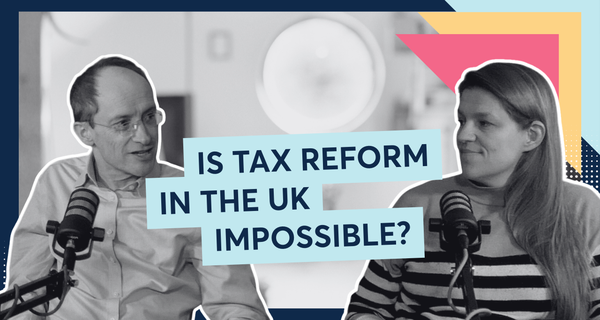
Is the concept of ‘mission-driven’ government currently on life support? In this episode of The Policy Fix, we tackle the delivery problem haunting Whitehall. Nesta’s director of policy Joe Owen is joined by Jill Rutter, senior fellow at the Institute for Government and Andrew Greenway, founder of Public Digital, to discuss why successive governments struggle to turn bold promises into reality.
Our guests explore the ‘accountability fudge’ between ministers and civil servants, arguing that a lack of delivery experience at the top often leads to unbridgeable gaps between policy design and frontline implementation.
Changes are vital. We discuss: how radical user-focused design can disrupt Whitehall’s silos, why breaking the cycle of ministerial churn could keep vital expertise in place, and how we can build a more powerful centre of government capable of challenging the Treasury’s historical grip on reform.
Watch the full episode on Youtube or listen wherever you get your podcasts.
Liked the conversation? Make sure to subscribe and leave a review.
And obviously the big missing thing there has been really what was the government's strategy to grow the economy? And what we saw from Rachel Reeves was some initial decisions which seemed to run very counter to that undermined business confidence. And I think one of the things that has hampered the government quite badly from the start was some initial missteps by both the Prime minister, but more crucially, by the Chancellor. Your delivery record is not necessarily what you're measured up against. You look at the kind of the appointment of the latest cabinet secretary, who's undoubtedly a highly talented individual in lots of ways. But the discussion about her and the debate about her over the last few days, her delivery record has been pretty silent in that conversation, and I think that's quite telling. Hi, welcome to Policy Fix, the new podcast from Nesta, the Research and Innovation Foundation. I'm Jo Owen. Every episode we're going to take a policy problem, look at what the challenge is, what works and how to fix it. You can subscribe wherever you get your podcasts. No one seems happy with the British state's ability to deliver stuff. Keir Starmer has talked about the tepid baths of managed decline. Uh, Darren Jones has talked about the need to move fast and break things, and successive governments have talked about the problems with actually getting stuff done once they're in power. So today we're going to be talking about how do you make things happen in Whitehall, how does the government deliver its agenda? And joining me to discuss that, we have got two top guests. We have got Jill Rutter, senior fellow at the Institute for government, and Andrew Greenway, partner and founder at Public Digital. Andrew and Jill, welcome. So successive governments have bemoaned the blob we can get into in a bit like whether the accusations that ministers throw at the system are fair and right. But do you think we have got a delivery problem in government, and how would you characterize it? Jill. So governments have always had a bit of a delivery problem. It's always been true that people have said actually there's sort of, you know, real problem around implementation. We call it delivery. Sometimes we call it implementation that too often the people who are going to actually have to deliver change on the ground aren't in the room when the policy decisions are made. And there's that gap that sometimes proves unbridgeable, and that too few people at the top of government have experience of actually delivering services in practice, so they will pander to ministers who also don't have much experience delivering services in practice about what can be done. And then those things don't turn out, uh, don't turn out right when they hit the ground. And there's some things that government actually is quite good at doing, some things that are really easy for government to do. Um, governments can introduce laws. Now, whether law changes anything on the ground is a very interesting question. But if, for example, if you're a very easy example, if I'm Chancellor of the Exchequer and I want people to pay less income tax or more income tax. I can do that quite easily just by putting through a finance bill, which changes the number for the rate of income tax. That is not a difficult delivery problem, but a lot of other things that government tries to do. Central government doesn't really control any of the levers or most of the levers, or it really depends on how people react to the systems that we put in place to try and incentivize them to do what government government does. And we have to remember that an awful lot of the people who we're looking to, to deliver change are actually currently struggling to keep day to day business afloat. And there's a very limited bandwidth there to do things. So I think, you know, it's really appreciating some of those constraints and in some cases, the time it takes to build the necessary coalition, create the capacity to make change happen. I mean, Jill mentioned incentives, and I think that's a big part of it. This is almost a sense of disinterest would be possibly too strong a word, but certainly at the very top of the civil service. Fundamentally, I don't think those officials are necessarily rewarded for delivery. And in terms of the talent that comes through the system, your delivery record is not necessarily what you're measured up against. You look at the kind of the appointment of the latest cabinet secretary, who's undoubtedly a highly talented individual in lots of ways. But the discussion about her and the debate about her over the last few days, her delivery record has been pretty silent in that conversation. And I think that's quite telling. I think another part of the characterization, and again, Jill touched on this in part, was a lot of what delivery ends up becoming in government is delivery of legacy. So effectively keeping the lights on and this sort of quite rickety structures that we now have around services, and that takes up an enormous amount of bandwidth and energy just to keep the show on the road, which I think in terms of people thinking about more transformative or different models of delivery as a sort of senior executive. It's very hard to kind of create the space to do that. And so you find yourself in a and this is a fairly classic problem of all bureaucracies, really, in a real sort of rigidity problem where there's a tendency to cling on to the processes or the personnel or the culture of things that have been in place for a very long time. And actually creating the space to rethink those things is often not available to senior civil servants, who are also not particularly incentivized to go there. So there's a kind of a system to try and characterize what I think you guys have described. There's a system that is quite distant in some places from what it purports to be in control of, and it's sort of whistling into the wind a bit because it's saying it's making commitments and promises, but on the advice of people who don't understand what the real day to day looks like on the ground without a deep understanding of the systems. And it's sort of just disappears. And then at the same time, a large amount of the system that is sort of Crumbling around them to, if I can use that term to sort of summarize what you said, Andrew. But missions were supposed to be their answer to this sort of conundrum of governments failing to deliver by picking a fewer, fewer things, focusing over the longer term, focused on outcomes. Um, Andrew, mission driven government like you'll have a better description of what the idea is, but, um, is it dead and who killed it? Um, I mean, I think you characterise it neatly there in terms of that idea that this is if we pick a discrete and relatively bounded set of specific outcomes, which almost by definition, are going to be wicked problems that governments have tried to attack in lots of different directions before, they'll kind of cover multiple departmental jurisdictions and often different layers of the state. And a lot of that was obviously inspired by the work that Mariana mazzucato and others did on missions. Is it dead at the moment? It certainly seems, um, pretty dead, to be honest. It would need some serious resuscitation. It wasn't mentioned by Darren Jones in his recent speech on state reform, and I think that was quite telling. And as ever with these things, I suspect there were multiple things that that that stymied it and stopped it from really kind of taking hold within the institutional structures. Um, one of those, I think, was, uh, the way that it was framed, I think within Whitehall when labor came in, was we sort of see this as a sort of a coordination problem. So mission delivery unit was set up, but certainly from the outside that appeared to be sort of replicating, almost like the cabinet committee type structure. Um, and it was framed as a challenge of, of governance rather than focusing, of delivery. Um, and it also tended to be made up of people who were those very kind of adept civil servants that were working in the existing ways. So to them, if you kind of if you have a hammer, all you see is nails, there's an element of that, I think, in terms of how missions were responded to by the civil service, This. I don't think the politicians particularly helped either, in the sense of the missions themselves were not particularly tightly scoped. There wasn't a particularly clear sense of outcome of what was being driven towards, and that obviously made it much more difficult to land. And for me, one of the sort of the telling points around mission government, when it certainly looked like it was dying was was the initial spending review, and there was no real sense in that process to me, that the logic of missions and the kind of the ways of working that underpin them and that outcome led work and working across departments was really being woven into the sort of the deep fabric of how Whitehall makes decisions about all sorts of stuff, not least accountability and money. That was a real opportunity, I think, to institutionalize it, and that was missed. I think Keir Starmer really sort of missed missed a pass if he was serious about mission governance. I think it's really interesting. Was he really on board with mission government or was it something he just picked up from some people who'd been advising him, which sounded good, because what I think we were really looking for was right at the start of the government, And a declaration of how the government saw missions working. We thought that there would be mission boards, whatever you might call it, which would look very, very different from cabinet committees. When we finally got the list of cabinet committees, the mission boards were just a footnote. They were chaired by the relevant Secretary of State. So that idea that there might be some sort of challenge there or something to actually push those was missing, and it all looked very conventional. And you could say if I was Ed Miliband, I would say, well, actually, I have made a lot of progress on my mission. I set up mission control, brought in Chris Stark from the Climate Change Committee, brought in people from outside, staffed it differently, been, you know, unblocking some of the barriers, whatever, sorting things out. You might agree or disagree with what Ed Miliband is trying to do, but he does seem to have actually cracked on in quite a way that has made him an enemy for some, perhaps a hero for others elsewhere. And I think one of the things that was always a bit disappointing about the missions was how one cross-government they were, because what was really interesting about the climate mission was actually it was a power decarbonisation mission. And actually that department had always been quite good at transforming the power system. It was all the rest of the net zero stuff that was lagging, whether it was on housing or farming or transport or whatever. And I think we lost, lost a bit of a sense of that in the missions. But I don't think Keir Starmer ever really had a clear idea of, you know, was this his big transformative idea of how government worked. And then he cut across the long term missions by then saying, we're going to be judged by these short term milestones that he put in the plan for change. So you look at something like the health mission, which you'd say might be critical to Labour's re-election chances. And what do we get? Rather, we're supposed to have these big shifts away from hospitals. But the one thing the government wants to be judged by at the end of its term is have we cut hospital waiting lists, which cuts across actually the transformation that mission should be should be undertaking? I really agree with you. The point on like where was what were we clear on what the logic was at the beginning? Because I think in all of us will have spoken to people from Labour when they were in opposition about the idea of mission driven government. And it felt like at one end of the spectrum, you had these people who thought this is a fundamentally different organizing principle of government, and it's going to change how we work, and it will change how Whitehall works. And at the other end of the spectrum, you had, well, this is a great way of saying we're going to be less useless than the last lot and a good set of chapters for the manifesto. Perfect. And everyone you spoke to was probably at slightly different points along that spectrum, but there was never really a clear sense of gravity, and I think that is one of the big reasons why they came unstuck. I want to move on to why. your experience, like Keir Starmer and this Labour government, are not the first people who have come in with a sort of animating idea in opposition and a set of policies and then within eighteen months said this feels stuck. The system doesn't feel like it's working. Why do you think politicians find it so hard when they move in to feel like they're getting what they want? Can I just say, I do think there have been peculiarly bad at this. I mean, I think, you know, outstandingly bad, um, in terms of getting what they want because I think, you know, if you looked at the the coalition coming in in twenty ten, they're sort of, you know, big top issue was we need to get the public finances back under control. We had an emergency budget from George Osborne, and they sort of, you know, started with their long term economic plan in nineteen ninety seven. Tony Blair might have got quite frustrated, but Gordon Brown was doing lots at the Treasury. And I think one of the things that's been quite interesting is how how uninterested in policy the Prime Minister seems. He's obviously had to spend a huge amount of time on foreign affairs, and seems to really quite like spending a huge amount of time on foreign affairs. A lot of that with Trump management, but even before that with Ukraine, etc.. So I think that's that's been quite interesting. But there was some, some places where ideas did seem to be better worked up. If you look at the Ministry of Housing, Communities and Local Government under Angela Rayner, they seem to have sort of cracked on in quite a way. I'm not sure. It seemed to take an inordinate amount of time for Wes Streeting to write his plan for health, which you thought, you know, well, don't do an Andrew Lansley and say, this is definitely what we're going to do, and I'm not listening to anybody's views on it. I'm just going to press ahead regardless. But you do think there was a bit of a middle way between waiting as long as we had to wait for Wes Streeting plan, and they might have done had more work done on that beforehand. So there's sort of areas where you feel sexual state had things to do, but you don't feel that number ten had a big grip. And obviously the big missing thing there has been really what was the government's strategy to grow the economy. And what we saw from Rachel Reeves was some initial decisions which seemed to run very counter to that undermined business confidence. Um, and I think one of the things that has hampered the government quite badly from the start was some initial missteps by both the Prime minister, but more crucially, by the chancellor, which, uh, which cast a pall over the government right from the get go. Um, you know, I will declare my hand as next Treasury official. I thought Rachel Reeves was right to get rid of the winter fuel allowance, but she didn't. Such a ham fisted way that she took a real look at pensioner welfare off the agenda. uh, she then was so tied in by her manifesto commitments on tax, which you feel they might have been surprised quite by the extent of problems in the public finances. But everybody was saying there is a much bigger problem than the government is surfacing. In the run up to the election, they were so tied in that she went for about the worst fiscal measure she could have done in her twenty twenty four budget. And the result is that growth has been very anaemic. It was almost, though, Labour thought, going in that all you needed was a Labour government, and the growth rate would magic back to the growth rate we saw in the noughties, because you'd hear ministers time and again when they were asked what they were going to do about growth. Just saying the growth rate was much higher when we had the Blair-brown government or the Blair government in power. And yes, but the world conditions were very different then. You didn't have to deal with lots and lots of the problems we have now. Can I, want to sort of, um, give the current government a bit of a break, but actually mainly, largely just zoom out a bit because I think there is on this question of government getting stuff done. We often when we talk about the ability of current governments, whether it's here or even in other countries, how effective they are at getting stuff done. Use twentieth century comparators to say, but you know, for us, we did the welfare state, the amount of housing that we built. Um, it will point to infrastructure. And it feels like the role of government, though, is sort of fundamentally changed in the last fifty or seventy years. We don't it it's a much less centralised system. We still have a very centralised system. But devolution has grown. Um, we have privatized things. There's been a growth in public bodies. You sort of have a centre of government that has less power than it used to, and it's also regulating a bunch of companies from outside the UK in a much more international system. Do you think it is harder to govern now than it was? Uh, and you need a different type of capability and capacity than what we did fifty years ago. Whether it's harder or not, I think is probably giving the current generation too much of a pass. Um, and certainly when you look back at the achievements of yesteryear, certainly we could have had very similarly grumpy conversations about the quality of delivery across government at that point, too. So there's a sort of hardy perennial to this conversation, I think. I mean, I do think it's interesting how when you look at, um, Danny Kruger and reform and what they're saying about some of this stuff, there definitely seems to be a theory of change emerging from parts of that spectrum where they see this sort of diminution of ministerial power, which they kind of blame on quangos and judicial reviews and elements of that. So there's a very much a sort of sense, I think, among the the broader political class, if you like, of where these lots of conversation about levers recently. We keep pulling these things and nothing seems to happen. And I sort of think quite a lot of those analyses are there's some truth to elements of it, certainly the kind of the the drive towards outsourcing and that kind of era and new public management. And I think the general sense that the bureaucracy was pretty inadequate at managing a lot of those relationships. That's not to say the outsourcing necessarily needs to be cast out entirely, but certainly there were lots of elements in which that didn't work. The thing I think that's materially changed and is actually accelerating in the last even ten, fifteen years is people's expectations of the state, and particularly in terms of service quality. And part of that, I think, comes about from, you know, the fact that we have, you know, magic tricks in our pockets with our phones in terms of service quality, which I think has genuinely shifted the window in terms of what people expect day to day. But I think also it's not just the quality of those services, it's the tightness of the feedback loops that exist within them. So people are used to kind of looking at, you know, the apps that they use or the things that they do online and those services changing it sort of effectively week on week, month on month, in response to people saying, well, that didn't work or I didn't understand this. And that's sort of become inherent to a lot of those kind of companies that are thriving now, surviving their ability to be responsive. And government hasn't really built that muscle at all. Um, or if it has, it's only really built it successfully in crises where actually government can be really, really good at being responsive, but it tends to only really achieve that by sort of subverting or ignoring a lot of the status quo rules that it imposes upon itself. And the thing that I sort of think is perhaps materially different about governing now is somehow the bureaucracy has to do the sort of patting head and rubbing its tummy at the same time. I can't believe you can do that. Just about that was that was dangerous on camera. Um, can it retain the ability to to offer stability, which it has to do. It hasn't. And you shouldn't frighten markets. There are certain things that just have to run and are kind of in operations, but equally it needs to kind of have this muscle of renewal and responsiveness is inherent to it and somehow pull off doing that in peace time, as well as when the chips are really down in crises, which seems to be when it's able to do it best. I was going to say, I think one of the problems really, for this government, for its predecessor governments, is just the economic backdrop makes everything much harder, because if you have a growing cake that you can distribute, that is hugely easier. A lot of the decisions of the government from nineteen ninety seven until the financial crisis were just about how to how to distribute the extra that you had, which is a hugely easier question than how are you going to manage with very constrained situation, which is why the growth story so matters, because it's growth that allows you to, you know, make changes and compensate losers and do do change. I also think, though, that politicians are very much now victims of their own sort of lack of belief in what they're doing. Uh, so they don't seem particularly persuaded that they're doing the right thing and they should sort of forge on regardless of what the immediate reaction is. It's been really interesting, I think, to see how enthralled to its backbenches this government has proved to be with some of its big changes, that they've failed to sell those to the backbenchers where they have made decisions. It's actually not the civil service that's getting in the way of welfare reform. It's the fact that they want to do things they didn't, not a particularly well thought through way and were forced back by their backbenchers. And I think it's that sort of, you know, reaction. But I think one of the things that I think Andrew's right, that there is a big issue, that expectations have risen. So the sort of differential view that people had maybe until the nineteen nineties about public services has You could argue that on some of the sort of privatizations, not an argument that we have to renationalise or that that's going to be a magic bullet. But the sort of model we had of regulation hasn't been rethought since the nineteen eighties and no longer fit for purpose, that there are big challenges that, uh, whether it's about sort of big tech, where you also have a really quite aggressive US government trying to constrain your space and weaponizing. Yeah. Uh, weaponizing that as well. I want to move us on to talk about examples of where the system has done things well. And Andrew, I was going to start with you and GDS. Mhm. Um what did it do. Right. Uh, there are a full spectrum of opinions on GDS on this panel I'm delighted to say. What did it do. Right. I think what it did right. Um, fundamentally uh, from the beginning was It didn't take for granted the hygiene factors of government that it was given. So what do I mean by that? Well, one of the kind of the very kind of elemental things that GDS pushed back on from the very get go was it refused to take the standard issue Cabinet Office laptops for its staff? Because if we had done that, the software developers that we'd hired would have just laughed at us and ran out of the building very quickly. And that kind of principle of and it's quite a hackneyed thing, I think, in terms of start up type behaviours, but in terms of approaching some of those questions around procurement or recruitment or even office space from relatively first principles, it was remarkable how quickly that kind of inculcates a different way of working and a different culture. Now, you know, there's definitely a kind of an element of which GDS probably took that to, to extremes and was probably isolated itself to some extent from certain people. But I think that that kind of apartness was quite an important element of what it was doing, not least to attract different kinds of skills and different talent into government. And now, I mean, when GDS started was back in twenty eleven, certain roles, you know, things like product management or service design, what didn't exist at all in government. And you've now got a sort of digital and data profession that's relatively healthy and has got tens of thousands of civil servants in it. And that's a fairly significant legacy, I think. So that was quite important. And then the sort of the other kind of cultural flip, which again, kind of created quite a lot of conflict, was that idea that those services and things like Gov.uk were built very intentionally with the kind of public users at the heart and the mainstream users at the heart. Um, basically the sort of the principle that, you know, you don't need to understand government in order to navigate government, which worked very well for lots and lots of people. And if you kind of go on to Reddit or whatever and you ask what people are proud of about the UK, it's quite remarkable how often people say online government services, believe it or not. So we've succeeded in that. It's succeeded in that at some cost. So there are definitely groups and particularly kind of more expert users of government who are like, what on earth is this? This isn't give me what I want. So there was an element of trade off to that. But I think part of why it worked as a delivery mechanism was it was prepared to make trade offs and prepared actually to engage in conflict, which in itself was sort of relatively kind of countercultural within Whitehall. I got I grew up as a sort of classic generalist, strategist type civil servant. Um, and if there was an argument in the room that meant someone had failed, like you hadn't squared the room, you hadn't got the documents right beforehand, that was inherently almost a bad thing. Um, and GDS sort of fronted up into that more deliberately. Um, and although that left some people less enamoured with it, I think overall it led to better outcomes. What do you think the lessons are for other bits of government? Because not everywhere can sort of incubate a new organisation. And we've seen government do that reasonably effective in some areas. Vaccines task force, AI Safety Institute. But part of the challenge is getting everything to work differently. What would you sort of distillers if there's a civil servant listening to this, that is in a sort of directorate somewhere in Defra and is like, well, I can't build a new organization, but how do I work differently? I mean, what underpinned a lot of the behavior and focus of the people who are in that team? Um, often quite explicitly, was we're here to do this thing, and we recognize that we're going to have to be brave, and it might mean we have to effectively take a personal cost to our kind of career calculations. A lot of people come in from the outside, felt that and sort of recognize that, you know, we're here for we're here for a good time, not for a long time. And that's very true. I think of things like the vaccine task force and other things like the Social Exclusion Task Force, other things that were set up in that vein. People approach those problems, both the insiders and the outsiders, with that kind of genuine sense of mission to the exclusion of things that might have made their progression potentially slightly stickier going forward. Um, and I think, you know, when I talked to lots of civil servants, now, I'm always taken aback. And this is at all levels, from the very top to, to sort of starting out the level of insecurity that quite a lot of civil servants feel about their professional trajectories, they sort of get stuck. It's like, what else could I do? I'm just a civil servant. I've learned how to work the civil service. I'm not going to be of value elsewhere. And I think on a personal level, um, you know, the enormous amount of talent there is in individuals within government should make people feel more confident. If you do the right thing, lots of doors will be open to you. But in that structural sense, how do we create a bureaucracy that has that level of porosity and kind of ability to kind of come in and out and broaden your experience and insight and kind of executive depth? I think that's really important. That would be a big part of, I think, what unlocks some of the transformation. Don't worry, civil servants, if it doesn't work out outside, you can always come on a podcast. Um, I think picking up on what Andrew said, I do think there's a really interesting question. How much of government can you convert, if you like, into these sorts of, you know, clear tasks with a clear outcome that you're going to stick with, where you can get excited about doing that piece of work because you're going to see it through. So we did a project quite a long time ago about the Olympics and the Olympics. London twenty twelve. You know, big success at the time. You know, we built the stadium. It opened on time. Every you know, most people really liked the games etc.. What was very notable was that people who worked on the Olympics were wanted to stay with it, because if you've been working on the Olympics in the early years, you want to stay for when we actually hold the games. But the they were told by their HR managers, this is bad for your career. You know, you need to be moving on. You need to be getting different experience. You know you're holding back your promotion. Too often we, you know, civil service structures say go somewhere else. Do this. Don't stick with that project. We don't incentivize people to stay. But, you know, but people stayed because they want to be part of it. And they got huge job satisfaction out of it. Hopefully they went on to other things afterwards. But I think there's a really interesting question about government, about how much of government can we turn into this sort of area where you're told you have license to do quite a lot of things in a different way, if that's what it takes to deliver an outcome and you will stay with it, you'll be rewarded for staying with it and seeing that project through. Or do you find that actually you devoted your time, sacrificed a bit to do something? The great thing about the Olympics is once you sign the contracts with the International Olympic Committee, you can't get out of it. They insist on cross-party support there. They're monitoring that. They have the sort of template they're holding you to account every six months when they come on the visit to make sure you're on track. Too often you might say, well, I'm really interested in, you know, I'm going to devote myself to Bridget Phillipson, send reforms. I'm really going to see this through, and I'm going to bust it or whatever. And then in six months time, there's a new secretary of State for education who wants to do something different and cuts you off at the knees. And that's not the thing you're doing. So I think it's really interesting. Where can you do those things? Some of the things Andrew's mentioned, the vaccine taskforce was very short term. And the huge thing about Brexit taskforce money was also no object. And it's much easier to get things done if you're told money is no object. But I think when you get real satisfaction in government is when you are given a bit of licence to do stuff and too often in the civil service. You don't feel that your superiors or your ministers are giving you that licence to do things in a very different way, because ultimately, the trouble in the civil service is that the accountability rests with ministers. We're always asked, why is the civil service so risk averse? Why is it always highlighting to ministers, you know, what could go wrong? Well, that's because actually the people who end up on the floor of the house answering for when things go wrong, not the civil servants who've been doing it, it's the ministers. And, you know, part of your job is to make sure that they are taking decisions with their eyes wide open to the risks that they might be running. I think one of the one of the points that's been cut through both yours is like the weird delineation sometimes between functions in the civil service. And I always thought this with policy and delivery, um, in that in number ten, you've got a policy unit and a delivery unit in lots of departments. Now there are separate policy and delivery units, but they all have people covering the same portfolios as if policy and delivery are totally different, and the way in which you might respond to some delivery issues is by policy change. And the way in which you do policy well is by thinking about delivery. And it just seems really odd to me that we have this like separation and you speak to people about it and they'll say, well, um, they're fundamentally different skill sets to which even if you agree with that, that doesn't mean you can still have people with different skill sets in the same team. Yeah, absolutely. And I find I've always found that kind of delineation slightly bizarre in its way. Um, I just wanted to come back briefly on something that Jill was saying about that kind of need for political stability and in terms of the focus as much as anything else, I think the coalition was a really interesting model in terms. I mean, that's when GDS grew. Um, it's when I was still a civil servant, and there was something really quite powerful in a the fact that there was, relatively speaking, relatively low ministerial turnover. Unusually, it was quite a stable kind of cabinet most of the time, because the machinations of moving all the pieces around on the chessboard was probably just too annoying for the principles that helped. But the coalition agreement and the fact that number ten or the centre collectively contracted and and crucially, wrote stuff down. I know it seems incredibly banal, but like, I don't think it was an accident that you had a combination of relatively stable cabinet, relatively clear articulation of priorities, and if it was a bit of a shopping list and also a relatively experienced cabinet like in this group, there were very, very few secretaries of state who'd ever been in that chair before, which I think contributes in large part to why they've been quite surprised. Why isn't this working? You mentioned before he's one of the very few who'd been in the chair before, and I don't think it's a coincidence that he he knew how to play that game better. But the policy and delivery thing, I mean, I've bought on about this several times in many forums, like there is this sort of sense. I always got the sense of this kind of caste system that exists within the kind of the Whitehall functions of which policy has, has long been the kind of the first among equals. And it tends to enjoy that sense of proximity to ministers. And, you know that that kind of the geography of power tends to cleave towards policy. And the people who kind of get drift in that direction are the people who are confident in rooms with ministers. They're good at writing submissions, whereas delivery people, I'm not sure, necessarily have an entirely different set of skills, but they often have a different perspective on the world and what motivates them. They'd rather spend time with the actual people that they're helping nearer the front line. Um, and all the kind of the occasions where I've seen teams in Whitehall do do highly impressive things, they have managed to kind of conjoin at a sort of mutual respect between those two halves of the coin. Um, I've never fully understood why number ten has separate strategy and delivery units other than possibly branding or policy and delivery. Um, but I think the multidisciplinary, multidisciplinary nature of those teams, um, is almost the single most important organizational change I'd make. There's a really interesting question. Maybe this is something, Vanessa, to look at, Joe, which is if you made civil servants more personally accountable for policies so that you know, your name was going to be associated with the policy, not the minister, as being the sort of senior, not just the senior responsible owner until you get another job, but you were actually there. Who would you want on your team to deliver it? And, you know, if I'm charged with, you know, one of the sort of big government reforms, who would I collectively want and want there on it? Would it just be a bunch of other people who just got very same experience of writing briefs for ministers, answering some of those sorts of things? Would it actually be a very different looking team, and I think it's a really interesting thought experiment to say, if I really thought that I was going to be held responsible for this thing happening in practice, how different would my team look? Hmm. Can I, um, I do think that is interesting. I'm not just ducking your, um, uh, your, um, orders for what work I should be doing. Um. Uh, I wanted to come back to you, Jill, on Brexit and Covid because I think we can critique, uh, various elements of delivery from this government, previous governments, uh, over the last five, ten years. But I think if you sort of zoomed right out and said, what has government done in the last decade, you would say it delivered Brexit untangling itself from the EU, lots of things in that far from perfect. But when the vote happened, a lot of people said it wouldn't be possible without mass catastrophe. Government did that. And then the response to the pandemic, in which, again, lots of things to fairly criticize the government for, but also fastest vaccine rollout, etc. etc.. Um, do you think like a lot of these challenges that we're talking about, is that a system who has spent the last decade being bent out of shape by like generational crises, and therefore it's only fair that they are, um, not quite as hot on the, um, as Andrew said, hygiene factors. I think you have to chalk Brexit up as a big achievement. So as you rightly say, you know, you start from somewhere where they've been minimal planning. In June twenty sixteen, when the referendum result came through, uh, we rolled over all the trade agreements that we needed to. We've negotiated some new trade agreements, including a big trade agreement with the EU. You may not think it's the right one, but it's the one the government wanted to sign up to. We've created a not perfect border, but we've created a new border. We've disentangled ourselves from the EU systems and increased regulatory capacity. We may not like the way it's being used. There may be some holes in that, but we've substituted and there haven't been absolute disasters on, you know, under-regulated medicines getting into the system or, you know, the Civil Aviation Authority taking over responsibility from Isa and suddenly planes crashing all over the place. I think we're more looking to some of the things that might go on in the US with their approach to regulatory reform, rather than the UK. I think we also shouldn't forget just the amount of bandwidth that doing both Brexit and Covid took up and we, you know, did some interviews with ministers about Brexit. And basically one of them said, you know, the government just gave up doing anything else because it was so preoccupied for so long with Brexit. And then it had to cope with Covid. The reaction to that and then it had to cope with the energy price shock, which was another thing. So actually we've had crisis after crisis waving through, and that came on the back of something that also had very severe implications for the public finances, which was the global financial crisis. The UK particularly exposed because of the way we regulated our banking system. So we basically had four generational crises in not very long. So you might say, you know, and we still expect, you know, hospitals to be better, schools be better, etc., etc. maybe we should be more surprised that they're still standing at all after all that. But one of the things I think the lesson that people have taken out of things like Covid is that the state will be there in a very comprehensive way. This goes back to Andrew's point on expectations, Dan. Exactly. Andrew's point on expectations that you know, that the state could step in and guarantee everybody's income. I mean, even Jeremy Corbyn is widest dreams. Didn't expect to de facto through the back door nationalise every coffee shop in the country, which is what we did through the furlough scheme. I thought when Rishi Sunak stood up to announce the furlough scheme and he announced that we were going to basically flip the tax system around and support everybody through the tax system, that I remember holding my head in my hands and thinking, God, you know, he's making promises which they will never deliver. And yet that actually worked. And one of the reasons, when you talk to people in the Treasury about why that worked is they said that unlike other tax policies, and this is a change from when I was doing tax policy in the Treasury. Unlike other tax policies, HMRC were in the room when they developed the system. So it wasn't just Treasury officials, you know, your colleague Tim Leunig among them, saying this is the way we need to support people. They actually had the HMRC people sitting there at the time they were making the policy decisions to say, can you actually make this thing work in practice? Because there's no point making bold promises to people. They'll get a bunch of cash. If you couldn't get a bunch of cash to them. And actually government did that incredibly well. So you can say some of the decisions, some of the policy calls on Covid weren't right, but an awful lot of the implementation calls were actually done very well. So we've talked there about some of the conditions for success, the importance of the right teams and the right culture. I want to, before we finish, push on some sort of like big set piece changes that a government really serious about getting more stuff done, uh, to use the technical term, might want to pursue. Andrew, you've written recently, which maybe this is an exaggeration that we sort of might need to start from a blank sheet of paper again and do a massive wholesale review of what is the capacity of the state that we actually need, and therefore what are the structures that we need in order to support it? Is that fair? Yeah. Pretty much. Um, I sort of think we kind of go through these, these periodic moments of reflection, I think as a country and as a state, and certainly in my professional lifetime, I don't recall the same degree of consensus that there is something sort of fundamentally that's not quite, quite right in terms of the inner workings. And I think if you kind of go back to, you know, I am very much a deep nerd on this and we've got, you know, pored over Northcote-trevelyan and Fulton and all the rest of it. And like, there is something to me, quite fundamentally different about what's needed, about the kind of the character and composition of the bureaucracy. Um, and to some extent, it touches on what, what Jim was talking about and those, those point crises of Brexit and Covid and the financial crash and so on. In all of those kind of instances, we actually did a pretty good job, and a lot of the kind of the elements of of how the state can work incredibly effectively in certain scenarios are there. But almost in all of those instances, like the the default behaviors, the default cultures are sort of tend to be working against that. Um, and, you know, again, I'm not all everyone would disagree with me here. I agree there is that sense of and we touched on it in terms of the porosity of the civil service. To what extent is the kind of the holding of permanence the right thing now? Is that kind of leading these kind of institutions to ossify, both in terms of the skills and perspectives that are in them. Does it make them open enough to the kind of the skills and and abilities from outside? I'm not sure, but I think it feels like time to ask some some relatively fundamental questions about how do we get a state that is more effectively responsive, more of the time? And I mean, as I say, it's a very it's quite an establishment answer to quite an establishment question, but I sort of think this is Britain. So we need to sort of at least clothe it in relatively crusty clothes to get everybody feeling comfortable with the idea. But also, you know, we're not in eighteen sixty, so we don't enjoy the same level of political stability that we had before. So there is a case of building a kind of a coalition across the political spectrum in the national interest to have the real staying power behind some, some changes. But that's got to be in coalition with with the senior civil service itself. Not necessarily all of it, but, you know, you look at Northcote-trevelyan and of course, that was a partnership between a very senior official and a very senior politician. And I'm fairly sure that any similarly radical reform of the institution would need, need the same ingredients. So I do think there's something quite deep about that character that we need to look at. And in part, that's because I think there are far too many people like me in the civil service. Still, there are still too many generalists knocking about and that we are close to, in point instances, a much more effective state that would make us a much more competitive democracy. And that's sort of why I think this moment in time is particularly important when you look at people kind of comparing the UK and indeed the US and other democracies to more authoritarian states, and they think, well, hang on a minute, they seem to be able to get stuff done that we can't. And I think using that kind of sense of sort of democratic dread, frankly, as a kind of forcing function to have a proper look at our institutions is overdue. What do you think, Jill? Time for a big review. Is there any structures that you would change? Would you change the center of government? Um, I think if you start at the top, what's very surprising about, uh, about number ten, and I think prime ministers are always surprised about it is how underpowered it is. Um, underpowered relative to every other government department. Very underpowered compared to the Treasury. So you get sort of power leeching to the Treasury because Treasury controls the money. Prime ministers always end up very frustrated with that. But then, you know, maybe put some things in place, but they don't sort of, you know, make things permanent. So what's quite interesting is Tony Blair invents a strategy and invents a delivery unit. But then Gordon Brown decides he doesn't need them, sort of exiles them, downgrades them, things like that. So a new incoming prime minister has to invent structures from scratch. Nobody else has to invent their department from scratch. When they come in, they get a department that says, this is what we do. These are the people we've got, and then they can change them, but they don't have this problem of sort of basically, you know, turn up and there's not much there there. And I think that is a problem. It's one of the reasons why governments get off to a slow start, because the Prime Minister can't call on quite a big resource to do things. So I do think we need a more powerful centre. Department of Prime Minister and Cabinet seem to work quite well in other jurisdictions with more ability to drive, you know, the government's agenda through and not just see it all through a spending lens, which the Treasury might be tempted to do. So I think that is one thing I would do. I think we do need to sort of look at how we incentivize people. Um, so you actually can go and work on things that you're really interested in, uh, where you've got ideas. So I think an awful lot of the civil service has been really hobbled by the sort of competency approach that, you know, just assumes everybody is entirely interchangeable. Um, you don't look at sort of how do we create really good, effective teams of people who've got some ideas which may, um, maybe what the minister wants to do, but they've got really interesting ideas and who are passionate about moving on in the direction. Now, is that a political appointment? Uh, no, but I think it's a sort of policy appointment. Why? Why is the fact that I'm really interested to know about that area of policy, not a big qualification for doing jobs in some areas? I think it should be a sort of very attractive thing to come in from outside to actually do a big job in government. We should make that easier. But then I think the real problem is you do. And I thought, well, Andrew was saying about the coalition was really interesting. If you think you're working for ministers who just change at the drop of a hat, then burning your boats elsewhere, you know, dislocating yourself to do something, you know, becomes less attractive prospect, which is actually, interestingly, one reason why a lot of expertise resides outside government in the arms length bodies, because those are areas which are more stable, value expertise more. So it's quite interesting how you could spin things out, maybe then take them back in. Very interesting. One of the characteristics of this government has been how many reviews it commissioned when it came in, which I think is necessarily a bad thing. But the reviews then go back into the department for implementation. And, you know, the review team is stood down and then you get it handed over to somebody else, which doesn't seem like the right way of doing it. If I've been asked to look at how I transform, whether it's the water industry or employment support or whatever, why not actually say, you know, we would like you to take this issue and run with it, come up with proposals, check in with ministers. We'll sort of give you political cover. We'll have the debates about resourcing and things like that. But we would like you to take this on as a long term project, not just to develop proposals, but develop proposals and then see them through into action. If you and the people supporting you are all prepared to do, that will give you the teams that you need inside or outside, then you know and you can show real concrete change, then you know, that will be a really major contribution to doing things very differently. The problem that government has, though, is there's an awful lot of business as usual that you still need people to do. So you still need people who can answer parliamentary questions, deal with correspondents, churn out briefings for things. And it's not all just high profile, interesting transformation projects. When I was at Defra, we did, uh, with, uh, Ravi, who runs Nesta. Now, we ran a strategy refresh for David Miliband, who was our secretary of state, and we went through what Defra did. And one of the problems in government is you have to do an awful lot of things where there's very little sort of, you know, great political benefit for doing it, but someone has to do it. Uh, you can't be like a private business where you say, actually, we're not very interested in that. We're not making very much money on that. Those people are too difficult to deal with. We'll just drop it. You have to perform lots of those functions. So we actually divided the business department into the sort of licence to operate areas where basically we just want to make sure nothing went wrong and we did those as cost effectively as possible, and those could be sort of managed for that. And basically we didn't want ministers to have to spend very much time on them because they would only spend time on them if they were going wrong, and then identified the couple of really high profile objectives that ministers wanted to use their time and effort to advance. And people in the department really hated it because they really hated their their second or their sort of function being designated license to operate until we had to implement some spending cuts in the department. And when we had to implement some spending cuts in the department. David Miliband was our secretary of state, said, well, of course, the license to operate stuff is the stuff we have to do. So they have first call on our resources and only when we've made sure we can do all of them can we actually find some stuff, you know, some additional resources to put into the budgets, things we really want to do. So I thought that was quite an interesting way of thinking about government. How do you actually, you know, divide between those core things that we're going to have to do? How do we do those as efficiently as possible? And where actually are we going to focus our political capital, our legislation, etc., on making sure those agendas are advanced? So since you've told me that I've used that as a model quite a lot to like think about how government works. And actually eighty percent of what the half a million civil servants do fit within your license to operate category in which, um, success is the sort of absence of failure. If there is failure, everyone knows about it, and it's the number one biggest issue. But if it's success, probably no one's talking about it. And then the remaining twenty percent is divided between the stuff the world throws at you and the stuff that you want to throw at the world. And ministers often think they're going to come in and spend all of their time throwing things at the world. And actually they spend most of their time having stuff thrown at them. Um, but we we have such a difference in our civil service. So to come back to your point, Andrew, on a massive review, like one of the things I think it should look at. And then I'm going to ask you guys for a final recommendation before we close, is the structure of the civil service. And I sort of think it's slightly mad that we have this enormous workforce that are doing fundamentally different roles that we try and teach us, teach we try and treat as a monolithic block in that a lot of the conversation we've talked about, we haven't been talking about the of the half a million civil servants, the near four hundred thousand that don't sit in central government departments. Um, and the way in which you want to try and manage talent and drive reform in those departments will be totally different to probably how you want to manage it in Jobcentres or in the probation service. And yet we have a system that makes it really hard to do that proper differentiation. Um, so that was what the Next Steps review was actually about. The sort of new public management approach was actually recognizing that. And one of the things that it said was that, you know, people don't pay very much attention to all those big management tasks which, you know, actually count for much of the citizen experience of government. And what we'll do is, you know, spin those out into these agencies, put people who are interested in managing those in charge rather than it be, you know, one line in the job description of a disinterested policy official, which is what it had been to date, and we will much more explicitly give those service objectives and do that. Now we, you know, that goes in and out of fashion. So we've tried that. I want it back in fashion gets back to it and and reconnecting it with the policy. Because when that worked well you have all of those things together. And when it didn't you had agency over here and then policy up in the gods up here. And then never the twain shall meet. I'm conscious of time. I'm going to end with one question to you both, which is quick fire question. Imagine Keir Starmer calls you now and says you might have heard, I'm interesting. Interested in moving fast and breaking things. What is the one thing you'd like to break? Um, what is your answer? Jill. And then you, Andrew, to finish. Well, first of all, I would say that's terrible language to use. Sorry, Keir. Um, because we hear so much about, uh, about breaking things, you know, disruption and stuff like that, and nobody actually says, what's the better thing they're going to put in place? So my question back to Keir Starmer as your prime minister. Prime Minister actually, what's the thing that you would like to see the state doing better than it is now. So what's what are the improvements you want? If I was Antonio Romeo, so if I was Romeo, if I was the new cabinet secretary, I'd be saying, okay, we've heard all about breaking things, disruption and stuff like that. You know, just tell me. I need to actually say to people, don't worry about breaking things. We may have to break things to get there, but actually what I need to know is what does the end look like? Not, you know, that I'm going to be measured in a sort of Dominic Cummings way just by how much mayhem I can cause. Okay, so the thing you're breaking is the neon move fast and break things sign that Darren Jones had behind him. Certainly breaking that and certainly breaking that. In fairness to him, I'm sure he said move fast and fix things, but I don't want to defend it. Sorry. I mean, I if it's one thing and it's quite a tactical thing, but I thought the model of Covid press conferences was like a fascinating, different paradigm of accountability. You had the minister up there, you had the officials up there standing next to them. It was very clear who was there to do what. It's very clear the outcome that they were trying to get to. You were presenting the data in front of people, and you were sort of disintermediating the media conversation a bit. You were talking more directly to people. So I would suggest, Prime Minister, you pick assuming that you have five outcomes. You're very well defined that you want to hit. In the next three years, I would have a press conference, much like the Covid style, every couple of weeks on each each of those. And part of that is that I do think state capacity to use the jargon, is a question of substance. It's also a question of style. So I do think there's an element of storytelling about it. But kind of again, quite tactically, nothing kind of gets the machine moving more quickly in a particular direction than the idea that the minister might have to stand up and say something about it every couple of weeks. And if you can make that a substantive moment rather than just an announcement one and point at the data and go back to it again and again and again and again, I think that might make quite a big difference. The one thing, the one thing actually, I would quite like to do, this isn't an institute for government thing. This is my thing. But you can read about it in a paper I wrote for the Institute for government is. I think the civil service should be forced to take more responsibility and be more exposed and more independent of ministers, which may sound very weird, but I think that an awful lot of the changes that ministers want to see happen would happen if you force senior officials to be more publicly accountable for things that happen, because then I think we would suddenly discover that, you know, you don't churn through civil servants at a rate of knots. You do actually appoint people who know what they're doing. You do actually sort of look askance at whether things are genuinely deliverable. And I think it's time to break open the accountability fudge between ministers and civil servants. We found something you wanted to break in the end. Jill. Andrew, thank you very much. Thank you. If you enjoyed this podcast, please do like, share and subscribe wherever you get your podcasts. And do share with all the policy nerds in your life. We are Nesta. We are a research and innovation foundation and we design, test and scale solutions to society's biggest problems. And we are a registered charity. If you would like to find out more, please go to. UK.
How to fix the way government works
Jill Rutter, senior research fellow, UK in a Changing Europe
Jill Rutter is a senior research fellow at the UK in a Changing Europe. Previously, she was programme director at the Institute for Government (IfG) directing the organisation’s work on better policy making and Brexit.
She is an experienced former senior civil servant, having worked in HM Treasury, Number 10 and Department for Environment, Food & Rural Affairs (Defra).Jill’s writing is frequently in the media and she is a regular commentator on radio and television.
Andrew Greenway, author, founding partner, Public Digital
Andrew is a leading thinker on modern state capacity and a prominent strategist in the global movement to reform public institutions. As a former UK civil servant and founding partner of Public Digital, he has spent over a decade 'hacking bureaucracies' to make them fit for the internet era. In late 2024, he transitioned from his role as Public Digital’s first Managing Director to focus exclusively on the firm’s global thought leadership, advising heads of government and international institutions on the structural reforms necessary to deliver mission-driven governance.
We extend our impact through two specialised units that help people and organisations to solve complex problems and achieve their goals.
BIT helps clients from government, nonprofits and the private sector to improve people’s lives through our empirical problem solving and deep understanding of human behaviour.
Challenge Works designs and runs challenge prizes to spark innovation in science, technology and society.

Join our mailing list to receive the Nesta Edit, our regular newsletter showcasing how we design, test and scale solutions to some of society's biggest challenges, with updates from Nesta, BIT, Challenge Works and the wider innovation sector.
* denotes a required field
You can unsubscribe by clicking the link in our emails where indicated, or emailing [email protected]. Or you can update your contact preferences. We promise to keep your details safe and secure. We won’t share your details outside of Nesta without your permission. Find out more about how we use personal information in our Privacy Policy.