How Andy Burnham can close Britain’s tax gap, with Dan Neidle
 www.nesta.org.uk/feature/policy-fix-podcast/how-andy-burnham-can-close-britains-tax-gap-with-dan-neidle/
www.nesta.org.uk/feature/policy-fix-podcast/how-andy-burnham-can-close-britains-tax-gap-with-dan-neidle/
www.nesta.org.uk/feature/policy-fix-podcast/how-andy-burnham-can-close-britains-tax-gap-with-dan-neidle/
Nesta is a research and innovation foundation. We apply our deep expertise in applied methods to design, test and scale solutions to some of the biggest challenges of our time, working across the innovation lifecycle.
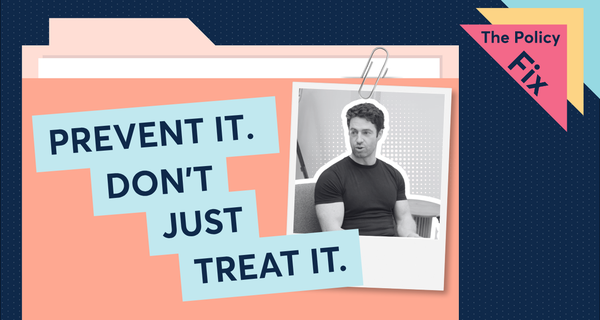
[00:00] Gosh, I mean it feels like science fiction at the moment because the tax policy for the last 20 years has not been principles driven. It's been tax as an instrument for buying votes if we want to be crude about it and tax as an instrument for raising money. And broadly speaking, that is it.
[00:18] Ravi Gurumurthy: Hi, I'm Ravi Gurumurthy. I'm the CEO of Nesta and I'm hosting a miniseries of our podcast Policy Fix on what Andy Burnham should do. There's a huge flurry of activity in Whitehall right now as Andy Burnham plans his first days in government and we're going to be contributing to that with a series of interviews with different policy experts.
[00:38]With me today is Dan Neidle who is a tax expert, lawyer and very well-known commentator on tax issues. And I think it's going to be one of the most important conversations we have because the government's got an incredibly difficult task dealing with the pressures from defense spending and right across government, but also amidst weak economic growth and with the constraints that the manifesto put on them, not to raise income tax, not to raise VAT and national insurance. So Dan is going to be talking to us about how we thread the needle. Dan, welcome. Thanks very much for coming in.
[01:07] Dan Neidle:Thanks for inviting me.
[01:08] Ravi Gurumurthy:Um so I want to start with not just the—we'll go through the practicalities of how can we raise some money—but let's start actually with the principles because it's a bit of a risk at the moment that tax has lost all legitimacy. Every time you get a fiscal event it feels like um someone's trying to grab money in the stealthiest possible way without—because they are. Um and you know there have been various attempts historically to try and say what are the principles of tax or let's simplify tax—Office of Tax Simplification. Is it worth starting with—I talked about a tax charter. Could you actually establish the principles that you're going to work towards in the next fiscal events but also try and try and put a bit more rigor through that rather than the Office of Tax Simplification? Is it worth starting from a principal perspective? And if so, uh what would you—what would be your tax principles?
[01:55] Dan Neidle:Gosh, I—it feels like science fiction at the moment because the tax policy for the last 20 years has not been principles driven. It's been tax as an instrument for buying votes if we want to be crude about it and tax as an instrument for raising money. And broadly speaking, that is it. There have been remarkably few reforms, by which I mean changes which aren't supposed to raise money or cost money, but are supposed to make the system better, drive growth, make it more rational. Not very many.
[02:23] Ravi Gurumurthy:If you sort of took the tax system 20 years ago, is it decidedly worse in terms of the basic principles you would want in a tax system? Has the fiddling made it worse?
[02:33] Dan Neidle:It is decidedly worse. I think over time like um it's a kind of entropy, bureaucratic entropy. Tax systems are going to get worse over time. People do more and varied things. Businesses move into new areas. New technologies arise. So you have new rules to deal with that. You have new types of avoidance and innovation. You have new rules to deal with that. You have governments changing things because governments exist to change things. The politicians love changing things. So over time, you'll always get more blocks put on top of your pile of Jenga. Now, in an ideal world or a sane world, occasionally someone's going to go and rearrange some of the blocks, maybe even sweep the whole lot to the floor and build it again.
[03:12] Ravi Gurumurthy:Mhm.
[03:13] Dan Neidle:And other countries have done that. So Greece, in not altogether happy circumstances, reformed many of its taxes. And as a result, the Tax Foundation in the US regards Greece as having a more competitive corporate tax system than the UK, which is insane in historic terms. Italy also regarded as having a more competitive corporate tax system in the UK, which is odd given its reputation was—my favorite thing is Sophia Loren had a tax dispute with the Italian tax authorities in 1963. That was resolved in 2014 and that's the Italian tax system, but they're now more competitive than us.
[03:48] Ravi Gurumurthy:Mhm. So, those happened in crisis moments, but that was like a big bang tax.
[03:52] Dan Neidle:They happen in crisis moments. But there are other countries that just undertake what you might call housekeeping. So Scandinavia—much higher tax economies than us, but serves more competitive. We have 90 taxes in the UK. France has 360. Germany has 60. And that's because every so often—and yes, the Germans certainly had their crisis moments, but long enough ago that it's not really part of the modern world—but in the modern world that they monitor and prune their tax system. And we don't. And that's become a problem.
[04:25] Ravi Gurumurthy:I mean, I think there's a case for some tax principles, partly because if you're going to have an argument, for instance, on CGT, which is one of the potential taxes that being muted for reform, um, it's helpful if you root that in a principled argument, for instance, that wherever you earn your money, you're going to be taxed at the same rate rather than, you know, I—if you're earning from income or from shares or from house price growth, it should be taxed at the same level.
[04:52] Dan Neidle:But should it though?
[04:53] Ravi Gurumurthy:Well, no, you should—that's a really good question. We'll come into that. But the point is that um you—it's helpful to have a principle to defend your micro tweaking.
[04:59] Dan Neidle:Yes. That that—that people then think, "Okay, I get it. I might not agree, but I get that there's some consistency there." Yeah. If you don't like my principles, I have others. That's fine. But have some principles.
[05:11] Ravi Gurumurthy:Yeah. And what would be—what would be your principles that guided your system?
[05:16] Dan Neidle:So the most important principle I think is stability and certainty.
[05:20] Ravi Gurumurthy:Mhm.
[05:21] Dan Neidle:And we see that from a business perspective. I used to—quite a common task for a tax lawyer is: you've got a massive US company you've never heard of which is looking to open up business in Europe. They want to know where to put their headquarters. Can you give them all the pros and cons of half a dozen different places looking at education, culture, schools, transportation, legal certainty, tax? And after doing a few of these I realized people didn't care that much about tax rates. The difference between 19% and 21% and your profits is you're tweaking a cell on an Excel spreadsheet and of course it can change anyway. On the other hand, complexity and the problem that you may not know what the rate is ahead of time—big issue. And rate of change links to that as well. If you don't know what the tax will be in five years time, you can't draw up a business plan for five years. So certainty and change is a problem for business.
[06:11]It's also—this was in the past from the last couple years has become a problem for everybody. When you go through a summer with numerous leaks about potential tax changes, it's really damaging.
[06:24] Ravi Gurumurthy:All year really last.
[06:25] Dan Neidle:Yeah. Maybe even a whole two years because pretty much as soon as the—we had the result of the 2024 general election, speculation started about tax and I think that's been really damaging to tax morale. Some of it's been specific. So take for example the speculation about whether we have an exit tax or in fact the leak that there was going to be an exit tax. If you are a rational, economically selfish entrepreneur about to do a 100 million/1 billion sale and you're thinking, "You know, maybe maybe I'll move abroad before this. I'm not—I'm not sure. I haven't decided." And then you hear there might be an exit tax. You're going to move really quickly. And I know for an absolute fact there were entrepreneurs who left because of that rumor.
[07:07] Ravi Gurumurthy:I—I spoke to somebody yesterday in one of the big four and they said that they're rather oversubscribed on that front right now.
[07:15] Dan Neidle:Yeah. And it's—I mean, it's ridiculous because the rumor of the exit tax was just a rumor and so no money was ever raised from the exit tax. It was pure loss. An extraordinary thing. But I think there's also been a more ephemeral effect which is that all the talk about tax adds to the impression that we're overtaxed when for the median earner you're not actually paying more tax than in the past.
[07:35] Ravi Gurumurthy:So stability is your—your primary one, but how do you reconcile that with the fact that um economic growth is very unpredictable? If you get less than you want or there are more spending demands that you might need like defense that you didn't expect to have, you—you then have to raise money in some way. Um so there's always going to be change.
[07:50] Dan Neidle:There's always going to be change. So I think the second principle, which will probably just make you laugh at me, is transparency. That changes in tax should be clear and transparent. So if the government wants to raise tax from income taxes do so by raising the rate, not by introducing a myriad of special rules and cliff edges, um fiscal drag and everything else.
[08:16] Ravi Gurumurthy:Yeah. So I mean, to take that to its logical extension, would you say um you should set out: "Here—here's the current tax rate. If we need to raise an extra 10 billion pounds in the next two years because our economic growth is less, this is where we might get it from. We will do an extra penny on income tax."
[08:31] Dan Neidle:Yes.
[08:32] Ravi Gurumurthy:Uh and then people know where they're going to be over a multi-year period depending on different scenarios. Or do they, because third principle is that people need to understand the tax system there. Did you remember for years the Lib Dems had a policy of a penny on income tax and I—I think they dropped it about three years ago, but—but that was their policy. It was very popular. And the joke used to be that Lib Dem voters think it means one pence because they're stupid Lib Dem voters. Well, what do they know? Ha ha. Ridiculous.
[08:58]And I—I wrote about this and then I got a message—and I'm sure he won't mind me saying this—from Daniel Finkelstein of the House of Lords at the time when the Lib Dems introduced this policy. He was in the Conservative Research Department and they polled the Lib Dem policy and they found out that actually a very significant number of people thought it meant paying one penny more, which I didn't believe.
[09:20]So we then with the help of a polling company ran some polling on what happened if when you went into the higher rate. Did that mean that you just paid more tax on the amount that was in the higher rate? (Spoiler, the true answer.) Um or did it mean that all of your income was tax? (Spoiler, not the answer at all.) And about half of people went for the wrong answer. So whilst transparency in how in tax rises and just changing rates is a great objective, if people fundamentally don't understand rates, it's a problem.
[09:52] Ravi Gurumurthy:Yeah.
[09:53] Dan Neidle:I have no solution for that.
[09:54] Ravi Gurumurthy:But on that consistency point, if your um next tax increase was going to be say that CGT change, you'd never want to telegraph that for the reasons you said earlier on.
[10:01] Dan Neidle:Correct. Um you've got to have changes sometime and that's fine. So what I rather hoped would happen in the first government budget, um November 2024, what I hoped would happen is you'd have a whole bunch of sweeping ambitious tax reform and the speech would end with the Chancellor saying, "And this is it. We will make no other changes to taxes throughout this parliament unless those dire emergencies. Uh we're not going to change the rates and this is our credible promise of stability."
[10:28] Ravi Gurumurthy:And that's something they could do now. They could say...
[10:30] Dan Neidle:It's too late. There's not enough time to the next election.
[10:33] Ravi Gurumurthy:You're right. They could, but they could say, "Um I don't want year-by-year anxiety and uncertainty. This is a three-year plan. And by the way, if we're in a worse situation than we expect, this is where we would—we would find the money next, either through cuts or through..."
[10:48] Dan Neidle:Yeah.
[10:49] Ravi Gurumurthy:"...um through tax increases there."
[10:51] Dan Neidle:Yeah, totally. I mean that—I think you would get plaudits from business by a credible promise of stability. And I don't imagine many voters will notice or care at the time, but I think it would change the atmosphere of tax crisis that we're in.
[11:06] Ravi Gurumurthy:Yeah. Just to press on my sort of tax charter idea, to take it to its more extreme extension, you'd almost say, "Here is a law [snorts] that is uh establishing certain tax principles and everything that we do has to be in line with that, otherwise we'll be reported against in some way."
[11:21] Dan Neidle:I mean obviously it's—we have a law at the moment. We have a law that the personal allowance goes up with inflation.
[11:28] Ravi Gurumurthy:Yeah. And of course every year they just...
[11:30] Dan Neidle:Yeah. So I don't know. I—I'm skeptical about charters and laws and like the Office of Tax Simplification didn't really—well, the Office of Tax Simplification did some amazing work, but their—the reforms they proposed were—were technically complex and required political capital and didn't have an obvious political payoff. So of course it all just got caught in the long grass and almost none of it happened. There's simplification we could do which is much less ambitious and much easier, but it would still require political commitment. The government has to want to do it.
[12:01] Ravi Gurumurthy:Yeah. I mean, one of the problems I think with tax policy is it starts really from the—the point of, "Oh god, how do we raise some bloody money when um we're broke and we've got loads of spending pressures." It's essay crisis policy.
[12:15] Dan Neidle:Essay crisis.
[12:16] Ravi Gurumurthy:Um you know, unlike every other policy, there is a consultation process. There is some ability to open up the policy making process to outsiders. The kind of rabbit-from-the-hat way of doing it often creates massive issues. You usually get a Chancellor—Gordon Brown or George Osborne did it a lot—where on day one it gets great headlines, by day two day three it's all unraveled.
[12:38] Dan Neidle:Yes. Um pasty tax is a famous one.
[12:41] Ravi Gurumurthy:Um and is it plausible to actually do tax not in this dramatic rabbit-from-hat kind of way, but in a more consultative, open way? I mean, it's not—there are taxes that I remember I was involved in: the—the carbon price floor.
[12:53] Dan Neidle:Yeah.
[12:53] Ravi Gurumurthy:And that was a—a proposal that was openly consulted upon and designed. Is it possible to make our tax policy process more open?
[12:59] Dan Neidle:It should be. I mean, there's definitely some changes which you want to announce and come into effect immediately. Like if you're going to raise capital gains tax, you want to do immediately. Similarly, if you want to lower capital gains tax, you should do it immediately. Otherwise, people are going to hold off from selling and wait until when the rate drops. But for many other changes, there's no reason you can't consult about what they are. That doesn't happen. We have this theater of the budget which I guess is politically irresistible for the government in terms of giving it the ability to have complete control of the agenda for one day and they don't want to give that up.
[13:34] Ravi Gurumurthy:So let's say um you were going to focus your tax changes not on trying to raise money or—or save money, but more just on how you'd get rid of distortion elements that stop economic growth. Let's say that was the main objective, which I kind of thought this government's objective would be and they said it would be, but um—but there's always two objectives with tax. It's always also about making the—the sums add up. There's—there's always going to be a—a trade-off in anything that you do.
[13:58]But let me—let's just focus on: what do you think are the most distortionary taxes in terms of economic growth?
[14:04] Dan Neidle:Okay. So obvious caveat I did say is I'm a lawyer, not an economist. But um so take what I say with a pinch of salt. Others may disagree, but I think it's pretty much universal amongst economists of left and right: the way we tax property is the most distortionary. So if you tax something, you get less of it. Sometimes that's an answer that you want to taxation. But we do not want people to move house less and businesses to buy property less. We want that to be frictionless or as far as possible frictionless. Of course, stamp duty has the opposite effect. That has a number of quite serious adverse effects.
[14:39]It gums up the labor market because people can't move from place to place in search of jobs unless they're willing to really trade up to make it worthwhile. It reduces house building because it adds to the frictional cost of all housing transactions. It also just makes people miserable, and a tax shouldn't make people miserable. It shouldn't stop someone doing what they want to do.
[15:03] Ravi Gurumurthy:Mhm. So can I just ask you, obviously directionally true—everybody pretty much agrees with that—but how—how big an effect is it on economic growth?
[15:09] Dan Neidle:Nobody really knows. It's the—in fact, even the effect on the labor market, the only study is very old, back at the time when stamp duty was something like a third or a quarter of what it is now. So uh I'm going to use my—I'm also non-economist card to back out of that one, but that isn't actually a nice answer.
[15:28] Ravi Gurumurthy:Great. But the—okay, so stamp duty's standard property tax, as generally are.
[15:33] Dan Neidle:Yes. Uh business rates also a problem. Business rates a problem because of this unfortunate gap between valuation and the time at which—time at which you pay. It's also a problem—I think this is a political problem, but it becomes a tax problem that any economist will tell you, and there's lots of research backing it up: most of the economic cost of business rates falls on landlords because the higher the business rate is, the more it compresses rents in a broadly free market—free rental market.
[16:03]And that's—and that's rather—because Andy Burnham's uh recent policy announcement if you like on that I think ignores that. He—he wants—he wants a business rates exemption or special relief for—for pubs and retail. Um the headline should be: Andy Burnham wants a tax cut for landlords.
[16:15] Ravi Gurumurthy:Mhm.
[16:16] Dan Neidle:But it's not clean, because in the short term if you cut it right now that will be a tax cut for shops, but then when they next renegotiate their rent, they—they—they lose the benefit. This point is widely not believed by—by the retail sector, but it doesn't stop it being true. And that tension between the economic reality...
[16:36] Ravi Gurumurthy:And why—why do they not—why—why is it not believed by the...
[16:40] Dan Neidle:Well, because they don't see it. You don't see the rent that you would have paid if there hadn't been business rates.
[16:44] Ravi Gurumurthy:Mhm. They just—they just assume that so happens.
[16:46] Dan Neidle:Yeah. "My rents go up." Yeah, exactly. Um it's a—it's a the whole area of what we call tax incidence. The point of economic incidence. The question as to who is actually economically paying a tax is surprising to many people. Some of it we're used to. So VAT, if VAT went up to 25% tomorrow, I think everyone would expect their chocolate bar becomes 5% more expensive. Uh-huh. But the consumer doesn't pay VAT; the shop does. But of course, they pass it on. Economic incidence, and that people see.
[17:17]But the idea that corporation tax or business rates, there's an incidence concept different from the person who pays it is kind of counterintuitive so people don't—don't believe it. And retail, who are getting these bills for business rates, if I say to—"Well, actually, you know, it's your landlord is economically bearing this," they don't believe it. And that distorts business rates policy in quite a bad way. We could solve that if the liability rested with the landlord. And that—that shouldn't change the economic incidence, but I think it would make the political economy much better.
[17:45] Ravi Gurumurthy:Okay. So, stamp duty, council tax, business rates.
[17:52] Dan Neidle:I hadn't mentioned council tax, but I agree with you. Yes, council tax rubbish, too. So, look, the—the policy which is pretty much universally supported across the political spectrum: scrap them all. Move to an annual tax on property, ideally a tax on the undeveloped value of land so you don't punish people for developing their land.
[18:04] Ravi Gurumurthy:Mhm.
[18:10] Dan Neidle:Uh the only problem with it is it's never going to happen because you're going to create a large number of winners who will not be celebrating—people don't tend to celebrate government policy—and a large number of losers who will be complaining extremely loudly. And you're not going to raise revenue, and are going to raise only a teeny amount of revenue.
[18:29]And that's before you think about transitional rules. So imagine that you just bought a property and paid £30,000 in—in stamp duty.
[18:36] Ravi Gurumurthy:Mhm.
[18:36] Dan Neidle:Reeves comes along and says, "Congratulations. Stamp duty has now been abolished. You're paying this annual tax." You'll go, "Hang on a second." So, I don't think that's sustainable.
[18:49] Ravi Gurumurthy:Can't you have a transitional arrangement whereby it only kicks in several years later if you've recently paid stamp duty and you can...
[18:55] Dan Neidle:Yeah, or you credit stamp duty.
[18:55] Ravi Gurumurthy:Credit stamp duty—do that.
[18:55] Dan Neidle:The problem with that is it reduces the revenue. Reduces the revenue quite considerably, because now government isn't getting um these juicy every year stamp duty revenues and it's not getting the—the—the land value tax revenues that it thought. Hopefully on Sunday I'm publishing a little model that people can play with which shows these effects, but it's—dealing with transition is genuinely challenging. You have the political problem and you have the transitional problem, and so I fear it's never going to happen.
[19:25] Ravi Gurumurthy:What about the other distortionary taxes, like even the thresholds from the cliff edges that exist for—for income tax?
[19:31] Dan Neidle:Yeah, I mean the only—the only difficult question is which is the next most damaging tax, and I think income tax is probably it. This—you've got a cliff edge at £60,000 when child benefit starts to be withdrawn. That means that your marginal rate can go to kind of pick your number—50, 60, 70, 80% depending on how many children you have. Then everyone earning £100,000 has a marginal rate of 62%.
[19:56] Ravi Gurumurthy:Mhm.
[19:56] Dan Neidle:And if you're benefiting from one of the government free childcare schemes or child—childcare subsidies, that all gets withdrawn bang at £100,000. So your marginal rate at £100,000 is 62% best case, or 200,000%—it's a ridiculous number—worst case as you suddenly lose all of your childcare.
[20:11]Now, that's a big effect. We see it in the data because if you draw a curve of the number of people earning different income amounts, instead of a sort of nice smooth curve you see a curve and then a bump as people are holding their income below £100,000. And that is some mixture of: some people evading tax, being paid in cash at this level; more commonly, it's people turning away work. So someone who's self-employed just goes on holiday in March. Someone who's employed works part-time, particularly returners to work.
[20:47]I get lots of calls from—from and emails from managers of hospitals. A junior doctor, nearly new—newly qualified, is right at about £100,000 point. And if they're taking up this free childcare, it is often better for them in cash terms to work four days a week or four and a half days a week than 5 days a week, which drives the hospital managers crazy. Um you'd think someone is looking at the effect of this across the NHS, never mind across the whole economy.
[21:08] Ravi Gurumurthy:Yeah.
[21:08] Dan Neidle:Doesn't seem anyone is.
[21:15] Ravi Gurumurthy:And just so you've tried to rank order those distort—distortionary taxes, job of it.
[21:15] Dan Neidle:Yes.
[21:20] Ravi Gurumurthy:But just coming back to earlier point which is we basically don't know the scale of the—if the OB—if we got rid of these things, the OBR wouldn't immediately score this in terms of economic growth effects.
[21:27] Dan Neidle:I don't think so because I don't think we have the—we have the data.
[21:34] Ravi Gurumurthy:Yeah.
[21:34] Dan Neidle:HMRC should be able to have really good data on this. They don't—they don't publish it. And by Freedom of Information applications you can kind of get a little bit, but—but—but not much. But really they should be able to get the data and the OBR should be able to model this, but as far as I know, nobody has.
[21:46] Ravi Gurumurthy:Interesting. So what—what should Andy Burnham actually do about this income tax cliff edge? Because some of this gets quite expensive, doesn't it?
[21:52] Dan Neidle:Maybe the lack of data means we can't be sure. There's been a bit of a conspiracy by politicians to not talk about the cliff edge. So the Tories didn't talk about it because it was their fault, and no Conservative Chancellor wants to admit they decided over a 62% tax rate. I think the—the ghost of Nigel Lawson would pursue them forever. So the Tories didn't do it. Labour, I think, doesn't want to talk about people earning £100,000 because it's kind of not their problem in their mind. But, you know, if it's affecting hospitals and doctors, it is their problem. If it's holding back growth, it's definitely their problem.
[22:26]What could be done? There was a report from I think the Centre for British Progress a few months ago which suggested ways that you could do it on a cost-neutral basis, which looked pretty workable.
[22:36] Ravi Gurumurthy:Yeah. And you smooth it out rather than as a single...
[22:36] Dan Neidle:You smooth it out. And then for—they had a brilliantly clever solution for the childcare subsidy, which is instead of clawing it back at £100,000, anyone taking up the childcare subsidy earning £100,000 gets a 3% additional tax, and that is a pretty sophisticated way of smoothing it out. So Andy Burnham I think should really be looking at this.
[22:55] Ravi Gurumurthy:And that could be done therefore in a revenue-neutral way.
[23:01] Dan Neidle:I believe it could. And yeah, I think it would confuse a lot of people if Andy Burnham did a revenue-neutral change which improved the lives of people earning £100,000, but he should. He really should.
[23:15] Ravi Gurumurthy:Okay. Um I mean the other very weird tax that my colleague Tim Leunig talks about a lot is VAT.
[23:22] Dan Neidle:Yeah.
[23:22] Ravi Gurumurthy:VAT is huge tax in terms of revenue, and we have one of the worst VAT systems in the world. We have more exemptions and special rates than most other countries, and we have the highest threshold at which you start having to account for VAT of any developed country and certainly any OECD country. So our threshold is £90,000. In Europe, £30,000 is more typical. That produces an amazing cliff-edge effect where you see your curve of the number of businesses each turnover point. You expect some kind of smooth curve. What you actually see is nice smooth curve and then a heart attack just before the VAT registration point, but loads of businesses hold back their revenues. And then it plummets, and there's very few businesses earning just over 90,000.
[24:06]I used to think that was tax evasion, people taking payments in cash. But there's some—some research out of the University of Warwick a couple of years ago where they looked at business moving above and then falling below the threshold, and their analysis suggests actually tax evasion is not the main driver here. It really is people working less. And you—you can count—there's about 50,000 businesses who are holding back their growth below 90,000. Madness.
[24:29] Ravi Gurumurthy:I mean it's a—quite a big point here because it sort of encourages SMEs to stay small.
[24:36] Dan Neidle:Yeah.
[24:36] Ravi Gurumurthy:And we also know that they are much less productive. Scale is a good thing.
[24:36] Dan Neidle:Politicians hate this. So whenever I talk to policymakers, they're always saying, "You know, can—can you suggest some ways the tax system would help small businesses?" And the answer is: "No, no, no, no, no. If you had a button in front of you could press which eliminated half of small businesses and moved all the jobs and capital to large businesses, you should push that button." But politicians don't want to do that. They like the sound of small businesses.
[25:01] Ravi Gurumurthy:So you would basically not—not have the current system where it—it sort of gives artificial incentives to be small, tolerate the destruction that may occur with SMEs. It maybe they would just be incentivized to grow.
[25:10] Dan Neidle:And—well, but there's another point. If you talk to the small business lobby, they uh think the threshold is a terrible problem and want it increased, which of course makes the problem worse. So don't—don't do that.
[25:18]But if you talk to small businesses, often they're less concerned about the actual cost and admin implications of charging VAT and more concerned about becoming uncompetitive. That if you are a micro business, a plumber say, and you're suddenly going to have to charge 20% more than your friend, also a plumber, then that is deeply unattractive. But if you make a change which puts everyone in the same place, that is less scary to them.
[25:41] Ravi Gurumurthy:So would you get rid of the threshold altogether or would you lower it down to uh halved or something? And how do you avoid the same...
[25:47] Dan Neidle:Yeah, I think you do it by making sure it's at a level where you can't make a—a living and stay below the threshold. So you at £20,000 say, so hobby businesses not caught and someone just starting out not caught, but if you're looking to actually make money and make a living from it, you will have to register.
[26:06] Ravi Gurumurthy:And that presumably would also raise some money.
[26:12] Dan Neidle:Not all that much. I—I think you're talking about a few billion. I—if it was enough to count, I would use it to reduce the rate. Even if you're just reducing the rate to say 19% from 20%, I think that makes this a better sell than to say, "Hey, we're doing that change in clobbers, but it's making money for the government." If you can say instead: "Making this change because it's the right thing to do, and all of the savings are going to go in reducing the—the rate," you should do that.
[26:32] Ravi Gurumurthy:Yeah. Okay. So, let's go into: okay, what would—what are the different ways in which he would raise—change taxes to raise money? Because I do think we do have to get into that because, you know, with defense and other spending pressures, and also all the different promises that I suspect he's going to make, there's going to be um money needed. Um well, you could have spending cuts of course, but are we assuming that that is not going to happen from this government?
[26:58] Dan Neidle:Well, we—we could get into that, but I—I—I think it's going to be hard.
[27:02] Ravi Gurumurthy:Yeah.
[27:10] Dan Neidle:Um if you—I mean, it's not obvious to me where he would look for cuts. Um so I'm—I mean, I—I'm not going to sort of express a view on the cuts versus taxes thing, but if we proceed from the assumption that cuts are not going to happen and take it from there.
[27:20] Ravi Gurumurthy:Yeah. Let me start with that then. I mean, what are the challenges you've got? I know 1.2 trillion pounds is raised through tax, is that correct? Uh next year.
[27:25] Dan Neidle:Yes. And half of that is income tax, national insurance...
[27:33] Ravi Gurumurthy:More than that.
[27:33] Dan Neidle:Something like 75-80% of it is income tax, national insurance, VAT, corporation tax, which are all the ones that he's basically said, well, manifesto says they won't touch. They kind of did national insurance, but they're not going to do that again. So, so that rules all of them out. You'd have to rule a whole bunch others out. So, fuel duties too politically difficult. Um alcohol duty probably politically difficult. Gaming duties, they've already increased it. Uh and when you go through that list, you find that you're probably left with some very small sum, maybe just a hundred billion or so that actually he can look to.
[28:09]So you either create new taxes, which problem with that is it takes time. The sugar tax took two and a half years to introduce; there were only 12 companies that paid it. So new taxes doesn't solve your revenue problems today.
[28:14] Ravi Gurumurthy:Mhm.
[28:21] Dan Neidle:Or you have to find ways to tweak and increase existing taxes, or you break your manifesto promises.
[28:27] Ravi Gurumurthy:Okay. If—if he—if he didn't—let's start with the assumption he's not going to break his manifesto promises. What are the viable options?
[28:35] Dan Neidle:It's difficult. I mean, you could—you can go with fiscal drag again, which raises you money in 2031. Again, doesn't help you today.
[28:42] Ravi Gurumurthy:You could—just on that, I mean fiscal drag is one thing. The other—this would be very much against the spirit of the—the manifesto. You could actually just lower the—the threshold, um because it gets—if you lower it by £250 even...
[28:53] Dan Neidle:Yeah.
[28:53] Ravi Gurumurthy:...it raises a huge amount of money.
[28:59] Dan Neidle:Yeah. People don't realize how expensive the personal allowance is.
[29:05] Ravi Gurumurthy:Yes. So I can't remember—you might have it off the top of your head.
[29:05] Dan Neidle:Um I should totally have that top of my head. I don't. It's some—it's of the order of 10 billion pounds of revenue per 1,000 pound of—of personal allowance.
[29:20] Ravi Gurumurthy:Yeah. So, a lot.
[29:20] Dan Neidle:I think that would pretty clearly go against their—yeah, the manifesto. But—but there's also an issue here about the tax base becoming too narrow, and actually you want a wider tax base. It's—it's funny because the—there were some in the Conservative Party who thought as a matter of principle that people earning minimum wage shouldn't pay tax, and they very much wanted the personal allowance to be increased. And Lib Dems wanted the personal allowance to be increased, and that's how we ended up with a really big increase in the personal allowance.
[29:45]There are now quite a few people in the Conservative Party who view that as a terrible mistake and say, "But it means that lots of people pay almost no income tax." And in fact, the median earner in this country pays less income tax than pretty much at any time in British history and significantly less income tax than people in other countries, other large developed countries. So, um, very possibly it was a mistake, but it's not something that I see Andy Burnham changing.
[30:09] Ravi Gurumurthy:Okay, let me move on from that then. Um, what else? What else?
[30:16] Dan Neidle:So for the last sort of 10 years or so, the game has been taxing other people: finding ways you can tax which don't either really don't affect the median earner or look like it don't affect the median earner.
[30:23] Ravi Gurumurthy:So—so what are some of those?
[30:27] Dan Neidle:One of those would be more tax on people in expensive properties. So we have the mansion tax. So it has a proper name which I always forget, and I keep calling it the mansion tax, which really annoys some people I know in—in government, but never mind. The—the that thing, it's got five letters—can't remember what they are. High value something or other something. The word tax is in there, but the mansion tax.
[30:51]So that exists. It will apply from 20 April 2028 for properties worth 2 million.
[30:51] Ravi Gurumurthy:Mhm.
[31:00] Dan Neidle:If you wanted to raise money pretty quickly and easily, you could increase the amounts that are—that are paid. Of course, you only collect it from 2028. It's not that far away, but it's not now. If you want to collect a lot more, you could make it apply to a lower threshold: start applying it for one and a half million. And the Daily Mail had a report that that's being considered.
[31:14]Yes, I have some numbers on that. Problem is, you'd think you'd be able to raise lots of money from high value properties. There aren't actually that many high value properties. So if you do really dramatically extend the mansion tax and apply it to people in one half million pound properties and then increase the bands for everything else commensurately, you roughly double revenues and end up raising about 800 million instead of 400 million. You're not going to change the world. You don't—you don't raise that much money.
[31:40]It's the sort of same thing that Rachel Reeves did where not much money raised, but you really piss off a bunch of people because you've—you do—you've—you've really gone for them. You do um—you piss off a bunch of people in Camden and Islington. And that—I always thought that was the problem with Labour's original mansion tax version. I thought that was why um it wasn't brought back by McDonnell and Corbyn—that actually quite a lot of their core supporters...
[32:06] Ravi Gurumurthy:And that's the new—the new heartland.
[32:12] Dan Neidle:Yeah. And—and even more importantly, a lot of newspaper editors are sitting in houses in Islington and Camden being hit by this. So, um I—I don't think it's really percolating much into popular consciousness yet, but I think—I think it will.
[32:25] Ravi Gurumurthy:What about the CGT change? Because um that seems highly plausible that they would do—they would equalize CGT with income tax plus do indexation.
[32:32] Dan Neidle:Yeah.
[32:32] Ravi Gurumurthy:Plus potentially an exit tax and a death tax.
[32:40] Dan Neidle:So if you do a—a Venn diagram say of good tax policy and a Venn diagram of might-happen tax policy, and then another circle for would-raise-lots-of-money policy, I think there is only one point in all three circles, and that's capital gains tax.
[32:51]So right now the problem with capital gains tax is the rate is simultaneously too low and too high. Why do I say that? So let's imagine that you invested a million pounds 10 years ago. Today you—you—you sell your investment and you make 1.4 million. You're taxed on that. You've made a £400,000 gain. You pay tax at 24%, so about £100,000 of tax. But hang on a second. You haven't made a gain at all after inflation. You've lost money. So your actual effective tax rate was not 24%; your effective tax rate is well over 100%. So the rate is too high because it doesn't take account of inflation. Stupid.
[33:33]On the other hand, imagine that you have a million pounds of income and you get an accountant and they magic it into capital gains—and there are ways that you could do that. Well, then instead of paying tax at 45% probably plus national insurance as well, you're paying 24%.
[33:44] Ravi Gurumurthy:Mhm.
[33:51] Dan Neidle:That's a really bad incentive. And in fact, a pretty detailed analysis by the people at CenTax at Warwick University have shown that most capital gains are the really big ones and are in that category. They're kind of artificial capital gains. People haven't invested anything at all. It is just a conversion of labor income into capital.
[34:03]Yeah. So fix both problems. You can raise really quite a lot of money. I mean, I—I looked at a version where you use some of the revenue to cut income tax by one penny, which I think would actually be a shrewd move in the current very feverish tax environment, and then that still gives you about 8 billion of revenue.
[34:25] Ravi Gurumurthy:Mhm. Yeah. So the—the calculations that CenTax use suggest 10 to 12 billion pounds could be raised.
[34:34] Dan Neidle:Yes. Um that is out of date because um right, inflation—time's gone on, so it will be more than that now.
[34:41] Ravi Gurumurthy:So it's interesting because when you talk to the Treasury, yeah, don't they suggest that the—the number could be a lot lower, um partly because of the sort of uncertain behavioral effects? But presumably if you do do the exit tax and the death tax alongside it, people won't necessarily just hoard their assets or leave. Um but I know the Treasury sort of are much more pessimistic about whether this would raise even as much as the CenTax number that you think is—is an underestimate because it's outdated.
[35:14] Dan Neidle:Well, um, so CenTax looked at previous capital gains changes here and in Canada, and the numbers seem pretty robust to me. Um, I've also heard the Treasury's skeptical, but it's one of those frustrating things where—where you hear the Treasury is skeptical of why—why [laughter] don't know. Is it a "wasn't invented here" thing? Is there in fact some incredibly compelling research showing that it's not like that? Don't know.
[35:39]But we don't really need to use our imagination because we can just go back in time and look at what happened when Nigel Lawson did exactly this and equalized the rates with taxation. And that—anyone interested in tax should go and look at Nigel Lawson's 1988 budget speech because even if you completely disagree with his polic—with his policies, it is an amazing example of someone with a plan with tax principles who then persuades you of that plan and then does it.
[36:00] Ravi Gurumurthy:Yeah.
[36:06] Dan Neidle:And we just don't see that anymore. But I—I wish we did. But he made a mistake, and his mistake was that he had his budget in March, and those capital gains changes applied from April. And so if you were sitting on an asset where you would be paying more tax if you waited till April, you sold it immediately.
[36:26] Ravi Gurumurthy:Yeah. So you got to do this with immediate effect on it.
[36:26] Dan Neidle:And it was a really big effect because if you hold private shares, selling them immediately was super easy. In fact, at the time, you could sell them and then buy them back again and that would work. And if you hold a more difficult asset like real estate or private shares, there were at the time lots of ways you could have a disposal, which isn't a real sale, but would still lock the rate in.
[36:45]So, the data at the time is hugely distorted by this massive bump of loads of capital gains in the year of the announcement, and then of course fewer in the year after the announcement because gains have been pulled into the earlier year. But if you step back, you look at what happened in the previous year, if you look at what happened in the year after it came in, you see remarkably little change. So I take that as evidence that actually the response is a lot less than some people claim.
[37:14] Ravi Gurumurthy:So just in terms of—let's just go more into the CGT point because I think you'right that it would be much smarter for them to share the proceeds of that uh revenue increase partly with a tax reduction...
[37:23] Dan Neidle:Yeah.
[37:23] Ravi Gurumurthy:...as well as maybe filling the gap that they will no doubt have. Otherwise, the context for this will just feel like more—more tax.
[37:29] Dan Neidle:Yes.
[37:29] Ravi Gurumurthy:Um but one of the things that I—I worry about is just the impact on um entrepreneurial incentives. So if you are—if you suddenly are at 45% tax for, you know, genuinely investing in a new business and doing something very risky, is that not something that might, you know, put off people?
[37:49] Dan Neidle:Well, if you're investing actually putting capital at risk, then you may benefit from the indexation relief. It is not necessarily the case that you're going to lose out depending how long you're going to be invested. If you make a big—you would—that's true. If you make a super return, you will—you will pay more tax. Several answers to that. So one—one answer is to have a relief for genuine entrepreneurialism.
[38:09] Ravi Gurumurthy:Mhm. Is that—can you define that?
[38:09] Dan Neidle:Um well, you can define it. Can you define it? Well um tricky. It's difficult.
[38:17] Ravi Gurumurthy:Mhm.
[38:17] Dan Neidle:I—I think it can be done. It's—it's not easy.
[38:17] Ravi Gurumurthy:Mhm.
[38:24] Dan Neidle:There's... Yeah. Yeah. It—it's just not easy.
[38:24] Ravi Gurumurthy:But you—what would you—would you not bother and just—and accept that risk?
[38:29] Dan Neidle:No. I think I would—I would have a relief for real entrepreneur—for real entrepreneurs, particularly the entrepreneurs who aren't putting capital in, but are working for a long time and then eventually realizing it. But I think there's a deeper point which is: I am skeptical of the idea that entrepreneurialism today is affected by someone's perception of what the capital gain rates will be in 10 years time. How much would you bet that you know today what CGT will look like in 10 years time?
[38:51] Ravi Gurumurthy:Nothing.
[38:58] Dan Neidle:And in fact, the evidence is—the OECD has pretty detailed numbers on this—that levels of CGT do not affect entrepreneurialism. And I think it could be because people don't pay attention, but I tend to think it's because people are rational and they know that you cannot predict your exit tax from today's tax.
[39:10] Ravi Gurumurthy:I was going to go the opposite direction, which is um people are not as economically rational actors and uh do entrepreneurial things just because they're entrepreneurs.
[39:21] Dan Neidle:Sorry, that's—that's also true. I'm too much of a tax lawyer. Yes, they do it because it's fun.
[39:21] Ravi Gurumurthy:Yeah, for sure. Um, okay. So, that's—and the other possible answer is that if a potential exit could be a billion pounds and you're currently a student, then maybe the difference between having sort of 700 million and 500 million is not all that significant a driver to you.
[39:41] Dan Neidle:Yeah.
[39:41] Ravi Gurumurthy:Can I go through three more tax changes that are sometimes muted?
[39:41] Dan Neidle:Go on. Cool.
[39:46] Ravi Gurumurthy:So, one is a proportionate property tax.
[39:46] Dan Neidle:Yes.
[39:52] Ravi Gurumurthy:And sort of folding stamp duty and council tax into that. I think you've kind—you've touched...
[39:52] Dan Neidle:Less good land value tax.
[39:58] Ravi Gurumurthy:Yes.
[39:58] Dan Neidle:And the problem with the proportionate property tax is first of all a lot of people say land value tax is just so hard to value land. Um it's not hard to value land because you—you—you can do it from a desktop. And the calculations may not be easy, but I don't need to go into your house to see how much your land is worth. I do need to go into your house to see how much your house is worth. So it's a more difficult valuation issue.
[40:17] Ravi Gurumurthy:Can't we, you know, with Zoopla and all these other companies, aren't we getting better and better at actually valuing properties? Or could we get better? What information would we need to assemble real time index?
[40:28] Dan Neidle:Fundamentally, I'd need information about your house and about the inside of your house. And you can—you can have a system where government computer tells you the answer is yes, this, and you then appear and say, "No, no, actually I put in a £3 million kitchen last week." So, as you'd say, you'd be arguing the right—"I ripped out £3 million kitchen. It was hideous. If you see buckets, they—they..."
[40:46] Ravi Gurumurthy:Yeah. Um "the place is falling apart."
[40:52] Dan Neidle:So, but you'd have an awful lot of appeals in ministry be quite hard. But the deeper problem with the proportionate property tax is it creates a disincentive to develop land.
[40:59] Ravi Gurumurthy:Yes.
[41:04] Dan Neidle:Yeah. If you buy a patch of land and spend a million pounds building a grand house, then that greatly increases your—your tax liability. And that kind of doesn't seem right. And it's economically—you're—you're throwing away the economic benefit that a land value tax creates, but you've still got the work. You've still got the problems to solve. So, and even if they wanted to do it, it would take quite a long time to implement it.
[41:20] Ravi Gurumurthy:Yeah, it would.
[41:26] Dan Neidle:I—I don't really see the advantage over land value tax, and there are several quite significant disadvantages.
[41:34] Ravi Gurumurthy:What about um taxes on banks? That's often tax...
[41:34] Dan Neidle:Yes. Um so, this is back into taxing people we don't like. I think there's a good version of this, which I confess I don't fully understand, which is the—the Bank of England currently pays interest on all the reserves that banks place with it, and it's not entirely clear that it should. There's a—I think the—there's well-known communists at the Reform Party in their manifesto were going to stop all interest on bank reserves, which in theory raises some particular sum. Was it 23 billion?
[41:56] Ravi Gurumurthy:There we go. Okay, you've done your research. 23 billion.
[42:02] Dan Neidle:Um, nobody I know who understands uh, Bank of England and bank financing and interbank financing thinks that was a good idea. It would really dramatically damage the ability of the Bank of England to—to push interest rates out to the economy. But those same people tend to think that you could raise maybe six billion. But there are arguments both ways which I don't pretend to be able to call. And Rachel Reeves perhaps given her Bank of England experience was skeptical. Maybe Andy Burnham wouldn't be so skeptical. So I would put that in the "should definitely look at" box.
[42:34] Ravi Gurumurthy:Yeah. A final one is on energy. Um the—I don't know whether you've come across this, but the—the network companies, um their—their regulated return went up with inflation, but their actual cost base didn't.
[42:42] Dan Neidle:Nice trick.
[42:52] Ravi Gurumurthy:Yeah. And so there is uh questions about: should there be a windfall tax? I think, you know, Citizens Advice Bureau have been highlighting this inequity, or, you know, maybe you just in subsequent regulated returns you try and make that back in some way. But I don't know whether you've looked at that, also whether you've got views on windfall taxes more generally and the—the kind of ripple effects they have.
[43:10] Dan Neidle:So windfall taxes in theory are a fantastic idea. If we—if you um happen to do something yesterday that made you a billion pounds, it was completely unexpected and undeserved, if I introduce a special windfall tax on you as a one-off and will never be repeated, then that's great. It doesn't change your incentives going forward because, you know, it's not going to be repeated. So, it doesn't have the downside of most taxes.
[43:33]But if I do that, then everyone else is probably going to expect similar windfall taxes if they find themselves in a similar position. So, for a windfall tax to economically work, it must genuinely be unexpected. We almost believe it won't happen again. And that happened with the UK's first two windfall taxes: the Tories had a bank windfall tax in 1980; Labour had a utilities windfall tax in 1997. Both accompanied by promises it wouldn't happen again, and those promises were kept. Today I don't think people would believe the promises are kept. And it's—it also seems the wrong way around. If you've got a regulatory problem, solve it with regulation. Don't lay a tax on top of it.
[44:10] Ravi Gurumurthy:Yeah. Can I end with sort of two questions? One is um: if you were in charge with no political constraints and no manifesto promises, what would you actually do? So unconstrained, and I don't have to be reelected.
[44:25] Dan Neidle:You don't have to be reelected.
[44:29] Ravi Gurumurthy:Um and then the other one would be almost the opposite. Uh first 100 days you are Andy Burnham: what would you do in the first 100 days given all the political constraints?
[44:35] Dan Neidle:So I'm dictator for life with an incredibly efficient secret police that will protect me afterwards. So, I immediately abolish stamp duty, business rates, council tax, and replace them with the land value tax. Immediately, I reduce the VAT threshold to £20,000. I eliminate the kinks in the income tax system. I greatly simplify corporation tax and end interest deductibility.
[44:53] Ravi Gurumurthy:Mhm.
[44:55] Dan Neidle:Bam. And then I promise no more changes for 5 years—promise.
[45:01] Ravi Gurumurthy:Okay. Um, back in the real world...
[45:02] Dan Neidle:Yes.
[45:02] Ravi Gurumurthy:...what do I do?
[45:03] Dan Neidle:I do the CGT thing. I cut income tax at the same time. I say that the VAT threshold is never gonna—is never going to increase and we're going to let—let it be eroded by inflation. Maybe I reduce it a little bit. I fix the kinks in the income tax system.
[45:19] Ravi Gurumurthy:Mhm.
[45:20] Dan Neidle:And I announce that I'm going to have a special mini-body headed by a junior minister to simplify corporation tax that will look for—not Office of Tax Simplification simplifications, but look for super easy simplifications, areas where we have just layers of rules built up over time that aren't necessary anymore. You can repeal without revenue—without revenue implications. I think there's quite a lot of those.
[45:44] Ravi Gurumurthy:And you think actually tax enforcement of the existing rules could also raise a ton of money.
[45:49] Dan Neidle:Why did I not mention that? Yes. So the other thing you need to do with the 100 days is solve the small business tax gap mystery. So [snorts] if you plotted a chart of how much media attention issues get and how important they are in financial terms, right at the kind of bottom right of this chart, with no attention to huge amounts of money, is a small business tax gap.
[46:06] Ravi Gurumurthy:Mhm.
[46:10] Dan Neidle:According to the HMRC data, 45% of corporation tax that should be paid by small business isn't paid, and overall the small business tax gap is between something about 30 and 48 billion pounds a year. And that range tells you quite how uncertain it is.
[46:26] Ravi Gurumurthy:And it isn't just men in white vans being paid in cash, or is this something else? Because this—this is something which has happened over the last 8 years or so and nobody knows why.
[46:36] Dan Neidle:So during the first 100 days I would appoint a "What the Hell is Going On with Small Business Tax Commission", which will take quite a while to work it out because the cycle of carrying out random audits is years rather than months. But the most important question in the UK tax system is: what's happened to small business tax? And the size of the prize is massive here.
[46:53] Ravi Gurumurthy:And you actually think it's—some of that is guessable, don't you?
[46:58] Dan Neidle:I—the size of the prize is massive. I think—and this is intuition and from everything that—that I see in our work—that it's not um people who are hard up and being paid in cash, because if it was then there's—there's a downside from taking the money from them. You—you probably should, but there—there's a downside. I think it's something else. I think it is large-scale fraud and avoidance and dodgy dealings by companies that are not small-Q companies, but are within the small company definition technically. But we don't know, and we need to find out.
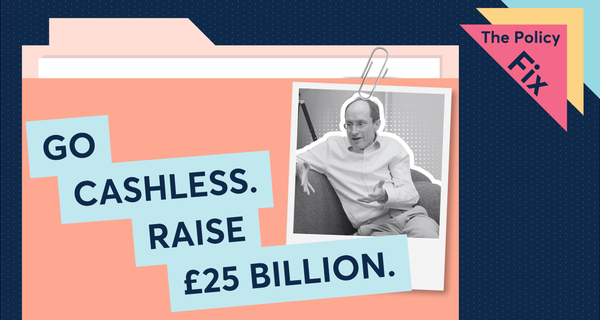
[47:29] Ravi Gurumurthy:Um that's slightly rel—another—have other countries gone for full uh shift away from cash economies? Like India did something like that, and have they f—have they found any benefits from that kind of change?
[47:40] Dan Neidle:I don't know and I don't know, but I'm also not sure it's the answer. So, um, yes, classic tax evasion is get paid in cash. And if you hire a builder to do a small job, probably they're going to offer you a discount if they're paid in cash. But modern tax evasion doesn't need to work that way. You can have a SumUp terminal which goes to your disclosed to HMRC bank account, another SumUp terminal that goes to a completely undisclosed account. And if you use the other one, sometimes it may be quite hard for HMRC to spot, right? So the idea that moving away from cash stops tax evasion may be an old world answer.
[48:16] Ravi Gurumurthy:Yeah. Just finally on your—on your tax plan for the first 100 days, are you assuming that um you actually have to raise 5 or 10 billion pounds, or are you assuming that this is a revenue-neutral set of...
[48:23] Dan Neidle:It's a capital gains thing raises about that amount. The rest is revenue neutral. I think it's quite important from a faith in the tax system perspective when you're doing tax reform, it is visibly either revenue neutral or even delivering a small tax cut. Great. I think people are fed up with year after year of incremental tax increases, and we need to change the conversation.
[48:46] Ravi Gurumurthy:Okay. Dan Neidle, thank you very much for—for joining us. That's really great.
[48:47] Dan Neidle:Thank you. Thank you.
[48:53] Ravi Gurumurthy:If you enjoyed this episode, please do like, share, and subscribe wherever you get your podcast. We've got more coming. For those of you who don't know us, Nesta is a research and innovation foundation based in the UK. We design, test, and scale solutions to the big challenges of our time. We're funded by a charity endowment and are politically neutral. For more, do visit www.nesta.org.uk.
How Andy Burnham can close Britain’s tax gap, with Dan Neidle
The UK has an extraordinary amount of taxes and exemptions. The result is a system burdened by complexity, distorted incentives and a tax gap estimated to be billions.
With big promises to take back control of public utilities, ease the cost of living and build thousands of council homes, Andy Burnham needs serious cash. Can fixing Britain’s broken tax system and closing our tax gap help him foot the bill?
In this special deep-dive from the Policy Fix, Nesta's policy podcast, Nesta CEO Ravi Gurumurthy sits down with some of the country’s leading experts on policy and government. Rather than just rehearsing the problems facing Burnham, they stress-test the big ideas that should shape his agenda, discuss the policy solutions he should actually pursue and map out the steps he should take to get started in his first 100 days.
In this episode, Ravi is joined by tax expert Dan Neidle to explore how Andy Burnham could claw back billions by closing the tax gap. Our duo explore how to fix our broken tax system - from changing capital gains tax to raise billions to a Small Business Tax Commission that could help tackle modern tax avoidance and fraud without placing extra burdens on ordinary small businesses.
Watch the full episode on YouTube or listen wherever you get your podcasts.
Liked the episode? Rate, review, subscribe - and share with your network.
[00:00] Gosh, I mean it feels like science fiction at the moment because the tax policy for the last 20 years has not been principles driven. It's been tax as an instrument for buying votes if we want to be crude about it and tax as an instrument for raising money. And broadly speaking, that is it.
[00:18] Ravi Gurumurthy: Hi, I'm Ravi Gurumurthy. I'm the CEO of Nesta and I'm hosting a miniseries of our podcast Policy Fix on what Andy Burnham should do. There's a huge flurry of activity in Whitehall right now as Andy Burnham plans his first days in government and we're going to be contributing to that with a series of interviews with different policy experts.
[00:38]With me today is Dan Neidle who is a tax expert, lawyer and very well-known commentator on tax issues. And I think it's going to be one of the most important conversations we have because the government's got an incredibly difficult task dealing with the pressures from defense spending and right across government, but also amidst weak economic growth and with the constraints that the manifesto put on them, not to raise income tax, not to raise VAT and national insurance. So Dan is going to be talking to us about how we thread the needle. Dan, welcome. Thanks very much for coming in.
[01:07] Dan Neidle:Thanks for inviting me.
[01:08] Ravi Gurumurthy:Um so I want to start with not just the—we'll go through the practicalities of how can we raise some money—but let's start actually with the principles because it's a bit of a risk at the moment that tax has lost all legitimacy. Every time you get a fiscal event it feels like um someone's trying to grab money in the stealthiest possible way without—because they are. Um and you know there have been various attempts historically to try and say what are the principles of tax or let's simplify tax—Office of Tax Simplification. Is it worth starting with—I talked about a tax charter. Could you actually establish the principles that you're going to work towards in the next fiscal events but also try and try and put a bit more rigor through that rather than the Office of Tax Simplification? Is it worth starting from a principal perspective? And if so, uh what would you—what would be your tax principles?
[01:55] Dan Neidle:Gosh, I—it feels like science fiction at the moment because the tax policy for the last 20 years has not been principles driven. It's been tax as an instrument for buying votes if we want to be crude about it and tax as an instrument for raising money. And broadly speaking, that is it. There have been remarkably few reforms, by which I mean changes which aren't supposed to raise money or cost money, but are supposed to make the system better, drive growth, make it more rational. Not very many.
[02:23] Ravi Gurumurthy:If you sort of took the tax system 20 years ago, is it decidedly worse in terms of the basic principles you would want in a tax system? Has the fiddling made it worse?
[02:33] Dan Neidle:It is decidedly worse. I think over time like um it's a kind of entropy, bureaucratic entropy. Tax systems are going to get worse over time. People do more and varied things. Businesses move into new areas. New technologies arise. So you have new rules to deal with that. You have new types of avoidance and innovation. You have new rules to deal with that. You have governments changing things because governments exist to change things. The politicians love changing things. So over time, you'll always get more blocks put on top of your pile of Jenga. Now, in an ideal world or a sane world, occasionally someone's going to go and rearrange some of the blocks, maybe even sweep the whole lot to the floor and build it again.
[03:12] Ravi Gurumurthy:Mhm.
[03:13] Dan Neidle:And other countries have done that. So Greece, in not altogether happy circumstances, reformed many of its taxes. And as a result, the Tax Foundation in the US regards Greece as having a more competitive corporate tax system than the UK, which is insane in historic terms. Italy also regarded as having a more competitive corporate tax system in the UK, which is odd given its reputation was—my favorite thing is Sophia Loren had a tax dispute with the Italian tax authorities in 1963. That was resolved in 2014 and that's the Italian tax system, but they're now more competitive than us.
[03:48] Ravi Gurumurthy:Mhm. So, those happened in crisis moments, but that was like a big bang tax.
[03:52] Dan Neidle:They happen in crisis moments. But there are other countries that just undertake what you might call housekeeping. So Scandinavia—much higher tax economies than us, but serves more competitive. We have 90 taxes in the UK. France has 360. Germany has 60. And that's because every so often—and yes, the Germans certainly had their crisis moments, but long enough ago that it's not really part of the modern world—but in the modern world that they monitor and prune their tax system. And we don't. And that's become a problem.
[04:25] Ravi Gurumurthy:I mean, I think there's a case for some tax principles, partly because if you're going to have an argument, for instance, on CGT, which is one of the potential taxes that being muted for reform, um, it's helpful if you root that in a principled argument, for instance, that wherever you earn your money, you're going to be taxed at the same rate rather than, you know, I—if you're earning from income or from shares or from house price growth, it should be taxed at the same level.
[04:52] Dan Neidle:But should it though?
[04:53] Ravi Gurumurthy:Well, no, you should—that's a really good question. We'll come into that. But the point is that um you—it's helpful to have a principle to defend your micro tweaking.
[04:59] Dan Neidle:Yes. That that—that people then think, "Okay, I get it. I might not agree, but I get that there's some consistency there." Yeah. If you don't like my principles, I have others. That's fine. But have some principles.
[05:11] Ravi Gurumurthy:Yeah. And what would be—what would be your principles that guided your system?
[05:16] Dan Neidle:So the most important principle I think is stability and certainty.
[05:20] Ravi Gurumurthy:Mhm.
[05:21] Dan Neidle:And we see that from a business perspective. I used to—quite a common task for a tax lawyer is: you've got a massive US company you've never heard of which is looking to open up business in Europe. They want to know where to put their headquarters. Can you give them all the pros and cons of half a dozen different places looking at education, culture, schools, transportation, legal certainty, tax? And after doing a few of these I realized people didn't care that much about tax rates. The difference between 19% and 21% and your profits is you're tweaking a cell on an Excel spreadsheet and of course it can change anyway. On the other hand, complexity and the problem that you may not know what the rate is ahead of time—big issue. And rate of change links to that as well. If you don't know what the tax will be in five years time, you can't draw up a business plan for five years. So certainty and change is a problem for business.
[06:11]It's also—this was in the past from the last couple years has become a problem for everybody. When you go through a summer with numerous leaks about potential tax changes, it's really damaging.
[06:24] Ravi Gurumurthy:All year really last.
[06:25] Dan Neidle:Yeah. Maybe even a whole two years because pretty much as soon as the—we had the result of the 2024 general election, speculation started about tax and I think that's been really damaging to tax morale. Some of it's been specific. So take for example the speculation about whether we have an exit tax or in fact the leak that there was going to be an exit tax. If you are a rational, economically selfish entrepreneur about to do a 100 million/1 billion sale and you're thinking, "You know, maybe maybe I'll move abroad before this. I'm not—I'm not sure. I haven't decided." And then you hear there might be an exit tax. You're going to move really quickly. And I know for an absolute fact there were entrepreneurs who left because of that rumor.
[07:07] Ravi Gurumurthy:I—I spoke to somebody yesterday in one of the big four and they said that they're rather oversubscribed on that front right now.
[07:15] Dan Neidle:Yeah. And it's—I mean, it's ridiculous because the rumor of the exit tax was just a rumor and so no money was ever raised from the exit tax. It was pure loss. An extraordinary thing. But I think there's also been a more ephemeral effect which is that all the talk about tax adds to the impression that we're overtaxed when for the median earner you're not actually paying more tax than in the past.
[07:35] Ravi Gurumurthy:So stability is your—your primary one, but how do you reconcile that with the fact that um economic growth is very unpredictable? If you get less than you want or there are more spending demands that you might need like defense that you didn't expect to have, you—you then have to raise money in some way. Um so there's always going to be change.
[07:50] Dan Neidle:There's always going to be change. So I think the second principle, which will probably just make you laugh at me, is transparency. That changes in tax should be clear and transparent. So if the government wants to raise tax from income taxes do so by raising the rate, not by introducing a myriad of special rules and cliff edges, um fiscal drag and everything else.
[08:16] Ravi Gurumurthy:Yeah. So I mean, to take that to its logical extension, would you say um you should set out: "Here—here's the current tax rate. If we need to raise an extra 10 billion pounds in the next two years because our economic growth is less, this is where we might get it from. We will do an extra penny on income tax."
[08:31] Dan Neidle:Yes.
[08:32] Ravi Gurumurthy:Uh and then people know where they're going to be over a multi-year period depending on different scenarios. Or do they, because third principle is that people need to understand the tax system there. Did you remember for years the Lib Dems had a policy of a penny on income tax and I—I think they dropped it about three years ago, but—but that was their policy. It was very popular. And the joke used to be that Lib Dem voters think it means one pence because they're stupid Lib Dem voters. Well, what do they know? Ha ha. Ridiculous.
[08:58]And I—I wrote about this and then I got a message—and I'm sure he won't mind me saying this—from Daniel Finkelstein of the House of Lords at the time when the Lib Dems introduced this policy. He was in the Conservative Research Department and they polled the Lib Dem policy and they found out that actually a very significant number of people thought it meant paying one penny more, which I didn't believe.
[09:20]So we then with the help of a polling company ran some polling on what happened if when you went into the higher rate. Did that mean that you just paid more tax on the amount that was in the higher rate? (Spoiler, the true answer.) Um or did it mean that all of your income was tax? (Spoiler, not the answer at all.) And about half of people went for the wrong answer. So whilst transparency in how in tax rises and just changing rates is a great objective, if people fundamentally don't understand rates, it's a problem.
[09:52] Ravi Gurumurthy:Yeah.
[09:53] Dan Neidle:I have no solution for that.
[09:54] Ravi Gurumurthy:But on that consistency point, if your um next tax increase was going to be say that CGT change, you'd never want to telegraph that for the reasons you said earlier on.
[10:01] Dan Neidle:Correct. Um you've got to have changes sometime and that's fine. So what I rather hoped would happen in the first government budget, um November 2024, what I hoped would happen is you'd have a whole bunch of sweeping ambitious tax reform and the speech would end with the Chancellor saying, "And this is it. We will make no other changes to taxes throughout this parliament unless those dire emergencies. Uh we're not going to change the rates and this is our credible promise of stability."
[10:28] Ravi Gurumurthy:And that's something they could do now. They could say...
[10:30] Dan Neidle:It's too late. There's not enough time to the next election.
[10:33] Ravi Gurumurthy:You're right. They could, but they could say, "Um I don't want year-by-year anxiety and uncertainty. This is a three-year plan. And by the way, if we're in a worse situation than we expect, this is where we would—we would find the money next, either through cuts or through..."
[10:48] Dan Neidle:Yeah.
[10:49] Ravi Gurumurthy:"...um through tax increases there."
[10:51] Dan Neidle:Yeah, totally. I mean that—I think you would get plaudits from business by a credible promise of stability. And I don't imagine many voters will notice or care at the time, but I think it would change the atmosphere of tax crisis that we're in.
[11:06] Ravi Gurumurthy:Yeah. Just to press on my sort of tax charter idea, to take it to its more extreme extension, you'd almost say, "Here is a law [snorts] that is uh establishing certain tax principles and everything that we do has to be in line with that, otherwise we'll be reported against in some way."
[11:21] Dan Neidle:I mean obviously it's—we have a law at the moment. We have a law that the personal allowance goes up with inflation.
[11:28] Ravi Gurumurthy:Yeah. And of course every year they just...
[11:30] Dan Neidle:Yeah. So I don't know. I—I'm skeptical about charters and laws and like the Office of Tax Simplification didn't really—well, the Office of Tax Simplification did some amazing work, but their—the reforms they proposed were—were technically complex and required political capital and didn't have an obvious political payoff. So of course it all just got caught in the long grass and almost none of it happened. There's simplification we could do which is much less ambitious and much easier, but it would still require political commitment. The government has to want to do it.
[12:01] Ravi Gurumurthy:Yeah. I mean, one of the problems I think with tax policy is it starts really from the—the point of, "Oh god, how do we raise some bloody money when um we're broke and we've got loads of spending pressures." It's essay crisis policy.
[12:15] Dan Neidle:Essay crisis.
[12:16] Ravi Gurumurthy:Um you know, unlike every other policy, there is a consultation process. There is some ability to open up the policy making process to outsiders. The kind of rabbit-from-the-hat way of doing it often creates massive issues. You usually get a Chancellor—Gordon Brown or George Osborne did it a lot—where on day one it gets great headlines, by day two day three it's all unraveled.
[12:38] Dan Neidle:Yes. Um pasty tax is a famous one.
[12:41] Ravi Gurumurthy:Um and is it plausible to actually do tax not in this dramatic rabbit-from-hat kind of way, but in a more consultative, open way? I mean, it's not—there are taxes that I remember I was involved in: the—the carbon price floor.
[12:53] Dan Neidle:Yeah.
[12:53] Ravi Gurumurthy:And that was a—a proposal that was openly consulted upon and designed. Is it possible to make our tax policy process more open?
[12:59] Dan Neidle:It should be. I mean, there's definitely some changes which you want to announce and come into effect immediately. Like if you're going to raise capital gains tax, you want to do immediately. Similarly, if you want to lower capital gains tax, you should do it immediately. Otherwise, people are going to hold off from selling and wait until when the rate drops. But for many other changes, there's no reason you can't consult about what they are. That doesn't happen. We have this theater of the budget which I guess is politically irresistible for the government in terms of giving it the ability to have complete control of the agenda for one day and they don't want to give that up.
[13:34] Ravi Gurumurthy:So let's say um you were going to focus your tax changes not on trying to raise money or—or save money, but more just on how you'd get rid of distortion elements that stop economic growth. Let's say that was the main objective, which I kind of thought this government's objective would be and they said it would be, but um—but there's always two objectives with tax. It's always also about making the—the sums add up. There's—there's always going to be a—a trade-off in anything that you do.
[13:58]But let me—let's just focus on: what do you think are the most distortionary taxes in terms of economic growth?
[14:04] Dan Neidle:Okay. So obvious caveat I did say is I'm a lawyer, not an economist. But um so take what I say with a pinch of salt. Others may disagree, but I think it's pretty much universal amongst economists of left and right: the way we tax property is the most distortionary. So if you tax something, you get less of it. Sometimes that's an answer that you want to taxation. But we do not want people to move house less and businesses to buy property less. We want that to be frictionless or as far as possible frictionless. Of course, stamp duty has the opposite effect. That has a number of quite serious adverse effects.
[14:39]It gums up the labor market because people can't move from place to place in search of jobs unless they're willing to really trade up to make it worthwhile. It reduces house building because it adds to the frictional cost of all housing transactions. It also just makes people miserable, and a tax shouldn't make people miserable. It shouldn't stop someone doing what they want to do.
[15:03] Ravi Gurumurthy:Mhm. So can I just ask you, obviously directionally true—everybody pretty much agrees with that—but how—how big an effect is it on economic growth?
[15:09] Dan Neidle:Nobody really knows. It's the—in fact, even the effect on the labor market, the only study is very old, back at the time when stamp duty was something like a third or a quarter of what it is now. So uh I'm going to use my—I'm also non-economist card to back out of that one, but that isn't actually a nice answer.
[15:28] Ravi Gurumurthy:Great. But the—okay, so stamp duty's standard property tax, as generally are.
[15:33] Dan Neidle:Yes. Uh business rates also a problem. Business rates a problem because of this unfortunate gap between valuation and the time at which—time at which you pay. It's also a problem—I think this is a political problem, but it becomes a tax problem that any economist will tell you, and there's lots of research backing it up: most of the economic cost of business rates falls on landlords because the higher the business rate is, the more it compresses rents in a broadly free market—free rental market.
[16:03]And that's—and that's rather—because Andy Burnham's uh recent policy announcement if you like on that I think ignores that. He—he wants—he wants a business rates exemption or special relief for—for pubs and retail. Um the headline should be: Andy Burnham wants a tax cut for landlords.
[16:15] Ravi Gurumurthy:Mhm.
[16:16] Dan Neidle:But it's not clean, because in the short term if you cut it right now that will be a tax cut for shops, but then when they next renegotiate their rent, they—they—they lose the benefit. This point is widely not believed by—by the retail sector, but it doesn't stop it being true. And that tension between the economic reality...
[16:36] Ravi Gurumurthy:And why—why do they not—why—why is it not believed by the...
[16:40] Dan Neidle:Well, because they don't see it. You don't see the rent that you would have paid if there hadn't been business rates.
[16:44] Ravi Gurumurthy:Mhm. They just—they just assume that so happens.
[16:46] Dan Neidle:Yeah. "My rents go up." Yeah, exactly. Um it's a—it's a the whole area of what we call tax incidence. The point of economic incidence. The question as to who is actually economically paying a tax is surprising to many people. Some of it we're used to. So VAT, if VAT went up to 25% tomorrow, I think everyone would expect their chocolate bar becomes 5% more expensive. Uh-huh. But the consumer doesn't pay VAT; the shop does. But of course, they pass it on. Economic incidence, and that people see.
[17:17]But the idea that corporation tax or business rates, there's an incidence concept different from the person who pays it is kind of counterintuitive so people don't—don't believe it. And retail, who are getting these bills for business rates, if I say to—"Well, actually, you know, it's your landlord is economically bearing this," they don't believe it. And that distorts business rates policy in quite a bad way. We could solve that if the liability rested with the landlord. And that—that shouldn't change the economic incidence, but I think it would make the political economy much better.
[17:45] Ravi Gurumurthy:Okay. So, stamp duty, council tax, business rates.
[17:52] Dan Neidle:I hadn't mentioned council tax, but I agree with you. Yes, council tax rubbish, too. So, look, the—the policy which is pretty much universally supported across the political spectrum: scrap them all. Move to an annual tax on property, ideally a tax on the undeveloped value of land so you don't punish people for developing their land.
[18:04] Ravi Gurumurthy:Mhm.
[18:10] Dan Neidle:Uh the only problem with it is it's never going to happen because you're going to create a large number of winners who will not be celebrating—people don't tend to celebrate government policy—and a large number of losers who will be complaining extremely loudly. And you're not going to raise revenue, and are going to raise only a teeny amount of revenue.
[18:29]And that's before you think about transitional rules. So imagine that you just bought a property and paid £30,000 in—in stamp duty.
[18:36] Ravi Gurumurthy:Mhm.
[18:36] Dan Neidle:Reeves comes along and says, "Congratulations. Stamp duty has now been abolished. You're paying this annual tax." You'll go, "Hang on a second." So, I don't think that's sustainable.
[18:49] Ravi Gurumurthy:Can't you have a transitional arrangement whereby it only kicks in several years later if you've recently paid stamp duty and you can...
[18:55] Dan Neidle:Yeah, or you credit stamp duty.
[18:55] Ravi Gurumurthy:Credit stamp duty—do that.
[18:55] Dan Neidle:The problem with that is it reduces the revenue. Reduces the revenue quite considerably, because now government isn't getting um these juicy every year stamp duty revenues and it's not getting the—the—the land value tax revenues that it thought. Hopefully on Sunday I'm publishing a little model that people can play with which shows these effects, but it's—dealing with transition is genuinely challenging. You have the political problem and you have the transitional problem, and so I fear it's never going to happen.
[19:25] Ravi Gurumurthy:What about the other distortionary taxes, like even the thresholds from the cliff edges that exist for—for income tax?
[19:31] Dan Neidle:Yeah, I mean the only—the only difficult question is which is the next most damaging tax, and I think income tax is probably it. This—you've got a cliff edge at £60,000 when child benefit starts to be withdrawn. That means that your marginal rate can go to kind of pick your number—50, 60, 70, 80% depending on how many children you have. Then everyone earning £100,000 has a marginal rate of 62%.
[19:56] Ravi Gurumurthy:Mhm.
[19:56] Dan Neidle:And if you're benefiting from one of the government free childcare schemes or child—childcare subsidies, that all gets withdrawn bang at £100,000. So your marginal rate at £100,000 is 62% best case, or 200,000%—it's a ridiculous number—worst case as you suddenly lose all of your childcare.
[20:11]Now, that's a big effect. We see it in the data because if you draw a curve of the number of people earning different income amounts, instead of a sort of nice smooth curve you see a curve and then a bump as people are holding their income below £100,000. And that is some mixture of: some people evading tax, being paid in cash at this level; more commonly, it's people turning away work. So someone who's self-employed just goes on holiday in March. Someone who's employed works part-time, particularly returners to work.
[20:47]I get lots of calls from—from and emails from managers of hospitals. A junior doctor, nearly new—newly qualified, is right at about £100,000 point. And if they're taking up this free childcare, it is often better for them in cash terms to work four days a week or four and a half days a week than 5 days a week, which drives the hospital managers crazy. Um you'd think someone is looking at the effect of this across the NHS, never mind across the whole economy.
[21:08] Ravi Gurumurthy:Yeah.
[21:08] Dan Neidle:Doesn't seem anyone is.
[21:15] Ravi Gurumurthy:And just so you've tried to rank order those distort—distortionary taxes, job of it.
[21:15] Dan Neidle:Yes.
[21:20] Ravi Gurumurthy:But just coming back to earlier point which is we basically don't know the scale of the—if the OB—if we got rid of these things, the OBR wouldn't immediately score this in terms of economic growth effects.
[21:27] Dan Neidle:I don't think so because I don't think we have the—we have the data.
[21:34] Ravi Gurumurthy:Yeah.
[21:34] Dan Neidle:HMRC should be able to have really good data on this. They don't—they don't publish it. And by Freedom of Information applications you can kind of get a little bit, but—but—but not much. But really they should be able to get the data and the OBR should be able to model this, but as far as I know, nobody has.
[21:46] Ravi Gurumurthy:Interesting. So what—what should Andy Burnham actually do about this income tax cliff edge? Because some of this gets quite expensive, doesn't it?
[21:52] Dan Neidle:Maybe the lack of data means we can't be sure. There's been a bit of a conspiracy by politicians to not talk about the cliff edge. So the Tories didn't talk about it because it was their fault, and no Conservative Chancellor wants to admit they decided over a 62% tax rate. I think the—the ghost of Nigel Lawson would pursue them forever. So the Tories didn't do it. Labour, I think, doesn't want to talk about people earning £100,000 because it's kind of not their problem in their mind. But, you know, if it's affecting hospitals and doctors, it is their problem. If it's holding back growth, it's definitely their problem.
[22:26]What could be done? There was a report from I think the Centre for British Progress a few months ago which suggested ways that you could do it on a cost-neutral basis, which looked pretty workable.
[22:36] Ravi Gurumurthy:Yeah. And you smooth it out rather than as a single...
[22:36] Dan Neidle:You smooth it out. And then for—they had a brilliantly clever solution for the childcare subsidy, which is instead of clawing it back at £100,000, anyone taking up the childcare subsidy earning £100,000 gets a 3% additional tax, and that is a pretty sophisticated way of smoothing it out. So Andy Burnham I think should really be looking at this.
[22:55] Ravi Gurumurthy:And that could be done therefore in a revenue-neutral way.
[23:01] Dan Neidle:I believe it could. And yeah, I think it would confuse a lot of people if Andy Burnham did a revenue-neutral change which improved the lives of people earning £100,000, but he should. He really should.
[23:15] Ravi Gurumurthy:Okay. Um I mean the other very weird tax that my colleague Tim Leunig talks about a lot is VAT.
[23:22] Dan Neidle:Yeah.
[23:22] Ravi Gurumurthy:VAT is huge tax in terms of revenue, and we have one of the worst VAT systems in the world. We have more exemptions and special rates than most other countries, and we have the highest threshold at which you start having to account for VAT of any developed country and certainly any OECD country. So our threshold is £90,000. In Europe, £30,000 is more typical. That produces an amazing cliff-edge effect where you see your curve of the number of businesses each turnover point. You expect some kind of smooth curve. What you actually see is nice smooth curve and then a heart attack just before the VAT registration point, but loads of businesses hold back their revenues. And then it plummets, and there's very few businesses earning just over 90,000.
[24:06]I used to think that was tax evasion, people taking payments in cash. But there's some—some research out of the University of Warwick a couple of years ago where they looked at business moving above and then falling below the threshold, and their analysis suggests actually tax evasion is not the main driver here. It really is people working less. And you—you can count—there's about 50,000 businesses who are holding back their growth below 90,000. Madness.
[24:29] Ravi Gurumurthy:I mean it's a—quite a big point here because it sort of encourages SMEs to stay small.
[24:36] Dan Neidle:Yeah.
[24:36] Ravi Gurumurthy:And we also know that they are much less productive. Scale is a good thing.
[24:36] Dan Neidle:Politicians hate this. So whenever I talk to policymakers, they're always saying, "You know, can—can you suggest some ways the tax system would help small businesses?" And the answer is: "No, no, no, no, no. If you had a button in front of you could press which eliminated half of small businesses and moved all the jobs and capital to large businesses, you should push that button." But politicians don't want to do that. They like the sound of small businesses.
[25:01] Ravi Gurumurthy:So you would basically not—not have the current system where it—it sort of gives artificial incentives to be small, tolerate the destruction that may occur with SMEs. It maybe they would just be incentivized to grow.
[25:10] Dan Neidle:And—well, but there's another point. If you talk to the small business lobby, they uh think the threshold is a terrible problem and want it increased, which of course makes the problem worse. So don't—don't do that.
[25:18]But if you talk to small businesses, often they're less concerned about the actual cost and admin implications of charging VAT and more concerned about becoming uncompetitive. That if you are a micro business, a plumber say, and you're suddenly going to have to charge 20% more than your friend, also a plumber, then that is deeply unattractive. But if you make a change which puts everyone in the same place, that is less scary to them.
[25:41] Ravi Gurumurthy:So would you get rid of the threshold altogether or would you lower it down to uh halved or something? And how do you avoid the same...
[25:47] Dan Neidle:Yeah, I think you do it by making sure it's at a level where you can't make a—a living and stay below the threshold. So you at £20,000 say, so hobby businesses not caught and someone just starting out not caught, but if you're looking to actually make money and make a living from it, you will have to register.
[26:06] Ravi Gurumurthy:And that presumably would also raise some money.
[26:12] Dan Neidle:Not all that much. I—I think you're talking about a few billion. I—if it was enough to count, I would use it to reduce the rate. Even if you're just reducing the rate to say 19% from 20%, I think that makes this a better sell than to say, "Hey, we're doing that change in clobbers, but it's making money for the government." If you can say instead: "Making this change because it's the right thing to do, and all of the savings are going to go in reducing the—the rate," you should do that.
[26:32] Ravi Gurumurthy:Yeah. Okay. So, let's go into: okay, what would—what are the different ways in which he would raise—change taxes to raise money? Because I do think we do have to get into that because, you know, with defense and other spending pressures, and also all the different promises that I suspect he's going to make, there's going to be um money needed. Um well, you could have spending cuts of course, but are we assuming that that is not going to happen from this government?
[26:58] Dan Neidle:Well, we—we could get into that, but I—I—I think it's going to be hard.
[27:02] Ravi Gurumurthy:Yeah.
[27:10] Dan Neidle:Um if you—I mean, it's not obvious to me where he would look for cuts. Um so I'm—I mean, I—I'm not going to sort of express a view on the cuts versus taxes thing, but if we proceed from the assumption that cuts are not going to happen and take it from there.
[27:20] Ravi Gurumurthy:Yeah. Let me start with that then. I mean, what are the challenges you've got? I know 1.2 trillion pounds is raised through tax, is that correct? Uh next year.
[27:25] Dan Neidle:Yes. And half of that is income tax, national insurance...
[27:33] Ravi Gurumurthy:More than that.
[27:33] Dan Neidle:Something like 75-80% of it is income tax, national insurance, VAT, corporation tax, which are all the ones that he's basically said, well, manifesto says they won't touch. They kind of did national insurance, but they're not going to do that again. So, so that rules all of them out. You'd have to rule a whole bunch others out. So, fuel duties too politically difficult. Um alcohol duty probably politically difficult. Gaming duties, they've already increased it. Uh and when you go through that list, you find that you're probably left with some very small sum, maybe just a hundred billion or so that actually he can look to.
[28:09]So you either create new taxes, which problem with that is it takes time. The sugar tax took two and a half years to introduce; there were only 12 companies that paid it. So new taxes doesn't solve your revenue problems today.
[28:14] Ravi Gurumurthy:Mhm.
[28:21] Dan Neidle:Or you have to find ways to tweak and increase existing taxes, or you break your manifesto promises.
[28:27] Ravi Gurumurthy:Okay. If—if he—if he didn't—let's start with the assumption he's not going to break his manifesto promises. What are the viable options?
[28:35] Dan Neidle:It's difficult. I mean, you could—you can go with fiscal drag again, which raises you money in 2031. Again, doesn't help you today.
[28:42] Ravi Gurumurthy:You could—just on that, I mean fiscal drag is one thing. The other—this would be very much against the spirit of the—the manifesto. You could actually just lower the—the threshold, um because it gets—if you lower it by £250 even...
[28:53] Dan Neidle:Yeah.
[28:53] Ravi Gurumurthy:...it raises a huge amount of money.
[28:59] Dan Neidle:Yeah. People don't realize how expensive the personal allowance is.
[29:05] Ravi Gurumurthy:Yes. So I can't remember—you might have it off the top of your head.
[29:05] Dan Neidle:Um I should totally have that top of my head. I don't. It's some—it's of the order of 10 billion pounds of revenue per 1,000 pound of—of personal allowance.
[29:20] Ravi Gurumurthy:Yeah. So, a lot.
[29:20] Dan Neidle:I think that would pretty clearly go against their—yeah, the manifesto. But—but there's also an issue here about the tax base becoming too narrow, and actually you want a wider tax base. It's—it's funny because the—there were some in the Conservative Party who thought as a matter of principle that people earning minimum wage shouldn't pay tax, and they very much wanted the personal allowance to be increased. And Lib Dems wanted the personal allowance to be increased, and that's how we ended up with a really big increase in the personal allowance.
[29:45]There are now quite a few people in the Conservative Party who view that as a terrible mistake and say, "But it means that lots of people pay almost no income tax." And in fact, the median earner in this country pays less income tax than pretty much at any time in British history and significantly less income tax than people in other countries, other large developed countries. So, um, very possibly it was a mistake, but it's not something that I see Andy Burnham changing.
[30:09] Ravi Gurumurthy:Okay, let me move on from that then. Um, what else? What else?
[30:16] Dan Neidle:So for the last sort of 10 years or so, the game has been taxing other people: finding ways you can tax which don't either really don't affect the median earner or look like it don't affect the median earner.
[30:23] Ravi Gurumurthy:So—so what are some of those?
[30:27] Dan Neidle:One of those would be more tax on people in expensive properties. So we have the mansion tax. So it has a proper name which I always forget, and I keep calling it the mansion tax, which really annoys some people I know in—in government, but never mind. The—the that thing, it's got five letters—can't remember what they are. High value something or other something. The word tax is in there, but the mansion tax.
[30:51]So that exists. It will apply from 20 April 2028 for properties worth 2 million.
[30:51] Ravi Gurumurthy:Mhm.
[31:00] Dan Neidle:If you wanted to raise money pretty quickly and easily, you could increase the amounts that are—that are paid. Of course, you only collect it from 2028. It's not that far away, but it's not now. If you want to collect a lot more, you could make it apply to a lower threshold: start applying it for one and a half million. And the Daily Mail had a report that that's being considered.
[31:14]Yes, I have some numbers on that. Problem is, you'd think you'd be able to raise lots of money from high value properties. There aren't actually that many high value properties. So if you do really dramatically extend the mansion tax and apply it to people in one half million pound properties and then increase the bands for everything else commensurately, you roughly double revenues and end up raising about 800 million instead of 400 million. You're not going to change the world. You don't—you don't raise that much money.
[31:40]It's the sort of same thing that Rachel Reeves did where not much money raised, but you really piss off a bunch of people because you've—you do—you've—you've really gone for them. You do um—you piss off a bunch of people in Camden and Islington. And that—I always thought that was the problem with Labour's original mansion tax version. I thought that was why um it wasn't brought back by McDonnell and Corbyn—that actually quite a lot of their core supporters...
[32:06] Ravi Gurumurthy:And that's the new—the new heartland.
[32:12] Dan Neidle:Yeah. And—and even more importantly, a lot of newspaper editors are sitting in houses in Islington and Camden being hit by this. So, um I—I don't think it's really percolating much into popular consciousness yet, but I think—I think it will.
[32:25] Ravi Gurumurthy:What about the CGT change? Because um that seems highly plausible that they would do—they would equalize CGT with income tax plus do indexation.
[32:32] Dan Neidle:Yeah.
[32:32] Ravi Gurumurthy:Plus potentially an exit tax and a death tax.
[32:40] Dan Neidle:So if you do a—a Venn diagram say of good tax policy and a Venn diagram of might-happen tax policy, and then another circle for would-raise-lots-of-money policy, I think there is only one point in all three circles, and that's capital gains tax.
[32:51]So right now the problem with capital gains tax is the rate is simultaneously too low and too high. Why do I say that? So let's imagine that you invested a million pounds 10 years ago. Today you—you—you sell your investment and you make 1.4 million. You're taxed on that. You've made a £400,000 gain. You pay tax at 24%, so about £100,000 of tax. But hang on a second. You haven't made a gain at all after inflation. You've lost money. So your actual effective tax rate was not 24%; your effective tax rate is well over 100%. So the rate is too high because it doesn't take account of inflation. Stupid.
[33:33]On the other hand, imagine that you have a million pounds of income and you get an accountant and they magic it into capital gains—and there are ways that you could do that. Well, then instead of paying tax at 45% probably plus national insurance as well, you're paying 24%.
[33:44] Ravi Gurumurthy:Mhm.
[33:51] Dan Neidle:That's a really bad incentive. And in fact, a pretty detailed analysis by the people at CenTax at Warwick University have shown that most capital gains are the really big ones and are in that category. They're kind of artificial capital gains. People haven't invested anything at all. It is just a conversion of labor income into capital.
[34:03]Yeah. So fix both problems. You can raise really quite a lot of money. I mean, I—I looked at a version where you use some of the revenue to cut income tax by one penny, which I think would actually be a shrewd move in the current very feverish tax environment, and then that still gives you about 8 billion of revenue.
[34:25] Ravi Gurumurthy:Mhm. Yeah. So the—the calculations that CenTax use suggest 10 to 12 billion pounds could be raised.
[34:34] Dan Neidle:Yes. Um that is out of date because um right, inflation—time's gone on, so it will be more than that now.
[34:41] Ravi Gurumurthy:So it's interesting because when you talk to the Treasury, yeah, don't they suggest that the—the number could be a lot lower, um partly because of the sort of uncertain behavioral effects? But presumably if you do do the exit tax and the death tax alongside it, people won't necessarily just hoard their assets or leave. Um but I know the Treasury sort of are much more pessimistic about whether this would raise even as much as the CenTax number that you think is—is an underestimate because it's outdated.
[35:14] Dan Neidle:Well, um, so CenTax looked at previous capital gains changes here and in Canada, and the numbers seem pretty robust to me. Um, I've also heard the Treasury's skeptical, but it's one of those frustrating things where—where you hear the Treasury is skeptical of why—why [laughter] don't know. Is it a "wasn't invented here" thing? Is there in fact some incredibly compelling research showing that it's not like that? Don't know.
[35:39]But we don't really need to use our imagination because we can just go back in time and look at what happened when Nigel Lawson did exactly this and equalized the rates with taxation. And that—anyone interested in tax should go and look at Nigel Lawson's 1988 budget speech because even if you completely disagree with his polic—with his policies, it is an amazing example of someone with a plan with tax principles who then persuades you of that plan and then does it.
[36:00] Ravi Gurumurthy:Yeah.
[36:06] Dan Neidle:And we just don't see that anymore. But I—I wish we did. But he made a mistake, and his mistake was that he had his budget in March, and those capital gains changes applied from April. And so if you were sitting on an asset where you would be paying more tax if you waited till April, you sold it immediately.
[36:26] Ravi Gurumurthy:Yeah. So you got to do this with immediate effect on it.
[36:26] Dan Neidle:And it was a really big effect because if you hold private shares, selling them immediately was super easy. In fact, at the time, you could sell them and then buy them back again and that would work. And if you hold a more difficult asset like real estate or private shares, there were at the time lots of ways you could have a disposal, which isn't a real sale, but would still lock the rate in.
[36:45]So, the data at the time is hugely distorted by this massive bump of loads of capital gains in the year of the announcement, and then of course fewer in the year after the announcement because gains have been pulled into the earlier year. But if you step back, you look at what happened in the previous year, if you look at what happened in the year after it came in, you see remarkably little change. So I take that as evidence that actually the response is a lot less than some people claim.
[37:14] Ravi Gurumurthy:So just in terms of—let's just go more into the CGT point because I think you'right that it would be much smarter for them to share the proceeds of that uh revenue increase partly with a tax reduction...
[37:23] Dan Neidle:Yeah.
[37:23] Ravi Gurumurthy:...as well as maybe filling the gap that they will no doubt have. Otherwise, the context for this will just feel like more—more tax.
[37:29] Dan Neidle:Yes.
[37:29] Ravi Gurumurthy:Um but one of the things that I—I worry about is just the impact on um entrepreneurial incentives. So if you are—if you suddenly are at 45% tax for, you know, genuinely investing in a new business and doing something very risky, is that not something that might, you know, put off people?
[37:49] Dan Neidle:Well, if you're investing actually putting capital at risk, then you may benefit from the indexation relief. It is not necessarily the case that you're going to lose out depending how long you're going to be invested. If you make a big—you would—that's true. If you make a super return, you will—you will pay more tax. Several answers to that. So one—one answer is to have a relief for genuine entrepreneurialism.
[38:09] Ravi Gurumurthy:Mhm. Is that—can you define that?
[38:09] Dan Neidle:Um well, you can define it. Can you define it? Well um tricky. It's difficult.
[38:17] Ravi Gurumurthy:Mhm.
[38:17] Dan Neidle:I—I think it can be done. It's—it's not easy.
[38:17] Ravi Gurumurthy:Mhm.
[38:24] Dan Neidle:There's... Yeah. Yeah. It—it's just not easy.
[38:24] Ravi Gurumurthy:But you—what would you—would you not bother and just—and accept that risk?
[38:29] Dan Neidle:No. I think I would—I would have a relief for real entrepreneur—for real entrepreneurs, particularly the entrepreneurs who aren't putting capital in, but are working for a long time and then eventually realizing it. But I think there's a deeper point which is: I am skeptical of the idea that entrepreneurialism today is affected by someone's perception of what the capital gain rates will be in 10 years time. How much would you bet that you know today what CGT will look like in 10 years time?
[38:51] Ravi Gurumurthy:Nothing.
[38:58] Dan Neidle:And in fact, the evidence is—the OECD has pretty detailed numbers on this—that levels of CGT do not affect entrepreneurialism. And I think it could be because people don't pay attention, but I tend to think it's because people are rational and they know that you cannot predict your exit tax from today's tax.
[39:10] Ravi Gurumurthy:I was going to go the opposite direction, which is um people are not as economically rational actors and uh do entrepreneurial things just because they're entrepreneurs.
[39:21] Dan Neidle:Sorry, that's—that's also true. I'm too much of a tax lawyer. Yes, they do it because it's fun.
[39:21] Ravi Gurumurthy:Yeah, for sure. Um, okay. So, that's—and the other possible answer is that if a potential exit could be a billion pounds and you're currently a student, then maybe the difference between having sort of 700 million and 500 million is not all that significant a driver to you.
[39:41] Dan Neidle:Yeah.
[39:41] Ravi Gurumurthy:Can I go through three more tax changes that are sometimes muted?
[39:41] Dan Neidle:Go on. Cool.
[39:46] Ravi Gurumurthy:So, one is a proportionate property tax.
[39:46] Dan Neidle:Yes.
[39:52] Ravi Gurumurthy:And sort of folding stamp duty and council tax into that. I think you've kind—you've touched...
[39:52] Dan Neidle:Less good land value tax.
[39:58] Ravi Gurumurthy:Yes.
[39:58] Dan Neidle:And the problem with the proportionate property tax is first of all a lot of people say land value tax is just so hard to value land. Um it's not hard to value land because you—you—you can do it from a desktop. And the calculations may not be easy, but I don't need to go into your house to see how much your land is worth. I do need to go into your house to see how much your house is worth. So it's a more difficult valuation issue.
[40:17] Ravi Gurumurthy:Can't we, you know, with Zoopla and all these other companies, aren't we getting better and better at actually valuing properties? Or could we get better? What information would we need to assemble real time index?
[40:28] Dan Neidle:Fundamentally, I'd need information about your house and about the inside of your house. And you can—you can have a system where government computer tells you the answer is yes, this, and you then appear and say, "No, no, actually I put in a £3 million kitchen last week." So, as you'd say, you'd be arguing the right—"I ripped out £3 million kitchen. It was hideous. If you see buckets, they—they..."
[40:46] Ravi Gurumurthy:Yeah. Um "the place is falling apart."
[40:52] Dan Neidle:So, but you'd have an awful lot of appeals in ministry be quite hard. But the deeper problem with the proportionate property tax is it creates a disincentive to develop land.
[40:59] Ravi Gurumurthy:Yes.
[41:04] Dan Neidle:Yeah. If you buy a patch of land and spend a million pounds building a grand house, then that greatly increases your—your tax liability. And that kind of doesn't seem right. And it's economically—you're—you're throwing away the economic benefit that a land value tax creates, but you've still got the work. You've still got the problems to solve. So, and even if they wanted to do it, it would take quite a long time to implement it.
[41:20] Ravi Gurumurthy:Yeah, it would.
[41:26] Dan Neidle:I—I don't really see the advantage over land value tax, and there are several quite significant disadvantages.
[41:34] Ravi Gurumurthy:What about um taxes on banks? That's often tax...
[41:34] Dan Neidle:Yes. Um so, this is back into taxing people we don't like. I think there's a good version of this, which I confess I don't fully understand, which is the—the Bank of England currently pays interest on all the reserves that banks place with it, and it's not entirely clear that it should. There's a—I think the—there's well-known communists at the Reform Party in their manifesto were going to stop all interest on bank reserves, which in theory raises some particular sum. Was it 23 billion?
[41:56] Ravi Gurumurthy:There we go. Okay, you've done your research. 23 billion.
[42:02] Dan Neidle:Um, nobody I know who understands uh, Bank of England and bank financing and interbank financing thinks that was a good idea. It would really dramatically damage the ability of the Bank of England to—to push interest rates out to the economy. But those same people tend to think that you could raise maybe six billion. But there are arguments both ways which I don't pretend to be able to call. And Rachel Reeves perhaps given her Bank of England experience was skeptical. Maybe Andy Burnham wouldn't be so skeptical. So I would put that in the "should definitely look at" box.
[42:34] Ravi Gurumurthy:Yeah. A final one is on energy. Um the—I don't know whether you've come across this, but the—the network companies, um their—their regulated return went up with inflation, but their actual cost base didn't.
[42:42] Dan Neidle:Nice trick.
[42:52] Ravi Gurumurthy:Yeah. And so there is uh questions about: should there be a windfall tax? I think, you know, Citizens Advice Bureau have been highlighting this inequity, or, you know, maybe you just in subsequent regulated returns you try and make that back in some way. But I don't know whether you've looked at that, also whether you've got views on windfall taxes more generally and the—the kind of ripple effects they have.
[43:10] Dan Neidle:So windfall taxes in theory are a fantastic idea. If we—if you um happen to do something yesterday that made you a billion pounds, it was completely unexpected and undeserved, if I introduce a special windfall tax on you as a one-off and will never be repeated, then that's great. It doesn't change your incentives going forward because, you know, it's not going to be repeated. So, it doesn't have the downside of most taxes.
[43:33]But if I do that, then everyone else is probably going to expect similar windfall taxes if they find themselves in a similar position. So, for a windfall tax to economically work, it must genuinely be unexpected. We almost believe it won't happen again. And that happened with the UK's first two windfall taxes: the Tories had a bank windfall tax in 1980; Labour had a utilities windfall tax in 1997. Both accompanied by promises it wouldn't happen again, and those promises were kept. Today I don't think people would believe the promises are kept. And it's—it also seems the wrong way around. If you've got a regulatory problem, solve it with regulation. Don't lay a tax on top of it.
[44:10] Ravi Gurumurthy:Yeah. Can I end with sort of two questions? One is um: if you were in charge with no political constraints and no manifesto promises, what would you actually do? So unconstrained, and I don't have to be reelected.
[44:25] Dan Neidle:You don't have to be reelected.
[44:29] Ravi Gurumurthy:Um and then the other one would be almost the opposite. Uh first 100 days you are Andy Burnham: what would you do in the first 100 days given all the political constraints?
[44:35] Dan Neidle:So I'm dictator for life with an incredibly efficient secret police that will protect me afterwards. So, I immediately abolish stamp duty, business rates, council tax, and replace them with the land value tax. Immediately, I reduce the VAT threshold to £20,000. I eliminate the kinks in the income tax system. I greatly simplify corporation tax and end interest deductibility.
[44:53] Ravi Gurumurthy:Mhm.
[44:55] Dan Neidle:Bam. And then I promise no more changes for 5 years—promise.
[45:01] Ravi Gurumurthy:Okay. Um, back in the real world...
[45:02] Dan Neidle:Yes.
[45:02] Ravi Gurumurthy:...what do I do?
[45:03] Dan Neidle:I do the CGT thing. I cut income tax at the same time. I say that the VAT threshold is never gonna—is never going to increase and we're going to let—let it be eroded by inflation. Maybe I reduce it a little bit. I fix the kinks in the income tax system.
[45:19] Ravi Gurumurthy:Mhm.
[45:20] Dan Neidle:And I announce that I'm going to have a special mini-body headed by a junior minister to simplify corporation tax that will look for—not Office of Tax Simplification simplifications, but look for super easy simplifications, areas where we have just layers of rules built up over time that aren't necessary anymore. You can repeal without revenue—without revenue implications. I think there's quite a lot of those.
[45:44] Ravi Gurumurthy:And you think actually tax enforcement of the existing rules could also raise a ton of money.
[45:49] Dan Neidle:Why did I not mention that? Yes. So the other thing you need to do with the 100 days is solve the small business tax gap mystery. So [snorts] if you plotted a chart of how much media attention issues get and how important they are in financial terms, right at the kind of bottom right of this chart, with no attention to huge amounts of money, is a small business tax gap.
[46:06] Ravi Gurumurthy:Mhm.
[46:10] Dan Neidle:According to the HMRC data, 45% of corporation tax that should be paid by small business isn't paid, and overall the small business tax gap is between something about 30 and 48 billion pounds a year. And that range tells you quite how uncertain it is.
[46:26] Ravi Gurumurthy:And it isn't just men in white vans being paid in cash, or is this something else? Because this—this is something which has happened over the last 8 years or so and nobody knows why.
[46:36] Dan Neidle:So during the first 100 days I would appoint a "What the Hell is Going On with Small Business Tax Commission", which will take quite a while to work it out because the cycle of carrying out random audits is years rather than months. But the most important question in the UK tax system is: what's happened to small business tax? And the size of the prize is massive here.
[46:53] Ravi Gurumurthy:And you actually think it's—some of that is guessable, don't you?
[46:58] Dan Neidle:I—the size of the prize is massive. I think—and this is intuition and from everything that—that I see in our work—that it's not um people who are hard up and being paid in cash, because if it was then there's—there's a downside from taking the money from them. You—you probably should, but there—there's a downside. I think it's something else. I think it is large-scale fraud and avoidance and dodgy dealings by companies that are not small-Q companies, but are within the small company definition technically. But we don't know, and we need to find out.
[47:29] Ravi Gurumurthy:Um that's slightly rel—another—have other countries gone for full uh shift away from cash economies? Like India did something like that, and have they f—have they found any benefits from that kind of change?
[47:40] Dan Neidle:I don't know and I don't know, but I'm also not sure it's the answer. So, um, yes, classic tax evasion is get paid in cash. And if you hire a builder to do a small job, probably they're going to offer you a discount if they're paid in cash. But modern tax evasion doesn't need to work that way. You can have a SumUp terminal which goes to your disclosed to HMRC bank account, another SumUp terminal that goes to a completely undisclosed account. And if you use the other one, sometimes it may be quite hard for HMRC to spot, right? So the idea that moving away from cash stops tax evasion may be an old world answer.
[48:16] Ravi Gurumurthy:Yeah. Just finally on your—on your tax plan for the first 100 days, are you assuming that um you actually have to raise 5 or 10 billion pounds, or are you assuming that this is a revenue-neutral set of...
[48:23] Dan Neidle:It's a capital gains thing raises about that amount. The rest is revenue neutral. I think it's quite important from a faith in the tax system perspective when you're doing tax reform, it is visibly either revenue neutral or even delivering a small tax cut. Great. I think people are fed up with year after year of incremental tax increases, and we need to change the conversation.
[48:46] Ravi Gurumurthy:Okay. Dan Neidle, thank you very much for—for joining us. That's really great.
[48:47] Dan Neidle:Thank you. Thank you.
[48:53] Ravi Gurumurthy:If you enjoyed this episode, please do like, share, and subscribe wherever you get your podcast. We've got more coming. For those of you who don't know us, Nesta is a research and innovation foundation based in the UK. We design, test, and scale solutions to the big challenges of our time. We're funded by a charity endowment and are politically neutral. For more, do visit www.nesta.org.uk.
How Andy Burnham can close Britain’s tax gap, with Dan Neidle
Dan Neidle, founder, Tax Policy Associates
Dan Neidle is one of Britain’s most respected voices on taxation and public policy. After 23 years at Clifford Chance—culminating in leading its UK tax practice—he stepped aside in 2022 to create Tax Policy Associates, a non-profit that brings forensic clarity to the most complex fiscal issues.
His independent investigations have reshaped national headlines. In 2022–23, Neidle’s analysis of Nadhim Zahawi’s offshore share structure triggered a multi-million-pound HMRC settlement and the minister’s eventual dismissal, earning Neidle the British Journalism Award for “Investigation of the Year.”
In 2024, Neidle received the John Stokdyk Outstanding Contribution Award at the Accounting Excellence Awards, recognising his significant impact on the accounting and tax profession. He also launched the BBC Radio 4 series “Untaxing” in March 2025, demystifying complex tax issues for a broader audience.
Today, he briefs boards, regulators, and parliamentary committees on everything from corporate tax governance to the economics of windfall levies. Media outlets including the BBC, Financial Times and The Guardian rely on his razor-sharp commentary to decode fast-moving policy debates and high-profile tax scandals.
Ravi Gurumurthy, group chief executive officer, Nesta
Ravi Gurumurthy is group chief executive officer, joining Nesta as chief executive in December 2019. Nesta’s mission is to design, test and scale solutions to society's biggest challenges, from sustainability and health to educational inequality.
Ravi also leads the Behavioural Insights Team (BIT), often known as the ‘Nudge Unit’. BIT has grown from a small team in No 10 Downing Street to a 250-person global social purpose consultancy and a subsidiary of Nesta.
Prior to joining Nesta, Ravi co-founded and led the Airbel Innovation Lab at the International Rescue Committee. He was responsible for designing new products and services for people affected by crises in over 40 countries.
Ravi worked in the UK government from 1999 to 2013. He was an adviser and speechwriter to Foreign Secretary David Miliband, leading the creation of Every Child Matters and the Children Act 2004, and the world’s first legally binding climate legislation.
Ravi has held a number of non-executive roles, including lead non-executive director for the Department of Energy Security and Net Zero.
We extend our impact through two specialised units that help people and organisations to solve complex problems and achieve their goals.
BIT helps clients from government, nonprofits and the private sector to improve people’s lives through our empirical problem solving and deep understanding of human behaviour.
Challenge Works designs and runs challenge prizes to spark innovation in science, technology and society.

Join our mailing list to receive the Nesta Edit, our regular newsletter showcasing how we design, test and scale solutions to some of society's biggest challenges, with updates from Nesta, BIT, Challenge Works and the wider innovation sector.
* denotes a required field
You can unsubscribe by clicking the link in our emails where indicated, or emailing [email protected]. Or you can update your contact preferences. We promise to keep your details safe and secure. We won't share your details outside of Nesta without your permission. Find out more about how we use personal information in our Privacy Policy.