This report collates the findings of research we commissioned to better understand how audiences use search engines to find hyperlocal content.
This report collates the findings of research we commissioned to better understand how audiences use search engines to find hyperlocal content.
Key findings
- Independently-owned, online native hyperlocal services have the potential to be leading destinations for news and information about their local area
- The 35-49 age group are making larger numbers of searches about local news and information than other age groups
- Appropriate search engine optimisation with appropriate keywords is critical
- There are opportunities to place certain types of hyperlocal content on national platforms
In early 2013 we commissioned some research from Mavens of London to better understand how audiences use search engines to search for and access hyperlocal (very local) content.
This builds on our existing consumer research into audience demand for hyperlocal media. Our consumer survey (carried out in January 2013) showed search engines are used to access hyperlocal content by 56 per cent of hyperlocal media users.
This new piece of research gives greater clarity as to what lies behind the activity identified in the survey. The work also fits with our broader interest in applying new and innovative research methodologies, in particular those involving the use of large datasets, to understand demand for and supply of hyperlocal content.
The full report, prepared by Mavens, follows at the end of this research summary.
Authors
Jon Kingsbury, Mark Pearson, Mavens of London
Introduction
In early 2013 we commissioned some research from Mavens of London to better understand how audiences use search engines to search for and access hyperlocal content. This research builds on our existing consumer research on audience demand. Our consumer survey (carried out in January 2013) showed that search engines are used to access hyperlocal content by 56 per cent of hyperlocal media users.[^1] This new piece of research gives greater clarity as to what lies behind the activity identified in the survey.
The work also fits with our broader interest in applying new and innovative research methodologies, in particular those involving the use of large datasets to understand demand for and supply of content. While the keyword search and network mapping approaches in this research are already used by many large consumer-facing brands, we believe that this is the first time that they have been used to explore the demand for hyperlocal content in the UK. As such, we hope to inspire policymakers to more readily adopt industry methods of consumer analysis to important public policy areas.
The full report prepared by Mavens follows at the end of this research summary.
Methodology
The work examines use of hyperlocal content in three case study contexts: Welshpool (a market town in Powys), the London Borough of Camden and finally nationwide. The search engine used is Google, which at January 2013 accounted for 88 per cent of UK searches.[^3]
For each case study area the following process was used:
- Keyword research - Hundreds or thousands of search terms (varying according to the case study) relating to local news and information were identified. Keywords were then run through Google's systems to determine the number of monthly searches for each keyword term.[^4]
- Network mapping - Search volumes for each keyword were mapped through to website click-throughs via a model which estimates click-throughs from Google search results to websites based on the ranking of search results.[^5]
- Additional information - additional analysis drawing from discourse analysis of social media and data extracted from online demographic panels was used to further contextualise and deepen the research in key areas.
As this was a proof-of-concept, the language set used in the keyword research was targeted to focus primarily on generic terms rather than the names of individual businesses and services in each area. We believe that this approach identified representative search terms relating to local news and information about Welshpool and areas of the London Borough of Camden (based on wards and the names of stations). A consistent language set was used for the nationwide case study using geographic qualifiers such as 'near me'.
Key findings:
- For Welshpool, hyperlocal news site 'Mywelshpool' was a leading keyword, estimated to account for an average of 3,600 searches a month and 1,704 click-throughs. Other sites generating large numbers of click-throughs include the BBC, Trip Advisor and Welshpool.org. The prominence of the latter two sites may reflect interest in Welshpool as a tourist destination, leisure topics accounting for 28 per cent of searches. The news and information genre accounted for 24 per cent of searches.
- Destinations for Camden borough searches tended to concentrate through to national platforms including Wikipedia, timeout.com and Trip Advisor, reflecting that leisure topics accounted for 41 per cent of average monthly search volumes. The Borough of Camden contains a range of world-famous tourist sites as well as restaurants, bars and other attractions visited by people throughout London. News and information accounted for 2 per cent of search volumes.
- At the national level, the BBC emerged as the leading holder of attention, along with weather services, and Square Meal, reflecting the largest search topics news and information (47 per cent of search volumes) and leisure (18 per cent). These findings are consistent with our consumer survey which showed that weather and news are key content genres. Given the BBC's size and authority as a news and information provider it often ranks well in search results, and so BBC content could be seen to 'crowd out' many hyperlocal sites, even though the BBC may have less geographically-relevant or up-to-date content.
- Mavens' analysis of online demographic panel data suggests that at the national level the 35-49 age group are making larger numbers of searches about local news and information than other age groups. This is consistent with the findings in our previous research which showed that the 34-55 age group was more likely to use hyperlocal media than other age groups.
Key implications and conclusions
- Independently-owned, online native hyperlocal services have the potential to be leading destinations for news and information about local area - as in Welshpool. The results for hyperlocal websites in Camden may reflect that the borough is made up of multiple centres (such as Kentish Town, Camden Town and Hampstead) and the volumes of search for tourism-related activity.
- Appropriate search engine optimisation with appropriate keywords is of critical importance. Mavens' analysis and modelling demonstrates that the position of a website in search results has a direct effect on the number of click-throughs a site receives. Likewise, hyperlocal sites may be able to increase traffic to their site by developing content which is likely to relate to searches, which then attracts users to explore the site more deeply.
- There are opportunities to place certain types of hyperlocal content on national platforms and potentially to use this to link through to hyperlocal news and information sites linked to a particular place.
- Mavens' analysis of search data and its discourse analysis on local sites suggest that place per se is not necessarily central to a hyperlocal service. For example, discussions about childcare are relevant to place simply because of where the parents happen to be, but they are not about a particular location, in the way that local news may be. Likewise, the focus on actual rather than recalled behaviour means that the technique may be useful in highlighting the role made of national or international platforms such as Squaremeal and Wikipedia to content relating to specific geographies as people may not consider these to be local or hyperlocal when asked in a survey.
- There are clear advantages to being able to observe user behaviour (rather than what users tell researchers), but greater detail and insight should be provided with a more complex and comprehensive study. This would allow for the analysis to take account of geographic-specific searches made by location-aware devices such as smartphones and tablets, where users can return geographically-relevant results without needing to enter the location as a search term.
Acknowledgements
We think that the research approach adopted by Mavens has the potential to complement existing research methodologies, such as consumer surveys. We would like to thank Mavens for their help and assistance throughout the project and would also like to thank MyTown Media and the Kentishtowner for allowing us to use some of their website analytics data for the study. For our other research on hyperlocal media please visit: www.nesta.org.uk/destination_local_research
We believe there may be further potential for the hyperlocal sector and for researchers to use innovative approaches such as this, which use large datasets to understand the consumption and the availability of hyperlocal content.
ENDNOTES
- For further details please see Kingsbury, J. and Pearson, M. (2013) 'UK Demand for Hyperlocal Media: Nesta Research Summary.' London: Nesta. Available at: http://www.nesta.org.uk/library/documents/Hyperlocal-Media-Research-Summary-April13.pdf [accessed 7 May 2013]
- For an example regarding the use of big data methods for content analysis, see Lewis, S., Zamith, R. and Hermida, A. (2013) Content Analysis in an Era of Big Data: A Hybrid Approach to Computational and Manual Methods. 'Journal of Broadcasting and Electronic Media' 57 (1) pp. 34-52.
- Source: Experian Hitwise see: http://www.experian.com/blogs/hitwise-uk/2013/02/13/2013-set-to-be-another-great-year-for-uk-search/ [accessed 7 May 2013]
- Google makes rolling 12-monthly averages of key word search volumes available on a public basis.
- The model, developed by Mavens is proprietary, but calibrated based on known websites and known click-through volumes. It is necessary to model click-throughs as only the search engine and the website owner have visibility as to the exact number of click-throughs.
About Nesta
Nesta is the UK's innovation foundation. An independent charity, we help people and organisations bring great ideas to life. We do this by providing investments and grants and mobilising research, networks and skills.
Nesta
1 Plough Place London EC4A 1DE [email protected] www.twitter.com/nesta_uk www.facebook.com/nesta.uk www.nesta.org.uk
© Nesta. May 2013
Nesta operating company is a registered charity in England and Wales with company number 7706036 and charity number 1144091. Registered as a charity in Scotland number SC042833. Registered office: 1 Plough Place, London, EC4A 1DE.
3 Introduction
Project Method
INTRODUCTION Nesta commissioned Mavens of London to analyse online consumer interest across hyperlocal content. For this project hyperlocal has been defined as 'topics of interest to individuals that relate to specific geographic areas'. This work has been designed to reveal the topics of interest, and sites that serve those interests, whether they call themselves ‘hyperlocal' sites or not. What is of interest is what consumers are looking for and where they find it.
This work is part of Nesta's wider analysis of hyperlocal content. This research programme has been designed to provide a complementary perspective to the other elements of that analysis by exploring digital demand based on data drawn from online behaviour. As a result this report can be read as stand alone research but it is best understood in the context of Nesta's overall research programme.
SCOPE Nesta asked Mavens of London to assess content demand relating to three areas:
- Welshpool in Powys, Wales;
- The London Borough of Camden; and
- ‘National' interest in hyperlocal content & services, e.g. nation-wide directories of local businesses.
"Essentially, all models are wrong, but some are useful."
- George E. P. Box
The research for this report took place over four weeks between February and March 2013. Given the short duration, and the broad definition of hyperlocal content, this project was planned on the basis that it was a proof-of-concept that would provide high-level findings from an initial study.
The considerations that have guided the research, and which have constrained the scope are presented on Pages 6 and 7.
APPROACH Online information is primarily made of text designed to be read by people, and to a lesser extent search engines. This text can be processed and analysed in order to identify relevant samples of language that relate to hyperlocal content.
The starting point of this project has therefore been the development of a language set that can identify hyperlocal terminology. Once this language set was identified it was used to query additional data sets via bespoke data gathering and publicly available tools. For example it can be queried through Application Programming Interfaces (APIs) which are instructions which allow programmes to access other software applications. In this case APIs can be used to reveal patterns of social sharing (Likes, Shares, reTweets). Meanwhile levels of consumer demand around particular ideas can be identified by reviewing search volumes around keywords in search engines. These data sources can then be aggregated and explored in a programmatic way.
The value of this research technique is it generates insight in to the behaviour and interests of digital audiences, and grounds these in quantitative data and unprompted qualitative discussions. It can reveal patterns and trends that do not depend on individual's ability to recall their habits, and so it can identify the sites people use and the topics that relate to an area even if they might not define their interest as 'hyperlocal'. It is also complementary to traditional research, using surveys or interviews, which can offer insight in to prompted responses and allow exploration of specific questions or motivations which may not be discussed openly online.
METHOD Based on the approach outlined above the research began with the definition of a common set of language that relates to hyperlocal interest.
This language corpus was designed to be relatively comparable as it took common language constructions as a base and then varied them to capture the many ways that consumers could describe their interests in hyperlocal content. Two examples of this are set out below:
Taking X as the subject of the interest and Y as a geographic area then the phrase ‘X in Y' can be varied to provide:
- ‘Estate Agents in Welshpool'
- 'Estate Agents in Camden'
- 'Estate Agents near me'
Project Considerations
Alternatively 'Y X' can be varied to provide:
- 'Welshpool Takeaways'
- 'Camden Takeaways'
- 'Takeaways near me'
KEYWORD RESEARCH Much of the work in this report relates to what is known as keyword research. Keyword research is familiar to many online marketers, particularly those who provide paid search advertising media buying or who practise search engine optimisation. However, keyword research is a relatively new form of public policy research.
The core of keyword research is that each term, or keyword, can be queried in a search engine to reveal the number of searches that relate to that keyword. For example 'Covent Garden' is a term that people are searching for, and so by knowing approximately how many people are searching for it, it is possible to understand how popular Covent Garden is as search volumes often mirror levels of offline interest. For example online shoe searches closely fit shoe size distributions.
Once this link has been established by mapping a large enough language set it is possible to model demand for a concept or idea. This is the principle behind Google's Zeitgeist reports which reveal the most popular terms people are searching for. Then by considering more than one term at a time it is possible to build up a more complex and detailed picture of interest in a topic or idea.
Keyword research is therefore a valuable tool for assessing levels of online demand, but it does have limitations. This report uses Google keyword volumes to model interest and demand, as Google is the leading search engine for the UK. However, Google's data for keyword volumes is a model, rather than an accurate number of searches. Google presents keyword volumes as 12 month averages which are often rounded to specific volumes. This will usually over or under-represent actual searches in any particular month and so the data in this report should be considered on that basis.
Keyword volumes from Google can also be reported based on three ‘match types'. These are 'broad', 'phrase', and 'exact'. For the purposes of this report all volumes are based on 'exact' matches which offer the smallest, but most semantically targetable volumes. All keywords assessed in this research were in English rather than Welsh. Those interested in understanding match types are encouraged to review Google's documentation.
NETWORK MAPPING Modeling was undertaken to assess the flow of traffic from keywords to sites in the network. There are a number of models which can be applied, but for the sake of consistency and simplicity a simple model has been used. More complex models may increase accuracy, particularly in relation to recognising the differences between brand and non-brand terms, however, disambiguation would have required more effort than was possible in time available.
DATA SOURCES The resulting language set was then applied to multiple data sources on the assumption that something containing key terms is likely to be an expression of relevant interest. For example 'Camping Shops in Welshpool', 'Camden Taxis', or 'Restaurants near me' all identify demands for information about specific local areas. Sources included in this research were:
"Thinking about language, while thinking_in_language, leads to puzzles and paradoxes."
- James Gleick
- Search volumes and trends around keywords;
- Network mapping by discovering the URLs that search engines consider relevant to using terms as keywords; and
- Identification of relevant Blogs, Forums & Twitter accounts that relate to the language set.
- Querying of specific platforms such as Twitter or Facebook to reveal further insights.
Note that the same approach can be used to identify images and videos, assuming that they have been appropriately tagged or described. Reviewing images and videos is time consuming so this type of content was determined to be outside the scope of this project.
REPORT STRUCTURE Each section has been divided as follows:
- Search volumes to reveal consumer interest in specific topics; and
- Network analysis to discover the sites relevant to those searches; and
- Other information, e.g. social sharing; and
- Discourse review of local forums & blogs.
How To Read The Report
INTERESTS
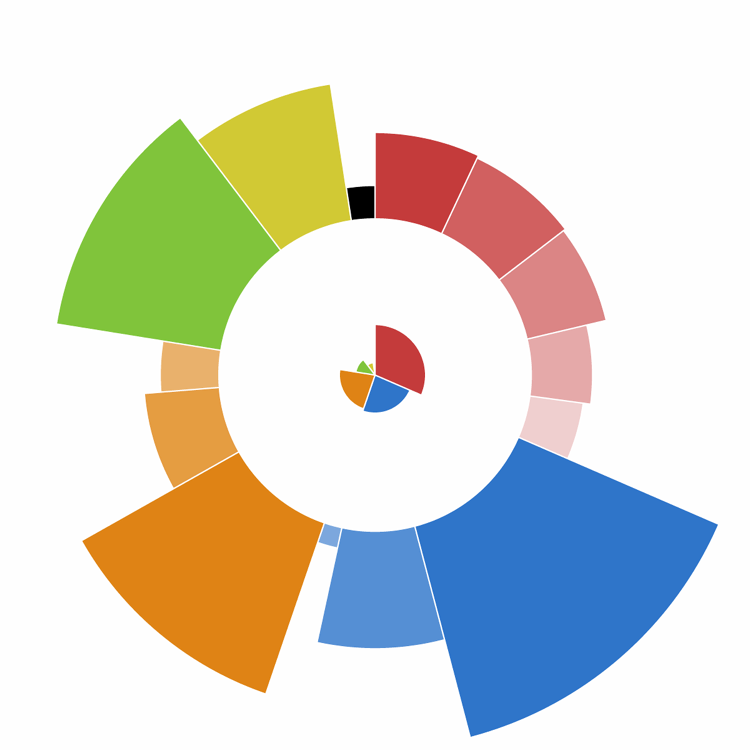
The Consumer Interests chart shows two different measurements of interest around the main categories. Complexity (width) shows how wide a range of terms are used in search around the topic category, while Interest (height) shows the monthly search volume broken down across categories.
For example, a category with a high Complexity and low Interest might be a niche area of interest with a variety of specialised terminology, while a category with high Interest and low Complexity might be a popular area of interest with very commonly understood terms.
NETWORK
| Colour | Domain | Clicks |
|---|---|---|
| www.example | 156,246 | |
| www.example | 103,053 | |
| www.example | 43,114 | |
| www.example | 35,875 | |
| www.example | 34,343 | |
| www.example | 25,568 | |
| www.example | 24,261 | |
| www.example | 21,490 | |
| www.example | 19,344 | |
| www.example | 14,091 | |
| Relevant Sear | Description |
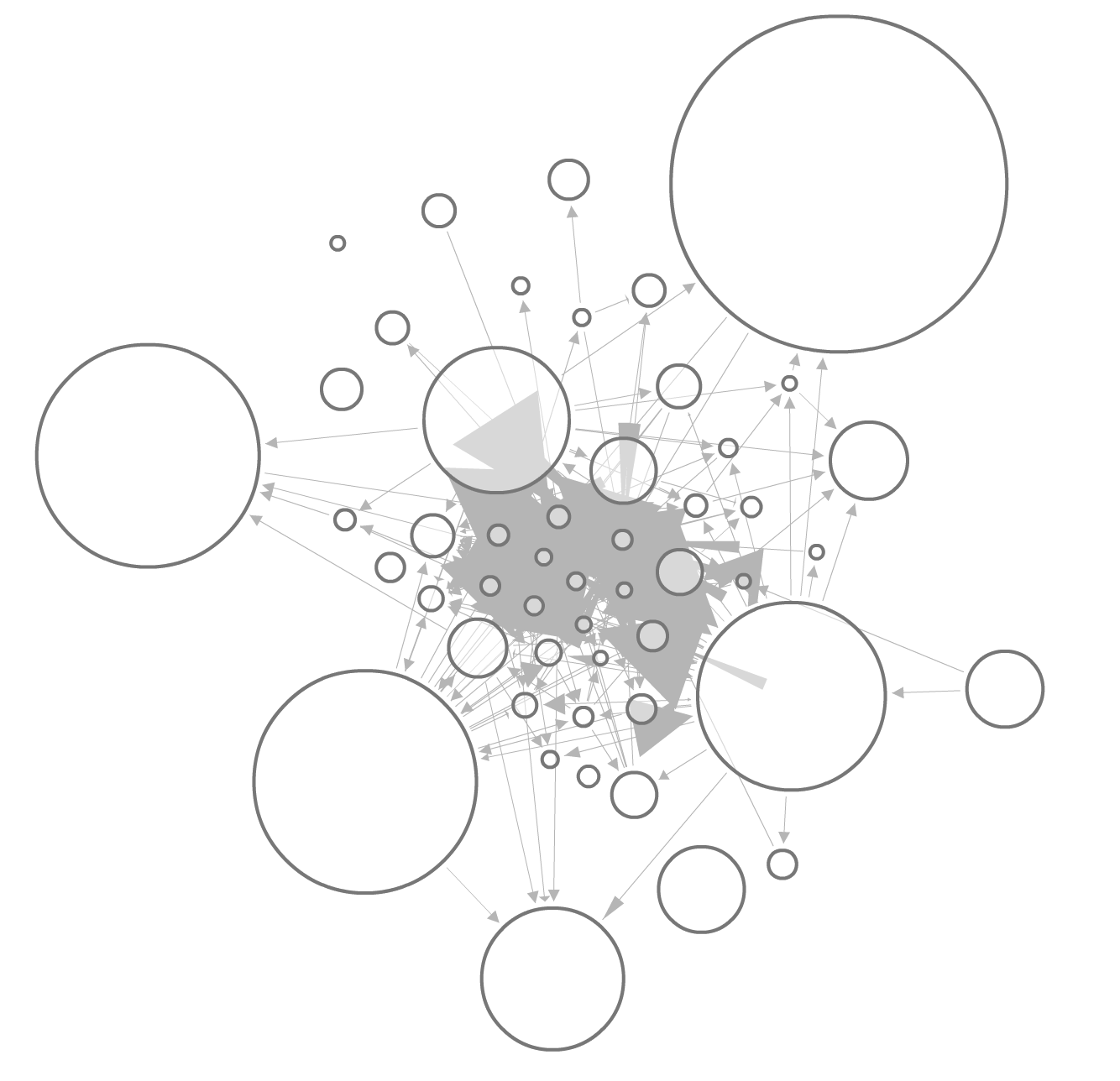
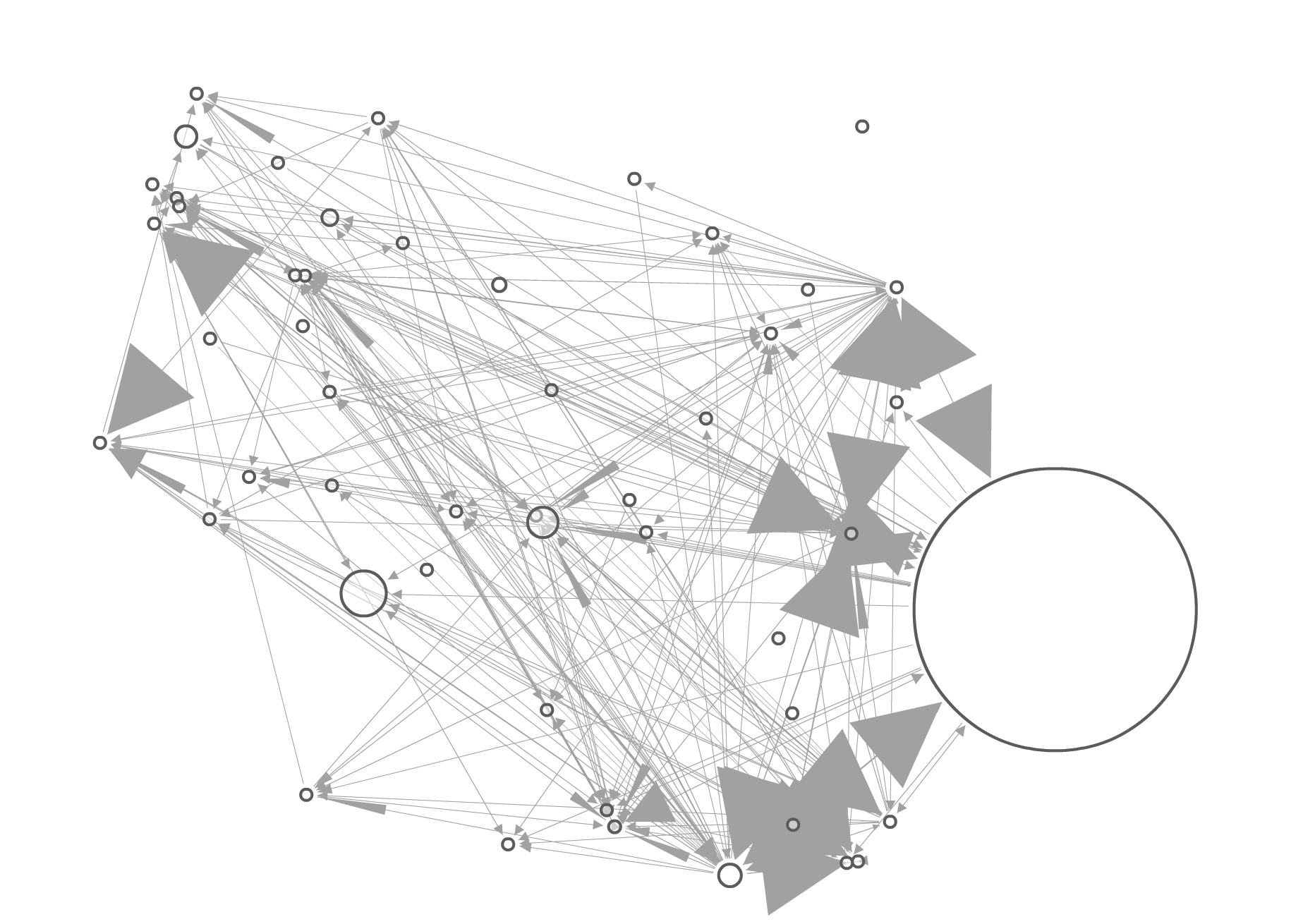
The Online Network chart shows which websites dominate the topic area in the territory. All maps are 'earned' attention maps in this report representing organic search.
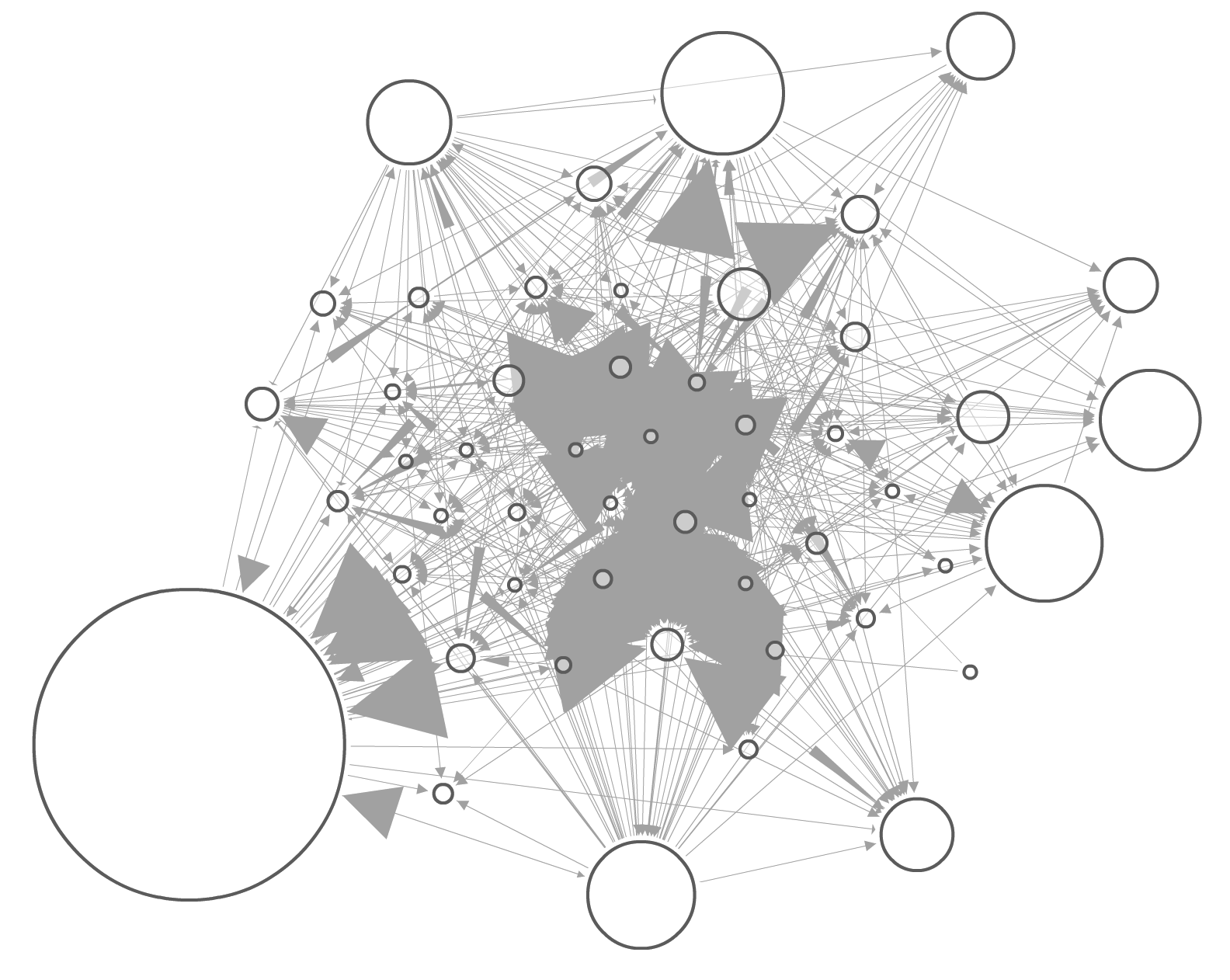
Each circle represents one of the largest websites on the network. The size of the circle indicates the volume of traffic received from search around the topic area, while the arrows show how these sites interlink; the lines show where there are links, the size of the arrowheads gives and indication of how many links there are between sites.
The largest ten sites are identified in the table, and their circles are colour coded on the chart.
SEASONALITY
A bar chart showing search volumes over months, with an average of 10,000.
Jan Mar May Jul Sep Nov
The Seasonality chart shows monthly search across the entire topic space, averaged out over a number of years. This shows how interest in the topic rises and falls through the year.
9 Welshpool
Summary
Welshpool searches show interest in leisure activities & information providers, e.g. MyWelshpool, but might lead to legacy projects, e.g. BBC's MyTown
Insights
- 1SEARCH VOLUMES REVEAL BOTH LOCAL, E.G. SCHOOL OR LIVESTOCK, & TOURIST, E.G. HOTEL, INTERESTS
- 2SITES PROVIDING INFORMATION COULD BE LOCAL OR NATIONAL BUT ARE NOT ALWAYS UP TO DATE
- 3DISCOURSE ABOUT THE AREA TAKES PLACE ACROSS MULTIPLE FORUMS, E.G. CAMPING OR PARENTING SITES
Interest - Welshpool
Radial chart displaying various search categories.
| Legend |
|---|
| POWIS CASTLE |
| SPORT |
| ENTERTAINMENT |
| LLANFAIR RAILWAY |
| FOOD & DRINK |
| OTHER ATTRACTION |
| ONLINE |
| WEATHER |
| NEWS & INFORMATION |
| GENERIC |
| LOCATION |
| ACCOMMODATION |
| TRANSPORT |
| OUTDOOR ACTIVITIES |
| LIVESTOCK |
| OTHER |
| COUNCIL |
| ESTATE AGENTS |
| PURCHASE |
| RENTAL |
| EMPLOYMENT |
| PURCHASE |
| OTHER |
| POST |
| LEGAL |
| MEDICAL |

| Scale |
|---|
| Term Count (width) |
| 0 5 10 |
| --- --- --- --- |
| Search Volume (height) |
| 0 1,500 3,000 |
| --- --- --- --- |
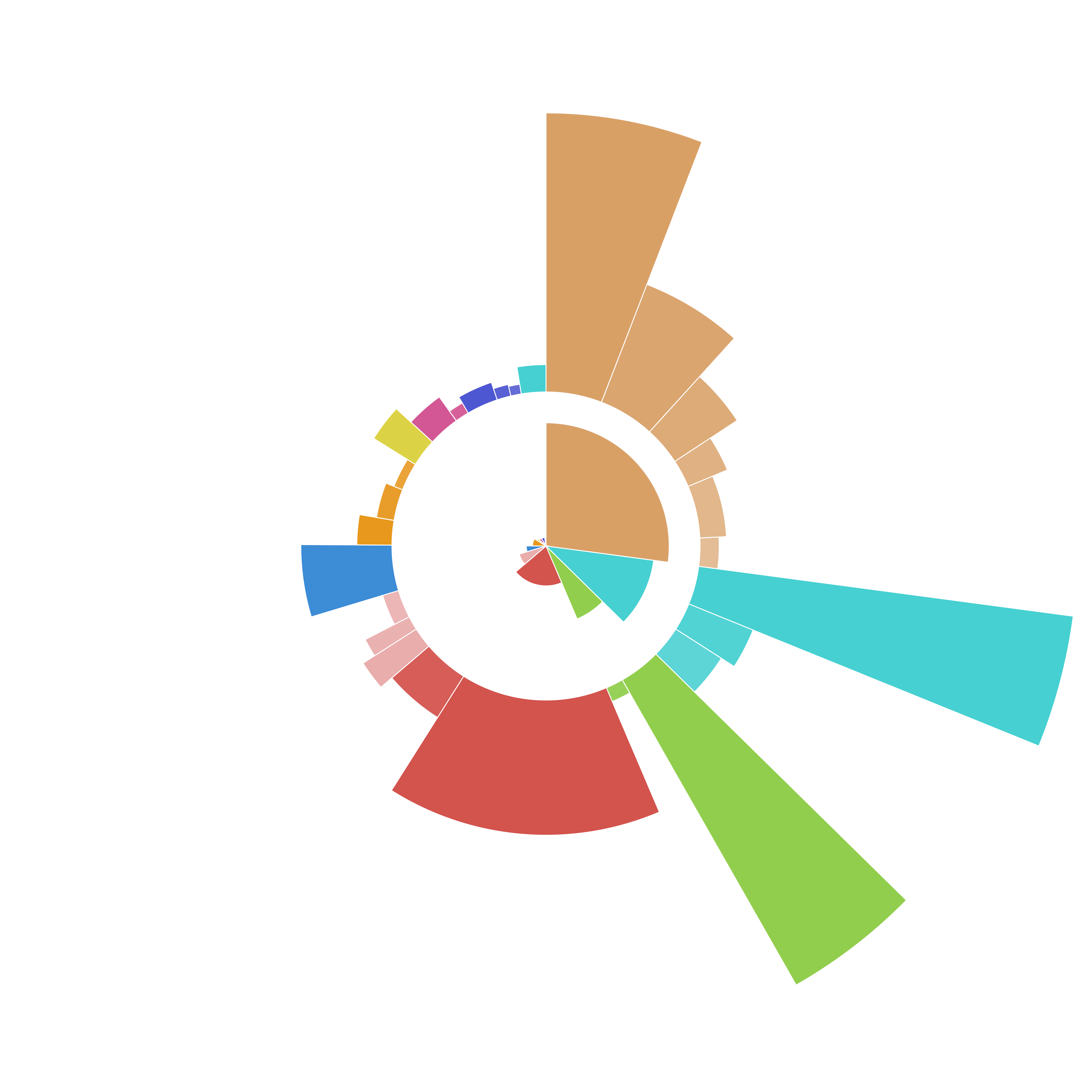
How to read this chart - Complexity of each attribute (number of keywords found) is here represented as column width. Interest in each attribute (exact match traffic volume of keywords found) is here represented as height.
INTEREST A total of 273 keywords associated with 29,814 UK searches per month were identified through research into Welshpool.
This is a relatively small sample set, which given the small size of the population of Welshpool is to be expected.
Overall, the largest interest, by category, exists around leisure in and around Welshpool. News-related searches come a close second. Possibly due to considerable tourist interest in the area Generic searches around Welshpool and Accommodation are also significant.
Leading keywords for Welshpool are 'My Welshpool', a local news and information site with an averaged 3,600 searches per month; 'Welshpool', the town name (4,400); and 'Powis Castle' (2,400). The influences of these larger volume terms can be seen in the radial diagram above where Online Information, General Welshpool, and Leisure are the largest categories of interest.
Outside of these keywords volumes of searches descend quickly in to a long tail of very specific requests. Representatives of medium size topics of interest include 'Welshpool Livestock Market' (320), 'Welshpool High School' (720), and 'Welshpool Cinema' (480).
The long tail includes terms such as 'places to eat in Welshpool' (12), 'Freecycle Welshpool' (12), and 'Car Sales Welshpool' (5).
These patterns suggest interest in Welshpool is mixed between local resident needs (cinemas, sport or shopping) and tourist requests (Powis Castle, Hafren House).
A line chart showing monthly search pattern for 2012, with search volumes ranging from 0 to 40,000.
The monthly search pattern for 2012 is above. The decline in winter exists across multiple search terms perhaps due to a decline in tourist and sport interest, as well as decreases in the main town name, tourist accommodation, and sport terms. Only livestock sales increased in Winter, rising in November, perhaps due to a Charolais Cattle sale on November 8th.∎
The Network - Welshpool
| Colour | Domain | Clicks |
|---|---|---|
| mywelshpool.co.uk | 1,704 | |
| tripadvisor.co.uk | 1,128 | |
| welshpool.org | 1,128 | |
| en.wikipedia.org | 963 | |
| bbc.co.uk | 736 | |
| castlewales.com | 718 | |
| welshpool.com | 434 | |
| jobisjob.co.uk | 395 | |
| wllr.org.uk | 385 | |
| yell.com | 330 |
How to read this chart A network chart of the overall network around the topic area examined. Circles represent websites, with lines representing the hyperlinks between those sites. The larger the circle, the more searches from Google each site receives.
What are 'clicks' Clicks are an averaged aggregated estimate of the natural searches that lead to each domain based on the keyword set and Google Adwords traffic volumes. 'Clicks' should be used for comparison only and are not intended to be absolute measures of traffic.
THE NETWORK The Welshpool network also reflects the division between local and tourist interest. Across the language set reviewed the MyWelshpool site emerged as the most common destination for informational searchers. As the primary source of online local news and classified adverts its presence is not a surprise.
However, older informational sites also exist within the network. Welshpool.org appears to be a tourist-focused site but the design is much older and the source code contains references to a 2002 Copyright claim. Meanwhile, Welshpool.com appears to be more regularly updated as it is part of the Croeso Network of tourist information sites. Welshpool.com also seems to fulfill a similar role to Welshpool.org as it is a mixture of historical information combined with lists of shops, places to stay, and places to eat.
This division between older and newer sites, seemingly serving multiple roles, suggests that hyperlocal attention may be being split between current and legacy projects.
National services with an emphasis on local information are also present within the network. The BBC captures attention as it provides multiple local information pages, such as local weather, and both old news and new news. The BBC can also rank in search results due to older BBC Local initiatives such as MyTown which ranks third in search results for 'My Welshpool' at the time of writing. This implies that legacy projects of bodies outside of the Welshpool area can still gain attention and potentially compete with existing news sources.
Tripadvisor and Yell.com both provide detailed information about local businesses and services, for example Tripadvisor ranks on the first page for local accommodation and 'Powis Castle' searches. Yell.com is returned in relation to searches such as 'Charlies Welshpool' (a camping and gardening store) or 'Welshpool Cinema'.
Purely tourist information sites such as Castlewales.com and the Welshpool Light Railway (Wllr) benefit from specific interest around major attractions in the area.
The result is the digital landscape of Welshpool information includes both tourist and resident information sources offered by local and national information providers. Any hyperlocal sites in the area must therefore be understood to be competing with both old and new, as well as local and national, services.∎
Welshpool - Additional Data
DATA Additional data sources were queried within this work including social media platforms & proprietary sources. However coverage was not complete and for Welshpool demographic data has been excluded as the sample set was too small.
MEDIA Data was drawn from the search results to identify the types of media present within natural search. These provide insight in to information presented to searchers. The large number of map results shows Google returning numerous location-specific results.
A bar chart showing image, local, and map search results, with map having the highest number of results around 180.
A radial chart displaying the distribution of Likes, Shares, ReTweets, and PlusOne, with Likes making up 65%.
| Metrics | Site | Value |
|---|---|---|
| Likes | Flash Leisure Centre | 3,554 |
| Shares | BBC Sports Story | 1,189 |
| ReTweets | BBC Sports Story | 488 |
| Plus Ones | Powys Local Government | 5 |
SOCIAL SHARING Analysis of the sharing of URLs across the data set reveals the importance of Facebook as a means of spreading and sharing reactions to Welshpool sites. In this data major national outliers have been excluded, e.g. nandos.co.uk, even if they have branches within the area as it is not always possible to discover branch level data which can result in confusion between local and national information.
Facebook analysis supports the popularity of local venues and information sources, as the Flash Leisure Centre, MyWelshpool, and Charlie's Garden Centre are all relatively well 'liked'.
Facebook Shares continue this trend. For example, the second most shared URL relates to The Angel Pub. However, the site that hosts this information is Beer in the Evening - a nation-wide 'hyperlocal' information provider.∎
Discourse Analysis
DISCOURSE Discussion about Welshpool can occur almost anywhere, whether on a camping website or on a local politics blog. Commonly recurring blogs and forums that relate to the language set have been reviewed and the key themes are set out below, but many of these are not located in Welshpool.
DISCUSSION In the course of the analysis the language set was used to identify relevant blogs and forums where discussions about Welshpool take place. These are not necessarily the same as dedicated online communities that focus only on Welshpool. In fact many discussions that express relevant interest in Welshpool take place online in locations that do not relate to geography.
This is relatively common as people often discuss topics with those who share their interests. For example, Netmums was identified as a relevant site, and it contains listings and discussions about activities for parents & children in the Welshpool area. The common interest is parenting, with geography being a secondary concern. Yet for parents in Welshpool, or visiting the area, this site still contains valuable and relevant hyperlocal information.
A summary of the main themes identified in a high-level review of relevant blogs & forums is set out below.
Welshpool discussions often covers activities for adults and children
Activities in the local area are discussed in multiple locations. These include camping discussion, which covers topics such as conditions and reviews of camp grounds; model railway enthusiasts looking to visit or recreate the Welshpool light railway; golfing offers and meet ups; bird watchers swapping sightings and photographs; and parents looking for other parents in their area.
Local politics discussions are limited on forums but there are prominent local bloggers
There were few forums that focused only on local news, however, news discussions do occur within the context of other sites. The crash of a light aircraft near Welshpool was widely commented on in discussions on a dedicated pilot's site. In contrast there are active bloggers on local politics, with Heledd Fychan of Plaid Cymru and Glyn Davies, the Montgomeryshire Conservative MP, both maintaining active blogs that prompt discussions in their comments.
Livestock trades attract interest
Both blogs and forums include information on local livestock auctions. A Farmers' Guardian reporter, Katie Lomas, maintains a livestock blog which has previously reported on Welshpool auctions. Similar forum discussions facilitate the sale of livestock as seen on sites such as accidentialsmallholder.net and downsizer.net.
"Hi Ladies Looking for some help and advice ... moving to Welshpool in the near future ... and just wanted general feedback on what the area is like ... Any of you out there?"
- Amanda G
Tourist information and reviews are popular
Holiday makers also seek advice and feedback on the local area, for example requests for activities. Reviews and experiences are often written up on blogs discussing the area, e.g. Powis Castle.∎
| Sample Blogs | Description |
|---|---|
| wellywoman.wordpress.com | gardening blog |
| montgomerybirdblog.blogspot.com | birdwatching blog |
| glyn-davies.blogspot.com | blog for the Montgomeryshire MP |
| vinchad.blogspot.com | personal blog |
| thegroundhog.wordpress.com | a football ground travelog |
| Sample Forums | Description |
|---|---|
| www.ukcampsite.co.uk | camping community includes Welshpool discussions |
| www.rootschat.com | genealogy site |
| www.pprune.org | professional pilots community |
| www.netmums.com | parenting forum |
| www.rmweb.co.uk | model railway enthusiasts |
14 The London Borough of Camden
Summary
Camden searches show a strong demand for leisure activities, e.g. restaurants, but famous locations also drive interest, e.g. Covent Garden
Insights
- 1SEARCHES ABOUT CAMDEN FOCUS ON FUN & FOOD, BUT A LONGER TAIL OF OTHER NEEDS IS VISIBLE
- 2THE CAMDEN NETWORK SEES MULTIPLE NATIONAL & LONDON WIDE SOURCES OF INFORMATION
- 3MUSIC FORUMS COMMUNITIES & ACTIVITY BLOGS ARE POPULAR, BUT DISCOURSE COULD OCCUR ANYWHERE
Interest - Camden
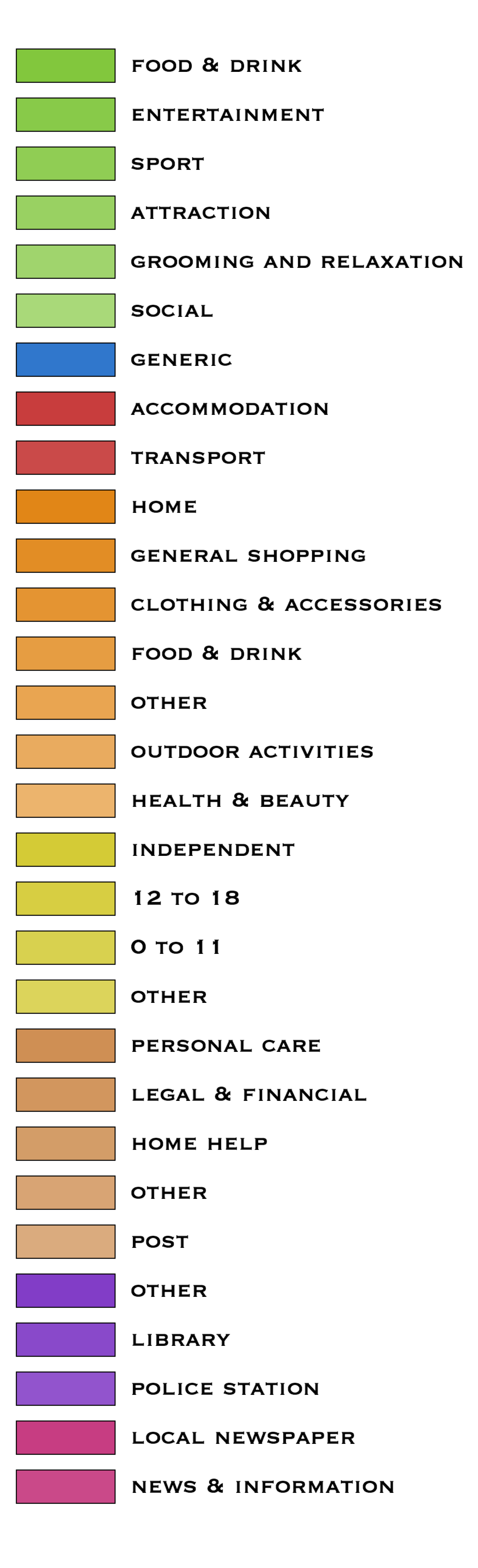
Radial chart displaying various search categories.
| Legend |
|---|
| FOOD & DRINK |
| ENTERTAINMENT |
| SPORT |
| ATTRACTION |
| GROOMING AND RELAXATION |
| SOCIAL |
| GENERIC |
| ACCOMMODATION |
| TRANSPORT |
| HOME |
| GENERAL SHOPPING |
| CLOTHING & ACCESSORIES |
| FOOD & DRINK |
| OTHER |
| OUTDOOR ACTIVITIES |
| HEALTH & BEAUTY |
| INDEPENDENT |
| 12 TO 18 |
| 0 TO 11 |
| OTHER |
| PERSONAL CARE |
| LEGAL & FINANCIAL |
| HOME HELP |
| OTHER |
| POST |
| OTHER |
| LIBRARY |
| POLICE STATION |
| LOCAL NEWSPAPER |
| NEWS & INFORMATION |
| ESTATE AGENTS |
| OTHER |
| RENTAL |
| PURCHASE |
| HOSPITAL |
| GP |
| OTHER |
| RELIGIOUS BUILDING |
| OTHER |
| CEMETERY |
| COMMUNITY CENTRE |
| CONFERENCE ROOMS |
| MAP |
| EMPLOYMENT |
| OTHER |
| DEALERSHIP |

| Scale |
|---|
| Term Count (width) |
| 0 30 60 |
| --- --- --- --- |
| Search Volume (height) |
| 0 63K 125K |
| --- --- --- --- |
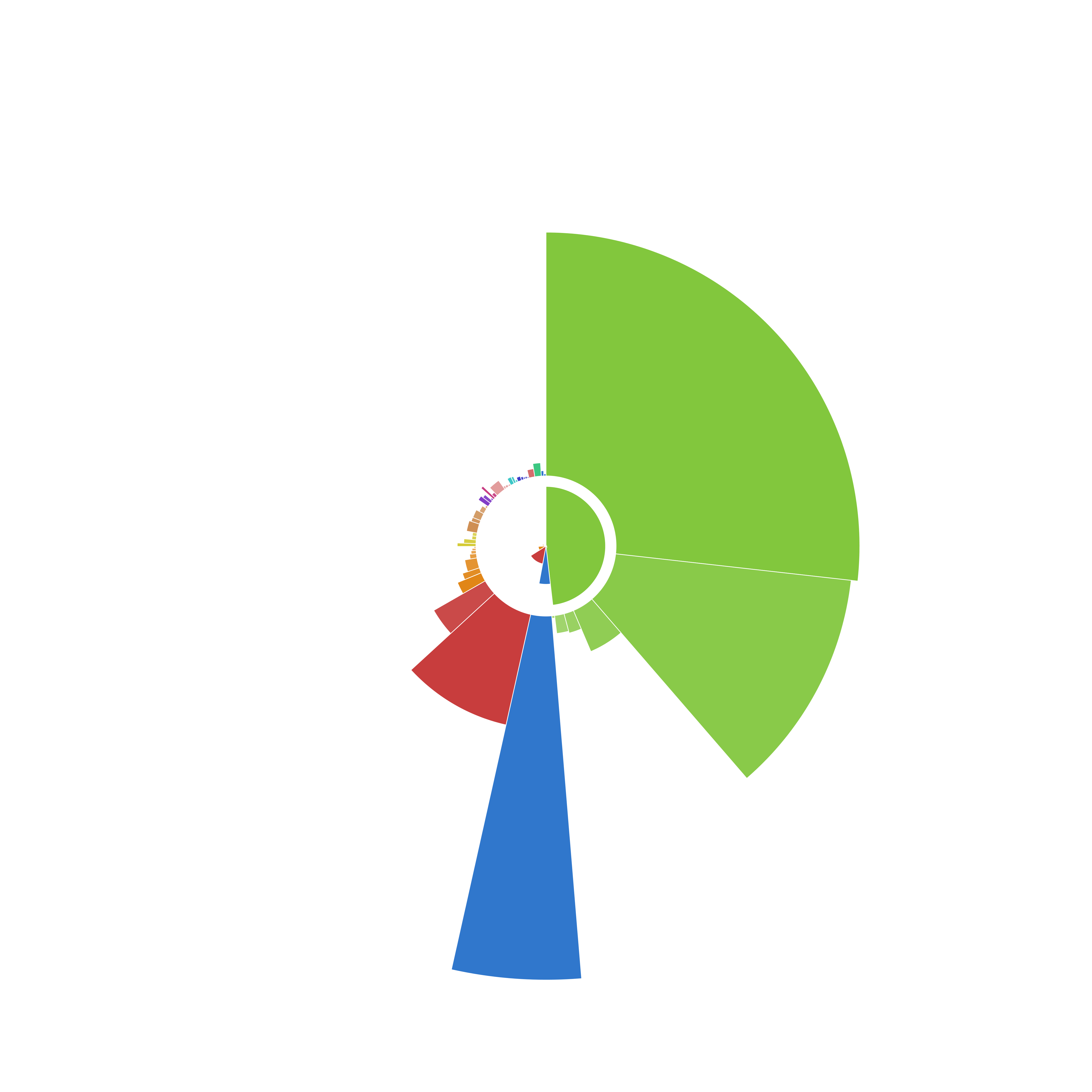
How to read this chart - Complexity of each attribute (number of keywords found) here represented as width. Interest in each attribute (exact match traffic volume of keywords found) here represented as height.
THE NETWORK A total of 1,430 keywords associated with 865,300 UK searches per month were identified in the research.
While this is a large amount of interest this is primarily unbranded interest. There is likely to be considerably more branded search which is locally relevant. However, as discussed previously, it is not possible to map this and so only selected elements have been included.
Overall the largest interest, by category, exists around Leisure. General search around place names, e.g. 'Camden' or 'Covent Garden', is also significant. Tourist interest drives the third largest category with searches for travel, particularly accommodation, forming a distinct information demand spike.
Leading keywords for Camden are often generic; 'Covent Garden' sees 40,500 monthly searches, while 'Camden' and 'Camden Council' both have 22,200 searches per month. Important specific locations include 'Apple Store Covent Garden' (6,600), ‘Kings Cross Station' (8,100) and 'Odeon Swiss Cottage' (9,900). The importance of these terms is evident in the demand for the Leisure, Travel, and General categories.
The long tail of searches in Camden is extremely long and includes specific terms ('West Hampstead Thameslink' - (590) ) and the generic 'Restaurant Camden' (140).
The focus on leisure suggests the importance of the area as a visitor destination as well to locals. More day-to-day requirements, such as shopping or property are noticeably smaller than purely leisure terms.
A line chart showing monthly search pattern for the last year, with volumes ranging from 0 to 1,000,000.
Last year saw a decline in search over the summer. These seasonal variations exist for the generic place terms although they are also influenced by yearly events such as the Camden Crawl music festival.∎
The Network - Camden
| Colour | Domain | Clicks |
|---|---|---|
| en.wikipedia.org | 50,144 | |
| timeout.com | 18,614 | |
| camden.gov.uk | 18,523 | |
| tripadvisor.co.uk | 16,229 | |
| coventgardenlondonuk.com | 15,809 | |
| yelp.co.uk | 12,506 | |
| odeon.co.uk | 11,588 | |
| londontown.com | 10,042 | |
| camdenlock.net | 8,674 | |
| qype.co.uk | 7,352 |
How to read this chart A network chart of the overall network around the topic area examined. Circles represent websites, with lines representing the hyperlinks between those sites. The larger the circle, the more searches from Google each site receives.
What are 'clicks' Clicks are an averaged aggregated estimate of the natural searches that lead to each domain based on the keyword set and Google Adwords traffic volumes. 'Clicks' should be used for comparison only and are not intended to be absolute measures of traffic.
THE NETWORK The Camden network reflects the impact of Covent Garden and Camden Market on interest in the Borough as a whole, and also the importance of leisure.
Leisure guides are significant holders of attention. Timeout.com, the online site for the London entertainment guide, and Londontown.com, another entertainment portal for London, both feature prominently in the network. Both of these sites offer visitors and residents local activity information.
Noticeably absent from the top 10 are harder news and information sites. Although the portal for Camden Council is present. The first news sites to feature in the list are large national news providers, with the Guardian taking 22nd place (3,252 clicks) and the BBC is 25th (2,868 clicks). Smaller specialist news and information providers see only a limited presence, e.g. sites such as Kentishtowner.co.uk (840 clicks) or westhampsteadlife.com (540 clicks), although the impact of these is likely increased for residents looking for very specific areas rather than the Borough as a whole.
National providers also feature as important sources of local and hyperlocal information more generally. Tripadvisor, Yelp, and Qype all provide reviews and information on major local attractions, shops, and leisure venues. In doing so they hold important positions within the network. Odeon.co.uk fulfills a similar, if brand specific and niche, role.
A few specialist sites promoting specific areas also exist within the network, their profile being due to large search volumes around specific locations (e.g. Camden Market or Covent Garden). For example, Coventgardenlondonuk.com is a site promoting Covent Garden, owned by Capital Counties Properties who in turn own the Covent Garden Estate. Camdenlock.net provides a similar promotional presence for Camden retailers.
Overall the network shows the difficulties in attempting to understand hyperlocal information provision in an area as diverse as the London Borough of Camden. Hyperlocal information providers must relate to significant areas, e.g. Covent Garden, or focus on major topics of interest, e.g. leisure, to compete with the London-wide or national information providers. However, this does not stop hyperlocal sites having a significant role in their immediate local area.∎
Camden - Additional Data
DATA Additional data sources were queried within this work including social media platforms & proprietary sources. However the coverage was not complete so the data below based on a sample which has been extrapolated to present more general trends.
DEMOGRAPHICS Demographic data for the language set identified for Camden reveals 35-49 year olds are making a larger number of searches for information about the area. People 65+ are the least likely to be doing so, although this may be because this group are less likely to be online.
A bar chart showing image, local, map, and news search results, with map having the highest number of results around 1,800.
The same data also suggests that searchers are more likely to be women than men. Women demonstrate a greater interest in Camden Council services than men, and in Covent Garden in general.
A pie chart showing age group distribution for searches: <24, 25-34, 35-49, 50-64, 65+.
A radial chart displaying the distribution of Likes, Shares, ReTweets, and PlusOne, with Shares making up 48%.
| Metrics | Site | Value |
|---|---|---|
| Likes | Sanctuary Spa | 26,569 |
| Shares | BBC London Weather | 7,146 |
| ReTweets | BBC London Weather | 5,519 |
| Plus Ones | Royal Opera House | 120,596 |
SOCIAL SHARING Analysis of the sharing of URLs across the data set reveals the importance of Facebook as a means of spreading and sharing reactions to Camden sites. In this data major national outliers have been excluded, e.g. nandos.co.uk, even if they have branches within the area as it is not always possible to discover branch level data which can result in confusion between local and national information.
Facebook reveals the popularity of leisure with the five most liked URLs being The Sanctuary, Camden Proud, the Covent Garden Roadhouse, The Underworld, and The Camden Art Centre. Note: The Royal Opera House accounts for 86% of Plus Ones.∎
MEDIA Additional data was also drawn from the search results to identify the types of media that were present within natural search. These results are the most common, in part due to the importance of news and weather terms.
Discourse Analysis
DISCOURSE An area like the Borough of Camden attracts a wide range of comment on blogs & in forum communities. Interest-lead discussion, particularly music, is important but there is also specific community commentary as well as active celebration of London lifestyles.
DISCUSSION Events and activities are an important part of the discourse around Camden. Both blogs and forums contain multiple threads of advice on what to do, where to go, and reviews of the local area.
A summary of the main themes identified in a high-level review of relevant blogs & forums is set out below.
Individuals blog about their personal experiences and celebrate life in the Borough of Camden and London as a whole
Individuals are keen to share their experiences of London. Photograph journals are popular, whether hosted on general community sites or as the basis of blog posts. Others prefer to write reviews of their experiences which may be grouped around a particular theme, e.g. breakfast, or which instead serve as guides to events and attractions. A common theme across all of these discussions is the role of the individual as a guide to the possibilities that exist within a large and diverse area.
Music, including festivals and gigs, attracts considerable and active discussion
Building on the 'discovery' theme, there are multiple sites devoted to the discovery of music and the sharing of upcoming gigs and events. Many of these refer to the vibrant live music scene in Camden, guiding people to specific venues and events.
Other activity discussion, and community building, takes place across a range of sites
As seen in Welshpool, communities built around a common interest, rather than geographic interests, often share information about their local areas. Parenting sites are a particularly good example of this, as they maintain large and active communities which enable specific local discussions on topics such as babysitting advice or local attractions. Conversations also exist across Running and Cycling forums where local shops and routes are discussed.
Local forums & blogs run by volunteers cover all aspects of life in the area
Geographic community discussions are also present. Blogs such as Westhampsteadlife or NW6: the blog, provide commentary on local community news and can mix topical local news with leisure and event reporting. These can be the work of single individuals, in which case they are not always regularly updated and may have stopped publishing updates entirely. In other cases these are works by multiple local community commentators which may enable them to provide an ongoing series of updates which do not depend as much on individuals.∎
"Just started spending a bit of time in Camden, noticed the canal that runs through the town ... how far does it go? Also is it safe?"
- lepetitouef
| Sample Blogs | Description |
|---|---|
| londonreviewofbreakfasts.blogspot.com | breakfast review blog |
| www.tiredoflondontiredolife.com | site recording one London event a day |
| kingscrossenvironment.com | neighbourhood news |
| www.ianvisits.uk | London recommendations |
| littlelondonobservationist.wordpress.com | personal blog |
| Sample Forums | Description |
|---|---|
| www.meetup.com | multiple meet up groups, including Camden area |
| www.residentadvisor.net | musical forums includes Camden events |
| drownedinsound.com | music discussion forum |
| www.mumsnet.com | parenting forum |
| http://www.urban75.net | community forums |
19 National Hyperlocal Sources
Summary
National 'local' searches show aggregate demand for 'local news'; leisure activities are also popular with food & drink 'near me' seeing most demand
Insights
- 1LOCAL, BUT LOCATION FREE, SEARCHES SUGGEST CONSUMERS TRUST SEARCH ENGINE GEO-LOCATION
- 2NEWS & WEATHER DEMANDS TEND TO LEAD TO NATIONAL SERVICES, E.G. THE BBC, OR WEATHER.COM
- 3SOCIAL INTERACTIONS FOR ‘LOCAL' INFORMATION ARE OFTEN ABOUT LEISURE ACTIVITIES
Interest - National
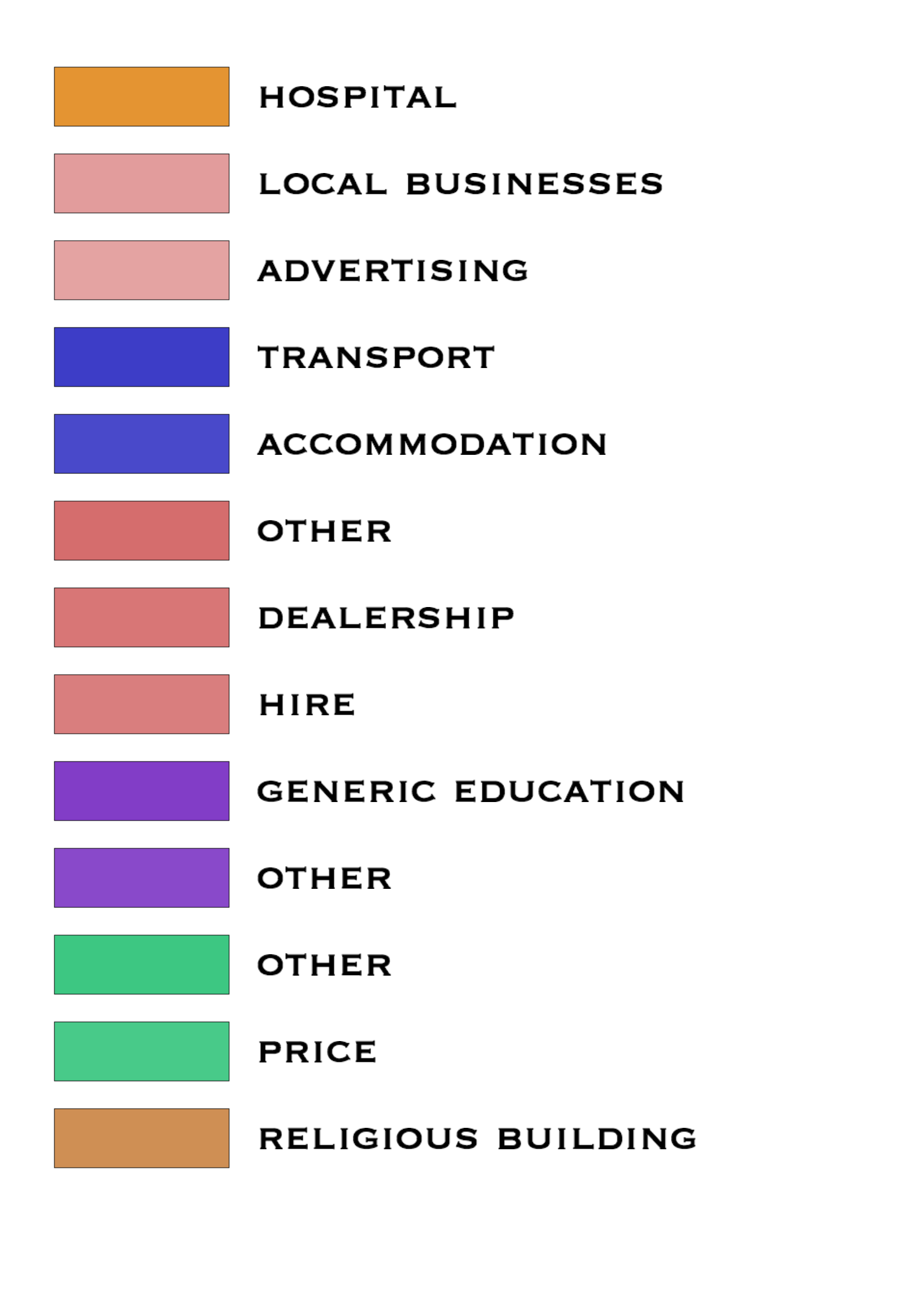
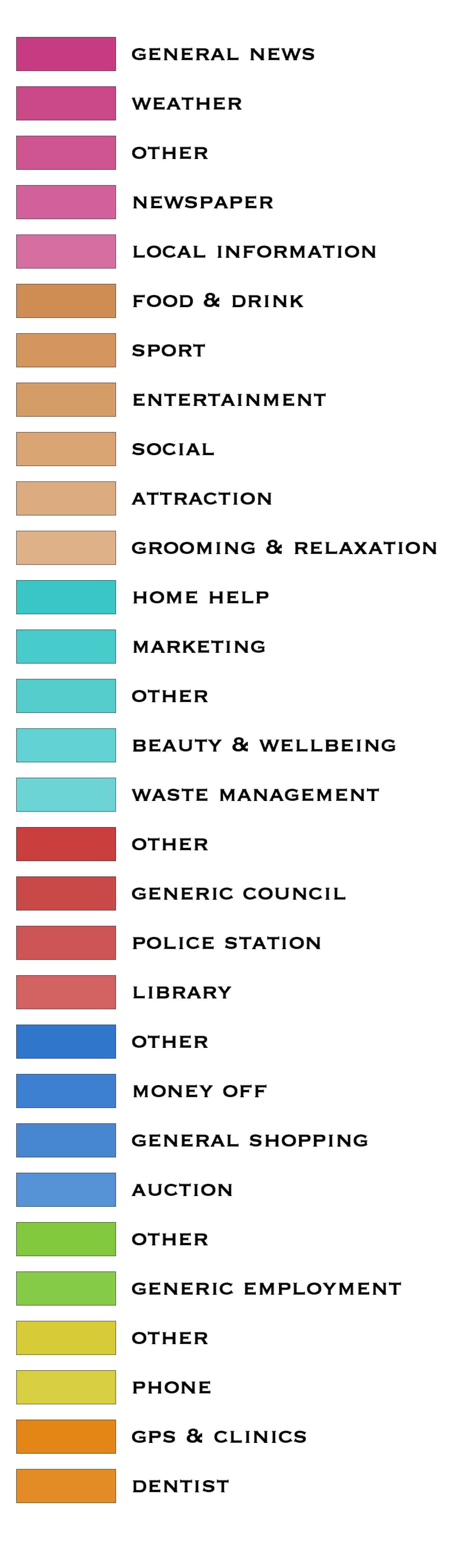
Radial chart displaying various search categories.

| Legend |
|---|
| GENERAL NEWS |
| WEATHER |
| OTHER |
| NEWSPAPER |
| LOCAL INFORMATION |
| FOOD & DRINK |
| SPORT |
| ENTERTAINMENT |
| SOCIAL |
| ATTRACTION |
| GROOMING & RELAXATION |
| HOME HELP |
| MARKETING |
| OTHER |
| BEAUTY & WELLBEING |
| WASTE MANAGEMENT |
| OTHER |
| GENERIC COUNCIL |
| POLICE STATION |
| LIBRARY |
| OTHER |
| MONEY OFF |
| GENERAL SHOPPING |
| AUCTION |
| OTHER |
| GENERIC EMPLOYMENT |
| OTHER |
| PHONE |
| GPS & CLINICS |
| DENTIST |
| HOSPITAL |
| LOCAL BUSINESSES |
| ADVERTISING |
| TRANSPORT |
| ACCOMMODATION |
| OTHER |
| DEALERSHIP |
| HIRE |
| GENERIC EDUCATION |
| OTHER |
| OTHER |
| PRICE |
| RELIGIOUS BUILDING |
| Scale |
|---|
| Term Count (width) |
| 0 5 10 |
| --- --- --- --- |
| Search Volume (height) |
| 0 8K 16K |
| --- --- --- --- |
How to read this chart - Complexity of each attribute (number of keywords found) here represented as width. Interest in each attribute (exact match traffic volume of keywords found) here represented as height.
THE NETWORK A total of 340 keywords associated with 196,060 UK searches per month were identified in the research.
'National' hyperlocal terms were selected in a similar process to the place specific terms of Welshpool & Camden. However rather than include a place phrases such as 'near me', 'nearby', 'local' and 'hyperlocal' were added. For example 'local weather', 'hyperlocal news' or 'restaurants in my area'.
The most popular category of search was informational searches, with news and weather as the most important secondary categories. Leisure, particularly food & drink, and tradesmen, e.g. builders or plumbers, were also significant.
The resulting keywords reveal demand is particularly steep for 'local' information, in particular 'local news' has 40,500 searches each month and 'local weather' is second with 33,100. The third most popular term was 'restaurants near me' with 9,900. Overall 'local' was the most popular word for referring to the area immediately around the searcher, although 'near me' was more likely to be semantically tied to food terms, e.g. restaurants and take-aways.
The longer tail of search reveals more interest in 'local' terms with examples including 'local car hire' (210) & ‘local Chinese delivery' (91). There was no meaningful search for 'hyperlocal' to be used in conjunction with topics of interest, suggesting that 'hyperlocal' is not used in natural language by the majority of consumers.
The overall pattern of search demand suggests a greater interest in local news & weather than has been revealed in the place specific searches for Welshpool & Camden. However, leisure terms have been consistently popular across all three geographic areas.
A line chart showing monthly search pattern for the last year, with volumes ranging from 0 to 230,000.
The last year saw a rise in relevant search term volumes in the summer months, with an increase in May partly due to an interest in 'local elections'.∎
The Network - National
| Colour | Domain | Clicks |
|---|---|---|
| bbc.co.uk | 28,592 | |
| uk.weather.com | 4,564 | |
| metoffice.gov.uk | 3,077 | |
| en.wikipedia.org | 2,294 | |
| squaremeal.co.uk | 2,187 | |
| netweather.tv | 1,603 | |
| gymsnearme.org.uk | 1,356 | |
| nhs.uk | 1,199 | |
| hmrc.gov.uk | 932 | |
| yell.com | 910 |
How to read this chart A network chart of the overall network around the topic area examined. Circles represent websites, with lines representing the hyperlinks between those sites. The larger the circle, the more searches from Google each site receives.
What are 'clicks' Clicks are an averaged aggregated estimate of the natural searches that lead to each domain based on the keyword set and Google Adwords traffic volumes. Clicks should be used for comparison only and are not intended to be absolute measures of traffic.
THE NETWORK The presence of the BBC as the leading holder of attention is due to the prominence of the organisation for 'local news' and 'local weather' terms. For example the BBC holds the top three results for 'local news', ensuring that many searchers are likely to end up visiting the BBC's local news portals.
The BBC is the only news site present in the top 10, although The Liverpool Echo is in 11th place (868 clicks), and the Guardian newspaper is 17th (688 clicks). Yet even then the modeled number of clicks is tiny when compared to the volumes of attention the BBC is likely to hold (28,592 clicks).
The BBC also gathers attention through news reporting on issues which may be of local interest, for example local election reporting or local education stories. It also ranks for generic local radio terms, although it should be noted that this work did not seek to map all interest in named local radio stations. Even old BBC pages may rank for certain local terms.
After the BBC interest in food & health, specifically gyms, leads squaremeal and gymsnearme to hold more specialist attention in the online landscape. Tripadvisor, which has been important for both London and Welshpool, ranks less well for more generic traffic and is 19th (681 clicks).
This suggests that location names are important for sites such as Tripadvisor. This seems reasonable as such sites exists to provide feedback and comment on specific locations rather than function as a discovery engine for more generic local searches.
Government information sources are a smaller but distinct element of the digital landscape. The NHS & HMRC are in the top 10, and gov.co.uk is 13th (855 clicks).
The overall landscape for generic national terms is therefore one where the BBC holds significant amounts of attention around the high and low volume terms.
Any national hyperlocal service looking to provide weather or news information, without specifying specific locations, is likely to see strong competition from well-established sources.∎
National - Additional Data
DATA Additional data sources were queried within this work including social media platforms & proprietary sources. However coverage was not complete. This data is therefore based on a sample which has been extrapolated to present more general trends.
DEMOGRAPHICS Demographic data for the language set identified for national searches reveals 35-49 year olds are making a larger number of searches for information about their local area, and in particular for local news & weather. The under 24s are the least likely to be looking for local information, and this is particularly pronounced in relation to local news searches where they make fewer searches than the over 65s.
A bar chart showing image, local, map, and news search results for national data, with news having the highest number of results around 80.
The same data also suggests that searchers are more likely to be men than women. This is in part due to men demonstrating a greater interest in local weather services, and more marginally in local news.
A pie chart showing age group distribution for national searches: <24, 25-34, 35-49, 50-64, 65+.
A radial chart displaying the distribution of Likes, Shares, ReTweets, and PlusOne for national data, with PlusOne making up 37%.
| Metrics | Site | Value |
|---|---|---|
| Likes | match.com | 16,969 |
| Shares | groupon.co.uk | 35,767 |
| ReTweets | meetup.com | 17,003 |
| Plus Ones | just-eat.co.uk | 30,677 |
SOCIAL SHARING Analysis of the sharing of URLs across the data set reveals the importance of Facebook Shares and reTweets as ways to pass on information. In this data major national outliers and non-UK sites have been excluded, e.g. localharvest.org and Fandango.com were both returned in the data set but provide US information.
The social metrics also reveal the popularity of dating sites, which occupy more prominent positions in the results than the overall levels of interest might otherwise suggest. Major news providers & weather sites are also widely shared.∎
MEDIA Additional data was also drawn from the search results to identify the types of media that were present within natural search. News results are the most common, in part due to the importance of news and weather terms.
23 Appendix
Discovery
OVERVIEW Hyperlocal information, defined as the topics of interest to individuals that relate to specific geographic areas, is complex and varied. There are clear trends that relate to everyday desires, e.g. food or fun, specific requests which are supported by communities of interest, e.g. parents or music fans, as well as geographic services that exist to talk about the local area regardless of other topics.
Hyperlocal information services will therefore need to consider what, who and how they want to address consumer interests.
For many this will depend on the passion of the team involved. A one person blog written by a dedicated follower of local politics is unlikely to want to change course and start a restaurant review site. However those looking to create a commercial enterprise around hyperlocal content will need to consider the how to build the largest audience.
Many already are thinking of this question, but for others the techniques that can be used to maximise online awareness are new. A desire to share local news doesn't always come with a handy guide on search engine marketing.
Regardless of the size of the enterprise, there are certain steps that hyperlocal information providers may wish to consider to improve their chances of being discovered, whether they are focused on a single topic or serving as hubs of local news and conversation.
RECOMMENDATIONS Hyperlocal information providers are competing with a range of other online information sources, some commercial, some public, some personal. Being discovered amongst these requires using the same techniques as other online content owners. Detailed guidance on these techniques is beyond the scope of this document, but at a high level some suggestions have been set out below:
- Planning & research - keyword research can be used to identify areas of likely interest in relation to the local area. A high level version of this is included in the radial diagrams within this document. The same information can also reveal whether content has a seasonal element. In practice by creating content around topics of major interest at the right time of year a site is more likely to have the information people are looking for, making it more useful and relevant to its audience. Some of these features may be obvious, for example guides to Easter events around Easter, however others may not be, such as timing around historical dates.
- Undertake search engine optimisation - by tailoring content around popular & relevant keywords revealed in the research, the site will be more likely to rank in relevant searches, raising its profile and increasing traffic.
- Consider digital advertising - this comes in many forms, e.g. paid search advertising, Facebook advertising or online display adverts. Many of these can be geo & interest targeted which can enable a site to reach out to the local audience regardless of where they might be, for example advertising to local audiences browsing national sites. In practice the costs & benefits of each would need to be considered carefully but they offer another potential route to building a local audience.
- Get involved beyond your local area - sites interested in specific local information, e.g. sports, fitness or local politics, may benefit from engaging in larger communities. For example representatives of a local parenting site could be active on major parenting forums as local champions & guides. This should be done with care as such efforts would need to be helpful and supportive of the larger community, rather than attempts to divert visitors. For example a link to a local directory of children's activities in a forum may be welcomed if the site that hosts the forum does not provide the same information. Social media platforms may be useful, but traditional forums should not be overlooked.
- Remember offline - local newspapers, outdoor billboards, radio stations & community gatherings all offer ways to speak to a local audience. Any online activity can be complimented through offline effort to increase the sites digital audience.
Many hyperlocal information sites already thinking of themselves as digital media owners and using some or all of these techniques. For those that are not then it is not too late to start.∎
Data
WELSHPOOL
| Primary Category | Interest Mn. Search |
|---|---|
| Automotive | 594 |
| Council | 1,318 |
| Employment | 710 |
| Generic | 5,297 |
| Leisure | 8,222 |
| Medical | 396 |
| News & Information | 7,252 |
| Property | 903 |
| Service | 637 |
| Shopping | 1,872 |
| Travel & Accommodation | 2,608 |
CAMDEN
| Primary Category | Interest Mn. Search |
|---|---|
| Automotive | 4,640 |
| Community Space | 8,740 |
| Council | 15,100 |
| Education | 24,920 |
| Employment | 8,360 |
| Generic | 228,090 |
| Leisure | 354,720 |
| Location | 8,610 |
| Medical | 10,630 |
| News & Information | 13,460 |
| Property | 11,570 |
| Service | 22,090 |
| Shopping | 46,180 |
| Travel & Accommodation | 108,190 |
NATIONAL
| Primary Category | Interest Mn. Search |
|---|---|
| Automotive | 3,391 |
| Council | 13,022 |
| Education | 3,042 |
| Employment | 5,610 |
| Leisure | 34,506 |
| Local Directory | 4,687 |
| Medical | 4,588 |
| News & Information | 91,854 |
| Property | 2,665 |
| Religion | 414 |
| Service | 16,294 |
| Shopping | 8,924 |
| Travel & Accommodation | 3,427 |
| Business & Advertising | 3,636 |