Our conclusions
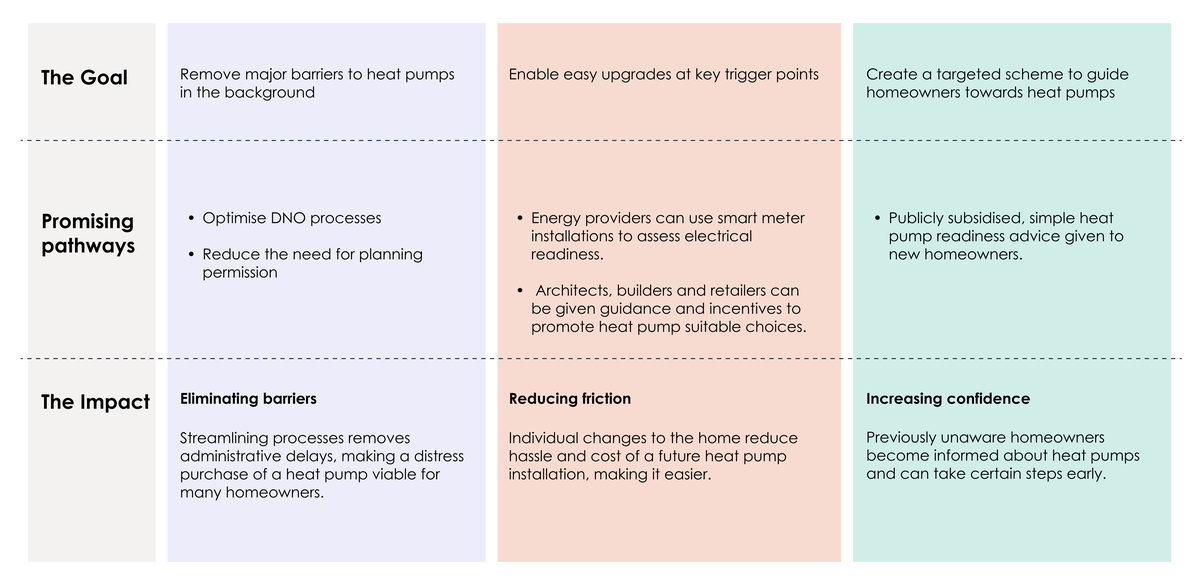
Heat pump installations involve multiple technical and administrative steps that add cost, time and stress for both installers and consumers. Most homeowners only think about heating when their boiler breaks, at which point they default to replacing it with another gas boiler. If households were to take some preparatory steps before their boiler breaks, heat pumps would become easier and faster to install. To enable faster heat pump adoption, we need to streamline administrative processes that cause delays, enable physical upgrades to happen at convenient moments when work is already planned, and provide information so households can plan ahead with confidence.
We have explored three ways to move households toward heat pump readiness and identified the most promising avenues:
- Removing administrative barriers as soon as possible is essential. They affect most installations and block rapid switches when boilers fail.
- Speed up DNO approvals: Give DNOs clear incentives to meet challenging key performance indicators for quick, low-carbon technology approvals.
- Reduce the number of properties that need planning permission: Further extend permitted development rights to reduce the need for homeowners to seek planning permission.
- Enabling upgrades at convenient touchpoints would remove friction and mental load for some households.
- Pre-emptively undertake electrical upgrades: Smart meter installations and renovations could offer natural moments for electrical upgrades. Energy suppliers could proactively check household electrics and make homes more ready for a heat pump.
- Incentivise heat pump readiness as part of existing works: Innovators and heat pump providers should explore incentives for builders, architects and other renovation actors to promote readiness through guidance and product labelling.
- Avoid blanket mandates for low-temperature systems: The enforcement challenges and fraud risk make this impractical, especially as high-temperature heat pumps reduce the need for radiator upgrades.
- Homebuyers and renovators need simple guidance to become aware of the steps needed to become heat pump ready and to avoid counterproductive choices (like removing hot water cylinders). Our testing showed readiness reports could help. Publicly subsidised simple information for new homeowners is likely to be more practical than detailed heat loss surveys.
As adoption accelerates, more switches will happen under time pressure. Removing DNO delays and enabling preparatory electrical work will determine whether heat pumps become the default option at gas boiler failure. Readiness must reduce hassle rather than add it – working in the background, piggybacking on planned work, or providing simple guidance at natural decision points.