
Rooted: Growing your own social venture
This guide is available in printed format from either UnLtd or Nesta. If you would like additional copies please contact either on the following:
[email protected] or call 020 7566 1100
[email protected] or call 01382 229521
It can also be downloaded as a PDF from either website, see www.nesta.org.uk and www.unltd.org.uk/rooted-guide.
The guide has also been made interactive on UnLtd's website, offering fifteen additional chapters covering the topics which you will find useful as your venture develops. This includes advice on marketing, selling, pricing, considering legal structures and the differences between social enterprises, charities and commercial enterprises, accounting and business planning.
Visit: www.unltd.org.uk/rooted-guide
Introduction
It's likely you're reading this because you have an idea that could benefit your community. Maybe you're inspired because you've seen an opportunity to provide a new product or service in your local area. Or perhaps you fancy a change of career. Whatever the motivation, this guide can help you on your journey.
It contains information, advice and activities, all of which stem from the tried and tested techniques of two unique initiatives: Nesta's Age Unlimited programme in Scotland, and Unltd's Ignite initiative in Northern Ireland. Both these programmes drew on the experiences of people over 50, who had focused their energy and commitment on taking forward social ventures to benefit their local communities.
Whether you're at the beginning of such a journey, or taking stock of how an existing social venture is going, you should find the following sections a helpful guide.
You'll have the opportunity to work through a series of activities. These will help you clarify your thinking and communicate your ideas effectively.
Firstly, you'll assess your personal attributes – including the skills, knowledge and values you bring to your social venture - to see how these can help you tackle any barriers and difficulties you encounter.
Then, once you've defined what you want to do and why, you can explore the viability of your idea – and learn some business techniques for taking it forward into a real venture, rooted in your community.
Finally, looking ahead, you'll investigate how to ensure your idea becomes a sustainable social venture, without losing the passion that first inspired you.
Your venture may well be one of the most exciting things you've ever done. Hopefully this guide can help you on that journey...
Section 01: Your Inspired Journey: Being an Agent of Change
Motivation and commitment are vital when starting any new venture. This section helps you understand both. You'll think about why you want to set up a social venture and you'll assess the skills and experience you can bring to it. Together, both exercises give you a strong foundation to take your idea forward.
In this section we cover:
- 1.1 Why a Social Venture?
- 1.2 Knowing Yourself: Skills, Likes, Concerns
- 1.3 Knowing Yourself: Values and Motivations
1.1 Why a Social Venture?
What is a social venture, and why is it useful for you?
A social venture, or social business, is an organisation that trades for a social purpose. Like a charity, it has a social mission, and like a business, it makes a profit from trading. The profit or surplus is then reinvested in the company or community, rather than being distributed to shareholders or owners.
Diagram: A Venn diagram showing the overlap between Charity, Social Venture, and Business.
- A circle labeled "Charity" overlaps with "Social Venture".
- A circle labeled "Business" overlaps with "Social Venture".
- The overlap between "Charity" and "Social Venture" is labeled "Social mission".
- The overlap between "Social Venture" and "Business" is labeled "Profit from trading".
- "Social Venture" is at the intersection of all three, embodying both social mission and profit from trading.
Social ventures tend to have a strong ethical focus to their activities including sourcing products, dealing with suppliers and treating/paying staff fairly. Their constitutional documents must state clearly the venture's social mission, and say how it intends to achieve this. For more information on the different types most suited to community-focused businesses, see Section 4.3.
A social venture may suit you for a number of reasons. The reasons differ for everyone, as the life journey that brought them to this point varies. So if you're considering a social venture, it's a good idea to be clear about why – and that starts with knowing yourself.
1.2 Knowing Yourself: Skills, Likes and Concerns
It may be you've seen an opportunity you feel passionately about, and want to make a difference.
Or perhaps you've reached a stage in your life where your priorities have changed - whether that's through retirement, redundancy or simply taking stock of things - and now you want to use your accumulated skills, knowledge and experience to benefit your community. Or maybe you want a change of career, to something that better fits your personal values and interests.
Skills, Knowledge and Experience
Activity 1: Skills, Knowledge and Expertise
Spend some time thinking about everything you've done in your life, both in and outside of work. Think over the whole of your life, as well as recent achievements. Copy the chart below. In the relevant columns, write down the skills, knowledge and expertise you've gained throughout your life. Include as many things as you like, but try to put at least five in each column.
| Knowledge & Expertise |
Skills |
| e.g. computing – web design, gardening, farming, cooking, singing, repairing cars, making things, art, etc. |
e.g. dealing with people, organising events, relating to older people, motivating younger people etc. |
|
|
|
|
|
|
|
|
|
|
It might help to start this process, then return to it later. Some people also find it useful to talk to good friends or partners – they often recognise our strengths and contributions more easily than we do!
Once you've completed the chart, keep it safe. You'll come back to it in Section 3.1, when thinking about your social venture and how to make it happen.
Likes and Dislikes
Now look at the things you like and enjoy doing, and those you dislike. This will help you clarify your motivations for the social venture, and identify two key things: where you want to focus your energies, and where you might need some help.
Activity 2: Likes and Dislikes
Make an enlarged copy of the chart below, then list the things you really like and dislike doing. The aim is to capture the extremes; don't worry about 'grey areas' where you're not sure one way or the other.
| Likes |
Dislikes |
| e.g. writing, gardening, dealing with people, being a leader |
e.g. doing accounts, doing the same thing every day, organising events |
|
|
|
|
|
|
|
|
|
|
Chances are the things you like doing are those at which you excel. It's wise to start a social venture doing something you like. That way you will really put your heart into it. You may want to consider getting others to help do the things you dislike.
Concerns
You may come across profiles of individuals who've successfully set up ventures. Don't be overawed by what you read, or by any lists of 'the characteristics of successful people'. If you're passionate about what you want to do, and have determination, resilience and a sense of purpose, you'll be in a great position to take your idea forward successfully.
Tip: Even the most successful people have experienced failures, and had things go wrong. So don't be disheartened if you hit a stumbling block.
It is hard to fail, but it is worse never to have tried to succeed.
Theodore Roosevelt
Activity 3: Concerns
Using a copy of the table on the opposite page, list any concerns you have about taking your social venture forward. Doing so might help you understand your anxieties, and look for ways to resolve them so they don't hold you back.
Look at each in turn. What's the cause?
- Lack of knowledge (e.g. Do I have to tell the tax office about this?)
- Lack of self-confidence (e.g. I don't know whether I can do this)
- Worry about the unknown and unknowable (e.g. Will I remain healthy enough to do this?)
- A general concern you can't quite put your finger on (e.g. I'm not sure this is really a good idea).
| Concern |
Cause |
|
a: lack of knowledge |
|
b: lack of self-confidence |
|
c: the unknowable |
|
d: general worry |
|
|
|
|
|
|
|
|
|
|
If 'lack of self-confidence' is on your list, don't worry. Most of us feel that way at times. However, knowing yourself, remembering what you've achieved in your life so far, and having passion and commitment for what you want to do now will help you find the self-confidence to see you through.
Hopefully, as you work through this guide all your concerns will be addressed, and you can cross them off your list. This activity will also help you to see where others can be involved in your social venture.
1.3 Knowing Yourself: Values and Motivations
It's important to pinpoint the values that matter to you at an early stage of your venture, and to consider how they sit with what you're trying to achieve. This will help you maintain your focus, guide the decisions you make, and inspire the actions you take as you develop and move your venture forward.
Values
Values are unique to each of us. They're the things we hold very dear to our hearts. They're what make us ‘tick'.
Our values help us:
- Stay focused and keep on track
- Make appropriate decisions
- Connect with like-minded people
- Be inspired, especially when things aren't going so well.
Activity 4: Values
It can be difficult to pin down the values that will define your social venture, so try this: think of an organisation you really admire, whether it's a local independent retailer or a large, well-known company.
What is it about them you like? The excellent customer service you receive? Their good reputation? Competitive prices? Ethical practices? Write these values down, then try ordering them according to what really matters to you. Remember, there's no right or wrong answer!
Now you have an understanding of what values are, list those that matter to you for your social venture idea. Use the list below to help you. Then, prioritise the five values most important to you – these are the foundations of your future vision.
| Achievement |
Personal development |
Respect |
| Advancement and promotion |
Meaningful work |
Harmony |
| Influencing others |
Money |
Aesthetics |
| Independence |
Power and authority |
Humour |
| Honesty |
Public service |
Work life balance |
| Helping society |
Quality of what I take part in |
Excitement |
| Helping other people |
Recognition |
Excellence |
| Growth |
Reputation |
Economic security |
| Financial gain |
Supervising others |
Decisiveness |
| Fame |
Status |
Ecological awareness |
| Integrity |
Stability |
Creativity |
| Innovation |
Self respect |
Co-operation |
| Market position |
Responsibility |
Competition |
| Leadership |
Accountability |
Community |
| Knowledge |
Time freedom |
Competence |
| Job tranquility |
Wisdom |
Change and variety |
| Intellectual status |
Work under pressure |
Challenging problems |
| Physical challenge |
Work with others |
Art |
| Freedom |
Working alone |
|
Motivations
Motivations are what drive us. Like values, motivations are unique to each of us, and you'll probably have a wide range propelling you forward with your idea.
Activity 5: Motivations
Think about why you want to create this venture. Is it to benefit loved ones: grandchildren, children, parents, partners, friends, the community? Is it to improve health: your own or your family's? Is it for financial security: by creating a new career, topping up your pension or supplementing your income?
Study the common motivations below. Do you feel a strong connection with any of them? Add your own motivations if you wish.
| List of common motivations |
|
| to earn |
to share |
| to learn |
to give a legacy |
| to give back |
to help |
| to pass on |
to make a difference |
| for the feel good factor |
add your own... |
| to keep busy |
|
| for me |
|
| for my family |
|
| for wellbeing (me/others) |
|
Summary
You've now identified the values that are important to you, and your motivations for setting up a social venture. You're also clear about the skills and experience you have to take your idea forward. Using these guiding principles, the next step is to ensure you have the right idea.
Section 02: Defining Your Social Opportunity: What, Why, Who, How?
How can you get your idea off the ground? In this section, you explore your social venture in relation to the needs of your future customers. You'll also consider what success might look like, and learn how to gather support.
In this section we look at:
- 2.1 Exploring and Evaluating Your Ideas
- 2.2 Visioning and Testing Your Ideas
2.1 Exploring and Evaluating Your Ideas
You may have one idea or several you'd like to develop as a social venture. However, it's vital to focus on the most appropriate one. This exercise will help you prioritise your ideas and select the right one for you.
Activity 6: Exploring My Ideas
Step 1: Using the table below, or a copy, write down all your social venture ideas – in no more than three sentences each. Then say who needs that product or service, and how they will benefit from it.
Remember: if no-one needs the product or service, then your idea isn't going to work!
Your ideas don't have to be original, or completely different from each other, or complicated. But it is important you feel passionate about them.
| My Idea |
Who needs it? |
What's the benefit? |
|
|
|
|
|
|
|
|
|
|
|
|
|
|
|
Step 2: Read aloud what you put for each idea. Revise until you feel happy, then try them out on other people. You might want to start with opinions from supportive people you know will be honest. Then try people in your area more widely, perhaps doing a survey at a local shopping centre, attending a local community group or asking shoppers at the local supermarket.
You'll quickly get a sense of which options seem sensible. If feedback is negative, don't be put off. Use it to help you revise and improve your ideas. If this doesn't work, you may have to discard some of your ideas. Ideally, after this activity you should have a maximum of four ideas, all with potential.
Step 3: Now it's time to look at each remaining social venture idea in more detail, and select one to focus your energy on. This will be the one that:
- Has the best chance of working
- Provides clear benefits to customers or users
- Satisfies you
- Could become sustainable through generating a profit.
Take each of your ideas at a time, and put them in the centre. Starting at Bubble 1 at the top, write your answer to each question. This will stop you glossing over the challenges. The key one is whether people really need what you're proposing. Also, putting yourself in your customers' shoes will enable you to test if it will bring benefit. Plus it's good to consider if your idea will lead to one-off or repeat business. In other words, once you've provided the product or service, have you met and fulfilled someone's need completely, or will there be an opportunity for repeated or long-term use?
Diagram: A circular diagram with a central bubble and four surrounding bubbles, illustrating steps for evaluating a community venture idea.
The central bubble reads: "Your idea for a community venture".
The surrounding bubbles, read clockwise from the top, are:
1. Top Bubble: "1. How will it benefit people / community. Put yourself in the customers shoes and ask 'Do I really need this?' Is this a short or long term opportunity?"
2. Right Bubble: "2. Is anybody already doing this? Will it replace existing provision? Will it be better? Why?"
3. Bottom Bubble: "3. Is it manageable? How much money is needed? Can I raise the money to get started? Where could I get finance from?"
4. Left Bubble: "4. Does it fit with my values, skills and likes? Do I want to do this?"
Arrows connect the central bubble to each of the surrounding bubbles, suggesting an iterative evaluation process.
Move clockwise around the bubbles. In Bubble 2, you need to know if you're in competition. If you're aware of someone already providing a similar product or service, you need to ask yourself if your offer will do it better – and why.
Tip: You might also explore how you can enhance an existing product or service, and look into a partnership approach for your idea.
Bubble 3 is about making your idea real. If it requires a large investment that you have no way of raising, it might not be possible. You also need to identify vital purchases. For example, do you really need a brand new computer, or can you access one freely at your local library?
In Bubble 4, you need to know if your idea fits with the skills, experience, and values you identified in Section 1. You may not have all the skills you need to see your idea through to launch, but don't be put off. You could acquire new skills, or bring others in to help: a partner, a paid employee, a volunteer. What you must have is the passion to see it through, and the self-awareness to know when to involve others.
Having completed this activity, you should now have a clearer picture of which social venture idea is both the strongest, and the best fit for your own skills, passion and expertise. Now you need to talk to people about it. Doing so will refine and clarify your thinking. It might also uncover some of the help you need.
If you're still trying to find an idea for a social venture, follow up the suggestions in the Signposting section at the end of this guide.
2.2 Visioning and Testing Your Ideas
A clear vision for your venture can provide inspiration, clarity, motivation and direction. This can be particularly helpful during the early ‘uncertain' development stage. Your vision can keep you on track to help you reach your goals.
Goals don't have to be huge record-breaking achievements! They should be realistic and achievable, but they do require some imagination. This section will help you to state your vision to guide you through setting up your social venture.
Activity 7: Visioning Success
Imagine a day in the future when your venture is up and running. What are you doing? What does that day involve? Who's around you? How do you feel? Write down some thoughts that describe this.
Now think what a newspaper would say once your project has ‘made it'. Write the headline, and even have a go at the article. Describe your venture and the people it helps, using the sentences you created in Section 2.1.
We call this activity creating future evidence. Envisioning future proof of success can be a powerful way to plan your venture, show yourself how the idea can be implemented, and keep you on track. It can also help you communicate your idea, and gather support from the community, supporters and potential funders.
Ask friends and family to look at your evidence, and say whether or not they agree with your vision. They may add a fresh perspective that helps improve your idea, or helps you see a flaw in your thinking. They may even be convinced by your idea and want to support you in taking it forward.
Keep this piece of evidence to hand. Pin it up on your fridge or somewhere it will be visible, to remind you what you're striving to achieve!
Activity 8: Getting Feedback
Gaining feedback early on is crucial to knowing your idea is both needed and wanted in the community. Testing your idea with a few potential customers or users should cost nothing or very little, and it will give you important research information to improve and develop your idea.
To do this, you might:
- Start by asking your friends and family to come along to a local community group, where you present your ideas and canvas their thoughts over a cup of tea.
- Arrange a telephone chat with possible users or customers to ask them about your idea.
- Conduct a short survey at the local shopping centre.
- Run a small workshop session to gain potential users' feedback.
- People are often happy to help, particularly if their views are taken on board, and it's for a good cause. So, go on and ask – you've nothing to lose!
Summary
You should now have selected the best idea to take forward, and be clear about whom you're helping and the benefits they will experience.
But testing shouldn't end there. It's important to keep sounding out your ideas, especially with customers, even once your venture is established. This will help ensure the products and services you provide continue to be useful and relevant.
Now that you have a clear vision and have tested your idea, it's time to plan your actions to help you realise your dream.
Section 03: Embracing the Challenge: The Business of Social Business
It can be difficult to know where to start to get your idea off the ground. The keys to success are preparing yourself, planning your actions, getting your message to your customers, and managing your finances. To help you with these, this section explores:
- 3.1 Making It Happen
- 3.2 Basic Marketing
- 3.3 Basic Financial Planning
3.1 Making It Happen
Think again about the future of your venture. Consider what manageable goal you can reach in the short term to enable you to bring your idea to life. This might be launching the project in your area in six months time; or recruiting your first volunteer or staff member a year from now. Whatever it is, write it down. This will spur you into starting to plan how you can make it happen.
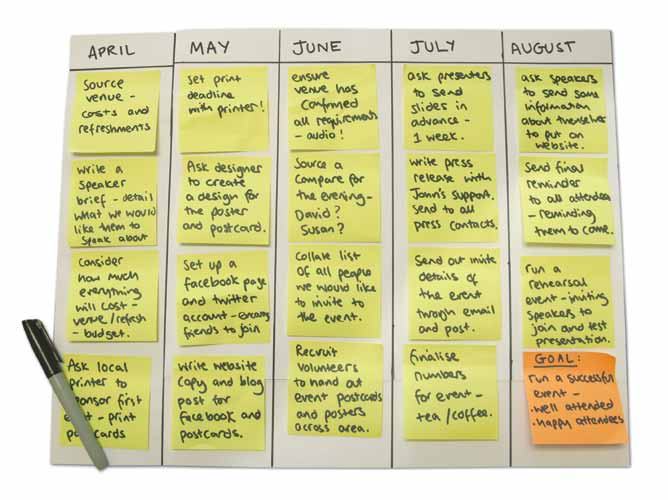
Planning is best done if you can break down activities into small, manageable steps. The plan below is an example of this.
Activity 9: Venture Planning
Now have a go at completing your own venture plan. Create a large copy of the worksheet, using the version on page 22 as a template.
Put your goal in the month it will happen, either by completing the box on the worksheet or using a post-it note. Then, list all the activities you need to do between now and then to get there. Either start from today and work forward to your goal, or work backwards from the goal.
Break each activity into small steps. Avoid broad terms like 'marketing' or 'web site'. Use verbs and action phrases such as:
- Contact the local newspaper to tell them what is happening
- Find a web developer
- Talk to the local youth clubs about the idea
- Design an advert for the local shop
- Book the town hall for a launch event
- Launch the web site
- Speak to the local council about any legal issues
- Open bank account
- Arrange the caterers
Use a separate sheet of paper or post-it notes before committing anything to your chart. This allows you to make changes easily.
This template acts as your ‘to do' list. If more than one of you is involved, it helps to name now who is responsible for an activity, to ensure it's completed. Look back at the things that motivate you, and your skills and experience. If there are activities you don't want to do or don't feel best placed to do, consider who else could help you.
Check your plan with other people such as family, friends, possible partners, volunteers or contributors. This will help make sure all points are covered, and nothing's been missed. It will also give you confidence that your plan is a complete list of what you need to do, and when. Keep it somewhere where you'll look at it regularly, and tick off tasks as they're completed.
Remember: when people see a good plan coupled with passion, the energy and enthusiasm can be infectious – and they might want to get involved too.
No one expects you to do everything alone. Talking to people you want to get on-board will help ensure they understand what you're aiming to achieve, and what you might need from them. Just be clear and explain exactly what you need from them, particularly the time commitment you expect.
Making it happen template
3.2 Marketing Basics
Marketing can seem daunting. But with a few helpful pointers, you will be able to begin marketing your social venture.
You might hear people talk about the four Ps of marketing.
What they are referring to are:
- Product: understanding your target customers so that the products and services you sell or provide meet their needs.
- Promotion: telling customers about your products and services.
- Place: letting them know where they can find your products and services.
- Price: ensuring the price is right for your customers, and for you.
Your Customers
Knowing your customers or users is key to figuring out what they need, and how you will reach them. You may have a number of different customer ‘types', who may need to be reached in different ways.
Activity 10: Customer types
For each customer type or group, consider:
- Are they male or female?
- What age group/s are they?
- Where do they live?
- Do they have specific needs?
- How might they find out about your products or services?
- How often might they use or buy them?
- What types of things might they want from you (e.g. products/services/events)?
Understanding the features (or factual aspects) and benefits of your products or services will help you to explain why someone should buy it.
It is important for the customer to know about both. For example, here are the features of a local community café:
- It's open Tuesdays and Thursdays
- It provides teas, cakes and entertainment
- It serves 200 people from the local area each month.
The benefits are what motivates the customer to pay for a product or service. In this case, the café provides them with an opportunity to meet local neighbours, make new friends and hear fantastic singers, in a popular café, that serves great tea and cakes!
If you have different types of customers, then you have to understand the needs of each group and state the benefits your offering brings.
Activity 11: Features and Benefits
Using the activity sheet below, explore the benefits of each feature to your different customer groups.
| Features |
Benefits to Customer Type 1 |
Benefits to Customer Type 2 |
|
|
|
|
|
|
|
|
|
|
|
|
|
|
|
Once you're clear who your customers are and what benefits your product or service offers them, the next step is to let them know!
There are many approaches you can take to promoting your venture. For example: giving talks at your local community centre, taking part in exhibitions, using word-of-mouth, producing advertisements, and writing press releases for local newspapers. More recently, social media has become an important and effective way of promoting social ventures. This includes web-based and mobile applications such as blogs, facebook and twitter. Most are free, and you can find out more by searching for these terms online.
You can also look for opportunities to partner with other organisations to promote your venture, or take part in an event that shares your values and ambitions.
Tip: Remember, your vision and values should be a key part of any marketing activity. These are the things people will connect with.
Revisit your venture plan worksheet, and check to see at what points you will need to use different forms of marketing. Add these into your plan. Doing so is the basis of a marketing plan.
There are lots of marketing templates and tools available online. You might want to search for sample press release and marketing plan template to help you. You can also find useful references in the Signposting section at the end of this guide.
3.3 Basic Financial Planning
One of the hardest things to decide when setting up any new venture is how to price your product or service. There's no 'right way' to work out a pricing strategy, but it will help if you consider:
- What do other similar ventures charge for their product or service?
- What do I want to charge for my product or service?
- What are my customers willing to pay?
- How many or much will I need to sell?
- Is it important for my venture to make a profit?
Generating income, and especially profit or surplus to reinvest, will be vital to your venture's sustainability. Donations and grants can help, but they're not reliable or guaranteed sources of future income. Plus donors may have a particular agenda that doesn't suit your values or purposes. By ensuring your venture provides a desirable product or service at a suitable price, you are able to establish your own income stream. This puts you in a stronger position to ensure the continued future of your social venture.
The first thing to think about when pricing your offering is the costs you need to cover. These include both direct costs: such as materials, wages and marketing; and also indirect costs or overheads: all your ongoing expenses, rent, rates, and insurance.
Activity 12: Pricing
Revisit your completed venture planning worksheet and ask:
- Will any of these activities cost money?
- Will I need to cover staff costs or volunteer expenses?
- Will I need any extra resources, such as hiring a projector for an event?
- Can I charge for any activities in the plan?
Write down the amounts of money being paid in or out at the appropriate point on the plan. Use different colours to make it easy to follow. You've now begun creating a 'cash flow', which shows how much money is coming in and out of your venture at any one time.
If you're an employee of the venture, work out how much you need to earn each month. Add up all your living costs – for example, rent/mortgage, utility services, pension contributions, council tax, credit card payments, car and general living expenses. By calculating this, you'll know how much money you need to make to pay yourself through your social venture.
Dealing with financial matters may seem daunting, but understanding your cash flow will help put you in control, and ensure your venture's sustainability in the long run.
You can find lots of useful advice on managing money and cash forecasting – and even download a blank cash flow spreadsheet – by searching for these terms online. You can also find useful references in the Signposting section at the end of this guide.
Summary
You now have a plan of action. You will also know how much you need to charge for your product or service, and how to tell your customers about the benefits they will experience. The next thing to consider is how to develop your venture and ensure its future, staying motivated in the process.
Section 04: Maintaining Focus: Into the Future
This section looks at some of the business approaches you may find helpful in running and developing your social venture to secure its future. It also looks at ways of ensuring you have the personal support you need to continue on your path. It covers:
- 4.1 How to Develop and Sustain Your Social Venture
- 4.2 Staying Motivated
- 4.3 What Type of Social Venture?
4.1 How to Develop and Sustain Your Venture
If you're running a successful social venture, or can see the venture taking shape, you may be asking questions such as: “What next?”, “How do I ensure its long-term survival?”, “How can I build on this venture to help even more people?"
Your options might be:
- Sustain the venture, but stay the same size
- Grow and develop what you've started
- Franchise the venture, by helping other people to run a similar activity elsewhere
- Hand the venture over to others to take forward
- Start a different kind of venture.
Revisit the sections on knowing yourself and visioning. They will help you decide which of these options is right for you and your social venture. It might help to speak to a mentor at this stage, but it's not essential.
It is useful to review your offering to ensure it's achieving its full potential. You can do this through a SWOT analysis. SWOT stands for Strengths, Weaknesses, Opportunities and Threats. Strengths and weaknesses refer to what's going on in your venture now. Opportunities and threats are what might happen in society and the community in the future that could influence what you do.
Strengths
What do you do better than others? What is unique about your offering? What do people say is good? Why do customers prefer your product or services? What evidence do you have for this?
Weaknesses
What does the venture do less well? What do others do better? What stops people buying from you? What needs to be improved?
Opportunities
Where might the venture develop and why? What changes are happening which will be helpful?
Threats
What might happen to make life difficult for the venture? What are the competitors doing? Will a weakness threaten the venture?
Activity 13: SWOT Analysis
Analyse each section with your staff or volunteers, and write down your answers. Talk to your customers too, if possible. The SWOT analysis will help you make the most of your products or services, ensure they continue to bring benefit to customers, and plan what you need to secure your success.
It will also help you prepare for any risks you might face. For example, if you run a horticultural social venture, what will happen if a crop fails? Think about what you'd do if the worst were to happen.
Tip: To review your ideas, go back to the sections on evaluating your idea, making it happen, marketing and basic financial planning.
It will help to keep a record from the outset of the progress and impact you've made. This will allow you to demonstrate how people benefit from your offer. It can also help you improve your product or service, and attract new funding, customers or staff.
4.2 Staying Motivated
Over time, it can be difficult to maintain the same sense of excitement and enthusiasm you had when you started your social venture journey. It's important, therefore, to look for ways of gaining support for your vision and maintaining your passion.
Everyone has a different way of maintaining focus. You might want to think about:
- Having a mentor
- Speaking with a business advisor
- Peer mentoring
- Networking
- Family and friends
- Celebrating achievements
A Mentor will help you ask the right questions, and reflect back what you're saying so you can make progress and develop your own capabilities. It's vital to find a mentor you trust, and with whom you can be open. A good mentor will help you clarify what you really want to do; what you're doing well; what's preventing you moving forward; what you can do differently to meet the challenges; and where you can get help. Some people find a regular meeting – say monthly – with a mentor invaluable.
A Business Advisor tends to offer advice and guidance on a specific issue or topic. If you think this would help, try to find an advisor who's had involvement with a social venture, and who can give you practical information and suggestions.
Tip: Remember that it's your social venture and the decisions are yours, not your advisor or mentor's.
Peer mentoring is an informal source of support with people who either are at the same stage as you or further along the path of setting up a social venture. You will soon realise you're not alone. Sharing issues and difficulties, and learning how others overcame barriers, can be empowering. It can also present opportunities for joint problem solving. Through the benefit of your experience, you can gain satisfaction from helping someone in the same position as you.
Networking is a way of sharing information about yourself and your organisation, and meeting people you think might be interested or want to get involved in your venture. Look for events where you could meet people who might be of help to you. If you have business cards, remember to exchange them. Use the short description you wrote in Section 2.1 to describe what you're looking to achieve. Talk to as many people as you feel comfortable with, and feel free to ask questions that will help you to identify those who can help you take your venture forward. It may seem terrifying at first, but remember – people are looking to meet you too.
After the event, follow up with anyone you feel could be helpful. Email or call them to tell them more about the venture, or to ask their advice. Some contacts will lead nowhere, but others will open new doors. Give networking a try: it can be very motivating to meet like-minded people.
Family and friends are a vital part of your support system: try to keep them on board. If your close ones understand and support what you're doing, they're more likely to be willing to listen, encourage and even help. Having positive people around you will give you the encouragement you need to see your idea through. So, take time to talk to them about your plans, aspirations, and frustrations. And remember to share your achievements!
Celebrate achievements by regularly reviewing your ‘to do' list, and ticking off activities once completed. Inform your support network when progress is made – and let them help you celebrate your successes!
To find out more about mentoring and other types of support, go to the Signposting section at the end of this guide.
4.3 What Type of Social Venture?
To secure their growth and sustainability, social ventures usually register as a charity or a social enterprise. For many social entrepreneurs, becoming a social venture allows the organisation both to retain the passion and investment of its social mission and also, by trading, become financially sustainable.
A social venture has characteristics of both a commercial business and a charity. Trading is often integral to the social mission (e.g. training adults with autism to become gardeners, then selling the produce). Some of the legal forms a social venture can take include:
- Co-operative or mutual: a democratically owned business that gives employees, customers or members a stake in the business.
- Social Firm: provides integrated employment for people with disabilities or who have experienced other disadvantages.
- Development Trust: a community run organisation concerned with the economic, social, environmental and cultural needs of a community. It's owned and managed by the local community, and aims to generate income through trading activity to reduce dependency on grant support.
- Community Interest Company: operates in the interest of the community, but has the benefits of limited liability. Uniquely, its assets must return to the community if the company folds.
- Company Limited by Guarantee: providing you follow company law, you will not have to use personal assets to pay any debt, but you will look like many other commercial companies.
- Charity: can bring tax relief benefits, although charitable status comes with increased regulation. To become a charity you have to register with the relevant organisation in your country: see the Signposting section for more details.
If you remain unregistered and unincorporated (i.e. you don't register as a charity or a company) you may be personally liable for any debts.
There are registration costs associated with each option. And you must follow the legal requirements set out for each too. It's a good idea to get professional advice on the most appropriate model for your social venture.
Summary
The techniques and activities in this guide provide you with valuable tools to ensure your venture has the best chance of continued success. Reviewing your activities and monitoring your achievements, giving a formal structure to the organisation, and ensuring you have the personal support you need will give you confidence in driving a sustainable social venture.
Over to You
Congratulations! Having worked through the activities in this guide, you will have a well-rounded plan to help you through setting up and developing your social venture.
The plan helps ensure you've thought through all the elements necessary in setting up a new venture. It formalises your thinking, and usefully guides your activities. It also provides a way for you to evaluate how you're doing, enabling you to keep on track.
Remember, having a well thought out plan gives people confidence in your idea, and in your ability to deliver it. It will be valuable in any dealings with a bank, lender or potential partner. Now is the time to put down roots!
Good luck!
Case Study
Dragon Monkey – Fort William
www.dragon-monkey.co.uk
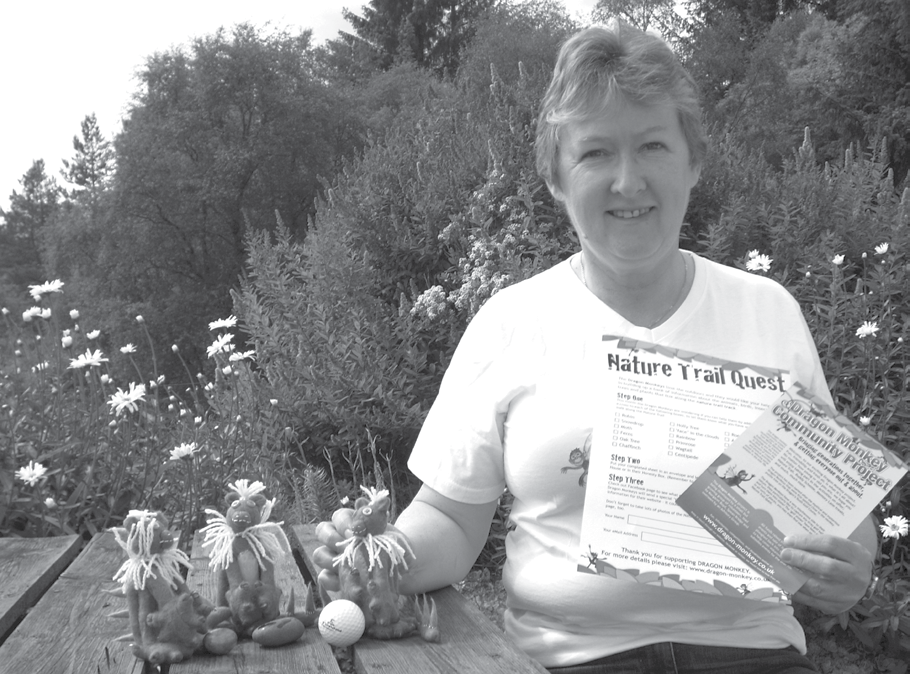
"Being in my 50s and having always enjoyed a challenge, I decided to give it a go with input and encouragement from friends and family."
Margaret Boyd
What Is It?
Dragon Monkey encourages the over 70s to take regular outdoor exercise, helping them avoid social exclusion while enjoying intergenerational activities.
Set up by Margaret Boyd following early retirement, the vision was to create a service based around a storyline and imagery steeped in local folklore. This led to the development of the delightful Dragon Monkey brand. It is designed to capture the imagination of young and old alike, reflect the range of activities offered, and support fund-raising activities.
How Does It Work?
Dragon Monkey provides a 'buddying' service. Volunteers accompany people on various outings: nature trails, trips to familiar places, visits to old friends, and playing rounds of golf. A dedicated web site showcases the services offered in an engaging way, and allows participants to share photographs and comments about their journeys and experiences. A local illustrator created the nature trail boards, and Dragon Monkey characters were specially created to give the venture a distinctive character.
Costs are kept low. Many activities complement existing local low-cost pursuits such as nature walks, and ‘buddies' volunteer their services free of charge. Partnerships have been forged with local businesses, such as highly discounted golf rounds and free club hire from the Dragon's Tooth Golf Course.
Benefits and Achievements
As well as allowing older people to continue activities they enjoy, the project encourages generations of families to share experiences in the fresh air. The 'Memory Lane' project led to the production of a DVD documenting the memories of a man in his 80s on aspects of local history dear to him, bringing much joy and happy memories, plus an insightful local story for viewers.
Maintaining and Sustaining Dragon Monkey
The project aims to be self-sustaining through selling branded items including Dragon Monkey characters and downloadable trail sheets, and through fund-raising activities. Margaret also plans to attract new volunteers with IT skills to develop the web site, and update and enhance the range of trail sheets.
Partnership brings many benefits, as noted by Laurence, director of Dragon's Tooth Golf Course: “We have been delighted to work in collaboration with the Dragon Monkey project... It has added another dimension to the range of activities and attractions of the site, and has brought additional custom to the café and bistro. The project has delivered real value.”
Case Study
Third Age Computer Fun
www.thirdagecf.org.uk
"Having the chance to develop my idea has enabled those of my generation for whom computers are a no-go area to learn just how they can enrich their lives."
Mamie Donald
Image: Portrait of Mamie Donald, founder of Third Age Computer Fun.
What Is It?
Games-based learning is at the heart of Third Age Computer Fun: a relaxed and informal computer club that helps people over 50 build their confidence and enrich their lives through learning to use computers and the internet.
Founder Mamie Donald got her computer studies degree at the age of 60, after a varied professional career. A self-professed computer addict, Mamie discovered the benefits of playing games online – and saw it could be a fun, relaxed way for older people to develop their computer skills and use the internet. They can then extend their skills – to Skype and email to keep in touch with friends and relatives; to shopping, banking, playing games with their grandchildren; watching TV; and following their interests.
How Does It Work?
Third Age Computer Fun runs six computer clubs in Edinburgh. They also provide services in sheltered housing developments, home tuition for housebound and nursing home residents, and clubs for non-English speaking over 50s.
An early marketing campaign was vital to the success of this social venture. Mamie acknowledged marketing was her weak point, and recalled that: “It was essential that this looked like a professional organisation from the beginning."
A professional designer was therefore employed to create a logo, leaflets and posters that would help get the message across and recruit members.
Income is generated via annual membership and or drop in session fee. While up front finance was needed to buy laptops, employ club leaders and develop the marketing campaign, running costs are kept to a minimum through volunteers delivering the classes.
Benefits and Achievements
Third Age Computer Fun won the Herald's Society Award for Older People's Project of the Year 2011. To date, 200 people have taken part, some of whom are regular attendees. They even have members in their 90s. Computer Club attendance encourages social interaction among members, while online games increase their mental stimulation – which is recognised as helping to reduce or delay the symptoms of depression and dementia or Alzheimers.
Around 30 volunteers have been involved in delivering classes. For those who have been out of work, involvement has increased their confidence.
Maintaining and Sustaining Third Age Computer Fun
Mamie found the vision exercises to be valuable in thinking through the future of the social venture: “...using your imagination to picture what your venture might become has made a big difference to the project,” and has encouraged Third Age Computer Fun to consider extending the service across Scotland.
Case Study
Fresh Oil Music Centre
Lisburn, County Antrim
"I had no clue that this whole world of social entrepreneurship existed [previously], but now I know I realise I have always been a social entrepreneur. And part of that learning has been that it has to be sustainable in order to go to the next level and to keep it growing. Part of that realisation is that what we are doing is worthwhile and should be valued economically. It's alright to recognise the worth and to ask people to pay for it."
Sheila Smyth

What Is It?
Fresh Oil Music Centre is a community-based music studio, inspired by musician, composer, teacher and church leader Sheila Smyth. It offers access to equipment and a relaxed setting in which to record music sessions, supporting Sheila's desire to pass on the joy and healing energy that music and song has brought her local community.
The mission for the Centre is to enrich lives by enabling the recording of music that's sung and shared for pleasure. It was motivated by the success of local group, 'Voice of the Bann'. This unique singing group brings together people from across the Lisburn area, including Protestants and Catholics, empowering communities and providing a united musical voice.
How Does It Work?
The recording studio is accessible to all members of the community. There's great demand for its services, and people are happy to pay a fee for the facilities. Sheila is currently devising a pricing structure that will enable the service to remain accessible, relaxed, inclusive and profitable.
Other community recording projects have evolved, including a young offenders' partnership with the Police Service of Northern Ireland. Sheila was also recently commissioned by the Alzheimer's Society to compose a song for this user group, which will be recorded with them. A fee will be charged for recording and production, with the CDs then sold by the charity to raise funds. Similar revenue opportunities are being discussed with other charities.
Benefits and Achievements
An album recorded by ‘Voice of the Bann' has sold well in the community. Their rock ballad, 'Ignite Your World', has been played widely on local radio stations. Sales of both the CD and digital download have already covered the costs of production.
Through the initiative Sheila has, to her own surprise, developed her technical recording skills. She has also been struck by the impact on local citizens: “I've also learned that divides between our communities can be healed."
Maintaining and Sustaining Fresh Oil Music Centre
Sheila set out with a purely social motivation. She acknowledges this has changed in the light of the success of Fresh Oil Music Centre: “There is a massive economic space for recording in a relaxed atmosphere, and we need to put a value and a worth on the social value we are creating. People will pay – they will put a value on it, and that has been proved by our sales and the interest in using our venue and services."
In time, Sheila's vision is that profits from the studio could support a community singing group she has helped set up in North India.
Case Study
Game 4 A Game
Belfast
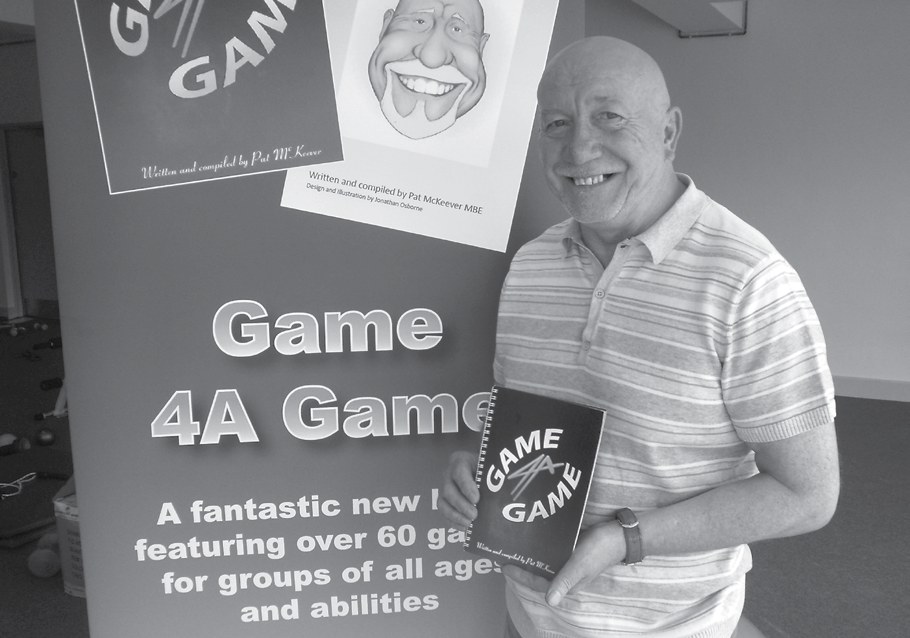
"This has given me a new adventure. I know that I'll push the book out over the next two years, but then [on retirement] when I have the time, I'll get out and really work with people on it – maybe even produce another book!"
Pat McKeever
What Is It?
Game 4 A Game is an illustrated compendium of accessible indoor and outdoor games, delivered in a small, colourful and easy to carry book. The games are based on author Pat McKeever's 40 years experience working with young, old and disabled people in the community.
Pat recognises the many benefits that playing group games bring to people of all backgrounds and abilities: improved physical fitness, new friendships and a sense of fun and achievement. Looking for a new adventure to embark upon when he retires in two years time, Pat was inspired to create Game 4 A Game by a number of factors. These included the growth of social media, and the increasing amount of time people spend in a sedentary position, in front of a TV or computer screen.
How Does It Work?
Over the course of a year, Pat researched many outdoor games, adapting them to ensure they were accessible to all, including those with disabilities. He trialled the games with several different community groups, and talked to potential customers such as schools, youth groups and older people's groups to ensure the resource was attractive and useful.
The visual appeal and accessibility of the information on the games was key to the success of the product. Pat commissioned a cartoonist and designer to ensure the book was colourful, with effective descriptions and engaging pictures.
Benefits and Achievements
The marketing and distribution plan for the book is underway. It includes a book launch, web site, and networking with key people who are providing services to youth groups, children, older people, and disabled people - the target markets. Interested parties so far include the former older people's advocate for Northern Ireland, the education and library board in Belfast, and the health promotion agency.
Maintaining and Sustaining Game 4 A Game
At the moment, Pat doesn't take an income from book sales, and all profits are reinvested into producing more books to increase the reach and benefits of Game 4 A Game.
Future plans include developing a project around the product. This would include workshops to train health professionals and leaders at playgroups, youth groups, and schools on how to run games for their groups. There are also plans to encourage young people to design their own games.
Signposting Information
If you are unfamiliar with searching for information online, try using an online search engine, like Google, Yahoo or Bing.
Start by typing in what you are looking for. This might be general information about social enterprises or guidance about a specific element to setting up and managing a venture. For example, type in 'marketing', then add 'social enterprise' and your location (city, region or country).
Remember to look at the different results from your search, not just the first one. You might find useful information in a number of the sites suggested.
Below are some web sites you might find helpful. The list is not exhaustive, and by searching online you will, no doubt, discover further useful resources. You can also find additional information that complements this guide on the UnLtd web site at www.unltd.org.uk/rooted-guide. This includes advice on understanding the differences between social enterprises, charities and enterprises; legal structures; marketing; selling; pricing; finance; social media; networking and pitching; business planning; evaluating; and mentors and advisers.
For support specific to setting up a social venture in your area, look at:
- www.ucitltd.com (Northern Ireland)
- www.firstport.org.uk (Scotland)
- www.welshsec.org (Wales)
- www.socialenterprise.org.uk (England)
- www.socialearth.org/setoolbelt-resource-of-the-week-idea-feasibility provides some useful checklists
- www.socialimpactscotland.org.uk provides information on evaluating the impact of your social venture
- Nesta.org.uk
- Unltd.org.uk
For general information on setting up your social enterprise, planning the business, marketing, finance, etc here are some sites funded by regional governments and/or development agencies:
- www.businesslink.co.uk (England)
- www.nibusinessinfo.co.uk (Northern Ireland)
- www.business.scotland.gov.uk (Scotland)
- www.business.wales.gov.uk (Wales)
- www.prime.org.uk provides materials and workshops to help the over 50s start a business.
Business Planning
Sustaining and developing your venture
Basic marketing and financial planning
Mentoring
What Type of Social Venture
To become a charity you have to register with the relevant organisation in your country:
- www.oscr.org.uk (Office of the Scottish Charity Regulator)
- www.charitycommissionni.org.uk (Charity Commission for Northern Ireland)
- www.charity-commission.gov.uk (Charity Commission in England and Wales)
Acknowledgements
Writing and collating: Nesta, UnLtd and Laurie South
Writing, editing: Catherine Docherty, Journey Associates
Copy proofing: Roger Misun-Gray
Design: www.kerrvernon.co.uk
Nesta...
Further information
To find out about Nesta's current activities visit www.nesta.org.uk
Email: [email protected]
UnLtd for social entrepreneurs
To find out more about UnLtd's activities visit www.unltd.org.uk
Email: [email protected]