Abstract
This paper is part of the Compendium of Evidence on the Effectiveness of Innovation Policy Intervention. It offers a very preliminary consideration of the role of high skill international migration policies and employment protection (EPL) legislation on innovation. There is, increasing interest in understanding the impact of EPL to innovation processes and how such understanding might illuminate specific and general innovation policy instruments. In the case of migration although the migration-innovation linkage is not yet clearly understood, and consequently is not yet embedded in innovation policy instruments, we are seeing the emergence of competitive immigration regimes as tools to enhance national competitiveness in the global economy. At the heart of both areas are people – human resources – and social equity and welfare issues that may not be easily reconciled with policies aimed at ensuring the smooth operation of innovation processes at the firm level.
JEL Classification: 038
Keywords: Employment protection, migration policies, skill, innovation
The Compendium of Evidence on the Effectiveness of Innovation Policy Intervention Project is led by the Manchester Institute of Innovation Research (MIoIR), University of Manchester, and funded by Nesta, an independent charity with the mission to make the UK more innovative. The compendium is organised around 20 innovation policy topics categorised primarily according to their policy objectives. Currently, some of these reports are available. All reports are available at http://www.innovation-policy.org.uk. Also at this location is an online strategic intelligence tool with an extensive list of references that present evidence for the effectiveness of each particular innovation policy objective. Summaries and download links are provided for key references. These can also be reached by clicking in the references in this document. Corresponding Author: Dr Barbara Jones, University of Manchester, MIOIR, Harold Hankins Building, Manchester, UK. Email: [email protected]
The Nesta Working Paper Series is intended to make available early results of research undertaken or supported by Nesta and its partners in order to elicit comments and suggestions for revisions and to encourage discussion and further debate prior to publication (ISSN 2050-9820). © 2012 by the author(s). Short sections of text, tables and figures may be reproduced without explicit permission provided that full credit is given to the source. The views expressed in this working paper are those of the author(s) and do not necessarily represent those of Nesta.
This report is part of the Compendium of Evidence on the Effectiveness of Innovation Policy Intervention Project led by the Manchester Institute of Innovation Research (MIoIR), University of Manchester. The project is funded by the National Endowment for Science, Technology and the Arts (NESTA) – an independent body with the mission to make the UK more innovative.
The compendium is organised around 20 innovation policy topics categorised primarily according to their policy objectives. Currently, some of these reports are available.
All reports are available at http://www.innovation-policy.org.uk. Also at this location is an online strategic intelligence tool with an extensive list of references that present evidence for the effectiveness of each particular innovation policy objective. Summaries and download links are provided for key references. These can also be reached by clicking in the references in this document.

Executive Summary
Aims and Scope
The aim of this report is to conceptualise and compile the existing evidence on the impact of high skill international migration policies and labour legislation on innovation.
Literature Reviewed
Literature reviews of both the theoretical and empirical work have been undertaken for each topic - international migration flows and labour legislation. Different policy documents relating to national immigration policies have been examined and specific legacy data relating to some aspects of migration policy in two countries with elaborate impact assessment mechanisms in place (Canadian and Australian) have also been examined.
Main Findings
International Labour Mobility
The over arching objective of migration policy in the medium term, in many countries examined is to ensure the right scale and right type of high skill to satisfy labour market needs for achieving high productivity and growth. A range of different policy approaches have been adopted to meet those needs which can generally be described as criteria based points accumulating systems, employer led systems and hybrid systems.
- Point-system regimes are shown to have more capability in recruiting highly qualified immigrants, with the potential to contribute to research, innovation and economic growth (USA, Australia, Canada).
- There is continuing convergence between migration points programmes with target labour migration levels in mind and employer centred programmes where labour market needs determine the scale of entry.
- The matching of supply and demand used by the point-system countries appears constrained in some countries by the lack of tools to make detailed analysis and cross analysis of skills bundles needed in sectors and across sectors which can be used to strategically assess current and future skill requirements. This is regarded as important in view of demographic shifts and for understanding skills evolution in rapidly changing technological environments.
- Countries have a very wide range of criteria for measuring the success of their schemes and in only a few cases, notably Australia and Canada have there been systematic attempts either to collect the necessary data or carry out full evaluations and follow-ups. This would enable standard setting.
- Retention of highly educated immigrants within skill categories and positive selection of immigrants in terms of ability appears to positively impact on innovative capacity in high-income countries. Systematic empirical evidence and data are lacking to fully demonstrate this impact. There are systematic empirical results now emerging in the USA, of strong immigrant contributions to patent applications and the creation of technology firms, growing international co-authorship of academic articles and increasing collaborative work in science and technology. But this appears to have worked only within a wider economic framework conducive to innovation
- In terms of impact on innovation capability, issues of cultural diversity, difference in cognitive behaviours, ways of doing and learning are as yet poorly understood in host countries which may inhibit foreign born high skill migrants to fully use, create and disseminate their knowledge and skills
- Innovation policy approaches would be aided by more extensive empirical research in order to develop the conceptual rationale of an immigration-innovation nexus. Quantitative evidence on the effect of the international mobility of high skilled labour on innovation is not generally readily available and as a consequence the many variables and factors that impact on science and technology outputs and outcomes are difficult to disentangle
Labour Legislation (LL)
Systems of labour legislation (LL), in their most general sense can be described as concerned with protecting workers interests, ensuring labour stability and achieving cooperative modi operandi between workers, employers and other social partners. Labour legislation has at its core social equity and welfare issues determined through complex country specific sets of arrangements that encompass judicial law, regulatory mechanisms, collective bargaining and custom and practice. Such systems are currently not configured with innovation in mind, in the sense of supporting innovative capacity at the firm level.
- Findings are rather mixed but do indicate that aspects of employment protection in certain contexts coordinated LL and collective bargaining frameworks in open economies (there are significant differences across countries), link well to certain types of innovation (incremental).
- Dynamic environments associated with innovation throw up uncertainty for the workforce especially for high skilled contingent workers and pose particular problems in terms of a form of “memory loss” of knowledge and competences. The findings on the rise of highly skilled flexible contingent labour reflect the need to establish shared approaches to the risks of job moves, wage stability for high skill employees and preventing the loss of skills and knowledge at both the level of the individual worker and the firm that would be detrimental to innovation processes.
- There is some evidence that the employment protection aspect of LL may encourage investment in human capital, since longer-lasting employment will increase the expected returns to education and training, retain skilled workers and encourage internal mobility thus maintaining and adding to the knowledge bases of both individual and firm.
- To support innovation capabilities, the adoption of forms of mediation, work organization and knowledge exploration that actually promote innovation at the firm level by aligning the objectives of workers and firms would seem a prerequisite – and a policy challenge. This is, in part, because there are no LL indicators available linked to the general innovation policy HR indicators which could guide the processes for involving workers in innovation.
- LL may potentially comprise a significant and proactive part of cross-cutting policy toolkits for promoting innovative growth but as yet there is no clear view currently of which parts of LL fit with what parts of innovation policies and at what level (macro-meso-micro). This is a clear area in which more conceptual work and empirical research would be needed.
1. Introduction
This report considers the role of high skill international migration policies and labour legislation on innovation. These are areas where regulatory and juridical frameworks have evolved through highly complex country specific sets of arrangements that encompass judicial law, regulatory mechanisms, collective bargaining and custom and practice. Such systems, although impacting on labour markets and human resources, have not, historically, been designed with innovation in mind, in the sense of explicitly supporting innovative capacity at either the national, regional or the firm level. There is now, however, increasing interest in understanding the impact of EPL to innovation processes and how such understanding might illuminate specific and general innovation policy instruments. In the case of migration although the migration-innovation linkage is not yet clearly understood, and consequently is not yet embedded in innovation policy instruments, we are seeing the emergence of competitive immigration regimes as tools to enhance national competitiveness in the global economy. At the heart of both areas are people - human resources and social equity and welfare issues that may not be easily reconciled with policies aimed at ensuring the smooth operation of innovation processes at the firm level. The report present findings in both areas but first briefly looks at human resources and innovation more generally.
1.1 Human Resources and Innovation
The importance of the role of human resources in innovation processes derives from human capital hypotheses that the more knowledge (in terms of bundles of skills, competencies and experiences) individuals acquire, the more they enhance their cognitive abilities leading to efficient productive activity in the workplace. Individuals acquiring more or higher quality human capital are considered better able at solving complex problems, both by "knowing -how" (non codified information and tacit knowledge (Polyani, 1967, Jones & Miller, 2008)) and by "knowing -what" (explicit information and knowledge) and so can more easily adapt to changes that require the integration and adaption of previous knowledge with new knowledge. Translated into the context of a knowledge based theory of the firm, individually held knowledge becomes a source of competitive advantage and a value-creating asset for the firm as it is embedded and transformed into firm specific knowledge through organisational forms, procedures, norms and routines: firms learn from their existing employees and by hiring in workers who know new things. Human resources are an important factor in firm capacity (and any organisation) for learning and innovation although it is the way all resources are internally bundled rather than the strength of a particular resource that is important to the learning organisation (Zhang, 2004) together with the capacity that the firm has for knowledge diffusion and transfer (Cohen and Levinthal, 1990).
The importance of human capital resources and the need to increase national supplies of skilled labour is increasingly being reflected in many recently stated national innovation strategies (Table 1).
| Country |
Source |
Comments |
| Australia |
"Powering Ideas: An Innovation Agenda for the 21st Century" (2009) Commonwealth of Australia, Canberra |
Improving skills and expanding research capacity is a key facet of Australia's innovation policy agenda to 2020 |
| Canada |
"Innovation and Business Strategy: Why Canada Falls Short, The Expert Panel on Business Innovation" (2009) Industry Canada, Council of Canadian Academies (2009), Ottawa, |
Canada lists "people advantage" (being a magnet for skilled people) as one of three pillars of its innovation strategy |
| UK |
Department for Innovation, Universities and Skills, 2008 |
The United Kingdom aims to maximise the innovative capacity of its population as part of its strategy to promote innovation across society and the economy |
| USA |
"A Strategy for American Innovation: Driving towards sustainable growth and quality jobs" National Economic Council and Office of Science and Technology Policy, September. Executive Office of the President, United States. 2009 |
United States, educating the next generation with 21st century knowledge and skills and creating a world-class workforce is one of the four building blocks of American innovation |
| Finland |
Government Communication on Finland's National Innovation Strategy to the Parliament, ,Ministry of Employment and the Economy, Finland 2008Helsinki, October. 2008 |
Innovative individuals and communities are one of four key areas around which Finland's innovation strategy and policy measures are structured |
| Norway |
"An Innovative and Sustainable Norway". Short Version of the White Paper, Report No. 7 to the Storting Oslo. Ministry of Trade and Industry (2008-2009), |
Norway regards "creative human beings" as one of three key focal points of innovation policy |
| Source: |
(OECD, 2010) |
|
1.2 Innovation and Labour Mobility
Individuals increase their knowledge (both tacit and explicit) through a wide range formal, informal, and non-formal learning processes. Spatial mobility however is an important mechanism through which knowledge is diffused and transformed. The mobility of human resources in innovation policy places a strong focus on high skill labour as a value-creating asset. This approach is related again to notions found in human capital literature which views mobility as an investment decision (Schultz, 1961, Arrow, 1962, Becker, 1964, Mincer, 1974) and to variations in innovation systems theory, which views mobility as part of knowledge and skills spillovers (Oettl & Agrawal, 2008, Polt, Rammer, Gassler, Schibany, & Schartinger, 2001, Teece, 1977, Romer, 1990, Teece, 1986, Fagerberg & Verspagen, 1998, Saxenian, 1994, OECD, 2001a). There are different types of knowledge and skill spillovers and personnel mobility through direct interaction is an important channel through which tacit and codified knowledge is transferred (Zucker, Darby, & Brewer, 1998). As individuals move geographically and organizationally the knowledge and understanding of specific technologies that they carry with them is diffused (Pack & Paxson, 1998) This can occur through horizontal movements of people between firms (Gersbach & Schmutzler, 1999) through open communities of knowledge specialization forming as a result of social and professional interactions (Saxenian, 1994) and through the mobility and exchange of scientists, (Mahroum, 2000). Labour legislation and migration policies may play an important role in incentivizing or de-incentivizing spatial mobility.
2. International Labour Mobility
2.1 Introduction
This section now examines schemes targeted towards recruitment of highly skilled foreign migrants (also known as economic stream migrants) and the issues that arise. The mobility of international skilled labour, together with other factors such as foreign direct investment (FDI), institutional collaboration and skill transfer, is a key component in processes of knowledge transfer and diffusion of R&D expertise (Barro, 1997, OECD 2007-8). Spatial mobility of skill stocks embodied in human capital as part of innovative capital have long been hypothesised as crucial for economic growth (Lucas, 1988, Romer, 1990): international flows of knowledge and human capital add to a country's stock of skilled workers and technology, intensify international knowledge spill-overs (importantly tacit knowledge) thus enhancing national innovative capital. Highly skilled workers are seen to bring specialised skills, training and experience not easily replaced in the short term and often filling persistent skills gaps/shortages in labour markets. For these reasons, among the high wage economies of Scandinavia, the EU, Oceania, Canada and the USA, competition is now intense to attract those high skilled that can contribute to national innovative capital (Guellec & Cervantes, 2002). In addition the impact of demographic shifts (OECD, 2009) indicate that many countries will face incoming labour force cohorts smaller than outgoing ones and expectations of further shortages of highly-skilled labour in the coming decades, despite a rising share of the workforce with tertiary education. Immigration is viewed as one way of addressing these deficits. All these factors have resulted in a range of public migration policies emerging, now described as "competitive immigration" regimes (Shacher, 2006) aimed at managing flows of the highly skilled via labour migration in order to maximise national advantage of high income countries in the global economy. Such regimes impact on social and economic equity issues, which have been long understood, for many sending countries with developing economies. Notwithstanding the benefits from return remittances from migrants to their home countries, there are issues, outside the remit of this report, as to how innovation policies linked to encouraging high skill migration are to be approached that do not deplete the educated elites and skill stocks in developing countries..
2.2 Defining skilled labour
There are a variety of approaches adopted in defining high skilled labour. These are not agreed internationally often presenting problems for establishing baseline criteria used, for example, in migrant entry schemes. In this report we use the generally accepted definition of high skilled labour defined as persons with tertiary level education, including at the higher end those with academic doctorates, academic researchers, and high-level engineers, as well as those with a vocational, technical or professional qualification of less duration than a first degree (International Standard Classification of Education levels 5, 6 and 7- ISCED). Educational attainment is a proxy for skill level and in addition two other variable are often commonly used, occupation and pay. All three variables associated with highly skilled workers education, occupation and wage level overlap to some extent. The formulation, Human Resources in Science and Technology (HRST) (OECD, 1995), is used, combining the above variables, to more widely describe scientists, engineers and IT experts and including intra-company transferees as high skilled. The terms of reference for this classification cover those who have completed tertiary level education in a science and technology field of study: and/or not formally qualified but employed in a science and technology occupation where tertiary level qualifications (as defined above) are normally required. Doctoral students, who are technically not "employed", are often included under both definitions.
2.3 Background and Scope
Evidence collated by the OECD (2001b) indicates net positive effects accrue to countries recruiting foreign born high skilled labour, in terms of both raising the quality of human capital and from international knowledge spillovers that are presumed to favourably affect innovation capacity (Oettl & Agrawal, 2008). The review of the literature looking for empirical evidence on the relationship between migration flows and innovation showed that despite the importance and the conceptual rationale, immigration- innovation linkages in their specificities are generally under researched (Partridge & Furtan, 2008, Hunt, 2008). This is not to say that there is not a great deal of literature describing how immigration has had beneficial effects on national economies. There is little dispute that in a traditionally receiving country like the USA, immigration has been, in one form or another, a significant part of the foundation of American competitive advantage since the "frontier" period of the 1830s. More recently Saxenian's (1999) study relates the impact of Asian-American entrepreneurs in developing Silicon Valley, with many immigrants having been directly active in the foundation of companies like Google, Intel, eBay and Yahoo. What is clear is that linkages between migration and innovation are complicated and for effective innovation policy instruments to be developed have to be analysed within a very wide operating framework containing many variables. Figure 1 depicts one conceptual approach to show those linkages.
2.4 Findings on the immigration - innovation link
Recent empirical studies on the immigration innovation link, whilst not yet extensive, are emerging and show interesting findings. Smith (2011) has conducted a brief review of selected papers, summarised in the table below, which shed some light on the immigration-innovation link and approaches to migration policies in the context of innovation.
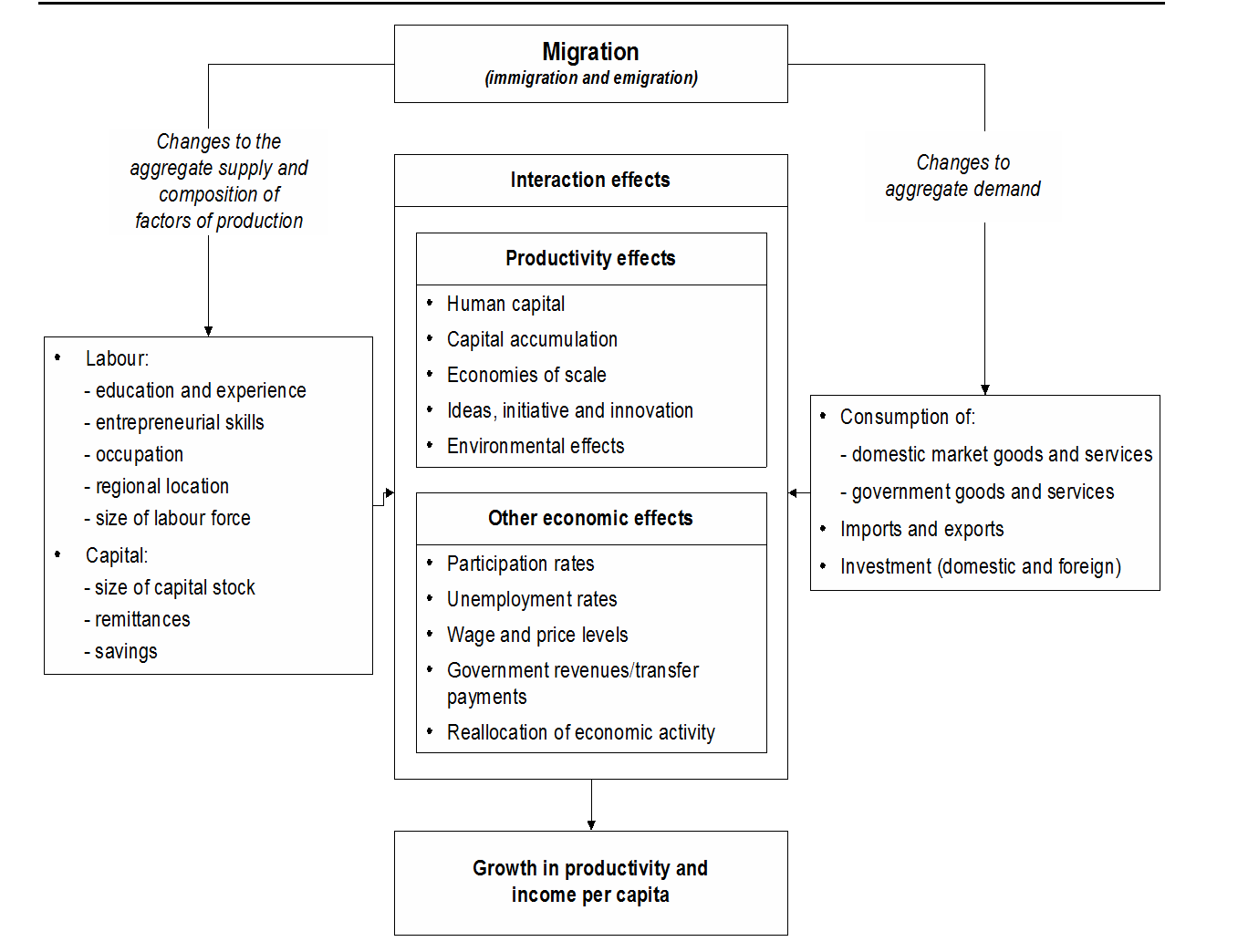
Figure 1: Stylised links between migration and the economy
This flowchart illustrates the interaction effects between migration (immigration and emigration) and changes to aggregate supply, composition of factors of production, and aggregate demand, ultimately leading to growth in productivity and income per capita.
- Migration (immigration and emigration)
- Leads to "Changes to the aggregate supply and composition of factors of production" (Labour: education and experience, entrepreneurial skills, occupation, regional location, size of labour force; Capital: size of capital stock, remittances, savings) and "Interaction effects" and "Changes to aggregate demand" (Consumption of: domestic market goods and services, government goods and services, imports and exports, investment (domestic and foreign)).
- Interaction effects lead to:
- Productivity effects: Human capital, capital accumulation, economies of scale, ideas, initiative and innovation, environmental effects.
- Other economic effects: Participation rates, unemployment rates, wage and price levels, government revenues/transfer payments, reallocation of economic activity.
- Both Productivity and Other economic effects contribute to "Growth in productivity and income per capita".
Source: Australian Productivity Commission Report 2006 p 36
| Source | Summary of findings ```
## 2.5 Policy approaches: high skill migration flows
### 2.5.1 Introduction to the major schemes

Many factors underlie national policy approaches and objectives regarding high skill migration inflows into high-income countries. Such factors are usually combined and include rectifying skill shortages, increasing overall skill levels in national human capital stock to promote productivity and encouraging the circulation of knowledge embodied in high skilled labour to promote innovation and growth. Migration policies might be addressed to one or all of these needs and a prime issue is on what basis is selection made to ensure that a country gets the skills it really wants whether for temporary or permanent settlement.. A number of different selection processes are currently being used, increasingly now in combination. However, all these approaches are aimed at gaining for the host country all the net positive effects associated with high skilled labour (Shacher, 2006). None are as yet, as far as can be ascertained, embedded in specific national innovation policy instruments or tools. Brief overviews are given below to indicate the extent of unbundling that will be required to develop cross cutting innovation policies in which migration policy approaches are a part.

#### Points Based Systems (PBS)

PBS are characterised as aimed at skilled migrants. Candidates are selected on the basis of certain characteristics, among them age, educational attainment, language proficiency and occupation, for which points are assigned and those having more than a threshold level of points are granted the right to establish residence. PBS is hampered in terms of defining high skills as proxies of educational levels. Murray (2011) notes that this is particularly so in areas where very specialist (often combinatory, soft or emerging) skills are required in the creative arts or communicative media (Papademetriou & Sumption, 2011). Canada and Australia have been using PBS (with implementation often devolved to regional provinces) for many decades, to link immigration to labour market needs through prioritisation of high value human capital rather than linkages to specific job offers. The rationale for this has been that high skilled labour is best able to adapt to rapidly changing economic circumstances and to learning new skill requirements. Different countries apply varying numbers of criteria to be achieved. New Zealand applies six criteria: Canada applies nine criteria (Workpermit, 2009) but Australia applies ten (although it should be noted that Australia has 3 visas within its points system and points required differ for each visa). All three of these countries give points for job offer, presence of close relatives, language skills and characteristics of spouse/partner and Australia places extremely high value on previous work experience/ education achieved in the host country. (Cerna, 2011) reports that with the UK points system, Tier 1 (before it was reconfigured in 2011), 100% of the required pass-mark could be achieved with only scoring very high on the previous earnings criterion (80 points if annual earnings were £150,000 and above). A problem arising from such an approach is that different sectors reward similar skill levels differently, such as the IT and social care sectors for example, where the narrow use of a wage reference point has generated obstacles to migration of senior care workers, as well as to the re-issuing of work permits for those already working in the UK.[^5] However, this may not be a consideration if policies are actually targeted at high tech and other state of the art growth sectors (green, nanotechnology et al).

#### Employer led schemes

Almost all immigrant-receiving countries (see table 4) use employer led schemes. In general employer led schemes have been typified as direct policy vehicles for economic growth and enhancing firms' competitiveness by responding directly to employer needs for specific human capital (Papademetriou and Sumption 2011b.). Employer selection of a given worker's skills and credentials is seen as indicating their high value on the labour market and probability of employment maintenance. France allows a discretionary consideration to be attached to the hiring of foreign workers if they bring any skills or resources new to France. However, it is not clear how new skills are measured as these may be contained within new occupations that are not yet classified. There are indications that small businesses and firms who do not hire foreign expertise on a regular basis are disadvantaged through lack of transparency as to procedures for hiring (Papademetriou & Sumption, 2011a.).

#### Hybrid Schemes

Hybrid schemes combine and prioritise employer demand systems with use of point systems to distinguish between entry applications (Murray 2011). Even longstanding points based systems as in Australia and Canada are becoming hybridised. Such systems have emerged because of the need to more precisely target specific skill needs (particularly high skill), to combine employer selected immigration with points for job offers and continued employment (not necessarily in the first job at entry). In addition, as many high skill workers enter host countries on temporary visas, temporary to permanent visa pathways (after a required time) can be better monitored (ibid Murray). Sweden[^6], UK[^7], Denmark[^8], Australia[^9], Canada[^10] and New Zealand[^11] are examples of countries using various forms of employer selected plus points systems. In addition to the points system described above, Canada allows eligible migrant workers to work for an authorized period of time if employers demonstrate that they are unable to find suitable permanent residents to fill vacancies and will not negatively impact on the Canadian labour market. Employers from all types of businesses can recruit migrant workers with a wide range of skills to meet temporary labour shortages. ([OECD, 2007-8,](https://www.oecd-ilibrary.org/employment/international-migration-outlook-2007_migr_outlook-2007-en) p. p234; [OECD, 2003](https://www.oecd-ilibrary.org/economics/the-sources-of-economic-growth-in-oecd-countries_9789264104257-en); [OECD, 2005](https://www.oecd-ilibrary.org/science-and-technology/innovation-policy-and-performance_9789264002621-en)).

Australia[^12] also supplements its points based system with a temporary workers scheme for skilled workers who can settle after their Australian employers sponsor them for permanent visas. Both Canada and Australia have added or subtracted various criteria over time, most particularly strict requirement for English language skills (French language in Quebec) and reduced restriction on whether education and work experience was achieved either offshore (outside host) or inshore (within host)

<div class="table-container" markdown="1">

| Where used                                                                                                                             | Variations/ Practices                                                                                                                                                                                                                                                         |
| :------------------------------------------------------------------------------------------------------------------------------------- | :-------------------------------------------------------------------------------------------------------------------------------------------------------------------------------------------------------------------------------------------------------------------------- |
| - Canada (introduced approach in 1960s), Australia (1989), New Zealand (1991), Czech Republic (99), Denmark (2007), Singapore (2004), Hong Kong (2006), UK (2008) - Proposed (2008): EU Blue Card for high skill non EU workers | - Mandatory eligibility criteria included. language proficiency (UK, NZ, Aust) - Academic credentials given highest points value (DK) - Prospective workers for "future growth" occupations prioritised (NZ) - EU Blue Card with freedom of movement to non EU workers but only valid for two years and currently not geared to allowing permanent residency |
<div class="table-container" markdown="1">
| Where used | Variations/ Practices |
| :---------------------------------------------------- | :-------------------------------------------------------------------------------------------------------------------------------------------------------------------------------------------------------------------------------------------- |
| - Sweden, Spain, Norway, USA, Japan, Korea, France | - Governments usually set general rules for selection: for example - Minimum levels of education required: - Employer may have to prove shortfall in local labour supply - labour market test - Fees may have to be paid per foreign worker hired - Regulations may be in place aimed at reducing risk of local worker displacement or wages underbidding |
</div>
<div class="table-container" markdown="1">
| Where used | Variations/Practices |
| :---------------------------------------------- | :------------------------------------------------------------------------------------------------------------------------------------------------------------------------------------------------------------------------------- |
| - Australia, Canada, Denmark, New Zealand, Singapore, USA (sector agreements), UK | - USA has inter governmental agreements with Canada, Mexico, Singapore, Chile, Australia for selected nationals to work in specified sectors of US economy - Australia emphasises a critical skills list but also awards extra points for possessing a job offer |
</div>
Sources used for all tables: American Visa Bureau, [www.visabureau.com/america/work-visa.aspx](http://www.visabureau.com/america/work-visa.aspx): Papademetriou D. G & M. Sumption ([2011a](https://www.migrationpolicy.org/research/rethinking-points-systems-and-employer-selected-immigration)) Rethinking Points Systems and Employer Selected Immigration:. D Papademetriou et al, ([2008](https://www.migrationpolicy.org/research/hybrid-immigrant-selection-systems)) 'Hybrid immigrant-selection system: the next generation of economic migration selection schemes', Transatlantic Migration Council. Murray, A ([2011](https://www.migrationobservatory.ox.ac.uk/resources/britains-points-based-migration-system/)) Britain's Points based migration system, CentreForum: Migration Observatory [www.migrationobservatory.ox.ac.uk](http://www.migrationobservatory.ox.ac.uk): EU Blue Card [www.euractiv.com/en/socialeurope/eu-blue-card-high-skilled-immigrants/article-170986](http://www.euractiv.com/en/socialeurope/eu-blue-card-high-skilled-immigrants/article-170986), 2008.
#### 2.5.2 Some country examples of migration schemess {: #section-2-5-2 }
In the USA, the temporary professional visa H-1B allows professionals to enter the USA and be employed within their professions and not exceeding a total stay of 6 years. . The visa is capped (by annual quota restrictions) and is issued to foreign nationals who have completed their professional training either in the USA or abroad. Appropriate academic or professional qualifications are required. The offer of employment must be to perform services within a "specialty occupation” which requires theoretical and practical application of a body of highly specialized knowledge and a bachelor's or higher degree in the specific specialty as a minimum for entry into the occupation[^13]. The visa has been subject to a variety of caps generating great controversy since its inception in 1990[^14]. Such capping was due to a variety of reasons including homeland security issues after 9/11 and decline in US economic growth. However, the scheme together with additional entry procedures for foreign students, the EB-5 immigrant investor program, and “exceptional talent", combined with permanent residency opportunities appears to have had huge significance in attracting the most highly skilled. Recent research by the Brookings Institute ([Hall, De Jong, & Graefe, 2011](https://www.brookings.edu/wp-content/uploads/2016/06/0726_immigrant_skills_report.pdf)) shows that high skill immigration into the USA had risen in the period studied (2006-2011): as of 2010 over 30% of all working age immigrants had college degree or higher credentials compared to 19% in 1980. The high skilled immigrant population now outnumbers the low skilled: 44 of the US's 100 largest metropolitan areas are high skill immigrant destinations, where college educated immigrants outnumber those without high school diplomas by 25%.
Australia and Canada have always actively sought immigrants for a fundamental reason that is qualitatively different from countries of high population densities – they have large empty geographical spaces to fill. This historical imperative determined the character of their migration policies. A more nuanced flexibility has developed in their migration policy approaches over the last 25/30 years. It is worth pointing out that Canada and Australia are the leaders in longitudinal data collection of high skill foreign migration outcomes although the connexion with innovation has not yet been drawn out.
The Australian Government's Productivity Commission report ([2006](https://www.pc.gov.au/inquiries/completed/migration-population/report/migration-population.pdf)) on the Economic Impacts of Migration and Population Growth has provided empirical analysis of the Longitudinal Survey of Immigrants in Australia (LSIA) and Australian Bureau of Statistics (ABS). The data indicates that the changes made to Australia's immigration selection policy raising the skill composition of immigrants contributed to an increase in GDP per capita, arising from the skill effect. The results of the Commission's increased-migration simulation suggest that additional skilled immigration will, all other things being equal, deliver a skill effect that contributes to an increase in GDP per capita: a 50 per cent increase in skilled migration delivers a 0.27 per cent increase in labour productivity, measured by GDP per hour worked, by 2024-25. This contributes to a similar increase to GDP per capita. This is because, it is argued, the additional immigrants have a higher level of workplace skills, on average, than the existing population. This means they are likely to be more productive. Hawthorne's ([Hawthorne, 2008](https://irpp.org/research/policy-options/the-impact-of-economic-selection-policy-on-labour-market-outcomes-for-degree-qualified-migrants-in-canada-and-australia/)) longitudinal studies on the comparability of Canadian and Australian economic gains (2000-2007) achieved through their high skill recruitment policies indicate that similar gains have been achieved for Canada. Skilled immigrants displayed superior labour market performance in terms of, low unemployment rates, labour market participation rates, hourly earnings, and working hours compared with unskilled immigrants thus delivering the targeted attributes the selective policies were aiming for. Hawthorne found similar results for Canada but in comparison with Australia a slightly lower labour market participation rate. The Commission concluded from the research evidence that the improved labour market performance of recent migrants was directly attributable to Australia's immigration selection policy.
In both sets of analyses, caveats were expressed as to just how skilled migration policy impacts on the labour adjustment process and that the incidence of short- and long-term skill needs is very complex. Over the longer term, domestic labour market responses to skill shortages depend on the returns to skill formation and migration policy might affect such prices in the labour market. Long-term skill needs, skilled migration and domestic labour supply therefore need to be examined together. The Productivity Commission reflected in its findings concerns that high skill migration policies are substitutes for deficits in national capability building through high skills training, that in the long term will actually reduce productivity by compromising the long term ability of Australia to broaden its skills base. The recent turn towards selective high skill migration policies in other high-income countries suggests a similar approach to try to quickly reverse long-standing deficits in their own production of high skill talent.
The USA, Canada and Australia use a variety of models to evaluate the effectiveness of their migration policies. Canada uses the following logic model to evaluate effectiveness in its Federal Skilled Workers Program (FSWP 2010).
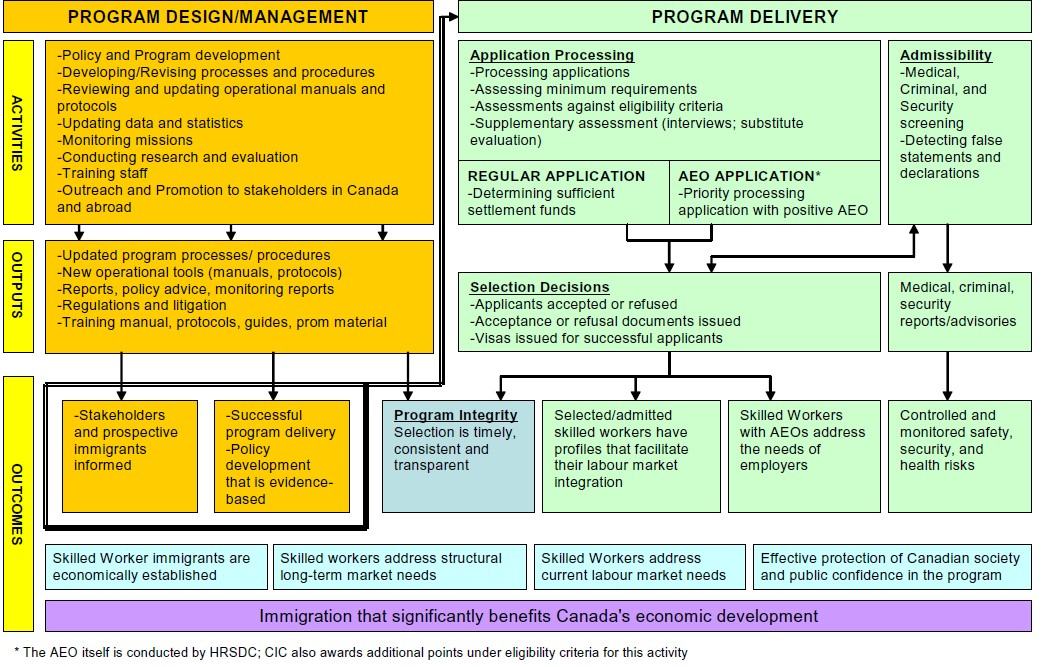
AEO= Arranged Employment Offer: HRSDC = CIC= Citizenship & Immigration Canada Source: [Evaluation of the Federal Skilled Worker program Aug 2010 Canada](http://www.cic.gc.ca/english/pdf/research-stats/FSW2010.pdf) p: 73.
The evaluation focuses on a series of issues and questions related to program relevance, design and implementation, program impact, alternatives, cost-effectiveness, and unintended outcomes, as shown in the chart. Most importantly in terms of impact based on evidence gained at certain points within the model are issues related to whether skilled worker immigrants are becoming established economically; whether skilled workers are leaving Canada: what are the trends relating to secondary migration of skilled worker immigrants between provinces; whether skilled migrant workers with an Arranged Employment Offer (AEO) are meeting the needs of the Canadian Labour Market. The outcomes of the recent FSWP evaluation of migrants having studied in Canada for at least two years prior to migration, but without also having Canadian work experience, show associated lower earnings of approximately six percent[^15]. On the other hand, skilled migrant workers with both Canadian (described as onshore) education and work experience earn approximately $10,000 more per year than other skilled workers ([Tapley, 2010](http://www.wes.org/ca/events/TAPLEY%20InternationalStudentsAndLinkages.pdf))[^16]. In many countries with shorter experience of policies aimed at high skill migrants, frameworks for evaluating impact seem to be in their infancy.
The Canadian logic model points up some challenging areas for both migration and innovation policies in ascertaining structural long term market needs and ensuring labour market integration. These are related to settlement and retention and how to meet future skills needs and shortages. The following sections indicate some of the problems to overcome, which would need to be resolved for cross cutting migration and innovation policies.
#### 2.5.3 Skill shortages and future needs {: #section-2-5-3 }
Schemes for meeting high skill labour market demand through immigration and visa policies include the holding of specific skills as one of their ranking criterion: Canada, France, the UK, and the USA. Some countries specifically publish shortage listings of desired occupations with the required competences making up the skills bundles required: these include the Migration Occupations in Demand (Aust) and the Essential Skills in Demand (NZ). However, difficulties arise where new technologies are driving new industrial processes and for creating enterprises where skills and occupations are in the process of being transformed or newly created. This is particularly so in green technologies, nanotechnology and the biosciences, for example. In the absence of identified and verified skills, and non-accredited competences, because it takes time to classify, it is difficult to know how immigration agencies might determine work visa issues. The US Department of Labor seized this particular nettle in the 1990s with the piloting of the open public domain US Occupational Classification System O*Net. This has resulted in the largest collection of data available on an on-going basis of New and Emerging Occupations including in the green economy, for example, that are driving changing bundles of skills and competences ([O*Net Resource Centre 2012](https://www.onetcenter.org/))[^17]. [Tsacoumis (2007)](http://www.humrro.com/corpsite/sites/default/files/libraryPDF/The%20Feasibility%20of%20Using%20ONET%20to%20Study%20Skill%20Changes.pdf) has suggested that, as the O\*NET database continues to be updated, it will eventually be possible to conduct time series analyses comparing skills within the same occupation and such information if correlated with data in the innovative firms, industries and sectors where foreign high skill labour goes, will provide insights into their innovation effect. Such analyses will be invaluable in fine-tuning innovation policy tools and instruments.
#### 2.5.4 Retention of high skilled labour {: #section-2-5-4 }
Countries seeking high skill foreign recruits are also often seeking ways to retain and integrate them permanently into their labour forces. Clearly retention depends on a huge number of factors, employment security, worker protection, social welfare, career pathways, family residence, and motivations for migration in the first place.
Stay rates of foreign doctoral students in the USA after five years is around 65-75% ([Finn 2007](https://orise.orau.gov/files/resources/stem/stay-rates-foreign-doctorate.pdf)) but data are notoriously difficult to obtain for this category of worker in other countries. Retention is a particularly acute problem as former sending countries like China, India and some of the East Asian "Tiger" economies are now building industrial infrastructures and world class R&D facilities which are attractive to returners in terms of good jobs, high salaries, career paths and excellent entrepreneurial opportunities in their own countries ([Wadhwa, Saxenian.A., & Freeman, 2009](https://papers.ssrn.com/sol3/papers.cfm?abstract_id=1412591)). Fangmeng, T., Zhongdong, M. ([2006](https://link.springer.com/article/10.1007/s12134-006-0008-8)) explored particular cases of individuals who emigrated from Hong Kong, China to Canada during the 1990s and then returned home. According to the 2001 Hong Kong Census, this covered more than 80 000 persons. The authors show that, with a higher education degree, these individuals are 70% more likely to hold a managerial position, and they will earn 80% more, than immigrants who remained in Canada. On the other hand, the authors find no return premium vis-à-vis those who never emigrated.
A number of different retention approaches are involved. Of interest here are those policies aimed at foreign international students who have achieved advanced tertiary qualifications allowing pathways for employment and permanent residence. ([OECD, 2010](https://www.oecd-ilibrary.org/education/education-at-a-glance-2010_eag-2010-en)). Australia has very rapidly and proactively developed immigration policies tailored to international students and changing labour market demands. This has resulted by 2009, in 66% of all students from India being transferred to permanent resident status ([Hawthorne, 2010](http://www.wlu.ca/documents/37892/C._StudentsAPEC2009.pdf))[^18]. However as Hawthorne has also noted, many permanent residents who were former international students generally had lower annual salaries, weekly wages and job satisfaction than immigrants selected offshore: former international students had annual salaries of $33,000 (compared with $52,500 for landed immigrants selected overseas, while both groups were employed within 6 months almost equally ([Hawthorne 2008](https://irpp.org/research/policy-options/the-impact-of-economic-selection-policy-on-labour-market-outcomes-for-degree-qualified-migrants-in-canada-and-australia/)). Another study ([Khoo, Hugo, & McDonald, 2008](https://journals.sagepub.com/doi/10.1111/j.1747-7379.2008.00122.x)) found that nearly half of international students who did not apply to become permanent residents in Australia, did not do so for "employment-related reasons" and that a significant number of international student graduates would eventually leave Australia, despite policy efforts. It was not clear what made up the reasons for exit. An American study ([Hazen &, Alberts 2006](https://journals.sagepub.com/doi/abs/10.1002/psp.418)) reported that an unsupportive and inhospitable environment had been a major factor in their return home after their studies rather than remaining as permanent workers. This has also been confirmed in the Wadhwa et al 2009 study but this study cited career and quality of life as the main reason to return to their home country rather than stay in the United States. The most important professional factor (86.8 percent of Chinese and 79.0 percent of Indians) motivating workers to return home was the growing demand for their skills in their home countries and better career opportunities. Cultural attitudes to family values and the upbringing of children were also important factors. Foreign students are not supposed to settle permanently in their host country, but in many OECD countries they now have the possibility of changing their status upon completing their studies, under certain conditions But within the EU pathways for foreign graduates to becomes international migrants with permanent residency rights remain somewhat limited which might explain why return emigration is high ([see OECD, 2007](https://www.oecd-ilibrary.org/employment/international-migration-outlook-2007_migr_outlook-2007-en)). In most European OECD countries, certain fixed-term residence permits are renewable upon application, or automatically, and are therefore effectively permanent. These permits must be distinguished, however, from those issued under temporary migration programmes (seasonal workers, workers on assignments, students), which are not renewable, even if changes of status are possible in some cases. Holding a temporary permit does not necessarily imply that the migration itself is temporary.
Of high significance is the degree of portability of pension and health benefits for skilled workers, particularly where they are involved in patterns of contracted work for periods of time across different sovereign areas is problematic (i.e., a worker may work on a 3 year contract in Brazil, then move to another contract in France, then to another in Canada) ([See Massimiliano, T., 2008](https://journals.sagepub.com/doi/10.1111/j.1747-7379.2008.00129.x) on short term skilled labour movements).
### 2.6 Lessons {: #section-2-6 }
The overarching objective of migration policy in most high income countries examined here over the medium-term appears to be to ensure the right scale and nature of high skilled labour movements to satisfy labour market needs to achieve productivity and growth.
Point-system regimes are shown to have more capability in recruiting highly qualified immigrants, with the potential to contribute to research, innovation and economic growth (USA, Australia, Canada).
There is continuing convergence between supply-driven, migration points programmes with target labour migration levels in mind and demand-driven, employer centred programmes where labour market needs determine the scale of entry.
The matching of supply and demand used by the point-system countries appears constrained in some countries by the lack of tools to make detailed analysis and cross analysis of skills bundles needed in sectors and across sectors which can be used to strategically assess current and future skill requirements. This is appropriate in view of demographic shifts and also in understanding skills evolution in rapidly changing technological environments. The USA, NZ, Canada, and Australia have made the most progress however.
Countries have a very wide range of criteria for measuring the success of their schemes and in only a few cases, notably Australia, Canada and the US have there been systematic attempts either to collect the necessary data or carry out a full evaluation and follow-up research. Frameworks for evaluation are only now being worked out in many countries.
Retention of highly educated immigrants within skill categories and positive selection of immigrants in terms of ability has a positive impact on innovative capacity in high-income countries (USA, Australia, Canada).
Some findings suggest there are clear benefits for high-income countries in adopting policies to both attract foreign students and to retain them once they have completed their studies. The USA, Canada and Australia have offered possibilities of permanent residency, which however remains a problematic political issue in some European countries.
In terms of impact on innovation capability, issues of cultural diversity, difference in cognitive behaviours, ways of doing and learning are as yet poorly understood which may inhibit foreign born high skill migrants to fully use, create and disseminate their knowledge
There is evidence, in the USA at least, of strong immigrant contributions to patent applications and the creation of technology firms, growing international co-authorship of academic articles and increasing collaborative work in science and technology
Further empirical research is needed to flesh out the conceptual rationale of an immigration-innovation nexus which would aid fine tuning of policy approaches: quantitative evidence on the effect of the international mobility of skilled people on innovation is not generally readily available. As a consequence the many variables and factors that influence science and technology outputs and outcomes are difficult to disentangle.
## 3. Labour Legislation {: #section-3 }
### 3.1 Introduction {: #section-3-1 }
This section now focuses on labour legislation (LL) and the impact it might have on human resources' input into innovative activity ([Scarpetta, Hemmings, Tressel, & Woo, 2002](http://www.oecd-ilibrary.org/docserver/download/fulltext/5lgsjhvj7zlw.pdf?expires=1336413265&id=id&accname=guest&checksum=32F3B4CC008174B3735ED5936FCAF2A1)). There are extensive data and research available on LL for example, held by the OECD ([Nicoletti & Pryor, 2001](https://papers.ssrn.com/sol3/papers.cfm?abstract_id=285494)) and the World Bank database of ILO certifications of labour laws ([Forteza & Rama, 2000](http://documents.worldbank.org/curated/en/782261468767936666/Labour-market-rigidity-and-the-success-of-economic-reforms-across-more-than-one-hundred-countries)) that inform us about global patterns and trends, but they give little indication of linkages with innovation. There have been activities and initiatives aimed at reform or "modernization" of labour legislation and protection of worker rights in the face of changing work organization and globalization which are linked, at least rhetorically, to the important role of innovation for competitive economic growth. These include the European Union's consultative 2007 Green Paper ([EC, 2006](https://eur-lex.europa.eu/LexUriServ/LexUriServ.do?uri=CELEX:52007SC1373:EN:HTML))[^19] which seeks to reconcile the flexibility required of labour by technological change and worker security (flexicurity[^20]), the World Bank ([2007](http://documents.worldbank.org/curated/en/223791468160875681/pdf/405360PUB0WBDI01Official0Use0Only1.pdf)) on the need for less stringent LL and the ILO's focus on flexibility, adaptability, compliance versus enforcement, migration and mobility of the workforce in technology driven competitive global economies ([ILO, 2003](https://www.ilo.org/public/english/standards/relref/reportv-1.htm), [ILO, 2004](https://www.ilo.org/public/english/bureau/inf/pr/2004/06.htm)). These initiatives reflect debates as to beneficial effects or not of the impact of LL on labour market flexibility and economic growth whilst at the same time embedding fundamental social rights at the core of work relations ([Conaghan, Fischl, & Klaree, 2002](https://global.oup.com/academic/product/labour-law-in-an-era-of-globalization-9780199252324?cc=gb&lang=en&)). [Sciarra (2007)](https://academic.oup.com/industrial-law-journal/article-abstract/36/3/375/778619?redirectedFrom=fulltext), in the context of the EU member states, has argued that non acceptance or avoidance of tackling the complexity of the legal and institutional processes involved has rendered much of the EU's propositions on "modernization”, for example, unhelpfully vague rather than specifying ways forward towards trans national standards setting. Thus far the outcomes are that the extent to which any greater orientation towards cooperative or reformed labour relations and increased use of human resources methods for involving workers in innovation has not been extensively studied ([Dickens, Hall, & Wood, 2005](https://assets.publishing.service.gov.uk/government/uploads/system/uploads/attachment_data/file/274431/review_of_research.pdf)) This is not unsurprising, as LL, unlike the intellectual property system[^21] has not been created to promote innovation.
Labour legislation (LL), in its most general sense can be described as concerned with protecting workers interests, ensuring labour stability and achieving cooperative modi operandi between workers, employers and other social partners, in order to maintain efficiency, economic well being and growth. Legislation represents what have been termed the institutional technologies for social control of business ([Djankov, La Porta, & Sheifer, 2003](https://www.jstor.org/stable/30034685)[^22]) that provide the mechanisms through which economic well-being can be enhanced. LL, in most countries, is made up of three bodies of law and regulation, developed over time and usually under the jurisdiction of different ministries and regulatory bodies ([Botero J., Djankov, La Porta, & Shleifer, 2004](https://www.jstor.org/stable/3592864)). In general these cover:
<a id="paragraph-1" href="#paragraph-1" class="section__global-number">1</a>employment laws that govern the individual employment contract
<a id="paragraph-2" href="#paragraph-2" class="section__global-number">2</a>collective or industrial relations laws that regulate the bargaining, adoption, enforcement of collective agreements, the organization of trade unions, and the industrial action by workers and employers
<a id="paragraph-3" href="#paragraph-3" class="section__global-number">3</a>social security laws that govern the social response to needs and conditions that have a significant impact on the quality of life, such as ageing, disability, death, sickness, and unemployment.
The forms that LL takes and how it is applied (weakly or strongly, decentralized or centralized) in different countries with different labour market models are dependent on the historical and cultural patrimonies that have determined legal codes, institutional frameworks, political and corporate governance and strengths or weaknesses of collective bargaining mechanisms. Modern labour legislation emerged out of the period of mass industrialisation where new work organisations developed in which the routinization of work processes took place resulting in wider use of less firm specific human capital. Employment and employee protection interventions as part of LL developed in order to circumvent the ease that employers had to hire and fire workers "at will" (for further background see ([Deakin & Wilkinson, 2005](https://global.oup.com/academic/product/the-law-of-the-labour-market-9780199264426?cc=gb&lang=en&)) ([Novitz, 2003](https://global.oup.com/academic/product/international-and-european-protection-of-the-right-to-strike-9780199257695?cc=gb&lang=en&)). In this context the economic rationale for LL intervention in the market is attached to the notion of "efficiency" in imperfect market conditions where rent seeking, for example takes place in the employment relationship between employer and employee. Employers seek to extract rents through exploitation of labour via undercutting pay rates, through summary dismissals in order to enhance firm specific capital investment, workers if they are risk averse accept lower pay to stay in a job and so on. This can have the effects of leading to unemployment, imperfect job/skills matching, stultified labour mobility and training deficits all of which engender both economic and social costs in the economy at large. Mass industrialisation of the type mentioned above, has passed in high income countries (at least) and now flexible markets, new forms of work organisation and flexible workforces (particularly skilled workers) are seen as important factors enabling firms to rapidly respond to technology driven economic change. Response to such change implies constant reallocation, deployment and adaptation of productive resources including labour within and across firms and sectors.
### 3.2 Background and Scope {: #section-3-2 }
There is a general view that it is currently unclear how the complex legal and regulatory bundles that comprise LL now affect the functioning of changing labour markets and whether they impact positively or negatively on the processes of different types of innovation, diffusion and productivity growth ([OECD, 2003](https://www.oecd-ilibrary.org/economics/the-sources-of-economic-growth-in-oecd-countries_9789264104257-en), [OECD, 2004](https://www.oecd-ilibrary.org/employment/oecd-employment-outlook-2004_19991266), [Martin & Scarpetta, 2012](https://www.jstor.org/stable/23012975)). There is a very wide and extensive literature that tackles the complex economic and socio-legal theory that underpin conceptual understandings of the evolution of LL. There is also a wide and extensive literature coming from different analytical traditions linking aggregate employment, productivity, economic growth and in some cases innovation to different LL regimes and regulatory frameworks (high coordination ± low coordination). In this latter respect the technological characteristics of the sector in which for example, firms operate are pointed up as important in some of the sources. . However, in reality, measuring impact is currently difficult as unlike innovation policies, LL does not contain within its many parts, indicators specifically designed to measure LL impact on human resources development, for example investment in training and how that then impacts on innovation.
### 3.3 Findings on the effects of LL on innovation {: #section-3-3 }
The findings on the effects of LL on innovation are rather mixed. It is clear that the component area of employment protection combined with strong systems for collective bargaining emerges as a real concern in terms of its implied exogenous costs to firms of its implementation and the implications of effects on aggregate employment, productivity and growth. Employemnt protection approaches are varied but generalised regulations can be elaborated from the OECD Employment Protection database and are pointed up here ([table 6](#table-6)).
<div class="table-container" markdown="1">
| Regular Contracts | Collective Dismissals | Temporary Contracts |
| :--------------------------------------------------------------------------------------------------------------------------------------------------------------------------------------------------------------------------------------------------------------------------------------------------------------------------------------------------------------------------------------------------------------------------------------------------------------------------------------------------------------------------------------------------------------- | :---------------------------------------------------------------------------------------------------------------------------------------------------------------------------------------------------------------------------------------------------------------------------------------------------------------------------------------------------------------------------------------------------------------------------------------------------------------------------------------------------------------------------------------------------------------------------------------------------------------------------------------------------------------------------------------------------------------------------------------------------------------------------------------------------------------------------------------------------------------------------------------------------------------------------------------------------------------------------------------------------------------------------------------------------------------------------------------------------------------------------------------------------------------------------------------------------------------------------------------------------------------------------------------------------------------------------------------------------------------------------------------------------------------------------------------------------------------------------------------------------------------------------------------------------------------------------------------------------------------------------------------------------------------------------------------------------------------------------------------------------------------------------------------------------------------------------------------------------------------------------------------------------------------------------------------------------------------------------------------------------------------------------------------------------------------------------------------------------------------------------------------------------------------------------------------------------------------------------------------------------------------------------------------------------------------------------------------------------------------------------------------------------------------------------------------------------------------------------------------------------------------------------------------------------------------------------------------------------------------------------------------------------------------------------------------------------------------------------------------------------------------------------------------------------------------------------------------------------------------------------------------------------------------------------------------------------------------------------------------------------------------------------------------------------------------------------------------------------------------------------------------------------------------------------------------------------------------------------------------------------------------------------------------------------------------------------------------------------------------------------------------------------------------------------------------------------------------------------------------------------------------------------------------------------------------------------------------------------------------------------------------------------------------------------------------------------------------------------------------------------------------------------------------------------------------------------------------------------------------------------------------------------------------------------------------------------------------------------------------------------------------------------------------------------------------------------------------------------------------------------------------------------------------------------------------------------------------------------------------------------------------------------------------------------------------------------------------------------------------------------------------------------------------------------------------------------------------------------------------------------------------------------------------------------------------------------------------------------------------------------------------------------------------------------------------------------------------------------------------------------------------------------------------------------------------------------------------------------------------------------------------------------------------------------------------------------------------------------------------------------------------------------------------------------------------------------------------------------------------------------------------------------------------------------------------------------------------------------------------------------------------------------------------------------------------------------------------------------------------------------------------------------------------------------------------------------------------------------------------------------------------------------------------------------------------------------------------------------------------------------------------------------------------------------------------------------------------------------------------------------------------------------------------------------------------------------------------------------------------------------------------------------------------------------------------------------------------------------------------------------------------------------------------------------------------------------------------------------------------------------------------------------------------------------------------------------------------------------------------------------------------------------------------------------------------------------------------------------------------------------------------------------------------------------------------------------------------------------------------------------------------------------------------------------------------------------------------------------------------------------------------------------------------------------------------------------------------------------------------------------------------------------------------------------------------------------------------------------------------------------------------------------------------------------------------------------------------------------------------------------------------------------------------------------------------------------------------------------------------------------------------------------------------------------------------------------------------------------------------------------------------------------------------------------------------------------------------------------------------------------------------------------------------------------------------------------------------------------------------------------------------------------------------------------------------------------------------------------------------------------------------------------------------------------------------------------------------------------------------------------------------------------------------------------------------------------------------------------------------------------------------------------------------------------------------------------------------------------------------------------------------------------------------------------------------------------------------------------------------------------------------------------------------------------------------------------------------------------------------------------------------------------------------------------------------------------------------------------------------------------------------------------------------------------------------------------------------------------------------------------------------------------------------------------------------------------------------------------------------------------------------------------------------------------------------------------------------------------------------------------------------------------------------------------------------------------------------------------------------------------------------------------------------------------------------------------------------------------------------------------------------------------------------------------------------------------------------------------------------------------------------------------------------------------------------------------------------------------------------------------------------------------------------------------------------------------------------------------------------------------------------------------------------------------------------------------------------------------------------------------------------------------------------------------------------------------------------------------------------------------------------------------------------------------------------------------------------------------------------------------------------------------------------------------------------------------------------------------------------------------------------------------------------------------------------------------------------------------------------------------------------------------------------------------------------------------------------------------------------------------------------------------------------------------------------------------------------------------------------------------------------------------------------------------------------------------------------------------------------------------------------------------------------------------------------------------------------------------------------------------------------------------------------------------------------------------------------------------------------------------------------------------------------------------------------------------------------------------------------------------------------------------------------------------------------------------------------------------------------------------------------------------------------------------------------------------------------------------------------------------------------------------------------------------------------------------------------------------------------------------------------------------------------------------------------------------------------------------------------------------------------------------------------------------------------------------------------------------------------------------------------------------------------------------------------------------------------------------------------------------------------------------------------------------------------------------------------------------------------------------------------------------------------------------------------------------------------------------------------------------------------------------------------------------------------------------------------------------------------------------------------------------------------------------------------------------------------------------------------------------------------------------------------------------------------------------------------------------------------------------------------------------------------------------------------------------------------------------------------------------------------------------------------------------------------------------------------------------------------------------------------------------------------------------------------------------------------------------------------------------------------------------------------------------------------------------------------------------------------------------------------------------------------------------------------------------------------------------------------------------------------------------------------------------------------------------------------------------------------------------------------------------------------------------------------------------------------------------------------------------------------------------------------------------------------------------------------------------------------------------------------------------------------------------------------------------------------------------------------------------------------------------------------------------------------------------------------------------------------------------------------------------------------------------------------------------------------------------------------------------------------------------------------------------------------------------------------------------------------------------------------------------------------------------------------------------------------------------------------------------------------------------------------------------------------------------------------------------------------------------------------------------------------------------------------------------------------------------------------------------------------------------------------------------------------------------------------------------------------------------------------------------------------------------------------------------------------------------------------------------------------------------------------------------------------------------------------------------------------------------------------------------------------------------------------------------------------------------------------------------------------------------------------------------------------------------------------------------------------------------------------------------------------------------------------------------------------------------------------------------------------------------------------------------------------------------------------------------------------------------------------------------------------------------------------------------------------------------------------------------------------------------------------------------------------------------------------------------------------------------------------------------------------------------------------------------------------------------------------------------------------------------------------------------------------------------------------------------------------------------------------------------------------------------------------------------------------------------------------------------------------------------------------------------------------------------------------------------------------------------------------------------------------------------------------------------------------------------------------------------------------------------------------------------------------------------------------------------------------------------------------------------------------------------------------------------------------------------------------------------------------------------------------------------------------------------------------------------------------------------------------------------------------------------------------------------------------------------------------------------------------------------------------------------------------------------------------------------------------------------------------------------------------------------------------------------------------------------------------------------------------------------------------------------------------------------------------------------------------------------------------------------------------------------------------------------------------------------------------------------------------------------------------------------------------------------------------------------------------------------------------------------------------------------------------------------------------------------------------------------------------------------------------------------------------------------------------------------------------------------------------------------------------------------------------------------------------------------------------------------------------------------------------------------------------------------------------------------------------------------------------------------------------------------------------------------------------------------------------------------------------------------------------------------------------------------------------------------------------------------------------------------------------------------------------------------------------------------------------------------------------------------------------------------------------------------------------------------------------------------------------------------------------------------------------------------------------------------------------------------------------------------------------------------------------------------------------------------------------------------------------------------------------------------------------------------------------------------------------------------------------------------------------------------------------------------------------------------------------------------------------------------------------------------------------------------------------------------------------------------------------------------------------------------------------------------------------------------------------------------------------------------------------------------------------------------------------------------------------------------------------------------------------------------------------------------------------------------------------------------------------------------------------------------------------------------------------------------------------------------------------------------------------------------------------------------------------------------------------------------------------------------------------------------------------------------------------------------------------------------------------------------------------------------------------------------------------------------------------------------------------------------------------------------------------------------------------------------------------------------------------------------------------------------------------------------------------------------------------------------------------------------------------------------------------------------------------------------------------------------------------------------------------------------------------------------------------------------------------------------------------------------------------------------------------------------------------------------------------------------------------------------------------------------------------------------------------------------------------------------------------------------------------------------------------------------------------------------------------------------------------------------------------------------------------------------------------------------------------------------------------------------------------------------------------------------------------------------------------------------------------------------------------------------------------------------------------------------------------------------------------------------------------------------------------------------------------------------------------------------------------------------------------------------------------------------------------------------------------------------------------------------------------------------------------------------------------------------------------------------------------------------------------------------------------------------------------------------------------------------------------------------------------------------------------------------------------------------------------------------------------------------------------------------------------------------------------------------------------------------------------------------------------------------------------------------------------------------------------------------------------------------------------------------------------------------------------------------------------------------------------------------------------------------------------------------------------------------------------------------------------------------------------------------------------------------------------------------------------------------------------------------------------------------------------------------------------------------------------------------------------------------------------------------------------------------------------------------------------------------------------------------------------------------------------------------------------------------------------------------------------------------------------------------------------------------------------------------------------------------------------------------------------------------------------------------------------------------------------------------------------------------------------------------------------------------------------------------------------------------------------------------------------------------------------------------------------------------------------------------------------------------------------------------------------------------------------------------------------------------------------------------------------------------------------------------------------------------------------------------------------------------------------------------------------------------------------------------------------------------------------------------------------------------------------------------------------------------------------------------------------------------------------------------------------------------------------------------------------------------------------------------------------------------------------------------------------------------------------------------------------------------------------------------------------------------------------------------------------------------------------------------------------------------------------------------------------------------------------------------------------------------------------------------------------------------------------------------------------------------------------------------------------------------------------------------------------------------------------------------------------------------------------------------------------------------------------------------------------------------------------------------------------------------------------------------------------------------------------------------------------------------------------------------------------------------------------------------------------------------------------------------------------------------------------------------------------------------------------------------------------------------------------------------------------------------------------------------------------------------------------------------------------------------------------------------------------------------------------------------------------------------------------------------------------------------------------------------------------------------------------------------------------------------------------------------------------------------------------------------------------------------------------------------------------------------------------------------------------------------------------------------------------------------------------------------------------------------------------------------------------------------------------------------------------------------------------------------------------------------------------------------------------------------------------------------------------------------------------------------------------------------------------------------------------------------------------------------------------------------------------------------------------------------------------------------------------------------------------------------------------------------------------------------------------------------------------------------------------------------------------------------------------------------------------------------------------------------------------------------------------------------------------------------------------------------------------------------------------------------------------------------------------------------------------------------------------------------------------------------------------------------------------------------------------------------------------------------------------------------------------------------------------------------------------------------------------------------------------------------------------------------------------------------------------------------------------------------------------------------------------------------------------------------------------------------------------------------------------------------------------------------------------------------------------------------------------------------------------------------------------------------------------------------------------------------------------------------------------------------------------------------------------------------------------------------------------------------------------------------------------------------------------------------------------------------------------------------------------------------------------------------------------------------------------------------------------------------------------------------------------------------------------------------------------------------------------------------------------------------------------------------------------------------------------------------------------------------------------------------------------------------------------------------------------------------------------------------------------------------------------------------------------------------------------------------------------------------------------------------------------------------------------------------------------------------------------------------------------------------------------------------------------------------------------------------------------------------------------------------------------------------------------------------------------------------------------------------------------------------------------------------------------------------------------------------------------------------------------------------------------------------------------------------------------------------------------------------------------------------------------------------------------------------------------------------------------------------------------------------------------------------------------------------------------------------------------------------------------------------------------------------------------------------------------------------------------------------------------------------------------------------------------------------------------------------------------------------------------------------------------------------------------------------------------------------------------------------------------------------------------------------------------------------------------------------------------------------------------------------------------------------------------------------------------------------------------------------------------------------------------------------------------------------------------------------------------------------------------------------------------------------------------------------------------------------------------------------------------------------------------------------------------------------------------------------------------------------------------------------------------------------------------------------------------------------------------------------------------------------------------------------------------------------------------------------------------------------------------------------------------------------------------------------------------------------------------------------------------------------------------------------------------------------------------------------------------------------------------------------------------------------------------------------------------------------------------------------------------------------------------------------------------------------------------------------------------------------------------------------------------------------------------------------------------------------------------------------------------------------------------------------------------------------------------------------------------------------------------------------------------------------------------------------------------------------------------------------------------------------------------------------------------------------------------------------------------------------------------------------------------------------------------------------------------------------------------------------------------------------------------------------------------------------------------------------------------------------------------------------------------------------------------------------------------------------------------------------------------------------------------------------------------------------------------------------------------------------------------------------------------------------------------------------------------------------------------------------------------------------------------------------------------------------------------------------------------------------------------------------------------------------------------------------------------------------------------------------------------------------------------------------------------------------------------------------------------------------------------------------------------------------------------------------------------------------------------------------------------------------------------------------------------------------------------------------------------------------------------------------------------------------------------------------------------------------------------------------------------------------------------------------------------------------------------------------------------------------------------------------------------------------------------------------------------------------------------------------------------------------------------------------------------------------------------------------------------------------------------------------------------------------------------------------------------------------------------------------------------------------------------------------------------------------------------------------------------------------------------------------------------------------------------------------------------------------------------------------------------------------------------------------------------------------------------------------------------------------------------------------------------------------------------------------------------------------------------------------------------------------------------------------------------------------------------------------------------------------------------------------------------------------------------------------------------------------------------------------------------------------------------------------------------------------------------------------------------------------------------------------------------------------------------------------------------------------------------------------------------------------------------------------------------------------------------------------------------------------------------------------------------------------------------------------------------------------------------------------------------------------------------------------------------------------------------------------------------------------------------------------------------------------------------------------------------------------------------------------------------------------------------------------------------------------------------------------------------------------------------------------------------------------------------------------------------------------------------------------------------------------------------------------------------------------------------------------------------------------------------------------------------------------------------------------------------------------------------------------------------------------------------------------------------------------------------------------------------------------------------------------------------------------------------------------------------------------------------------------------------------------------------------------------------------------------------------------------------------------------------------------------------------------------------------------------------------------------------------------------------------------------------------------------------------------------------------------------------------------------------------------------------------------------------------------------------------------------------------------------------------------------------------------------------------------------------------------------------------------------------------------------------------------------------------------------------------------------------------------------------------------------------------------------------------------------------------------------------------------------------------------------------------------------------------------------------------------------------------------------------------------------------------------------------------------------------------------------------------------------------------------------------------------------------------------------------------------------------------------------------------------------------------------------------------------------------------------------------------------------------------------------------------------------------------------------------------------------------------------------------------------------------------------------------------------------------------------------------------------------------------------------------------------------------------------------------------------------------------------------------------------------------------------------------------------------------------------------------------------------------------------------------------------------------------------------------------------------------------------------------------------------------------------------------------------------------------------------------------------------------------------------------------------------------------------------------------------------------------------------------------------------------------------------------------------------------------------------------------------------------------------------------------------------------------------------------------------------------------------------------------------------------------------------------------------------------------------------------------------------------------------------------------------------------------------------------------------------------------------------------------------------------------------------------------------------------------------------------------------------------------------------------------------------------------------------------------------------------------------------------------------------------------------------------------------------------------------------------------------------------------------------------------------------------------------------------------------------------------------------------------------------------------------------------------------------------------------------------------------------------------------------------------------------------------------------------------------------------------------------------------------------------------------------------------------------------------------------------------------------------------------------------------------------------------------------------------------------------------------------------------------------------------------------------------------------------------------------------------------------------------------------------------------------------------------------------------------------------------------------------------------------------------------------------------------------------------------------------------------------------------------------------------------------------------------------------------------------------------------------------------------------------------------------------------------------------------------------------------------------------------------------------------------------------------------------------------------------------------------------------------------------------------------------------------------------------------------------------- </div>
Table 6: Employment Protection: costs and procedures
The extent of impact in terms of costs and time spent in procedural matters obviously varies depending on the degree of coverage of a country's LL and the strength of its collective bargaining system. We can see high degrees of variation operate across many countries (fig.2) (see also the OECD employment protection index).
These variabilities may or may not exacerbate what Ulph (1996) in an early study, referring to the UK/US model of employment, argued that "markets typically fail to reward flexibility adequately since it is hard to write long-term contracts that ensure firms perceive no cost to actually using or retaining a skilled worker as a result of its R&D decisions" (p.106); that is, in this model workers are costed on the basis of fitting into a definite slot in a given production procedure, as firms often do not have the propensity or are not equipped to plan for the changes which new technologies will require as they emerge or in the future. Employers may thus feel that easy hiring and firing of personnel (available because of weak LL) is to their advantage because significant reductions in a firm's wage bill will result or they can hire in temporary workers to plug immediate skill needs. The view that LL reduces incentives for internal firm efficiencies and skill accumulation was quite widespread in much of the literature: concerned with aggregate employment, productivity and growth (Lazear, 1990, Blanchard & Katz, 1997, Audretsch & Thurik, 2001, Autor, 2003, Acemoglu & Angrist, 2001, Botero, Djankov, & La Porta, 2004, OECD 2004). Bassanini and Venn (2007) in a study analyzing 18 OECD countries reported a strong negative relationship between labour legislation and labour productivity growth in industries, where firms had a high propensity to dismiss workers in a downturn compared to firms that did not.
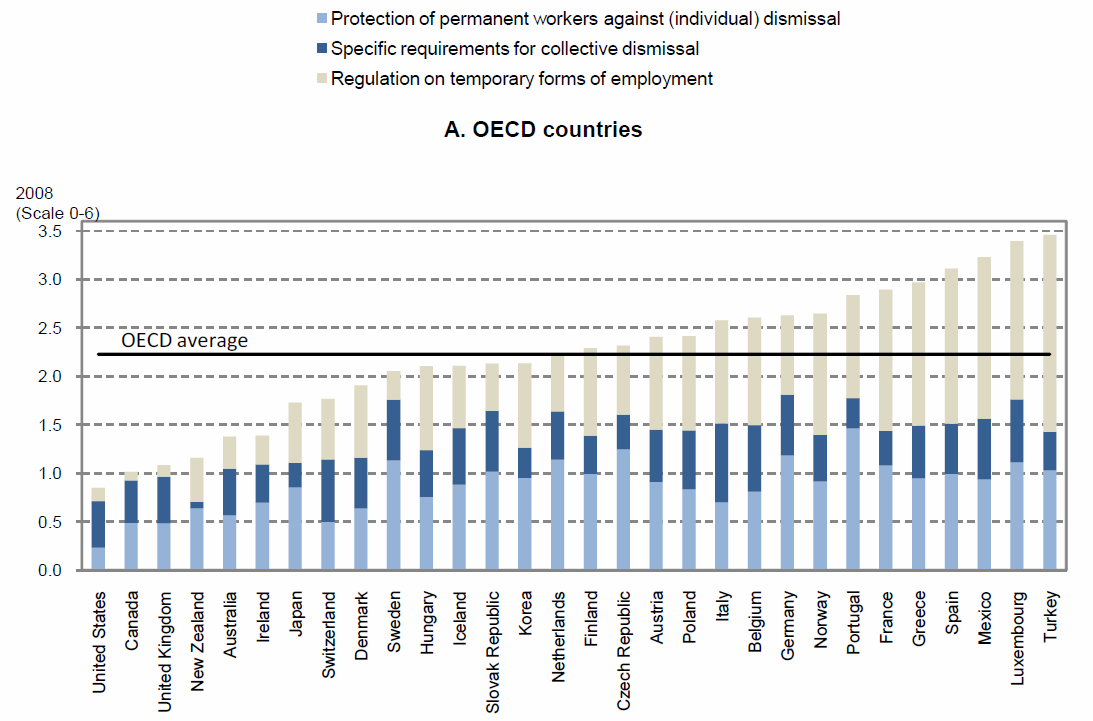
Figure 3: Employment protection in OECD and selected non-OECD countries 2008
This stacked bar chart illustrates the scale of employment protection (from 0, least stringent, to 6, most restrictive) across OECD countries in 2008. The bars are composed of three components: protection of permanent workers against (individual) dismissal, specific requirements for collective dismissal, and regulation on temporary forms of employment. An OECD average line is also shown.
Countries from left to right show varying levels of overall protection, with the US, Canada, and the UK having among the lowest, while Luxembourg and Turkey have among the highest.
* Data are for 2009 for France and Portugal. OECD average is the unweighted average for the 30 countries that were members of the OECD in 2008 Source: OECD employment protection database; www.oecd.org/employment/protection
In the context of persistent unemployment levels, Policy makers appear to have – in part at least – also accepted the endogenous cost imposition of LL thesis. The OECD argued for a deregulatory approach in order to enhance market flexibility (1994) and maintained this approach in 2004 (OECD, 2004) The IMF has called for the deregulation of European labour markets, arguing that reforms, for example, intended to bring European labour laws into lines with those of the US would cut unemployment by over a third (IMF, 2003). The World Bank (2008, p. 17- p. 19) has stated that "laws created to protect workers often hurt them' and that 'more flexible labour regulations boost job creation”. These approaches may reflect particular views of the pathways needed to navigate recession rather than any intended contributions to innovation policy. In fact, other than pushes towards more or less regulation there is little evidence that innovation policies interact with LL in the area of human resources. Whilst the studies examined here do reflect that lack of interaction there is evidence of new approaches coming from socio legal and labour studies and from studies that try to connect the complexities of factors involved in different types of innovation processes This is confirmed in the studies examined below.
An econometric analysis based on data for 17 manufacturing industries in 18 OECD countries (1980-2000), found evidence that high labour adjustment costs can have a strong negative impact on productivity. Different industrial relations regimes (as illustrated above) did not per se have a significant impact on productivity. However, incentives for innovation and adoption of new technologies were reduced where the LL institutional setting did not allow for wages or internal training to offset high hiring and firing costs: this occurred when sectoral wage bargaining without coordination was predominant (Scarpetta & Tressel 2004). A 2008 study (Deakin & Sarkar, 2008) examined changes in labour law regulation in France, Germany, the UK and the US from the early 1970s to the present day. This study found empirical evidence that suggested the economic effects of labour laws, although highly varied and complex, might actually be enhancing efficiency in certain contexts dependent on the legal system in which they operate. The authors found that the strengthening of laws against dismissal had positive effects on employment and productivity growth in France and Germany: stronger working time laws had a positive impact on employment growth in France. A slight strengthening of controls against dismissal had a negative impact on employment growth but a positive effect on productivity growth in the US.
A 2010 study across 12 European countries on the relationship between LL and innovation activity of multinational enterprises found a mix of negative and positive effects. Multinational enterprises located more innovative activity (reflected in incremental patenting activity) in countries with high employment protection, but they located more technologically advanced innovation (reflected by radical patenting activity) in countries with low employment protection enforcement (Griffith & Macartney, 2009). This confirmed earlier results found by Saint-Paul (2002) and also mentioned in Scarpetta and Tressel (2004) that economies where firing costs are high may specialize in 'secondary innovation' – innovation that increases efficiency in the production of existing goods, as opposed to 'primary innovation' that leads to new goods. Hall and Soskice (2001) have argued that fluid labour markets characterized by few restrictions on hiring and firing may impact positively on organizational learning and innovative performance for 'primary innovation” because they allow firms rapidly to bring in new knowledge from the outside and to reconfigure their knowledge bases to support new product and service development. Where technological progress is cumulative, training investment in the incumbent work force may be effective in cost reduction. If technological progress leads to frequent production process shifts of physical and human capital types needed, firms will tend to rely on the external labour market which will lead to increased costs in systems where employment protection is strongly coordinated. The OECD (2003) reported that a combination of strict employment protection legislation, wage compression across skills and lack of co-ordination amongst employers, in several continental European countries, lowered incentives for innovation and the adoption of leading technologies. In countries with coordinated industrial relations regimes (e.g. Austria and Germany), strict employment protection legislation was less likely to affect innovation in industries where technology evolved in a cumulative fashion (with a parallel evolution of the workforce skills). Bassanini and Venn (2007) in an empirical study of Austria, Belgium, Canada, Germany, Denmark, Finland, France, Greece, Ireland, Italy Japan, NL Norway Portugal Spain Sweden UK and US pointed up that countries with coordinated LL systems and strict employment protection tended to specialise in industries with a cumulative knowledge base - because of the larger scope for resorting to internal labour resources the lower the adjustment costs imposed by LL regulations. Employment protection and coordinated LL regimes facilitated the alignment of workers and firms objectives, thus encouraging firm sponsored training as well as the accumulation of firm specific competences allowing firms to fully exploit potential of their internal labour markets. A 2009 study (Greenan & Lorenz, 2009) found that national systems that combine high levels of labour market mobility with relatively high levels of employment security and expenditure on active labour market policies are associated with adoption of forms of work organization and knowledge exploration that actually promote innovation at the firm level. Lam and Lundvall (2006, pp. 120-123) however, have observed, that high rates of job mobility which can be associated with deregulated flexible labour markets will prejudice the diverse know-how and practical problem solving skills embodied in individual experts if they are not retained by the firm. Highly innovative firms have a problem of reproducing what has been learnt into an organizational memory and so are highly vulnerable when it comes to individuals leaving the organization. Belot et al. (2002) suggest that in the absence of employment protection, workers would under-invest in firm-specific human capital because they could be fired on the spot, even after having made an effort to upgrade their skills and borne the corresponding cost.
In many high tech sectors however, temporary employment contracts and high labour mobility, are becoming the norm, including, the use of high skilled "permatemps" by innovative companies, such as computer programmers and software architects and designers (Benner, 2002). There has been exponential growth in the USA over the last 20 years in the use of skilled contractors in high-technology areas first described by Clinton (1997). Permanent employees have been replaced with mobile temporary workers and independent contractors to cut labour costs and enhance flexibility (Waterman et al 1994, Grzeda 1999) This form of contingent labour use has of course been longstanding in the low skilled workforce but is increasingly being used by innovative firms in highly flexible labour markets (where employment protection is weak) seeking mobile flexible workers as value added competitive advantage is sought. Autor et al (2003) have described this process as the "bipolarization" of the labour market between good jobs and commoditized ones. In America in 2010, the number of part-time workers reached a new high of 19.7% of all employees (Bureau of Labor Statistics - US Department Of Labor). The extent of the spread of skilled contingent labour is difficult to ascertain precisely as the US Bureau of Labor Statistics (BLS) uses only data on the spread of the temporary services industry that covers all skill levels. Barley and Kunda (2004) have reported that outsourcing labour has made it easier for innovative firms to shift their employment and talent mix because contracted services were easier to terminate on short notice whilst maintaining a small core of permanent employees. They also report that in some cases, firms actually dismissed former employees and then rehired them as independent contractors. In other instances, firms hired people as independent contractors, but treated them as permanent employees For instance, firms might deny contractors' rights to the intellectual property they created or demand that they work exclusively for the firm as a condition of employment. Anecdotal evidence seems to indicate that the greatest expansion of this new type of contingent labour is in business services programmers, computer engineers, computer scientists, systems analysts and multi media analysts (see Baumann 2002 for developments in the German and British media production industries). This expansion is strongly indicated to continue as IT demand for example, moves toward cloud-based services and asset-light IT and away from customized IT (software packages) licensed applications and offshore services .
Of importance here is whether job security can be enhanced for such high skill worker so that their high levels skills are not lost or diffused for the innovative companies that need them. A study by Pruijt and Derogee (2010) has described Dutch approaches to resolving issues related to these categories of high skilled workers temporarily hired by companies who need their specialized knowledges for innovation. The jobs of these workers depend upon the firm's innovation strategies and such jobs are can be terminated when those strategies are fulfilled or changed. The authors outline the evolution in the Netherlands of the notion of "employability" - constituted as a process whereby individual workers become independent organizers of the changing activities and commitments that constitute their working lives (p: 438). The authors suggest that the combination of employability with job security (employacurity) provides a platform from which workers can gain benefits in terms of general training rights and personal development, for example, that can be institutionalised in collective bargaining agreements. The authors using the DUCADAM data set, created by the Amsterdam Institute for Advanced Labour Studies. This data, contained in the FNV Collective Labor Agreements Database, found that over time in collective bargaining negotiations both unions and employers were prepared to trade percentage downshifts (in wages for unions and numerical flexibility for employees) in exchange for agreements on investments in employability (p: 450). They give case study examples of employability clauses at ING (large bank) and Royal Philips Electronics of the Netherlands that have institutionalized employability clauses into their HR policies. In both cases for all employees, general training rights and personal development are recognized as joint responsibilities of employee and employer (regardless of contract status) and supported financially (p: 450-453). Implicit in the arrangements are mechanisms for maintaining contact and information sharing between regular and contingent workers.
Job security based in effective collective bargaining has been the norm of Dutch legislation enshrined in the Flexibility and Security Act of 1998 that places legal and institutional focus on flexicurity. This has often meant where job losses occur a work to unemployment cycle rather than work-to-work mobility. Employability as it has been practically applied and still being developed in the Netherlands places emphasis on development and empowerment of employees, in the organizational context of work places. There now seems to be recognition of the practical need towards creating effective incentive systems that can provide mutually beneficial support to a particular section of highly skilled workers and the strategies of innovative firms. The Dutch approach demonstrates that cross cutting horizontal approaches to innovation policy can be developed over time in collaboration with a wide range of social partners.
The role of collective bargaining in innovation has been examined by Menezes-Filho and Van Reenen (2003). They surveyed existing literature to assess the impacts of N. American and European collective bargaining strengths and weaknesses looking for the possibility that trade unions by consuming sunk R&D investments through demanding higher rewards may hold back a firm's capacity to innovate. The authors found only five econometric studies examining the impact of union power on counts of innovations (i.e., the output of R&D). The North American results showed consistently negative impacts of unions density on R&D: European studies (mainly in the UK) generally did not uncover negative effects of union density on R&D. Thus, there was no consensus of the effects of unions on the other main measures used by study, i.e. on technological diffusion, innovation or productivity growth even in the North American studies. The authors felt that institutional differences between nations in union attitudes and ability to bargain perhaps explained this. Of the studies they examined, two US studies (Acs and Audretsch, 1988, and Hirsch and Link, 1987) found significant negative effects. Schnabel and Wagner (1992) found no significant effects of unions in their sample of German establishments. The authors felt that overall the effects of unions on innovation have to be seen, currently, as generally ambiguous both in theory and in empirical practice. The authors' summary of their findings is shown below.
| Source |
Method |
Data |
Indicators |
Controls |
Findings |
| Acs and Audretsch (1988) |
OLS regression of count of total number of innovations normalized on employment |
US Small Business Administration Dataset; 247 4-digit industries in 1982 |
Union density. Innovations collected from trade journals. |
Capital, advertising, concentration, industry growth and skills |
Negative and significant union effect |
| Blundell, Griffith and Van Reenen (1999) |
Dynamic count data model of innovation counts, allows for fixed effects through either 'pre-entry stock' method or nonlinear General Method of Moments |
UK Firm level panel data 1972-1982; Science Policy Research Unit (SPRU) innovations (1945-1982) data & Data stream company accounts |
Two-digit industry union density. Science Policy Research Unit's (SPRU) innovation dataset (survey of scientists, engineers and other experts covering 1945-1983). |
Lagged innovations, market share, capital, concentration, imports, time dummies, fixed effects |
Unions have negative effect on innovation, significance varies in different specifications |
| Geroski (1990) |
Region of innovations counts using OLS and within groups (i.e. inclusion of firm dummies for fixed effects) |
73 British manufacturing industries; two pooled cross section 1970-1974 and 1975-1979 |
Percentage of workers coverage by a collective bargain (NES). Average number of innovations from Science Policy Research Unit (SPRU) innovations. |
Industry Concentration, Share of Firms that entry and exit the industry, growth, imports, exports, Size |
Negative but insignificant |
| Hirsch and Link (1987) |
Ordered probits of response to question on product innovation |
315 New York manufacturing firms in 1985 |
Binary variable if firm density over 50%. Question relating to company's comparative advantage in product innovation. |
Size, concentration, profitability, foreign competition, labour-management relations, R&D |
Unions have significant and negative effect |
| Schnabel and Wagner (1992) |
Probits of product innovation |
78 German establishments in 1990 |
Presence of Works Councils, extent of wage drifts. Product innovation. |
Number of employees |
Positive but insignificant effect |
| Source: |
Menezes-Filho & Van Reenen, 2003 p: 43 |
|
|
|
|
The difficulties of measuring LL impact on innovation processes have been noted above, but a study by Acharya, Baghai and Subramanian (2010), has specifically examined the linkage between labour legislation and innovation. Using patents and citations as proxies for innovation this study analyzed data from five countries (USA, UK, India, France and Germany) for the period 1970-2002. These five countries account for 72% of patents filed with the United States Patent and Trademark Office (USPTO). They use USPTO as practically all innovators who seek to exploit their technology internationally take out patents in the USA, given its market size and technological strength (Lall, 2003) US patents are viewed as a high quality indicator of international technological activity (Cantwell and Anderson 1996). Three measurements were used in the study: a patent count of the number of patents that were filed in a particular year in a specific patent class (using the NBER patent dataset) as these indicate the importance of innovation. Whilst there are a number of problems with patents, the registration of patents is a useful direct indicator of the social benefit of technological innovation. The rationale for citations is that if firms are willing to further invest in a project that is building upon a previous patent, it implies that the cited patent is influential and economically significant. Patent citations also arrive over time indicating whether or not the original patent was important. The third measure of innovative activity, employed was the number of patenting firms in a patent class. (USPTO has 400 patent classes) which in a given application year provides a measure of the number of patenting entities. The authors used the labour law index derived by Deakin and Sarkar (2008) to determine the most important aspect of employment protection in respect to innovation. The index of labour laws details the evolution of differences in employment protection legislation in the United States, United Kingdom, France, Germany, and India since 1970. There are problems inherent in this approach as innovation counts and patents are imperfect indicators of innovation output mainly because they often convey little information about the economic significance (i.e. the "quality") of innovations. (See Nicoletti et al. 2001 for a discussion of these issues). However, the study provides empirical evidence that while, strong labour laws may contribute to dampening economic growth, the area of laws that protect employees against dismissal are an exception and actually may promote economic growth particularly in innovation-intensive sectors. This is because, they argue, employment protection legislation may enable a process whereby firms are not penalized for short-run failures and are encouraged to pursue value-maximizing innovative activities: private contracts written to promote innovation can be improved upon by law by granting employees greater protection together with guarantees of training and compensation.
3.4 Lessons
Some studies indicate that aspects of employment protection in certain contexts coordinated LL and collective bargaining frameworks in open economies (there are significant differences across countries) link well to certain types of innovation (incremental). It is here that employment protection may encourage investment in human capital, since longer-lasting employment will increase the expected returns to education and training, retain skilled workers and encourage internal mobility thus maintaining and adding to the knowledge bases of both individual and firm.
Dynamic environments associated with innovation throw up uncertainty for the workforce especially for high skilled contingent workers and pose particular problems in terms of a form of "memory loss" of knowledge and competences. The findings on the rise of highly skilled flexible contingent labour reflect the need to establish shared approaches among the social partners to the risks of job moves, wage stability for high skill employees and preventing loss of skills and knowledge at both the level of the individual worker and the firm. The adoption of forms of mediation, work organization and knowledge exploration that actually promote innovation at the firm level by aligning the objectives of workers and firms would seem a prerequisite here and a policy challenge. This is challenging, in part, because there are no LL indicators available linked to the general innovation policy HR indicators that could guide the processes for involving workers in innovation.
The Dutch experience over many years, may offer a way forward, as it indicates a substantial breadth of policy and regulatory activities involving all social partners that focus on ameliorating the impact of contingent employment contracts and maintaining and enhancing networks to retain essential knowledge and skills.
LL may potentially comprise a significant and proactive part of cross-cutting policy toolkits for promoting innovative growth but as yet there is no clear view of which parts of LL fit with what parts of innovation policies and at what level (macro-meso-micro).
4. Conclusions
The direct and indirect linkages of labour legislation and the management of high international migration flows to the different processes and forms of innovations are as yet not fully understood. The findings compiled in this report demonstrate that innovation policies need to be complemented by horizontal perspectives that take into account what is happening across broad societal sectors and the particular characteristics and contexts of national and regional environments for workforce.
There are implications for clear cross cutting links between labour mobility, (with particular implications for highly skilled contingent workers) and a range of very complex issues contained within labour legislation, for example. These include employment protection and rights to training and access to lifelong learning opportunities all of which are equally applicable to foreign-born high skilled labour. The issue of highly skilled contingent labour, particularly in the high tech and creative sectors, is important, but not well researched outside the USA, Canada and Australia. It is an important area because the next wave of developments in information technologies and communication technologies (such as cloud computing, asset light IT) will probably lead to an expansion in the numbers of very highly skilled contract workers whose knowledge (especially tacit knowledge), skills and expertise are invaluable components of innovation processes. Such workers whilst in part having formal employment at times will in the main operate within dynamic knowledge clusters where new knowledge is exchanged. Innovation policy will need to address these new forms of knowledge exchange “organisations” which evolve organically and not as a result of policy. This implies detailed investigation of data and literature available on contingent high skill labour, both domestic and foreign, to establish current types, size and extent of such labour across specific sectors and initially to extrapolate what future trends might be.
References
Acemoglu, D., Angrist, J., 2001. Consequences of employment protection? The case of the Americans with Disabailities Act. Journal of Political Economy, 109 (5): 915-957.
Acharya, V., Baghai, R., Subramanian, K., 2010. Labor Laws and Innovation. NBER Working Paper Series No. 16484, : http://www.nber.org/papers/w16484.
Acs, Z., Audretsch, D., 1988. Innovation in Large and Small Firms: An Empirical Analysis. The American Economic Review, 78 (4): 678-690.
Arrow, J., 1962. The economic implications of learning by doing. The Review of Economic Studies, 29 (3): 155-173.
Audretsch, D., & Thurik, R., 2001. Linking Entrepreneurship to Growth. OECD: Paris.
Autor, D., 2003. Outsourcing at Will: The Contribution of Unjust Dismissal Doctrine to the Growth of Employment Outsourcing. Journal of Labor Economic, 21 (1): 1-42.
Barley, S., Kunda, G., 2004. Gurus, Hired Guns, and Warm Bodies: Itinerant Experts in a Knowledge Economy. Princeton University Press: Princeton.
Barro, R. S., Sala-i-Martin, X., 1997. Technological Diffusion, Convergence, and Growth. Journal of Economic Growth, 2 (1): 1-26.
Bassanini, A., Venn, D., 2007. Assessing the Impact of Labour Market Policies on Productivity: a Difference-in-Differences Approach. OECD: Paris.
Baumann, A., 2002. Informal Labour Market Governance: the Case of the British and German Media Production Industries. Work Employment & Society, 16 (1): 27-46.
Becker, G., 1964. Human capital: A theoretical and empirical analysis, with special reference to education. University of Chicago Press: Chicago.
Belot, M., Boone, J., van Ours, J., 2002. Welfare Effects of Employment Protection. CentER, : http://www.politiquessociales.net/sites/politiquessociales.net/IMG/pdf/48-3.pdf.
Benner, C., 2002. Work in the New Economy: Flexible Labor Markets in Silicon Valley. Blackwell Pub: Malden.
Blanchard, O., Katz, L., 1997. What we kknow and do not know about the Natural Rate of Unemployment. The Journal of Economic Perspectives, 11 (1): 51-72.
Blundell,R., Griffith, R., Van Reenen, J., 1999. Market structure and innovation: evidence from British manufacturing firms. The Review of Economic Studies, 66 (3): 529-554.
Botero, J., Djankov, S., La Porta, R., Lopez-de-Silanes, F., 2004. The Regulation of Labor. Quarterly Journal of Economics, 119 (4): 1339-1382.
Canada FWSP, 2010. Evaluation of the Federal Skilled Worker Program. Evaluation Division: .
Cantwell, J.A., Andersen, H.B., 1996. A Statistical Analysis of Corporate Technological Leadership Historically. Economics of Innovation and New Technology, 4 (3): 211-234.
Cerna, L., 2011. Selecting the Brightest and the Best. Migration Observatory: University of Oxford.
Chiswick, B.R., 1999. Are Immigrants Favourably Self Selected?. The American Economic Review, 89 (2): 181-185.
Clinton, A., 1997. Flexible labour: restructuring the American work force. Monthly Labor Review, 120 (8): 3-27.
Cohen, B. W., Levinthal, D., 1990. Absorptive Capacity: A New Perspective on Learning and Innovation. Administrative Science Quarterly, 35 (1): 128-152.
Conaghan, J., Fischl, M., Klaree, K., 2002. Labour Law in an era of globalization: transformative practices and possibilities. Oxford University Press: Oxford.
Deakin, S., Sarkar, P., 2008. Assessing the long run economic impact of labour law systems: a theoretical reappraisal and analysis of new time series data. World Economy & Finance Rsearch Programme Working Paper Series, University of London: http://www.worldeconomyandfinance.org/workingpapers_publications/workingpaper_PDFs/WEF0043.pdf.
Deakin, S., Wilkinson, F., 2005. The law of the labour market: industrialisation, employment and legal evolution. Oxford University Press: Oxford.
Dickens, L., Hall, M., Wood, S., 2005. Review of Research into the impact of employment relations legislation. Department of Trade and Industry (DTI): London.
Djankov, S., La Porta, R., Sheifer, A., 2003. Courts. The Quarterly Journal of Economics, 118 (2): 453-517.
EC, 2006. Modernising Labour Laws to meet the challenges of the 21st Century. European Commission: Brussels.
Fagerberg, J., Verspagen, B., 1998. Productivity, R&D spillovers and trade. CCSO/CPB Conference, Groningen, Sep 23 1998 12:00AM.
Fangmeng, T., Zhongdong, M., 2006. Explaining the socioeconomic well-being of immigrants and returned migrants: An econometric analysis of the Hong Kong and Canadian censuses of 2001. Journal of International Migration and Integration, 7 (4): 473-491.
Finn, M.G., 2007. Stay Rates of Foreign Doctorate Recipients from U.S. Universities, 2005. Oak Ridge Institute for Science and Education (ORISE): .
Forteza, A., Rama, M., 2000. Labour market "rigidity" and the success of economic reforms:across more than one hundred countries. The World Bank Washington: http://elibrary.worldbank.org/content/workingpaper/10.1596/1813-9450-2521.
Geroski, P., 1990. Innovation, Technological Opportunities and Market Structure. Oxford Economic Papers, 42 (3): 586-602.
Gersbach, H., Schmutzler, A., 1999. External spillovers, internal spillovers and the geography of production and innovation. Regional Science and Urban Economics, 29 (6): 679–696.
Greenan, N., Lorenz, E., 2009. Learning Organisations. OECD-EDU WORKING PAPER, Paris: http://www.oecd.org/dataoecd/61/38/44191153.pdf.
Griffith, R., Macartney, G., 2009. Employment Protection Legislation, Multinational Firms and Innovation. IFS Working Papers W10/01, : http://www.ifs.org.uk/wps/wp1001.pdf.
Grzeda, M., 1999. Career development and emerging managerial career patterns. Journal of Career Development, 25 (4): 233-247.
Guellec, D., Cervantes, M., 2002. International Mobility of Highly Skilled Workers: from statistical analysis to policy formulation, in OECD (Ed.), International Mobility Of The Highly Skilled, OECD: Paris, pp.71-98.
Hall, M. A., Singer, A., De Jong, G., Graefe, D., 2011. The Geography of Immigrant Skills: Educational Profiles of Metropolitan Areas. Brookings Institution: Washington.
Hall, P., Soskice, D., 2001. Varieties of Capitalism. Oxford University Press: Oxford.
Hawthorne, L., 2008. The Impact of Economic Selection Policy on Labour Market Outcomes for Degree Qaulified Migrants in Canada and Australia. RPP Choices: .
Hawthorne, L., 2010. Demography, Migration and Demand for International Students, in Findlay, C., Tierney, William G. (Ed.), Globalisation and Tertiary Education in the Asia-Pacific: The Changing Nature of a Dynamic Market, World Scientific:, pp.93-120.
Hazen, H., Alberts, H., 2006. Visitors or immigrants? International students in the United States. Population, Space and Place, 12 (3): 201–216.
Hirsch, B. T., Link, A. N., 1987. Labor Union Effects on Innovative activity. Journal of Labor Research, 8 (4): 323-332.
Hunt, J., Gauthier-Loiselle, M., 2008. How Much Does Immigration Boost Innovation?. NBER Working Paper No. 14312, : http://www.nber.org/papers/w14312.
ILO, 2003. The Scope of the Employment relationship. Report V-International Labour Conference 91st Session : Geneva .
ILO, 2004. A Fair Globalization: Creating Opportunities for All. World Commission on the Social Dimension of Globalization: Geneva.
IMF, 2003. Unemployment and labour market institutions: why reforms pay off, in IMF (Ed.), World Economic Outlook, IMF: Washington, pp.129-150.
Jones, B., Miller, B., 2007. Innovation Diffusion in the New Economy: The Tacit Component. Routledge: New York.
Kahn-Freund, O., 1979. Innovation Diffusion in the New Economy: The Tacit Component. Oxford University Press: Oxford.
Khoo, S. E., Hugo, G., McDonald, P., 2008. Which skilled temporary migrants become perment residents and why?. International Migration Review, 42 (1): 193–226.
Lall, S., 2003. Indicators of the relative importance of IPR in developing countries. Research Policy, 32 (9): 1657–1680.
Lam, A., Lundvall, B., 2006. The Learning Organization and National Systems of competence building and innovation, in Lorenz, E., Lundvall, B> (Ed.), How Europe's Economies Learn: Coordinating Competing Models, Oxford University Press: Oxford, pp..
Lazear, E., 1990. Job Security Provisions and Employment. Quarterly Journal of Economics, 105 (3): 699-726.
Lucas, R. E., 1988. On the mechanics of economic development. Journal of Monetary Economics, 22 (1): 3-42.
Mahroum, S., 2000. Scientific mobility: An agent of scientific expansion and institutional empowerment. Science Communication, 21 (4): 367-378.
Martin, J.P., Scarpetta, S., 2012. Setting It Right: Employment Protection, Labour Reallocation and Productivity. Business and Economics, 160 (2): 89-116.
Massimiliano, T., 2008. Short-Term Skilled Labour Movements and Economic Growth. International Migration, 46 (3): 161–187.
Menezes-Filho, N., Van Reenen, J., 2003. Unions and Innovation: A survey of the theory and empirical evidence, in Addison, J. Schnabel, C. (Ed.), International Handbook of Trade Unions, Edward Elgar Publishing: Cheltenham, pp.293-334.
Mincer, J., 1974. Schooling, Experience, and Earnings. Columbia University Press: New York and London.
Murray, A., 2011. Britain's Points Based migration system. CentreForum: .
Nicoletti, G., Pryor, F., 2001. Subjective and objective measures of the extent of governmental regulations., : http://papers.ssrn.com/sol3/papers.cfm?abstract_id=285494.
Niebuhr, A., 2006. Migration and innovation: Does cultural diversity matter for regional R&D activity?. HWWI Research Paper 3-1, Hamburg Institute of regional Economics HWWI Hamburg: http://hwwi.org/uploads/tx_wilpubdb/HWWI_Research_Paper_3-1.pdf.
Novitz, T., 2003. International and European Protection of the Right to Strike: A Comparative Study of Standards Set by the International Labour Organization, the Council of Europe and the European Union. Oxford University Press: Oxford.
OECD, 1995. Measurement of Scientific and Technological Activities Manual on the Measurement of Human Resources Devoted to S&T - Canberra Manual. OECD: Paris.
OECD, 2001. Innovative people: Mobility of skilled personnel in national innovation systems. OECD: Paris.
OECD, 2001b. Science, Technology and Industry Outlook 2001- Drivers of Growth: Information Technology, Innovation and Entrepreneurship. OECD: Paris.
OECD, 2003. The sources of economic growth in the OECD countries. OECD: Paris.
OECD, 2004. Employment Outlook 2004. OECD: Paris.
OECD, 2005. Innovation policy and performance: a cross-country comparison. OECD: Paris.
OECD, 2007. International Migration Outlook 2007. OECD: Paris.
OECD, 2009. International Migration Outlook 2009. OECD: Paris.
OECD, 2010. Education at a Glance 2010: OECD Indicators. OECD: Paris.
OECD, 1994. The OECD Jobs Study: Facts, Analysis, Strategies. OECD: Paris.
Oettl, A., Agrawal, A., 2008. International labour mobility and knowledge flow externalities. Journal of International Business Studies, 39 (8): 1242-1260.
Pack, H., Paxson, C., 1998. Inter-industry mobility and knowledge spillovers in Taiwan, China. World Bank Publications, Washington DC: http://www-wds.worldbank.org/servlet/WDSContentServer/WDSP/IB/2001/05/24/000094946_01050904164070/additional/118518322_20041117142546.pdf.
Papademetriou, D., Somerville, W.,Tanaka, H., 2008. Hybrid Immigrant-Selection Systems: The Next Generation of Economic Migration Schemes. The Migration Policy Institute.
Papademetriou, D., Sumption, M., 2011a. Rethinking Points Systems and Employer Selected Immigration. Migration Policy Institute: Washington DC.
Papademetriou, D., Sumption, M., 2011b. Eight policies to boost the economic conytribution of employment based immigration. Migration Policy Institute: Washington DC.
Partridge, J., Furtan, H., 2008. Increasing Canada's International Competitiveness:Is there a link between Skilled Immigrants and Innovation. Selected Paper prepared for presentation at the American Agricultural Economics Association Annual Meeting, Orlando, Jul 27 2008 12:00AM.
Polt, C., Gassler, D., Rammer, H., Schibany, A., Schartinger, D., 2001. Benchmarking industry-science relations: The role of framework conditions. Science and Public Policy, 28 (4): 247-258.
Polyani, M., 1967. The Tacit Dimension. Routledge: London.
Productivity Commission, 2006. Economic Impacts of Migration and Population Growth: Research Report. Australian Government: Melbourne.
Pruijt, H., Dérogée, P., 2010. Employability and job security, friends or foe. The paradoxical reception of employacurity in the Netherlands. Socio-Economic Review, 8 (3): 437-460.
Romer, P. M., 1990. Endogenous Technological Change. Journal of Political Economy, 8 (5): S71-S102.
Saint-Paul, G., 2002. Employment protection, international specialisation and innovation. European Economic Review, 46 (2): 375–395.
Saxenian, A., 1999. Silicon Valley's New Immigrant Entrepreneurs. Public Policy Institute of California: San Francisco.
Saxenian, A. L., 1994. Regional advantage: Culture and competition in Silicon Valley and Route 128. Harvard University Press: Boston.
Scarpetta, S., Hemmings, P., Tressel, T., Woo, J., 2002. The Role of Policy and Institutions for Productivity and Firm Dynamics. OECD Economics Department Working Papers No. 329, Paris: http://www.oecd-ilibrary.org/docserver/download/fulltext/5lgsjhvj7zlw.pdf?expires=1336413265&id=id&accname=guest&checksum=32F3B4CC008174B3735ED5936FCAF2A1.
Scarpetta, S., Tressel, T., 2004. Boosting Productivity via Innovation and Adoption of New technologies: any Role for Labour Market institutions?. World Bank, Human Development Network, and IMF, : http://dx.doi.org/10.1596/1813-9450-3273.
Schnabel, C., Wagner, J., 1992. Unions and innovation: Evidence from German micro data. Economics Letters, 39 (3): 369–373.
Schultz, T., 1962. Investment in human capital. The American Economic Review, 15 (1): 1-17.g
Sciarra, S., 2007. EU Commission Green Paper ‘Modernising labour law to meet the challenges of the 21st century'. Industrial Law Journal, 36 (3): 375 -382.
Shacher, A., 2006. The Race for Talent: Highly Skilled Migrants and Competitive Immigration Regimes. New York University Law Review, 18: .
Smith, R., 2011. Migration and the Innovation Agenda. Department of Innovation, Industry, Science and Research Canberra: http://www.google.co.uk/url?sa=t&rct=j&q=&esrc=s&source=web&cd=1&ved=0CF8QFjAA&url=http%3A%2F%2Fwww.innovation.gov.au%2FAboutUs%2FCorporatePublications%2FResearchWorkingPapers%2FDocuments%2FMigrationInnovationAgenda_2011-02.rtf&ei=ujmyT9XxKpPL8QPTIvC.
Tapley, C., 2010. International Students and linkages to permanent immigration. World Education Services Symposium, Toronto: http://www.wes.org/ca/events/TAPLEY_InternationalStudentsAndLinkages.pdf.
Teece, D.J., 1977. Technology Transfer by Multinational Firms: The Resource Cost of Transferring Technological Know-How. The Economic Journal, 87 (346): 242-261.
Teece, D., 1986. Profiting from technological Innovation. 285–305, 15 (6): 285–305.
Tsacoumis, S., 2007. The Feasibility of Using O*NET to Study Skill Changes. Prepared for the Workshop on Research Evidence Related to Future Skill Demands Center for Education National Research Council, http://www.humrro.com/corpsite/sites/default/files/libraryPDF/The%20Feasibility%20of%20Using%20ONET%20to%20Study%20Skill%20Changes.pdf.
Ulph, D., 1996. Dynamic competition for market share and the failure of the market for skilled labour, in (Ed.), Acquiring Skills Market Failures, their Symptoms and Policy Responses, Cambridge University Press: Cambridge, pp.81-108.
Viebrock, E., Clasen, J., 2009. Flexicurity and welfare reform: a review. Socio-Economic Review, 10 (1): 305-331.
Wadhwa, V., Rissing, B., Chopra, A., Balasubramanian, R., Freilich, A., 2007a. US Based Global Intellectual Property Creation:An Analysis. Ewing Marion Kauffman Foundation: .
Wadhwa, V., Rissing, B., Saxenian, A., Gereffi, G., 2007b. Education, Entrepreneurship and Immigration: America's New Immigrant Entrepreneurs. Ewing Marion Kauffman Foundation: .
Wadhwa, V., Saxenian.A., Freeman, R., 2009. America's Loss is the World's Gain. Ewing Marion Kauffman Foundation: .
Waterman, R., Waterman, J., Collard, B., 1994. Towards a ccareer-resilient workforce. Harvard Business Review, 72 (4): 87-95.
Williams, A. M., 2007. International labour migrations and tacit knowledge transactions`; a multi-level perspective. Global Networks, 7 (1): 29–50.
Wilthagen, T., Tros, F., 2004. The Concept of Flexicurity: A New Approach to Regulating Employment and Labour Markets. Transfer, European Review of Labour and Research, 10 (2): 166-186.
Workpermit, 2009. Canadian Immigration Points calculator. http://www.workpermit.com.
World Bank, 2007. Doing Business 2007 how to reform : comparing regulation in 175 economies. World Bank: Washington DC.
Zhang, J., 2004. The Impact Of Innovation Capabilities On Firm Performance: An Empirical Study On_Industrial Firms In China's Transitional Economy. http://ro.uow.edu.au/theses/2031/.
Zucker, L., Darby, M., Brewer, M., 1998. Intellectual human capital and the birth of U.S. biotechnology enterprises. American Economic Review, The American Economic Review: 290-306