Acknowledgements
This report received guidance, support and feedback from Nesta's team members, including Louise Bazalgette, Zhen Rao, Lauren Liotti, Pankhuri Anand, Sarah Cattan and Camille Stengel.
The research was made possible by the generous time given by the experts who participated in the interviews. In alphabetical order: Alex Hall, Elklan; Alex Stevenson, DHSC (UK Government); Alison Rae, Shropshire Council; Anne-Marie Baan, Center for Evidence and Implementation; Becky Saunders, Foundations; Carolyn Wilson, Supporting Maternal and Child Wellbeing (Scottish Government); Christine Anderson, DHSC (UK Government); Dr Christine O'Farrelly, University of Cambridge; Dr Crispin Day, Centre for Parent and Child Support; Elaine Fulton, For Baby's Sake Trust; Dr Hazel Douglas, Solihull Approach; Heather Price, Elklan; Hilary Kennedy, AVIGuk (Association for Video Interaction Guidance UK); Dr Jamie Lachman, University of Oxford; Jane Lewis, Centre for Evidence and Implementation; Janice Saunders, Parents as First Teachers; Jen Lexmond, EasyPeasy; Jo Nicoll, Centre for Parent and Child Support, Empowering Parents, Empowering Communities; Lisa Sandercock, Derby City Council; Liz Ersoy, Peeple; Matt Buttery, Triple P UK & Ireland.
Thank you also to the additional representatives from the UK Government who participated from the DfE and DHSC.
We would also like to thank Dr Patrick Taylor and Dr Clare Tanton from BIT for their contribution to the report.
Published 01/07/2024
To cite this report, please use the following:
Nesta & Behavioural Insights Team (2024) Enablers for effectively scaling parenting interventions
Executive summary
About this report
This is the final report to Nesta of a research project on the enablers and barriers to scaling parenting interventions to inform Nesta's A Fairer Start team's strategy development and prioritisation processes. Nesta's focus is the UK, and this research included findings from comparable contexts. The project started with a rapid literature review which identified 19 sources that were examined in detail. Sources were primarily academic articles from peer-reviewed journals, and also included government reports and parenting intervention implementers' analyses. Two interventions, Triple P and Incredible Years (IY), dominate the 19 sources. The literature review was followed by 18 interviews with 23 experts from across the UK, in roles including central government parenting policymakers, regional and local government parenting intervention commissioners, researchers and academics, and the developers and implementers of parenting interventions.
The core of the report amalgamates analyses of enablers and barriers identified through the literature review and interviews. The structure of the report focuses on elements of scaling up (see page 41 for the theoretical overview of a template scaling strategy).
- Context: both the outer system of government and local family support service strategies (and their funding) within which parenting interventions sit, and the 'who' and 'how' of commissioning parenting interventions, and the inner networks of local organisations and institutions delivering health, family support, and education services.
- Resource team: the facilitators who deliver activities with parents and children, and the intervention developer and/or implementer.
- Intervention: the specific model delivered by the resource team.
- Recipients: the parents (as individuals and/or groups) who participate in activities with facilitators.
- Strategy: the sum of the considerations, decisions, and trade-offs that binds the other elements together to ensure effective delivery.
Headline findings
The consensus from the literature review and interviews is that delivering parenting interventions is difficult because parents' needs are diverse, requiring complex partnerships to reach them that can be different area-to-area and/or intervention type-by-type. This means that a lot of things can go wrong, and it takes detailed local knowledge to anticipate how, when, and with who to best deliver the parenting intervention.
Scaling fails for a multitude of reasons, from a poor parenting services strategy and inconsistent or under-funding, to partnerships characterised by competition, or referral processes that are not attuned to parents' needs. Therefore, each of the enablers identified in this report is vital for successful scaling because even one barrier at a critical point in time can prevent effective scaling.
“The metaphor I use for scaling... is that it is like building a house...it is important that the foundation and basic structure for delivering evidence-based programs be strong. This will include the following: 1) picking the right intervention for the level of risk of the population and developmental status of the children; 2) adequately training, supporting and coaching facilitators so they become accredited; and 3) providing quality control by the agency administrator."
Article about IY, one of the globally best evidenced and largest parenting interventions (Webster-Stratton, 2015).
Across the interviews the most frequent barrier to scaling that experts cited was the funding. In the majority of cases it was an insufficient quantity of funding and shorter timeframe than the intervention needed, which necessitated trade-offs that undermined scaling. For example, when funding was insufficient, Local Authorities might cut intervention components that undermine fidelity, or implementers might be forced to start-and-stop interventions between funding cycles, which both negates impact, and results in staff as well as parents discontinuing their engagement. In contrast, where sufficient funding was guaranteed for the implementation period, experts reported an enabling environment for positive partnerships between commissioners, implementers, and statutory services, where individuals and organisations were able to have honest conversations and address implementation problems.
The literature is awash with examples of poorly designed and implemented interventions in the 2000s and early 2010s (for example, poor collaboration between local agencies that undermines parent referrals, and convoluted parent sign-up and compensation processes that result in low engagement). In contrast, the experts interviewed for this research cite improvements in multiple key areas, eg, central government collaboration between the Department for Health and Social Care (DHSC) and the Department for Education (DfE), and coordination between local government and organisations relevant to parents and parenting (eg, nurseries and GPs). The Family Hubs and Start for Life (FHSFL) programme is the clearest example of this improvement.
Both the literature and interviews cite examples that suggest the practices around scaling parenting interventions are improving, with better collaboration between national governments (eg, Family Hubs) and within LAs (eg, Integrated review at age 2). However, interviews flagged that research funding continues to often be available at the wrong points in the scaling journey from the perspective of developers and implementers. Specifically, research overwhelmingly focuses on early pipeline impact and process evaluations, rather than on how to effectively implement interventions at scale.
Recommendations from interviewees
The recommendations listed below come from the interviews. Some are explicit requests made to the Behavioural Insights Team (BIT) interviewers for Nesta or another organisation to tackle priority barriers to parenting interventions. Others are general observations made by interviewees for how to improve the UK's architecture underpinning the scaling of parenting interventions. The interviewers did not ask specifically for recommendations; therefore, this document does not record how many interviewees cited each recommendation because that risks giving false weight to some recommendations more than others. Only the frequency of the recommendation, the role of the individual making the recommendation, and their underlying rationale, is discussed.
1. Uphold the political will among elected officials to prioritise parenting through consistent policy and advocacy
Several developers and implementers of parenting interventions, and officials in central, regional, and local government lament that the policy prioritisation of parenting (and corresponding funding) ebbs and flows in the UK. There was a peak in the mid/late 2000s, and then a dramatic drop during austerity. Interviewees noted that this is not the case in the UK's other OECD peers, where parenting is recognised as an apolitical issue above party politics, resulting in consistent attention and funding, which in turn enables effective scaling. Covid-19 helped to rejuvenate the issue in the UK, because lockdown highlighted every parent's trials and tribulations working from home without stigmatising parent-child difficulties. However, interviewees fear it will dip again unless people or organisations continuously engage elected officials.
2. Prioritise the evidence and identify a shortlist of the most effective parenting interventions
Some developers and implementers of parenting interventions, and local government officials, report too many choices of parenting interventions when using the Early Intervention Foundation's (EIF) Guidebook (now known as Foundations, the What Works Centre for Children & Families) and comparable databases. Local government officials often lack the timeframe and/or expertise to make informed comparisons between the Guidebook's interventions. This can lead to counterproductive incentives that undermine impact (for example, choosing the cheaper interventions based on cost only, but with less evidence, or choosing the intervention that can start the fastest, but with less impact).
3. Launch a public communications campaign to tackle the perceived stigma around parents asking for help with parenting in general, and participating in parenting interventions specifically
Every interviewee mentioned stigma as a crucial barrier to securing parents' participation in parenting interventions (especially in rural areas and smaller towns where people are acquainted with their neighbours). Developers and implementers, and government officials, called for a national campaign to raise awareness of the challenges of parenting, and to normalise asking for help. One option is for high-profile individuals to discuss their own difficulties, focusing on how external support was critical for them to give their child the guidance they needed, and feel like good parents. Interviewees drew parallels to the de-stigmatisation of mental health over the last 10-15 years through such high-profile testimony.
4. Create research funding tailored to implementers' scaling needs
The majority of intervention developers and implementers frequently cited frustrations with the funding available to support academic research, and the corresponding incentives created by funding bodies. Specifically, intervention developers can find money for evaluations to demonstrate impact for the initial cohort(s); however, funding to further develop and scale interventions is rare. This is one factor in the less effective scaling of individual interventions, contributing to the ‘voltage drop'. As a result of how research funding is set up, academic research in the UK is reported by some implementers to focus on the initial design and training-of-trainers, rather than the challenges after the first impact and process evaluation because that is not the research funding's scope. Incentives driven by research funding mean that intervention developers are much more likely to be able to obtain funding for early stage impact evaluations than for funding to support further developing and scaling their intervention. There remains a lack of funding to research 'what works' in scaling interventions effectively.
5. Create a public health business case for the parenting services sector that links interventions with societal gains
Every intervention developer and implementer reported having to make the case for funding parenting interventions to commissioners. Most reported frustration at being unable to quantitatively describe the broad societal gains that the parenting sector enables because they only have individual interventions' impact and cost effectiveness to compare between. Implementers call for an organisation to collect and aggregate data, synthesise evidence, and create a national business case for a long-term public health approach to parenting that articulates why governments of all political persuasions should fund parenting interventions. Successfully addressing this recommendation can also help to tackle the first recommendation, to encourage elected officials to consistently prioritise parenting.
Introduction and background
Context – why it matters
Nesta's A fairer start mission is to narrow the outcome gap between children growing up in disadvantage and their peers in the UK. Nesta focuses on supporting parents/carers in the period from pregnancy to age five, as this period of development lays the foundations for children's lifelong cognitive, social, emotional and physical outcomes. This project aims to inform the development of the mission's work on parenting.
Aims and scope of this evidence review
Nesta commissioned BIT to implement a three-phase project to inform the development of Nesta's work on parenting in a strategic way:
- Understand both the enablers for effective scaling of parenting interventions and barriers that impede successful scale up through a combination of a literature review and expert interviews.
- Generate useful and usable insights about the experiences of different organisations that have scaled up a parenting intervention successfully, including four case studies of successful scaling.
- Develop a template framework that can be applied consistently during scale up for different parenting interventions.
Nesta's definition of parenting interventions covers programmes that aim to support parents in developing capabilities that will help them with understanding and responding to their children's needs, thereby improving the behavioural, cognitive, socio-emotional, or physical outcomes of children, as well as parents' wellbeing and parent-child relationships.
The project started with a rapid literature review, followed by interviews with experts from across the UK in roles ranging from central government parenting policymakers creation, regional and local government parenting intervention commissioners, and the developers and implementers of parenting interventions.
Literature review methodology
For the literature review, the scope was agreed during project start-up by Nesta and BIT, including the search strings, databases, and inclusion criteria. Part of the inclusion criteria included satisfying a minimum quality (eg, grey literature was limited to government, foundation and other reputable reports with clear methodologies, and well-evidenced parenting implementers' analyses). BIT identified 93 potential articles, then used a Red-Amber-Green rating to evaluate how closely each source corresponded to the inclusion criteria. BIT shortlisted 19 articles rated as green, verifying those as the final list for the full review with Nesta. BIT rated meta-analyses and large representative studies more highly, and looked at methodological issues (eg, selection bias etc) where relevant to inform the shortlist. Nesta and BIT agreed an extraction tool with a number of key variables, alongside the summary of enablers and barriers, to record for these 19 articles.
The literature around the impact of parenting interventions is robust, with multiple Randomised Control Trials (RCTs) about individual projects with rich detail about the processes and tools for implementation. The 19 sources were overwhelmingly peer-reviewed journals, of which 10 included details of multiple RCTs. Only one source was a general analysis of scaling social policy. Triple P, formerly known as the Positive Parenting Programme, and IY are the most heavily studied, with five of the 19 papers dedicated to them in total. Six of the papers discuss parenting interventions in general, including featuring Triple P and/or IY. The high-quality impact evaluations were primarily for Triple P and IY. The literature review sought to focus on ages 0-5, but only about a quarter of sources met this criteria. Over half of sources were about interventions for 0-16 or 0-18 year-olds.
Only six articles focused on scaling parenting interventions, with most intervention-specific sources describing their enablers and barriers in generalities (eg, qualified staff, or insufficient funding). Policy-focused sources (eg, evaluations of government initiatives focusing on policy recommendations) included parenting interventions as one part of general reflections about scaling social policies. These were overwhelmingly negative, reflecting upon failures, and therefore disproportionately discussed barriers.
| Parenting intervention |
# of dedicated sources |
# of sources referencing |
| Triple P |
3 |
4 |
| Incredible Years (IY) |
2 |
4 |
| Family Nurse Partnership (FNP) |
2 |
2 |
| Strengthening Families, Strengthening Communities |
1 |
4 |
| Solihull Approach |
1 |
1 |
| Video Interaction Guidance (VIG) |
1 |
0 |
| Sing & Grow |
1 |
0 |
| Family Check-Ups |
0 |
2 |
Table 1: overview of parenting interventions in the literature reviewed in this project.
The table details the parenting intervention and the number of sources dedicated to that specific intervention, and the number of sources referencing that intervention.
Interview methodology
For the 18 interviews with 23 experts, Nesta identified experts with policy and/or implementation experience of researching or supporting parenting interventions in the UK and other countries, and recruited them for 45-minute semi-structured interviews. Nesta sought experts with a range of experiences and did not use a sampling frame beyond this pursuit of breadth and depth of expertise. Experts included:
- developers and implementers of both general and specialised (eg, speech-therapists) parenting interventions
- policy officials in the national government, setting strategy and prioritising funding
- programme officials in local government working with implementers and parents to ensure that delivery matches the strategy
- universities and consultancies supporting implementers to scale.
Nesta and BIT co-created the topic guide to encompass questions about enablers vs barriers in general, and for specific policies and projects the interviewee was involved in, as well as questions about key performance indicators, and monitoring/evaluation tools and processes.
Nesta and BIT used three mechanisms to secure consent. First, Nesta contacted experts and asked for their consent to participate in the research through an interview. Second, BIT contacted each expert to schedule the interview and highlight the intention to record the interview if the expert was willing (while reassuring them of intent to interview regardless of the recording). Third, BIT at the start of the interview secured consent for both the interview, and recording the interview. Recordings were deleted upon this document's completion.
BIT used thematic analysis of the literature review and interviews to draw out key insights from interviews. BIT and Nesta met together to discuss emerging findings, check the consistency of analysis, ensure relevance to Nesta's research questions, and challenge each others' conclusions.
BIT asked for consent to quote experts in the report, and anonymised when the expert was not comfortable with their attribution to the insight: this occurs twice.
| Intervention |
Child age |
Main outcomes |
| EasyPeasy |
0-5 |
Increase positive parent-child interactions to close the gap in school readiness among children. |
| Empowering Parents, Empowering Communities (EPEC) |
0-16 |
Strengthen the parent-child relationship through positive communication, development of parental sensitivity, safe care, and child-led play, and discouragement of unwanted behaviours. |
| Family Nurse Partnership (FNP) |
Pregnancy-2 |
Improve maternal and birth outcomes, improve child health and development, improve economic stability of the family. |
| For Baby's Sake |
Pregnancy-2 |
Break the cycle of domestic abuse and reduce related adversities. |
| Incredible Years (IY) |
0-12 |
Foster parent involvement in children's experiences, to ultimately promote children's academic, social, and emotional skills and reduce conduct problems. |
| Elklan Let's Talk |
All ages |
Improve communication with children with speech, language and communication needs. |
| Parents as First Teachers |
0-3 |
Develop family resilience and promote positive parenting behaviour. |
| Peep Learning Together Programme |
0-5 |
Improve children's personal, social and emotional development, communication and language, early literacy, early maths, and health and physical development. |
| Solihull Approach |
0-18 |
Improve child behaviour, including child's prosocial behaviour. |
| Triple P |
0-16 |
Prevent and treat social, emotional, and behavioural problems in children and adolescents. |
| Video Interaction Guidance (VIG) |
All ages |
Promote the ability of parents or carers to interpret and respond appropriately to their children's signals (eg, parental sensitivity, good communication). |
Table 2: overview of parenting interventions discussed in this report.

Limitations
This research project's main limitation is the focus on the enablers and barriers of national or regional scaling of parenting interventions, rather than implementing parenting interventions in general. The aim is specifically to generate usable insights about the experiences of different organisations that have scaled up a parenting intervention successfully to inform Nesta's strategy development. Therefore our approach to the evidence review and interviews is more targeted than a broader research project, and the examples in the report, and case studies at the end, are about the general scaling of the intervention, rather than location-specific discussions of who-how-why. For example, one interview noted Greater Manchester as a powerful case study for government coordination when scaling parenting interventions. An analysis of the who-how-why of that instance of scaling was out-of-scope for this project because the interviews focused on the intervention's enablers and barriers in general.
The other notable limitation is bias. The literature review and interviews both bring their own biases, which the project tried to mitigate insofar as possible by including a broader range of information, and verifying and triangulating between sources.
Research findings
The research findings below amalgamate the literature review and interviews.
Introduction: scaling parenting interventions and the Anna Karenina Principle
The literature describes a complex interplay of enablers that mutually reinforce one another, eg, a rigorously developed parenting services strategy enables effective partnerships across stakeholders, and dedicated funding helps implementers recruit quality staff and reduce turnover, which enhances the effectiveness of parent outreach and engagement. Developers and implementers describe enablers and barriers in different terms. BIT explores the five enablers/barriers detailed below to address Nesta's interests in understanding both the policy and implementation requirements for scaling, as well as creating categories that are mutually exclusive and collectively exhaustive insofar as possible, recognising the intimate interactions between factors.
The literature suggests that in almost all cases, each of the enabling factors detailed herein must be present for scaling to succeed. The existence of any one major barrier is often sufficient to prevent effective scaling. This is an illustration of the Anna Karenina Principle – where Tolstoy noted that: "All happy families are alike; each unhappy family is unhappy in its own way”. Similarly, successfully scaled parenting programmes are alike in incorporating all of the enablers to some extent; each programme that failed, did so in its own way.
The below table uses the elements of scaling up from the scaling strategy (see page 41) to describe how each element manifests as an enabler or barrier.
| Element, as... |
...an enabler |
...a barrier |
| Context |
National actors and institutions developing parenting, scaling, and/or implementation strategies through considered and inclusive processes that understand local realities and anticipate challenges. |
National actors and institutions developing weak strategies based on generalisations, unfounded assumptions, and skewed political incentives (eg, LAs opting for only one broad intervention to 'tick the box' for parenting services). |
|
Funding aligned with (the parenting, scaling, and/or implementation) strategy that addresses the intervention's financial and timeframe needs at the right time of the scaling journey, which uses incentives carefully (eg, transitioning interventions away from co-funding through central government grants). |
Funding answers government's needs and insufficiently considers implementation; therefore, is poorly attuned to the intervention's design. |
|
Commissioners with the technical knowledge and resources to critically engage interventions: evaluating which models address what constituency needs and understanding how the model could adapt during funding decisions. |
Commissioners steered by skewed incentives compromising intervention fidelity and/or compelled to use low evidence interventions because funding does not match the strategy. |
|
Interconnected organisations directed by sound strategy and appropriate funding, working as a web, collaborating towards shared goals, and empowered with the vision and funding that enable honesty and collective problem solving. |
Uncoordinated organisations driven by confused parenting and funding strategy. Scaling occurs in parallel with poor information sharing driven by competition rather than collaboration. |
| Resource team |
Facilitators recruited from the area (so they better understand the parents) who are given good quality training, with continuous supervision, and accreditation. |
Facilitators with poor training, on short-term contracts, with few incentives to dedicate themselves to the intervention, resulting in high turnover. |
|
Implementers with a well resourced central unit with good stakeholder management helping each area to scale by working through technical and operational challenges. |
Implementers with an inconsistent and under-resourced approach to tackling location-specific challenges. |
| Intervention |
Intervention models that give quality training materials, tools and resources, thereby enabling users to arrive at a considered response to the creative tension between fidelity and local adaptation. This need grows as interventions scale and risks of low fidelity delivery increase. |
Intervention models that are unclear in what components or activities can be contextualised by facilitators, and give confused guidance as to the when, where, how and why of adaptation. |
|
'Modular' interventions that give users scope to select components are praised for increasing ownership. |
|
| Recipients |
Parents receive information and referrals through multiple complementary channels in a way that is responsive to their individual physical and psychological needs. The more targeted the intervention, the more likely the parent is to trust the source. |
Parents receive offers of services in an ad-hoc and uncoordinated manner using unconvincing materials detailing issues they do not identify with, with activities occurring at times and/or in locations that are difficult to attend. |
Table 3: Summary of primary enablers/barriers.
1) Context: the 'outer' political and economic environment deciding the form and function of parenting interventions, and the 'inner' network of organisations delivering services to parents/families
Enabler: Rigorous and inclusive family support services strategy, with appropriate funding, and well-resourced commissioning processes for individual interventions.
Barrier: Rushed strategy that does not appreciate implementation realities, with low and/or inconsistent funding, that skews commissioning processes.
What and how: government strategy and funding
The literature focuses on examples of central government strategy for providing parental support services that did not understand local dynamics and implementation practicalities for delivering these services. This resulted in interventions that did not reach parents in terms of either reach or impact (Lindsay and Cullen, 2011). Interviews all emphasised that a strong strategy will by default arise from a rigorous and consultative process that appraises local realities and understands implementers' needs. These interviews also underlined the need for wider partnerships for successful outreach to parents, as well as consultation on parents' perspectives and preferences. In contrast, a strategy developed centrally with poor inclusion and transparency is built on implementation assumptions, and is likely to be complemented with ill-conceived budget allocations. This leads to confusion over partnership roles and responsibilities (see Case Study 1, EPEC, for further information about partnership roles and responsibilities as a barrier to delivery).
All interviews emphasised funding as the most consistent enabler or barrier to their intervention's scaling efforts. When implementers have the quantity and quality of funding they need, they can secure the best facilitators and focus on delivery. When funding is insufficient and/or inconsistent, implementers and commissioners can become locked in a vicious cycle of trade-offs – from hiding challenges for fear that failing to achieve the next milestone will result in further financial reductions, to delivering poorly evidenced activities with unqualified and/or insufficiently trained staff. The literature reinforces the message that insufficient funding stymies every aspect of scaling, from collaborative partnerships to facilitator performance (Webster-Stratton, 2015).
“I find that often the facilitator and parent are the last two elements in a scaling strategy. People decide the number of locations to scale in, the model to use, and the stakeholders to engage, and then facilitators and parents are the after-thought, rather than recognising them as the intervention's focal point."
Anonymous, intervention developer and implementer
An analysis of UK government policies between 1997 and 2017 conducted by the Social Mobility Commission (2017) reported a variety of challenges in implementing and scaling parenting programmes with government funding. For example, when the government developed Sure Start centres in the 2000s, the capacity of evidence-based providers was insufficient and the quality of new providers was mixed (Social Mobility Commission, 2017). Between 2008 and 2011, when the Parenting Early Intervention Programme (PEIP) provided funding to LAs to deliver approved evidence-based parenting providers, there were not enough practitioners for the approved programmes to manage the expansion (Social Mobility Commission, 2017). Although the government invested in training, it did not train existing children's centre workers, which limited the use of the programme (Social Mobility Commission, 2017). Other reviews of the same time period cite that no funding was set aside for recruiting parents because that challenge was not thoroughly considered, leading to “very poor quality” communication of the intervention to prospective parents (DfE, 2012). This resulted in low uptake by parents, and negating the initiative's intended impact. These outcomes suggest there were insufficient resources dedicated to understanding the day-to-day realities of implementation. Engaging and recruiting parents is discussed further under the fourth enabler: the recipients.
One of the key lessons learnt previously from scaling parenting interventions is that cross-departmental cooperation is key considering the subject's multi-disciplinary impact (Social Mobility Commission, 2017). A comprehensive parenting support strategy includes topics ranging from prenatal health and infant nutrition, to the psychology and sociology of childhood development and parent-child relationships. The UK's new FHSFL programme is the latest attempt to connect the range of family support services parents need. Furthermore, cross-government cooperation brings bigger budgets, enabling broader reach. FHSFL will reach 75 of England's most deprived areas (selected using DfE-DHSC methodology and the Income Deprivation Affecting Children Index (IDACI).
Many of these barriers outlined above can be summarised as a weak appraisal of the context relative to the parenting interventions' strategy. In these examples, there was insufficient resource dedicated to analysing the situation and anticipating challenges before the decision to scale. To ensure a methodical approach to these contextual considerations, IY, a globally disseminated and scaled parenting programme, has eight ‘building blocks' that guide potential/prospective implementers through a series of strategic decisions to ascertain whether IY is right for them and whether they have the resources to successfully implement (Webster-Stratton, 2015). IY's building blocks encompass considerations ranging from whether the implementer has the necessary tools and processes, to whether the geographic area has sufficient facilitators to train, and how parents could be engaged. Crucially, IY stipulates that scaling success involves both 'internal' conversations with the organisation's facilitators, as well as community partners. This is because partnerships are a critical component of parenting programmes (discussed in detail below under local partnerships, and in Case study 2, about how Triple P International evaluates wider contextual and commercial realities).
Funding quantity and quality
The literature describes how short-term financial allocations for implementing parenting interventions undermine scaling for a range of reasons. When funding does not cover the implementation time period, then implementers' senior management must prioritise the 'scramble for funding', rather than monitoring activities and assuring quality (Brown, Khan, Parsonage, 2012). Budget cuts during either design or implementation of an intervention may require implementers to 'slice and dice' their interventions, undermining dosage and fidelity (Webster-Stratton, 2015). Funding insufficiency also dictates commissioners' choices of which intervention to use. In 2013, as Sure Start funding was decreasing, some children's centre services switched to un-evidenced programmes because they were cheaper than evidence-based programmes (Brown, Khan, Parsonage, 2012).
During interviews, Video Interaction Guidance (VIG) implementers noted that with over two years of funding confirmed as part of the Family Hubs, many of their local teams experience lower turnover than peers. This enables both the facilitators and their wider teams to deliver effectively and efficiently, while LA counterparts are compelled to focus on finding new money and recruitment.
One interview with an implementer highlighted the preposterous mismatch of the one-year grants that the UK government was providing compared to their multi-year intervention model so that the implementor could not even guarantee the full intervention to a parent without finding additional funding sources.
Parenting interventions take many forms and both the literature and interviews described a range of different funding models. All of the interventions referenced in both the literature and interviews described needing government and/or philanthropic foundation grant funding at some stage in their development. At a minimum funding support is needed for proving effectiveness with their first impact and process evaluations, as well as for scaling beyond the initial cohort of locations. For example, in interviews EasyPeasy described how, in partnership with Speech and Language UK, they initially delivered services to LAs with the support of partial subsidies from the DfE's Early Years & Disadvantage Grant programme (from 2018-2023). Now, in 2024, EasyPeasy's partnerships are funded entirely by LAs.
An example of a well-designed funding enabling scaling is the Families Learning Together Project in Scotland. This is a three-year project funded by the Scottish Government to train multi-disciplinary staff in the Peep Learning Together Programme and other Peep programmes in order to build capacity across the whole of Scotland, encouraging collaboration within and across geographical areas. Interviews described how the Scottish Government has a long-term commitment to the project's initial 10 LAs, and is adapting plans for scaling based on the findings of different impact and process evaluations from the initial cohort. When complemented by inclusive and transparent communications between the Scottish Government and LAs, and then LAs and implementers, long-term funding supports honest conversations about the quality of delivery, and reduces the incentives to narrowly focus on quantitative indicators. Implementers described this as a virtuous cycle whereby the Scottish Government's commitment to parenting interventions (signalled with longer-term funding) reduces LAs' need to prioritise achieving quantitative indicators. This facilitates honesty about concerns, and collective problem-solving between both national and local state institutions, as well as commissioners and implementers. Such partnerships facilitate an environment in which implementers have the space to work through challenges and arrive at considered responses to the creative tension between fidelity and local adaptation that is so crucial to effective scaling.
While government or philanthropic grants and subsidies are the prerequisite for an intervention initially, Triple P's founder, Professor Matt Sanders, argues that interventions are most effective when delivered and scaled as an economically viable business competing with peers in the marketplace. This is because competition incentivises implementers to innovate and contain costs (Sanders, 2023). In contrast, government subsidies can distort the market and enable poorly evidenced interventions to gain unwarranted prominence (Sanders, 2023).
Commissioners and commissioning
Commissioners and commissioning are the people and processes deciding funding: they decide how the intervention will scale, and the model variations between areas. Interviews consistently cited commissioners in LAs as critical for successful scaling. The combination of a local focal point (often in the LA) with the technical expertise to assess the intervention's details, as well as the time for deliberative decision-making, is often instrumental for success. This can manifest in multiple ways. Examples cited by interviewees included: 1) commissioners who are able to interrogate intervention designs to gauge whether implementers are removing important components that undermine fidelity just so the updated design fits within funding envelopes and/or timeframes; 2) commissioners who are able to engage national decision-makers to argue for intervention adaptations, and who understand where the limits that jeopardise fidelity are; and 3) commissioners who understand the diverse needs in their area, and engage a range of interventions to meet these needs, rather than relying on just one.
“Commissioners aren't initially interested in EPEC because of the statistics reported in our research trials. They are interested because of its potential to address the needs of their population and the fit with their local plans and services. I suspect that their interest maybe wouldn't last long without the backing of our evidence from research and implementation in practice."
Dr Crispin Day, Head of Child and Adolescent Mental Health Research Unit, King's College London
For example, to scale For Baby's Sake (currently across 15 LAs) an interview noted the importance of local leaders and commissioners who have technical and local knowledge. This enables them to recognise the fit of the innovative, whole-family therapeutic intervention alongside broader parenting interventions. (The programme works with families affected by domestic abuse from pregnancy up to the baby's second birthday.) The intervention developer felt this required courage from commissioners to champion a model with a developing evidence base and promising signs of impact, when other less targeted interventions may currently have a stronger evidence base.
Interviews noted commissioners often face the interconnected barriers of financial and time pressures that result in suboptimal decision-making when prioritising which interventions to procure. These manifest in different ways, eg, financial pressures result in choosing cheaper interventions with a weaker evidence base, and often poorer resources, or result in commissioners cutting intervention components, either directly, or indirectly by giving implementers less funding but requiring similar geographic reach: this either compromises fidelity, or reduces scaling.
"We are part of the Healthy Child Programme, but because of cuts, in some LAs our intervention was forced to change during implementation.”
Anonymous, intervention developer and implementer
Research and operations funding
Research funding generates evidence and insights, from demonstrating impact to informing implementation and scaling: research underpins parenting interventions, and the interventions' effective utilisation increases the likelihood of effective scaling. Interviews stressed that research funding can be prohibitively restrictive. One developer and implementer of a parenting intervention described an arduous process to secure evaluators for their first impact evaluation, in order to provide the evidence they needed to know whether the intervention worked, and then start scaling. The problem they describe is that the research funding environment is often for very specific aspects of parenting (eg, mother-infant relationship), whereas their intervention was testing a novel and holistic approach by also working with the father. This was not encompassed within funding remits (see Case study 2, Triple P, for further information on how they encourage independent evaluations because high-quality research is slow and expensive).
Research funding focuses on impact and process evaluations, with less dedicated to the process of scaling. Specifically, implementers cited availability of funding for RCTs and other impact evaluations, but lower quantity of funding to study the process of scaling. For example, a process evaluation for scaling from 5-15 LAs to 30-50 LAs would be beneficial for the sector (see Case study 4, FNP, for discussion about how an early RCT was a barrier to scaling, and how a broader approach to evidence, looking at other aspects of scaling beyond impact on primary outcomes, would have benefited FNP's scaling).
"When you have a project you can find money to evaluate it to death, but forget about finding money to [develop] and scale it!"
Anonymous, intervention developer and implementer
Multiple interviews emphasised that funding for implementation operational costs is rare. Implementers receive funding to reach key performance indicators, rather than being funded to improve the systems they need to reach those indicators (eg, transitioning away from manually entering parent feedback data, to an automatic system that aggregates and synthesises parent feedback). The transition from monitoring systems based on spreadsheets when implementers are only in a handful of locations, to scaling to a dozen or more locations, and needing to be able to handle an exponential increase in data, was cited by interviews as an especially important barrier. If implementers could access funding to improve their operational systems as they begin to scale after demonstrating impact initially, the effectiveness of scaling would improve.
Network of local partnerships
Partnerships are critical for scaling parenting interventions because of parenting's multi-sectoral aspect that spans healthcare and education, necessitating a large and complex web of stakeholders. Both the literature and the interviews consistently cited partnerships as a crucial enabler, or critical barrier. Partnerships are an enabler when united around a shared strategy, with each bringing their added-value, and the intervention is sufficiently funded for effective partnerships. In contrast, when roles and responsibilities are not clear, the network of local organisations tackling parenting related issues work in parallel, competing rather than complementing each other. The most frequently cited partnership concern was poor local coordination: organisations not speaking to each other about who is interacting with parents (including how, for what goal, and with what resources). This results in inconsistent scaling because parent outreach is different location-to-location (Brown, Khan, Parsonage, 2012). The critical importance of partnerships is recognised as one of IY's building blocks (see Case study 3, VIG, for discussion of the critical importance of communication and feedback between partners).
Interviews describe how an interconnected network, with overlapping and complementary interests, is at its strongest and deepest when it includes the length and breadth of stakeholders involved in successfully scaling parenting interventions. Partnerships encompass a wide spectrum of functions:
- developers and implementers who deliver activities through facilitators
- universities and research consultancies that evaluate and guide interventions
- local, regional, and national government institutions that commission interventions
- foundations, quasi-governmental and inter-governmental entities who endorse (and sometimes fund) interventions
- nurseries, schools, health visitors, GPs and hospitals who inform parents about the intervention and help keep them engaged
- civil society organisations that provide complementary services in the community and likewise refer parents and help keep them engaged.
Interviews emphasised partnerships as enablers (when the strategy and funding facilitated cooperation, see above). Multiple interviews cited Greater Manchester as a model for effective partnerships across health and early years actors, specifically referencing the work of Dr Pauline Lee for driving collaboration. Lastly, interviews also cited partnerships as their top lesson learnt from scaling. Specifically, partnerships are the main unknown during scaling: while model adaptation, rate of parent recruitment, and other key factors can be reasonably predicted based on past experience, creating the right partnership jigsaw in a new location is different each time.
Interviews stressed the critical importance of trusting partnerships where individuals and organisations could be honest in sharing problems. Examples ranged from implementers challenging commissioners with local realities to reduce the speed of scaling, to facilitators challenging the intervention's developers to better contextualise materials.
One LA interviewee emphasised recent partnership coordination improvements. Whereas during the 2000s there was sufficient funding in the Early Years sector that teams could work in silos parallel with each other within the LA, reductions forced focus and coordination. Specifically, the LA is coalescing organisations around the Integrated review at age 2. This process helps bring all local stakeholders together, maximising the likelihood that in at least one set that the parent receives support (eg, nursery/pre-school, GPs), the LA's teams and partners have trusting relationships with the parents that other organisations can leverage.
2) Resource team: the facilitators engaging parents, and their organisations enabling delivery
Enabler: Facilitators provided with quality training, continuous supervision, and accreditation, supported by a well-resourced central unit with good stakeholder management.
Barrier: Facilitators with poor training, on short-term contracts, and guided by an inconsistent and under-resourced approach to tackling location specific challenges.
Who, and with what: people and funding
Facilitators are the backbone of parenting interventions, engaging parents, delivering content, and creating a safe learning environment. Facilitators need to both understand the cultural backgrounds of the parents, and excel in the chosen intervention model: this needs time and funding. When facilitators' skills and experiences are unsuitable, then few parents engage, and even fewer complete the intervention, which negates all the work leading up to that point. This is a significant risk because in a report by the Centre for Mental Health which evaluates the effectiveness of parenting programmes, findings show that facilitators who have the lowest level of skills can deliver negative outcomes, exacerbating the concerns and issues that led parents to seek help initially (Brown, Khan, Parsonage, 2012).
Securing the right team starts with sufficient and stable funding. The literature and interviews both stress that when the funding is not to the sufficient quantity and quality, then a vicious cycle begins: inconsistent and/or inadequate funding leads to unappealing contracts for staff, exacerbating turnover and the hiring of lower qualified individuals. Numerous evaluations, including of Triple P and other high-quality parenting interventions identify insufficient quantity and quality of facilitators as the critical challenge for scaling (Sanders, 2002). High staff turnover can increase the costs of a programme if staff leave frequently and new staff need to be constantly retrained (Sanders, 2023), a concern shared by all parenting programmes.
Recruitment and contracting
Recruitment considerations are part of the initial decision to launch in a certain location or not (hence is part of IY's initial ‘building blocks'), because without sufficient staff, the intervention will not scale successfully. Recruitment strategies must adapt to local demographic backgrounds; therefore, for regional/national scaling, implementers need a diverse pool of facilitators with varying backgrounds that correspond to the ethno-religious and/or socio-economic composition of the local community (Lindsay, Cullen, 2011). The prerequisites required of facilitators vary intervention-to-intervention depending on the level of specialisation. A facilitator wishing to train in the popular Elklan Let's Talk intervention needs to have completed a Level 3 in an Elklan Core Speech and Language Support course as prerequisites to be accepted into the training.
The key skills identified for facilitators include an engaging, empathetic and trustworthy approach; highly developed communication, collaborative, therapeutic and group facilitation skills; and the ability to work reflectively and responsively (Brown, Khan, Parsonage, 2012). See Case study 1, EPEC, for a community-based approach to facilitators resulting in high levels of commitment, and strong facilitator-parent relationships.
Training, supervision and accreditation
Training, supervision and accreditation is the virtuous cycle of giving facilitators the knowledge, skills, and incentives for effective delivery: this ensures that scaling occurs in accordance with the model's fidelity. Once staff are onboard, the literature describes a complex interplay of training, supervision and accreditation. All components are vital, no combination of two or three is enough, with evaluations consistently reporting implementation faults/failures when a component is omitted or critically under-resourced (Webster-Stratton, 2015).
One intervention developer and implementer emphasised that their trainers absorb information during training, then during supervision and group work they refine the materials to their contexts. Accreditation engrains the understanding of what can be tailored, compared to non-negotiable core model fidelity.
Staff training depends on the chosen model, and requires the same flexibility as described in 'Strategy' above. Specifically, Triple P affirms its value, in part, by providing a range of ‘offers': from one-day to one-week interventions, to self-directed online courses, with all the necessary components of high-quality education, eg, case studies, videos, group exercises and quizzes (Sanders, 2023). IY's training similarly offers a comprehensive array of tools. IY emphasises the video-recorded training exercises, so staff watch themselves 'in action' later and analyse areas for improvement (Morpeth, 2017).
Supervision is critical because the consensus across parenting interventions is that training staff once is insufficient and follow-up is required. IY's evaluations demonstrate that combining the initial training with ongoing supervision and mentoring/coaching maximises the learning for IY facilitators as they begin to implement the programme (Webster-Stratton, 2015). Furthermore, this step helps ensure fidelity during scaling. One successful IY scaling in Wales effectively utilised the first cohort of staff to supervise subsequent groups (Morpeth, 2017). All of the case studies at the end of the document emphasise ongoing supervision and follow-up training.
Accreditation is the mechanism to assure the rigour of the chosen training package and quality of staff uptake. It is the sixth of IY's eight ‘building blocks', and a core component of Triple P, and other well-established interventions. VIG uses a scorecard with 13 items of skills development as part of accreditation to ensure facilitators work effectively across the spectrum of their core principles and functions. One of VIG's key lessons learnt, cited in an interview, is working with a standards agency (eg, UK Accreditation Services) to manage accreditation to ensure the intervention's methods are not diluted. See Case study 3, VIG, for discussion of facilitators and supervisors having their standards monitored and verified regularly – this is critical for maintaining model fidelity.
A central team guiding scaling is frequently useful
Central teams are responsible for overseeing implementation, working through each area's operational and technical challenges collaboratively with local stakeholders: this can help scaling by providing an additional resource for local implementers and their facilitators to think through context-specific challenges that arise. Many of the most widely scaled interventions feature a central team that functions as technical support to guide scaling. For Triple P, the Parenting and Family Support Centre (PFSC) at The University of Queensland in Australia is primarily responsible for programme development and research, whereas Triple P International (TPI) is responsible for scaling, implementation and global dissemination. Both PFSC and TPI share the responsibilities of quality assurance mechanisms (Sanders, 2023). See Case study 2, Triple P, for further discussion.
When FNP scaled in England, there was a central team in London within the NHS that supported each site. Interviews explained that the central team mobilised an advisory board per site with local stakeholders to share challenges, build consensus on best solutions, and ensure smooth transition during changes of personnel and funding. This collective approach, with clear roles and responsibilities that matched individual and organisational functions, guided by a central team, was critical for success. Furthermore, when FNP's first RCT in England found weaker impact than anticipated, this central team proved critical in adapting activities, and then engaging government officials and successfully arguing the intervention's case. This saved it from any negative knee-jerk reactions from elected officials considering FNP's high-profile. The fact that this central team was part of the NHS may have supported FNP's negotiations with the government after the first evaluation because of a state institution's greater perceived objectivity compared to the intervention's designers. Experts noted that scaling up and maintaining the FNP programme in Scotland has some similarities and some differences compared with implementation in England. The differences are relevant to overarching governmental context. FNP is explored in greater detail as Case study 4.
3) Intervention: the parenting programme of choice, its specific model, and the model's remit and resources
Enabler: Intervention models that give quality training materials, tools and resources.
Barrier: Models that are unclear in what components or activities can be contextualised by facilitators, and give confused guidance as to the when, where, how, and why of adaptation.
Model decisions and guidance
Nearly all of the interviews highlighted the importance of an intervention that gives commissioners and implementers the opportunity to tailor aspects of the intervention to their local needs. This process of contextualisation strengthens a sense of ownership over the implementation. This is as true for an LA's desire to tailor national policies and strategies by choosing the model(s) most appropriate for their communities, as for the implementers' and their facilitators' goal of tailoring activities to the needs of parents they serve.
Interviews with central government policy leaders and regional government programme implementers highlighted the utility of 'modular' interventions that can be endorsed by national institutions, while simultaneously leaving a multitude of important decisions to local actors, thereby enabling both central direction and local ownership.
Triple P is one of the most globally recognised and scaled parenting interventions. A critical component of Triple P's success is having a core model with different variants that implementers can tailor to their context-specific needs (Sanders, 2023). Universal Triple P is intended to be relevant to everyone, raising awareness of parenting skills and destigmatising parents asking for support. Triple P has multiple ‘light' iterations that are one-off interactions between facilitators and parents around specific issues, eg, positive parenting, or raising responsible teenagers, as well as more intensive levels for specialised needs. Triple P provides resources to help implementers gauge whether Triple P is right for them, and this transparency from the developers strengthens implementers' sense of ownership when tailoring the model to their needs. The extent of these resources include:
- the delivery manual with a range of guidance, including fidelity assessment and quality assurance tools to monitor implementation and track outcomes, with examples of tools and resources implementers need to collect, analyse, and report on fidelity and outcomes
- materials for facilitators' training and support (discussed in detail above under resource team)
- materials to promote Triple P and engage parents.
IY's 'building blocks' likewise provide guidance on programme dosage, protocols, and activity sequencing so implementers understand IY's 'active ingredients' and combine activities in a way that supports, rather than undermines, impact.
The creative tension between fidelity and adaptation
Interviewees described how the desire among local implementers to adapt interventions does naturally cause some friction with model fidelity; however, with the right resource team and partnerships, using quality intervention model guidance, and underpinned by the appropriate funding, facilitators are able to resolve these issues and arrive at sensible compromises that ensure both contextual appropriateness and model fidelity.
Fidelity means the measure of how faithfully implementation follows the model's design and trial: these are the tools and processes to identify if the intervention is being delivered as intended, and therefore maximising the chance of replicating the original impact. Well-evidenced interventions such as Triple P and IY provide guidance and tools to consistently verify fidelity. Well-articulated interventions recognise a creative tension between fidelity and adaptation, and guide facilitators through a process to tailor activities without jeopardising the model.
“You can think of the Triple P system like a beautiful box of Lego with each brick representing one of our 25+ different evidence-based interventions. We know what each ‘brick' represents, and what it does so whether you're in Newark, Nairobi or New York, as a practitioner or parent, you'll get the same programme – same format, structure and principles, delivering the same outcomes and personalised to local cultural needs and norms."
Matt Buttery, CEO, Triple P UK and Ireland
Fidelity is often discussed in the literature as comprising two variables: adherence and competence. Adherence is the extent to which the facilitators' behaviours conform to the intervention protocol. Competence relates to the skillfulness in the delivery of the intervention related to facilitation and process skills (Breitenstein, 2010). One of the most comprehensive approaches to measuring fidelity used by multiple different interventions combines the facilitator's self-reported adherence to a fidelity checklist, with independent reviews of audiotaped parent group sessions which are coded against the facilitator's fidelity on the Adherence and Competence Scales of the Fidelity Checklist (Breitenstein, 2010). Continuous supervision and professional development training, such as those used by VIG, were reported as ways to keep high fidelity levels. See Case study 3, VIG, for further discussion about facilitator supervision as a core component of ensuring fidelity.
While the literature cites the quantitative evaluation of activity-level fidelity, the interviews focused on operational-level fidelity: what types of relationships enable honest conversations between implementers about difficulties they encounter and adjustments needed? Interviews emphasised the time needed to establish trusting relationships, which then enabled honest conversations. Interviews noted that to scale the Families Learning Together Project in Scotland across the country's priority 10 LAs (with an eventual goal of scaling to all 32 LAs), the Scottish Government designed a system whereby each stakeholder organisation has a point-of-contact in each area whose responsibility was to build and maintain good relationships. This is precisely to enable honest conversations, and thereby mitigate the risk that individuals or organisations are incentivised to deceive their peers about challenges they face.
Digital delivery
All of the developers and implementers discussed transitioning to online because of Covid-19 lockdowns. They all admitted being initially hesitant, fearing that online would result in any combination of lower parent enrollment, weaker parent engagement, or reduced impact. Interviewees proudly admitted they were proven wrong, with digital delivery proving effective: “absolutely astounding" in the words of one developer and implementer.
Interviews stressed the importance that a transition to digital delivery must continue the same rigorous level of interactions between facilitators and parents that the in-person model requires. When this criteria is met, developers and implementers can see better results than in-person interventions. For example, with Elklan Let's Talk, the facilitators assign the course content as e-learning for parents to read at a time that is suitable to them, and then facilitators use live webinars for group discussions to test understanding and reinforce knowledge. This approach can even help the monitoring of quality because the content is pre-recorded, and therefore more likely to be used consistently.
None of the interviews expressed any reservation about digital delivery, only reminding the sector to test the evidence to ensure interventions were scaling impact, and not just reach.
4) Recipients: the parents participating in intervention (as individuals or in groups)
Enabler: Parents receive information and referrals through multiple complementary channels in a way that is responsive to their individual physical and psychological needs.
Barrier: Parents receive offers of services in an ad-hoc and uncoordinated manner using unconvincing materials detailing issues they do not identify with, with activities occurring at times and/or in locations that are difficult to attend.
The literature and interviews consistently discuss how weak engagement with parents can undermine the successful implementation of an intervention. Weak engagement ranges from poor information dissemination so that parents are unaware of the intervention, or parents being hesitant to sign-up because they fear participating would bring stigma of being a 'bad parent', to the mechanisms for payment being so convoluted that parents simply do not bother (Social Mobility Commission, 2017).
The most important factors for parents' knowledge of, and access to, parenting interventions is appropriate information dissemination. This is often most effective when it comes from multiple overlapping mechanisms: routine healthcare appointments and face-to-face referrals; routine postal contact by health services; schools and nurseries; and advertisements in other clinical and community services and online outlets (O'Farrelly, 2015).
Successful outreach requires overcoming the stigma associated with seeking help in general (for which some people see themselves as 'bad' or 'defective' parents), and then incentivising for parents to be vulnerable and encouraging them to work on the most difficult parenting issues amongst their peers (Cullen, Cullen, Lindsay, 2015). Stigma can be especially pronounced for group-based interventions where participation is a daunting task in the anonymity of a city, and becomes exponentially harder in smaller towns and/or rural areas where participants know one another. Overcoming this barrier requires consistent outreach and engagement from implementers (Morpeth, 2017). Implementers have found that when intervention advertising is high-profile and universal, it can overcome parents' perceived stigma, thereby increasing engagement (Cullen, Cullen, Lindsay, 2015). People see behaviours as more relevant to them if they see others like them also doing that. Such high-profile advertising includes open days and public outreach events held at children's centres, nurseries, schools and public spaces.
"Universal interventions may reduce stigma, but you'll get everyone, and the people you're trying to get may not think it's for them, and therefore may not want to go."
Alison Rae, Education Improvement Adviser (Early Years), Shropshire Council
Whether interventions should be universally advertised or targeted by design from the outset is a key consideration with trade-offs either way. There was no definitive consensus in the literature or the interviews. In the interviews more people championed universal advertising and outreach as the safer bet with less risks because then at least the intervention engages parents, and then has an opportunity to target from there. Targeted engagement strategies, such as peer-to-peer testimonials, can encourage parents of specific groups to participate if they see that similar parents have participated in or advocate for the programme (Sanders, 2023). See Case study 1, EPEC, for details of their peer-to-peer approach.
Referral and recruitment, and incorporating access needs
The availability of information for parents is one of the most consistent barriers that a parenting intervention must overcome in its scaling journey. For example, Triple P in Australia ran a population-level survey with Queensland families and found that their activities had uneven outreach and awareness to different parent groups. In particular, there was lower awareness amongst socio-economically disadvantaged families with lower income. To address this disparity, Triple P then used broader strategies which required them to partner with services and agencies that work directly with, or have access to, the disadvantaged sectors of the population. These new partners enabled Triple P to expand to mass media strategies, such as television commercials, creating a call to action for parents to contact a telephone counselling service. This helped ensure that people were talking about Triple P and how to participate, both among the general public, and the target parents from disadvantaged sectors of the population (Sanders, 2002).
Various parenting programmes in the past suffered from the inability to reach and recruit enough parents to ensure programme uptake and cost-effective scaling. For example, between 2008 and 2011, LAs were given money funded from the PEIP. Dramatic differences in parent engagement meant that some LAs recruited under 30 parents, whereas others reached over 750 (Social Mobility Commission, 2017). Qualitative research conducted by the DfE finds a number of operational weaknesses in areas with low parent participation, eg, no PEIP lead to coordinate implementation across the LA, no prioritisation of waiting lists, no systems for facilitator follow-up with parents (Lindsay, 2011). The culmination of these factors means that parents received information from sources they did not necessarily trust, in a way that did not resonate with their personal appraisal of their needs, and offered activities that did not fit with their schedule and needs.
Weak referral pathways are also consistently cited as barriers. Parents often approach schools and GPs for parenting guidance and support because they are already in contact about the child's welfare, but these services may not be well equipped with knowledge on early behavioural problems and where to direct parents. A 'single gateway for referrals' (an institution, such as health visitors operating from GPs/hospitals) has been effectively used in some areas to address this barrier, with a positive reception from facilitators and referrers who found the process less confusing for themselves and parents (Brown, Khan, Parsonage, 2012). In practice, making things easy for both parents and referrers is likely to increase awareness and uptake. A key reflection of facilitators who ran Triple P in Ireland (in Longford and Westmeath) was that it was important to offer parenting programmes during times that catered to the routines and family life of parents, suggesting that they might have observed higher attendance on certain days and times, as well as at different times of the year (Canavan, 2014).
"Service leads in local areas told us of their perception that referring into parenting programmes can be seen as an ‘exit strategy' by partners from across the local system when stretched resources and long waiting lists meant families were unable to receive timely care from more appropriate services. The suggestion was that this led to inappropriate referrals, with a sense that something was better than nothing.”
Becky Saunders, Senior Local Development Adviser, Foundations
Both IY and Triple P interventions, scaled in the UK (Morpeth, 2017) and Ireland (Canavan, 2014) respectively highlight strong partnerships with local organisations that bring together health workers, teachers, psychologists and family support workers as a crucial foundation to achieve strong engagement with parents. This is likely to allow programme developers to encourage programme uptake via partner referrals who have existing trusting relationships built with parents. Secondly, local referrers provide the option to deliver programmes at a convenient setting where parents are already accessing support in health, education and social services (Sanders, 2023). The UK's new FHSFL programme (also discussed under Strategy) is an example of aiming to facilitate local referrals and strengthen local relationships.
There are some simple lessons on how to improve access: interventions should be held in convenient venues, with crèche facilities, at appropriate times (which will vary: some during the day, others after work, depending on the target parents) (Brown, Khan, Parsonage, 2012). Furthermore, implementers report that meeting parents before the course, particularly as a means of developing the strong therapeutic alliance between facilitators and parents, also secures stronger engagement from parents (which is also true for any psychotherapy intervention).
These access enablers sound simple, but the literature often highlights them as shortcomings because parents' access needs are not prioritised sufficiently (see the anonymous quote on page 19). In the CANparent trial of the early 2010s, parents were given many options for interventions to join (too many options, see next section), and the evaluation found that the majority of the parents did not make an active choice about which programme to go with, instead simply accepting the class that was being offered at a place that they were already going to (Cullen, Cullen, Lindsay, 2017).
Financial mechanisms
Financial mechanisms means the process through which parents access the subsidies that enable participation. To be effective, this requires a straightforward mechanism for parents to use that has a low administrative burden.
Lessons learned from the CANparent funding initiative launched in the UK in 2012 demonstrated how funding mechanisms at the level of the user (the parents) can be a barrier to scaling. Parents received vouchers to use with one of 14 different parenting programmes. The theory was that such an approach would incentivise innovation between implementers: innovation can encompass both interventions' technical effectiveness that increases impact, as well operational innovation that reduces costs and improves value-for-money. In practice, parents found the choice confusing; decision fatigue has been a known factor in behavioural economics since the late 1990s. Having too much choice and autonomy appears to have undermined parents' uptake, with less than four percent of eligible parents using the voucher (Social Mobility Commission, 2017).
5) Scaling strategy: the sum of scaling up elements and prioritisation of strategic choice areas
A strong strategy will by default arise from a rigorous and consultative process that appraises local realities and understands implementers' needs: from time frames to recruit and train facilitators, to organisational processes, as well as the wider partnerships needed for successful outreach to parents, including parents' perspectives and preferences.
The strategy is the sum of the considerations, decisions, and trade-offs that binds the other elements together to ensure effective delivery. Once the strategy is set, then intervention designers and implementers have a number of choices to make that vary depending on the organisation, the intervention and model, and the dynamics in the area.
Summary: key themes from the literature and interviews
The themes of context, resource team, intervention and recipients are interconnected and mutually reinforcing in both the literature and interviews. These themes are prominent in the template scaling strategy outlined below.
When the context for funding and scaling parenting interventions is driven by effective national institutions designing the strategy and allocating funding through a rigorous and consultative process that appraises local realities and understands implementers' needs, the outcome will be a more enabling environment that supports scaling. In contrast, a weak strategy and funding that ignores implementers' needs can lead to a confused articulation of partnership roles and responsibilities. This may lead to inconsistent and poor-quality implementation and/or parent outreach, both of which undermine the intended impact of scaling.
Funding was the most frequently cited enabler and barrier in interviews. When implementers have the quantity and quality of funding they need, they can secure the best facilitators and focus on delivery. When funding is insufficient and/or inconsistent, implementers and commissioners can become locked in a vicious cycle of trade-offs. This may result in hiding challenges for fear that failing to achieve the next funding milestone will result in further financial reductions, and delivering poorly evidenced activities with unqualified and insufficiently trained staff.
Facilitators and their wider resource teams are the backbone of parenting interventions; responsible for engaging parents, delivering content, and creating a safe learning environment. Facilitators need to both understand the cultural backgrounds of the parents, and excel in the chosen intervention model: this needs time and funding. When facilitators' skills and experiences are unsuitable, then few parents engage initially, and even fewer complete the intervention, which negates all the work leading up to that point.
The intervention needs tools and guidance to help facilitators implement the model, and arrive at a considered response to the natural creative tension between fidelity and adaptation that arise on a location/needs basis. Interventions that give implementers flexibility also increase a sense of ownership, both among the commissioners who appraise the community's needs, and facilitators who appraise parents' needs. Two key concepts are adaptation and tailoring: adaptations are notable changes to content and delivery, while tailoring means choosing examples and activities that are most relevant to the group of parents being worked with. Tailoring is likely needed in every intervention; whereas adaptation risks undermining fidelity and must be appropriately judged.
Recipients are the parents, the programme's bedrock; their active participation is a virtuous cycle that drives the intervention's success by demonstrating impact, generating insights to help further test and refine the model, and mobilising participants to recruit their peers. However, effective recruitment of parents needs effective and concerted outreach, with information that resonates with them, without exacerbating perceptions of parental inaptitude or related stigma. Without these, and the scheduling of activities around work and other commitments, parents rarely become active participants, which likewise negates all the work leading up to that point.
Template scaling strategy
Background
In addition to understanding the enablers and barriers for scaling parenting interventions, the current project aimed to develop a template strategy that can be used as a tool to guide future consideration for scaling parenting interventions. In line with the 'scaling strategies' codified by the World Health Organization and others, the current project utilised a template scaling strategy (see below) created by BIT and the Centre for Evidence and Implementation (CEI). This template has been used for an evaluation of a programme scale up for the Education Endowment Foundation (EEF) (Taylor, 2023).
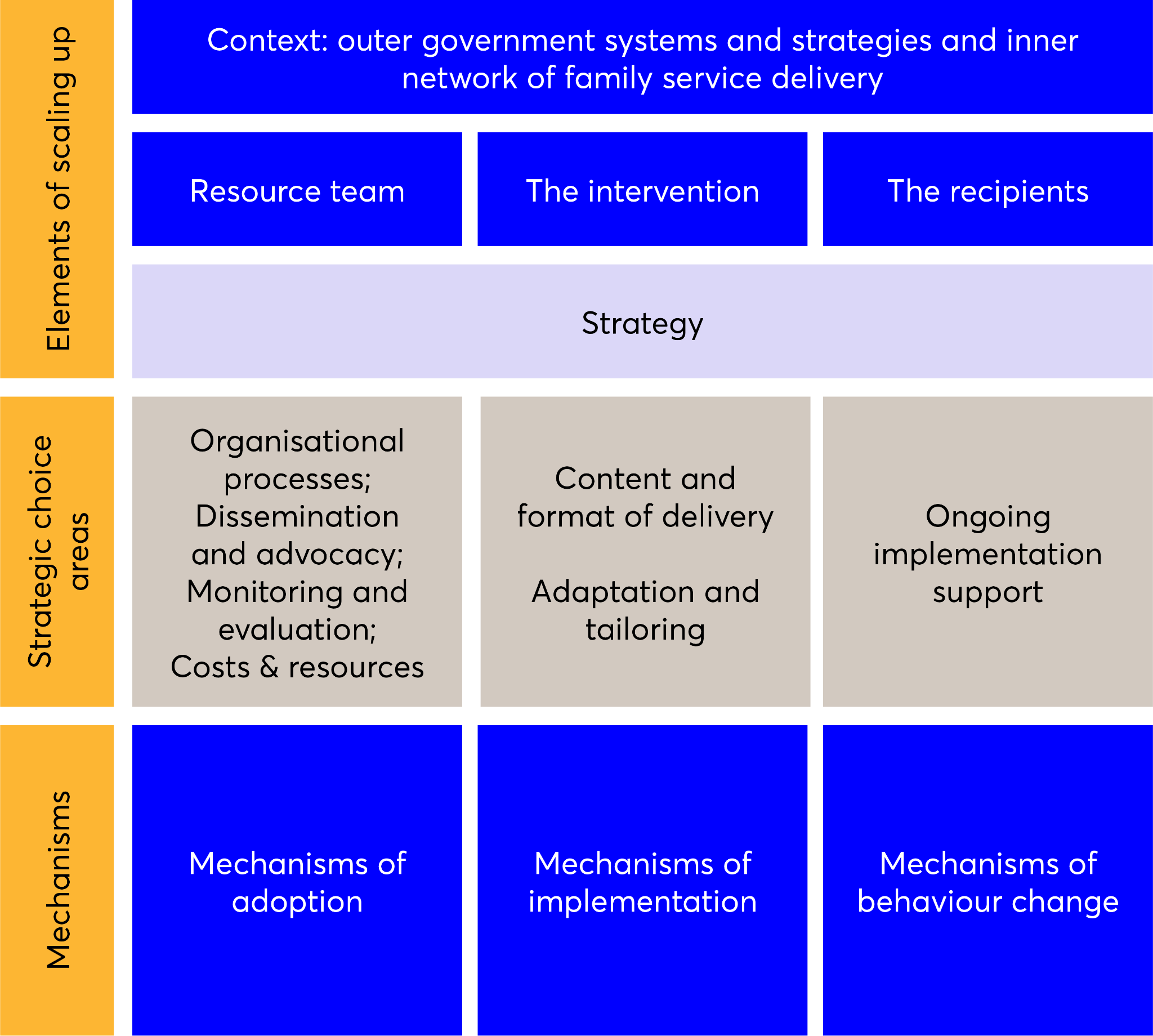 Figure 1. The template strategy for scaling parenting interventions
This template strategy integrates multiple perspectives: from crucial policy and strategic preconditions, to technical implementation necessities and operational requirements, and recognising the linkages between them. The current project utilised this template strategy to provide a tool to guide future considerations for scaling parenting interventions. Below, we have used examples of findings from interviews and the literature review of the current project, to explain ‘elements of scaling up', 'strategic choice areas', and 'mechanisms' as three areas of consideration when scaling up parenting interventions.
- Elements of scaling up include the enablers and barriers to successfully scaling parenting interventions, encompassing opportunities to buttress enablers both for specific interventions, and the sector in general.
- Strategic choice areas are case-by-case decisions, requiring agreement on the five elements (ie, context, resource team, the intervention, the recipients, and strategy), including detailed knowledge of both the location and target parents, and the implementer and their intervention model.
- Mechanisms are the processes which describe how the different plans and activities are expected to work.
Elements of scaling up
The five elements of scaling up in the template strategy are the enablers and barriers that all interventions face in every context discussed in this report. The five elements include 'context', 'resource team', 'the intervention', 'the recipients', and 'strategy'.
- 'Context' includes the inner networks of local organisations and institutions delivering health, family support, and education services, and the outer system of government local family support service strategies (and their funding) within which parenting interventions sit, and the ‘who' and 'how' of commissioning parenting interventions. For example, FHSFL programme's strategy is to connect the range of family support services parents need, which facilitates close partnerships between implementers, enabling effective outreach to parents.
- 'Resource team' is made up of the facilitators who deliver activities with parents and children, and the intervention developer and/or implementer (eg, the local services responsible for implementation). For example, EPEC's conceptual foundation is that it is a family where anyone completing the course can seek to make the progression to become a facilitator.
- 'The intervention' is the programme and specific model delivered by the resource team. For example, Triple P brings over 25 different intervention models designed to meet different needs, each with an array of tools and resources for the facilitators and parents.
- 'The recipients' are the parents (as individuals and/or groups) who participate in activities with facilitators. For example, the Families Learning Together Project in Scotland carefully planned delivery area-by-area with other service providers to both ensure complementary outreach to parents, and reduce the risk of one service displacing another.
- The 'strategy' is the sum of considerations, decisions and trade-offs that binds the other elements together to ensure effective delivery.
Strategic choice areas
Strategic choice areas in the template strategy are the options and trade-offs that implementers make: these often vary location-to-location and/or model-to-model. Strategic choice areas include 'organisational processes', 'dissemination and advocacy', 'monitoring and evaluation', 'costs and resources', 'content and format of delivery', 'adaptations and tailoring', and 'ongoing implementation support'.
- 'Organisational processes' refers to how and through what mechanisms implementers deliver the intervention. For example, scaling FNP requires 6-12 months of planning because delivery could distort local services (which in rural areas are often more fragile). This requires the central team, LAs, and other local stakeholders to agree with who, when, and how to deliver activities to the young parents.
- 'Dissemination and advocacy' refers to decisions on who to communicate activities to, and how to communicate them. For example, For Baby's Sake is a parenting intervention, as well as long-term violence and crime prevention intervention. This requires engaging with a range of decision-makers, from LA early years teams, as well as Crime Commissioners in each area.
- 'Monitoring and evaluation' refers to what data the implementers collect, how they collect it, and for what service improvement and reporting needs. For example, the Families Learning Together Project in Scotland (as well as other implementers) emphasised the need for a broad range of quantitative and qualitative data, eg, the number of parents attending or completing sessions must be triangulated with feedback and impact stories from parents and facilitators, as well as facilitators' supervisors. Securing this comprehensive picture is crucial for monitoring fidelity.
- 'Costs and resources' refers to what finances implementers want, what they can afford, and the prioritisation in-between. For example, scaling FNP in Scotland is primarily paid for by central institutions in the Scottish Government. This is a design choice to reduce the scope of LAs and others delivering the intervention at the community level to adjust components without central approval.
- 'Content and format of delivery' refers to how the intervention is to be delivered at scale. For example, delivering Elklan Let's Talk online at the start of Covid-19 required changes in delivery content and format: there was a stronger need to standardise materials, from the course content to tutor follow-up notes, as well as creating online networks for facilitators and parents to share and learn, eg, using WhatsApp groups.
- 'Adaptations and tailoring' refers to what changes are needed, in which locations, when, and why. For example, Triple P's evidence base is over 190 RCTs and over 400 evaluations and studies. Local tailoring focuses on contextualisation (see section 3, intervention, and the quote from Triple P's CEO for UK and Ireland).
- 'Ongoing implementation support' refers to what regular help is needed, and what/how is provided. For example, EPEC prides itself on being a family where everyone has a role to play in supporting their peers, with multiple roles to address different needs, sometimes paid, sometimes voluntary, providing the flexibility to support both the facilitators delivering sessions, and the wider organisation. In contrast, Triple P used ‘implementation consultants' in each area to guide scaling.
Mechanisms
Mechanisms in the template strategy refer to how the different plans and activities expect to work. Mechanisms include 'mechanism of adoption', 'mechanism of implementation', and 'mechanism of behaviour change'.
- 'Mechanism of adoption' refers to how the decision is made by relevant authorities (eg, DfE, or an LA) to endorse or fund an intervention. For example, requiring that funding is spent on interventions that reach a certain level of
Case studies
Nesta selected these case studies to illustrate developers' experiences of scaling different types of intervention. They have been compiled from a combination of published literature and interviews conducted as part of this project. They have been reviewed and further developed with input from the implementation developers.
Case study 1 – Empowering Parents, Empowering Communities (EPEC)
Programme details
| Characteristic |
Description |
| Child age |
• Range of parenting groups offered for parents of children aged 0-16 |
| Target population |
• 'Being a Parent' for parents of children aged 2-11, is the programme with most extensive scaling up
• Originally developed for disadvantaged and excluded communities, since expanded to the general parent population
• Range of specialist parenting groups offered to parents of children with special needs (eg, ASD/autism, ADHD) |
| Format(s) |
• Peer-led approach: programmes typically consist of eight 2.5-hour sessions, attended by 6-12 parents each time, and facilitated by two leaders who are parents themselves (who are EPEC certified) |
| Number of LAs reached |
• Around 50 sites in the UK – in LAs, health settings and the voluntary sector |
| Number of UK families reached |
• By 2019, over 3,000 parents had taken part in EPEC courses in the UK |
| Scaled to |
• Across the UK, and globally in multiple countries including Australia, New Zealand, Israel, Japan, Portugal and China |
| Training model |
• Peer-led delivery model whereby providers ('peer facilitators') are trained and selected based on prior experience as participants in EPEC parenting groups
• Facilitators take part in a 10-week facilitator training course (60 hours) to deliver the course |
See Family Hubs and Start for Life Guidance recommending that local authority areas consult the EIF's Guidebook.
Programme overview
EPEC is a parenting community-based intervention that aims to positively impact children's social, emotional and behavioural outcomes, parenting, family resilience and social capital. EPEC was developed by an NHS parenting unit in a large London mental health trust.
It is a peer-to-peer programme that trains parents to deliver the course in their communities. EPEC is based on social learning principles, as well as attachment, family systems and relational theories and approaches. The programme supports parents to nurture loving relationships and help their children learn and develop. The programme includes strategies that improve parent-child communication, positive family interactions, children's social and emotional development, and managing challenging child behaviour.
EPEC brings multiple models, adapted to each development stage: Baby and Us (0-1), Being a Parent (2-11), and Living with Teenagers (12-16). There are also some more specialist models tailored to families with specific support needs. These include parents with mental health difficulties, parents at risk of parental conflict, parents with children with autism or with ADHD. All models are group-based and include theoretical knowledge and practical skills. The sessions can involve group discussions, role plays, demonstrations and the explanation of tasks to complete at home. Being a Parent, the most widely implemented model, consists of eight 2-2.5 hour sessions.
Background on scale up
The first RCT of EPEC in the UK, in which 116 families participated, was published in 2012, yielding positive results for the 59 families in the treatment group on parenting practices and the decrease of child problems (Day, 2012). In 2017, the UK Early Years Social Action Fund, a partnership between Nesta and the Office for Civil Society at the Department for Digital, Culture, Media & Sport (DCMS), funded the EPEC Scaling Programme, providing funding to scale up the intervention to around 15 more sites in socially disadvantaged areas across England. The success of the EPEC Scaling Programme was used to launch a further scaling effort involving 14 more sites in 2019-2020 (Nesta and DCMS, 2019). There have also been other programme growth efforts such as a pilot of EPEC in school settings, where they trained teachers and teaching assistants instead of parents, in a London borough. This initiative was not developed further after the trial.
After a six to seven-year scale-up effort, EPEC is now being delivered in around 50 UK sites, including LAs, health settings, and civil society organisations. All sites provide the Being a Parent model and some offer additional EPEC variants. The National EPEC team provides support and training to all sites.
Enablers and barriers
Ongoing implementation support is a part of the scale up strategy: parents who attended the intervention can complete the training and become parent group leaders to deliver the intervention in their community. One study finds that the rewarding experience of parent group leaders leads to higher motivation, self-efficacy and identification with the intervention's aims and methods, helping maintain fidelity with manuals and long-term commitment (Thomson, Michelson, Day, 2015). In the same study, the mutual identification of parents and facilitators was described as critical to EPEC's effectiveness and sustainability, contributing to a cohesive 'family' identity. Social connection among parent group leaders, between them and parents using the service, and between parent group leaders and supervisors, lays out a potential basis for generating social capital (Derose, Varda, 2009; Thomson, Michelson, Day, 2015).
The essence of the intervention is, therefore, peer support and collaboration. All members of the National EPEC team work locally as well as at a national level, and are always in close contact with LAs and key partners. Parent group leaders also note the importance of the National EPEC team to support managing logistics and the competing demands of delivering EPEC (Thomson, Michelson, Day, 2015). The team also gives voice to group parent leaders and other members of the network to improve and update materials and processes such as training activities. As described by an interviewee: “everyone has a contribution and a role to play".
Collective action is also present in the training. Training only happens a few times per year with the intention that future parent group leaders can become a cohort, support and learn from each other. Experienced parent group leaders also join the training sites for trainees to learn from lived experiences and not only from theory. Additional activities to strengthen the EPEC network include journal clubs for parent group leaders, using Slack (a communication platform) as a community of practice, and an annual conference. One interviewee explained that the annual conference particularly serves as a time of celebration and helps parent group leaders see they are part of a larger EPEC community.
Clear implementation strategy enabling strong partnerships, underpinned by appropriate funding: the intervention emphasises the close monitoring of implementation, outputs and the scale up process itself. The funding partners of the scale up process set clear targets (eg, number of family sites to recruit) to accomplish by the National EPEC team, which according to one interviewee was useful to keep the scale process on track. There was also an external evaluation comparing the 'real-world' scale up results (with an uncontrolled cohort design) to the established RCT benchmarks (Day, 2022). The evaluation did not only look at impact, but also at reach, parent attendance and acceptability of the intervention outside of a controlled trial. This type of research enables the National EPEC team to monitor research-practice gaps and implementation issues.
Currently, the National EPEC team closely monitors whether sites meet quality standards and looks at data such as parents' completion rates, the number of parents attending each group, etc. This is also the case for training. One interviewee explained that having demanding outputs, particularly in the first year of implementation in a site helps maintain high quality delivery. It also helps the National EPEC team work with existing and new sites to develop their EPEC offer, build on successes and manage implementation difficulties as they arise. Overall, monitoring the implementation process and impact improves fidelity, speeds timely support and facilitates ongoing improvements, especially when there is a high number of sites delivering the intervention.
Misalignment of partnership roles and responsibilities: LAs issue tenders for external providers to deliver the intervention. Alternatively, the Integrated Care Systems approach the National EPEC team with the request to intervene in a specific borough, where a tender may be used to recruit a suitable provider organisation. The National EPEC team has found that early stage conversations that strengthen the alignment between local strategic objective, operational/provider capabilities and the EPEC programme, helps early implementation. Although it is not necessarily always the case, less detailed early planning and alignment can challenge the pace and outputs of implementation, as explained by one interviewee.
To achieve alignment in expectations, intentions and culture, the National EPEC team encourages initial conversations and outline planning with the LAs. This is to understand their needs, and their knowledge of EPEC, and explore how the intervention may help meet their objectives. There is also an application form that LAs must complete that helps initiate these conversations. Externally appointed external providers may be present in those conversations, where appropriate. The National EPEC team will work closely with LAs and external providers to identify and build on existing knowledge, expertise and expectations to aid adoption and implementation. Developing this shared understanding of purpose and expectations can be more difficult when there are differences in what LAs want to achieve and the aims of the EPEC programmes, or differences between the skills and expertise of the operational provider and those needed to deliver the EPEC programmes. To avoid misalignment, it is helpful to have all key players involved from the start in initial conversations, including discussing the quality of fit between the programme and the objectives of the commissioner and the LA. This facilitates successful implementation in that specific location, ultimately leading to better outcomes, and eventually easier scaling because partners will have more case studies of successful collaboration from the implementation of the programme in different locations to model.
Exploring and testing funding approaches to best suit implementation needs: LAs and other entities have to commit to delivery for one year to obtain EPEC's licence for the first time. One interviewee explained that a longer initial contract of two years may be better as this would give LAs and other provider organisations the opportunity to not only adopt EPEC but move through at least four cycles of delivery. EPEC has a tailored approach to licensing sites who provide the programme. The licence level purchased currently depends on the model, the training and manuals needed, and the amount of support required from the National EPEC team. Alternative licensing systems could elevate or reduce support based on metrics for meeting appropriate quality standards.
Case study 2 – Triple P (Positive Parenting Programme)
Programme details
| Characteristic |
Description |
| Child age |
• Children between ages 0-16
• Triple P Baby is for parents with newborns and infants; Triple P for parents with children under 12; and Teen Triple P for those with 12-16 year olds |
| Target population |
• Multi-level intervention. The first level is implemented at a population level. Higher (ie, more intense) levels of the intervention target families experiencing issues with children's behaviour problems and concurrent family dysfunction
• Range of specialist intervention models for specific populations (eg, Family Transitions for families going through separation, Stepping Stones for families with a child with disabilities) |
| Format(s) |
• Triple P is a system of over 25 individual interventions
• Range of formats, which differ within and across intervention levels
• It can include individual or group sessions (virtual or in person), self-directed online, home visits, telephone consultations, awareness campaigns |
| Number of LAs reached |
• More than 200 providers in the UK
• More than two-thirds of LAs in England |
| Number of practitioners |
• Since 2002, Triple P UK has trained approximately 19,000 practitioners
• Triple P for Baby intervention was recently commissioned by NHS England to support 680 practitioners to become trained and accredited as part of the Start for Life programme |
| Scaled to |
• Across the UK, and over 30 other countries
• Over 100,000 practitioners have been trained in Triple P |
| Training model |
• No training is needed for the Level 1 Triple P. For the rest of Triple P models, training content and length varies (2-5 days approximately)
• There is a competency-based accreditation process for all training. Trainees must also attend at least 80% of the relevant courses to be accredited
• Training is coordinated by Triple P UK and quality assured by The University of Queensland in Australia |
Programme overview
Triple P is a parenting intervention for parents with children of all ages (0-16) aiming to help families create a supportive and positive environment, as well as to prevent and treat behavioural and emotional problems in children.
Triple P follows a tiered system with five levels of intervention. The levels range from Level 1, a communications strategy that aims to raise awareness of parenting issues and de-stigmatise asking for parenting help, to Level 5, which includes high intensity interventions designed for parents experiencing issues with children's behaviour problems and concurrent family dysfunction. The implementation of Triple P can involve different components within and across levels. Higher levels (3, 4 and 5) often include longer intervention strategies and individual sessions. Organisations can decide whether to implement Triple P following a universal population approach, whereby all families have access to Triple P and a level of intervention is decided according to their needs, or a tailored approach. In the latter, organisations only offer specific Triple P interventions for the specific needs of targeted families.
Background on scale up
The development of Triple P started in Australia in 1978. It has been implemented across the UK and the Republic of Ireland since 2002. For its implementation in the UK, Triple P UK was created as a subsidiary of Triple P International (TPI). Triple P was rapidly implemented in several LAs thanks to the Sure Start programme, an early intervention for pre-school children and their parents. It was first offered based on locally defined needs as a universal service for all families. Triple P was one of the parenting interventions that LAs could choose to offer and deliver.
Triple P UK has a proven track record of large-scale delivery of high-quality programme training and implementation across the UK. Triple P UK has played a significant role in national rollouts and scaling of parenting programmes, including: the UK's PEIP; National Academy for Parenting Practitioners, which included all 152 LAs in England; NHS Education for Scotland's Psychology of Parenting Programme (POPP); and the Sláintecare Healthy Communities programme in Ireland.
Triple P have now worked in partnership with the UK Government, the NHS, LAs, the voluntary sector, schools and the youth justice system. They are currently working with more than two-thirds of LA areas.
In June 2023, Triple P for Baby intervention was commissioned by NHS England to support nearly 700 practitioners to become trained and accredited across the 75 FHSFL areas. Triple P UK & Ireland are now encouraging the government to provide Family Hubs to all LAs (Triple P UK & Ireland, 2024).
Enablers and barriers
Intervention models that give guidance and tools for facilitators to resolve the creative tension between fidelity and adaptability: Triple P's training includes explanations on what are high-risk vs low-risk changes to the interventions, so practitioners understand that small contextual changes may be helpful (eg, adapting an example to incorporate Ramadan) but adding or changing model sections is not possible while retaining programme fidelity (Anyon, 2019; Johnson, 2017). Triple P developed a vast array of resources to support implementation. These include an implementation framework, supervision procedures to support practitioners and self-report and observational measurement tools for tracking client outcomes. Among these resources, there are multiple fidelity assessment tools for promoting and monitoring fidelity (Sanders, 2020). Currently, in the UK Triple P supports local areas to implement its programmes via a team of implementation consultants who have been described as a scale up enabler by an interviewee. Triple P UK also hosts monthly regional collaboratives, open to any site delivering Triple P, which continuously focus on quality assurance and fidelity.
At the same time, Triple P does not follow a one-size-fits-all approach. The organisation has a multi-level system of delivery by which parents receive the level of support they need. They have also developed models for specific age ranges (ie, Triple P Baby and Teen Triple P), as well as for families with different additional needs (eg, Lifestyle Triple P for parents of overweight children). Interventions are designed to be delivered flexibly, with delivery modalities including group, individual, or even parent self-paced online options. By having such a wide variety of models and delivery formats available, providers and families can more easily find the intervention that best suits their needs. This not only increases access and reach but can also prevent providers from freely adapting interventions, which can impact fidelity, effectiveness and scalability.
Intervention that consistently challenges itself with new research and evaluations: several meta-analyses confirm Triple P's effectiveness for a range of child and family outcomes (Nowak, Heinrichs, 2008; Sanders, Kirby, Tellegen, Day, 2014). All Triple P models are rigorously evaluated prior to dissemination, with only interventions with sufficient evidence being released to the public (Job et al., 2022; Sanders, 2023).
Triple P's large global body of evidence enables Triple P to understand how, for whom, and when interventions are effective. In 2001, the TPI licence agreement was put in place which has resulted in the publication of around 800 papers, including over 190 RCTs, across more than 40 countries. This increased the robustness and visibility of Triple P. Detailed understanding of how and when the intervention works makes scalability and adaptation easier, as well as increases its credibility among practitioners and policymakers. Having evidence at the heart of practice requires ongoing and reflexive research and evaluations. As having high-quality trials is a slow and expensive process with barriers such as limited public funding, Triple P encourages independent evaluations, with over 65% of currently published studies having no developer involvement.
This model of evaluation is supported by independent evaluations in the UK. For example, North Somerset Council found that Triple P had a positive and cost-effective impact in diverting children from social care and improving outcomes for families (Triple P UK & Ireland, 2024).
In an ongoing evaluation the Youth Endowment Fund is funding an RCT of Teen Triple P for young people at risk of entering into care (Youth Endowment Fund, 2023).
Funding attuned to partnerships: for an intervention scale up to be successful, it needs to be cost-effective and sustainable. Triple P is based on the principle of minimal sufficiency (providing the appropriate level of intervention required without overservicing), by which meaningful change can be achieved in the most efficient and cost-effective manner. There is therefore a focus on minimising costs and providing interventions of varying intensity to meet the needs of families, reserving high-cost interventions for those who need them most. These efforts lead to commercially viable interventions sustained at the local level.
Triple P has developed its own evidence-informed implementation model for the dissemination and scale up of interventions. TPI serves as the single industry partner focused on the global dissemination of Triple P. This has helped to scale up in an economically sustainable manner, with continuous investment. The decision to release a new Triple P intervention comes from programme developers at The University of Queensland; however the decision of whether it is disseminated is made by TPI. TPI can therefore consider wider commercial realities and contextual factors, such as those associated with the existing workforce, implementation and the likely demand for training (Sanders, 2023). Having a clear strategy for dissemination and scale up with the establishment of an industry partner has improved the sustainability and reach of Triple P (Sanders, 2023).
Case study 3 – Video Interaction Guidance (VIG)
Programme details
| Characteristic |
Description |
| Child age |
• Available for parents and carers of children of all ages. Increasingly implemented during pregnancy
• The theoretical base is grounded on infant-parent interactions (0-1 years) |
| Target population |
• Recommended by the National Institute for Health and Care Excellence (NICE) to children with, or at risk of, attachment difficulties; children with autism; vulnerable families (eg, children with behaviour problems, parents and pregnant women with mental health needs)
• Families where there has been neglect
• For parents with babies born preterm |
| Format(s) |
• VIG can be delivered to families at home, online or at service centres (eg, family hub, health centre)
• There is an initial meeting to explain the VIG method, to set goals and to collect pre-outcome measures as appropriate
• Parents and carers can have one or more cycles of VIG. Each cycle consists of one session to film parent-child interactions, and one review session
• On average three filming sessions and three shared reviews over the course of 6-10 weeks are found to be optimal, although there is not a set number of sessions |
| Number of practitioners |
• Over 3,000 in the UK
• VIG is currently being delivered in 119 councils in England, 23 in Scotland, 14 in Wales, and 7 in Northern Ireland |
| Scaled to |
• Across the UK and countries following UK standards: Czech Republic, Finland, Italy, Greece, Malta, Australia, Mexico, Ecuador, Tanzania and Uganda
• Other countries such as the Netherlands, Germany, United States, Spain and Portugal also practise VIG in a range of contexts |
| Training model |
• Training consists of a two-day Initial Training Course (ITC) followed by at least 15 supervision sessions and two peer supervisions
• Trainees must deliver VIG to six clients and meet certain minimum requirements for accreditation |
Programme overview
VIG is a short, strength-based approach used for parenting interventions. Trained facilitators film caregivers interacting naturally with their children. Facilitators then edit and select up to three short clips with the parent's goals for change in mind, to reflect on positive parent-child interactions and actions with caregivers during their shared review session. The shared review includes discussion between the facilitator and parent on what they were doing within the film that has created attuned interactions – possibly with the aim of building on those moments to create future successful interactions.
The intervention promotes the ability of parents or carers to interpret and respond appropriately to their children's signals (ie, parental sensitivity) and help them move from a discordant to an attuned cycle in their communication.
Background on scale up
VIG was first developed in the Netherlands and brought to the UK in the mid-1990s where it continued to be refined. Other approaches similar to VIG (as implemented in the UK) were also developed in parallel and are now practised in countries such as Germany and the United States. From the mid-1990s, VIG has steadily scaled up in the UK. The intervention was first implemented in a small number of LAs in Scotland. As part of the 1001 critical days movement, VIG expanded to regions such as London, Essex, the Midlands and the North East and Cornwall, often delivered through perinatal and Infant Mental Health teams.
The use of VIG is still growing across the UK. The FHSFL programme aims to join up and enhance services to support parents and carers in the UK. As VIG training places are commissioned nationally through funding held back for national initiatives to support local delivery, the 75 pre-selected LAs can make use of nationally commissioned video feedback training to build on their perinatal mental health and parent-infant relationship services (HM Government, 2022). Following this initiative, there are currently around 400 practitioners who have completed the VIG ITC and are now working with families, learning the VIG skills through reflective supervision over 18 months.
Although the theoretical base is grounded on parent-infant interactions, VIG is used for group and one-to-one interactions of people of all ages. As VIG is a flexible method without a manualised approach, the guidelines developed for the 0-1 age group are also used for older children. Beyond parenting interventions, VIG is also being implemented for other purposes across the UK such as improving teacher-student interactions in schools.
Enablers and barriers
Collective problem-solving through partnerships modelled on inclusion and transparency: an interviewee expressed the importance of building trusting relationships with implementers and facilitators through consistent communication: this has been foundational for VIG's scaling. Effective communication is planned across all stakeholders. For example, as part of the FHSFL programme, the project lead provides regular messages, updates for the group of 14 lead VIG trainers and 40 supervisors using the AVIGuk Learning Platform which provides a discussion forum and monthly online drop-ins to discuss any difficulties they may be facing. There are also drop-ins available for managers in LAs and service providers to discuss any implementation matters. At the same time, service managers and practitioners are required to reply to the VIG management team within 48 hours as part of the contract. These high levels of communication aim to keep a strong engagement and motivation. A 'risk' register of LAs who are struggling to implement VIG is updated weekly, discussed and action taken to meet relevant managers and funders when appropriate.
Well-trained and evaluated VIG facilitators with continuous support and supervision: AVIGuk is a well-established charity that provides structure to the training and accreditation of VIG practitioners and supervisors. Interviews describe how the institution has a clear role and responsibility, overseeing standards and quality assuring VIG practice. After the first few months, trainee practitioners start working with a competency development scale. Once they reach Level 3 of this scale, they can become accredited practitioners, and can continue their development until they become advanced practitioners (Level 5).
Interviews describe how VIG's model relies on continuous professional development opportunities and supervision which protects the model's fidelity by reinforcing the doctrine of what can and cannot be adapted. There are currently 233 VIG supervisors, who have regular training sessions on keeping up standards and have continuous professional development training to be 'reaccredited' annually. Such an extensive, structured and continuous training for practitioners and supervisors has kept high fidelity levels.
The VIG training model is structured but not static. One interviewee stressed that there are ongoing efforts to improve what are the best training strategies to help implementation and scale up. For example, almost all trainee practitioners that drop out do so early in their training, creating a need for back-ups. AVIGuk has now developed a pre-course for trainees to complete before their formal training to facilitate their first few months as trainee facilitators and lower staff turnover.
Complex delivery partnerships can be a barrier to monitoring and evaluation: as technology evolves, so do the ways in which LAs and other providers deliver VIG (eg, using encrypted work phones to record videos instead of cameras). This requires a constant reflection of the benefits and drawbacks of different methods and tools to update guidelines and support accordingly.
One of the greatest barriers to scale up is data handling across sectors and providers. Although a multi-sector approach can serve as an enabler (Sanders, 2022), oftentimes they have different data storage and data protection regulations. In the case of VIG, this sometimes occurs when coordinating Education, Health and Social Services, as explained by one interviewee. Different regulation requirements often implies that each sector needs to use different applications, data systems and tools. Coordinating and making these systems compatible is time and effort consuming and can delay implementation. Regulation differences across providers can also result in barriers in data monitoring and evaluation. For example, some providers cannot follow up with parents as they cannot contact clients after they are discharged.
One global meta-analysis of video feedback parenting interventions (in general, not VIG specific) finds heterogeneity of instruments between implementers to be one of the main problems to effective monitoring and evaluation (Balldin, 2016). In order to compensate for this potential problem, VIG has created a VIG-Data Collection System (VIG-DCS) where data is collected before and after in a systematic way, using specific outcome measures through an extensive literature review and interviews with key players.
Case study 4 – Family Nurse Partnership (FNP)
Programme details
| Characteristic |
Description |
| Child age |
• From early pregnancy up to age 2 |
| Target population |
• Young, first time pregnant women |
| Format(s) |
• In-person home visits |
| Number of LAs reached |
• 51 areas across England in LAs and health sites, and 11 Health Board areas in Scotland |
| Number of practitioners |
• The FNP National Unit has trained over 1,000 family nurses and supervisors to deliver FNP |
| Scaled to |
• Adapted versions of NFP (the programme Nurse Family Partnership) are delivered in: Australia, Bulgaria, Canada, England, Northern Ireland, Norway, Scotland and US. FNP is the adaptation of NFP in different parts of the UK |
| Training model |
• FNP National Unit delivers initial and ongoing training for the nurses who deliver the programme
• There are five learning packages (adolescent brain, attachment, motivational interviewing, supervision and using trauma-informed practice) that teams can share with other health professionals as part of widening the impact of FNP skills and knowledge |
Programme overview
FNP is a programme for young parents (24 and under). The three theories that underpin FNP are human ecology theory, attachment theory, and self-efficacy.
theory. Nurses also rely on other approaches such as motivational interviewing. The intervention aims to support parents to develop a positive relationship with their child, understand the child's needs, increase their self-confidence and mirror the positive relationship they have with their nurse with others. The programme is focused on parents' strengths; it is structured and personalised to respond to needs.
The family nurse pays an initial visit to the mother (to be) to explain the programme. If the mother decides to engage, they will regularly meet throughout pregnancy until the child is between one and two years. They decide how to shape the programme with a collaborative approach based on the New Mum/Parent Star – an assessment tool. Topics covered in the intervention may include parent-child attachment, breastfeeding, immunising your baby, child development and school readiness. Nurses typically carry a maximum caseload of 25 young parents.
Background on scale up
FNP was developed at the University of Colorado and began in the late 1970s. In 1996, after the first large trials in the US and a US community replication, the NFP created a non-profit organisation to scale the programme nationally in the US and internationally. The programme is currently being implemented in countries such as Australia, Canada, Norway, Bulgaria, and the UK (England, Scotland and Northern Ireland). In England, the FNP was first introduced in 2007. In October 2015, the FNP was transferred from NHS England to LAs.
In 2020, the FNP National Unit moved to Public Health England to align its work more closely with government priorities. In Scotland, FNP began in 2010 and it has been delivered in more than 10 mainland NHS Board areas. Barnes and Stuart (2016) explored the feasibility of delivering FNP in groups with the intention of decreasing the costs for a wider scale up, this time to older mothers. This initiative has not been taken further.
Enablers and barriers
Resource teams effectively using evidence: interviews noted that existing evidence from the US, including three large RCTs (Kitzman et al., 1997; Olds et al., 1986; Olds et al., 2002) provided a strong argument to test the intervention when the UK Government and the Scottish Government were considering adopting FNP, which a number of people did oppose because of the contextual difference. FNP won the argument, but encountered policy challenges relatively early in the scaling journey. FNP's first RCT conducted in England provided no evidence of additional short-term benefits when compared to the usual health and social care services in the primary outcomes measured (Robling et al., 2016). One interviewee explained that the RCT may have been conducted too early in the implementation process.
The FNP National Unit was able to engage policymakers, and provide more nuanced evidence, discuss adaptations, highlight its progress and prevent a loss of trust in the intervention. For example, the intervention was described by health professionals as well-resourced and delivered by highly motivated and well-supported family nurses who were confident in the intervention's effectiveness (Sanders et al., 2019). Following an RCT examining the short-term effectiveness (to 24 months postpartum) of the programme, a further study looking at medium-term effectiveness suggested that FNP generates advantages in school readiness and attainment at Key Stage 1 (Robling et al., 2021).
Intervention model with clear guidance on what can be adapted, and what is core for fidelity:
interviewees praised FNP's clear programme model for scaling. FNP's structure and guidelines helped a coherent tailoring in England (eg, where outcomes differed compared to the US). At the same time, having a well-established model facilitated the oversight to ensure fidelity remained consistent. As one interviewee noted, it was important to avoid site-specific variations that would affect the intervention effectiveness. At the same time, it was essential to have continuous dialogue and oversight that gave sites opportunities to raise concerns, and make changes to bring back to the model. Changes are sometimes paramount. For example, changes in society brought some challenges, eg, fathers are now more likely to be involved in the baby's upbringing than when FNP was developed in the 1970s.
Flexibility to embrace and support these changes has also helped scale up. The FNP National Unit's ADAPT project aimed to test and innovate changes to the FNP by using a rapid cycle adaptation and testing approach. The project began in 2016 with 10 LAs, expanding to another 10 LAs in 2018. Building on the findings of the project, the FNP National Unit made a change to the service delivery model, establishing a more personalised approach by which the programme can be more tailored to the parents' needs.
Facilitators and parents inextricably linked:
in comparison to other parenting programmes, FNP often lasts for approximately two and a half years and involves regular one-to-one interactions with parents, normally on a bi-weekly basis. This set up allows nurses to form close relationships with parents. Parents can be involved in the recruitment process of nurses, and their feedback feeds into whether nurses and supervisors are taken on to the programme to ensure alignment of values and staff's ability to engage with the target population. In Scotland, completion rates have marginally increased during the years with around 80% of mothers staying in the programme until graduation (Scottish Government, 2022). Completion rates were slightly higher among mothers who lived in deprived areas.
Endnotes
1For the purpose of this project, scaling parenting interventions is defined as an evidence-based programme reaching at least 10,000 parents.
2The programme goes beyond parenting support with a broader aim to contribute to a reduction in inequalities in health and education outcomes.
3The removal of Sure Start's ring fenced funding following the election of the coalition government in 2010 started the substantial reduction in funding for parenting support.
4Voltage drop is the phenomenon of social impact projects being less effective once scaled, than in the initial evaluation. The hypothesis is often that the initial evaluation is the best case scenario with the implementation led by well-trained and highly motivated facilitators, who engage parents that were rigorously selected, maximising the likelihood of successful completion. Once scaled, interventions rarely face such favourable circumstances.
5(parent OR carer OR caregiver OR mother OR father) AND (intervention OR programme) AND (scal OR expan) AND (UK OR United Kingdom OR England OR Wales OR Scotland) AND/OR enabl*
6PsycINFO, Cochrane Library, Web of Science; Google Scholar; ChatGPT (a key word search for literature)
7Interventions targeting parents of children <5 years old (prioritising disadvantaged families) and universal <5 years old if relevant; Interventions in the UK and comparable OECD countries; Publications from the last 15 years.
8Type of intervention; Outcome(s); Programme characteristics; Age of child; Targeting; Route to scale; Referral process; Public investment; Recommended in national government guidelines; Commissioners; Extent of scale up: Number of locations; Number of staff; Number of recipients; Location; Infrastructure and investment required to deliver at scale; Data collection for monitoring fidelity, quality, acceptability, uptake, outcomes; Costs per child/year.
9Only one expert did not consent for the interview to be recorded.
10For example, implementers focusing on government procurement barriers without appreciating the dynamics at play in government.
11Strategy encompasses both a broad government initiative to reduce inequality that includes parenting interventions (eg, the current Family Hubs), as well as a single government department's programmes to increase support to parents (eg, DfE's Early Years grant funds). Neither of these necessarily focus on scaling a single intervention; however, the literature and interviews with developers and implementers note that when these central strategies do not incorporate their needs, the results manifest in multiple interconnected barriers to scaling.
12From which state institutions and/or civil society organisations are locally respected, to how many facilitators are needed to deliver the intervention, and the time required to recruit and train them.
13Parents' perspectives are not universal, with parents who used the Sure Start children's centres rating the majority as 'good' (NAO, 2009).
14Usually the 'Head of Early Years' (or comparable role) at the LA and their team managing early years services.
Sources
Anyon, Y., Roscoe, J., Bender, K., Kennedy, H., Dechants, J., Begun, S., & Gallager, C. (2019). Reconciling adaptation and fidelity: implications for scaling up high quality youth programs. The Journal of Primary Prevention, 40, 35-49.
Asmussen, K. A., Matthews, T., Weizel, K., Bebiroglu, N., & Scott, S. (2012). Evaluation of the National Academy of Parenting Practitioners' Training Offer in evidence based parenting programmes. London: Department for Education. https://assets.publishing.service.gov.uk/media/5a7b07cbe5274a319e77c7fd/DFE-RR186.pdf
Balldin, S., Fisher, P., Wirtberg, I., (2016), ‘Video Feedback Intervention With Children: A Systematic Review', Research on Social Work Practice, 28(6), 682-695. https://journals.sagepub.com/doi/10.1177/1049731516671809
Barnes, J., & Stuart, J. (2016). The feasibility of delivering group Family Nurse Partnership. Journal of Children's Services, 11(2), 170-186.
Bell, K., Corbacho, B., Ronaldson, S., Richardson, G., Hood, K., Sanders, J., ... & Building Blocks Trial Group. (2019). Costs and consequences of the family nurse partnership (FNP) programme in England: evidence from the building blocks trial. F1000Research, 8.
Breitenstein S. M., Fogg, L., Garvey, C., Hill C., Resnick B., Gross, D. (2010). Measuring implementation fidelity in a community-based parenting intervention. Nursing Research, 59(3). https://www.ncbi.nlm.nih.gov/pmc/articles/PMC3421455/
Brown, E. R., Khan, L., Parsonage, M. (2012). A chance to change: delivering effective parenting programmes to transform lives, Centre for Mental Health. https://www.researchgate.net/publication/308385529%20A%20chance_to_change_delivering_effective_parenting_programmes_to_transform_lives
Butler, J., Gregg, L., Calam, R., & Wittkowski, A. (2021). Exploring staff implementation of a self-directed parenting intervention for parents with mental health difficulties. Community Mental Health Journal, 57, 247-261.
Canavan, J. (2014). Parenting support for every parent: a population-level evaluation of Triple P in Longford Westmeath. Final Report. https://www.academia.edu/71518033/Parenting%20support%20for%20every%20parent%20a%20population%20level%20evaluation%20of%20Triple%20P%20in%20Longford%20Westmeath%20Final%20Report
Cavallaro, F., Gilbert, R., Van der Meulen, J., Kendall, S., Kennedy, E., & Harron, K. (2024). Intensive home visiting for adolescent mothers in the Family Nurse Partnership in England 2010–2019: a population-based data linkage cohort study using propensity score matching. BMJ Public Health, 2(1).
Cavallaro, F. L., Gilbert, R., Wijlaars, L. P., Kennedy, E., Howarth, E., Kendall, S., ... & Harron, K. (2022). Characteristics of enrolment in an intensive home-visiting programme among eligible first-time adolescent mothers in England: a linked administrative data cohort study. Journal of Epidemiology and Community Health, 76(12), 991-998.
Corbacho, B., Bell, K., Stamuli, E., Richardson, G., Ronaldson, S., Hood, K., ... & Building Blocks trial group. (2017). Cost-effectiveness of the Family Nurse Partnership (FNP) programme in England: Evidence from the building blocks trial. Journal of Evaluation in Clinical Practice, 23(6), 1367-1374.
Cullen, S., Cullen, M-A., Lindsay, G., (2015). Universal Parenting Programme Provision in England; Barriers to Parent Engagement in the CANparent Trial, 2012–2014. https://onlinelibrary.wiley.com/doi/abs/10.1111/chso.12120
Cullen, S., Cullen, M-A., Lindsay, G., (2017). The CANparent trial—the delivery of universal parenting education in England, British Educational Research Journal. https://bera-journals.onlinelibrary.wiley.com/doi/abs/10.1002/berj.3282
Day, C., Harwood, J., Kendall, N., & Nicoll, J. (2022). Impact of a peer-led, community-based parenting programme delivered at a national scale: an uncontrolled cohort design with benchmarking. BMC Public Health, 22(1), 1377.
Day, C., Michelson, D., Thomson, S., Penney, C., & Draper, L. (2012). Evaluation of a peer led parenting intervention for disruptive behaviour problems in children: community based randomised controlled trial. BMJ, 344.
De Graaf, I., Speetjens, P., Smit, F., De Wolff, M., & Tavecchio, L. (2008). Effectiveness of the Triple P Positive Parenting Program on parenting: A meta-analysis. Family Relations, 57(5), 553-566.
Derose, K. P., & Varda, D. M. (2009). Social capital and health care access: a systematic review. Medical Care Research and Review, 66(3), 272-306.
Department for Education (2012). Evaluation of the National Academy of Parenting Practitioners' Training Offer in evidence based parenting programmes. https://assets.publishing.service.gov.uk/media/5a7b07cbe5274a319e77c7fd/DFE-RR186.pdf
Dimova, S., Culora, A., Gilder, L., Leenders, E., de Silva, A. & Brown, E. R. (2021). Level 4 Group Triple P: Positive Parenting Programme: Evaluation Report. Education Endowment Foundation. https://d2tic4wvoliusb.cloudfront.net/production/documents/pages/projects/Triple%20P%20-%20final.pdf?v=1709882713
HM Government (2022). Family Hubs and Start for Life programme guide. https://assets.publishing.service.gov.uk/media/62f0ef83e90e07142da01845/Family%20Hubs%20and%20Start%20for%20Life%20programme%20guide.pdf
Job, A. K., Ehrenberg, D., Hilpert, P., Reindl, V., Lohaus, A., Konrad, K., & Heinrichs, N. (2022). Taking care Triple P for foster parents with young children in foster care: results of a 1-year randomized trial. Journal of interpersonal violence, 37(1-2), 322-348.
Johnson, D. T. (2017). Adaptation and fidelity. The Oxford Handbook of Adaptation Studies, 37-53. New York: Oxford University Press.
Kennedy, H. & Simpson, R. (n.d.) How Colwyn's theoretical ideas, vitality and values have created and continue to sustain VIG development. https://www.videointeractionguidance.net/files/ugd/1d6ac8%20aba10241f7a54888b7b97ef62e0cf05e.pdf
Kitzman, H., Olds, D. L., Henderson, C. R., Hanks, C., Cole, R., Tatelbaum, R., ... & Barnard, K. (1997). Effect of prenatal and infancy home visitation by nurses on pregnancy outcomes, childhood injuries, and repeated childbearing: a randomized controlled trial. Jama, 278(8), 644-652.
Lindsay, G., Cullen, M-A. (2011). Evaluation of the Parenting Early Intervention Programme A short report to inform local commissioning processes, Department for Education, Research Report DFE-RR121(b). https://assets.publishing.service.gov.uk/media/5a7d52eaed915d321c2de5c5/DFE-RR121B.pdf
Morpeth, L., Blower, S., Tobin, L., Taylor, R. S., Bywater, T., et al. (2017). The effectiveness of the Incredible Years pre-school parenting programme in the United Kingdom: a pragmatic randomised controlled trial, Child Care in Practice, 23:2, 141-161.
National Audit Office (2009). Sure Start Children's Centres. https://www.nao.org.uk/wp-content/uploads/2010/01/0910%20sure%20start%20memorandum.pdf
Nesta & Department for Digital, Culture, Media and Sport (2019). Nesta/DCMS Centre for Social Action Innovation Fund Phase 2. Evaluation Report Summary Sheet. https://media.nesta.org.uk/documents/South%20London%20and%20Maudsley%20NHS%20Trust%20-%20E%20PEC%20-%20Evaluation%20Report.pdf
Nowak, C., & Heinrichs, N. (2008). A comprehensive meta-analysis of Triple P-Positive Parenting Program using hierarchical linear modeling: Effectiveness and moderating variables. Clinical Child and Family Psychology Review, 11, 114-144.
O'Farrelly C., Watt H., Babalis D., et al. (2015). A Brief Home-Based Parenting Intervention to Reduce Behavior Problems in Young Children: A Pragmatic Randomized Clinical Trial. JAMA Pediatrics, 2021;175(6), 567-576.
O'Hara, L., Smith, E. R., Barlow, J., Livingstone, N., Herath, N. I., Wei, Y., ... & Macdonald, G. (2019). Video feedback for parental sensitivity and attachment security in children under five years. Cochrane Database of Systematic Reviews, (11).
Olds, D. L., Henderson Jr, C. R., Tatelbaum, R., & Chamberlin, R. (1986). Improving the delivery of prenatal care and outcomes of pregnancy: a randomized trial of nurse home visitation. Pediatrics, 77(1), 16-28.
Olds, D. L., Robinson, J., O'Brien, R., Luckey, D., W., Pettitt, L. M., Henderson Jr, C. R., ... & Talmi, A. (2002). Home visiting by paraprofessionals and by nurses: a randomized, controlled trial. Pediatrics, 110(3), 486-496.
Robling, M., Bekkers, M., J., Bell, K., Butler, C. C., Cannings-John, R., Channon, S., ... & Torgerson, D. (2016). Effectiveness of a nurse-led intensive home-visitation programme for first-time teenage mothers (Building Blocks): a pragmatic randomised controlled trial. The Lancet, 387(10014), 146-155.
Robling, M., Lugg-Widger, F., Cannings-John, R., Sanders, J., Angel, L., Channon, S., ... & Jones, E. (2021). The Family Nurse Partnership to reduce maltreatment and improve child health and development in young children: the BB: 2 & 6 routine data-linkage follow-up to earlier RCT. Public Health Research, 9.
Sanders, J., Channon, S., Gobat, N., Bennert, K., Addison, K., & Robling, M. (2019). Implementation of the Family Nurse Partnership programme in England: experiences of key health professionals explored through trial parallel process evaluation. BMC Nursing, 18, 1-11.
Sanders, M. R. (2023). The Triple P System of Evidence-Based Parenting Support: Past, Present, and Future Directions. Clinical Child and Family Psychology Review, 26, 880-903.
Sanders, M. R., Kirby, J. N., Tellegen, C. L., & Day, J. J. (2014). The Triple P-Positive Parenting Program: A systematic review and meta-analysis of a multi-level system of parenting support. Clinical Psychology Review, 34(4), 337-357.
Sanders, M.R., Spry, C. S., Tellegen, C. L., Kirby, J. N., Metzler, C. M., & Prinz, R. J. (2020). Development and validation of fidelity monitoring and enhancement in an evidence-based parenting program. The Journal of Behavioral Health Services & Research, 47, 569-580.
Sanders, M. R., Turner, K. M. T. & Markie-Dadds, C. (2002). The Development and Dissemination of the Triple P—Positive Parenting Program: A Multilevel, Evidence-Based System of Parenting and Family Support. Prevention Science 3, 173-189.
Scottish Government (2022). The Family Nurse Partnership in Scotland 10 Years on: a Detailed Analysis of FNP data. https://www.gov.scot/binaries/content/documents/govscot/publications/research-and-analysis/2022/05/family-nurse-partnership-10-year-analysis/documents/family-nurse-partnership-scotland-10-years-detailed-analysis-fnp-data/family-nurse-partnership-scotland-10-years-detailed-analysis-fnp-data/govscot%3Adocument/family-nurse-partnership-scotland-10-years-detailed-analysis-fnp-data.pdf
Social Mobility Commission (2017). Time For Change: An Assessment of Government Policies on Social Mobility 1997-2017. https://assets.publishing.service.gov.uk/media/5a81f282ed915d74e3400e9a/Time%20for%20Change%20report%20-%20An%20assessement%20of%20government%20policies%20on%20social%20mobility%201997-2017.pdf
Taylor, P., Malik, R., Shrestha, P., Torres, N. (2023). Embedding Formative Assessment scale-up evaluation. Education Endowment Foundation. https://d2tic4wvoliusb.cloudfront.net/production/documents/projects/EFA-Scaling-Evaluation-Interim-Report-FINAL.pdf?v=1710346285
Thomas, R., & Zimmer-Gembeck, M. J. (2007). Behavioral outcomes of parent-child interaction therapy and Triple P—Positive Parenting Program: A review and meta-analysis. Journal of Abnormal Child Psychology, 35, 475-495.
Thomson, S., Michelson, D., & Day, C. (2015). From parent to ‘peer facilitator': a qualitative study of a peer-led parenting programme. Child: care, health and development, 41(1), 76-83.
Triple P UK & Ireland (2024). Written Evidence Submitted by Triple P UK & Ireland. https://committees.parliament.uk/writtenevidence/127582/pdf/
Youth Endowment Fund (2023). Evaluation Protocol. Building Positive Relationships with your Teen: Evaluating the Teen Triple P Programme. https://youthendowmentfund.org.uk/wp-content/uploads/2023/07/Triple-P-Evaluation-protocol.pdf
Webster-Stratton, C. (2015). Bringing The Incredible Years® Programs to Scale. https://www.incredibleyears.com/hubfs/The%20Incredible%20Years-%20Resources%20and%20Files/WP%20Files/Bringing-IY-Programs-to-Scale.pdf
Wu, J., Dean, K. S., Rosen, Z., & Muennig, P. A. (2017). The cost-effectiveness analysis of nurse-family partnership in the United States. Journal of Health Care for the Poor and Underserved, 28(4), 1578-1597.